You are currently viewing a new version of our website. To view the old version click .
Energies
  • Article
  • Open Access

16 September 2022

Design and Implementation of Real-Time Kitchen Monitoring and Automation System Based on Internet of Things


,
,
,
,
,
,
,
and
1
Department of Creative Technologies, Air University, Islamabad 44000, Pakistan
2
Department of Software Engineering, Capital University of Science and Technology, Islamabad 44000, Pakistan
3
Department of Computer Science, COMSATS University Islamabad, Islamabad 44000, Pakistan
4
School of Digital Science, Universiti Brunei Darussalam, Jalan Tungku Link, Gadong BE1410, Brunei
This article belongs to the Special Issue Building Energy Simulation & Artificial Intelligence: a Way toward a Sustainable Built Environment

Abstract

Automation can now be found in nearly every industry. However, home automation has yet to reach Pakistan. This paper presents an Internet of Things smart kitchen project that includes automation and monitoring. In this project, a system was developed that automatically detects the kitchen temperature. It also monitors the humidity level in the kitchen. This system includes built-in gas detection sensors that detect any gas leaks in the kitchen and notify the user if the gas pressure in the kitchen exceeds a certain level. This system also allows the user to remotely control appliances such as freezers, ovens, and air conditioners using a mobile phone. The user can control gas levels using their phone with this system. In this paper, the ESP32, DHT11 Sensor, 5 V Relay X 8, and MQ-135 gas sensors create a smart kitchen by controlling the temperature, managing humidity, and detecting gas leakage. The system was built on an Arduino board that is connected to the Internet. The hardware was integrated and programmed using an Arduino, and a user Android application was developed. The project’s goal is to allow any Android smartphone to remotely control devices. This method is commonly used in homes, businesses, and grocery stores. Users will be able to control all of their instruments from anywhere, including switches, fans, and lights. Furthermore, simulation was performed using Matlab2016b on multiple houses. In the simulation, not only was the kitchen considered, but also two, four, and six houses. Each house has two bedrooms, one living room, one guest room, two bathrooms, and one kitchen. The results revealed that using this system will have a scientifically significant impact on electricity consumption and cost. In the case of the houses, the cost was USD 33.32, 32.64, 22.32, and 19.54 for unscheduled, two, four, and six houses, respectively. Thus, it was observed that the cost and power are directly proportional to each other. The results reveal that the proposed solution efficiently reduces the cost as compared to that of unscheduled houses.

1. Introduction

Automation is now being used in almost every type of industry. However, home automation has not yet fully penetrated homes, especially in Pakistan [1]. This paper presents a project for an IOT-based smart kitchen with an automation and monitoring system. In this project, the system automatically detects the temperature of the kitchen. In addition, it also measures the kitchen’s humidity. In the system, built-in installed gas detection sensors automatically detect the leakage of gas, if present, in the kitchen and other rooms. If the gas pressure of the room/kitchen increases and crosses a certain level, then this system will send a notification on the user’s mobile. This system also enables the control of various appliances, such as the freezer and oven, by a mobile phone; for example, they can be automatically turned on/off through the mobile phone. The gas level of the house can also be controlled through the mobile phone using this system. The system was developed using an Arduino board that is connected to the Internet [2]. Its goal is to allow any smartphone running the Android operating system to operate devices remotely. This technique can be used mostly in households, industries, and general stores, among other places. While implementing this system, users will be able to manage all of their instruments, such as switches, fans, and lights, from any location. With time, innovations in a variety of fields of life are being introduced, which are substantially assisting humans in their efforts to save time. The value of time cannot be overstated, and everyone strives to conserve their time to the greatest extent possible.
As innovations and technological advancements are introduced, homes are becoming increasingly intelligent, cost effective design of house hold items [3]. Modern homes are gradually transitioning away from traditional switches and toward centralized control systems that include remote-controlled switches and other devices [4]. In a similar vein, in this study, a smart kitchen with an automation and monitoring system saves people’s time while also doing something novel. This technology allows the user to operate their home appliances from their mobile phone, which is a convenient feature. With the help of the Android app, users may remotely control their household appliances, such as turning on and off the AC, refrigerators, gas stoves, etc. The applied sensor in this system will automatically detect the temperature, humidity, and leakage of gas, and inform the user on their smartphone if any abnormality is found. Similar concepts are presented and similar automation methodologies and sensors are used in the smart system for a smart kitchen [3]. The kitchen is one of a smart home’s most crucial spaces for a gas stove, refrigerator, and boiler [4]. Electricity and gas are the energy resources, and these need to be managed efficiently to allow for the better usage of energy and to save energy for later use, because the world, especially underdeveloped countries, is facing an energy crisis. Management and saving of energy will allow its better utilization for other purposes or for industries; when these industries are properly operational, their trading opportunities will increase. Thus, by using the proposed system, we can manage energy usage, from a single house to a wider scale. However, by moving towards a wider scale, we need to bear the hardware cost.
The proposed system is based on the creation of an IoT prototype for the control of kitchen AC appliances. In this study, the proposed system is used to remotely turn on and off appliances, such as by using a smartphone or tablet. The project also incorporates certain sensors such as light sensors, temperature sensors, and safety sensors, and automatically adjusts different parameters such as room lighting, air conditioning (kitchen/room temperature), and door locks; information is transmitted to the user’s phone. Furthermore, users can connect or link to the Internet to control the home from a remote location while monitoring safety.

1.1. Contributions

Several authors have worked on smart kitchen automation and monitoring systems. Some have only focused on specific applications and some authors applied the machine learning application for analysis. In Our proposed system, the user can monitor the smart kitchen in real-time and not only control the smart appliances, but also monitor and control the other rooms of the home. We performed a simulation on two, four, and six houses. However, the main focus is to monitor and control the smart kitchen to manage the appliances, kitchen temperature, humidity, and gas leakages, and to inform the user by notification and by alarm.
In this project, a system was developed that automatically detects the kitchen temperature. It also monitors the humidity level in the kitchen. This system includes built-in gas detection sensors that detect any gas leaks in the kitchen and notify the user if the gas pressure in the kitchen exceeds a certain level. The gas levels can be controlled using a phone with this system. This system also allows the remote control of appliances, such as freezers, ovens, and air conditioners, using a smartphone. The major benefits of this project are saving the electricity cost by remotely managing the appliances, and reducing the harm that could be caused by gas leakage. The contributions of our proposed system are listed below:
  • A smart kitchen automation system based on an Arduino board is used to control the kitchen/home appliances that are connected to the Internet and being operated remotely from any Android smartphone.
  • The ability to remotely turn on and off appliances using a smartphone, such as:
    User turns on/off the oven, fridge, exhaust fan, lights, etc.;
    Using the app, the user can remotely measure the temperature, humidity, and possible gas leakages, and set the gas level using ESP32, DHT11 Sensor, 5 V Relay X 8, and MQ-135 gas sensors;
    IR sensors are also integrated into the Arduino to detect the presence of humans in the room/kitchen.
  • Simulation was performed on Matlab2016b by considering the unscheduled home appliances and appliances in two, four, and six homes to check the efficiency of the proposed system in terms of reducing the electricity cost.

1.2. Paper Organization

The rest of the paper is arranged as follows: The related work is described in Section 2. In Section 3, the proposed methodology is discussed. Results of the experiment are presented in Section 4, Finally, in Section 5, conclusions are presented.

3. Problem Scenario

The field of automation has evolved significantly in the industrial sector, as evidenced by the fact that most vehicle manufacturing plants and bottling plants have automated assembly lines [43]. However, automation has not yet made its way into most homes, particularly in Pakistan. Automation may be utilized in houses, which would make everyday living slightly easier [44]. Additionally, people are becoming more familiar with the usage of smartphones and tablets, which can perform a large portion of the work that can be done by a computer [45].
As a result, a low-cost home automation system was developed that would allow cell phones to be used to assist in automating the entire house. The user will be able to access and operate all of the subsystems in the house using this system, which will be accessible via the Internet. While considering the kitchen appliances, the problem scenario faced by the user is the need to turn on/off the fan, exhaust fan, fridge, lights, and other appliances. Another major issue that people deal with regularly in their homes is the occurrence of gas leaks and the collapse of appliances such as refrigerators, air conditioners, and other similar items. There is no way to stop the increase in these types of situations, which are occurring daily.

4. Proposed Methodology

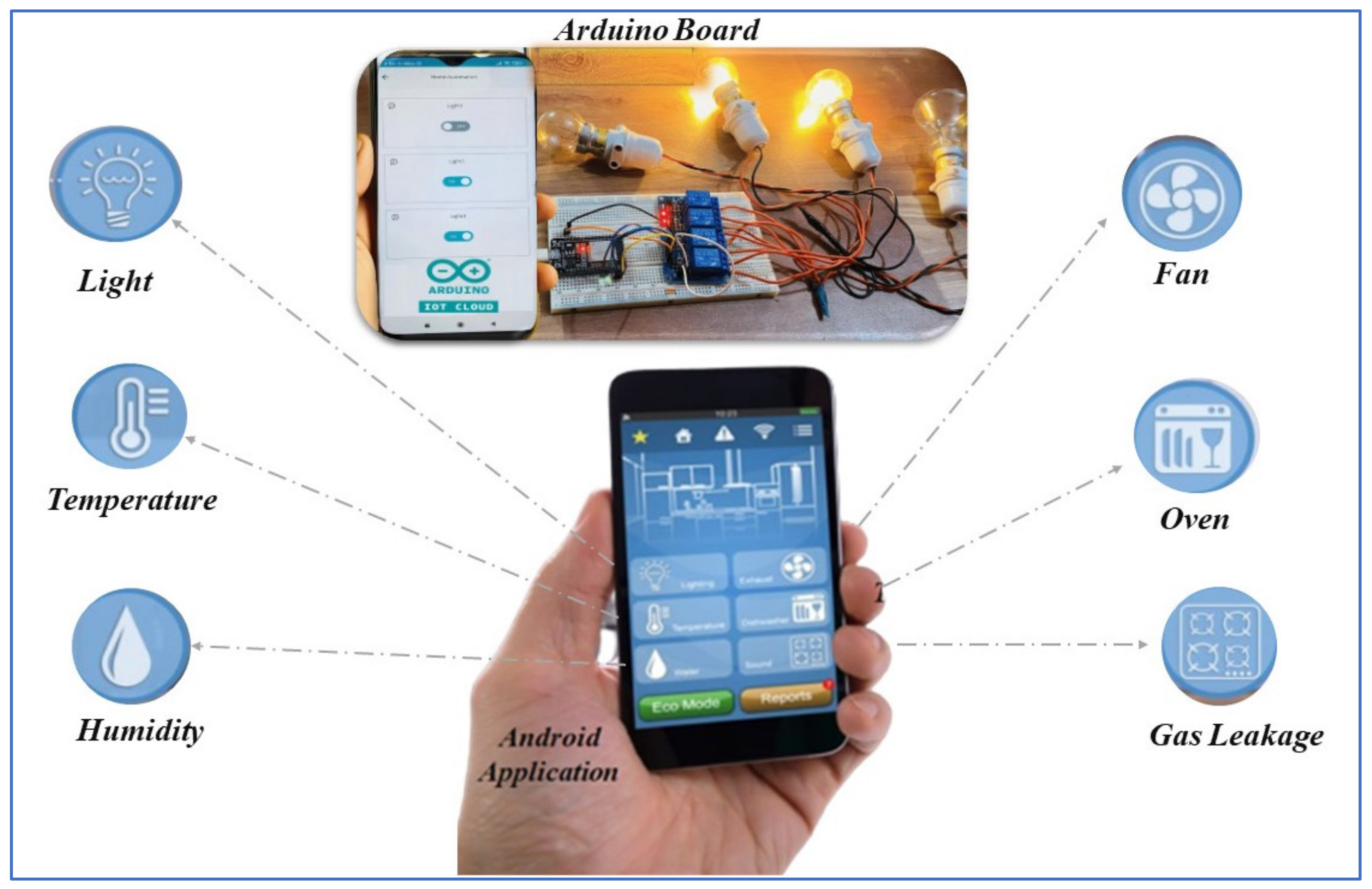
In this section, the proposed methodology for monitoring and automating the smart kitchen is discussed. Because automation has not yet made its way into most kitchens, particularly in Pakistan, our primary goal was to design a smart kitchen automation system based on an Arduino board connected to the Internet, and which is capable of being operated remotely from any Android OS smartphone. At the moment, standard wall switches are dispersed throughout the house or in a kitchen, making it difficult for the user to get close to them to activate them. It is even more difficult for persons who are elderly or physically challenged to do so in this environment. With the use of smartphones, a remote-controlled home automation system yields the most modern solution. To accomplish this, the Arduino board placed at the receiver end communicates with the Internet, while a GUI program on the mobile phone running on the transmitter end delivers on/off orders to the receiver where the loads are connected, and vice versa. Through the use of this technology, the loads can be turned on and off remotely by simply tapping the designated location on the GUI. The Arduino board manages the loads by controlling them with relays. The project is an Internet of Things (IoT)-based smart kitchen with an automation and monitoring system. Using this system, the user can manage numerous appliances, such as freezers, ovens, air conditioners, and other similar devices, with their cell phone. The user can also regulate the gas level in their home from their smartphone or tablet. The ultimate goal is to make it possible for any smartphone running the Android operating system to control devices from a distance. Figure 1 illustrates the proposed solution.
Figure 1. Proposed automation and monitoring system.

4.1. System Analysis

Problem analysis serves as the foundation for the design and development phases of software development. The problem is studied in order to provide enough information to develop a new solution. Large problems are broken into smaller ones to make them more intelligible and easier to solve. Similarly, in this project, all duties were subdivided and categorized. Table 1 shows the capabilities or services that the system is expected to provide.
Table 1. System functionality.

4.2. System Requirements

Specific hardware and software are employed to meet system requirements. A computer, for example, may require a specific I/O port to interact with a peripheral device. A smartphone may require a specific operating system to run a specific app. The system requirements can be verified before purchasing a software application or hardware device to ensure that the product is compatible with the system. The following are typical system requirements:
I.
Hardware Required
a.
ESP32
b.
DHT11 Sensor
c.
5 V Relay X 8
d.
MQ-135 Gas sensor
e.
Prototyping board (Breadboard)
f.
Connecting wires
g.
5 V power supply
h.
Smartphone or tablet:
i.
Minimum 2.4 GHz processor
ii.
Minimum 4 GB RAM
iii.
Minimum 16 GB hard disk
II.
Software Required
a.
Arduino IDE
b.
Android application.

4.3. Appliance Flow Design

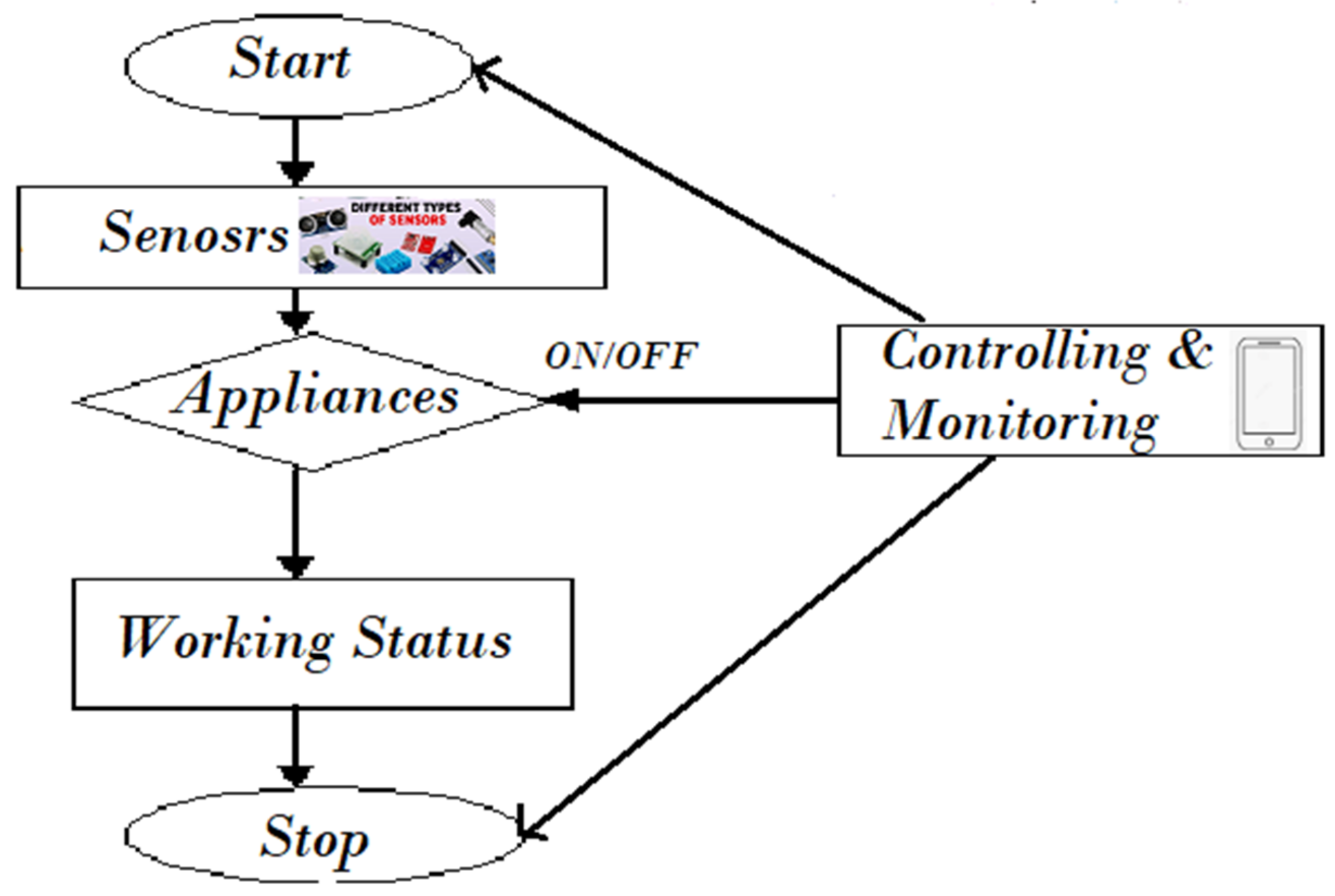
The process of transforming what was discovered during domain analysis into a workable implementation is known as system design. This design implementation will carry out the system charter and lead to system reuse across several systems. In design mode, components such as sensors are placed to control the controllers through the Wi-Fi using the developed Android applications. The working flow is shown in Figure 2.
Figure 2. Working flow of the designed system.
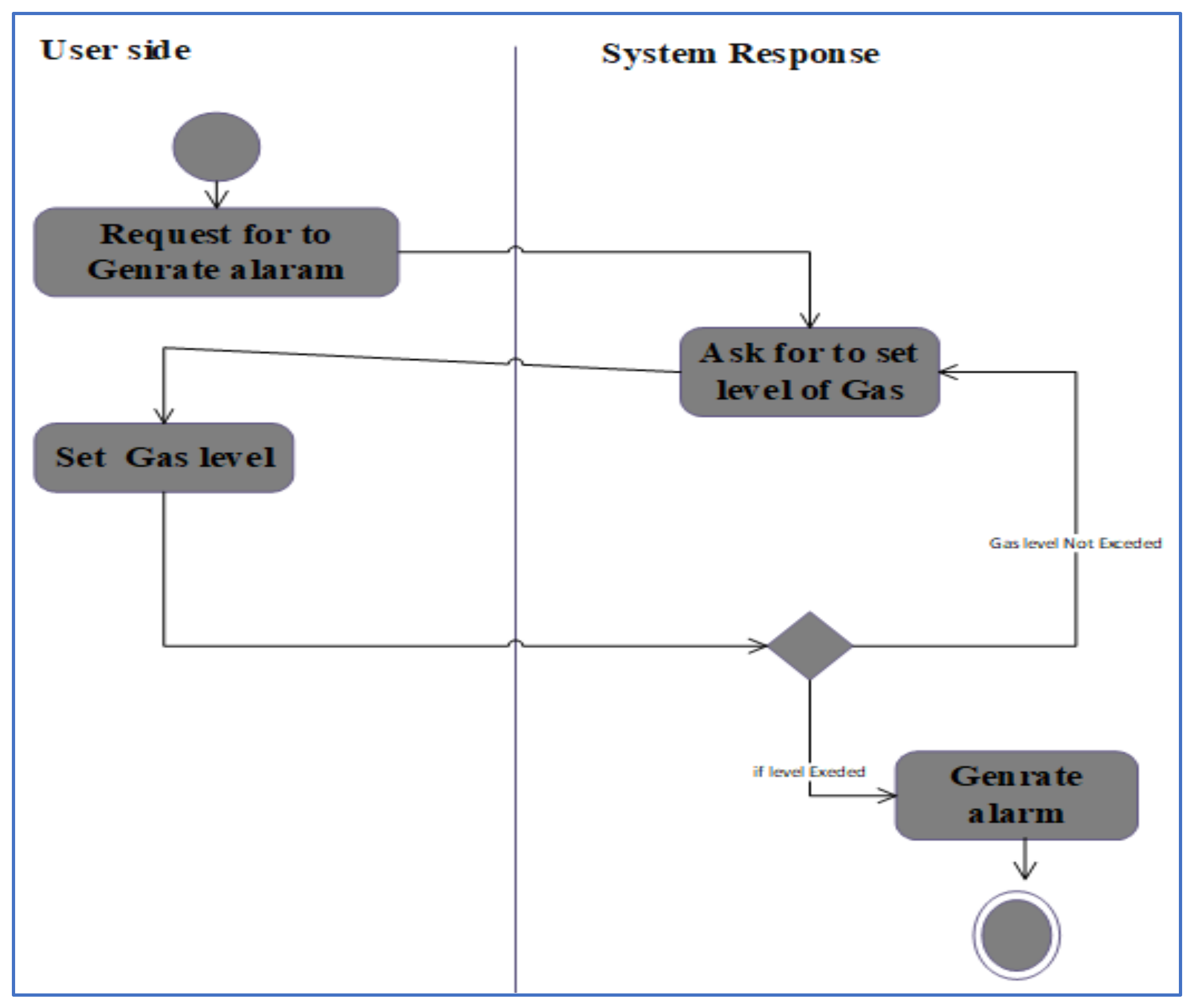
The illustration of software object interactions via messages is emphasized in interactive modeling. The activity diagram is included. This is another crucial diagram in the UML for describing the dynamic characteristics of the system. An activity diagram is a flow chart that depicts the transition from one activity to another. The action can be described as a system operation. Thus, the control flow is drawn from one operation to another, as the gas leakage operations status is presented in Figure 3.
Figure 3. Gas leakage on/off status.

4.4. Implementation Details

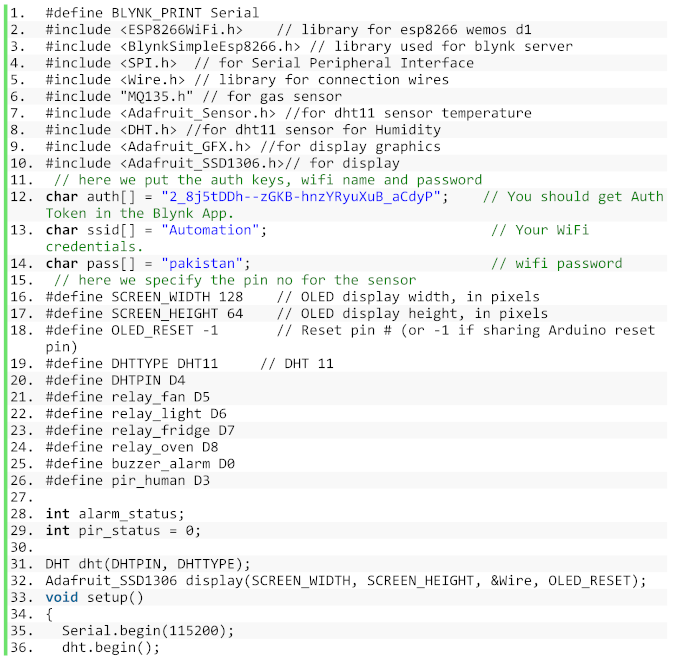
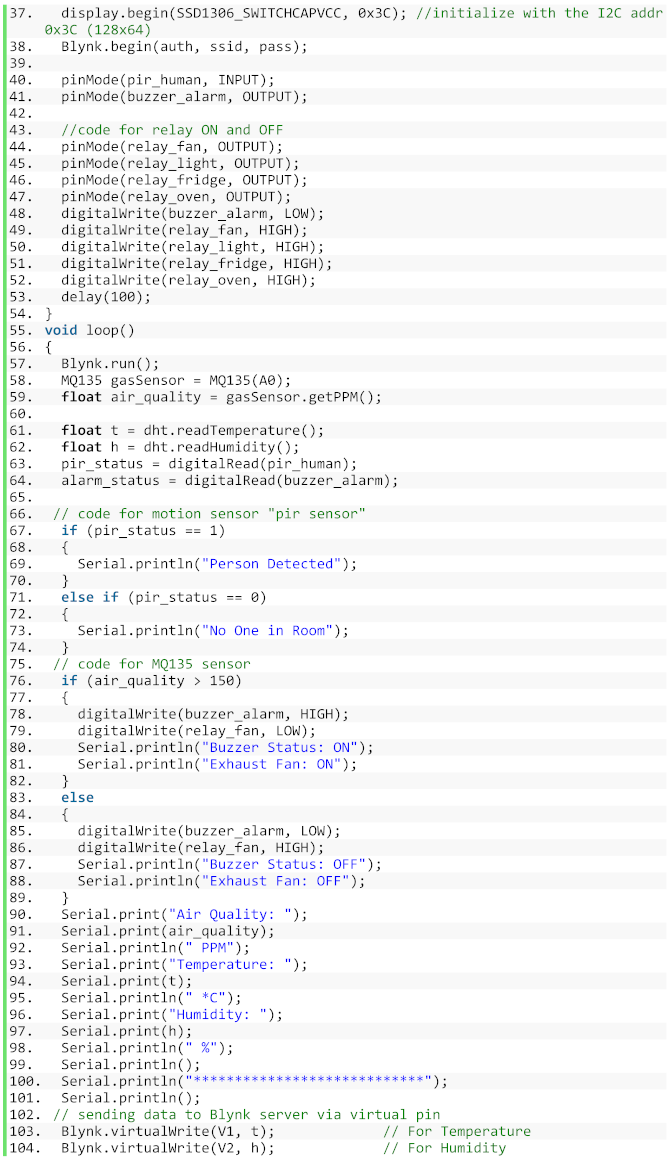
Implementation refers to the process of ensuring that the system is operational, and then allowing customers to gain control over its operation for use and evaluation. The implementation stage of this project began after the design phase. During this step, a design is turned into usable software. The program is designed in such a way that it can meet the needs and expectations of the users. The tool used in the project implementation and the component that is used to implement the system are converted in the implementation of any system. In the existing system [46], functionality was upgraded to meet our needs, and simulated because there is always an opportunity for improvement in the system. The code for our proposed system is attached in the Appendix A.

4.5. Working on Our Proposed System

In this section, the working prototype of our proposed system and the screenshots of the mobile application are presented. Figure 4 illustrates the working mechanism using the mobile application. This shows how the user uses the mobile application to turn on the sensors, and the sensors operate using the application; the user can also control the application using the mobile application. Then, users check the status of the planned sensors on certain applications and, by monitoring the status, can turn them on or off; for example, in the case of humidity and gas leakage, the measurement actions can be used.
Figure 4. Working system controlled through a mobile app.
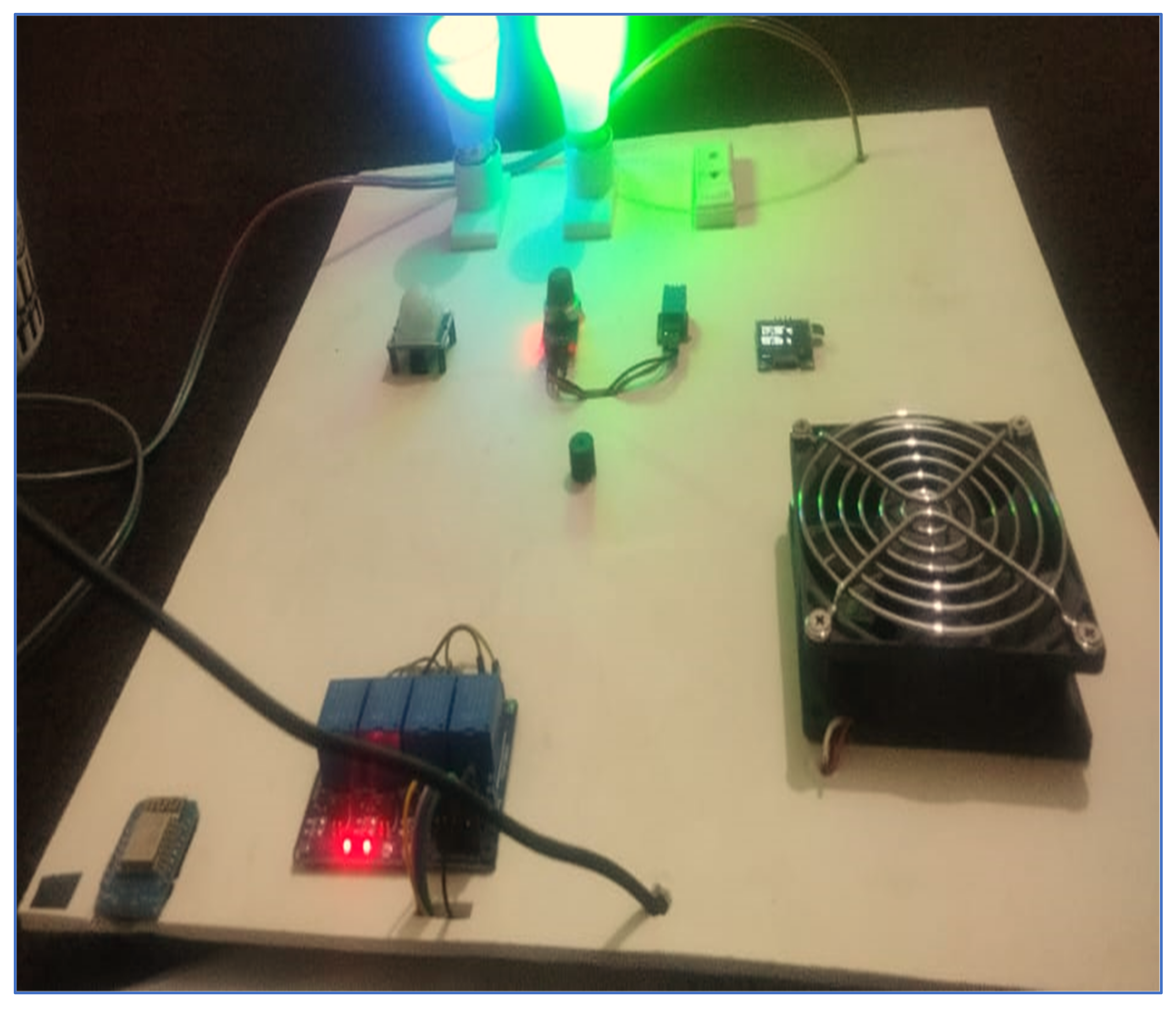
As discussed in the implementation section, after updating the existing system [29] according to the system requirements, the hardware and software listed in Section 4.2 were integrated. The working of our proposed system was then tested, as shown in Figure 5. The simulation was performed on Matlab2016b to observe the number of successful results attained from this proposed smart kitchen monitoring and automation system.
Figure 5. Working prototype of proposed system.
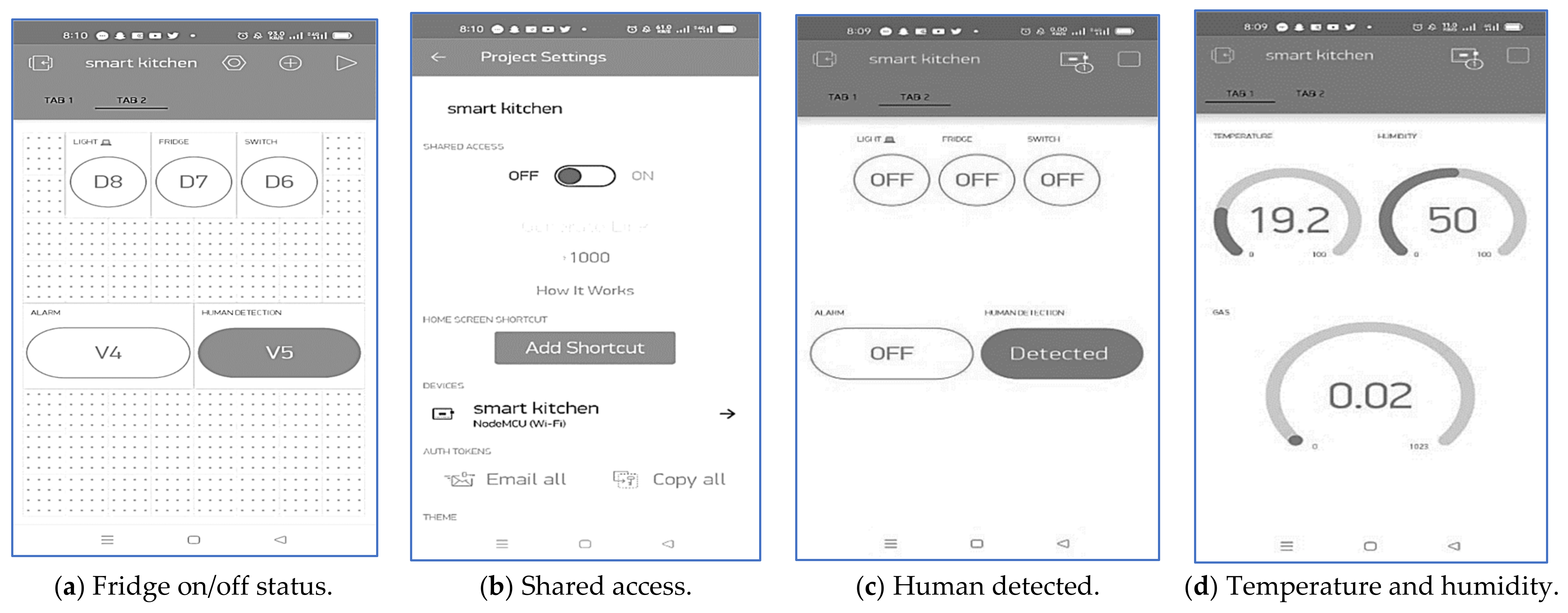
The working Android mobile application screenshots of the proposed system are shown in Figure 6a–d of the fridge, shared access, human detection, and temperature and humidity, respectively.
Figure 6. Monitoring and Automation through Integrated Android Application.

5. Simulation Results and Discussions

In this section, simulation results are presented. The developed system was installed in multiple houses to control and monitor their appliances and check the effectiveness of the system. Users gained control by installing the smart home Android application, which controls the controllers that were programmed through an Arduino. In this way, the designed home automation system is operated. To check the effectiveness of this system, a low-level simulation was performed by providing some data input as observed in several houses.
We can implement this system on a larger scale, but the hardware implementation cost will be increased as we need to adjust the hardware for each electronic or appliance. The Android applications work smoothly because, from an Android, only the devices are controlled. Furthermore, the Internet is the basic requirement to operate this system smoothly. Thus, for a wider scale, a stable connection and the related hardware are needed.
The simulation was performed using Matlab2016b on multiple houses. To perform the simulation of the proposed system, the system was not only implemented in the kitchen; rather, the whole home was considered. However, the focus was on the kitchen appliances. The simulation considered two, four, and six houses. On average each house has two bedrooms, one living room, one guest room, two baths, and one kitchen. The averages in each house were considered, as follows. It was assumed each house uses eight lights of 60 watts, that are used daily for 4/12 (4 lights are on 12 h a day, or 2 lights are on 24 h a day), for 60 × 2 = 120 watts, and two fans are used daily for 2/24 (which means 3 fans are used daily for approx. 24 h per day), for 2 × 120 = 240 watts. Thus, the lights and fans use 360 watts of energy daily. In addition, the other items such as fridges, ovens, and irons, use around 340 watts. Thus, the daily usage of every house is approximately 800 watts.
D a i l y   U n i t s = W a t t a g e   ×   U s a g e   h o u r s   p e r   d a y 1000
Placing the values in Equation (1) gives:
D a i l y   U n i t s = 700   ×   24 1000 = 16.8
If 1000 watts or 1 Kilowatt of power is used for 1 h then it consumes 1 unit [47]. This means that it consumes approximately 16.8 units daily, and the price of 1 unit is USD 0.045 [48].
M o n t h l y   U n i t s = U n i t s   ×   30   d a y s   o f   m o n t h 1000
Placing the values in Equation (2) gives:
M o n t h l y   U n i t s = 16.8   ×   30 = 504  
Now the total cost is obtained using Equation (3). The per unit cost of electricity is = USD 0.045.
T o t a l   C o s t = M o n t h l y   U n i t s   ×   P e r   U n i t   c o s t                
T o t a l   C o s t = 504   ×   0.045 = 22.68 $
So, the total cost of an average house for a month is approximately USD 22.68.
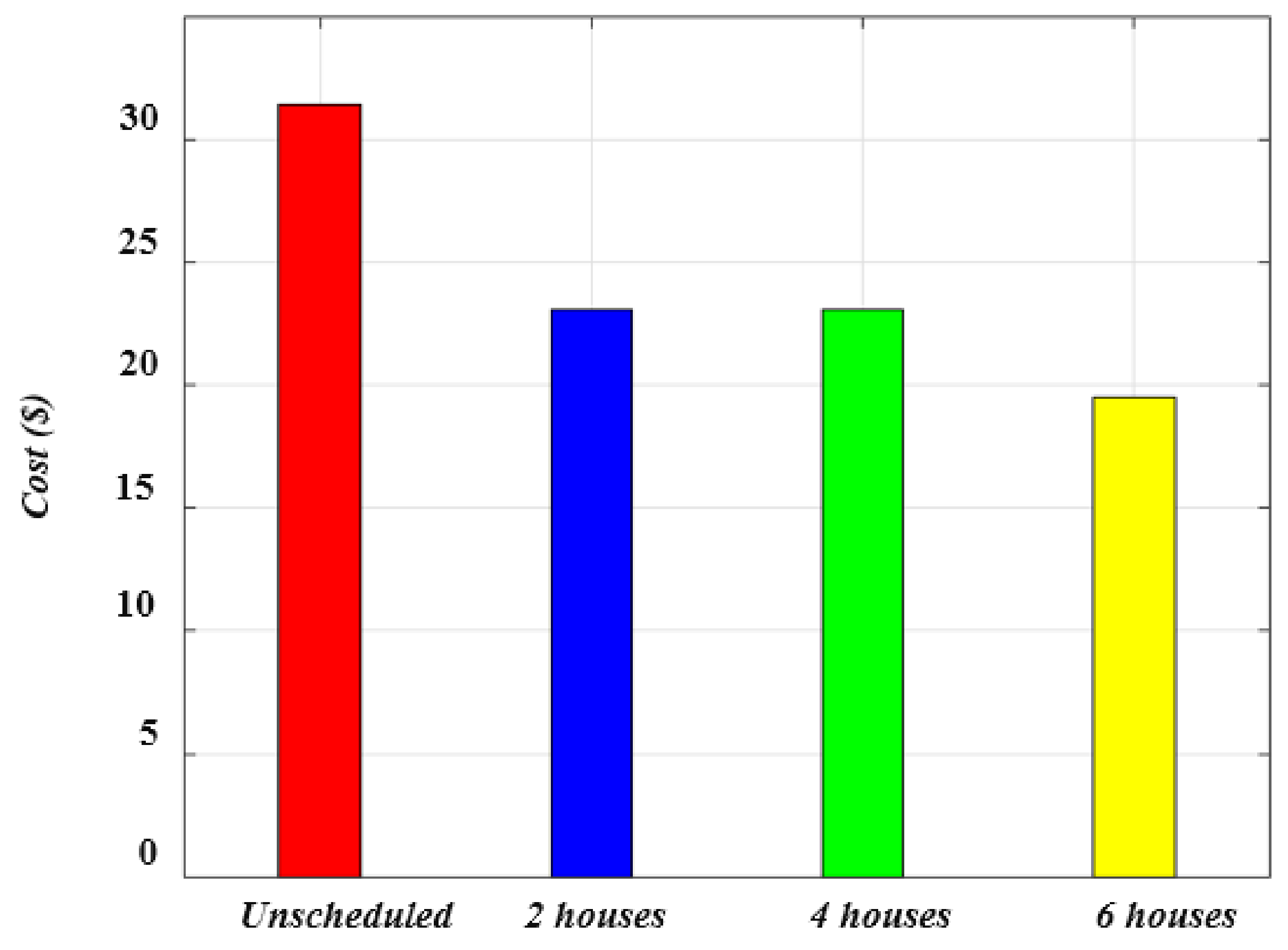
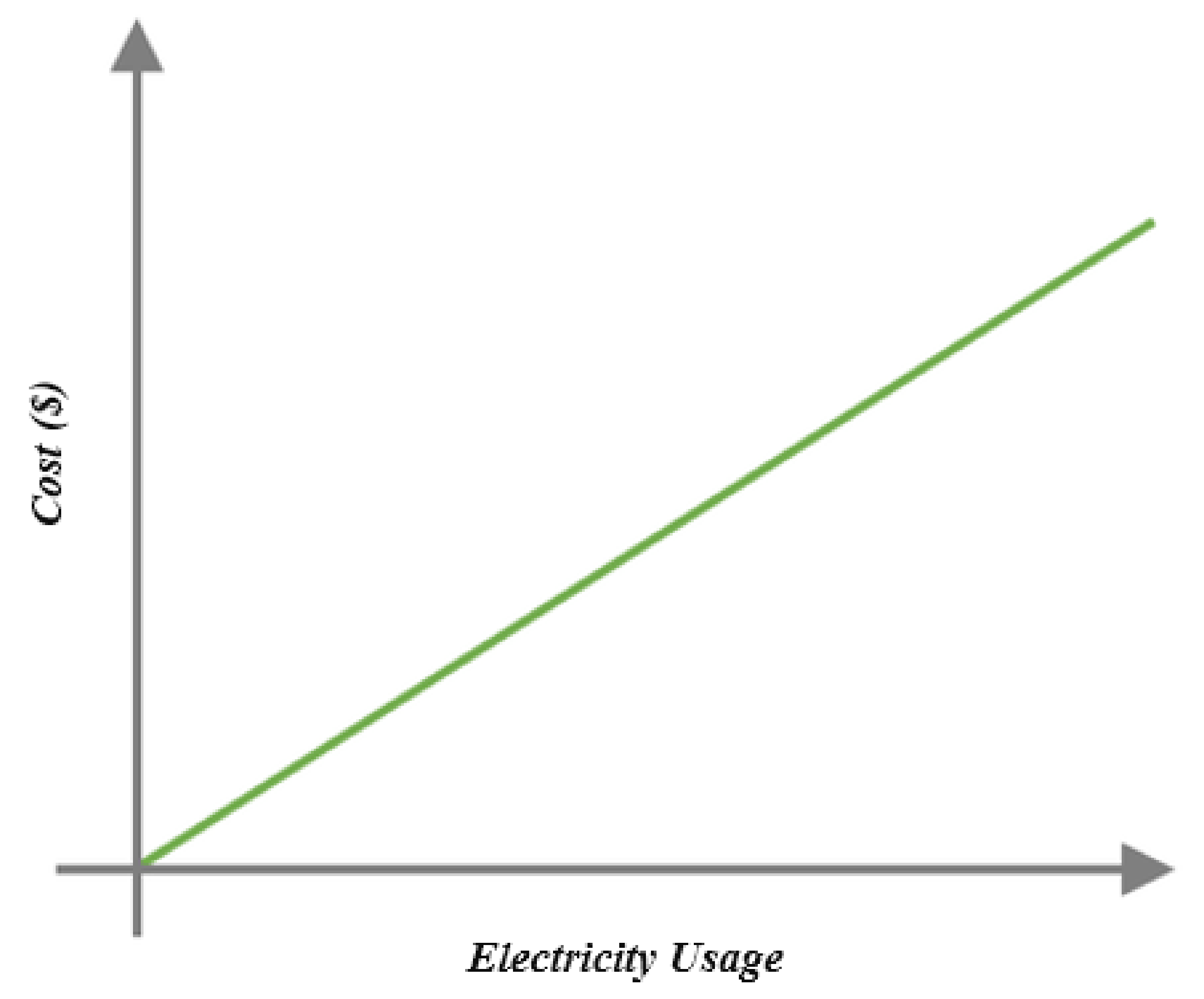
It is observed that the proposed solution can efficiently reduce the cost as compared to that of unscheduled houses. In addition, by increasing the number of houses, the overall usage of power is reduced. In turn, this reduces the cost, as shown in Figure 7, which is USD 33.32 in the case of unscheduled houses, and USD 23.64, 22.32, and 19.54 for two, four, and six houses, respectively. Cost and power are directly proportional to each other, as shown in Figure 8. The simulation results reveal that by controlling and monitoring the smart kitchen, the user not only controls the cost but also saves energy/electricity.
Figure 7. Electricity cost.
Figure 8. Electricity cost vs power usage.

6. Conclusions

This paper presents a smart kitchen with automation and monitoring system project that is currently in development. The technology enables the user to control their home appliances from their mobile phone, which is a desirable function. Users are able to turn on and off their air conditioning and other domestic equipment such as refrigerators, gas stoves, freezers, and ovens, and manage the gas level in their homes. An Internet of Things (IoT)-based smart kitchen with an automation and monitoring system is the focus of this project. The ultimate goal is to make it feasible for any smartphone running the Android operating system to operate devices from a distance using the Android remote control application. With this technology, the user can control the amount of gas that is released into the home directly from their smartphone. Furthermore, a simulation was performed in Matlab2016b; the cost achieved for unscheduled houses was USD 33.32, and that for two, four, and six houses was USD 23.64, 22.32, and 19.54, respectively, indicating that cost and power are directly proportional. The results show that the proposed solution is more cost effective than unscheduled houses. The results showed that using this system has a scientifically significant effect on electricity usage and cost. In the future, we will integrate machine learning techniques to further optimize this system and provide the predicted pattern to the user for operating their home devices.

Author Contributions

Conceptualization, C.A.U.H., J.I., M.S.K., S.H., A.A., M.A., A.G., M.U. and S.S.U.; methodology, C.A.U.H., M.S.K., S.H., M.A. and S.S.U.; software, C.A.U.H., M.S.K. and S.H.; validation, C.A.U.H., J.I., M.S.K., S.H., A.A., M.A., A.G., M.U. and S.S.U.; investigation, A.A., M.A., A.G., M.U. and S.S.U.; resources, C.A.U.H., J.I. and M.S.K.; writing—original draft preparation, C.A.U.H., J.I., M.S.K., S.H., A.A., M.A., A.G., M.U. and S.S.U.; writing—review and editing, C.A.U.H., J.I., M.S.K., S.H., A.A., M.A., A.G., M.U. and S.S.U.; supervision, A.A., M.A., A.G., S.H. and M.U.; funding acquisition, A.A., A.G., M.U. and S.S.U. All authors have read and agreed to the published version of the manuscript.

Funding

This article has been financially supported by University Malaysia Sabah.

Institutional Review Board Statement

Not applicable.

Data Availability Statement

The data used in this research can be obtained from the corresponding authors upon request.

Conflicts of Interest

The authors declare no conflict of interest.

Appendix A

The code for our suggested system is provided below:
Energies 15 06778 i001
Energies 15 06778 i002
Energies 15 06778 i003

References

  1. Li, J.; Lin, Y. IoT Home Automation–Smart homes and Internet of Things. In Proceedings of the 3rd International Academic Exchange Conference on Science and Technology Innovation (IAECST), Guangzhou, China, 10–12 December 2021; pp. 294–298. [Google Scholar]
  2. David, N.; Chima, A.; Ugochukwu, A.; Obinna, E. Design of a home automation system using Arduino. Int. J. Sci. Eng. Res. 2015, 6, 795–801. [Google Scholar]
  3. Ahmed, M.M.; Qays, M.O.; Abu-Siada, A.; Muyeen, S.M.; Hossain, M.L. Cost-Effective Design of IoT-Based Smart Household Distribution System. Designs 2021, 5, 55. [Google Scholar] [CrossRef]
  4. Sharif, Z. Internet-of-Things based Home Automation System using Smart Phone. Sir Syed Univ. Res. J. Eng. Technol. 2021, 11, 1–9. [Google Scholar] [CrossRef]
  5. Wang, J.; Zhang, Y.C. A Review on Internet of Things Based Smart Home. In Proceedings of the 2021 International Conference on Culture-Oriented Science & Technology (ICCST), Beijing, China, 18–21 November 2021; pp. 273–277. [Google Scholar]
  6. Akkasaligar, P.T.; Biradar, S.; Pujari, R. Internet of Things Based Smart Secure Home System. In International Conference on Intelligent Data Communication Technologies and Internet of Things; Springer: Cham, Switzerland, 2019; pp. 348–355. [Google Scholar]
  7. Garg, S.; Chatterjee, J.M.; Le, D.N. Implementation of Rest Architecure-Based Energy-Efficient Home Automation System. Secur. Des. Cloud Iot Soc. Netw. 2019, 1, 143–152. [Google Scholar]
  8. Balaji, A.; Sathyasri, B.; Vanaja, S.; Manasa, M.N.; Malavega, M.; Maheswari, S. Smart Kitchen Wardrobe System Based on IoT. In Proceedings of the 2020 International Conference on Smart Electronics and Communication (ICOSEC), Trichy, India, 10–12 September 2020; pp. 865–871. [Google Scholar]
  9. Desai, H.; Guruvayurappan, D.; Merchant, M.; Somaiya, S.; Mundra, H. IoT Based Grocery Monitoring System. In Proceedings of the 2017 Fourteenth International Conference on Wireless and Optical Communications Networks (WOCN), Mumbai, India, 24–26 February 2017; pp. 1–4. [Google Scholar]
  10. Pendbhajh, A.; Rajesh, S. IOT in Home Grocery Management. In Proceedings of the Somaiya International Conference on Technology and Information Management, Mumbai, India, 25–26 February 2017; pp. 44–49. [Google Scholar]
  11. Salah Uddin, M.; Khan, M.; Ali, D. Kitchen grocery items monitoring system based on internet of things. Int. J. Comput. Netw. Technol. 2019, 7, 47–52. [Google Scholar] [CrossRef]
  12. Suganya Devi, K.; Sabarish, N.S.; Sankra, M.; Santhosh Kumar, A. Internet of Things (IoT) based smart kitchen pantry. Ir. Interdisc. J. Sci. Res. 2020, 4, 56–61. [Google Scholar]
  13. Sah, D.K.; Poongodi, M.; Donta, P.K.; Hamdi, M.; Cengiz, K.; Kamruzzaman, M.M.; Rauf, H.T. Secured Wireless Energy Transfer for the Internet of Everything in Ambient Intelligent Environments. IEEE Internet of Things Magazine 2022, 5, 62–66. [Google Scholar] [CrossRef]
  14. Jian-Mei, S.; Li-Juan, W.; Xi, Y.; Jun-Shan, Y. Design and implementation of intelligent kitchen system based on internet of things. In Proceedings of the 2018 International Conference on Smart Grid and Electrical Automation (ICSGEA), Changsha, China, 9–10 June 2018; pp. 253–256. [Google Scholar]
  15. Pudugosula, H. Automatic smart and safety monitoring system for kitchen using Internet of Things. In Proceedings of the 2019 International Conference on Intelligent Computing and Control Systems (ICCS), Madurai, India, 15–17 May 2019; pp. 1174–1177. [Google Scholar]
  16. Anandhakrishnan, S.; Nair, D.; Rakesh, K.; Sampath, K.; Nair, G.S. IOT Based Smart Gas Monitoring System. IOSR J. Electr. Electron. Eng. (IOSR-JEEE) 2017, 2017, 82–87. [Google Scholar]
  17. Abdullah, N.F.; Abdullah, N.S. Kitchen Gas Leakage Control System. Res. Innov. Tech. Vocat. Educ. Train. 2021, 1, 187–193. [Google Scholar]
  18. Shrestha, S.; Anne, V.K.; Chaitanya, R. IoT based smart gas management system. In Proceedings of the 3rd International Conference on Trends in Electronics and Informatics (ICOEI), Tirunelveli, India, 23–25 April 2019; pp. 550–555. [Google Scholar]
  19. Hsu, W.L.; Jhuang, J.Y.; Huang, C.S.; Liang, C.K.; Shiau, Y.C. Application of Internet of Things in a kitchen fire prevention system. Appl. Sci. 2019, 9, 3520. [Google Scholar] [CrossRef]
  20. Rathod, P.; Khizaruddin, S.; Kotian, R.; Lal, S. Raspberry Pi based home automation using Wi-Fi, IOT & Android for live monitoring. Int. J. Comput. Sci. Trends Technol. (IJCST) 2017, 5, 363–368. [Google Scholar]
  21. Aravindhan, R.; Ramanathan, M.; SanjaiKumar, D.; Kishore, R. Home Automation Using Wi-Fi Interconnection; Department of Mechatronics Engineering, Chennai Institute of Technology, Anna University Chennai: Tamil Nadu, India, 2017; p. 2395-0056. [Google Scholar]
  22. Pampattiwar, K.; Lakhani, M.; Marar, R.; Menon, R. Home automation using raspberry pi controlled via an android application. Int. J. Curr. Eng. Technol. 2017, 7, 962–967. [Google Scholar]
  23. Reddy, P.S.N.; Reddy, K.T.K.; Reddy, P.A.K.; Ramaiah, G.K.; Kishor, S.N. An IoT based home automation using android application. In Proceedings of the 2016 International Conference on Signal Processing, Communication, Power and Embedded System (SCOPES), Paralakhemundi, India, 3–5 October 2016; pp. 285–290. [Google Scholar]
  24. Khade, N.S.; Dharmik, N.; Thakare, P.; Bhanarkar, R.; Bachhuka, S. Vandana Publications Home Automation. Int. J. Eng. Manag. Res. (IJEMR) 2017, 7, 390–392. [Google Scholar]
  25. Quadri, S.A.I.; Sathish, P. IoT based home automation and surveillance system. In Proceedings of the 2017 International Conference on Intelligent Computing and Control Systems (ICICCS), Madurai, India, 15–16 June 2017; pp. 861–866. [Google Scholar]
  26. Vu Trieu, M.; Khanna, R. Application of Artificial Intelligence in Smart Kitchen: Application of Artificial Intelligence in Smart Kitchen. Int. J. Innov. Technol. Interdiscip. Sci. 2018, 1, 1–8. [Google Scholar]
  27. Chatterjee, J.M.; Kumar, R.; Khari, M.; Hung, D.T.; Le, D.N. Internet of Things based system for Smart Kitchen. Int. J. Eng. Manuf. 2018, 4, 29–39. [Google Scholar] [CrossRef]
  28. Fibry, N.; Pantjawati, A.B. Automation and monitoring smart kitchen based on Internet of Things (IoT). IOP Conf. Ser. Mater. Sci. Eng. 2018, 384, 012007. [Google Scholar]
  29. Reddy, B.S.; Veera, R.R.; Reddy, B.R.M.; Kishore, M.G. Iot Based Smart Kitchen Automation And Monitoring System. Int. Res. J. Mod. Eng. Technol. Sci. 2022, 4, 4578–4585. [Google Scholar]
  30. Nayan, A.A.; Saha, J.; Ferdaous, J.; Kibria, M.G. IoT Based Smart Kitchen Security System. In Proceedings of the International Conference on Big Data, IoT and Machine Learning (BIM), Cox’s Bazar, Bangladesh, 4 December 2022. [Google Scholar]
  31. Aw, Y.P.Y.; Alhady, S.S.N.; Lee, S.E.; Wahab, A.A.A.; Othman, W.A.F.W. Smart Kitchen Model Using Nuvotun Development Board. In Intelligent Manufacturing and Mechatronics; Springer: Singapore, 2021; pp. 461–470. [Google Scholar]
  32. Logeshwaran, M.; ME, J.J.J.S. Designing an IoT based Kitchen Monitoring and Automation System for Gas and Fire Detection. In Proceedings of the 2022 6th International Conference on Computing Methodologies and Communication (ICCMC), Erode, India, 29–31 March 2022; pp. 346–353. [Google Scholar]
  33. Yang, Z.; Zhang, X.; Liu, X.; Tang, J.; Cao, H. A Conceptual Framework of Future Home Smart Kitchen System with Multiple Experience Modes. In International Conference on Applied Human Factors and Ergonomics; Springer: Cham, Switzerland, 2021; pp. 438–445. [Google Scholar]
  34. Varun, K.; Joshi, V.; Dani, R. Design A Model For Smart Kitchen Using Machine Learning Algorithm. Int. Res. J. Mod. Eng. Technol. Sci. 2022, 4, 829–833. [Google Scholar]
  35. kizi Quldosheva, R.U.; Matniyazov, Z.E.; Mansurov, Y.M. Technological Equipment of Modern Kitchen. Eurasian J. Eng. Technol. 2022, 5, 28–32. [Google Scholar]
  36. Nirmala, A.P.; Asha, V.; Chandra, P.; Priya, H.; Raj, S. IoT based Secure Smart Home Automation System. In Proceedings of the 2022 IEEE Delhi Section Conference (DELCON), New Delhi, India, 11–13 February 2022; pp. 1–7. [Google Scholar]
  37. Umapathi, N.; Sabbani, S. An Internet of Things (IoT)-based Approach for Real-Time Kitchen Monitoring Using NodeMCU 1.0. In Futuristic Communication and Network Technologies; Springer: Singapore, 2022; pp. 35–43. [Google Scholar]
  38. Aslam, S.; Muqeem, F. Internet of Things Platform for Real Time Automated Safety System Based on Multi Sensor Network and Bluetooth Module. In Proceedings of the 2022 5th Conference on Cloud and Internet of Things (CIoT), Marrakech, Morocco, 28–30 March 2022; pp. 239–246. [Google Scholar]
  39. MK, M.P.; Suman, R.; Rakshitha, T.S.; Varshitha, G.U. Design of Smart Kitchen Management System Using Internet of Things. Int. Res. J. Mod. Eng. Technol. Sci. 2022, 4, 2160–2165. [Google Scholar]
  40. Febriantono, M.A.; Herasmara, R.; Maulana, F.I. Smart Kitchen Monitoring System Based on Human Health Index Using Internet of Things and Decision Tree. In Proceedings of the 2021 3rd International Conference on Cybernetics and Intelligent System (ICORIS), Makasar, Indonesia, 25–26 October 2021; pp. 1–6. [Google Scholar]
  41. Chen, L.W.; Tseng, H.F. DeepSafe: A Hybrid Kitchen Safety Guarding System with Stove Fire Recognition Based on the Internet of Things. In Proceedings of the IEEE INFOCOM 2021-IEEE Conference on Computer Communications Workshops (INFOCOM WKSHPS), Vancouver, BC, Canada, 10–13 May 2021; pp. 1–2. [Google Scholar]
  42. Tamrakar, A.; Shukla, A.; Kalifullah, A.; Reegu, F.; Shukla, K. extended review on internet of things (IoT) and its characterisation. Int. J. Health Sci. 2022, 10, 8490–8500. [Google Scholar] [CrossRef]
  43. Wojcicki, K.; Bieganska, M.; Paliwoda, B.; Gorna, J. Internet of Things in Industry: Research Profiling, Application, Challenges and Opportunities—A Review. Energies 2022, 15, 1806. [Google Scholar] [CrossRef]
  44. Pandey, A.; Singh, Y.; Malik, M. Design and Development of Home Automation System. In Intelligent Computing and Applications; Springer: Singapore, 2021; pp. 245–254. [Google Scholar]
  45. Stolojescu-Crisan, C.; Crisan, C.; Butunoi, B.P. An IoT-based smart home automation system. Sensors 2021, 21, 3784. [Google Scholar] [CrossRef] [PubMed]
  46. IoT Based Smart Kitchen Automation & Monitoring with ESP8266. Available online: https://how2electronics.com/iot-based-smart-kitchen-automation-monitoring-with-esp8266/ (accessed on 23 March 2022).
  47. What Are Watt, Kilowatt. kVAh and a Unit of Electricity. Available online: https://www.bijlibachao.com/electricity-bill/what-are-watt-kilowatt-and-a-unit-of-electricity.html (accessed on 23 March 2022).
  48. High Fuel Cost in Jan 2022: Power Tariff Likely to Go Up by Rs6.1/Unit. Available online: https://www.thenews.com.pk/print/935163-high-fuel-cost-in-jan-2022-power-tariff-likely-to-go-up-by-rs6–1-unit (accessed on 23 March 2022).
Publisher’s Note: MDPI stays neutral with regard to jurisdictional claims in published maps and institutional affiliations.

Article Metrics

Citations

Article Access Statistics

Multiple requests from the same IP address are counted as one view.