You are currently viewing a new version of our website. To view the old version click .
Energies
  • Article
  • Open Access

3 September 2021

Cyber Risks to Critical Smart Grid Assets of Industrial Control Systems
,
,
and
1
School of Computer Science and Informatics, Cardiff University, Cardiff CF10 3AT, UK
2
CEMSE Division, King Abdullah University of Science and Technology (KAUST), Thuwal 23955, Saudi Arabia
*
Author to whom correspondence should be addressed.
This article belongs to the Special Issue Big Data and Advanced Analytics in Energy Systems and Applications

Abstract

Cybersecurity threats targeting industrial control systems (ICS) have significantly increased in the past years. Moreover, the need for users/operators to understand the consequences of attacks targeting these systems and protect all assets is vital. This work explores asset discovery in ICS and how to rank these assets based on their criticality. This paper also discusses asset discovery and its components. We further present existing solutions and tools for asset discovery. We implement a method to identify critical assets based on their connection and discuss related results and evaluation. The evaluation utilises four attack scenarios to stress the importance of protecting these critical assets since the failure to protect them can lead to serious consequences. Using a 12-bus system case, our results show that targeting such a system can increase and overload transmission lines values to 120% and 181% MVA, which can affect the power supply and disrupt service, and it can increase the cost up to 60%, affecting the productivity of this electric grid.

1. Introduction

In recent years, industrial control systems (ICS) have used information and communication technologies to control and automate the stable operation of industrial processes [1]. A series of attacks have attacked critical infrastructure [2], for instance, smart grid distribution networks. Moreover, to talk about cyber-attacks in these systems, there is a need to understand how ICS, asset discovery, and critical assets operate. Firstly, ICS is a general term that covers several types of control systems and related instruments for industrial process control. Second, asset discovery is the process of discovering and collecting data on technical assets connected to the network for management and tracking. These assets range from hardware devices such as servers to software licenses. Finally, critical assets refer to assets that play a key role in the ICS system and are extremely easy targets for hackers [3]. For example, if hackers attack a key asset in the ICS system, it may cause hundreds of millions of dollars in direct losses and incur huge losses in subsequent maintenance costs. This paper focuses on critical asset discovery to identify the key devices connected on a smart grid system and the processes and services that are running on the ICSs, discover gaps in the existing literature, explore possible vulnerabilities within the developed prototype, and suggest any recommendations.

1.1. Motivation

The high rise of cyber-attacks on ICS can lead to a huge cost for governments and industries. Additionally, more and more ICS devices are connected to the Internet, despite their existing weak security practices. In most attacks, forensic analysis often attributes the success of such attacks to the fact that most of the existing ICS technologies are designed with reliability in mind, and security is a secondary priority. In May 2021, the Colonial Pipeline located in the United States was forced to shut down its entire fuel distribution pipeline due to a ransomware attack. Moreover, based on the pipeline company, the attack consequences have lasted for around one weak, which affected the gasoline and jet fuel distribution across the US east coast [4]. Based on the investigations, the attackers gained unauthorised access through compromised passwords that were possibly found in a batch of leaked passwords on the dark web. Then, the hackers accessed the networks of the pipeline company through a virtual private network account with the compromised password [5]. Similarly, another famous attack on such a system is the Ukraine power grid cyber-attack, which targeted three different distribution substations due to unauthorised entry into the company’s supervisory control and data acquisition system (SCADA) and caused a blackout affecting 225,000 customers for several hours in 103 cities [6]. Lastly, in March 2000, the newly built Maroochydore sewage treatment plant in Queensland, Australia, failed. The wireless connection signal was lost, the sewage pump worked abnormally, and the alarm did not work [1]. It was later discovered that a former engineer of the plant deliberately retaliated because he was dissatisfied with his new contract. It was reported that the former engineer used a laptop and a wireless transmitter to control approximately 140 sewage pumping stations for more than three months. Additionally, 1 million litres of sewage were discharged directly into the local park through the rainwater channel without treatment, which caused serious damage to the local environment. Janelle Bryant, investigation manager of the Australian Environmental Protection Agency, said at the time, “The accident caused many deaths of marine life, and the river began to become polluted and darkened. The foul smell made nearby residents unbearable and even endangered the health of residents” [1]. Therefore, it is vital to understand critical assets in the system and improve its security by prioritising the cybersecurity aspect for critical infrastructure, starting from identifying what needed to be secure, how critical it is, and how to secure it.

1.2. Related Case Studies

The smart grid, which can be considered the new model of the old-style power system, is used in this paper as a case study. In smart grid implementations, frequency, power, voltage, and current measurements are monitored in real-time, providing situational awareness of the system. Attackers who target such systems are classified according to their goals and motivations, which can be listed as cyber warfare, terrorism, industrial espionage, activism, and economic and commercial interests. This paper considers that cyber-attacks in smart grids can be divided into two situations—(1) passive attack: the attacker aims to obtain the transmitted data to understand the system configuration, architecture, and normal system operation status. Since the system’s data has not changed during the attack, it is difficult to detect this type of attack. Therefore, the focus should be on preventing passive attacks rather than detecting passive attacks. Examples of passive attacks are eavesdropping attacks and traffic analysis attacks. (2) Active attack: the attacker affects the system’s operation by modifying the transmitted data or adding manipulation instructions. In the smart grid, most attackers will attack the operating interface of the system, causing false alarms and data delays. This can confuse the operator and make it impossible to discover the system’s operation in time, leading to incorrect substations, sensors, and other equipment. An example of different active attacks that can occur in power systems can be described as follows: replay attacks [7], false data injection [8], and denial of service [9]. Moreover, the most famous attack was the Stuxnet attack on Iran’s nuclear power facility. In 2011, the attackers used a USB hard drive to plant malicious software into the control system of a nuclear power facility, causing the system to malfunction [2]. Therefore, real-time scanning of network devices connected to the smart grid, monitoring whether their activities on the system are normal or the devices on the system have the authority to connect to the system, is very important to ensure the safety of critical infrastructures.

1.3. Associated Challenges

There are existing asset discovery tools available that find the devices connected to ICS. Most of these tools do not provide the needed service for critical assets, important assets, and common assets. Consequently, there are not many accessible resources to search for this kind of information. Vulnerability scanners are also in the same situation as asset discovery tools. The key challenge is that, in critical asset discovery solutions, there are very few key asset rankings. Moreover, finding critical assets is described in detail in these solutions, but it is not mentioned how to rank them in order of importance. This can be due to the fact that it is more difficult to determine the attributes of those critical assets as the evaluation criteria.

1.4. Impact of Cyber-Attacks on Industrial Control Systems

Cyber-attacks can lead to the leakage of sensitive data in industrial settings, the theft of intellectual property rights, and even interrupt production or operation and make it impossible to deliver services to customers. In extreme cases, the most severe attack may cause permanent damage to the system or its components and equipment, resulting in loss of market share and even the company’s bankruptcy. At present, attacks on OT equipment in industrial systems are the most destructive cyber threat to utilities.
The purpose of this paper is to propose a solution for critical asset discovery and critical asset ranking. Since most of the literature now has very few solutions for ranking critical assets, network security engineers can only rely on their work of experience to judge which facilities are key facilities in the ICS system and which facilities are important to protect. Hence, the main contributions of this work can be surmised as follows:
  • To provide a comprehensive overview on all available ICS asset discovery tools, vulnerability scanners, and used solutions.
  • To propose a methodology to evaluate assets criticality based on their connection inside the smart grid.
  • To evaluate the proposed methodology using a list that contains 18 assets to determine and classify their criticality.
  • Explore different attack scenarios from a power measurements perspective when a system is compromised to emphasise the importance of protecting such a system.

3. System and Threat Models

This section illustrates the cybersecurity objectives of this research. Moreover, it covers the system model used in this study as well as the threat model in terms of predefined attack scenarios.

3.1. Security Objectives and Goals

The main security objective is availability, which can be defined as assuring that authorised parties can access information when needed. Secondly, confidentiality can ensure that the relevant recipients can access the stored and transmitted data and prevent unauthorised users from accessing data to protect personal privacy and security. Lastly, integrity prevents tampering with critical data in sensors, control commands, software, and electronic devices, thereby disrupting data exchange and decision-making. The key task of this work is to study the solution of asset discovery and critical infrastructure, asset ranking. Although existing asset definitions come from different fields, there are certain differences in the specific definition and attributes of assets within the scope of ICS and security. Another task in this research is to study the types of vulnerabilities of assets in ICS and the role of assets to find the necessary attributes that help achieve the ranking of key assets.

3.2. System Model and Problem Formulation

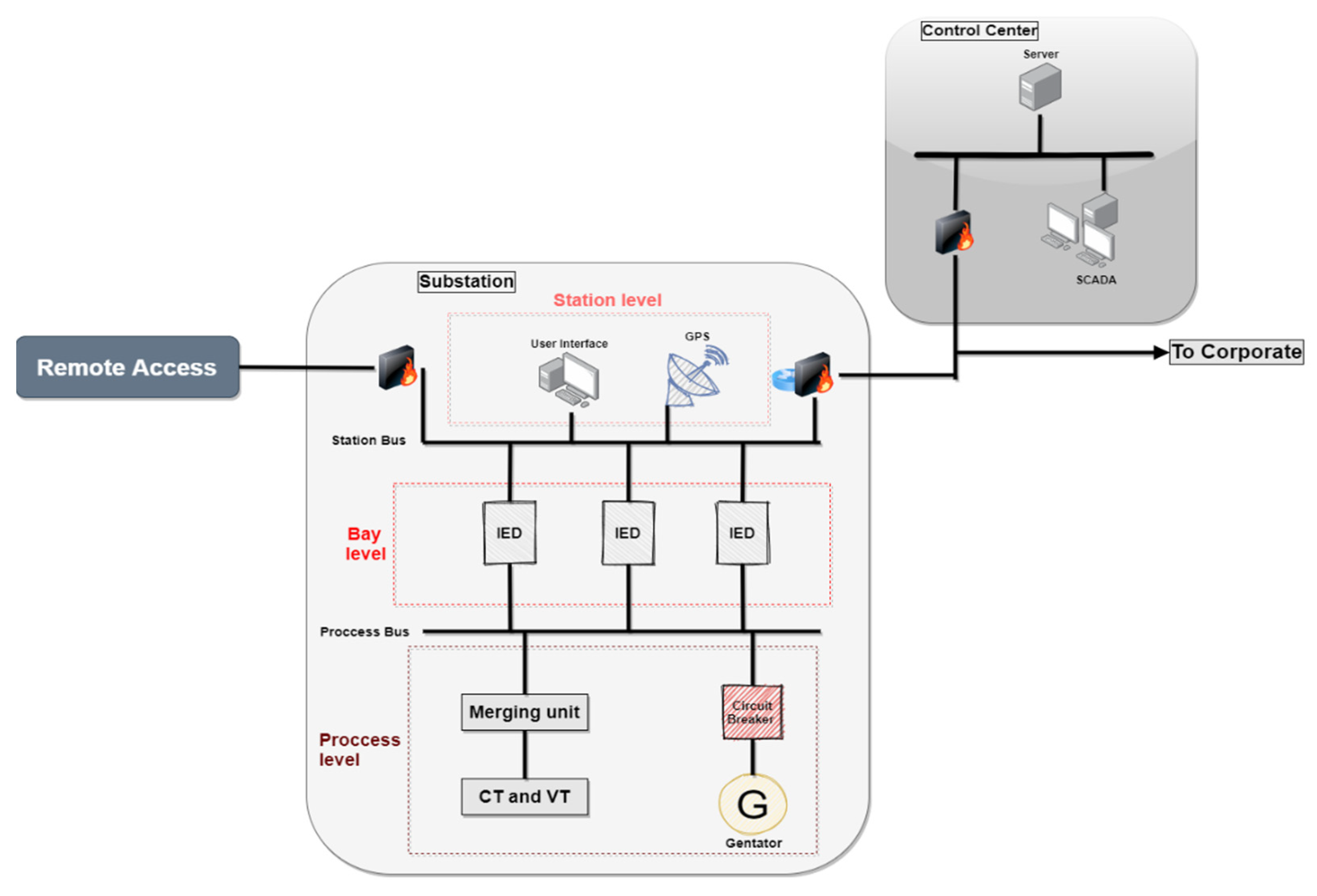
Figure 1 presents a smart grid system model scenario that contains one substation and a control centre. Moreover, both the device/server control centre and remote access server can be used to send or retrieve information from/to the substation.
Figure 1. System model representing smart grid substation.
Furthermore, based on IEC 61850, the substation can be divided into three levels, and each level has its own connection protocols and devices. Firstly, the station level is where the user interface, operator workstation, database, and GPS connection enabler are located. Secondly, the bay level contains most of the intelligent electronic devices (IED), such as phasor measurement unit (PMU) and protection and control. Lastly, the process level, which is the lowest level in the architecture, has physical devices, such as circuit breakers and the merging unit, that can be used to open/close transmission lines and generators.
It is vital to understand the importance of discovering asset criticality and associated cyber risks in the given scenarios. This helps us detect potential threats in time and measure their impact on the physical systems. Existing works utilise methods to discover assets, but do not highlight asset criticality, their ranks, and associated cyber risks and their impact on the physical systems.

3.3. Threat Model

In this work, we considered the scenario of an adversary gaining unauthorised remote access through a virtual private network account using a compromised username and password that appeared inside a batch of leaked passwords. Moreover, we assumed that the adversary knows the system model and has the capability to inject malicious traffic or simply perform control operations to create disruption and damage in the system. More specifically, the adversary can trip critical assets such as circuit breakers and generators at a substation of a smart grid system. The adversary can achieve this when they have the capability to send a malicious control signal to perform an operation, or the communication link is compromised as it provides weak security.

4. Our Approach

Asset discovery allows the user to clearly understand the connection of assets in ICS, such as the asset’s name and the direction of data transfer between assets. Additionally, ranking critical assets is important to observe which assets are more prone to cyber-attacks.
In terms of user requirements, technological options, and support for the decision made, our approach helps industry users, such as system operators, to understand the criticality of assets and their ranks in the system. In this work, we show how targeting cyber-attacks on physical energy systems can impact the system operations using a 12-bus system case through the PowerWorld simulation. The results obtained will help industry users to make constructive and accurate decision based on impact-analysis we presented in this work. A workflow of our approach is shown in Figure 2.
Figure 2. Workflow of our approach.

4.1. Assets in ICS

The concept of assets in the ICS field is unclear, and there is no clear agreement on its definition, which cause many serious security consequences. Through this research, it has been found that the first definition of assets is that an asset is a resource, and it will directly or indirectly participate in the ICS process. In addition to assets that exist, there are also intangible assets. For example, software or data transmitted between PLC and sensors in ICS should also be counted as assets. These assets are intangible, but they are essential to the production process. The second definition of assets will be more detailed, and there will be more types of assets. This definition divides assets into five categories: computers, people, processes, intangible, and stepping-stone. Firstly, computer mainly refers to computing hardware, such as firewalls, substations, operation centres, etc. Secondly, human assets involve core developers, related personnel, and users. Thirdly, process assets are very dense, involving various industrial processes. An intangible asset is an asset that lacks physical substance and is difficult to evaluate.
The stepping-stone asset is the most interesting because it considers the entry or connection assets in this category—for example, authentication data, network access and access to specific computers. The third definition of assets is like the second. It is about four types: personnel, information, technology, and facilities. Firstly, human assets are those key employees who operate and monitor the organisation’s services. Secondly, information assets are the assets required for the successful operation of the service. Thirdly, technical assets cover hardware and software. Finally, facility assets are facilities in factories that an organisation uses to provide services.

4.2. Critical Assets

Regarding whether or not an asset can be considered critical, one must first consider the type of asset and then consider the role of the asset in the entire system, as its connection with other assets. For example, in the smart grid, a transformer is a very critical asset. For another example, in the control centre of a smart grid, if a cyber-attack on an engineer’s operation interface causes data errors or data delays, it will cause the entire power plant to stall production. Additionally, these devices are connected to more assets, so their importance is higher. Table 4 presents a comparative analysis of our approach against existing works.
Table 4. Comparison between the proposed method and related methods for ranking critical assets.
Steps of Identifying Critical Assets: An algorithm for calculating criticality for ICS assets is shown in Algorithm 1. The first step needed towards identifying critical assets is the discovery process. This can be implemented by choosing the appropriate discovery approach or using the different tools. Secondly, criticality should be identified at the beginning by the role of the asset; for example, transformers in these systems are always considered critical assets. Then, it should be based on the connection an asset has, which means that, sometimes, assets can be considered critical. An example of this can be a single generator with a single link in a system is always critical, because if the link goes down, it will cause a blackout. However, a single generator with several links and one link goes down; the system will still manage to supply power.
Furthermore, there were similar studies that focus on ranking critical assets in energy systems. Yet, these studies were either more specific on the physical level only or in failure analysis and maintenance decisions without considering cyberattacks. The following table shows a brief comparison between our method and other methods for ranking critical assets.

4.3. Ranking of Critical Assets

During this research, two solutions have been found on ranking critical assets, which can be implemented to rank critical assets. Firstly, start with the “key assets” candidate list and determine each asset’s “worst-case loss event”. Then, rating assets based on the severity of the worst-case loss event’s impact on the business, compare each asset with the other assets. Lastly, the asset with the highest score is the most critical.
The second solution is to judge the number of connections between critical assets and other critical assets. If the number of connections is larger, then the key asset is more critical. The sort of critical assets must first consider the types of assets. Transformers, generators, and loads in smart grid ICS are all key infrastructures. Next, consider the connection between the asset and other assets. In the ranking of critical assets, the more the asset is connected to other assets, the greater connectivity and links with other assets (provide alternative routes in case of attacking a link). Suppose there is a single link connecting to an important asset. In that case, it is considered more critical, as targeting an attack over the link can create disruption or stop service completely in that part of the system. Hence, its ranking will be higher.
Algorithm 1 Calculate Criticality for ICS Asset list
Input: An asset list defined based on the asset discovery tool/technique used.
Output: An asset list with their connections organised in descending order to did determine the criticality
-
Calculate connections
1: Let [I] represents an array with the predefined assts list.
2: Create Edges using the Plotly library
3: Output is output_list[ ] that contains the connections of all assets
-
Organising the connections in descending order
4: Let output_list[ ] denote the list of all device’s connection.
5: let temp present temporary value in order to organise the list in descending order
6: For i in range(0, len(output_list)):
7:   for j in range(i+1, len(output_list)):
8:     if(output_list [i] < output_list [j]):
9:       temp = output_list [i];
10:       output_list [i] = output_list [j];
11:       output_list [j] = temp;

5. Results and Evaluation

This section demonstrates the results and evaluation of the proposed solution. Moreover, it illustrates the setup used for this experiment and presents a discussion on the identified assets obtained from the results list. We explore different attack scenarios on the 12-bus system test case. Finally, we analyse the obtained measurements to identify the system impact if critical assets are compromised.

5.1. Experiment Setup

We used Intel Core i5-9500H, 8GB RAM, and Windows 10 (64 bits). Python Version 3.7.0 is used for the implementation. Plotly library is employed to show the connection of each asset in the experiments. We have also used the PowerWorld simulator for creating attack scenarios and reflecting their impact on the smart grid ICS.

5.2. Results and Discussion

To achieve the purpose of assets discovery, a simulation of various critical assets in ICS is needed. Therefore, this simulation can be used for asset discovery and show the user what assets exist at any current time within the ICS. ‘Plotly’ is a library for displaying network graphs in python language, and it can visualise the network graph, so it simulates the connection of various critical assets in the industrial control system.
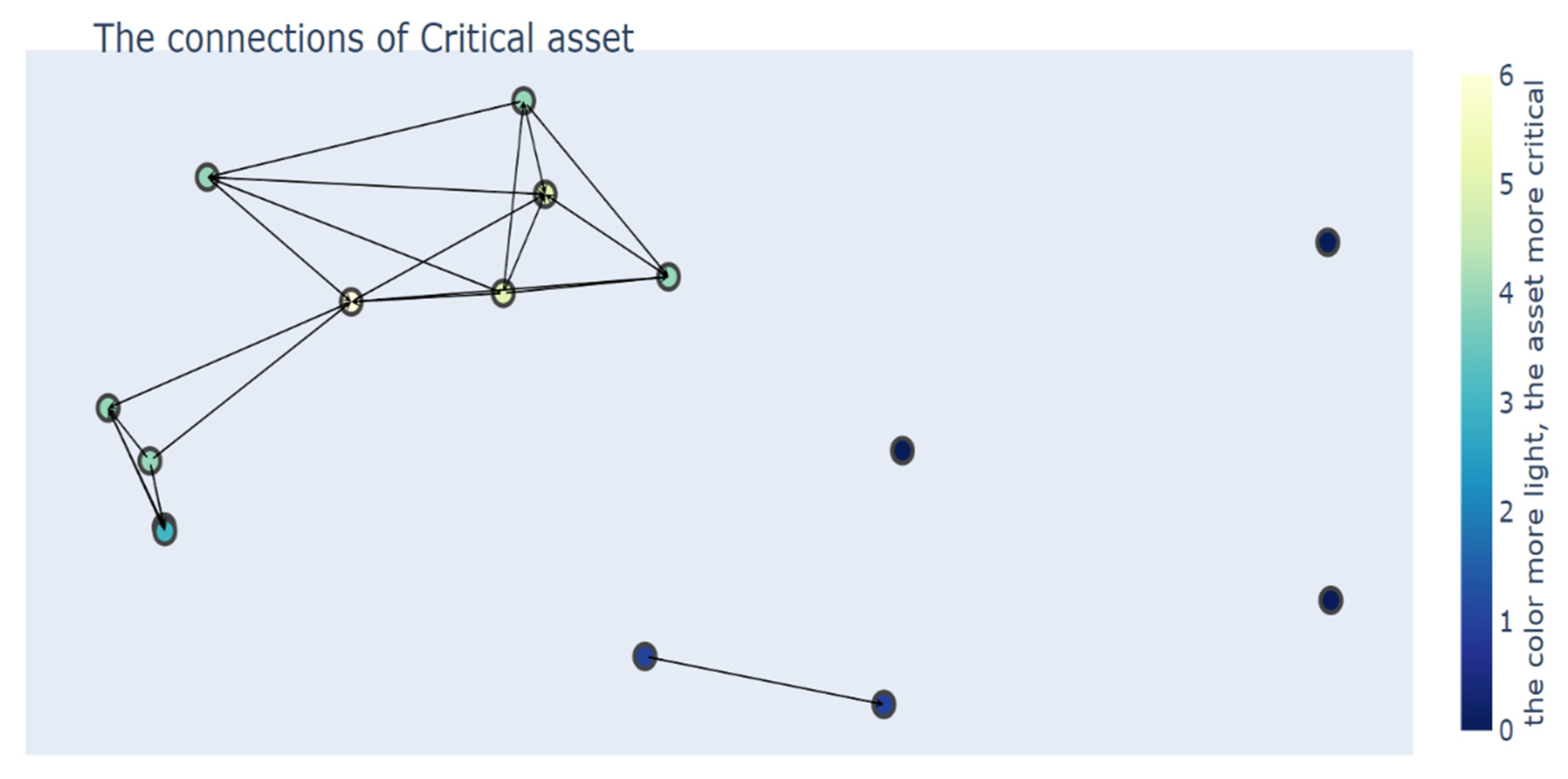
In ranking critical assets, the number of connections with other assets has been the judging criteria. Moreover, the ‘sort’ function in python is used to sort the value of the number of connections and then rank the critical assets. As shown in Figure 3, the connection of critical assets in the whole system is simulated, and arrows indicate their connection. The direction arrows on each connection line represent the data transmission direction of two critical assets. For example, these critical assets can be a transformer, generator, circuit breaker, load, sensor, etc. A bar shape can be observed on the right side of the interface, where the colour changes from dark to light, representing the increasing importance of critical assets.
Figure 3. Connections of Critical Assets.
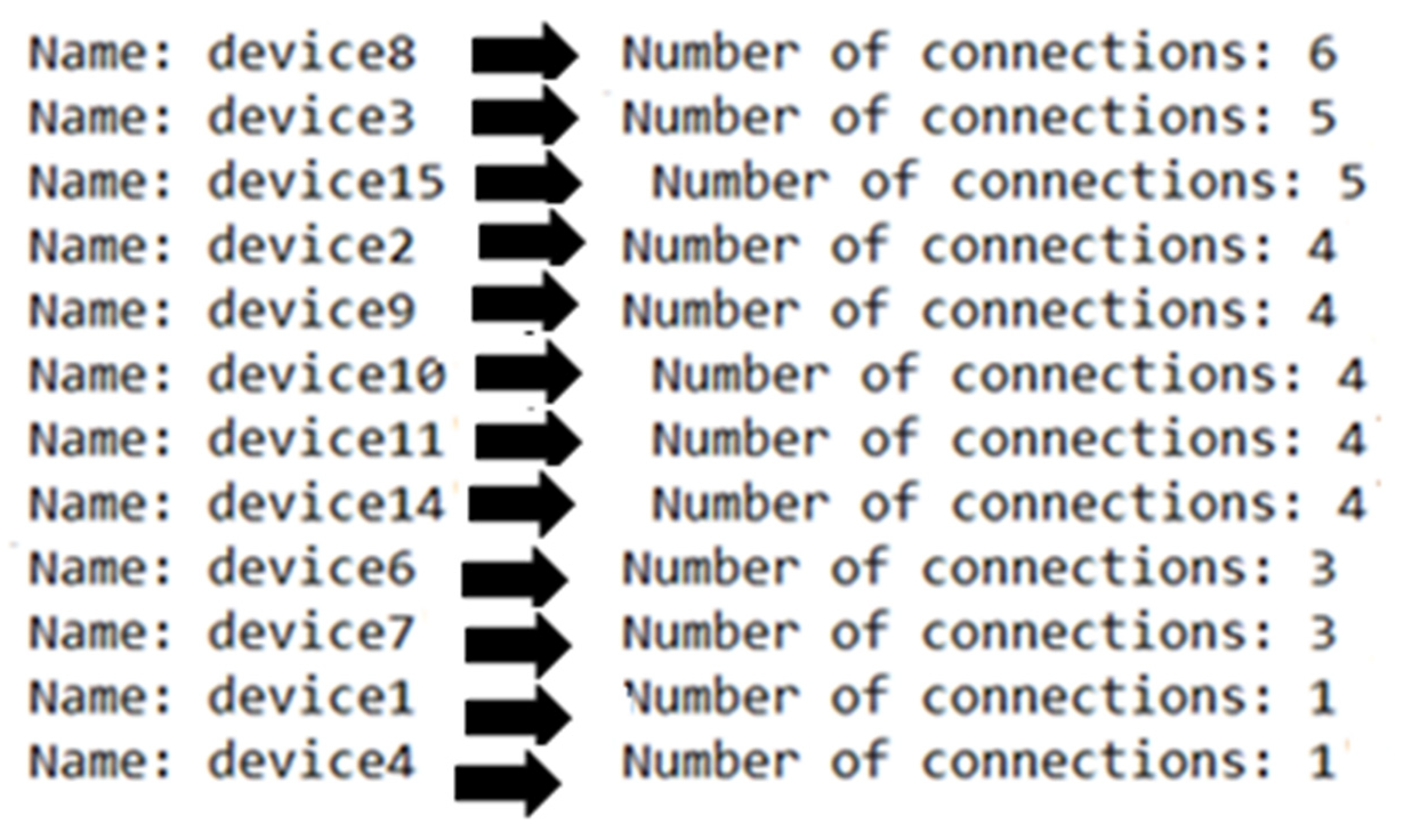
In Figure 4, after showing the connections of critical assets, the tool ranks the result into a ‘txt’ file. The following picture shows the results of ranking critical assets. Additionally, it also shows the number of connections of each critical asset. In the interface, there are nine critical assets, because there is one asset that is not critical. Therefore, there is no need to rank it. The assets became more critical from bottom to top.
Figure 4. Ranking critical assets result.
We do not need to rank any assets that are not critical. Moreover, the names of important assets are simulated by node and the number of connections between other nodes. Due to the increase in the number of connections, the more assets connected, the more critical. At the same time, they are at the greatest risk of network attacks because the attacker wants to achieve the goal of attacking an asset to paralyse the entire system. Therefore, those assets that have more connections with other assets will be the first targets of attackers.
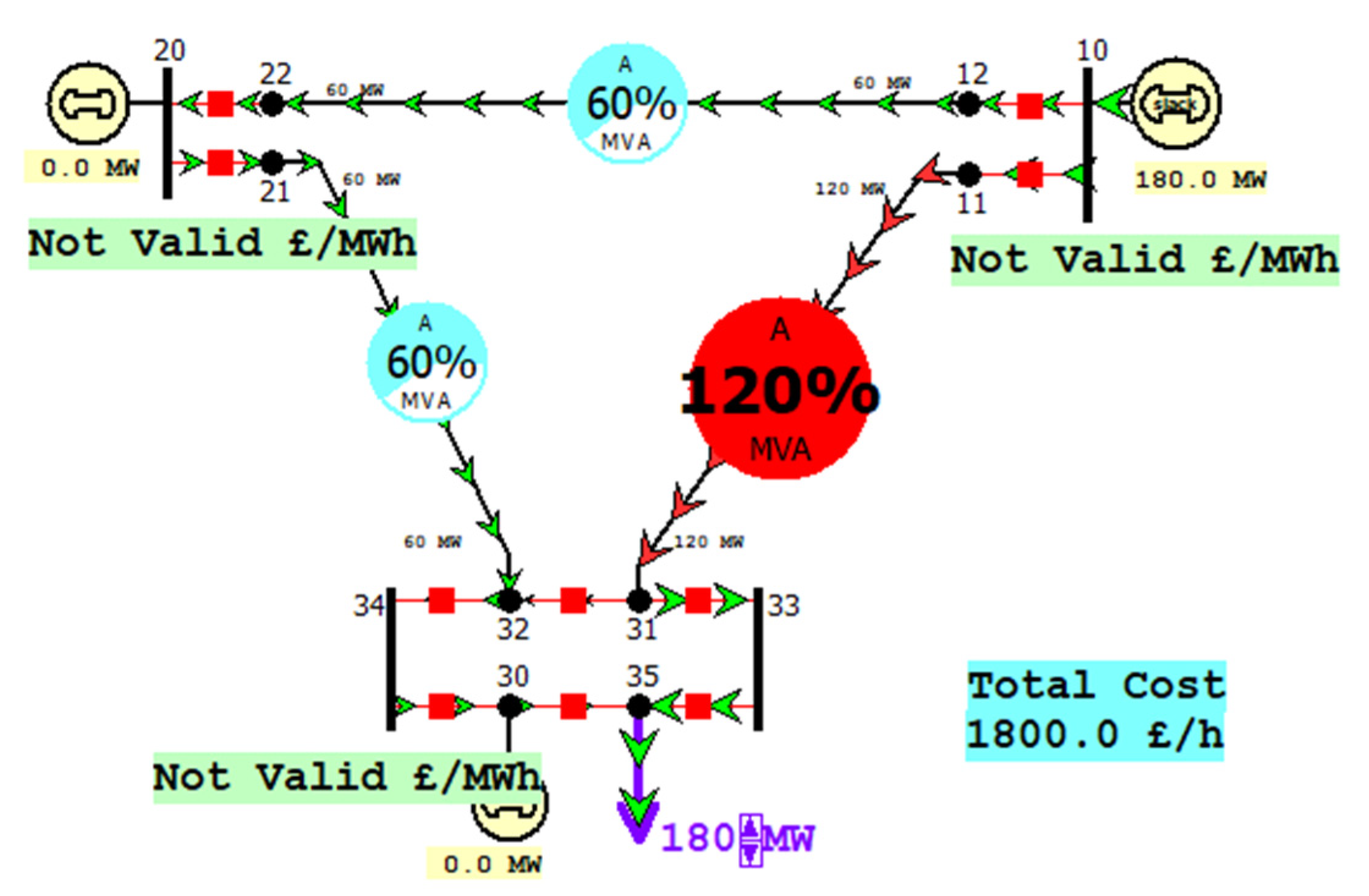
Figure 5 shows the normal scenario in the 12-bus system. It is an example of the PowerWorld system. Moreover, it shows the connection between the generators, lines, and buses. Additionally, the power value of each transmission line and the hourly cost of this system is also shown.
Figure 5. Attack scenario when a generator is tripped.

5.3. Evaluation under Normal vs. Attack Scenarios

We present impact results and discuss physical measurements of the power system when the system is not under attack versus under attack scenarios.

5.3.1. Impact under Normal Scenario

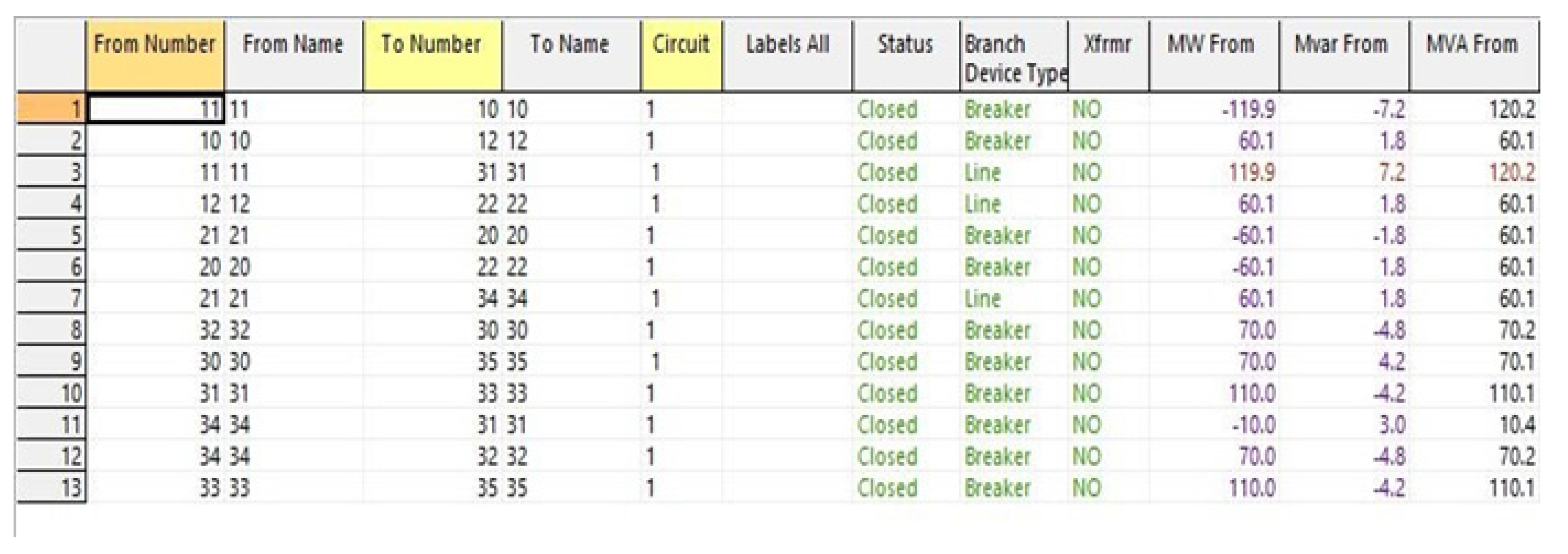
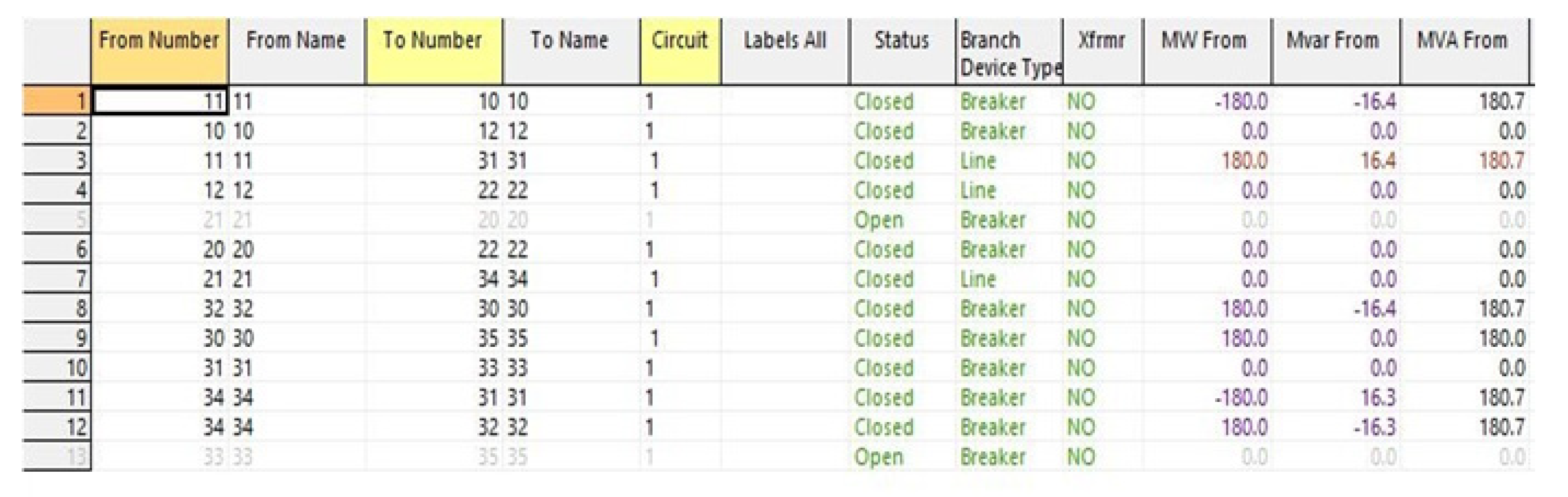
Table 5 denotes various notations and their description. Figure 6 shows the values of each transmission line in the 12-bus system. This Figure shows the type of the assets and the status along with measurement values under normal operations.
Table 5. Notations and their Description.
Figure 6. Measurement values of transmission line under the normal scenario.

5.3.2. Impact under Attack Scenario

Scenario-I: An Adversary Trips Generator #10

From Figure 7, it can be found that, when a generator is turned on in the 12-bus system, a transmission line will be overloaded. The overload value reached 120% MVA. Therefore, it will cause exceeding thermal limits of transmission lines. Moreover, this will affect the power supply and disrupt service or even stopping the service completely.
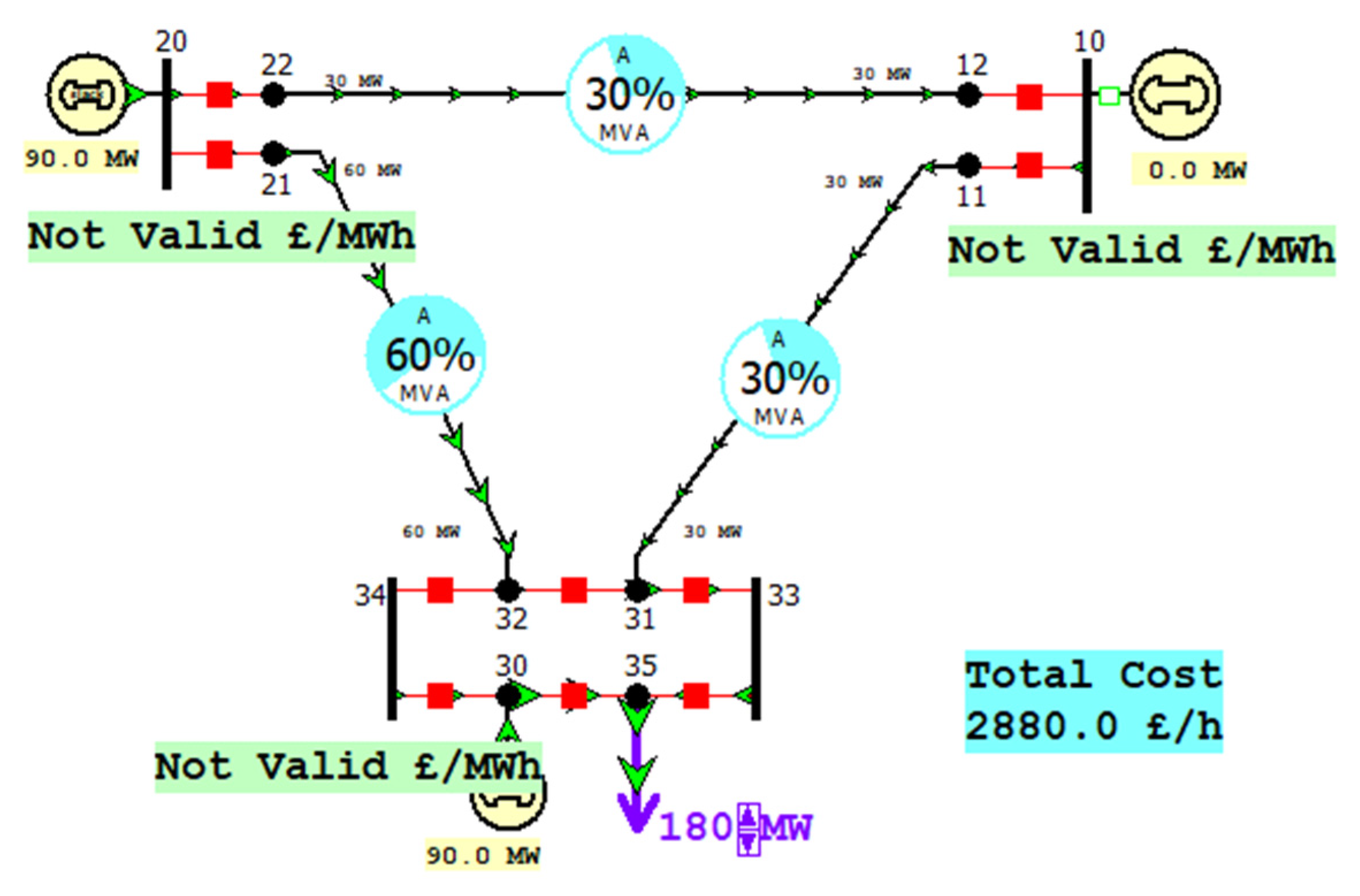
Figure 7. Attack scenario when two generators are tripped.

Scenario-II: Adversary Trips Generator #20 and #30

The operations and activities performed on physical systems should be in such a way that led to the least cost incurred. As shown in Figure 7, if two generators are simultaneously tripped, the transmission lines are still under the safe range of values. However, this scenario will increase the cost from 1800 GBP/h to 2880 GBP/h since the scenario creates a long path, which causes an increase in the overall cost.

Scenario-III: Adversary Trips Two Circuit Breakers: 21–20 and 33–35 Breakers

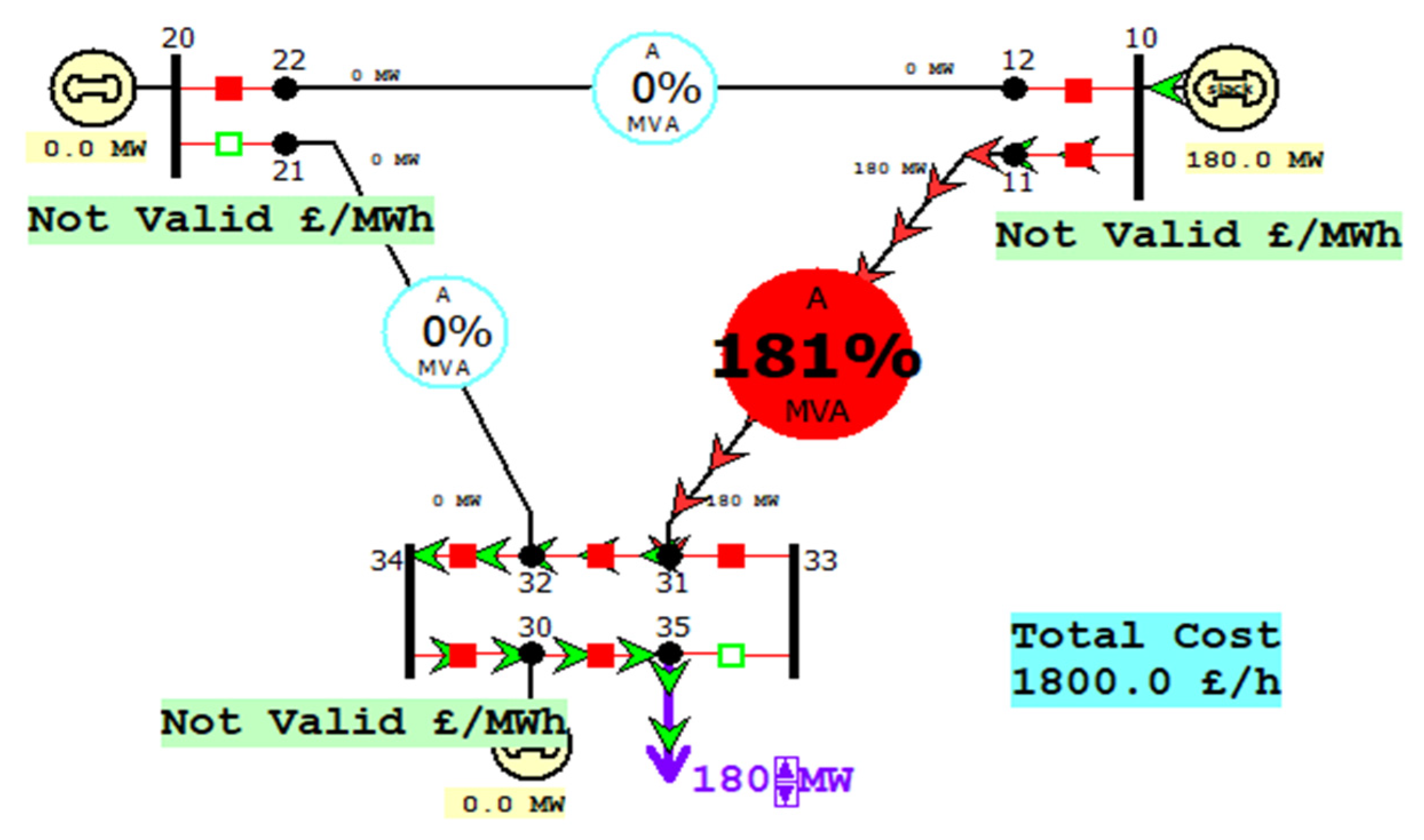
From Figure 8, it can be observed that two circuit breakers have been tripped, and as a result, the transmission line from No. 11 to No. 31 was seriously overloaded, and the overload value reached 181% MVA. Therefore, it will cause great damage to the transmission line, and such a large overload will cause much power to flow during the power transmission, and much reactive power will be lost. This will affect the power supply of the power system and cause the power system to stop supplying power.
Figure 8. Two circuit breakers under attack (tripped).
Figure 9 shows the values of each transmission line after two circuit breakers are attacked in the 12-bus system. From the comparison of Figure 8, we can find that the value of “Mvar Loss” on the transmission line from No. 11 to No. 31 has increased. That is to say, the power loss in the process of power transmission becomes larger. Therefore, to achieve the same power supply efficiency, the power system must consume more resources. This also leads to greater energy waste and resource waste and will also cause greater economic losses to the power system.
Figure 9. Measurement values of the transmission line under attack scenario III.

Scenario-IV: Adversary Trips One Circuit Breaker: 11–10 Breakers

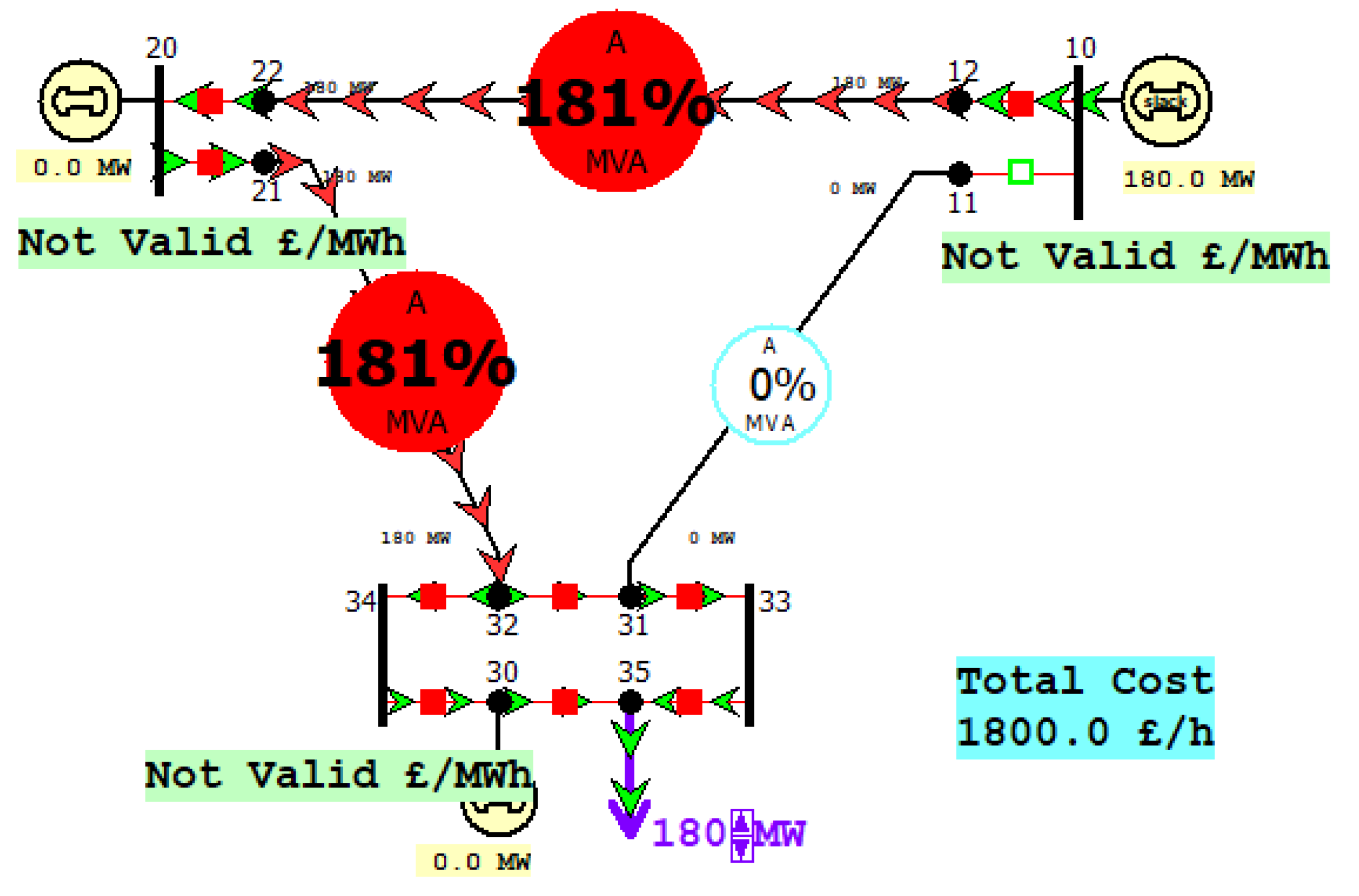
When the equipment and circuit are attacked by the network and break down, the circuit breaker can quickly cut off the fault circuit to ensure the normal operation of the non-faulty part and play a protective role. From Figure 10, it can be found that one circuit breaker has been attacked in the 12-bus system. As a result, the transmission lines from No. 12 to No. 22 and No. 21 to No. 32 were seriously overloaded, and the overload value reached 181% MVA. Therefore, it will cause great damage to the transmission line, and such a large overload will cause much power to flow during the power transmission, and a lot of reactive power will be lost. This will affect the power supply of the power system and cause the power system to stop supplying power.
Figure 10. Trip a circuit breaker under attack in a 12-bus system.
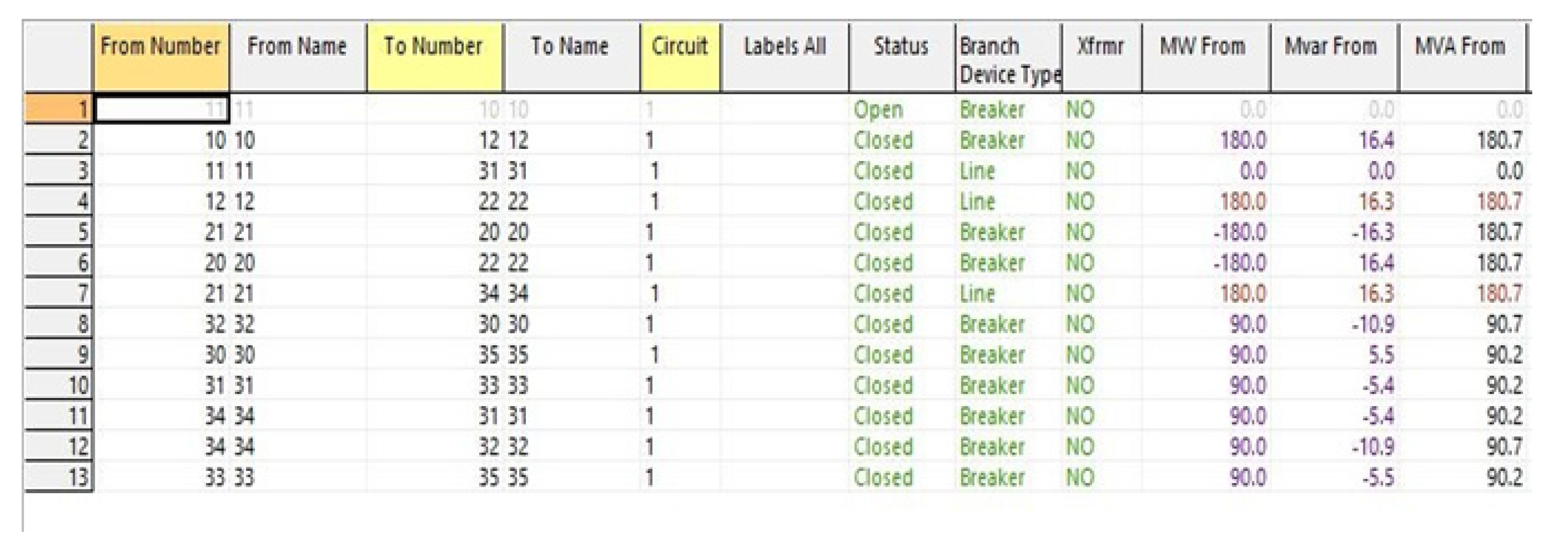
Figure 11 shows the values of each transmission line after one circuit breaker is attacked in the 12-bus system. Moreover, it can be found that the value of “Mvar loss” has increased on the transmission lines from 12 to 22 and from 21 to 34. The power loss in transmission is much greater than the attack of two circuit breakers. Therefore, to achieve the same power efficiency, the power system must consume more resources. This will also lead to greater energy waste and resource waste and cause greater economic losses to the power system.
Figure 11. Measurement values of the transmission line under attack scenario IV.

6. Conclusions

In conclusion, this paper aimed to review asset discovery tools, techniques, and solutions in ICS. Such a review is needed for these systems, giving the reader comprehensive information on one resource of tools lacking context, guide, or advantages and disadvantages. Moreover, it covers the importance of protecting assets in smart grid systems by exploring several vulnerability scanners that existed in this field and emphasising that there is a need to define the most critical assets based on their connection. Protecting these critical assets is significant due to the fact that the failure to operate these systems can lead to serious consequences.
This paper also proposed a method to identify critical assets based on their connection to each other. The developed solution was tested on a 12-bus system test case. Moreover, the evaluation illustrated 14 assets in the system and their connection, which shows the most critical assets in the proposed system.
Lastly, this paper covers an experimental evaluation by listing four attack scenarios in such a system to emphasise the importance of protecting critical assets in a smart grid. The evaluation shows that compromising critical assets can lead to serious consequences, such as blackout, overloaded transmission lines, or even economic losses.
While conducting this study and exploring different attack scenarios, there were several limitations. The first limitation was that all attack scenarios implemented focuses on the physical level in the cyber–physical system, assuming that an attacker has already compromised the system using the threat model mentioned. The second limitation is that, due to the use of the PowerWorld simulator, this experiment only provides impact analysis on the power system to emphasise the importance of protecting such a system. Lastly, another limitation is that the study uses a 12-bus test case; it needs to be implemented in the future with a larger number of cases to simulate similar real-world power distribution examples.

Author Contributions

Conceptualisation, N.S. and C.L.; methodology, C.L., Y.A., and N.S.; writing—original draft preparation, C.L.; writing—review and editing Y.A., C.K., and N.S.; supervision, N.S. All authors have read and agreed to the published version of the manuscript.

Funding

This research received no external funding.

Conflicts of Interest

The authors declare no conflict of interest.

References

  1. Paridari, K.; O’Mahony, N.; Mady, A.E.-D.; Chabukswar, R.; Boubekeur, M.; Sandberg, H. A Framework for Attack-Resilient Industrial Control Systems: Attack Detection and Controller Reconfiguration. Proc. IEEE 2018, 106, 113–128. [Google Scholar] [CrossRef]
  2. Gunduz, M.Z.; Das, R. Analysis of Cyber-Attacks on Smart Grid Applications. In Proceedings of the IEEE International Conference on Artificial Intelligence and Data Processing, IDAP, Malatya, Turkey, 28–30 September 2018. [Google Scholar] [CrossRef]
  3. Stouffer, K.; Falco, J.; Scarfone, K. GUIDE to Industrial Control Systems (ICS) Security. NIST 2011, 800, 16. Available online: https://nvlpubs.nist.gov/nistpubs/SpecialPublications/NIST.SP.800-82r2.pdf (accessed on 20 March 2021).
  4. Panettieri, J. Colonial Pipeline Cyberattack: Timeline and Ransomware Attack Recovery Details—MSSP Alert. Available online: https://www.msspalert.com/cybersecurity-breaches-and-attacks/ransomware/colonial-pipeline-investigation/ (accessed on 17 June 2021).
  5. Turton, W.; Mehrotra, K. Colonial Pipeline Cyber Attack: Hackers Used Compromised Password—Bloomberg. Available online: https://www.bloomberg.com/news/articles/2021-06-04/hackers-breached-colonial-pipeline-using-compromised-password (accessed on 17 June 2021).
  6. Lee, R.M.; Assante, M.J.; Conway, T. Analysis of the Cyber Attack on the Ukrainian Power Grid Defense Use Case. Electr. Inf. Shar. Anal. Cent. 2016, 36, 1–29. [Google Scholar]
  7. Wei, D.; Ji, K. Resilient industrial control system (RICS): Concepts, formulation, metrics, and insights. In Proceedings of the 3rd International Symposium on Resilient Control Systems, Idaho Falls, ID, USA, 10–12 August 2010; pp. 15–22. [Google Scholar]
  8. Liu, Y.; Ning, P. False Data Injection Attacks against State Estimation in Electric Power Grids. ACM Trans. Inf. Syst. Secur. 2011, 14, 33. [Google Scholar] [CrossRef]
  9. Chen, W.; Ding, D.; Dong, H.; Wei, G. Distributed Resilient Filtering for Power Systems Subject to Denial-of-Service Attacks. IEEE Trans. Syst. Man Cybern. Syst. 2019, 49, 1688–1697. [Google Scholar] [CrossRef]
  10. Incibe. Guide for an Asset Inventory Management in Industrial Control Systems. 2020. Available online: https://www.incibe-cert.es/en/blog/guide-asset-inventory-management-industrial-control-systems (accessed on 17 May 2021).
  11. RTU. Introduction of Remote Terminal Unit. Available online: https://www.sciencedirect.com/topics/engineering/remote-terminal-unit (accessed on 3 April 2021).
  12. Stouffer, K.; Zimmerman, T.; Tang, C.; Lubell, J.; Cichonski, J.; McCarthy, J. Cybersecurity Framework Manufacturing Profile. NIST Intern. Rep. 2017, 2017, 8183. Available online: https://www.nist.gov/publications/cybersecurity-framework-manufacturing-profile (accessed on 4 April 2021).
  13. Tenable, OT. Available online: https://zh-cn.tenable.com/products/tenable-ot?tns_redirect=true (accessed on 12 May 2021).
  14. Axonius. Cybersecurity Asset Management Platform. Available online: https://www.axonius.com/ (accessed on 9 May 2021).
  15. Bayshore Networks. Bayshore Networks—Industrial Control Cyber. Available online: https://bayshorenetworks.com/products/scrutiny/ (accessed on 9 May 2021).
  16. THE INDUSTRIAL CYBERSECURITY COMPANY. Available online: https://www.claroty.com/ (accessed on 21 March 2021).
  17. The Leader in OT & IoT Security and Visibility. Available online: https://www.nozominetworks.com/?gclid=EAIaIQobChMIoa2B3oHI8AIVgyRgCh0vDQPTEAAYASAAEgKTFPD_BwE (accessed on 18 June 2021).
  18. CyberX. Available online: https://cyberx-labs.com/ (accessed on 24 March 2021).
  19. Park, Y.; Teiken, W.; Rao, J.R.; Chari, S.N. Data classification and sensitivity estimation for critical asset discovery. IBM J. Res. Dev. 2016, 60, 2:1–2:12. [Google Scholar] [CrossRef]
  20. Liu, X.; Qian, C.; Hatcher, W.G.; Xu, H.; Liao, W.; Yu, W. Secure Internet of Things (IoT)-Based Smart-World Critical Infrastructures: Survey, Case Study and Research Opportunities. IEEE Access. 2019, 7, 79523–79544. [Google Scholar] [CrossRef]
  21. Shodan Search Engine. Available online: https://www.shodan.io/ (accessed on 18 May 2021).
  22. Malzahn, D.; Birnbaum, Z.; Wright-Hamor, C. Automated Vulnerability Testing via Executable Attack Graphs. In Proceedings of the International Conference on Cyber Security and Protection of Digital Services (Cyber Security), Dublin, Ireland, 15–19 June 2020; pp. 1–10. [Google Scholar] [CrossRef]
  23. Wang, W.; Chen, L.; Han, L.; Zhou, Z.; Xia, Z.; Chen, X. Vulnerability Assessment for ICS system Based on Zero-day Attack Graph. In Proceedings of the International Conference on Intelligent Computing, Automation and Systems (ICICAS), Chongqing, China, 11–13 December 2020; pp. 1–5. [Google Scholar] [CrossRef]
  24. Qualys, Inc. Qualys Community Edition. Available online: https://www.qualys.com/community-edition/ (accessed on 9 May 2021).
  25. Zhou, C.; Li, X.; Yang, S.; Tian, Y. Risk-Based Scheduling of Security Tasks in Industrial Control Systems with Consideration of Safety. IEEE Trans. Ind. Inform. 2020, 16, 3112–3123. [Google Scholar] [CrossRef] [Green Version]
  26. McLaughlin, S.; Konstantinou, C.; Wang, X.; Davi, L.; Sadeghi, A.R.; Maniatakos, M.; Karri, R. The Cybersecurity Landscape in Industrial Control Systems. Proc. IEEE 2016, 104, 1039–1057. [Google Scholar] [CrossRef]
  27. Alhasawi, S. ICSrank: A Security Assessment Framework for Industrial Control Systems (ICS). August 2020. Available online: http://researchonline.ljmu.ac.uk/id/eprint/13480/1/2020AlhasawiPhD.pdf (accessed on 11 April 2021).
  28. West, J.; Hale, J.; Papa, M.; Hawrylak, P. Automatic Identification of Critical Digital Assets. In Proceedings of the International Conference on Data Intelligence and Security (ICDIS), South Padre Island, TX, USA, 28–30 June 2019; pp. 219–224. [Google Scholar] [CrossRef]
  29. Hart, P.M. Continuous Asset Monitoring on the Smart Grid. In Proceedings of the IEEE PES Innovative Smart Grid Technologies, ISGT Asia Conference: Smarter Grid for Sustainable and Affordable Energy Future, Perth, WA, Australia, 13–16 November 2011. [Google Scholar] [CrossRef]
  30. Farzan, F.; Jafari, M.A.; Wei, D.; Lu, Y. Cyber-Related Risk Assessment and Critical Asset Identification in Power Grids. ISGT Conf. 2014, 2014, 14319525. [Google Scholar] [CrossRef]
  31. Abdulrazzaq, M.; Wei, Y. Industrial Control System (ICS) Network Asset Identification and Risk Management. 2018. Available online: https://www.aveva.com/content/dam/aveva/documents/support/customer-first/ServicesProfile_AVEVA_ICSSecurityAndRiskAssessments_09-19.pdf (accessed on 26 April 2021).
  32. Ranking Critical Assets. Available online: http://www.thesecurityminute.com/ranking-critical-assets (accessed on 26 March 2021).
  33. Boyer, B. Identification and Ranking of Critical Assets within an Electrical Grid under Threat of Cyber Attack; Rutgers The State University of New Jersey-New Brunswick: New Brunswick, NJ, Canada, 2011; Available online: https://rucore.libraries.rutgers.edu/rutgers-lib/33591/PDF/1/play/ (accessed on 4 May 2021).
  34. Wedgbury, A.; Jones, K. Automated Asset Discovery in Industrial Control Systems—Exploring the Problem. In Proceedings of the 3rd International Symposium for ICS & SCADA Cyber Security Research (ICS-CSR’15), Ingolstadt, Germany, 17–18 September 2015. [Google Scholar] [CrossRef] [Green Version]
  35. Liu, C.; Huang, G.; Zhang, K.; Wen, F.; Salam, M.A.; Ang, S.P. Asset Management in Power Systems. In Proceedings of the 10th International Conference on Advances in Power System Control, Operation & Management (APSCOM 2015), Hong Kong, China, 8–12 November 2015; pp. 1–5. [Google Scholar] [CrossRef]
  36. Beyza, J.; Garcia-Paricio, E.; Yusta, J.M. Ranking Critical Assets in Interdependent Energy Transmission Networks. Electr. Power Syst. Res. 2019, 172, 242–252. [Google Scholar] [CrossRef]
  37. Bhandari, H.N.; Vittal, V.; Heydt, G.T.; Quintanilla, F.L.; Knuth, W.B. Ranking of Bulk Transmission Assets for Maintenance Decisions. In Proceedings of the 51st North Am. Power Symp. NAPS 2019, Wichita, KS, USA, 13–15 October 2019. [Google Scholar] [CrossRef] [Green Version]
Publisher’s Note: MDPI stays neutral with regard to jurisdictional claims in published maps and institutional affiliations.

Article Metrics

Citations

Article Access Statistics

Multiple requests from the same IP address are counted as one view.