


Abstract
The use of biogas digestate as fertilizer is limited by the farm nutrient balance. Mechanical separation and drying of digestate increases its transport worthiness as well as the economic feasibility of nutrient export. This study compares the fertilizer effect of four treatments of digestate originating from two biogas plants: untreated digestate, liquid and solid fraction of separated digestate and dried solid fraction of separated digestate. Pot experiments with barley were performed with two fertilization levels for different digestate variants. Above-ground biomass yield, nitrogen (N) and phosphorus (P) content in biomass and plant uptake efficiency were highlighted. The results showed that all variants have higher above-ground biomass yield than the control. Due to the reduced amount of easily available N, short-term N uptake of barley from solid fractions of digestate was low. The treatments with the dried solid fraction at low fertilization level showed up to 59% lower N removal from soil and, at high fertilization level, up to 83% lower N removal compared to the respective fresh solid fraction (100%). Depending on the feedstock of biogas plants and processing of digestate, N availability varied and influenced the short-term N uptake. It is recommended that digestate processing should be combined with ammonia recovery to prevent N losses to the environment.
1. Introduction
Biogas plants are typically operated to treat organic wastes from agriculture, households or industry and to provide renewable energy at the same time. Feedstock can be readily biodegradable fractions of municipal and industrial waste, manure from livestock farming or energy crops such as maize, specifically grown for the purpose of energy production. The digestate, i.e., the residue of the anaerobic fermentation process, contains numerous nutrients and can therefore be used as a substitute for mineral fertilizers in agriculture or urban greening. The share of ammonium in the digestate from agricultural biogas plants is relatively higher compared to conventional organic agricultural fertilizers such as slurry and manure resulting in a positive effect for plant growth [1,2]. Regarding nitrogen (N), the application as fertilizer is limited at European level with the European Nitrate Directive to prevent nutrient accumulation in soil and groundwater as well as to avoid environmental pollution [3]. Furthermore, the application of digestate and other fertilizers is restricted per hectare and season and has to be applied outside nitrate vulnerable zones [4]. The application of N and phosphorus (P) has a high effect on the eutrophication potential of cropland. A current study shows that increased application of N and P fertilizers leads not only to positive aspects by improving crop yields and food security, but also to problems of aquatic eutrophication [5].
In many places worldwide, numerous biogas plants are located in settlements and regions with intensive livestock farming where agricultural land is limited for the application of manure and digestate. Especially co-fermentation of residues from the food processing industry and the use of energy plants might lead to an accumulation of N and P in the nutrient cycle of a farm. Thus the digestate has to be transported over longer distances into regions with a lack of nutrients. From an economic perspective, transport costs for digestate increase due to long distances, as nutrient contents are relatively low in relation to the transport mass [4,6]. To reduce transport costs of the digestate, its nutrient density has to be increased by reducing its volume by means of removing water. Technical operations to solve this issue are, e.g., mechanical separation of digestate into a liquid and a solid component with subsequent drying of the digestate [7]. The concentration ratio of the nutrients changes due to the separation. The solid fraction contains more P and the liquid fraction contains more N [8]. Dahlin et al. [9] claim that drying of separated solid digestate and subsequent pelletizing can make long distance transport cost-effective and provide a way to commercialize digestate. On the other hand, there is the challenge of reducing transport costs by installing processing technology, as the financial and ecological costs of the fermentation residue management system of a biogas plant increase. Considering the environmental aspects, solar drying seems to be a suitable option to reduce the use of resources and environmental impacts compared to other digestate management systems such as drying with a belt dryer or drum dryer as well as thermally concentrating the liquid phase for nutrient separation and the solid phase for the application with a compost spreader [10]. Drying the digestate and induced changes in its composition, as well as the emissions during drying were investigated in a hybrid waste-heat solar dryer by Maurer and Müller [11].
Due to the variability of input substrates for biogas plants, the fermentation residues can vary widely in their composition regarding plant nutrients [12,13,14,15] and impacts on the soil ecosystem [13,16]. Thus, it is necessary to know the composition of fermentation residues for an appropriate use as fertilizer [17,18]. Laboratory and field experiments have been carried out with digestate in order to investigate N uptake of plants as well as the effect on soils regarding N mineralization, and often compared with mineral N fertilizers as control [19,20,21,22,23,24,25,26,27,28,29]. Other investigations focused on solid and liquid fractions of separated digestate regarding their use as fertilizer [12,30,31,32,33]. Further studies show that digestate can also improve soil quality and water holding capacity on marginal soils [34] and that the use of fermentation residues is beneficial for selected plants such as tomato, pepper, kohlrabi or ornamentals. Sophisticated studies were undertaken to find ways to achieve a closed loop system by using biogas digestate [35].
A holistic approach investigating the growing potential of Sida hermaphrodita on marginal soils for biogas production describes a higher biomass yield of the crop. Further, the marginal soil shows an increased soil carbon content, water holding capacity and basal soil respiration by using digestate as fertilizer compared to compound fertilizer [34]. Da Borso et al. [36] investigated the suitability of miscanthus and giant reed for bio-methane production and its digestate for agronomic use, especially with the focus on N and heavy metals. A study investigating the fertilizer value of digestate from sugar beet pulp has shown that mineral fertilizer can be substituted to fertilize sugar beets [37]. The effect of solid and liquid digestate was investigated in a hydroponic system to cultivate baby leaf lettuce and the results showed that the investigated forms of digestate (solid and pelleted forms as well as the liquid fraction with agriperlite) represent an alternative growing media in hydroponic systems [38]. Digestate can also be used for algae production [35]. Long term pot experiments were conducted with digestate from pig slurry fermentation compared to a combination of digestate and mineral fertilizer as well as sole mineral fertilizer to investigate the impact on yield and dry matter content of tomato and pepper plants [39]. The positive effect of digestate was most highly pronounced in the combination of digestate and mineral fertilizer. Another study with pot experiments focused on the recycling of P from semi-liquid manure and digestate as an alternative fertilizer for ornamentals. The substrates investigated also included air-dried digestate. Compared to the other investigated substrates (P-salts, steam-dried digestate), air-dried digestate was not suitable to meet the plants’ needs. However, when air-dried digestate and P-salt were combined, there was a synergetic effect on the biomass yield of the plants investigated [40].
To the best of the authors’ knowledge, there is no comparative investigation where conventional digestate, its conversional fractions and its dried solid fraction are directly compared to each other. The aim of our study was (i) to investigate the short-term N and P uptake of barley from processed digestate compared to the untreated digestate originating from the same fermentation plant, and (ii) to determine the impact of different digestate treatments regarding quantitative parameters like biomass yield of the plants. The focus of this study was especially on the dried solid fraction, because additional energy is required for this treatment and the knowledge of how to use this fraction as a short-term N source is lacking.
2. Materials and Methods
2.1. Sampling and Analysis of Digestate Variants
The digestate investigated came from two wet fermentation biogas plants in Germany (biogas plant 1, further called BP1 and biogas plant 2, further called BP2) both operated by private owners. BP1 was fed with liquid manure (75%) and a mixture of energy crops (about 13% maize silage, 8% crops and 4% grass silage) whereas BP2 was fed exclusively with energy crops (about 80% maize silage, 20% grass silage, less than 1% other crops). In BP2, the liquid fraction from separated digestates was recirculated and mixed with the silage of maize and grass in a ratio 50:50 to ensure sufficient moisture for the fermentation process and a good mixing behavior in the digester. In both biogas plants, the digestate was separated into a solid fraction and a liquid fraction by using a screw extruder. The liquid fraction was collected in storage tanks, and the solid fraction was stored on a paved platform.
Five samples were collected in 2-L jars each from untreated digestate (UD), liquid digestate (LD) and solid digestate (SD) at both biogas plants. The jars were completely filled without leaving a headspace, sealed tightly and stored at 4 °C. One sample each of the solid digestate from each biogas plant was dried in a laboratory dryer (dryer “HD 75”, Robert Hildebrand Maschinenbau GmbH, Oberboihingen, Germany) for 24 h at a temperature of 60 °C to produce the solid dried digestate variants (SDD), Table 1. Prior to chemical analysis, the individual samples per variant were combined and mixed. The UD- and LD-variants were homogenized using a macerator (Büchi Mixer B-400, BÜCHI Labortechnik GmbH, Essen, Germany) to ensure that the solids were homogenously distributed within the sample. The SDD-variants were ground in a rotary mill (Brabender® Rotary Mill, Brabender® GmbH & Co. KG, Duisburg, Germany) to a particle size of 1.5 mm.

Table 1.
Description and code of digestate variants.
2.2. Chemical Composition of Digestate Variants
Dry matter content (DM) was determined by the standard oven method at 105 °C for 24 h [41]. The pH value of the liquid variants was measured in the original sample and in the solid variants in a CaCl2-suspension [42]. Organic carbon (Corg) was analyzed by the Dumas method using an elemental analyzer (varioELcube, Elementar Analysensysteme GmbH, Langenselbold, Germany). Total nitrogen (Nt) and ammonium nitrogen (NH4-N) were determined according to the standard methods [43,44]. Phosphorus (P), potassium (K), calcium (Ca), magnesium (Mg), sulfur (S), copper (Cu) and zinc (Zn) were determined by inductively coupled plasma optical emission spectrometry (Vista, Varian, Australia). Analysis of elements was based on methods of the Association of German Agricultural Analytic and Research Institutes (VDLUFA) [45]. The chemical composition of the different digestate variants is listed in Table 2.
Table 2.
Chemical composition of digestate variants, values based on DM (code see Table 1).
2.3. Plant Growth Experiments
The plant growth experiments were carried out in pots (100 mm diameter and 220 mm height) according to standard methods as described in [46,47]. Subsoil (C-horizon) of a loess derived luvisol free of humus was taken as soil substrate for the experiments. Each pot was filled with 1 kg of soil. To provide a minimum of plant nutrients in the soil, a basic fertilizer with N, P, K and Mg was added to each pot before planting, as presented in Table 3.
Table 3.
Added basic fertilizer to 1 kg soil substrate.
Digestate variants have been added in certain quantities to the soil substrate to achieve two levels of N fertilization, namely 300 and 500 mg N kg−1 soil, which are called a low (L) and high (H). The N equivalent of the digestate variants was calculated according to [18,46,48], assuming 100% availability for NH4-N and 30% availability for other N components (Nt minus NH4-N), Table 4. Due to the different mass of added digestate per variant, each pot was conditioned with Styrofoam and filled with silica sand to ensure the same filling level and weight, respectively. Pots without additional N-fertilization except the basic fertilization served as the control.
Table 4.
Mass of digestate variant added to 1 kg of soil per pot to achieve calculated low (L) and high (H) N fertilization, i.e., 300 and 500 mg readily available N kg−1 and resulting content of NH4-N, P, K and Mg in each pot (code of digestate variants 1 and 2 means biogas plant 1 and biogas plant 2 respectively, UD = untreated digestate, LD = liquid digestate, SD = solid digestate, SDD = solid digestate dried).
The plant growth experiments were performed with spring barley (Hordeum vulgare Var. Belana) with eleven plants per pot. Treatments and control were set up on two tables in a greenhouse and tested in four replicates in a completely randomized block design. The average air temperature during the experiment was 27.5 °C during the day and 14.2 °C at night. Four weeks after sowing, yellow panels were fixed to the pots to control Sciara hemerobioides. In the last third of the trial, a fungicide treatment was applied due to mildew infestation. After a growing phase of 54 days, the barley plants were harvested and the above-ground biomass dry matter yield (YDM) per pot was measured after oven drying at 60 °C. Determination of the total C and N of plant biomass was done by Dumas combustion using an elemental analyzer (Vario MAX CN, Elementar Analysensysteme GmbH, Langenselbold, Germany). Determination of P content in the samples was done by a spectrophotometer (Spectrophotometer U-3300, Hitachi Europe GmbH, Düsseldorf, Germany), preparing the samples according to [49]. The nitrogen and P content of the above-ground biomass %N and %P were calculated in % of DM. Nitrogen removal Nre from soil substrate in mg per pot was calculated as:
Plant uptake efficiency of N (NUE) was calculated as described in [23,50,51]:
with Nre, control as N removal of control and Nf as available N applied with digestate variant.
2.4. Statistical Analysis
Statistical analysis was conducted by SAS program (SAS Institute Inc., Cary, USA). The data set was processed by multivariate analysis of variance in which the origin of the digestate (BP1, BP2), digestate variant, and N-fertilization level were considered as factors. Furthermore, data was tested for normality and homogeneity. In case of not fulfilling these prerequisite, logarithmic transformations of original values were carried out. The Tukey Test was used to test the differences among means (p = 0.05).
3. Results and Discussion
3.1. Visual Observation of Plant Development
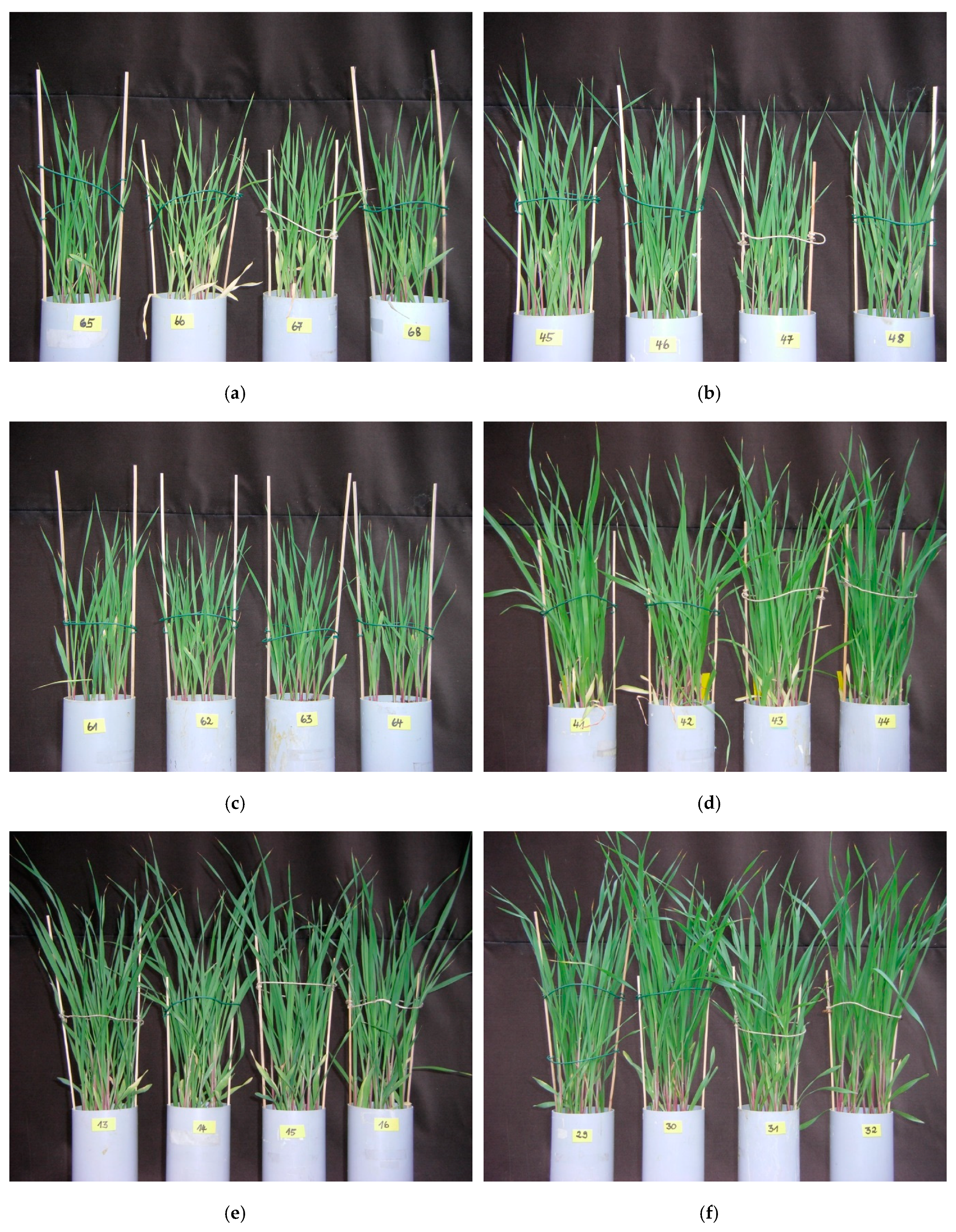
Germination of the plants occurred 3–5 days after sowing, except for treatments LD1L (liquid digestate, biogas plant 1, low fertilization level) and LD1H (liquid digestate, biogas plant 1, high fertilization level), where germination was delayed by 2–4 days. Twenty-eight days after sowing, yellow leaf tips were observed and stalks started to show violet discolorations in treatments SDD2L (solid digestate dried, biogas plant 2, low fertilization level), SDD2H (solid digestate dried, biogas plant 2, high fertilization level) and the control (see Figure 1), which might be an indication of chlorosis caused by N deficiency due to the relatively low NH4-N content in the pot. After 35 days, yellow leaf tips and violet stalks also occurred in treatments SDD1L (solid digestate dried, biogas plant 1, low fertilization level), SDD1H (solid digestate dried, biogas plant 1, high fertilization level) and SD2L (solid digestate, biogas plant 2, low fertilization level). At harvest, 54 days after sowing (booting stage), yellow leaf tips were visible in almost all treatments and the stalks of nearly all of the barley plants had turned violet, which indicates N and/or P deficiency [46,52].
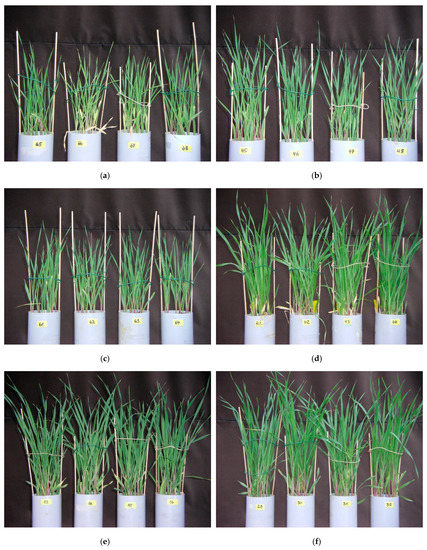
Figure 1.
Barley plants 35 days after sowing with yellow leaf tips and violet discoloration of stalks: (a) Control (without digestate treatment); (b) Treatment SDD2L (solid digestate dried, biogas plant 2, low fertilization level); (c) Treatment SDD2H (solid digestate dried, biogas plant 2, high fertilization level); (d) Treatment SD2L (solid digestate, biogas plant 2, low fertilization level); (e) Treatment SDD1L (solid digestate dried, biogas plant 1, low fertilization level); (f) Treatment SDD1H (solid digestate dried, biogas plant 1, high fertilization level).
3.2. Above-Ground Biomass Yield
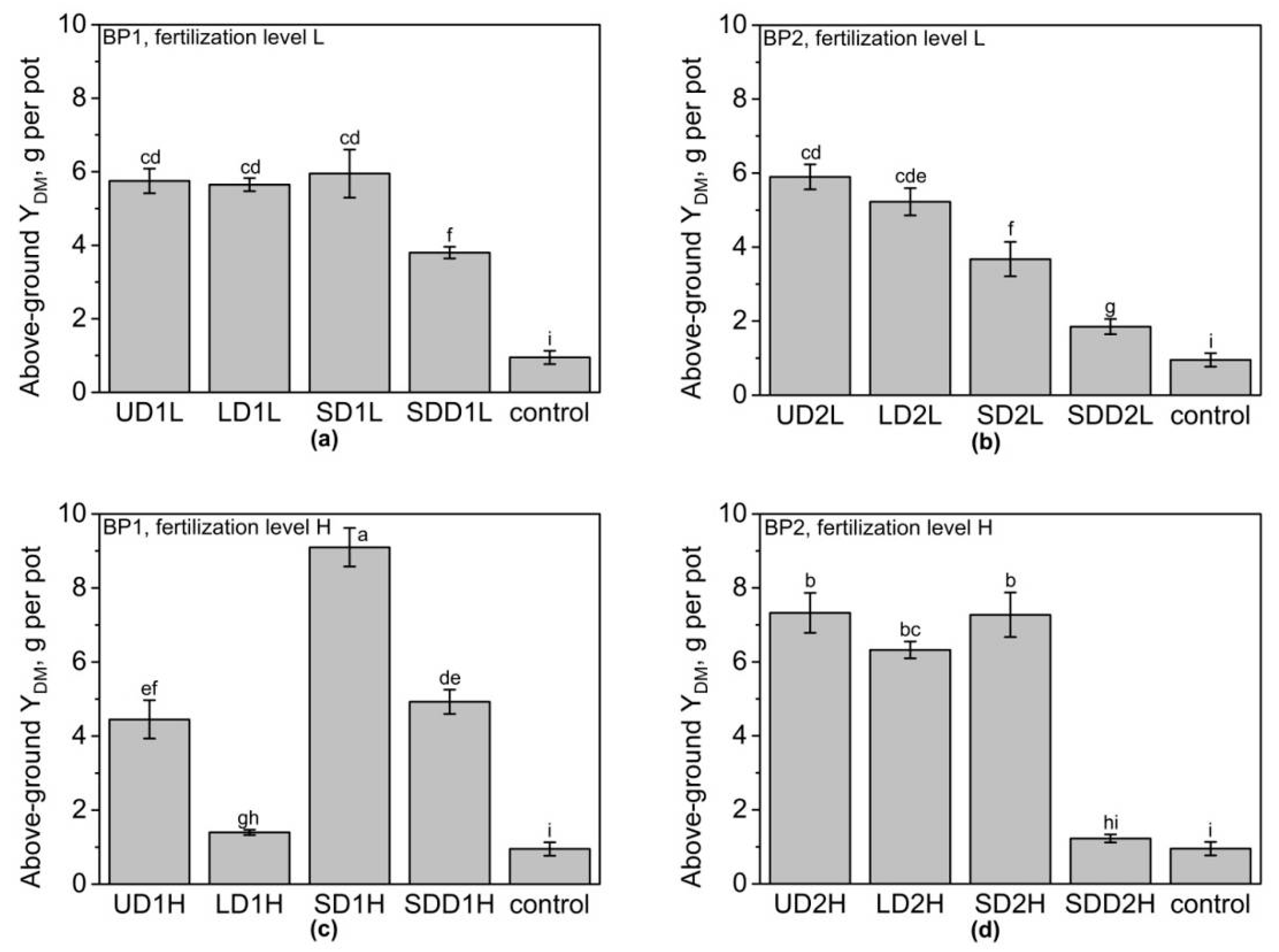
Above-ground biomass yield YDM for the different treatments is shown in Figure 2.
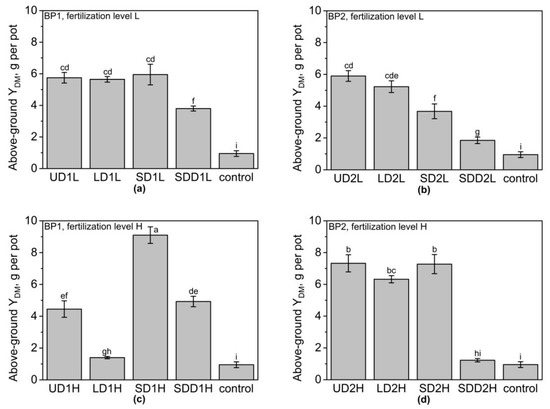
Figure 2.
Above-ground biomass yield YDM of different treatments: (a) Treatments based on manure as feedstock from BP1 with fertilization level L; (b) Treatments based on energy crops as feedstock from BP2 with fertilization level L; (c) Treatments from BP1 with fertilization level H; (d) Treatments from BP2 with fertilization level H; (code see Table 1; n = 4, whiskers show standard deviation, different letters indicate significant differences, p = 0.05).
All treatments except SDD2H showed a significantly higher biomass yield than the control. Treatment SDD2H, with 1.2 g per pot, was not significantly different from the control, with 0.9 g per pot, and the increased fertilization did not result in a higher biomass yield compared to treatment SDD2L with 1.8 g per pot. Gunnarsson et al. [23] stated a higher biomass yield for ryegrass with untreated digestate at two fertilization levels (75 mg N and 150 mg N per dm² pot surface area) compared to the control similar to our study. The above-ground biomass yield was higher with increased fertilization. This is in contrast to the present study with a lower above-ground biomass yield when comparing untreated digestate from biogas plant 1 (UD1) in the lower (L) and higher (H) fertilization level (UD1L, UD1H), respectively. The findings regarding the biomass yield of the liquid and solid fractions compared with the control are in line with the findings of Grigatti et al. [22], who performed pot experiments with Italian ryegrass, except for LD1H, which had a very low biomass yield. The maximum above-ground biomass yield in our study was achieved in the treatment SD1H with 9.1 g per pot. As expected, the higher N fertilization level with 500 mg N per kg soil resulted in a higher biomass yield, with the exception of the treatments LD1H, UD1H and SDD2H, which showed a very low dry mass yield. This might be attributed to a delayed growth in the treatment LD1H due to the high moisture content in the soil substrate as a result of the low dry matter content of this digestate variant. This means that the low biomass yield of treatment LD1H was not caused by fertilization effects, but by an insufficient aeration of the soil. Comparing the dried variants SDD1 and SDD2 with the corresponding fresh variants SD1 and SD2, the results show a significantly lower above-ground biomass yield. Therefore, the results also reveal a negative impact of drying the digestate.
3.3. Nitrogen Content of Above-Ground Biomass
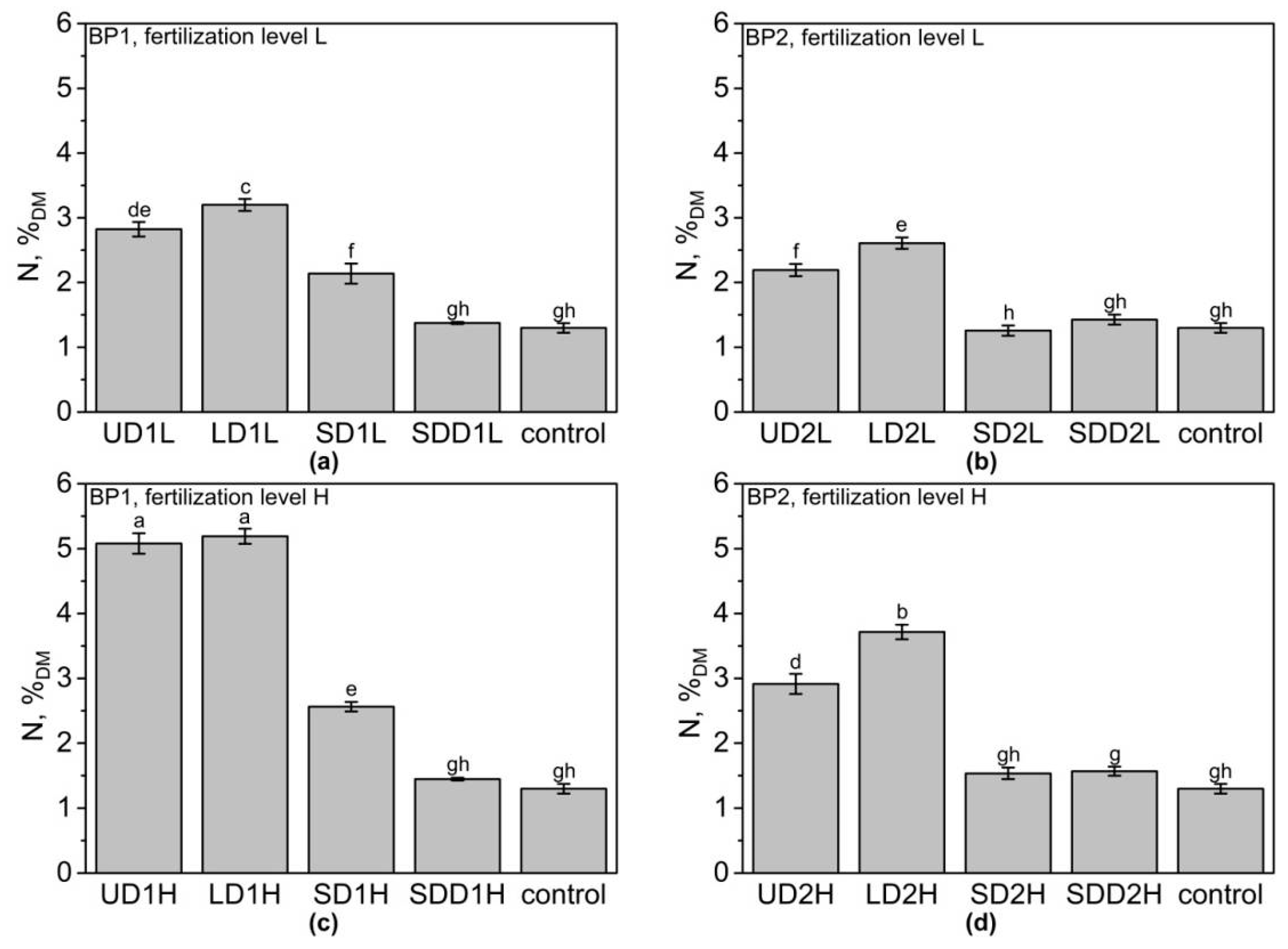
Figure 3 shows the %N content of the above-ground biomass of the different treatments and the control, which was in a range of between 1.3% and 5.2%.
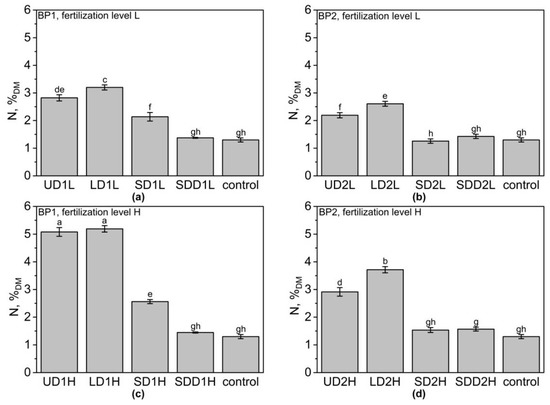
Figure 3.
Nitrogen content %N of above-ground biomass for different treatments: (a) Treatments based on manure as feedstock from BP1 with fertilization level L; (b) Treatments based on energy crops as feedstock from BP2 with fertilization level L; (c) Treatments from BP1 with fertilization level H; (d) Treatments from BP2 with fertilization level H; (code see Table 1; n = 4, whiskers show standard deviation, different letters indicate significant differences, p = 0.05).
These values are within the range reported by Finck [47]. Neubert et al. [53] defined an N content between 2.9% and 5% as sufficient for barley plants at an early growing stage. Only treatments UD1H and LD1H showed a higher N content than 5%, with values of 5.1% and 5.2% respectively. Generally, the control and low-fertilization treatments showed values below the critical value of 2.9%, except LD1L with 3.2%. The high-fertilization treatments show an N concentration in the liquid treatments UD1H, LD1H, UD2H and LD2H above the critical value of 2.9% N, whereas treatments based on solid digestate (SD1H and SD2H), as well as the corresponding dried variants (SDD1H and SDD2H), were below the critical value. This indicates that the plants were not sufficiently supplied with N. For the variants with the dried solid digestate, this might be explained by ammonia volatilization during processing and the resulting loss of readily plant available NH4-N [11] so that the readily available N is not present in sufficient quantity for the plants and it needs time to mineralize N for plant uptake into an inorganic form. The results are supported by the findings of Möller et al. [18] and show that the liquid fraction is a suitable N fertilizer and the solid fraction should be used as a P fertilizer (see also Figure 3). Additionally, Grigatti et al. [22] describe similar results regarding the solid and the liquid fraction and confirm the results that the N content in plants is higher when fertilized with the liquid treatments than with the solid ones.
3.4. Phosphorus Content of Above-Ground Biomass
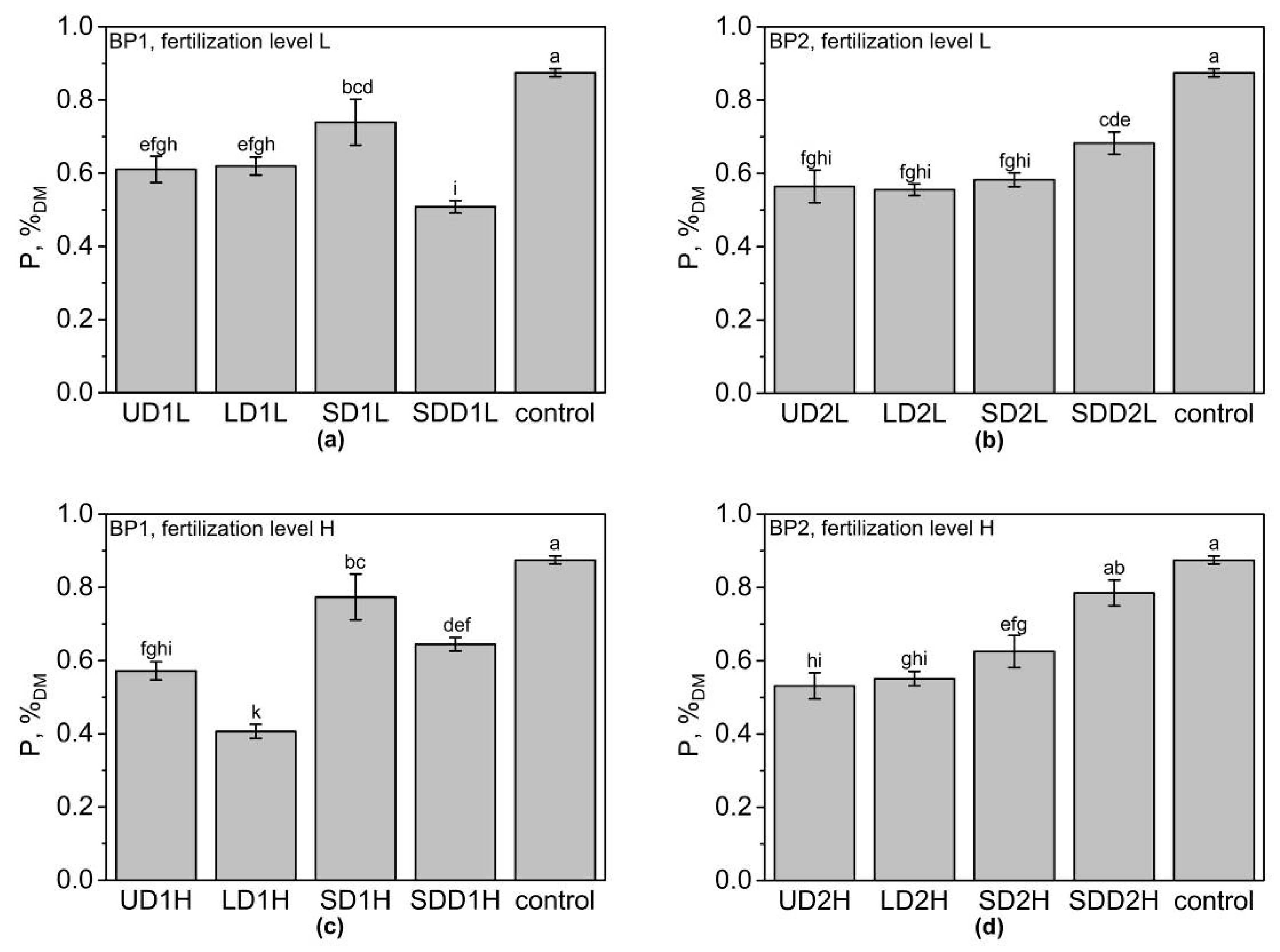
Figure 4 shows the %P content of the above-ground biomass of the different treatments and control, which was in a range between 0.4% and 0.9%.
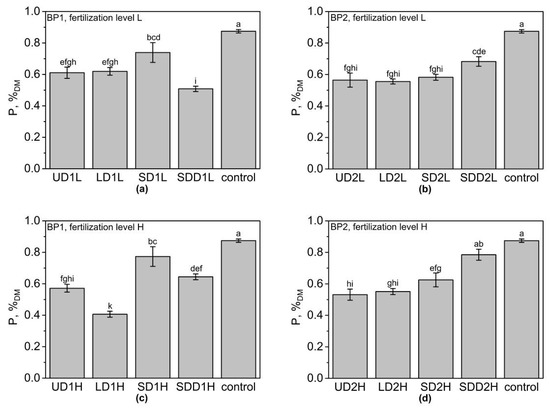
Figure 4.
Phosphorus content %P of above-ground biomass for different treatments: (a) Treatments based on manure as feedstock from BP1 with fertilization level L; (b) Treatments based on energy crops as feedstock from BP2 with fertilization level L; (c) Treatments from BP1 with fertilization level H; (d) Treatments from BP2 with fertilization level H; (code see Table 1; n = 4, whiskers show standard deviation, different letters indicate significant differences, p = 0.05).
Neubert et al. [53] defined %P content from 0.29% to 0.6% as sufficient for barley plants in an early growth stage. All treatments showed values above the critical value of 0.29%. That means that the P availability was not a limiting factor in the experiment. However, it is remarkable that the control showed the highest %P content. This might be explained by the low biomass development, where P took a larger relative share in the dry matter. In addition, the %P content in most treatments based on the solid fraction of separated digestate is higher than that of treatments based on liquid fractions, except SDDL1. Again, this might be caused by the lower biomass development, but also by the higher P content of those digestate variants. The results support the findings from other studies which show that mechanical separation of digestate into a liquid and solid fraction influences the subsequent use as fertilizer [12].
3.5. Nitrogen Removal from Soil Substrate and Plant Uptake Efficiency of Nitrogen
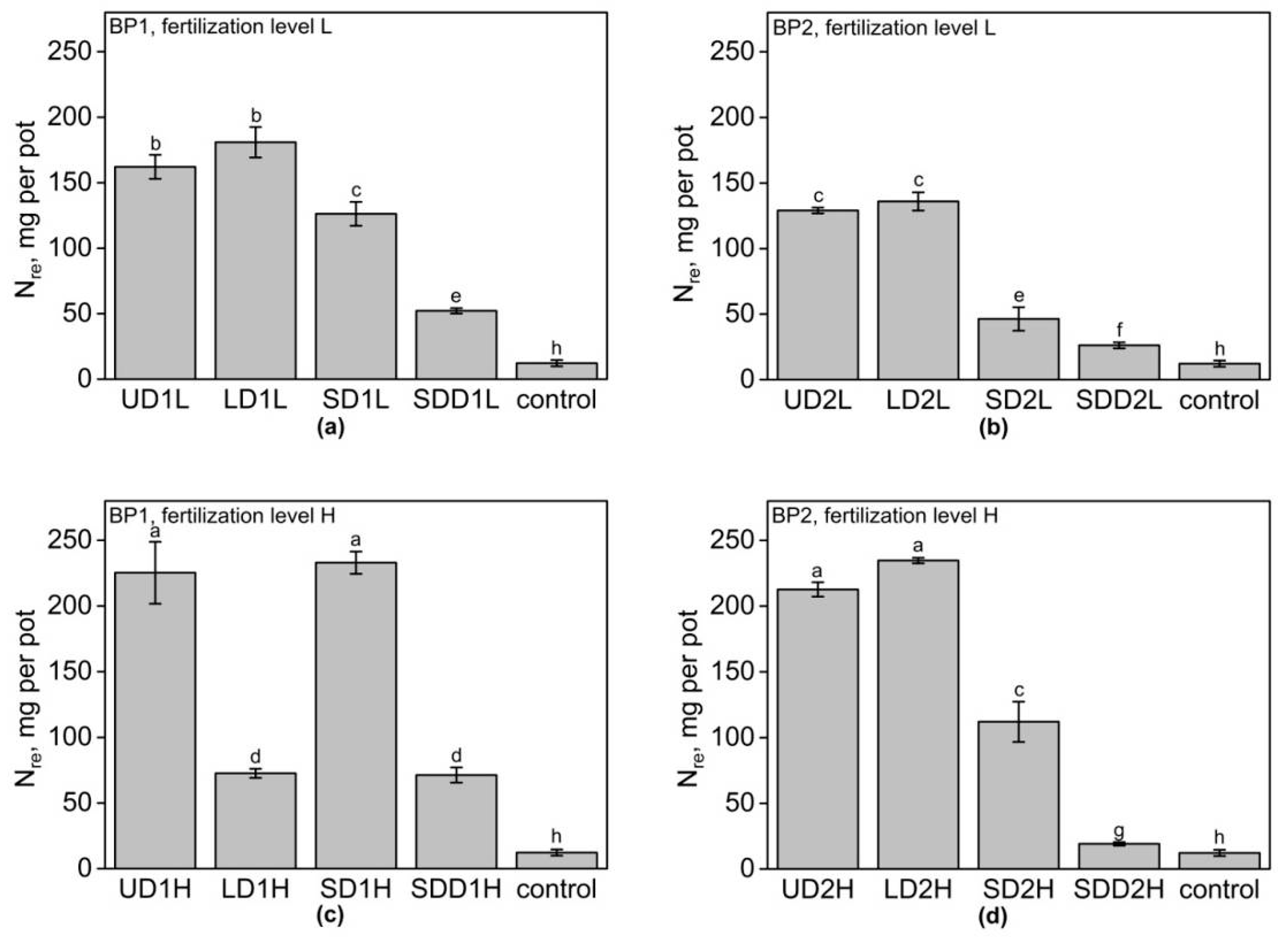
The nitrogen removal Nre reflects the combination of biomass yield and its %N content. All treatments showed a significantly higher N removal than the control, Figure 5. Treatments based on the solid fraction of separated digestate showed a lower N removal than the treatments with a liquid fraction (UD and LD) in most cases, with the exception of SD1H and the corresponding LD1H. The reason might be the lower content of NH4-N as already explained above. The treatment SD1H with a high N removal of 232.9 mg per pot constitutes an exception, which is mainly governed by the high biomass yield of this variant. Another exception is the treatment LD1H, where the low N removal is caused by the low biomass yield as explained above. The results concur with the results of Grigatti et al. [22], that solid variants show lower N removal. In the experiments of the aforementioned study, a nutrient immobilization occurs with the solid treatments.
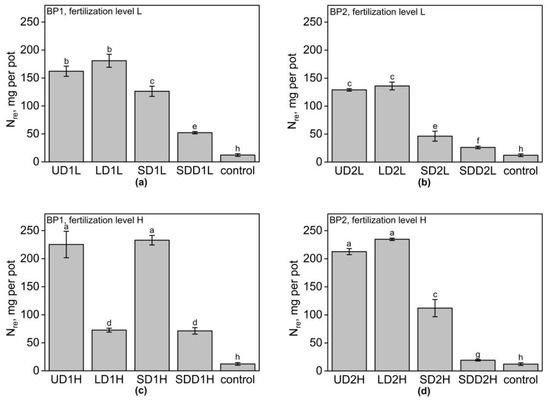
Figure 5.
Nitrogen removal Nre from soil substrate for different treatments: (a) Treatments based on manure as feedstock from BP1 with fertilization level L; (b) Treatments based on energy crops as feedstock from BP2 with fertilization level L; (c) Treatments from BP1 with fertilization level H; (d) Treatments from BP2 with fertilization level H; (code see Table 1; n = 4, whiskers show standard deviation, different letters indicate significant differences, p = 0.05).
The nitrogen uptake efficiency (NUE) of the different digestate variants is shown in Table 5. Generally, the digestate variants of BP1 showed a higher NUE than the corresponding variants of BP2, with the exception of LD1H and LD2H, where LD1H has a very low above-ground biomass yield as a result of a delayed growth, as explained before, so that the NUE is, accordingly, 13%. Liquid digestate variants (UD, LD) showed a higher NUE than solid variants. These results correspond to the amount of NH4-N added to the soil substrate as shown in Table 4. For the liquid variants, the resulting NH4-N added to the soil via digestate was higher than the solid ones.
Table 5.
Plant uptake efficiency of nitrogen (NUE) for untreated digestate (UD), liquid digestate (LD), solid digestate (SD), and solid digestate dried (SDD) at low (L) and high (H) level of fertilization; code 1 and 2 means digestate from biogas plant 1 and biogas plant 2, respectively.
4. Conclusions
The objective of this research was to investigate the N availability of dried solid digestate compared to other mechanically separated fractions of digestate and the untreated variants. The results show that an untreated biogas digestate is a suitable source of plant nutrients. Mechanical separation and drying of digestate decreases the NH4-N content in the solid fractions considerably. Due to the reduced amount of easily available N, the short-term N uptake of barley from solid fractions of digestate was low. The results show that the %N content in above-ground biomass was higher in the liquid and untreated variants than the solid and the dried solid variants. The results of %P show an inverse behavior. Furthermore, the mechanical separation of digestate effected the partitioning of plant nutrients according to their solubility in water, i.e., their prevalence in the liquid or solid fraction of the processed material.
The short-term N availability of the dried solid digestate, expressed as NUE, is lower than that of the other variants from the same biogas plant. However, this is not so when comparing the digestate obtained from the two biogas plants. Depending on the feedstock of the biogas plants and the processing method of the digestate, the N availability varies and influences the short-term N uptake. In summary, mechanical separation and drying of digestate is an essential step in digestate processing to increase the plant nutrient concentration and decrease transport costs for the solid fractions. In order to preserve the N in the digestate during drying, digestate processing should be combined with ammonia recovery to prevent N losses to the environment.
Author Contributions
The paper was a collaboration of the authors. Conceptualization: J.M., R.S. and C.M.; methodology: R.S.; investigation and analysis: J.S.-P., C.M. and R.S.; writing–original draft preparation: C.M.; writing–review and editing: J.M., R.S. and C.M.; supervision: J.M. and R.S.; funding acquisition: J.M.
Funding
This research was funded by the Ministry for the Rural Areas and Consumer Protection of Baden-Württemberg (Germany) with funds of the Baden-Württemberg Stiftung GmbH.
Acknowledgments
The authors want to thank Sabine Nugent for her helpful support in language editing.
Conflicts of Interest
The authors declare that they have no conflicts of interest.
References
- Möller, K.; Stinner, W.; Deuker, A.; Leithold, G. Effects of different manuring systems with and without biogas digestion on nitrogen cycle and crop yield in mixed organic dairy farming systems. Nutr. Cycl. Agroecosyst. 2008, 82, 209–232. [Google Scholar] [CrossRef]
- Tambone, F.; Scaglia, B.; D’Imporzano, G.; Schievano, A.; Orzi, V.; Salati, S.; Adani, F. Assessing amendment and fertilizing properties of digestates from anaerobic digestion through a comparative study with digested sludge and compost. Chemosphere 2010, 81, 577–583. [Google Scholar] [CrossRef] [PubMed]
- European Council. Council Directive 91/676/EEC of 12 December 1991 Concering the Protection of Waters against Pollution Caused by Nitrates from Agricultural Sources. Available online: https://eur-lex.europa.eu/legal-content/EN/TXT/?uri=CELEX:31991L0676 (accessed on 27 January 2019).
- Drosg, B.; Fuchs, W.; Al Seadi, T.; Madsen, M.; Linke, B. Nutrient Recovery by Biogas Digestate Processing; Baxter, D., Ed.; IEA Bioenergy: Berlin, Germany, 2015; ISBN 978-1-910154-16-8. [Google Scholar]
- Huang, J.; Xu, C.; Ridoutt, B.G.; Wang, X.; Ren, P. Nitrogen and phosphorus losses and eutrophication potential associated with fertilizer application to cropland in China. J. Clean. Prod. 2017, 159, 171–179. [Google Scholar] [CrossRef]
- Döhler, H.; Schliebner, P. Verfahren und Wirtschaftlichkeit der Gärrestaufbereitung; KTBL HRSG: Darmstadt, Germany, 2006; pp. 199–212. ISBN 978-3-939371-05-2. [Google Scholar]
- Delzeit, R.; Kellner, U. The impact of plant size and location on profitability of biogas plants in Germany under consideration of processing digestates. Biomass Bioenergy 2013, 52, 43–53. [Google Scholar] [CrossRef]
- Möller, K.; Schulz, R.; Müller, T. Effects of setup of centralized biogas plants on crop acreage and balances of nutrients and soil humus. Nutr. Cycl. Agroecosyst. 2011, 89, 303–312. [Google Scholar] [CrossRef]
- Dahlin, J.; Nelles, M.; Herbes, C. Biogas digestate management: Evaluating the attitudes and perceptions of German gardeners towards digestate-based soil amendments. Resour. Conserv. Recycl. 2017, 118, 27–38. [Google Scholar] [CrossRef]
- Rehl, T.; Müller, J. Life cycle assessment of biogas digestate processing technologies. Resour. Conserv. Recycl. 2011, 56, 92–104. [Google Scholar] [CrossRef]
- Maurer, C.; Müller, J. Ammonia (NH3) emissions during drying of untreated and dewatered biogas digestate in a hybrid waste-heat/solar dryer. Eng. Life Sci. 2012, 12, 321–326. [Google Scholar] [CrossRef]
- Möller, K.; Müller, T. Effects of anaerobic digestion on digestate nutrient availability and crop growth: A review. Eng. Life Sci. 2012, 12, 242–257. [Google Scholar] [CrossRef]
- Risberg, K.; Cederlund, H.; Pell, M.; Arthurson, V.; Schnürer, A. Comparative characterization of digestate versus pig slurry and cow manure—Chemical composition and effects on soil microbial activity. Waste Manag. 2017, 61, 529–538. [Google Scholar] [CrossRef]
- Tambone, F.; Adani, F.; Gigliotti, G.; Volpe, D.; Fabbri, C.; Provenzano, M.R. Organic matter characterization during the anaerobic digestion of different biomasses by means of CPMAS 13C NMR spectroscopy. Biomass Bioenergy 2013, 48, 111–120. [Google Scholar] [CrossRef]
- Zirkler, D.; Peters, A.; Kaupenjohann, M. Elemental composition of biogas residues: Variability and alteration during anaerobic digestion. Biomass Bioenergy 2014, 67, 89–98. [Google Scholar] [CrossRef]
- Muscolo, A.; Settineri, G.; Papalia, T.; Attinà, E.; Basile, C.; Panuccio, M.R. Anaerobic co-digestion of recalcitrant agricultural wastes: Characterizing of biochemical parameters of digestate and its impacts on soil ecosystem. Sci. Total Environ. 2017, 586, 746–752. [Google Scholar] [CrossRef] [PubMed]
- Alburquerque, J.A.; de la Fuente, C.; Ferrer-Costa, A.; Carrasco, L.; Cegarra, J.; Abad, M.; Bernal, M.P. Assessment of the fertiliser potential of digestates from farm and agroindustrial residues. Biomass Bioenergy 2012, 40, 181–189. [Google Scholar] [CrossRef]
- Möller, K.; Schulz, R.; Müller, T. Mit Gärresten richtig Düngen. Aktuelle Informationen für Berater. Available online: https://plantnutrition.uni-hohenheim.de/ (accessed on 27 January 2019).
- Alburquerque, J.A.; de la Fuente, C.; Bernal, M.P. Chemical properties of anaerobic digestates affecting C and N dynamics in amended soils. Agric. Ecosyst. Environ. 2012, 160, 15–22. [Google Scholar] [CrossRef]
- Alburquerque, J.A.; de la Fuente, C.; Campoy, M.; Carrasco, L.; Nájera, I.; Baixauli, C.; Caravaca, F.; Roldán, A.; Cegarra, J.; Bernal, M.P. Agricultural use of digestate for horticultural crop production and improvement of soil properties. Eur. J. Agron. 2012, 43, 119–128. [Google Scholar] [CrossRef]
- De Boer, H.C. Co-digestion of animal slurry can increase short-term nitrogen recovery by crops. J. Environ. Qual. 2008, 37, 1968–1973. [Google Scholar] [CrossRef] [PubMed]
- Grigatti, M.; Di Girolamo, G.; Chincarini, R.; Ciavatta, C.; Barbanti, L. Potential nitrogen mineralization, plant utilization efficiency and soil CO2 emissions following the addition of anaerobic digested slurries. Biomass Bioenergy 2011, 35, 4619–4629. [Google Scholar] [CrossRef]
- Gunnarsson, A.; Bengtsson, F.; Caspersen, S. Use efficiency of nitrogen from biodigested plant material by ryegrass. J. Plant Nutr. Soil Sci. 2010, 173, 113–119. [Google Scholar] [CrossRef]
- Koszel, M.; Lorencowicz, E. Agricultural Use of Biogas Digestate as a Replacement Fertilizers. Agric. Agric. Sci. Procedia 2015, 7, 119–124. [Google Scholar] [CrossRef]
- Lošák, T.; Zatloukalová, A.; Szostková, M.; Hlušek, J.; Fryč, J.; Vítěz, T. Comparison of the effectiveness of digestate and mineral fertilisers on yield and quality of kohlrabi (Brassica oleracea, L.). Acta Universitatis Agriculturae et Silviculturae Mendelianae Brunensis 2011, 59, 117–122. [Google Scholar] [CrossRef]
- Pantelopoulos, A.; Magid, J.; Jensen, L.S. Net and gross nitrogen turnover in soil amended with acidified and differently dried solids from biogas digestate. Soil Sci. Soc. Am. J. 2016, 80, 943–953. [Google Scholar] [CrossRef]
- Rigby, H.; Smith, S.R. Nitrogen availability and indirect measurements of greenhouse gas emissions from aerobic and anaerobic biowaste digestates applied to agricultural soils. Waste Manag. 2013, 33, 2641–2652. [Google Scholar] [CrossRef] [PubMed]
- Tambone, F.; Adani, F. Nitrogen mineralization from digestate in comparison to sewage sludge, compost and urea in a laboratory incubated soil experiment. J. Plant Nutr. Soil Sci. 2017, 180, 355–365. [Google Scholar] [CrossRef]
- Vaneeckhaute, C.; Meers, E.; Michels, E.; Ghekiere, G.; Accoe, F.; Tack, F.M.G. Closing the nutrient cycle by using bio-digestion waste derivatives as synthetic fertilizer substitutes: A field experiment. Biomass Bioenergy 2013, 55, 175–189. [Google Scholar] [CrossRef]
- Cavalli, D.; Cabassi, G.; Borrelli, L.; Fuccella, R.; Degano, L.; Bechini, L.; Marino, P. Nitrogen fertiliser value of digested dairy cow slurry, its liquid and solid fractions, and of dairy cow slurry. Ital. J. Agron. 2014, 9, 71–78. [Google Scholar] [CrossRef]
- Cavalli, D.; Cabassi, G.; Borrelli, L.; Geromel, G.; Bechini, L.; Degano, L.; Marino Gallina, P. Nitrogen fertilizer replacement value of undigested liquid cattle manure and digestates. Eur. J. Agron. 2016, 73, 34–41. [Google Scholar] [CrossRef]
- Sigurnjak, I.; Vaneeckhaute, C.; Michels, E.; Ryckaert, B.; Ghekiere, G.; Tack, F.M.G.; Meers, E. Fertilizer performance of liquid fraction of digestate as synthetic nitrogen substitute in silage maize cultivation for three consecutive years. Sci. Total Environ. 2017, 599, 1885–1894. [Google Scholar] [CrossRef]
- Chantigny, M.H.; Angers, D.A.; Bélanger, G.; Rochette, P.; Eriksen-Hamel, N.; Bittman, S.; Buckley, K.; Massé, D.; Gasser, M.-O. Yield and Nutrient Export of Grain Corn Fertilized with Raw and Treated Liquid Swine Manure. Agron. J. 2008, 100, 1303–1309. [Google Scholar] [CrossRef]
- Nabel, M.; Schrey, S.D.; Poorter, H.; Koller, R.; Jablonowski, N.D. Effects of digestate fertilization on Sida hermaphrodita: Boosting biomass yields on marginal soils by increasing soil fertility. Biomass Bioenergy 2017, 107, 207–213. [Google Scholar] [CrossRef]
- Duan, N.; Ran, X.; Li, R.; Kougias, P.; Zhang, Y.; Lin, C.; Liu, H. Performance Evaluation of Mesophilic Anaerobic Digestion of Chicken Manure with Algal Digestate. Energies 2018, 11, 1829. [Google Scholar] [CrossRef]
- Da Borso, F.; Di Marzo, C.; Zuliani, F.; Danuso, F.; Baldini, M. Harvest time and ensilage suitability of giant reed and miscanthus for bio-methane production and characterization of digestate for agronomic use. Agron. Res. 2018, 16, 22–40. [Google Scholar] [CrossRef]
- Baryga, A.; Połeć, B.; Małczak, E. Technological value of raw materials from sugar beet growing area fertilized with digestate from sugar beet pulp biogas plant. Plant Soil Environ. 2017, 63, 207–212. [Google Scholar]
- Ronga, D.; Setti, L.; Salvarani, C.; De Leo, R.; Bedin, E.; Pulvirenti, A.; Milc, J.; Pecchioni, N.; Francia, E. Effects of solid and liquid digestate for hydroponic baby leaf lettuce (Lactuca sativa L.) cultivation. Sci. Hortic. 2019, 244, 172–181. [Google Scholar] [CrossRef]
- Kouřimská, L.; Poustková, I.; Babička, L. The use of digestate as a replacement of mineral fertilizers for vegetables growing. Scientia agriculturae bohemica 2012, 43, 121–126. [Google Scholar] [CrossRef]
- Ehmann, A.; Bach, I.-M.; Bilbao, J.; Lewandowski, I.; Müller, T. Phosphates recycled from semi-liquid manure and digestate are suitable alternative fertilizers for ornamentals. Sci. Hortic. 2019, 243, 440–450. [Google Scholar] [CrossRef]
- German Institute for Standardization (DIN). Characterization of Sludges—Determination of Dry Residue and Water Content; German Institute for Standardization: Berlin, Germany, 2001. [Google Scholar]
- German Institute for Standardization (DIN). Sludge, treated biowaste and soil - Determination of pH. Available online: https://www.google.com.tw/url?sa=t&rct=j&q=&esrc=s&source=web&cd=1&cad=rja&uact=8&ved=2ahUKEwir7sT34MvgAhVNxosBHe8bCyYQFjAAegQIARAC&url=https%3A%2F%2Flakeohridniva.files.wordpress.com%2F2015%2F07%2Fbs-en-15933-2012sludge-treated-biowaste-and.pdf&usg=AOvVaw0JykqvQZsvUIPlRY9AEEpd (accessed on 27 January 2019).
- Deutsches Institut fur Normung. German Standard Methods for the Examination of Water, Waste Water and Sludge; Beuth Verlag GmbH: Berlin, Germany, 1983. [Google Scholar]
- German Institute for Standardization (DIN). Soil Quality: Determination of Total Nitrogen: Modified Kjeldahl Method. Available online: https://www.iso.org/obp/ui/#iso:std:iso:11261:ed-1:v1:en (accessed on 27 January 2019).
- VDLUFA. Methodenbuch Band VII Umweltanalytik, 3rd ed.; VDLUFA: Darmstadt, Germany 2008. [Google Scholar]
- Schilling, G.; Kerschberger, M. Pflanzenernährung und Düngung; Ulmer: Stuttgart, Germany 2000. [Google Scholar]
- Finck, A. Pflanzenernährung und Düngung in Stichworten; Borntraeger: Stuttgart, Germany, 2007; ISBN 978-3-443-03116-9. [Google Scholar]
- Döhler, H. Landbauliche Verwertung stickstoffreicher Abfallstoff; Wasser&Boden: Berlin, Germany, 1996; pp. 7–16. ISSN 0043-0951. [Google Scholar]
- Gericke, S.; Kurmies, B. Colorimetrische Bestimmung der Phosphorsäure mit Vanadat-Molybdat. In Colorimetrische Bestimmung der Phosphorsäure mit Vanadat-Molybdat; Springer: Berlin, Germany, 1952; pp. 15–22. [Google Scholar]
- Benke, A.P.; Rieps, A.-M.; Wollmann, I.; Petrova, I.; Zikeli, S.; Möller, K. Fertilizer value and nitrogen transfer efficiencies with clover-grass ley biomass based fertilizers. Nutr. Cycl. Agroecosyst. 2017, 107, 395–411. [Google Scholar] [CrossRef]
- Rodrigues, M.A.; Pereira, A.; Cabanas, J.E.; Dias, L.; Pires, J.; Arrobas, M. Crops use-efficiency of nitrogen from manures permitted in organic farming. Eur. J. Agron. 2006, 25, 328–335. [Google Scholar] [CrossRef]
- Zorn, W.; Marks, G.; Hubert, H.; Werner, B. Handbuch zur visuellen Diagnose von Ernährungsstörungen bei Kulturpflanzen; Springer Spektrum: Berlin, Germany, 2016. [Google Scholar]
- Neubert, P.; Bergmann, W.; Cerling, V.V.; Gollmick, F.; Hundt, I.; Schurich, W.; Vanselow, G.; Vielemeyer, H.-P. Pflanzenanalyse. In Pflanzendiagnose und Pflanzenanalyse zur Ermittlung von Ernährungsstörungen und des Ernährungszustandes der Kulturpflanzen; Fischer VEB: Jena, Germany, 1976. [Google Scholar]
© 2019 by the authors. Licensee MDPI, Basel, Switzerland. This article is an open access article distributed under the terms and conditions of the Creative Commons Attribution (CC BY) license (http://creativecommons.org/licenses/by/4.0/).