


Abstract
Developing effective, economical, and environmentally sound approaches for sewage sludge management remains an important global issue. In this paper, we propose a bioethanol-lignin (nonfood biomass)-based sewage sludge upgrading process for enhancing the heating value and reducing air pollutants of hybrid sewage sludge fuel (HSF) for the effective management of sewage sludge. Sewage sludge paste with the lignin-CaO solution implies drying at 105 °C accompanied by torrefaction at 250 °C. During torrefaction, moisture and partly volatile matter begin to evaporate, and are almost vaporized out to the surface. In this study, the proposed process enhances the net caloric value (NCV) to 37%. The lignin-embedded HSF shows a two-in-one combustion peak regardless of the mixing ratio, resulting in a 70% reduction of unburned carbon (UBC) emissions, which is one of the particular matter (PM) sources of combustion flue gas. Other air pollutants, such as CO, hydrocarbon, NOx, and SOx, were also reduced by the proposed process. In particular, SOx emission remained at ~1 ppm (average value) regardless of the sulfur content of the fuel.
1. Introduction
The generation of sewage sludge, an unavoidable byproduct of municipal wastewater treatment, has increased rapidly over the past decades due to the rapid increase in industrialization, urbanization, and population. In China, 20 million tons of sewage sludge is generated annually. In Europe, 90 g/person/day of dry sludge is produced, while 11,432 ton/day of sewage sludge is generated in Korea (data from 2017) [1,2,3,4,5,6,7]. Currently, the commonly known sewage sludge disposal methods are agricultural recycling, landfilling, compost production, organic fertilizer production, and road surfacing [8,9,10,11,12]. However, these traditional methods may lead to serious environmental pollution and human health issues (soil, groundwater contamination, leading to plant, animal, and human health problems due to exposure to heavy metals, pathogens, bacteria, and organic pollutants in sewage sludge). The London Convention banned the ocean dumping method in 1996 due to environmental problems. According to the Council Directive 91/271/EEC, sewage sludge must be reused. Moreover, the amount of sewage sludge for landfilling was restricted to prevent environmental degradation [13,14,15,16,17,18,19].
Developing sewage sludge management methods that are effective, economical, and environmentally safe remains an important global problem. Recently, sewage sludge received widespread attention as a potential biomass resource for energy production. In addition, the technology for producing energy from sewage sludge can alleviate environmental problems and reduce the utilization of fossil fuels. Biomass resulting from sewage sludge is a renewable energy with zero or low net carbon dioxide emissions. Furthermore, the NOx and SOx emissions were reduced in comparison to the coal combustion system. Sewage sludge can be solely combusted in boilers to generate electrical power. Therefore, sewage sludge fuels may play a role in the renewable energy section. However, the combustion of sewage sludge has a significant limitation, whereby the thermal efficiency of power plants declines with the use of sewage sludge due to its relatively low calorific value and high moisture contents compared to other fuels [20,21,22,23]. Various strategies developed to overcome this drawback of sewage sludge include the following upgrading technologies: (1) torrefaction (conversion to char), (2) immersion frying, and (3) hydrothermal carbonization (HTC) [24,25,26,27]. Several studies suggest cofiring biomass and sewage sludge in combustion systems [28,29]. Unfortunately, each method has its disadvantages and limitations. The energy efficiency of process decreases and the unburned carbon increases since the cofiring of simply blended fuels results in heterogeneous combustion behaviors of the combined fuels [30]. The HTC process is generally suited for wet sewage sludge with ~80% moisture content [31]. Moreover, the addition of biomass to sewage sludge does not significantly enhance the calorific value of fuels [32]. An efficient and economical sewage sludge pretreatment method for improving the heating value of sewage sludge is essential in the renewable energy sector.
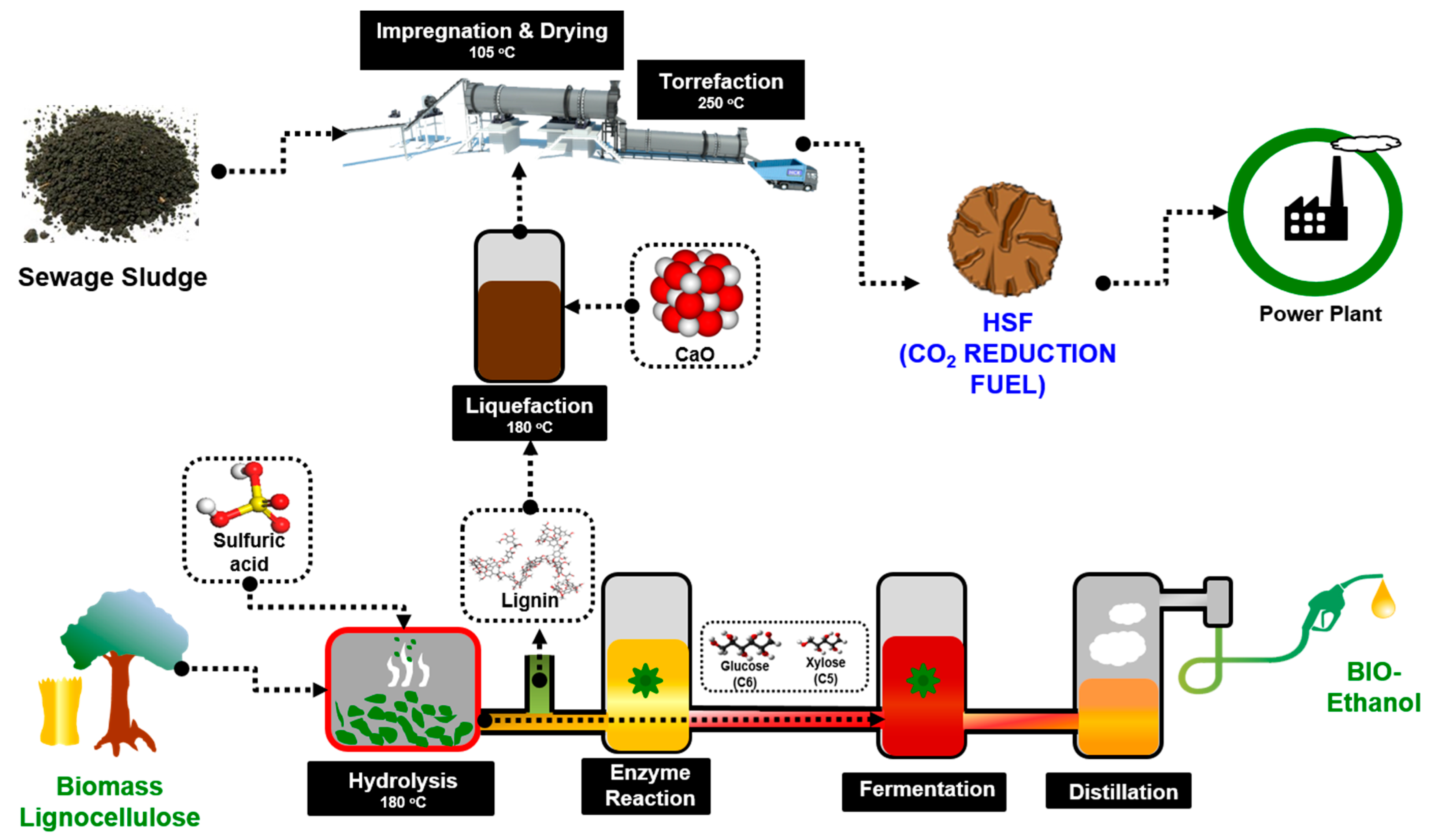
Inspired by the high calorific value of lignin, which is discarded as a byproduct from industrial cellulosic bioethanol plants [33], we propose the synthetic upgrading of sewage sludge fuel by impregnating lignin into the intrapore spaces of sewage sludge for effective sewage sludge pretreatment. The synthetic upgrading of sewage sludge fuel was conducted by a series of processes: (1) liquefaction of bioethanol-lignin (solid) with a CaO solution, (2) impregnation into sewage sludge pores, (3) drying for promotion of impregnation, and (4) lignin immobilization as artificial volatile matter and carbon fixing through torrefaction at 250 °C. The synthetic fuel shows a single combustion pattern (two-in-one fuel combustion behavior), increased calorific value, and environmental pollutant reduction. It can be used as a single fuel in combustion systems because it shows better performance compared to raw sewage sludge. We are confident that it could be a substitute for coal in coal-fired power plants because the characteristics of the upgraded fuel are similar to those of sub-bituminous coal. In addition, the proposed fuel contributes to the reduction of CO2 emissions from power plants through the carbon footprint of lignin and sewage sludge. It can, therefore, readily meet the requirements of the renewable energy portfolio standard (RPS) and cap-and-trade system. We speculate that the proposed HSF process will be more economical by using lignin, which is well-known as a byproduct in the bioethanol production process.
2. Experimental Section
2.1. Experimental Materials
Raw municipal sewage sludge samples were collected during 5 days from three cities (Daejeon city, DS, 900,000 m3/day capacity, NPR, Bio-SAC, MLE methods; Suwon city, SW, 47,000 m3/day capacity, 4 stage-BNR methods; and Seoul city, SL, 860,000 m3/day capacity, MLE, A2O methods) in Korea for the preparation of hybrid sewage sludge fuel (HSF) [7]. In this study, Korean red pine obtained from G-BIOTECH CO., LTD was used as a resource for the extraction of bioethanol-lignin. In addition, 98 wt% sulfuric acid (Sigma-Aldrich Co., Yongin, Korea) and calcium oxide (Sigma-Aldrich Co.) were purchased as a hydrothermal catalyst for the production bioethanol-lignin and a liquefacient of bioethanol-lignin, respectively.
2.2. Production of Bioethanol-Lignin Solution
We defined lignin, a solid byproduct from the bioethanol process, as bioethanol-lignin. The bioethanol-lignin (solid) was prepared by dilute acid hydrothermal treatment. The red pine and sulfuric acid solution (1 wt%) were placed into an autoclave reactor (SUS304, internal volume of 500 mL), which was then gently blended at a ratio of 1:7 (red pine: 1 wt% sulfuric acid solution) and sealed. The autoclave reactor was maintained at 180 °C for 1 h via an external heater. After the hydrothermal treatment, the solution was filtered and the solid (bioethanol-lignin) was washed three times to remove the sulfur. The bioethanol-lignin was then liquefied to impregnate the sewage sludge pores. The bioethanol-lignin and CaO solutions (1 wt%) were mixed at a ratio of 1:16 (bioethanol-lignin:1 wt% CaO solution) and kept at 180 °C for 1 h for liquefaction. Finally, a bioethanol-lignin solution was obtained.
2.3. Preparation of HSF
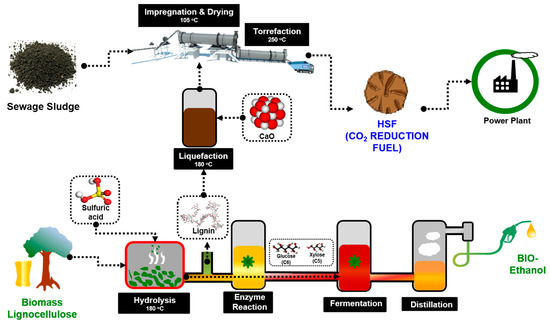
To prepare the HSF (Scheme 1), we first dried raw sewage sludge samples at 105 °C for 24 h in an oven to remove the moisture. The dried samples were then pulverized using a Wonder Crush/Mill D3V-10 (Taiwan), and the samples were sifted to break the particles down to 75 µm in diameter or smaller using a sieve shaker. We then mixed the dried sewage sludge samples (solid) with the bioethanol-lignin solution (liquid; lignin/sewage sludge 0.1–0.3 weight ratio on a dry basis) until the mixture was homogeneous. The mixed samples (bioethanol-lignin solution and sewage sludge mixture) were then dried at 105 °C for 10 h to vaporize the water in an oven and to allow permeation of lignin into the sewage sludge pores. Finally, torrefaction of the dried blended samples was carried out at 250 °C in a nitrogen gas atmosphere for 1.5 h. Thus, the 100 g of upgraded sewage sludge fuel (solid) was obtained. All HSF samples were prepared in 3 replicates.
Scheme 1.
Schematic diagram of the combined production process of hybrid sewage sludge fuel (HSF) and bioethanol.
2.4. Characterization of HSF
To analyze the fuel properties of the samples, proximate analysis, ultimate analysis, and calorific value measurement were conducted using a thermogravimeter (TGA-701, LECO Co. for moisture, volatile matter, ash and fixed carbon) on an as-received basis, an elemental analyzer (TruSpec & SC-432DR, LECO Co., St. Joseph, MI, USA for C, H, N, O and S) on a dry basis, and a calorimeter (a Parr 6320EF, Parr Instruments for higher heating value), respectively. The mesopore information, including the pore size and volume of the fuels were measured by nitrogen adsorption analysis (ASAP 2420, Micrometritics Co., Norcross, GA, USA), while the fuels were degassed to empty the pores for 7 h at 105 °C. To investigate the combustion behaviors of the fuels, we carried out thermogravimetry analysis (TGA) using Q500 (TA Instrument Ltd., New Castle, DE, USA) under a heating rate of 10 °C/min and an air flowrate of 100 mL/min. Finally, we directly compared the flue gas emissions (NOx, SO2, CO, and CxHy) of dried sewage sludge and HSF samples when the mass of 1 g was burned. Each sample was put in the combustion chamber and heated up to 1000 °C at a heating rate of 16.67 °C /min under air (21% O2) flowing condition (1.5 L/min), and the flue gas emission was recorded by a gas analyzer (Model 350K, Testo, Korea) for 90 min. All samples were analyzed in 3 replicates. Finally, we investigated the ash characterization (slagging, fouling, ash fusion temperature and heavy metals) using X-ray fluorescence (XRF, Primus II, RIGAKU Co., Auburn Hills, MI, USA), an ash melting test (ASTMD1857, 5E-AF4000), and inductively coupled plasma-atomic emission spectroscopy (ICP-AES).
3. Results and Discussion
3.1. Fuel Characteristics of HSF
We conducted proximate, ultimate, and calorific value analyses for lignin, dried sewage sludges, and HSF samples (impregnated with lignin). The results are summarized in Table 1. The proximate analysis of the HSF samples showed that the fixed carbon content increased from around 76.81% (SL-L-10) to 185.57% (SW-L-30) compared to dried sewage sludges. This finding is mainly attributed to the fact that the bioethanol-lignin solution additives were converted into artificial fixed carbon after thermal treatment. In addition, the ash content of the upgraded sewage sludge fuels was slightly increased by CaO. Meanwhile, the moisture and volatile matter contents dramatically decreased following torrefaction treatment at 250 °C. Compared to dried sewage sludge, the net calorific values (NCV) of the HSF samples were enhanced by 1169 (30.16%, SW-L-10), to 1211 (31.24%, SW-L-20), to 1429 (36.88%, SW-L-30), to 663 (19.83%, DS-L-10), to 763 (27.13%, SL-L-10) kcal/kg because the fixed carbon increased, while moisture and volatile matter decreased.
Table 1.
Proximate analysis and ultimate analysis results, and calorific value of dried sewage sludge, bioethanol-lignin, and hybrid sewage sludge fuel (HSF) samples.
The ultimate analysis showed that the carbon content in HSF increased from 18.16% (SW-L-10) to 18.56% (DS-L-10), to 20.69% (SL-L-10) compared to the dried sewage sludge, while the oxygen and hydrogen contents decreased. This is attributed to the fact that the carboxyl, hydroxyl (C–O, C–H, and O–H) functional groups of volatile matter are easily broken during thermal treatment. The HSF samples showed lower nitrogen and sulfur contents than dried sewage sludge.
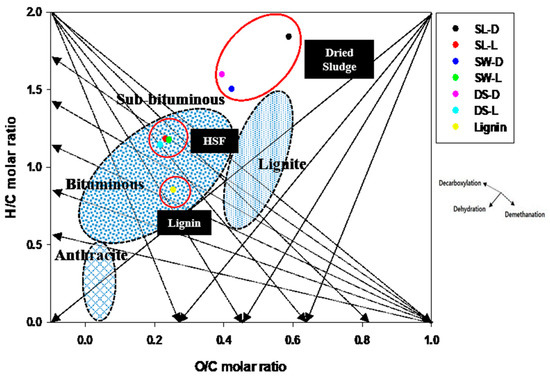
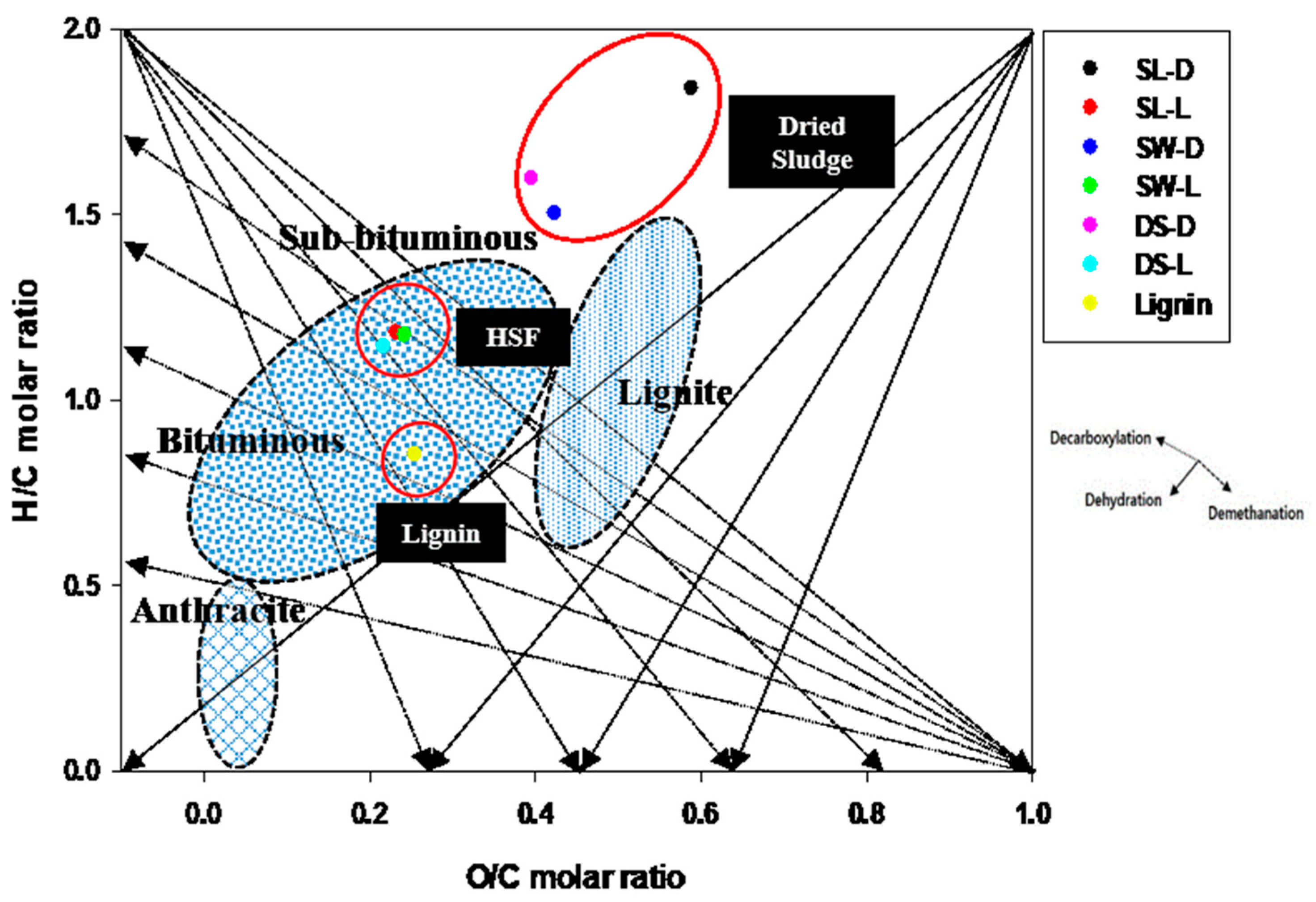
The van Krevelen diagram [34,35] shows the fuel rank and changes in element ratios based on ultimate analysis information (C, H, and O). The O/C and H/C molar ratios of all samples are presented in Figure 1. In general, high rank fuel indicates low O/C and H/C molar ratios due to the degree of coalification through dehydration and decarboxylation. Dried sewage sludges are ranked lower than the lignite areas. As the lignin additive ratio increases during the HSF manufacturing process, HSF steadily improved to sub-bituminous, due to the lower O/C and H/C ratios [36].
Figure 1.
H/C and O/C molar ratios on van Krevelen diagrams for bioethanol-lignin, dried sewage sludge, and HSF samples (comparison of anthracite, bituminous, sub-bituminous, and lignite coals).
3.2. Combustion Behaviors of HSF at Low Temperature
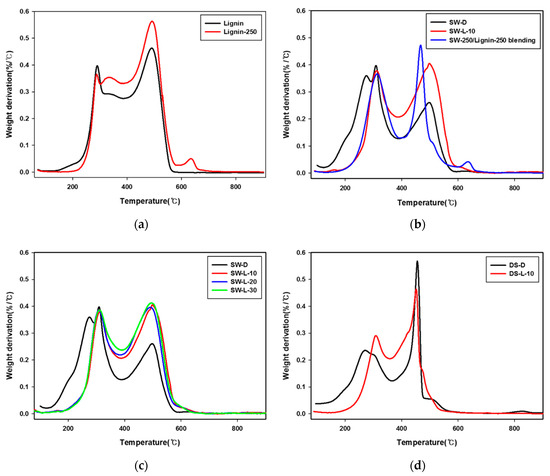
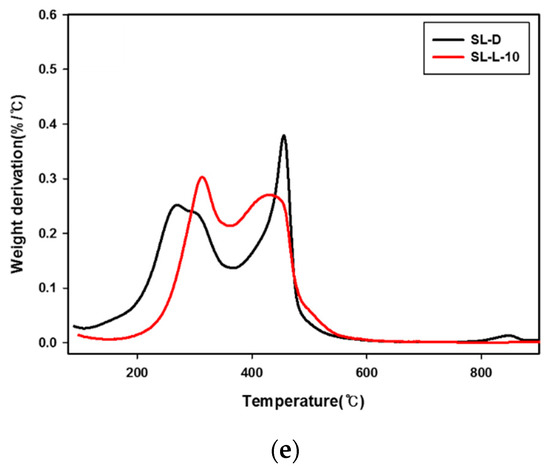
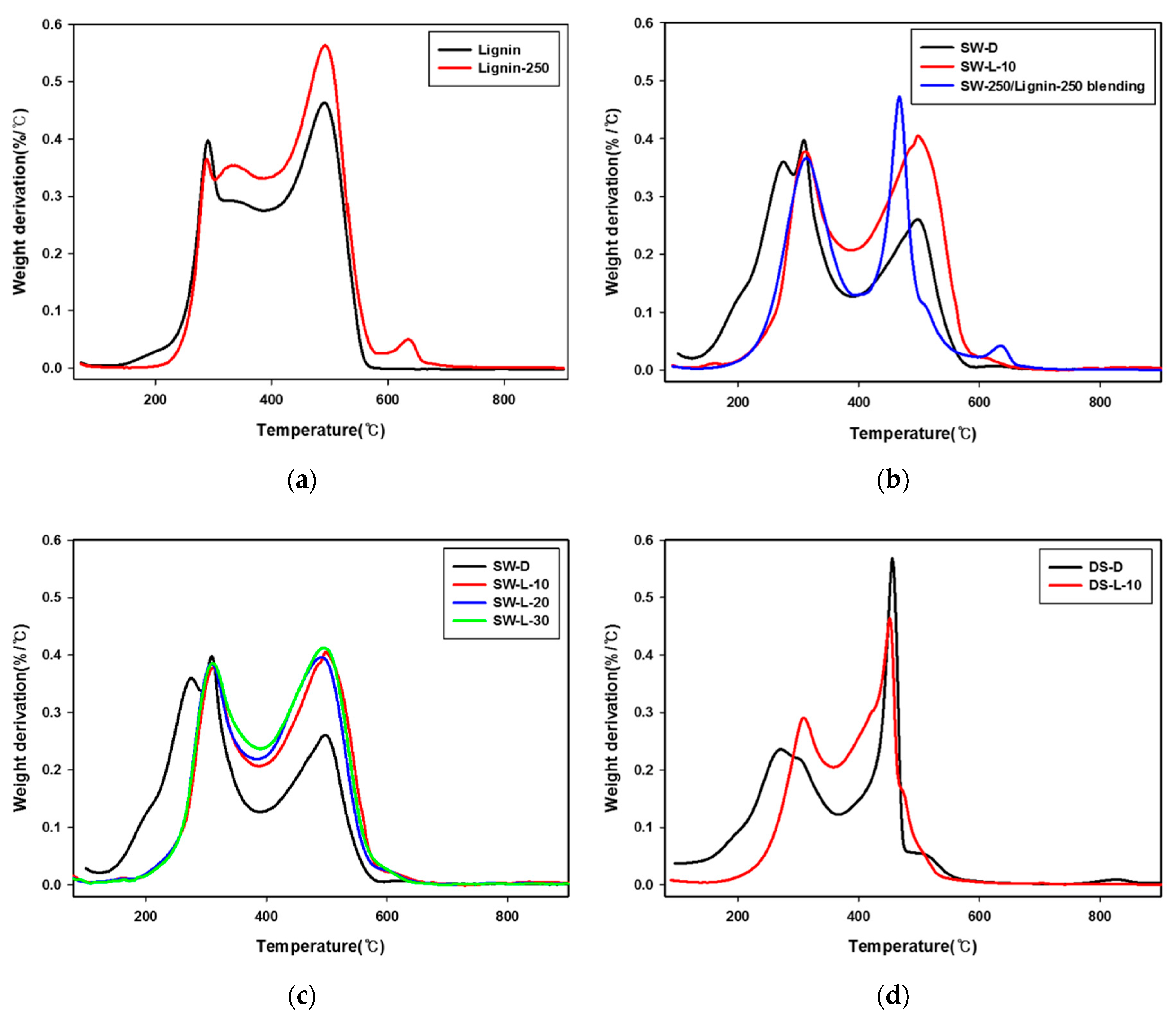
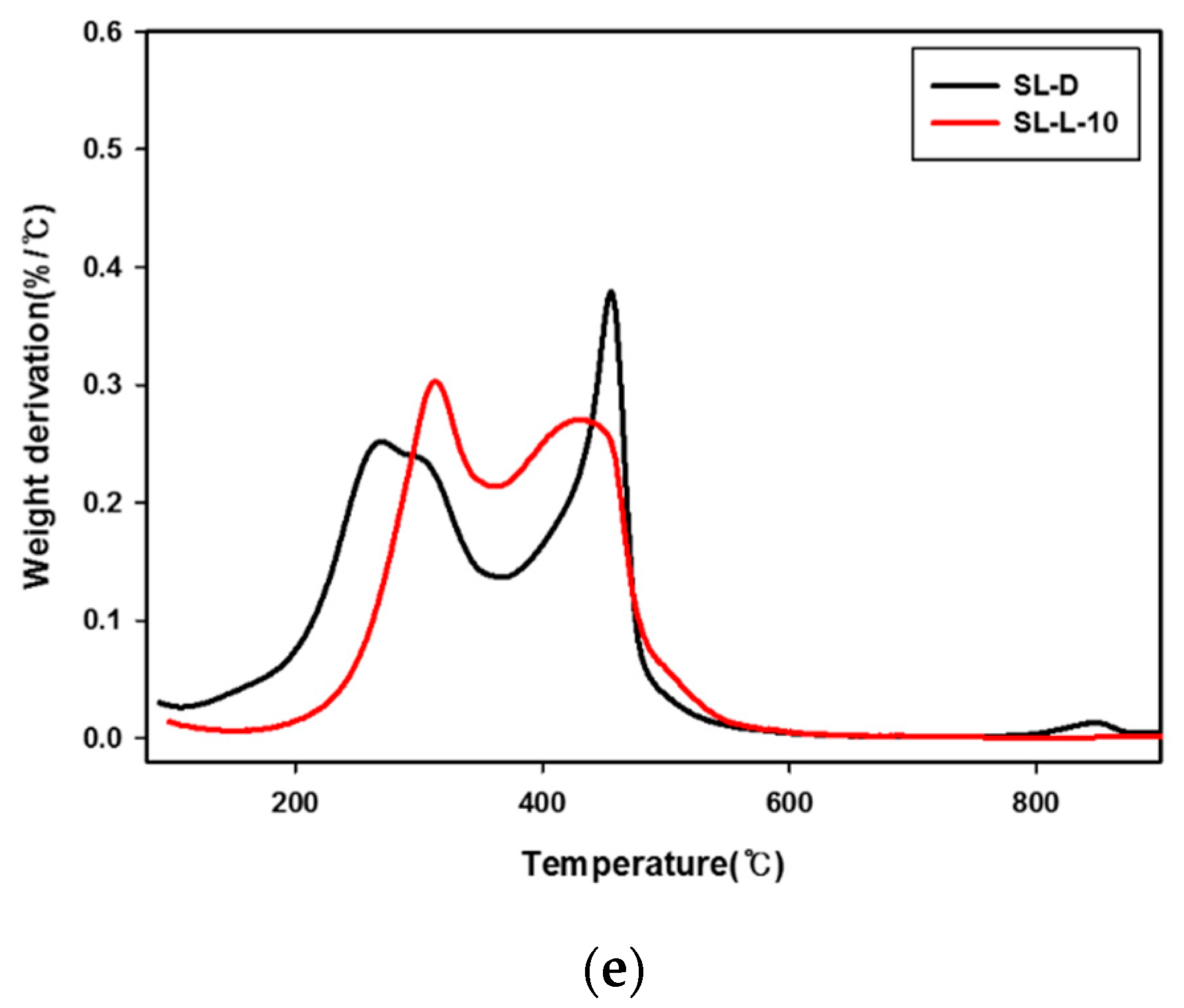
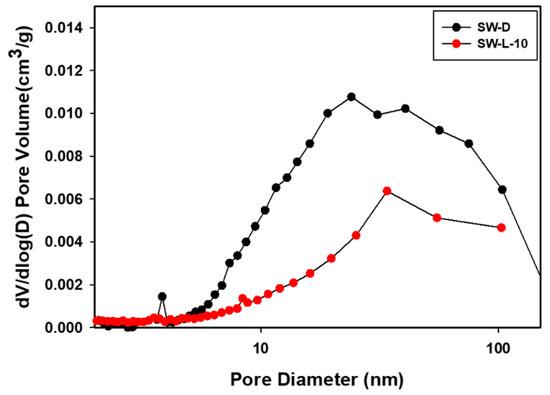
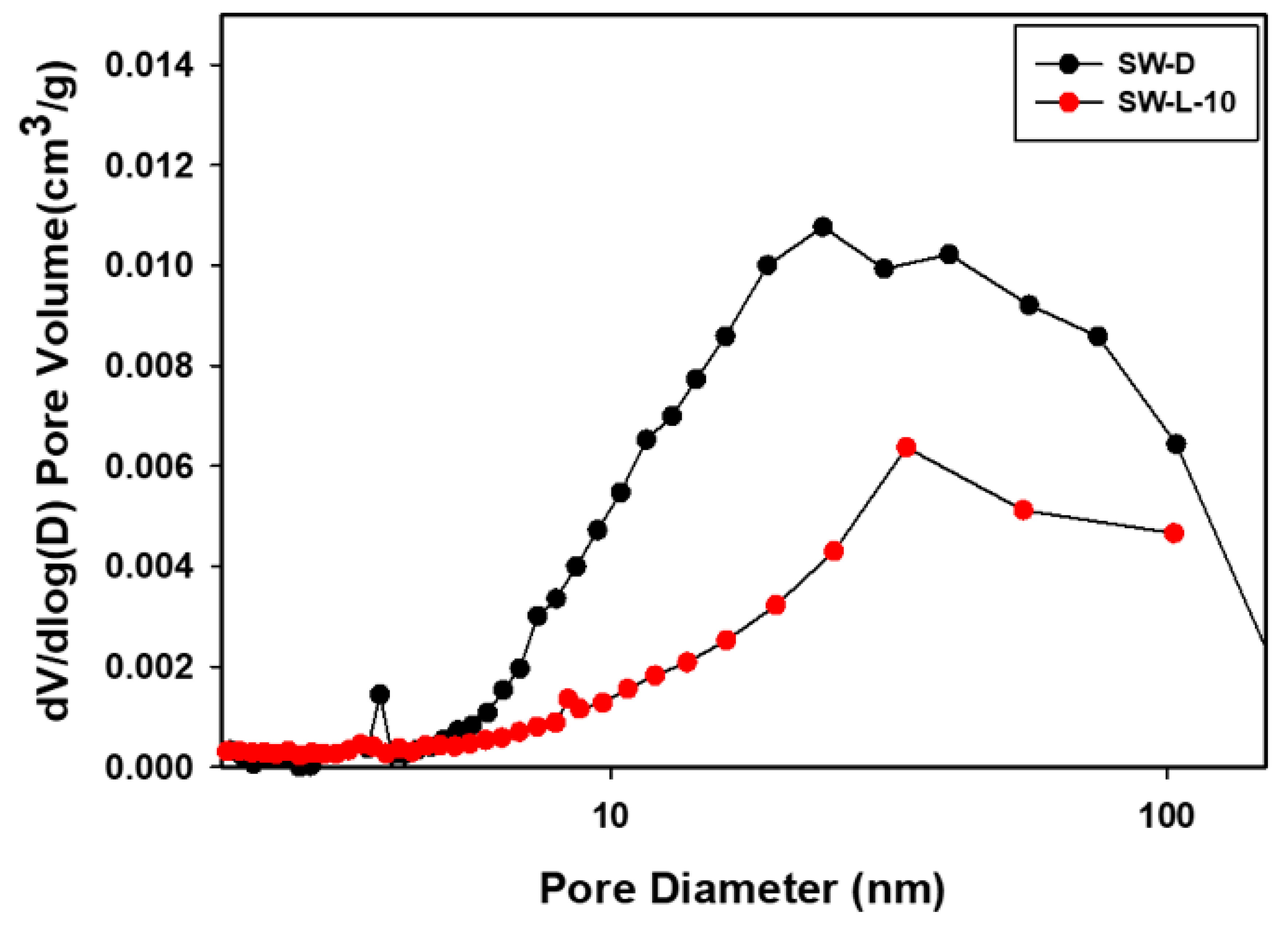
To estimate the combustion behavior of dried sewage sludges, lignin, and HSF samples, the thermogravimetry analysis (TGA) analyses were conducted, and the resulting the derivative thermogravimetry (DTG) curves are presented in Figure 2. The combustion of lignin (Figure 2a, black line) is similar to the pattern of dried sewage sludge, while the carbonized lignin showed a new combustion peak at ~600 °C (Figure 2a, red line). As indicated by the black lines in Figure 2b–e, the dried sewage sludge started to combust at ~170–180 °C and displayed two-stage combustion characteristics at ~250 °C and 450–500 °C. The first peak can be ascribed to the decomposition of volatile matter, and the second peak indicates fixed carbon combustion [37]. First, we observed the combustion behavior of the physically blended samples (torrefied sewage sludge 90% and torrefied lignin 10%; Figure 2b, blue line). They demonstrated combustion patterns in isolation. Heterogeneous combustion patterns significantly decrease the efficiency of the boiler system and increase the emission of environmental pollutants (unburned carbon). Meanwhile, the HSF samples showed a homogeneous (two-in-one) combustion pattern regardless of lignin content ranging from 10% to 30%, which is similar to that of dried sewage sludge, although the two materials were mixed (Figure 2c–e). The ignition temperature was observed at ~220–230 °C by the carbonization process. Furthermore, while the second and third peaks of the sludge are clearly visible, HSF changed its boundary peak broadly. This result indicates that volatile matter (VM) and fixed carbon (FC) are burnt at almost the same point, which facilitates FC burning. When sewage sludge and lignin in polymer form (bioethanol-lignin solid) were cofired, lignin was present on the surface of the sewage sludge, and different combustion patterns appeared simultaneously. However, when the HSF prepared using lignin in monomer or oligomer form (bioethanol-lignin solution) was burned, the lignin solution penetrated the pores of the sewage sludge, which provided a very similar combustion pattern. Nitrogen adsorption tests were conducted to support this deduction, and the results are summarized in Figure 3 and Table 2. The bioethanol-lignin solution infiltration into the intrapores was observed by the concentration difference between the inside and the outside of sewage sludge pores and capillary force. While the pore size of dried sewage sludge was mainly distributed between 3 nm and 7 nm, we observed that the pore area and volume were significantly decreased by about 30%.
Figure 2.
DTG curves of combustion behaviors: (a) lignin/toreffied lignin at 250 °C (lignin-250) samples; (b) SW-D/SW-L-10/torrefied SW (SW-250) 90% torrefied lignin (lignin-250) 10% blending samples; (c) SW-D/SW-L-10/SW-L-20/SW-L-30 samples; (d) DS-D/DS-L-10; and (e) SL-D/SL-L-10 samples.
Figure 3.
Pore diameter distributions of SW-D and SW-L-10.
Table 2.
Surface area and pore volume distribution (SW-D and SW-L-10).
3.3. Air Pollutants Emissions of HSF
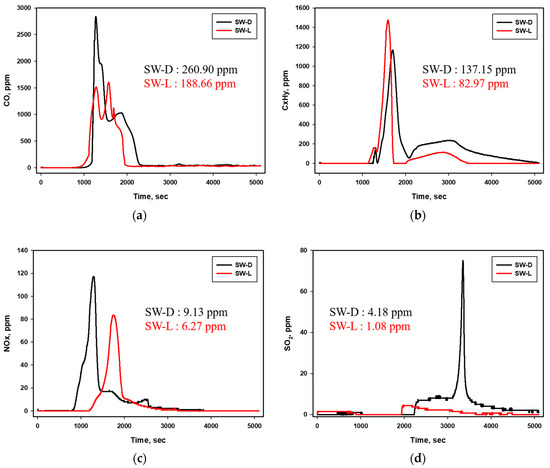
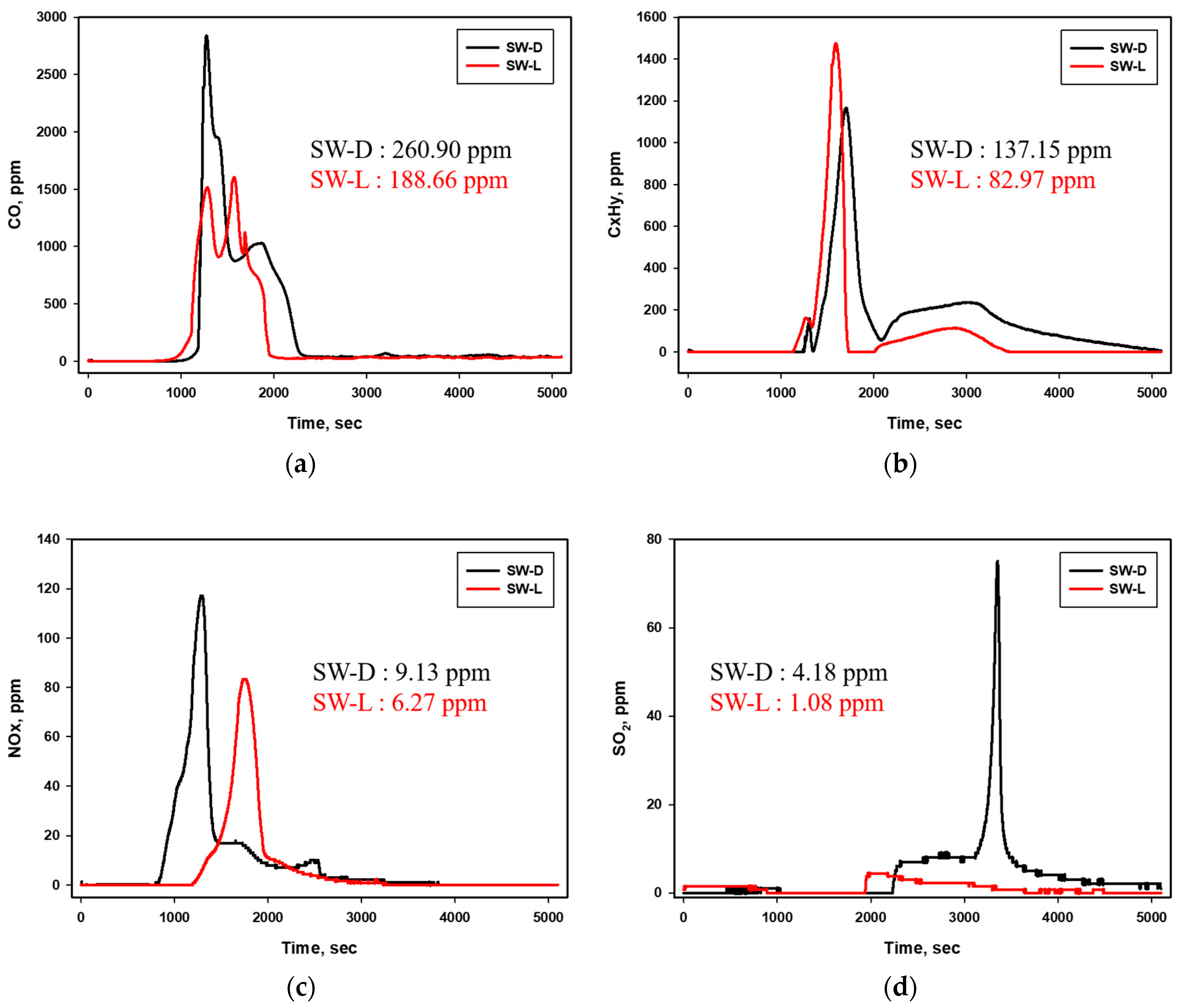
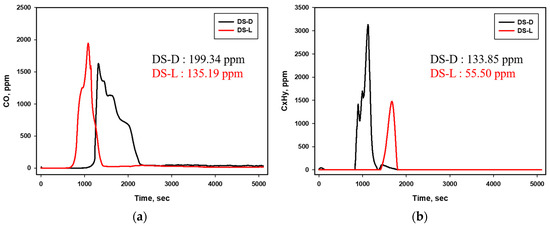
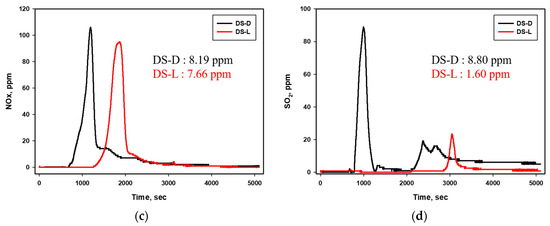
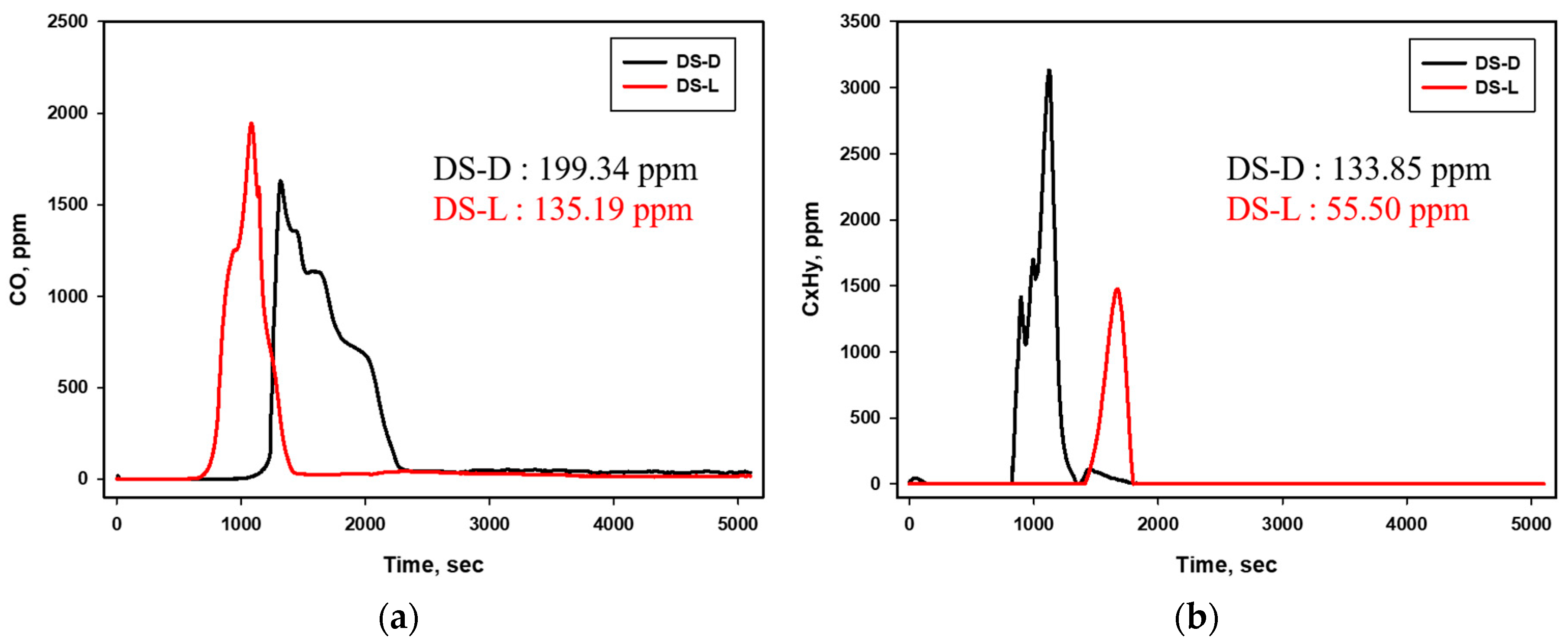
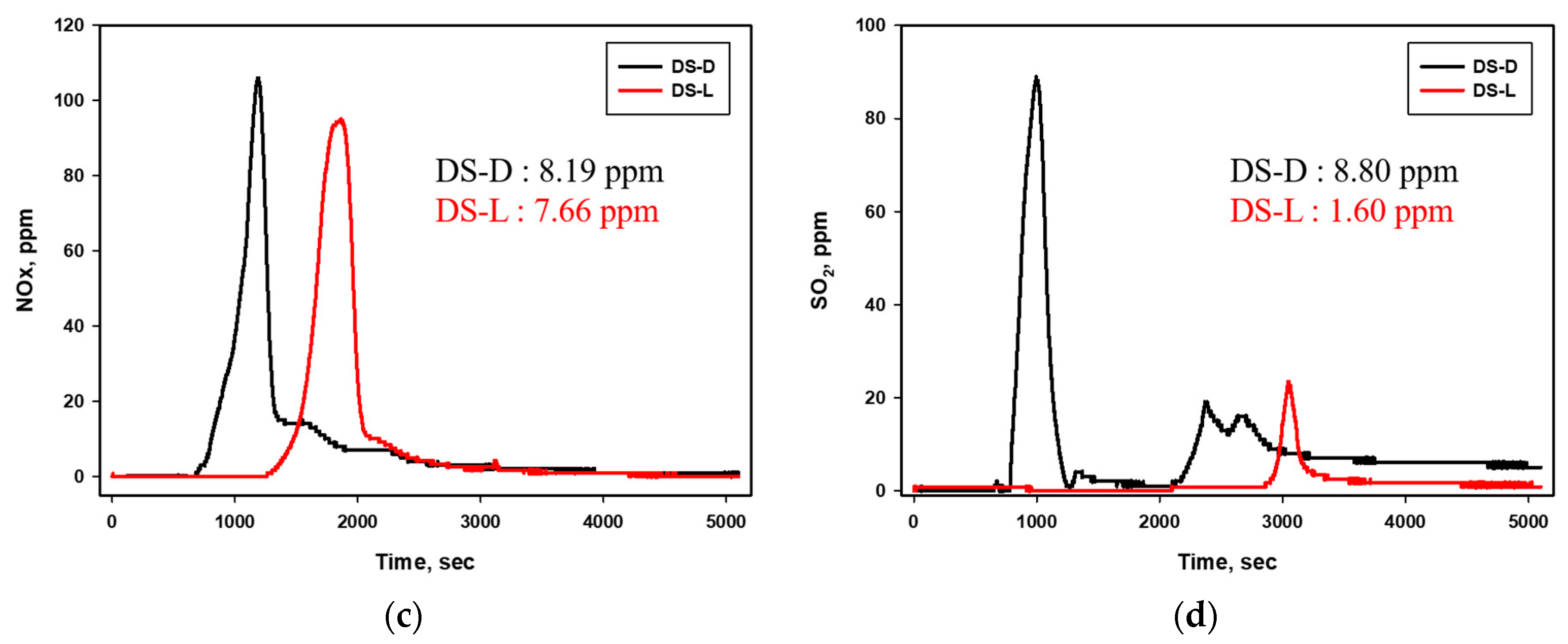
As seen in Figure 4, Figure 5 and Figure 6, the most flue gas (CO, CxHy, NOx, and SO2) of the sewage sludge samples (black line) was measured in the temperature range in which the volatile components were burned. Unlike other sewage sludges, the SO2 emission temperature of SW-D was measured at higher than 800 °C.
Figure 4.
Flue gas emissions of SW-D and SW-L-10: (a) CO gas, (b) CxHy gas, (c) NOx, and (d) SO2.
Figure 5.
Flue gas emissions of DS-D and DS-L-10: (a) CO gas, (b) CxHy gas, (c) NOx, (d) SO2.
Figure 6.
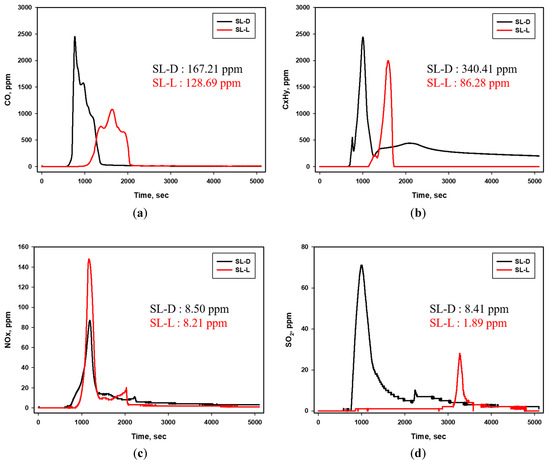
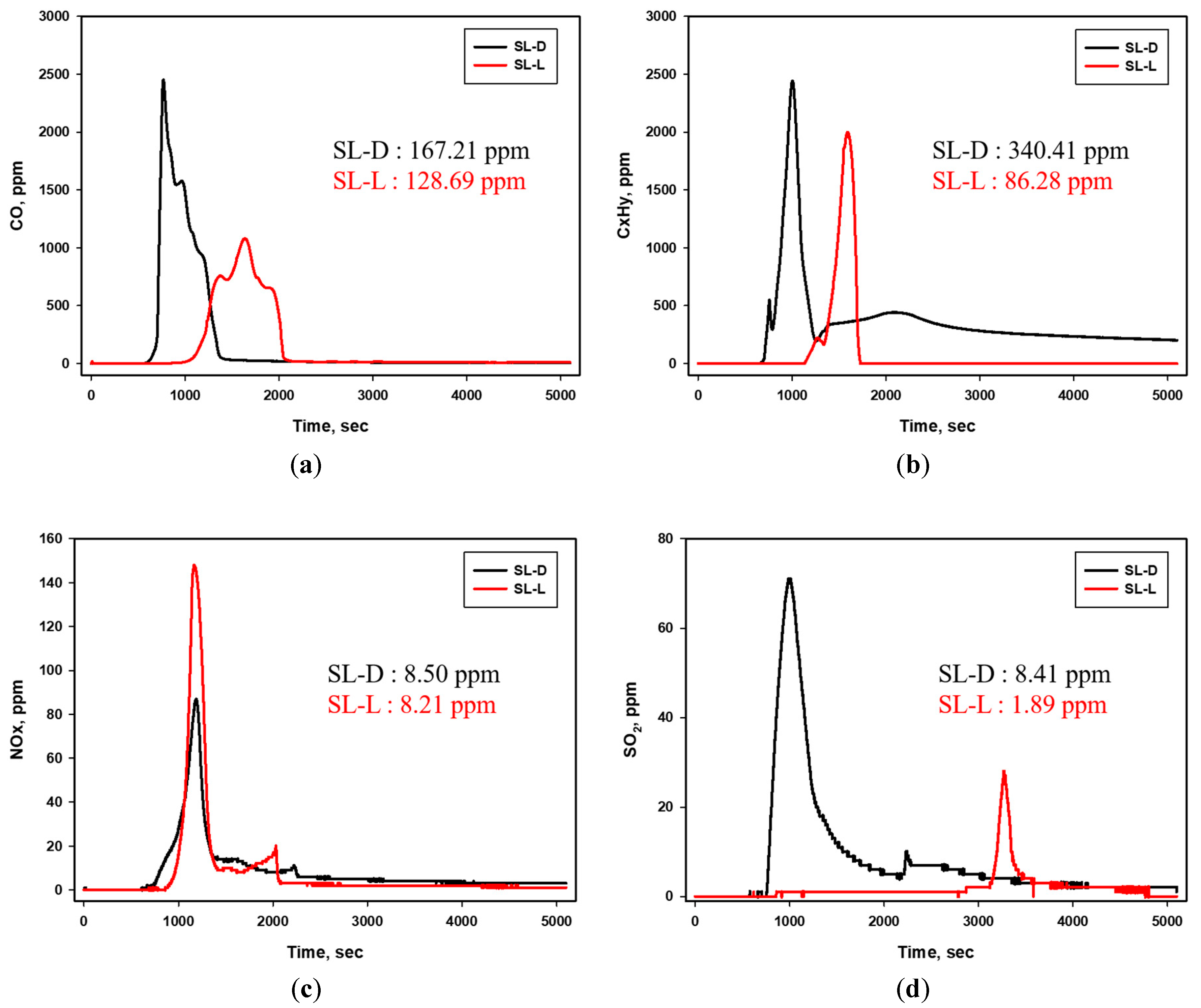
Flue gas emissions of SL-D and SL-L-10: (a) CO gas, (b) CxHy gas, (c) NOx, (d) SO2.
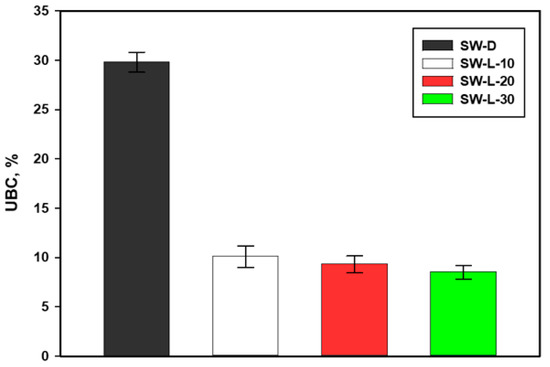
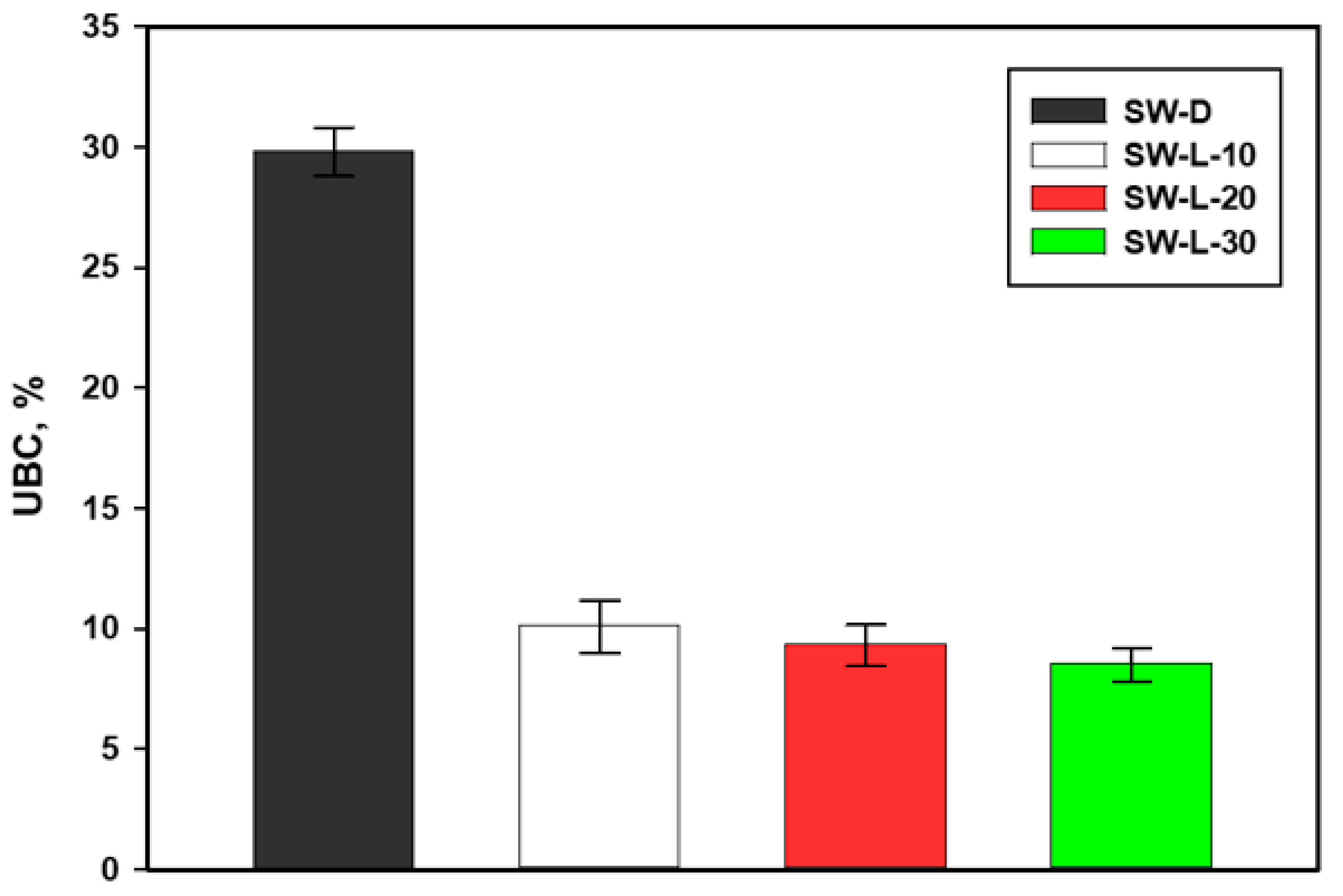
In comparison, the release of flue gas from the HSF samples was lower. The reduction of the CO gas emissions were calculated to be 27.69% (SW-L-10), 32.18% (DS-L-10), and 23.04% (SL-L-10), as the O/C ratios decreased (see Figure 4, Figure 5 and Figure 6a). In the case of CxHy, the emission decreased as the H/C ratio decreased (the reduction ratio of CxHy gas: SW-L-10 39.50%, DS-L-10 58.54%, and SL-L-10 74.65%, see Figure 4, Figure 5 and Figure 6b). The experimental results show that oxygen and hydrogen contents in the fuel affect CO and CxHy emissions. In addition, the decrease in CO emissions of HSF compared to those of raw sewage sludge can be attributed to a higher rate of complete fuel oxidation. These characteristics can be confirmed indirectly from the DTG graph (Figure 2). The combustion boundary of VM and FC changed broadly, and the complete combustion of FC proceeded [38]. CO and CxHy emissions and unburned carbon (UBC) are closely related. In this study, we investigated the effects of lignin impregnation on UBC emission. Figure 7 shows UBC emission after burning at 1000 °C for dried sewage sludges and HSF samples. UBC emission was calculated as [30]:
where Msample, Mchar, and Mash denote the initial sample weight, the intermediate residue weight after combustion for 10 min at 1000 °C, and the ash weight after perfect combustion for 7 h at 1000 °C, respectively [39,40]. UBC in HSF decreased as the impregnated-lignin ratio increased. When we examined the factors influencing UBC emission, we found that the UBC of HSF is closely related with the biomass ratio. These results are in good agreement with those of a previous study. According to Lee [41] and Park [38], biomass-impregnated fuels improve combustion responsiveness and reduce UBC emissions. Therefore, HSF with lignin would be beneficial for application in power plants from an environmental perspective in terms of particulate matter emission reduction.
Figure 7.
UBC emissions of SW-D and HSFs.
Although the nitrogen content of the HSF was lower than that of dried sewage sludges, the nitrogen content had a minor impact on the reduction of NOx emission (Figure 4, Figure 5 and Figure 6c). When the fuel burned, most of the nitrogen oxides were derived from N2 in the air. Finally, because the added CaO was a highly reactive desulfurization agent, SO2 emission was reduced drastically regardless of the sulfur content (the reduction ratio of SO2 gas: SW-L-10 74.16%, DS-L-10 81.82%, and SL-L-10 77.53%; see Figure 4, Figure 5 and Figure 6d).
The desulfurization mechanism can be expressed as [42]:
CaO (s) + SO2 (g) → CaSO3 (s).
In this study, we confirm that combustion of HSF could reduce the emissions of substances that cause pollution in the atmospheric environment compared to dried sewage sludges.
3.4. Ash and Heavy Metal Characterizations
The fouling or slagging characteristic is one of the most important issues in combustion systems [43]. To evaluate the ash characteristics of HSF, XRF and ash fusion temperatures were measured and shown in Table 3. According to the XRF results, most of the other components were reduced by the addition of CaO compared to sewage sludge. The added CaO contributed to an increase in initial deformation temperature (IDT) to ~200 °C. The ash composition, the calculated fouling/slagging indices, and the measured ash fusion temperature representing the melting point of ash from HSF were improved compared to those of dried sewage sludge. Having reported that, the addition of lignin and CaO in the proposed synthesis process positively influences the ash characteristics, and accordingly, HSF is expected to ameliorate behaviors of dried sewage sludge, such as sintering, agglomeration, fouling, and slagging. Heavy metals in sewage sludge lead to serious environmental pollution and human health problems. We investigated heavy metals characteristic of dried sewage sludges and HSFs and summarized in Table 4. The industrial city of Suwon, had a higher heavy metal content compared to other cities. According to the heavy metal analysis, the measured heavy metal components from HSFs were almost unvaried compared to those from dried sewage sludges. The proposed upgrading sewage sludge fuel synthesis process does not influence heavy metal characteristics. Thus, heavy metals’ release from HSFs is expected to occur similarly from dried sewage sludges in the combustion system.
Table 3.
Ash chemical components and ash fusion characterization of SW-D and SW-L-10.
Table 4.
Heavy metal components of dried sewage sludges and HSFs.
4. Conclusions
In the current study, we developed a bioethanol-lignin with a CaO impregnated sewage sludge upgrading process, and experimentally validated its enhanced performance as fuel. Starting by producing a bioethanol-lignin solution, we prepared modified HSF samples by: (1) mixing sewage sludge with the bioethanol-lignin solution, drying the mixture at 105 °C for 10 h, and applying a thermal treatment at 250 °C for 1.5 h.
The HSF samples showed ~30.17, 31.25, 36.88, 19.86, and 27.12% enhanced net caloric value (NCV) for SW-L-10, SW-L-20, SW-L-30, DS-L-10, and SL-L-10, respectively. All of the HSF samples showed two-in-one fuel combustion peaks regardless of the lignin mixing ratios. The lignin was impregnated into pores of the sewage sludge, providing a homogeneous combustion behavior. The proposed process lowers the surface area and pore volume down to ~30%. In addition, the proposed process reduces the atmosphere environment pollutants (the reduction ratio of CO gas: 27.69% (SW-L-10), 32.18% (DS-L-10), and 23.04% (SL-L-10); the reduction ratio of CxHy gas: SW-L-10 39.50%, DS-L-10 58.54%, and SL-L-10 74.65%; the reduction ratio of SO2 gas: SW-L-10 74.16%, DS-L-10 81.82%, and SL-L-10 77.53%; and the reduction ratio of UBC: % SW-L-10, % SW-L-20, and % SW-L-30). In particular, SO2 emission remained at ~1 ppm (average value) regardless of the fuel’s sulfur content. Moreover, our findings clearly demonstrate that HSF is more desirable for emission control because the biomass (lignin) additives can be considered to reduce CO2.
Author Contributions
Conceptualization, D.-W.L. and J.W.C.; Methodology, Y.-C.C.; Software, G.-S.S.; Validation, Y.-J.L.; Formal Analysis, J.-H.P. and M.-H.J.; Investigation, M.-H.J.; Resources, S.-J.P.; Writing-Original Draft Preparation, J.-H.P.; Writing-Review & Editing, K.H.S.; Project Administration, J.-G.K.; Funding Acquisition, J.-G.K.
Funding
This research was funded by Energy Technology Development Program of the Korea Institute of Energy Technology Evaluation and Planning (KETEP) grant number No. 20173030091900, and the framework of the research-development program of the Korea Institute of Energy Research (KIER) grant number B9-2451-09.
Acknowledgments
This work was supported by the Energy Technology Development Program of the Korea Institute of Energy Technology Evaluation and Planning (KETEP) granted financial resource from the Ministry of Trade, Industry & Energy, and the framework of the research-development program of the Korea Institute of Energy Research (KIER, B9-2451-09), Republic of Korea.
Conflicts of Interest
The authors declare that they have no competing interest.
References
- Akdag, A.S.; Atak, O.; Atomtay, A.T.; Sanin, F.D. Co-combustion of sewage sludge from different treatment processes and a lignite coal in a laboratory scale combustor. Energy 2018, 158, 417–426. [Google Scholar] [CrossRef] [Scilit]
- Cieslik, B.M.; Namiesnik, J.; Konieczka, P. Review of sewage sludge management: Standards, regulations and analytical methods. J. Clean. Prod. 2015, 90, 1–15. [Google Scholar] [CrossRef] [Scilit]
- Huang, L.; Xie, C.; Liu, J.; Zhang, X.; Chang, K.; Kuo, J.; Sun, J.; Xie, W.; Zheng, L.; Sun, S.; et al. Influence of catalysts on co-combustion of sewage sludge and water hyacinth blends as determined by TG-MS analysis. Bioresour. Technol. 2018, 247, 217–225. [Google Scholar] [CrossRef] [Scilit] [PubMed]
- Wang, Z.; Hong, C.; Xing, Y.; Li, Y.; Feng, L.; Jia, M. Combustion behaviors and kinetics of sewage sludge blended with pulverized coal: With and without catalysts. Waste Manag. 2018, 74, 288–296. [Google Scholar] [CrossRef] [Scilit] [PubMed]
- Liu, G.; Song, H.; Wu, J. Thermogravimetric study and kinetic analysis of dried industrial sludge pyrolysis. Waste Manag. 2015, 41, 128–133. [Google Scholar] [CrossRef] [Scilit] [PubMed]
- Niu, S.; Chen, M.; Li, Y.; Xue, F. Evaluation on the oxy-fuel combustion behavior of dried sewage sludge. Fuel 2016, 175, 129–138. [Google Scholar] [CrossRef] [Scilit]
- Korea National Information System. Available online: https://www.hasudoinfo.or.kr (accessed on 3 August 2019).
- Ma, J.; Wang, Z.; Zhu, C.; Xu, Y.; Wu, Z. Electrogenesis reduces the combustion efficiency of sewage sludge. Appl. Energy 2014, 114, 283–289. [Google Scholar] [CrossRef] [Scilit]
- Syed-Hassan, S.S.A.; Wang, Y.; Hu, S.; Su, S.; Xiang, J. Thermochemical processing of sewage sludge to energy and fuel: Fundamentals challenges and considerations. Renew. Sustain. Energy Rev. 2017, 80, 888–913. [Google Scholar] [CrossRef] [Scilit]
- Hao, Z.; Yang, B.; Jahng, D. Combustion characteristics of biodried sewage sludge. Waste Manag. 2018, 72, 296–305. [Google Scholar] [CrossRef] [Scilit]
- Folgueras, M.B.; Alonso, M.; Diaz, R.M. Influence of sewage sludge treatment on pyrolysis and combustion of dry sludge. Energy 2013, 55, 426–435. [Google Scholar] [CrossRef] [Scilit]
- Jingmin, H.; Changqing, X.; Jinglan, H.; Xianfeng, T.; Wei, C. Life cycle assessment of sewage sludge co-incineration in a coal-based power station. Waste Manag. 2013, 33, 1843–1852. [Google Scholar]
- Yoshida, T.; Antal, M.J. Sewage sludge carbonization for terra preta applications. Energy Fuels 2009, 23, 5454–5459. [Google Scholar] [CrossRef] [Scilit]
- Rulkens, W. Sewage sludge as a biomass resource for the production of energy: Overview and assessment of the various options. Energy Fuels 2007, 22, 9–15. [Google Scholar] [CrossRef] [Scilit]
- Cao, Y.; Pawlowski, A. Sewage sludge-to-energy approaches based on anaerobic digestion and pyrolysis: Brief overview and energy efficiency assessment. Renew. Sustain. Energy Rev. 2012, 16, 1657–1665. [Google Scholar] [CrossRef] [Scilit]
- Calvo, A.I.; Tarelho, L.A.C.; Teixeira, E.R.; Alves, C.; Nunes, T.; Duarte, M.; Coz, E.; Custodio, D.; Castro, A.; Artinano, B.; et al. Particulate emissions from the co-combustion of forest biomass and sewage sludge in a bubbling fluidised bed reactor. Fuel Process. Technol. 2013, 114, 58–68. [Google Scholar] [CrossRef] [Scilit]
- Han, X.; Niu, M.; Jiang, X.; Liu, J. Combustion characteristics of sewage sludge in a fluidized bed. Ind. Eng. Chem. Res. 2012, 51, 10565–10570. [Google Scholar] [CrossRef] [Scilit]
- Wzorek, M. Characterisation of the properties of alternative fuels containing sewage sludge. Fuel Process. Technol. 2012, 104, 80–89. [Google Scholar] [CrossRef] [Scilit]
- Kacprzak, M.; Neczaj, E.; Fijalkowski, K.; Grobelak, A.; Grosser, A.; Worwag, M.; Rorat, A.; Brattebo, H.; Almas, A.; Singh, B.R. Sewage sludge disposal strategies for sustainable development. Environ. Res. 2017, 156, 39–46. [Google Scholar] [CrossRef] [Scilit]
- Zhai, Y.; Peng, C.; Xu, B.; Wang, T.; Li, C.; Zeng, G.; Zhu, Y. Hydrothermal carbonisation of sewage sludge for char production with different waste biomass: Effects of reaction temperature and energy recycling. Energy 2017, 127, 167–174. [Google Scholar] [CrossRef] [Scilit]
- Kim, D.; Lee, K.; Park, K.Y. Hydrothermal carbonization of anaerobically digested sludge for solid fuel production and energy recovery. Fuel 2014, 130, 120–125. [Google Scholar] [CrossRef] [Scilit]
- Zhao, P.; Shen, Y.; Ge, S.; Yoshikawa, K. Energy recycling from sewage sludge by producing solid biofuel with hydrothermal carbonization. Energy Convers. Manag. 2014, 78, 815–821. [Google Scholar] [CrossRef] [Scilit]
- He, C.; Giannis, A.; Wang, J.Y. Conversion of sewage sludge to clean solid fuel using hydrothermal carbonization: Hydrochar fuel characteristics and combustion behavior. Appl. Energy 2013, 111, 257–266. [Google Scholar] [CrossRef] [Scilit]
- Ohm, T.-I.; Chae, J.-S.; Kim, J.-E.; Kim, H.-K.; Moon, S.-H. A study on the dewatering of industrial waste sludge by fry-drying technology. J. Hazard. Mater. 2009, 168, 445–450. [Google Scholar] [CrossRef] [Scilit] [PubMed]
- Wu, Z.; Zhang, J.; Li, Z.; Xie, J.; MuJumdar, A.S. Production of a solid fuel using sewage sludge and spent cooking oil by immersion frying. J. Hazard. Mater. 2012, 243, 357–363. [Google Scholar] [CrossRef] [Scilit] [PubMed]
- Escala, M.; Zumbuhl, T.; Koller, C.; Junge, R.; Krebs, R. Hydrothermal carbonization as an energy-efficient alternative to established drying technologies for sewage sludge: A feasibility study on a laboratory scale. Energy Fuels 2013, 27, 454–460. [Google Scholar] [CrossRef] [Scilit]
- Mumme, J.; Eckervogt, L.; Pielert, J.; Diakite, M.; Rupp, F.; Kern, J. Hydrothermal carbonization of anaerobically digested maize silage. Bioresour. Technol. 2011, 102, 9255–9260. [Google Scholar] [CrossRef] [Scilit] [PubMed]
- Chen, J.; Xie, C.; Liu, J.; He, Y.; Xie, W.; Zhang, X.; Chang, K.; Kuo, J.; Sun, J.; Zheng, L.; et al. Co-combustion of sewage sludge and coffee grounds under increased O2/CO2 atmospheres: Thermodynamic characteristics, kinetics and artificial neural network modeling. Bioresour. Technol. 2018, 250, 230–238. [Google Scholar] [CrossRef] [Scilit]
- Magdziarz, A.; Wilk, M. Thermogravimetric study of biomass, sewage sludge and coal combustion. Energy Convers. Manag. 2013, 75, 425–430. [Google Scholar] [CrossRef] [Scilit]
- Lee, B.H.; Sh, L.; Bae, J.S.; Choi, Y.C.; Jeon, C.H. Combustion behavior of low-rank coal impregnated with glycerol. Biomass Bioenergy 2016, 87, 122–130. [Google Scholar] [CrossRef] [Scilit]
- Wilk, M.; Magdziarz, A.; Jayaraman, K.; Szymanska-Chargot, M.; Gokalp, I. Hydrothermal carbonization characteristics of sewage sludge and lignocellulosic biomass. A comparative study. Biomass Bioenergy 2019, 120, 166–175. [Google Scholar] [CrossRef] [Scilit]
- Lee, Y.J.; Lee, D.W.; Park, J.H.; Bae, J.S.; Kim, J.G.; Kim, J.H.; Park, S.J.; Jeon, C.H.; Choi, Y.C. Two-in-One Fuel Combining Sewage Sludge and Bioliquid. ACS Sustain. Chem. Eng. 2016, 4, 3276–3284. [Google Scholar] [CrossRef] [Scilit]
- Lee, D.W.; Jin, M.H.; Park, J.H.; Lee, Y.J.; Choi, Y.C. Flexible Synthetic Strategies for Lignin-Derived Hierarchically Porous Carbon Materials. ACS Sustain. Chem. Eng. 2018, 6, 10454–10462. [Google Scholar] [CrossRef] [Scilit]
- Park, J.H.; Lee, Y.J.; Jin, M.H.; Park, S.J.; Lee, D.W.; Bae, J.S.; Kim, J.G.; Song, K.H.; Choi, Y.C. Enhancement of slurryability and heating value of coal water slurry (CWS) by torrefaction treatment of low rank coal (LRC). Fuel 2017, 203, 607–617. [Google Scholar] [CrossRef] [Scilit]
- Nonaka, M.; Hirajima, T.; Sasaki, K. Upgrading of low rank coal and woody biomass mixture by hydrothermal treatment. Fuel 2011, 90, 2578–2584. [Google Scholar] [CrossRef] [Scilit]
- Peng, C.; Zhai, Y.; Zhu, Y.; Xu, B.; Wang, T.; Li, C.; Zeng, G. Production of char from sewage sludge employing hydrothermal carbonization: Char properties, combustion behavior and thermal characteristics. Fuel 2016, 176, 110–118. [Google Scholar] [CrossRef] [Scilit]
- Huang, L.; Liu, J.; He, Y.; Sun, S.; Chen, J.; Sun, J.; Chang, K.; Kuo, J.; Ning, X. Thermodynamics and kinetics parameters of co-combustion between sewage sludge and water hyacinth in CO2/O2 atmosphere as biomass to solid biofuel. Bioresour. Technol. 2016, 218, 631–642. [Google Scholar] [CrossRef] [Scilit] [PubMed]
- Park, J.H.; Lee, D.W.; Lee, Y.J.; Song, G.S.; Jin, M.H.; Park, S.J.; Namkung, H.; Bae, J.S.; Kim, J.G.; Song, K.H.; et al. Preparation and Characterization of the Glycerol-Embedded Hybrid Coal. ACS Sustain. Chem. Eng. 2019, 7, 4637–4646. [Google Scholar] [CrossRef] [Scilit]
- Tsuji, H.; Shirai, H.; Matsuda, H.; Rajoo, P. Emission characteristics of NOx and unburned carbon in fly ash on high-ash coal combustion. Fuel 2011, 90, 850–853. [Google Scholar] [CrossRef] [Scilit]
- Ikeda, N.; Makino, H.; Morinaga, H.; Higashiyama, K.; Kozai, Y. Emission characteristics of NOx and unburned carbon in fly ash during combustion of blends of bituminous/sub-bituminous coals. Fuel 2003, 82, 1851–1857. [Google Scholar] [CrossRef] [Scilit]
- Lee, Y.J.; Namkung, H.; Park, J.H.; Song, G.S.; Park, S.J.; Kim, J.G.; Choi, J.W.; Jeon, C.H.; Choi, Y.C. Production and characterization of hybrid coal using sugar impurities extracted from pitch pine. Appl. Therm. Eng. 2018, 145, 174–183. [Google Scholar] [CrossRef] [Scilit]
- Osaka, Y.; Kurahara, S.; Kobayashi, N.; Hasatani, M.; Matsuyama, A. Study on SO2-absorption behavior of composite materials for DeSOx filter from diesel exhaust. Heat Transf. Eng. 2015, 36, 325–332. [Google Scholar] [CrossRef] [Scilit]
- Namkung, H.; Lee, Y.J.; Park, J.H.; Song, G.S.; Choi, J.W.; Choi, Y.C.; Park, S.J.; Kim, J.G. Blending effect of sewage sludge and woody biomass into coal on combustion and ash agglomeration behavior. Fuel 2018, 225, 266–276. [Google Scholar] [CrossRef] [Scilit]

© 2019 by the authors. Licensee MDPI, Basel, Switzerland. This article is an open access article distributed under the terms and conditions of the Creative Commons Attribution (CC BY) license (http://creativecommons.org/licenses/by/4.0/).