1. Introduction
Energy is considered as a ‘strategic commodity’ as uncertainty in its supply may disrupt proper economic functioning. With the passage of time and progress in every sector propelled by the scientific innovations, the global community has realized the importance of energy development in a sustainable and responsible manner. There may be differences in statistics in terms of production, supply, demand and consumption, etc. of different energy sources due to the adoption of different methodologies (i.e., authoritative statistics can be found in International Energy Agency (IEA)’s World Energy Outlook, United Nations (UN) Statistics Division’s Energy Statistics Yearbook, UN Environment Programme’s Global Trend in Renewable Energy Investment, Renewable Energy Policy Network for the 21st Century (REN21)’s Global Status Report, etc.). It can be declared without minimum hesitation that energy is the pre-requisite in running most of the development activities.
The countries across the world, large and small, have historically been utilizing various types of energies, based on their socio-economic capabilities, for their consumption and development. For example, China has used coal as an energy source for heating and cooking since 2000 BC and natural gas since 200 BC [
1]. Since approximately 1850 AD, the world community has been relying commercially on conventional fossil fuels, e.g., coal, oil, and natural gas, etc. which have been supplying around 75% of the energy generated and consumed. Nevertheless, these sources have some inherent challenges and drawbacks. Studies revealed that with known exploration and extraction technologies, conventional and unconventional oil and gas resources could last for another few decades [
2]. Moreover, due to the uneven geographical distribution of resources, more than 90% of the proven oil reserves are available in just 15 countries [
3]. Based on the popular economic theory of supply and demand, while these countries with oil-reserves should theoretically be able to enjoy the fruits of modern scientific developments and innovations, such a situation creates a serious barrier for sustainable and inclusive development in the other parts of the world. Around 1.2 billion people, i.e., 16% of the global population, mostly from sub-Saharan Africa and developing Asia, do not have access to electricity [
4] since they are unable to pay the price. These countries with fossil fuel reserves are blessed as these are finite, whereas renewables are theoretically infinite. Therefore, shifting the focus from finite fossil fuels to renewables to maintain the flow of overall sustainable and inclusive development activities is advocated as a better and viable alternative, even though there are some inherent initial concerns, which are not unique to renewable energy production rather present whenever any new technological innovations are introduced.
Climate change is a ‘common concern of mankind’ [
5] and a threat to sustainable development. Conventional fuel energy production and consumption are responsible for 60% or almost two-thirds of the world’s greenhouse-gas (“GHG”) emissions which account for the global warming leading to climate change [
6,
7]. Therefore, scientifically, it is suggested that two-thirds of all fossil fuels, i.e., 35% of oil, 52% of natural gas and 88% of coal reserves worldwide, must be kept in the ground till 2050 to maintain the temperature below 2 °C [
8,
9]. Moreover, in global energy generation and consumption, it is suggested to replace these fuels or at least increase the share of cleaner and pollution-free energy that can be generated exploiting the new, alternative and renewable energy sources (hereinafter referred to as “renewables” or “RES”) like solar, wind, hydropower, ocean and biomass etc. It is a matter of great hope that despite the serious decline in fossil fuel prices in the last couple of years, renewables supplied an estimated 23.7% of the global electricity [
10], of which 70%, 15%, 8%, 5% and 1% of the electricity came from hydro, wind, bioenergy, solar, and geothermal respectively and the rest came from marine energy [
11].
After the successful completion of the Millennium Development Goals, the members of the United Nations (“UN”) have adopted the 2030 Agenda for Sustainable Development and the Sustainable Development Goals (“SDGs”) in 2015 to end poverty, protect the plant and ensure inclusive development of all. Sustainable development, though cannot be defined precisely [
12], requires energy savings on the demand side, efficient improvement in energy production, continuous flow of clean and secure energy with less environmental impacts [
13], and demands the amount of renewable energy (“RE”) to be more than 27% [
12].
Due to the nature and planet wide effects of climate change, anyone should expect the active role of the ‘hard’ international law provisions. Nevertheless, the reality is that there is no direct and specific binding or ‘hard’ international instrument on the promotion of RE. It may be relevant to share here that some of the International environmental law instruments, e.g., the Convention on Biological Diversity, 1993, the Convention on the Conservation of Migratory Species of Wild Animals, 1983 and the Ramsar Convention on Wetlands of International Importance, 1975, etc. contain some isolated provisions that should be considered before taking any wind energy projects. The paucity of international legal provisions addressing RE does not anyway undermine the growing importance of its use to mitigate the climate change and hence, the normative international law, along with the positive initiatives of the global actors, regional players and international trade investment system, may play an instrumental role in the promotion of RE.
In the absence of any binding international instruments, some scholars have already attempted to consider the position of RE under international law [
14,
15,
16]. However, there were some changes in the international legal order after their attempts. The historic Paris Agreement under the United Nations Framework Convention on Climate Change (“UNFCCC”) entered into force on 4 November 2016. This is considered to be the most significant move from the global community as 197 countries to the UNFCCC have signed the Agreement, whereas 178 countries have already ratified this Agreement to save the human world from the menace of climate change. Through this Agreement, these countries pledged to keep global temperature rise below 2 °C in this century and to adopt initiatives to limit the temperature increase to 1.5 °C above pre-industrial levels. Efficient exploitation of RE will be instrumental to this end as these member countries to the Paris Agreement can consider to harness RE, being clean and green energy, which will assist them to fulfil their national commitments made under the Agreement. Hence, it will be very timely to discuss RE issues under international law in such a changing circumstance.
In this context, avoiding purely scientific data and findings and focusing mainly on legal issues, the aim of this paper is to introduce and describe the legal issues revolving around the RES, review the relevant international instruments having direct or indirect effects on the promotion of RE. The paper will further evaluate how international law can shape the development of RE after the Paris Agreement and finally put forward some suggestions that may foster the use of RE which may ultimately contribute as an agent towards sustainable and inclusive development. With these aims in mind, this paper is divided into five main sections apart from Introduction and Conclusion.
Section 2 introduces the basics of RE to the readers,
Section 3 sheds light on some milestone events in the global movement to promote RE. Such a discussion is important to comprehend how the global community has been taking this issue serious and shifting their stands ranging from soft law provisions to non-binding and flexible commitments.
Section 4, the most important part of this paper, considers RE within the existing international legal framework. While doing so, this part encapsulates discussion on the extent of state’s sovereignty to exploit natural resources to generate electricity, RE issues within international climate change law, and moreover, this part provides an overview of the international trade and investment related issues on RE and shares the findings of various international adjudicatory forums on trade and investment disputes regarding RE. Finally,
Section 5 and
Section 6 sketch regional initiatives and activities of international organization respectively as these organizations play instrumental role in international law making.
2. Renewable Energy Basics and its Growing Importance
RE—energy generated using RES—is theoretically renewable as it is prospective to provide an inexhaustible supply of energy. Ancient people used to exploit wind power to move ships, grind grain, and propel boats along the Nile River as early as 5000 BC and to pump water in China and Japan in around 2000 BC [
17,
18]. People decreased to use windmills as grid power became available and was less expensive. In last few decades, different events on energy crisis and stricter implementation of emission reduction laws to mitigate GHGs emission to handle climate change effects compelled many countries to consider alternative sources of energy.
RES, as they use indigenous resources, have the potential to provide energy services with zero or almost zero emissions of both air pollutants and GHGs [
2]. Therefore, ‘clean energy’, ‘green energy’, ‘alternative energy’, etc. are used as synonyms of RE. Apart from the scientists and experts, even the judicial authorities have endorsed the significance of RE for the conservation of environment and combating climate change. In the case of PreussenElektra AG v Schhleswag AG [2001], Case C-379/98, the Court of Justice of the European Union (“CJEU”) mentioned [
19]—“
The use of renewable energy sources for producing electricity …. is useful for protecting the environment in so far as it contributes to the reduction in emissions of GHGs which are amongst the main causes of climate change …”.
Numerous versions of definitions of RE can be found in both academic works and in country specific policy papers. For variations in the definitions, see, for example, the definition of RE available in Article III, the Statute of the International Renewable Energy Agency (IRENA) [
20], European Directive 2009/28/EC on the promotion of the use of energy from renewable sources [
21], the definition suggested by Organisation for Economic Co-operation and Development (OECD)’s Glossary of Statistical Terms [
22], and the definition by the IEA in its 2010 Renewable Information Report [
23], etc. A microscopic look at these definitions will reveal that these definitions have either included the characteristics of RE, i.e., energy derived from natural processes that are replenished constantly; or the RES i.e., energy generated from solar, wind, biomass, geothermal, hydropower and ocean resources, etc. Definition is crucial and extremely important from the legal and regulatory points of view and lack of consensus on specific legal definition of ‘renewable energy’ invites disputes. For example, in relation to World Trade Organisation (WTO) tariff lines, biofuels are classified inconsistently as agricultural goods (ethanol), industrial good (biodiesel) and environmental good (some biofuels). Another area of disagreement is whether large scale hydro power plants and biomass from waste should be included within the definition of RE or not [
24]. Additional concern is that coal is considered as non-renewable even though coal is produced continuously in some geologic formations for hundreds of thousands of years. Differences in definitions cause ‘intensive disputes’ since convergence of eligible renewables can make great differences in implementation of RE related promotional initiatives [
25]. Yet, since the importance of RE has been growing gradually because of the intrinsic benefits and advantages offered by it, it is high time that the international community should reach to a consensus on the adaptation of a definition for the legal and regulatory purposes.
Since the late 1970s, the global community’s reliance on RE has been growing by more than 10% a year [
26].
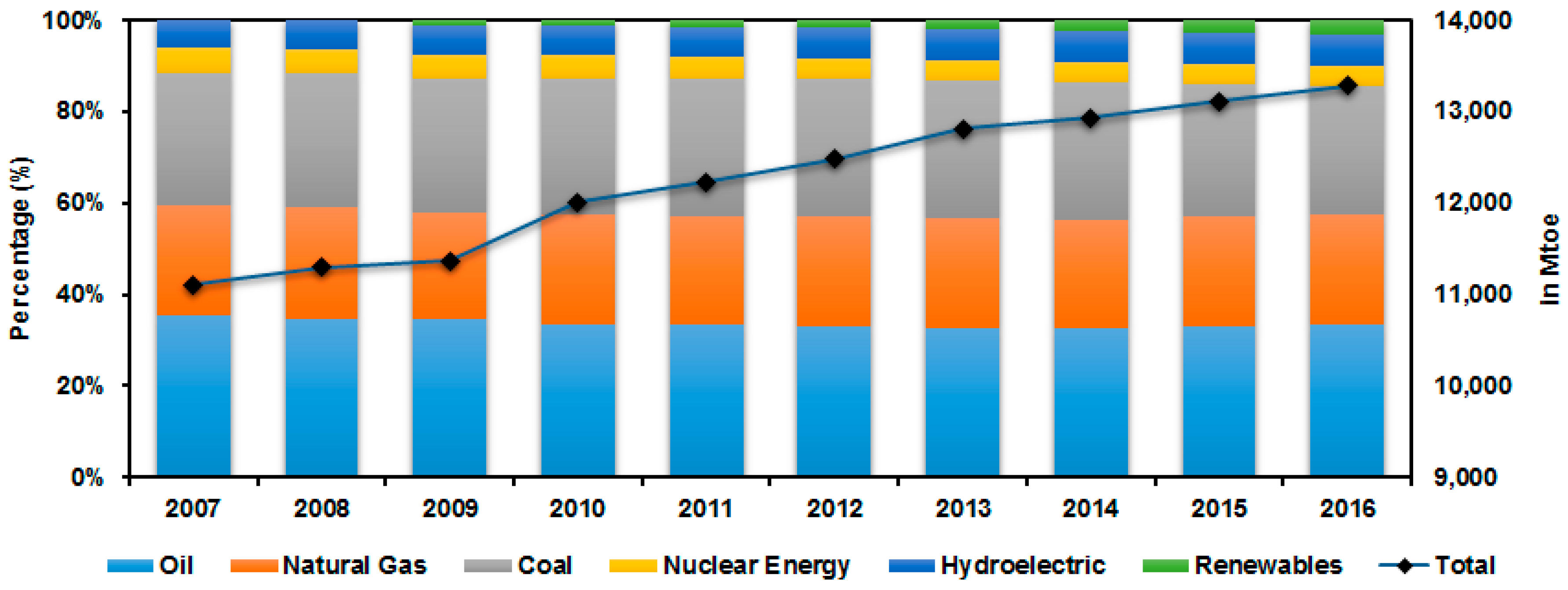
Figure 1 shows the total primary energy consumption from 2007 to 2016. In 2012, use of RES assisted to provide 13.2% of the global primary energy supply; it reached to 22% of global electricity generation in 2013 and it is forecasted that the share will reach to 26% in 2020, which will be higher than the present combined electricity demand of China, India and Brazil [
27]. Global public investment in RE has been increasing insignificantly. About USD 16 billion and USD 17 billion were invested in 2015 and 2016 respectively. This figure is slightly lower than the average investment in 2014 which was USD 19 billion [
11]. Such a situation has encouraged the private sectors to come forward to invest in generating electricity using renewables. The commitment of the private sectors in terms of investment is also evident as the investment in RE capacity outstripping the fossil fuel generation for the fifth year in a row [
28].
RE systems perform best at small to medium scale and are ideal for rural and geographical disadvantaged areas where it is difficult to connect these areas through grid energy. RE systems are labour intensive and thus, promote development in areas with surplus labour. Energy generated using renewables is less susceptible in terms of price fluctuation and consumers can be self-reliant and can further be benefitted by way, inter alia, of producing and trading extra energy. Conversely, some challenges like high level of hidden subsidies built into the legislative and energy programmes, depletion allowances, tax write-offs, and direct support of consumer prices, etc. discourage the progress and promotion of RE over conventional fuels. Moreover, after two decades of formal exploitation of the RES, there are some serious concerns as to the effectiveness or efficiency of the system as the electricity bills are still increasing, private developers are making huge profits and the money spent to support the activities of different institutions like regulators, transport system operators, public utilities and international agencies [
34]. It should be appreciated that even though these concerns are there, the success stories on the socio-economic development of marginalised and disadvantaged group of people who used the RES are quite huge and substantial. Additionally, it should further be noted that such issue of initial costs is not unique to RE only, rather common to all scientific innovations.
3. International Legal Movement on Renewable Energy: An Overview
International movements to shift traditional energy resources to RE may be identified from various events that took place over the last few decades. In the legal arena and within the auspices of the UN, the movement to use and promote RE can be traced back indirectly when in 1972 the Stockholm Declaration on the Human Environment 1972 specially made a reference and acknowledged the danger of exhaustion of non-renewable resources of the Earth [
35]. Subsequently, in the historic World Commission on Environment and Development Report, 1987 it was emphasized that RE should be harnessed to form the foundation of the global energy structure in the 21st Century [
36]. Later on, the Nairobi Programme of Action for the Development and Utilization of New and Renewable Sources of Energy endorsed the importance of developing new and renewable sources of energy in order to contribute to meeting the requirements for continued economic and social developments, particularly in the developing countries [
37]. Even though these initiatives do not have any direct and significant impact on the promotion of RE, it should nevertheless be appreciated that the global community has rightly realised the importance to exploit RES almost immediately since when they realised the importance to protect the environment as a global concern in 1960s.
Within the international legal arena, the establishment of the scientific body i.e., the Intergovernmental Panel on Climate Change (“IPCC”) by the United Nations Environment Programme (UNEP) and the World Meteorological Organisation (WMO) in 1988 can be considered as a milestone aiming to mitigate the effects of climate change. Thereafter, an international agreement, the United Nations Framework Convention on Climate Change (UNFCCC) was adopted at the ‘Rio Earth Summit’ in June 1992. This UNFCCC had no explicit reference on RE. In the 3rd Conference of the Parties (COP3) held in December 1997, the Kyoto Protocol to the UNFCCC was adopted. In the Kyoto Protocol, some innovative mechanisms were introduced to reduce GHGs emissions which have indirect impacts on the promotion of RE globally.
In 2011, the UN Secretary General has launched the initiative Sustainable Energy for All (SE4ALL) to attain 30% of the global RE target by 2030 and emphasised that these goals should be adopted primarily through domestic actions by way of different targets and commitments. The UN General Assembly (“UNGA”) through resolution 65/151 declared 2012 as the “International Year of Sustainable Energy for All” and subsequently declared the years 2014–2024 as the “Decade of Sustainable Energy for All” [
38]. In 2015, the SDGs were adopted, through the Resolution A/RES/7-/1 of 25 September 2015, with 17 global goals and 169 targets with aim to transform the planet a sustainable one by 2030. Of all the goals set, particularly goals No. 7 and 13 are particularly important for the discussion of this paper. In goal No. 7, it is proclaimed that a great share of renewables along with fossil fuels are required to ensure ‘access to affordable, reliable, sustainable and modern energy for all’ within 2030 with a substantial increase of RE share in global energy mix [
39]. Besides, goal no. 13 requires the global community to take urgent action to combat climate change and its impacts. Understandably, as RE promises green and pollution free energy, it can be used as a tool in combating climate change. Nevertheless, though these SDGs were set with very high ambitions, a survey on the SDGs progress reports suggest that the progress is not satisfactory and most of the ventures on RE have been focusing on electricity and not much on heating and transport sectors [
40,
41]. Finally, the Paris Agreement to the UNFCCC, legally non-binding on substance but binding on reporting, was adopted in 2016.
International community is divided into different platforms as to whether they should adopt and agree upon either the legally binding or non-binding instrument. Such an issue is important to be decided as provisions of legally binding instruments should assist to reduce the GHGs emission, which will indirectly work to promote RE. The developing countries understandably prefer to go for the legally binding instruments which will impose more apparent burden to mitigate the effects of climate change on the developed countries as these countries contribute most in GHGs emissions. On the other hand, this may not be the case of the developed countries even though they are willing to contribute. Additionally, due to the different effect of signing and ratification of international instruments at the municipal level shaped by the countries’ own legal systems, some countries may refrain from taking any move. Therefore, these countries prefer flexibility in this regard. This seems to be one of the most important tensions, from the legal and regulatory point of view, the global community has been facing. In this regard, the Paris Agreement seems to blend the needs of both these countries. Even though not all the provisions of this Agreement are binding on the signatories, it has contained some provisions that may ensure transparency, accountability and precision which should ultimately be considered to assess the significance of this Agreement in the long run.
4. Renewable Energy and International Legal Regime
International law deals primarily with the rights and responsibilities of more than one state, whereas energy related issues are seen more as a municipal matter. As a result, energy related legal issues and energy law as a discipline are evolving at the international level [
42,
43] andwithin the international legal and regulatory framework, it is difficult to provide a comprehensive set of rules, guidance and norms on energy system and supply. Though some attempts were made to define the scope of energy law, due to its involvement with many other disciplines it is identified as underdeveloped [
44] and probably one of the very complex areas of law [
45]. Energy law considers the laws and regulations on the exploration, extraction, distribution, mining, development and supply of coal, oil and gas reserves and nuclear energy to some extent [
46]. National mechanisms, economic regulations and financial subsidies, etc. play the decisive role in regulating commercial agreements with private sectors regarding the transport, supply and sale of energy. Such a situation leaves the role of international law on energy and RE highly fragmented and largely incoherent [
47], in flux [
16], and complex [
48].
The RE law, a segment of energy law, considers different issues relating to the development, implementation and commercialization of energy generated from the RES. As this type of law encourages the development of renewables, issues like economic incentives e.g., feed-in tariffs (“FiTs”) in the development of renewables, land use, siting and financial issues faced by the entrepreneurs are also discussed within the ambit of the RE law. Effective RE governance internationally i.e., collaboration of various institutions, legal instruments, RE processes to mitigate climate change is very challenging and due to these factors, at the international level, legal issues on renewables have become a major challenge of public international law [
49], and may be seen as ‘a case study in the ‘fragmentation’ of international law’ [
50].
Discussion on RE from international law point of view is important for a number of reasons; as a significant tool to mitigate climate change effects, assistance in setting normative behavior of state through international law though energy is primarily considered as a domestic issue, setting a stage of cooperation and forum of technology transfer commitments between the countries, etc. [
16]. In the absence of any specific and direct international instrument on RE, available literatures have discussed this area from international environmental law or more specifically international sustainable development law point of view. While doing so, the scholars have considered this from international economic (trade and investment), environmental (atmosphere, water and biodiversity) and social law (human rights and social development), which are notable components of international sustainable development law [
51]. This segment will discuss RE from these various aspects i.e., right to development as human rights, climate change, trade, economic and investment law.
4.1. Right to Development and State Sovereignty over Natural Resources
The right to development (“RTD”), as originated in the African Charter on Human and Peoples' Rights [
52], is ‘an inalienable human right’ and implies the inalienable right of the states to have full sovereignty over natural wealth and resources within their state jurisdictions [
53]. Accordingly, modern day welfare states are entitled to exploit natural resources to,
inter alia, generate electricity as they are under an obligation, aiming at the constant improvement of their subjects, to formulate appropriate national development policies [
53], and through international policies and co-operation [
53].
The issue of sovereignty over natural resources has been translated by the various internationally adopted instruments. The sovereignty over natural resources within the national boundaries is fundamental under the principle of sovereign equality as encapsulated in Article 2 (1) of the UN Charter and is further recognized by provisions as incorporated in various soft and hard international law instruments. Nevertheless, this right must be exercised in the interest of the national development and well-being of the people of the State concerned [
54]. In order to exercise the sovereign right to exploit the natural resources, states have ‘the responsibility to ensure that activities within their jurisdiction or control do not cause damage to the environment of other States or of areas beyond the limits of national jurisdiction’ [
35]. Even though the states are sovereign in contemporary international law, they do not enjoy traditional absolute territorial sovereignty, rather they are under an obligation to refrain from causing trans-boundary environmental harm. This is known as the principle of ‘no harm’, which is now part of customary international law (e.g.
Trail Smelter Arbitration, Arbitral Trib., 3 U.N. Rep. Int'l Arb. Awards 1905 (1941); Corfu Channel, United Kingdom v Albania, Judgment, Merits, ICJ GL No 1, [1949] ICJ Rep 4, ICGJ 199 (ICJ 1949), 9th April 1949; Advisory Opinion of the ICJ on the Legality of the Threat or Use of Nuclear Weapons, 1996, 1. 8 July 1996, C.J. Reports 1996; Gabčikovo-Nagymaros Project, Hungary v Slovakia, Judgment, Merits, ICJ GL No. 92.), even though this is also included in some of the hard law treaty provisions (i.e., Article 2, United Nations Economic Commission for Europe (UNECE) Convention on Long-Range Transboundary Air Pollution, 1979 prohibits the use of substances which may cause acid rain [
55]).
Though the RTD is a concept contested both academically and politically as the developed countries are reluctant to recognize this right [
56], states have the duty to co-operate with one another, irrespective of their political, economic and social differences, in the various spheres of international relations, and to promote international economic stability and progress [
57]. Thus, the RTD underscores the right of each country to exercise the sovereign powers over all kinds of development activities within the domestic spheres. But it is also to be noted that they need to cooperate with other states for mutual domestic and global developments. Logically, as the RE is called ‘green energy’, countries may wisely choose to utilise the RE for domestic as well as international developments for their mutual good, sustainable and inclusive development. And if we take the basic notion and spirit of the RTD, both the developed and developing nations are obliged to cooperate and collaborate with each other. Thus, RE could be a good option for countries to pursue the RTD as well as sovereignty over their natural resources in a sustainable manner.
Furthermore, in the context of globalisation, since no country is self-sufficient in all aspects, every state needs to cooperate with each other for their local and global sustainable development. As it has already been shared that 90% of the proven oil reserves are available in only 15 countries of the world [
3], these countries have duties to co-operate with other countries, especially countries from sub-Saharan Africa and developing Asia towards their developments [
53]. Since these countries in African and Asian region are unable to get electricity at an affordable cost, these oil-rich countries should come forward with funding to construct establishments that can enable them to harness RES to get the electricity that has the potential to ensure their minimum basic needs.
Simultaneously, since the global climate change response system demands that countries must adopt measures to reduce impact of climate change, these oil-rich countries and industrialised countries are somehow obliged to replace the fossil fuels with the renewables or at least increase the share of the renewables in their energy consumption as the exploration, production and consumption of fossil fuels cause serious pollution, sometimes trans-boundary, on different environmental components due to their emission of the GHGs that contribute to accelerate global warming leading to climate change. Moreover, the ‘jus cogens’ in international environmental law demands application of ‘no harm principle’ in dealing with trans-boundary issues (The Latin concept, ‘jus cogens’ or ‘ius cogens’, denotes the peremptory norm in International Law from which no derogation is permitted. Such peremptory norms are norms ‘accepted and recognised by the international community of States as a whole as a norm’ and these can only be modified ‘by a subsequent norm of international law having the same character’. There is no exclusive list of such norms and these can be emerged in future. See, Articles 51 and 64, the Vienna Convention on the Law of Treaties, 1969. These norms, due to their non-derogable nature, have attained the status of international constitutional order and make them superior than other sources of international law e.g., treaties, customs and general principles of international law). Replacing traditional energy sources with the RES may significantly lessen trans-boundary harms and may contribute to climate change mitigation.
4.2. Renewable Energy and Climate Change Law
International climate change law indirectly deals with RES as the mitigation of emission of GHGs is the prime concern of this law. After two years of its establishment, IPCC and the Second World Climate Conference called for a global treaty on climate change. In May 1992, the text of the UNFCCC was adopted to stabilize the GHGs’ concentrations in the atmosphere at a level that would prevent dangerous anthropogenic interference with the climate system [
53]. Parties to the Convention made legally non-binding voluntary commitment to promote and cooperate in reducing the GHGs,
inter alia, in energy sector [
53] to 1990 levels by 2000. Unfortunately, this target could not be met.
In 1997, through the Kyoto Protocol to the UNFCCC, the Annex B parties i.e., industrialised countries agreed to set and meet binding individual targets to reduce GHG emissions. Apart from the Joint Implementation (Article 6) and Emission Trading Mechanisms (Article 17), the Kyoto Protocol has included the Clean Development Mechanism scheme to help fund emission-reduction projects in developing countries worldwide by 2013. Even though the Kyoto Protocol has not considered RE issues directly, it has provided for policy options for sustainable development through research, promotion, development and increase of the use of RE [
53]. Kyoto protocol has brought some positive changes in the legal arena. A comprehensive database on more than 1200 climate change laws and policies from 164 countries, which emit 95% of the GHSs, revealed a 20-fold increase of such laws and polices since 1997 when there were about 60 laws in place (the database developed jointly by Grantham Institute, Global Legislators Organisation, Sabin Centre for Climate Change Law and the Inter-Parliamentary Union is available at
http://www.lse.ac.uk/GranthamInstitute/climate-change-laws-of-the-world/ (last visited on 18 June 2018)). This reflects the positive political will on the part of the national government and it has increased low-carbon and emission reduction investment, which set a step towards an effective global treaty [
58]. The Protocol was unfortunately failed to reduce emissions and therefore, a radical rethought was demanded [
59,
60].
Recently, the Paris Agreement was adopted to enhance the implementation of the UNFCCC by holding the increase in the global average temperature to below 2 °C above pre-industrial levels and to limit the temperature increase to 1.5 °C above pre-industrial levels. As of June 2018, 178 countries have ratified the Agreement and as of February, 165 countries have made the pledge known as ‘Nationally-Determined Contribution (NDC)’. Though these pledges are set to encourage others, it was apprehended that the national governments may not be able to honour these ‘paper promises’ and as a result, the Agreement will fail like the Kyoto Protocol. Therefore, these promises should be revisited before 2020 when the formal review process will begin [
61].
Various international soft law instruments, having impact on climate change mitigation and sustainable development, are adopted and these instruments have encapsulated provisions to encourage the promotion and development of RE. Even though most of the countries who are parties to these instruments have demonstrated their commitments and expressed positive intentions to promote RE domestically, these instruments e.g., Johannesburg Plan of Implementation, 2002, Beijing Declaration on Renewable Energy for Sustainable Development, 2005, Barbados Declaration on Achieving Sustainable Energy for All in Small Island Developing States, 2012, Astana Ministerial Statement on Access to Affordable, Reliable, Sustainable, and Modern Energy, 2017 are all non-binding instruments. While the non-binding nature of these instruments may trigger some discussion as to their effectiveness pointing the reluctance of the industrialised countries and other countries identified to be the leading emitters of GHGs [
62], one should also understand that countries around the world have different legal municipal obligations and they need to adhere to different legal formalities under their legal systems. As a result, such a soft law or flexible approach seems to be more suitable in mitigating the effects of climate change and promotion of RE.
Thus, it is evident that the global climate change legal regime has been playing indirect but instrumental role in reducing the GHGs emission and promoting RE. Nevertheless, strong political commitments on the part of the developed and industrialised countries towards the reduction of the GHGs emission resulting in global warming are imperative. This can be achieved either by adopting top-down approach where the international organisations will set targets to reduce GHGs emission for the individual countries and these countries need to fulfil their respective targets or bottom-up approach where the individual country will set its own target and make commitments to reduce the GHGs, which will indirectly promote the RE. The Paris Agreement can be seen as a blend of these two approaches where the global community has decided to reduce the GHGs emission to a certain level and the countries have set their non-legally binding NDCs. However, most important of all initiatives, there is no alternative to strong political will in reduction of the emission of the GHGs and promotion of RE. With the spirit of mutual co-operation and with broad mind to share the latest knowledge, information and transfer of technology, the developed countries should come forward. On the part of the remaining countries, clear policy on RE, newly adopted or updated, taking into account their socio-economic needs and capabilities supported by reliable scientific findings should be there. The United Nations Environment Programme (“UNEP”)’s ‘Handbook for Drafting Laws on Energy Efficiency and Renewable Energy Resources, 2007’, and the ‘Guide for Energy Efficiency and Renewable Energy Laws, 2016’ published to assist the draftsmen of the developing countries can be considered as a ready-reference in this regard.
4.3. International Trade and Investment in Renewable Energy
Electricity generation from the RES demands huge amount of investment and as a result, it is the next category where the scholars have discussed legal issues on RE. It is evident from the available literature that in order to promote investments, some mechanisms e.g., incentives like feed-in-tariff (FiT), subsidies, and local content requirements (LCRs) have been gaining the grounds. With all their prospects, there are also some unique challenged involved. A well-adapted FiT scheme, a policy mechanism that provides purchasing guarantee, is generally perceived to be the most efficient and effective support schemes for electricity generation [
63] and thus, promoting investments in RES. The First FiT Law, enacted in Germany in 1990, was tremendously successful and has inspired more than 80 countries in the world to enact similar law [
64]. The FiTs usually contain provisions like- offer of additional price above market price for actually produced electricity or electricity feed-in into the grid, variation on tariff based on the size of installed capacity, type and location of the renewables, tariff guarantee through long term contracts for 15 to 25 years, possibility of setting additional price when technological development reduces the price of generated electricity, and inclusion of LCRs for equipment used to generate electricity [
65].
The subsidy is a financial contribution by a government or any public body that can involve direct or potential direct transfers of funds or liabilities, exemption of due government revenue, provisions of goods or services other than general infrastructure, making of payments to a funding mechanism, or entrusting or directing a private body to carry out above activities [
66]. A subsidy, either prohibited export subsidies or actionable subsidies, must confer a benefit on the recipient, and must be specific i.e., only available to specific recipient [
66]. Other than agricultural products, no country can provide specific benefit which may cause injury to the domestic industry of another country, nullify or impair benefits accruing directly or indirectly to another country and may seriously prejudice the interest of another country [
66]. If it creates adverse effects, such subsidies can be challenged through WTO Dispute Settlement System (DSS). Moreover, countervailing duties against the subsidized imports or own sanctions can be imposed (see Articles 21 and 22, Understanding on Rules and Procedures Governing the Settlement of Disputes, Apr. 15, 1994 [
67] and Marrakesh Agreement Establishing the World Trade Organization, Annex 2, 1869 U.N.T.S. 401 [
68]).
The Local Content Requirements (LCRs), a protective mechanism, is primarily associated with the government procurement and is imposed on the publicly funded projects. The LCRs offer some benefits- jobs creation at home and create business for domestic over foreign firms, though many LCRs are inconsistent with the rules of WTO and regional trade agreements [
69].
Since the trade aspects of energy was treated a domestic affair dominated by the state run monopolies, it was not considered as a distinct sector in the rules of General Agreement on Tariffs and Trade (GATT), and now the WTO. Nevertheless, as the WTO rules are applicable to all forms of trade, they can be applied to trade in energy goods and services and be enforced using the WTO DSS [
47,
70]. Thus, without considering non-trade and environmental concerns, the subsidies on RES will be treated like other subsidies under the relevant WTO law [
66] as it encourages privatization and discourages subsidies [
71].
Subject to some exceptions, on the basis of principle of fair and equitable treatment and stabilization clause, principles of most-favoured-nation (MFN) and national treatment, countries are obliged to ensure similar treatment to all investors and cannot normally discriminate between their trading partners (see for example, Article I, General Agreement on Tariffs and Trade [
72], Article II, General Agreement on Trade in Services [
73] and Article 4, Agreement on Trade related Aspects of Intellectual Property Rights [
74]). They need to treat imported and locally produced ‘like products’ equally.
Incentives like FiTs, subsidies and LCRs have significant impacts on various countries’ RE industries and thus, have relevance regarding the disputes at the WTO. Though the promotion of RE is advocated for decades, trade and investment in the RE has created disputes between the parties on FiTs, subsidies and LCRs recently due to increasing scale of the investment, role of emerging markets like China, imbalance between RE producers and consumers, and rise of locally owned technology manufacture [
75].
It is pertinent to mention here that in case of dispute between the foreign investors and state, the parties may consider arbitration resolution through International Centre for Settlement of Investment Disputes (ICSID) or ad hoc Tribunal under the United Nations Commission on International Trade Law (UNCITRAL) rules (for example, Energy Charter Treaty, Article 26 (3)(a) [
76]), whereas, in the case of inter-state disputes, the parties can choose either the International Tribunal for the Law of the Sea (ITLOS) or International Court of Justice (ICJ). International forums like the WTO, the CJEU, the North American Free Trade Agreement (NAFTA) and the Bilateral Investment Treaties (BITs) have already considered disputes in relation to RE investments as there is no specific monitoring body or dispute settlement organ globally except ITLOS under the United Nations Convention on the Law of the Sea (UNCLOS) for marine renewables. Hydropower generates the most energy and is potentially a threat to marine environment that may affect neighbouring country. Human-generated underwater noise created to capture marine RE is a source of marine pollution, but unfortunately the role of the ICJ and ITLOS on RE is not adequately considered.
FiTs has been a serious issue of dispute in recent years. In 2009, in the Canadian Province of Ontario, FiTs were offered to encourage investment in solar and wind energy, and the Government offered higher price above the market price for electricity supply for 20 years and included provisions on substantial minimum LCR. Both Japan and the EU found that this initiative was inconsistent with Canada’s obligations under the WTO rules [
66] as the program was affecting the internal sale, offering of sale, purchase, transportation, distribution or use of equipment for RE generation facilitates that accord less favourable treatment to imported equipment than that accorded to like products from Ontario. It was also submitted that the scheme constituted prohibited subsidiary as FiT was made contingent on the use of local RE technologies. Though the WTO Panel decided that it should be considered as subsidy, the Appellate Body (“AD”) doubted the decision of Panel and could not decide on whether FiT is subsidies under the SCM as there was no ‘direct transfer of fund’ rather it was mere a ‘purchase’. It could not further decide how FiTs without the LCR would qualify under WTO law. Nevertheless, it had differentiated between ‘electricity’ and ‘electricity generation equipment’ and finally, ruled that these two products were not in competitive relationship (see, Canada—Certain Measures Affecting the Renewable Energy Generation Sector (WT/DS412/AB/R) [
77] and Canada—Measures Relating to the Feed-in-Tariff Program (WT/DS426/AB/R) [
78]). Thus, the Ontario government’s action was found legal, nevertheless, the AB found that the LCR given in the FiTs were inconsistent with Article 2.1 of the TRIM Agreement and Article III:4 of the GATT 1994 (for more detail, see Canada—Certain Measures Affecting the Renewable Energy Generation Sector (WT/DS412/AB/R) at para 6.1.v, p. 141 [
77] and Canada—Measures Relating to the Feed-in-Tariff Program (WT/DS426/AB/R) at para 6.1.v, p. 143 [
78]).
International trade law provisions are in fundamental conflict to promote RE [
75]. No single WTO rule contains the word ‘energy’ or ‘RE’ and so, it seems tough for the adjudicators to acknowledge the obstacles faced by the RE producers and consumers. It becomes more complicated as the WTO Agreements have inherent lack of coherence and coordination with insufficient interpretative tools [
79]. The WTO DSB has not considered any dispute on fossil fuel so far, but there are number of disputes on RE pending before it. So far, the Panel and AB have interpreted the WTO rules in these disputes very narrowly without leaving much space for the state’s policies favouring RE [
79].
The LCR is decisive for the developing countries to improve their RE industry and without the LCR it will hardly be possible for them to promote their national industries and engage local human resource [
79]. A new list of exempted subsidies for the development of RE can be included in the relevant WTO Law [
66]. Nevertheless, for the developing countries a transition period can be imposed till the country reach to a certain level of development. It may be relevant to share here that earlier China implemented the LCRs regarding wind turbines which had to revoke after the USA objected and challenged the initiative at the WTO, though it is claimed that Chinese move to withdraw the LCR was more economical than politically driven as China has a mature industrial policy and local stakeholders reported that the LCR had very minor impact on the wind industry [
75]. The LCR issue is also contested in Indian Jawaharlal Nehru National Solar Mission for solar cells and solar modules.
One may consider that the LCRs may have negative effects on the development and promotion of the RE as it compels the investors to involve the local goods and services. Thus, it may be somehow discriminatory. Nevertheless, such perception, based on the ‘police power doctrine’, may be disregarded on the ground that the general regulation adopted
bona fide and in a non-discriminatory manner to protect public health or safety does not amount to expropriation and thus, cannot be compensated. Instead, it should be remembered that the states have the right and duty to ensure public health and safety [
80], and thus are competent to offer incentives and include requirements on the LCRs.
5. Regional Initiatives on Renewable Energy
It is somehow difficult, if not impossible, to track all regional initiatives, completed and on-going, to promote RE across the world. This segment is an attempt to highlight some of the important regional RE related initiatives with the aim that from the findings of these initiatives, stakeholders from other part of the world can be benefitted. Off all these regions, the European region seems to be the most active in promoting RE. The policymakers have been taking and revising innovative but sometimes binding policy initiatives, set targets and even do not hesitate to strictly implement these. These initiatives represent the strong political will of the policymakers and are supported by the stakeholders.
The European Union (EU) institutions and the EU laws, in line with Article 3 (5) of the Treaty on European Union, have been playing instrumental roles in developing and shaping the public international law on RE by encouraging the member states to increase the share of RE in their national energy mixes. The EU’s energy policy is aimed at promoting the development of new and renewable forms of energy [
81]. As a result, the European governments have been working seriously to promote the ’20 20 20 by 2020’ i.e., to reduce CO
2 emission by 20%, raise the use of renewables 20% and to increase energy efficiency by 20% compared to 1990 levels.
In 1997, the EU Commission set an ambitious but realistic target of 12% of energy consumption and 22.1% of electricity consumption needs by 2010 using renewables [
82]. This was a political commitment and had no binding effect legally. This target was subsequently increased in 2007 when the Renewable Energy Road Map was adopted to set a mandatory target of using RES to meet 20% of EU energy consumption needs by 2020 and a mandatory target of 10% of transport fuel consumption using biofuels by 2020. These targets were re-affirmed through the EU Directive [
21] where the EU countries, due to their treaty obligations, set different individual binding targets ranging from 10% for Malta to 49% for Sweden for the development of RE. Simultaneously, the European countries were bound to adopt national RE action plans and were compelled to submit progress reports in every two years [
21]. Poland failed to fulfil her obligation to transpose the RE Directive and so, the Advocate General in the CJEU opined that Poland should pay a daily payment of €61,380 as penalty effective from the date of judgment delivery [
83]. The European Commission (EC) also referred Poland to CJEU as Poland did not comply with the biofuel requirements under the EU Directive and was giving preferential treatments to some manufacturers.
In 2011, the EC released another Energy Roadmap for more sustainable, competitive and secure energy system in 2050 through four main routes, including RE. Targets were made to reduce at least an 80% GHG emissions reduction below the 1990 levels by 2050. Very recently, the EC published a proposal for a revised Renewable Energy Directive,
inter alia, to make the EU a global leader in RE and ensure that the target to use at least 27% renewables in the final energy consumption in the EU by 2030 is met [
84]. Thus, it is evident that the EU regulators have been increasing the targets constantly to reduce the emission of the GHGs and increase the share of RE in the energy mix which reflect their strong political will.
Earlier, the Energy Charter 1991, also known as European Energy Charter, was adopted as a concise and non-binding expression of the principles towards international energy cooperation, based on a shared interest to secure energy supply and sustainable economic development. This Energy Charter has confirmed the political will of around 70 signatories to reach to a legally-binding multilateral instrument i.e., the Energy Charter Treaty 1994 (“ECT”) and the Energy Charter Protocol on Energy Efficiency and Related Environmental Aspects. The ECT, which provides for an international legal framework for energy cooperation especially in Europe, entered into force in 1998. This Treaty can be considered as a network of BITs [
85], though it provides for better protection to the energy investors than BITs as an aggrieved investor can pursue local remedies and compulsory international arbitration like ICSID, arbitration Institute of the Stockholm Chamber of Commerce, or an Arbitration Tribunal constituted under the UNCITRAL Arbitration Rules etc. simultaneously without waiting for the exhaustion of local remedies [
76]. International Energy Charter 2015 is an update of the European Energy Charter 1991 and reflects the political declaration of the signatories.
After the economic turmoil in Europe in recent times, an unprecedented amount of investor-state arbitration cases involving FiTs have been lodged under the ECT. On February 21, 2014, the ICSID registered the first claim against Italy for the alleged violations of the ECT. Around 33 disputes against Spain, 14 of which were brought under the ECT, seven against Czech Republic and five against Italy are now pending. In solar power plants dispute in Spain, the ICSID in its first case, has awarded Eiser Infrastructure Limited a €128 million compensation. As several cases are now pending and it can be anticipated that the decisions of these cases will have significant impacts in the promotion and development of RE. It can be anticipated that if the investors get the decisions in their favour, the countries will take cautious move in the future to design their RE policy and if the countries are favoured in these decisions, it may discourage the investors as they may not be willing to take the initial risks of investments. Nevertheless, it is for sure that these decisions will guide the regulators and investors of other parts of the world in adopting and shaping the RE policies and contribute significantly in the development of RE in a situation when there is no international legal framework in this regard.
From the international community, Africa has received unprecedented attention in terms of investment in the RE sector. When various investors and donors have their own interest in this context, the present way of investment may invite many long-term challenges [
86]. While it may be difficult for an individual country to evaluate various aspects in such investments, involvement of non-state actors may help to protect the interest of the citizens in a better way.
In the African region, the Africa Renewable Energy Initiative [
87], an African-owned and Africa-led inclusive effort mandated under the African Union (AU) and endorsed by African Head of State and Government on Climate Change (CAHOSSC), has been working actively in promoting RE. This initiative, initiated in the context of sustainable development and climate change by the AU’s commission, the New Partnership for Africa’s Development’s Agency, the African Group of Negotiators, the African Development Bank, the UNEP, and the International Renewable Energy Agency (IRENA), was taken to accelerate and scale up the huge RE potentials of Africa. The West African Economic and Monetary Union (WAEMU), an organization of eight countries i.e., Benin, Burkina Faso, Cote d'Ivoire, Guinea-Bissau, Mali, Niger, Senegal, and Togo, has adopted the strategy i.e., Regional Energy for Sustainable Energy to cover the electricity needs of member states by 2030 by focusing on RE. Besides, the G20 Energy Sector Working Group has adopted an Action Plan titled ‘G20 Energy Access Action Plan: Voluntary Collaboration on Energy Access’ for the Sub-Saharan African region in 2015. This plan, complement to existing global and regional initiative, is a voluntary collaboration framework underlining the commitment of the G20 to work together and coordinate activities to ensure access to affordable, reliable, sustainable, and modern energy for all, in line with the SDG7.
The Association of South East Asian Nations (ASEAN) is a unique region with country without energy sources like Singapore, oil exporting country like Brunei and natural gas exporting country like Malaysia. Vietnam used to export coal, but now unable to export due to exhaustion of quality coal. Significant amount of sunlight due to the geographical location close to the equator is very promising for harnessing solar energy in this region. Through the ASEAN Plan of Action for Energy Cooperation, 2016–2025, the ASEAN countries have set to increase the share of RE in the energy mix to 23% by 2025.
Finally, the Climate Vulnerable Forum, a body of countries highly vulnerable to climate change from Africa, Asia, the Caribbean, Latin America, the Middle East, and the Pacific founded in 2009, has adopted the Manila-Paris Declaration, 2015 and proposed to include in the Paris Agreement provisions on decarbonisation by 2050 with the peaking of global GHG emissions as soon as possible, and at the latest by 2020, and 100% RE production by 2050.
From the aforementioned discussions, it can be reiterated that even though individual countries are concerned about their energy needs and have been taking actions to promote and develop RE sector, different countries have also joined together to find out better ways in this regard. Hence, from the activities of these organisations, which are from the same region or with similar economic strength or geographical conditions, countries that really want to harness the RES should get directions. From among these initiatives, the Europe seems to be the most advanced region in terms of policy framework; Africa, seriously deprived of having electricity, is a lucrative region for the investors though the policymakers of this region should be able to evaluate their long-term challenges for a meaningful, inclusive and sustainable development. Unfortunately, there is no regional organizations like the EU or the AU in Asia. As a result, the RE sector in Asian countries has been growing because of the interest or strong political will of individual states.
6. Renewable Energy and International Institutions
The role of international organisations in shaping various areas of international law is well recognized. Various international organisations have been working towards framing suitable legal framework on energy and RE governance system.
Different UN agencies have been actively working to promote RE globally. The UNEP is the leading UN organization that has been advocating to promote RE. Significant contributions of the UNEP in the field of RE law is the publication of ‘Handbook, 2007’ and the ‘Guide, 2016’ published to assist the draftsmen of the developing countries and the annual report on ‘Global Trends in Renewable Energy Investment’, containing various issues regarding investment in RE. The UNDP is active for more than two decades to transform the global energy systems through increased energy efficiency and use of RE systems. Very recently, the UNDP has released “Sustainable Energy Strategy Note, 2017–2021: Delivering Sustainable Energy in a Changing Climate articulates” containing for the first time the UNDP’s vision, mission, approach, guiding principles, and focus in the area of sustainable energy. While doing so, it has included RE in its vision and mission [
88]. This is an important initiative from the part of the UNDP because of the organisation’s influential role in running the development activities in countries, mainly from Asia and sub-Saharan Africa, with disadvantaged and marginalised people who are unable to afford to have grid electricity.
It is a matter of fact that though various UN agencies are active in global development activities, their activities are relatively obscure in relation to energy [
44]. There is a lack of high level of coordination and trust among these organisations due to which the ‘governance regime for RE is not conducive to sustainable energy’ [
45]. Therefore, the UN Energy, consists of 21 member organisations, was established in 2004 as an inter-agency mechanism to promote coherence in the UN System’s response to energy challenges [
89,
90].
The International Energy Agency (IEA) founded in 1974 after the oil crisis of 1973-74 to coordinate the response of oil importers to major disruptions in the supply of oil, is the most renowned international organization dealing with energy security, environmental awareness and economic development. The IEA was created through an OECD Council decision as an autonomous body within the framework of the OECD, Agreement on an International Energy Program. But this organization is separate from OECD and recognized by UNFCCC. Historically, though the main focus of the IEA was not on renewables rather conventional fuels, it has recently formed the Renewable Energy Working Party (REWP), which is mandated to advice different IEA bodies on RES and technologies, related policies, trends, projects, programmes and strategies [
91]. The IEA has been publishing very authoritative annual World Energy Outlook, a seminal reference for the energy related stakeholders.
The IRENA, established in 2011, is a leading specialized international organization on RE with 152 members and 28 prospective members as of September 2017. Through the Statute of the IRENA, 2009, the parties expressed their desires to promote the increased adoption of RE with a view to sustainable development and their firm beliefs in the vast opportunities offered by RE for addressing and gradually alleviating problems of energy security and volatile energy prices. The IRENA enjoys privileges and immunities like the UN [
92], though IRENA has no express competence or implied power to set binding RE targets.
In the International Renewable Energy Conferences held in Bonn in 2004, a coalition i.e., International Renewable Energy Alliance was formed between International Geothermal Association, International Hydropower Association, International Solar Energy Society, World Bioenergy Association and World Wind Energy Association which was renamed as Renewable Energy Policy Network for the 21st Century, or REN21. It connects a wide range of stakeholders and provides international leadership in promotion of RE. Its flagship publication is annual Renewables Global Status Report.
Various development banks e.g., World Bank, Asian Development Bank, African Development, Inter-American Development Bank, New Development Bank, etc. have been playing commanding role in promoting RE by financing in RE projects. Nevertheless, these banks lack an integrated strategy to encourage the inclusion of RE in their overall lending programmes [
93]. Therefore, it is evident that many non-state actors are already involved in the promotion and development of RE, though their activities are not co-ordinated and overlapping in some point. The IRENA seems to be in an advantaged position to take the lead in this regard.
7. Conclusions and Policy Implications
Energy is imperative to pursue any kind of development, more specifically to attain sustainable and inclusive development globally. It is predicted that even with energy generation/supply at the present scale, due to 30% rise in global energy demand, hundreds of millions of people, mostly in Sub-Saharan African rural areas, will be left without basic energy services by 2040 [
94]. Needless to say that without participation of such large population, any sort of development will remain incomplete. Since finite fossils fuels have some inherent limitations and drawbacks as they emit GHGs triggering global warming leading to climate change, utilisation of RES for energy generation and production should be a preferred choice. Besides, theoretically and to some extent empirically tested infinite RE promises inclusive economic growth [
95].
Promotion of the RE infrastructures poses some challenges along with their great potentials. RE production demands significant use of land which may potentially and negatively have impact on biodiversity which may threat long-term ecological sustainability [
13]. Renewable sources like biomass and hydropower may trigger ecological problems. Besides, emerging economies from Africa, Asia and Latin America, after having the highest rates of clean energy penetration, are now encountering integration challenges. This is because associated transmission facilities to deliver power are absent and grid-operators are still giving priority to the fossil-fueled power plants over renewable projects [
96].
Climate change is a common but serious concern of mankind. Despite having the latest technologies, the industrialised and developed countries have been facing the menace of climate change, let alone the case of the developing and least developed countries. Combating climate change demands common but differentiated response with comprehensive coordinated initiatives adopted by the developed and developing worlds. Global climate change regime with internationally adopted instruments assist to set country specific commitments to reduce the GHGs emission by way of either top-down (targets for countries are set internationally) or bottom-up approach (country may voluntarily pledge targets). Considering the climate change and it potentials impacts, it has been reiterated in this paper that RE is a good viable alternative to combat the climate change issue as it is potentially less harmful than other sources of energy. Relevant to mention that, although there is no direct and specific international instrument on RE, there are already sufficient policy directions for the implementation of which the use of RE should be accelerated. Genuine political will, financial and technological cooperation among the stakeholders, etc. will help foster the process to mitigate climate change consequences.
RE is considered to be of great help for the developing nations, and countries with economic transitions. However, it may espouse with some tricky challenges that those countries may find difficult to tackle with. Certainly, intellectual property rights in the RE regime is one critical and emerging issue. To reduce the hurdle and make those countries self-sufficient, global technological super powers and developed nations should provide financial and technological support to developing countries. Thus, technology transfer, capacity building and infrastructural development in developing countries at their RE sector should be facilitated by the developed world. A definite and precise global legal regime of RE will assist the developing nations to claim these as entitlement not just as charity.
Critical to note that energy governance is a very complex issue and there is no ‘best model’ suited for RE governance [
34]. At the national level, there is a chasm between what is needed and what governments do ‘on the ground’, while regionally and globally, collective action challenges have often presented insurmountable obstacles [
44]. Few legal initiatives can be considered, including, enactment and passage of specific law on RE, containing series of policies for the introduction of tariff support for electricity generation from renewable sources [
97]. Offering incentives and subsidies have proved to be useful in bringing positive changes in the Europe. International investment treaties and binding legal instruments may ensure universal access to energy for all [
98], though such initiatives need political commitments and willingness beyond the borders [
99]. Regional and institutional frameworks suggest that RE has become an important issue to further development activities within and beyond the borders. Indirect, if not direct, initiatives have been being taken place in most of the parts of the globe, ranging from Africa, South America to Asia and other parts of developed world to give due credit to the use and promotion of RE for sustainable developments. Global and regional institutions have also been actively promoting RE and its potential contribution to promote sustainable development for all. Thus, in many ways, the sustainable development are being facilitated by the use and consumption of RE. The UN adopted SDGs have set out the significance of RE in achieve affordable and clean energy for all [
100]. Overall, in the context of 21
st Century, the preference and dependency on RE is a domestic, regional and global reality that cannot be refused or negated in any manner.



 ,
,