
Article

Learners’ Perception of Scientific Text Layouts Design Using Eye-Tracking

1
Faculty of Humanities and Creative Industries, Universitas Kristen Maranatha, Bandung 40164, Indonesia
2
Faculty of Smart Technology and Engineering, Universitas Kristen Maranatha, Bandung 40164, Indonesia
3
Faculty of Digital Business and Law, Universitas Kristen Maranatha, Bandung 40164, Indonesia
*
Author to whom correspondence should be addressed.
J. Eye Mov. Res. 2025, 18(3), 22; https://doi.org/10.3390/jemr18030022
Submission received: 27 April 2025 / Revised: 7 June 2025 / Accepted: 12 June 2025 / Published: 13 June 2025

Abstract

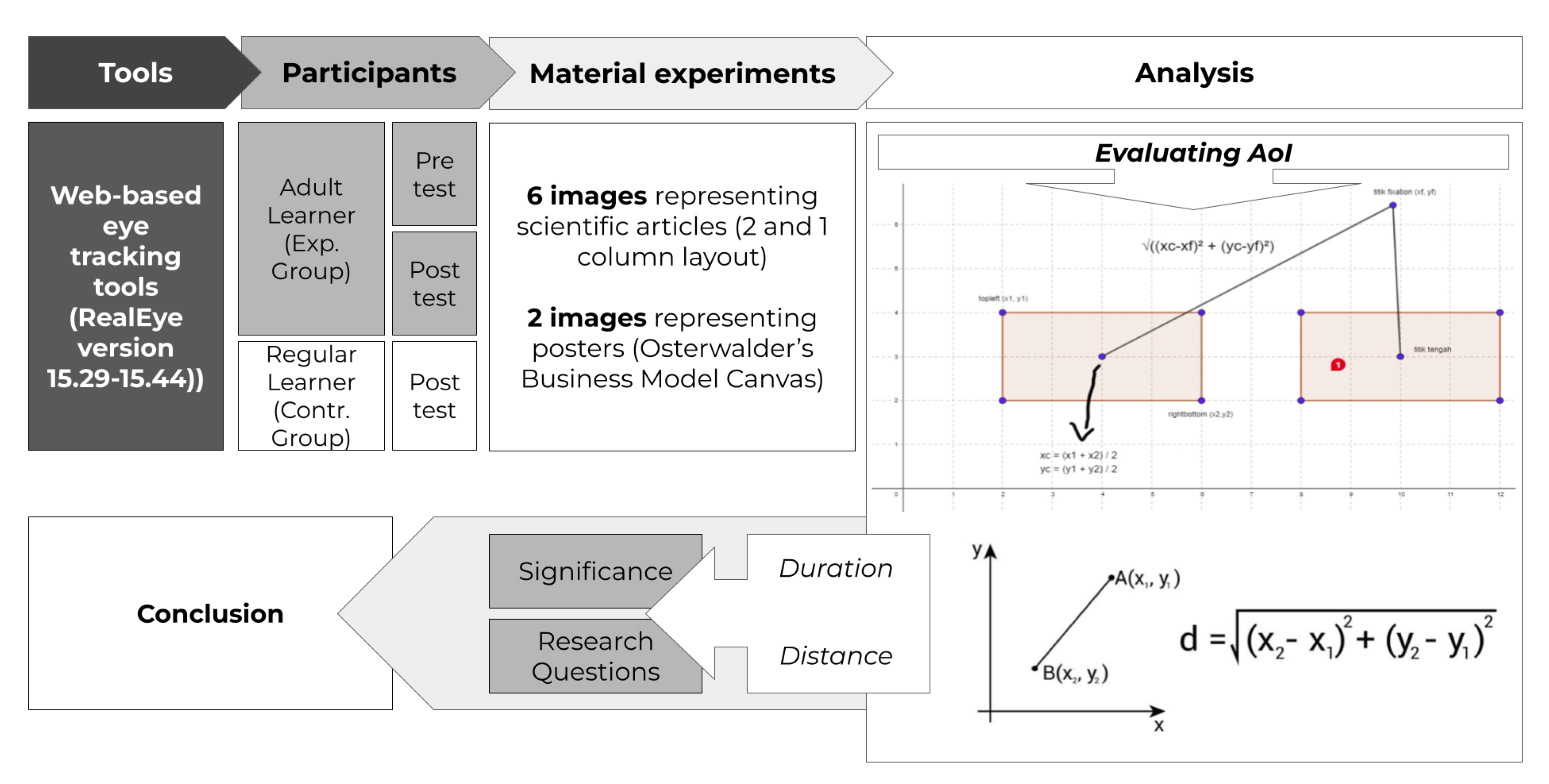
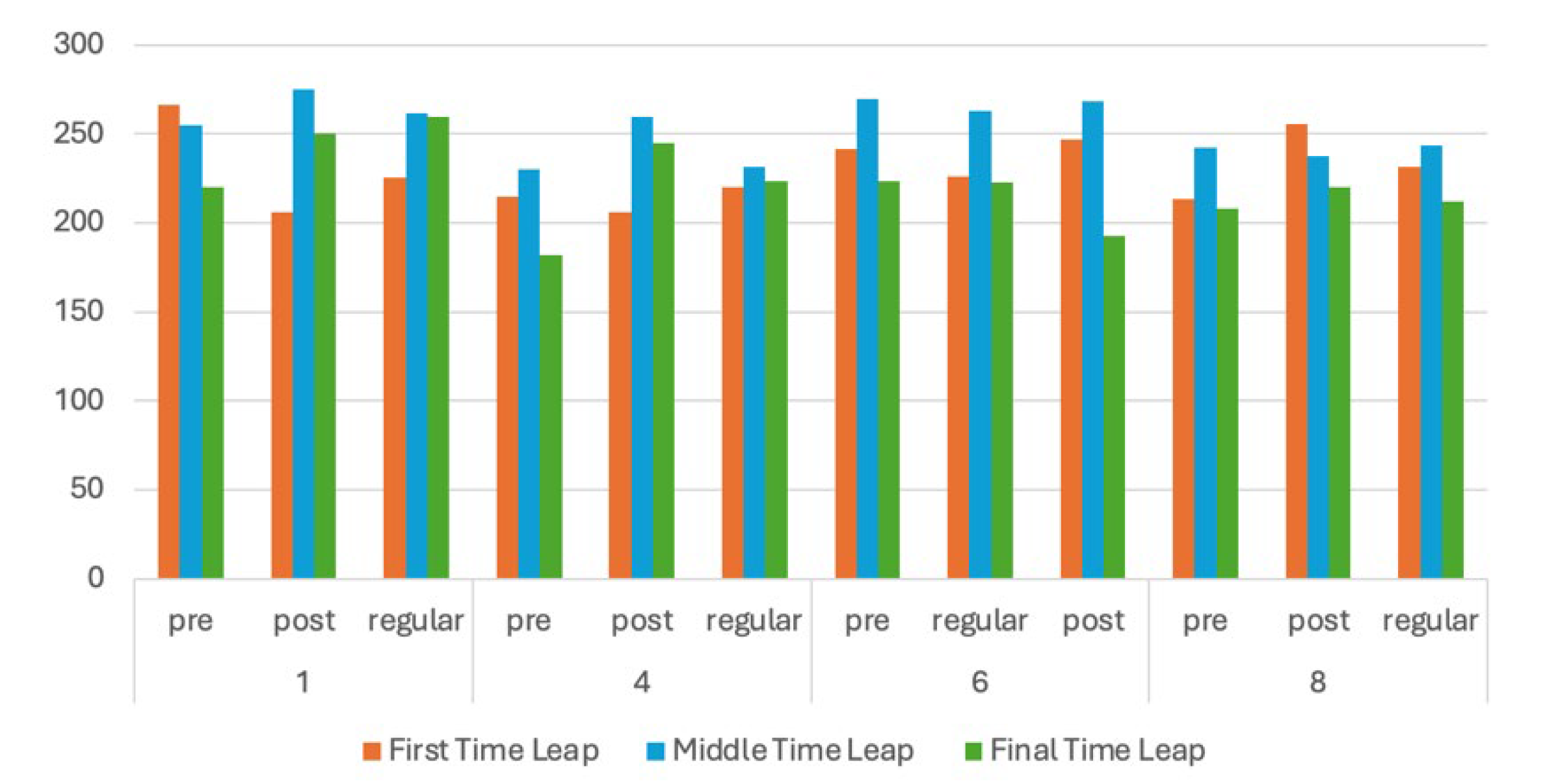
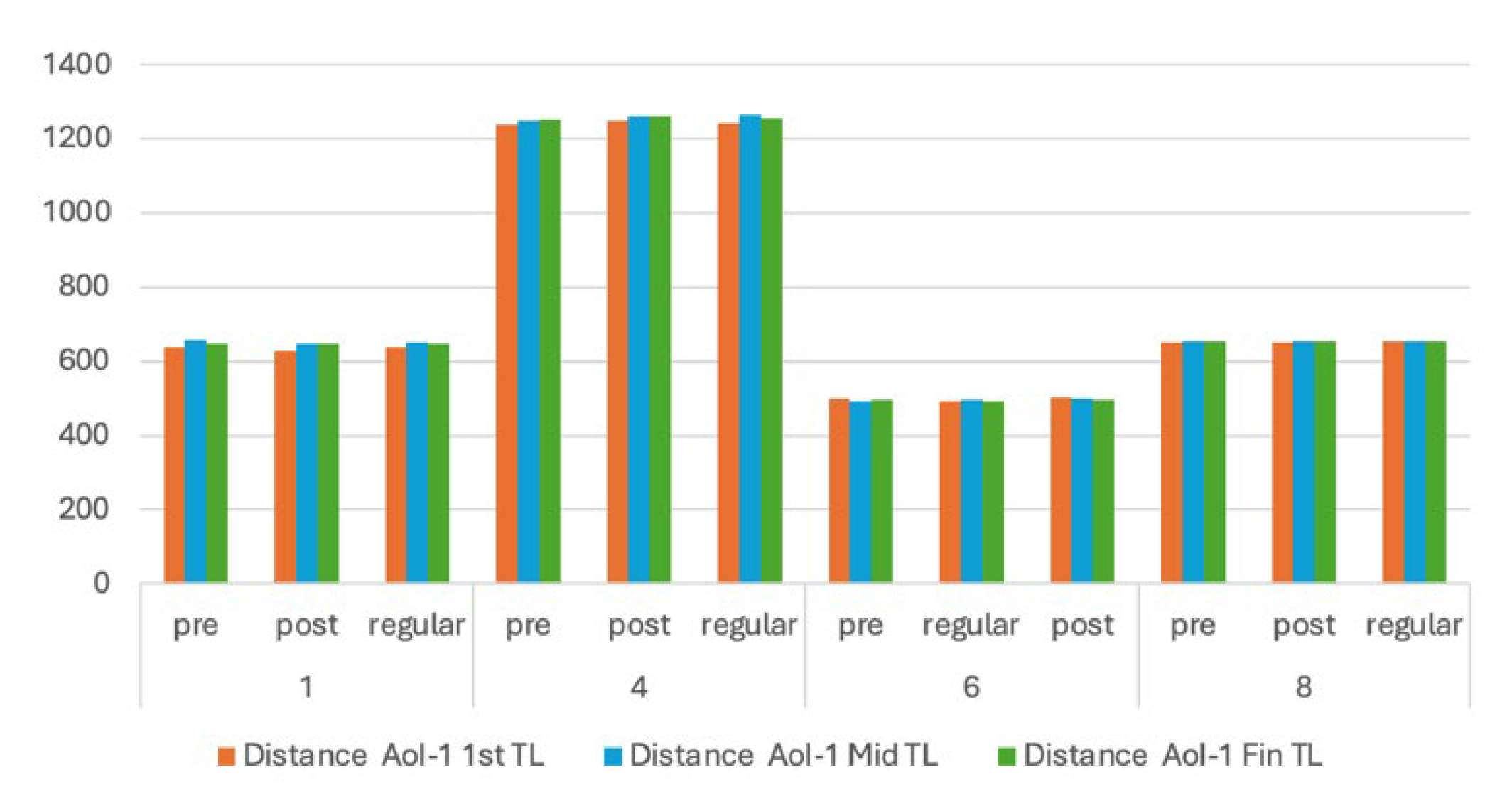
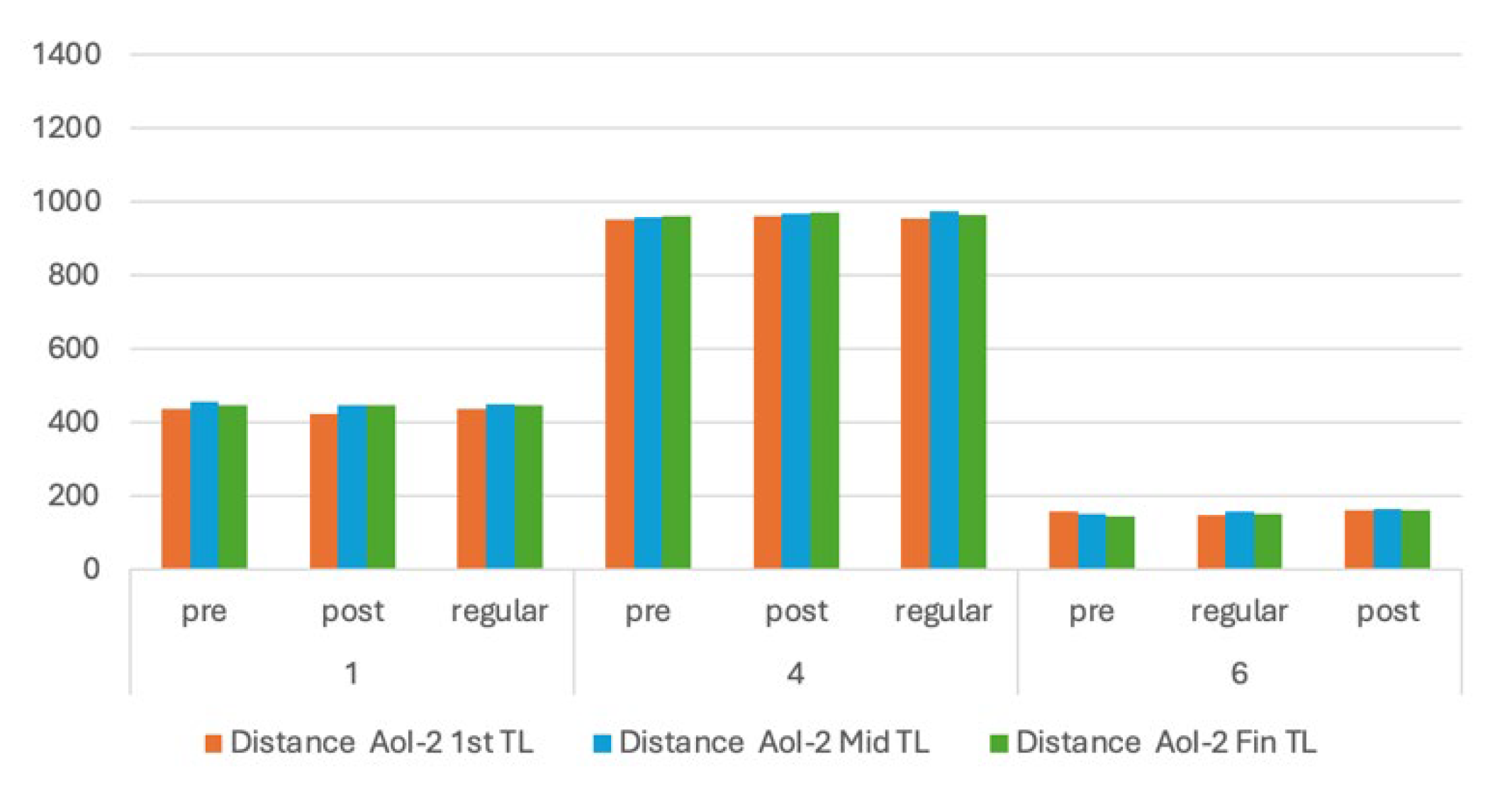
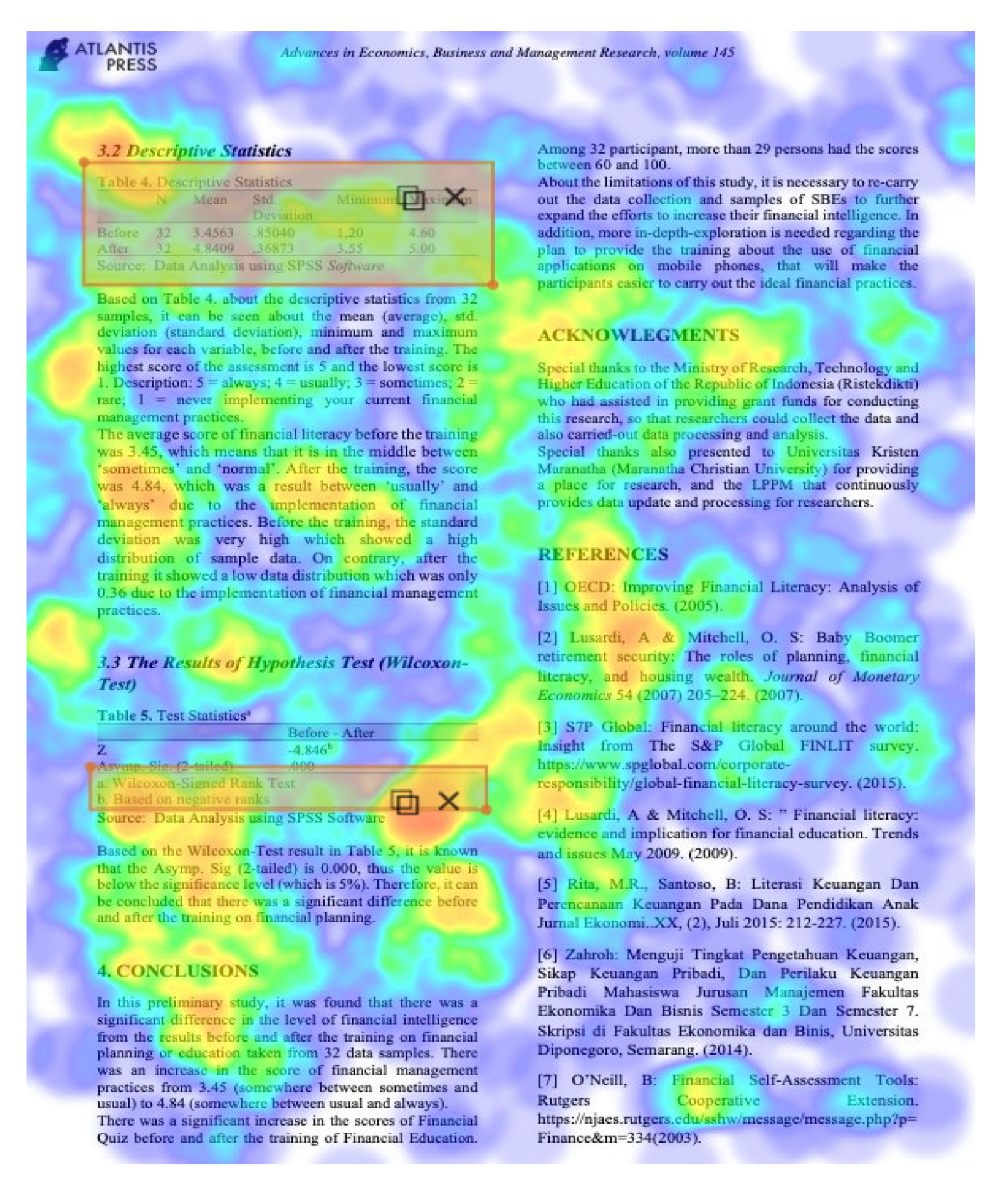
Lifelong learning, particularly in adult education, has gained considerable attention due to rapid lifestyle changes, including pandemic-induced lockdowns. This research targets adult learners returning to higher education after gap years, emphasizing their preference for technology with clear, practical benefits. However, many still need help operating digital media. This research aims to identify best practices for sustainably providing digital scientific materials to students by examining respondents’ tendencies in viewing journal article pages and scientific posters, with a focus on layout designs that include both textual and schematic elements. The research questions focus on (1) identifying the characteristics of Areas of Interest (AoI) that effectively attract learners’ attention and (2) determining the preferred characteristics for each learner group. Around 110 respondents were selected during the experiments using web tracking technology. Utilizing this web-based eye-tracking tool, we propose eight activities to detect learners’ perceptions of text-based learning object materials. The fact that first language significantly shapes learners’ attention was confirmed by time-leap analysis and AoI distances showing they focus more on familiar elements. While adult learners exhibit deeper engagement with scientific content and sustained concentration during reading, their unique preferences toward digital learning materials result in varied focus patterns, particularly in initial interest and time spent on tasks. Thus, it is recommended that lecturers deliver digital content for adult learners in a textual format or by placing the important parts of posters in the center.
Keywords: adult learner; area of interest; eye-tracking; information processing; lifelong learning adult learner; area of interest; eye-tracking; information processing; lifelong learning