Review

Scoping Review of the Environmental and Human Health Effects of Rural Alaska Landfills

by
Carlye Chaney
1,2,*,†,
Anita Moore-Nall
3,*,†,
Chad Albert
4,
Catherine Beebe
5,
Britta Bierwagen
6,
Michelle Davis
7,
Alice Demoski
8,
Angel Ip
9,
Page Jordan
10,
Sylvia S. Lee
6,
Edda Mutter
11,
Lauren Oliver
6,
Nichol Rallo
4,
Kate Schofield
6,
Johnee Seetot
12,
Anastasia Shugak
13,
Angalgaq Tom
5,
Martha Turner
8 and
Lynn Zender
14
1
Department of Biology, Washington University in St. Louis, St. Louis, MO 63110, USA
2
Department of Anthropology, University of Missouri, Columbia, MO 65211, USA
3
Department of Native American Studies, Montana State University, Bozeman, MT 59715, USA
4
Northway Village, Northway, AK 99764, USA
5
Native Village of Kwinhagak, Quinhagak, AK 99655, USA
6
Office of Research and Development, U.S. Environmental Protection Agency, Washington, DC 20460, USA
7
Region 10, U.S. Environmental Protection Agency, Anchorage, AK 99513, USA
8
Nulato Village, Nulato, AK 99765, USA
9
Region 10, U.S. Environmental Protection Agency, Seattle, WA 98101, USA
10
Office of Research and Development, U.S. Environmental Protection Agency, Cincinnati, OH 45268, USA
11
Yukon River Inter-Tribal Watershed Council, Anchorage, AK 99501, USA
12
Native Village of Brevig Mission, Brevig Mission, AK 85039, USA
13
Alutiiq Tribe of Old Harbor, Old Harbor, AK 99643, USA
14
Zender Environmental Health and Research Group, Anchorage, AK 99501, USA
*
Authors to whom correspondence should be addressed.
These authors contributed equally to this work.
Int. J. Environ. Res. Public Health 2026, 23(1), 45; https://doi.org/10.3390/ijerph23010045 (registering DOI)
Submission received: 29 July 2025 / Revised: 24 December 2025 / Accepted: 26 December 2025 / Published: 30 December 2025
(This article belongs to the Section Environmental Health)

Highlights

Public health relevance—How does this work relate to a public health issue?
  • This work reviews articles related to landfills in rural Alaska communities and may guide future research related to gaps identified in this review.
  • Unlined landfills lacking leachate collection systems may impact public health.
Public health significance—Why is this work of significance to public health?
  • This work identifies several potential disease transmission and chemical exposure pathways associated with such landfills, which are primarily found in rural and tribal communities already facing significant health disparities.
  • If harvested, birds, fish, other animals and plants living, growing, or feeding by open surface area landfills could present public health implications for Indigenous and other hunting populations via ingestion or contact with waste pathogens or chemicals.
Public health implications—What are the key implications or messages for practitioners, policy makers and/or researchers in public health?
  • This review paper elucidates the need to continue to assess landfill contaminant transport, exposure pathways and risks and the unique challenges of solid waste management in rural Alaska and other Arctic environments.
  • Future research directions regarding the risk to subsistence resources and the associated health implications for Alaska Native and other Arctic subsistence-based cultures should prioritize community-based, co-produced research that integrates Indigenous Knowledge with Western science. This approach is crucial for addressing the existing health disparities and unique environmental exposures faced by these communities.

Abstract

Landfill contaminants pose significant risks to environmental and human health, particularly in rural Alaska. These communities are predominantly Alaska Native and face unique challenges in solid waste management due to geography, climate, and limited infrastructure. This scoping review assessed published research on the impacts of landfill contaminants in the Arctic (Aim 1) and Alaska specifically (Aim 2). Seventy-one studies met the inclusion criteria, all of which were used to develop a conceptual model of contaminant transport pathways. Thirty-nine studies included Alaska-specific research: thirty-three focused on environmental impacts, and six addressed human health (e.g., birth outcomes, cancer). Key topics included waste burning, heat generation, carbon release, leachate characterization, and water or sediment contamination. Evidence specific to Alaska suggested landfill leachate may contaminate surface water and groundwater, and that microbes can migrate beyond the landfill site boundaries in communities using honeybuckets (plastic bag-lined buckets that collect human waste). Landfill contaminants also impacted wildlife through consumption of garbage, which may have human health implications for subsistence-based communities. Major research gaps remain in understanding individual-level exposures, the effects of emerging contaminants, and the mechanisms of contaminant transport pathways. Further research designed for causal inference is needed to support improvements to public and environmental health.

1. Introduction

Indigenous peoples often experience greater exposure to environmental contaminants [1]. These issues are frequently exacerbated for rural communities located in extreme climates, where logistical, structural, and cultural barriers tend to create conditions that can lead to environmental management challenges [2,3,4]. In particular, Alaska Native communities experience unique environmental challenges due to Alaska’s remoteness, an Arctic climate with extreme temperatures and precipitation, historical interactions with government entities, the politics of government-to-government relations with the U.S., and westernized resource management practices that threaten culturally critical natural resources. These challenges coalesce around many issues, such as food and water security, economic opportunities, and housing conditions. However, solid waste infrastructure is a particularly urgent issue in rural Alaska Native communities, given its consequences for both environmental and human health.
Solid waste refers to any garbage, refuse, sludge, or other discarded material from communities, industry, commercial activities, mining, or agriculture [5]. Varied activities are necessary to dispose of this waste, but one primary method is the operation of municipal landfills. In Alaska, municipal landfills are divided into three classes based on several criteria, including the amount of daily solid waste they receive: Class I (>20 tons of solid waste/day), Class II (5–20 tons of solid waste/day), and Class III (<5 tons of solid waste/day) [6]. Effective landfill operation is essential for both ecological health and public health [7,8,9,10]. However, systematic reviews of the literature have largely failed to observe consistent relationships between landfill proximity, environmental degradation, and human health outcomes [11,12,13]. Some of this inconsistency is likely due to variation in geography, municipal landfill management, and human activities, which contribute to differences in contamination risk and exposure across sites. These inconsistent findings emphasize the importance of understanding the site-specific context and highlight the need for a local approach to assess landfill contaminant risk.
The management of municipal landfills is distinctly challenging in rural Alaska due to its geography, limited physical infrastructure, and climate variability and extremes. Alaska is the largest U.S. state (1,717,856 km2), with a highly seasonal climate that experiences extremes in both temperature (−62.2 °C/−80 °F to 37.8 °C/100.4) and precipitation (<10 inches/year to >200 inches/year), crossing multiple climate zones [14]. Over half of the state’s population lives in Anchorage (population = 286,075), Fairbanks (31,856), or Juneau (31,555) [15]. Regional hub cities, such as Nome and Bethel, have populations numbering in the few thousands. These hub cities provide primary health, commercial, institutional, sport, and jet services to ‘outlying,’ rural communities. The majority of these rural communities contain fewer than 1000 residents and are predominantly Alaska Native, particularly outside of Southeast Alaska. The road system connects only 14% of the state’s communities, with the greatest concentration in the state’s south and central areas. The remaining 82% of communities are inaccessible by road, including 251 that are only accessible by air [16].
Community remoteness and extreme seasonal variation combined with other factors, such as the increasing vulnerability of permafrost to climate-related shifts, makes the design, construction, and maintenance of built infrastructure costly. These expenses have resulted in limited infrastructure even in hub cities. Given these unique circumstances, landfills in Alaska are exempt from the Solid Waste Disposal Act requirements that would be “too costly or unfeasible in remote settings” [17]. As a result, each rural community depends on Class III landfills that are unlined and lack a leachate collection system, sometimes referred to as “open dumps.” The most common Class III landfill designs are landfills located above ground, landfills contained within trenches, and landfills located in tundra ponds (see Figure 1) [18]. Waste is typically hauled to these unlined landfills by a landfill operator or residents using a truck, snow machine, or four-wheeler. Waste is deposited in the landfill and regularly covered with a thin layer of soil, gravel, or other local material. Many communities also have burn boxes—a device in which combustible solid waste can be burned at low temperature (~300 °C) to reduce the volume of solid waste.
In total, there are 184 Class III village landfills [19]. The average per capita waste production in rural Alaska is around 0.85 kg/person/day (1.88 lbs/person/day) [20]. As an example, the per capita waste production in Upper and Lower Kalskag is 0.48 kg/person/day (1.06 lbs/person/day), with the waste stream composed of paper products (19.2%), food waste (14%), “other” trash (13%), bathroom/medical waste (12.6%), diapers (12.4%), plastics (10%), cardboard (6.3%), metal products (5.3%), aluminum cans (3.4%), glass (2.5%), and newspaper (1.2%) [21]. Class III landfills are not currently designed to address large appliances, recyclables, or hazardous household waste, including batteries and electronics. Instead, these materials must be backhauled. Backhaul is a logistically and financially challenging process involving the removal of solid waste from remote communities to a different, often distant disposal location or recycling processor. This requires multiple flights, which is extremely costly and limits what can be sent out of communities, or barge service, which restricts when waste can be removed (e.g., 1 to 3 times during summer).
Further, sewage waste infrastructure contributes to health concerns related to waste disposal. Over 3300 rural Alaska homes lack piped water for flushing toilets [22], while many others rely on aging systems that can experience sewer service breaks, particularly in winter when pipes freeze. These homes must rely on “honeybuckets,” or dry toilets, which are containers lined with plastic bags to collect human waste. In at least 30% of rural communities, some honeybucket waste is comingled with solid waste, increasing the risk of disease transmission [23,24].
Alaska Native communities handle the challenges of landfill management in this extreme environment incredibly well, demonstrating resourcefulness and resilience [25]. Prior to statehood in 1959, the Alaska Native Claims Settlement Act (ANCSA) in 1971, and other influential factors (e.g., globalization [26,27]), many Alaska Natives followed a nomadic or semi-nomadic way of life to hunt and gather food that produced minimal waste. Waste composition changed with the development of permanent villages and increased consumption of imported goods, necessitating, a waste management system to protect human health and the environment of their communities. However, communities have limited access to funding for managing existing solid waste infrastructure or for constructing new infrastructure. Many Alaska Native communities obtain funding through grants from the U.S. Environmental Protection Agency’s (EPA’s) Indian General Assistance Program (IGAP), which supports solid waste operations. However, IGAP is intended for Tribes to develop and administer a multitude of environmental capacities, including legal, technical, administrative, financial management, information management, environmental needs assessment, and public education programs. These limited funding options constrain Alaska Native communities’ solid waste management abilities, leading to concerning consequences for environmental and human health.
Solid waste issues are also exacerbated by recent Arctic weather trends that destabilize the region’s ecosystems, creating additional challenges for landfill management. Specifically, increasing air temperatures have caused reductions in sea ice and snow cover and greater thawing of glaciers and permafrost, which have together produced a vicious cycle of elevated solar energy absorption and atmospheric warming [28,29,30]. These changes can contribute to greater landfill contaminant exposure and waste leachate mobility, since many landfills have historically relied on “Freezeback” systems, where permafrost and cold temperatures keep buried waste frozen year-round, or have used permafrost as a barrier between waste and the surrounding environment. However, permafrost temperature has risen between 0.28° and 0.47 °C per decade since 2000 on the North Slope of Alaska. Furthermore, the active layer thickness (the top layer of soil that thaws during the summer and freezes again in winter) increased by 11% from 1995 to 2013 [31]. As a result, thawing permafrost can form taliks, which are zones of year-round unfrozen ground within, or above permafrost caused by thermal and hydrologic factors. This leads to greater ground saturation and interaction between surface and groundwater. Taliks not only increase maintenance needs for fencing around landfills on uneven and moving ground but may also create contaminant pathways through animal scavenging or water and soil contaminant transport from Class III landfills that are unlined and lack leachate collection systems.
In this way, shifting waste composition and climate-driven ground and hydrologic changes may have synergistic effects, contributing to environmental and human health risks in rural Alaska through greater waste leachate mobility. Consequently, greater knowledge of landfill contaminant risks in rural Alaska is necessary for infrastructure planning, response, and remediation. We conducted a scoping literature review to gather the existing information from peer-reviewed literature and gray literature in public databases on the risks of landfill contaminants in rural Alaska. This review had three major aims: (1) Develop a conceptual model of how Arctic municipal landfills may generate environmental and human health impacts; (2) Quantify the available information on environmental impacts of Class III landfills in rural Alaska communities; and (3) Assess the human health impacts of Class III landfills in rural Alaska. Rural Alaska communities experience disproportionate challenges in solid waste management and will encounter the greatest, most urgent consequences from increasing temperatures due to the design and operation of Class III landfills. For Alaska Natives, these challenges may affect nearby subsistence activities in ways that increase food insecurity and cumulative stress, endangering community health. For these reasons, a better understanding of the environmental and human health risks posed by solid waste contaminants can be used to reduce the undue burden on Alaska Native communities and proactively protect both environmental and human health.

2. Materials and Methods

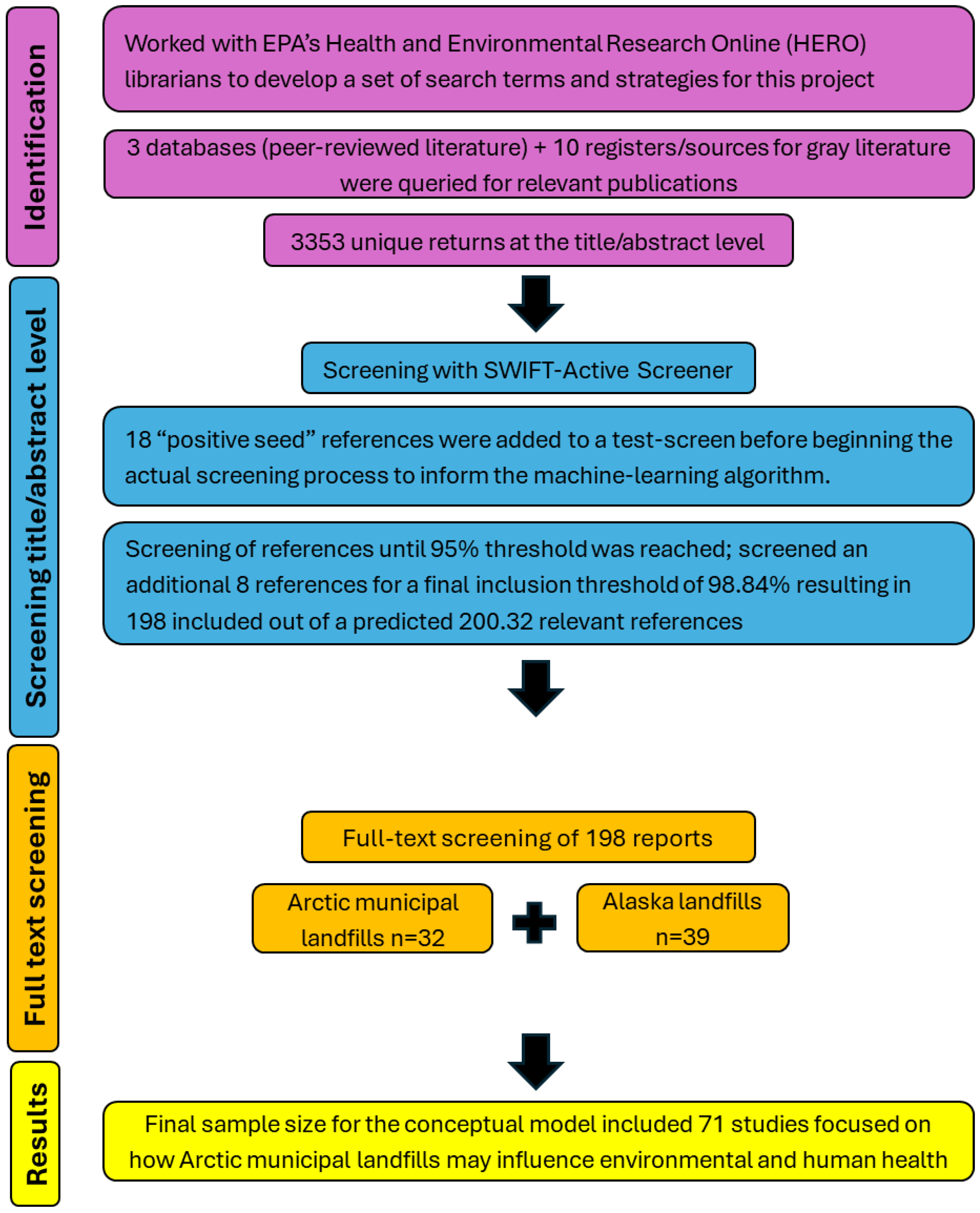
We conducted a scoping literature review using the Sciome Workbench for Interactive-computer-Facilitated Text-mining (SWIFT)-Active Screener to find relevant literature from the search results. We also used EPA’s Health and Environmental Research Online (HERO) database to document literature search results. In October 2021, we worked with HERO librarians to develop a set of search terms and strategies to investigate our study aims. We identified potentially relevant, peer-reviewed publications by searching for these terms in three literature databases (PubMed, Web of Science, & JSTOR) and several public databases for gray literature, including the National Service Center for Environmental Publications (NSCEP), the National Institute of Environmental Health Sciences (NIEHS), the Alaska Department of Environmental Conservation (ADEC), the United States Geological Survey (USGS), Research Gate, the Agency for Toxic Substances and Disease Registry (ATSDR)—Public Health Assessments & Health Consultations—Alaska, ProQuest—Agricultural & Environmental Science Collection, and the National Indian Law Library (see Appendix A for search terms by databases).
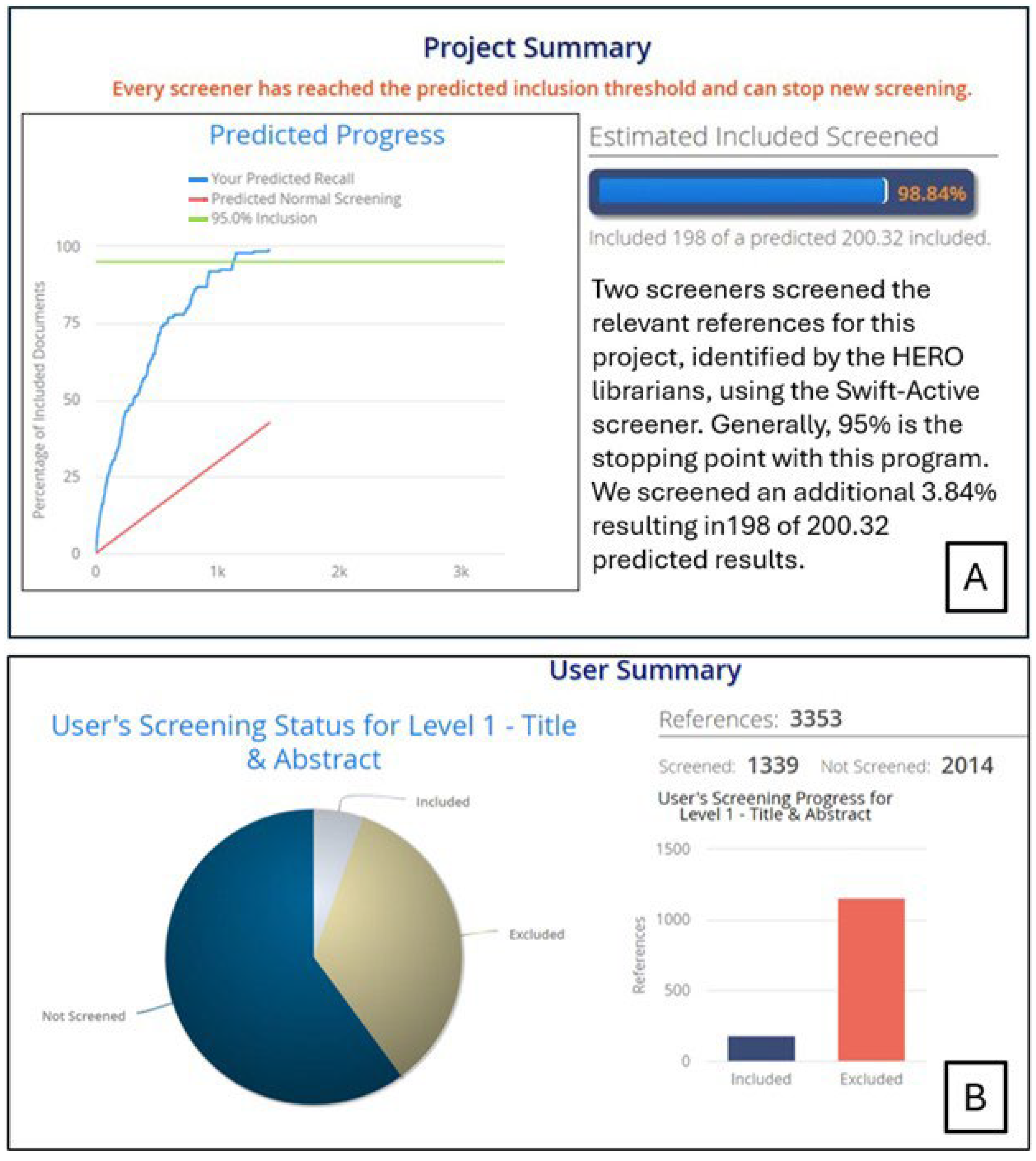
These searches yielded 3353 unique results. Given the large number of references, we used SWIFT-Active Screener to reduce the amount of time required to screen references at the title/abstract level. SWIFT-Active Screener is a collaborative, web-based systematic review software that uses machine-learning algorithms to automatically prioritize sources as they are reviewed, using user feedback to push the most relevant sources to the top of the list [32]. The “Active Learning” model updates in real time as users include or exclude each source, while a second model estimates the number of relevant sources remaining from the list of unscreened documents. These models work in tandem to identify the majority of relevant references after the user has screened only a subset of the total documents [32]. In the SWIFT-Active Screener, we provided 18 “positive seed” references prior to screening process to inform the machine-learning algorithm. The positive seeds were references that the authors had previously read and knew would fall within the scope of this literature review. In November 2021, authors AMN and KS both test screened 20 of the 3353 references to develop consistent screening methods.
After the test screening, authors AMN and PJ screened the 3353 references based on titles and abstracts starting on 2 December 2021. On 4 January 2022, we reached the recommended 95% inclusion threshold (i.e., the point at which 95% of the projected number of relevant references had been included) with only 42% of the references screened. We screened an additional 8 references for a final inclusion threshold of 98.84% (198 included out of a predicted 200.32) (see Figure 2).
Author CC completed the full-text screening on the 198 references included after title/abstract screening. Detailed inclusion/exclusion criteria are described in Appendix B. Briefly, the reference had to be published in English and report data on human or environmental health related to solid waste issues in the Arctic to be included in the conceptual model. For the literature review portion of the analysis, we applied the same criteria with the additional restriction that data must have been collected in Alaska. Figure 3 illustrates the flow of information across each review stage. From the Alaska-specific references, we extracted information on population, location, sample size, waste disposal type, climate/transport processes, inclusion of Indigenous knowledge, and summaries of key points (Table 1 and Table 2). This scoping review was reported according to the Preferred Reporting Items for Systematic Reviews and Meta-Analyses extension for Scoping Reviews (PRISMA-ScR; see Supplementary Material) [33]. It was not pre-registered.

3. Results

The final sample size for the conceptual model included 71 studies, spanning 46 years (1975–2021), that investigated how Arctic municipal landfills may influence environmental and human health (Aim 1). The total number of references focused on Alaska landfills encompassed 39 studies, with 33 references addressing environmental health (Aim 2) and six references addressing human health (Aim 3).

3.1. Conceptual Model

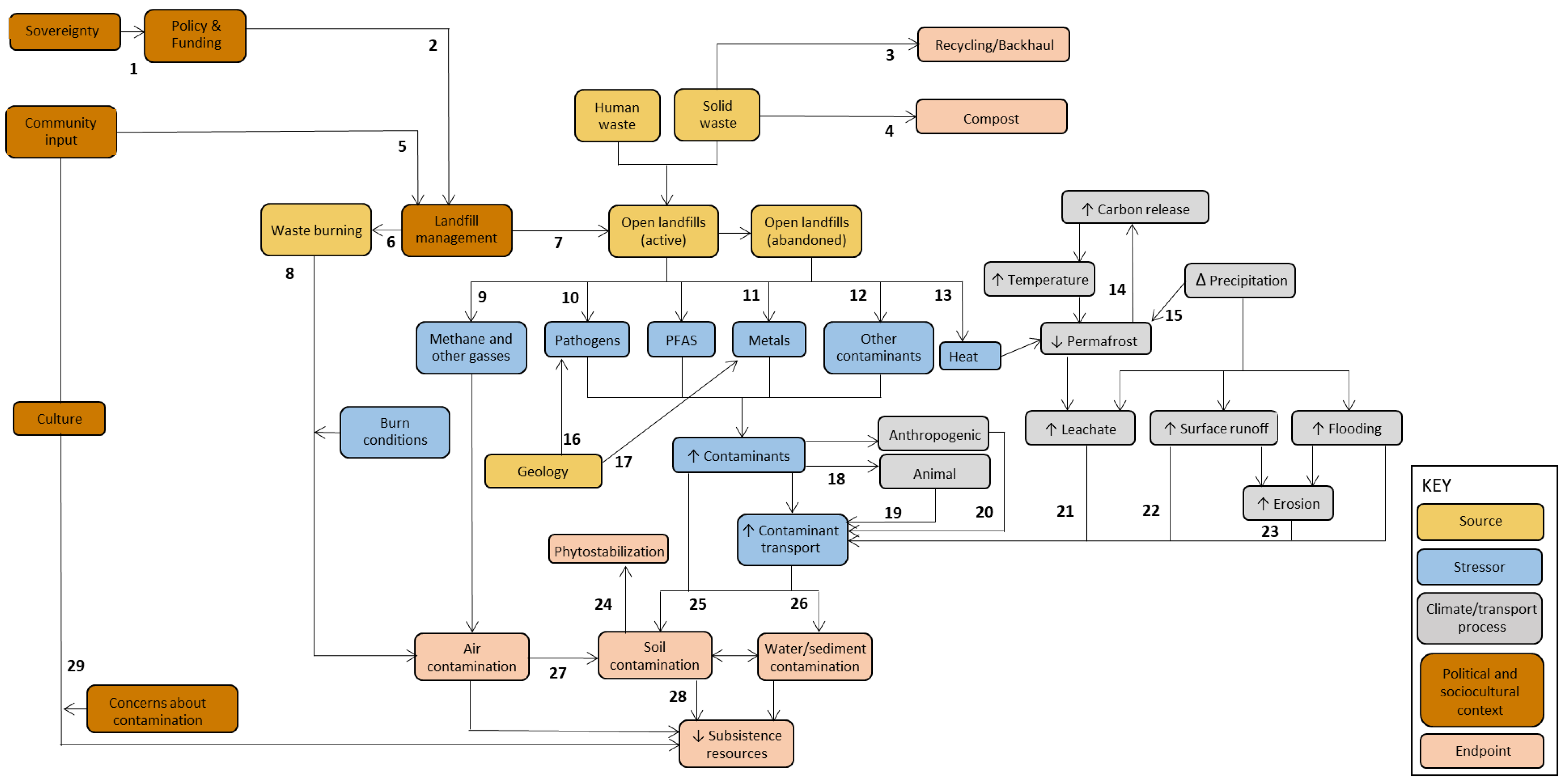
The conceptual model visualizes the potential pathways by which landfill contaminants may affect human health and the environment in the Arctic region (Figure 4). Relationships supported by published literature are bolded and numbered, with the references for each number documented below the model. The relationships investigated in the 71 references were not evenly distributed across processes in the conceptual model. Five or more references investigated the effects of landfill management, waste burning, heat generation from solid waste, carbon release from permafrost, leachate characterization, and water/sediment contamination. However, we found few references investigating other pathways in the model, such as those related to erosion, soil and water contamination, flooding, and Alaska Native culture, food systems, and subsistence resources. We also found few references that investigated alternative ways to prevent the accumulation of waste in landfills, such as reuse, composting, or backhaul.
Figure 4. Conceptual model of the potential pathways that landfill contaminants may affect human health and the environment in the Arctic region. The citations for each numbered pathway are as follows: 1 [34,35]; 2 [24,25,36,37,38,39]; 3 [40]; 4 [41]; 5 [42,43,44,45]; 6 [23,46,47,48,49,50,51,52]; 7 [23,48,53,54,55,56,57,58]; 8 [59,60], 9 [61]; 10 [18,62]; 11 [18]; 12 [18,62]; 13 [61,63,64,65]; 14 [66,67,68,69,70]; 15 [71]; 16 [72]; 17 [72]; 18 [73,74,75]; 19 [74,76]; 20 [77,78]; 21 [79,80,81,82,83,84,85]; 22 [77,86]; 23 [87]; 24 [88]; 25 [89]; 26 [90,91,92]; 27 [93]; 28 [94]; 29 [23,95].
Ijerph 23 00045 g004

3.2. Environmental Results

The 33 studies that investigated the environmental effects of landfill contaminants in Alaska centered on six topics: (1) Water, (2) Soil, (3) Air, (4) Heat, (5) Microbes, and (6) Animal garbage consumption. These studies are summarized in Table 1 and the sections below. All studies are from Class III landfills unless otherwise noted.
Table 1. Summary information of the studies investigating environmental health.
Author (Year)Environmental ImpactSource TypeMain
Outcome
LocationSample SizeMain Finding
Ahlstrom et al. (2018) [73]MicrobesScientific ArticleE. coliSoldotna landfill in southcentral Alaska 27 E. coli isolates (13 from 20 bald eagles, 14 from 56 gulls)Some E. coli isolates had sequence types associated with human infections and contained clinically relevant resistance genes. Gulls and eagles demonstrated some genetically unrelated isolates with identical resistance profiles, while other isolates had identical core genomes and different resistance profiles. These results suggest bacterial strain sharing between species as well as horizontal gene transfer, with landfills serving as a source for antimicrobial resistance (AMR) acquisition or maintenance.
Ahlstrom et al. (2019) [74]MicrobesScientific ArticleE. coliKenai Peninsula17 gulls, 139 Pacific salmonAMR E. coli prevalence varied across time and space among gulls tracked longitudinally, although the landfill and the lower Kenai River had the highest prevalence. They found no evidence of E. coli in salmon from personal-use dipnet fisheries. These results suggest that gulls acquire AMR E. coli at anthropogenically disturbed sites and then transport it as they migrate.
ATSDR (2019) [91,96]WaterReportHeavy metalsPort Heiden, AlaskaVaried depending on part of studyBased on the physical and chemical hazards in Port Heiden, the authors found that people could be injured by surface debris. They also found that school drinking water met standards after treatment and called for greater information to assess residential wells, contamination from landfills/military, vapor intrusion, and contamination of subsistence foods.
ATSDR (2014) [94]SoilReportPCBsPort Heiden, AlaskaN/AThe low PCB levels detected in the relay station soil, roadway, and small animals were not expected to cause health effects. Crowberries had low but safe levels of PCBs; however, they recommended that crowberry consumption should be avoided. The area with foundation cover soils and Pad Grid 1—which is infrequently visited by residents—had high PCB levels. They could not assess risk from marine sources.
Barnes (2011) [62]Water, microbesReportEnvironmental contaminants, E.coli, and Enterococci Rural Alaska 4 communities E.coli and Enterococci were present in all waste-impacted surface and subsurface water samples. They also detected seven pharmaceutical compounds in the sewage lagoon and landfill-impacted water.
Brunett (1990) [79]WaterReportPhysiochemical parameters, environmental contaminantsMerrill Field Landfill, Anchorage, Alaska444 measurement stations and 20 wellsLeachate from the closed Merrill Field landfill did not appear to be contaminating the creek that flows through the area. However, leachate was transported to the southern wetlands through groundwater. Contaminants reached wetlands as far as 2200 feet away based on aquifer and well sampling, although levels were below EPA drinking water standards.
Chambers (2005) [77]MicrobesThesisE. coli, total coliform, Giardia lamblia, and Cryptosporidium parvumRural AlaskaVaried depending on part of study Surface water flow transported bacteria to the community during spring thaw, but flow from the landfill did not contribute to contamination in town. Inside homes, fecal bacteria were found on water dippers, kitchen counters and floors, and in washbasin water. Giardia was found at the landfill.
Chambers et al. (2009) [78]MicrobesScientific ArticleE. coli and total coliformRural Alaska19 boot samples, 12 road/off road sample pairs, 4 puddle samples, 45 ATV samples, 10 tarp samplesShoes transported fecal contaminants inside homes. Fecal contamination was also observed in puddles on the roads and on ATV tires, which suggests vehicle use is one transport route for fecal contaminants.
Downey (1990) [82]WaterReportPhysiochemical parameters, heavy metalsFairbanks, AK22 wells, 2 riversLeachate was flowing to the Northwest of the Fairbanks-North Star Borough landfill. It remained near the water table. Chemical data showed elevated levels of several ions in the leachate plume, but they fell to background within a short distance from the landfill, suggesting water-supply wells would not be affected.
Flynn (1985) [83]WaterReportPhysiochemical parameters, heavy metalsFairbanks, AK22 wells, 2 riversSeveral wells in the Fairbanks Sanitary Landfill showed high concentrations of chloride, iron, and manganese compared to background levels. They also had relatively low pH and dissolved-oxygen concentrations. However, these constituents and properties fell to background levels in wells north and west of the landfill.
Gilbreath (2004) [97]AirThesisAdverse birth outcomes, self-report health symptomsRural Alaska 1225 individuals (self-report), 10,073 individuals (birth outcomes), 10,360 individuals (congenital anomalies)Self-reported health symptoms were associated with odor complaints, burning trash, number of visits to the landfill, subsistence practices, and residing within a 1/2 mile of a dumpsite. Women living in intermediate and high hazard dumpsite communities had lower birthweight, shorter gestation length, and greater congenital defects.
Glass (1986) [84]WaterReportPhysiochemical parametersConnors Bog Area, Anchorage, AK36 wellsLeachate was found beneath and near the abandoned landfill, and it contained elevated levels of dissolved solids, dissolved chloride, and total organics. The leachate was limited to < 500 feet from the landfill’s edge, and they found no evidence of leachate in the lake.
Hanson et al. (2008) [63]HeatScientific ArticleTemperatureAlaska, Michigan, British Columbia, New Mexico4 landfill sites with 700 sensors (measured weekly)They measured landfill temperatures at different depths in four landfills. The warmest section was the central part of the middle third fraction. Higher areas were more similar to air temperature. The highest temperatures were observed in Michigan, followed by British Columbia, New Mexico, and Alaska.
Hanson et al. (2010) [98]HeatScientific ArticleTemperatureAlaska, Michigan, British Columbia, New Mexico4 landfill sites with 700 sensors (measured weekly) They measured landfill temperatures at different depths in four landfills. The warmest part was the central part of the middle third fraction. Higher areas were more similar to air temperature. Temperatures were greatest in Michigan, then British Columbia, New Mexico, and Alaska. Anaerobic decomposition was associated with greater temperatures, temperature increases, and heat gain. Insulating materials applied over covers decreased temperature variation.
Liu (2007) [61]HeatThesisTemperatureMichigan, New Mexico, Alaska, and British Columbia4 landfill sites that included 609 temperature sensors (measured weekly) and 327 gas sensors (measured monthly)Temperatures and methane at shallow depths or near landfill edges fluctuated seasonally. Both measures were stable in the middle and lower portions near the base. Their temperature and gas-release models accurately represented field conditions.
Mutter (2014) [18]Water, microbesThesisEnvironmental contaminants, E.coli, and Enterococci Rural Alaska 5 communities (5 dumps, 2 sewage systems)E.coli and Enterococcus sp. were present in waste-impacted water and soil samples. They also observed heavy metal migration into nearby freshwater sources and found pharmaceuticals, phthalates, and benzotriazole in waste-impacted water samples.
Mutter et al. (2017) [86]MicrobesScientific ArticleE.coli and Enterococci Ekwok, White Mountain, Fort Yukon, Allakaket4 communities Although all samples indicated high site-specific variability, both E. coli and Enterococcus sp. preferentially attached to and migrated with soil particles in surface waters. Additionally, both were transported off-site in snowmelt runoff. Enterococcus sp. had greater viability in cold conditions.
Naidu (2003) [89]SoilScientific ArticleHeavy metalsNorth Slope, Alaska2 sites In the urban site, V increased each decade and Ba from 1986 to 1997. In both sites, levels of all metals were similar to unpolluted marine environments. Less than 1% of Hg was methylated, and percentages of elements bound in the non-lithogenous phase varied (50% Mn, 25–35% Co, 15–20% Zn, Cu, Ni, 10% V & Fe, and <3% of Cr).
Nelson (1984) [80]WaterConference PaperWater QualityAnchorage, AlaskaN/AThey calculated that incipient entry of pollutants into the aquifer would begin 80 years after leachate began migrating downward and would only reach “full strength” of breakthrough after 250 years.
Patterson et al. (2012) [85]Water, microbesReportPhysiochemical parameters, heavy metals, environmental contaminants, E. coli, and Enterococcus Rural Alaska5 villagesThey did not find evidence that landfill leachate was contaminating drinking water. However, they observed that microbial pathogens and aluminum levels were elevated in the leachate and should be monitored in treated drinking water and source waters.
Peirce & Van Daele (2006) [75]Animal garbage consumptionScientific ArticleBehavioral observationsDillingham, Alaska70 brown bearsSeventeen bears were predictable users of the Dillingham Landfill and had temporal patterns of use. Between four and 33 bears visited each night, with peak use occurring in July. Subadult activity peaked in June, male activity in June and August, and females with cubs in September. The most socially dominant bears fed the most from the landfill.
Solid Waste Program, Alaska DEC (2015) [87]SoilReportErosion riskNorth & West AK coasts & ≤ 300 miles upriver, Aleutian Islands716 sites in 124 communitiesBased on erosion risk and contaminant risk scores, they wrote Detailed Action Plans for the sites with the highest risk of eroding and distributing contaminants.
Weiser & Powell (2010) [76]Animal garbage consumptionScientific ArticleGarbage in diet samplesBarrow, AKNonbreeding colony: 193 samples in 2007 and 248 2008. Breeding colony: 46 samples in 2007 and 403 in 2008. Breeding adult gulls ate less garbage than nonbreeding gulls. Breeding gull samples showed no garbage change 2007–2008 while nonbreeding gulls consumed less garbage in 2008 than in 2007. Overall, garbage remained a large part of the diet in 2008.
Yesiller et al. (2005) [65]HeatScientific ArticleTemperatureAlaska, Michigan, British Columbia, New Mexico4 landfill sites with 355 temperature sensors (measured weekly) & 238 gas sensors (measured monthly)Temperatures at shallow depths and near the edges of the landfills were similar to seasonal temperature variations. Deep and central locations had elevated temperatures compared to air and ground temperatures. Waste temperatures also decreased near the base. Peak Heat Content values were 12.5–47.8 °C/day. The highest values for temperatures, gradients, heat content, and heat generation were Michigan, followed by British Columbia, Alaska, and New Mexico.
Yesiller et al. (2008) [64]HeatScientific ArticleTemperatureAlaska, Michigan, British Columbia, New Mexico4 landfill sites Landfill cover temperature varied seasonally with air temperature; it also demonstrated amplitude decrement and phase lag with depth. They found that warmer waste underneath landfill cover was associated with warmer cover and less frost penetration. Maximum and minimum temperature ranges were 18–30 °C and 13–21 °C. Average temperature was 13–18 °C at 1 m and 14–23 °C at 2-m depths. They found that frost depths were approximately 50% of those for soils at ambient conditions. Heat mainly flowed upward in the covers. Cover gradients varied between 18 & 14 °C/m.
Zenone (1975) [81]WaterScientific ArticlePhysiochemical parameters, heavy metalsAlaska, Michigan, British Columbia, New Mexico18 wells across 3 landfill sitesLeachate was detected in the ground water near two sites. At these sites, the water table was near land surface and waste was deposited at or below the water table. The leachate plume seemed to attenuate within the landfill or close by at the first site. They did not find leachate at a third site where waste disposal occurs above the water table.

3.2.1. Water

Eight studies investigated water quality issues related to solid waste in unlined landfills without leachate collection systems. These studies focused on physiochemical parameters, heavy metals, or other contaminants. While some of the included studies investigated leachate in Class I landfills [73,74,76,77], these landfills lacked leachate collection systems at the time, so their results are relevant for understanding potential environmental contamination from present-day Class III landfills.
Six of the studies investigated physiochemical water quality indicators (e.g., dissolved solids, total organics, dissolved organic carbon, alkalinity, dissolved oxygen, dissolved organic nitrogen, nitrite, nitrate, dissolved inorganic nitrogen, sulfate, phosphate, chloride, and fluoride) across six distinct landfills (see Table 1 for study sites). Of these water quality indicators, researchers found elevated levels within landfills or leachate plumes for dissolved solids [81,82,84], chloride [82,83,84,85], silica [82], alkalinity [82], organic carbon [81], dissolved oxygen [83], lower pH [83], total organics [84], and sulfate [85]. Levels of these contaminants returned to background levels within short distances [82,83,84], and specifically within 500 feet of the landfill’s edge in Glass (1986) [84]. In Brunett (1990), leachate moved deeper between the two study years (1985 and 1986); however, despite this movement, leachate remained concentrated in the top 50 feet below the landfill [79]. Additionally, two of the three landfill sites studied in Zenone (1975) were located in sites where the water table was near the land surface and where waste was deposited at or below the water table [81]. Levels of organic carbon and dissolved solids were elevated only in these two sites, suggesting that saturated waste was contributing to leachate production.
Six studies also examined heavy metal concentrations in leachate, including aluminum, arsenic, beryllium, cadmium, chromium, iron, lead, manganese, uranium, zinc, vanadium, barium, mercury, and nickel [81,82,83,85,91,96]. Researchers reported elevated levels within leachate or leachate plumes for manganese [81,82,83], iron [81,82,83], barium [82], arsenic [82], and aluminum [85]. Similar to traditional measures of water quality, metal concentrations decreased to background levels within a short distance of the landfill [81,83]. One report compiled longitudinal water quality data to assess contaminant risk to residents of Port Heiden, Alaska—a city containing landfills and land formerly used by the U.S. military [91,96]. They determined that school drinking water met primary drinking water regulations after treatment, although copper and arsenic levels increased rapidly. Therefore, they recommended that the filtration system must be sufficiently maintained to prevent copper and arsenic exceedances. Additionally, diesel range organics were detected in some wells, but there was insufficient information to assess risk.
Three studies investigated other contaminants, including benzene, trichloroethylene, vinyl chloride, other volatile and semi-volatile organic compounds (VOCs and SVOCs), phthalates, benzotriazole, and pharmaceuticals [18,79,85]. Brunett (1990) found elevated levels of benzene, trichloroethylene, and vinyl chloride in leachate samples [79]. Mutter (2014) investigated landfills in five communities, and found detectable levels of pharmaceuticals, benzotriazole, and phthalates in waste-impacted water samples (leachate) [18]. All VOCs and SVOCs were undetectable in Patterson et al. (2012) [85].
Taken together, these studies suggest that Class III landfills release a variety of contaminants that can leach into surface and groundwater, including heavy metals (manganese, iron, barium, arsenic, and aluminum) [18,81,82,83,85]. In most studies, contaminant concentrations returned to background levels near the landfills. However, not all studies assessed the geographic spread of contaminants, and more work is needed to assess contaminants such as benzene, trichloroethylene, vinyl chloride, pharmaceuticals, benzotriazole, and phthalates at other landfill sites to determine whether they are consistently elevated in Class III landfills.

3.2.2. Soil

Five studies explored how landfill contaminants may influence soil quality. Mutter (2014) and Mutter et al. (2017) report on fecal bacteria (e.g., Escherichia coli) in soil; these studies are described in the “Microbes” subsection below [18,86]. The remaining three studies focused on heavy metals, polychlorinated biphenyls (PCBs), and erosion risk.
One study compared heavy metal contamination in two lagoons, one near Barrow, Alaska (an “urbanized” site), and another near Arctic National Wildlife Refuge (a “pristine” site), for 30 years [89]. They found that vanadium levels increased each decade in the urban site, and barium increased from 1986 to 1997. Levels of all metals across both sites were comparable to those in unpolluted marine environments. However, some contaminants, including vanadium, chromium, nickel, and total mercury at the “urbanized” site and vanadium and manganese at the “pristine” site, were greater than measurements from the nearshore area of a petroleum-related industrial area. While this project did not examine landfill contaminants directly, the authors speculated that sources of these metals in the environment may have included municipal solid waste. Additionally, as the landfill did not drain to the lagoon, further research would be needed to clarify the transport route to support their interpretation of landfill contaminant impacts on soil.
One report investigated PCBs in soil and subsistence foods in areas and landfills formerly used by the U.S. military in Port Heiden, Alaska [94]. Researchers found very low levels of PCBs in soil around the Radio Relay Station, the roadway, and in small grazing mammals, ducks, and sea birds. The area containing foundation cover soil and Pad Grid 1 had high levels of PCBs, but residents were not at risk since they did not visit these sites. They also found that crowberries had detectable, low levels of PCBs. Due to the previous military activity and radio relay station, the measured PCB exposure is likely not generalizable to other Class III landfills.
Another report investigated erosion risk in rural Alaska communities for sites of environmental concern, including landfills [87]. This study did not conduct environmental sampling but did calculate contaminant risk based on site and environmental characteristics. They assessed and ranked sites within communities based on erosion types and symptoms, probable contaminants, and potential for human and environmental exposure, identifying 20 sites that ranked in the top 25% for both erosion risk and contaminant risk.

3.2.3. Air

One study investigated the effects of solid waste on air quality [97]; this study is discussed below under Section 3.3.2. No studies on air quality composition from waste decomposition processes or waste burning practices were found.

3.2.4. Heat

Five studies investigated landfill temperature and heat generation from solid waste decomposition in Class I landfills [61,63,64,65,98]. These studies used data from the same four landfills in Alaska, Michigan, Mexico, and British Columbia [61,63,64,65,98]. They consistently found that methane levels and waste temperature varied seasonally—similar to variations in air temperature—for waste at shallow depths or close to the edges of the landfill. Waste in the central area of the landfill and in the vertical middle third was the hottest, and temperatures in this core were relatively stable. Temperatures decreased again near the base, or deepest part, of the landfills. Environmental conditions and precipitation at the time of waste placement also influenced landfill temperatures: waste placed on hotter days or when the landfill was wet from rainfall remained at greater temperatures than waste placed on cold or dry days [61,63,65,98]. However, these temperature dynamics from Class I landfills are likely not generalizable to Class III landfills in rural Alaska communities.

3.2.5. Microbes

Eight studies investigated solid waste as a source of microbe exposure in Class I and Class III landfills. Five studies compared samples from locations near Class III waste sites and control areas, observing detectable levels of E. coli and Enterococcus species in all waste-impacted surface water, subsurface, and soil samples [18,62,77,85,86]. Of these sources, Barnes (2011) and Mutter (2014) report the same data for fecal bacteria in surface and subsurface waters in four communities [18,62]; Patterson et al.’s work (2012) was a parallel project involving the same four communities plus a fifth community [85]. Additionally, Mutter (2014) and Mutter (2017) report the same data about soil fecal bacteria [18,86]. Fecal bacteria levels exceeded EPA standards for the samples collected near dumpsites in four of these communities [18,62,85,86]. Generally, levels of E. coli and Enterococcus species were undetectable 50 m or further downgradient from the waste sites [18,62,85,86], although fecal bacteria could be transported offsite (>50 m away from the waste site) when snowmelt occurred in the spring [18,86]. Mutter et al. (2017) used a lysimeter and freezer experiments to investigate differences in fecal bacteria snowmelt transport processes and cold climate survivability. These experiments, revealed that Enterococcus species had greater and more sustained viability in cold conditions, while E. coli was less persistent [86]. Chambers (2005) also investigated two pathogens (Giardia lamblia and Cryptosporidium parvum) in a subset of their surface water and fecal samples (dog and human) [77]. They found Giardia lamblia in a surface water sample from the community dumpsite, but not in human or dog fecal samples.
Two studies investigated fecal bacteria transport routes that could contribute to human exposure in communities with Class III landfills and honeybucket use [77,78]. Chambers (2005) investigated indoor home contamination in one rural Alaska community that was unplumbed, necessitating haulage of water and sewage [77]. The boardwalk into town was also used for honeybucket lagoon disposal. They detected fecal bacteria on water dippers, kitchen counters, floors, and in washbasin water. They also found that tires and shoes tracked fecal contamination from the dump, although tires did not do so consistently. Chambers et al. (2009) conducted experimental trials to further investigate the efficiency of boots, tires, and other surfaces as transport materials or routes for fecal bacteria [78]. Boots consistently transported fecal contamination inside homes. They also found fecal contamination in puddles and on ATV tires, which supports vehicle use as a pathway for fecal contamination to reach community homes. Compared to Chambers (2005), tires were much more effective in transporting fecal bacteria, which may have occurred because they conducted the experiment in a wetter season than the original study [77]. Additionally, they found no evidence that tires consistently transferred fecal bacteria to the boardwalk. Together, these results suggest that fecal bacteria transfer most efficiently to soft, moist surfaces [78].
The final two studies examined how animals may contribute to microbial transport in the environment based on data from Class I landfills [73,74]. These studies used gull and bald eagle feces to investigate the prevalence and sources of antimicrobial resistant (AMR) E. coli. In both studies, AMR E. coli was identified in fecal samples. Ahlstrom et al. (2018) collected samples at only one landfill, while Ahlstrom et al. (2019) tracked gulls longitudinally across four sites [73,74]. In Ahlstrom et al. (2019), the landfill study site and the lower Kenai River site had the highest prevalence of AMR E. coli, although prevalence varied across sites and over time [74]. Together, these studies suggest that birds such as eagles and gulls acquire AMR E. coli at landfills by consuming waste and can then spread it to other locations via excretion. Since the AMR E. coli strains studied in these projects are sequence types associated with human infections and clinically relevant resistance genes, the role of birds and other animals in spreading AMR E. coli could have public health implications. Additionally, Ahlstrom et al. (2018) observed that some gulls and eagles had nearly genetically identical E. coli isolates, which may indicate either that both species acquire E. coli from the same source or that inter-species transmission is occurring [73].

3.2.6. Animal Garbage Consumption Patterns

Two studies explored solid waste effects on the environment through animal consumption of garbage [75,76]. Peirce & Van Daele (2006) conducted behavioral observations on 70 brown bears (Ursus arctos) that visited the Dillingham Class II landfill from May to September 1997 [75]. They found temporal patterns in bear foraging in the landfill waste, with peak use occurring in July when their natural foods are in low availability. Weiser & Powell (2011) studied 890 diet samples from two colonies of glaucous gulls in Barrow—one breeding and one non-breeding [76]. The samples were collected during two time periods: 2007, when waste was disposed of in a landfill, and 2008, when waste was incinerated. Breeding gulls ate more garbage than nonbreeding gulls. Breeding gull samples showed no significant change in garbage consumption between 2007 and 2008, while nonbreeding gulls ate less garbage in 2008 than in 2007. For both colonies, garbage continued to constitute a large proportion of gulls’ diet in 2008; waste incineration alone did not meaningfully decrease gull garbage consumption. Neither study investigated contaminant concentrations. More research is needed to elucidate the exposure and transport dynamics associated with animal garbage consumption, particularly because inter-species transmission of clinically relevant microbes could have important public health implications.

3.3. Human Health Results

The six studies that investigated relationships between human health and landfill contaminants focused on either infant health (two studies) or population health (four studies) (see Table 2). No studies investigated landfill contaminants and child health, although Central Council of Tlingit and Haida Tribes and Zender Group (2003) discussed the potential indirect exposure of children using the landfill or dump as a playground, which occurred in 14% of surveyed Alaska Native communities [23].
Table 2. Summary information of the studies investigating human health.
AuthorStudy Focus: Adult or Child HealthArticle TypeMain OutcomeLocationSample SizeSummary
Central Council of Tlingit and Haida Tribes & Zender Environmental (2003) [23]AdultReportSelf-report health symptomsRural Alaska101 Alaska Native communities and 1225 individualsMost waste disposal sites in Alaska Native Villages were open dumps with little management. Due to limited solid waste management services, most residents dumped their own waste. Improper disposal of waste, such as unsorted burning and uncovered antifreeze, also contributed to the health risks.
Gilbreath (2004) [97]Adult & ChildThesisAdverse birth outcomes, self-report health symptomsRural Alaska1225 individuals (self-report), 10,073 individuals (birth outcomes), 10,360 individuals (congenital anomalies)Worse self-reported health symptoms were associated with residing within a 1/2 mile of a dumpsite, odor complaints, burning trash, number of visits to the landfill, and subsistence practices. Women living in intermediate and high hazard dumpsite communities had lower birthweight, shorter gestation length, and greater congenital defects.
Gilbreath & Kass (2006) [99]ChildScientific ArticleAdverse birth outcomesRural Alaska10,073 individualsVillages with intermediate and high hazard dumpsites had significantly greater percentage of infants with low birth weight and intrauterine growth retardation. Specifically, infants weighed 55.4 g and 36 g less when their mother was in the high exposure group compared to the low and intermediate exposure groups, and this effect was even larger when limited to Alaska Native mothers only.
Gilbreath & Kass (2006) [100]ChildScientific ArticleAdverse birth outcomesRural Alaska10,360 individualsVillages with intermediate and high hazard dumpsites did not have statistically significantly greater fetal and neonatal death or congenital anomalies. Mothers living in villages with high hazard dumpsites were four times more likely to have congenital anomalies classified as “other”.
McBeth (2010) [101]AdultThesisRespiratory infection deathsRural Alaska196 villagesHigh household size and low household income predicted greater pneumonia/influenza deaths in Alaska Native Villages. Tuberculosis deaths were associated with residence in certain areas and the type of heating fuel used in the home. Lastly, infectious disease deaths were positively associated with a high percentage of Alaska Natives in the population, large household, low percentage below poverty, and lack of healthcare within the village.
Zender et al. (2003) [24]AdultReportSelf-report health symptomsRural Alaska101 Alaska Native communities and 1225 individualsMost waste disposal sites in Alaska Native Villages were open dumps with little management. Due to limited solid waste management services, most people dumped their own waste. Improper disposal of waste, such as unsorted burning and uncovered antifreeze, also contributed to the health risks.

3.3.1. Infant Health

Only two studies empirically investigated the effects of solid waste management on infant health [99,100]. Gilbreath and Kass (2006) used birth records (n = 10,360) from 197 Alaska Native communities containing dumpsites that were potentially hazardous to human health, based on Alaska Native Tribal Health Consortium (ANTHC) scoring [100]. They found that communities with intermediate and high hazard dumpsites did not demonstrate significantly greater fetal death, neonatal death, or congenital anomalies. Scores were based on various risk factors, including landfill waste contents, average rainfall, distance to drinking water aquifer and domestic water source, site drainage, potential to create leachate at the site, accessibility and exposure to the public and vectors, frequency of burning, and degree of public concern over the site [102]. However, congenital anomalies trended higher in communities with more hazardous dumpsites. When considering specific congenital anomalies, they observed that infants in communities with high hazard dumpsites were more than four times more likely to have congenital anomalies classified as “other” compared to communities with low or intermediate hazard dumpsites [100].
Gilbreath & Kass (2006) used the same methods to investigate the prevalence of low birthweight and intrauterine growth restriction (n = 10,073 birth records) [99]. They found that communities with intermediate and high hazard dumpsites had a significantly greater percentage of infants with low birth weight and intrauterine growth restriction than infants in low hazard dumpsite communities. Specifically, infants weighed 36 g less in the high exposure group and 55.4 g less in the intermediate group when compared to the low exposure group, and this effect size was even greater when the results were limited to infants of Alaska Native mothers only. Unexpectedly, infants from communities with intermediate hazard sites had a greater risk than high hazard sites for both lower birthweight and intrauterine growth restriction; this result requires more investigation but may be due to uncontrolled covariates or the limited precision of the exposure measurements.

3.3.2. Population Health

Two studies and two reports investigated solid waste management and population health in Alaska [23,24,97,101]. McBeth (2010) used data from the U.S. Census, the Alaska Alcohol Beverage Control Board, and the Alaska Native Tribal Health Consortium (ANTHC) to investigate predictors of infectious disease in Alaska Native communities [101]. Among other predictors, they included census data on the percentage of homes with complete plumbing or kitchens, since a lack of this infrastructure leads to honeybucket use and potentially greater microbial exposure (see Microbes subsection above), particularly as solid waste and human waste are comingled in at least 30% of rural communities [23,24]. However, analysis showed that complete plumbing and/or kitchens were not a significant predictor of pneumonia/influenza deaths, tuberculosis deaths, or overall infectious disease deaths. Gilbreath (2004) found that traditional diets were associated with protective effects against diarrhea and cough, but that living <0.8 km from dumpsites was associated with greater vomiting and fever based on 1225 interviews with people across four Alaska Native communities (one each from the Northwest, Yukon Interior, Southeast, and the Yukon-Kuskokwim Delta regions) [97]. This survey on health symptoms and solid waste practices also indicated that burning waste near a residence was associated with greater vomiting. They observed that odor complaints and the number of dumpsite visits had dose–response effects for several symptoms, including skin irritation/rash, fever greater than 37.7 °C, earache, headache, upset stomach, eye irritation, headache, and limb numbness, tingling, or weakness.
The Central Council of Tlingit and Haida Tribes & Zender Group (2003) and Zender Group et al. (2003) reports both describe results from the 2000–2001 Central Council of Tlingit and Haida Indian Tribes’ Solid Waste Management (SWM) Survey and Village Health Study, which included 101 Alaska Native communities [23,24]. For a subset of four communities, they also conducted household surveys on health and solid waste practices, interviewing 295 households for a sample size of 1225 individuals; this is the same larger study as reported on in Gilbreath (2004) [97]. They found that residents who regularly visited landfills or dumpsites were 2–3.7 times more likely to report fever, vomiting, stomach pain, headache, numbness, faintness, and ear and eye irritation. Individuals living less than one mile from the dumpsite experienced even greater risk: they were 19 times more likely to report eye irritation and 3–4 times more likely to experience headaches and/faintness. Households who burned their own waste to avoid going to the dumpsite also experienced greater risk of faintness, numbness, rashes, fever, sore throat, and cough.

4. Discussion

A more thorough understanding of landfill contaminant transport pathways is necessary to assess environmental and human health threats in rural Alaska, guide future policy changes, and inform regulatory guidelines. However, no comprehensive model exists that synthesizes existing research to integrate our knowledge of how landfill contaminants move through unique Arctic environments. This literature review fills this gap by using 71 studies on landfill contaminants in Arctic environments to produce a conceptual model of how municipal landfills may influence environmental and human health in Arctic environments, such as rural Alaska. This model was based on abundant literature investigating the effects of landfill management and contaminants on the environment, including waste burning, heat generation, carbon release, leachate characterization, and water/sediment contamination. It also highlighted a dearth of research along pathways that are significant for Alaska Native health and culture, particularly those related to erosion, soil contamination, flooding, and subsistence resources. We also found a lack of peer-reviewed literature related to reuse, composting, or backhaul. This absence may be due to limited capacity, the relevance of specific recycling or composting methods to small, remote Arctic communities, or the fact that the material that can feasibly be recycled or composted is a relatively small proportion of the waste stream in these contexts (e.g., [21]). Additionally, most of the literature was greater than 10 years old and may not reflect more recent changes in environmental conditions that could impact landfill contaminant pathways and transport, such as hydrology and permafrost thawing.
Rural Alaska has a distinct context compared to other Arctic locations through a combination of its remoteness, large area, ecological variation, and historical and political context. In this scoping review, we further examined a subset of the studies that took place in Alaska, which are the most relevant for predicting the environmental effects of Class III landfills. We found 33 studies addressing environmental health and six studies addressing human health in Alaska. The research designs of most studies prevented causal inference or generalizability for many measures of environmental and human health. However, synthesizing across studies, we found evidence that landfills in Alaska produce multiple contaminants, particularly heavy metals such as manganese, iron, barium, arsenic, and aluminum [18,81,82,83,85], that can leach into surface and groundwater. In most cases, contaminant concentrations fell to background levels near the landfills; however, not all studies assessed the geographic spread of contaminants via leachate. Based on this work, we suggest that future research includes leachate sampling within Class III landfills and at least 500 feet beyond the impacted zone, an area that includes active or historic waste disposal, significantly disturbed ground, or visibly impacted plant health or diversity. This work should also prioritize investigation of subsistence resource contamination near the landfill to ensure that individuals are not consuming plant material with bioaccumulated contaminants in quantities above human health guidelines. Research on these topics will be most effective if communities are consulted and the research design considers site-specific geological and environmental factors.
Additionally, the literature provided strong evidence that microbes are transported out of landfills, particularly in communities that must use honeybuckets (containers or dry toilets for human waste) due to limited waste infrastructure. Fecal contaminant transport was greater during snowmelt in the spring, suggesting that reductions in comingled waste may have the greatest benefits for human health during wet and warm seasons. Two studies suggested that landfills may affect the health of wildlife through bear or gull consumption of garbage, with potential adverse effects on animal nutrition and pathogen load [75,76]. As gulls are common in Alaska, contaminated feces deposited near homes could lead to AMR E. coli exposure, particularly given the evidence in Ahlstrom et al. (2018) and Ahlstrom et al. (2019) that gulls acquire AMR E. coli at landfills and can transport it to other locations [73,74]. Further, many households use rainwater catchments to collect rainwater from household roofs [103], suggesting that contaminated gull feces deposited on roofs could also affect water quality. These studies provide preliminary characterization of microbial spread from landfills. However, this work also highlights a critical need for more research on the scope of microbial spread from Class III landfills. Future work should continue to assess microbial transport pathways in communities with honeybuckets. Additionally, no research has assessed the spread of fecal coliforms and other microbes in communities with sewage infrastructure, although microbial spread may be relevant because of diaper disposal into the landfill. Lastly, future work should assess potential impact on rainwater catchment water quality as well as the health of plants and animals that are known to live or feed in the impacted zone.
Heat generation studies provided strong comparative evidence regarding the dynamics of heat generation from solid waste that can affect microbial presence and ground stability [61,63,64,65,98], with implications for landfill contaminant transport. Ongoing and predicted increases in average daily temperatures and increased precipitation may interact additively or even synergistically with heat from solid waste to accelerate permafrost thawing in the future. Permafrost thawing around landfills can also contribute to ground settlement, fence collapse, water ponding, and other issues that increase landfill maintenance costs and create additional challenges for adhering to best practices. As a result, permafrost thaw, coastal and riverbank erosion, and increased precipitation may drive flooding that has the potential to transport leachate offsite via greater surface and groundwater interactions, threatening human and environmental health. However, these insights came from studies of a Class I landfill. The heat generation dynamics of a Class I landfill, of which there are only nine in the state of Alaska, are unlikely to apply to Class III landfills. Future research is needed to investigate the heat dynamics of smaller, unlined landfills without leachate collection systems, with specific attention to the factors that may contribute to greater environmental contamination, including permafrost thawing and leachate transport.
The studies identified in this review were conducted in a scientifically rigorous manner, and each one advances our knowledge of landfill contaminants. However, the research designs of most studies limit their potential for causal inference. For example, among the three studies of soil quality, two used indirect measures to assume contaminant sources or concentration levels, and one focused primarily on military waste landfills rather than municipal landfills. Therefore, this work demonstrates that solid waste can interfere with soil quality. However, more research is needed to assess how chemical and biological processes influence contaminant transport and the effects of exposure. Further, contamination is heterogeneous both within and across landfills, and landfills in Southeast Alaska may create different challenges than other Arctic landfills due to variation in waste streams, precipitation, and climate. Within each landfill, contaminant release will be highly seasonal and dependent on environmental conditions, human activity, and landfill management practices.
Few studies investigated infant or adult health, but those available indicate adverse human health outcomes associated with solid waste exposure, particularly low birth weight, intrauterine growth restriction, and self-reported health symptoms. However, exposures were measured indirectly in all human health studies. For example, exposure was assessed through the presence of low, intermediate, or high hazard dumpsites in the community of the infant’s mother in Gilbreath (2004) [97]. The mother’s exposure and any biological effects would likely be influenced by multiple factors, such as anthropometrics, distance of the residence to the landfill, time spent in the landfill, and the unique characteristics of each landfill, among others. Birth record information is also prone to biases and may not accurately categorize each infant’s health information.
Lastly, one major limitation of this search was the lack of gray literature identified through our methods. Much of the research on solid waste management in Alaska is conducted by non-profit organizations or for-profit companies, and their findings are not always available in the peer-reviewed literature or in public databases. Due to the scope and methods of this review, we were unable to include research findings from gray literature not stored in public databases; however, that work would likely further refine our conceptual model by adding additional pathways for contaminant transport.
Future research should more precisely investigate exposure pathways and measure individual-level exposures, particularly exposure to specific contaminants known to be risk factors for adverse human health (i.e., reproductive outcomes). For example, future projects could leverage research designs with greater causal inference potential and use individual-level measures of exposure consequences. Other areas of interest include investigating contaminants of emerging concern, such as pharmaceuticals and personal care products [104], and a greater consideration of the effects of contaminants on a variety of cultural resources. For example, Mutter (2014) demonstrated that contaminants of emerging concern, such as phthalates, are likely also present in leachate [18]. N-(1,3-dimethylbutyl)-N′-phenyl-p-phenylenediamine-quinone (6PPD-quinone) is another emerging contaminant of concern. 6PPD is a toxic transformation product of tire rubber that can be released into the environment through tire wear. The chemical compound is known to exhibit neurotoxicity and other adverse effects on aquatic and terrestrial organisms and is highly relevant for Alaska Native communities due to its impacts on salmon [105], an important traditional food, and the common occurrence of tires in the solid waste stream [106].
Existing water treatment methods in rural Alaska lack tertiary mechanisms for removing many of these emerging contaminants; stricter regulations, stronger infrastructural support, and improved monitoring strategies are needed to help remove many of these potentially hazardous contaminants from rural Alaska wastewater, such as those identified in Mutter et al. (2014) [18]. Additionally, Gilbreath (2004) calls for greater research to assess how exposure concerns influence subsistence practices, including changes in location, consumption, and substitutions [97]. Given the large seasonal variation in daily activities in rural Alaska, research should also consider how exposure may vary across the year. Lastly, given the potential of human fecal exposure when honeybucket and solid waste are disposed of in the same location, more work is needed to investigate fecal transfer and exposure in honeybucket and non-honeybucket communities, as well as broader questions of how individual or community behavior affect landfill contaminant transport.
Given the unique context of rural Alaska, future work would likely benefit from more thoroughly incorporating community members’ perspectives into the research design. Researchers should also consider partnering with the local non-profits that have extensive solid waste experience and are already working to assist communities and increase their capacity. For many research projects in the Arctic region, local people or organizations can provide insights into environmental processes that are beyond the expertise and experience of outside researchers, improving the rigor of the science and leading to results that more effectively meet the community’s needs and priorities. Doing so will require greater education for researchers to avoid “parachute research,” also known as parasitic or mosquito science. This type of research is an extractive practice whereby researchers travel to a different region, country, or culture (typically low resource settings or countries) to collect data and samples, without sharing the results, acknowledging the importance of the local infrastructure and expertise, or cultivating long-term, equitable, mutually beneficial partnerships [107,108,109]. Research teams may also consider using methods where community partners can formally lend their local expertise, such as through community-based participatory research or applying a co-production of knowledge framework [110]. Similarly, researchers have called for community-engaged research with cultural humility as a foundational value [107], conducting research “in a good way” [111], and have recommended a relational science model that supports Indigenous rights and reconciliation [112].

Unique Risks for Alaska Native Communities

Addressing landfill contaminant threats and exploring pathways to mitigate these risks directly is especially important for Alaska Native communities, given their close connection to the natural environment and their reliance on natural resources that support their way of life. Although Alaska Native traditions and practices vary greatly across cultural groups, they are universally tied to aspects of the local natural landscape that are key to identity, religion, and way of life. Therefore, injury to the Alaskan natural environment has unique and disproportionate effects for Alaska Native peoples. The loss of culturally essential practices is also linked to numerous adverse mental and physical health outcomes, such as depression and cardiovascular disease [113,114,115]. Additionally, subsistence resources, such as seals, salmon, and berries, remain a significant part of the diet for many Alaska Native peoples [116]. Compared with processed foods imported to the communities, which often have excess packaging that substantially increases landfill waste [117], traditional foods are more nutritious and associated with greater diet quality, lower lipid levels, lower blood pressure, lower glucose levels, and lower adiposity [118,119,120]. However, these subsistence resources can be tainted by contaminants from landfills, making landfill contaminants both an environmental and public health issue [7,8,9,10]. Further, increased health risks from contaminant exposure can contribute to early mortality [121]. Given the importance of elders in Alaska Native communities, the early loss of an elder has a significant cultural impact on the community [95].
Remote Alaska communities, which are predominantly composed of Alaska Native people, also rely on local resources. Discussions with non-profit groups have highlighted the large role of the local, including lifeways (e.g., subsistence activities) and infrastructure (e.g., unpaved roads and boardwalks to landfills) that place Alaska Native peoples at much greater chronic exposure risk relative to individuals in less remote communities. Therefore, contaminants in local drinking water, food, and landfill may affect Alaska Native communities more than non-Native communities because residents experience prolonged local exposure rather than more “incidental” exposure to contaminants that occurs in other populations [122]. Additionally, landfill workers may be at heightened risk due to occupational exposure. These relationships were not explored in the peer-reviewed literature that we encountered; additional research is needed to assess what is known in the gray literature and more thoroughly investigate the contributions of cultural and contextual factors to risk or mitigation of exposure in rural Alaska communities.
The environmental and human health risks of landfill contaminants are not limited to their public or ecosystem health consequences but also have the potential to harm Alaska Native culture and subsistence food systems. Therefore, among the future research directions identified above, we propose that subsequent work prioritize research with the greatest implications for assessing the risk to subsistence resources given their importance for Alaska Native culture and health. Specifically, we recommend that future research assess the potential effects of leachate and bacterial contamination on soil, water, plants, wildlife, and human health, although communities themselves should determine the final priorities. This work should go beyond merely characterizing contamination to develop and test affordable and practical interventions to reduce this contamination.

5. Conclusions

In this scoping review, we assessed current knowledge of the relationship between landfill contaminants to both environmental and human health in the Arctic, in order to create a conceptual model of contaminant transport pathways. Among the 71 studies that addressed this objective, we found that most research focused on water/sediment contamination, heat generation, carbon release, waste burning, pathogen exposure risk, and leachate characterization. Little work assessed air quality, human health, animal health, or transport pathways related to erosion, soil contamination, flooding, or subsistence resources. Secondarily, we investigated the relationship between landfill contaminants and environmental or human health in Alaska. As a result, this scoping review highlights the known consequences of landfill contaminants in rural Alaska that have importance for Alaska Native communities. It also demonstrates the limitations and gaps of prior research in the peer-reviewed literature, both of which must be further addressed to prevent continued environmental harm for Alaska Native communities.
Among the 39 identified studies that focused on Alaska, we found evidence that Class III landfills in Alaska produce contaminants that can leach into groundwater, including heavy metals. The studies also supported the relationship between honeybucket use and fecal microbe migration beyond landfill site boundaries in communities where human waste and solid waste are commingled, particularly when snowmelt occurs in the spring. In communities that use honeybuckets, fecal bacteria are transferred most efficiently to soft, moist surfaces, which may increasingly pose a risk to human health if warmer and wetter weather trends in Alaska continue. Heat generation studies suggest that decomposition influences temperature and moisture content of landfills, although work specific to Class III landfills is still needed. Very little research focused on human health; however, existing work suggests that solid waste may be related to adverse birth outcomes. Specifically, one study found that infants in communities with high hazard dumpsites were more than four times more likely to have congenital anomalies classified as “other” than those in communities with low or intermediate hazard dumpsites. Additionally, living in close proximity to the landfill was associated with a greater frequency of vomiting and fever. No research investigated air quality measures, such as particulate matter (PM) 2.5, PM10, or methane emissions.
The small number of studies identified in this review strongly indicate that Class III landfills in Alaska have the potential to influence environmental and human health. However, we also identified numerous research gaps. We call for greater research on individual-level exposure to landfill contaminants, more robust characterization of contaminant transport pathways, and the use of research designs that facilitate causal inference and incorporate community members’ local expertise and knowledge. We also recommend that future research address specific research gaps noted above, prioritizing those that provide the data most relevant for subsistence activities and human health, such as studies to investigate the relationship of specific contaminants of interest with soil, plant, wildlife, and human health. Further research should also assess the effects of microbial transfer from commingled human waste and solid waste and develop solutions that reduce contamination using feasible methods. Such a research approach would provide data that could be used to characterize the scope and nature of the environmental health issues involved. This data would allow for an accurate cost benefit analysis between greater investment in rural Alaska landfill infrastructure compared to the environmental and public health costs of landfill contaminant exposure, which may include adverse effects on mental and physical health, reduced work productivity, loss of environmental integrity, cultural impact, social behavioral impacts, emigration, governmental liability and more. Such future research would be aligned with the government’s commitment to equal treatment of individuals and communities regardless of race, ethnicity, or gender and likely drive potential funding to ameliorate the problem, with the community tangibly benefiting in the process. Given the large potential for landfill contaminants to adversely affect environmental and human health in combination with the existing dearth of knowledge on these topics, extensive research is needed to continue to assess landfill contaminant transport, exposure risks and the unique challenges of solid waste management in rural Alaska.

Supplementary Materials

The following supporting information can be downloaded at: https://www.mdpi.com/article/10.3390/ijerph23010045/s1, File S1: Preferred Reporting Items for Systematic reviews and Meta-Analyses extension for Scoping Reviews (PRISMA-ScR) Checklist.

Author Contributions

Conceptualization, A.I. and S.S.L.; Methodology, K.S., B.B.; Investigation, C.C., A.M.-N., C.A., C.B., M.D., A.D., P.J., S.S.L., E.M., L.O., N.R., A.S., J.S., A.T., M.T., L.Z.; Visualization, C.C. and A.M.-N.; Writing—original draft, C.C. and A.M.-N.; Writing—review and editing, C.C., A.M.-N., B.B., P.J., S.S.L., E.M., L.O., K.S., and L.Z. All authors have read and agreed to the published version of the manuscript.

Funding

This research was funded in part by the National Science Foundation Graduate Research Fellowship Program and the EPA’s Regional Sustainability and Environmental Sciences (RESES) program (Project ID: 2362).

Institutional Review Board Statement

Not applicable.

Informed Consent Statement

Written informed consent was waived because the person in the photo is one of the authors, Edda Mutter.

Data Availability Statement

No new data were created or analyzed in this study. Data sharing is not applicable to this article.

Acknowledgments

The authors thank Thabet Tolaymat and Mitchell Kelleher for reviewing the draft manuscript and the EPA’s Health and Environmental Research Online (HERO) Team for their assistance with the literature search and project page creation. The views expressed in this article are those of the authors and do not necessarily represent the views or policies of the U.S. Environmental Protection Agency. Any mention of trade names, products, or services does not imply an endorsement by the U.S. Government or the U.S. Environmental Protection Agency. The EPA does not endorse any commercial products, services, or enterprises.

Conflicts of Interest

The authors declare no conflicts of interest. The funders had no role in the design of the study; in the collection, analyses, or interpretation of data; in the writing of the manuscript; or in the decision to publish the results.

Appendix A

Table A1. List of databases and search strings for Alaska Waste and Health Impacts Literature Search (October 2021).
DatabaseSearch StringDate Run & Results
PubMed (((“Open landfill”[tw] OR “Dump sites”[tw] OR “Dumpsites”[tw] OR “Open Dump”[tw] OR “Unlined landfill”[tw] OR “Class III landfill”[tw] OR “E-waste”[tw] OR “electronic waste”[tw] OR “Solid waste”[tw] OR “Solid waste disposal”[tw] OR “Household hazardous waste”[tw] OR “Hazardous waste”[tw] OR “Human waste”[tw] OR “Honeybucket”[tw] OR “Construction waste disposal”[tw] OR “demolition waste disposal”[tw] OR “Ash”[tw] OR “Mixed waste”[tw] OR “Leachate”[tw] OR “Lagoon”[tw] OR “holding pond”[tw]) AND (“Alaska”[tw] OR “Arctic”[tw] OR “Rural”[tw] OR “Indigenous”[tw] OR “Cold region”[tw] OR “Alaska Native Village”[tw] OR “Alaska Tribe *”[tw] OR “Alaska Tribal”[tw] OR “Indian land *”[tw])) AND 1980:3000 [dp]) 10 December 2021
788 results
HERO Import Batch ID: 45090
Web of Science Core Collection (((TS = “Open landfill” OR TS = “Dump sites” OR TS = “Dumpsites” OR TS = “Open Dump” OR TS = “Unlined landfill” OR TS = “Class III landfill” OR TS = “E-waste, electronic waste” OR TS = “Solid waste” OR TS = “Solid waste disposal” OR TS = “Household hazardous waste” OR TS = “Hazardous waste” OR TS = “Human waste” OR TS = “Honeybucket” OR TS = “Construction waste disposal” OR TS = “demolition waste disposal” OR TS = “Ash” OR TS = “Mixed waste” OR TS = “Leachate” OR TS = “Lagoon” OR TS = “holding pond”) AND (TS = “Alaska” OR TS = “Arctic” OR TS = “Rural” OR TS = “Indigenous” OR TS = “Cold region” OR TS = “Alaska Native Village” OR TS = “Alaska Tribe *” OR TS = “Alaska Tribal” OR TS = “Indian land *”)) AND (PY = 1980–2022)) 10 December 2021
2888 results
HERO Import Batch ID: 45091
Notes: There are 2887 records tagged for WOS on the project page because there was one duplicate record with two separate WOSIDs within the imported results.

Appendix B

Instructions for Alaska landfill screening review:
  • Make include/exclude decision.
Include if paper explicitly deals with one of more of these topic areas: (1) waste disposal in landfills or open dumps in rural areas, especially in arctic/subarctic climates or on indigenous lands; (2) health or environmental effects related to these types of waste disposal, including changes in water, soil, or air quality or biota; (3) management or remediation methods related to these types of waste disposal.
Exclude if paper does not deal with the topics detailed above.
2.
For included papers, apply the following tags where relevant (individual tags and comment fields are indicated in bold).
  • Abstract—comment: note if abstract is missing; if abstract is missing, assign tags below based on title, where possible
  • LOCATION: geographic area addressed in paper
    Alaska
    Other arctic/subarctic regions
    North America
    Europe
    Asia
    Other
    Non-arctic/subarctic regions
    US
    Non-US
    Not specified
    Indigenous land
    Non-indigenous rural land
    Not specified: location is not stated or clear based on title/abstract
  • Landfill/waste disposal type—comment: note what type of landfill or waste disposal is addressed in the paper (e.g., lined or unlined, any waste burning, etc.), or if landfill or waste disposal type is not specified
  • WASTE TYPE: types of waste addressed in paper
    Not specified
    Human waste: e.g., biosolids
    Household waste: e.g., domestic wastes
    Hazardous waste
    Construction/demolition waste
    Electronic waste
  • Waste type—comment: note any information about specific types of waste addressed in paper, particularly if none of the above tags seem appropriate
  • TOPICS: specific topic areas addressed in paper
    Air quality
    Water quality
    Soil quality
    Human health effects
    Other environmental effects
    Management/remediation
  • Topics—comment: briefly note any information about topics of interest addressed in paper, particularly if none of the above tags seem appropriate

References

  1. Mohai, P.; Pellow, D.; Roberts, J.T. Environmental Justice. Annu. Rev. Environ. Resour. 2009, 34, 405–430. [Google Scholar] [CrossRef]
  2. Butterfield, P.; Postma, J.; ERRNIE Research Team. The TERRA Framework: Conceptualizing Rural Environmental Health Inequities Through an Environmental Justice Lens. Adv. Nurs. Sci. 2009, 32, 107. [Google Scholar] [CrossRef]
  3. Keske, C.M.; Mills, M.; Godfrey, T.; Tanguay, L.; Dicker, J. Waste Management in Remote Rural Communities Across the Canadian North: Challenges and Opportunities. Detritus 2018, 2, 63. [Google Scholar] [CrossRef]
  4. Partridge, T. Rural Intersections: Resource Marginalisation and the “Non-Indian Problem” in Highland Ecuador. J. Rural Stud. 2016, 47, 337–349. [Google Scholar] [CrossRef]
  5. Office of the Federal Register. Resource Conservation and Recovery Act (RCRA); Office of the Federal Register: Washington, DC, USA, 1997.
  6. Alaska Department of Environmental Conservation. Purpose, Scope, and Applicability; Classes of MSWLF; Alaska Department of Environmental Conservation: Juneau, AK, USA, 1996.
  7. Mukherjee, S.; Mukhopadhyay, S.; Hashim, M.A.; Gupta, B.S. Contemporary Environmental Issues of Landfill Leachate: Assessment and Remedies. Crit. Rev. Environ. Sci. Technol. 2015, 45, 472–590. [Google Scholar] [CrossRef]
  8. Ozbay, G.; Jones, M.; Gadde, M.; Isah, S.; Attarwala, T. Design and Operation of Effective Landfills with Minimal Effects on the Environment and Human Health. J. Environ. Public Health 2021, 2021, 6921607. [Google Scholar] [CrossRef]
  9. Przydatek, G.; Kanownik, W. Impact of Small Municipal Solid Waste Landfill on Groundwater Quality. Environ. Monit. Assess. 2019, 191, 169. [Google Scholar] [CrossRef] [PubMed]
  10. Siddiqua, A.; Hahladakis, J.N.; Al-Attiya, W.A.K.A. An Overview of the Environmental Pollution and Health Effects Associated with Waste Landfilling and Open Dumping. Environ. Sci. Pollut. Res. 2022, 29, 58514–58536. [Google Scholar] [CrossRef]
  11. Ncube, F.; Ncube, E.J.; Voyi, K. A Systematic Critical Review of Epidemiological Studies on Public Health Concerns of Municipal Solid Waste Handling. Perspect. Public Health 2017, 137, 102–108. [Google Scholar] [CrossRef]
  12. Porta, D.; Milani, S.; Lazzarino, A.I.; Perucci, C.A.; Forastiere, F. Systematic Review of Epidemiological Studies on Health Effects Associated with Management of Solid Waste. Environ. Health 2009, 8, 60. [Google Scholar] [CrossRef]
  13. Vrijheid, M. Health Effects of Residence near Hazardous Waste Landfill Sites: A Review of Epidemiologic Literature. Environ. Health Perspect. 2000, 108, 101–112. [Google Scholar] [CrossRef] [PubMed]
  14. National Environmental Satellite, Data, and Information Service. State Climate Summaries for the United States 2022: Alaska. NOAA Technical Report; NOAA NESDIS: Silver Spring, MD, USA, 2022.
  15. U.S. Census Bureau QuickFacts. Available online: https://www.census.gov/quickfacts/fact/table/AK/HEA775224 (accessed on 14 April 2025).
  16. Alaska Department of Transportation; Public Facilities. Department Fast Facts: Prepared for Legislative Session 2023; Alaska Department of Transportation & Public Facilities: Juneau, AK, USA, 2023.
  17. United States Congress. Land Disposal Program Flexibility Act of 1996; United States Congress: Washington, DC, USA, 1996.
  18. Mutter, E. Assessment of Contaminant Concentrations and Transport Pathways in Rural Alaska Communities’ Solid Waste and Wastewater Sites; University of Alaska Fairbanks: Fairbanks, AK, USA, 2014. [Google Scholar]
  19. Alaska Department of Environmental Conservation. SB 175 DEC Response to SRES; Alaska Department of Environmental Conservation: Juneau, AK, USA, 2024.
  20. Zender Environmental Health and Research Group. Results from 12 Waste Stream Characterization Studies; Zender Environmental Health and Research Group: Anchorage, AK, USA, 2021. [Google Scholar]
  21. Lung, D.E. Kalskag Solid Waste Characterization Study Report; University of Alaska Fairbanks: Fairbanks, AK, USA, 2006. [Google Scholar]
  22. Alaska Department of Environmental Conservation. Alaska Water and Sewer Challenge (AWSC). Available online: https://dec.alaska.gov/water/water-sewer-challenge/ (accessed on 14 April 2025).
  23. Central Council of Tlingit and Haida Indian Tribes; Zender Environmental. LEFT OUT IN THE COLD: Solid Waste Management and the Risks to Resident Health in Native Village Alaska; Central Council of Tlingit and Haida Indian Tribes: Juneau, AK, USA; Zender Environmental: Anchorage, AK, USA, 2003.
  24. Zender, L.E.; Sebalo, S.; Gilbreath, S. Conditions, Risks, and Contributing Factors of Solid Waste Management in Alaska Native Villages: A Discussion with Case Study. In Proceedings of the Alaska Water and Wastewater Management Association Research and Development Conference, Anchorage, AK, USA, 27–30 April 2003. [Google Scholar]
  25. Zender Environmental Health and Research Group. Alaska Tribal Environmental Justice on Solid Waste Guidance Toolbox; Zender Environmental Health and Research Group: Anchorage, AK, USA, 2011. [Google Scholar]
  26. Dinero, S.C. Globalization and Development in a Post-Nomadic Hunter-Gatherer Village: The Case of Arctic Village, Alaska. North. Rev. 2005, 25/26, 135–160. [Google Scholar]
  27. Dinero, S.C. Globalisation and Development in a Post-Nomadic Hunter/Gatherer Alaskan Village: A Follow-up Assessment. Polar Rec. 2007, 43, 255–269. [Google Scholar] [CrossRef]
  28. Anisimov, O.A. Predicting Patterns of Near-Surface Air Temperature Using Empirical Data. Clim. Change 2001, 50, 297–315. [Google Scholar] [CrossRef]
  29. Chapin, F.S.; Sturm, M.; Serreze, M.C.; McFadden, J.P.; Key, J.R.; Lloyd, A.H.; McGuire, A.D.; Rupp, T.S.; Lynch, A.H.; Schimel, J.P.; et al. Role of Land-Surface Changes in Arctic Summer Warming. Science 2005, 310, 657–660. [Google Scholar] [CrossRef] [PubMed]
  30. Euskirchen, E.S.; McGuire, A.D.; Chapin, F.S., III. Energy Feedbacks of Northern High-Latitude Ecosystems to the Climate System Due to Reduced Snow Cover during 20th Century Warming. Glob. Change Biol. 2007, 13, 2425–2438. [Google Scholar] [CrossRef]
  31. Romanovsky, V.E.; Smith, S.L.; Isaksen, K.; Nyland, K.E.; Kholodov, A.L.; Shiklomanov, N.I.; Streletskiy, D.A.; Farquharson, L.M.; Drozdov, D.S.; Malkova, G.V.; et al. Terrestrial Permafrost. Bull. Am. Meteorol. Soc. 2020, 101, S265–S269. [Google Scholar] [CrossRef]
  32. Howard, B.E.; Phillips, J.; Tandon, A.; Maharana, A.; Elmore, R.; Mav, D.; Sedykh, A.; Thayer, K.; Merrick, B.A.; Walker, V.; et al. SWIFT-Active Screener: Accelerated Document Screening through Active Learning and Integrated Recall Estimation. Environ. Int. 2020, 138, 105623. [Google Scholar] [CrossRef]
  33. Page, M.J.; McKenzie, J.E.; Bossuyt, P.M.; Boutron, I.; Hoffmann, T.C.; Mulrow, C.D.; Shamseer, L.; Tetzlaff, J.M.; Akl, E.A.; Brennan, S.E.; et al. The PRISMA 2020 Statement: An Updated Guideline for Reporting Systematic Reviews. BMJ 2021, 372, n71. [Google Scholar] [CrossRef]
  34. Diver, S. Native Water Protection Flows Through Self-Determination: Understanding Tribal Water Quality Standards and Treatment as a State. J. Contemp. Water Res. Educ. 2018, 163, 6–30. [Google Scholar] [CrossRef]
  35. Hillmer-Pegram, K.C. Resilience to Capitalism, Resilience through Capitalism: Indigenous Communities, Industrialization, and Radical Resilience in Arctic Alaska; University of Alaska Fairbanks: Fairbanks, AK, USA, 2016. [Google Scholar]
  36. Zender Environmental Health and Research Group. The Relationship between Alaska’s Class III Landfill Status and the USEPA Guidance on the Award and Management of General Assistance Agreements for Tribes and Intertribal Consortia and Its Potential Impact on Remote Alaska Native Tribes and Communities; Zender Environmental Health and Research Group: Anchorage, AK, USA, 2016. [Google Scholar]
  37. Shirley, J. The Management of Open Dumps in Rural Alaska-the Continuing Need for Public Health Action: A Policy Analysis; University of Alaska Anchorage: Anchorage, AK, USA, 2011. [Google Scholar]
  38. U.S. Environmental Protection Agency. FY 2008 Region 10 Tribal Solid and Hazardous Waste Team Report; U.S. Environmental Protection Agency: Washington, DC, USA, 2009.
  39. U.S. Environmental Protection Agency. 2007 Region 10 RCRA Tribal Waste Team Report; U.S. Environmental Protection Agency: Washington, DC, USA, 2008; p. 6.
  40. Zender Environmental Health and Research Group. Sustainable Statewide Backhaul Program Draft Plan; Zender Environmental Health and Research Group: Anchorage, AK, USA, 2017. [Google Scholar]
  41. Anderson, J. Composting In Rural Alaska. BioCycle 2011, 52, 22. [Google Scholar]
  42. Koushki, P.A.; Hulsey, J.L.; Bashaw, E.K. Household Solid Waste: Traits and Disposal Site Selection. J. Urban Plan. Dev. 1997, 123, 1–9. [Google Scholar] [CrossRef]
  43. Ritter, T.L.; Lopez, E.D.S.; Goldberger, R.; Dobson, J.; Hickel, K.; Smith, J.; Johnson, R.M.; Bersamin, A. Consuming Untreated Water in Four Southwestern Alaska Native Communities: Reasons Revealed and Recommendations for Change. J. Environ. Health 2014, 77, 8–13. [Google Scholar]
  44. Sarcone, J. A Measure and Process for Improving Human Excreta Disposal Practice in Rural Alaska Villages. J. North. Territ. Water Waste Assoc. 2008, 22–25. Available online: https://ntwwa.com/wp-content/uploads/2020/05/Journal_2008_Web.pdf (accessed on 14 April 2025).
  45. Wigglesworth, D. Hazardous Waste Management At the Local Level: The Anchorage, Alaska, Experience. J. Environ. Health 1989, 52, 323–326. [Google Scholar]
  46. Alaska Department of Environmental Conservation. Solid Waste Management for Rural Alaska Operational Guidance; Alaska Department of Environmental Conservation: Juneau, AK, USA, 2021.
  47. Zender Environmental Health and Research Group. Final Report: Improved Combustion and Emissions for MSW Burn-Management Unit Applicable to Remote Communities in Alaska; Zender Environmental Health and Research Group: Anchorage, AK, USA, 2008. [Google Scholar]
  48. Matsuura, H.; Nakazawa, A.T.; Jacobson, T.; Huntman, D.; Blatchford, E.; Wang, S.H.M. Can We Address Village Alaska’s Solid Waste Problem? Taisei Gakuin Univ. Bull. 2014, 16, 123–134. [Google Scholar] [CrossRef]
  49. U.S. Environmental Protection Agency. The Removal of Home Barrel Burning in the Native Alaskan Villages: Air Quality and Solid Waste Management Success Stories; U.S. Environmental Protection Agency: Washington, DC, USA, 2008.
  50. U.S. Environmental Protection Agency Region 10. Alaska Native Village Air Quality Fact Sheet Series: Solid Waste Burning; U.S. Environmental Protection Agency Region 10: Seattle, WA, USA, 2010.
  51. U.S. Environmental Protection Agency Region 10. Alaska Native Village Air Quality Fact Sheet Series: Solid Waste Burning April 2014; U.S. Environmental Protection Agency Region 10: Seattle, WA, USA, 2014.
  52. U.S. Environmental Protection Agency Region 10. Koyukuk Landfill Transformation Burn Unit Significantly Reduces Trash and Cleans up Community; U.S. Environmental Protection Agency Region 10: Seattle, WA, USA, 2015.
  53. Alaska Department of Environmental Conservation. Talking Trash with the ADEC Solid Waste Program; Alaska Department of Environmental Conservation: Juneau, AK, USA, 2021.
  54. Central Council of Tlingit and Haida Indian Tribes; Zender Environmental Health and Research Group. Guide to Closing Solid Waste Disposal Sites in Alaska Villages; Central Council of Tlingit and Haida Indian Tribes: Juneau, AK, USA; Zender Environmental Health and Research Group: Anchorage, AK, USA, 2001.
  55. U.S. Environmental Protection Agency Region 10; Zender Environmental Health and Research Group. Solid Waste Program Budgeting for Alaska Tribal Communities: A Beginner’s Guide; U.S. Environmental Protection Agency Region 10: Seattle, WA, USA; Zender Environmental Health and Research Group: Anchorage, AK, USA, 2018.
  56. Hinds, C.; LeMay, J.; Stricklan, K. Evaluating Capping Alternatives for an Arctic Landfill. In Proceedings of the 11th International Conference on Cold Regions Engineering, Anchorage, AK, USA, 20–22 May 2012; pp. 897–909. [Google Scholar] [CrossRef]
  57. Wilkins, W.H.I. An Impact Assessment of Current Rural Alaska Village Solid Waste Management Systems: A Case Study. Master of Science Thesis, University of Alaska Fairbanks, Fairbanks, AK, USA, 2016. [Google Scholar]
  58. Merrill, K.; Friedman, H.; Goodale, G. Design Considerations for GCLs Used in Alaska Landfills. In Proceedings of the 11th International Conference on Cold Regions Engineering, Anchorage, AK, USA, 20–22 May 2012; pp. 922–937. [Google Scholar] [CrossRef]
  59. Alaska Department of Environmental Conservation. Burning Waste in Class III Landfills Guidance Document; Alaska Department of Environmental Conservation: Juneau, AK, USA, 2019.
  60. Gilbreath, S.; Zender, L.E.; Kass, P.H. Self-Reported Health Effects Associated with Solid Waste Disposal in Alaska Native Villages. 2000. Available online: https://sitearchive.zenderdocs.org/docs/health_risks_selfreported.pdf (accessed on 14 April 2025).
  61. Liu, W.-L. Thermal Analysis of Landfills. Ph.D. Thesis, Wayne State University, Detroit, MI, USA, 2007. [Google Scholar]
  62. Barnes, D.L. Pharmaceutical Trace Study to Identify Microbial Pathogens Sources in and Around Rural Alaskan Waste Sites; Water and Environmental Research Center Annual Technical Report FY 2011; United States Geological Survey: Reston, VA, USA, 2011.
  63. Hanson, J.; Yesiller, N.; Oettle, N. Spatial Variability of Waste Temperatures in MSW Landfills. In Global Waste Management Symposium Proceedings; 2008; pp. 1–11. Available online: https://files01.core.ac.uk/download/pdf/19156395.pdf (accessed on 14 April 2025).
  64. Yeşiller, N.; Hanson, J.L.; Oettle, N.K.; Liu, W.-L. Thermal Analysis of Cover Systems in Municipal Solid Waste Landfills. J. Geotech. Geoenvironmental Eng. 2008, 134, 1655–1664. [Google Scholar] [CrossRef]
  65. Yeşiller, N.; Hanson, J.L.; Liu, W.-L. Heat Generation in Municipal Solid Waste Landfills. J. Geotech. Geoenvironmental Eng. 2005, 131, 1330–1344. [Google Scholar] [CrossRef]
  66. Plaza, C.; Pegoraro, E.; Bracho, R.; Celis, G.; Crummer, K.G.; Hutchings, J.A.; Hicks Pries, C.E.; Mauritz, M.; Natali, S.M.; Salmon, V.G.; et al. Direct Observation of Permafrost Degradation and Rapid Soil Carbon Loss in Tundra. Nat. Geosci. 2019, 12, 627–631. [Google Scholar] [CrossRef]
  67. Textor, S.R.; Wickland, K.P.; Podgorski, D.C.; Johnston, S.E.; Spencer, R.G.M. Dissolved Organic Carbon Turnover in Permafrost-Influenced Watersheds of Interior Alaska: Molecular Insights and the Priming Effect. Front. Earth Sci. 2019, 7. [Google Scholar] [CrossRef]
  68. Wickland, K.P.; Neff, J.C.; Aiken, G.R. Dissolved Organic Carbon in Alaskan Boreal Forest: Sources, Chemical Characteristics, and Biodegradability. Ecosystems 2007, 10, 1323–1340. [Google Scholar] [CrossRef]
  69. Wickland, K.P.; Waldrop, M.P.; Aiken, G.R.; Koch, J.C.; Jorgenson, M.T.; Striegl, R.G. Dissolved Organic Carbon and Nitrogen Release from Boreal Holocene Permafrost and Seasonally Frozen Soils of Alaska. Environ. Res. Lett. 2018, 13, 065011. [Google Scholar] [CrossRef]
  70. Zhang, X.; Bianchi, T.S.; Allison, M.A. Sources of Organic Matter in Sediments of the Colville River Delta, Alaska: A Multi-Proxy Approach. Org. Geochem. 2015, 87, 96–106. [Google Scholar] [CrossRef]
  71. Douglas, T.A.; Turetsky, M.R.; Koven, C.D. Increased Rainfall Stimulates Permafrost Thaw across a Variety of Interior Alaskan Boreal Ecosystems. npj Clim. Atmospheric Sci. 2020, 3, 28. [Google Scholar] [CrossRef]
  72. Rowles, L.S.; Hossain, A.I.; Aggarwal, S.; Kirisits, M.J.; Saleh, N.B. Water Quality and Associated Microbial Ecology in Selected Alaska Native Communities: Challenges in off-the-Grid Water Supplies. Sci. Total Environ. 2020, 711, 134450. [Google Scholar] [CrossRef]
  73. Ahlstrom, C.A.; Bonnedahl, J.; Woksepp, H.; Hernandez, J.; Olsen, B.; Ramey, A.M. Acquisition and Dissemination of Cephalosporin-Resistant E. Coli in Migratory Birds Sampled at an Alaska Landfill as Inferred through Genomic Analysis. Sci. Rep. 2018, 8, 7361. [Google Scholar] [CrossRef]
  74. Ahlstrom, C.A.; Bonnedahl, J.; Woksepp, H.; Hernandez, J.; Reed, J.A.; Tibbitts, L.; Olsen, B.; Douglas, D.C.; Ramey, A.M. Satellite Tracking of Gulls and Genomic Characterization of Faecal Bacteria Reveals Environmentally Mediated Acquisition and Dispersal of Antimicrobial-Resistant Escherichia Coli on the Kenai Peninsula, Alaska. Mol. Ecol. 2019, 28, 2531–2545. [Google Scholar] [CrossRef]
  75. Peirce, K.N.; Van Daele, L.J. Use of a Garbage Dump by Brown Bears in Dillingham, Alaska. Ursus 2006, 17, 165–177. [Google Scholar] [CrossRef]
  76. Weiser, E.L.; Powell, A.N. Reduction of Garbage in the Diet of Nonbreeding Glaucous Gulls Corresponding to a Change in Waste Management. Arctic 2011, 64, 220–226. [Google Scholar] [CrossRef]
  77. Chambers, M.K. Transport of Fecal Bacteria in a Rural Alaskan Community. In Proceedings of the World Water and Environmental Resources Congress, Anchorage, AK, USA, 15–19 May 2005. [Google Scholar]
  78. Chambers, M.K.; Ford, M.R.; White, D.M.; Barnes, D.L.; Schiewer, S. Transport of Fecal Bacteria by Boots and Vehicle Tires in a Rural Alaskan Community. J. Environ. Manag. 2009, 90, 961–966. [Google Scholar] [CrossRef]
  79. Brunett, J.O. Lateral Movement of Contaminated Ground Water from Merrill Field Landfill, Anchorage, Alaska; United States Geological Survey: Reston, VA, USA, 1990.
  80. Nelson, G. Vertical Movement of Ground Water Under a Landfill, Anchorage, Alaska. In Proceedings of the Seventh National Ground Water Quality Symposium, Las Vegas, NV, USA, 26–28 September 1984. [Google Scholar]
  81. Zenone, C.; Donaldson, D.E.; Grunwaldt, J.J. Ground-Water Quality beneath Solid-Waste Disposal Sites at Anchorage, Alaska. Ground Water 1975, 13, 182–190. [Google Scholar] [CrossRef]
  82. Downey, J.S. Geohydrology and Ground-Water Geochemistry at a Sub-Arctic Landfill, Fairbanks, Alaska; Water-Resources Investigations Report; United States Geological Survey: Reston, VA, USA, 1990; Report 90–4022. [Google Scholar] [CrossRef]
  83. Flynn, D.M. Hydrology and Geochemical Processes of a Sub-Arctic Landfill, Fairbanks, Alaska; Basic Data; USGS Numbered Series: Reston, VA, USA; United States Geological Survey, 1985.
  84. Glass, R.L. Hydrologic Conditions in Connors Bog Area, Anchorage, Alaska; Water-Resources Investigations Report; United States Geological Survey: Reston, VA, USA, 1986.
  85. Patterson, C.; Davis, M.; Impellitteri, C.; Panguluri, S.; Mutter, E.; Sarcone, J. Fate and Effects of Leachate Contamination on Alaska’s Tribal Drinking Water Sources; Evironmental Protection Agency: Washington, DC, USA, 2012.
  86. Mutter, E.A.; Schnabel, W.E.; Duddleston, K.N. Partitioning and Transport Behavior of Pathogen Indicator Organisms at Four Cold Region Solid Waste Sites. J. Cold Reg. Eng. 2017, 31, 04016005. [Google Scholar] [CrossRef]
  87. Solid Waste Program. Waste Erosion Assessment and Review (WEAR) Final Report; Alaska Department of Environmental Conservation: Juneau, AK, USA, 2015.
  88. Busby, R.R.; Douglas, T.A.; LeMonte, J.J.; Ringelberg, D.B.; Indest, K.J. Metal Accumulation Capacity in Indigenous Alaska Vegetation Growing on Military Training Lands. Int. J. Phytoremediat. 2020, 22, 259–266. [Google Scholar] [CrossRef]
  89. Naidu, A.S.; Kelley, J.J.; Goering, J.J. Three Decades of Investigations on Heavy Metals in Coastal Sediments, North Arctic Alaska: A Synthesis. J. Phys. IV Fr. 2003, 107, 913–916. [Google Scholar] [CrossRef]
  90. Agency for Toxic Substances and Disease Registry. Port Heiden, Alaska Summary of ATSDR’s Public Health Consultation; Agency for Toxic Substances and Disease Registry: Atlanta, GA, USA, 2018.
  91. Agency for Toxic Substances and Disease Registry. Health Consultation: Evaluation of Potential Exposure to Releases from Historical Military Use Area: Port Heiden Lake and Peninsula Borough, Alaska; Agency for Toxic Substances and Disease Registry: Atlanta, GA, USA, 2019.
  92. US Naval Facilities Engineering Systems Command Northwest. Site Inspection Report for Per- and Polyfluoroalkyl Substances at Airstrip Site and Imikpuk Lake; US Naval Facilities Engineering Systems Command Northwest: Silverdale, WA, USA, 2021.
  93. Peek, D.C.; Butcher, M.K.; Shields, W.J.; Yost, L.J.; Maloy, J.A. Discrimination of Aerial Deposition Sources of Polychlorinated Dibenzo-p-Dioxin and Polychlorinated Dibenzofuran Downwind from a Pulp Mill near Ketchikan, Alaska. Environ. Sci. Technol. 2002, 36, 1671–1675. [Google Scholar] [CrossRef]
  94. Agency for Toxic Substances and Disease Registry. Health Consultation: Evaluation of PCBs Associated with the Former Radio Relay Station Area, Former Fort Morrow, and Other Former Use Areas, Port Heiden, Alaska; Agency for Toxic Substances and Disease Registry: Atlanta, GA, USA, 2014.
  95. Sarcone, J. Response to Public Service, Social Justice and Equity, by Dr. Eddie Dunlap. PA Times. 25 February 2013. Available online: https://patimes.org/public-service-socia-justice-equity/#:~:text=One%20Response%20to%20Public%20Service%2C,commentary%2C%20it%20is%20very%20instructive (accessed on 14 April 2025).
  96. Agency for Toxic Substances and Disease Registry. Health Consultation: Evaluation of Potential Exposure to Releases from Historical Military Use Area: Port Heiden Lake and Peninsula Borough, Alaska: Supplemental Material to the Health Consultation; Agency for Toxic Substances and Disease Registry: Atlanta, GA, USA, 2019.
  97. Gilbreath, S.V.M. Health Effects Associated with Solid Waste Disposal in Alaska Native Villages; University of California Davis: Davis, CA, USA, 2004. [Google Scholar]
  98. Hanson, J.L.; Yeşiller, N.; Oettle, N.K. Spatial and Temporal Temperature Distributions in Municipal Solid Waste Landfills. J. Environ. Eng. 2010, 136, 804–814. [Google Scholar] [CrossRef]
  99. Gilbreath, S.; Kass, P.H. Adverse Birth Outcomes Associated with Open Dumpsites in Alaska Native Villages. Am. J. Epidemiol. 2006, 164, 518–528. [Google Scholar] [CrossRef] [PubMed]
  100. Gilbreath, S.; Kass, P. Fetal and Neonatal Deaths and Congenital Anomalies Associated with Open Dumpsites in Alaska Native Villages. Int. J. Circumpolar Health 2006, 65, 133–147. [Google Scholar] [CrossRef]
  101. McBeth, S. Socioeconomic and Environmental Causes for Respiratory Infection Death in Alaska Native Villages. Master of Public Health Thesis, Wright State University, Dayton, OH, USA, 2010. [Google Scholar]
  102. Indian Health Service. Report on the Status of Open Dumps on Indian Lands; Indian Health Service: Rockville, MD, USA, 1998.
  103. Hart, C.; White, D. Water Quality and Construction Materials in Rainwater Catchments across Alaska. J. Environ. Eng. Sci. 2006, 5, S19–S25. [Google Scholar] [CrossRef]
  104. Contaminants of Emerging Concern in the Environment: Ecological and Human Health Considerations, 1st ed.; Halden, R., Ed.; American Chemical Society: Washington, DC, USA, 2011; ISBN 978-0-8412-2496-4. [Google Scholar]
  105. Tian, Z.; Zhao, H.; Peter, K.T.; Gonzalez, M.; Wetzel, J.; Wu, C.; Hu, X.; Prat, J.; Mudrock, E.; Hettinger, R.; et al. A Ubiquitous Tire Rubber–Derived Chemical Induces Acute Mortality in Coho Salmon. Science 2021, 371, 185–189. [Google Scholar] [CrossRef] [PubMed]
  106. Mayer, P.M.; Moran, K.D.; Miller, E.L.; Brander, S.M.; Harper, S.; Garcia-Jaramillo, M.; Carrasco-Navarro, V.; Ho, K.T.; Burgess, R.M.; Thornton Hampton, L.M.; et al. Where the Rubber Meets the Road: Emerging Environmental Impacts of Tire Wear Particles and Their Chemical Cocktails. Sci. Total Environ. 2024, 927, 171153. [Google Scholar] [CrossRef]
  107. Itchuaqiyaq, C.U.; Lindgren, C.A.; Kramer, C.Q. Decolonizing Community-Engaged Research: Designing CER with Cultural Humility as a Foundational Value. Commun. Des. Q. Rev. 2023, 11, 12–20. [Google Scholar] [CrossRef]
  108. Odeny, B.; Bosurgi, R. Time to End Parachute Science. PLoS Med. 2022, 19, e1004099. [Google Scholar] [CrossRef] [PubMed]
  109. Stefanoudis, P.V.; Licuanan, W.Y.; Morrison, T.H.; Talma, S.; Veitayaki, J.; Woodall, L.C. Turning the Tide of Parachute Science. Curr. Biol. 2021, 31, R184–R185. [Google Scholar] [CrossRef]
  110. Yua, E.; Raymond-Yakoubian, J.; Daniel, R.; Behe, C. A Framework for Co-Production of Knowledge in the Context of Arctic Research. Ecol. Soc. 2022, 27, 34. [Google Scholar] [CrossRef]
  111. Gordon, H.S.J.; Around Him, D. Conducting Research “in a Good Way”: Relationships as the Foundation of Research. Arct. Sci. 2025, 11, 1–16. [Google Scholar] [CrossRef]
  112. David-Chavez, D.M.; Gavin, M.C.; Ortiz, N.; Valdez, S.; Carroll, S.R. A Values-Centered Relational Science Model: Supporting Indigenous Rights and Reconciliation in Research. Ecol. Soc. 2024, 29, 11. [Google Scholar] [CrossRef]
  113. Lewis, M.E.; Volpert-Esmond, H.I.; Deen, J.F.; Modde, E.; Warne, D. Stress and Cardiometabolic Disease Risk for Indigenous Populations throughout the Lifespan. Int. J. Environ. Res. Public Health 2021, 18, 1821. [Google Scholar] [CrossRef] [PubMed]
  114. Walls, M.L.; Whitbeck, L.B. Distress among Indigenous North Americans: Generalized and Culturally Relevant Stressors. Soc. Ment. Health 2011, 1, 124–136. [Google Scholar] [CrossRef]
  115. Whitbeck, L.B.; Walls, M.L.; Johnson, K.D.; Morrisseau, A.D.; McDougall, C.M. Depressed Affect and Historical Loss Among North American Indigenous Adolescents. Am. Indian Alsk. Native Ment. Health Res. 2009, 16, 16–41. [Google Scholar] [CrossRef]
  116. Redwood, D.G.; Ferucci, E.D.; Schumacher, M.C.; Johnson, J.S.; Lanier, A.P.; Helzer, L.J.; Tom-Orme, L.; Murtaugh, M.A.; Slattery, M.L. Traditional Foods and Physical Activity Patterns and Associations with Cultural Factors in a Diverse Alaska Native Population. Int. J. Circumpolar Health 2008, 67, 335–348. [Google Scholar] [CrossRef] [PubMed]
  117. Matsuura, H.; Lung, D.E.; Nakazawa, A. Commentary: Solid Waste as It Impacts Community Sustainability in Alaska. J. Rural Community Dev. 2008, 3, 108–122. [Google Scholar]
  118. Bersamin, A.; Luick, B.R.; King, I.B.; Stern, J.S.; Zidenberg-Cherr, S. Westernizing Diets Influence Fat Intake, Red Blood Cell Fatty Acid Composition, and Health in Remote Alaskan Native Communities in the Center for Alaska Native Health Study. J. Am. Diet. Assoc. 2008, 108, 266–273. [Google Scholar] [CrossRef]
  119. Hill, C.M.; Nash, S.H.; Hopkins, S.E.; Boyer, B.B.; Obrien, D.M.; Bersamin, A. Diet Quality Is Positively Associated with Intake of Traditional Foods and Does Not Differ by Season in Remote Yup’ik Communities. Int. J. Circumpolar Health 2023, 82, 2221370. [Google Scholar] [CrossRef]
  120. Ryman, T.K.; Boyer, B.B.; Hopkins, S.; Philip, J.; Beresford, S.A.A.; Thompson, B.; Heagerty, P.J.; Pomeroy, J.J.; Thummel, K.E.; Austin, M.A. Associations between Diet and Cardiometabolic Risk among Yup’ik Alaska Native People Using Food Frequency Questionnaire Dietary Patterns. Nutr. Metab. Cardiovasc. Dis. 2015, 25, 1140–1145. [Google Scholar] [CrossRef] [PubMed]
  121. Fuller, R.; Landrigan, P.J.; Balakrishnan, K.; Bathan, G.; Bose-O’Reilly, S.; Brauer, M.; Caravanos, J.; Chiles, T.; Cohen, A.; Corra, L.; et al. Pollution and Health: A Progress Update. Lancet Planet. Health 2022, 6, e535–e547. [Google Scholar] [CrossRef] [PubMed]
  122. National Tribal Toxics Council. Re: Di-Isodecyl Phthalate (DIDP) and Diisononyl Phthalate (DINP); Science Advisory Committee on Chemicals (SACC) Peer Review of Draft Documents; Notice of SACC Meeting; Availability; and Request for Comment; National Tribal Toxics Council: Anchorage, AK, USA, 2024.
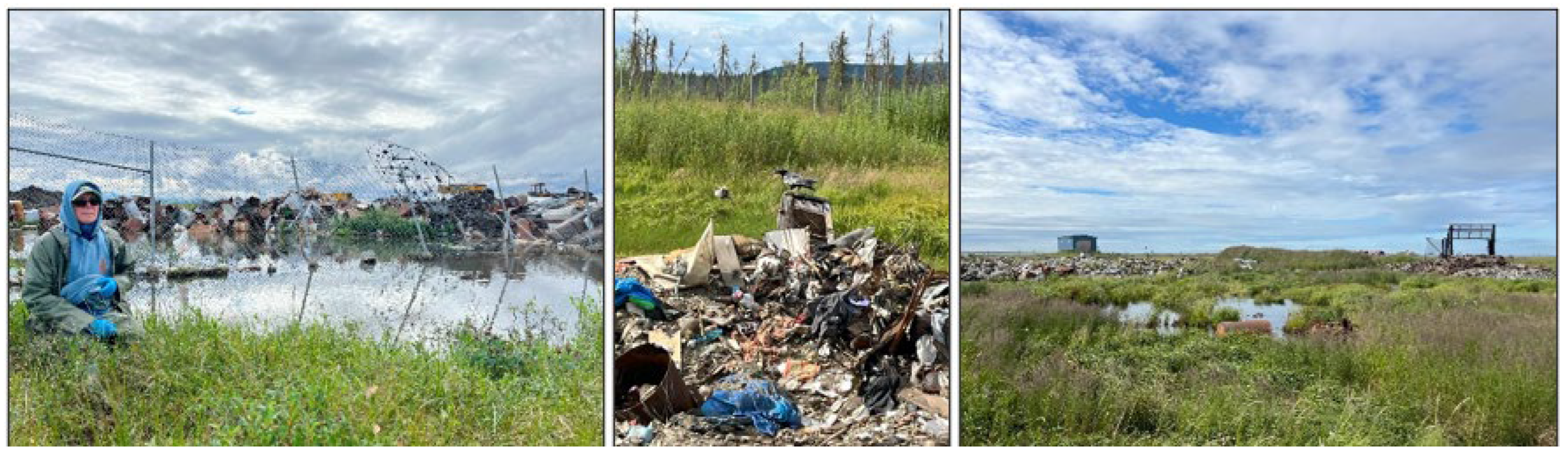
Figure 1. Example photos of three Class III landfills from site visits in August 2023. Left to right: E. Mutter is seated outside of the Sitaisaq (Native Village of Brevig Mission) landfill, an above-ground landfill. Middle is the Noolaaghe Doh (Nulato) landfill, a tundra pond site with a bird sitting on uncovered waste. Right is the Kuinerraq (Native Village of Kwinhagak), landfill, another above-ground site. The burn box is to the right in the right photo. Water ponding and uncovered waste are present in each of these landfills (photo credit A. Moore-Nall).
Ijerph 23 00045 g001
Figure 2. SWIFT-Active Screener results for the project. (A) Project Summary presents the predicted progress of screeners AMN & PJ in identifying relevant references. The red line shows the predicted normal screening, without using the machine learning algorithm to inform screening order; the blue line shows the predicted recall with the machine learning algorithm; the green line shows the 95% threshold for screening. (B) User Summary shows the total number of references available in the HERO database and the number that were screened and not screened in SWIFT-Active Screener.
Ijerph 23 00045 g002
Figure 3. Diagram of the review process.
Ijerph 23 00045 g003
Disclaimer/Publisher’s Note: The statements, opinions and data contained in all publications are solely those of the individual author(s) and contributor(s) and not of MDPI and/or the editor(s). MDPI and/or the editor(s) disclaim responsibility for any injury to people or property resulting from any ideas, methods, instructions or products referred to in the content.