


A Systematic Review on Professional Regulation and Credentialing of Public Health Workforce

 , , , ,
  ,
, 

Abstract
1. Introduction
1.1. Public Health and Public Health Workforce
1.2. Professional Credentialing and Regulation of Public Health Workforce
1.3. Study Aim and Review Questions
- What are the most effective aspects and characteristics in identified programs (standards or activities) in professional credentialing and regulation of the public health workforce?
- What are common evidence-based aspects and characteristics for the performance standards to support a qualified and competent public health workforce?
2. Materials and Methods
2.1. Search Strategy
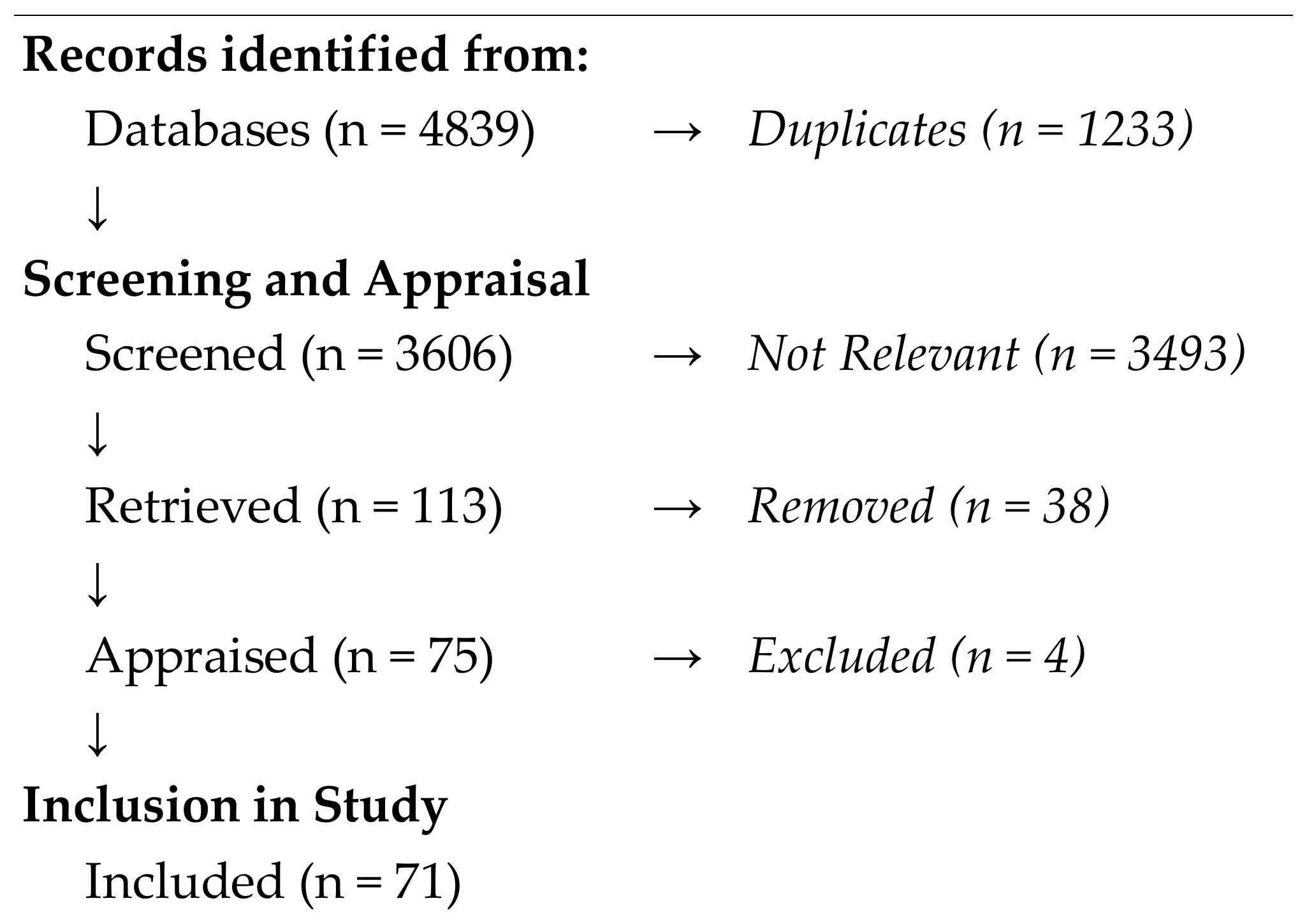
2.2. Study Selection
2.3. Data Extraction and Key Themes
3. Results
3.1. Occupations Represented
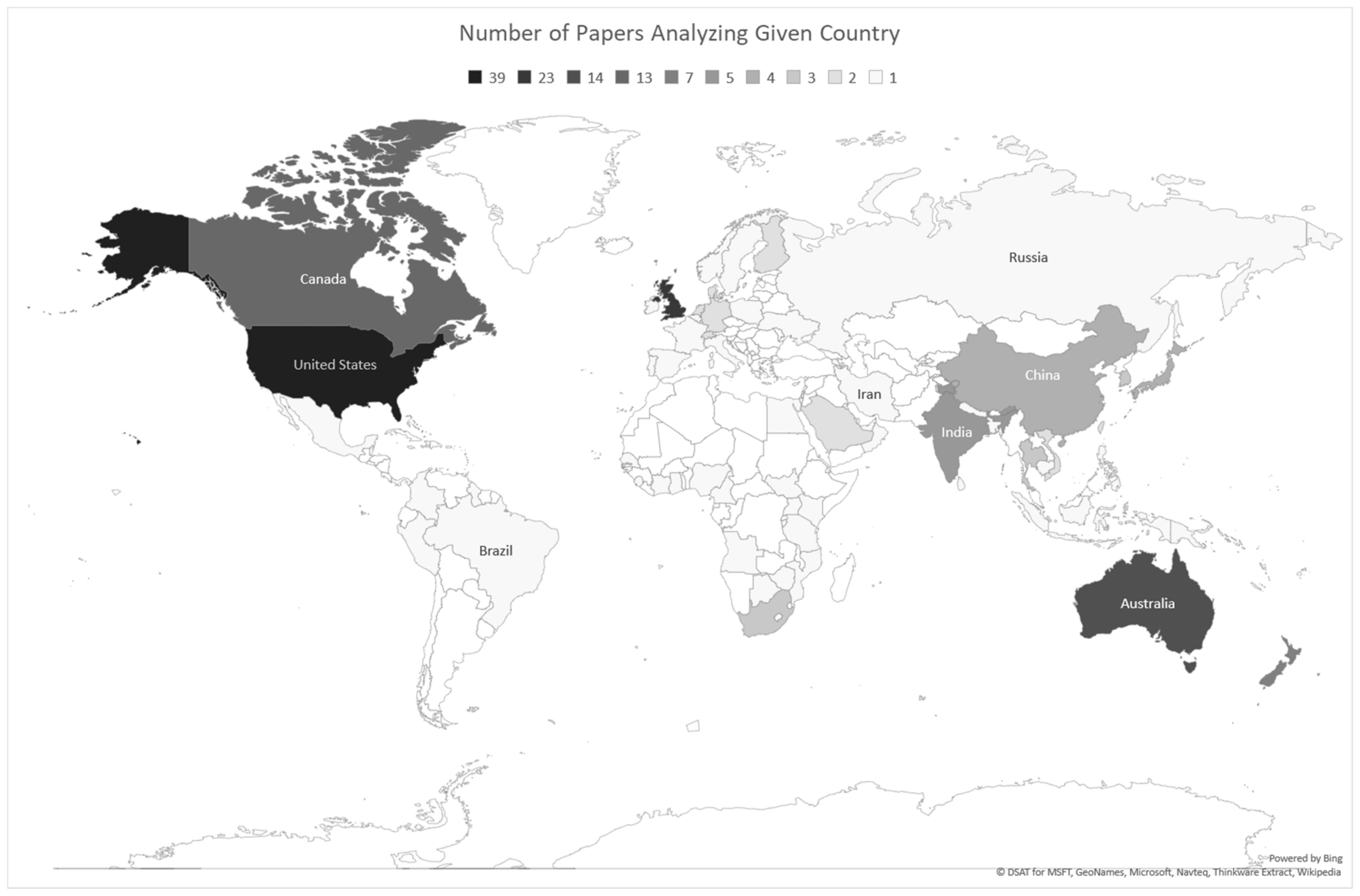
3.2. Countries Represented
3.3. Key Findings for Credentialing
3.4. Key Findings for Regulation
- Emergency System for Advance Registration of Volunteer Health Professionals (ESAR-VHP, US);
- General Medical Council (GMC, UK);
- Nursing and Midwifery Board of Australia (NMBA);
- Nursing and Midwifery Council (NMC, UK);
- UK Public Health Register (UKPHR);
- UK Voluntary Registrar for Public Health Specialist (UKVR).
3.5. Key Findings for Certification
3.6. Key Findings for Registration and Licensure
3.7. Key Findings with Respect to COVID-19
3.8. Recommendations from Materials
4. Discussion
- Mandatory vs. voluntary nature of regulation, certification, or credentialing;
- Governance of regulation, certification, or credentialing (e.g., who verifies requirements, public or private governance);
- Specific mechanisms and functions of regulation, certification, or credentialing (e.g., the presence of a registry, academic or credential requirements).
Limitations
5. Conclusions
Supplementary Materials
Author Contributions
Funding
Institutional Review Board Statement
Informed Consent Statement
Data Availability Statement
Acknowledgments
Conflicts of Interest
References
- One Hundred Days of War Has Put Ukraine’s Health System under Severe Pressure. Available online: https://www.who.int/news/item/03-06-2022-one-hundred-days-of-war-has-put-ukraine-s-health-system-under-severe-pressure (accessed on 20 January 2023).
- Tilson, H.; Gebbie, K.M. The Public Health Workforce. Annu. Rev. Public Health 2004, 25, 341–356. [Google Scholar] [CrossRef] [PubMed]
- Good Public Health Practice Framework, 2016. 2023. Available online: https://fph-prod.azurewebsites.net/media/1304/good-public-health-practice-framework_-2016_final.pdf (accessed on 20 January 2023).
- European Centre for Disease Prevention and Control. Coronavirus Disease 2019 (COVID-19) Pandemic: Increased Transmission in the EU/EEA and the UK—Seventh Update; ECDC: Stockholm, Sweden, 2020.
- Gershuni, O.; Czabanowska, K.; Burazeri, G.; Myrup, A.C.; Von Krauss, M.K. Is there a golden recipe? A scoping review of public health workforce development. Eur. J. Public Health 2019, 29, 401–408. [Google Scholar] [CrossRef] [PubMed]
- Professional Licensure. International Affairs Office. Available online: https://sites.ed.gov/international/professional-licensure/ (accessed on 20 January 2023).
- International Labour Office. International Standard Classification of Occupations. Available online: https://www.ilo.org/wcmsp5/groups/public/---dgreports/---dcomm/---publ/documents/publication/wcms_172572.pdf (accessed on 16 February 2023).
- World Health Organization. National Workforce Capacity to Implement the Essential Public Health Functions Including a Focus on Emergency Preparedness and Response: Roadmap for Aligning WHO and Partner Contributions; World Health Organization: Geneva, Switzerland, 2022. [Google Scholar]
- World Health Organization. Roadmap to Professionalizing the Public Health Workforce in the European Region; WHO Regional Office for Europe: Copenhagen, Denmark, 2022. [Google Scholar]
- Beaglehole, R.; Poz, M.R.D. Public health workforce: Challenges and policy issues. Hum. Resour. Health 2003, 1, 4. [Google Scholar] [CrossRef] [PubMed]
- Marchal, B.; Kegels, G. Health workforce imbalances in times of globalization: Brain drain or professional mobility? Int. J. Health Plan. Manag. 2003, 18, S89–S101. [Google Scholar] [CrossRef]
- Centre for Workforce Intelligence. Mapping the Core Public Health Workforce: Final Report; Centre for Workforce Intelligence: London, UK, 2014. [Google Scholar]
- Otok, R.; Richardson, E.; Czabanowska, K.; Middleton, J. The Public Health Workforce; European Observatory on Health Systems and Policies: Brussels, Belgium, 2018. [Google Scholar]
- Royal Society for Public Health. Rethinking the Public Health Workforce; Royal Society for Public Health: London, UK, 2015. [Google Scholar]
- Watts, N.; Amann, M.; Arnell, N.; Ayeb-Karlsson, S.; Beagley, J.; Belesova, K.; Boykoff, M.; Byass, P.; Cai, W.; Campbell-Lendrum, D.; et al. The 2020 report of The Lancet Countdown on health and climate change: Responding to converging crises. Lancet 2021, 397, 129–170. [Google Scholar] [CrossRef]
- Cioffi, J.P.; Lichtveld, M.Y.; Thielen, L.; Miner, K. Credentialing the Public Health Workforce: An Idea Whose Time Has Come. J. Public Health Manag. Pract. 2003, 9, 451–458. [Google Scholar] [CrossRef]
- Ogolla, C.; Cioffi, J.P. Concerns in Workforce Development: Linking Certification and Credentialing to Outcomes. Public Health Nurs. 2007, 24, 429–438. [Google Scholar] [CrossRef]
- Sutton, S. Ambulatory Care Program: The Who, What, When, and Where’s of Credentialing and Privileging. Available online: https://docplayer.net/3126927-Ambulatory-care-program-the-who-what-when-and-where-s-of-credentialing-and-privileging-the-who-what-when-and-where-s.html (accessed on 20 January 2023).
- Rooney, A.; van Ostenberg, P. Licensure, Accreditation, and Certification: Approaches to Health Services Quality; Center for Human Services, Quality Assurance Project: Bethesda, MD, USA, 1999. [Google Scholar]
- Davies, J.; Hughes, R.; Margetts, B. Towards an international system of professional recognition for public health nutritionists: A feasibility study within the European Union. Public Health Nutr. 2012, 15, 2005–2011. [Google Scholar] [CrossRef]
- Turnock, B.J. Competency-Based Credentialing of Public Health Administrators in Illinois. J. Public Health Manag. Pract. 2001, 7, 74–82. [Google Scholar] [CrossRef]
- Landman, J.P.; Wootton, S.A. Professional regulation of nutritionists: Where are we now? Proc. Nutr. Soc. 2007, 66, 269–276. [Google Scholar] [CrossRef]
- Lee, J.-Y.; Winkelman, S.B.; Kim, J. The creation and implementation of the newly implemented Korean Health Education Specialist certification. Glob. Health Promot. 2015, 22, 46–51. [Google Scholar] [CrossRef]
- Bekemeier, B. Credentialing for Public Health Nurses: Personally Valued … But Not Well Recognized. Public Health Nurs. 2007, 24, 439–448. [Google Scholar] [CrossRef]
- Warren, M. Professional Healthcare Regulation in the UK Explained. Available online: https://www.professionalstandards.org.uk/news-and-blog/blog/detail/blog/2018/04/10/professional-healthcare-regulation-explained (accessed on 20 January 2023).
- Credentialling Framework for New Zealand Health Professionals. Available online: https://www.health.govt.nz/publication/credentialling-framework-new-zealand-health-professionals (accessed on 20 January 2023).
- Department of Health; Victoria, A. Credentialing—Overview. Available online: https://www.health.vic.gov.au/quality-safety-service/credentialing-overview (accessed on 20 January 2023).
- Page, M.J.; McKenzie, J.E.; Bossuyt, P.M.; Boutron, I.; Hoffmann, T.C.; Mulrow, C.D.; Shamseer, L.; Tetzlaff, J.M.; Akl, E.A.; Brennan, S.E.; et al. The PRISMA 2020 Statement: An Updated Guideline for Reporting Systematic Reviews. BMJ 2021, 372, n71. [Google Scholar] [CrossRef]
- Harzing, A.W. Publish or Perish, 8th ed. [software]. 2021. Available online: https://harzing.com/resources/publish-or-perish (accessed on 20 January 2023).
- Joanna Briggs Institute Critical Appraisal Tools. Available online: https://jbi.global/critical-appraisal-tools (accessed on 20 January 2023).
- Hoard, M.L.; Tosatto, R.J. Medical Reserve Corps: Strengthening Public Health and Improving Preparedness. Disaster Manag. Response 2005, 3, 48–52. [Google Scholar] [CrossRef]
- Foster, A. Certified in public health program: Credentialing public health leaders. Int. J. Health Gov. 2016, 21, 26–34. [Google Scholar] [CrossRef]
- Polivka, B.J.; Chaudry, R.V. Public Health Nursing Position Descriptions Congruence with ANA Standards, Public Health Essential Services, and Quad Council Domains. Public Health Nurs. 2015, 32, 532–542. [Google Scholar] [CrossRef]
- Ling, K.; Belcher, P. Medical migration within Europe: Opportunities and challenges. Clin. Med. 2014, 14, 630–632. [Google Scholar] [CrossRef]
- Cornes, M.; Manthorpe, J.; Huxley, P.; Evans, S. Developing wider workforce regulation in England: Lessons from education, social work and social care. J. Interprof. Care 2007, 21, 241–250. [Google Scholar] [CrossRef]
- Lo, K.; Curtis, H.; Francis-Cracknell, A.; Maloney, S.; Nickson, W.; Bearman, M.; Keating, J.L. Physiotherapy clinical educators’ perspectives on a fitness to practice initiative. Physiother. Theory Pract. 2018, 34, 41–53. [Google Scholar] [CrossRef]
- Watts, R.D.; Bowles, D.C.; Ryan, E.; Fisher, C.; Li, I.W. No Two Workforces Are the Same: A Systematic Review of Enumerations and Definitions of Public Health Workforces. Front. Public Health 2020, 8, 588092. [Google Scholar] [CrossRef]
- Shaw, C.D. Standards for Better Health: Fit for purpose? BMJ 2004, 329, 1250–1251. [Google Scholar] [CrossRef] [PubMed]
- Haldane, V.; De Foo, C.; Abdalla, S.M.; Jung, A.-S.; Tan, M.; Wu, S.; Chua, A.; Verma, M.; Shrestha, P.; Singh, S.; et al. Health systems resilience in managing the COVID-19 pandemic: Lessons from 28 countries. Nat. Med. 2021, 27, 964–980. [Google Scholar] [CrossRef] [PubMed]
- Nguyen, A.M.; Schaler-Haynes, M.; Chou, J.; Wetzel, M.; Koller, M.; Yedidia, M.J.; Cantor, J.C. Impact of The New Jersey COVID-19 Temporary Emergency Reciprocity Licensure Program On Health Care Workforce Supply. Health Aff. 2022, 41, 1125–1132. [Google Scholar] [CrossRef] [PubMed]
- Benjamin, G.C. Ensuring health equity during the COVID-19 pandemic: The role of public health infrastructure. Rev. Panam. Salud Pública 2020, 44, e70. [Google Scholar] [CrossRef]
- Iserson, K.V. Augmenting the Disaster Healthcare Workforce. West. J. Emerg. Med. 2020, 21, 490–496. [Google Scholar] [CrossRef]
- Leung, T.I.; Biskup, E.; DeWitt, D. Facilitating credentialing and engagement of international physician-migrants during the COVID-19 crisis and beyond. Rural Remote Health 2020, 20, 6027. [Google Scholar] [CrossRef]
- Marcotrigiano, V.; Pattavina, F.; Blangiardi, L.; Salerno, G.; Dalena, A.; Del Bianco, F.; Di Fant, M.; Fabbro, A.; Forgiarini, M.; Lanzilotti, C.; et al. The Preventive Health Professions in Italy: The Efficient Use of Resources, Skills and Best Practice during the Pandemic. Healthcare 2022, 10, 1906. [Google Scholar] [CrossRef]
- Gebbie, K.M.; Turnock, B.J. The Public Health Workforce, 2006: New Challenges. Health Aff. 2006, 25, 923–933. [Google Scholar] [CrossRef]
- Starr, P. Professionalization and Public Health: Historical Legacies, Continuing Dilemmas. J. Public Health Manag. Pract. 2009, 15, S26–S30. [Google Scholar] [CrossRef]
- Czabanowska, K.; Middleton, J. Professionalism of the public health workforce—How to make it happen? J. Public Health 2022, 44, i54–i59. [Google Scholar] [CrossRef]

| Occupation | Articles Including Occupation * |
|---|---|
| Nutrition | 2 |
| Social services | 2 |
| Dentistry | 4 |
| Not specified | 2 |
| Health education | 5 |
| Wider PH | 5 |
| Health care | 14 |
| Public health (field in general) | 21 |
| Nursing | 23 |
| Grand total | 78 |
| Ref ID (Authors, Year) Country (Profession) | Summary Findings for Professional Credentialing, Certification, Licensure, Registration, and Regulation (Paraphrased) | Recommendations Extracted from Material (Paraphrased) |
|---|---|---|
| Nursing | ||
| 0048 (Sherwood, G. D., and Shaffer, F. A., 2014) US (nursing) | Credentialing: is required for employment for the safety of practice. Navigation through legal and regulatory systems and the credentialing process starts with a review of the education and its compatibility with the country of practice performance. | Standardization and simplification of the credentialing process, the continuous collaboration between governments, credentialing agencies, employers, and the profession. |
| 0052 (Kennedy, H. P., et al., 2018) US (nursing) | Regulation: authority maintains a register and licenses (provisional, temporary, conditional, suspended, full), defines expected standards of conduct/misconduct, and defines the scope of practice. Standards for education, clinical training, and governmental monitoring and accountability are established by regulation through licensure. Having a license offers a foundation for regulation. | Development of regulations by setting a best practice (e.g., Delphi consensus for common agreement). |
| 0055 (Black, J., et al., 2008) Canada (nursing) | Regulation: conceptual framework development for competencies such as professional responsibility and accountability, self-regulation, public service, knowledge-based and ethical practice. | The development, consistency, and assessment of current competencies to clarify the roles and responsibilities (staff involvement at each stage of the process). |
| 0077 (Pennington, K. R., Clark, K. D., and Knight, S., 2020) Australia (nursing) | Regulation: the regulation of health professionals and the standards for their training provide crucial and intricate protections for the public. A variety of mechanisms across Australia for suitably qualified registered health professionals in a particular area of practice. | No clear recommendations by the authors. |
| 0078 (Mayra, K., Padmadas, S. S., and Matthews, Z., 2021) India (nursing) | Regulation: the regulatory framework includes member profiles, key definitions, membership requirements, professional registration/reregistration information and services provided, etc. Procedures are managed by various organizations, most of which do not involve nursing and midwifery representatives. | Six functions of regulatory bodies: establishing the scope of practice, pretraining registration, registration, sublicensing and maintaining authority, complaints and discipline, codes of conduct, and ethics. |
| 0087 (Banning, M., and Stafford, M., 2008) UK (nursing) | Regulation: professionals can maintain their clinical governance requirements and professional competency through CPD, which benefits patients, practitioners, and organizations. CPD is a crucial component of providing high-quality clinical care. | No clear recommendations by the authors. |
| 0109 (McWhirter, R., 2018) Australia (nursing) | Regulation: professionals must be registered according to the Nursing and Midwifery Board of Australia (NMBA) standards and policies. The NMBA is tasked with enforcing the National Law by creating registration criteria, professional codes of conduct, and other rules and regulations governing midwifery practice. | No clear recommendations by the authors. |
| 0149 (Wynd, C. A., 2003) US (nursing) | Certification: potential benefits of certification are recognition of expertise, financial benefits, a better likelihood of advancement, employment security, and professional credibility to improve assurance in one’s expertise. Examples include certification provided to nurses which improved their qualifications as “practice professionals”. | No clear recommendations by the authors. |
| 0253 (Baumann, A. et al., 2014) Canada (nursing) | Regulation: the Agreement on Internal Trade (AIT) AIT aims to enable regulated professionals to move freely between provinces after registration by the applicable provincial/territorial regulatory body. Self-regulation requires that the various professions establish their professional codes of conduct, licensing requirements, and practice standards. | No clear recommendations by the authors. |
| 0325 (MacLaren, J., Haycock-Stuart, E., McLachlan, A., and James, C., 2016) UK (nursing) | Regulation: good overview of the concept of FtP. For preregistration nursing students to be deemed qualified to practice at the time of registration, they must satisfy the Nursing and Midwifery Council (NMC) requirements. | No clear recommendations by the authors. |
| 0377 (Kingma, M., 2006) Country unspecified (nursing) | Regulation: when evaluating applicants’ qualifications, diplomas or degrees earned after the applicant’s initial education program are considered (resulting in the applicant’s qualifications being automatically recognized or moving on to the next step of accreditation). No perfect regulatory method, the responsibilities of regulating foreign-educated nurses are the same in each country, but various ways are used. | Regulatory agencies need to choose whether to evaluate institutions or individuals based on an approach for comparability, considerable equivalence, or full equivalence, and maintain the accuracy of their databases. |
| 0395 (Spoel, P., and James, S., 2006) Canada (nursing) | Regulation: description of regulation development, competing perspectives, and, primarily, perceptions of regulations and values. Canadian midwifery movement has focused, since the early 1980s, on midwives becoming self-regulated licensed health professionals. | No clear recommendations by the authors. |
| 0436 (Xu, Y., and He, F., 2012) Multiple countries * (nursing) | Registration, licensure: three categories by registration/licensure and employment status: (a) preregistration, pre-hire programs represented by Canada and what is currently in place in Australia; (b) preregistration, post-hire programs exemplified by the Overseas Nurses Program (ONP) in the UK and the newly proposed National Adaptation Program (NAP) in Australia; and (c) post-licensure, post-hire programs represented by those in the US. | Transition programs are important for language competency requirements, variations in nursing education, national health care systems, and nursing practice. |
| * Countries represented: US, UK, Australia, Canada | ||
| 0443 (Flook, D. M., 2003) US (nursing) | Certification, licensure: each state willingly accepts the RN’s license to practice in the state and respects the criteria established by the nurse’s home state, including any unique restrictions. A current license, the necessary education, and evidence of experience in the specialty field are prerequisites for the certification exam. Some states resolve this issue by requiring ongoing education. The license must be renewed annually or biannually by completing a predetermined number of hours. | The nurse and the employer are accountable for maintaining competency. |
| 0638 (Magdic, K. S., Hravnak, M., and McCartney, S., 2005) US (nursing) | Credentialing: all nurse practitioners who want to work in hospitals or other acute care settings must be credentialed and have their privileges reviewed periodically. For an original appointment, reappointment, and adjustment of clinical benefits, licensure is validated by the licensing board. Additionally, it occurs when a new license is issued to replace an expired one. | The acute care nurse practitioner (ACNP) role expansion in telemedicine and emergency care settings. |
| 0667 (Oskouei, F., Nejatian, A., and Parvizy, S., 2016) Multiple countries * (nursing) | Registration, licensure: in certain countries, a nursing certification is necessary for registration or licensure (Diploma, Associate, Bachelor, and Master of Nursing). Passing a certification exam is needed for registration or licensure in some countries. Five years of study is required to become registered or licensed. The candidate must have good physical and mental health, pass the national exam, and have their background checked. | To deliver quality care, it is crucial to confirm nurses’ ethical, scientific, practical, and mental health. |
| * Countries represented: Iran (primary), Canada, India, US, China, UK, Australia, Mexico, Philippines, Singapore, Japan, Thailand, Cameroon, South Korea, Poland, Peru, Russia, Armenia, Colombia, Caribbean, United Arab Emirates, Bahrain, Qatar, Oman, Saudi Arabia, Kuwait | ||
| 0867 (DiCenso, A., and Bryant-Lukosius, D., 2010) Canada (nursing) | Regulation, certification: administrators, clinical nurse specialists (CNSs), primary healthcare nurse practitioners (PHCNPs), and ACNPs requested standardization and national certification in response to the wide variation in educational programs across Canada and to enable more mobility for advanced practice nurses (APNs) across the country. | No clear recommendations by the authors. |
| 0964 (Sheer, B., and Wong, F. K. Y., 2008) Multiple countries * (nursing) | Regulation, certification: an overview of nurse practitioners’ expectations in legislation, certification, and regulation in various countries. Discusses the standardization of education, regulation, and requirements to perform a profession. | No clear recommendations by the authors. |
| * Countries represented: Canada, US, Latin America, Botswana, South Africa, China, Japan, South Korea, Singapore, Thailand, Australia, New Zealand, Germany, Switzerland, UK, Finland | ||
| 1039 (Wade, C. H., 2009) US (nursing) | Certification: the Perceived Value of Certification Tool (PVCT) assesses the perceptions of the advantages and benefits of specialty nurse certification, why nurses are certified or not, and why nurses allow their certifications to lapse. | To find evidence for the effect of certification on improved collaboration, patient outcomes, and quality of care. |
| 1552 (North, N., Leung, W., and Lee, R., 2014) New Zealand (nursing) | Certification: must renew their Annual Practising Certificate (APC) each year (around their birthdays) by submitting documentation of their competency and fitness to practice. | No clear recommendations by the authors. |
| 1690 (Robinson, S., and Griffiths, P., 2007) Multiple countries * (nursing) | Credentialing, registration,: an extensive range of various requirements for multiple countries: years of education, reception of degree, passing the exams, work expertise, post-registration program, certification in clinical specialties, further education. | No clear recommendations by the authors. |
| * Countries represented: Australia, Belgium, Canada, Denmark, Finland, France, Germany, Ireland, Italy, Japan, the Netherlands, New Zealand, Norway, Spain, Sweden, Switzerland, UK, US | ||
| 4236 (Pulcini, J., Jelic, M., Gul, R., and Loke, A. Y., 2010) Country unspecified (nursing) | Regulation, licensure: to obtain preliminary data on education, licensure maintenance, and renewal, regulatory, and practice challenges facing NP-APNs as well as the appropriate political environment, the Education-Practice Subgroup of the International Nurse practitioner advanced practice Nursing Network (INP-APNN) INP-APNN prepared a pilot survey in 2006. | No clear recommendations by the authors. |
| Public health (field in general) | ||
| 0017 (Polivka, B. J., and Chaudry, R. V., 2015) US (public health) | Regulation: accreditation as a linkage of workforce development and organizational effectiveness. | Job descriptions, competencies, guidance, and comparison on how the competencies apply to various PH positions; accreditation standards and measures. |
| 0024 (Coen, C., and Wills, J., 2007) UK (public health) | Regulation: development of voluntary register (UKVR) incl. retrospective acknowledgement of skills of non-medics. Setting standards for PH specialists in the UK. Seeks to provide a clear framework enhancing career-building for the multidisciplinary public health workforce (PHW). | Addressing significant differences in the motivation and choices of the future PHW. |
| 0027 (Vandenhouten, C. L., DeVance-Wilson, C. L., and Little, B. B., 2015) US (public health) | Credentialing: portfolio-based assessment. Questionnaire to investigate current certification status, motivation to gain PH certification, knowledge of exam eligibility requirements, perceived motivators and hurdles, current certification status, and benefits of credential. | No clear recommendations by the authors. |
| 0029 (Evashwick, C. J., Begun, J. W., and Finnegan, J. R., 2013) US (public health) | Certification: to maintain certification, the certificate should be renewed every two years with documentation of ongoing education recognized by the National Board of Public Health Examiners (NBPHE), complying with US Department of Education standards. | A person who has advanced training in PH (e.g., graduate-level academic training) a PH credential, such as passing the CPH test, or training in the medical specialty of preventive medicine, is referred to as a PH professional. |
| 0033 (Partridge, D. L. et al., 2009) US (public health) | Credentialing: national credentialing requires 24 hours of continuing education every 2 years. A credential for the registered sanitarian requires 30 hours of continuing education every 3 years. Includes a 40-item survey to determine the influence of credential status on competencies perceptions. | Credentialing requirements should be established and supported to encourage and institutionalize ongoing workforce training programs. |
| 0067 (Cioffi, J. P., Lichtveld, M. Y., Thielen, L., and Miner, K., 2003) US (public health) | Credentialing: framework introduction. The certification combines performance standards for core functions in community PH practice with competencies. Individuals should accumulate a predetermined amount of continuing education credits over five years to maintain certification. A 190-question written test, prerequisite education, and work experience are all required for licensure. | Active engagement of the practice community at every level. The economic consequences of implementing certification and credentialing. An inclusive credentialing process to optimize the collaborative role that each person plays. |
| 0074 (Leslie, K. et al., 2021) Multiple countries * (public health) | Regulation: leading practices from the countries by regulatory principle in definition, flexibility, accountability, efficiency, and collaboration. Variations of requirements (Canada) for endorsement for areas of practice, based on the fundamentals and covering the professional’s initial field of expertise. UK statutory organizations/regulatory authorities define a common set of core functions with substantial differences in legislation, standards, approach, and efficiency. | A clear focus on risk management to highlight flexibility of health professions’ regulation. Flexibility (allowing groups to decide on the relative responsibilities of various practitioners based on community needs) and accountability are two interrelated elements that should be balanced. |
| * Countries represented: US, Canada, Australia, UK | ||
| 0082 (Gebbie, K. et al., 2007) US (public health) | Credentialing is one strategy to improve the perception of PH professionals, assist the credentialing process, and boost the general efficacy of practice. The Board has established a committee on research and evaluation to set clear goals for evaluating the value and effectiveness of the credentialing procedure. | To encourage the recognition of new PH; to extend the PHW’s perspective and support their professional and personal growth; development of a voluntary ecological approach. |
| 0083 (Gebbie, K. M., and Turnock, B. J., 2006) US (public health) | Credentialing: several methods of credentialing are known, including registration, certification, and licensure (for doctors, nurses, and health education specialists) (for dietitians and sanitarians). Credentials show that one has mastered a particular group of skills and information through a combination of study and testing. | The pipeline techniques should be reinforced with workplace-specific approaches to fulfill the needs of the heterogeneous PH workforce. Find value in credentials and competencies by employers and health agencies. |
| 0085 (Jehu, L. M. et al., 2018) UK (public health) | Regulation: introduction of a commitment to statutory regulation for all PH professionals. For those without a medical background, there is no statutory requirement to maintain registration to engage in continuing professional development (CPD). | The subject of how future PH professionals practicing for local governments will be recruited and encouraged in their development requires attention. |
| 0090 (Hoard, M. L., and Tosatto, R. J., 2005) US (public health) | Regulation, registration: to create a national system of state-based registries of medical and PH volunteers, a new program (Emergency System for the Advanced Registration of Volunteer Healthcare Personnel (ESAR-VHP)) was launched. | A register may potentially act as a tool for the state’s Medical Reserve Corps (MRC) units to pre-identify and obtain credentials. |
| 0112 (Gray, S. F., and Evans, D., 2018) UK (public health) | Regulation: the authority maintaining a record of professionals who have completed training and can demonstrate professional competencies has approved the final curriculum—a portfolio-type route for individuals without formal training. | Universal requirement for registration as PH specialist. Common features of the integrated training programs: curriculum and assessment standards. |
| 0145 (Bekemeier, B., 2007) US (public health) | Credentialing: the intrinsic or personal benefits for the credentialed professional, such as enhanced job satisfaction, personal achievement, and progress, have mixed data supporting their value. | Barriers to credentialing such as financial burdens; individuals who contribute entirely, but do not achieve the requirements for certification receive no financial benefits. |
| 0276 (Evans, D., and Gray, C., 2019) UK (public health) | Regulation: voluntarily encouraging PH practitioner registration, provided by the UK Public Health Register (UKPHR). Some practitioners have alternative registration. Recent evaluations of practitioner registration schemes show their value towards professional validation and assurance for their employers (registered professionals or those going through the registration process). | Determining whether employers see the benefits of registration in practice outweighs the costs. |
| 0335 (Ling, K., and Belcher, P., 2014) Multiple countries * (public health) | Regulation: the intention is to simplify and speed up procedures, a so-called “fast-track” form of electronic documentation attesting to a professional’s qualifications and registration status, exchanged between regulatory bodies, and intended to replace the need for further paper checks. | Establish an alert system. Address how the system will work for professionals with dual registration, what information regulators will be obliged to communicate, and at what stage. |
| * Countries represented: European Union, UK | ||
| 0476 (Woodhouse, L. D. et al., 2010) US (public health) | Credentialing, certification: The National Commission for Health Education Credentialing’s CHES certification is built on health education competencies. Best practices of certification organizations, which are relevant to individual certification, include a continuing commitment to guarantee that the competencies supporting the certification are up to date. | No clear recommendations by the authors. |
| 0501 (Foster, A., 2016) US (public health) | Credentialing, certification: to ensure that PH graduates possess the knowledge and abilities necessary for PH practice, the CPH certificate is required. One of the essential features of a certification program is the need for ongoing professional development and education. Therefore, every 2 years, those with the CPH credential must submit 50 hours of recertification work to keep their status as active CPHs. All recertification activities must be related to the exam’s domain areas. | No clear recommendations by the authors. |
| 4648 (Kurz, R. S. et al., 2017) US (public health) | Certification: the development of certification for the CPH. The NBPHEs set out to practice PH after acknowledging that the CPH examination should reflect the knowledge, skills, and abilities required by PH practitioners in the workplace. | No clear recommendations by the authors. |
| Health care | ||
| 0096 (Saks, M., 2021) Multiple countries * (health care) | Regulation, credentialing: an overview of Japanese, Danish, British, Indian, Kenyan, and Brazilian professional development of professionalization and credentials for health support workers. | Cooperation and coordination through sharing of good practice, identifying the role of corporate bodies in improving global regulatory practices. |
| * Countries represented: UK, Japan, Denmark, Brazil, India, South Africa | ||
| 0116 (Lee, S., 2008) UK (health care) | Regulation: after completing the necessary training and achieving a high degree of practice proficiency, approval as an accredited therapist. Before licensing a person as an expert cognitive behavioral therapist, a self-regulating organization (The British Association of Behavioural and Cognitive Psychotherapists, striving to promote excellent practice in CBT) sets its standards of training and practice. The self-regulating organization, aiming to promote good practice in cognitive behavioral therapy [CBT], determines its standards of training and practice before accrediting an individual as a proficient cognitive behavioral therapist. | Formulation of the standards for practice: the legislation and guiding principles; education and clinical supervision; processes for hiring; good practice recommendations and codes of practice; and utilizing evidence-based practice. |
| 0279 (Hipgrave, D. B., and Hort, K., 2014) Multiple countries * (health care) | Regulation options for regulation: taking no action; banning/limiting dual-practice (DP); allowing DP with the regulation of behavior in public and private sectors. | Establishment and maintenance of accreditation systems by governments and professional organizations. Responsive and decentered regulation with the involvement of professional associations and civil society. |
| * Countries represented: Australia, Bangladesh, Cambodia, China, India, Indonesia, Nepal, New Zealand, Papua New Guinea, Sri Lanka, Taiwan, Thailand, Vietnam | ||
| 0379 (Ijaz, N., and Boon, H., 2018) Country unspecified (health care) | Regulation: reflects a claim to intellectual property, first made by state actors and then by providers subject to regulation. Implementing professional regulations becomes significantly more difficult in this area’s absence of policy guidance. | WHO calls for increased statutory regulation for practitioners and practitioners of traditional and complementary medicine. |
| 0445 (Leslie, K., 2012) Multiple countries * (health care) | Regulation, registration: government grants the authority to regulate, offering the profession legitimacy, autonomy, and favorable socioeconomic factors (Australia). All professions have a high degree of uniformity in registration and other regulatory processes. The concept of “fitness to practice”: the regulator (UK) initiated a separate process with possible decisions from the regulator as independent as possible. | Determine how to balance legislated consistency with autonomy for regulators. The commitment is to create umbrella legislation for consistency in regulation and possibly moving to fewer regulatory bodies. |
| * Countries represented: Australia, UK, Canada | ||
| 0494 (Elkin, K., 2015) Multiple countries * (health care) | Registration, certification: certification must be achieved before one can seek registration (ability to practice), by provisional or a specialty registration. The evidence of experience can be a demonstration of clinical competence for provisional general registration. | Setting registration requirements and using those standards while making registration decisions are two ways to communicate priority. |
| * Countries represented: Australia, New Zealand | ||
| 0513 (Gavil, A. I., and Koslov, T. I., 2016) US (health care) | Registration, licensure: the laws and regulations governing licensure often provide a strict “scope of practice” based on authorization to provide a list of procedures and services. This regulatory method is not adaptable enough to let the APRNs work beyond the scope of their license. The categories of licensure are based on specific occupation titles. | The process of choosing who should offer any given service incorporates competition of factors for licensure and regulation. Wait until the new approach secures statutory or regulatory approval. |
| 0540 (Carè, J., Steel, A., and Wardle, J., 2021) Multiple countries * (health care) | Regulation: models of health workforce regulation vary across jurisdictions. No regulation, self-regulation, state-sanctioned self-regulation, statutory self-regulation, coregulation, and statutory regulation are some categories of occupational licensing. The regulation encourages increased regulatory cooperation between the general public, professions, and regulators, as well as a trend toward nationally based regulatory procedures. | Active participation in this policy will enable the proper regulation of T&CM within their respective jurisdictions. In addition, understanding potential enablers and impediments from a global viewpoint will help regulatory policy to be used in a variety of future contexts. |
| * Countries represented: Australia, Canada, New Zealand, South Korea, UK, US, Egypt, Ghana, India, the Netherlands, Portugal, Saudi Arabia, Sierra Leone, South Africa, Taiwan | ||
| 0748 (Cooke, L., and Hutchinson, M., 2001) UK (health care) | Regulation: the claims made by regulators and assessing bodies that their evaluation procedures are thorough and transparent are unclear. | Evaluation process to determine if internationally trained practitioners have the knowledge, skills and professional qualities required to practice. |
| 0773 (Kels, C. G., and Kels, L. H., 2013) US (health care) | Licensing: a review of rules for licensure in federal health care positions. Statutory support for licensure during emergencies is summarized. Practitioners typically need to hold multiple state licenses to practice telemedicine across state lines. | The introduction of telehealth and other electronic practice services will provide access to high-quality healthcare services through licensure portability. |
| 1017 (Tang, C., and Tang, D., 2018) China (health care) | Certification, licensing: an approved medical school diploma, residency experience, or the successful completion of a period of practice under the supervision of a licensed physician are the minimum prerequisites for complete licensure. The National Medical Examination qualification certificate is an additional requirement. A national database containing the most recent data from each province that has authorized new doctors to practice medicine in the authority’s region. | No clear recommendations by the authors. |
| 1452 (Armitage, M., and Shepherd, S., 2005) UK (health care) | Certification, regulation: physician assistants must pass the National Commission on Certification of Physician Assistants’ national certification exam to become certified. They must also complete 100 hours of ongoing medical education every 2 years and pass a re-certification exam every 6 years. | Tackling unresolved problems, the availability of training funding, and the potential creation of thorough curricula. |
| Wider PH | ||
| 0028 (Ogolla, C., and Cioffi, J. P., 2007) US (Wider PH) | Credentialing: review found 11 studies that discussed the relationship between certification and credentialing concerning PH or health care. | Development and testing common core competencies, evaluation, communication and collaboration towards quality-of-care improvement. |
| 0451 (Saks, M., and Allsop, J., 2007) UK (wider PH) | Regulation, registration: in favor of regulation for several reasons (such as the need to improve standards and consistency, to protect the public, to respond to the growing complexity of tasks, and to increase the self-esteem of support workers by acknowledging their status and skills). | Introduce a register for health support workers. Improve the management/supervision of support staff, as well as the instructions and direction provided to personnel. |
| 0460 (Kaplan, A. D., Dominis, S., Palen, J. G., and Quain, E. E., 2013) Multiple countries * (wider PH) | Registration, licensure: before issuing a license, some countries require an exam; in other countries, providers are granted a license after graduating (for a fee). Physician licensing requirements are the strictest; other professionals are less likely to have active licensing processes. There are not many registration methods. Few countries can renew or update health workers’ licenses, ensuring that specific requirements are satisfied before professionals start practicing. | To strengthen licensing, regulation, and supervision, it is necessary to address the financial and human resource shortages. In addition, in countries that have traditionally solely concentrated on public sector systems, the quality assurance process will necessitate the transformation of regulations and procedures. |
| * Countries represented: Angola, Cote d’Ivoire, Guyana, Kenya, Lesotho, Mozambique, Nigeria, Senegal, South Sudan, Caribbean, Tanzania, Uganda, Ukraine, Vietnam, Zimbabwe | ||
| 0561 (Cooper, M., Rasmussen, P., and Magarey, J., 2020) Australia (wider PH) | Regulation: the facilitation or restriction of qualified health practitioners (IQHPs) access to registration, migration, and employment in their trained profession in the country of destination is largely dependent on regulatory, statutory, and assessing authorities. | Strengthen the need for a re-examination and update of the existing regulatory requirements. |
| Health education | ||
| 0005 (Taub A. et al., 2009) US (health education) | Certification: the development of certification for the Certified Health Education Specialist (CHES). Certification is available for individuals and aims to promote professional development and strengthen professional preparation. | Certification industry standards should be based on competencies currently used in practice. |
| 0129 (Livingood, W. C., and Auld, M. E., 2001) US (health education) | Credentialing, certification: CHES must renew credentials annually and document 75 hours of continuing education (CE) every 5 years. | Credentialing-based competencies linked to job responsibilities; independent credentialing organization with long- and short-term funding. |
| 0226 (Pierre Ste-Rose, S. et al., 2015) US (health education) | Credentialing is often not a requirement for a position. However, continuing education is required to maintain the CHES credential and is important for professional career development. In addition, other benefits contribute to the individual and collective capacity to promote community health and health equity. | No clear recommendations by the authors. |
| 0473 (Taub, A., Allegrante, J. P., Barry, M. M., and Sakagami, K., 2009) Multiple countries * (health education) | Credentialing, certification, and registration: a continuing education requirement and a competency-based national certification exam are intended to encourage certified professionals to continue their professional growth. A registration process was created and implemented using industry standards. | No clear recommendations by the authors. |
| * Countries represented: US, UK, Australia, New Zealand | ||
| Dentistry | ||
| 0388 (Johnson, P. M., 2008) Canada (dentistry) | Regulation, credentialing, licensure: to identify people or organizations that meet certain criteria, professional regulation procedures often involve issuing a credential. Governmental involvement is required if credentials are mandatory. Application eligibility requirements include formal education, practice standards, a registration exam, title protection, the ability to face disciplinary action, etc. | The necessary regulatory processes to ensure the profession is a cost-effective provider with a focus on quality, safety, and essential health services. The regulatory process should address the reality and future directions. |
| Nutrition | ||
| 0060 (Landman, J. P., and Wootton, S. A., 2007) UK (nutrition) | Regulation, registration: discussion of a history of credentialing as a process. All applicants are required to participate in continuous education. To reapply for registration every five years, there is a (new) obligation to collect evidence (can show how they have improved their professional practice). | Regulation of non-medical health professionals; development of proficiency standards for wider PH; and a solid collective professional identity. Interprofessional and interprofessional learning. |
| Social services | ||
| 0094 (Sugarman, M., Ezouah, P., Haywood, C., and Wennerstrom, A., 2021) US (social services) | Certification: different from standardized training, certification calls for an administrative authority to establish a procedure for confirming a person’s qualifications (based on skills or experience), roles or duties (incl. training, assessment, and continuing education). | Establishment of a community health worker (CHW) definition, roles, and scope of CHW practice. Determining funding and supporting leadership in workforce development. |
| 0095 (Cornes, M., Manthorpe, J., Huxley, P., and Evans, S., 2007) UK (social services) | Regulation, registration: framework function by establishing standards of practice and competency, registering competent personnel, and limiting the use of particular titles to those who are registered. The concept of “fitness to practice” (FtP) is being discussed. | The regulatory framework should stimulate professionals to develop new career pathways and not lock staff into existing professional groups. |
| Articles describing multiple occupations/fields | ||
| 0054 (Tilson, H., and Gebbie, K. M., 2004) US (public health, wider PH) | Credentialing (formal) by documentation and competency assurance by a formal national dialogue (led by a national commission appointed by the secretary of the US Department of Health and Human Services). | Development of voluntary certifying examination (based on the ecological model of health) and available for Master’s in Public Health (MPH) graduates. |
| 1128 (Holmboe, E. et al., 2011) Multiple countries * (nursing, dentistry, health care) | Regulation: simulation-based assessment (SBA) could be used to monitor or assess practice quality. | No clear recommendations by the authors. |
| * Countries represented: US, Israel, Canada | ||
| 0126 (Hilliard, T. M., and Boulton, M. L., 2012) US (public health, dentistry) | Credentialing, certification: an exam developed by NBPHE annually administered for PH professionals to become Certified in Public Health (CPH). Individuals who pass this credentialing exam must maintain certification through continuing education. | Increase participation in lifelong learning and improvement of competencies. Credentialing mechanisms must become widely accepted as a requirement for employment in PH. |
| 0550 (Kerr, D. et al., 2019) US (public health, health education) | Credentialing: a degree and passing an exam (based on abilities created from job studies of individuals practicing the profession) are both required for obtaining individual credentials. The NCCA certification validates the CHES examination and mandates that companies uphold a legitimate and credible procedure for creating, implementing, governing, and maintaining certification programs. | No clear recommendations by the authors. |
| 1128 (Holmboe, E. et al., 2011) multiple countries * (nursing, dentistry, health care) | Regulation: simulation-based assessment (SBA) could be used to monitor or assess practice quality. | No clear recommendations by the authors. |
| Profession/field not specified | ||
| 1657 (McNair, R. P., 2005) Country unspecified, profession not specified | Regulation, registration: an acknowledgment of preregistration and regulation. | No clear recommendations by the authors. |
| 0092 (Lichtveld, M. Y., and Cioffi, J. P., 2003) US (profession not specified) | Credentialing, certification: there is no national system of rewards (including certification and credentialing) to guarantee competence. | An inclusive, voluntary, competency-based certification with multiple pathways and credentialing in PH. |
Disclaimer/Publisher’s Note: The statements, opinions and data contained in all publications are solely those of the individual author(s) and contributor(s) and not of MDPI and/or the editor(s). MDPI and/or the editor(s) disclaim responsibility for any injury to people or property resulting from any ideas, methods, instructions or products referred to in the content. |
© 2023 by the authors. Licensee MDPI, Basel, Switzerland. This article is an open access article distributed under the terms and conditions of the Creative Commons Attribution (CC BY) license (https://creativecommons.org/licenses/by/4.0/).
Share and Cite
Gershuni, O.; Orr, J.M.; Vogel, A.; Park, K.; Leider, J.P.; Resnick, B.A.; Czabanowska, K. A Systematic Review on Professional Regulation and Credentialing of Public Health Workforce. Int. J. Environ. Res. Public Health 2023, 20, 4101. https://doi.org/10.3390/ijerph20054101
Gershuni O, Orr JM, Vogel A, Park K, Leider JP, Resnick BA, Czabanowska K. A Systematic Review on Professional Regulation and Credentialing of Public Health Workforce. International Journal of Environmental Research and Public Health. 2023; 20(5):4101. https://doi.org/10.3390/ijerph20054101
Chicago/Turabian StyleGershuni, Olga, Jason M. Orr, Abby Vogel, Kyeongki Park, Jonathon P. Leider, Beth A. Resnick, and Katarzyna Czabanowska. 2023. "A Systematic Review on Professional Regulation and Credentialing of Public Health Workforce" International Journal of Environmental Research and Public Health 20, no. 5: 4101. https://doi.org/10.3390/ijerph20054101
APA StyleGershuni, O., Orr, J. M., Vogel, A., Park, K., Leider, J. P., Resnick, B. A., & Czabanowska, K. (2023). A Systematic Review on Professional Regulation and Credentialing of Public Health Workforce. International Journal of Environmental Research and Public Health, 20(5), 4101. https://doi.org/10.3390/ijerph20054101

