You are currently viewing a new version of our website. To view the old version click .
  • Article
  • Open Access

12 December 2022

Modeling and Simulation of Crowd Pre-Evacuation Decision-Making in Complex Traffic Environments

,
,
and
1
Department of Transportation, Beijing University of Civil Engineering and Architecture, No. 1 Zhanlanguan Rd., Beijing 100044, China
2
China Academy of Urban Planning Design, No. 9 Sanlihe Rd., Beijing 100044, China
*
Author to whom correspondence should be addressed.
This article belongs to the Special Issue New Advances in Transportation Planning and Management to Facilitate Public Health and Environment

Abstract

Human movements in complex traffic environments have been successfully simulated by various models. It is crucial to improve crowd safety and urban resilience. However, few studies focus on reproducing human behavior and predicting escape reaction time in the initial judgement stage in complex traffic environments. In this paper, a pedestrian pre-evacuation decision-making model considering pedestrian heterogeneity is proposed for complex environments. Firstly, the model takes different obvious factors into account, including cognition, information, experience, habits, stress, and decision-making ability. Then, according to the preference of the escapees, the personnel decision-making in each stage is divided into two types: stay and escape. Finally, multiple influencing factors are selected to construct the regression equation for prediction of the escape opportunity. The results show that: (1) Choices of escape opportunity are divided into several stages, which are affected by the pedestrian individual risk tolerance, risk categories strength, distance from danger, and reaction of the neighborhood crowd. (2) There are many important factors indicating the pedestrian individual risk tolerance, in which Gen, Group, Time and Mode are a positive correlation, while Age and Zone are a negative correlation. (3) The analysis of the natural response rate of different evacuation strategies shows that 19.81% of people evacuate immediately. The research in this paper can better protect public safety and promote the normal activities of the population.

1. Introduction

The international economic situation is complex, and the world is facing unprecedented changes in this century. As an international metropolis, Beijing is characterized by a large city scale, diversified population, and many major projects. The sudden public safety accidents and the superposition effect of different disasters in large cities make urban management very complex. Cities show great vulnerability in the face of various uncertain risks. Both the disaster chain [1] and accident chain [2] are extremely complex, and secondary disasters [3] are often induced.
The public safety and resilience improvement of the urban transportation system is an important part of a resilient city. As the travel of urban residents becomes more and more abundant, the safety of densely populated places is widely concerned. Immediate evacuation is usually the safest action that residents can take when encountering an emergency event, such as an earthquake, tsunami, or fire. However, existing studies show that although some residents may choose to evacuate to a safer place immediately, others may have alternative evacuation options. Specific choices include staying in buildings and actively protecting their property, or taking passive refuge in buildings [4]. The choice of escape opportunity mainly depends on the risk intensity of the emergency and the surrounding environment.
In the case of public safety emergencies, improper pre-evacuation decisions may cause escapees a delay in escape opportunity or a wrong choice of escape route [5,6,7], which are among the main factors in building casualties. Building environment and crowd behavior are closely related. Due to the limited space and differences in a facility’s service capacity in crowded public areas, people show diversified emergency responses and escape behaviors [8,9]. The behavior can also make a dense flow of people disordered, or even state mutation, leading to stampede accidents.
Better understanding and predicting of human pre-evacuation behavior are essential to improve building safety and urban resilience. The complexity of pre-evacuation behaviors in a complex traffic environment can be regarded as a manifestation of complexity science. The coupling between groups, the environment, and individuals shows a much higher level, more complex, and more coordinated order as a whole, mixing with the sudden disturbance of limited individuals. The behaviors of evacuation groups play out through local interactions, such as mutual competition and cooperation among members [10]. At the same time, they have the characteristics of emergence, instability, nonlinearity, and uncertainty. On the one hand, people conduct multi-scale scene experiments and reproduce the evacuation process in the laboratory or use a real scene in combination with questionnaires [11,12,13]. On the other hand, by means of traffic simulation modeling, a group of certain individuals can interact and deduce the situation in the virtual environment by simulating the decision-making behavior in the complex system [14,15]. The decision-making behavior rules of people in an emergency are much more complex than ones in experiments or simulations. Nevertheless, when several individuals are combined to form the group, some characteristics of macro group decision-making behavior will appear from the bottom up. These emerging phenomena objectively reflect the real emergency response system in many aspects. People in crowded public places have the characteristics of large group scale, large characteristic differences, complex relationships, and complex and changeable decision-making behavior with a timeline [16].
Predicting escape time is the direct goal of the analysis and application of evacuation judgement. There has been much commercial software to simulate crowd evacuation to determine whether the required safe evacuation time (RSET) is less than the available safe evacuation time (ASET) or not. RSET calculation time is divided into pre-evacuation and escape movement stages. Escape movement time is the time required for personnel to move purposefully from the beginning to a safe place. There have been relatively mature research results and applications. The pre-evacuation time includes cognitive time and reaction time. It specifically refers to the whole process of finding the alarm (or smoke, shouting, etc.), making clue collection decisions, and finally deciding whether to escape, as well as the selection of an initial route of escape. It also includes time for personnel to wander around, spin around, and pick up valuables. Pre-evacuation time plays an important role in various disaster events [17]. For example, in the “9/11” incident, the pre-evacuation time of many people exceeded 17 min, and the pre-evacuation phase time of some evacuees even exceeded 2/3 of the total evacuation time [18,19]. At the same time, similar observations have been made in fire accidents and exercises in Beijing, Shanghai, Hong Kong, Chicago, and other places [20].
Data on pre-evacuation is usually scarce, incomplete, difficult to access, or in a format not supported by the evacuation model. Data collection and expansion are difficult to solve. Gwynne and Boyce first tried to solve the problem of the pre-evacuation data set in the SFPE [21] manual in 2016. They summarized the existing pre-evacuation data into a table with a unified format and collected 76 cases. Cases are divided into nine types according to building types, and some statistical parameters are given with the characteristic description and pre-evacuation data of various cases. Lovreglio R. et al., expanded this set of data in 2018 and collected 2889 data points, including 112 cases [22]. Relying on the database, the pre-evacuation time and frequency distribution can be calculated, which plays a crucial role in the improvement of the evacuation model. However, it is very difficult to collect real data. The scale of the expanded database is still very small, which cannot characterize the evacuation characteristics of different countries and regions. Its classification method also needs to be more scientific and detailed.
In order to solve the problems of small scale and incomplete features of the database, this paper conducts experimental research on the basis of the existing database with the help of the Analog simulation model. Many experiments have been carried out to prove the correctness of the model and ensure that the prediction model can cover more evacuation characteristics. Firstly, the response mechanism of pre-evacuation behavior under the joint action of internal and external factors is systematically analyzed. Then, a prediction model of group decision-making behavior is proposed to estimate the decision-making time and response rate of the crowd before evacuation. Consequently, we provide useful technical support to improve the evacuation efficiency of the crowd and reduce the severity of the emergency.

3. Methodology

Pedestrian groups often show differentiated rational behavior in emergencies [13]. Differentiated rationality can be divided into three different states: complete rationality, partial rationality, and irrational behavior. In practical decision-making, differentiated rationality shows that pedestrians have obvious differences in cognition, information, experience, habits, pressure, and decision-making ability [30]. At the same time, it can explain the actual behavior of decision-makers in real life, and meet the subjective and objective constraints and goals pursued by pedestrians with differentiated characteristics [13]. For example, the goal of pedestrians is not clear at the initial stage. In the process of route selection, its change depends on different degrees of rationality, and the decision-making is restricted by many conditions, such as time, space, cost, and so on. Differentiated rational behavior can better show the micro behavior in pedestrian movement [41].

3.1. Situation Evolution of Emergencies

In crowded places, pedestrian interactions come into a complex system. In the existing events, pedestrian casualties are mostly from secondary disasters caused by emergencies [32]. The harm of the emergency itself is limited, but the emergency will bring serious harm to the whole system when it spreads rapidly. Only by recognizing the situation evolution mechanism of the pedestrian movement system in crowded places and analyzing and predicting the system can we make scientific and reasonable responses and regulations. The situation evolution of emergencies in crowded public places is a complex dynamic system that is affected by many factors, including the complicated movement behavior of pedestrians [9], the attributes of emergencies [42], the emergency evacuation plan of the management department [43], the complexity of the place environment and the rationality of the facility setting [44], the cognition of escaping pedestrians [45], etc. The situation evolution of an emergency is affected by its own attributes, the emergency rescue effect of government departments, the emergency capacity of the area where it occurs, and the quality of the affected people. It is a comprehensive dynamic system.
The types of public safe emergencies in this paper mainly focus on fire, earthquake, violent terrorist events, and so on. We do not pay more attention to damage from the event, but mainly study the pedestrian escape decision-making behavior under the condition of secondary disasters caused by events. The choice of pedestrian escape time is affected by many factors, but there are four decisive factors. They are personal risk tolerance (PRT), risk categories and strength (RCS), distance from danger (DFD), and reaction of the surrounding crowd (RSC).

3.2. Modelling Evacuation Opportunity Decision Process

(1)
Maximum likelihood function
The evacuation process is divided into T decision-making periods. It is assumed that the risk utility of the pedestrian subjective judgment in the t-th decision-making period is E i t s u b , which is referred to as subjective risk utility for short. The E i t o b j is the objective risk utility of the events development. The REit is the difference between the subjective risk utility and the safety state utility, E i t = E i t s u b E i t o b j .
In order to describe the choice of pedestrian evacuation decision nodes, it is assumed that the pedestrian’s choice of wait-and-see and immediate evacuation in the t-th decision-making period depends on the difference between subjective expected risk and objective risk utility. If the difference is less than the evacuation selection threshold E C T i t , pedestrians tend to wait and see; otherwise, pedestrians will escape immediately. It is shown in Equation (1).
μ i t , t { 1 , 2 , T } = { 0 ,             i f             R E i t < E C T i t 1 ,             i f             R E i t E C T i t
where μ i t is the binary response variable of the evacuation decision. When μ i t = 1 , it means that pedestrians feel danger according to their own judgment and immediately escape. When μ i t = 0 , it means that the current danger still does not reach the pedestrian tolerance limit, and the pedestrian is in a wait-and-see state.
The evacuation coefficient λ i t is defined to represent the ratio of the escape selection threshold to the subjective expected risk utility, λ i t = E C T i t E i t s u b . Based on the different pedestrian characteristics, the evacuation selection threshold is related to the individual characteristics of pedestrians (see Equation (2)).
λ i t = f e s c a p e ( P R T , a ) + ε i t             ε i t M V N ( 0 , σ 2 )
where the first part f e s c a p e ( · ) is fixed. Vector P R T is the endurance determined by the characteristics of pedestrians, which include: { A g e , G e n , E d u , T i m e , G r o u p , Z o n e } . The a is the parameter vector to be estimated. The ε i t is the error term and follows the M V N ( 0 , σ 2 ) .
According to the observation and analysis, the random term λ i t meets the conditions of the Probit regression model. The probability of pedestrian i choosing evacuation decision in t - th period is shown in Equation (3).
P i ( t ) = P { R E i t E C T i t 0 } = P { μ i t ( R E i t E C T i t ) 0 } = P { μ i t ( R E i t λ i t E i t s u b ) 0 } = P { μ i t [ R E i t ( f e s c a p e ( P R T , a ) + ε i t ) E i t s u b ] 0 } = P { μ i t ε μ i t [ R E i t E i t s u b f ( P R T , a ) ] }
Let R i t = R E i t E C T i t , then R i t is the utility of the pedestrian evacuation time selection. The evacuation decision probability of pedestrian i in the t-th decision-making period can be expressed as Equation (4).
P i ( t ) = Φ ( R i t ) = Φ [ R E i t E C T i t ] = Φ [ ( E i t s u b E i t o b j ) E i t s u b f ( P R T , a ) ]
The decision-making of pedestrians in any period of time is regarded as independent decision-making. The evacuation decision probability of pedestrian i in the t-th decision-making period can be expressed in Equation (5).
P i ( t ) = P i ( μ i 1 = 0 ) P i ( μ i 2 = 0 | ( μ i 1 = 0 ) ( μ i 2 = 0 ) ) P i ( μ i t = 0 | ( μ i 1 = 0 ) ( μ i 2 = 0 ) ( μ i ( t 1 ) = 0 ) )
Then, P i ( t ) can be converted as shown in Equations (6) and (7).
P i ( t ) = P i ( μ i 1 = 0 ) P i [ ( μ i 2 = 0 ) ( μ i 1 = 0 ) ] P i ( μ i 1 = 0 ) P i [ ( μ i 3 = 0 ) ( μ i 2 = 0 ) ( μ i 1 = 0 ) ] P i [ ( μ i 1 = 0 ) ( μ i 2 = 0 ) ] P i [ ( μ i t = 1 ) ( μ i ( t 1 ) = 0 ) ( μ i 2 = 0 ) ( μ i 1 = 0 ) ] P i [ ( μ i ( t 1 ) = 0 ) ( μ i 2 = 0 ) ( μ i 1 = 0 ) ]
P i ( t ) = P i [ ( μ i t = 1 ) ( μ i ( t 1 ) = 0 ) ( μ i 2 = 0 ) ( μ i 1 = 0 ) ] = P i ( μ i t = 1 ) P i ( μ i ( t 1 ) = 0 ) P i ( μ i 2 = 0 ) P i ( μ i 1 = 0 ) = P i ( μ i t = 1 ) n = 1 t 1 [ 1 P i ( μ i n = 1 ) ]
where P i ( μ i t = 1 ) is the probability that pedestrian i decides to escape immediately in the t-th decision-making period. At this time, the difference between the pedestrian subjective expected risk and the safety state utility has exceeded the evacuation selection threshold, that is R E i t E C T i t . The maximum likelihood estimation is used to estimate the parameters of the model. The likelihood function is shown in Equation (8), where L is the total number of people evacuated.
L = i = 1 I P i ( t ) = i = 1 I [ P i ( μ i t = 1 ) n = 1 t 1 [ 1 P i ( μ i n = 1 ) ] ]
(2)
Utility model for risk and safety state
The subjective expected risk utility estimation model is expressed as Equation (9).
E i t s u b = f S u b = j a i t f a c i t j s u b = C o n s t 1 + a 1 P R T i , t + a 2 R C S i , t + a 3 D F D i , t + a 4 R N C i , t
E i t o b j = f o b j = j b i t f a c i t j o b j = C o n s t 2 + b 1 R C S i , t + b 2 D F D i , t + b 3 R N C i , t
R E i t = E i t s u b E i t o b j = C o n s t 3 + a 1 P R T i , t + ( a 2 b 1 ) R C S i , t + ( a 3 b 2 ) D F D i , t + ( a 4 b 3 ) R N C i , t = C o n s t + c 1 P R T i , t + c 2 R C S i , t + c 3 D F D i , t + c 4 R N C i , t = E i t s u b λ i t
The objective actual risk utility estimation model is expressed as Equations (10) and (11).
The value range of each factor is [0,1]. The stronger the pedestrian’s risk tolerance, the greater the value of P R T i , t .The more dangerous the event, the greater the value of R C S i , t .The closer to the risk source, the greater the value of D F D i , t . The more serious the panic state of the surrounding people, the greater the value of R N C i , t .
Where PRT factor is the personal attribute of evacuees, which include Age, Gen, Edu, Time, Group, Zone, Mode. Gen indicates gender, and Edu is education. Time indicates familiarity with the surrounding environment. Group means whether to travel together or not. Zone represents the distance from this position. Mode indicates the mode of transportation.
The RCS factor mainly refers to the intensity of the risk itself on pedestrian decision-making. The DFD factor describes the impact of individual distance from risk sources on individual decision makers. The RNC factor emphasizes the herd behavior of individual pedestrians. During the development of the situation, individual pedestrians tend to observe the response of the surrounding people, and then judge whether to escape or not. According to the impact of fire and other events, RCS, DFD, and RNC factors are divided into four levels, as shown in Table 1.
Table 1. Standardization of Risk.
According to the principle of acceptable risk difference, take R E i t = E C T i t . By substituting all the above factors into the equation, the expression of the pedestrian escape selection threshold is shown in Equation (12) and Table 2.
E C T i t = R E i t = C o n s t + c 11 A g e i + c 12 G e n i + c 13 E d u i + c 14 T i m e i + c 15 G r o u p i + c 16 Z o n e i + c 17 M o d e i + c 2 R C S i , t + c 3 D F D i + c 4 R N C i , t + ε i t
Table 2. Variable Definition of model.

3.3. Simulation and Experiment

(1)
Basic scene settings
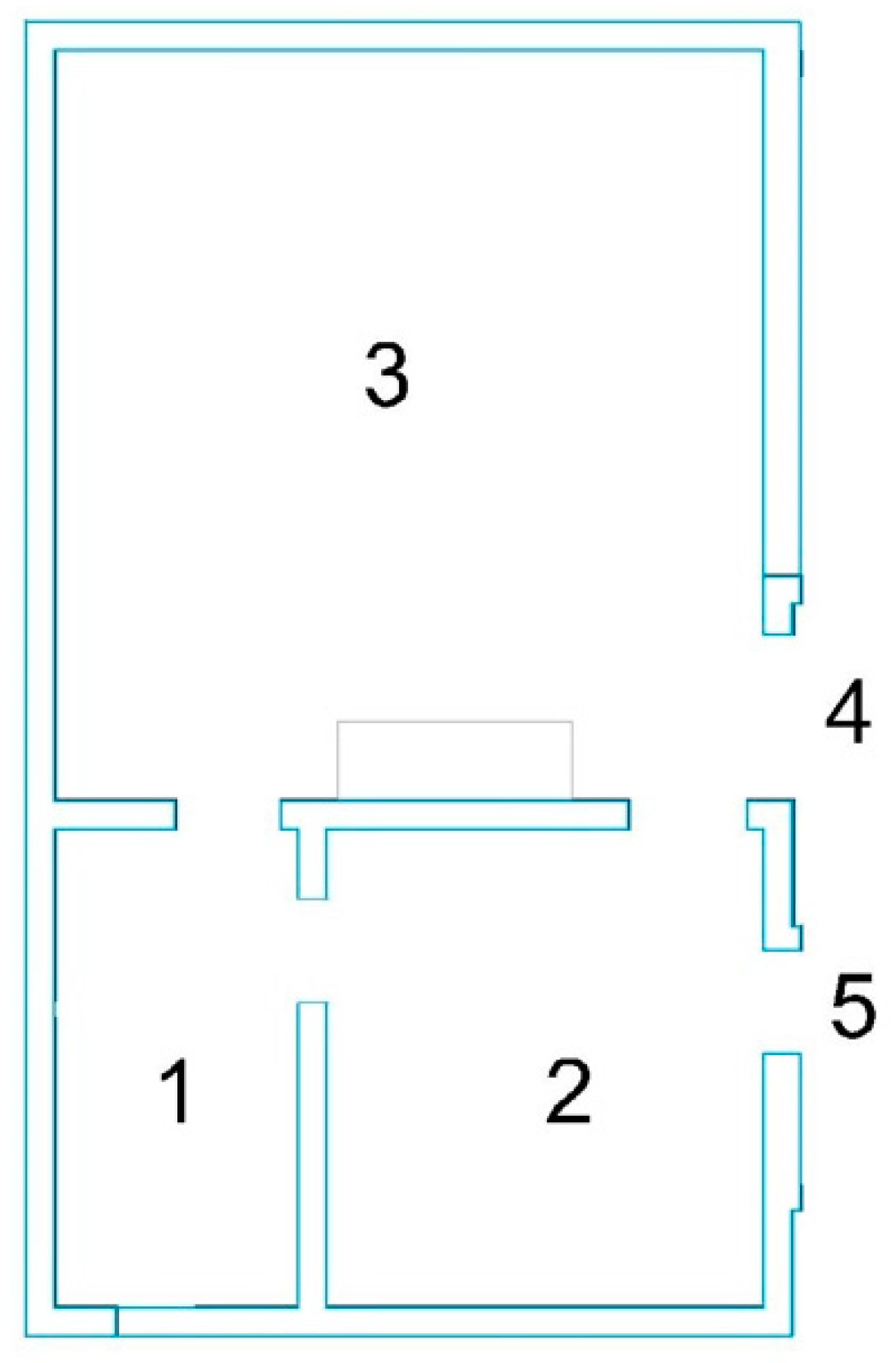
In order to verify the effectiveness and calculation process of the personalized exit selection preference model, a simple building layout was selected, as shown in Figure 1. There were 3 evacuation origins (1, 2, and 3, respectively) and 2 evacuation destinations (4 and 5, respectively), as shown in Table 3 and Figure 1.
Figure 1. Layout of Architecture. The whole space was divided into three halls, namely 1, 2, and 3. There were entrances and exits between the spaces. The space exits were node 4 and node 5.
Table 3. Distribution of Escape Demand.
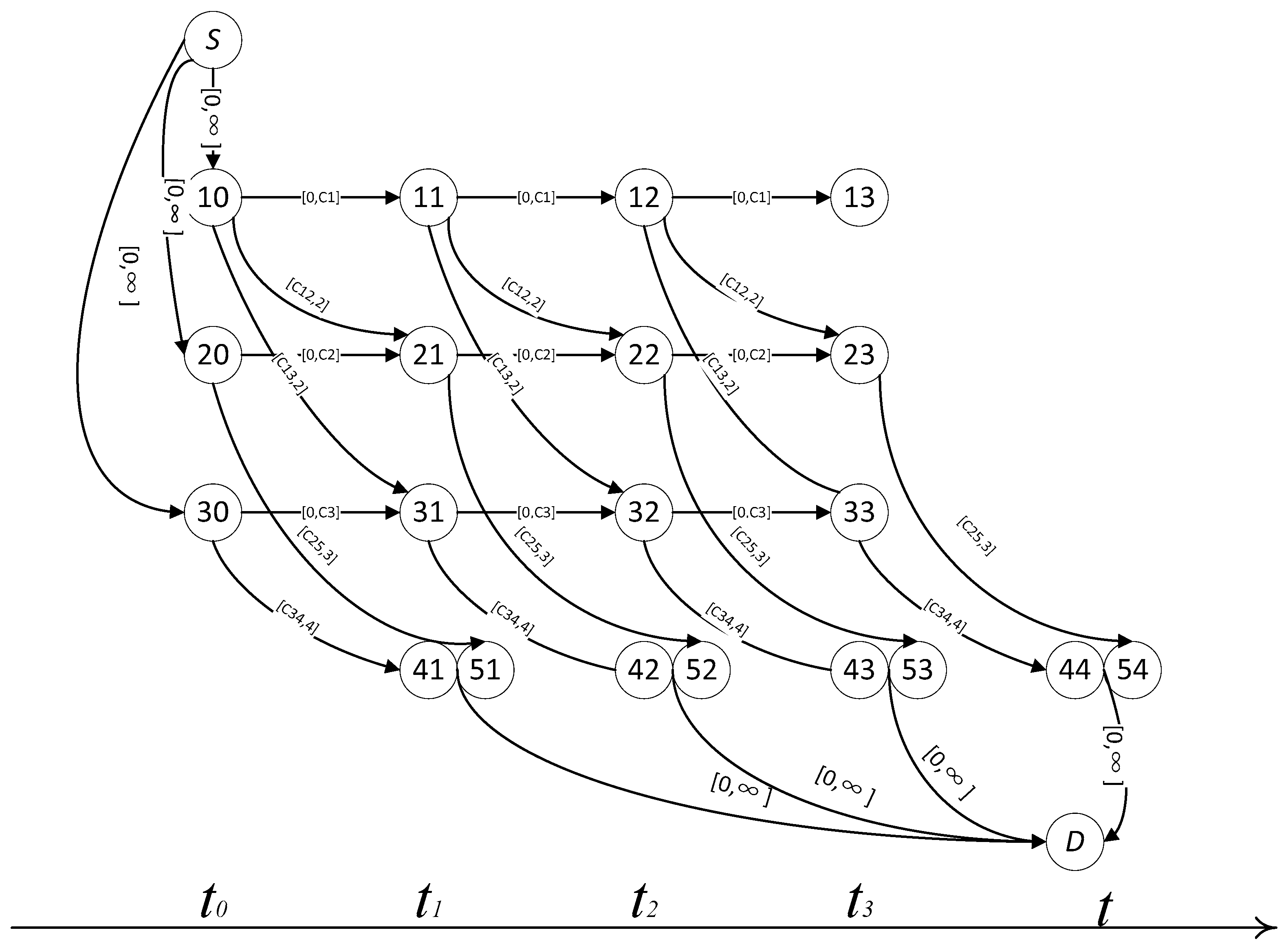
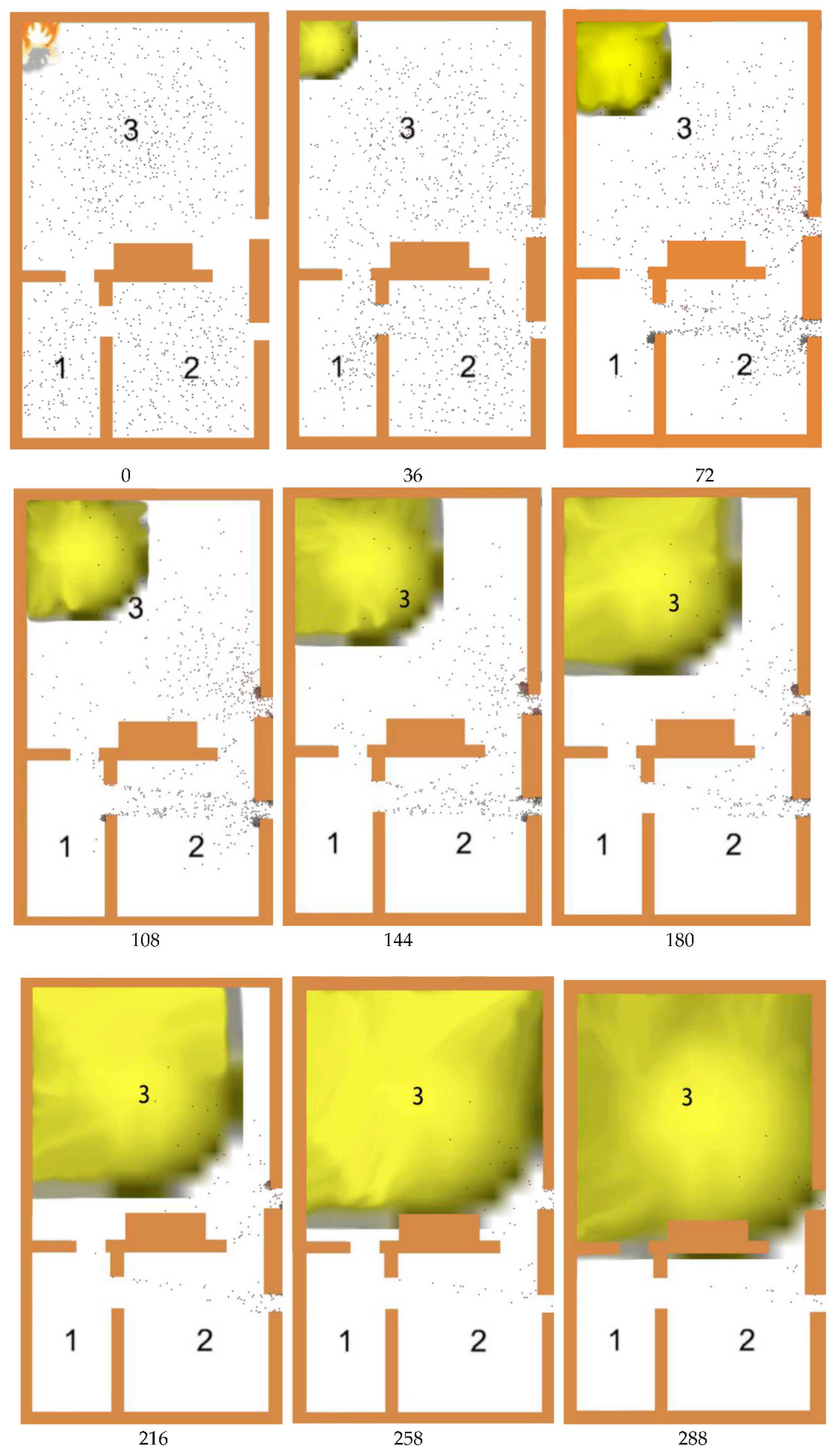
The timing of the fire was controlled by a fire alarm button inserted in the model. When the fire alarm button was clicked, a fire occurred, and the personnel in the model selected the basic assumptions of the model and the case to evacuate according to the previous evacuation time. The evacuation process is shown in Figure 3. The spread of fire smoke was simulated through the system dynamics model, and the diffusion rate of smoke was set to 0.3 m/s. The yellow area in Figure 4 represents the gradual diffusion of smoke caused by fire.
(2)
Individual characteristics and initial layout settings
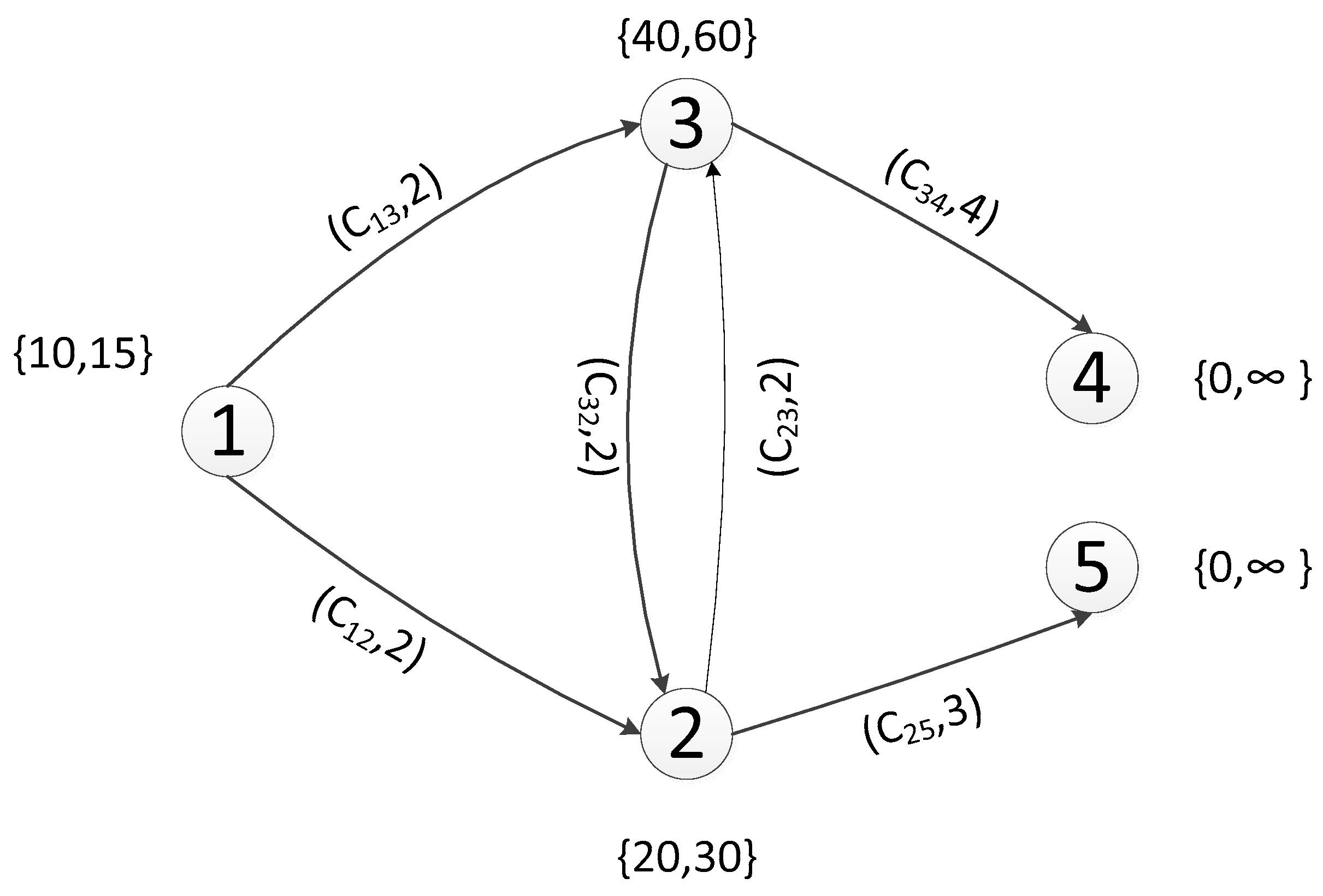
The connection relationship between regions was sampled as shown in Figure 2. Based on the differences of personnel in various areas, different judgments were made on danger and escape time, so different escape behaviors were reflected. The choice of escape time is shown in Figure 3.
Figure 2. Chart of Net.
Figure 3. Chart of Multistep Choice in Emergency.
It was assumed that the evacuation demand was distributed in 1, 2, and 3 areas, as shown in Figure 1 and Table 3. The people were randomly distributed in their respective spaces. The individual characteristic attributes were distributed at any time according to the data resources obtained from the questionnaire. Assuming that the fire occurs in Zone 3 and the fire intensity is Level 4, the dynamic evolution process of the fire affected area is shown in Figure 4.
Figure 4. Escape Opportunity Choice in Main Time (Unit: s).

3.4. Results and Discussion

According to the previous evacuation time selection model and the basic assumptions of the case, area 3 was a disaster area and personnel received hazard information earlier. Some personnel chose to escape immediately at the initial stage. With the continuation of the event, people in each area began to find the danger and make escape preference decisions.
Figure 4 showed the crowd dynamics at an interval of 36 s in the simulation time period. After the fire, some people in the area close to the fire chose to escape immediately. Most people were still in the wait-and-see state. When a fire occurred, the person closest to the fire would react first. Some people chose to escape quickly, while some people stayed on the sidelines.
The experiment described the pre-evacuation reaction state caused by fire in the space. When people in different areas found danger, the reaction time was affected by the fire state, the external environment, and personal cognition. When some people around found the danger and did not give warning, others judged the danger according to their own characteristics and decision-making ability. In the face of danger, some people made decisions quickly, while others kept a wait-and-see state. According to the data, the number of people who immediately escaped within 20 s before the evacuation accounted for only 20.1%. The vast majority of people made judgment and analysis, and maintained a wait-and-see state.
In order to analyze the impact of different instructions on evacuation decision-making timing, different types of proposed schemes were used as experimental background factors in the regression process. Regression analysis was performed according to the collected data. Each record represented an observation. The collected data were not the frequency table data combining different value levels of respective variables; the frequency variable count was added to the original data table.
According to the initial construction form of Equation (12), all independent variables were input into covariates. All variables were introduced into the model. If the significance value (Sig.) of individual factors was greater than 0.05, relevant factors would be removed and regression analysis was continued to carry out.
(1)
Coefficient calibration
Regression analysis is carried out on the model, and the final parameters in the model are as follows. According to the investigation, the choice of evacuation time is divided into two types (stay or leave) based on the tendency of individual decision-making. According to the response intensity of pedestrians from low to high, the specific variables are expressed as: stay, escape. The two regression models of evacuation timing are shown in Equations (13) and (14), respectively:
E C T i t 1 = C o n s t + c 11 1 A g e i + c 12 1 G e n i + c 13 1 E d u i + c 14 1 T i m e i + c 15 1 G r o u p i + c 16 1 Z o n e i + c 17 1 M o d e i + c 2 1 R C S i , t + c 3 1 D F D i , t + c 4 1 R N C i , t + ε i t 1
E C T i t 2 = C o n s t + c 11 2 A g e i + c 12 2 G e n i + c 13 2 E d u i + c 14 2 T i m e i + c 15 2 G r o u p i + c 16 2 Z o n e i + c 17 2 M o d e i + c 2 2 R C S i , t + c 3 2 D F D i , t + c 4 2 R N C i , t + ε i t 2
In order to calibrate the relevant parameters, we conducted a questionnaire survey. The questionnaire set up various relevant scene information and personal basic information. A total of 4527 valid questionnaires were collected [46].
Through analysis of the questionnaire data, the parameters calibrated by the pedestrian emergency evacuation decision-making timing model were obtained and shown in Table 4 and Table 5.
Table 4. Regression of Model Parameters.
Table 5. Covariation and Relationship of Estimated Parameters.
(2)
Discussion
As listed in Table 4, explanatory variables that had a significant impact on the model include gender (Gen), age (Age), residential area (Zone), number of partners (Group), average arrival times in a month (Time), and mode of transportation (Mode). Meanwhile, educational experience (Edu) was not significant; thus, it was excluded by the model.
The coefficient of Gen was positive, and the escape threshold of men was higher than that of women. It was shown that men are less likely to escape in emergencies. They had a higher probability of watching until the danger reached its threshold point. The coefficient of Age was negative, indicating that the older the age, the lower the escape selection threshold, and the easier it was for pedestrians to escape. The younger the escapers were, the higher the probability of taking a wait-and-see and then escaping. It was related to people’s experience. The older escapers were, the more they tended toward conservative strategies. The coefficient of Group was positive, indicating that the more partners, the higher the escape selection threshold. Pedestrians were less likely to escape early, but had higher expectations of watching. The coefficient of Time was positive, indicating that the more times you appeared, the more conservative you tended to be. Because they were familiar with the surrounding environment, pedestrians who arrived less often chose an earlier escape time. The coefficient of Mode was positive, indicating that the traffic mode was closely related to pedestrian escape.
It was shown that the data fit well with the model, and the significance after the parallel test met the requirements as shown in Table 6 and Table 7. The analysis of the natural response rate of different evacuation strategies showed that under emergencies, 19.81% of the total number of people evacuated spontaneously after abnormal perception, as shown in Table 8.
Table 6. Result of Weaken.
Table 7. Test Result of Chi-Square.
Table 8. Estimate of Respond Rate.
In the simulation evacuation model, the selection of crowd characteristics and evacuation time was not only an important input parameter, but also a key factor affecting the evacuation simulation results. Due to the particularity of evacuation events, the data resources of evacuation time were very scarce, and the presented data structure was inconsistent with the input results of the evacuation simulation [30]. Although Lovreglio et al. [22] established a database of pre-evacuation times, due to the diversity of the building scenes and evacuation characteristics, there were still many existing scenes to be summarized and supplemented. Based on regression analysis and simulation, the factors affecting evacuation decision-making were selected, among which are age, gender, education level, companionship, and other factors. This was consistent with existing studies [32,33,47]. The response factors of surrounding people are also one of the key factors affecting the timing of escape and evacuation decision-making.


4. Conclusions

In this paper, a pedestrian pre-evacuation opportunity decision-making model considering the heterogeneity of evacuees is proposed to make up for the lack of pre-evacuation decision-making environment in public safety evacuation decision-making theory. First, the model considers that there are obvious differences in cognition, information, experience, habits, pressure, and decision-making ability. Then, according to the preferences of the fugitives, the personnel decision-making is divided into two types: stay and escape. Finally, multiple influencing factors are selected to construct a regression equation to predict escape opportunities.
The results show that: (1) Choice of escape opportunity was divided into several periods, which was affected by the pedestrian individual risk tolerance, risk categories and strength, distance from danger, and reaction of the neighborhood crowd. (2) There were many key factors indicating the pedestrian individual risk tolerance, in which Gen, Group, Time, and Mode were positive correlations, while Age and Zone were negative correlations. (3) The analysis of the natural response rate of different evacuation strategies shows that under emergencies, 19.81% of the total number of people evacuate spontaneously and immediately after abnormal perception.

Author Contributions

Z.L. and S.Q.: Conceptualization, Methodology, Formal analysis, Resources, Data curation, Writing—original draft, Visualization, Project administration. X.W. and L.Z.: Methodology, Investigation, Data curation, Visualization, Writing & editing. X.W.: Investigation, Data curation, Visualization, Writing. All authors have read and agreed to the published version of the manuscript.

Funding

This research was funded by [Program of National Fund of Philosophy and Social Science of China] grant number [21FGLB014] And The APC was funded by [Program of National Fund of Philosophy and Social Science of China].

Institutional Review Board Statement

Not applicable.

Data Availability Statement

The data used to support the findings of this study are available from the corresponding author upon request.

Conflicts of Interest

The authors declared no potential conflict of interest with respect to the research, authorship, and/or publication of this article.

References

  1. Zhang, S.; Guo, H.; Zhu, K.; Yu, S.; Li, J. Multistage assignment optimization for emergency rescue teams in the disaster chain. Knowl. Based Syst. 2017, 137, 123–137. [Google Scholar] [CrossRef]
  2. Wong, J.-T.; Chung, Y.-S. Rough set approach for accident chains exploration. Accid. Anal. Prev. 2007, 39, 629–637. [Google Scholar] [CrossRef] [PubMed]
  3. Zhang, J.-H.; Li, J.; Liu, Z.-P. Multiple-resource and multiple-depot emergency response problem considering secondary disasters. Expert Syst. Appl. 2012, 39, 11066–11071. [Google Scholar] [CrossRef]
  4. Edgeley, C.M.; Paveglio, T.B. Exploring influences on intended evacuation behaviors during wildfire: What roles for pre-fire actions and event-based cues? Int. J. Disaster Risk Reduct. 2019, 37, 101182. [Google Scholar] [CrossRef]
  5. Moussaid, M.; Helbing, D.; Theraulaz, G. How simple rules determine pedestrian behavior and crowd disasters. Proc. Natl. Acad. Sci. USA 2011, 108, 6884–6888. [Google Scholar] [CrossRef]
  6. Helbing, D.; Johansson, A.; Alabideen, H.Z. Dynamics of crowd disasters: An empirical study. Phys. Rev. E 2007, 75, 046109. [Google Scholar] [CrossRef] [PubMed]
  7. Rahouti, A.; Lovreglio, R.; Nilsson, D.; Kuligowski, E.; Jackson, P.; Rothas, F. Investigating Evacuation Behaviour in Retirement Facilities: Case Studies from New Zealand. Fire Technol. 2021, 57, 1015–1039. [Google Scholar] [CrossRef]
  8. Galea, E.R.; Deere, S.J.; Hopkin, C.G.; Xie, H. Evacuation response behaviour of occupants in a large theatre during a live performance. Fire Mater. 2017, 41, 467–492. [Google Scholar] [CrossRef]
  9. Li, S.; Yu, X.H.; Zhang, Y.J.; Zhai, C.H. A numerical simulation strategy on occupant evacuation behaviors and casualty prediction in a building during earthquakes. Phys. A Stat. Mech. Its Appl. 2018, 490, 1238–1250. [Google Scholar] [CrossRef]
  10. Zhu, R.; Lin, J.; Becerik-Gerber, B.; Li, N. Human-building-emergency interactions and their impact on emergency response performance: A review of the state of the art. Saf. Sci. 2020, 127, 104691. [Google Scholar] [CrossRef]
  11. Hong, S.W.; Lee, Y.G. The Effects of Human Behavior Simulation on Architecture Major Students’ Fire Egress Planning. J. Asian Archit. Build. Eng. 2018, 17, 125–132. [Google Scholar] [CrossRef]
  12. Fu, L.; Cao, S.; Song, W.G.; Fang, J. The Influence of Emergency Signage on Building Evacuation Behavior: An Experimental Study. Fire Mater. 2018, 43, 22–33. [Google Scholar] [CrossRef]
  13. Xie, W.; Lee, E.W.M.; Cheng, Y.; Shi, M.; Cao, R.; Zhang, Y. Evacuation performance of individuals and social groups under different visibility conditions: Experiments and surveys. Int. J. Disaster Risk Reduct. 2020, 47, 101527. [Google Scholar] [CrossRef]
  14. Lovreglio, R.; Fonzone, A.; dell’Olio, L.; Borri, D.; Ibeas, A. The Role of Herding Behaviour in Exit Choice During Evacuation. Procedia-Soc. Behav. Sci. 2014, 160, 390–399. [Google Scholar] [CrossRef]
  15. Busogi, M.; Shin, D.; Ryu, H.; Oh, Y.G.; Kim, N. Weighted affordance-based agent modeling and simulation in emergency evacuation. Saf. Sci. 2017, 96, 209–227. [Google Scholar] [CrossRef]
  16. Shahhoseini, Z.; Sarvi, M.; Saberi, M. Insights Toward Characteristics of Merging Streams of Pedestrian Crowds Based on Experiments with Panicked Ants. Transp. Res. Rec. J. Transp. Res. Board 2016, 2561, 81–88. [Google Scholar] [CrossRef]
  17. Mu, H.L.; Wang, J.H.; Mao, Z.L.; Sun, J.H.; Lo, S.M.; Wang, Q.S. Pre-Evacuation Human Reactions in Fires: An Attribution Analysis Considering Psychological Process. Procedia Eng. 2013, 52, 290–296. [Google Scholar]
  18. Kuligowski, E. Model building: An examination of the pre-evacuation period of the 2001 World Trade Center disaster. Fire Mater. 2015, 39, 285–300. [Google Scholar] [CrossRef]
  19. Lovreglio, R.; Spearpoint, M.; Girault, M. The impact of sampling methods on evacuation model convergence and egress time. Reliab. Eng. Syst. Saf. 2019, 185, 24–34. [Google Scholar] [CrossRef]
  20. Ronchi, E.; Kinateder, M.; Muller, M.; Jost, M.; Nehfischer, M.; Pauli, P.; Muhlberger, A. Evacuation travel paths in virtual reality experiments for tunnel safety analysis. Fire Saf. J. 2015, 71, 257–267. [Google Scholar] [CrossRef]
  21. Gwynne, S.M.V.; Boyce, K.E. Engineering Data. In SFPE Handbook of Fire Protection Engineering; Springer: New York, NY, USA, 2016; pp. 2429–2551. [Google Scholar]
  22. Lovreglio, R.; Kuligowski, E.; Gwynne, S.; Boyce, K. A pre-evacuation database for use in egress simulations. Fire Saf. J. 2019, 105, 107–128. [Google Scholar] [CrossRef]
  23. Kobes, M.; Helsloot, I.; de Vries, B.; Post, J. Exit choice, (pre-)movement time and (pre-)evacuation behaviour in hotel fire evacuation—Behavioural analysis and validation of the use of serious gaming in experimental research. Procedia Eng. 2010, 3, 37–51. [Google Scholar] [CrossRef]
  24. Lovreglio, R.; Ronchi, E.; Nilsson, D. A model of the decision-making process during pre-evacuation. Fire Saf. J. 2015, 78, 168–179. [Google Scholar] [CrossRef]
  25. Kuligowski, E.D. Predicting Human Behavior During Fires. Fire Technol. 2013, 49, 101–120. [Google Scholar] [CrossRef]
  26. Kuligowski, E.D.; Peacock, R.D.; Averill, J.D. Modeling the Evacuation of the World Trade Center Towers on September 11, 2001. Fire Technol. 2013, 49, 65–81. [Google Scholar] [CrossRef]
  27. Sherman, M.; Peyrot, M.; Agda, L.A.; Gershon, R.R.M. Modeling pre-evacuation delay by evacuees in World Trade Center Towers 1 and 2 on September 11, 2001: A revisit using regression analysis. Fire Saf. J. 2011, 46, 414–424. [Google Scholar] [CrossRef]
  28. Zhang, G.; Huang, D.; Zhu, G.; Yuan, G. Probabilistic model for safe evacuation under the effect of uncertain factors in fire. Saf. Sci. 2017, 93, 222–229. [Google Scholar] [CrossRef]
  29. Gwynne, S.M.V.; Rosenbaum, E.R. Employing the Hydraulic Model in Assessing Emergency Movement. In SFPE Handbook of Fire Protection Engineering; Springer: New York, NY, USA, 2016; pp. 2115–2151. [Google Scholar]
  30. Zhao, X.; Lovreglio, R.; Nilsson, D. Modelling and interpreting pre-evacuation decision-making using machine learning. Autom. Constr. 2020, 113, 103140. [Google Scholar] [CrossRef]
  31. Fang, J.; El-Tawil, S.; Aguirre, B. Leader–follower model for agent based simulation of social collective behavior during egress. Saf. Sci. 2016, 83, 40–47. [Google Scholar] [CrossRef]
  32. Golshani, N.; Shabanpour, R.; Mohammadian, A.; Auld, J.; Ley, H. Evacuation decision behavior for no-notice emergency events. Transp. Res. Part D Transp. Environ. 2019, 77, 364–377. [Google Scholar] [CrossRef]
  33. Li, Z.; Xu, W. Pedestrian evacuation within limited-space buildings based on different exit design schemes. Saf. Sci. 2020, 124, 104575. [Google Scholar] [CrossRef]
  34. Li, Z.; Ato Xu, W. Path decision modelling for passengers in the urban rail transit hub under the guidance of traffic signs. J. Ambient Intell. Humaniz. Comput. 2019, 10, 365–372. [Google Scholar] [CrossRef]
  35. Bode, N.W.F.; Holl, S.; Mehner, W.; Seyfried, A. Disentangling the Impact of Social Groups on Response Times and Movement Dynamics in Evacuations. PLoS ONE 2015, 10, e0121227. [Google Scholar] [CrossRef] [PubMed]
  36. Aguirre, B.E.; El-Tawil, S.; Best, E.; Gill, K.B.; Fedorov, V. Contributions of social science to agent-based models of building evacuation. Contemp. Soc. Sci. 2011, 6, 415–432. [Google Scholar] [CrossRef]
  37. Johnson, P.; Thomson, M. Journeys into dialectical behaviour therapy (DBT): Capturing the staff and service-user experience. J. Intellect. Disabil. 2016, 7, 84–93. [Google Scholar]
  38. Knoop, V.L.; Hoogendoorn, S.P.; van Zuylen, H. Rerouting behaviour of travellers under exceptional traffic conditions—An empirical analysis of route choice. Procedia Eng. 2010, 3, 113–128. [Google Scholar] [CrossRef]
  39. Ronchi, E.; Reneke, P.A.; Peacock, R.D. A conceptual fatigue-motivation model to represent pedestrian movement during stair evacuation. Appl. Math. Model. 2016, 40, 4380–4396. [Google Scholar] [CrossRef]
  40. Hughes, R.L. The Flow of Human Crowds. Annu. Rev. Fluid Mech. 2003, 35, 169–182. [Google Scholar] [CrossRef]
  41. Haghani, M.; Sarvi, M.; Shahhoseini, Z. Evacuation behaviour of crowds under high and low levels of urgency: Experiments of reaction time, exit choice and exit-choice adaptation. Saf. Sci. 2020, 126, 104679. [Google Scholar] [CrossRef]
  42. Aalami, S.; Kattan, L. Fairness and efficiency in pedestrian emergency evacuation: Modeling and simulation. Saf. Sci. 2020, 121, 373–384. [Google Scholar] [CrossRef]
  43. Yuan, F.; Han, L.D. A multi-objective optimization approach for evacuation planning. Procedia Eng. 2010, 3, 217–227. [Google Scholar] [CrossRef][Green Version]
  44. Zheng, Y.N.; Chase, R.T.; Elefteriadou, L.; Sisiopiku, V.; Schroeder, B. Driver types and their behaviors within a high level of pedestrian activity environment. Transp. Lett. 2017, 9, 1–11. [Google Scholar] [CrossRef]
  45. Zhou, Z.B.; Mo, S.H.; Du, S.; Geng, J.H. Behaviors recognition and step detection for pedestrian navigation via a foot-mounted inertial measurement unit. In Proceedings of the 30th International Technical Meeting of the Satellite Division of the Institute of Navigation (Ion Gnss+ 2017), Portland, OR, USA, 25–29 September 2017; pp. 357–367. [Google Scholar]
  46. Li, Z. An emergency exits choice preference model based on characteristics of individual diversity. Adv. Mech. Eng. 2017, 9, 168781401769354. [Google Scholar] [CrossRef]
  47. Haghani, M.; Sarvi, M. Simulating dynamics of adaptive exit-choice changing in crowd evacuations: Model implementation and behavioural interpretations. Transp. Res. Part C Emerg. Technol. 2019, 103, 56–82. [Google Scholar] [CrossRef]
Publisher’s Note: MDPI stays neutral with regard to jurisdictional claims in published maps and institutional affiliations.

Article Metrics

Citations

Article Access Statistics

Multiple requests from the same IP address are counted as one view.