

Influence of the COVID-19 Pandemic on Medical Management and on Healthcare Delivery of Immune-Mediated Rheumatic and Musculoskeletal Diseases during the First Pandemic Period February to July 2020: A Systematic Review



Abstract
1. Introduction
2. Materials and Methods
3. Results
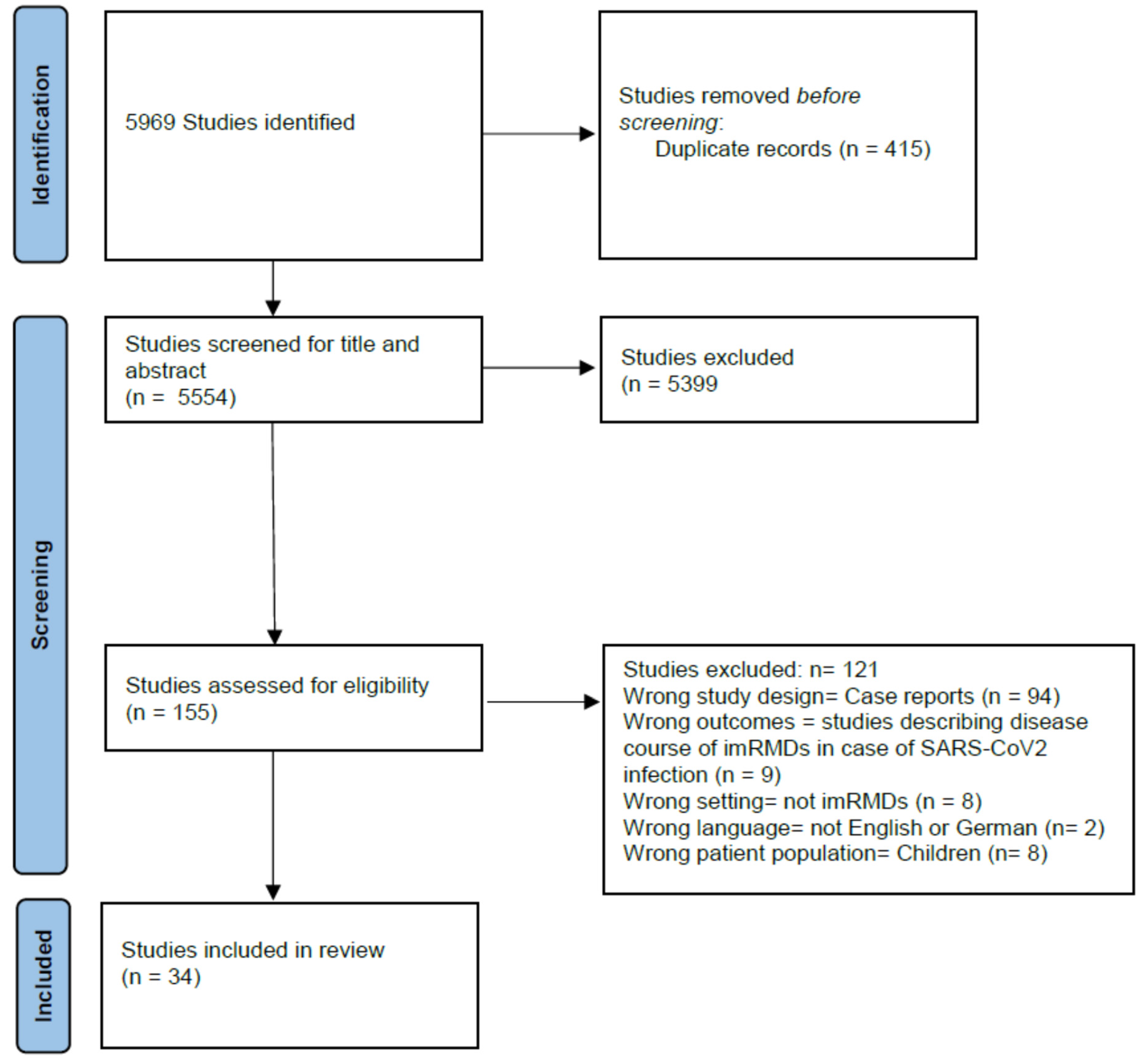
3.1. Study Selection
3.2. Study Characteristics and Levels of Evidence
3.3. Studies Origin
3.4. Outcomes
3.4.1. Influence on the Medical Management of imRMDs
- (a)
- Non-availability of drugs
- (b)
- Non-adherence to medication
- (c)
- Drugs changed or stopped
- (d)
- Influence on the treating rheumatologist
3.4.2. Influences on Healthcare Delivery
- (a)
- Avoidance of in-person visits
- (b)
- Alternative types of visits
4. Discussion
Strengths and Limitations
5. Conclusions
Supplementary Materials
Author Contributions
Funding
Institutional Review Board Statement
Informed Consent Statement
Data Availability Statement
Conflicts of Interest
Abbreviations
| axSpA | axial spondyloarthritis |
| csDMARDs, bDMARDs, tsDMARDs | conventional synthetic, biological and targeted synthetic disease-modifying anti-rheumatic drugs |
| CVT | clinical video telehealth |
| HCQ | hydroxychloroquine |
| imRMDs | immune-mediated Rheumatic and musculoskeletal diseases |
| JAKi | Janus kinase inhibitors |
| MMF | mycophenolate mofetil |
| NSAIDs | non-steroidal anti-inflammatory drugs |
| PRISMA | Preferred Reporting Items for Systematic Reviews and Meta-Analyses |
| PsoA | psoriasis arthritis |
| RA | rheumatoid arthritis |
| SLE | systemic lupus erythematodes |
| VVC | video-based Veterans Affairs Video Connect |
References
- Zhu, N.; Zhang, D.; Wang, W.; Li, X.; Yang, B.; Song, J.; Zhao, X.; Huang, B.; Shi, W.; Lu, R.; et al. A Novel Coronavirus from Patients with Pneumonia in China, 2019. N. Engl. J. Med. 2020, 382, 727–733. [Google Scholar] [CrossRef] [Scilit] [PubMed]
- Wei, W.E.; Li, Z.; Chiew, C.J.; Yong, S.E.; Toh, M.P.; Lee, V.J. Presymptomatic Transmission of SARS-CoV-2—Singapore, January 23–March 16, 2020. Morb. Mortal. Wkly. Rep. 2020, 69, 411–415. [Google Scholar] [CrossRef] [Scilit] [PubMed]
- Aleem, A.; Samad, A.B.A.; Slenker, A.K. Emerging Variants of SARS-CoV-2 and Novel Therapeutics Against Coronavirus (COVID-19). In StatPearls; StatPearls Publishing: Treasure Island, FL, USA, 2022. Available online: https://www.ncbi.nlm.nih.gov/books/NBK570580/ (accessed on 23 October 2022).
- World Health Organisation. Tracking SARS-CoV-2 Variants. Available online: https://www.who.int/activities/tracking-SARS-CoV-2-variants (accessed on 23 October 2023).
- Gupta, A.; Madhavan, M.V.; Sehgal, K.; Nair, N.; Mahajan, S.; Sehrawat, T.S.; Bikdeli, B.; Ahluwalia, N.; Ausiello, J.C.; Wan, E.Y.; et al. Extrapulmonary manifestations of COVID-19. Nat. Med. 2020, 26, 1017–1032. [Google Scholar] [CrossRef] [Scilit]
- Gandhi, R.T.; Lynch, J.B.; del Rio, C. Mild or Moderate COVID-19. N. Engl. J. Med. 2020, 383, 1757–1766. [Google Scholar] [CrossRef] [Scilit] [PubMed]
- Landewé, R.B.M.; Kroon, F.P.B.; Alunno, A.; Najm, A.; Bijlsma, J.W.; Burmester, G.R.R.; Caporali, R.; Combe, B.; Conway, R.; Curtis, J.R.; et al. EULAR recommendations for the management and vaccination of people with rheumatic and musculoskeletal diseases in the context of SARS-CoV-2: The November 2021 update. Ann. Rheum. Dis. 2022, 81, 1628–1639. [Google Scholar] [CrossRef] [Scilit] [PubMed]
- Grainger, R.; Kim, A.H.J.; Conway, R.; Yazdany, J.; Robinson, P.C. COVID-19 in people with rheumatic diseases: Risks, outcomes, treatment considerations. Nat. Rev. Rheumatol. 2022, 18, 191–204. [Google Scholar] [CrossRef] [Scilit] [PubMed]
- D’silva, K.M.; Serling-Boyd, N.; Wallwork, R.; Hsu, T.; Fu, X.; Gravallese, E.M.; Choi, H.K.; Sparks, J.A.; Wallace, Z.S. Clinical characteristics and outcomes of patients with coronavirus disease 2019 (COVID-19) and rheumatic disease: A comparative cohort study from a US ‘hot spot’. Ann. Rheum. Dis. 2020, 79, 1156–1162. [Google Scholar] [CrossRef] [Scilit] [PubMed]
- Page, M.J.; McKenzie, J.E.; Bossuyt, P.M.; Boutron, I.; Hoffmann, T.C.; Mulrow, C.D.; Shamseer, L.; Tetzlaff, J.M.; Akl, E.A.; Brennan, S.E.; et al. The PRISMA 2020 statement: An updated guideline for reporting systematic reviews. BMJ 2021, 372, n71. [Google Scholar] [CrossRef] [Scilit] [PubMed]
- Oxford Centre for Evidence-Based Medicine: Levels of Evidence (March 2009)—Centre for Evidence-Based Medicine (CEBM), University of Oxford. Available online: https://www.cebm.ox.ac.uk/resources/levels-of-evidence/oxford-centre-for-evidence-based-medicine-levels-of-evidence-march-2009 (accessed on 2 June 2022).
- Covidence. Covidence—Better Systematic Review Management. Available online: https://www.covidence.org/ (accessed on 24 December 2023).
- Zotero|Your Personal Research Assistant. Available online: https://www.zotero.org (accessed on 31 December 2022).
- Akintayo, R.O.; Akpabio, A.A.; Kalla, A.A.; Dey, D.; Migowa, A.N.; Olaosebikan, H.; Bahiri, R.; El Miedany, Y.; Hadef, D.; Hamdi, W.; et al. The impact of COVID-19 on rheumatology practice across Africa. Rheumatology 2021, 60, 392–398. [Google Scholar] [CrossRef] [Scilit]
- Batıbay, S.; Koçak Ulucaköy, R.; Özdemir, B.; Günendi, Z.; Göğüş, F.N. Clinical outcomes of COVID-19 in patients with rheumatic diseases and the effects of the pandemic on rheumatology outpatient care: A single-centre experience from Turkey. Int. J. Clin. Pract. 2021, 75, e14442. [Google Scholar] [CrossRef] [Scilit]
- Ciurea, A.; Papagiannoulis, E.; Bürki, K.; von Loga, I.; Micheroli, R.; Möller, B.; Rubbert-Roth, A.; Andor, M.; Bräm, R.; Müller, A.; et al. Impact of the COVID-19 pandemic on the disease course of patients with inflammatory rheumatic diseases: Results from the Swiss Clinical Quality Management cohort. Ann. Rheum. Dis. 2021, 80, 238–241. [Google Scholar] [CrossRef] [Scilit] [PubMed]
- Ziadé, N.; el Kibbi, L.; Hmamouchi, I.; Abdulateef, N.; Halabi, H.; Hamdi, W.; Abutiban, F.; el Rakawi, M.; Eissa, M.; Masri, B. Impact of the COVID-19 pandemic on patients with chronic rheumatic diseases: A study in 15 Arab countries. Int. J. Rheum. Dis. 2020, 23, 1550–1557. [Google Scholar] [CrossRef] [Scilit] [PubMed]
- Costantino, F.; Bahier, L.; Tarancón, L.C.; Leboime, A.; Vidal, F.; Bessalah, L.; Breban, M.; D’agostino, M.-A. COVID-19 in French patients with chronic inflammatory rheumatic diseases: Clinical features, risk factors and treatment adherence. Jt. Bone Spine 2021, 88, 105095. [Google Scholar] [CrossRef] [Scilit] [PubMed]
- Coskun, B.N.; Yagiz, B.; Pehlivan, Y.; Dalkilic, E. Attitudes of patients with a rheumatic disease on drug use in the COVID-19 pandemic. Adv Rheumatol. 2021, 61, 55. [Google Scholar] [CrossRef] [Scilit] [PubMed]
- Mathew, J.; Ganapati, A.; Padiyar, S.; Nair, A.; Gowri, M.; Kachroo, U.; Nair, A.; Priya, S. Impact of COVID-19 Pandemic and Resultant Lockdown in India on Patients with Chronic Rheumatic Diseases: An Online Survey. Indian J. Rheumatol. 2021, 16, 30–42. [Google Scholar] [CrossRef] [Scilit]
- Glintborg, B.; Jensen, D.V.; Engel, S.; Terslev, L.; Pfeiffer Jensen, M.; Hendricks, O.; Østergaard, M.; Rasmussen, S.H.; Adelsten, T.; Colic, A.; et al. Self-protection strategies and health behaviour in patients with inflammatory rheumatic diseases during the COVID-19 pandemic: Results and predictors in more than 12 000 patients with inflammatory rheumatic diseases followed in the Danish DANBIO registry. RMD Open 2021, 7, e001505. [Google Scholar] [CrossRef] [Scilit] [PubMed]
- Glintborg, B.; Jensen, D.V.; Terslev, L.; Pfeiffer Jensen, M.; Hendricks, O.; Østergaard, M.; Engel, S.; Rasmussen, S.H.; Adelsten, T.; Colic, A.; et al. Impact of the COVID-19 pandemic on treat-to-target strategies and physical consultations in >7000 patients with inflammatory arthritis. Rheumatology 2021, 60, SI3–SI12. [Google Scholar] [CrossRef] [Scilit] [PubMed]
- Mancuso, C.A.; Duculan, R.; Jannat-Khah, D.; Barbhaiya, M.; Bass, A.R.; Mandl, L.A.; Mehta, B. Modifications in Systemic Rheumatic Disease Medications: Patients’ Perspectives during the Height of the COVID-19 Pandemic in New York City. Arthritis Care Res. 2021, 73, 909–917. [Google Scholar] [CrossRef] [Scilit] [PubMed]
- Hasseli, R.; Müller-Ladner, U.; Keil, F.; Broll, M.; Dormann, A.; Fräbel, C.; Hermann, W.; Heinmüller, C.-J.; Hoyer, B.F.; Löffler, F.; et al. The influence of the SARS-CoV-2 lockdown on patients with inflammatory rheumatic diseases on their adherence to immunomodulatory medication: A cross sectional study over 3 months in Germany. Rheumatology 2021, 60, SI51–S158. [Google Scholar] [CrossRef] [Scilit]
- Hausmann, J.S.; Kennedy, K.; Simard, J.F.; Liew, J.W.; Sparks, J.A.; Moni, T.T.; Harrison, C.; Larché, M.J.; Levine, M.; Sattui, S.E.; et al. Immediate effect of the COVID-19 pandemic on patient health, health-care use, and behaviours: Results from an international survey of people with rheumatic diseases. Lancet Rheumatol. 2021, 3, e707–e714. [Google Scholar] [CrossRef] [Scilit]
- George, M.D.; Baker, J.F.; Banerjee, S.; Busch, H.; Curtis, D.; Danila, M.I.; Gavigan, K.; Kirby, D.; Merkel, P.A.; Munoz, G.; et al. Social Distancing, Health Care Disruptions, Telemedicine Use, and Treatment Interruption during the COVID-19 Pandemic in Patients with or without Autoimmune Rheumatic Disease. ACR Open Rheumatol. 2021, 3, 381–389. [Google Scholar] [CrossRef] [Scilit]
- George, M.D.; Venkatachalam, S.; Banerjee, S.; Baker, J.F.; Merkel, P.A.; Gavigan, K.; Curtis, D.; Danila, M.I.; Curtis, J.R.; Nowell, W.B. Concerns, Healthcare Use, and Treatment Interruptions in Patients with Common Autoimmune Rheumatic Diseases during the COVID-19 Pandemic. J. Rheumatol. 2021, 48, 603–607. [Google Scholar] [CrossRef] [Scilit] [PubMed]
- Kalyoncu, U.; PehliVan, Y.; Akar, S.; KaşiFoğlu, T.; KiMyon, G.; Karadağ, Ö.; Dalkılıç, H.E.; Ertenli, A.İ.; Kılıç, L.; Ersözlü, D.; et al. Preferences of inflammatory arthritis patients for biological disease-modifying anti-rheumatic drugs in the first 100 days of the COVID-19 pandemic. Turk. J. Med. Sci. 2021, 51, 1615–1623. [Google Scholar] [CrossRef] [Scilit] [PubMed]
- Murray, K.; Quinn, S.; Turk, M.; O’rourke, A.; Molloy, E.; O’neill, L.; Mongey, A.B.; Fearon, U.; Veale, D.J. COVID-19 and rheumatic musculoskeletal disease patients: Infection rates, attitudes and medication adherence in an Irish population. Rheumatology 2021, 60, 902–906. [Google Scholar] [CrossRef] [Scilit] [PubMed]
- Seyahi, E.; Poyraz, B.Ç.; Sut, N.; Akdogan, S.; Hamuryudan, V. The psychological state and changes in the routine of the patients with rheumatic diseases during the coronavirus disease (COVID-19) outbreak in Turkey: A web-based cross-sectional survey. Rheumatol. Int. 2020, 40, 1229–1238. [Google Scholar] [CrossRef] [Scilit]
- Sloan, M.; Gordon, C.; Harwood, R.; Lever, E.; Wincup, C.; Bosley, M.; Brimicombe, J.; Pilling, M.; Sutton, S.; Holloway, L.; et al. The impact of the COVID-19 pandemic on the medical care and health-care behaviour of patients with lupus and other systemic autoimmune diseases: A mixed methods longitudinal study. Rheumatol. Adv. Pract. 2021, 5, rkaa072. [Google Scholar] [CrossRef] [Scilit] [PubMed]
- Hassen, L.M.; Almaghlouth, I.A.; Hassen, I.M.; Daghestani, M.H.; Almohisen, A.A.; Alqurtas, E.M.; Alkhalaf, A.; Bedaiwi, M.K.; Omair, M.A.; Almogairen, S.M.; et al. Impact of COVID-19 outbreak on rheumatic patients’ perceptions and behaviors: A cross-sectional study. Int. J. Rheum. Dis. 2020, 23, 1541–1549. [Google Scholar] [CrossRef] [Scilit]
- Guaracha-Basáñez, G.A.; Contreras-Yáñez, I.; Hernández-Molina, G.; González-Marín, A.; Pacheco-Santiago, L.D.; Valverde-Hernández, S.S.; Peláez-Ballestas, I.; Pascual-Ramos, V. Clinical and bioethical implications of health care interruption during the COVID-19 pandemic: A cross-sectional study in outpatients with rheumatic diseases. PLoS ONE 2021, 16, e0253718. [Google Scholar] [CrossRef] [Scilit] [PubMed]
- Abualfadl, E.; Ismail, F.; Shereef, R.R.E.; Hassan, E.; Tharwat, S.; Mohamed, E.F.; Abda, E.A.; Radwan, A.R.; Fawzy, R.M.; Moshrif, A.H.; et al. Impact of COVID-19 pandemic on rheumatoid arthritis from a Multi-Centre patient-reported questionnaire survey: Influence of gender, rural–urban gap and north–south gradient. Rheumatol. Int. 2021, 41, 345–353. [Google Scholar] [CrossRef] [Scilit]
- Michaud, K.; Pedro, S.; Wipfler, K.; Agarwal, E.; Katz, P. Changes in Disease-Modifying Anti-rheumatic Drug Treatment for Patients with Rheumatoid Arthritis in the US during the COVID-19 Pandemic: A Three-Month Observational Study. Arthritis Care Res. 2021, 73, 1322–1331. [Google Scholar] [CrossRef] [Scilit]
- Banerjee, S.; George, M.; Young, K.; Venkatachalam, S.; Gordon, J.; Bs, C.B.; Curtis, D.; Ferrada, M.; Gavigan, K.; Grayson, P.C.; et al. Effects of the COVID-19 Pandemic on Patients Living with Vasculitis. ACR Open Rheumatol. 2021, 3, 17–24. [Google Scholar] [CrossRef] [Scilit] [PubMed]
- Ince, B.; Bektaş, M.; Koca, N.; Ağargün, B.F.; Zarali, S.; Güzey, D.Y.; Ince, A.; Sevdi, M.S.; Yalçinkaya, Y.; Artim-Esen, B.; et al. A single center survey study of systemic vasculitis and COVID-19 during the first months of pandemic. Turk. J. Med. Sci. 2021, 51, 2243–2247. [Google Scholar] [CrossRef] [Scilit] [PubMed]
- Kant, S.; Morris, A.; Ravi, S.; Floyd, L.; Gapud, E.; Antichos, B.; Dhaygude, A.; Seo, P.; Geetha, D. The impact of COVID-19 pandemic on patients with ANCA associated vasculitis. J. Nephrol. 2021, 34, 185–190. [Google Scholar] [CrossRef] [Scilit]
- Cornet, A.; Andersen, J.; Tani, C.; Mosca, M. Hydroxychloroquine availability during COVID-19 crisis and its effect on patient anxiety. Lupus Sci. Med. 2021, 8, e000496. [Google Scholar] [CrossRef] [Scilit] [PubMed]
- Rathi, M.; Singh, P.; Bi, H.P.; Shivanna, A.; Kavadichanda, C.; Tripathy, S.R.; Parthasarathy, J.; Tota, S.; Maurya, S.; Vijayalekshmi, V.; et al. Impact of the COVID-19 pandemic on patients with systemic lupus erythematosus: Observations from an Indian inception cohort. Lupus 2021, 30, 158–164. [Google Scholar] [CrossRef] [Scilit] [PubMed]
- Gupta, L.; Kharbanda, R.; Agarwal, V.; Misra, D.P.; Agarwal, V. Patient Perspectives on the Effect of the SARS-CoV-2 Pandemic on Patients with Systemic Sclerosis: An International Patient Survey. JCR J. Clin. Rheumatol. 2021, 27, 31–33. [Google Scholar] [CrossRef] [Scilit] [PubMed]
- Gupta, L.; Lilleker, J.B.; Agarwal, V.; Chinoy, H.; Aggarwal, R. COVID-19 and myositis—Unique challenges for patients. Rheumatology 2021, 60, 907–910. [Google Scholar] [CrossRef] [Scilit] [PubMed]
- Kavadichanda, C.; Shah, S.; Daber, A.; Bairwa, D.; Mathew, A.; Dunga, S.; Das, A.C.; Gopal, A.; Ravi, K.; Kar, S.S.; et al. Tele-rheumatology for overcoming socioeconomic barriers to healthcare in resource constrained settings: Lessons from COVID-19 pandemic. Rheumatology 2021, 60, 3369–3379. [Google Scholar] [CrossRef] [Scilit] [PubMed]
- Kavadichanda, C.; Shobha, V.; Ghosh, P.; Wakhlu, A.; Bairwa, D.; Mohanan, M.; Janardana, R.; Sircar, G.; Sahoo, R.R.; Joseph, S.; et al. Clinical and psychosocioeconomic impact of COVID-19 pandemic on patients of the Indian Progressive Systemic Sclerosis Registry (IPSSR). Rheumatol. Adv. Pract. 2021, 5, rkab027. [Google Scholar] [CrossRef] [Scilit]
- Singh, J.A.; Richards, J.S.; Chang, E.; Joseph, A.; Ng, B. Management of Rheumatic Diseases during the COVID-19 Pandemic: A National Veterans Affairs Survey of Rheumatologists. Arthritis Care Res. 2021, 73, 998–1003. [Google Scholar] [CrossRef] [Scilit]
- Bos, W.H.; van Tubergen, A.; Vonkeman, H.E. Telemedicine for patients with rheumatic and musculoskeletal diseases during the COVID-19 pandemic; a positive experience in The Netherlands. Rheumatol. Int. 2021, 41, 565–573. [Google Scholar] [CrossRef] [Scilit] [PubMed]
- Dejaco, C.; Alunno, A.; Bijlsma, J.W.; Boonen, A.; Combe, B.; Finckh, A.; Machado, P.M.; Padjen, I.; Sivera, F.; Stamm, T.A.; et al. Influence of COVID-19 pandemic on decisions for the management of people with inflammatory rheumatic and musculoskeletal diseases: A survey among EULAR countries. Ann. Rheum. Dis. 2021, 80, 518–526. [Google Scholar] [CrossRef] [Scilit] [PubMed]
- George, M.D.; Danila, M.I.; Watrous, D.; Reddy, S.; Alper, J.; Xie, F.; Nowell, W.B.; Kallich, J.; Clinton, C.; Saag, K.G.; et al. Disruptions in Rheumatology Care and the Rise of Telehealth in Response to the COVID-19 Pandemic in a Community Practice–Based Network. Arthritis Care Res. 2021, 73, 1153–1161. [Google Scholar] [CrossRef] [Scilit] [PubMed]
- Rebić, N.; Park, J.Y.; Garg, R.; Ellis, U.; Kelly, A.; Davidson, E.; De Vera, M.A. A rapid review of medication taking (‘adherence’) among patients with rheumatic diseases during the COVID-19 pandemic. Arthritis Care Res. 2021, 74, 1961–1969. [Google Scholar] [CrossRef] [Scilit] [PubMed]

| Study, Year, Country/World Region | Study Design | Level of Evidence | Research Question | Population | Specific Influence on the Treatment/Main Outcome Measures |
|---|---|---|---|---|---|
| Akintayo et al. 2021, Africa [14] | Survey | IV | To identify changes in rheumatology service during the COVID-19 pandemic in Africa | 554 questionnaires completed by rheumatologists | 66% described shortage of hydroxychloroquine; 36% reduced corticoids; 16% stopped corticoids; 14% avoided start of biologics. |
| Batibay et al. 2021, Turkey [15] | Survey | IV | “To determine how the COVID-19 pandemic affected routine care in rheumatology and if there were any changes in rheumatologic medication use” | 320 patients with different immune-mediated rheumatic diseases | 16% had problems in obtaining hydroxychloroquine; 12% changed medication without advice; 33% interrupted bDMARDs with advice from their physician; 9% stopped bDMARDs on their own. |
| Ciurea et al. 2021, Switzerland [16] | Survey | IV | Adherence to anti-rheumatic drugs before and during the first COVID-19 wave | 666 patients with immune-mediated rheumatic diseases (RA, AxSpa and PsoA) compared pre-COVID and during COVID-19 wave | 20% of AxSpA patients were not adherent to anti-rheumatic drugs during the first COVID wave (versus 13% pre-COVID); regarding the other diseases, only a slight non-significant increase in non-adherence was observed. |
| Ziadé et al. 2020, Arab countries (Levant, Gulf, North Africa) [17] | Survey | IV | Influence of the COVID-19 pandemic on access to rheumatology care for patients with chronic rheumatologic diseases | 2190 patients with chronic rheumatic diseases from different Arab countries | 70% reported no negative effect on medication adherence; 18% described shortage of hydroxychloroquine; thereof 15% had to stop medication due to shortage; 8% stopped medication because of fear of infections. |
| Costantino et al. 2021, France [18] | Survey | IV | Consequences of the pandemic on rheumatic disease management | 655 patients with immune-mediated rheumatic diseases (AxSpA, RA, PsoA) | More than one-third of patients (34.2%) suspended or decreased the dosage of one drug. NSAIDs were the most commonly decreased medication (33.7% of patients), followed by bDMARDs (13.4%) and cDMARDs (10.1%). |
| Coskun et al. 2021, Turkey [19] | Survey | IV | To determine if patients maintained their treatment for imRMDS during the pandemic period To determine the factors responsible for discontinuation | 278 patients with immune-mediated rheumatic diseases (ankylosing spondylitis (AS) and RA) from Turkey | Overall, 22% of patients reduced or stopped treatment. 27% of the patients stopped bDMARDs. 5% stopped low-dose glucocorticoids. 4% stopped methotrexate. |
| Ganapati et al. 2021, India [20] | Survey | IV | To describe the influence of COVID-19 on patients with chronic rheumatic diseases | 1533 completed responses of patients with chronic rheumatic diseases (inflammatory and non-inflammatory) across India | 47% of patients were fully compliant to medication. 35% were partly compliant and 11% discontinued their medication. 90% of patients experienced difficulty in procuring medication. 69% of patients on hydroxychloroquine had difficulty obtaining it. |
| Glintborg et al. 2021, Denmark [21] | Survey | IV | To explore self-protection and health behavior including adherence to disease-modifying anti-rheumatic treatment (DMARD) during the COVID-19 pandemic | 12,789 patients with immune-mediated rheumatic diseases (RA, PsoA, AxSpA, connective tissue disorders) | With the beginning of the pandemic restrictions, 4% of patients changed the dosage of csDMARDs, whereas 3 months later, only 2% of patients did. With the beginning of the pandemic restrictions, 6% of patients changed the dosage of bDMARDs, whereas 3 months later, only 4% of patients did. |
| Glintborg et al. 2021, Denmark [22] | Survey | IV | To investigate if the pandemic affected the treat-to-target strategy as evaluated by disease activity and to evaluate access to physical consultations during the COVID-19 pandemic | 7836 patients with immune-mediated rheumatic diseases (RA, PsoA or AxSpA) from Denmark | Glucocorticoid injections decreased relatively by 16% in patients with rheumatoid arthritis and by 10% in patients with psoriasis arthritis. DMARDs had been altered in dose in 13% of patients compared to before the pandemic. |
| Mancuso et al. 2021, USA [23] | Survey | IV | To obtain detailed information about patients’ experiences with their medications during the COVID-19 Pandemic | 112 patients with immune-mediated rheumatic diseases in New York City | 11–14% of respondents reported self-imposed or physician-directed changes to medications. 61% of the patients treated with HCQ had difficulties obtaining it. |
| Hasseli et al. 2021, Germany [24] | Survey | IV | The goal was to determine the influence of the SARS-CoV-2 lockdown on patients with immune-mediated rheumatic diseases on their adherence to immunomodulatory medication | 4252 patients with immune-mediated rheumatic disease from Germany | Before the national lockdown, 4% of the patients discontinued their medication. During and after the national lockdown, reported discontinuations decreased to 2%. |
| Hausmann et al. 2021, USA (survey was worldwide) [25] | Survey | IV | To determine the influence of the COVID-19 pandemic on healthcare behavior of patients with immune-mediated rheumatic diseases | 9300 patients with inflammatory rheumatic diseases originating from 90 countries, mostly USA and Europe | 82% continued their anti-rheumatic medications as prescribed. The remaining 18% of participants treated with anti-rheumatic medications discontinued at least one of their medications. |
| George et al. 2021, USA [26] | Survey | IV | To better understand the concerns and behaviors of patients with autoimmune rheumatic disease compared with patients without autoimmune rheumatic diseases | 2319 patients with a non-autoimmune rheumatic disease and 6885 patients with an autoimmune rheumatic disease from America | 10% of patients with autoimmune rheumatic disease stopped immunomodulatory medication. Patients on biologics or JAK inhibitors were more likely to stop their medication than the other patients in the population (OR 1.53 (1.22–1.90)). Patients with autoimmune disease were significantly less likely to avoid in-person visits (predicted probability 45.2% versus 51.0%, OR 0.79) and avoid laboratory tests compared to patients with non-autoimmune rheumatic diseases (34.9% versus 38.8%, OR 0.84). Patients who had a telemedicine visit were at greater risk of stopping a medication than those with an office visit (OR 1.54). |
| George et al. 2021, North America [27] | Survey | IV | To learn about patient’s concerns, healthcare disruption and use of telehealth as well as interruption in DMARDs. | 1517 participants with common immune-mediated rheumatic diseases (RA, PsoA, SpA or SLE) representing all 50 states of the USA | 15% of the patients without COVID-19 stopped their DMARDs, mostly on their own. |
| Kalyoncu et al. 2021, Turkey [28] | Survey | IV | The goal was to determine the treatment adherence of patients with immune-mediated arthritis receiving b/s DMARDs | 1394 patients with immune-mediated rheumatic diseases receiving either biologic or synthetic DMARDs in Turkey | 18% of all patients discontinued their bDMARDs, 32% of them on recommendation of the physician, 45% on their own demand. 14% of the RA patients and 21% of the SpA patients discontinued their bDMARDs. Among patients with RA, etanercept was the least frequently discontinued bDMARD (5.4% of the patients), whereas tocilizumab was the most frequently discontinued (20.5% of the patients). Those who discontinued their bDMARDs in SpA were younger than those who did not (median age, 40 years versus median age, 44 years). 57% of the communications between doctor and patient were via phone. 77% of the patients, who were communicating with their physician, were recommended to continue bDMARD therapy. |
| Murray et al. 2021, Ireland [29] | Survey | IV | The goal of the survey was to assess COVID-19 status, rheumatic musculoskeletal disease diagnoses and adherence to rheumatologic medication | 1381 patients with immune-mediated musculoskeletal diseases from Ireland | Adherence to anti-rheumatic medications was 84%, and 57% were using health authorities guidelines for information on medication use. In the patients who followed guidelines, adherence rates were higher (89.3% versus 79.9%). Lower adherence rates were found in those with COVID-19 symptoms (64.0% versus 85.1%). |
| Seyahi et al. 2020, Turkey [30] | Survey | IV | The goal was to learn about the healthcare behavior of rheumatic disease patients during COVID-19 pandemic | 771 patients with rheumatic disease, and as a control group, 535 hospital workers and 917 teachers/academic staff. | Overall, 22% of the patients discontinued their medications. In patients with SpA, 54% discontinued their medication. bDMARDs were the most frequent drugs to be stopped: anti-IL-1 agents in 40%, anti-TNF agents in 35%, interferon in 33%, tocilizumab in 29%, rituximab in 7% of the patients. Prednisolone (low dose), azathioprine, methotrexate, leflunomide, colchicine and sulfasalazine were least likely to be stopped (≤10% for each drug). 11% of the patients on hydroxychloroquine had to skip or stop the drug due to shortage or failure of prescription renewal. 86% of patients with rheumatic diseases were unwilling to go to the hospital. Only 14% of patients visited the outpatient clinic “as it was before”, 43% “did not want to come” and 28% “were advised to postpone their visits”. |
| Sloan et al. 2021, UK [31] | Survey | IV | To assess the influence of the COVID-19 pandemic on medical care and healthcare behavior of patients with SLE and other autoimmune rheumatic diseases | 111 patients with autoimmune rheumatic diseases | 10% of patients reduced or stopped their medication, and 10% increased the dose of their medication without advice of their doctor. 70% reported a canceling of their appointments, tests and treatments more or much more frequently since the pandemic. Between 35% and 45% felt that care from GPs, rheumatologists and other specialists had been worse/much worse during the pandemic. |
| Hassen et al. 2020, Saudi Arabia [32] | Survey | IV | To understand the influence of the COVID-19 pandemic on healthcare behavior of patients with immune-mediated rheumatic diseases | 637 patients with immune-mediated rheumatic disease from Saudi Arabia | Worsening disease activity perception was significantly associated with poor medication adherence. 86% were adherent and 14% were not adherent to their anti-rheumatic medication. 30% altered their prescribed medication(s) either by decreasing, increasing or interrupting the dosage. 48% had trouble obtaining their medication during COVID-19 outbreak. |
| Guaracha -Basanez et al. 2021, Mexico [33] | Survey | IV | To determine the influence of the pandemic on healthcare interruption on the clinical status of the underlying rheumatic disease | 670 patients with rheumatic diseases (mainly SLE and RA) in Mexico City | 60% of patients were found to be compliant with the prescribed treatment. 51% experienced healthcare interruptions. |
| Abualfadl et al. 2020, Egypt [34] | Survey | IV | To determine the influence of the COVID-19 pandemic on patients with RA | 1037 patients with RA aged 18 years and older | The following percentage of patients had difficulties obtaining their anti-rheumatic medication: hydroxychloroquine/chloroquine (42%), methotrexate (6%), biologics (2%) and leflunomide (1%). |
| Michaud et al. 2020, USA [35] | Survey | IV | To assess the influence of COVID-19 pandemic on medical treatment of patients with RA in the USA | 734 patients with RA in the USA | 30% of patients reported medication changes. Changers more commonly used glucocorticoids (33% versus 18%) and less commonly non-hydroxychloroquine conventional DMARDs (49% versus 62%) in the pre-COVID era. While JAK inhibitor use was associated with change (OR 1.9), only pre-COVID glucocorticoids remained a strong predictor for changes (OR 3.0). bDMARDs and JAK inhibitor users reported stopping or delaying the intake of that DMARD more often than users of csDMARDs or hydroxychloroquine (16–18% versus 4–8%). Overall, 4–7% could not obtain their medication. 10% of hydroxychloroquine users could not obtain it. Percentage of respondents who cancelled or postponed appointments was between 28% and 35%. 42% and 47%, respectively, of patients on non-TNF bDMARD or JAK inhibitors reported switching to telehealth appointments. 34–36% of patients on hydroxychloroquine and other csDMARDs reported switching to telehealth. 31% of patients in the TNF bDMARD group reported switching to telehealth. |
| Banerjee et al. 2020, USA [36] | Survey | IV | To identify effects of COVID-19 pandemic on patients with vasculitis and especially their health related behavior | 662 patients with vasculitis | 11% of all patients stopped their immunosuppressive therapy. 8% of patients temporarily discontinued rituximab. 13% reported avoiding receiving an infusion with rituximab. 6% of patients on <10 mg prednisone equivalent/day and 11% > 10 mg prednisone equivalent/day stopped their medication. 66% of all patients avoided doctor’s visits. 47% of all patients avoided laboratory tests. 46% of all patients had a telehealth visit. |
| Ince et al. 2021, Turkey [37] | Survey | IV | To determine the influence of COVID-19 pandemic on disease activity and medical treatment of patients with vasculitis | 103 patients with vasculitis living in Turkey | 32% of patients missed at least one outpatient appointment. Attendance rate for appointments was higher among patients who used parenteral treatment in comparison to oral treatment. 5% of patients were non-compliant to their medication. |
| Kant et al. 2021, USA [38] | Survey | IV | To determine the influence of the COVID-19 pandemic on the treatment and disease course of patients with ANCA-associated vasculitis | 206 patients with ANCA-associated vasculitis from two centers (Baltimore (USA) and Lancashire (UK)) | 7% reduced medication dosage. 10% postponed maintenance rituximab infusion. 0% had regular in-person visit with physician. 69% had video visits with physician. 13% rescheduled clinic visits. 16% decreased blood collection frequency. |
| Cornet et al. 2021, Europe [39] | Survey | IV | Availability of hydroxychloroquine during the first wave of COVID-19 pandemic | 2075 patients with lupus during the first wave of the COVID-19 pandemic registered in the lupus Europe’s patient advisory network | 48% could obtain hydroxychloroquine from the first place they asked, 11% could obtain the drug by going to more than one pharmacy. 9% could not obtain any hydroxychloroquine during the first wave of the pandemic. During the second wave, only 0.8% of patients could not obtain any hydroxychloroquine. |
| Rathi et al. 2021, India [40] | Survey | IV | To assess the influence of COVID-19 pandemic on the treatment of SLE | 1040 patients with SLE | 36% of patients reported problems in availability of drugs due to lockdown. Of these, 40% of patients needed to change their medication due to non-availability. 1% of patients had missed their scheduled cyclophosphamide dose due to non-availability of drug or problems to attend outpatient clinics for intravenous infusion. 22% of patients faced difficulty in the availability of hydroxychloroquine. 54% of patients missed their scheduled follow-up visits. 37% of patients were unable to obtain their diagnostics carried out due to closure of laboratories and hospitals. |
| Gupta et al. 2021, England [41] | Survey | IV | To determine the influence of the COVID-19 pandemic on the healthcare of systemic scleroderma patients | 291 patients with scleroderma from all over the world | 15.1% of the patients on steroids required an increase in dose in the current situation. 38.1% of respondents faced hurdles in procuring medicines. Of the 14.4% that were on infusions. 45% had to delay it. Physiotherapy sessions were disrupted in 25%. 7% could not contact their specialist. Another 24% experienced difficulty contacting their specialist. |
| Gupta et al. 2020, England [42] | Survey | IV | To determine the influence of the COVID-19 pandemic on the healthcare of patients with myositis | 608 patients with myositis from all over the world (mostly USA and England) | 26% of patients faced hurdles in procuring medicines. 25% of the included patients were due for infusions, 22% of which had to delay treatment and 7% were still searching for an alternative. Of the patients who faced difficulty in obtaining their medication, 10% were forced to stop treatment. 26% experienced difficulty in contacting their specialist, and 5% were unable to do so. |
| Kavadichanda et al. 2020, India [43] | Survey | IV | To evaluate the feasibility of having teleconsultation among the socioeconomically marginalized sections of the society in India and to determine the influence on medical treatment | 373 patients from India with rheumatologic musculoskeletal diseases | 69% of patients continued the drugs based on previous prescriptions, and 31% stopped them abruptly. 43% of patients with immune-mediated arthritis stopped their treatment abruptly compared to 31% of patients with SLE (31%) and 13% of patients with inflammatory myositis or scleroderma. 90% found tele-rheumatology consultation easy. 76% considered that tele-rheumatology was better than in-person consultation in circumstances of the pandemic. 16% felt that tele-rheumatology was not as good as in-person visits. |
| Kavadichanda et al. 2021, India [44] | Survey | IV | To evaluate the influence of COVID-19 pandemic on access to healthcare of systemic sclerosis patients in India | 336 patients with systemic sclerosis from India | Scheduled outpatient visit was missed by 92% of the patients. 22% skipped drugs. 53% missed laboratory testing. 24% faced problems with availability of medicines. |
| Singh et al. 2020, USA [45] | Survey | IV | To assess the experience, views and opinions of rheumatology providers during the COVID-19 pandemic | 103 rheumatologists answering a survey | 32% of responders reported a medication shortage. Shortage of hydroxychloroquine was reported in 45%, of IL-6 inhibitors in 15%, non-TNF biologics in 1%, Janus inhibitors in 1%. An increase in 50% or more in the following types of visits related to COVID-19 were reported: “(1) telephone visits, 53%; (2) video-based VA video connect (VVC) visits, 44%; and (3) clinical video tele-health (CVT) visits with a facilitator, 29%”. |
| Bos et al.2020, the Netherlands [46] | Survey | IV | To determine the influence of COVID-19 pandemic on the delivery of care using telemedicine for patients with rheumatic musculoskeletal disease from the perspective of rheumatologists in the Netherlands | 75 members of the Dutch rheumatologist society were interviewed during 8–22 of May 2020 | 99% of the rheumatologists used telephones and 9% used video consultations. More than 80% of the outpatient consultations were performed exclusively via telephone. |
| Dejaco et al. 2020, Austria [47] | Survey | IV | To assess how the COVID-19 pandemic has affected decisions of rheumatologists | 1286 rheumatologists were questioned in 58 countries | 82% of rheumatologists indicated cancellation or postponement of face-to-face visits of new patients. 91% indicated cancellations/postponements in follow-up patients (with 96% offering remote consultation). 74% of rheumatologists indicated bDMARDs/tsDMARDs were less likely to be started during pandemic. 49% reported shortage of HCQ and consequently it had to be stopped in 10% of patients. 14% reported shortage of tocilizumab. 15% recommended decreasing and 2% stopping NSAID in asymptomatic patients. 23% recommended to decrease and 0.1% to stop glucocorticoids in asymptomatic patients |
| George et al. 2021, USA [48] | Cohort study | III | Examination of trends in in-person versus telehealth visits versus cancelled visits during COVID-19 pandemic | 126,550 patients extracted from the analytic cohort from the Columbus electronic health record data warehouse of the American Arthritis and Rheumatology Associates network during the year 2020 | Overall follow-up visit volume decreased by 25% in the COVID-19 period but rebounded within a few months to pre-COVID-19 levels. Telehealth visits pre-COVID-19 were nearly non-existent and increased to 41% and 28% of all follow-up clinician visits in the COVID-19 period and after the first wave of the pandemic. 90% of telehealth visits were video-based, 7% via phone and 2% digital. Up to maximum of 60% of visits were cancelled during the COVID-19 transition period. In the COVID-19 period in 2020, the odds of starting a new biologic or JAKi therapy for an RA patient was substantially lower (adjusted odds ratio = 0.55) compared to the corresponding 6-week period in 2019. |
| Disease | Non-Adherence to or Discontinuation of Medication (% of Patients) * | Difficulties Obtaining Medication (% of Patients) * |
|---|---|---|
| Inflammatory arthritis | ||
| Rheumatoid arthritis | 14% (bDMARDs) [27] 19% [29] 22% (DMARDs) [15] 23% [17] 25% [18] | 42% (hydroxychloroquine) [33] 10% (hydroxychloroquine) [34] 4–7% [34] |
| Vasculitis | ||
| Vasculitis in general | 5% [36] 11% [35] 20% [29] | No information |
| Spondyloarthritis | ||
| Spondyloarthritis in general | 19% [18] 20% (DMARDs) [15] 21% (bDMARDs) [27] 38% [17] 54% [29] | No information |
| Psoriasis arthritis | 19% (DMARDs) [15] 31% [17] | No information |
| Myositis | ||
| Myositis in general | No information | 26% [41] (myositis) |
| Connective tissue diseases | ||
| Overall | 14% [29] | |
| SLE | No information | 52% (hydroxychloroquine) [38] 29% (hydroxychloroquine) [39] 36% [39] |
| Systemic sclerosis | 22% [43] | 38% [40] 24% [43] |
| Periodic fever syndromes | ||
| Familial Mediterranean fever | 15% [29] | No information |
Disclaimer/Publisher’s Note: The statements, opinions and data contained in all publications are solely those of the individual author(s) and contributor(s) and not of MDPI and/or the editor(s). MDPI and/or the editor(s) disclaim responsibility for any injury to people or property resulting from any ideas, methods, instructions or products referred to in the content. |
© 2024 by the authors. Licensee MDPI, Basel, Switzerland. This article is an open access article distributed under the terms and conditions of the Creative Commons Attribution (CC BY) license (https://creativecommons.org/licenses/by/4.0/).
Share and Cite
Schlegel, M.; Bachmann, S. Influence of the COVID-19 Pandemic on Medical Management and on Healthcare Delivery of Immune-Mediated Rheumatic and Musculoskeletal Diseases during the First Pandemic Period February to July 2020: A Systematic Review. Medicina 2024, 60, 596. https://doi.org/10.3390/medicina60040596
Schlegel M, Bachmann S. Influence of the COVID-19 Pandemic on Medical Management and on Healthcare Delivery of Immune-Mediated Rheumatic and Musculoskeletal Diseases during the First Pandemic Period February to July 2020: A Systematic Review. Medicina. 2024; 60(4):596. https://doi.org/10.3390/medicina60040596
Chicago/Turabian StyleSchlegel, Marco, and Stefan Bachmann. 2024. "Influence of the COVID-19 Pandemic on Medical Management and on Healthcare Delivery of Immune-Mediated Rheumatic and Musculoskeletal Diseases during the First Pandemic Period February to July 2020: A Systematic Review" Medicina 60, no. 4: 596. https://doi.org/10.3390/medicina60040596
APA StyleSchlegel, M., & Bachmann, S. (2024). Influence of the COVID-19 Pandemic on Medical Management and on Healthcare Delivery of Immune-Mediated Rheumatic and Musculoskeletal Diseases during the First Pandemic Period February to July 2020: A Systematic Review. Medicina, 60(4), 596. https://doi.org/10.3390/medicina60040596

