Performance Evaluation of the Radio Propagation in a Vessel Cabin Using LoRa Bands



Abstract
1. Introduction
1.1. Background of This Study
1.2. Related Works
1.3. Novelty of This Study
2. Materials and Methods
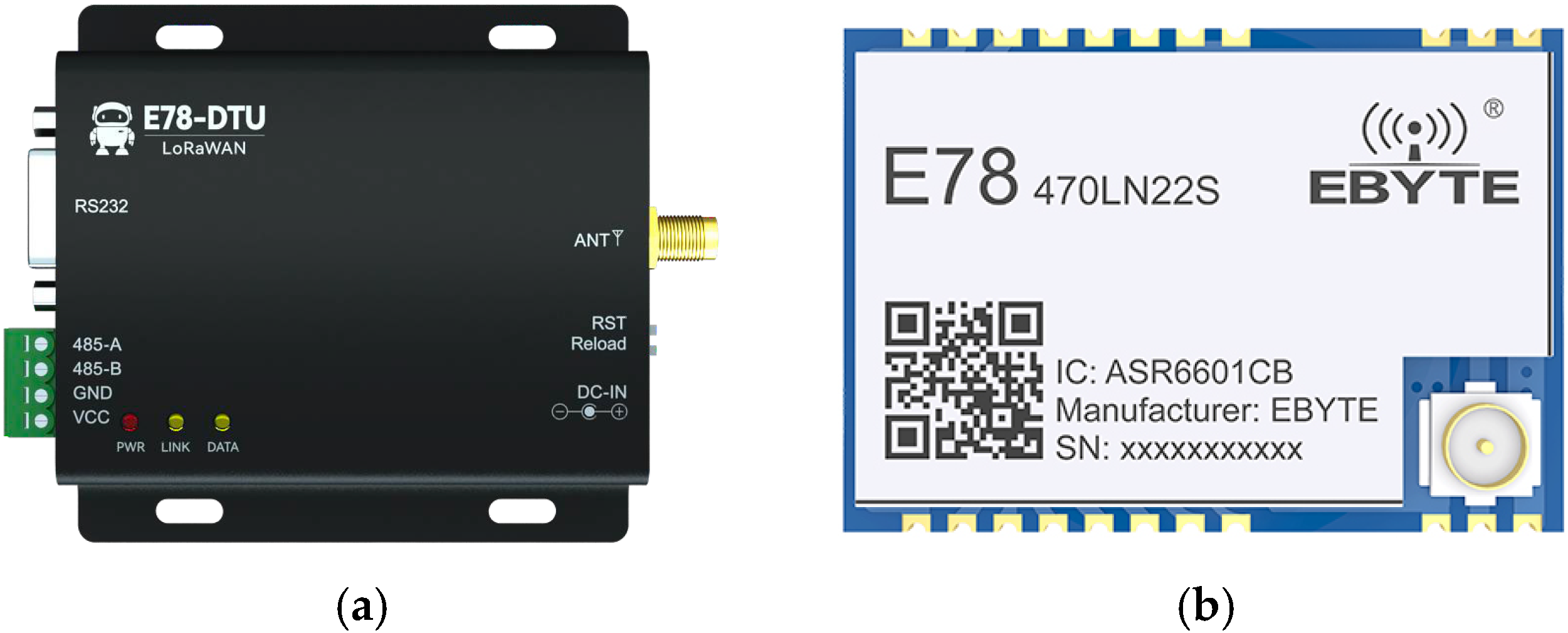
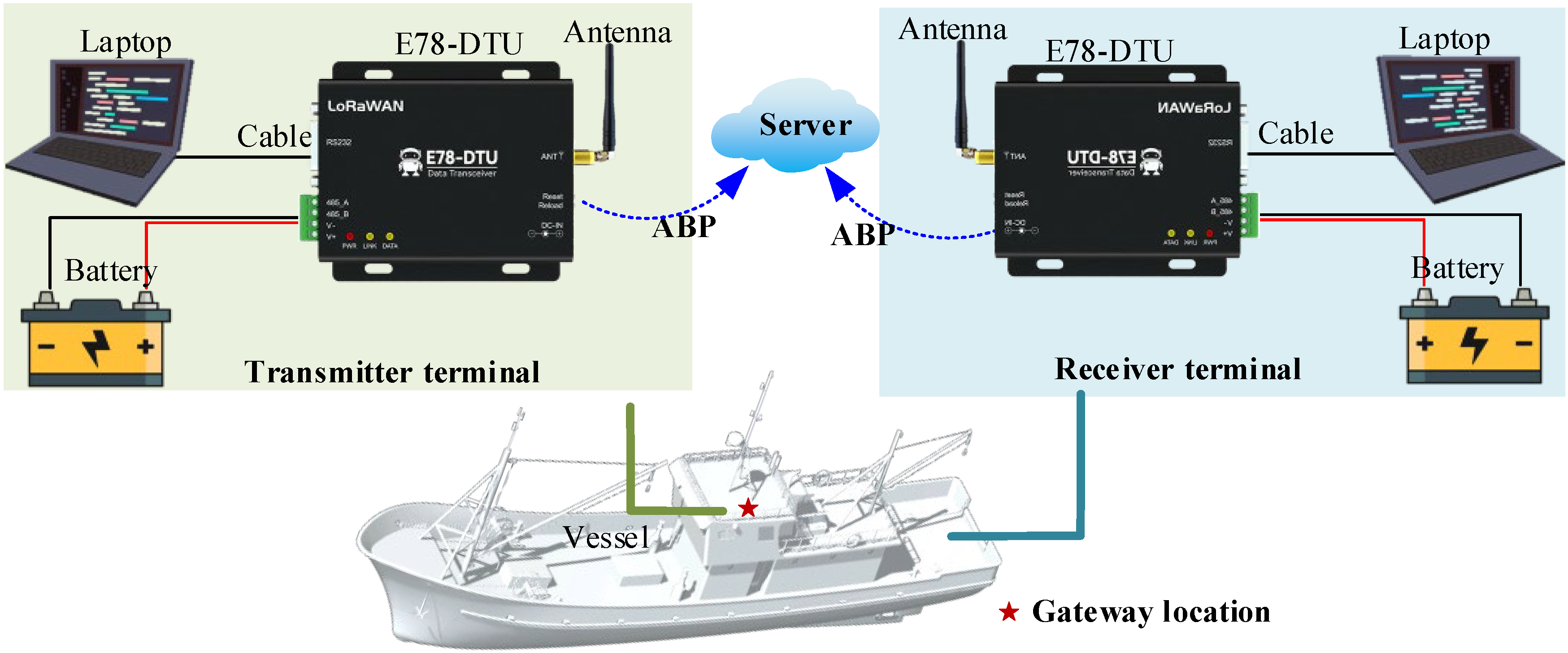
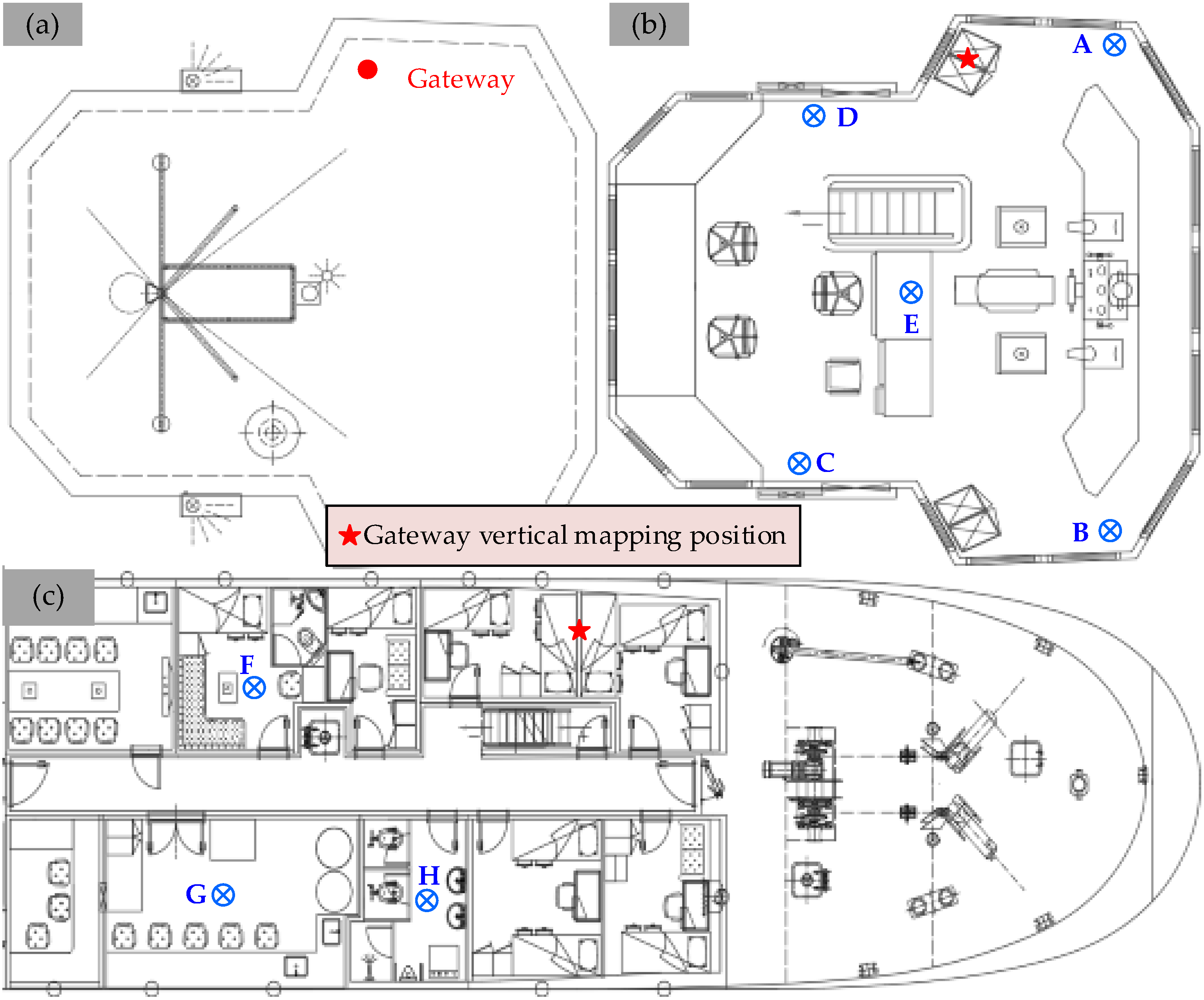
2.1. Experimental Set-Up
2.2. Experimental Parameters
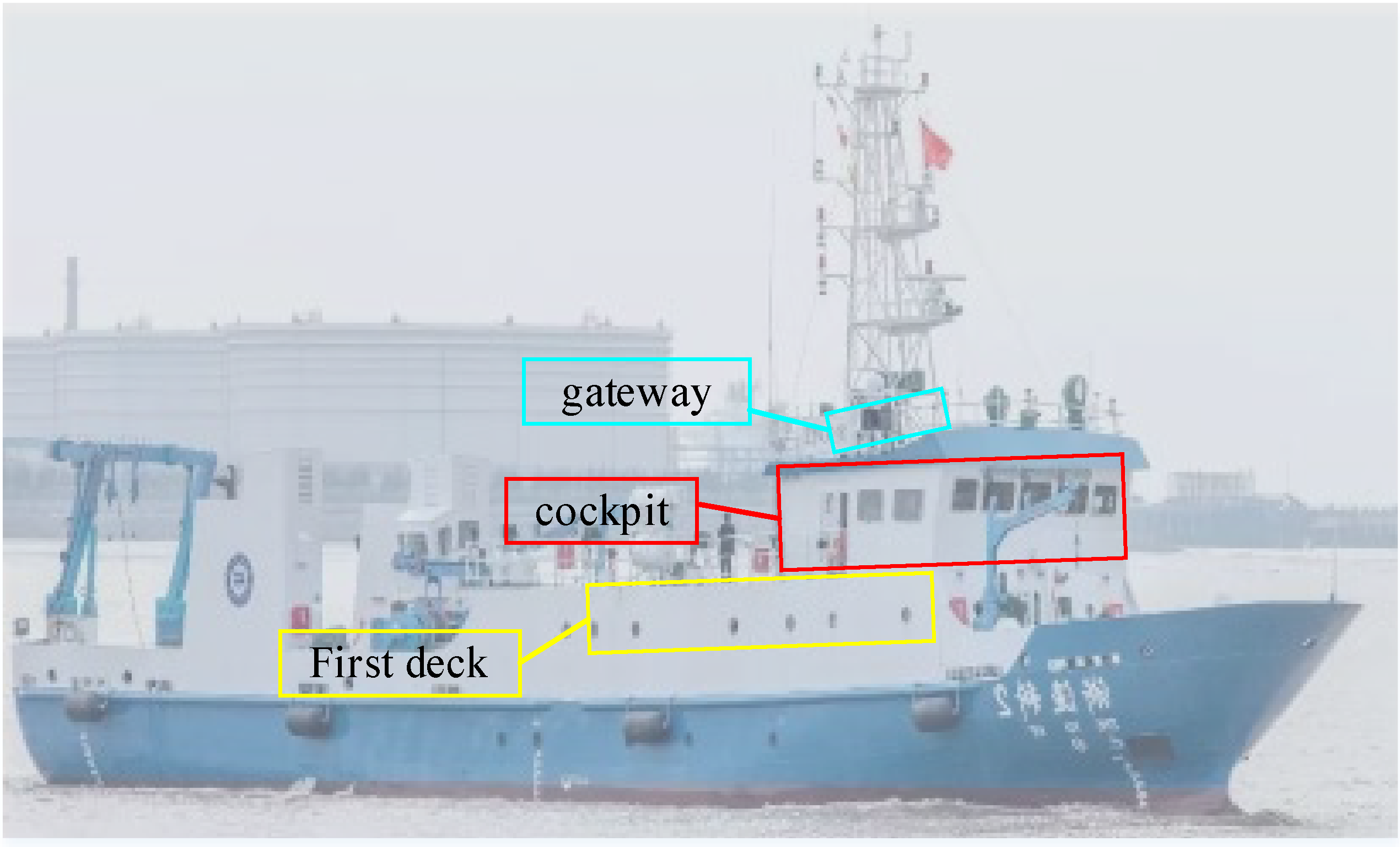
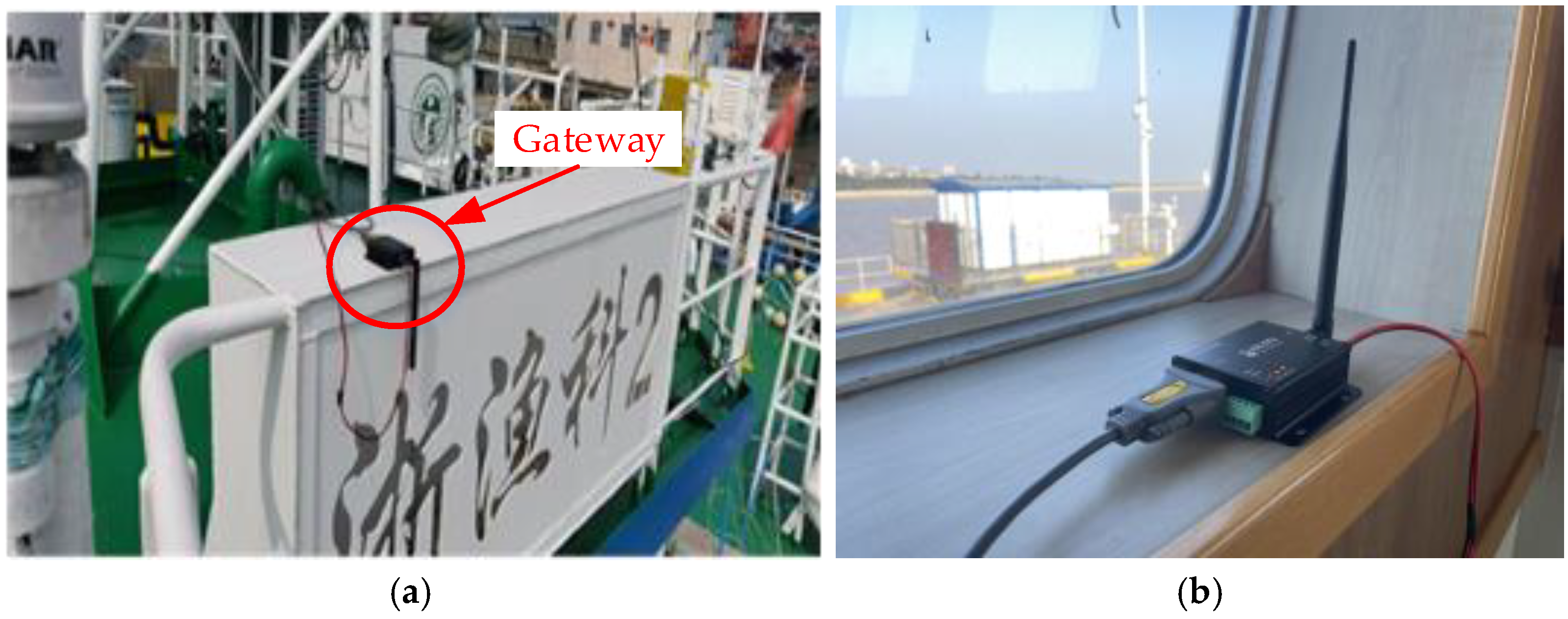
2.3. Experimental Campaign
3. Result and Discussion
3.1. Original Data
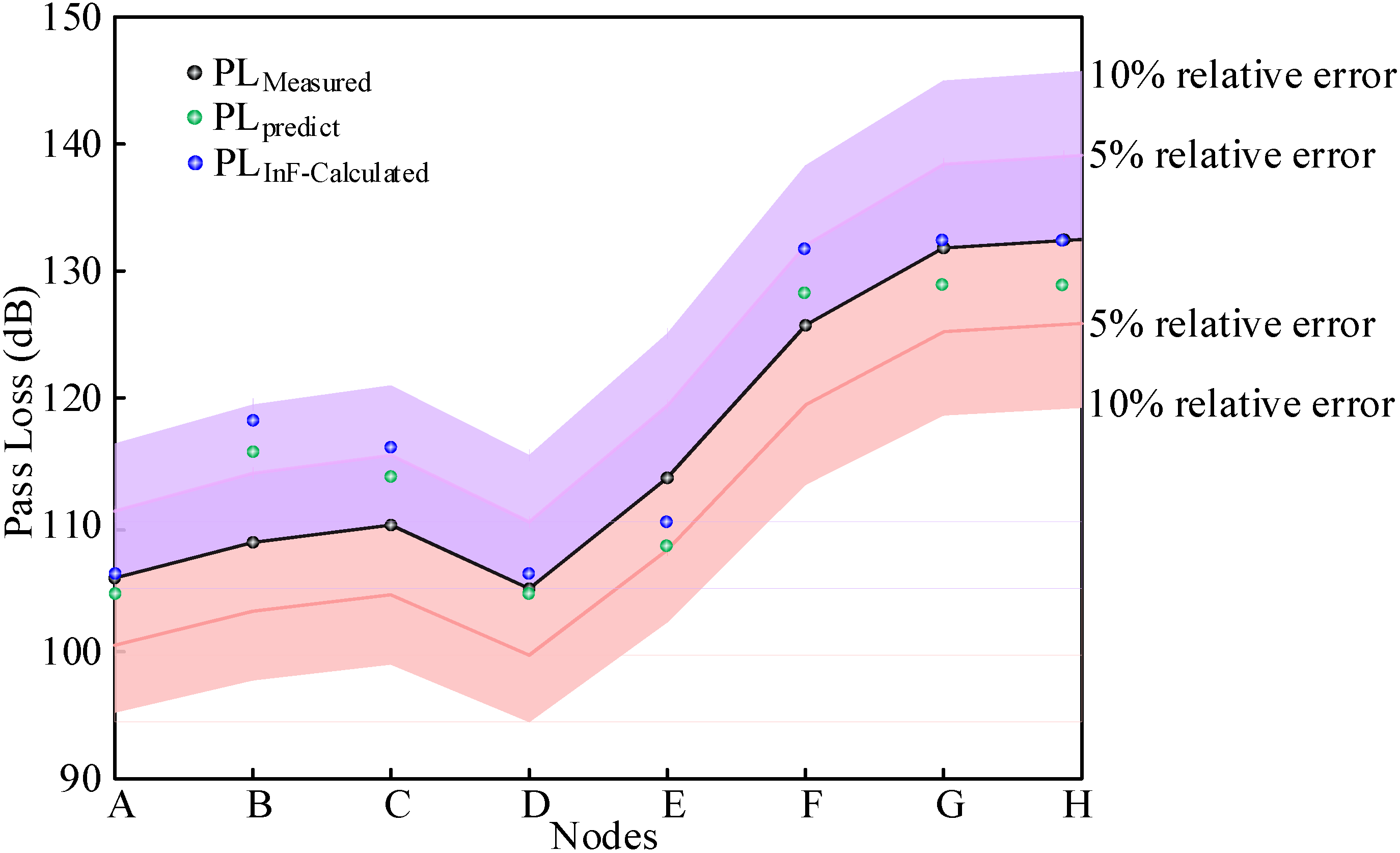
3.2. Path Loss Analysis and Modelling
3.2.1. Logarithmic Distance Path Loss Model Analysis
3.2.2. 3GPP InF-SL Model Analysis
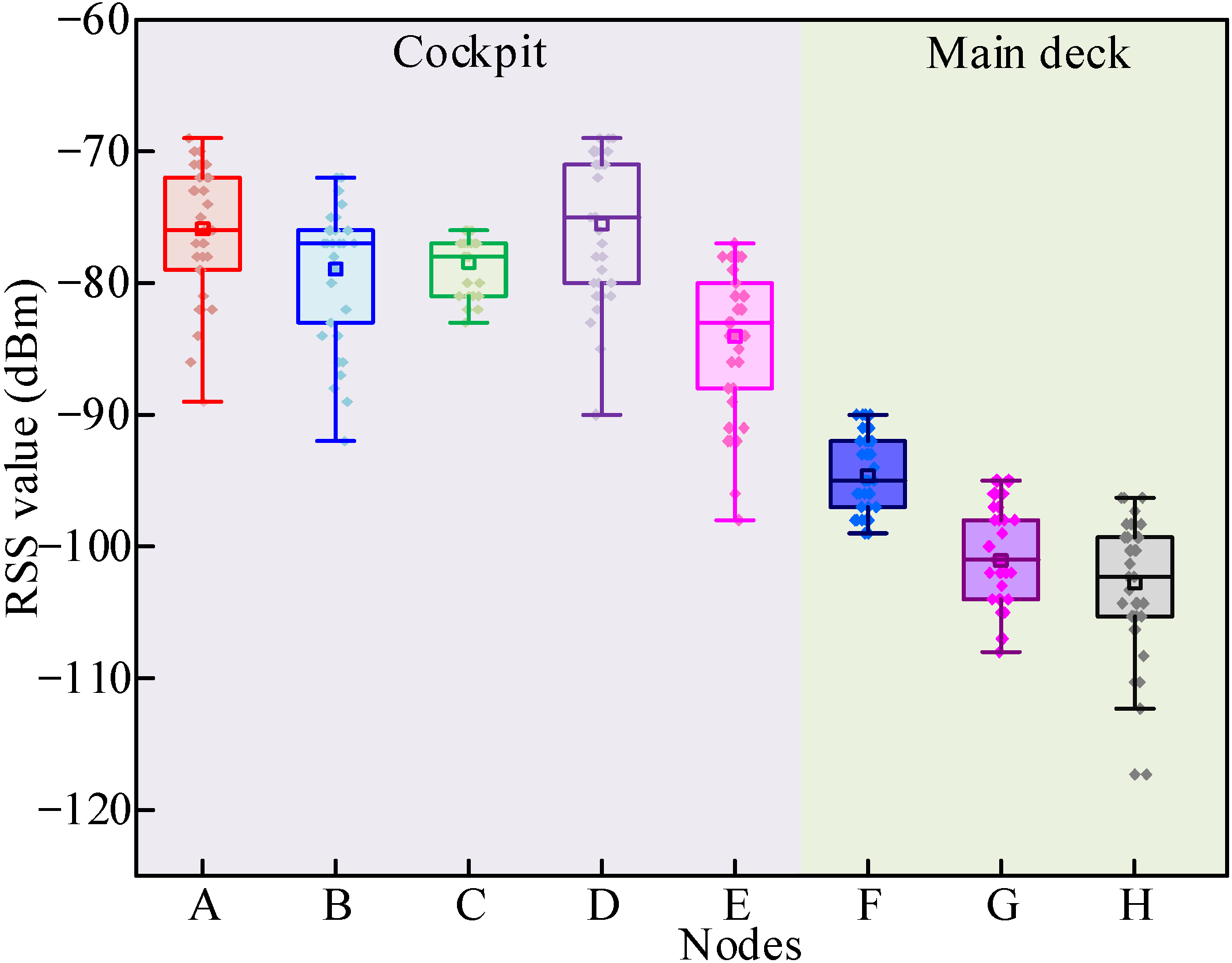
3.3. RSS Analysis
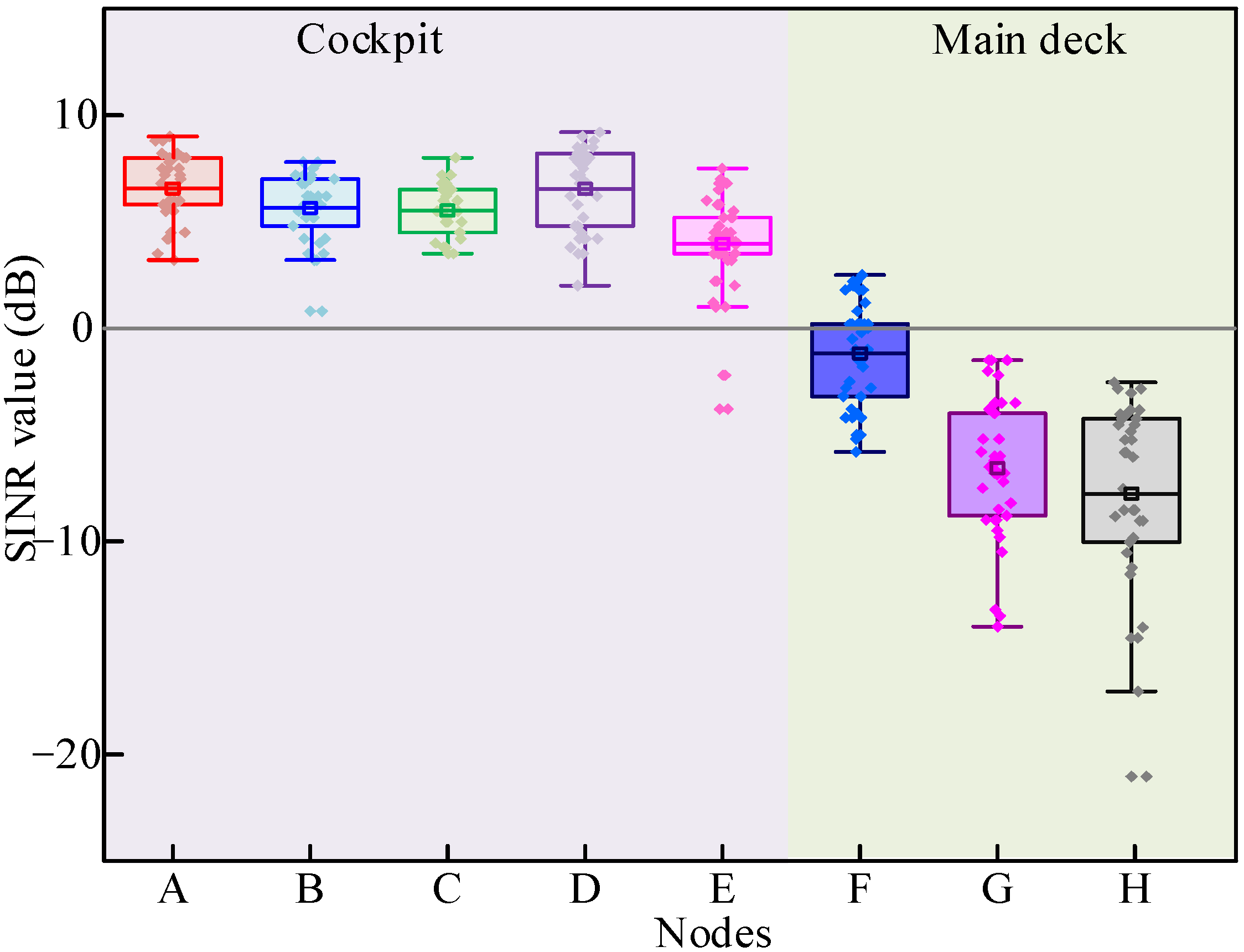
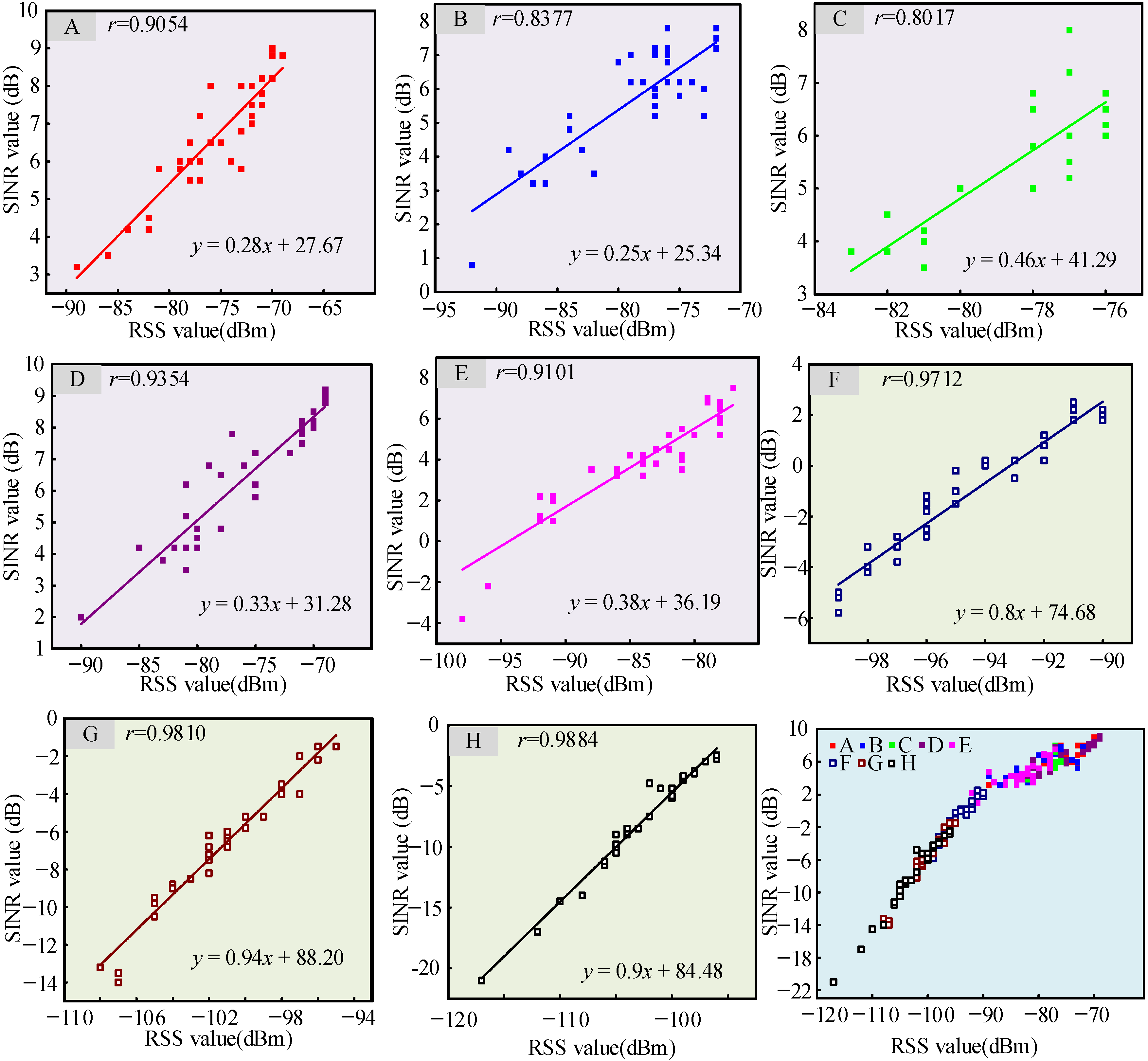
3.4. SINR Analysis
3.5. Discussion
- ▪
- Mechanical vibrations: Slight shaking and oscillations of the vessel in the harbor introduce temporal fluctuations in signal strength.
- ▪
- Multipath propagation: The metallic cabin structure generates complex multipath effects, where minor environmental changes (e.g., personnel movement) cause constructive or destructive interference.
4. Conclusions
- The noise and interference level (electromagnetic environment) remained stable in different decks of the research vessel during the test, whereas small SD in RSS and SINR were caused by the vessel’s movement and the complex cabin environment with multiple paths.
- The mean RSS values of all measurement nodes exceed the receiver sensitivity (−110 dBm), suggesting that transmitting IoT data in the vessel’s cabin for at least two lower levels is possible and that there is significant potential for signal penetration in LoRa bands in this situation.
- When deploying the network, it is recommended that the receiving nodes be placed on the same side as the gateway to reduce signal propagation attenuation.
- The thickness of the steel cabin panels must be considered, and when it exceeds two layers of steel plates, repeaters may be necessary for the network system.
- Windows may provide additional channels, so they must be considered during deployment.
Author Contributions
Funding
Data Availability Statement
Conflicts of Interest
References
- Sahay, R.; Meng, W.; Estay, D.A.S.; Jensen, C.D.; Barfod, M.B. Cyber Vessel-IoT: A dynamic and adaptive SDN-based security policy enforcement framework for vessels. Future Gener. Comput. Syst. 2019, 100, 736–750. [Google Scholar] [CrossRef]
- Masnicki, R.; Mindykowski, J.; Grala, P. Towards safety improvement of measurement and control signals transmission in marine environment. Sensors 2020, 20, 1668. [Google Scholar] [CrossRef]
- AI-Absi, M.A.; Kamolov, A.; AI-Absi, A.A.; Sain, M.; Lee, H.J. IoT technology with marine environment protection and monitoring. In Lecture Notes in Networks and Systems, Proceedings of the International Conference on Smart Computing and Cyber Security, SMARTCYBER 2020, Goseong, South Korea, 23–24 April 2020; Pattnaik, P.K., Sain, M., Al-Absi, A.A., Kumar, P., Eds.; Springer: Singapore, 2020; Volume 149. [Google Scholar]
- Plaza-Hernández, M.; Gil-González, A.B.; Rodríguez-González, S.; Prieto-Tejedor, J.; Corchado-Rodríguez, J.M. Integration of IoT technologies in the maritime industry. In Distributed Computing and Artificial Intelligence, Special Sessions, Advances in Intelligent Systems and Computing, Proceedings of the 17th International Conference, DCAI 2020, L’Aquila, Italy, 17–19 June 2020; Springer: Cham, Switzerland, 2020; Volume 1242. [Google Scholar]
- Monios, N.; Anastasiou, I.; Piromalis, D.; Dogas, I.; Papageorgas, P.; Mitilineos, S.; Skarvelis, N.; Agavanakis, K. Feasibility study for the deployment of LPWAN sensor and actuation network in a vessel environment towards the internet of marine things (IoMT). AIP Conf. Proc. 2022, 2437, 020191. [Google Scholar] [CrossRef]
- Gu, J.; Park, M.; Lee, S.; Kang, H.; Kim, B. Evaluation of a multi-hop wireless internet-of-things network on large vessels. J. Mar. Sci. Eng. 2023, 11, 2243. [Google Scholar] [CrossRef]
- Musonda, S.K.; Ndiaye, M.; Libati, H.M.; Abu-Mahfouz, A.M. Reliability of LoRaWAN communications in mining environments: A survey on challenges and design requirements. J. Sens. Actuator Netw. 2024, 13, 16. [Google Scholar] [CrossRef]
- Khan, M.A.A.; Ma, H.; Aamir, S.M.; Baris, C.A. Experimental comparison of SNR and RSSI for LoRa-ESL based on machine clustering and arithmetic distribution. arXiv 2022, arXiv:2210.15122. [Google Scholar]
- Sun, Z.; Yang, H.; Liu, K.; Yin, Z.; Li, Z.; Xu, W. Recent advances in LoRa: A comprehensive survey. ACM Trans. Sens. Netw. 2022, 18, 1–44. [Google Scholar] [CrossRef]
- Jovalekic, N.; Drndarevic, V.; Pietrosemoli, E.; Darby, I.; Zennaro, M. Experimental study of LoRa transmission over seawater. Sensors 2018, 18, 2853. [Google Scholar] [CrossRef]
- Peraza, A.; Freiha, A.; Hernandez, C.; Whaley, K.; Barbarito, T.; Sizik, T.; Diaz, K.; Teh, Y.K. A LoRa-based Dual-CPU Core Salton Sea Environmental Monitoring Wireless Sensor System. In Proceedings of the 2020 IEEE Conference on Technologies for Sustainability (SusTech), Santa Ana, CA, USA, 2–15 October 2020; pp. 1–4. [Google Scholar]
- Ali, N.A.A.; Latiff, N.A.A. Environmental Monitoring System Based on LoRa Technology in Island. In Proceedings of the 2019 IEEE International Conference on Signals and Systems (ICSigSys), Bandung, Indonesia, 6–17 July 2019; pp. 160–166. [Google Scholar]
- Parri, L.; Parrino, S.; Peruzzi, G.; Pozzebon, A. Low power wide area networks (LPWAN) at sea: Performance analysis of offshore data transmission by means of LoRaWAN connectivity for marine monitoring applications. Sensors 2019, 19, 3239. [Google Scholar] [CrossRef] [PubMed]
- Pensieri, S.; Viti, F.; Moser, G.; Serpico, S.B.; Maggiolo, L.; Pastorino, M.; Solarna, D.; Cambiaso, A.; Carraro, C.; Degano, C.; et al. Evaluating LoRaWAN connectivity in a marine scenario. J. Mar. Sci. Eng. 2021, 9, 1218. [Google Scholar] [CrossRef]
- Hassan, W.; Føre, M.; Ulvund, J.B.; Alfredsen, J.A. Internet of fish: Integration of acoustic telemetry with LPWAN for efficient real-time monitoring of fish in marine farms. Comput. Electron. Agric. 2019, 163, 104850. [Google Scholar] [CrossRef]
- Subiyanto, L.; Arfianto, A.Z.; Alfuat, S.; Riananda, D.P.; Supriyanto, E.; Nofandi, F.; Santoso, T.B.; Gunantara, N.; Valian, Y.P.A. Mobile application for unmanned vessel monitoring based on LoRA communication. In Proceedings of the 2021 8th International Conference on Electrical Engineering, Computer Science and Informatics (EECSI), Semarang, Indonesia, 20–21 October 2021; IEEE: New York, NY, USA, 2021; pp. 288–293. [Google Scholar]
- Aslam, S.; Michalis, P.M.; Herodotos, H. Internet of vessels: A survey on architectures, emerging applications, and challenges. IEEE Internet Things J. 2020, 7, 9714–9727. [Google Scholar] [CrossRef]
- Wang, J.; Xiao, Y.; Li, T.; Chen, C.L.P. A survey of technologies for unmanned merchant vessels. IEEE Access 2020, 8, 224461–224486. [Google Scholar] [CrossRef]
- Swartz, R.A.; Zimmerman, A.T.; Lynch, J.P.; Rosario, J.; Brady, T.; Salvino, L.; Law, K.H. Hybrid wireless hull monitoring system for naval combat vessels. Struct. Infrastruct. Eng. 2010, 8, 621–638. [Google Scholar] [CrossRef]
- Paik, B.-G.; Cho, S.R.; Park, B.J.; Lee, D.; Bae, B.D.; Yun, J.H. Characteristics of wireless sensor network for full-scale vessel application. J. Mar. Sci. Technol. 2009, 14, 115–126. [Google Scholar] [CrossRef]
- Kdouh, H.; Zaharia, G.; Brousseau, C.; Farhat, H.; Grunfelder, G.; Zein, G.E. Application of wireless sensor network for the monitoring systems of vessels. In Wireless Sensor Networks—Technology and Applications; InTech: Rijeka, Croatia, 2012; pp. 285–308. [Google Scholar]
- Li, L.; Ren, J.; Zhu, Q. On the application of LoRa LPWAN technology in sailing monitoring System. In Proceedings of the 2017 13th Annual Conference on Wireless On-Demand Network Systems and Services (WONS), Jackson Hole, WY, USA, 21–24 February 2017; IEEE: New York, NY, USA, 2017; pp. 77–80. [Google Scholar]
- Sanchez-Iborra, R.G.; Liaño, I.; Simoes, C.; Couñago, E.; Skarmeta, A.F. Tracking and monitoring system based on LoRa technology for lightweight boats. Electronics 2018, 8, 15. [Google Scholar] [CrossRef]
- Qin, Z.; Shenglong, Y.; Heng, Z.; Xuesheng, C.; Shengmao, Z.; Yang, D. Design and implementation of marine temperature measurement system based on LoRa. In Proceedings of the 2018 International Symposium in Sensing and Instrumentation in IoT Era (ISSI), Shanghai, China, 6–7 September 2018; IEEE: New York, NY, USA, 2018; pp. 1–4. [Google Scholar]
- Tait Gregory, B.; Michael, B.S. Electromagnetic environment characterization of below-deck spaces in vessels. In Proceedings of the 2008 IEEE International Symposium on Electromagnetic Compatibility, Detroit, MI, USA, 18–22 August 2008; IEEE: New York, NY, USA, 2008. [Google Scholar]
- Mao, X.H.; Yee, H.L.; Ng, B.C. Study of propagation over two ends of a vessel in VHF band. In Proceedings of the 2010 Asia-Pacific Microwave Conference, Yokohama, Japan, 7–10 December 2010; IEEE: New York, NY, USA, 2010. [Google Scholar]
- Mao, X.H.; Yee, H.L.; Ng, B.C. Wideband channel characterization along a lift shaft on board a vessel. In Proceedings of the 2010 IEEE Antennas and Propagation Society International Symposium, Toronto, ON, Canada, 11–17 July 2010; IEEE: New York, NY, USA, 2010. [Google Scholar]
- Mao, X.H.; Yee, H.L. Performance of a relay system for two extreme ends of a vessel at 2.4 GHz. IEEE Antennas Wirel. Propag. Lett. 2011, 10, 686–689. [Google Scholar] [CrossRef]
- Mao, X.H.; Yee, H.L. UHF propagation along a cargo hold on board a merchant vessel. IEEE Trans. Wirel. Commun. 2012, 12, 22–30. [Google Scholar] [CrossRef]
- Mariscotti, A.; Sassi, M.; Qualizza, A.; Lenardon, M. On the propagation of wireless signals on board vessels. In Proceedings of the 2010 IEEE Instrumentation & Measurement Technology Conference Proceedings, Austin, TX, USA, 3–6 May 2010; IEEE: New York, NY, USA, 2010. [Google Scholar]
- Nastasia, G.; Falzarano, M.; Corucci, A.; Usai, P.; Monorchio, A. Channel characterization of wireless systems on board of vessels by using an efficient ray-tracing. In Proceedings of the 2012 IEEE International Symposium on Antennas and Propagation, Nagoya, Japan, 29 October–2 November 2012; IEEE: New York, NY, USA, 2012. [Google Scholar]
- Wanuga, K.; Measel, R.; Lester, C.S.; Bucci, D.J.; Gonzalez, D.; Primerano, R.; Kam, M.; Dandekar, K.R. Performance evaluation of MIMO OFDM systems in on-vessel below-deck environments. IEEE Antennas Wirel. Propag. Lett. 2014, 13, 173–176. [Google Scholar] [CrossRef]
- Measel, R.; Lester, C.S.; Bucci, D.J.; Gonzalez, D.; Primerano, R.; Kam, M.; Dandekar, K.R. Reconfigurable antennas in highly multipath environments. In Proceedings of the 2014 IEEE Antennas and Propagation Society International Symposium (APSURSI), Memphis, TN, USA, 6–11 July 2014; IEEE: New York, NY, USA, 2014. [Google Scholar]
- Measel, R.; Lester, C.S.; Bucci, D.J.; Wanuga, K.; Tait, G.; Primerano, R.; Dandekar, K.R.; Kam, M. An empirical study on the performance of wireless OFDM communications in highly reverberant environments. IEEE Trans. Wirel. Commun. 2016, 15, 4802–4812. [Google Scholar] [CrossRef]
- Lester, C.S.; Bucci, D.J.; Measel, R.; Wanuga, K.; Primerano, R.; Dandekar, K.R.; Kam, M. Performance of reconfigurable antennas in a below-decks environment. IEEE Antennas Wirel. Propag. Lett. 2015, 14, 1093–1096. [Google Scholar] [CrossRef]
- Marwan, Y.; Emmeric, T.; Brecht, D.B.; Laly, P.; Ridolfi, M.; Poorter, E.D.; Martens, L.; Gaillot, D.P.; Lienard, M.; Joseph, W. Human sensing in reverberant environments: RF-based occupancy and fall detection in vessels. IEEE Trans. Veh. Technol. 2021, 70, 4512–4522. [Google Scholar]
- Robles-Enciso, R.; Morales-Aragón, I.P.; Serna-Sabater, A.; Martínez-Inglés, M.T.; Mateo-Aroca, A.; Molina-Garcia-Pardo, J.M.; Juan-Llácer, L. Lora, ZigBee and 5G propagation and transmission performance in an indoor environment at 868 MHz. Sensors 2023, 23, 3283. [Google Scholar] [CrossRef]
- Tu, W.; Xu, H.; Xu, Y.; Shen, M. Research on 2.4 GHz wireless channel propagation characteristics in a steel vessel cabin. Int. J. Antennas Propag. 2021, 2021, 6623638. [Google Scholar] [CrossRef]
- Tu, W.; Meng, L.; Ye, Q.; Shen, M.; Xu, Y. Propagation characteristics of LoRa-Based Wireless communication in steel vessel cabin. In International Summit Smart City 360; Springer: Berlin/Heidelberg, Germany, 2021; pp. 647–658. [Google Scholar]
- Analyn, N.Y.; Glenn, O.A.; Jennifer, C.D.C.; Ballado, A.; Agustin, L.E.; Mundo, D.M.D.; Dacalos, J.E.; Roble, J.K.; Caya, M.V. Microcontroller-based fertilizer dispenser for rice crop. In Proceedings of the 2016 6th IEEE International Conference on Control System, Computing and Engineering (ICCSCE), George Town, Malaysia, 25–27 November 2016; pp. 464–467. [Google Scholar]
- Ghazali, M.H.M.; Teoh, K.; Rahiman, W. A systematic review of real-time deployments of UAV-based LoRa communication network. IEEE Access 2021, 9, 124817–124830. [Google Scholar] [CrossRef]
- Callebaut, G.; Van Der Perre, L. Characterization of LoRa Point-to-Point Path Loss: Measurement Campaigns and Modeling Considering Censored Data. IEEE Internet Things J. 2020, 7, 1910–1918. [Google Scholar] [CrossRef]
- 3GPP. TR 38.901; Study on Channel Model for Frequencies From 0.5 to 100 GHz. 3GPP: Valbonne, France, 2022.



| Parameters | Value |
|---|---|
| Gateway antenna gain | 3 dBi |
| Node antenna gain | 3 dBi |
| Transmission power | 22 dBm |
| Frequency range | 470~510 MHz |
| Measurement logging interval | 10 s |
| SF | 12 |
| BW | 125 kHz |
| Permissible transmitting power | 0.16 W |
| Sensitivity of the receivers | −140 dBm |
| Code rate | 4/5 |
| Mode | Class A |
| RXPK JSON Object | Meaning |
|---|---|
| Chan | Channel number |
| rfch | RF link number |
| Freq | Frequency Of the received data packet |
| mid | Message ID |
| stat | Status code |
| modu | Modulation method |
| datr | Data rate and bandwidth (i.e., SF and BW) |
| codr | Coding rate |
| rssis | Received signal strength measured by the end device |
| lsnr | Signal-to-noise ratio measured by the end device |
| foff | Frequency offset |
| size | Size of the data packet |
| data | Content of the data packet |
| Locations | d (m) | PLMeasured (dB) | PLpredict (dB) | Residual (dB) |
|---|---|---|---|---|
| A | 2.5 | 105.80 | 104.53 | 1.27 |
| B | 3.5 | 108.62 | 115.75 | −7.13 |
| C | 3.3 | 109.99 | 113.79 | −3.80 |
| D | 2.5 | 104.97 | 104.53 | 0.44 |
| E | 2.8 | 113.70 | 108.31 | 5.39 |
| F | 5.1 | 125.73 | 128.31 | −2.58 |
| G | 5.2 | 131.81 | 128.96 | 2.85 |
| H | 5.2 | 132.49 | 128.96 | 3.53 |
| Locations | d (m) | PLMeasured (dB) | PLInF-Calculated (dB) | Residual (dB) |
|---|---|---|---|---|
| A | 2.5 | 105.80 | 106.12 | −0.32 |
| B | 3.5 | 108.62 | 118.23 | −9.61 |
| C | 3.3 | 109.99 | 116.11 | −6.12 |
| D | 2.5 | 104.97 | 106.12 | −1.15 |
| E | 2.8 | 113.70 | 110.20 | 3.5 |
| F | 5.1 | 125.73 | 131.79 | −6.06 |
| G | 5.2 | 131.81 | 132.49 | −0.68 |
| H | 5.2 | 132.49 | 132.49 | 0 |
| Location | Node | Mean Value of RSS (dBm) | SD of RSS (dB) |
|---|---|---|---|
| Cockpit | A | −73.79 | 5.00 |
| B | −76.61 | 5.40 | |
| C | −77.99 | 2.15 | |
| D | −72.97 | 5.53 | |
| E | −81.70 | 5.41 | |
| Main deck | F | −93.73 | 2.88 |
| G | −99.81 | 3.42 | |
| H | −100.49 | 4.90 |
| Location | Node | Mean Value of SINR (dB) | SD of SINR (dB) |
|---|---|---|---|
| Cockpit | A | 6.81 | 1.54 |
| B | 5.91 | 1.61 | |
| C | 5.68 | 1.23 | |
| D | 6.92 | 1.94 | |
| E | 4.45 | 2.28 | |
| Main deck | F | −0.59 | 2.38 |
| G | −5.50 | 3.26 | |
| H | −6.15 | 4.46 |
Disclaimer/Publisher’s Note: The statements, opinions and data contained in all publications are solely those of the individual author(s) and contributor(s) and not of MDPI and/or the editor(s). MDPI and/or the editor(s) disclaim responsibility for any injury to people or property resulting from any ideas, methods, instructions or products referred to in the content. |
© 2025 by the authors. Licensee MDPI, Basel, Switzerland. This article is an open access article distributed under the terms and conditions of the Creative Commons Attribution (CC BY) license.
Share and Cite
Yang, K.; Shi, Z.; Qin, L.; Lin, J.; Li, C. Performance Evaluation of the Radio Propagation in a Vessel Cabin Using LoRa Bands. Sensors 2026, 26, 207. https://doi.org/10.3390/s26010207
Yang K, Shi Z, Qin L, Lin J, Li C. Performance Evaluation of the Radio Propagation in a Vessel Cabin Using LoRa Bands. Sensors. 2026; 26(1):207. https://doi.org/10.3390/s26010207
Chicago/Turabian StyleYang, Kun, Zebo Shi, Li Qin, Jinglong Lin, and Chen Li. 2026. "Performance Evaluation of the Radio Propagation in a Vessel Cabin Using LoRa Bands" Sensors 26, no. 1: 207. https://doi.org/10.3390/s26010207
APA StyleYang, K., Shi, Z., Qin, L., Lin, J., & Li, C. (2026). Performance Evaluation of the Radio Propagation in a Vessel Cabin Using LoRa Bands. Sensors, 26(1), 207. https://doi.org/10.3390/s26010207