1. Introduction
Student classroom engagement analysis is a critical component of improving teaching quality, and it holds significant importance for achieving precision education [
1,
2]. Traditional manual observation methods suffer from limitations such as inefficiency and subjectivity, driving the trend toward automated detection technologies. Although current artificial intelligence and big data-based computer vision technologies have been widely applied in the educational field, the existing engagement analysis research primarily focuses on online classrooms, analyzing facial data and platform interaction data—and benefiting from the clear individual data collection in virtual environments [
3,
4]. However, in offline classroom teaching scenarios, methods relying on facial data analysis face significant challenges due to large class sizes and mutual obstructions among students. The mainstream engagement evaluation methods currently depend on identifying typical actions like raising hands or standing [
5,
6]. Yet, such approaches struggle to effectively assess engagement levels during the most common static listening states. On the other hand, humans’ body orientation usually reflects their attention directions, indicating a new solution for student engagement analysis in authentic classrooms [
7].
Human body orientation estimation (HBOE), which involves estimating the orientation angles of humans, has been widely applied in fields such as human–computer interaction and intelligent monitoring [
8,
9]. However, its application within the educational domains remains relatively nascent. In this paper, we propose to leverage the HBOE method to analyze the student engagement during their listening status in classroom settings. It enables the tracking of individual learning states by detecting subtle changes in students’ body orientation, even in large-size classrooms with high occlusion. Additionally, this non-intrusive detection approach can meet the needs of large-scale routine classroom analysis, providing an innovative technical solution for implementing precision teaching.
However, most existing HBOE methods rely on a two-stage pipeline involving initial human detection, followed by orientation angle estimation. Such approaches are not only computationally intensive but also heavily dependent on the accuracy of the detection results. Previous HBOE studies have primarily focused on pre-cropped human instances under idealized conditions [
10,
11,
12], limiting their generalization for practical applications. Therefore, developing an integrated and efficient HBOE solution is imperative.
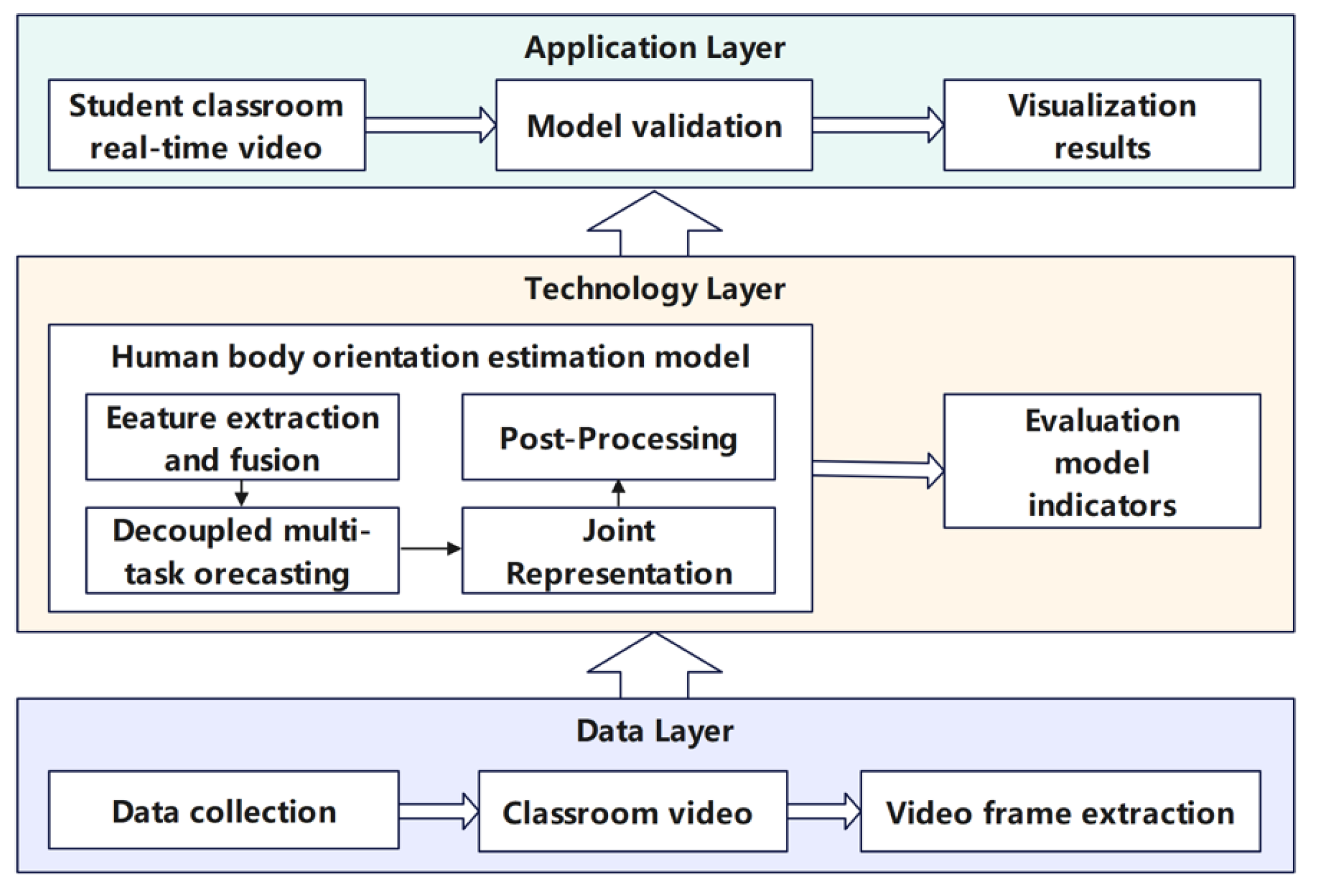
In this paper, we propose a novel student engagement analysis method with one-stage HBOE, named JointBDOE, which integrates body detection and orientation estimation into one task. In particular, JointBDOE designs a unified embedding that integrates bounding box prediction and orientation angles, and it forms a single-stage end-to-end trainable HBOE framework. Moreover, the joint learning of body location and orientation angles enables shared human features to enhance orientation estimation, particularly in crowded and occluded classroom scenarios. With JointBDOE, all the students’ orientation directions are computed and displayed with arrow indicators for engagement analysis. Experimental results on reconstructed MEBOW and authentic teaching videos with various layouts demonstrate the effectiveness and efficiency of the proposed JointBDOE for multi-person orientation estimation and student engagement analysis, respectively. The main contributions are summarized as follows:
(1) Method innovation in intelligent classroom engagement analysis: Breaking through the limitation of traditional classroom engagement analysis that relies on manual observation or eye-tracker devices, we proposed a novel visual analysis method integrated with body estimation. This method maintains stable performance in crowded classroom scenarios with severe occlusions, and it fundamentally solves the core problem that traditional methods fail to adapt to the complex environment of real classrooms—realizing method-level innovation in adapting to practical classroom scenarios.
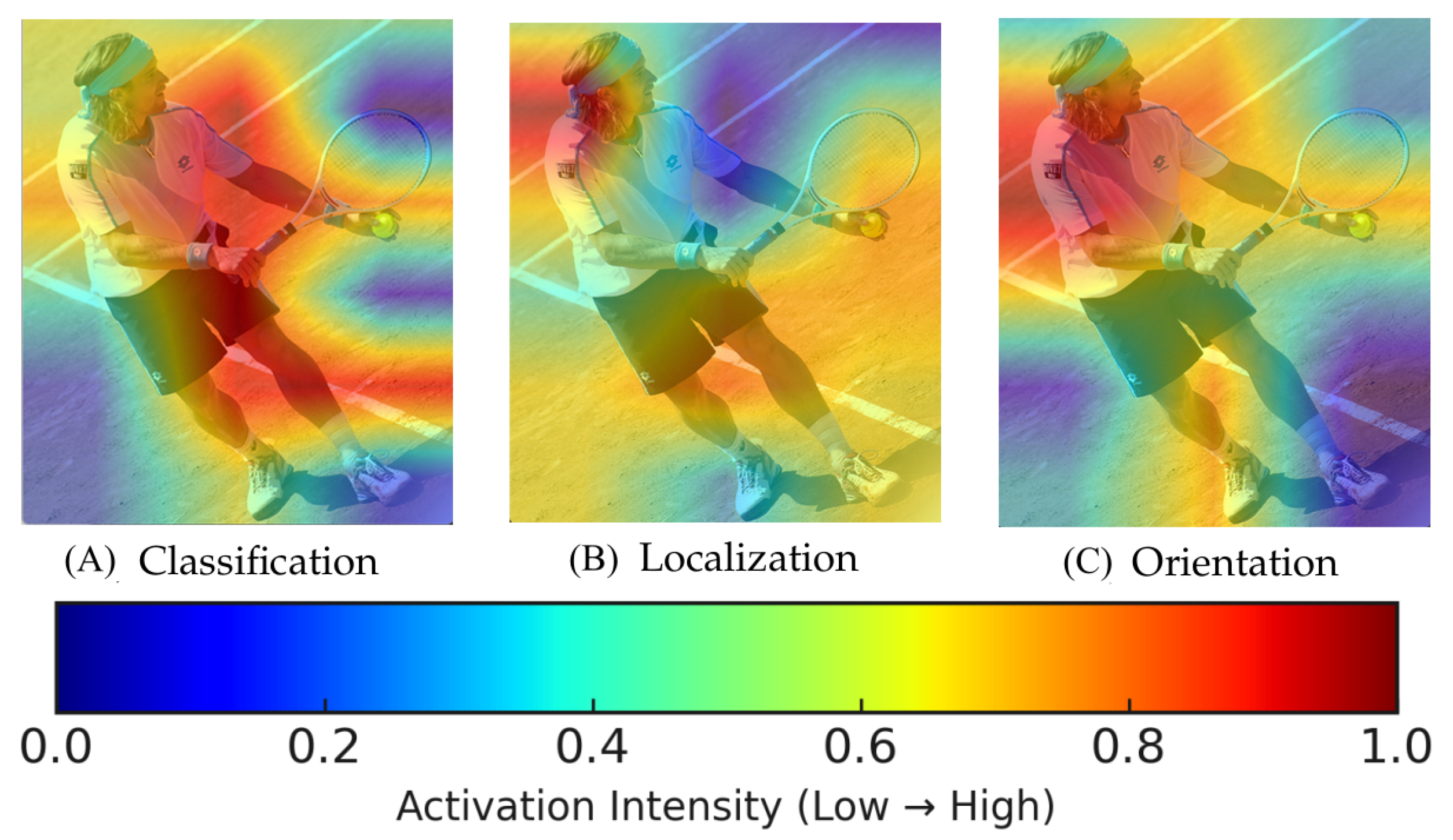
(2) Technological innovation of the One-Stage JointBDOE Framework: We develop a technologically innovative one-stage end-to-end JointBDOE framework to achieve the simultaneous collaboration of human body detection and orientation estimation. By integrating bounding box regression and orientation prediction into a unified feature embedding space and designing a decoupled orientation prediction head, this framework not only ensures real-time scalability but also significantly improves robustness against occlusion interference and viewpoint variations. It breaks through the technical bottleneck of existing multi-stage frameworks in which “step-by-step processing hinders the balance between efficiency and accuracy”, completing technological innovation in framework architecture.
(3) Application innovation in dataset and evaluation system: To solve the practical application problem that existing datasets lack diversity and cannot support real-scenario verification, we reconstruct and extend the MEBOW dataset to greatly enhance its scenario diversity and realism; meanwhile, we conduct comprehensive validation of JointBDOE across YOLOv5 and YOLOv11 models at multiple scales. Extensive experiments on benchmark data and authentic classroom videos confirm its superior accuracy and efficiency. Furthermore, it innovatively realizes a dynamic visualization of students’ attention directions via refined indicators, filling the application gap in intelligent classroom analysis for tools that integrate “quantitative analysis + intuitive presentation”—and providing practical application support for intelligent classroom management.
2. Literature Review
2.1. Student Engagement
Student engagement refers to the degree of attention, curiosity, interest, optimism, and enthusiasm that students demonstrate during learning, which also reflects their intrinsic motivation for academic progress [
13,
14]. Learning engagement is a critical element in the educational process, directly impacting students’ learning outcomes and developmental progress [
15]. Research indicates that student engagement levels show positive correlations with academic performance, progress, graduation rates, satisfaction, and deeper learning. This relationship manifests not only in knowledge acquisition but also in students’ holistic development [
16,
17,
18]. Especially in classroom teaching, a teacher faces a large number of students and finds it difficult to pay attention to each individual student. Therefore, an effective assessment of student participation cannot only concretely demonstrate the students’ classroom performance but must also provide a basis for the teacher to evaluate the effectiveness of classroom teaching.
The current research on student engagement primarily focuses on online learning environments. For instance, Liu et al. systematically investigated the impact of cognitive and affective engagement on learning outcomes in MOOC contexts [
19]. Monkaresi et al. innovatively integrated facial expression analysis with self-report data to achieve engagement detection in online writing activities [
20]. Rehman et al. established an online learning engagement assessment model through EEG signal analysis [
21]. These studies employ diversified technological approaches that have significantly enhanced the objectivity, efficiency, and intelligence of engagement assessment. It is noteworthy that the successful implementation of these studies largely relies on the distinctive advantages of online learning environments, which enable precise acquisition of students’ facial feature data and comprehensive recording of learning behavior trajectories, thereby providing solid data support for engagement research.
However, classroom teaching remains the core front of education and a key link in improving education quality. Yet, due to issues like large class sizes, student occlusion, and the inability to use intrusive monitoring devices, it is difficult to clearly capture individual data like in online environments, making the direct transfer of online analytical techniques challenging. When facing dozens of students, teachers often struggle to monitor each student’s engagement status, making classroom participation assessment a prominent challenge in teaching practice. Common offline classroom engagement assessment methods include self-reporting and classroom observation. Self-reporting is simple and cost-effective but limited due to subjectivity and time delays, making it best for post-learning evaluations. Classroom observation using set scales records student performance, but both manual and semi-automated coding face high labor and time costs, limiting large-scale implementation. The emergence of computer vision technology provides new possibilities for automated classroom analysis. It can effectively capture teacher–student classroom behaviors, significantly reducing reliance on human resources while improving assessment efficiency. However, current technological applications mainly focus on identifying typical behaviors like hand-raising, yawning, phone use, and standing. In reality, during regular teaching processes, students spend most of their time in static listening states in which teachers find it hard to detect attention wandering. Moreover, in newly promoted teaching models like project-based learning, non-linear seating arrangements make behavior recognition particularly challenging.
2.2. Human Body Orientation Estimation (HBOE)
The human body orientation estimation (HBOE) is defined as estimating the skeletal orientation of a person at the orthogonal camera frontal view, which has been applied in various tasks, such as robotics navigation, intelligent surveillance, and human–computer interaction [
22,
23,
24,
25]. Early research primarily relied on handcrafted features and traditional classifiers, often modeling HBOE as a classification problem using simple multi-layer neural networks due to limitations in dataset scale and annotation accuracy. With the advancement of technology, the detection foundation has progressively evolved from traditional handcrafted feature-based approaches to deep learning-based methods, including Faster R-CNN [
10], FCOS [
11], and YOLOv5 [
26]. Hara et al. laid the foundation for fine-grained orientation prediction by re-annotating the TUD dataset with continuous angle labels [
27]. MEBOW further established a large-scale benchmark dataset and demonstrated the superiority of deep neural networks in HBOE tasks [
25]. PedRecNet explored a multi-task learning framework that combines body orientation with 3D pose estimation, achieving competitive performance [
28].
The current HBOE methods predominantly adopt a two-stage processing pipeline: first localizing human instances using pre-trained detectors (e.g., Faster R-CNN), followed by orientation estimation on the cropped regions. Wang et al. proposed Graph-PCNN, a two-stage human pose estimation method based on graph convolutional networks, which improves pose estimation accuracy through a graph-based pose refinement module [
29]. Yang et al. proposed DWPose, which enhances the efficiency and accuracy of full-body pose estimation via a two-stage distillation strategy [
30]. Lin et al. proposed a two-stage multi-person pose estimation and tracking method based on spatiotemporal sampling [
31]. While straightforward and effective, this paradigm faces notable challenges in practical applications. On the one hand, instance cropping during detection may introduce information loss, particularly in cases of occlusion or dense crowds. On the other hand, the two-stage approach leads to computational costs that scale linearly with the number of individuals, making real-time performance difficult to achieve. In recent years, some studies have addressed the information loss and computational overhead of two-stage HBOE methods by proposing single-stage approaches. Wang et al. proposed YOLOv8-SP, an enhanced YOLOv8 architecture that integrates multi-dimensional feature fusion and attention mechanisms to achieve real-time pose estimation and joint angle extraction for moving humans [
32]; Zhao et al. proposed Part-HOE, which estimates orientation using only visible joints and introduces a confidence-aware mechanism to improve robustness under partial observations [
33]. However, although these single-stage methods improve computational efficiency and occlusion robustness, their performance in densely populated scenarios and real-world environments such as classrooms remains limited, and the precision, real-time capability, and generalization of the models still need further validation and optimization.
Moreover, most existing HBOE studies assume input to be precisely cropped human regions, significantly limiting their applicability in real-world scenarios. Multi-task learning strategies have gained considerable attention for their efficiency and potential for task synergy [
34,
35]. For instance, Raza et al. designed parallel CNN classifiers to separately predict head and body orientation [
24]. MEBOW utilized body orientation as auxiliary supervision to enhance 3D pose estimation [
25]. PedRecNet proposed a unified architecture for joint 3D pose and orientation estimation [
28]. GAFA introduced a novel gaze estimation method leveraging the coordination between the human gaze, head, and body [
36]. However, all of these studies rely on cropped human bounding box images as input, hindering their deployment in practical settings. Consequently, developing end-to-end methods capable of directly processing raw images while supporting multi-person orientation estimation remains a critical challenge for advancing this technology.
Compared with these advances, our proposed JointBDOE differs in two key aspects: (i) it integrates orientation estimation directly into the detection head, avoiding the person-dependent cost of two-stage approaches; and (ii) it is designed for real-time classroom scenarios, where robustness and scalability are as critical as accuracy. By situating our work within these latest developments, we show that JointBDOE complements recent trends while offering a practical solution tailored to multi-person classroom analysis.
4. Experiments
We first demonstrate the effectiveness and efficiency of the proposed JointBDOE model on the multi-person body orientation task on both the original MEBOW dataset and its reconstructed version, where the reconstructed one contains more challenging and complex crowded samples. Then, we test the performances of JointBDOE for student engagement analysis in authentic classroom settings with various layouts, and we dynamically visualize students’ engagement levels during classes.
4.1. Datasets and Metrics
Reconstructed MEBOW Dataset: The MEBOW dataset contains a total of 54,007 annotated images, including 51,836 images (127,844 human instances) for training and 2171 images (5536 human instances) for testing. While preserving the original data, we restored the challenging human instances originally provided through the COCO [
40] dataset and employed the MEBOW method to generate pseudo labels for body orientation. The final constructed dataset comprises 225,912 human instances (216,853 for training and 9059 for testing), suitable for multi-person body orientation estimation tasks.
Metrics: Following [
25,
28], this paper employs two core metrics to evaluate body orientation estimation performance: first, the mean absolute error (MAE) measuring the average deviation between predicted angles and ground truth; second, the Acc.-
accuracy metric (
), which indicates the proportion of predictions falling within an
X° tolerance range centered on the ground truth orientation. For the joint body detection task evaluation, the recall metric is additionally reported as a supplementary reference. Through these metrics, we can comprehensively evaluate the model’s overall performance in both body orientation estimation and human body detection tasks, thereby validating the robustness and practical value of the proposed method in complex scenarios.
4.2. Implementation Details
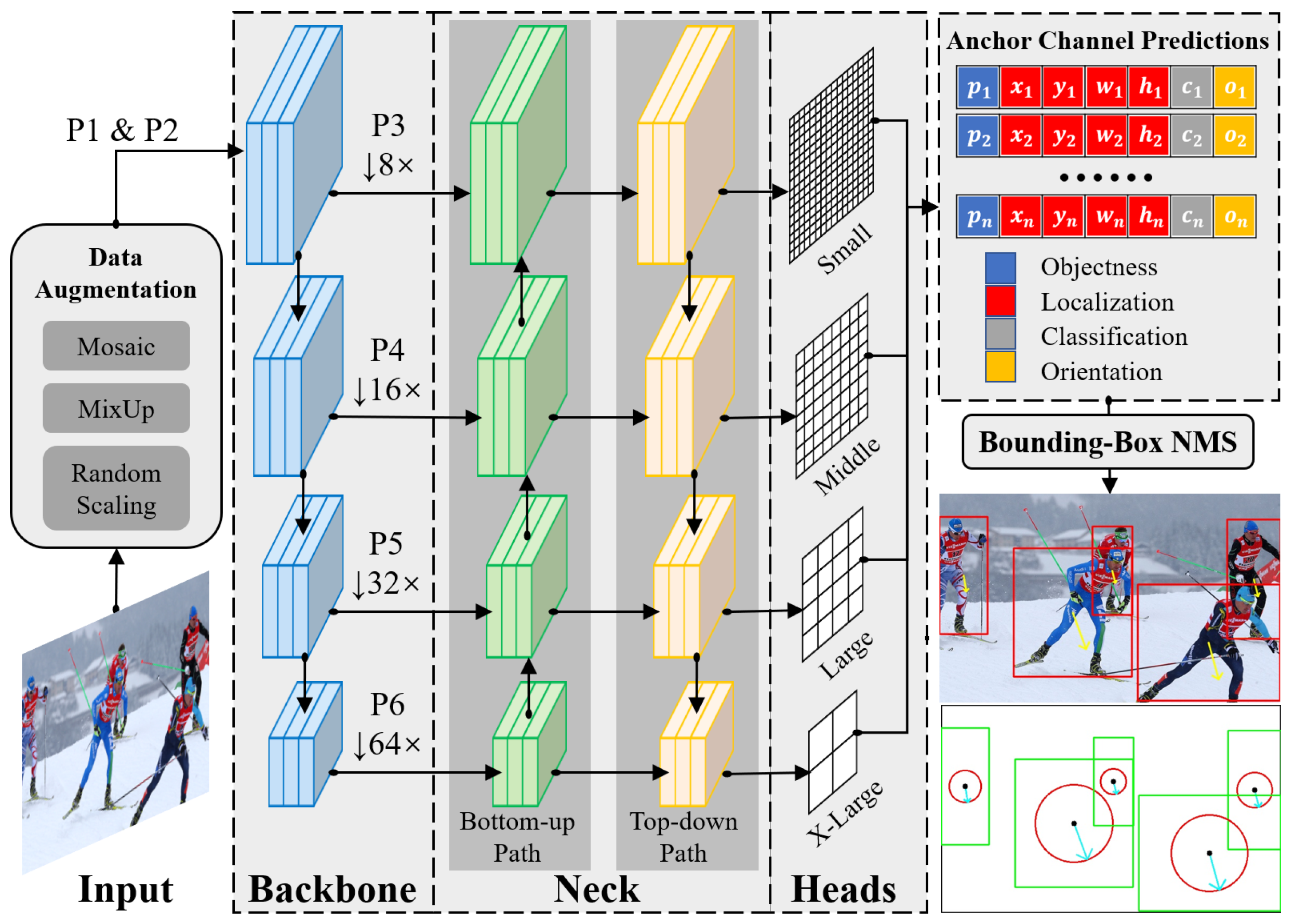
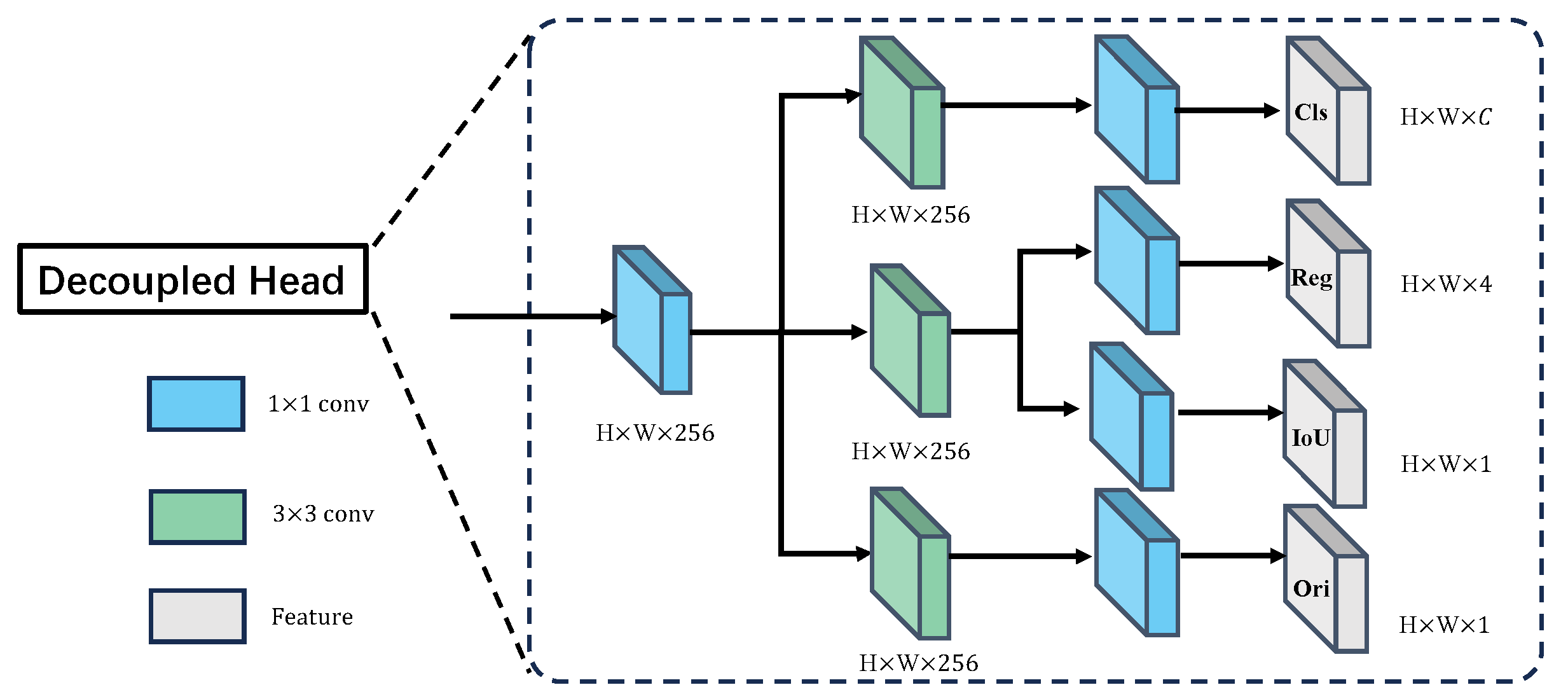
This study employs the YOLOv11 architecture as the backbone network, replacing the standard detection head with our designed three-branch decoupled detection head (shown in
Figure 5), while maintaining the basic training configurations from reference [
41]. Utilizing the proposed unified feature embedding approach, the system simultaneously accomplishes both human body detection and orientation estimation tasks. All input images are standardized to a
resolution (preserving original aspect ratios), with training parameters
and
manually fine-tuned through experimental validation. All experiments are run on a workstation with six NVIDIA GeForce RTX 4090 GPUs (24 GB each), driver 550.78, and CUDA 12.4. Unless otherwise noted, we train on four GPUs using torchrun with a global batch size of 32 (8 images/GPU). Our implementation uses Python 3.10.4 and PyTorch 2.6.0 within the YOLO framework. We adopt SGD with an initial learning rate of
, momentum of 0.937, and weight decay of
. A OneCycleLR scheduler is used with a final LR ratio 0.2, preceded by a 3-epoch warm-up starting at 0.1× the base LR. Training lasts 500 epochs with mixed precision (AMP) and EMA of weights (decay 0.9999). Input images are resized to
and augmented with standard YOLO policies. Mosaic is enabled with a probability of 1.0 throughout training, mixup is disabled, and flips (horizontal and vertical) are disabled. Other augmentations, including HSV jitter (h = 0.015, s = 0.7, v = 0.4), random translation (±0.1), scaling (0.9×), rotation, shear, perspective, and copy–paste, are disabled. Random seeds are initialized for each training process to ensure reproducibility. The best-validation checkpoint is selected with mAP@0.5:0.95. When the global batch size changes, the base learning rate is scaled linearly.
4.3. Results on Multi-Person Body Orientation Task
4.3.1. Ablation Studies
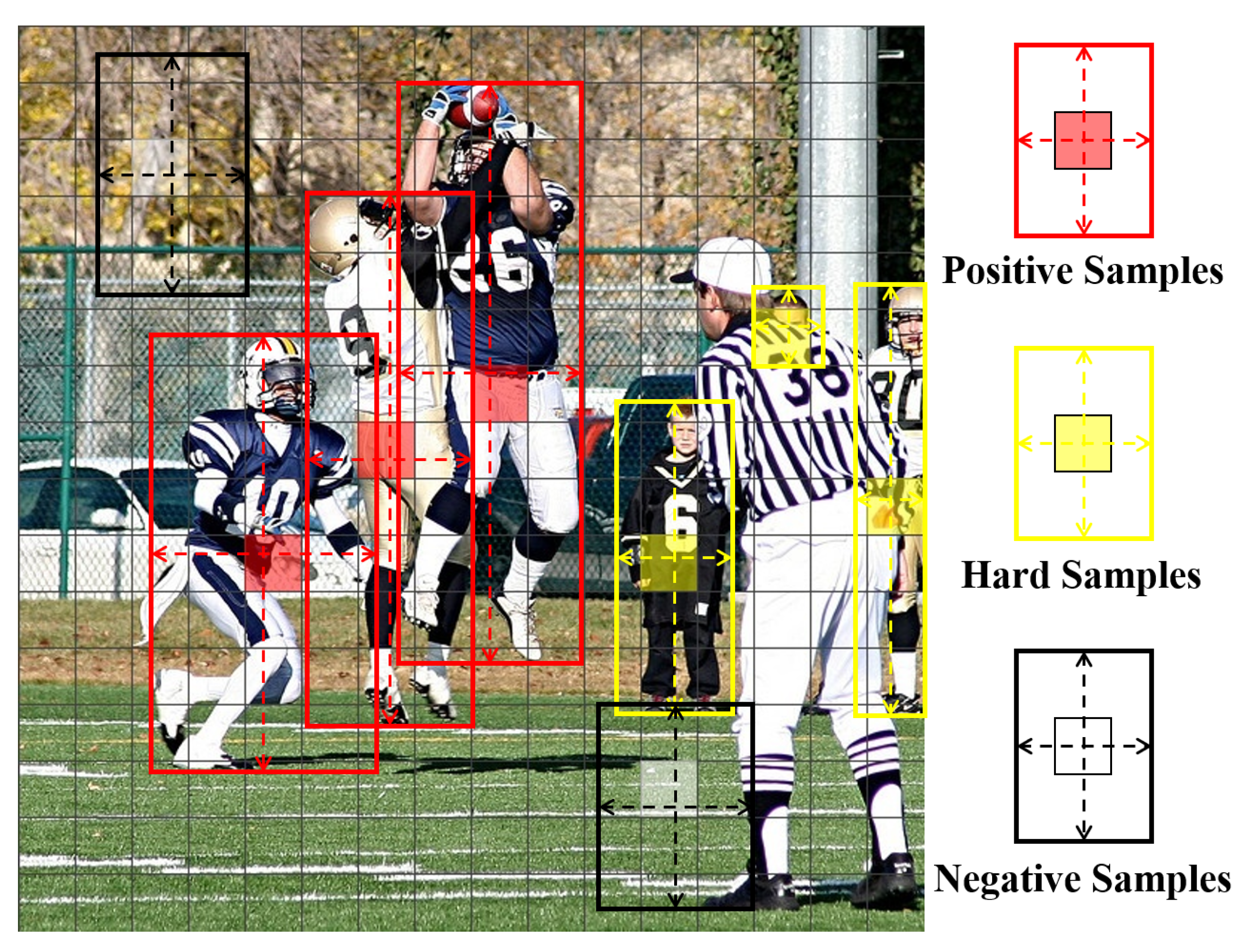
In previous studies [
42], we trained the yolov5s model for 500 epochs. As shown in
Table 1, we initially set
to 0.1 and screened the threshold
within the range of [0.1, 0.4] at intervals of 0.1. The experimental results indicate that the lowest MAE value was achieved when
was set to 0.2, demonstrating the importance of reasonable hard-sample filtering. Subsequently, with
fixed, we selected the loss weight
for
from
and ultimately determined that
0.05 achieved the optimal balance between human detection and orientation estimation tasks. Building on this, we upgraded the backbone network from YOLOv5 to YOLOv11 and conducted training in the same manner. The results (
Table 1) show that under identical conditions (
0.2,
0.05), the YOLOv11 backbone network exhibits superior performance. This also indicates that our method is not limited to a specific backbone network but, rather, exhibits a strong generalization capability and adaptability.
Meanwhile, we conducted dedicated ablation experiments on the decoupled head structure to verify its effectiveness. In our previous study [
42], based on the YOLOv5 architecture, we demonstrated through a comparative analysis of the performance differences between coupled and decoupled head structures that the decoupled design can effectively reduce feature interference between multiple tasks, thereby achieving superior performance (
Table 2). Specifically, the Decoupled-YOLOv5 model showed improved direction estimation accuracy and higher accuracy within the 5° error range across all backbone network versions while maintaining an unchanged detection recall rate. Among them, YOLOv5l performed the best, achieving a mean absolute error of
in direction estimation and an accuracy rate of 47.8% within 5° error range. Considering the continuous updates of backbone networks, we further tested the latest YOLOv11 architecture. The results showed that the Decoupled-YOLOv11x model achieved even better performance, reducing the mean absolute error of direction estimation to
and increasing the accuracy within 5° error range to 48.7%. The results further confirm the superior performance of our proposed decoupled head structure in orientation estimation tasks, while demonstrating its strong generalization capability across different backbone network architectures.
4.3.2. Quantitative Comparison
For a fair comparison, we first evaluated model performance on the original MEBOW dataset, which excluded numerous challenging instances. As shown in
Table 2, the YOLOv5l-based model achieved comparable results to the MEBOW and PedRecNet baseline methods in terms of mean absolute error (MAE) and accuracy metrics, while the subsequently adopted YOLOv11 model further improved these metrics. These baseline methods were specifically designed for single-person body orientation estimation tasks and required precisely cropped human instances as input. Notably, in multi-target scenarios without predefined human detection, the MEBOW and PedRecNet methods demonstrated limited effectiveness, whereas our approach maintained superior performance.
Furthermore, we conducted a validation of the proposed method’s performance on the reconstructed MEBOW dataset, with detailed experimental results presented in
Table 3. Compared to the original dataset, the reconstructed version incorporates more challenging real-world samples (e.g., severe occlusion, low-resolution cases). While these challenging samples led to some degree of performance degradation in the overall metrics, these results objectively reflect the technical difficulties encountered in practical application scenarios. These carefully constructed, challenging samples also provide a more realistic test benchmark for future research, which will effectively advance the development of in-the-wild human body orientation estimation technology.
In addition, to comprehensively present the computational cost of the model, we also report the number of parameters (Params) and floating-point operations per second (FLOPs). For the two-stage baseline models (MEBOW and PedRecNet), we report a composite computational cost, which is equal to the FLOPs of the detector per image plus the product of the FLOPs for orientation estimation per person and the average number of persons in an image. For the single-stage YOLO series models, we directly report the number of parameters and FLOPs corresponding to each 1024 × 1024 image. The relevant results are shown in
Table 4.
4.3.3. Qualitative Comparison
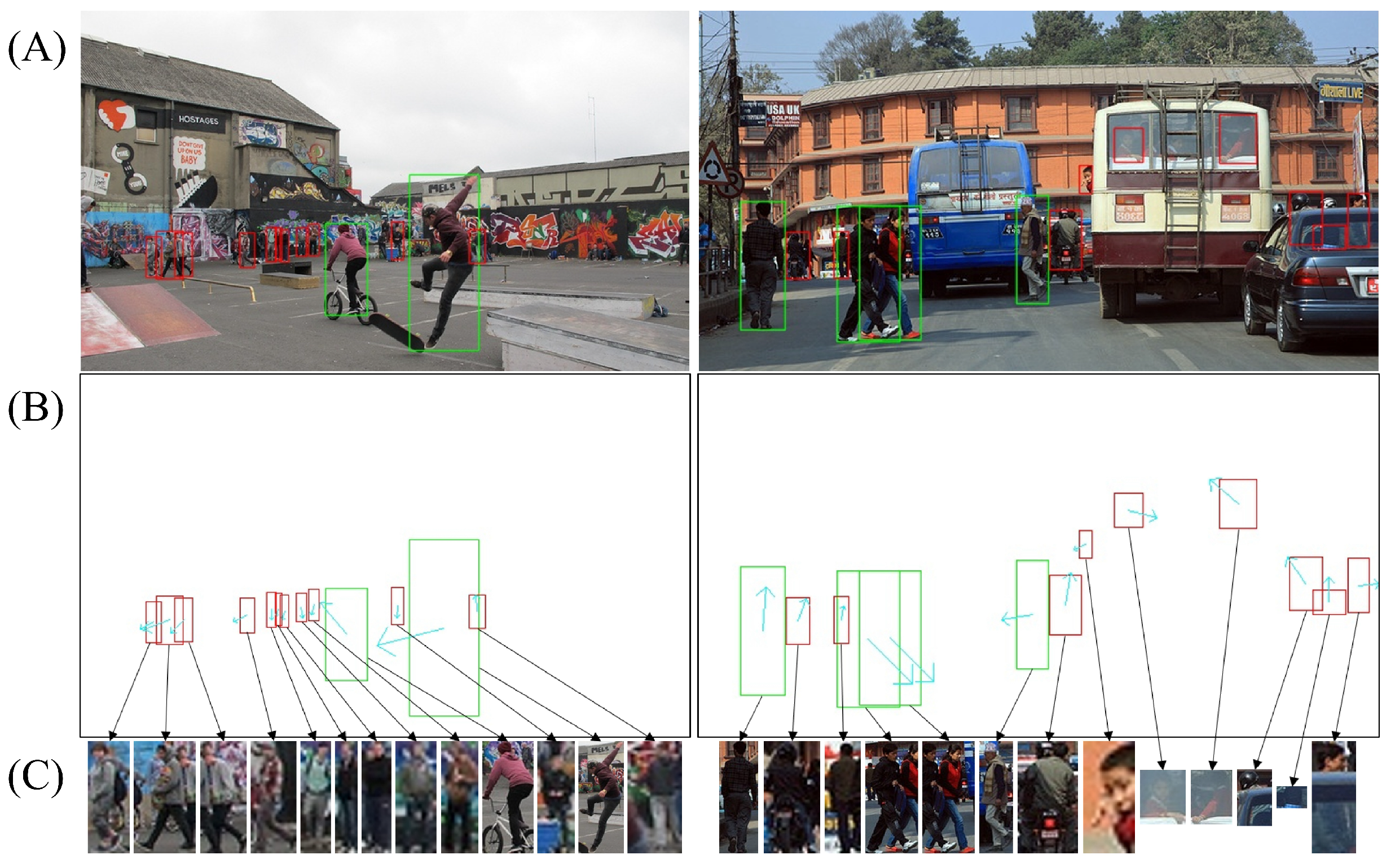
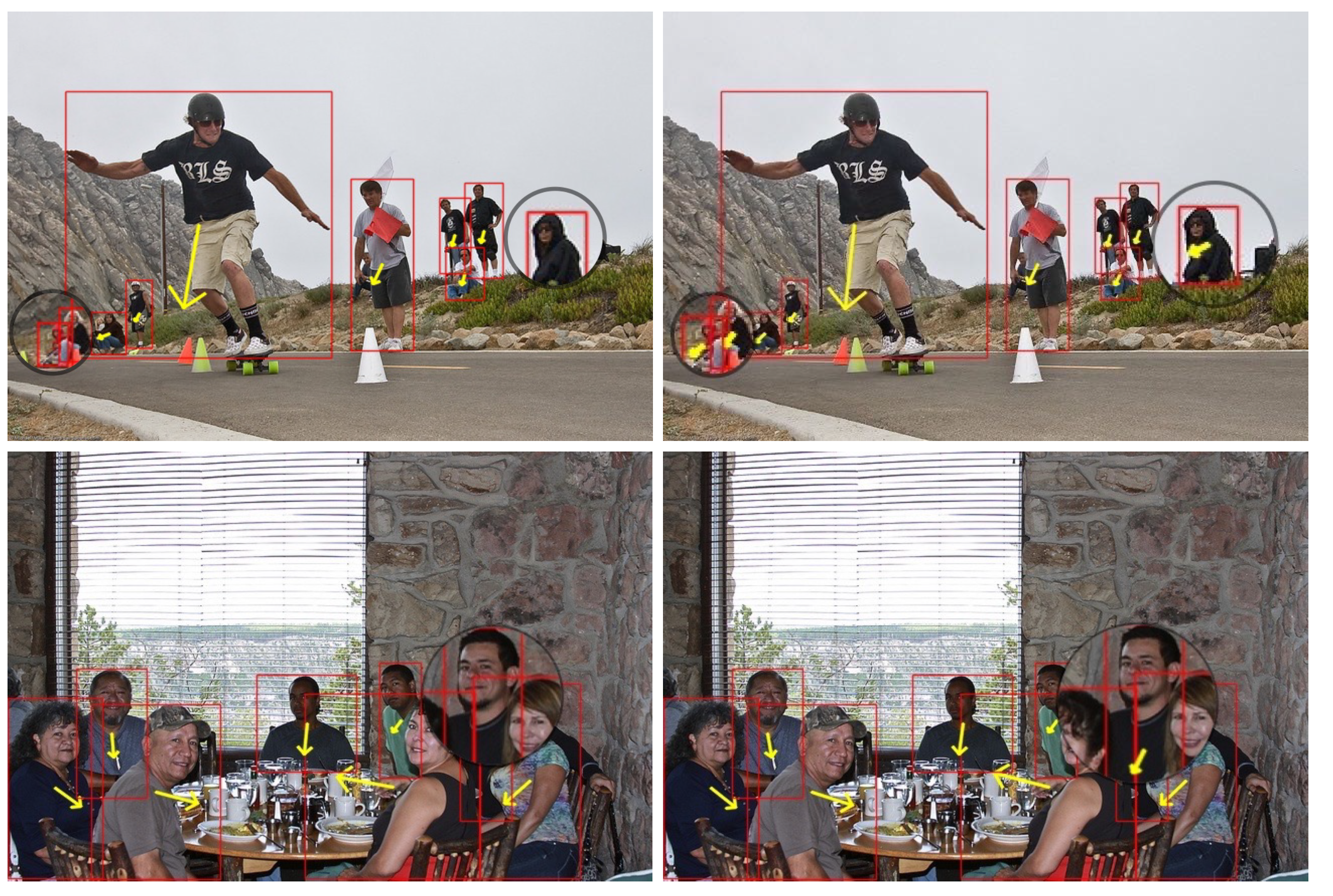
Figure 7 presents the qualitative evaluation results of our method in various complex scenarios. The predicted orientation
is linearly mapped to an angle,
by
, for visualization. The yellow arrow is drawn from the bounding box center in the direction of
, and its length is fixed relative to the box size for clarity. Comparative results demonstrate that our method effectively addresses the detection failures (indicated with black circles) observed in MEBOW under crowded and occluded scenarios. It can be observed that our approach demonstrates remarkable robustness in real-world situations with dense crowds and severe occlusions. Not only can it effectively detect human bodies in low-quality image regions, but it also accurately predicts their orientation angles, fully showcasing the algorithm’s strong adaptability in practical application scenarios.
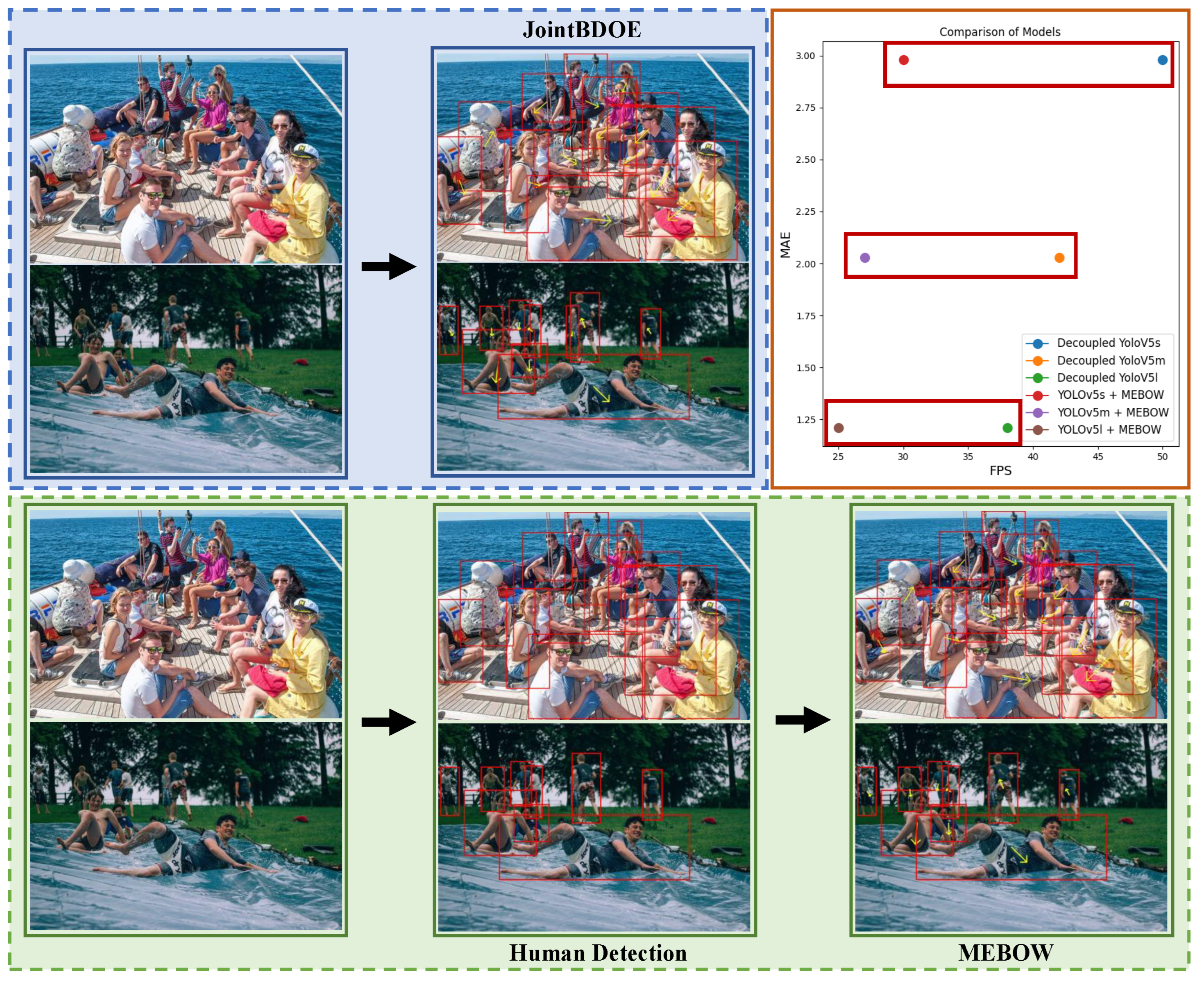
Figure 8 presents a comprehensive comparative analysis between the proposed JointBDOE framework and the conventional MEBOW approach. JointBDOE adopts an innovative end-to-end design concept, requiring only single-stage processing to directly output precise orientation estimation results from raw input images, significantly simplifying the traditional workflow. In contrast, the MEBOW method requires first obtaining human bounding boxes through external detection algorithms (such as Faster RCNN or YOLO) as input before performing subsequent orientation estimation. This two-stage architecture not only increases computational overhead but also introduces additional error accumulation risks. The scatter plot in the upper right corner further confirms that, under the same baseline detection framework, JointBDOE achieves comparable estimation accuracy to MEBOW while operating at a faster processing speed. This makes the algorithm particularly valuable for applications with high real-time requirements.
4.4. Results on Student Engagement Analysis
In the educational domain, public datasets with students are extremely limited due to ethical and privacy concerns. To address this issue, we construct an authentic classroom teaching dataset from cooperated schools for student engagement analysis. The dataset comprises 10 complete classroom recording videos, each approximately 40 min in duration. The distinctive characteristics of the constructed dataset include the following: (1) various layouts and spatial configurations; (2) diverse camera positions and perspectives; (3) a wide age range from kindergarten to university; and (4) differential seating arrangements, including row–column patterns and group discussions. These characteristics enable the constructed dataset to comprehensively characterize classroom teaching scenarios, thus serving as an effective validation resource for student engagement analysis in classroom settings. In compliance with privacy protection principles, we implement rigorous blurring processing on all facial information of teachers and students in the videos.
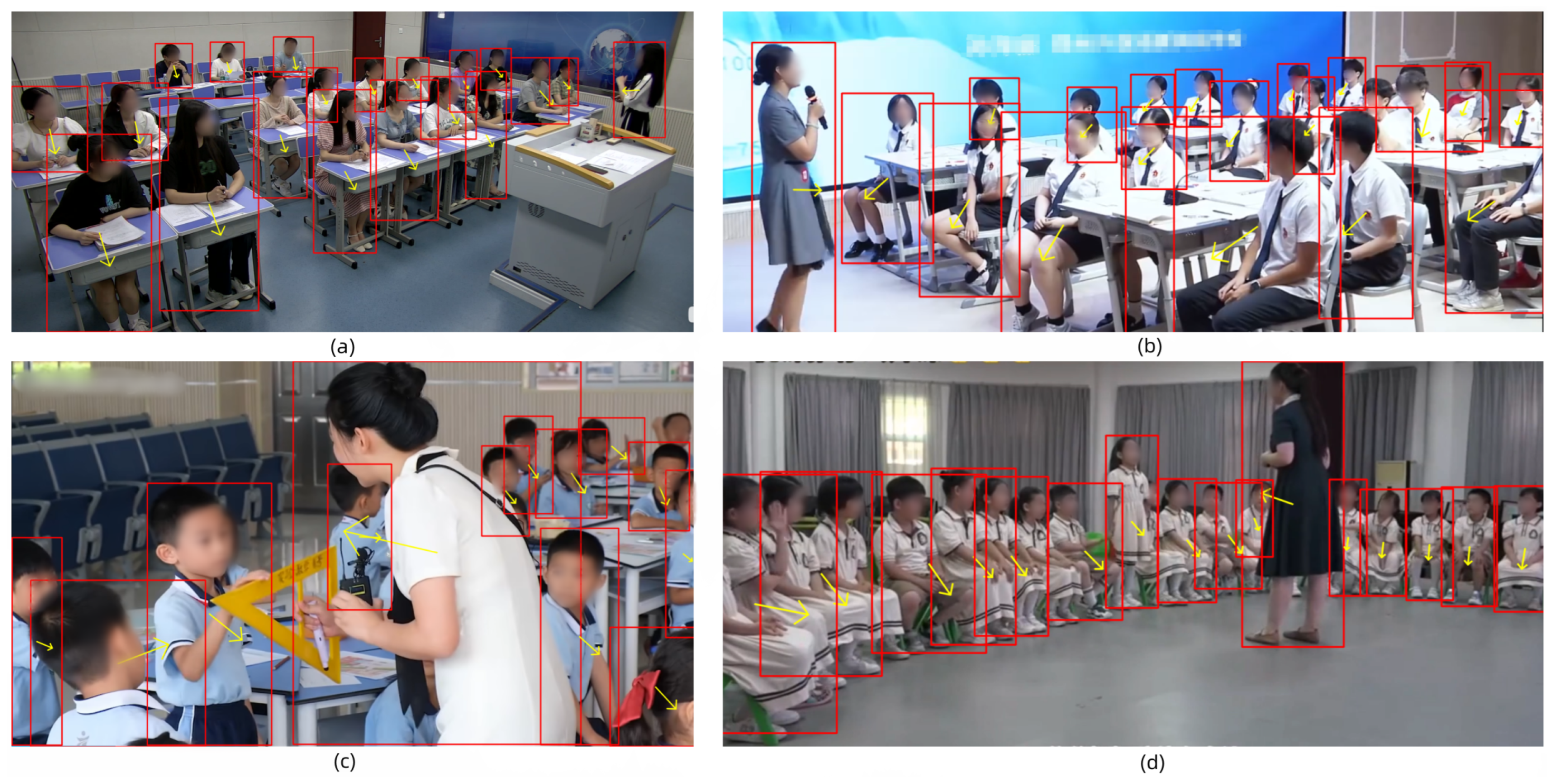
Figure 9 shows the results of student/teacher detection and orientation estimation under various seating arrangements and camera perspectives, where red bounding boxes represent detected teachers and students, and yellow arrows indicate their body orientations. The visualized results demonstrate that the proposed JointBDOE can not only detect almost all the students but also accurately estimate their orientations, even in complex scenarios with crowded students and severe occlusions. From
Figure 9, we observe that students’ attention directions are almost consistent with their body orientations; thus, student engagement can be inferred from their body orientations. Meanwhile, JointBDOE can simultaneously identify teachers and their orientations, which supports for mining effective teacher–student interactive patterns.
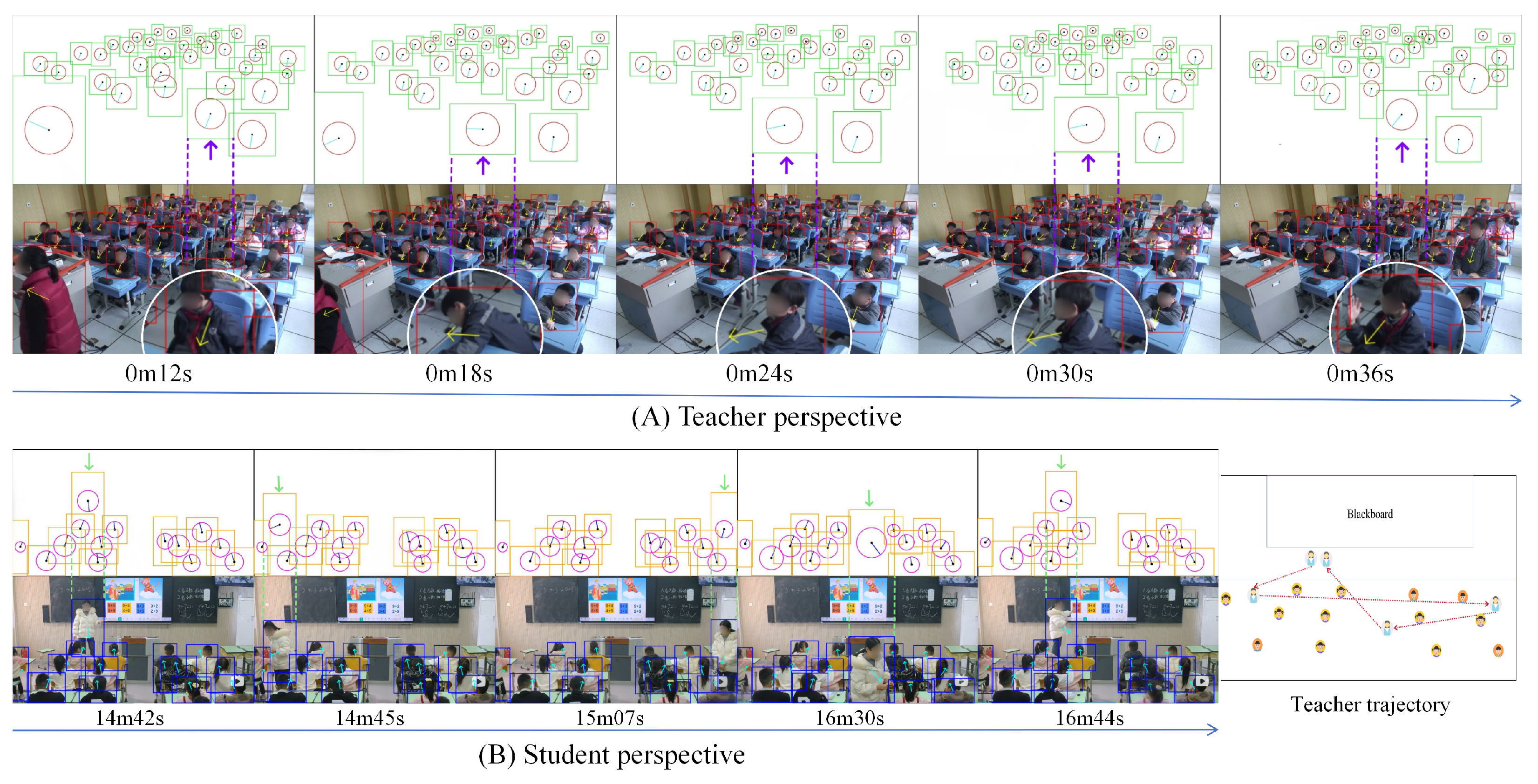
Furthermore, we demonstrate how to use students’ body orientation for engagement analysis based on continuous teaching segments.
Figure 10 provides dual-perspective visualizations of body orientations from both the teacher and students, along with simplified diagrams above to enhance readability in crowded scenarios. In case (A), with the teacher perspective of
Figure 10, when the teacher turns to write on the blackboard, most students maintain high engagement as their body orientations focus on the teacher/blackboard. Meanwhile, the student pointed by the purple arrow constantly changes his orientation, indicating slight disengagement. Combined with timestamp information (class just begins), this phenomenon may indicate that the student has relatively weak self-discipline and has not yet fully entered a focused learning state during the initial class phase. In case (B), with the student’s perspective of
Figure 10, based on the size and position of the bounding box, it can be inferred that the person pointed to with the green arrow is the teacher. Between 14 and 16 min of class, the teacher moved back and forth from the podium to the students’ area. Such a movement pattern indicates that the teacher assigns a task and then walks to the students, checking their progress. During this period, all the students hardly changed their orientation, demonstrating a high level of engagement, while the teacher’s movement path showed attention to each row of students.
To sum up, the proposed JointBDOE achieves excellent performances on orientation estimations of teachers and students in various scenarios, including front-view, back-view, and crowded settings. Moreover, the dynamic changes in orientation reveal students’ engagement levels and can also provide objective evidence for dividing classroom teaching segments. This offers strong support for instructional analysis and personalized guidance, fully demonstrating its practical value in educational settings.
4.5. Limitations and Future Research
Although our proposed learning engagement recognition method has achieved good results in various classroom scenarios, there is still room for further improvement. On the one hand, students’ orientation and position are important cues for evaluating classroom engagement, but typical behaviors (such as raising hands or standing up) are also of critical importance in actual teaching, especially in dynamic or collaborative learning situations where interactions and movements are more complex. On the other hand, the dataset used in this study is mainly based on visual information, whereas teacher–student verbal interaction in real classrooms also has a significant impact on teaching effectiveness. In addition, the current engagement detection results are mainly presented in a technical visualization form and have not been fully integrated with educational theory, which limits their interpretability and instructiveness.
Future research will advance in several directions. First, at the feature level, we will integrate the recognition of regular and typical behaviors, including scenarios with more dynamic and collaborative interactions, and combined with students’ position coordinate encoding, to achieve a comprehensive engagement analysis at both the individual and group levels. Second, at the data level, we will incorporate multimodal information such as audio and video to build a more comprehensive classroom evaluation system. Third, at the model level, we will further enhance the performance of JointBDOE in complex scenarios based on its single-stage, low-computational-cost advantages, and explore adaptive optimization strategies for different educational environments. Fourth, at the application level, we will deeply integrate detection results with educational theory to provide teachers with more interpretable and instructive feedback, thereby promoting the innovation and practical implementation of education quality evaluation systems. Through these improvements, we aim to further enhance the accuracy, applicability, and practical value of engagement assessment while maintaining the advantages of being non-intrusive and automated.