You are currently viewing a new version of our website. To view the old version click .
Sensors
  • Editor’s Choice
  • Article
  • Open Access

25 February 2023

Underwater Object Detection Using TC-YOLO with Attention Mechanisms

,
and
School of Civil Engineering and Transportation, South China University of Technology, Guangzhou 510641, China
*
Author to whom correspondence should be addressed.
This article belongs to the Special Issue Image Processing and Analysis for Object Detection

Abstract

Underwater object detection is a key technology in the development of intelligent underwater vehicles. Object detection faces unique challenges in underwater applications: blurry underwater images; small and dense targets; and limited computational capacity available on the deployed platforms. To improve the performance of underwater object detection, we proposed a new object detection approach that combines a new detection neural network called TC-YOLO, an image enhancement technique using an adaptive histogram equalization algorithm, and the optimal transport scheme for label assignment. The proposed TC-YOLO network was developed based on YOLOv5s. Transformer self-attention and coordinate attention were adopted in the backbone and neck of the new network, respectively, to enhance feature extraction for underwater objects. The application of optimal transport label assignment enables a significant reduction in the number of fuzzy boxes and improves the utilization of training data. Our tests using the RUIE2020 dataset and ablation experiments demonstrate that the proposed approach performs better than the original YOLOv5s and other similar networks for underwater object detection tasks; moreover, the size and computational cost of the proposed model remain small for underwater mobile applications.

1. Introduction

Ocean exploration and exploitation have become commanding heights of the economy in many countries. Underwater object detection enables intelligent underwater vehicles to locate, identify, and classify underwater targets for various tasks, which is a vital sensing technology that has extensive applications in ocean exploration and salvage, offshore engineering, military operations, fishery, etc. [1]. Compared with sonar detection [2], cameras can obtain close-range information so that intelligent underwater vehicles can better perceive the surrounding environment. Image-based underwater object detection has been developed rapidly in recent years, along with the development and application of deep learning in computer vision. However, compared with other typical computer vision tasks, underwater object detection presents unique challenges, including poor image quality, small and dense targets difficult to detect, and limited computation power available within underwater vehicles.
Image enhancement is an effective method to improve underwater image quality and thus improve the accuracy of underwater object detection [3]. Both traditional image enhancement algorithms, such as multi-scale Retinex with color restoration [4] and defog [5], and deep learning algorithms, such as generative adversarial network (GAN) [6], have been applied to improve image quality. Particularly for underwater object detection, several researchers applied image enhancement algorithms based on the Retinex theory and obtained clearer underwater images, but the final prediction results were not significantly improved because only enhancing underwater images does not guarantee better prediction results [7,8]. GAN was used for color correction in underwater object detection tasks [9], but the resulting detection network is rather large and requires costly computation. The image enhancement technique employed should be computationally efficient and combined with other approaches to improve the overall performance of underwater object detection.
Targets of underwater object detection are often small and dense. Deep convolutional neural networks (CNNs) enable multi-layer non-linear transformations that effectively extract the underlying features into more abstract higher-level representations, allowing effective detection when there is target occlusion or the target size is small. YOLO (You Only Look Once) is a series of widely-used CNNs for object detection tasks [10,11,12,13,14,15]. Sung et al. proposed a YOLO-based CNN to detect fish using real-time video images and achieved a classification accuracy of 93% [16]. Pedersen et al. adopted YOLOv2 and YOLOv3 for marine-animal detection [17]. Other researchers applied attention mechanisms to detection networks for better identification of small and dense targets [18,19,20].
Applications of attention mechanisms have been proven effective for object detection; nevertheless, most existing research improves detection performance at the considerable expense of computational cost, as the demand for attention computation is high. Computational capacity and power supply available to underwater vehicles are usually very limited. Increasing computational demand for object detection would result in the need for underwater vehicles to be connected with cables for data transfer or power supply, dramatically limiting the operating range and the level of autonomy of underwater vehicles. Therefore, attention mechanisms should be carefully integrated with detection networks, such that the increases in model size and computational cost are minimized for underwater applications.
In this study, we propose a new underwater object detection approach that has three major improvements over the original YOLOv5. A new detection network named TC-YOLO was developed to integrate Transformer self-attention and coordinate attention mechanisms for better small object identification. An image enhancement algorithm, contrast-limited adaptive histogram equalization, was used to improve the underwater image quality. Optimal transport label assignment was used to replace the original YOLOv5 label assignment scheme for network training. Experiments on the Real-world Underwater Image Enhancement (RUIE2020) dataset and ablation experiments were carried out. The results demonstrated the effectiveness and superior performance of the proposed approach. Compared with YOLOv5s and other advanced detection networks, the proposed TC-YOLO not only improves the detection performance of underwater objects but also remains relatively small without a significant impact on computational cost.
The remainder of this paper is organized as follows: The previous works related to the proposed approach are briefly introduced in Section 2. The development and details of the proposed approach are presented in Section 3. The proposed method is tested and compared with other detection networks in Section 4, including ablation experiments. Conclusions are finally given in Section 5.

3. Proposed Approach

The following three methods were proposed to improve the performance of a modified YOLOv5 network for underwater object detection:
  • Attention mechanisms were integrated into YOLOv5 by adding Transformer and CA modules to develop a new network named TC-YOLO;
  • OTA was used to improve label assignment in training for object detection;
  • A CLAHE algorithm was employed for underwater image enhancement.

3.1. Dataset

We chose to train and test the proposed approach using the RUIE2020 dataset from the Underwater Robot Picking Contest [51]. The images of this dataset present various underwater conditions and offer a comprehensive picture of the underwater environment. The RUIE2020 dataset has four object categories: holothurian, echinus, scallop, and starfish. There are 5543 images in total, and we randomly split the dataset into a training set of 4434 images and a testing set of 1109 images. The RUIE2020 dataset provides box-level annotations with more than 30,000 labels. Sea urchins have the largest number of labels in the dataset, accounting for more than half the labels. In addition, most of the targets in the dataset are small; 90% of the target boxes have an area that is less than 5% of the image area.

3.2. TC-YOLO

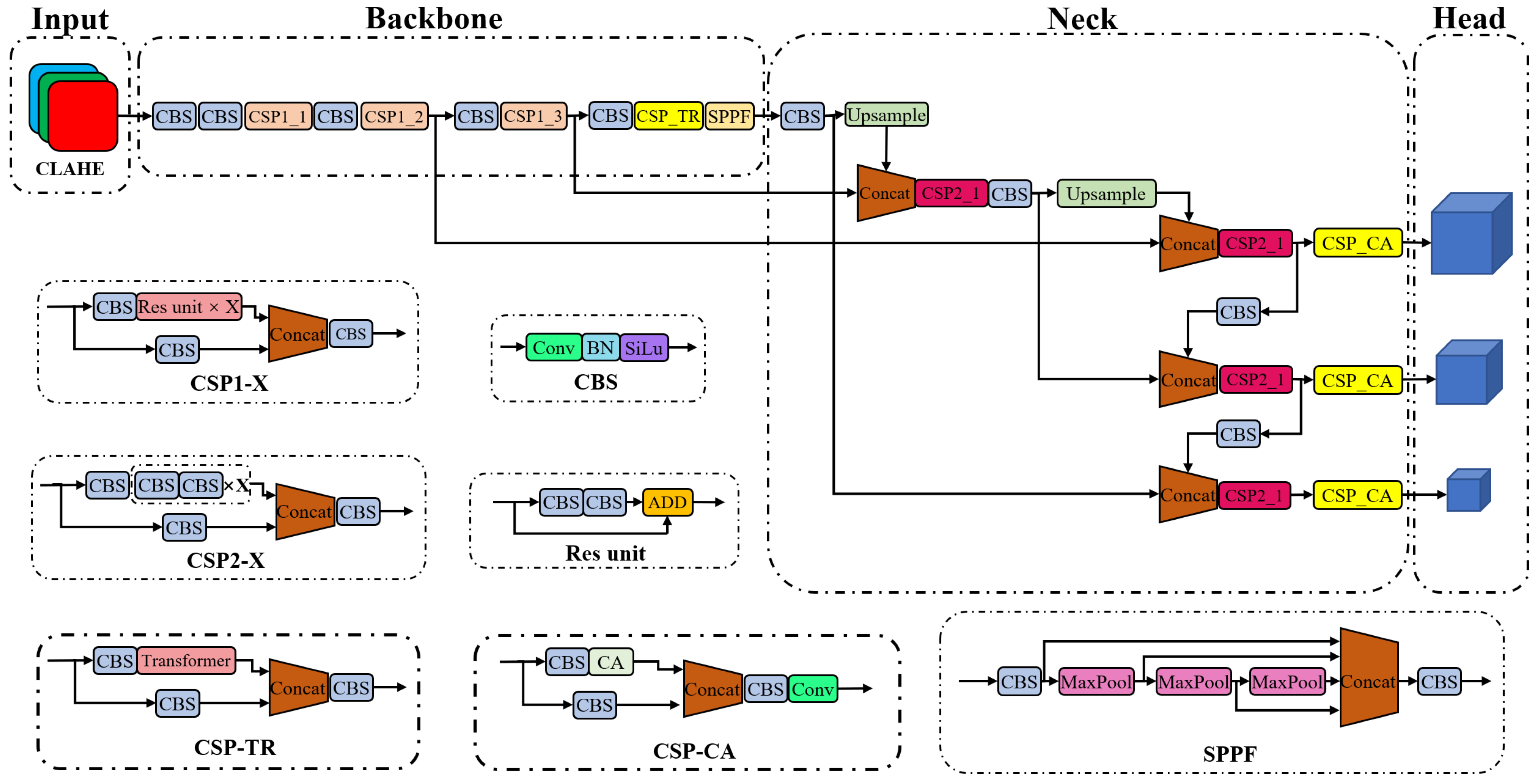
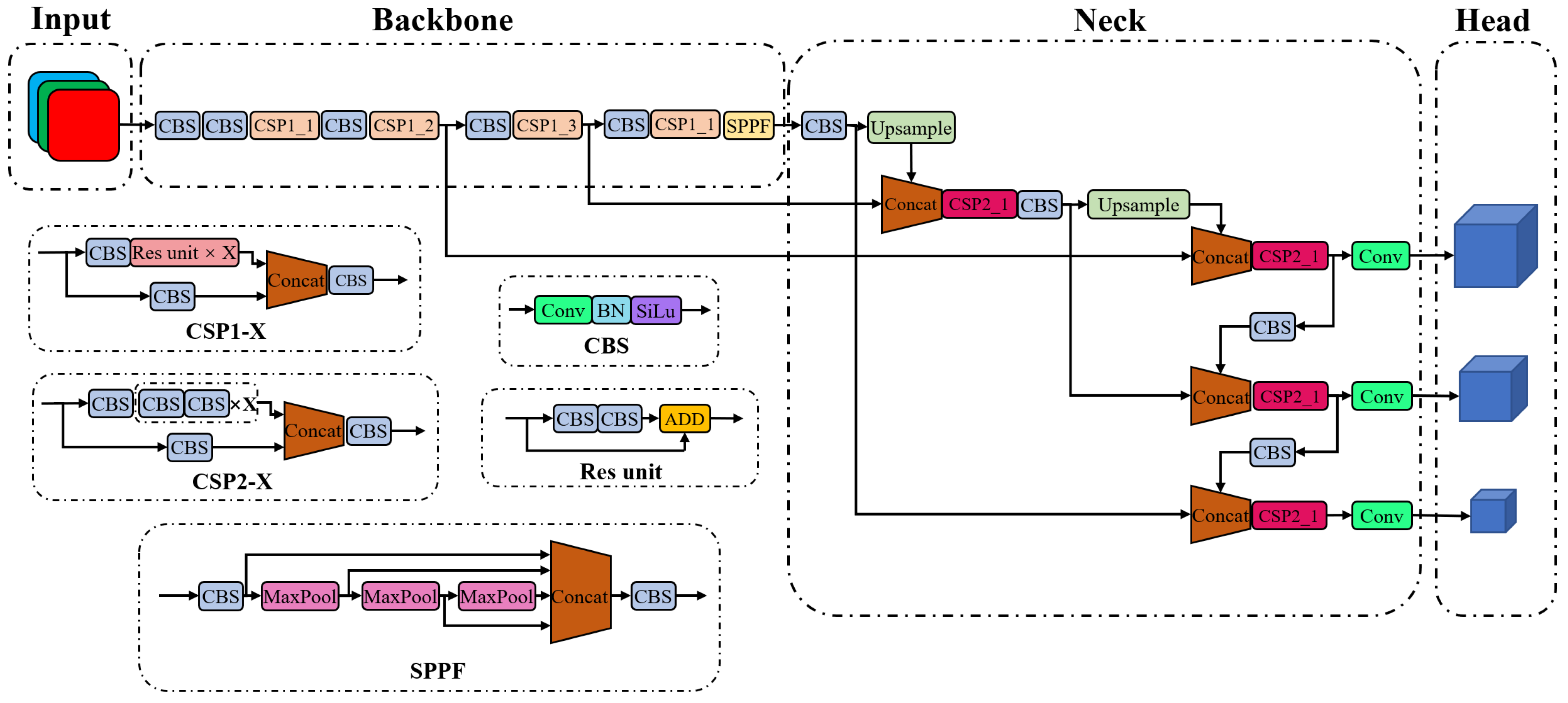
The modified object detection network is called TC-YOLO, as it includes one Transformer module in the backbone and three CA modules in the neck. Transformer and CA modules were combined with a cross-stage partial (CSP) structure to establish the attention blocks named CSP-TR and CSP-CA, respectively. Similar to most detection algorithms, the detection head was placed after the neck. The network generated feature maps at three scales as the input to the detection head. The feature map at each scale corresponded to three anchors, so in total, nine anchors were obtained by clustering the dataset. The placements of these attention blocks and the overall structure of TC-YOLO are shown in Figure 2.
Figure 2. Overall structure of the proposed TC-YOLO network.

3.2.1. Transformer Module

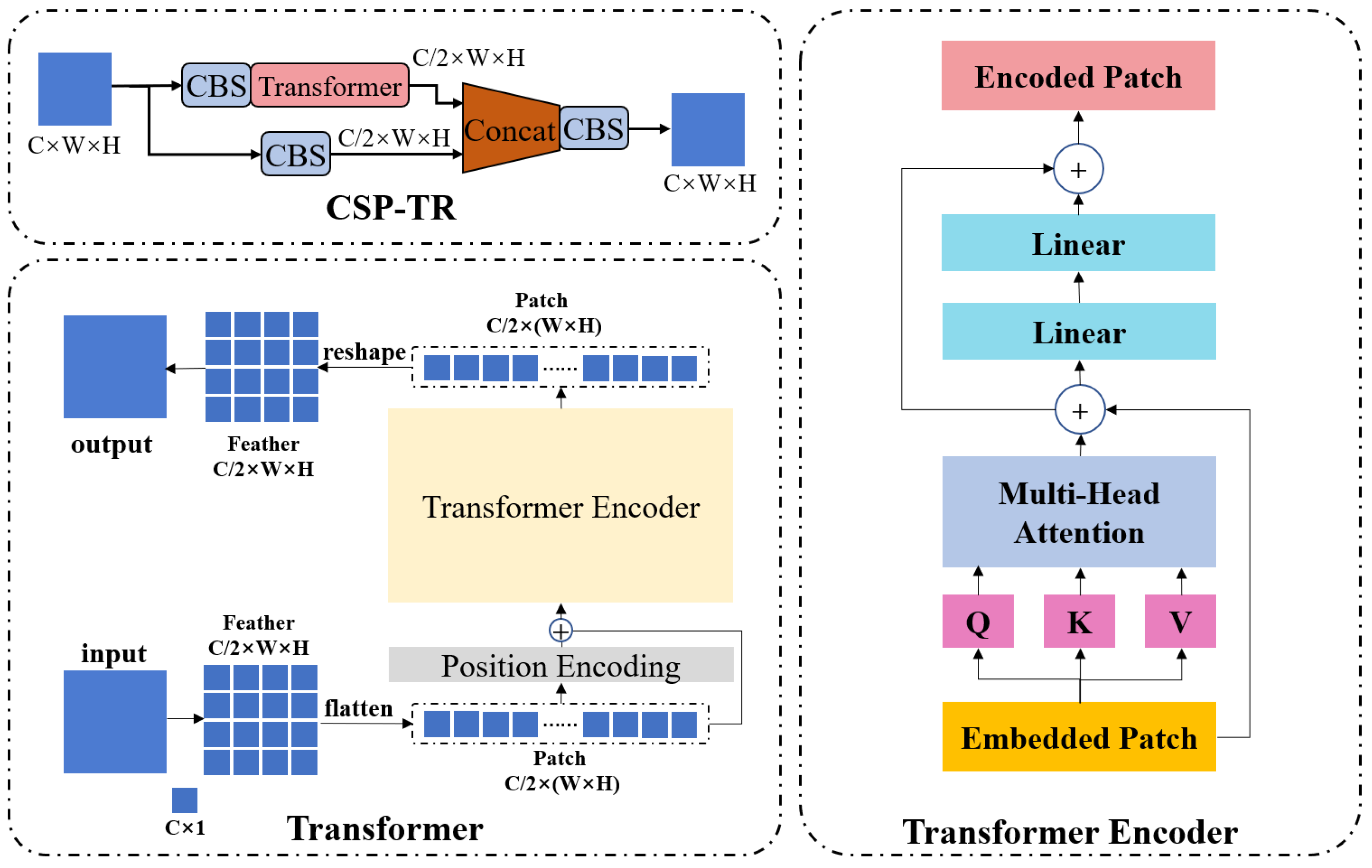
In this study, we adopted a modified Transformer encoder module and combined it with the backbone network by placing the module after the minimum feature map to reduce its computational cost (see CSP-TR in Figure 2). Different from other studies in which the Transformer module is used directly, we nested the encoder module inside the CSP structure, which reduced the number of channels of the input feature by half without any loss of local information. The detailed structure of the proposed CSP-TR block is shown in Figure 3. The input of the CSP-TR block is a C × W × H feature tensor, where C is the number of channels; W is the feature width, and H is the feature height. The CSP-TR block ess embedded at the end of the backbone, so the input feature had less width and height and therefore fewer dimensions after flattening. The flattened feature was defined as the patch, and position encoding was carried out by passing patches through a fully connected layer. Position-encoding data and the original patch were then added as the input of the Transformer encoder. We deleted the original linear normalization layer of the encoder and used only one Transformer layer without stacking to minimize the model size. The output of the Transformer encoder remained the same size as the input, so the output patch could be reshaped back to a feature tensor. The resulting feature was concatenated with the feature from the other branch in the CSP structure to recover the original number of channels.
Figure 3. Detailed structure of the CSP-TR Block.

3.2.2. Coordinate Attention

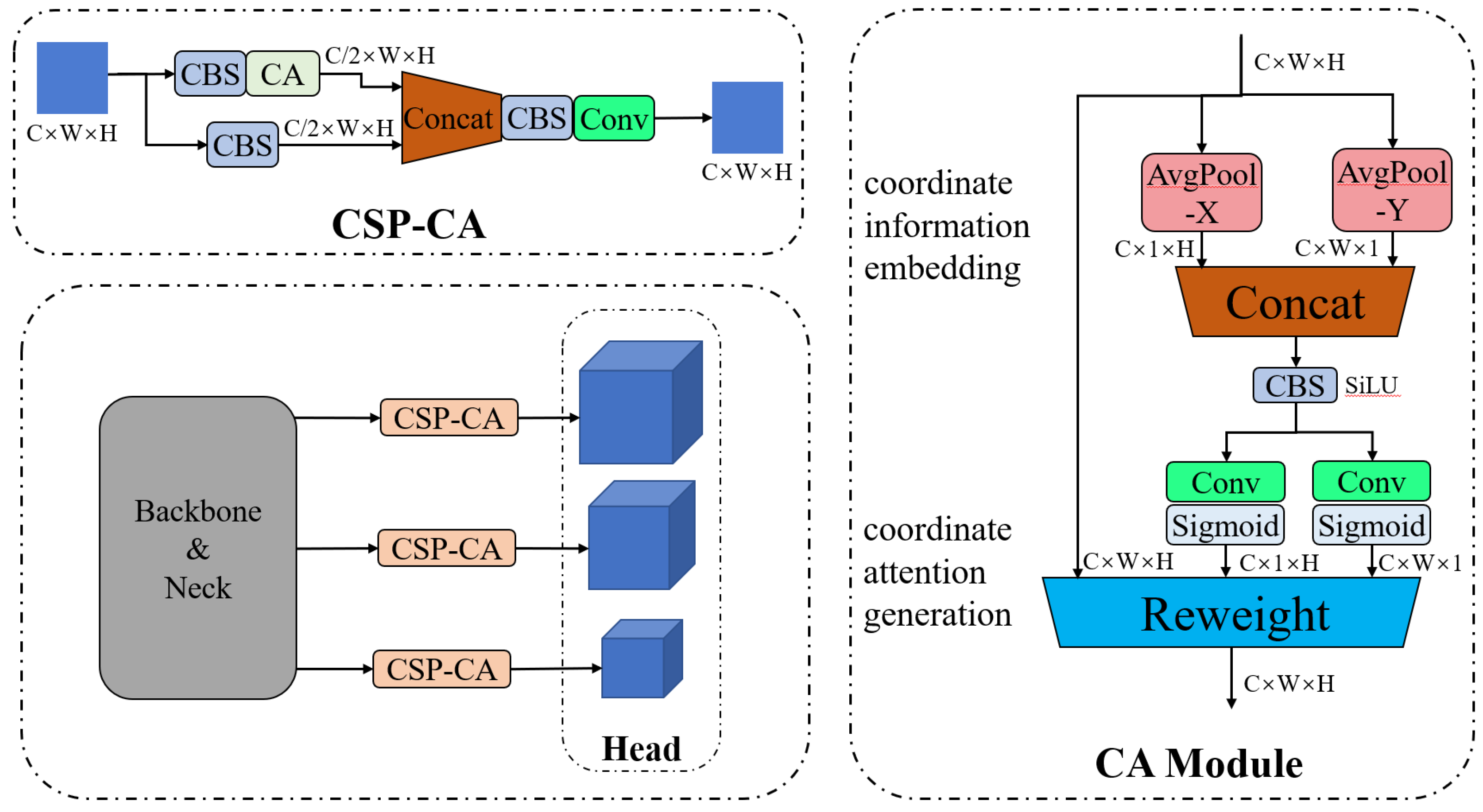
The CA modules were embedded in the neck before the prediction head in this study (see CSP-CA in Figure 2). The arrangement of the proposed method is different from other studies in which convolution-based attention mechanisms are placed in the backbone, and there are two reasons for the proposed arrangement of the CA modules: we already applied the self-attention mechanism in the backbone for feature extraction by replacing a standard CSP block with a CSP-TR block; placing the CA modules before prediction can effectively summarize the global information for different size features after extraction and fusion. Similar to the CSP-TR block, we nested a modified CA module inside the CSP structure to reduce computational costs and preserve local information. The detailed structure of the proposed CSP-CA block is shown in Figure 4. The input of CSP-CA was a C × W × H feature tensor from the end of the network. Coordinate attention was generated by first pooling the X and Y coordinates of the features equally, followed by encoding the pooled features through convolution and normalization, and finally multiplying the encoded features with the original features using the “Reweight” operation. To smooth the activation curve and avoid the gradient problem, we modified the CA module by replacing the original Hard–Swish activation function with the SiLU function, which formed a standard CBS structure in the middle of the CA module. The output of the CA module shared the same size as its input, which was subsequently concatenated with the feature from the other branch of the CSP structure to restore the original number of channels.
Figure 4. Structure of CSP-CA Block.

3.3. Optimal Transport Assignment

The optimal transport label assignment was employed in the proposed approach. The output tensor of the detection network for each feature scale included the distribution of bounding boxes for different target classes within every grid. All the output tensors and the GTs were passed into the OTA module for the computation of classification and regression losses to establish a transportation cost matrix. The optimal transport of labels was obtained by minimizing the cost matrix via the Sinkhorn–Knopp iteration. Based on the optimal transport of labels, the top ten anchors that received the most labels from a GT were selected as the positive samples of this GT. If multiple GTs shared any anchor, further filtering would be required using the cost matrix: The anchor would only assign to the GT that had the smallest cost value with the anchor. We implemented OTA by replacing the original label assignment codes in YOLOv5 with the OTA source codes available from GitHub.

3.4. Underwater Image Enhancement

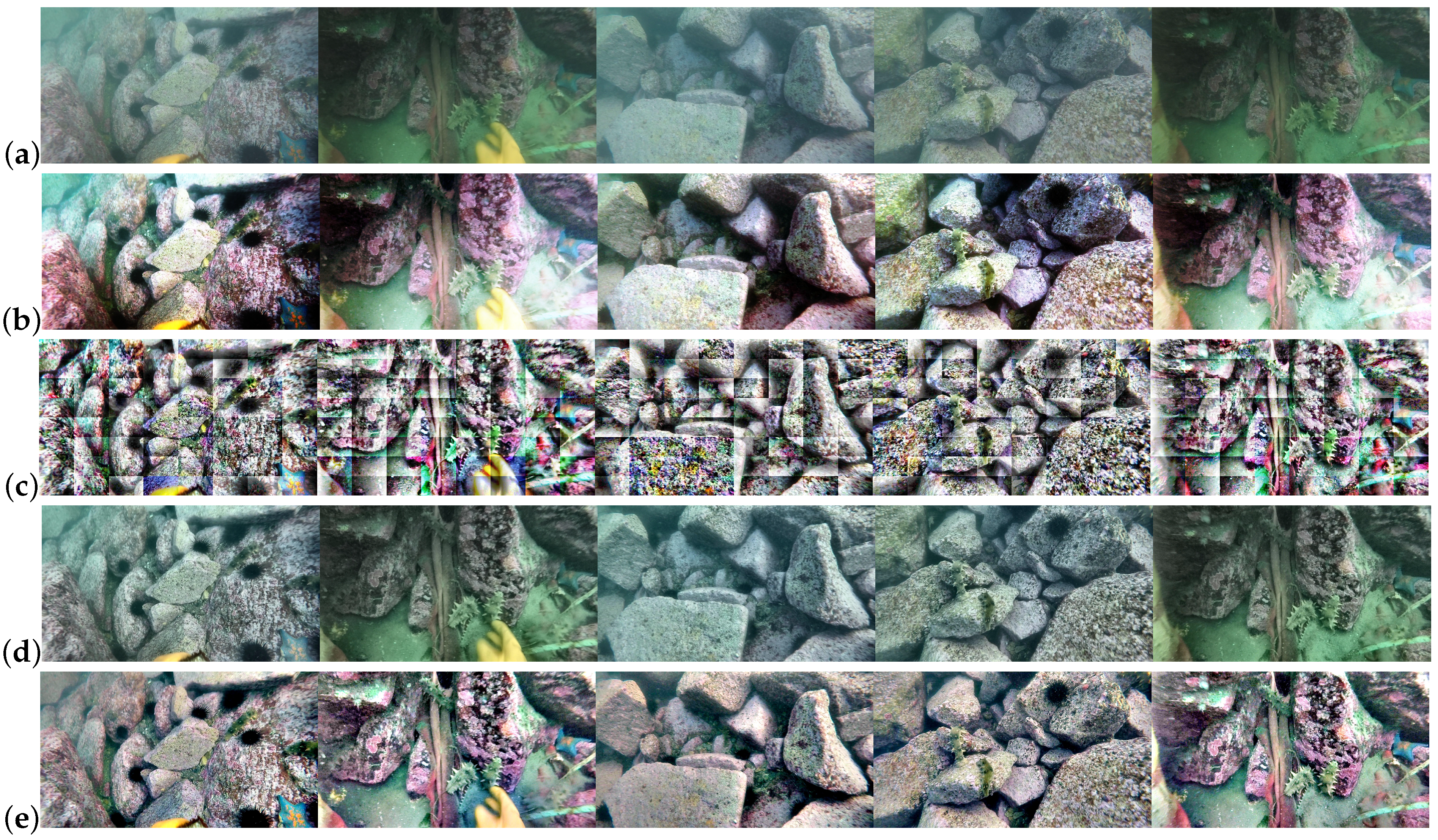
In order to select the most suitable image enhancement algorithm for the proposed approach, we compared the image enhancement results and processing speed of four different algorithms: HE, AHE, CLAHE, and MSRCR. These algorithms can be implemented directly using the OpenCV library. In the implementation of CLAHE, ’clipLimit’ is an important parameter that sets the threshold for contrast limiting to prevent over-saturation in homogeneous areas. These areas are characterized by a high peak in the histogram because most pixels fall in a narrow range of grayscale. The value of ’clipLimit’ is 40 by default but was changed to 2 in this study to avoid color bias. Figure 5 shows five underwater images and their processed images for comparison. It can be seen that the CLAHE algorithm provides a significant improvement over the HE and AHE algorithms, preserving dark and bright details and having less noise interference. The MSRCR algorithm not only improves the details but also restores the original colors, yielding the best overall enhancement results.
Figure 5. Comparison of underwater image enhancement results for different algorithms: (a) original images; (b) HE; (c) AHE; (d) CLAHE; (e) MSRCR.
We further tested the four different image enhancement algorithms using the original YOLOv5s network with the RUIE2020 dataset. Notably, 80% of the images were randomly sampled as the training set, and the remaining 20% were used as the testing set for validation. The images in the training and testing sets were enhanced using the four algorithms and used to train and test the four YOLOv5s networks. The original images without enhancement were also employed to set a benchmark. All the images in the dataset were scaled to 640 × 640 before being processed, and all tests were performed using the same workstation. The test results of each detection network, including precision, recall, and image processing time, are compared in Table 1. The processing time presented here refers to the time of processing a single image, excluding the inference time of the detection network. YOLOv5s achieved 79.7% precision and 71.1% recall on the original images. Applications of HE and AHE reduced the performance of object detection due to overexposure and stitching issues. The application of CLAHE could effectively reduce the case of missed detection, but its enhancement of dark details may lead to some incorrect detection, causing a slight drop in precision. The MSRCR algorithm led to the best image enhancement result; however, its image processing time was dramatically greater than the other three algorithms. Therefore, we found CLAHE to be the most suitable for real-time underwater object detection tasks.
Table 1. Comparison of detection performance using YOLOv5s for different image enhancement algorithms.

4. Experiments and Results

Experiments were carried out to analyze and verify the proposed underwater detection approach. The proposed TC-YOLO network was developed using the Torch library. All the experiments were performed using a workstation that has 32 GB of RAM and an NVIDIA GTX 1660 GPU with CUDA 10.1 GPU acceleration library. Online data argumentation, such as mosaic and scaling, was activated to prevent over-fitting and ensure the generalizability of the model [13]. All the images were scaled to 416 × 416 for training since the size of input for a mobile network is usually small. For stable batch normalization and further prevention of over-fitting, we set the batch size to 32 and applied an early stop method by training the networks with stochastic gradient descent for 50 epochs [52]. The learning rate and the momentum were set to 0.001 and 0.9, respectively. The warm-up period was set to 3000 iterations, the weight decay was set to 0.0005, and the confidence threshold was set to 0.25 for comparison [53].

4.1. Evaluation Metrics

The performance of the detection network was evaluated using the following metrics [54], where TP is true positive; FP is false positive, and FN is false negative:
  • Precision, defined as TP/(TP + FP), reflects the false-detection rate of a network;
  • Recall, defined as TP/(TP + FN), reflects the missed-detection rate of a network;
  • mAPIoU=0.5, defined as the mean average precision (mAP) evaluated for all object classes of the entire dataset, in which IoU = 0.5 was used as the threshold for evaluation;
  • mAPIoU=0.5:0.95 was defined as the mean value of multiple mAPs that were evaluated based on different IoU thresholds ranging from 0.5 to 0.95 at intervals of 0.05.
The computational cost was evaluated by the number of floating-point operations required to process a single image. The model size of a network was evaluated by the number of parameters of the network.

4.2. Comparisons

In this section, we compare the proposed TC-YOLO network with some advanced mobile networks for underwater object detection, namely YOLOv3, YOLOX-tiny, RetinaNet, Faster-RCNN, and the original YOLOv5. For YOLOv3, the MobileNet was employed as the backbone. For YOLOX, the tiny version was selected because of its small channel numbers for mobile applications. For RetinaNet, the EfficientNet was used as the backbone. For Faster-RCNN, ResNet18 instead of ResNet50 was employed as the backbone for mobile applications. For YOLOv5, YOLOv5s was selected with CSPDarknet53 as the backbone. CLAHE image enhancement and the optimal transport label assignment were applied to the TC-YOLO model to implement the proposed approach. We evaluated the performance metrics of these networks on the RUIE2020 dataset, in which all the networks were trained with the same settings. Table 2 shows the comparisons of performance, computational cost, and model size.
Table 2. Comparisons of mobile detection networks for underwater object detection.
Comparing the existing mobile detection networks, it was revealed that YOLOv5s provides state-of-the-art performance. YOLOv5s with CSPDarknet53 is larger and more advanced than YOLOv3 and YOLOX-tiny and has higher precision and less computational complexity than RetinaNet and Faster-RCNN. Developed from YOLOv5s, the proposed TC-YOLO is only 10% larger than YOLOv5s in size and remarkably surpasses the state-of-the-art in underwater detection tasks. The overall precision and recall increased by 3.2% and 5.7%, respectively. Specifically, the proposed approach can detect dense and small targets rather well: The mAPIoU=0.5:0.95 improved by 7.1%. These improvements were achieved without significantly sacrificing computational efficiency; the computational cost was only increased by 16%. The proposed approach achieves an excellent balance between prediction accuracy and computational complexity.

4.3. Ablation Experiments

Ablation experiments were carried out to analyze the contribution of each of the following improvements: image enhancement using CLAHE, Transformer block in the backbone, and CA block in the neck. Table 3 shows the results of ablation experiments, in which the given time is the average processing time per frame, including image enhancement and inference time.
Table 3. Results of ablation experiments.
Applying image enhancement using CLAHE caused a trivial drop in precisions but a significant boost in recall, because improved sharpness and dark details effectively reduced the number of false negatives. Applications of self-attention and coordinate attention mechanisms both offer significant overall improvement in underwater detection performance. Applying the Transformer block to the minimum feature map in the backbone provided roughly a 1–2% increase in precisions and a 2% rise in recall. Applying the CA blocks before the head provided significant improvement in precisions and recall of about 2–4%. Regarding computational cost, CLAHE image enhancement required the most computation, increasing processing time per frame by about 2.3 ms. Self-attention is known for being computationally expensive, and in our case, the Transformer block slowed the processing time by about 1 ms. The CA blocks applied in this study proved to be highly efficient, only increasing the processing time by about 0.2 ms. When all the proposed techniques were applied, the processing time per frame was still small, increasing from 16.2 ms to 19.7 ms, which is acceptable for real-time detection tasks. In our tests and studies, we noticed that the application of CLAHE image enhancement did not produce significant improvement when the lighting condition and water purity were great. Therefore, we recommend users deactivate CLAHE image enhancement for efficiency if underwater image quality is good.
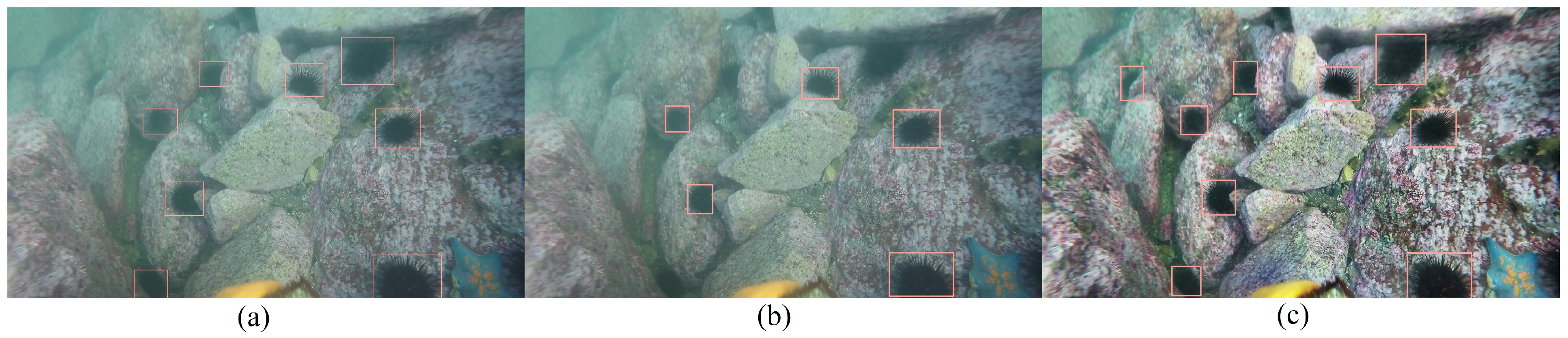
Figure 6 shows an example of the detection of sea urchins. The proposed approach proved effective. The CLAHE algorithm sufficiently enriched the details of the originally dark targets. Small and obscured sea urchins were successfully detected from the complicated background.
Figure 6. Demonstration of the proposed approach: GT of sea urchins (a); YOLOv5s prediction (b); TC-YOLO prediction (c).

5. Conclusions

In this paper, we proposed a new underwater object detection approach suitable for mobile deployments. Underwater object detection is difficult due to poor image quality, limited computational capacity, and underwater targets that are often small, dense, overlapped, and obscured. A new detection network, TC-YOLO, was developed by embedding the Transformer encoder and a coordinate attention module into YOLOv5. The CLAHE algorithm was used for underwater image enhancement, and the optimal transport assignment method was applied for label assignment in training. Combining these techniques, our proposed approach achieved state-of-the-art performance on the RUIE2020 dataset while remaining computationally efficient for real-time underwater detection tasks. In the ablation experiments, it was revealed that the application of the coordinate attention module to the end of the neck is a highly effective and efficient way to improve the performance of detection networks.

Author Contributions

Conceptualization, K.L. and L.P.; methodology, K.L. and L.P.; software, L.P.; validation, L.P. and S.T.; formal analysis, L.P. and K.L.; investigation, K.L. and L.P.; resources, K.L.; writing—original draft preparation, L.P.; writing—review and editing, S.T. and K.L.; supervision, K.L. and S.T.; funding acquisition, K.L. and S.T. All authors have read and agreed to the published version of the manuscript.

Funding

This research was funded by the National Natural Science Foundation (grant numbers 12102136 and 51809096); the Guangdong Basic and Applied Basic Research Foundation (grant number 2021A1515012059), and the Guangzhou Science and Technology Program (grant numbers 202102020619 and 202102021013).

Institutional Review Board Statement

Not applicable.

Data Availability Statement

Not applicable.

Conflicts of Interest

The authors declare no conflict of interest.

Abbreviations

The following abbreviations are used in this paper:
YOLOYou Only Look Once
MSRCRMulti-Scale Retinex with Color Restoration
GANGenerative Adversarial Network
CNNConvolutional Neural Network
CLAHEContrast-Limited Adaptive Histogram Equalization
RUIEReal-World Underwater Image Enhancement
CSPCross-Stage Partial
IoUIntersection over Union
GTGround Truth
CBAMConvolutional Block Attention Module
CACoordinate Attention
HEHistogram Equalization
AHEAdaptive Histogram Equalization
OTAOptimal Transport Assignment
mAPMean Average Precision

References

  1. Sun, K.; Cui, W.; Chen, C. Review of Underwater Sensing Technologies and Applications. Sensors 2021, 11, 7849. [Google Scholar] [CrossRef] [PubMed]
  2. Wang, Z.; Wang, B.; Guo, J.; Zhang, S. Sonar Objective Detection Based on Dilated Separable Densely Connected CNNs and Quantum-Behaved PSO Algorithm. Comput. Intell. Neurosci. 2021, 2021, 6235319. [Google Scholar] [CrossRef] [PubMed]
  3. Tao, Y.; Dong, L.; Xu, L.; Xu, W. Effective solution for underwater image enhancement. Opt. Express. 2021, 29, 32412–32438. [Google Scholar] [CrossRef] [PubMed]
  4. Rahman, Z.; Jobson, D.J.; Woodell, G.A. Multi-scale retinex for color image enhancement. In Proceedings of the 3rd IEEE International Conference on Image Processing, Lausanne, Switzerland, 19 September 1996; pp. 1003–1006. [Google Scholar]
  5. He, K.; Sun, J.; Tang, X. Single Image Haze Removal Using Dark Channel Prior. In Proceedings of the 2009 IEEE Conference on Computer Vision and Pattern Recognition, Miami, FL, USA, 20–25 June 2009; pp. 2341–2353. [Google Scholar]
  6. Han, Y.; Huang, L.; Hong, Z.; Cao, S.; Zhang, Y.; Wang, J. Deep Supervised Residual Dense Network for Underwater Image Enhancement. Sensors 2021, 21, 3289. [Google Scholar] [CrossRef] [PubMed]
  7. Yeh, C.H.; Lin, C.H.; Kang, L.W.; Huang, C.H.; Lin, M.H.; Chang, C.Y.; Wang, C.C. Lightweight Deep Neural Network for Joint Learning of Underwater Object Detection and Color Conversion. IEEE Trans. Neural Netw. Learn. Syst. 2021, 33, 6129–6143. [Google Scholar] [CrossRef] [PubMed]
  8. Song, S.; Zhu, J.; Li, X.; Huang, Q. Integrate MSRCR and Mask R-CNN to Recognize Underwater Creatures on Small Sample Datasets. IEEE Access 2020, 8, 172848–172858. [Google Scholar] [CrossRef]
  9. Katayama, T.; Song, T.; Shimamoto, T.; Jiang, X. GAN-based Color Correction for Underwater Object Detection. In Proceedings of the OCEANS 2019 MTS/IEEE SEATTLE, Seattle, WA, USA, 27–31 October 2019; pp. 1–4. [Google Scholar]
  10. Redmon, J.; Divvala, S.; Girshick, R.; Farhadi, A. You only look once: Unified, real-time object detection. In Proceedings of the 2016 IEEE Conference on Computer Vision and Pattern Recognition (CVPR), Las Vegas, NV, USA, 27–30 June 2016; pp. 779–788. [Google Scholar]
  11. Redmon, J.; Farhadi, A. YOLOv3: An incremental improvement. arXiv 2018, arXiv:1804.02767. [Google Scholar]
  12. Redmon, J.; Farhadi, A. YOLO9000: Better, Faster, Stronger. In Proceedings of the IEEE/CVF Conference on Computer Vision and Pattern Recognition (CVPR), Honolulu, HI, USA, 21–26 July 2017; pp. 6517–6525. [Google Scholar]
  13. Bochkovskiy, A.; Wang, C.-Y.; Liao, H.-Y.M. YOLOv4: Optimal Speed and Accuracy of Object Detection. arXiv 2020, arXiv:2004.10934. [Google Scholar]
  14. Li, C.; Li, L.; Jiang, H.; Weng, K.; Geng, Y.; Li, L.; Ke, Z.; Li, Q.; Cheng, M.; Nie, W.; et al. YOLOv6: A Single-Stage Object Detection Framework for Industrial Applications. arXiv 2022, arXiv:2209.02976. [Google Scholar]
  15. Wang, C.-Y.; Bochkovskiy, A.; Liao, H.-Y. YOLOv7: Trainable bag-of-freebies sets new state-of-the-art for real-time object detectors. arXiv 2022, arXiv:2207.02696. [Google Scholar]
  16. Sung, M.; Yu, S.-C.; Girdhar, Y. Vision based real-time fish detection using convolutional neural network. In Proceedings of the OCEANS 2017—Aberdeen, Aberdeen, UK, 19–22 June 2017; pp. 1–6. [Google Scholar]
  17. Pedersen, M.; Haurum, J.B.; Gade, R.; Moeslund, T. Detection of Marine Animals in a New Underwater Dataset with Varying Visibility. In Proceedings of the IEEE Conference on Computer Vision and Pattern recognition Workshops, Long Beach, CA, USA, 16–20 June 2019. [Google Scholar]
  18. Wang, W.; Wang, Y. Underwater target detection system based on YOLO v4. Int. Conf. Artif. Intell. Inf. Syst. 2021, 107, 1–5. [Google Scholar]
  19. Zhao, Z.; Liu, Y.; Sun, X.; Liu, J.; Yang, X.; Zhou, C. Composited FishNet: Fish Detection and Species Recognition From Low-Quality Underwater Videos. IEEE Trans. Image Process. 2021, 30, 4719–4734. [Google Scholar] [CrossRef]
  20. Wei, X.; Yu, L.; Tian, S.; Feng, P.; Ning, X. Underwater target detection with an attention mechanism and improved scale. Multimed. Tools Appl. 2021, 80, 33747–33761. [Google Scholar] [CrossRef]
  21. Wang, L.; Ye, X.; Xing, H.; Wang, Z.; Li, P. YOLO Nano Underwater: A Fast and Compact Object Detector for Embedded Device. In Proceedings of the Global Oceans 2020: Singapore—U.S. Gulf Coast, Biloxi, MS, USA, 5–30 October 2020; pp. 1–4. [Google Scholar]
  22. Al Muksit, A.; Hasan, F.; Hasan Bhuiyan Emon, M.F.; Haque, M.R.; Anwary, A.R.; Shatabda, S. YOLO-Fish: A robust fish detection model to detect fish in realistic underwater environment. Ecol. Inform. 2022, 72, 101847. [Google Scholar] [CrossRef]
  23. Zhao, S.; Zheng, J.; Sun, S.; Zhang, L. An Improved YOLO Algorithm for Fast and Accurate Underwater Object Detection. Symmetry 2022, 14, 1669. [Google Scholar] [CrossRef]
  24. Hu, X.; Liu, Y.; Zhao, Z.; Liu, J.; Yang, X.; Sun, C.; Chen, S.; Li, B.; Zhou, C. Real-time detection of uneaten feed pellets in underwater images for aquaculture using an improved YOLO-V4 network. Comput. Electron. Agric. 2021, 185, 106135. [Google Scholar] [CrossRef]
  25. Wang, C.Y.; Liao, H.-Y.; Yeh, I.-H.; Wu, Y.-H.; Chen, P.-Y.; Hsieh, J.-W. CSPNet: A new backbone that can enhance learning capability of CNN. In Proceedings of the 2020 IEEE/CVF Conference on Computer Vision and Pattern Recognition Workshops (CVPRW), Seattle, WA, USA, 14–19 June 2020; pp. 390–391. [Google Scholar]
  26. Wang, K.; Liew, J.; Zou, Y.; Zhou, D.; Feng, J. PANet: Few-shot image semantic segmentation with prototype alignment. In Proceedings of the 2019 IEEE/CVF International Conference on Computer Vision (ICCV), Seoul, Republic of Korea, 27 October–2 November 2019; pp. 9197–9206. [Google Scholar]
  27. Lin, T.-Y.; Dollár, P.; Girshick, R.; He, K.; Hariharan, B.; Belongie, S. Feature pyramid networks for object detection. In Proceedings of the 2017 IEEE Conference on Computer Vision and Pattern Recognition (CVPR), Honolulu, HI, USA, 21–26 July 2017; pp. 2117–2125. [Google Scholar]
  28. Rezatofighi, H.; Tsoi, N.; Gwak, J.; Sadeghian, A.; Reid, I.; Savarese, S. Generalized intersection over union: A metric and a loss for bounding box regression. In Proceedings of the IEEE/CVF Conference on Computer Vision and Pattern Recognition, Long Beach, CA, USA, 15–20 June 2019; pp. 658–666. [Google Scholar]
  29. Neubeck, A.; Van Gool, L. Efficient non-maximum suppression. In Proceedings of the 18th International Conference on Pattern Recognition (ICPR’06), Hong Kong, China, 20–24 August 2006; pp. 850–855. [Google Scholar]
  30. Sun, Y.; Wang, X.; Zheng, Y.; Yao, L.; Qi, S.; Tang, L.; Yi, H.; Dong, K. Underwater Object Detection with Swin Transformer. In Proceedings of the 2022 4th International Conference on Data Intelligence and Security (ICDIS), Shenzhen, China, 24–26 August 2022. [Google Scholar]
  31. Li, J.; Zhu, Y.; Chen, M.; Wang, Y.; Zhou, Z. Research on Underwater Small Target Detection Algorithm Based on Improved YOLOv3. In Proceedings of the 2022 16th IEEE International Conference on Signal Processing (ICSP), Beijing, China, 21–24 October 2022. [Google Scholar]
  32. Zhai, X.; Wei, H.; He, Y.; Shang, Y.; Liu, C. Underwater Sea Cucumber Identification Based on Improved YOLOv5. Appl. Sci. 2022, 12, 9105. [Google Scholar] [CrossRef]
  33. Jaderberg, M.; Simonyan, K.; Zisserman, A.; Kavukcuogl, K. Spatial transformer networks. Adv. Neural Inf. Process. Syst. 2015, 28, 1–9. [Google Scholar]
  34. Hu, J.; Shen, L.; Albanie, S.; Sun, G.; Wu, E. Squeeze-and-Excitation Networks. IEEE Trans. Pattern Anal. Mach. Intell. 2011, 42, 2011–2023. [Google Scholar] [CrossRef] [PubMed]
  35. Woo, S.; Park, J.; Lee, J.-Y.; Kweon, I.S. CBAM: Convolutional Block Attention Module. In Proceedings of the Computer Vision—ECCV 2018: 15th European Conference, Munich, Germany, 8–14 September 2018. [Google Scholar]
  36. Hou, Q.; Zhou, D.; Feng, J. Coordinate attention for efficient mobile network design. In Proceedings of the 2021 IEEE/CVF Conference on Computer Vision and Pattern Recognition (CVPR), Nashville, TN, USA, 20–25 June 2021; pp. 13713–13722. [Google Scholar]
  37. Vaswani, A.; Shazeer, N.; Parmar, N.; Uszkoreit, J.; Jones, L.; Gomez, A.N.; Kaiser, L.; Polosukhin, I. Attention is all you need. In Proceedings of the 31st Conference on Neural Information Processing Systems (NIPS 2017), Long Beach, CA, USA, 4–9 December 2017. [Google Scholar]
  38. Dosovitskiy, A.; Beyer, L.; Kolesnikov, A.; Weissenborn, D.; Zhai, X.; Unterthiner, T.; Dehghani, M.; Minderer, M.; Heigold, G.; Gelly, S.; et al. An image is worth 16x16 words: Transformers for image recognition at scale. arXiv 2020, arXiv:2010.11929. [Google Scholar]
  39. Liu, Z.; Lin, Y.; Cao, Y.; Hu, H.; Wei, Y.; Zhang, Z.; Lin, S.; Guo, B. Swin transformer: Hierarchical vision transformer using shifted windows. In Proceedings of the 2021 IEEE/CVF International Conference on Computer Vision (ICCV), Montreal, QC, Canada, 10–17 October2021; pp. 10012–10022. [Google Scholar]
  40. Ge, Z.; Wang, J.; Huang, X.; Liu, S.; Yoshie, O. LLA: Loss-aware label assignment for dense pedestrian detection. Neurocomputing 2021, 462, 272–281. [Google Scholar] [CrossRef]
  41. Xu, C.; Wang, J.; Yang, W.; Yu, H.; Yu, L.; Xia, G.-S. RFLA: Gaussian receptive field based label assignment for tiny object detection. In Proceedings of the IEEE/CVF Conference on Computer Vision and Pattern Recognition, New Orleans, LA, USA, 18–24 June 2022; pp. 526–543. [Google Scholar]
  42. Ge, Z.; Liu, S.; Li, Z.; Yoshie, O.; Sun, J. OTA: Optimal transport assignment for object detection. In Proceedings of the 2021 IEEE/CVF Conference on Computer Vision and Pattern Recognition (CVPR), Nashville, TN, USA, 20–25 June 2021; pp. 303–312. [Google Scholar]
  43. Li, T.; Rong, S.; Zhao, W.; Chen, L.; Liu, Y.; Zhou, H.; He, B. Underwater image enhancement using adaptive color restoration and dehazing. Opt. Express 2022, 30, 6216–6235. [Google Scholar] [CrossRef] [PubMed]
  44. Li, C.-Y.; Guo, J.-C.; Cong, R.-M.; Pang, Y.-W.; Wang, B. Underwater image enhancement by dehazing with minimum information loss and histogram distribution prior. IEEE Trans. Image Process. 2016, 25, 5664–5677. [Google Scholar] [CrossRef] [PubMed]
  45. Han, F.; Yao, J.; Zhu, H.; Wang, C. Underwater image processing and object detection based on deep CNN method. J. Sens. 2020, 2020, 6707328. [Google Scholar] [CrossRef]
  46. Sahu, P.; Gupta, N.; Sharma, N. A survey on underwater image enhancement techniques. Int. J. Comput. Appl. 2014, 87, 160–164. [Google Scholar] [CrossRef]
  47. Mustafa, W.A.; Kader, M.M.M.A. A review of histogram equalization techniques in image enhancement application. J. Phys. Conf. Ser. 2018, 1019, 012026. [Google Scholar] [CrossRef]
  48. Pizer, S.M.; Amburn, E.P.; Austin, J.D.; Cromartie, R.; Geselowitz, A.; Greer, T.; ter Haar Romeny, B.; Zimmerman, J.B.; Zuiderveld, K. Adaptive histogram equalization and its variations. Comput. Vis. Graph. Image Process. 1987, 39, 355–368. [Google Scholar] [CrossRef]
  49. Reza, A.M. Realization of the contrast limited adaptive histogram equalization (CLAHE) for real-time image enhancement. J. Vlsi Signal Process. Syst. Signal Image Video Technol. 2014, 38, 35–44. [Google Scholar] [CrossRef]
  50. Rahman, Z.; Woodell, G.A.; Jobson, D.J. A Comparison of the Multiscale Retinex with Other Image Enhancement Techniques; NASA Technical Report 20040110657; NASA: Washington, DC, USA, 1997. [Google Scholar]
  51. Liu, R.; Fan, X.; Zhu, M.; Hou, M.; Luo, Z. Real-World Underwater Enhancement: Challenges, Benchmarks, and Solutions Under Natural Light. IEEE Trans. Circuits Syst. Video Technol. 2020, 30, 4861–4875. [Google Scholar] [CrossRef]
  52. Robbins, H.; Monro, S. A stochastic approximation method. Ann. Math. Stat. 1951, 22, 400–407. [Google Scholar] [CrossRef]
  53. Goyal, P.; Dollár, P.; Girshick, R.; Noordhuis, P.; Wesolowski, L.; Kyrola, A.; Tulloch, A.; Jia, Y.; He, K. Accurate, large minibatch SGD: Training imagenet in 1 hour. arXiv 2017, arXiv:1706.02677. [Google Scholar]
  54. Khasawneh, N.; Fraiwan, M.; Fraiwan, L. Detection of K-complexes in EEG signals using deep transfer learning and YOLOv3. Clust. Comput. 2022, 1–11. [Google Scholar] [CrossRef]
  55. Sandler, M.; Howard, A.; Zhu, M.; Zhmoginov, A.; Chen, L.-C. MobileNetV2: Inverted residuals and linear bottlenecks. In Proceedings of the IEEE/CVF Conference on Computer Vision and Pattern Recognition (CVPR), Salt Lake City, UT, USA, 18–22 June 2018; pp. 4510–4520. [Google Scholar]
  56. Ge, Z.; Liu, S.; Wang, F.; Li, Z.; Sun, J. YOLOX: Exceeding YOLO series in 2021. arXiv 2021, arXiv:2107.08430. [Google Scholar]
  57. Lin, T.-Y.; Goyal, P.; Girshick, R.; He, K.; Dollar, P. Focal loss for dense object detection. In Proceedings of the 2017 IEEE International Conference on Computer Vision (ICCV), Venice, Italy, 22–29 October 2017. [Google Scholar]
  58. Tan, M.; Le, Q. EfficientNet: Rethinking model scaling for convolutional neural networks. In Proceedings of the 36th International Conference on Machine Learning (ICML 2019), Long Beach, CA, USA, 9–15 June 2019; pp. 6105–6114. [Google Scholar]
  59. Ren, S.; He, K.; Girshick, R.; Sun, J. Faster R-CNN: Towards real-time object detection with region proposal networks. In Proceedings of the NIPS’15: Proceedings of the 28th International Conference on Neural Information Processing Systems, Cambridge, MA, USA, 7–12 December 2015. [Google Scholar]
Disclaimer/Publisher’s Note: The statements, opinions and data contained in all publications are solely those of the individual author(s) and contributor(s) and not of MDPI and/or the editor(s). MDPI and/or the editor(s) disclaim responsibility for any injury to people or property resulting from any ideas, methods, instructions or products referred to in the content.

Article Metrics

Citations

Article Access Statistics

Multiple requests from the same IP address are counted as one view.