You are currently viewing a new version of our website. To view the old version click .
Sensors
  • Article
  • Open Access

19 February 2023

Rethinking Breast Cancer Diagnosis through Deep Learning Based Image Recognition

,
and
1
Electronic Engineering Department, Dong Seoul University, Seongnam 13120, Republic of Korea
2
Choi’s Breast Clinic, 197, Gwongwang-ro, Paldal-gu, Suwon-si 16489, Republic of Korea
*
Author to whom correspondence should be addressed.
This article belongs to the Section Biomedical Sensors

Abstract

This paper explored techniques for diagnosing breast cancer using deep learning based medical image recognition. X-ray (Mammography) images, ultrasound images, and histopathology images are used to improve the accuracy of the process by diagnosing breast cancer classification and by inferring their affected location. For this goal, the image recognition application strategies for the maximal diagnosis accuracy in each medical image data are investigated in terms of various image classification (VGGNet19, ResNet50, DenseNet121, EfficietNet v2), image segmentation (UNet, ResUNet++, DeepLab v3), and related loss functions (binary cross entropy, dice Loss, Tversky loss), and data augmentation. As a result of evaluations through the presented methods, when using filter-based data augmentation, ResNet50 showed the best performance in image classification, and UNet showed the best performance in both X-ray image and ultrasound image as image segmentation. When applying the proposed image recognition strategies for the maximal diagnosis accuracy in each medical image data, the accuracy can be improved by 33.3% in image segmentation in X-ray images, 29.9% in image segmentation in ultrasound images, and 22.8% in image classification in histopathology images.

1. Introduction

The AI (Artificial Intelligence) is being applied to various industries thanks to the recent great success [1,2,3,4]. In particular, the performance improvement is remarkable on the area of image recognition technologies such as image classification, object detection [5] and image segmentation [6,7], so that these technologies are enormously being applied to various industrial applications such as autonomous driving, robots, meta-verse, industrial automation, smart city, medical care and healthcare.
Above all, the medical imaging diagnosis technology though the images obtained from medical imaging devices (ultrasound, MRI, CT, X-ray and Endoscope) is being applied into the domains of trained medical professionals such as gastrointestinal diseases detection [8,9,10], heart disease diagnosis [11,12], tumor detection [13,14] and so on. Moreover, the artificial intelligence in the medical industry are also being applied to the territory of new drug development [15,16]. In the future, it is expected that the medical and healthcare industry will face a technological renaissance thanks to the artificial intelligence.
However, because building a large-scale dataset, which is one of key components for AI based medical technology, requires a lot of cost and even contains sensitive private information, the dataset has not been provided sufficiently to encourage the development of artificial intelligence. Nevertheless, as research using medical artificial intelligence has recently been actively conducted not only in academia and industry, but also in the government, datasets are being built through large-scale investments, and related laws are also being revised.
For this goal, the image recognition technologies for optimizing the diagnosis process using each medical image data are investigated in terms of various image classification techniques (VGGNet19 [1], ResNet50 [2], DenseNet121 [3], and EfficientNet v2 [4]), image segmentation techniques (U-Net [17], ResU-Net++ [18], and DeepLabV3 [19]), and related loss functions (Binary Cross Entropy, Dice Loss, Tversky Loss), and data augmentation techniques.
This paper studied a technique for diagnosing breast cancer using artificial intelligence based medical image recognition technology. Therefore, mammography (examination of human breast using low energy X-ray) images, ultrasound images, and histopathology (microscopic examination of tissue) images are used to improve the accuracy of the process of diagnosing breast cancer classification through image classification technique and of inferring their affected location through image segmentation technique. Then, the image recognition application strategies for optimizing the diagnosis process using each medical image data are investigated in terms of various image classification techniques (VGGNet19 [1], ResNet50 [2], DenseNet121 [3], and EfficientNet v2 [4]), image segmentation techniques (U-Net [17], ResU-Net++ [18], and DeepLabV3 [19]), and related loss functions (Binary Cross Entropy, Dice Loss, Tversky Loss), and data augmentation techniques.

4. Data Augmentation Technique for Breast Cancer Imaging Diagnosis

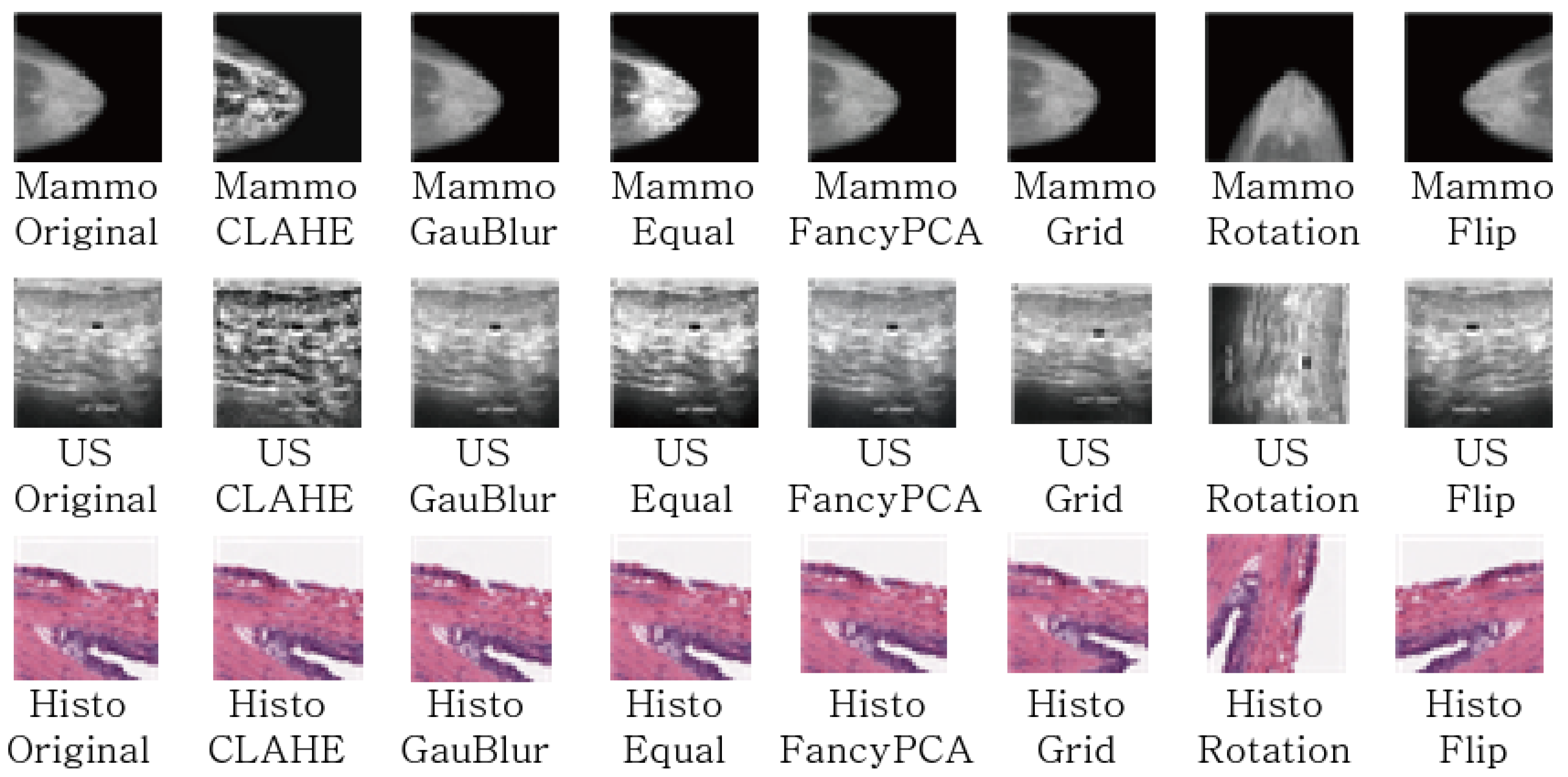
In order to evaluate the effect of data augmentation in medical images, we set up the datasets through various data augmentation techniques. The data augmentation techniques to be considered are divided into Geometric and Filter methods and are shown in Table 2. As the geometric transformation, following schemes are utilized: Rotation, vertical flip, horizontal flip, grid distortion. In addition, the filter based augmentation employed in this paper are CLAHE, Gaussian Blur, equalization, fancy PCA. CLAHE (Constrast Limited Adaptive Histogram Equalization) is a variation of Adaptive Histogram Equalization that improve contrast in images by limiting the amplification [41]. Gaussian Blur is the result of blurring an image by a Gaussian function [42], Equalization is a method of constrast adjustment using the image’s histogram [43] Fancy PCA alters the intensities of the RGB channels along the natural variations of the images, denoted by the principal components of the pixel colors [44].
Table 2. Applied data argumentation techniques.
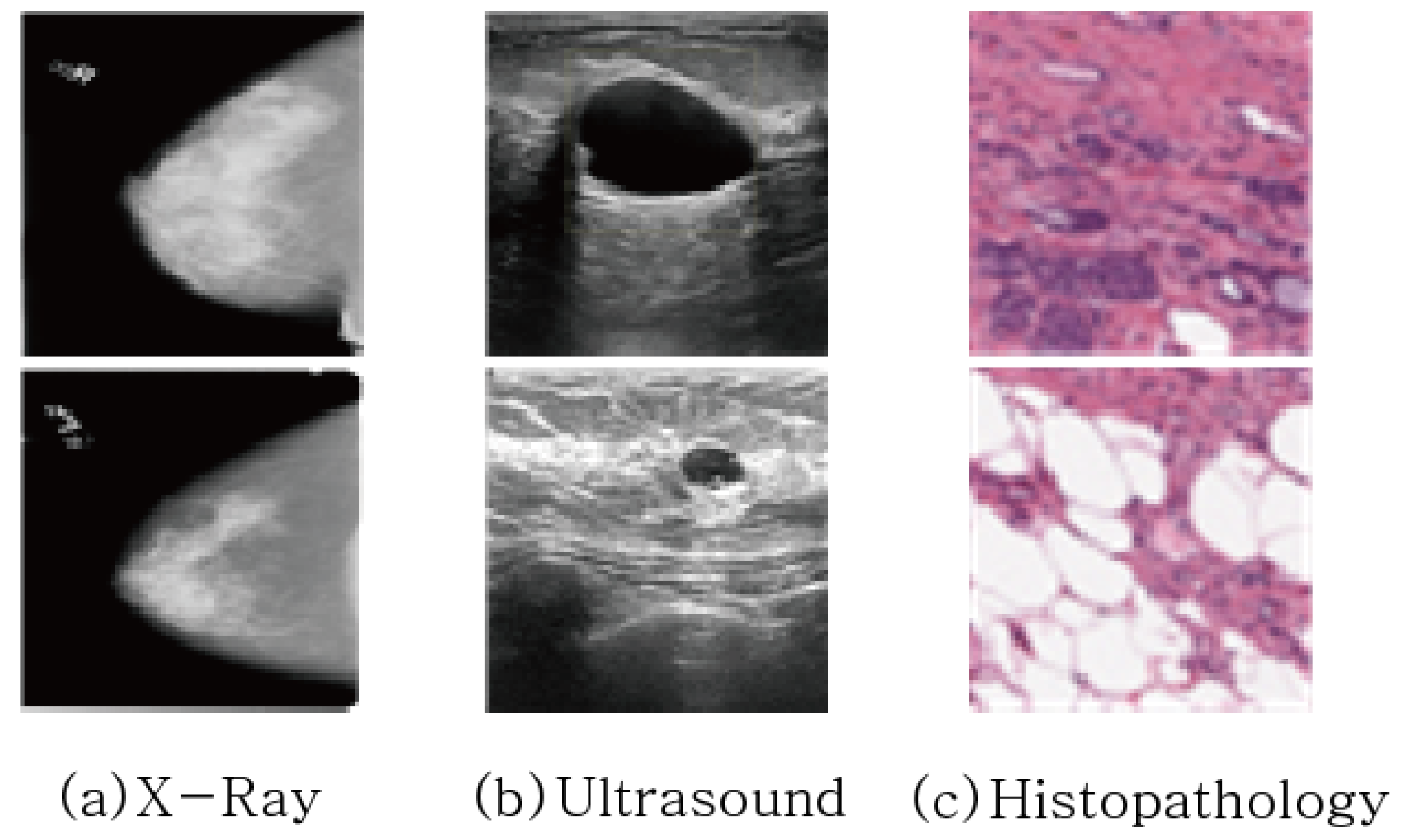
Figure 3 shows examples of image augmentation techniques applied to the three types of medical image data mentioned above.
Figure 3. The Examples of Data Argumentation Techniques.
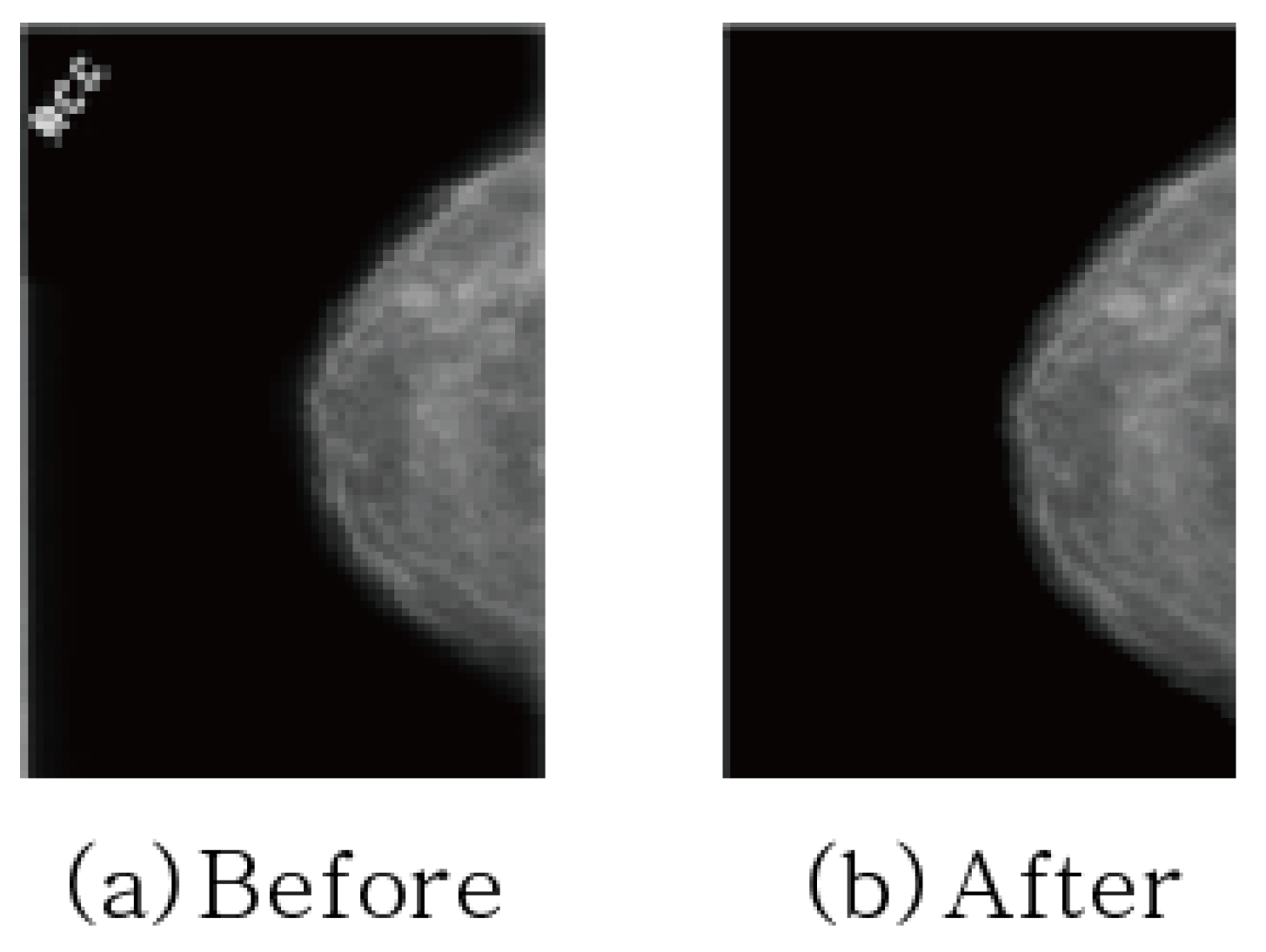
In addition, text is sometimes included in mammography images to indicate direction. Since image features not related to learning can adversely affect learning, preprocessing was performed to erase text for all datasets as shown in Figure 4.
Figure 4. Removing texts in mammography.

5. Loss Function for Segmentation

Then, let us examine the loss functions optimized for the medical image segmentation performance.
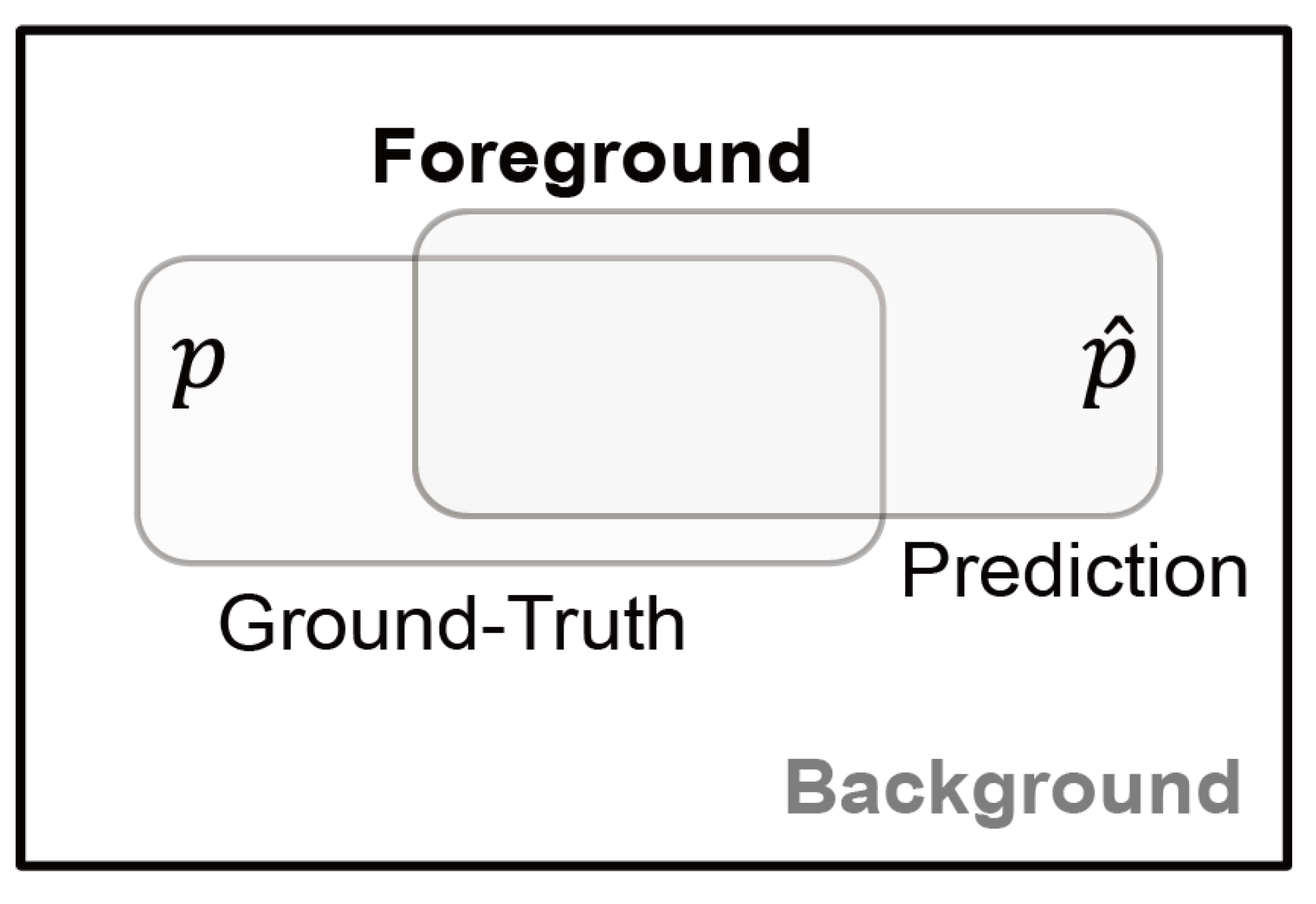
In X-ray and ultrasound images, there are a total of two foreground classes (benign and malignant) and a background class. However, since the two foreground classes do not exist at the same time, the foreground class is denoted by a single parameter. To derive these mathematical functions, the following two parameters were defined as shown in Figure 5,
Figure 5. Parameters used for image segmentation.
  • y: the ground-truth of Foreground class lesion,
  • y ^ : the prediction (probability) of the ground-truth y.

5.1. Binary Cross-Entropy

Binary Cross-Entropy is a function that measures the difference in probability distribution of two random variables is widely used in image classification and also in image segmentation by extending it to pixel unit classification. For the medical image segmentation of this paper, two classes, the foreground (benign or malignant) and the background, are classified with the probability value between 0 and 1.
L B C E ( y , y ^ ) = y log ( y ^ ) + ( 1 y ) log ( 1 y ^ )

5.2. Dice

It is a loss function commonly used in image segmentation and is derived from the dice coefficient that calculates the similarity between two images. The dice coefficient is designed to have a strength in an imbalanced state between classes, and the neural network is trained by placing a higher weight on the foreground class than on the background class.
L D ( y , y ^ ) = 1 2 y y ^ + 1 y + y ^ + 1

5.3. Tversky

The Tversky loss was further developed dice loss based on statistical characteristics. The class imbalance problem results in high-precision and low-recall performance in image segmentation. In order to solve this problem, a weight that gives a penalty is newly introduced, so that the higher the value, the higher the recall. In particular, it becomes equal to the dice loss when α = β = 0.5 .
L T ( y , y ^ ) = 1 1 + y y ^ 1 + y y ^ + β ( 1 y ) y ^ + α y ( 1 y ^ )

6. Simulation Results

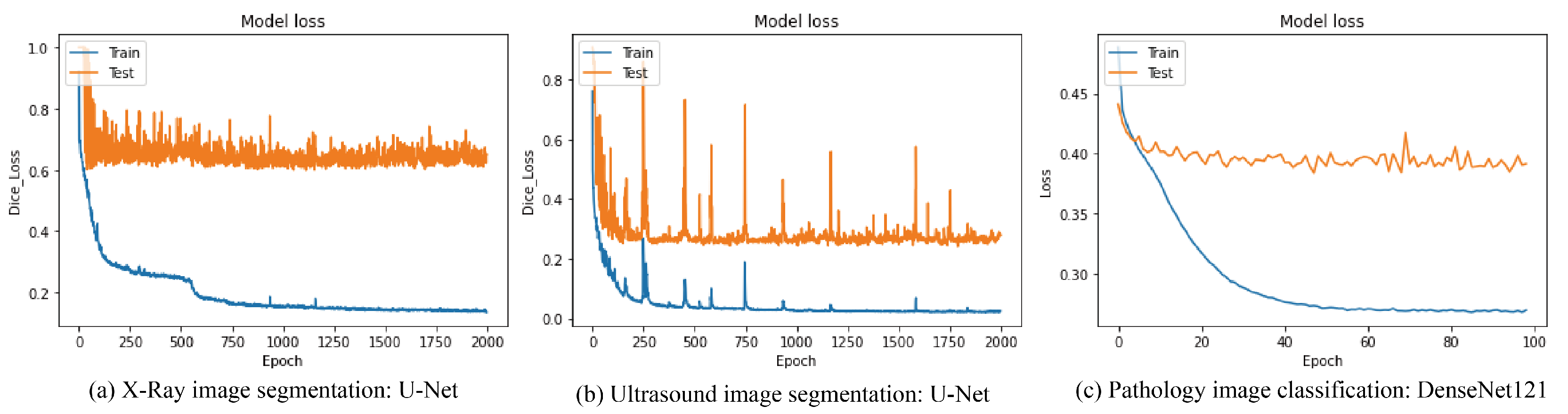
The accuracy of image segmentation and image classification for three types of medical image data as mentioned in Section 3.1 was evaluated in Table 3, Table 4, Table 5, Table 6, Table 7, Table 8 and Table 9 according to the loss functions, the neural network models and the data augmentation techniques. The training procedures of each operation are shown in Figure 6, which were trained up to the point before overfitting.
Table 3. The performance according to loss functions in basic X-ray dataset.
Table 4. The performance according to various data augmentation techniques in augmented X-ray datasets.
Table 5. The average time taken to segment a X-ray image.
Table 6. The performance according to loss functions in basic Ultrasound dataset.
Table 7. The performance according to various data augmentation techniques in augmented Ultrasound datasets.
Table 8. The average time taken to segment a Ultrasound image.
Table 9. ACC and AUC of Histopathology according to Data Augmentation Techniques.
Figure 6. Training Procedures of each operation.
In addition, all experiments are performed on a server with specifications of I9-10980EX CPU, NVIDIA RTX 3090 2way and 128GB RAM. Moreover, the transfer learning based on the ImageNet is only adopted in the image classification task of pathology data. Lastly, remarks and strategies for performance optimization are derived based on the evaluation.

6.1. Prediction of Breast Cancer Diagnosis Through X-ray Images

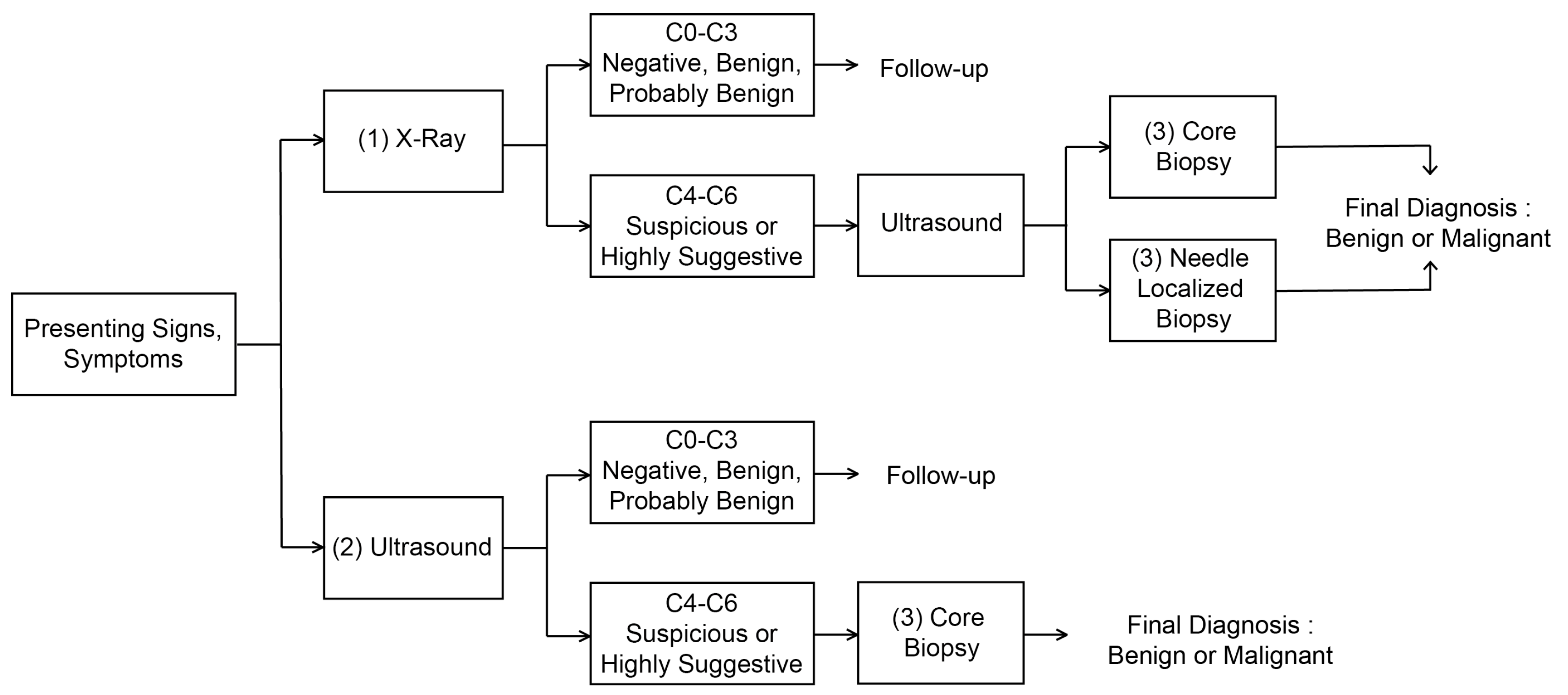
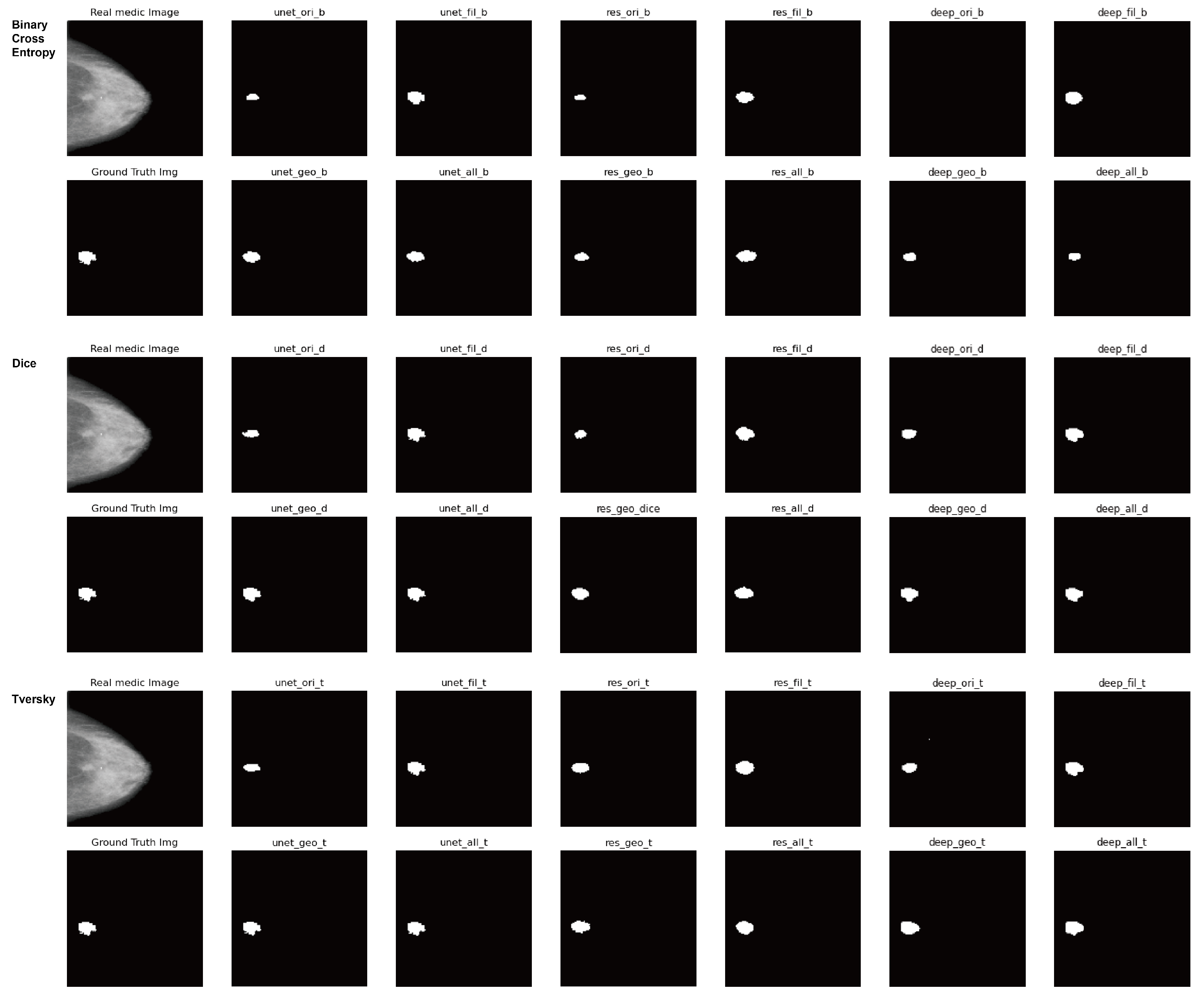
As the results of diagnosing the breast cancer incidence type with microcalcification through X-ray examination of step (1) as mentioned in Section 3.1, Table 3 and Table 4 show the segmentation accuracy in terms of the loss functions and the data augmentation techniques respectively. Lastly, Figure 7 shows the result images for all combinations of the loss functions and the neural networks and the augmentation techniques.
Figure 7. Result images for all combinations of the loss functions and the neural networks and the augmentation techniques in X-ray datasets.
First, an experiment was conducted to determine which loss function is preferred for training the X-ray image segmentation neural network. The experiments were performed on U-Net [17], ResU-Net++ [18], and DeepLabV3 [19] on the basic training dataset to which data augmentation was not applied. Also, the weight of the Tversky loss function was set to α = 0.7 , β = 0.3 .
As can be seen from the experimental results in Table 3, the dice loss and the Tversky loss show superior performance compared to the binary cross entropy loss in the two accuracy indicators, MeanIOU and DiceCoeff.
Due to the characteristics of this medical dataset that detects small-sized cancer tumor tissue, the class imbalance between foreground and background is significant, so that the Tversky loss and dice loss are preferable.
This is superior in performance to binary cross entropy, which is relatively advantageous for equal class distribution, and if weights are set optimally for a specific dataset, the Tversky loss can produce better performance than dice loss.
However, even if the weights of dice loss are not optimally set, performance almost close to the optimally set Tversky loss can be obtained. In other words, if there is little variation in the characteristics of the foreground/background class of the dataset, setting and using the weight of the Tversky loss accordingly can improve performance, but in reality, because the size of cancer tissue per data is very different (In fact, the size of the tumor varies depending on the degree of cancer progression and the imaging method), so it can be said that it is practically more appropriate to use the dice Loss, which shows better performance in normal cases, than to set and use it optimally for certain specific data.
Remark 1. 
The loss function to achieve the best performance in the medical X-ray image segmentation area is selected in consideration of the class imbalance of the data.
Now, based on the dice loss and Tversky loss functions, we experimentally verify the optimal combination of various image segmentation techniques and data augmentation methods.
The data augmentation method used in this experiment is a geometric method (random rotation, vertical flip, horizontal flip, grid distortion), which directly changes the shape of the image. The filter-based method (Gaussian filter, image histogram equlization, CLAHE, fancy PCA) utilizes a data augmentation technique in which the characteristics of an image stand out by adding or removing noise using a filter or by changing RGB values of pixels. The number of basic vanilla dataset is 3185 images. The numbers of the geometric and filter datasets are augmented to 15,921 and 15,921, respectively.
As shown in Table 4, when using the two data augmentation methods in all neural network cases, the performance increases by up to 33.3% (IOU). This is because it reduces the risk of overfitting to small amount of data by increasing the number of data though the aforementioned augmentation, thereby helping to show more generalized performance. In particular, the filter-based data augmentation method shows greater performance improvement than the geometric-based data augmentation method. Even the dataset using only one filter method shows better performance than the method combining the filter method and the geometric method. This is because, due to the nature of medical data, the position and pose at the time of imaging the affected part are almost fixed, so the validity is low. On the other hand, it can be seen that the filter based augmentation shows a greater performance improvement, because it can be learned with more difficult data, i.e., the blurred image for the small size of the tumor.
On the other hand, in the case of neural network selection, ResUNet++ [18] has the best performance in the original dataset (Vanilla), while the U-Net [17] network has the best performance in the augmented dataset (Filter). Since ResUNet++ [18] or DeepLab V3 [19], which have a more complex structure than UNet [17], can be considered to have their own data augmentation function by creating various channels for the input image, the effect of additional data augmentation techniques is not so great. Also, in general, ResUNet++ [18] performs better than UNet [17] on large datasets. However, since the target medical dataset has a small number of classes and a small number of images, it can be seen that the optimal neural network is determined differently from general large-capacity datasets.
Figure 7 shows the result images for all combinations of the loss functions and the neural networks and the augmentation techniques.
Lastly, Table 5 shows the average time taken for each segmentation model. As shown in the results, UNet with the simple structure shows the least latency, and ResUNet++ and DeepLabV3 with complex structures take more latency. Through this, it can be seen that UNet is most suitable for X-ray segmentation task in terms of both performance and cost.

6.2. Prediction of Breast Cancer Diagnosis Through Ultrasound Imaging

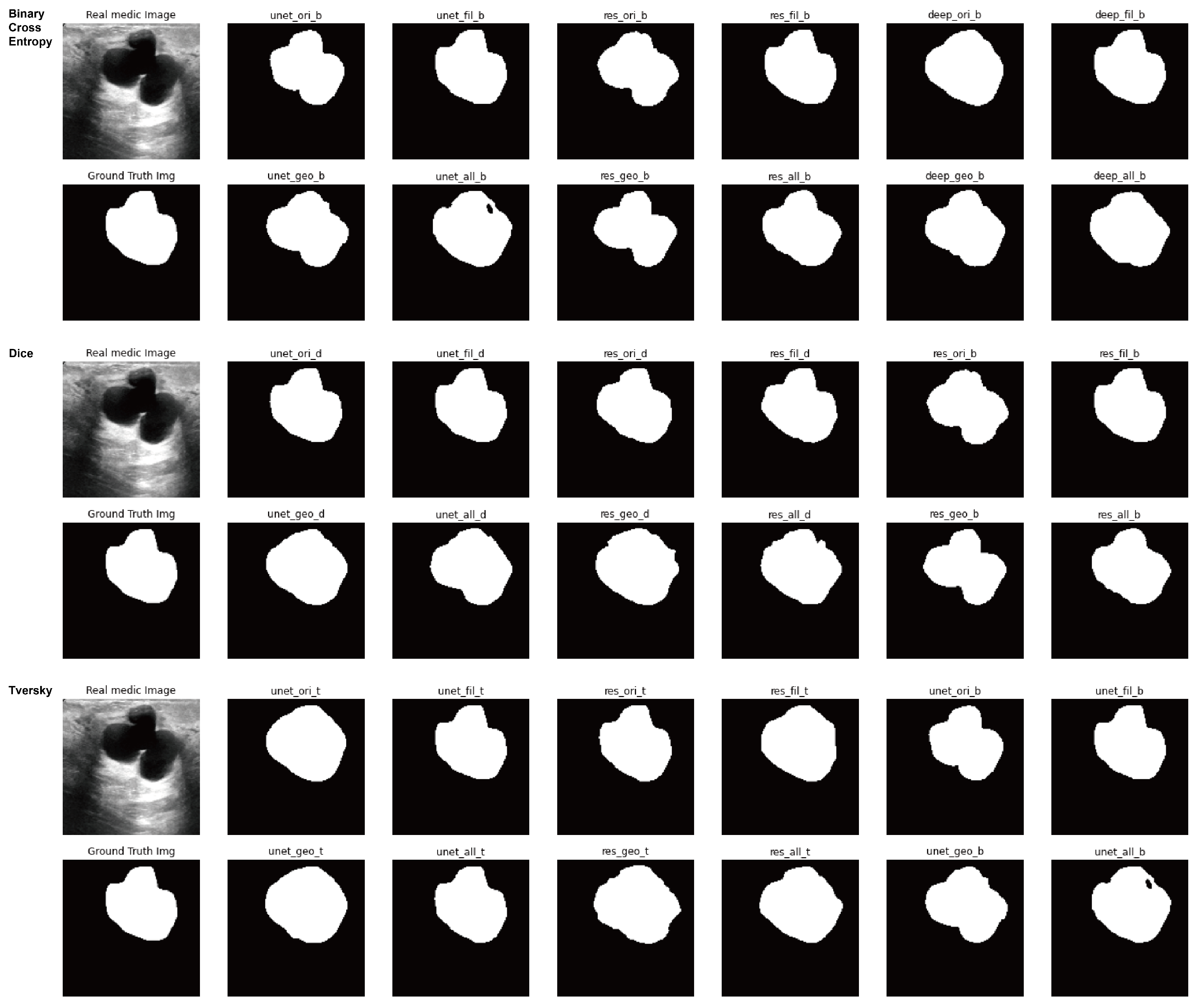
In order to optimally predict the occurrence possibility and the suspected location of lump-type breast cancer through the ultrasound examination of step (2) mentioned in Section 2, the optimal combination of the loss functions, the segmentation models and the data augmentation methods is investigated with their evaluation. Lastly, Figure 8 shows the result images for all combinations of the loss functions and the neural networks and the augmentation techniques.
Figure 8. Result images for all combinations of the loss functions and the neural networks and the augmentation techniques in ultrasound datasets.
Table 6 was evaluated to determine which loss function would be suitable for training the image segmentation neural network. Experiments were conducted on UNet [17], ResUnet++ [18], and Deeplab v3 [19] on the basic training dataset in the same experimental environment as X-ray. Also, the weights of the Tversky loss function were set to α = 0.7 and β = 0.3 . As shown in Table 6, the dice loss function and the Tversky function have superior performance compared to the binary cross entropy loss in the two accuracy indicators, MeanIOU and DiceCoeff, as in the case of X-ray images. Moreover, when considering the characteristics of this medical data set to detect small-sized cancer tumor tissue, the dice loss or Tversky loss function for the class imbalance problem has advantages over binary cross entropy.
However, the Tversky loss theoretically should be better than dice loss in terms of performance by adding a degree of freedom for weight adjustment. However, as shown in the case of ResUNet++ [18] and DeepLab v3 [19] in Table 6, it should be noted that the performance advantage may vary because the optimal weight varies depending on the nature of the segmentation neural network.
Remark 2. 
The selection of the loss function to achieve the best performance in the medical image segmentation area must be determined in consideration of the neural network.
Now, based on the dice loss and Tversky loss functions in ultrasound medical images, we experimentally verify the optimal combination of various image segmentation techniques and data augmentation methods. The data propagation method used in this experiment is the same as the geometric method and filter method of the previous X-ray method. The basic vanilla method was 1568 images, and the geometric and filter types were multiplied by 7840 and 7840 images. As known in Table 7, similar with the result of X-ray, the filter-based data augmentation method shows a greater performance improvement than the geometric-based data augmentation method, and shows a maximum of 29.9% (IOU) improvement. That is because it can be learned with more difficult data than the data whose borderline is blurred.
On the other hand, in the case of network selection, DeepLab V3 [19] is the best in the original dataset (Vanilla), and the U-Net [17] network shows the best performance in the data augmented dataset (Filter). Similar with the result of X-ray, since DeepLab V3 [19] with a more complex structure than UNet [17] can be considered to have their own data augmentation function by creating various channels for the input image, the effect of additional data augmentation techniques is not so great.
It can also be seen that in general setups, DeepLab V3 performs better than UNet, and for small ultrasound medical datasets, neural networks that look like normal contract sets are calculated.
Remark 3. 
In medical X-ray and ultrasound image segmentation, it is desirable to use a filter-based data proliferation method and select a neural network in consideration of the size of the data.
Lastly, Table 8 shows the average time taken for each segmentation model in case of ultrasound image. According to the results, UNet with the simple structure shows the least latency, and ResUNet++ and DeepLabV3 with complex structures take more latency, which is same result as the case of X-ray segmentation. Through this, it can be seen that UNet is most suitable for ultrasound segmentation task in terms of both performance and cost.

6.3. Diagnosis of Breast Cancer Through Pathology Imaging

In this experiment, in order to maximize the accuracy of histopathology image classification, we evaluate the combinations of the image classification networks, (VGGNet19, DenseNet121, ResNet50, EfficientNet) and the data augmentation methods (Vanilla, MixUp, CutMix, Filter, GeoMetric). In addition, other reliability metrics, i.e., AUC (Area Under the Curve), SEN (Sensitivity) and SPE (Specificity), are evaluated as well. Here, Vanilla is the original image set and the data augmentation method of GeoMetric means the rotation, the flip, the transfer, the shear, the gaussian, the equalization and the shift as mentioned in Section 4.
The results in Table 9 and Table 10 show that ResNet50 has the best accuracy and reliability in all basic as well as all related augmented datasets than other neural networks, VGGNet19, DenseNet121, and EfficientNet. It can be seen that the required neural network capacity of the histopathology dataset is closest to ResNet50 among the aforementioned datasets. Even though DenseNet121 and EfficientNet show better performance than ResNet50 in ImageNet, they have lower performance than ResNet50 due to overfitting in this histopathology dataset. From this observation, it can be seen that the characteristics and capacity of the data act as important factors in selecting the optimal neural network for the small medical dataset. In addition, as can be seen from the results of Table 6, it is observed that the performance increases by up to 22.8% if the data augmentation method is used in all neural networks. This is because it helps to have more generalized performance by reducing the risk of overfitting to the small dataset by applying various variations to the limited size of the data set. In particular, as in the results of image segmentation, it can be seen that the filter-based method shows the best performance in image classification.
Table 10. SEN and SEP of Histopathology according to Data Augmentation Techniques.
Remark 4. 
In medical breast pathology image classification, it is desirable to use a filter-based data augmentation method and select a neural network in consideration of the required capacity of the dataset.
Lastly, Table 11 shows the average time taken for each image classification model of pathology image. According to the results, VGGNet19 and ResNet50 with simple structure shows less latency, and DenseNet121 and EfficientNet with complex structures take more latency. However, when considering the best performances of each classification model in Table 9, DenseNet121 and EfficientNet have weaknesses compared to ResNet50 in terms of both accuracy and cost. On the other hand, VGGNet19 has its own strength compared to ResNet50 in terms of cost. Nevertheless, considering that accuracy is more crucial point than cost in medical industry, ResNet50 is most recommended among the aforementioned models for the medical breast pathology image classification task in terms of both performance and cost.

Table 11. The average time taken to classify a pathology image.

7. Conclusions

In this paper, we examine how each procedure is used in the diagnosis process using all medical device images used for breast cancer diagnosis, that is, X-ray (Mammography), ultrasound, and pathology images (Histopathology). Based on the procedural features, suitable image recognition technologies were derived, and methods for applying the optimal combination of loss function, neural network, and data augmentation method for optimizing the performance of these technologies were presented. To optimize image segmentation performance in X-ray image datasets and ultrasound image datasets, the use of dice Loss or Tversky loss functions is recommended, and using UNet for filter-based data augmentation yielded optimal performance. In addition, in order to optimize the image classification performance in the pathology image data set, using ResNet50 for filter-based data propagation was able to produce optimal performance. Above all, selecting a data augmentation method that can compensate for the characteristics of the medical image dataset, selecting a neural network suitable for this, and selecting the corresponding loss function yielded optimal performance.

Author Contributions

Conceptualization, S.L.; methodology, S.L.; software, D.K.; validation, J.C., S.L.; formal analysis, S.L.; investigation, S.L.; resources, S.L.; data curation, D.K.; writing original draft preparation, S.L.; writing review and editing, S.L.; visualization, S.L.; supervision, S.L.; project administration, S.L.; funding acquisition, S.L. All authors have read and agreed to the published version of the manuscript.

Funding

This work was supported by Basic Science Research Program through the National Research Foundation of Korea(NRF) funded by the Ministry of Education (NRF - 2019R1F1A 1062878).

Conflicts of Interest

The authors declare no conflict of interest.

References

  1. Simonyan, K.; Zisserman, A. Very Deep Convolutional Networks for Large-Scale Image Recognition. arXiv 2014, arXiv:1409.1556. [Google Scholar]
  2. He, K.; Zhang, X.; Ren, S.; Sun, J. Deep Residual Learning for Image Recognition. arXiv 2015, arXiv:1512.03385. [Google Scholar]
  3. Huang, G.; Liu, Z.; Van Der Maaten, L.; Weinberger, K.Q. Densely Connected Convolutional Networks. In Proceedings of the 2017 IEEE Conference on Computer Vision and Pattern Recognition (CVPR), Honolulu, HI, USA, 21–26 July 2017. [Google Scholar]
  4. Tan, M.; Le, Q. EfficientNet: Rethinking Model Scaling for Convolutional Neural Networks. In Proceedings of the 36th International Conference on Machine Learning(PMLR), Long Beach, CA, USA, 9–15 June 2019. [Google Scholar]
  5. Zaidi, S.S.A.; Ansari, M.S.; Aslam, A.; Kanwal, N.; Asghar, M.; Lee, B. A Survey of Modern Deep Learning based Object Detection Models. arXiv 2014, arXiv:2104.11892. [Google Scholar] [CrossRef]
  6. Chouhan, S.S.; Kaul, A.; Singh, U.P. Image Segmentation Using Computational Intelligence Techniques: Review. Computat. Methods Eng. 2019, 26, 533–596. [Google Scholar] [CrossRef]
  7. Chouhan, S.S.; Kaul, A.; Singh, U.P. Soft computing approaches for image segmentation: A survey. Multimed. Tools Appl. 2018, 77, 28483–28537. [Google Scholar] [CrossRef]
  8. Quinn, J.A.; Nakasi, R.; Mugagga, P.K.B.; Byanyima, P.; Lubega, W.; Andama, A. Deep convolutional neural networks for microscopy-based point of care diagnostics. arXiv 2016, arXiv:1608.02989. [Google Scholar]
  9. Wimmer, G.; Hegenbart, S.; Vecsei, A.; Uhl, A. Convolutional neural network architectures for the automated diagnosis of celiac disease. In International Workshop on Computer-Assisted and Robotic Endoscopy; Springer: Berlin/Heidelberg, Germany, 2016; pp. 104–113. [Google Scholar]
  10. Pei, M.; Wu, X.; Guo, Y.; Fujita, H. Small bowel motility assessment based on fully convolutional networks and long short-term memory. Knowl. Based Syst. 2017, 121, 163–172. [Google Scholar] [CrossRef]
  11. Carlos, M.; Cristian, C.V.M.I.; Zahra, R.; Bettina, B.; Karim, P.S.E.L. Image-Based Cardiac Diagnosis With Machine Learning: A Review. Front. Cardiovasc. Med. 2020, 7, 1–19. [Google Scholar]
  12. Kelvin, K.L.W.; Fortino, G.; Abbott, D. Deep learning-based cardiovascular image diagnosis: A promising challenge. Future Gener. Comput. Syst. 2020, 10, 802–811. [Google Scholar]
  13. Kamnitsas, K.; Ledig, C.; Newcombe, V.F.J.; Simpson, J.P.; Kane, A.D.; Menon, D.K.; Rueckert, D.; Glocker, B. Efficient multi-scale 3d CNN with fully connected crf for accurate brain lesion segmentation. Med. Image Anal. 2017, 36, 61–78. [Google Scholar] [CrossRef]
  14. Wolterink, J.M.; Leiner, T.; Viergever, M.A.; Išgum, I. Automatic coronary calcium scoring in cardiac ct angiography using convolutional neural networks. In International Conference on Medical Image Computing and Computer-Assisted Intervention; Springer: Berlin/Heidelberg, Germany, 2015; pp. 589–596. [Google Scholar]
  15. Liu, B.; He, H.; Luo, H.; Zhang, T.; Jiang, J. Artificial intelligence and big data facilitated targeted drug discovery. Stroke Vasc. Neurol. 2019, 4, 206–213. [Google Scholar] [CrossRef]
  16. Kim, J.; Park, S.; Min, D.; Kim, W. Comprehensive Survey of Recent Drug Discovery Using Deep Learning. Int. J. Mol. Sci. 2021, 22, 9983. [Google Scholar] [CrossRef]
  17. Ronneberger, O.; Fischer, P.; Brox, T. U-Net: Convolutional Networks for Biomedical Image Segmentation. arXiv 2015, arXiv:1505.04597. [Google Scholar]
  18. Jha, D.; Smedsrud, P.H.; Riegler, M.A.; Johansen, D.; de Lange, T.; Halvorsen, P.; Havard, D. ResUNet++: An Advanced Architecture for Medical Image Segmentation. arXiv 2019, arXiv:1911.07067. [Google Scholar]
  19. LChen, ia.; Papandreou, G.; Schroff, F. Hartwig Adam, Rethinking Atrous Convolution for Semantic Image Segmentation. arXiv 2017, arXiv:1706.05587. [Google Scholar]
  20. Bandaru, B.S.; Babu, G.R. A Review on Advanced Methodologies to Identify the Breast Cancer Classification using the Deep learning techniques. Int. J. Comput. Sci. Netw. Secur. 2022, 22, 420–426. [Google Scholar]
  21. Adeyinka, P.A.; Steve, A.A.; Abiodun, M.A. Deep Learning-based Mammogram Classification using Small data set. In Proceedings of the 15th International Conference on Electronics, Abuja, Nigeria, 10–12 December 2019. [Google Scholar]
  22. Dong, H.; Zhu, B.; Zhang, X.; Kong, X. Use data augmentation for a deep learning classification model with chest X-ray clinical imaging featuring coal workers’ pneumoconiosis. BMC Pulm. Med. 2022, 22, 271. [Google Scholar] [CrossRef]
  23. Oza, P.; Sharma, P.; Patel, S. Festus Adedoyin and Alessandro Bruno. Image Augumention Tech. Mammogram Anal. Imaging 2022, 8, 5. [Google Scholar]
  24. Hussain, Z.; Gimenez, F.; Yi, D.; Rubin, D. Differential Data Augmentation Techniques for Medical Imaging Classification Tasks. In Proceedings of the AMIA Annual Symposium, Washington, DC, USA, 4–8 November 2017; pp. 979–984. [Google Scholar]
  25. Costa, A.C.; Oliveira, H.C.; Vieira, M.A. Data augmentation: Effect in deep convolutional neural network for the detection of architectural distortion in digital mammography. In Proceedings of the Brazilian Congress on Medical Physics, Santos, Brazil, 21–24 August 2019. [Google Scholar]
  26. Omonigho, E.L.; David, M.; Adejo, A.; Aliyu, S. Breast cancer: Tumor detection in mammogram images using modified Alexnet deep convolution neural network. In Proceedings of the 2020 International Conference in Mathematics, Computer Engineering and Computer Science (ICMCECS), Ayobo, Nigeria, 18–21 March 2020; pp. 1–6. [Google Scholar]
  27. Rahman, A.S.A.; Belhaouari, S.B.; Bouzerdoum, A.; Baali, H.; Alam, T.; Eldaraa, A.M. Breast mass tumor classification using deep learning. In Proceedings of the 2020 IEEE International Conference on Informatics, IoT, and Enabling Technologies (ICIoT), Doha, Qatar, 2–5 February 2020; pp. 271–276. [Google Scholar]
  28. Zeiser, F.A.; da Costa, C.A.; Zonta, T.; Marques, N.; Roehe, A.V.; Moreno, M.; Righi, R.d.R. Segmentation of masses on mammograms using data augmentation and deep learning. J. Digital Imaging 2020, 33, 858–868. [Google Scholar] [CrossRef]
  29. Domingues, I.; Abreu, P.H.; Santos, J. Bi-rads classification of breast cancer: A new pre-processing pipeline for deep models training. In Proceedings of the 2018 25th IEEE International Conference on Image Processing (ICIP), Athens, Greece, 7–10 October 2018; pp. 1378–1382. [Google Scholar]
  30. Susilo, A.B.; Sugiharti, E. Accuracy Enhancement in Early Detection of Breast Cancer on Mammogram Images with Convolutional Neural Network (CNN) Methods using Data Augmentation and Transfer Learning. J. Adv. Inf. Syst. Technol. 2021, 3, 9–16. [Google Scholar] [CrossRef]
  31. Michael, E.; Ma, H.; Li, H.; Kulwa, F.; Li, J. Breast Cancer Segmentation Methods: Current Status and Future Potentials. BioMed Res. Int. 2021, 2021, 9962109. [Google Scholar] [CrossRef] [PubMed]
  32. Lee, R.S.; Gimenez, F.; Hoogi, A.; Miyake, K.K.; Gorovoy, M.; Rubin, D.L. A curated mammography data set for use in computer-aided detection and diagnosis research. Sci. Data 2017, 4, 170177. [Google Scholar] [CrossRef] [PubMed]
  33. Al-Dhabyani, W.; Gomaa, M.; Khaled, H.; Fahmy, A. Dataset of breast ultrasound images. Data Brief. 2019, 28, 104863. [Google Scholar] [CrossRef] [PubMed]
  34. Janowczyk, A.; Madabhushi, A. Deep learning for digital pathology image analysis: A comprehensive tutorial with selected use cases. J. Pathol. Inform. 2016, 7, 29. [Google Scholar] [CrossRef]
  35. Mammography. Available online: https://en.wikipedia.org/wiki/Mammography (accessed on 28 January 2023).
  36. Understanding Your Mammogram Report. Available online: https://www.cancer.org/cancer/breast-cancer/screening-tests-and-early-detection/mammograms/understanding-your-mammogram-report.html (accessed on 28 January 2023).
  37. Saslow, D.; Boetes, C.; Burke, W.; Harms, S.; Leach, M.O.; Lehman, C.D. American Cancer Society guidelines for breast screening with MRI as an adjunct to mammography. Cancer J. Clin. 2007, 57, 75–89. [Google Scholar] [CrossRef]
  38. Fusco, R.; Sansone, M.; Filice, S. Pattern Recognition Approaches for Breast Cancer DCE-MRI Classification: A Systematic Review. J. Med. Biol. Eng. 2016, 36, 449–459. [Google Scholar] [CrossRef]
  39. Zhu, X.; Cao, Y.; Li, R.; Zhu, M.; Chen, X. Diagnostic performance of mammography and magnetic resonance imaging for evaluating mammographically visible breast masses. J. Int. Med. Res. 2021, 49, 300060520973092. [Google Scholar] [CrossRef]
  40. Douglas, M.H. The Problem of Overfitting. J. Chem. Inf. Comput. Sci. 2004, 44, 1–12. [Google Scholar]
  41. Adaptive/Histogram/Equalization. Available online: https://en.wikipedia.org/wiki/Adaptive_histogram_equalization (accessed on 28 January 2023).
  42. Gaussian/Blur. Available online: https://en.wikipedia.org/wiki/Gaussian_blur (accessed on 28 January 2023).
  43. Histogram/Equalization. Available online: https://en.wikipedia.org/wiki/Histogram_equalization (accessed on 28 January 2023).
  44. Bargoti, S.; Underwood, J. Deep Fruit Detection in Orchards. In Proceedings of the IEEE International Conference on Robotics and Automation, Singapore, 29 May–3 June 2017; pp. 3626–3633. [Google Scholar]
Disclaimer/Publisher’s Note: The statements, opinions and data contained in all publications are solely those of the individual author(s) and contributor(s) and not of MDPI and/or the editor(s). MDPI and/or the editor(s) disclaim responsibility for any injury to people or property resulting from any ideas, methods, instructions or products referred to in the content.

Article Metrics

Citations

Article Access Statistics

Multiple requests from the same IP address are counted as one view.