You are currently viewing a new version of our website. To view the old version click .
Sensors
  • Article
  • Open Access

21 July 2022

Fall Detection for Shipboard Seafarers Based on Optimized BlazePose and LSTM
,
,
,
,
,
,
and
1
Merchant Marine College, Shanghai Maritime University, Shanghai 201306, China
2
College of Engineering Science and Technology, Shanghai Ocean University, Shanghai 201306, China
*
Author to whom correspondence should be addressed.
This article belongs to the Section Intelligent Sensors

Abstract

Aiming to avoid personal injury caused by the failure of timely medical assistance following a fall by seafarer members working on ships, research on the detection of seafarer’s falls and timely warnings to safety officers can reduce the loss and severe consequences of falls to seafarers. To improve the detection accuracy and real-time performance of the seafarer fall detection algorithm, a seafarer fall detection algorithm based on BlazePose–LSTM is proposed. This algorithm can automatically extract the human body key point information from the video image obtained by the vision sensor, analyze its internal data correlation characteristics, and realize the process from RGB camera image processing to seafarer fall detection. This fall detection algorithm extracts the human body key point information through the optimized BlazePose human body key point information extraction network. In this section, a new method for human bounding-box acquisition is proposed. In this study, a head detector based on the Vitruvian theory was used to replace the pre-trained SSD body detector in the BlazePose preheating module. Simultaneously, an offset vector is proposed to update the bounding box obtained. This method can reduce the frequency of repeated use of the head detection module. The algorithm then uses the long short-term memory neural network to detect seafarer falls. After extracting fall and related behavior data from the URFall public data set and FDD public data set to enrich the self-made data set, the experimental results show that the algorithm can achieve 100% accuracy and 98.5% specificity for the seafarer’s falling behavior, indicating that the algorithm has reasonable practicability and strong generalization ability. The detection frame rate can reach 29 fps on a CPU, which can meet the effect of real-time detection. The proposed method can be deployed on common vision sensors.

1. Introduction

With the deepening of generalized cognition of the “blue belief” of marine power proposed in the report of the 19th National Congress of the Communist Party of China, the issue of personnel safety in maritime traffic has attracted increasingly extensive attention. According to the “2021 Annual Overview of Marine Casualties and Incidents,” published by the European Maritime Agency (EMSA) [1], from 2014–2020 a total of 550 people went missing in accidents, and 367 people were identified as dead; 89.1% of the victims were seafarers. All but 9.8% of the casualties were due to falling into the water, whereas the rest were due to human slips, trips, and falls. A fall is a sudden, involuntary, unintentional change in body position, falling to the ground or a lower surface, but it does not include behavior resulting from a violent blow, loss of consciousness, stroke, or seizure [2]. Falls can cause non-fatal and fatal injuries to seafarers. Seafarer falls can lead to minor injuries, such as sprains and abrasions. If a fall occurs under special operating conditions, it will also lead to severe injuries, such as fractures and cerebral hemorrhage, which will affect the navigation status of the ship and increase the economic burden on the corresponding family. It also affects seafarers’ quality of life. In order to reduce the injuries and consequences caused by the seafarer’s fall, it is becoming increasingly important to accurately detect the fall of the seafarer onboard and treat the fallen seafarer in a timely manner. Therefore, research on detecting seafarers’ falls has very significant social importance.
The seafarer fall detection algorithm, based on common vision sensors, such as an RGB camera, refers to the process of judging whether a seafarer member falls, after collecting continuous video image frames through RGB camera equipment for intelligent image processing. The main process is as follows: First, preprocess the original video image (such as box plot [3] data cleaning), and then extract features from the preprocessed data, and finally use a pre-trained classification algorithm (such as long short-term memory neural network [4,5]) to perform fall detection based on the features.
Because the human body key point information extraction algorithms now commonly used, such as OpenPose [6], AlphaPose [7], and other networks, are easily affected by factors such as occlusion caused by seafarer operations, many important features that can represent the current state of the seafarer will be lost. Therefore, this study uses the BlazePose human body key point information extraction network [8] to extract feature information. Although BlazePose can solve the occlusion problem very well, when the network restarts the pre-trained SSD body detection model to obtain the human bounding box, it causes the loss of human key point information. To address this issue, we propose a method that uses an offset vector to update the human body bounding box obtained by the optimized head detector, which greatly guarantees the stability of network extraction of key point information and reduces the weight of the network to a certain extent, making it more suitable for layouts on mobile devices and ordinary vision sensors.
The judgment of fall behavior not only requires the data of the fall but also relies heavily on the data before the fall. Based on this, this paper presents a fall detection algorithm based on a long short-term memory neural network that is suitable for dealing with long-term dependency problems. This network can avoid gradient disappearance and gradient explosion problems caused by ordinary recurrent neural networks. Experiments show that the BlazePose–LSTM seafarer fall detection model proposed in this paper can be better applied to the seafarers’ working environment and can be arranged on general computing power equipment.
The main contributions of this paper are as follows: (1) A new seafarer fall detection model based on optimized BlazePose–LSTM is proposed. Fall discrimination depends on a long sequence; therefore, LSTM was used for fall discrimination. Owing to its special gating unit, the long-dependence problem is well resolved. (2) The offset vector is used to update the human body bounding box generated by the optimized head detector, which reduces the need to repeatedly start the head detection model, speeding up the fall detection efficiency of the model, and making it possible to arrange onboard RGB vision sensors with lower computing force. (3) The method proposed in this paper can solve the problem of the inability to perform fall detection owing to occlusion and self-occlusion, and it still has good generalization ability in complex work environments.

3. Fall Detection Algorithm for Shipboard Seafarers Based on BlazePose and LSTM

3.1. Human Body Key Point Extraction Network Based on BlazePose

Existing human key point extraction networks, such as OpenPose, AlphaPose, and OpenPifPaf [28], are extremely vulnerable to dense crowd occlusion or human self-occlusion, resulting in the low performance of human key point detectors.
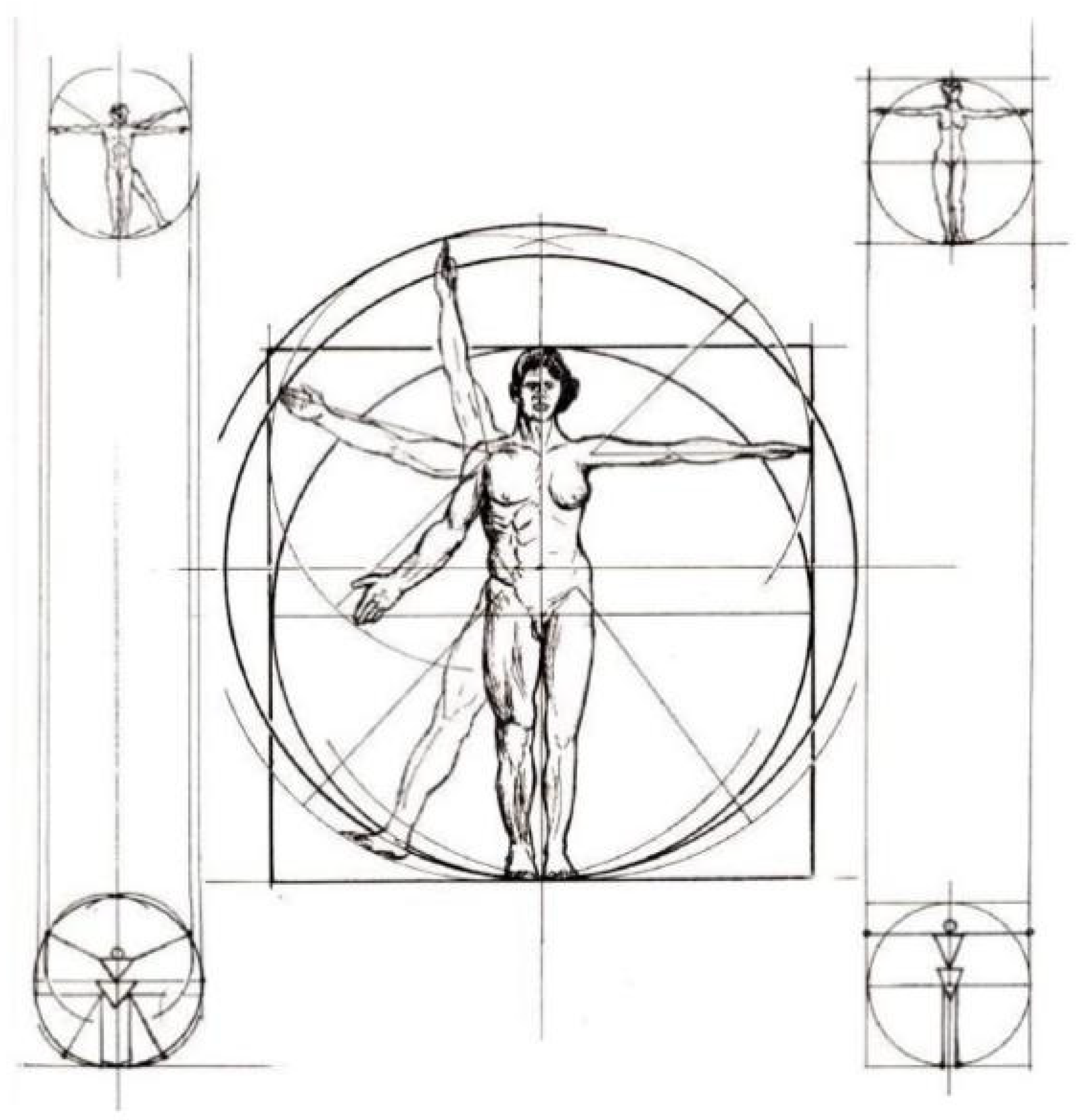
In order to solve this problem, this study selects the BlazePose human body key point extraction network to extract human body key point information. BlazePose is a lightweight convolutional neural network. Unlike most convolutional neural networks, NMS cannot be used for post-processing because human behaviors, such as waving and walking, have a large degree of freedom. Inspired by the Vitruvian theory [29], in the process of obtaining the key points of the entire human body in BlazePose, its warmup module first obtains the shoulder center and hip center of the human body through the pre-trained SSD body detection model, and uses this to predict the remainder of the human body topology key points. According to further research on the Vitruvian theory, it was found that the ratio of the human head to the entire human body is close to 1:7.5 in Figure 1. In order to cope with the particularities of different people, this study used a ratio of 1:8 to represent the entire human body, with the human head, so that a head detector can be used to replace the pre-trained SSD body detector.
Figure 1. Vitruvian theory of the human body.
In the process of the key point information regression of the optimized BlazePose human key point network, we will obtain the head bounding-box information ( f x , f y , f w , f h ) and the coordinates of the midpoint of the hip ( h x , h y ). According to the Vitruvian body theory, we can obtain the bounding-box information of the human body ( b x , b y , b w , b h ) and its rotation angle. The derivation formula is as follows:
b x = f x + 0.5 × f w 4 × f h
b y = f y
b w = 8 × f h
b h = 8 × f h
θ = arctan h x ( f x + 0.5 × f w ) h y ( f y + 0.5 × f h )
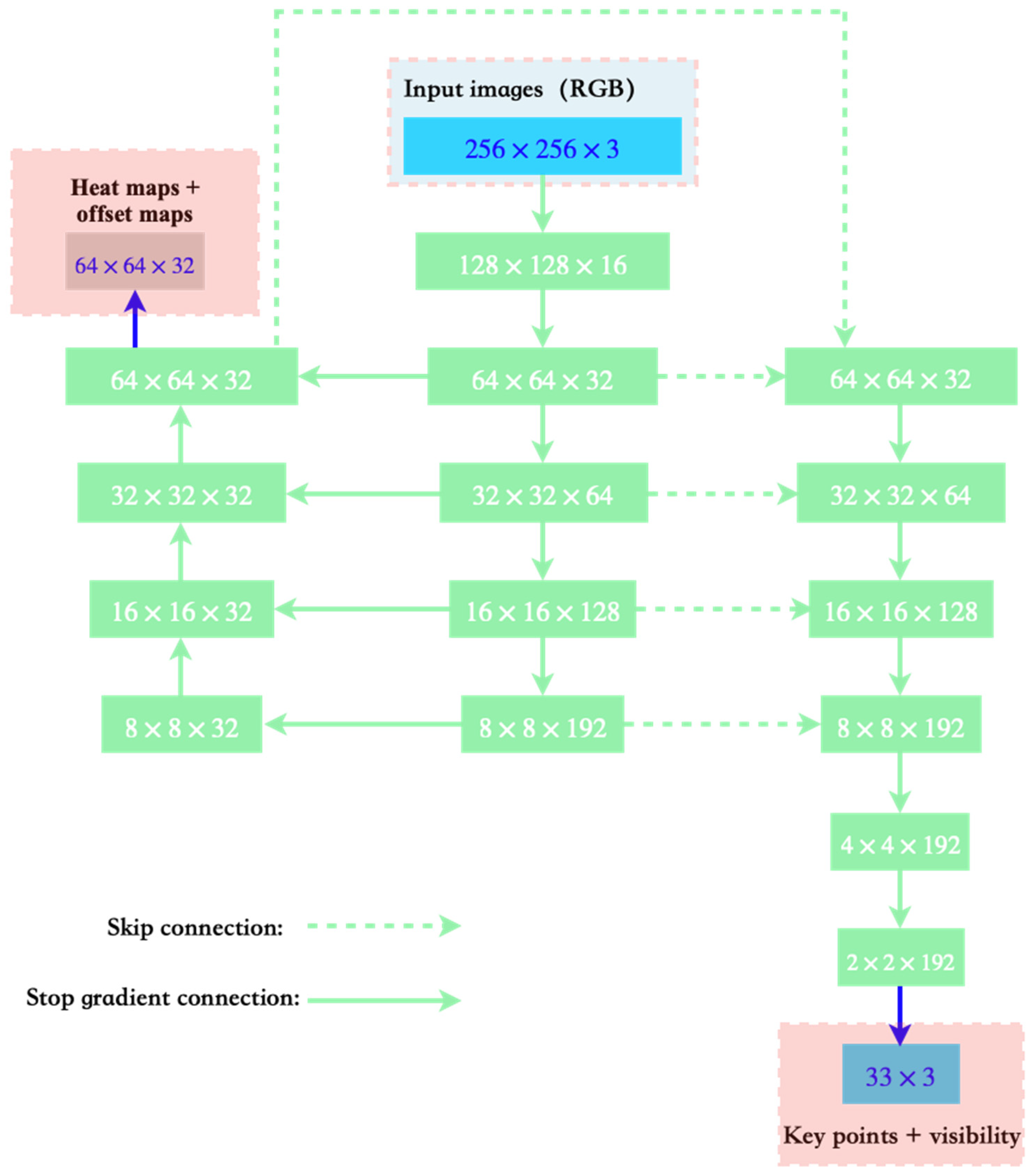
The training process of the BlazePose network is mainly divided into two parts: key point detection and key point regression. During the training process of the network, the entire network adopted a combination of heat map, offset, and regression, corresponding to the heat map in Figure 2 (left), offset in Figure 2 (middle), and regressing in Figure 2 (right).
Figure 2. The network structure of BlazePose.
First, the network used heatmaps and offsets for training. However, during the regression training, the network clipped the output branch shown in Figure 2 (left). This not only effectively uses the heatmap to supervise the training process, but also improves the inference speed of the entire network without losing accuracy.
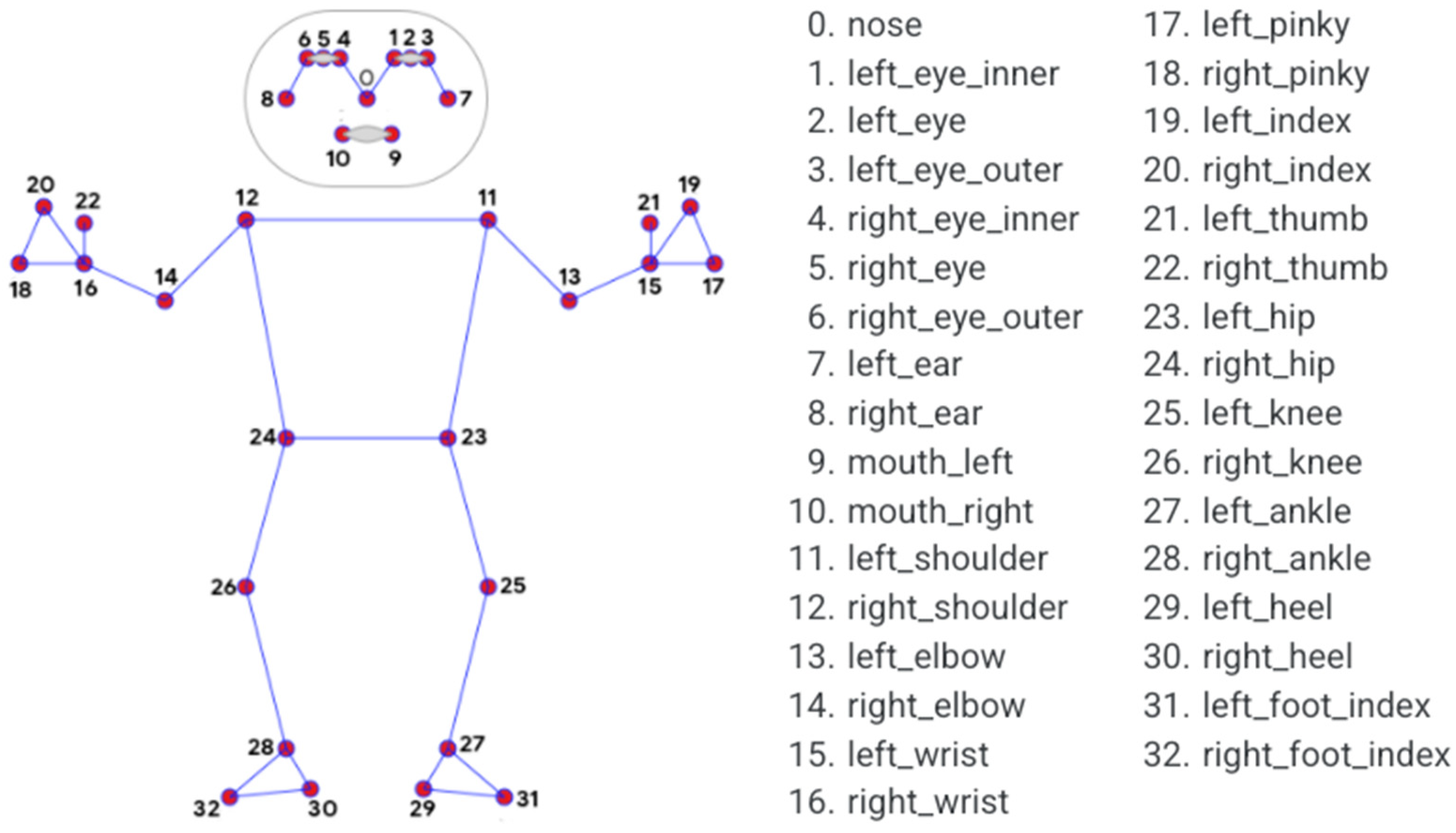
Compared with the 17 human key points of the COCO Pose, the BlazePose human key point extraction network predicted 33 human key points (including confidence) for each human body. The topology of the human key points is shown in Figure 3. Owing to the richer semantic features obtained, the accuracy of fall detection in this study was also guaranteed.
Figure 3. Human body key point topology map of BlazePose.
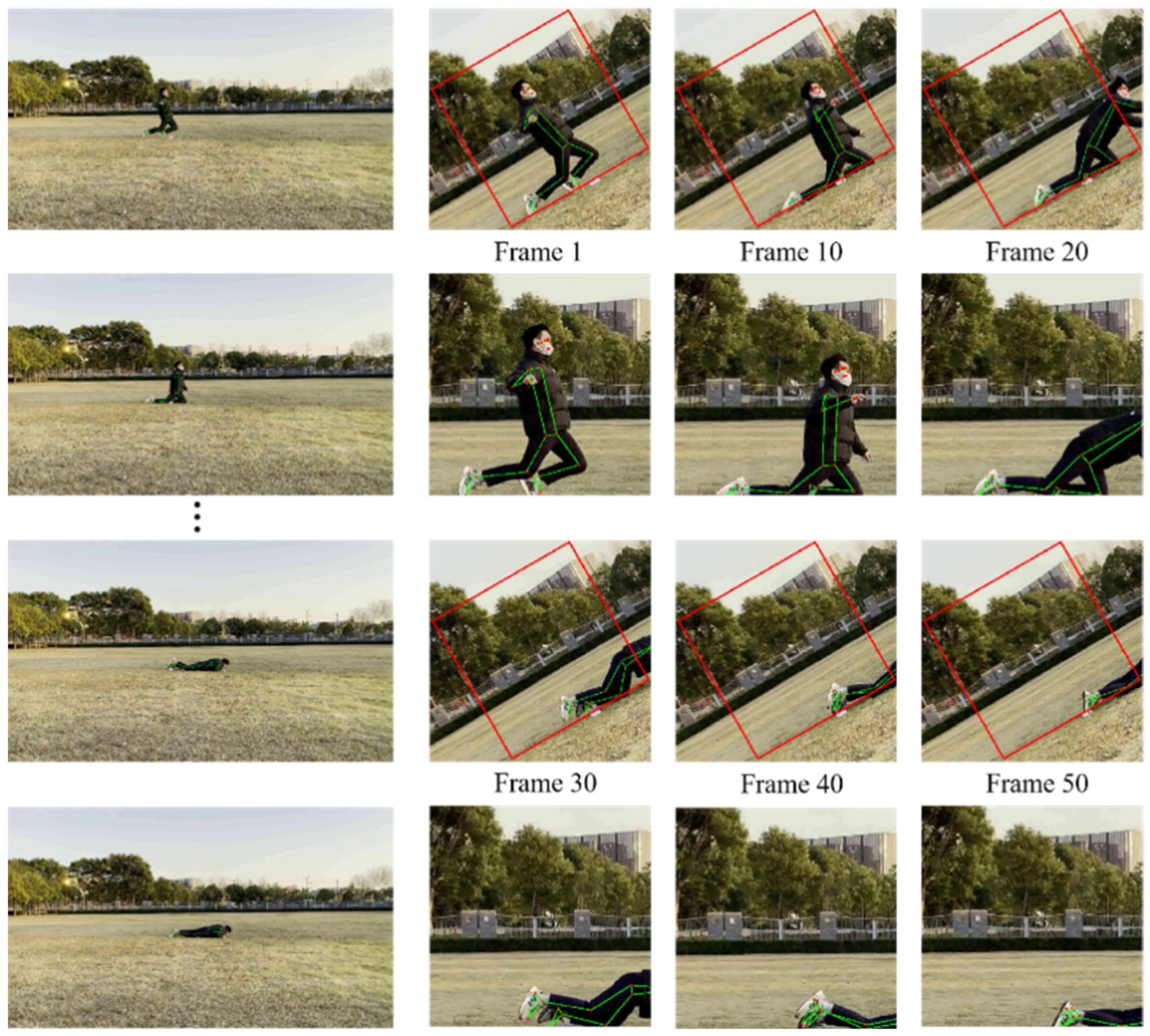
In order to arrange the human fall detection algorithm designed in this study on ordinary visual sensors, this study optimizes the preheating module of BlazePose and uses the offset vector to update the bounding box of the moving human body, thereby reducing the detection frequency of the human body, and improving the speed of human key point information detection. Figure 4 shows the image processing using the traditional BlazePose human body key point extraction network. First, after the video stream is input to the network, the pre-trained SSD body detector preset in the network will obtain the human body bounding box in the first frame image, as shown in Figure 4 (top), in the first frame. At this point, we can clearly observe the human key point information extracted by the BlazePose network in the current frame image with the naked eye, and this bounding box will be used in subsequent frame images. In this case, we observed the next 50 frames of images, and exported the image rendering results every 10 frames. In the process, we observed that after the video stream was continuously input to the network, the first frame of the current segment was always used for human detection and subsequent human key point information. We found that after more than 20 frames, the human body within the bounding box begins to become mutilated. In order for BlazePose to efficiently obtain the key points of the human body, it primarily needs to determine the shoulder center point and the hip center point, but the human body in the bounding box has begun to no longer satisfy these conditions. Although BlazePose has superior prediction ability, the network can still predict the key point information of the incomplete part of the human body, but the quality of the key point information is not satisfactory. The cropped rendering of the bounding box in Figure 4 (bottom) clearly shows that a fall occurred when this video clip was input into the network for more than 20 frames. However, based on the information obtained, it was difficult to complete the fall assessment in the current state. After this happens to the network, the network restarts the pre-trained SSD body detection module to obtain a new human body bounding box. However, because the semantic information in the previous bounding box is lost, it can easily cause misjudgment.
Figure 4. The detection process of BlazePose human key point information extraction network.

3.2. Optimized Bounding-Box Detector Based on Offset Vector

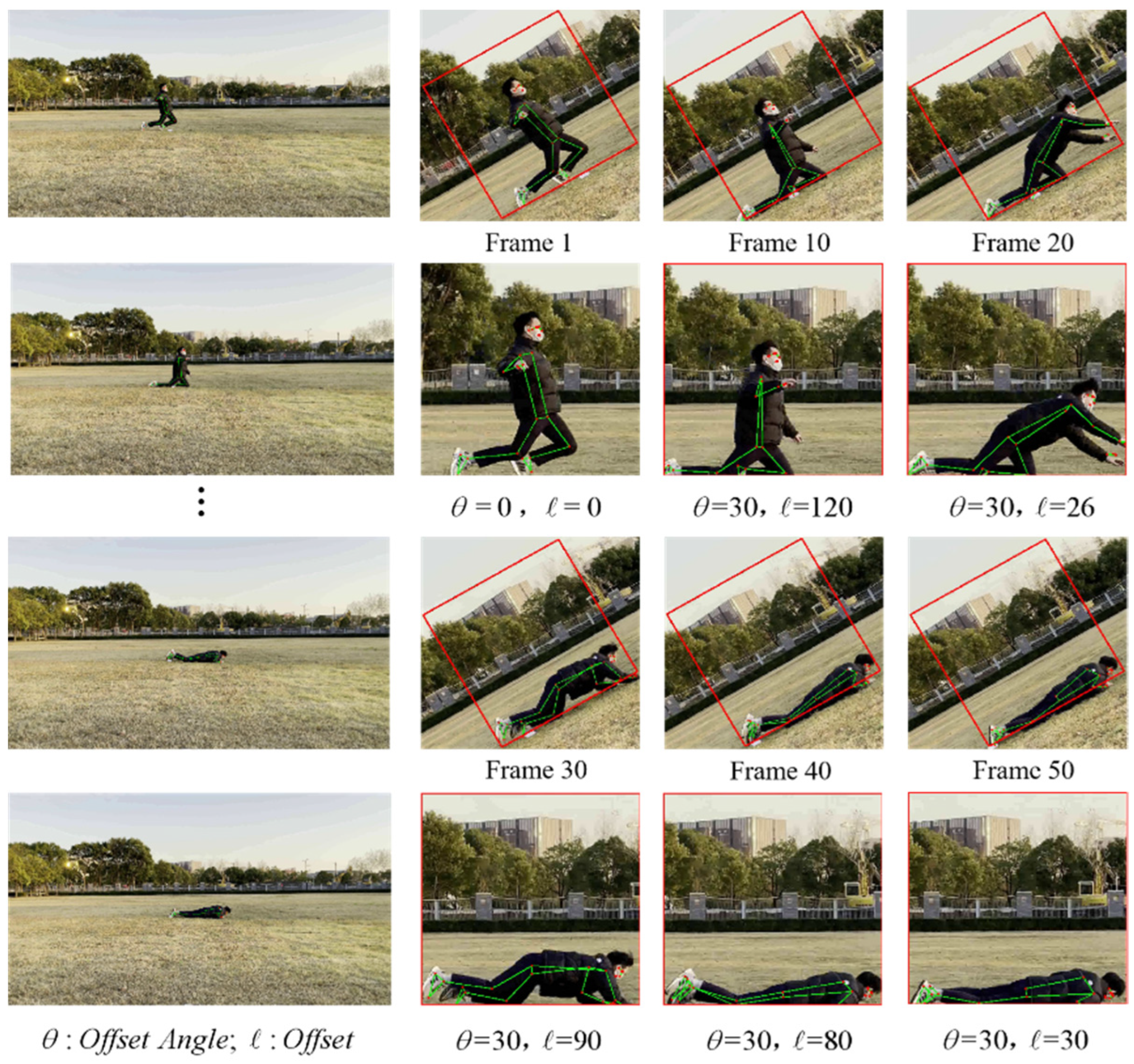
To solve the above-mentioned defects of the BlazePose network and reduce the dependence of the network on computing power, this study adopts the method of updating the bounding box with the offset vector. This method ensures that the human body obtained by the first frame processing is always maintained in the center of the entire bounding box. This process is illustrated in Figure 5.
Figure 5. The network detection process of the optimized human body key point information extraction based on BlazePose.
In this study, the images were still taken every 10 frames for comparison. We observed that the position of the bounding box was updated using the offset vector. During these 50 frames, the head detection module was not restarted to obtain the human bounding box, and the person in the image was always kept in the middle of the image. After the optimization of the network, the use of rigid feature detectors is reduced, which greatly reduces the dependence of the human body on key point information extraction based on the BlazePose network on computing power. Simultaneously, owing to the reduction in the activation of the head detector, the speed of the key point information extraction of each frame of the image is improved by 0.04 s.
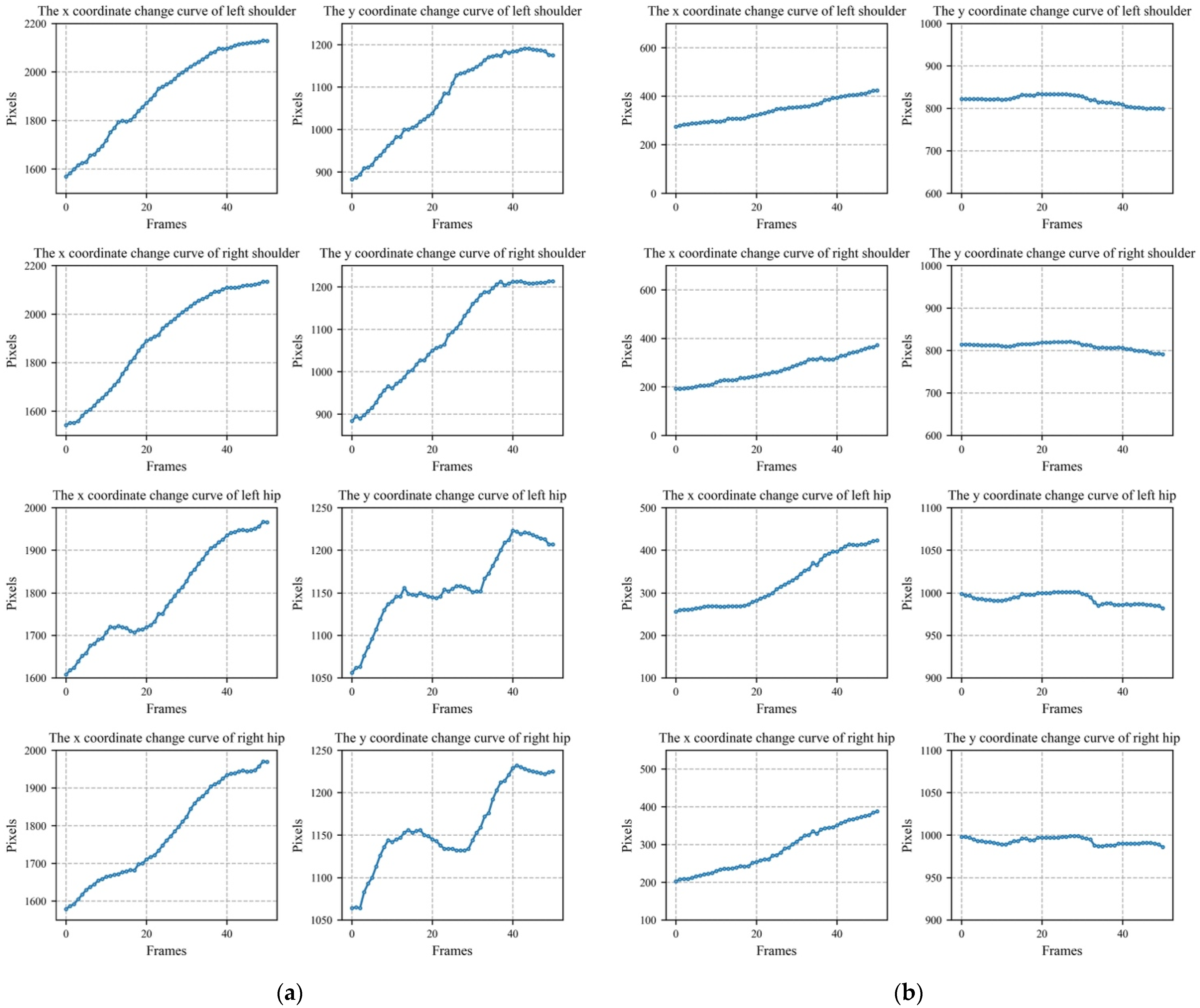
Through the optimized human body key point information extraction based on BlazePose, we can obtain more stable key point information. From this information, we selected four key points with relatively low degrees of freedom, namely the left shoulder, right shoulder, left hip, and right hip. As the time sequence changed, the information change curves of the four key points are shown in Figure 6. The abscissa of each subgraph is the image in time series, and its unit is the frame. Combined with the title of the picture, the ordinate is the x or y pixel position of the key point information of the human body.
Figure 6. The changed curve of the human body key point information. (a) Falling. (b) Walking.
By cleaning the data using the boxplot method, abnormal data, such as missing key point information due to restarting the head detector, are optimized. According to the Panax notoginseng criterion of deep learning, it can be guaranteed that a classification model with better generalization ability can be obtained after feeding into the long short-term memory neural network for seafarer behavior classification training.

3.3. Long Short-Term Memory Neural Networks

Falls and other human behaviors can often be viewed as continuous sequences, whose spatial and temporal characteristics are very important. Recurrent neural networks (RNN) [30,31] are particularly powerful for processing time-series data because of their excellent memory. To solve the problem of gradient explosion and disappearance of RNN to process long sequence data, this study uses a long short-term memory neural network (LSTM) [32] to judge whether a person produces falling behavior. The LSTM is a special RNN that can effectively solve long-term dependence problems. This study used a self-made gesture dataset (4 K, 60 frames), and inputted the LSTM and RNN networks for training. The results are presented in Table 1.
Table 1. Comparison of LSTM and RNN.
As shown in the table, the validation accuracies of the two networks for sequence data with more than 120 frames of images are very different, and that of the RNN network is as low as 36%, which obviously does not meet the requirements of this study. In contrast, LSTM can obtain good results in both designed experiments.
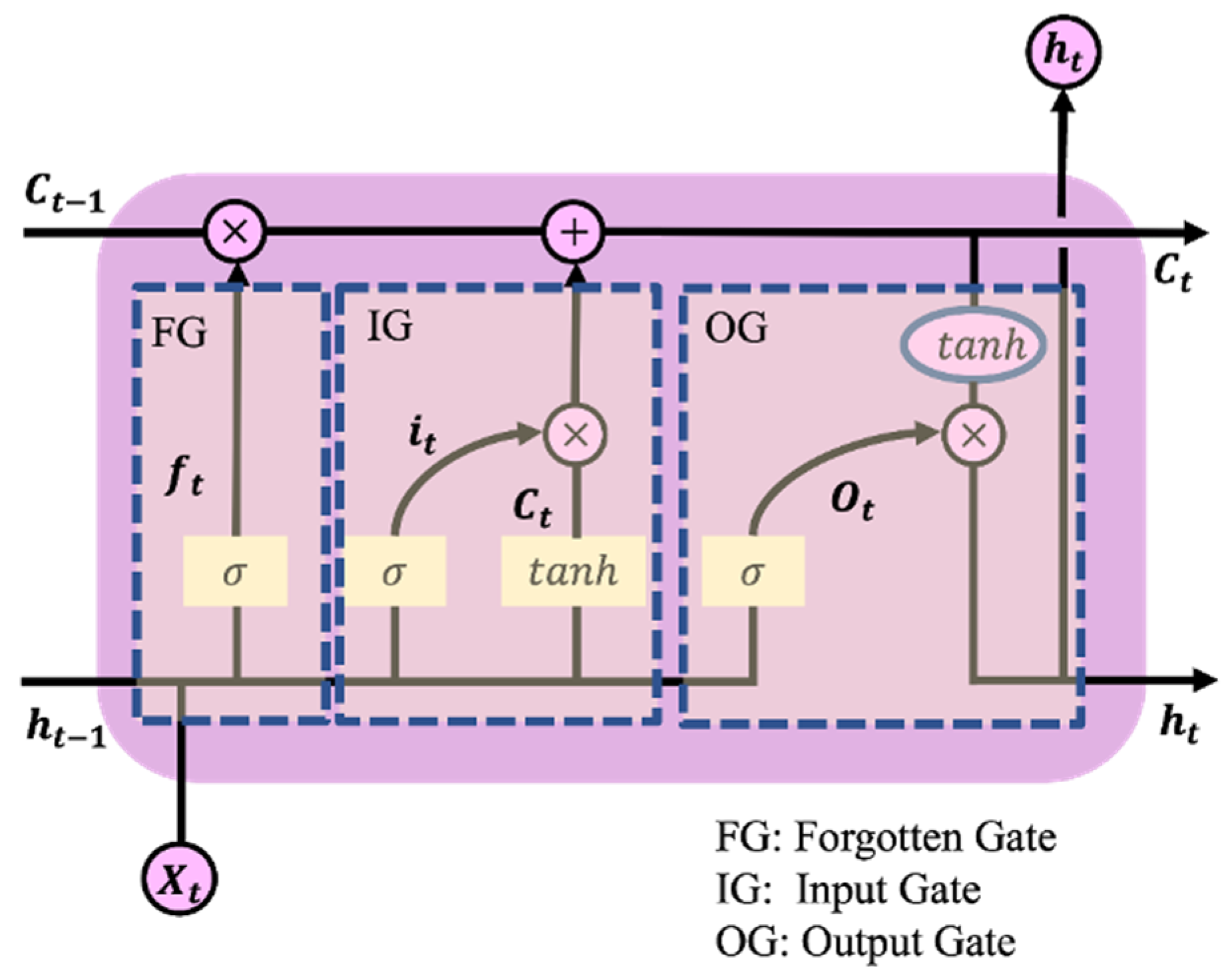
The basic unit of LSTM is a memory block mainly formed by a memory cell and three gate control units (including an input gate ( i t ), an output gate ( o t ), and a forget gate ( f t )) [33]. The internal structure of each unit is shown in Figure 7. The memory unit is represented by the horizontal straight line at the top of Figure 7, which is used to receive information from the previous moment and transfer the processed information to the next moment.
Figure 7. Unit structure diagram of LSTM [34].
For each LSTM cell, the first step is to decide which information from the previous LSTM unit needs to be forgotten. This decision was made by the forget gate. The gating unit reads h t 1 and x t , and then outputs a value f t between 0 and 1 to update the state C t 1 of the current LSTM unit. In the process of fall detection, the forget gate selectively stores and forgets the information transmitted by the previous LSTM unit, and the information transmitted by the input gate. Then, the forget gate stores the series of frame images that are determined to fall in behavior recognition. The calculation formula is as follows:
f t = σ ( U t h t 1 + W f x t )
k t = c t 1 f t
where x t is the human body key point information group passed by the input gate, h t 1 is the output of the previous LSTM cell, σ is the sigmoid layer, U t is the input coefficient matrix of the forget gate, W f is the network coefficient matrix of forget gate, c t 1 is the cell state of the previous LSTM cell, and k t is the output of the forget gate, which is used to update the current cell state.
After forgetting the current state information of the LSTM unit, the input gate processed the information input into the current unit. First, it is necessary to use h t 1 and x t to combine with the sigmoid layer to determine the information that needs to be updated in the current unit. Second, the activation function t a n h is used to process h t 1 and x t to obtain new candidate unit information as supplementary information. The calculation formula is as follows:
i t = σ ( U i h t 1 + W i x t )
g t = t a n h ( U g h t 1 + W g x t )
j t = g t i t
c t = j t + k t
where i t is the output information after parallelization; g t is the candidate input information; U i is the input coefficient matrix of input gate; W i is the network coefficient weight matrix of the input gate; U g is the candidate input information weight coefficient matrix; W g is the weight coefficient matrix of the input gate; j t is the output of the input gate, which will used to update the current cell state; and c t is the updated unit status.
Finally, the current LSTM unit determines the output value. First, the sigmoid layer is used to obtain the output judgment condition, and then a layer t a n h is used to obtain an inter-decision vector in [−1, 1]. This vector was multiplied by the result obtained from the input gate to obtain the final LSTM unit output value. In the process of fall detection, the output gate normalizes the final information to classify falls and other actions. The specific formula is as follows:
o t = σ ( U o h t 1 + W o x t )
h t = t a n h ( c t ) o t
where o t is the output information after parallelization, U o is the input coefficient matrix of the output gate, W o is the network coefficient weight matrix of the output gate, and h t is the output information of the current LSTM cell.
Therefore, LSTM has unique advantages in processing long-sequence data compared with RNN. The experiments conducted in this study achieved sufficiently good results.

4. Dataset and Experimental Analysis

4.1. Experimental Dataset

When seafarers work on ships, their behaviors are not as complicated as those on land, and activities such as crouching down and lying down are rare. Therefore, the main human activities in the videos captured in this study were walking, standing, sitting, and falling. This study constructed a self-developed dataset based on these four activities. This study selected two male samples and one female sample. Of the three samples, two were younger and their data were taken in the field, and the other was from a seafarer whose data was taken in the cabin. The specific information is shown in Table 2. The body types of the three people were different. It is representative.
Table 2. Self-developed dataset construction.
To enrich the datasets, we extracted all the videos about these four kinds of activities from the URFall public dataset and the FDD public dataset. Then, we processed all the videos. We extracted and labeled the human body key point information for each frame image. Finally, 11,292 groups were obtained, of which 3370 groups were from our own videos, 2995 groups were from the URFall public dataset, and 4527 groups were from the FDD public dataset. The detailed distribution of the dataset is presented in Table 3:
Table 3. Dataset source statistics.
Finally, we divided all the obtained data into training dataset, validation dataset, and test dataset, at a ratio of 7:2:1. The training set accounted for 70% of the total dataset, and approximately 7904 sets of key point information. The validation set accounted for 20% of the total data, approximately 2258 sets of key point information, and the remaining 10% contained about 1129 sets of key point information as the test set.

4.2. Experimental Environment

Table 4 lists the experimental conditions of the data training completed in this study.
Table 4. Experimental hardware configuration.

4.3. Experimental Results

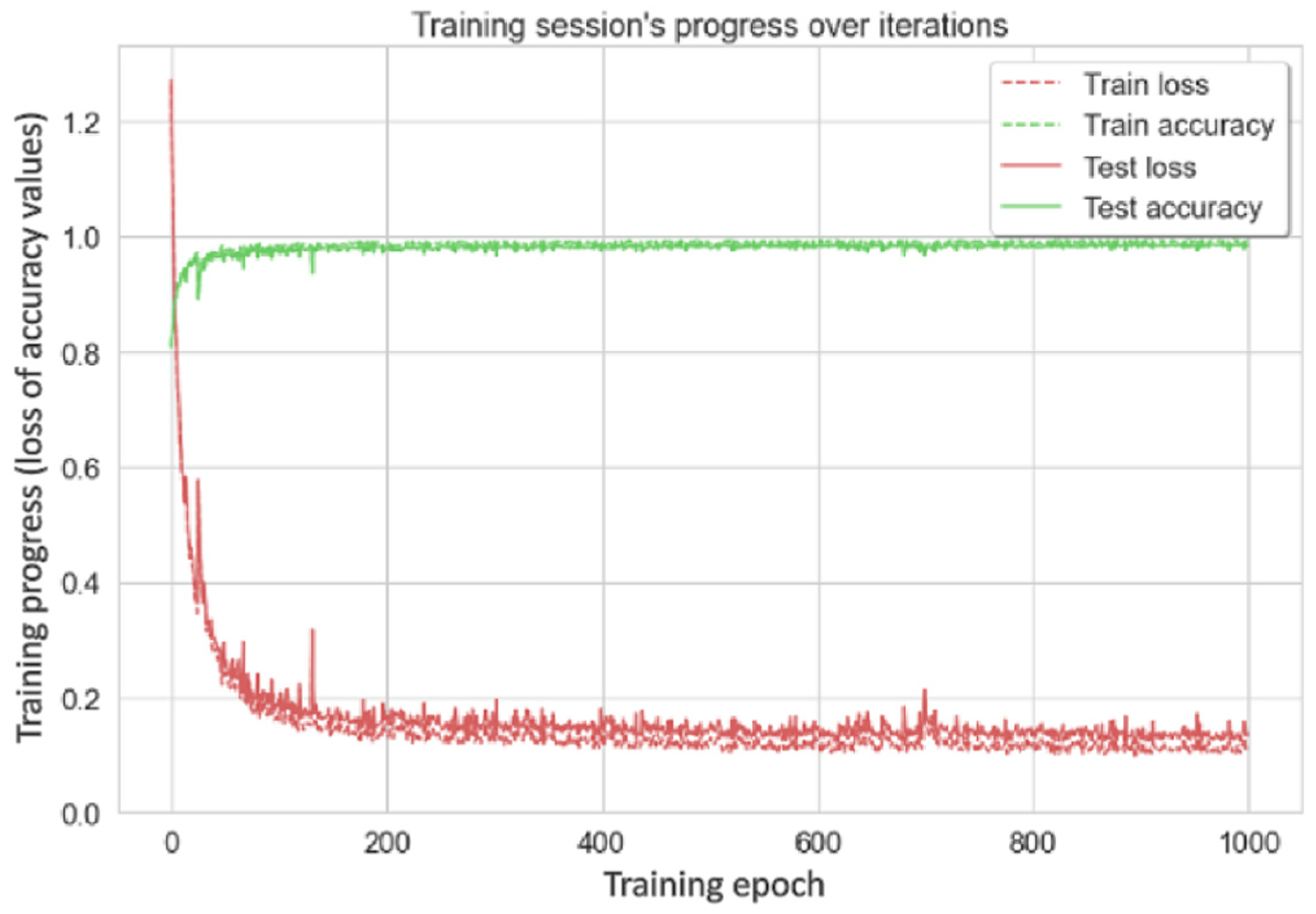
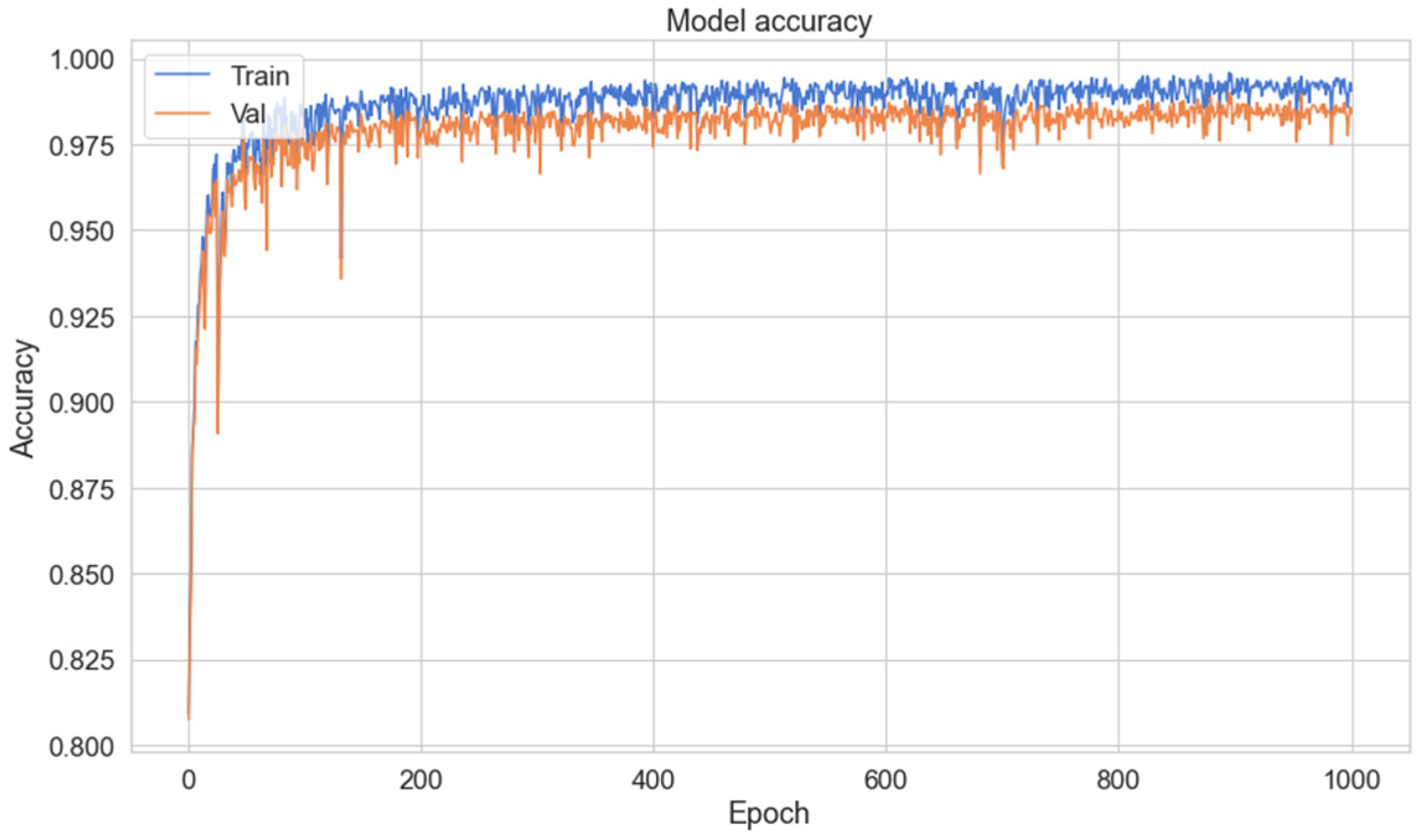
To make the seafarer fall detection algorithm designed in this study efficiently applicable in a real shipboard operating environment, the dataset used in this study contains the daily activities of walking, falling, sitting, and standing associated with falls. The Adam optimization method was used to optimize the network, and the ReLU method was used between the network layers to improve the generalization ability of the model. Finally, the fully connected layer and the SoftMax classifier were used to calculate the final classification results. Figure 8 and Figure 9 show the variation curves of the loss and accuracy of the training and validation sets with the iteration process during the training process.
Figure 8. Iterative process of model loss.
Figure 9. Iterative process of model accuracy.
According to the change in the curve, it is appropriate to use the left shoulder, right shoulder, left hip, and right hip to describe the movement state of the personnel.
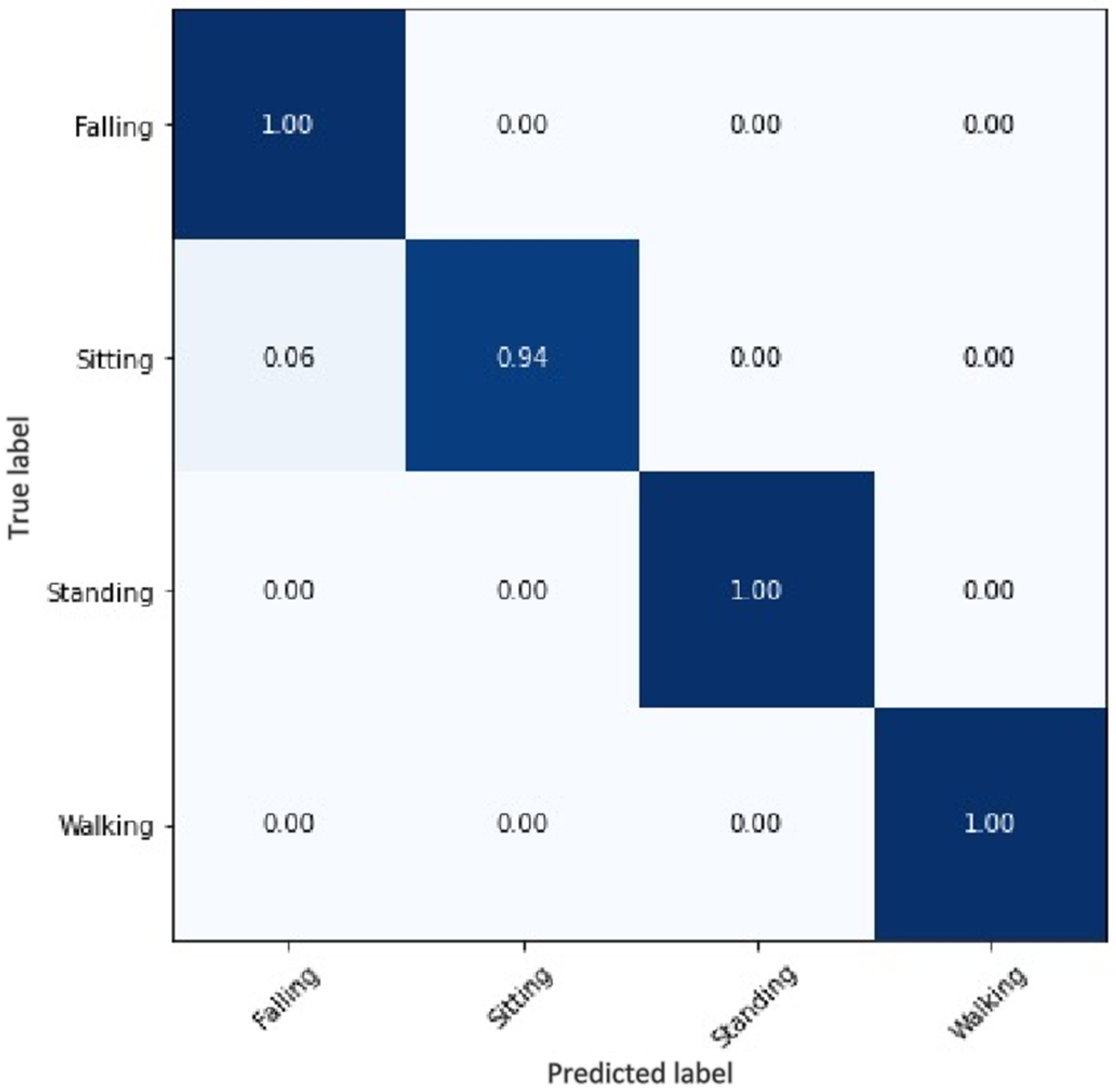
Because accidental falls are a significant threat to personal safety in various work scenarios, this study allows other behaviors to be falsely detected as falls. This means that specificity is less than 1, but the accuracy and sensitivity indicators must be as optimal as possible. A fuzzy matrix was used in this study to analyze the final results. The results are shown in Figure 10:
Figure 10. Confusion matrix of training results.
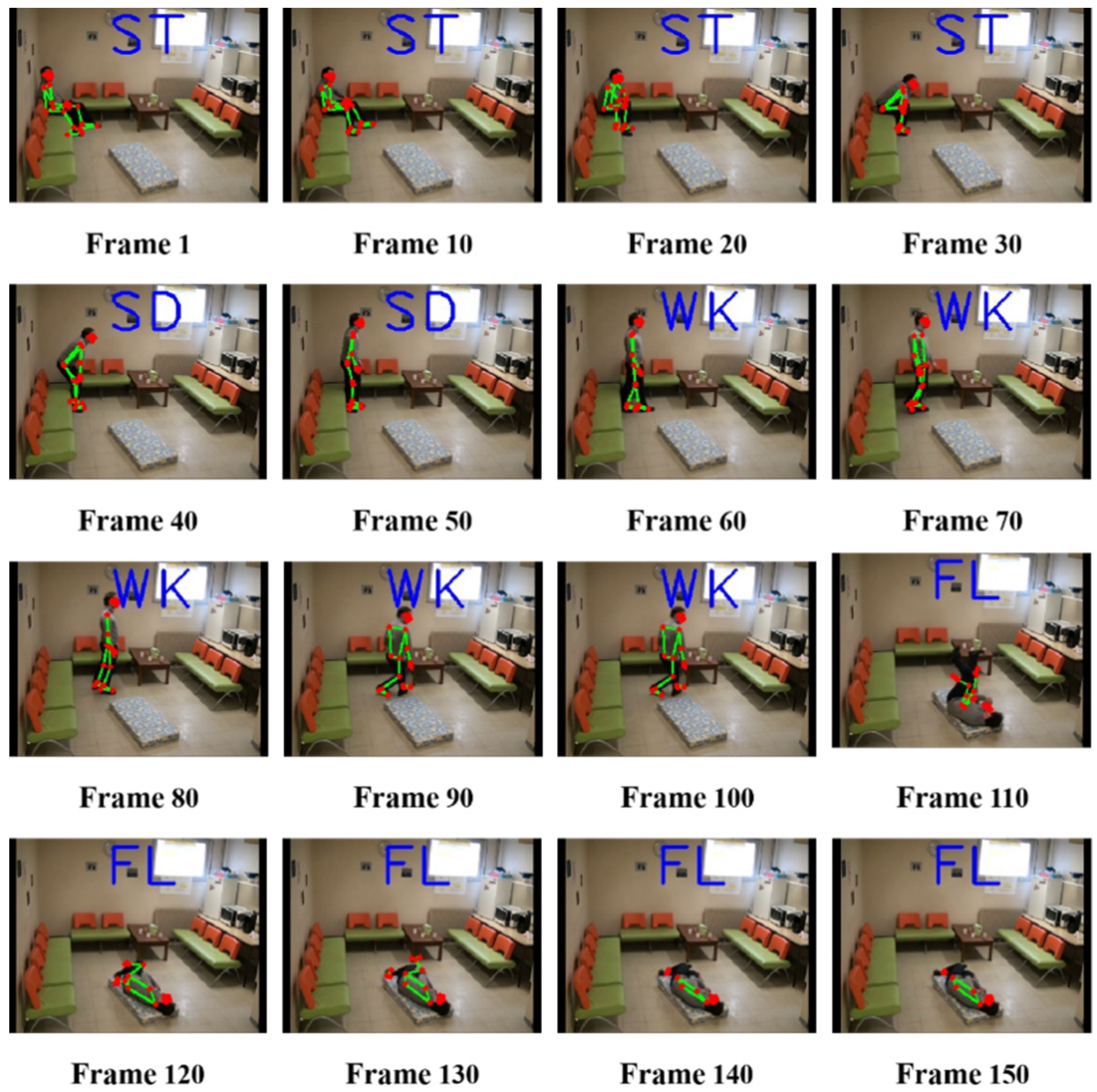
As shown in the figure above, the human fall detection algorithm proposed in this study can effectively distinguish the fall situation from the daily situation. The sitting behavior is similar to the falling behavior, and misjudgment occurs in it, but the desired effect of the algorithm designed in this study has been obtained well. Moreover, the optimized human body key point information extraction, based on the BlazePose network, in this study can reach a frame rate of 25+ FPS, provided by Google Labs on the experimental equipment described in this study, without using a GPU. This can be effectively placed on mobile devices, as well as on common RGB cameras for real-time detection and cost savings. We rendered some of the running results using the video dataset, and the detection results are shown in Figure 11.
Figure 11. Detection results. (Note: ST, sitting; SD, standing; WK, walking; FL, falling).
Based on the BlazePose–LSTM seafarer fall detection model, the accuracy rate of seafarer falls in this study reached 100%, the recognition rate for non-falls reached 97.95%, and the average detection frame rate reached 29 frames/s. It can be proved that the BlazePose–LSTM network model proposed in this study has high recognition accuracy and a fast frame rate for the experimental data set. Table 5 shows a performance comparison between the model in this study and the methods used in other studies, which further shows that this method exhibits a certain degree of improvement in accuracy, specificity, and sensitivity [35]. The calculation formulae for the three indicators are as follows:
A c c u r a c y = T P + T N T P + T N + F P + F N × 100 %
S e n s i t i v i t y = T P / ( T P + F N ) × 100 %
S p e c i f i t y = T N / ( T N + F P ) × 100 %
Table 5. Performance comparison between BlazePose–LSTM seafarer fall detection model and other models.
According to the statistics and comparison information in the above table, the BlazePose–LSTM seafarer fall detection network structure proposed in this study increased the accuracy, specificity, and sensitivity by 4.57%, 1.7%, and 9%, respectively, compared with the OpenPose-YOLO [36] fall detection network. The fall recognition rate for seafarers increased by nearly five percentage points, and the false alarm rate was much lower. Compared with CNN [37], the performance also exhibits a certain improvement. Compared with the stacked LSTM [38], the accuracy, specificity, and sensitivity increased by 3.06%, 2.06%, and 3.66%, respectively.
In summary, the seafarer fall detection model based on BlazePose–LSTM proposed in this study can obtain better detection accuracy and frame rate. In addition, for the fall detection of seafarer members on ships, the purpose of using the algorithm is to detect all fall behaviors so that medical rescue can be performed in time, to prevent irreversible physical damage to the seafarer members. Therefore, it is possible to have a fall-like behavior and be misjudged as a fall, but it is impossible to miss the detection of a fall behavior; therefore, the accuracy and sensitivity indicators are also very important.

4.4. Generalization Experiment of Seafarer Fall Detection on Ships Underway

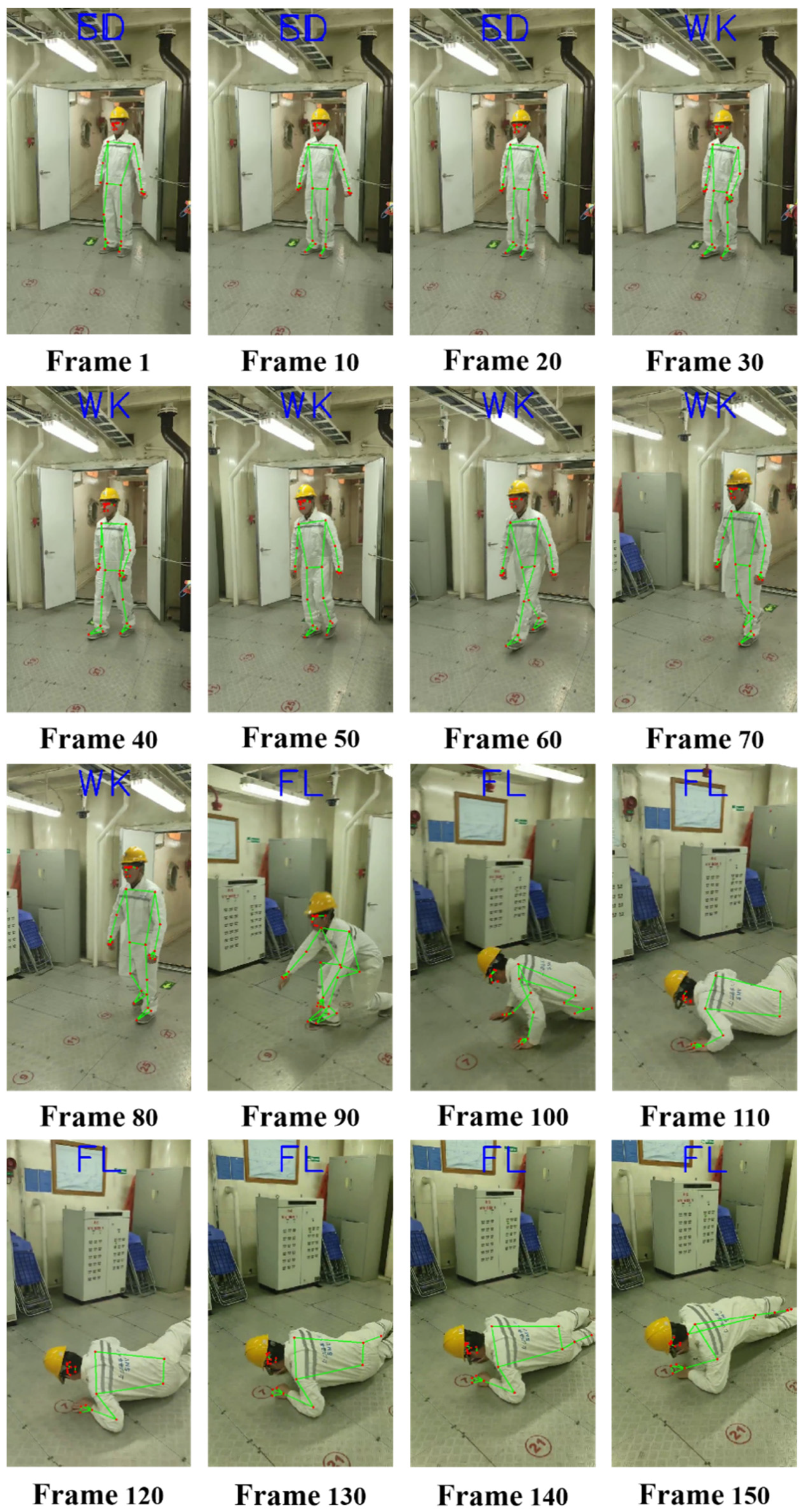
Note that our experiments were carried out under the condition that the ship’s sailing state is relatively stable. In order to verify the generalization ability of the algorithm in this study in an actual ship environment, we collected videos of several volunteers simulating ship operations on the Wu Song cargo ship. All the videos were captured using onboard RGB cameras. The detection results for one of the video sequences are shown in Figure 12:
Figure 12. Detection results.
In this video sequence, it can be detected that the current image of the seafarer member is “SD,” which is the standing state label in the first 30 frames. When the seafarer starts to walk, the algorithm can quickly respond and output “WK,” which is the walking label. When the detection reaches about the 90th frame, the algorithm detects that the current seafarer member has demonstrated the features of a fall, and quickly outputs the “FL” label, which shows that the seafarer member in the current image has fallen. The above analysis shows that the BlazePose–LSTM seafarer fall detection algorithm proposed in this study has a good generalization ability in actual ship seafarer fall detection.

5. Conclusions

Based on the optimized BlazePose–LSTM seafarer fall detection model, this study first uses the human body key point information extraction based on the optimized BlazePose network to detect the head and obtain the human body feature information. In this study, according to the Vitruvian theory, a head detector was designed to replace the pre-trained SSD body detector. After obtaining the human bounding box, an offset vector is designed to update the human body bounding box, so that the head detector built into the network does not need to be repeatedly enabled. Subsequently, the extracted information is cleaned by the box plot, and then the LSTM is used to determine whether the seafarer has fallen. At the same time, this study verifies the method proposed in this paper on the URFall public data set and the FDD public data set, which proves that the method can obtain a high accuracy and detection frame rate. In the future, we will evaluate the performance of our method in the case of multiple falls. In addition, the algorithm can be arranged on a mobile device to realize industrial applications.

Author Contributions

Conceptualization, W.L. and X.L.; methodology, W.L. and X.L.; software, W.L. and X.L.; validation, X.L.; formal analysis, W.L. and X.L.; investigation, W.L. and X.L.; resources, Y.H., J.S., X.C., J.Z., Q.H. and S.W.; data curation, W.L. and X.L.; writing—original draft preparation, W.L. and X.L.; writing—review and editing, Y.H., J.S., X.C., J.Z., Q.H. and S.W.; visualization, W.L. and X.L.; supervision, W.L. and X.L.; project administration, W.L. and X.L.; funding acquisition, W.L. All authors have read and agreed to the published version of the manuscript.

Funding

This work was funded by the National Key Research and Development Program of China (Grant No. 2021YFC2801003, 2021YFC2801004, 2019YFD0901303), the National Natural Science Foundation of China (52071199,52102397), and the Shanghai Natural Science Foundation (19ZR1422800), China Postdoctoral Science Foundation (2021M700790).

Institutional Review Board Statement

The study was conducted in accordance with the Helsinki Declaration. The experiments were conducted by authors Xu Liu and Jiansen Zhao.

Data Availability Statement

Not applicable.

Conflicts of Interest

The authors declare no conflict of interest.

References

  1. Lan, H.; Ma, X.; Qiao, W.; Ma, L. On the causation of seafarers’ unsafe acts using grounded theory and association rule. Reliab. Eng. Syst. Saf. 2022, 223, 108498. [Google Scholar] [CrossRef]
  2. De Cillis, F.; De Simio, F.; Guido, F.; Incalzi, R.A.; Setola, R. Fall-detection solution for mobile platforms using accelerometer and gyroscope data. In Proceedings of the 2015 37th Annual International Conference of the IEEE Engineering in Medicine and Biology Society (EMBC), Milan, Italy, 25–29 August 2015; IEEE: Piscataway, NJ, USA, 2015. [Google Scholar]
  3. Williams, J.; Hill, R.R.; Pignatiello, J.J., Jr.; Chicken, E. Wavelet analysis of variance box plot. J. Appl. Stat. 2021, 1–28. [Google Scholar] [CrossRef]
  4. Lu, N.; Wu, Y.; Feng, L.; Song, J. Deep Learning for Fall Detection: Three-Dimensional CNN Combined with LSTM on Video Kinematic Data. IEEE J. Biomed. Health Inform. 2018, 23, 314–323. [Google Scholar] [CrossRef]
  5. Li, H.; Shrestha, A.; Heidari, H.; Le Kernec, J.; Fioranelli, F. Bi-LSTM Network for Multimodal Continuous Human Activity Recognition and Fall Detection. IEEE Sens. J. 2019, 20, 1191–1201. [Google Scholar] [CrossRef] [Green Version]
  6. Lin, C.-B.; Dong, Z.; Kuan, W.-K.; Huang, Y.-F. A Framework for Fall Detection Based on OpenPose Skeleton and LSTM/GRU Models. Appl. Sci. 2020, 11, 329. [Google Scholar] [CrossRef]
  7. Xu, C.; Xu, Y.; Xu, Z.; Guo, B.; Zhang, C.; Huang, J.; Deng, X. Fall Detection in Elevator Cages Based on XGBoost and LSTM. In Proceedings of the 2021 26th International Conference on Automation and Computing (ICAC), Portsmouth, UK, 2–4 September 2021; IEEE: Piscataway, NJ, USA, 2021. [Google Scholar]
  8. Bazarevsky, V.; Grishchenko, I.; Raveendran, K.; Zhu, T.; Zhang, F.; Grundmann, M. Blazepose: On-device real-time body pose tracking. arXiv 2020, arXiv:2006.10204. [Google Scholar]
  9. Wang, B.; Guo, L.; Zhang, H.; Guo, Y.-X. A Millimetre-Wave Radar-Based Fall Detection Method Using Line Kernel Convolutional Neural Network. IEEE Sens. J. 2020, 20, 13364–13370. [Google Scholar] [CrossRef]
  10. Usmani, S.; Saboor, A.; Haris, M.; Khan, M.; Park, H. Latest Research Trends in Fall Detection and Prevention Using Machine Learning: A Systematic Review. Sensors 2021, 21, 5134. [Google Scholar] [CrossRef]
  11. Liang, S.; Chu, T.; Lin, D.; Ning, Y.; Li, H.; Zhao, G. Pre-impact alarm system for fall detection using MEMS sensors and HMM-based SVM classifier. In Proceedings of the 2018 40th Annual International Conference of the IEEE Engineering in Medicine and Biology Society (EMBC), Honolulu, Hawaii, 17–21 July 2018; IEEE: Piscataway, NJ, USA, 2018. [Google Scholar]
  12. Bucinskas, V.; Dzedzickis, A.; Rozene, J.; Subaciute-Zemaitiene, J.; Satkauskas, I.; Uvarovas, V.; Bobina, R.; Morkvenaite-Vilkonciene, I. Wearable Feet Pressure Sensor for Human Gait and Falling Diagnosis. Sensors 2021, 21, 5240. [Google Scholar] [CrossRef]
  13. Yuan, X.; Yu, S.; Dan, Q.; Wang, G.; Liu, S. Fall detection analysis with wearable MEMS-based sensors. In Proceedings of the 2015 16th International Conference on Electronic Packaging Technology (ICEPT), Changsha, China, 11–14 August 2015; IEEE: Piscataway, NJ, USA, 2015. [Google Scholar]
  14. Desai, K.; Mane, P.; Dsilva, M.; Zare, A.; Shingala, P.; Ambawade, D. A novel machine learning based wearable belt for fall detection. In Proceedings of the 2020 IEEE International Conference on Computing, Power and Communication Technologies (GUCON), Greater Noida, India, 2–4 September 2020; IEEE: Piscataway, NJ, USA, 2020. [Google Scholar]
  15. Abdo, H.; Amin, K.M.; Hamad, A.M. Fall detection based on RetinaNet and MobileNet convolutional neural networks. In Proceedings of the 2020 15th International Conference on Computer Engineering and Systems (ICCES), Cairo, Egypt, 15–16 December 2020; IEEE: Piscataway, NJ, USA, 2020. [Google Scholar]
  16. Chen, Y.; Du, R.; Luo, K.; Xiao, Y. Fall detection system based on real-time pose estimation and SVM. In Proceedings of the 2021 IEEE 2nd International Conference on Big Data, Artificial Intelligence and Internet of Things Engineering (ICBAIE), Nanchang, China, 26–28 March 2021; IEEE: Piscataway, NJ, USA, 2021. [Google Scholar]
  17. Ramirez, H.; Velastin, S.A.; Aguayo, P.; Fabregas, E.; Farias, G. Human Activity Recognition by Sequences of Skeleton Features. Sensors 2022, 22, 3991. [Google Scholar] [CrossRef]
  18. Bourke, A.K.; O’brien, J.V.; Lyons, G.M. Evaluation of a threshold-based triaxial accelerometer fall detection algorithm. Gait Posture 2007, 26, 194–199. [Google Scholar] [CrossRef] [PubMed]
  19. Rastogi, S.; Singh, J. A systematic review on machine learning for fall detection system. Comput. Intell. 2021, 37, 951–974. [Google Scholar] [CrossRef]
  20. Hussain, F.; Hussain, F.; Ehatisham-Ul-Haq, M.; Azam, M.A. Activity-Aware Fall Detection and Recognition Based on Wearable Sensors. IEEE Sens. J. 2019, 19, 4528–4536. [Google Scholar] [CrossRef]
  21. Singha, R.G.; Lad, M.; Shipurkar, G.M.; Rohekar, M.; Chauhan, C.; Rathod, N. Dynamic Pose Diagnosis with BlazePose and LSTM for Spinal Dysfunction Risk Estimation. In Proceedings of the 2022 4th International Conference on Smart Systems and Inventive Technology (ICSSIT), Tirunelveli, India, 20–22 January 2022; IEEE: Piscataway, NJ, USA, 2022. [Google Scholar]
  22. Bilski, P.; Mazurek, P.; Wagner, J.; Winiecki, W. Application of Decision trees to the Fall Detection of elderly People using Depth-based sensors. In Proceedings of the IEEE International Conference on Intelligent Data Acqut and Advanced Computing Systems (IDAACS 2015), Prague, Czech Republic, 30 August–4 September 2015. [Google Scholar]
  23. Younis, B.; Ali, J.; Farman, H. Fall Detection System Using Novel Median Deviated Ternary Patterns and SVM. In Proceedings of the 2021 4th International Symposium on Advanced Electrical and Communication Technologies (ISAECT), Virtual, 6–8 December 2021; IEEE: Piscataway, NJ, USA, 2021. [Google Scholar]
  24. Shi, J.; Chen, D.; Wang, M. Pre-Impact Fall Detection with CNN-Based Class Activation Mapping Method. Sensors 2020, 20, 4750. [Google Scholar] [CrossRef] [PubMed]
  25. Musci, M.; De Martini, D.; Blago, N.; Facchinetti, T.; Piastra, M. Online fall detection using recurrent neural networks. arXiv 2018, arXiv:1804.04976. [Google Scholar]
  26. Queralta, J.P.; Gia, T.N.; Tenhunen, H.; Westerlund, T. Edge-AI in LoRa-based health monitoring: Fall detection system with fog computing and LSTM recurrent neural networks. In Proceedings of the 2019 42nd International Conference on Telecommunications and Signal Processing (TSP), Budapest, Hungary, 1–3 July 2019; IEEE: Piscataway, NJ, USA, 2019. [Google Scholar]
  27. Maitre, J.; Bouchard, K.; Gaboury, S. Fall Detection with UWB Radars and CNN-LSTM Architecture. IEEE J. Biomed. Health Inform. 2020, 25, 1273–1283. [Google Scholar] [CrossRef]
  28. Kreiss, S.; Lorenzo, B.; Alexandre, A. Openpifpaf: Composite fields for semantic keypoint detection and spatio-temporal association. IEEE Trans. Intell. Transp. Syst. 2021. [Google Scholar] [CrossRef]
  29. Taylor, J.; Shotton, J.; Sharp, T.; Fitzgibbon, A. The Vitruvian manifold: Inferring dense correspondences for one-shot human pose estimation. In Proceedings of the 2012 IEEE Conference on Computer Vision and Pattern Recognition, Providence, RI, USA, 16–21 June 2012; IEEE: Piscataway, NJ, USA, 2012. [Google Scholar]
  30. Hasan, M.; Islam, S.; Abdullah, S. Robust Pose-Based Human Fall Detection Using Recurrent Neural Network. In Proceedings of the 2019 IEEE International Conference on Robotics, Automation, Artificial-intelligence and Internet-of-Things (RAAICON), Dhaka, Bangladesh, 29 November–1 December 2019; pp. 48–51. [Google Scholar]
  31. Lee, D.-W.; Jun, K.; Naheem, K.; Kim, M.S. Deep Neural Network–Based Double-Check Method for Fall Detection Using IMU-L Sensor and RGB Camera Data. IEEE Access 2021, 9, 48064–48079. [Google Scholar] [CrossRef]
  32. Juneau, P.; Baddour, N.; Burger, H.; Bavec, A.; Lemaire, E.D. Comparison of Decision Tree and Long Short-Term Memory Approaches for Automated Foot Strike Detection in Lower Extremity Amputee Populations. Sensors 2021, 21, 6974. [Google Scholar] [CrossRef]
  33. Yan, H.; Qin, Y.; Xiang, S.; Wang, Y.; Chen, H. Long-term gear life prediction based on ordered neurons LSTM neural networks. Measurement 2020, 165, 108205. [Google Scholar] [CrossRef]
  34. Yang, J.; Peng, Y.; Xie, J.; Wang, P. Remaining Useful Life Prediction Method for Bearings Based on LSTM with Uncertainty Quantification. Sensors 2022, 22, 4549. [Google Scholar] [CrossRef] [PubMed]
  35. Mrozek, D.; Koczur, A.; Małysiak-Mrozek, B. Fall detection in older adults with mobile IoT devices and machine learning in the cloud and on the edge. Inf. Sci. 2020, 537, 132–147. [Google Scholar] [CrossRef]
  36. Lina, W.; Ding, J. Behavior detection method of OpenPose combined with Yolo network. In Proceedings of the 2020 International Conference on Communications, Information System and Computer Engineering (CISCE), Kuala Lumpur, Malaysia, 3–5 July 2020; IEEE: Piscataway, NJ, USA, 2020. [Google Scholar]
  37. Casilari, E.; Lora-Rivera, R.; García-Lagos, F. A Study on the Application of Convolutional Neural Networks to Fall Detection Evaluated with Multiple Public Datasets. Sensors 2020, 20, 1466. [Google Scholar] [CrossRef] [PubMed] [Green Version]
  38. Musci, M.; De Martini, D.; Blago, N.; Facchinetti, T.; Piastra, M. Online Fall Detection Using Recurrent Neural Networks on Smart Wearable Devices. IEEE Trans. Emerg. Top. Comput. 2020, 9, 1276–1289. [Google Scholar] [CrossRef]
Publisher’s Note: MDPI stays neutral with regard to jurisdictional claims in published maps and institutional affiliations.

Article Metrics

Citations

Article Access Statistics

Multiple requests from the same IP address are counted as one view.