You are currently viewing a new version of our website. To view the old version click .
Sensors
  • Article
  • Open Access

25 July 2019

TAEO-A Thermal Aware & Energy Optimized Routing Protocol for Wireless Body Area Networks

,
,
,
,
and
1
Department of Computer Science, COMSATS University Islamabad (CUI), Islamabad 44000, Pakistan
2
Department of Computer Science, Shaheed Zulfiqar Ali Bhutto Institute of Science and Technology (SZABIST), Islamabad 44000, Pakistan
3
Faculty of Science and Technology, Middlesex University, The Burroughs, Hendon, London NW4 4BT, UK
4
School of Computer Science and Electronic Engineering, University of Essex,Wivenhoe Park, Colchester CO4 3SQ, UK
This article belongs to the Special Issue Smart, Secure and Sustainable (3S) Technologies for IoT Based Healthcare Applications

Abstract

Wireless Body Area Networks (WBANs) are in the spotlight of researchers and engineering industries due to many applications. Remote health monitoring for general as well as military purposes where tiny sensors are attached or implanted inside the skin of the body to sense the required attribute is particularly prominent. To seamlessly accomplish this procedure, there are various challenges, out of which temperature control to reduce thermal effects and optimum power consumption to reduce energy wastage are placed at the highest priority. Regular and consistent operation of a sensor node for a long-time result in a rising of the temperature of respective tissues, where it is attached or implanted. This temperature rise has harmful effects on human tissues, which may lead to the tissue damage. In this paper, a Temperate Aware and Energy Optimized (TAEO) routing protocol is proposed that not only deals with the thermal aspects and hot spot problem, but also extends the stability and lifetime of a network. Analytical simulations are conducted, and the results depict better performance in terms of the network lifetime, throughput, energy preservation, and temperature control with respect to state of the art WBAN protocols.

1. Introduction

Advancement in Information and Communication Technology (ICT) has revolutionized all domains of applied sciences. One such domain that has gained much attention of the research arena, as well as engineering industries, over last two decades is Smart Health using Wireless Body Area Networks (WBANs). WBAN has a potential to solve social problems, like efficient use of limited medical infrastructure with respect to population, raising aging population, and over wrought facilities. Hence, there is a dire need for the prevailing conditions to attract general public towards WBAN technology to address the aforementioned problems.
Recent trends and enhancements in communication and sensory technology have led to the further optimization of WBAN. WBAN is a type of Sensor Network, which has numerous applications both for medical and non-medical purposes [1,2], like in defense activities, by physicians for remote health monitoring, for coaches and players in sports, etc. The generic purpose of WBAN is the automation of certain processes for the ease of people and, consequently, bringing improvements in their lifestyle. Therefore, the technological significance of WBAN is eminent from its day-to-day applications.
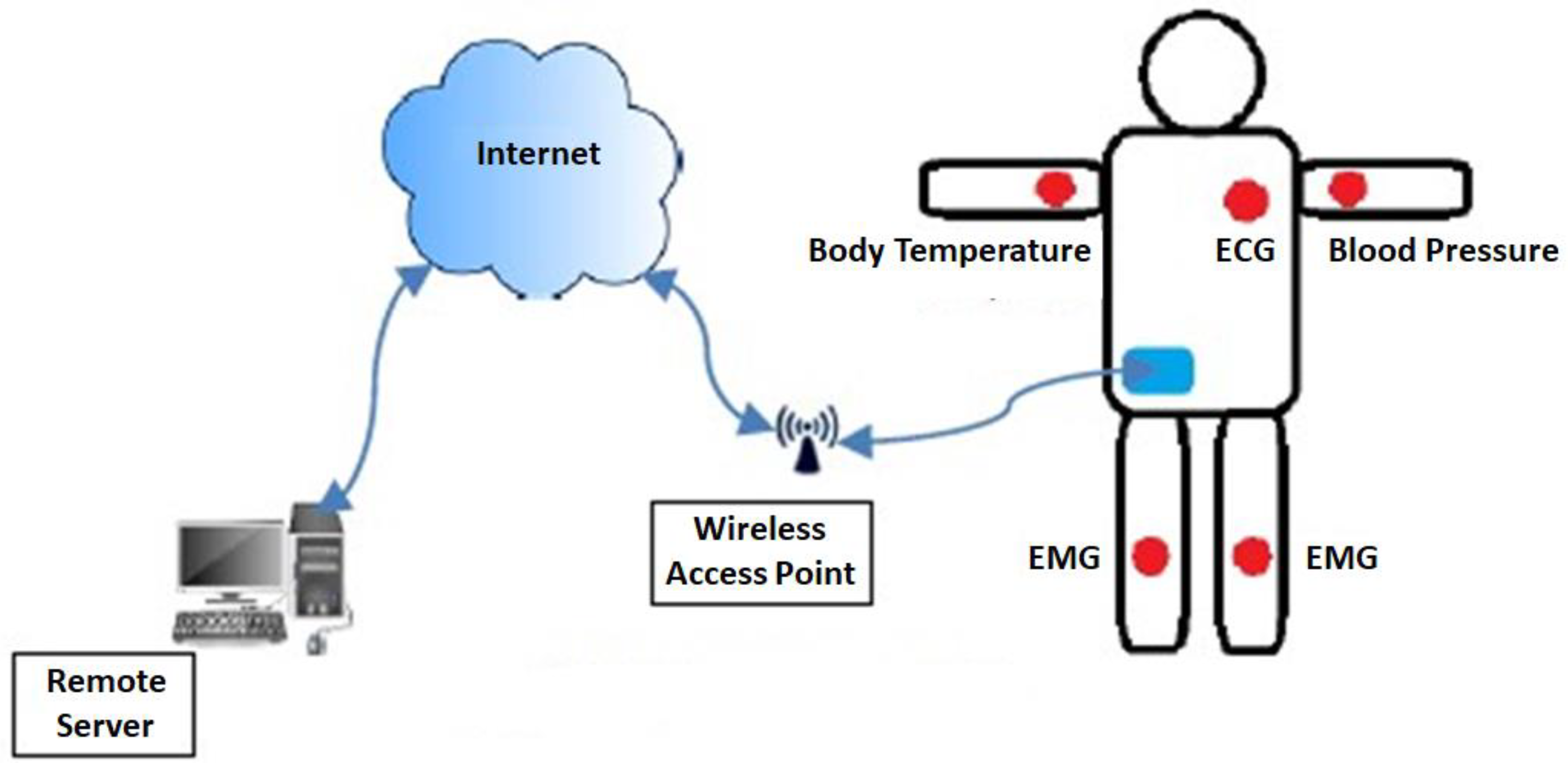
WBAN constitutes a set of miniature sensors, like Electrocardiogram (ECG) and Electromyography (EMG), which are implanted inside the human body or placed outside the skin; Figure 1 shows a basic WBAN architecture. These nodes are integrated into the exchange of information. Each sensor collects the associated data from its surrounding and processes it for onward submission to the intended medical rep or physician. The adoption of technology always imposes certain challenges; similar is the case with WBAN. Aside from its proved assistance to both patients and doctors, some aspects of WBAN need to be controlled for its practical implementation.
Figure 1. Wireless Body Area Networks (WBAN) basic architecture depicting deployment of sensors for gathering patient’s data and submitting it to a remote server via the internet.
In addition to the saved energy through intelligent design of electric circuits of wireless sensor nodes, energy efficient routing plays a vital role in preserving the energy of these nodes. Moreover, another vital problem in such networks is the thermal dissipation of nodes, which is harmful for human tissues. In WBAN, a node is declared as a hot-spot node when its temperature is raised to an extent where it can damage human tissues. This is a safety hazard and it is not acceptable in WBAN implementation. Therefore, the temperature of a hot-spot node needs to be intelligently managed for a hazard-free deployment of WBAN. There are various factors that cause the temperature rise of the node. Two primary sources [3] are:
  • EM transmission and
  • power consumption within internal circuitry.

Problem Statement and Contribution

In WBAN, a node communicates with its neighbors or sink using radio frequency (RF) signals. A transceiver in a sensor device is responsible for the communication of data through electromagnetic waves. This radio frequency transmission dissipates heat, which is absorbed by tissues, and consequently raises the temperature. The second factor causing temperature rise is the internal circuitry of a sensor node that generates heat while processing the collected data. The amount of heat that is generated by a node circuitry is dependent on its architecture. There is a need to control a node from dissipating excessive heat. Therefore, heat that is generated by the sensor nodes needs to be controlled for effective implementation of WBAN. An increase in the thermal dissipation of a sensor node due to the transmission of packets is one core safety issue in WBAN [4]. This is the major theme of the proposed protocol i.e. to keep the heated node away from the transmission process until its temperature revamped in order to provide a safe WBAN system for the health monitoring of patients. As discussed earlier, heat dissipation mainly depends on electromagnetic communication and the internal circuitry of a node. Therefore, this issue needs to be intelligently addressed in a practical implementation of WBAN technology. Otherwise, an increase in the temperature of a sensor node to a menacing level results in the damage of human tissues or DNA. In WBAN, this is also known as hot-spot node problem.
In this work, a novel routing protocol for WBAN is proposed, which provides a solution to the following two problems:
  • effective detection and avoidance of a hot-spot node based on Specific Absorption Rate (SAR) and
  • enhancement in stability period and network lifetime.
The proposed routing protocol has out classed two state-of-the-art routing protocols in terms of stability period, throughput and residual energy. Moreover, an analysis of the ratio of heated and normal nodes is also conducted.
Rest of the paper is organized, as follows: Section 2 discusses the related work. Section 3 presents the system model. The proposed methodology is described in Section 4. Section 5 presents the results and discussion. Finally, Section 6 concludes the paper.

3. System Model

In the following section, the system model of the proposed routing protocol is presented.

3.1. Radio Model

In WBAN, the radio frequency model for packet transmission plays a pivotal role and it needs to be intelligently selected when considering the design requirements. TAEO is based on the first order electromagnetic transmission scheme [21]. Equations (1)–(3) estimate the power consumed by a sensor during transmission (transmit or receive).
P T x   ( N , l ) =   P C i r c u i t T x ( N ) +   P T x A m p ( N , l )
P T x   ( N , l ) =   P C i r c u i t T x . N . l 2
P R x   ( N ) =   P C i r c u i t R x ( N )
P R x   ( N ) =   P C i r c u i t R x . N
where, l is the distance between transmitter and receiver sensor. l2 indicates the power that was consumed by the transmission channel and P T x is the energy utilized to send a packet from transmitter to receiver node. It is sum of the power that is consumed by the internal circuit P C i r c u i t T x and signal amplifier P T x A m p .
P R x shows the power consumption of the sensor on the receiving side, and it depends on the energy that is utilized by internal circuitry only i.e., P C i r c u i t R x , as no signal amplification is required.
In WBAN, the human body also adds some attenuation in the signal. Therefore, Equation (1) includes coefficient c depicting the path loss:
P T x   ( N , l ) =   P C i r c u i t T x N +   P T x A m p . N . c . l 2
The equations that are derived above also highlights the importance of hardware selection in a routing protocol. In TAEO, the Nordic nRF 2401A sensor device is opted due to its low power consumption, which has been further improved by effectively controlling the transmission power.

3.2. Thermal Model

The Specific Absorption Rate (SAR) is an effective tool to identify the rate at which the heat is absorbed by tissue per unit of its mass. It estimates the heat that is absorbed due to RF waves exposure for a specified duration and for a specific device. Using SAR, limits can be identified for a sensor node to curtail the dissipation of heat accordingly. SAR depicts the probable biological concern on tissues due to RF communication. For mobile phones, the Federal Communication Commission (FCC) has provided a safe SAR range for adherence [22,23]. These are highly beneficial in designing wireless communication systems. The surpassing of SAR limits leads to damage to the tissues [24]. SAR can be evaluated through the Equation (4):
S A R = ( σ E 2 ρ )
where, value gives conductivity of the tissue is represented by σ, ρ is the density, and E is the induced electromagnetic field indicating the strength.

4. Proposed Methodology-TAEO

As discussed earlier, the proposed routing protocol addresses two-core implementation issues associated with in-vivo sensors:
  • effective detection and avoidance of a Hot-Spot node based on SAR and
  • enhancement in stability period and network lifetime.
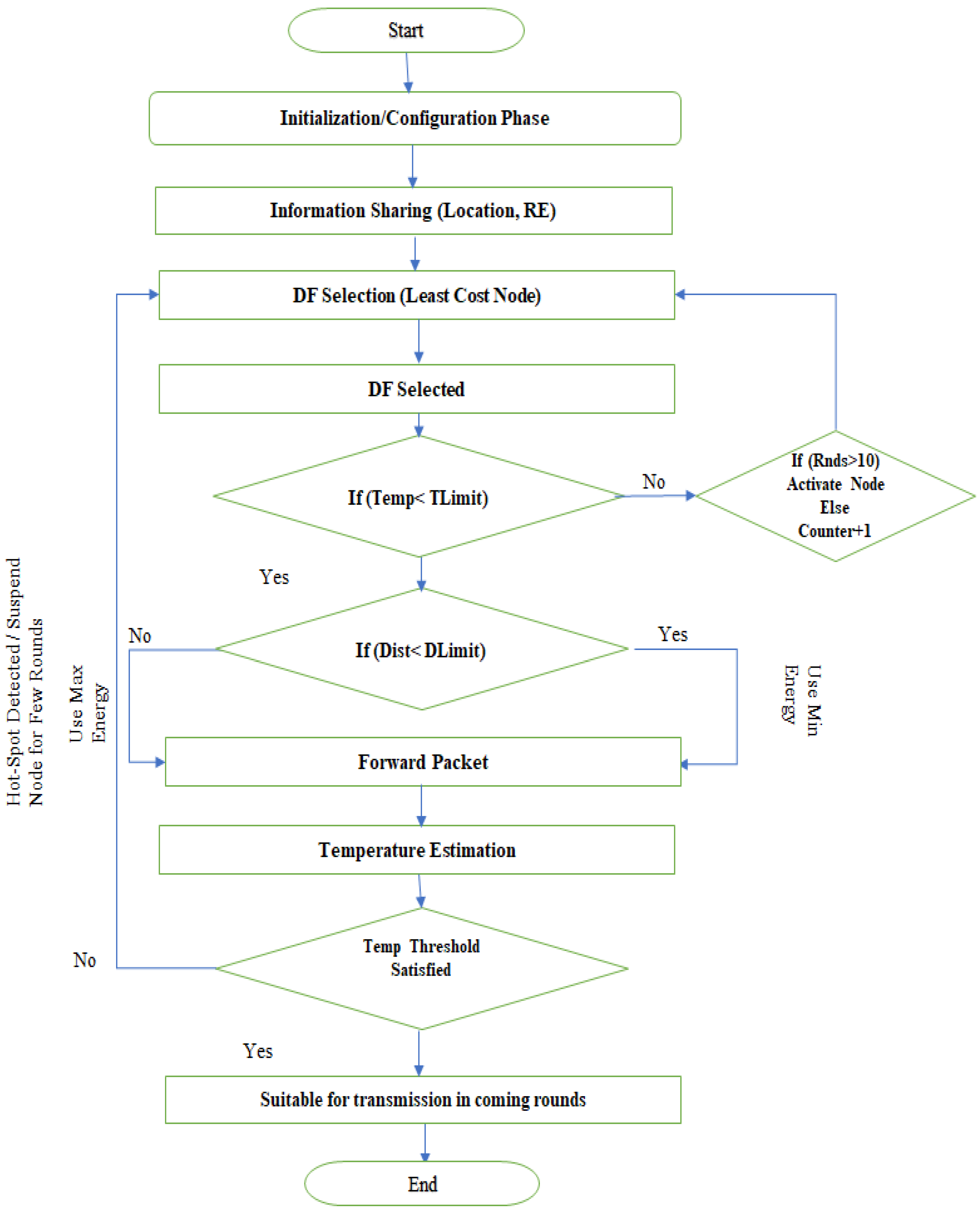
Figure 2 presents the operational flow diagram of the proposed methodology. The model is segregated into three phases, as discussed in the following sections:
Figure 2. Operational Flow Diagram.

4.1. Initialization

In this phase, each node broadcasts a packet containing the coordinates to its location, energy level, heat value, and the node identifier. In this way, all of the nodes are updated with the location of their neighbors and related information. Sink then broadcast a packet and disseminates its location to all of the nodes on the body. The temperature threshold is a value where there is a chance of tissue damage. This becomes two-fold when the temperature value exceeds from the threshold value. The most important aspect in WBAN is to avoid tissue damage as the heat that is generated by the node’s circuitry and antenna could cause damage to the human tissue [25]. The fact that the human body has a thermoregulatory mechanism to balance the heat around the body does not mitigate the issue of tissue damage when the heat received rate is larger than the thermoregulatory mechanism rate [25]. This issue can be resolved by avoiding those implantable nodes in the routing path that have been heavily utilized and may cause a risk of tissue damage. A metric, which is called Specific Absorption Rate (SAR), can be used to measure the rate at which energy is absorbed by tissues when exposed to an electromagnetic field. Experiments show that exposure to an SAR of 8 W/Kg in any gram of tissue in the head or torso for 15 min may have a significant risk of tissue damage [26]. Even with more modest heating, organs that are especially sensitive to any temperature increase due to a lack of blood flow to them are prone to thermal damage (e.g., lens cataracts [27]). Researchers have also expressed concern regarding the heating of the eye by examining the SAR and the temperature of the eye when exposed to a Wireless LAN [28] or Infrared [29] radiation. In [30], a detailed description about the thermal effects of bioimplants has been presented.
When considering the above discussion, the threshold of the parameter Temp used in Figure 2 is set according to the application requirement where the system is going to be used. It would be different when the sensors are places in the head instead of any other part of the body.

4.2. Routing

The proposed routing protocol is based on a multi-hop schema and it works by selecting a Data Forwarder (DF), who is responsible for the collection of packets from surrounding nodes and thereby forwarding them to sink for onward submission to a remote server.
A node with less temperature and distance from the sink along with higher residual energy is selected as DF. The temperature of DF is estimated, and is only allowed for transmission if it is below the specified threshold; otherwise, the respective DF is suspended for upcoming few rounds, until its temperature is revamped to normal. As a multi-hop routing protocol, a neighbor node can also be selected as a forwarder, especially, in the case where the distance of DF to sink is comparatively greater than a node’s direct distance to sink. In such a scenario, the node itself will directly forward data to Sink. Neighbor node’s heat estimation will be performed likewise for Hot-Spot detection and avoidance.
In order to find an increase in the temperature of human tissue upon exposure to RF communication, there is a need to calculate the SAR value of the tissue where the sensor is implanted. Equation (4) is used to calculate SAR. Temperature rise is estimated by using Equation (5) [10,31]:
Δ T = ( S A R ) t C
where, t is the time duration for which tissue is exposed to electromagnetic radiation and C is the specific heat capacity.
The TAEO protocol also controls the energy utilization to increase the network lifetime and stability period. It first specifies a distance value. Afterward, it calculates the distance in between six non-critical nodes and to sink. During transmission, the distance between the two nodes involved in the communication is compared to the specified distance value. If it is below the defined distance limit, it means that the two nodes are closely placed. Therefore, it utilizes less transmission power. Otherwise, for distant nodes, the packet is transported with maximum energy.

4.3. Scheduling

Data submission to the DF node or to sink is TDMA based, in which a time slot is assigned to each node, during which it can submit the recorded information to the DF. If a node has no data to transmit during the assigned time slot, it declares itself as an idle node and moves to a standby state to save power.

5. Results

In this section, a comparative analysis is conducted that is based on analytical simulations of two state of the art protocols with the proposed protocol. The major performance parameters selected in this study are:
  • Throughput—No of packets successfully received at the sink.
  • Stability Period—Duration before the energy of the first node depletes completely and node dies.
  • Network Lifetime—Total time duration till the last node’s energy drains completely and all nodes in a network died.
  • Thermal Dissipation—Heat energy generated by the internal sensor circuitry and due to electromagnetic signals. This needs to be controlled for a hazard-free deployment of WBAN.
The evaluation of TAEO routing protocol is carried in comparison to ATTEMPT (Adaptive Threshold-based Thermal-aware Energy-efficient Multi-hop ProTocol) [19] and SIMPLE (Stable increased-throughput multi-hop protocol for link efficiency in wireless body area networks) [32].

5.1. Network Architecture

Eight miniature sensors are implanted in-body and a sink node is placed near its waist. The sensors read data from the body under observation related to temperature, heart rate, glucose, etc. Table 2 shows a list of sensors with the specified location. Data from heart rate and glucose monitoring devices are specified as critical and they are directly transferred to the sink. Also, all other sensor nodes will follow the normal multi-hop transmission. Sink will receive information from the critical and non-critical sensors and transmits it to the remote server through the internet. All of the nodes are equivalent in terms of energy consumption and processing power. When considering multihop transmissions, body movements may bring changes in topology. Table 2 depicts the initialization state of the network. Additionally, Table 3 elaborates on the simulation parameters. It also shows the SAR values and corresponding temperature change estimates [10,33].
Table 2. Sensor Nodes Deployment.
Table 3. Simulation Parameters.

5.2. Stability Period

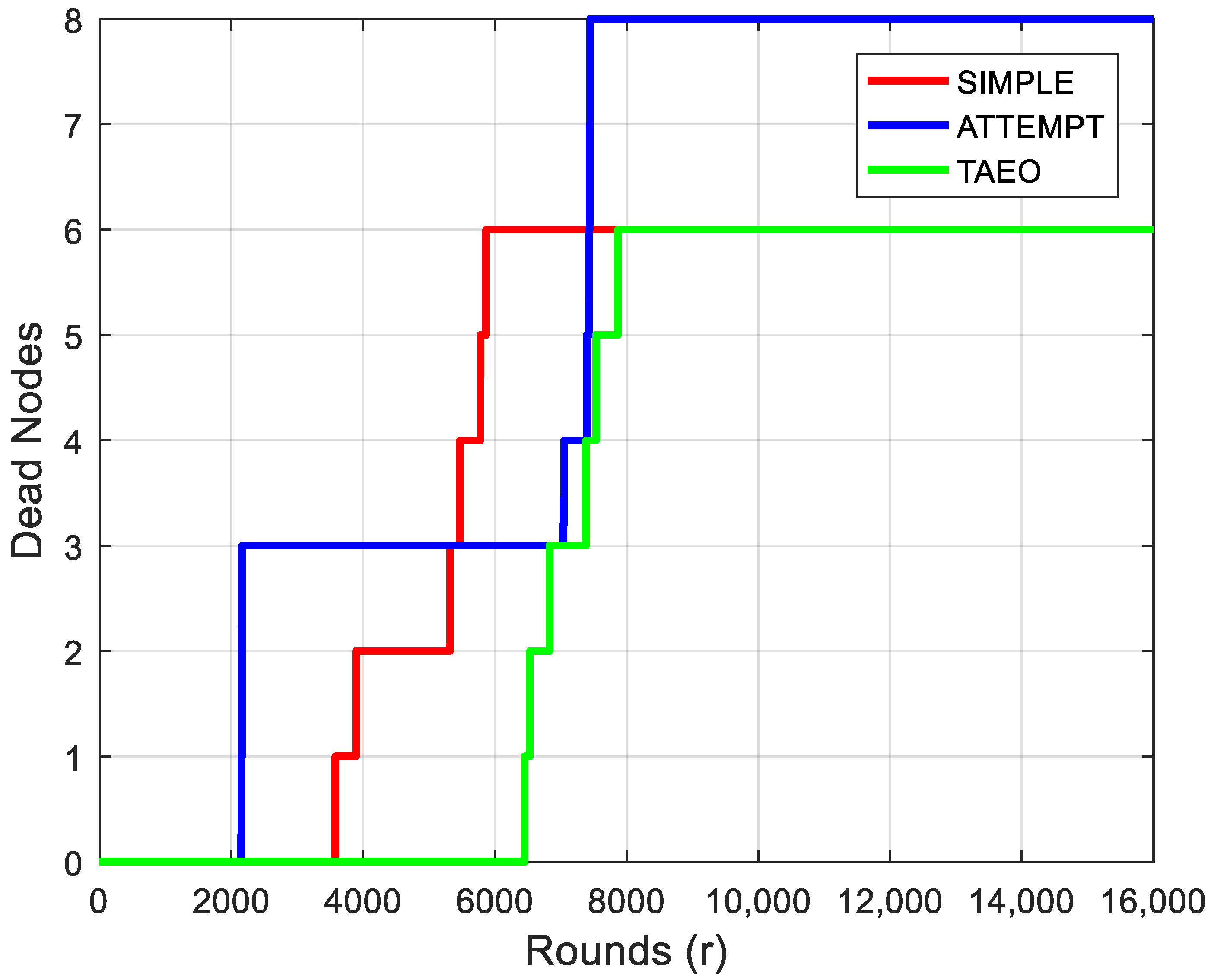
Figure 3 represents the stability period analysis and proposed protocol supersedes when considering the stability period in comparison with ATTEMPT and SIMPLE protocols. Effective DF selection in each round along with hotspot node avoidance involves major elements that make proposed routing protocol more efficient. When comparing the stability period of three protocols, the first node in the proposed routing protocol dies in 6000th round, showing 50% improvement as compared to ATTEMPT and 28% with respect to the SIMPLE protocol.
Figure 3. Evaluation of Network Lifetime & Stability Period.

5.3. Residual Energy

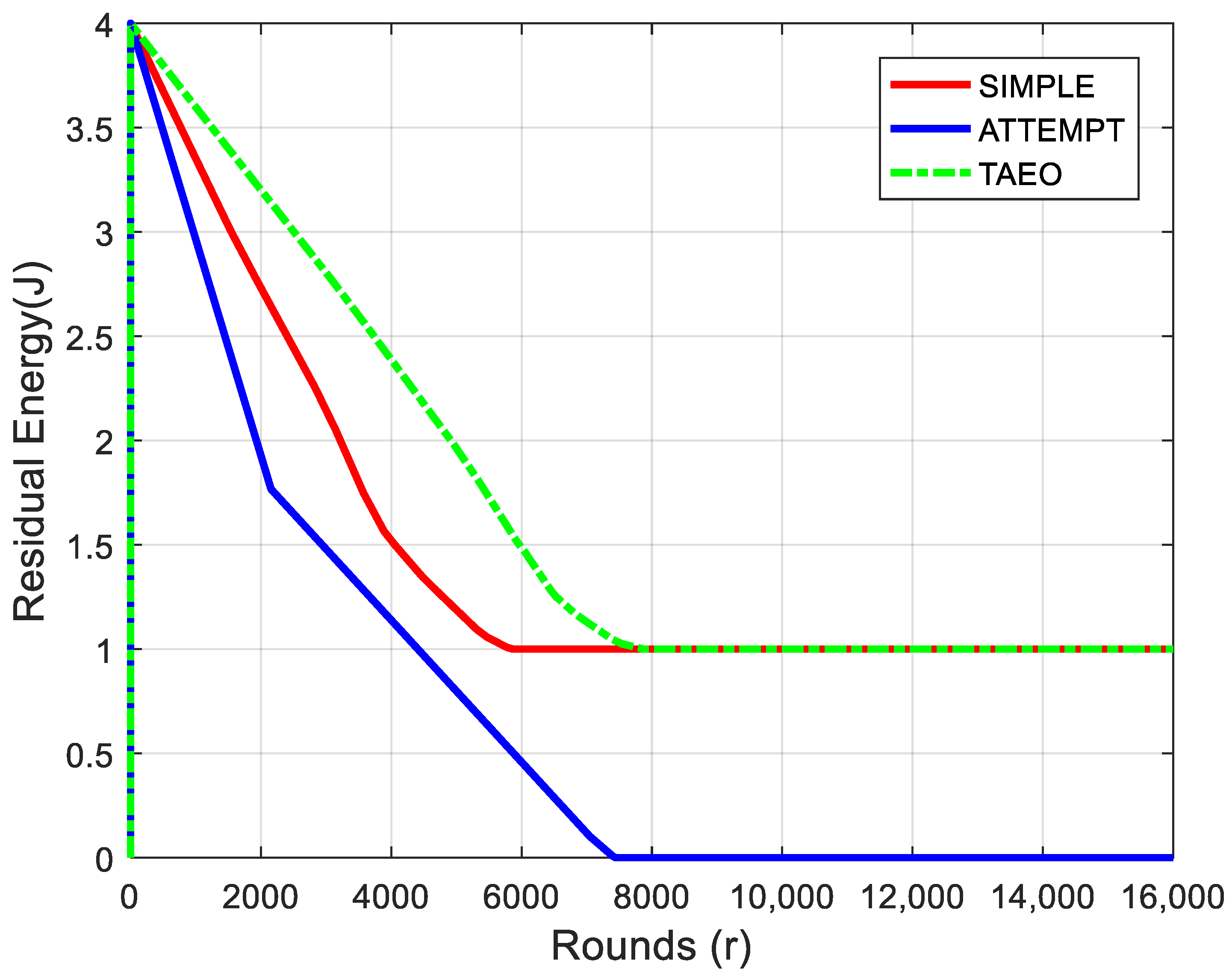
Improvement in stability period also depicts the optimum power consumption of nodes in each round, which is illustrated in Figure 4 under the caption of residual energy. The reason behind this improvement is the careful selection of DF and, more importantly, the use of multiple transmission power levels with respect to distance between nodes. The results in Figure 4 depict that, due to better stability period, the nodes of TAEO consume less energy and significant improvement is observed. Sensor nodes with underlying ATTEMPT lost more than half of its energy until 2000th round, whereas the proposed routing protocol utilized a similar amount of energy in approximately 6000 rounds and SIMPLE scheme until 4000 rounds.
Figure 4. Energy Utilization.

5.4. Throughput

Throughput is one of the major performance metrics in terms of routing protocols. Figure 5 shows that an average number of successful packets reached the sink. The optimized use of energy keeps the node alive for a longer period resulting in better throughput with respect to SIMPLE and ATTEMPT. Initially, until 6000 rounds, TAEO is not performing optimally in terms of throughput, as the proposed protocol tries to avoid heat generation due to rapid transmissions of nodes, however, after 6000 rounds, it performs better, as it was efficient in residual energy prolonging its network lifetime along with maximizing the number of packets reached at sink node, as can be seen in Figure 5.
Figure 5. Throughput Evaluation.

5.5. Thermal Dissipation

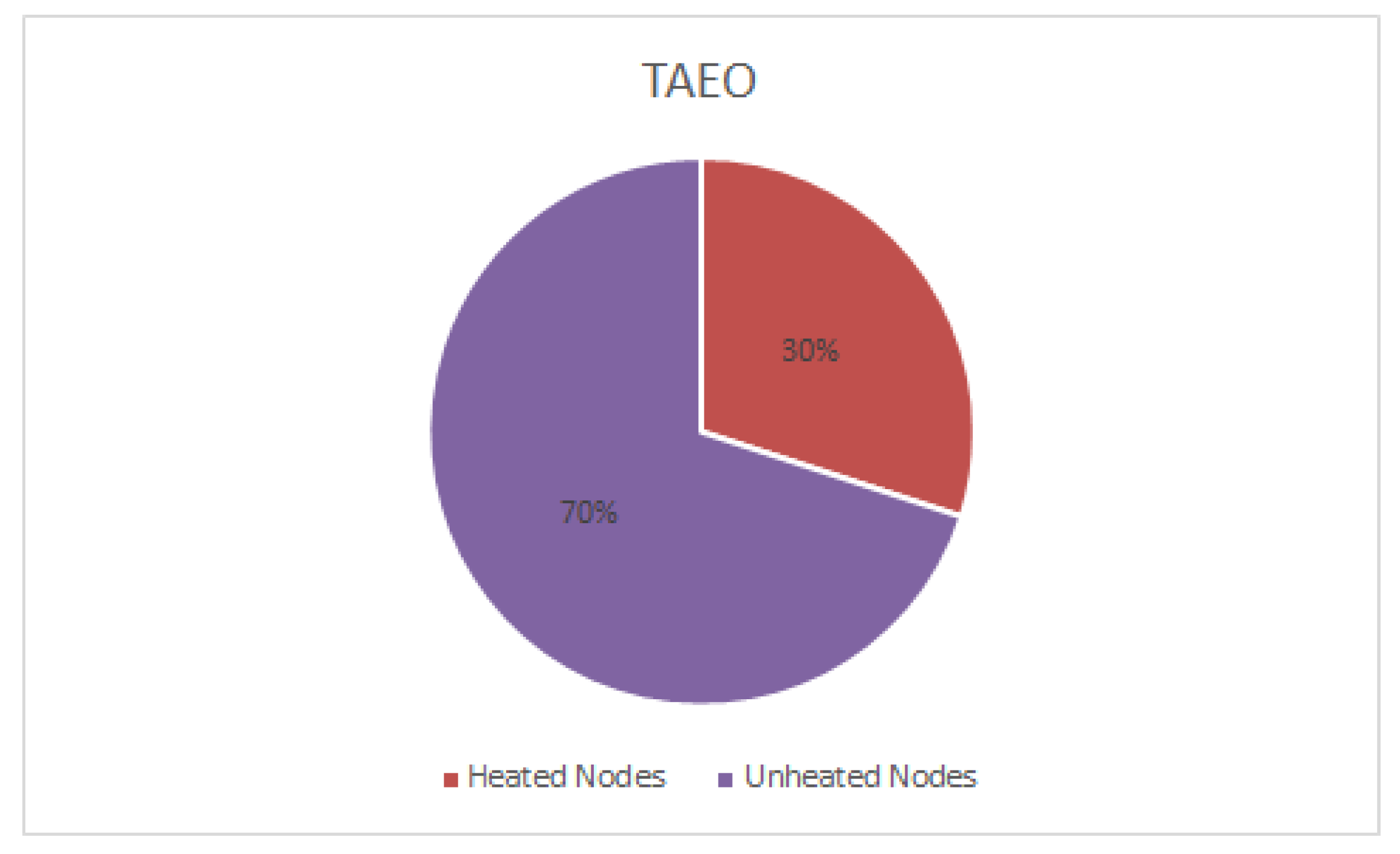
Figure 6 shows the ratio of the heated and unheated nodes after 16,000 rounds. The proposed protocol results in 70% saving i.e. only 30% of the total number of nodes become heated. Avoiding those implantable nodes in the routing path that have been heavily utilized and become heated does this. This is in contrast with the existing protocols, in which case 100% of the nodes become heated.
Figure 6. Heated Vs Unheated Nodes.

6. Conclusions

The proposed protocol, TAEO, is a thermal dissipation controlled and highly stable routing protocol for WBAN. The selection of DF is based on node’s heat value and residual energy. It has shown significant improvements in stability period and overall lifetime of the network. The detection of a hot spot node is carried out by estimating the temperature rise of a node in each round. In the case that the temperature exceeds the specified threshold, it suspends the node for the coming few rounds until its temperature is restored to normal. Varying the levels of energy and decision for the amount of energy required for transmission based on the distance between two nodes pursuing transmission also optimizes power consumption by a node. Our simulation results show that the optimum utilization of energy for transmission has significantly enhanced the overall network lifetime and throughput of the network.

Author Contributions

Conceptualization, M.J. and G.A.; methodology, G.A., M.R. and D.M.; software, M.J.; validation, M.J., G.A. and D.M.; formal analysis, M.R. and K.A.; investigation, M.R. and M.U.-R.; resources, M.R. and K.A.; data curation, K.A. and G.A.; writing—original draft preparation, M.J.; writing—review and editing, D.M., M.U.-R., G.A. and M.R.; visualization, M.R.

Conflicts of Interest

The authors declare no conflict of interest.

References

  1. Islam, S.U.; Ahmed, G.; Shahid, M.; Hassan, N.; Riaz, M.; Jan, H.; Shakeel, A. Implanted Wireless Body Area Networks: Energy Management, Specific Absorption Rate and Safety Aspects, 1st ed.; Elsevier Inc.: Amsterdam, The Netherlands, 2016. [Google Scholar]
  2. Movassaghi, S.; Abolhasan, M.; Lipman, J.; Smith, D.; Jamalipour, A. Wireless Body Area Networks: A Survey. IEEE Commun. Surv. Tutor. 2014, 16, 1658–1686. [Google Scholar] [CrossRef]
  3. Tang, Q.; Tummala, N.; Gupta, S.K.S. TARA: Thermal-Aware Routing Algorithm for Implanted Sensor Networks. In Proceedings of the International Conference on Distributed Computing in Sensor Systems, Marina del Rey, CA, USA, 30 June–1 July 2005; pp. 206–217. [Google Scholar]
  4. Zeinadini, L.; Ayatollahitafti, V.; Gandomi, A. Journal of Soft Computing and Decision Support Systems. Traffic Control Therm. Aware Routing Body Area Netw. 2017, 4, 17–22. [Google Scholar]
  5. Takahashi, D.; Xiao, Y.; Hu, F. LTRT: Least total-route temperature routing for embedded biomedical sensor networks. In Proceedings of the IEEE GLOBECOM 2007-IEEE Global Telecommunications Conference, Piscataway, NJ, USA, 25–27 November 2007; pp. 641–645. [Google Scholar]
  6. Bag, A. Medium Access Control Protocols and Routing Algorithms for Wireless Sensor Networks; University of Central Florida: Orlando, FL, USA, 2007. [Google Scholar]
  7. Tabandeh, M.; Jahed, M.; Ahourai, F.; Moradi, S. A thermal-aware shortest hop routing algorithm for in vivo biomedical sensor networks. In Proceedings of the Sixth International Conference on Information Technology: New Generations, Las Vegas, NV, USA, 27–29 April 2009; pp. 1612–1613. [Google Scholar]
  8. Javaid, N.; Abbas, Z.; Fareed, M.S.; Khan, Z.A.; Alrajeh, N. M-ATTEMPT: A new energy-efficient routing protocol for wireless body area sensor networks. Proced. Comput. Sci. 2013, 19, 224–231. [Google Scholar] [CrossRef]
  9. Movassaghi, S.; Abolhasan, M.; Lipman, J. Energy Efficient Thermal and Power Aware (ETPA) Routing in Body Area Networks. In Proceedings of the 2012 IEEE 23rd International Symposium on Personal, Indoor and Mobile Radio Communications-(PIMRC), Sydney, Australia, 9–12 September 2012; pp. 1108–1113. [Google Scholar]
  10. Hoque, A.K.M.F.; Hossain, M.S.; Mollah, A.S.; Akramuzzaman, M. A Study on Specific Absorption Rate (SAR) Due to Non-Ionizing Radiation from Wireless/Telecommunication in Bangladesh. Am. J. Phys. Appl. 2013, 1, 104. [Google Scholar] [CrossRef][Green Version]
  11. Wu, Y.R.; Chiang, H.; Shao, J.B.; Li, G.N.; Fu, D.Y. Effects of 2.45-GHz microwave radiation and phorbol ester 12-O-tetradecanoylphorbol-13-acetate on dimethylhydrazine-induced colon cancer in mice. Bioelectromagnetics. 1994, 15, 531–538. [Google Scholar] [CrossRef]
  12. Bag, A.; Bassiouni, M.A. Hotspot preventing routing algorithm for delay-sensitive applications of in vivo biomedical sensor networks. Inf. Fusion 2008, 93, 389–398. [Google Scholar] [CrossRef]
  13. Khan, R.A.; Mohammadani, K.H.; Soomro, A.A.; Hussain, J.; Khan, S.; Arain, T.H.; Zafar, H. An Energy Efficient Routing Protocol for Wireless Body Area Sensor Networks. Wirel. Pers. Commun. 2018, 99, 1443–1454. [Google Scholar] [CrossRef]
  14. Monowar, M.M.; Bajaber, F. Towards Differentiated Rate Control for Congestion and Hotspot Avoidance in Implantable Wireless Body Area Networks. IEEE Access 2017, 15, 10209–10221. [Google Scholar] [CrossRef]
  15. Bangash, J.I.; Abdullah, A.H.; Razzaque, M.A.; Khan, A.W. Critical Data Routing (CDR) for Intra Wireless Body Sensor Networks. Telkomnika 2015, 13, 181. [Google Scholar] [CrossRef][Green Version]
  16. Ahmad, A.; Javaid, N.; Qasim, U.; Ishfaq, M.; Khan, Z.A.; Alghamdi, T.A. Alghamdi, Re-attempt: A new energy-efficient routing protocol for wireless body area sensor networks. Int. J. Distrib. Sens. Netw. 2014, 10, 464010. [Google Scholar] [CrossRef]
  17. Rafatkhah, O.; Lighvan, M.Z. A Novel Multi-hop Routing Protocol for Wireless Body Sensor Networks. Int. J. Comput. Netw. Commun. Secur. 2014, 2, 260–267. [Google Scholar]
  18. Kathe, K.S.; Deshpande, U.A. A Thermal Aware Routing Algorithm for a Wireless Body Area Network. Wirel. Pers. Commun. 2019, 2, 1–28. [Google Scholar] [CrossRef]
  19. Jamil, F.; Iqbal, M.; Amin, R.; Kim, D. Adaptive Thermal-Aware Routing Protocol for Wireless Body Area Network. Electronics 2019, 8, 47. [Google Scholar] [CrossRef]
  20. Jain, S.; Singh, A. Temperature-Aware Routing Using Secondary Sink in Wireless Body Area Sensor Network. Int. J. E-Health Med. Commun. 2018, 9, 38–58. [Google Scholar] [CrossRef]
  21. Manzoor, B.; Javaid, N.; Bibi, A.; Khan, Z.A.; Tahir, M. Noise Filtering, Channel Modeling and Energy Utilization in Wireless Body Area Networks. In Proceedings of the 2012 IEEE 14th International Conference on High Performance Computing and Communication & 2012 IEEE 9th International Conference on Embedded Software and Systems, Liverpool, UK, 25–27 June 2012. [Google Scholar]
  22. Chan, K.; Cleveland, R.; Means, D. Evaluating Compliance with FCC Guidelines for Human Exposure to Radiofrequency Electromagnetic Fields; FCC OET Bull. 65: Washington, DC, USA, 1997. Available online: https://transition.fcc.gov/bureaus/oet/info/documents/bulletins/oet65/oet65a.pdf (accessed on 17 May 2019).
  23. Aly, A.A.; Piket-May, M. FDTD Computation for Sar Induced in Human Head Due to Exposure to EMF from Mobile Phone. Adv. Comput. Int. J. 2014, 5, 1–12. [Google Scholar] [CrossRef]
  24. Bhangwar, A.R.; Kumar, P.; Ahmed, A.; Channa, M.I. Trust and Thermal Aware Routing Protocol (TTRP) for Wireless Body Area Networks. Wirel. Pers. Commun. 2017, 97, 349–364. [Google Scholar] [CrossRef]
  25. Oey, C.H.W.; Moh, S. A Survey on Temperature-Aware Routing Protocols in Wireless Body Sensor Networks. Sensors 2008, 13, 9860–9877. [Google Scholar] [CrossRef] [PubMed]
  26. International Electrotechnical Commission (IEC). Medical Electrical Equipment, Part 2-33: Particular Requirement for the Safety of Magnetic Resonance Systems for Medical Diagnosis, Tech. Rep. 60601–2–33; IEC: Geneva, Switzerland, 2002. [Google Scholar]
  27. Hirata, A.; Ushio, G.; Shiozawa, T. Calculation of Temperature Rises in the Human Eye for Exposure to EM Waves in the ISM Frequency Bands. IEICE Trans. Commun. 2005, 3, 541–548. [Google Scholar]
  28. Bernardi, P.; Cavagnaro, M.; Pisa, S.; Piuzzi, E. SAR Distribution and Temperature Increase in an Anatomical Model of the Human Eye Exposed to the Field Radiated by the User Antenna in a Wireless LAN. IEEE Trans. Microw. Theory Tech. 2008, 46, 2074–2082. [Google Scholar] [CrossRef]
  29. Scott, J.A. The Computation of Temperature Rises in the Human Eye Induced by Infrared Radiation. Phys. Med. Biol. 1988, 33, 243–257. [Google Scholar] [CrossRef]
  30. Lazzi, G. Thermal Effects of Bioimplants. IEEE Eng. Med. Biol. 2005, 24, 75–81. [Google Scholar] [CrossRef]
  31. Vecchia, P.; Matthes, R.; Ziegelberger, G.; Lin, J.; Saunders, R.; Swerdlow, A. Exposure to high frequency electromagnetic fields, biological effects and health consequences (100 kHz–300 GHz). Int. Commun. Non-Ioniz. Radiat. Prot. 2009, 97, 257–258. [Google Scholar]
  32. Nadeem, Q.; Javaid, N.; Mohammad, S.N.; Khan, M.Y.; Sarfraz, S.; Gull, M. SIMPLE: Stable increased-throughput multi-hop protocol for link efficiency in Wireless Body Area Networks. In Proceedings of the 2013 Eighth International Conference on Broadband and Wireless Computing, Communication and Applications, Compiegne, France, 28–30 October 2013; pp. 221–226. [Google Scholar]
  33. Wang, Z.; Lin, J.C.; Mao, W.; Liu, W.; Smith, M.B.; Collins, C.M. SAR and Temperature: Simulations and Comparison to Regulatory Limits for MRI. J. Magn. Reson. Imaging 2007, 26, 437–441. [Google Scholar]

Article Metrics

Citations

Article Access Statistics

Multiple requests from the same IP address are counted as one view.