Abstract
To solve the unavailability of a traditional strapdown inertial navigation system (SINS) for unmanned underwater vehicles (UUVs) in the polar region, a polar grid navigation algorithm for UUVs is proposed in this paper. Precise navigation is the basis for UUVs to complete missions. The rapid convergence of Earth meridians and the serious polar environment make it difficult to establish the true heading of the UUV at a particular instant. Traditional SINS and traditional representation of position are not suitable in the polar region. Due to the restrictions of the complex underwater conditions in the polar region, a SINS based on the grid frame with the assistance of the OCTANS and the Doppler velocity log (DVL) is chosen for a UUV navigating in the polar region. Data fusion of the integrated navigation system is realized by a modified fuzzy adaptive Kalman filter (MFAKF). By neglecting the negative terms, and using T-S fuzzy logic in the adaptive regulation of the noise covariance, the proposed filter algorithm can improve navigation accuracy. Simulation and experimental results demonstrate that the polar grid navigation algorithm can effectively navigate a UUV sailing in the polar region.
1. Introduction
Unmanned underwater vehicles (UUVs) have been widely used in underwater resource exploration, military reconnaissance, marine surveying, and marine mapping [1,2]. Without the operation of humans, UUVs can carry out the missions autonomously. With the rapid development of underwater navigation technology, humans can explore polar underwater resources through UUVs.
Precise navigation is the premise and basis for UUV sailing. A large number of navigation algorithms have been proposed for UUVs. According to the principle, UUV navigation can be divided into acoustic navigation, visual navigation, inertial navigation, radio navigation, satellite navigation, and so on. Inertial navigation is the most widely used because of its high autonomy. Filtering methods are another important factor that affects navigation accuracy. Filters are widely used in data fusion, such as the Kalman filter (KF), extended Kalman filter (EKF) [3,4], unscented Kalman filter (UKF) [5], and adaptive Kalman filter (AKF). A number of successful tests have also been conducted on these navigation strategies, such as the off-line verification of the UKF-based navigation algorithm for the Typhoon AUV [6]. Cooperative navigation is an effective strategy for efficiently performing tasks while reducing costs. It is also a significant approach for solving the navigation problem in middle-depth of underwater conditions [7]. Algorithms proposed to realize the cooperative navigation include tetrahedral configuration [8], measurement distribution framework [9], and so on. Scholars have done a great deal of research for UUV navigating in the non-polar region and have made a large number of encouraging achievements.
Different from the navigation in the non-polar areas [10], some common navigation methods cannot be applied in the polar region. There are restrictions from the serious environment and the complex underwater conditions in the polar region. As radio signals cannot be spread underwater, Global Positioning System (GPS) is unavailable for UUVs. Meanwhile, the rapid convergence of Earth meridians makes it difficult to establish the true heading of the UUV in the polar region [11]. Therefore, a strapdown inertial navigation system (SINS), which is highly autonomous and stable, becomes the first choice for UUV navigating in the polar region [12]. However, there are some difficulties in the application of the traditional north-oriented SINS algorithm in the polar region, such as calculation overflow and errors increasing sharply. Due to the rapid convergence of Earth meridians, small measurement errors would lead to significant calculation errors. To solve these problems, a transversal SINS algorithm is proposed to replace the traditional SINS algorithm in the polar region [13]. Although a system reset is used to restrain the error drifts, there are principle errors in the transversal SINS algorithm. The transversal SINS ignores the ellipse of the Earth.
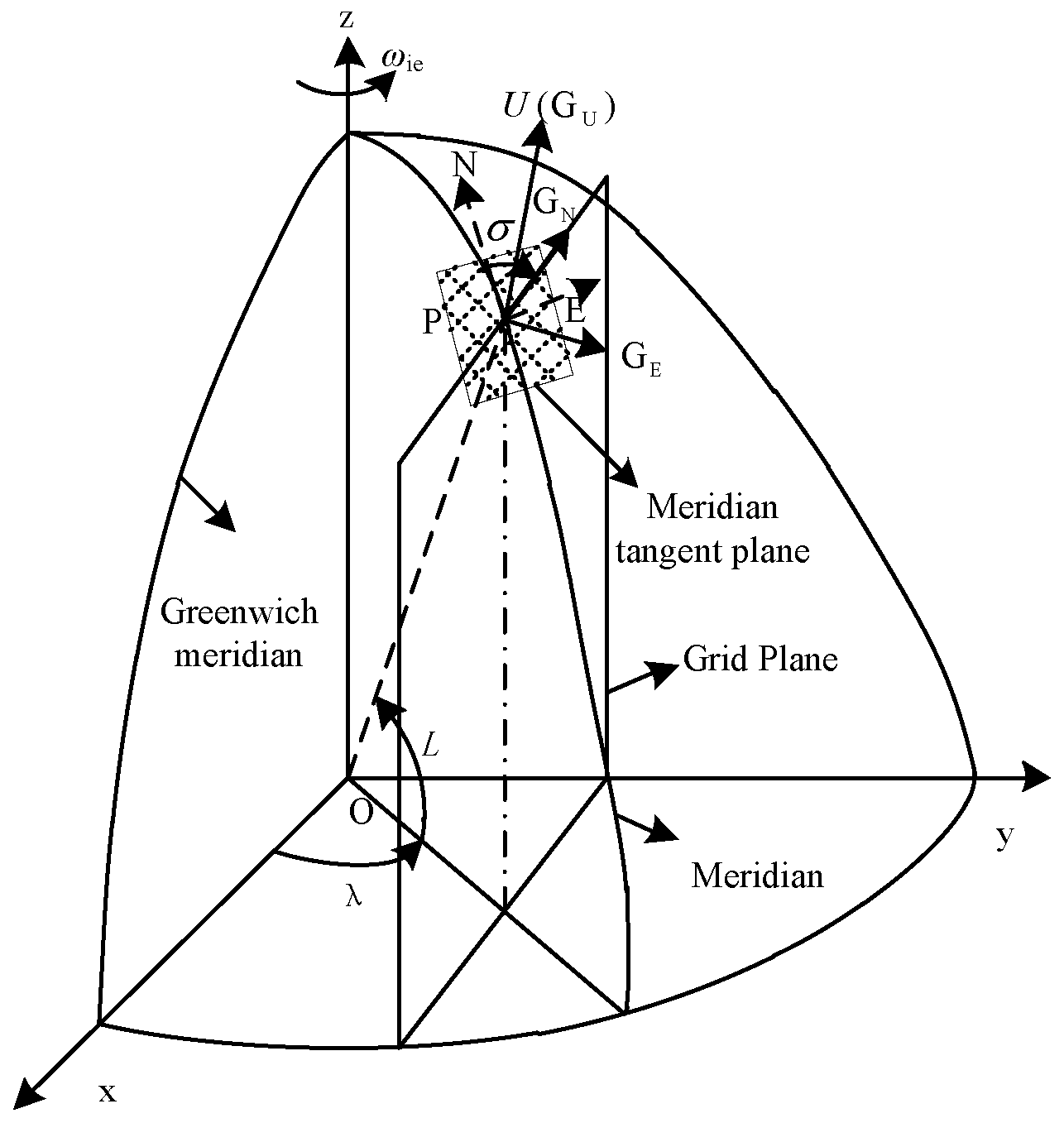
Therefore, it is important to choose an available form of SINS for UUVs navigating in the polar region. The polar grid navigation algorithm, which has already helped large aircraft flying though the polar region [14], is the best choice. Selecting the Greenwich meridian as the reference line, the polar grid navigation algorithm can solve the problems caused by the meridians’ convergence [15]. The definition of the grid frame has been given in [16,17] briefly. However, the detailed definition and the derivation of the SINS are not proposed in these papers. The error of approximating a large circle to a straight line in the grid frame is discussed in [18]. The attitude differential equation based on the grid frame is derived in [19]. Although some aspects of the navigation algorithm based on the grid frame are analyzed in the above papers, the complete error model and the filter model are not established. Additionally, these papers did not combine with the specific objects and some specific characters were not taken into consideration. Only in [14,20] was the navigation algorithm based on the grid frame combined with a large aircraft. Different from the flight environment of large aircraft, which has high speed, high precision, and auxiliary forms of a variety of external information, the underwater environment of the UUV is more complex with a lack of radio signal, low visibility, and high requirements of concealment. This navigation algorithm cannot be used on UUVs directly. Humans can help to make decisions during aircraft flights, while UUVs sail alone without the help of humans. The underwater environment is more complex than that of air. For example, large aircraft are affected by wind while UUVs are affected by ocean waves, ocean currents, etc. Therefore, an integrated navigation algorithm is needed to improve the navigation accuracy. Based on the analysis above, the polar grid navigation algorithm for UUVs is proposed considering the underwater environment and the characters of UUV.
In order to improve the navigation accuracy, the OCTANS and the Doppler velocity log (DVL) are chosen as the assistants for the long-endurance navigation of UUVs in the polar region. Combined with the SINS, a SINS/OCTANS/DVL integrated navigation system is constituted. Meanwhile, data fusion of the integrated navigation system is realized by a modified fuzzy adaptive Kalman filter (MFAKF).
In this paper, a polar grid navigation algorithm for UUVs is proposed. Based on the grid frame, the SINS is used for navigating the UUV in the polar region. With the assistance of the OCTANS and DVL, a SINS/OCTANS/DVL integrated navigation system is established. The main contribution of this paper is the derivation of the complete error model and filter model of the polar grid navigation based on the characters of the UUV and the proposed modified AKF to improve the navigation accuracy of the UUV. The following sections are arranged as follows: Error equations and filter models are deduced in Section 2 and Section 3, respectively; In Section 4, a modified fuzzy adaptive Kalman filter is proposed; The results of simulations and experiments are expressed in Section 5; In Section 6, the results and error sources are discussed; Finally, the conclusions are drawn in Section 7.
5. Simulations and Experimental Results
Simulations and experiments are conducted not only to verify the effectiveness of the polar grid navigation for the UUV, but also to verify the accuracy improvement of MFAKF compared with AKF. For a simplification of illustration, the SINS/OCTANS/DVL integrated navigation system is labelled as SODINS.
5.1. Simulation Results and Analysis
To verify the effectiveness of the proposed algorithm, simulations are realized in the following conditions: Simulation time is 12 h and the filtering period is 0.1 s. The initial position of UUV, including latitude L and longitude λ, are set as 80° and 126°, respectively.
Sine functions are used to describe the attitudes of the UUV, which include pitch angle, roll angle, and yaw angle. The amplitude of pitch angle, roll angle, and yaw angle are 4°, 5° and 3°, respectively. The period of these angles is 3 s 5 s, and 7 s, respectively. The initial phase of these angles is 0°, 0° and 0°, respectively. The actual misalignment angles are 0°, 0° and 0°, respectively.
The gyro drifts and the accelerometer bias are the two main error sources of SINS [29]. The gyro bias is composed of the gyro constant drifts and the gyro random drifts, which are set as and , respectively. The accelerometer bias is composed of the accelerometer constant bias and the accelerometer random bias, which are set as and , respectively.
The initial conditions of the OCTANS and DVL are set as follows: The gyro constant drifts of OCTANS are set as 0.01°/h and the random drifts are set as . The velocity random drifts of DVL are set as , the correlation time of is set as and the scale factor error is set as . To simplify the simulation and for the purpose of this paper, the constant errors of the OCTANS and DVL are assumed to be well compensated, the random errors are assumed well modeled, and white noises are used to describe the measurement noises of the OCTANS and DVL.
The initial state estimation covariance , system noise covariance , and measurement noise covariance are set shown below.
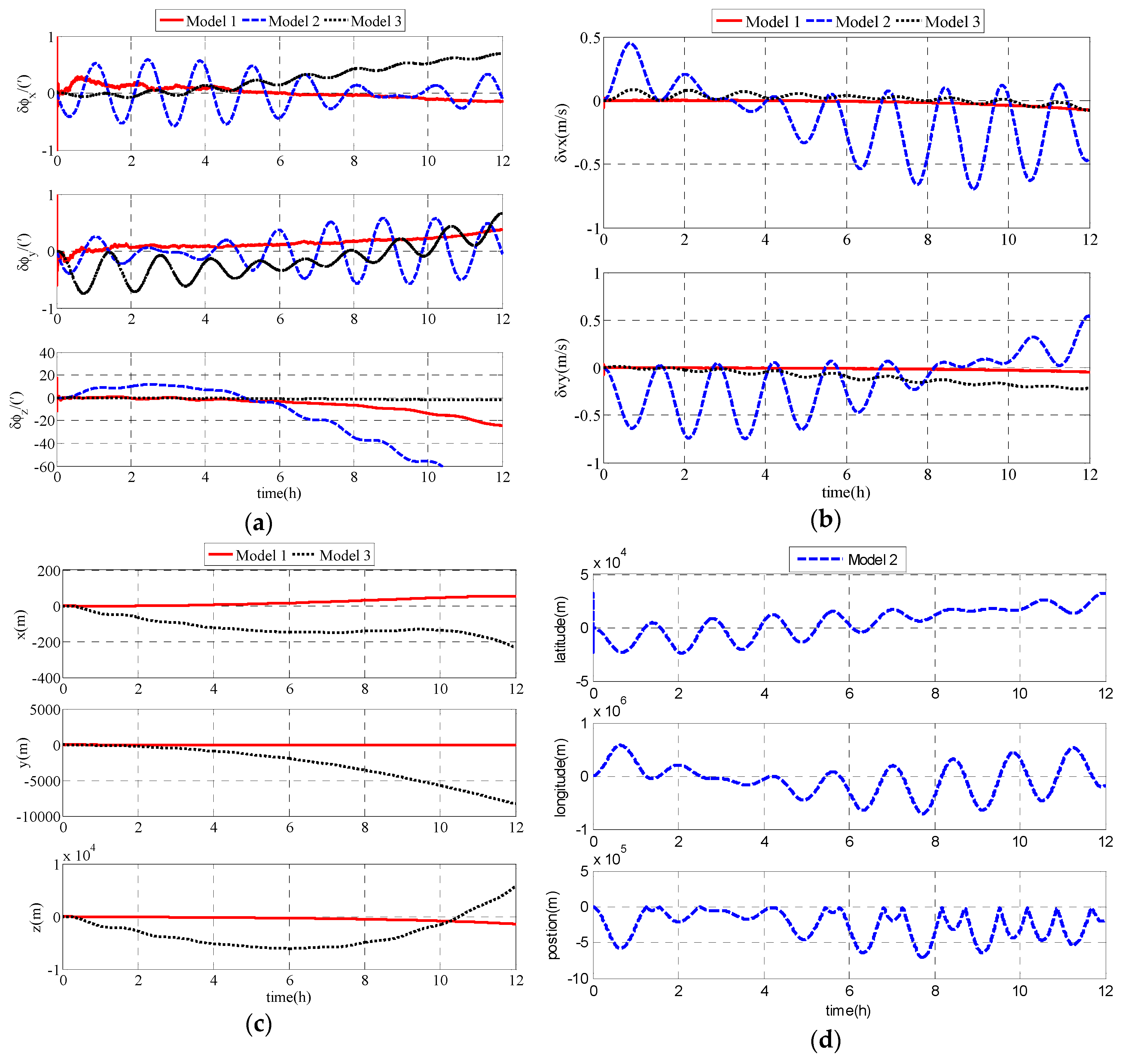
To verify the effective of the polar grid navigation, Model 2 and Model 3 are chosen as the comparative models. They all based on traditional SINS. However, different frames are chosen as the navigation frames in these models. Different from Model 2, the traditional frame is chosen as the navigation frame, the frame is chosen as the navigation frame in Model 1, and transversal frame is chosen as the navigation frame in Model 3. The computational time and the memory consumption of the proposed polar grid navigation algorithm are 12327.269780 s and 2164 MB (54%), respectively. The simulation results can be expressed as shown below.
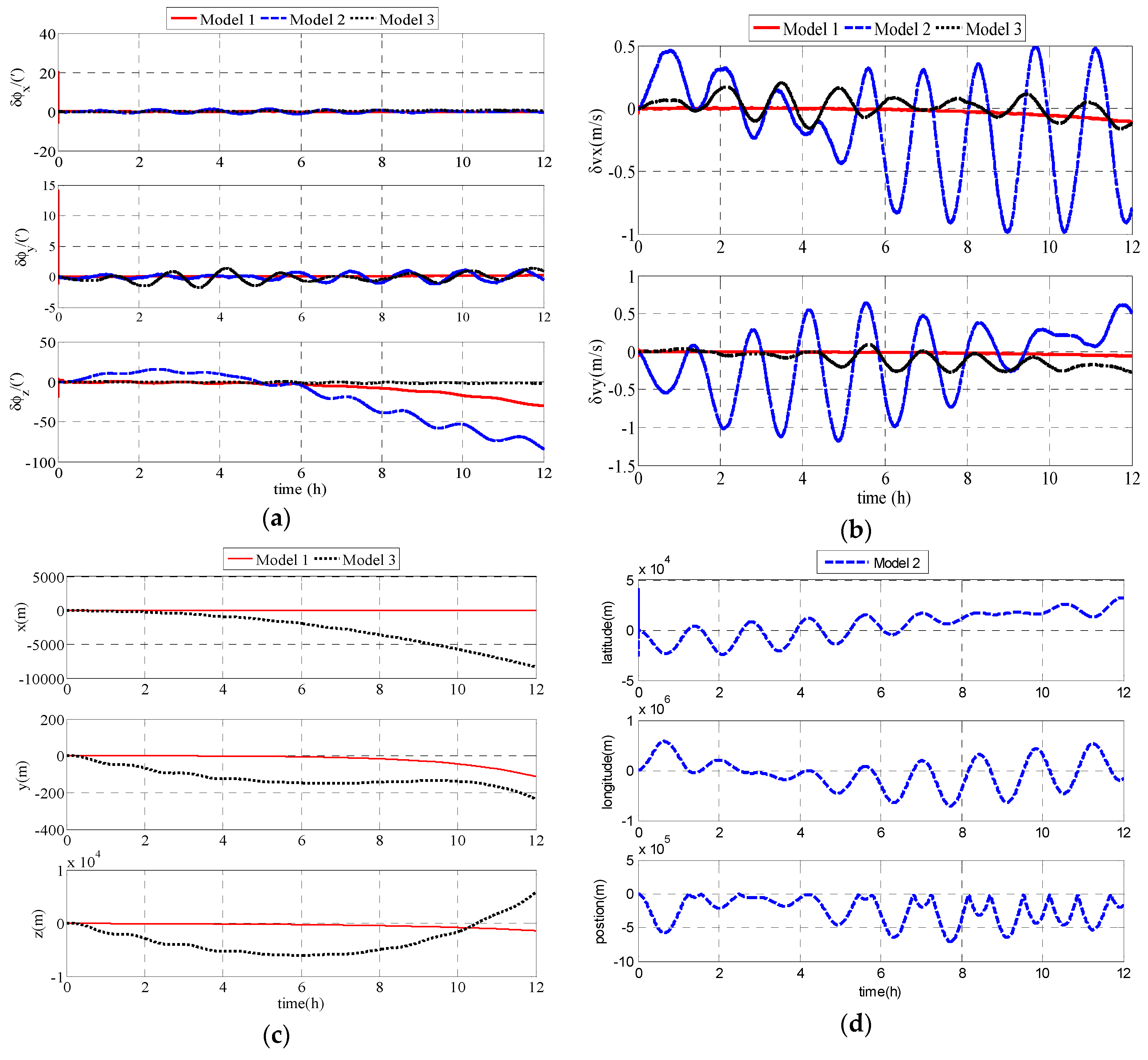
The coordinate in frame describes the position in Model 1. Latitude and longitude describe the position in Model 2. Considering the different expressions of position in Model 1 and Model 2, Figure 5c,d are used to express the position errors, respectively. As shown in Figure 5, compared with Model 2, Model 1 and Model 3 exhibit more accurate performances, and Model 1 is superior to Model 3 in accuracy. Therefore, Model 1 can be effectively used in the polar region.
Figure 5.
Simulation results: (a) attitude errors of the unmanned underwater vehicles (UUV); (b) velocity errors of the UUV; (c) position errors of Model 1; (d) position errors of Model 2.
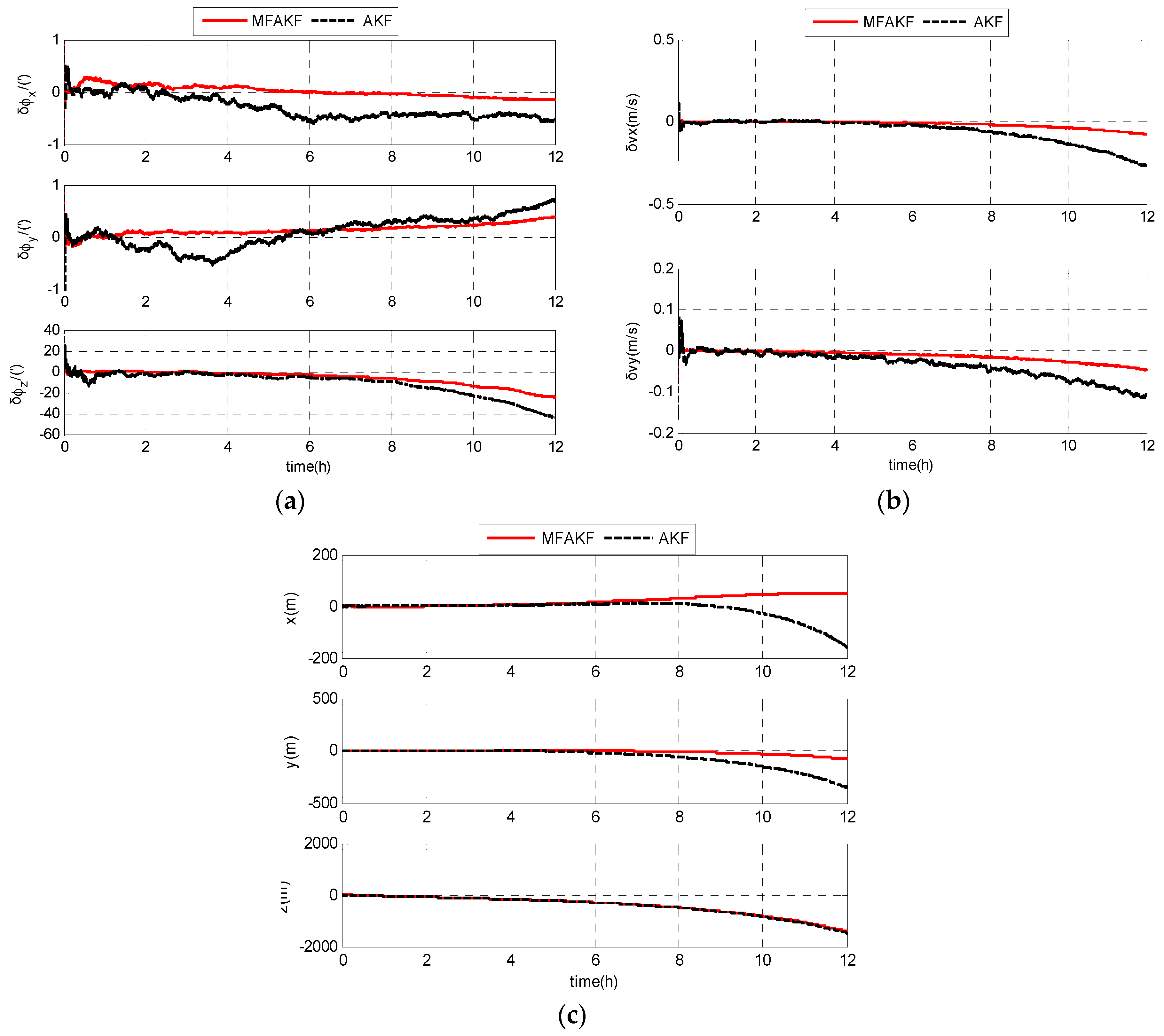
In order to facilitate comparative analysis, the filter model and the simulation condition are the same for MFAKF and AKF. The estimation errors of SODINS based on MFAKF and KF can be expressed as shown below.
As shown in Figure 6, the estimation errors of MFAKF is smaller than that of the KF. MFAKF shows better performance than AKF. The RMS estimation errors of SODINS based on MFAKF and KF are shown in Table 1, respectively.
Figure 6.
Simulation results of SODINS based on MFAKF and AKF: (a) estimation errors of attitude; (b) estimation errors of velocity; and (c) estimation errors of position.
Table 1.
RMS errors of SODINS in the simulation.
From Table 1, the RMS estimation errors of attitude, velocity, and position based on MFAKF are less than 9.0768’, 0.0256 m/s, and 556.3639 m, respectively. The RMS estimation errors of attitude, velocity, and position based on AKF are less than 14.3786’, 0.0912 m/s, and 573.4550 m, respectively. The results indicate that MFAKF is superior to AKF in the estimation of navigation errors.
5.2. Experimental Results and Analysis
With the restriction of the geography, experimental results can be obtained from the semi-physical simulation. The experiment was conducted in non-polar areas, and the measured data is supplied by the IMU. The experimental data in the polar region is composed of the practical measured data and the simulated data. The experimental data includes the angular velocity and special force in the polar region. The angular velocity in the polar region is composed of the true angular velocity and the accelerometer bias . Similarly, the special force is composed of the true special force and the gyro drifts .
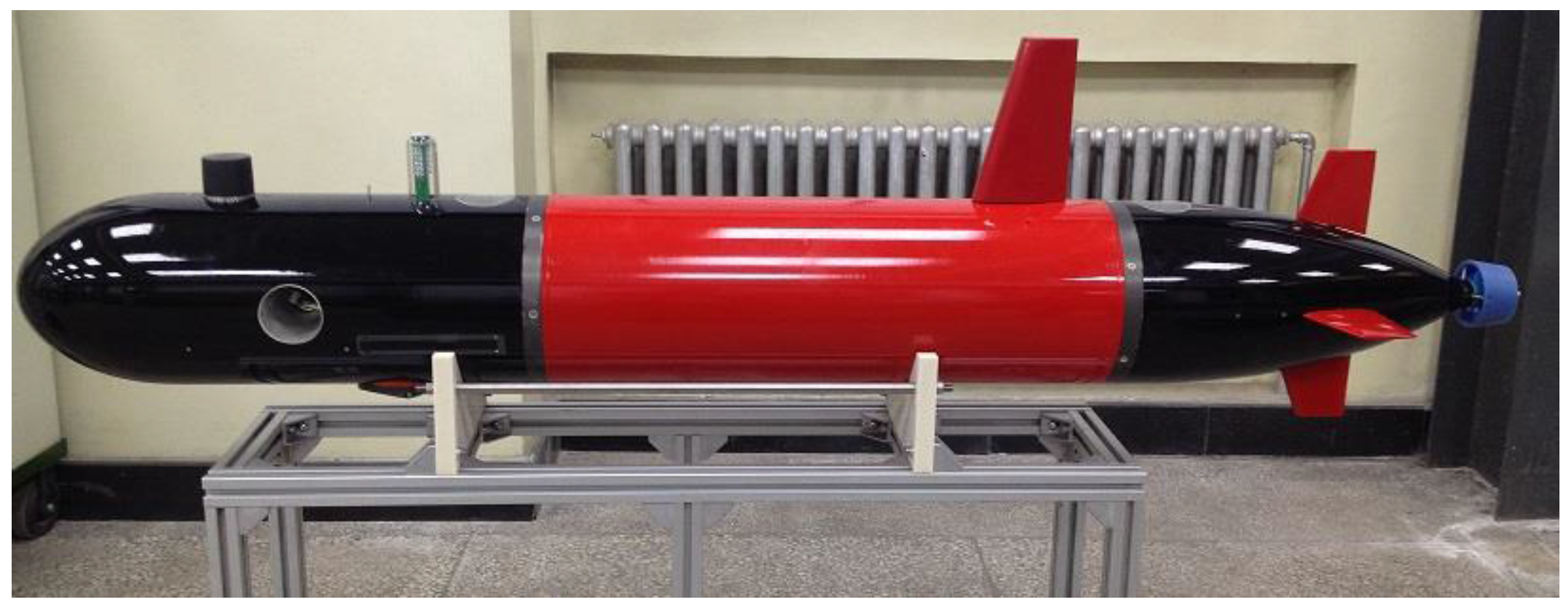
The true values of the angular velocity and the special force can be supplied by the simulation. Meanwhile, gyro drifts and accelerometer bias can be extracted from the practical measured data. Therefore, the practical measured data and the simulated data constitute the experimental IMU data in the polar region. The practical measured data is provided by IMU in the UUV as shown in Figure 7.
Figure 7.
Unmanned underwater vehicle (UUV).
This UUV is built by our laboratory. One main rear propeller and three thrusters (including one lateral thruster and two vertical thrusters), one rudder, and one elevator realize the motion control cooperatively. The mission control is realized by the mission control computer. The sensors that we are most concerned with in this paper include the inertial measurement unit (IMU), doppler velocity log (DVL), OCTANS, depth sensor, Global Positioning System (GPS), underwater camera, and sonar. In these sensors, IMU, OCTANS, and DVL play a major role in this paper, while the other sensors are not covered in this paper. The experiment was carried out in a rectangular pool located at the non-polar region (N45°46′ E126°40′). The UUV is ordered to finish the uniform liner motion with a velocity of 1 kn. According to the data collected from the experiment, the gyro drifts and the accelerometer bias can be calculated.
The gyro drifts and the accelerometer bias can be extracted from the practical measured data. The gyro constant drifts are ; the gyro random drifts are , and , respectively; the accelerometer constant bias is ; and the accelerometer random biases are , and , respectively.
The semi-physical simulation was conducted in non-polar areas to overcome the restriction of the geography. Similar with the true values of the angular velocity and the special force of UUV which are supplied by simulation, the signal of the OCTANS and DVL are also provided by the simulation. Based on the characters of the OCTANS and DVL, the relevant parameters of them are set as follows: The OCTANS gyro constant drifts and the gyro random drifts are set as and , respectively. The DVL random velocity drifts, the correlation time of , and the scale factor error are set as and , respectively. To simplify the experiment and for the purpose of this paper, the constant errors of the OCTANS and DVL are assumed to be well compensated, the random errors are assumed to be well modeled, and white noise is used to describe the measurement noises of the OCTANS and DVL. Relevant parameters in experiment are the same with those in simulation. In experiment, errors and estimation errors of UUV are also expressed to verify the effectively of the polar grid navigation algorithm.
As shown in Figure 8, Model 1 is superior to Model 2 and Model 3 in accuracy. The experimental results demonstrate that Model 1 and Model 3 can overcome the problems in Model 2 and Model 1 has better performance than Model 3.
Figure 8.
Experimental results: (a) attitude errors of the UUV; (b) velocity errors of the UUV; (c) position errors of Model 1; and (d) position errors of Model 2.
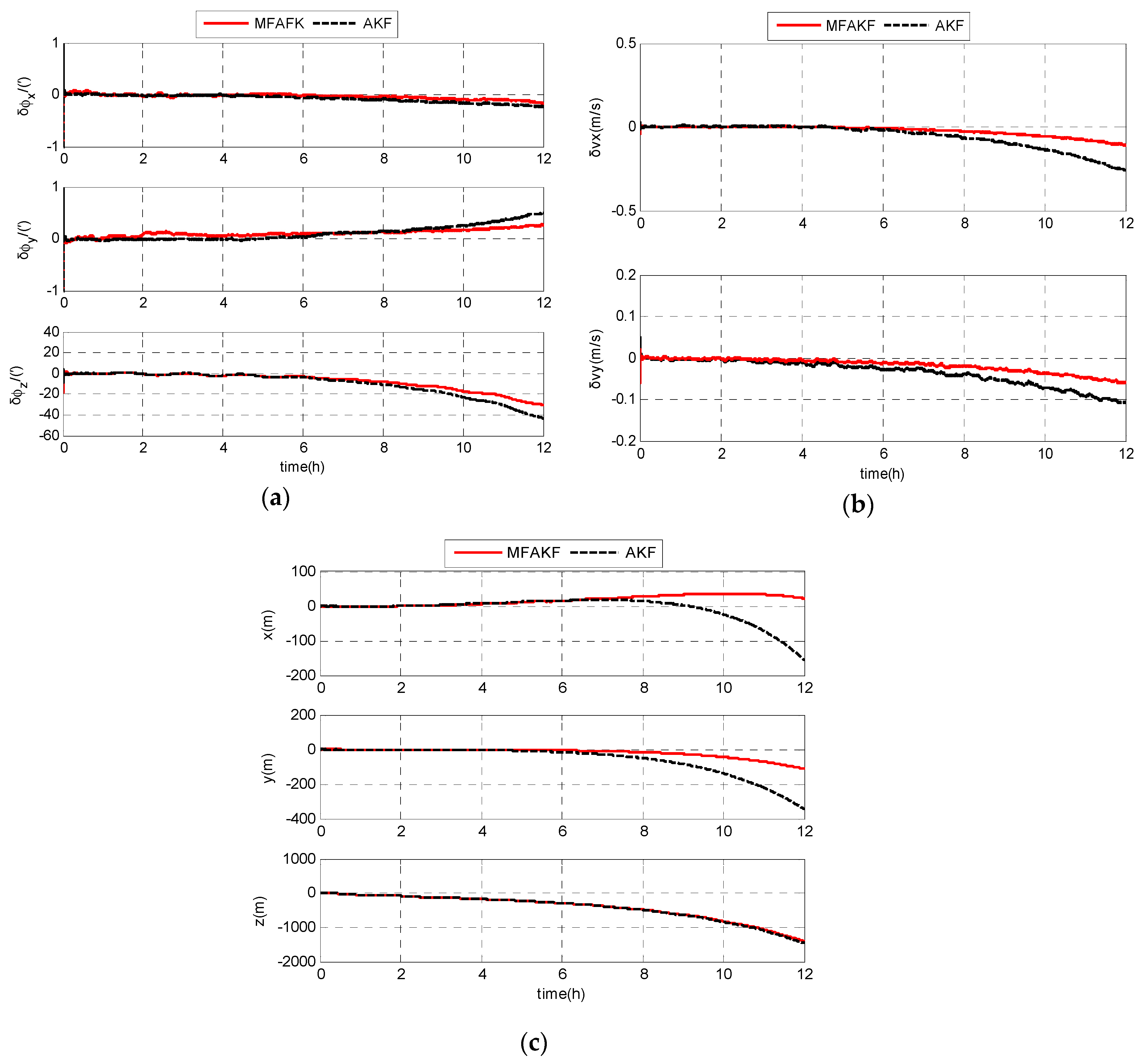
The comparative analysis between MFAKF and AKF in experiment can be expressed as follows.
As shown in Figure 9, MFAKF exhibits better navigation accuracy than AKF. The RMS estimation errors of SODINS based on MFAKF and KF are shown in Table 2, respectively.
Figure 9.
Experimental results of SODINS based on MFAKF and AKF: (a) estimation errors of attitude; (b) estimation errors of velocity; and (c) estimation errors of position.
Table 2.
RMS errors of SODINS in the experiment.
From Table 2, RMS estimation errors of the attitude, velocity and position based on MFAKF are less than 11.0893’, and 551.6560 m, respectively. The RMS estimation errors of attitude, velocity, and position based on AKF are less than 15.1294’, and 556.5706 m, respectively. Therefore, the navigation accuracy of SODINS based on MFAKF is better than that based on AKF.
6. Discussion
Simulation and experiment results demonstrate that the proposed polar grid navigation can be effectively used on a UUV in the polar region. The comparison between MFAKF and AKF show that the proposed filter algorithm is superior to AKF. To facilitate comparative discussions, the dynamic model of a UUV and the simulation conditions are the same for both MFAKF and AKF. The comparisons among Model 1, Model 2, and Model 3 demonstrate the effectiveness of the polar grid navigation, which can be expressed as shown below. Additionally, compared with the traditional AKF, the advantages of MFAKF are also concluded as follows:
- SINS is widely used in UUV navigation because of its high autonomy. Model 2 is the typical SINS model for UUVs. It is a general model of SINS and can achieve a navigation accuracy that meets the requirements of UUVs in non-polar regions. While in the polar region, due to the rapid convergence of Earth meridians, there exist calculation overflows and sharply increasing errors in Model 2, in which the geographic frame is chosen as the navigation frame. This is because the error of the upside component of the command angular velocity is related to the tangent value of latitude in traditional SINS. In the polar region, the latitude tends to 90° and the error tends to infinity. Therefore, the geographic frame is not suitable to be chosen as the navigation frame in the polar region. To overcome the problems in the traditional SINS (Model 2) in the polar region, the transversal SINS (Model 3) and polar grid SINS (Model 1) are proposed. The transversal geographic frame and grid frame are chosen as the navigation frame to modify the unsuitability of the traditional SINS, respectively. Although the transversal SINS (Model 3) can realize navigation in the polar region, there are principle errors in the transversal SINS algorithm. The transversal SINS ignores the ellipse of the Earth. Model 1, based on the grid frame, is proposed to overcome the influence caused by the meridians’ convergence in high latitude areas. In the grid frame, the grid planes are parallel with the Greenwich plane. The polar region is the normal region in the polar grid navigation algorithm. There is no impact on the polar grid navigation. Simulation and experiment results also demonstrate that Model 1 is superior to Model 2 and Model 3 in accuracy. The polar grid navigation of UUVs proposed in this paper (Model 1) is suitable for UUV navigating in the polar region.
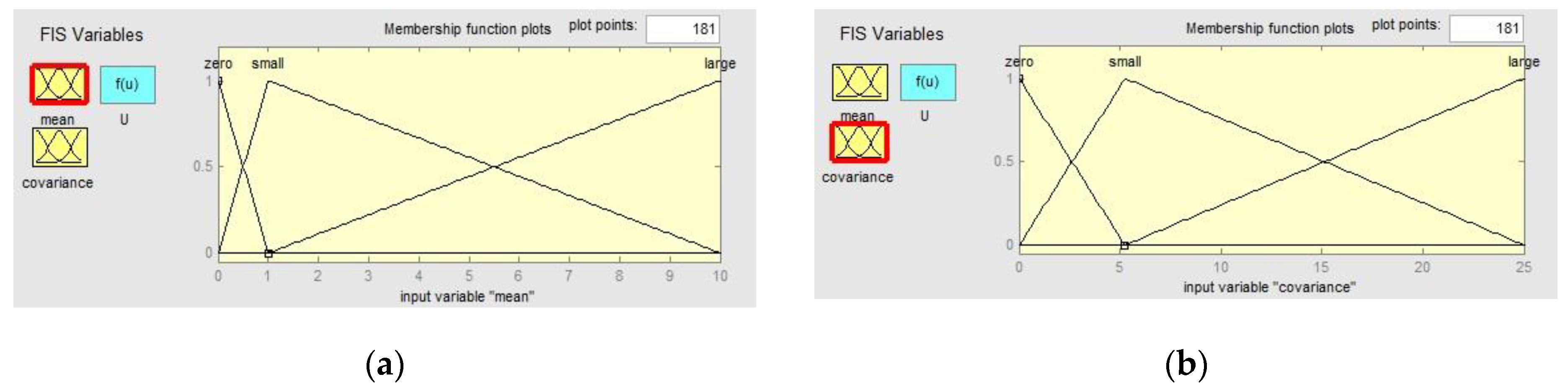
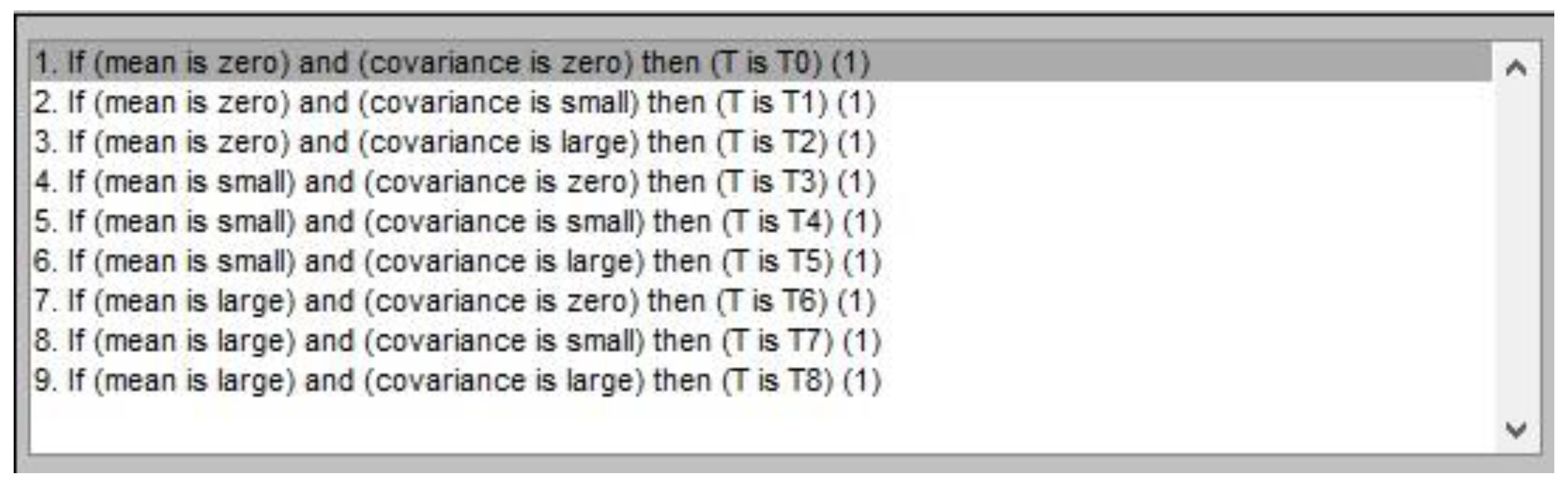
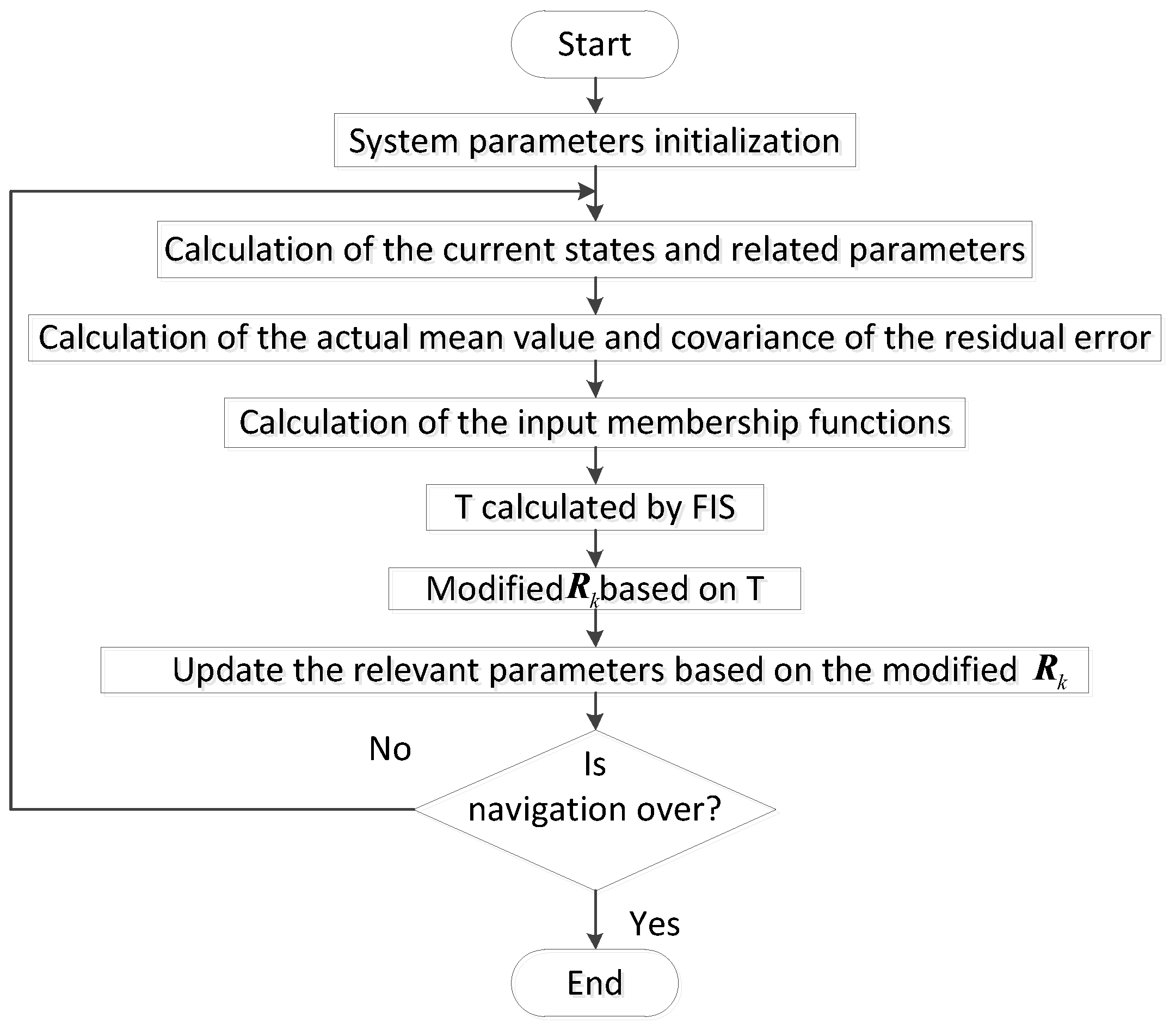
- Ignoring the negative terms can not only simplify the filter but can also keep the positive definiteness of the filter. T-S fuzzy logic regulates the residual error close to zero. The covariance is also regulated by FIS to adjust the changing of the environment. The adaptive Kalman filter will achieve the optimal state though the covariance modified by FIS. MFAKF can adjust the changing of the environment. Therefore, MFAKF is superior to AKF in estimating the states of filter.
Based on the analysis above, Model 1 and MFAKF have the better performance than Model 2, 3, and AKF in the polar region. Therefore, the proposed polar grid navigation for UUV can be used in the polar region effectively.
7. Conclusions
A polar grid navigation algorithm for UUV is proposed to overcome the unavailability of traditional UUV navigation in polar regions. Considering the complex polar underwater environment and the motion characteristics of UUVs, SINS based on the grid frame with the assistance of OCTANS and DVL is chosen for UUV polar navigation. A modified fuzzy adaptive Kalman filter is used to improve the navigation accuracy. Simulation and experiment results have proven that the proposed polar grid navigation of a UUV can be effectively used in the polar region, and the proposed modified fuzzy adaptive Kalman filter can achieve better accuracy than AKF.
Acknowledgments
This work was partially funded by the National Nature Science Foundation of China under grant no. 51679057, no. 51609048, no. 51309067, Science Foundation for Distinguished Young Scholars of Heilongjiang Province of China under grant no. J2016JQ0052, and the Harbin Science and Technology Bureau of China under grant no. 2016RAQXJ080. The authors would like to thank all the the editors and anonymous reviewers for improving this article.
Author Contributions
Zheping Yan and Lu Wang conceived and designed the experiments; Wei Zhang performed the experiments; Jiajia Zhou and Man Wang analyzed the data; Zheping Yan contributed reagents/materials/analysis tools; Lu Wang wrote the paper.
Conflicts of Interest
The authors declare no conflict of interest. The founding sponsors had no role in the design of the study; in the collection, analyses, or interpretation of data; in the writing of the manuscript, and in the decision to publish the results.
References
- Jacobi, M. Autonomous inspection of underwater structures. Robot. Auton. Syst. 2015, 67, 80–86. [Google Scholar] [CrossRef]
- Wynn, R.B.; Huvenne, V.A.I.; Le Bas, T.P.; Murton, B.J.; Connelly, D.P.; Bett, B.J.; Ruhl, H.A.; Morris, K.J.; Peakall, J.; Parsons, D.R.; et al. Autonomous Underwater Vehicles (AUVs): Their past, present and future contributions to the advancement of marine geoscience. Mar. Geol. 2014, 352, 451–468. [Google Scholar] [CrossRef]
- Sabet, M.T.; Sarhadi, P.; Zarini, M. Extended and Unscented Kalman filters for parameter estimation of an autonomous underwater vehicle. Ocean Eng. 2014, 91, 329–339. [Google Scholar] [CrossRef]
- Modalavalasa, N.; Rao, G.S.B.; Prasad, K.S.; Ganesh, L.; Kumar, M.N.V.S.S. A new method of target tracking by EKF using bearing and elevation measurements for underwater environment. Robot. Auton. Syst. 2015, 74, 221–228. [Google Scholar] [CrossRef]
- Allotta, B.; Caiti, A.; Chisci, L.; Costanzi, R.; Di Corato, F.; Fantacci, C.; Fenucci, D.; Meli, E.; Ridolfi, A. An unscented Kalman filter based navigation algorithm for autonomous underwater vehicles. J. Mechatron. 2016, 39, 185–195. [Google Scholar] [CrossRef]
- Allotta, B.; Caiti, A.; Costanzi, R.; Fanelli, F.; Fenucci, D.; Meli, E.; Ridolfi, A. A new AUV navigation system exploiting unscented Kalman filter. Ocean Eng. 2016, 113, 121–132. [Google Scholar] [CrossRef]
- Xu, B.; Bai, J.L.; Hao, Y.L.; Gao, W.; Liu, Y.L. The research status and progress of cooperative navigation for multiple AUVs. Acta Autom. Sin. 2015, 41, 445–461. (In Chinese) [Google Scholar] [CrossRef]
- Allotta, B.; Costanzi, R.; Meli, E.; Pugi, L.; Ridolfi, A.; Vettori, G. Cooperative localization of a team of AUVs by a tetrahedral configuration. Robot. Auton. Syst. 2014, 62, 1228–1237. [Google Scholar] [CrossRef]
- Fallon, M.F.; Papadopoulos, G.; Leonard, J.J. A measurement distribution frame work for cooperative navigation using multiple AUVs. In Proceedings of the 2010 IEEE International Conference on Robotics and Automation, Anchorage, AK, USA, 3–8 May 2010; pp. 4256–4263. [Google Scholar] [CrossRef]
- Anderson, E.W.I. Navigation in Polar Regions. J. Navig. 1957, 10, 156–161. [Google Scholar] [CrossRef]
- Dyer, G.C. Polar Navigation—A New Transverse Mercator Technique. J. Navig. 1957, 24, 484–495. [Google Scholar] [CrossRef]
- Liu, M.; Gao, Y.B.; Li, G.C.; Guang, X.X.; Li, S.T. An improved alignment method for the Strapdown Inertial Navigation System (SINS). Sensors 2016, 16, 621. [Google Scholar] [CrossRef] [PubMed]
- Li, Q.; Ben, Y.Y.; Yu, F.; Sun, F. System reset of transversal strapdown INS for ship in polar region. Measurement 2015, 60, 247–257. [Google Scholar] [CrossRef]
- Zhou, Q. All-Earth Inertial Navigation Algorithm for Large Aircraft. Northwest. Polytech. Univ. 2013, 10, 156–161. (In Chinese) [Google Scholar]
- Cheng, J.H.; Wang, T.D.; Guan, D.X.; Li, M.L. Polar transfer alignment of shipborne SINS with a large misalignment angle. Meas. Sci. Technol. 2016, 27, 035101. [Google Scholar] [CrossRef]
- Broxmeyer, C.; Leondes, C.I. Inertial navigation system. J. Appl. Mechan. 1964, 31, 735. [Google Scholar] [CrossRef]
- Huang, D.M.; Cheng, L. Inertial Navigation System; National Defense Industry Press: Beijing, China, 1978. [Google Scholar]
- Zhang, P.P.; Sun, Y.K.; Wang, H.B. Research on polar grid navigation of great-circle sailing. Command Control Simul. 2015, 37, 132–136. (In Chinese) [Google Scholar] [CrossRef]
- Zhang, H.F.; Zhang, L.W.; Wang, X.L.; Li, L.; Zhong, Y. Optimization design and error analysis of strapdown inertial navigation system mechanization in polar region. J. Chin. Inert. Technol. 2015, 23, 701–706. (In Chinese) [Google Scholar] [CrossRef]
- Zhou, Q.; Qin, Y.Y.; Fu, Q.W.; Yue, Y.Z. Grid mechanization in Inertial Navigation Systems for Transpolar Aircraft. J. Northwest. Polytech. Univ. 2013, 31, 210–217. (In Chinese) [Google Scholar]
- Farrell, J.; Barth, M. The Global Positioning System and Inertial Navigation; McGraw-Hill: New York, NY, USA, 1998; pp. 27–30. [Google Scholar]
- Thong, Y.K.; Woolfson, M.S.; Crowe, J.A.; Hayes-Gill, B.R.; Challis, R.E. Dependence of inertial measurements of distance on accelerometer noise. Meas. Sci. Technol. 2002, 13, 1163–1172. [Google Scholar] [CrossRef]
- Li, W.L.; Wang, J.L.; Lu, L.Q.; Wu, W.Q. A novel scheme for DVL-aided SINS in-motion alignment using UKF techniques. Sensors 2013, 13, 1046–1063. [Google Scholar] [CrossRef] [PubMed]
- Liu, X.X.; Xu, X.S.; Liu, Y.T.; Wang, L.H. Kalman filter for cross-noise in the integration of SINS and DVL. Math. Probl. Eng. 2014, 2014, 260209. [Google Scholar] [CrossRef]
- Bian, H.W.; Jin, Z.H.; Tian, W.F. Study on GPS attitude determination system aided INS using adaptive Kalman filter. Meas. Sci. Technol. 2005, 16, 2072–2079. [Google Scholar] [CrossRef]
- Sasiadek, J.Z.; Wang, Q.; Zeremba, M.B. Fuzzy adaptive Kalman filtering for INS/GPS data fusion. In Proceedings of the IEEE International Symposium on Intelligent Control, Rio Patras, Greece, 19 July 2000; pp. 181–186. [Google Scholar]
- Li, X. Fuzzy adaptive Kalman filter for wind power output smoothing with battery energy storage system. IET Renew. Power Gener. 2012, 6, 340–347. [Google Scholar] [CrossRef]
- Bai, J.; Liu, J.Y.; Yuan, X. Study of fuzzy adaptive Kalman filtering technique. Inf. Control 2002, 30, 193–197. (In Chinese) [Google Scholar]
- Wang, Q.Y.; Diao, M.; Gao, W.; Zhu, M.H.; Xiao, S. Integrated navigation method of a marine strapdown inertial navigation system using a star sensor. Meas. Sci. Technol. 2015, 26, 115101. [Google Scholar] [CrossRef]
© 2017 by the authors. Licensee MDPI, Basel, Switzerland. This article is an open access article distributed under the terms and conditions of the Creative Commons Attribution (CC BY) license (http://creativecommons.org/licenses/by/4.0/).