
Abstract
People have traditionally relied on fish to supply their major food and healthcare needs all across the world. However, there has been little focus on the traditional dietary, cultural identity, and integrity of traditional food systems in many rural Himalayan populations. The current study looks into the use of fish in traditional food and foraging practices, as well as its role in local traditional medicine and cultural practices. Semi-structured interviews and group discussions were used to collect data in the years 2020–2021. The data were analyzed using various statistical indices such as the fidelity level (FL), rank order priority (ROP), and relative popularity level (RPL). The data were then classified through a heat map, and ordination techniques were used to refine them even further. The current study identified 20 fish species of five families, with Cyprinidae (70%) as the dominant family. Three unique traditional fish preservation techniques were documented, namely: (1) smoking, (2) sun drying, and (3) pickling. The smoked fish are locally called fari, sun-dried fish are known as hugaad, and pickled fish are gaad anchaar. As a result of rapid modernization, fish has become a symbol of social class in the valley. In total, 17 diseases were identified, with joint pain being treated by the greatest number of species (N = 10). Flesh (43%) was the most commonly used part to treat various diseases. The mode of application of various fishbody parts for treating a variety of diseases was most commonly peroral (65%), followed by topical (35%). Schizopyge niger demonstrated the highest level of fidelity (82%) for joint pain. Schizopygeniger, Schizothorax curvifrons, Catla catla, Schizothorax esocinus, Schizothorax labiatus, and Schizothorax plagiostomus were the most popular (relative popularity level = 1.0). The rank order priority of six species was above 55 (Schizothorax plagiostomus (59.18), Labeo dyocheilus (61.99) Schizothorax labiatus (64.28), Schizothorax esocinus (68.36), Schizothorax curvifrons (73.19), and Schizopyge niger (82)). Two principal groups of six ethno-zoological categories (medicine, food, black magic, poultry, agricultural, and recreational) were identified using cluster analysis. Fish are also important as a source of livelihood and are closely associated with a local ethnic group known as Hanji/Haanz, who have extensive knowledge of ecology of the local fish species. Our research will contribute to filling a knowledge gap in the Kashmir Himalayan region, with policy implications for the protection and preservation of high-quality traditional knowledge for future generations. The findings of this documentation study can be used as an ethnopharmacological foundation for selecting fish in future pharmaceutical research.
1. Introduction
Ethno-science is a vital approach to understanding the knowledge that communities possess about the living and nonliving things around them [1]. Ethno-ichthyology has become important in different regions of the world to recognize the use by and meaning of fish for ethnic groups and local communities [2]. In many ethnic and local communities globally, a variety of fish are used as primary healthcare sources [3,4,5,6]. Fishes are also important food resources, contributing 15.7% of animal protein consumed by the global population [7]. It is estimated that fish, with nearly 32,000 species, constitute half of all vertebrate species [8]. The use of fish is not limited to food and medicine; instead, they are often multipurpose species used for entertainment, magic, religion, trade, tools, and art across communities and regions [9,10,11,12]. People living in rural areas are found to be more dependent on fauna-based products, especially for food and medicine [13], which is why they hold significant traditional knowledge compared with people living in urban areas. Products obtained from different faunal resources are used in traditional medicine, and it is estimated that 8.7% of the important compounds used in modern medicine are derived from animal species [14]. Different pharmaceutical industries have been exploring faunal species for the possible development of novel drugs [15]. The best-known case is that of snake venom, which contains inhibiting angiotensin-converting enzymes (ACE), which are amenable for changing the angiotensin hormone from an inactive precursor, causing the narrowing of blood vessels and hence raising blood pressure [16].
Kashmir (Vale of Kashmir), situated in the bosom of the northern Himalayas of India, has an enormous wealth of fish, contributing 31% of the total cold-water fish produce in the country [17]. It is believed that 23 fish species occur in a variety of water bodies such as rivers and lakes, most of which belong to the Cypriniformes [3]. The people belong to a variety of ethnic communities [18], among which, a unique caste of people is associated with fishing for their livelihood. Fish have medical and cultural uses in addition to being food. The local inhabitants have a strong belief in the traditional medicinal system, which uses a range of plants, birds, animals, and fish to treat a variety of illnesses. Despite the fact that fish make up a large part in the traditional medicinal systems, fish ethno-biology has been largely disregarded in ethno-biological investigations, notably in the Kashmir Himalayas. Meanwhile, due to urbanization, the younger generation shows a greatly reduced interest in the traditional medicinal system, and land-use changes and the migration of traditional health practitioners to other employment are eroding traditional knowledge globally [19,20]. This is exacerbated by how such knowledge is mostly verbally transmitted from one generation to the next rather than in written documents. With this research gap in mind, the primary goal of the current study was to assess and document indigenous people’s ancestral ethno-medicinal knowledge of fishes, with the goal of creating a comprehensive database on the traditional use of medicinal fauna and flora, as we have been documenting ethno-medicinal and other uses in the region for three years [20,21,22,23,24]. This database will help to bridge the knowledge gap between elders and the younger generation about the use of medicinal flora and fauna in the Kashmir Himalayan region, as well as contributing to the documentation and preservation of ethnoknowledge in the world’s mountainous regions in general, with policy implications for the protection and preservation of high-quality traditional knowledge for future generations. The findings of this study can also be used in future pharmaceutical research.
2. Materials and Methods
2.1. Ethnography
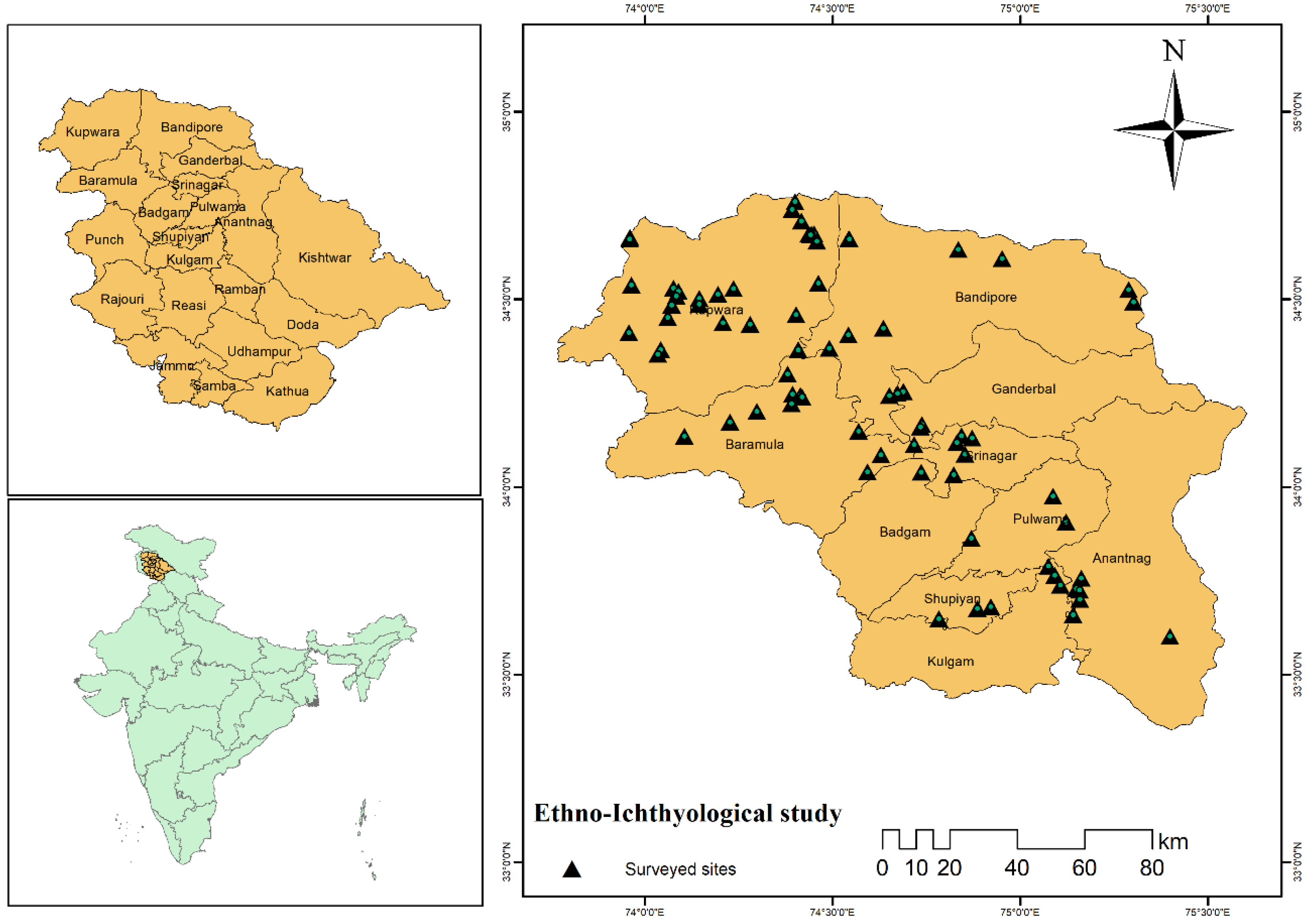
The Vale of Kashmir (Figure 1) is the part of union territory of Jammu and Kashmir, in the northwestern Himalayas. The region is surrounded by Jammu to the south, Ladakh to the east, and Pakistan to the north and west [18]. Geographically, Kashmir is mostly mountainous and, as per the Koppen classification, the climate falls in the Dfb climate category (warm summer, humid continental climate) [25]. The region is rich in inland water bodies including lakes, rivers, and wetlands [17]. The Himalayan glaciers are the main source of water in the region. Four marked seasons are felt in the region, i.e., spring (March–May), summer (June–August), autumn (September–November), and winter (November–February). The majority of the population follows the Islamic faith. Different languages such as Kashmiri, Pahari, Dogra, and Urdu are spoken (https://www.ethnologue.com/, accessed on 17 February 2022); however, Kashmiri is the dominant language. According to the population census (2011), the human population is about 13.6 million (https:uidai.gov.inimagesstate-wise-aadhaar-saturation.pdf, accessed on 17 February 2022), including Muslims (about 67%), Hindus (about 30%), Sikhs (2%), and Buddhists (1%) (https:jk.gov.injammukashmir?q=demographics, accessed on 17 February 2022).
Figure 1.
Map of the Kashmir valley, India, and points showing the survey sites.
2.2. Socioeconomic Background of the Study Area
A mosaic pattern of socioeconomic conditions can be observed; however, agriculture and allied services are the main professions of the local inhabitants. Some of the people are associated with fishing; some only with cattle rearing and pastoralism. Remote areas lack basic necessities such as modern healthcare, higher education, and transportation. People inhabiting remote areas possess a strong cultural belief and faith in the traditional medicinal system. Traditional healers (hakeems) still practice traditional medicine.
2.3. Informant Selection and Ethno-Zoological Data Collection
During 2021, a field survey was carried out for ethno-zoological data collection. To ensure the support of the local people, continuous field visits were undertaken before data collection. The lead author of the study is a local occupant and visited the different sites (high-altitude and low-altitude) in the valley with the second co-author and a photographer. The team explained the purposes of the study to the people before the interview, following the code of ethics [26] and obtained prior informed verbal consent before each interview. Data were collected via semi-structured interviews, meetings, and group discussions at various public places following the procedure adopted by Haq et al. [20]. Through the snowball sampling technique, 100 informants in total of different age groups were selected, of whom 73 were men and 27 were women (Table 1). The religious and cultural obligations did not allow young women (unmarried) in far-off regions of the valley to participate in the interviews. Urdu was a commonly spoken language in all study sites. The documented results were displayed to the local people to remove errors and omissions.
Table 1.
Demographic information of informants from the Vale of Kashmir, India.
2.4. Data Analysis
We used the fidelity level (FL), relative popularity level (RPL), and rank priority order (ROP) to analyze the data on ethnomedicinal and cultural uses.
2.4.1. Fidelity Level (FL)
FL is the percentage of informants who reported the similar use of some documented species [3]. We calculated this using the following formula:
where Np is the number of informants who reported major ailments for a specific species (fish) and Fc is the frequency of citations for ethnomedicinal or cultural use of that species.
FL (%) = (Np/Fc) ×100
2.4.2. Relative Popularity Level (RPL)
The relative popularity level (RPL) of the species was obtained as reported by Friedman et al. [27] and Ali-Shtayeh et al. [28]. Documented fish species were categorized into two groups (popular and unpopular). Popular species included those which had more than half of the highest frequency of citations (FC), and the remaining species were grouped as unpopular. For popular species, the average number of uses was not enhanced by the addition of the FC and the value of the RPL was chosen as 1. For unpopular species groups, the RPL value was less than 1.
2.4.3. Rank Order Priority (ROP)
Rank order priority was used to grade the documented species and was calculated as explained earlier by Friedman et al. [27] and Ali-Shtayeh et al. [28].
ROP = FL × RPL
Heat map analysis was used to conduct associational analyses between ethno-zoological categories (medicine, food, black magic, poultry, agriculture, and recreational) and fish species recorded using Software R Studio 4.0.1. [20]. To find significant variances, Sorensen’s similarity coefficient was applied [29]. We classified recognized groups based on Sorensen’s similarity index between services offered and fish species. The principal component analysis (PCA) method was used to identify hypothetical variables (components) that may account for as much variance as feasible in our multi-dimensional data. We achieved this by calculating the single-valued composition of the centered and possibly scaled data matrix using a matrix of fish species presence/absence [20]. PCA was used to determine how each species, or group of species, was related to a provisional evaluation of the services. The relative popularity level and PCA of each species were diagrammatically depicted using R Studio 4.0.1. Using the chord diagram, we calculated which fish species are used to cure specific ailments, as well as the number of species used to treat each disease and which diseases are treated by more diversified fish species based on the thickness of each bar [30].
3. Results and Discussion
3.1. Documented Fish Fauna
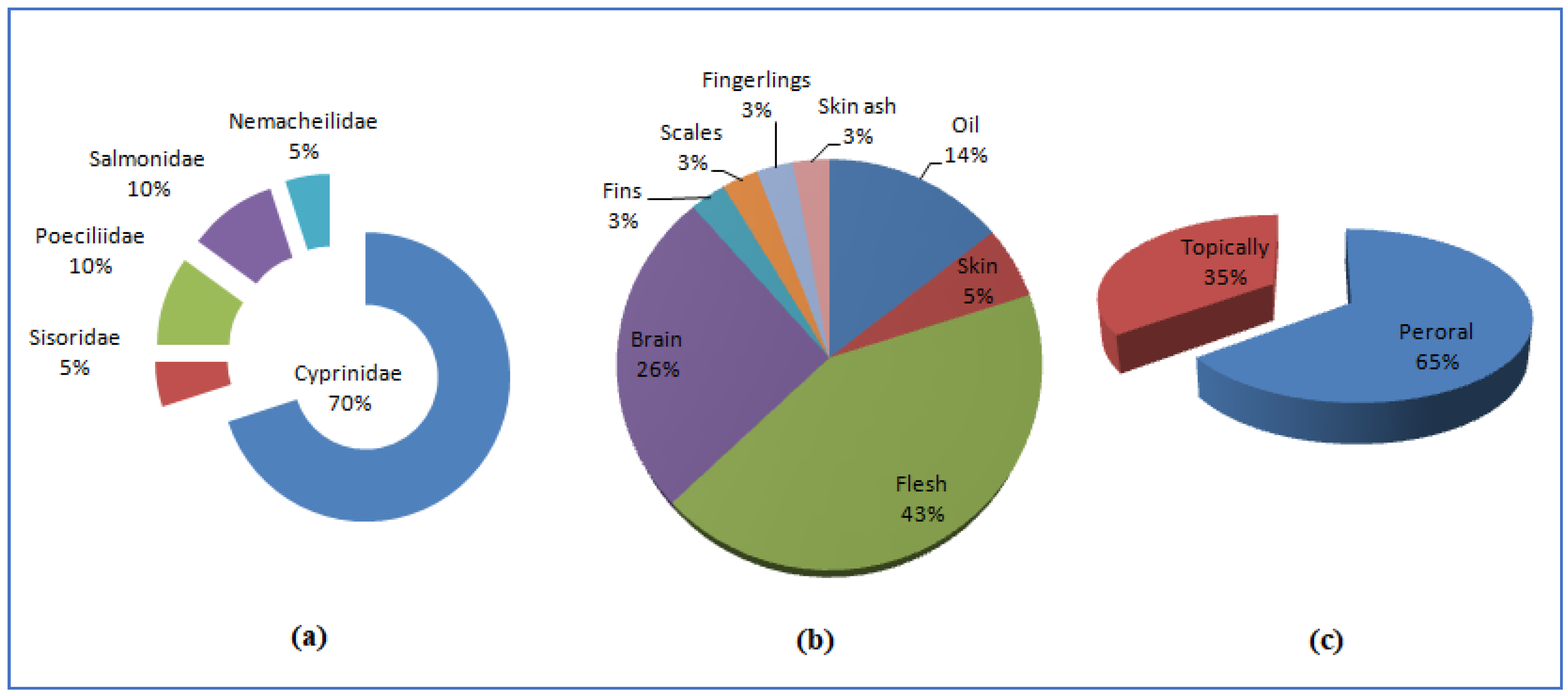
In the ethno-zoological domain, the current study identified 20 fish species used by local people in the Vale of Kashmir. The documented species belonged to five families. The distribution of species across the families was asymmetric, with one family (Cyprinidae, N = 14, 70%) accounting for more than half of the species, and four families comprising rest of the species (Poeciliidae, N = 2, 10%; Salmonidae, N = 2, 10%; Sisoridae, N = 1, 5%; and Nemacheilidae, N = 1, 5%) (Figure 2a). The dominance of Cyprinidae can be ascribed to the presence of large freshwater bodies in the region and the local belief in traditional medicine in which fishes have a unique status for treating different health issues. The study is the first comprehensive documentation of fishes used in traditional medicine and food from the valley to the best of our knowledge. Our results are in line with those of Altaf et al. [3] and Altaf et al. [16], who reported the use of fishes for treating a variety of ailments from Chenab and Punjab, Pakistan, respectively.
Figure 2.
(a) Percentage and distribution of families;(b) percentage and number of parts used; (c) percentage of application types.
We found that flesh (43%) was the dominant part used by the local communities for medicinal purposes, followed by the brain (26%), oil (14%), skin (5%), scales (5%), fins (5%), skin ash (3%), and fingerlings (3%) (Figure 2b). The dominant usage of flesh can be related to the high importance in traditional medicine and the coexisting food value. Santos and Alves [31] reported the medicinal use of fish from Brazil, Orilogbon and Adewole [32] reported their use in southwest Nigeria, Altaf et al. [3] reported their use in Pakistan, and Singh [33] reported their use in Nepal. It is important to note that the use of fishes is high in winter compared with summer. It is believed that, apart from medicinal usage, fish has the potential to “warm the body”. Moreover, the shelf life of the medicine obtained from the fish is higher during winter. The data presented here for each of the quoted species, along with its zoological name, local name, family, parts used, and medicinal uses, are provided in Table 2. The mode of application to different body parts for treating a variety of diseases was mostly peroral (65%) followed by topical (35%) (Figure 2c).
Table 2.
Cultural and ethno-medicinal uses of fishes in the Vale of Kashmir.
3.2. Local Nomenclature
Fishes are called locally by different names. However, most of the documented fishes (70%) had the suffix gaadis attached (Table 2). For instance, Schizothorax esocinus is locally named as “Kashir gaad”, similarly Catla catla is known as “Punjaib gaad”; fish are generally called gaad in the valley. Variation in the vernacular names was seen for different reasons including (l) morphological features, (2) social attachment, and (3) the environment. Glyptothorax kashmirensis is very ugly in shape, so it is called “dev gaad”. Locally, dev means “giant and ugly physique”. Schizopyge nigeris is very close to the people’s hearts as it has been used for generations for food and medicine, and has a unique status in the local culture; it is locally called “ale gaad”. Ale means “very loveable”. Triplophysa kashmirensisis is mostly found in the Jhelum River and is known as Jhelum gaad. Oncorhynchus mykissis is reared in fish farms and hence is called farmi gaad. Altaf et al. [3] revealed the local nomenclature of fishes and herptiles from Pakistan while evaluating the traditional folk therapies. Likewise, Seixas and Begossi [34] reported the same in the Atlantic forest coast of Brazil.
3.3. Traditional Fish Preservation for Gastronomic Use
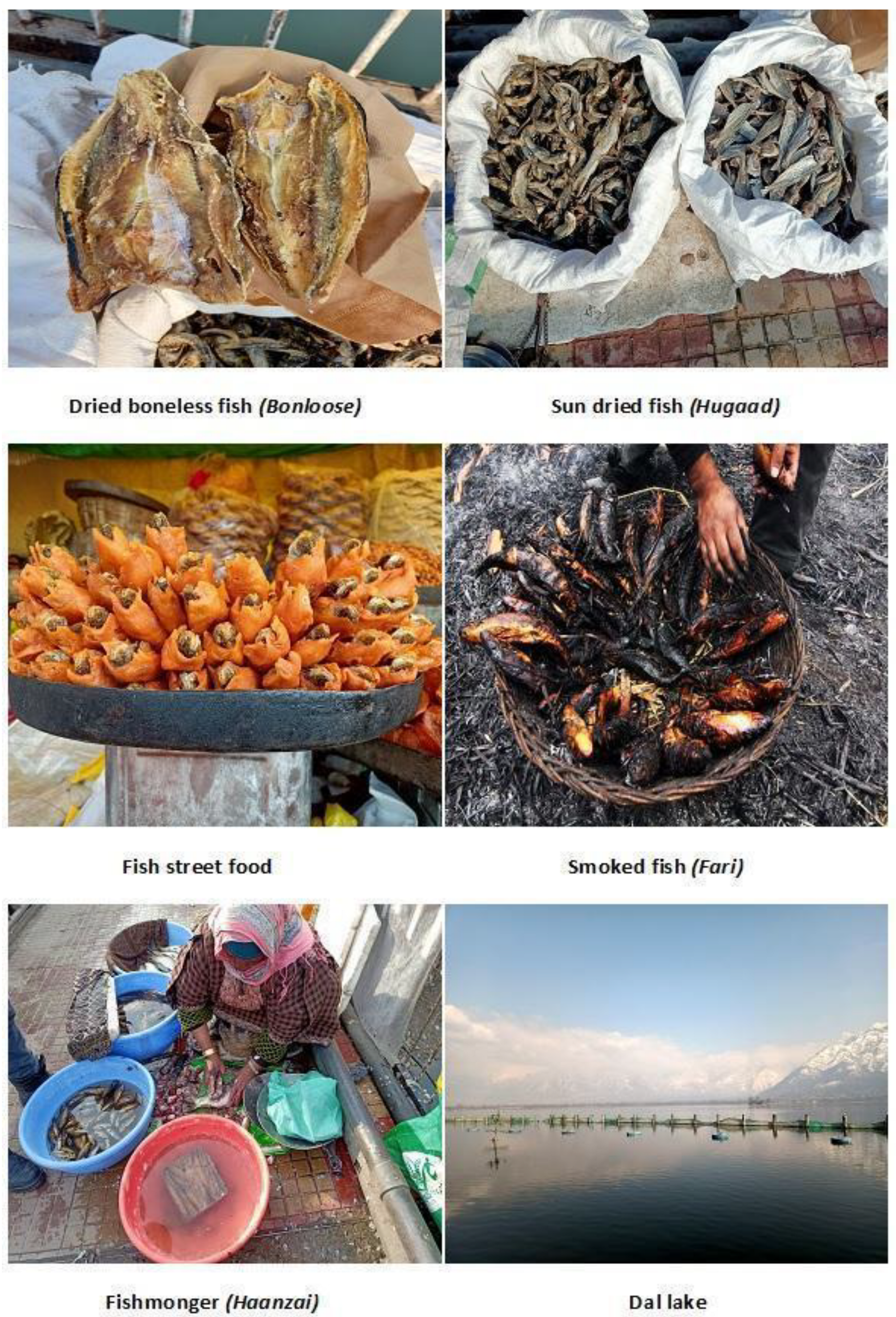
Food patterns are often culturally specific and hence show a unique cultural identity [22]. In the Vale of Kashmir, fish have a unique place in the traditional non-vegetarian cuisine, as the local people make different recipes such as Mujgaaad, Nadir gaad, Talitgaad [22] With modernization, food uses and preserving techniques have evolved [35,36] and often, as in Kashmir, modernization leads to the decline in traditional methods of preservation. In the present study, we also recorded traditional fish preservation techniques. These included (1) smoking, (2) sun drying, and (3) pickling.
The smoked fishes are prepared by laying straw on the ground, above which, the fish (offal removed) are laid equidistant to ensure proper heat and smoke. After that, the straw is set on fire to produce heat and smoke, which remove the moisture and enhance the shelf life of the fish. The smoked fish are locally called fari (Figure 3). These smoked fishes are consumed in winter; hence, production starts in late autumn. Locally, it is believed that smoked fish helps against the chilling cold. Sun-dried fishes are mostly fingerlings or somewhat larger in size. The said fishes are collected, gutted, and washed. After that, they are kept in the naked sun during summer to ensure the removal of moisture. The sun-dried fishes are locally called hugaad (Figure 3) (“hu” means “dry” and “gaad” means “fish”). Some large fish are also selected, the bones are removed, and then the fish are sun-dried (locally called bonloose). These fish are mostly cooked with vegetables such as collard greens, lotus roots, spinach, and radish. Fish pickles are prepared by removing the offal, cutting the fish into small pieces, and marinating them with spices such as turmeric, ginger, garlic, and vinegar, and then frying them at a low heat. A bottle (1 L) is filled one-third with mustard oil, ginger, garlic, green chili, and salt. The half-fried fish pieces are poured into it and rested for 2 days.
Figure 3.
Traditional fish preservation techniques for gastronomic usage and related images from valley of Kashmir.
3.4. Fish and Social Class
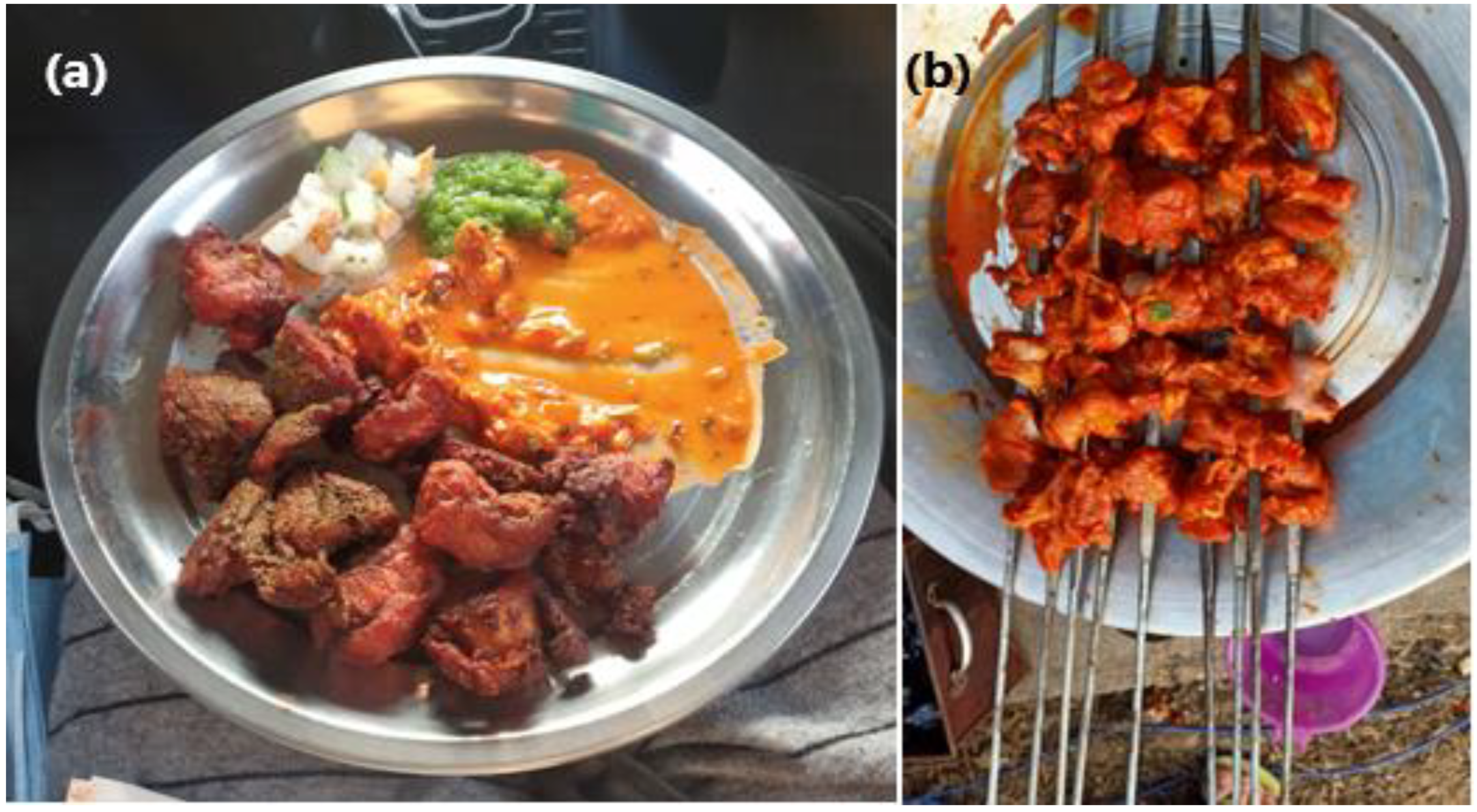
Over a century ago, Velben et al. [37] hypothesized that conspicuous consumption of expensive and superfluous foods is one of the courses of action by which the wealthy classes show off their wealth and power [38]. However, Bourdieu [39] suggested that the use of these products turns into a status symbol which spreads in different societies in a copycat fashion to obtain legitimation. In this ongoing process, the newly rich are the prime mimickers [40], and this phenomenon can be easily observed in societies which give prestige to rich people [41]. The inhabitants of Kashmir Valley, with their diverse cultures, have traditional legacies going through rapid urbanization and facing the rise of new opulent social groups [22]. The new social groups are generally marked by purchasing luxurious items and especially consuming foods outside conventional occasions such as marriages, festivals, and parties. The use of fish has now become a status symbol of the elite class. People consume fish in a variety of recipes such as barbeque, tikka, fish fry, mujgaad, and nadir gaad [22]. The eating of barbequed fish in the evening hours has become a display of high social status in the capital city of Kashmir. Some famous places in the city offer fish barbeque services at high prices, including Makai Park, Khayam chowk, Boulevard Road, and Dargah-Hazratbal (Figure 4a). The wealthiest people come into these places during the evening hours to enjoy expensive foods. Lower-class people also enjoy barbequed fish (Figure 4b) in home cooking.
Figure 4.
(a) Barbeque presented in lavish style at the famous Makai Park. (b) Barbeque prepared at home.
3.5. Ethnomedicinal Profile
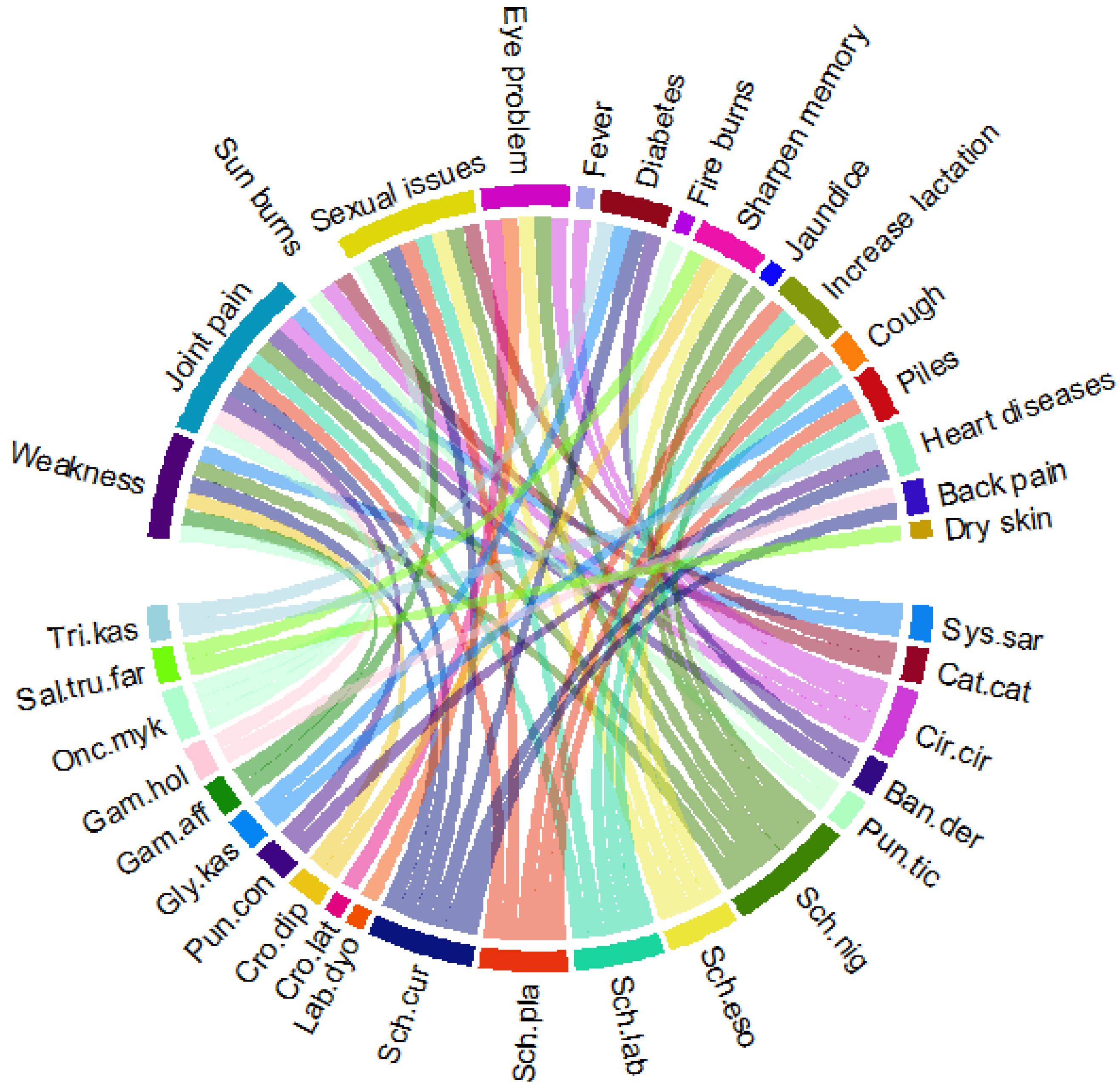
The documented species were used for treating 17 diseases, i.e., weakness, joint pain, sexual issues, eye problems, fever, diabetes, fire burns, memory problems, dry skin, jaundice, decreased lactation, cough, piles, heart diseases, and back pain (Figure 5). Among these, joint pain was treated by the highest number (N = 10, 17%) of species (Systomus sarana, Cirrhinus cirrhosus, Banga nadero, Schizopyge niger, Schizothorax labiatus, Schizothorax plagiostomus, Schizothorax curvifrons, Puntius conchonicus, Gambusia alvarezi, and Oncorhynchus mykiss), followed by sexual issues, which were treated with eight (14%) of the species (Catla catla, Schizopyge niger, Schizothorax esocinus, Schizothorax labiatus, Schizothorax plagiostomus, Schizothorax curvifrons, Gambusia affinis, and Oncorhynchus mykiss).Weakness was treated with six species (10%) (Systomus sarana, Schizopyge niger, Schizothorax curvifrons, Crossocheilus diplochilus, Gambusia affinis, Oncorhynchus mykiss). The high use of species against joint pain indicates the high prevalence of this disease in the region, which could be ascribed to the cold climate, harsh winters, and mountainous topography. Such use of different species in traditional medicine to treat a human ailment is very old; at the same time, a large number of natural products have come to us by a scientific evaluation of remedies traditionally used by a variety of cultures [42]. Holmstedt and Bruhn [43], while evaluating the relationship between fish intake and arthritis in Baltimore, USA, found that frequent intake of fish was associated with low disease activity. Altaf et al. [3], in Pakistan, reported the use of fish for the treatment of joint pain, followed by eyesight, sexual enhancement, and night blindness; Muhammad et al. [44] reported the use of fish against cold, erectile dysfunction, and sexual issues in Punjab, Pakistan. Similar uses were reported by Altaf et al. [16] in Pakistan.
Figure 5.
Species distribution for the treatment of specific diseases in the western Himalayan region of Kashmir. Complete names of the species are provided in Table 2.
3.5.1. Fidelity Level (FL)
The most preferred species for the treatment of certain ailments in the study area were determined by calculating the fidelity level (FL). Species with the maximum medicinal uses in a specific area have the highest fidelity level [9]. In the present study, FL varied from 6 to 82% (Table 2). The highest FL was found for Schizopyge niger (82%) for joint pain, followed by Schizothorax curvifrons (73.9%) for sexual issues, Labeo dyocheilus (72.09%) for diabetes, Schizothorax esocinus (68.36%) to increase lactation, Schizothorax labiatus (64.28) to treat male infertility, Schizothorax curvifrons (55.67%) to use as a memory sharpener, and Schizothorax plagiostomus (57.42%) for joint pain. These findings indicate the prevalence of the particular diseases in the study area that are treated with the species with the maximum FL.
3.5.2. Relative Popularity Level (RPL)
The relative popularity level (RPL) of the fish fauna can be seen in Table 2. The fish species were grouped into two categories (popular and unpopular) (Figure S1 in Supplementary Materials). Schizopyge niger, Schizothorax curvifrons, Catla catla, Schizothorax esocinus, Schizothorax labiatus, and Schizothorax plagiostomus were the most popular (RPL = 1.0), and the other species were recorded as unpopular. The high popularity of these species can be attributed to their high efficacy in traditional medicine.
3.5.3. Rank Order Priority (ROP)
Rank order priority (ROP) was used to assign a suitable grade to all species with various FL values. The obtained levels of ROP of each fish species are presented in Table 2. The ROP of six species was above 55 ((Schizothorax plagiostomus (59.18), Labeo dyocheilus (61.99) Schizothorax labiatus (64.28), Schizothorax esocinus (68.36), Schizothorax curvifrons (73.19), and Schizopyge niger (82)). The high ROP of Schizopyge niger can be ascribed to its popularity in ethnomedicine and ethnocultural practices among the local people. It is important to mention that the informants from rural areas showed more knowledge of medicinal uses than informants from urban areas. The findings of the present study are in accordance with the Altaf et al. [3], who found the same patterns for the use of fish in traditional medicine from Pakistan.
3.6. Quantitative Ethno-Zoological Approach
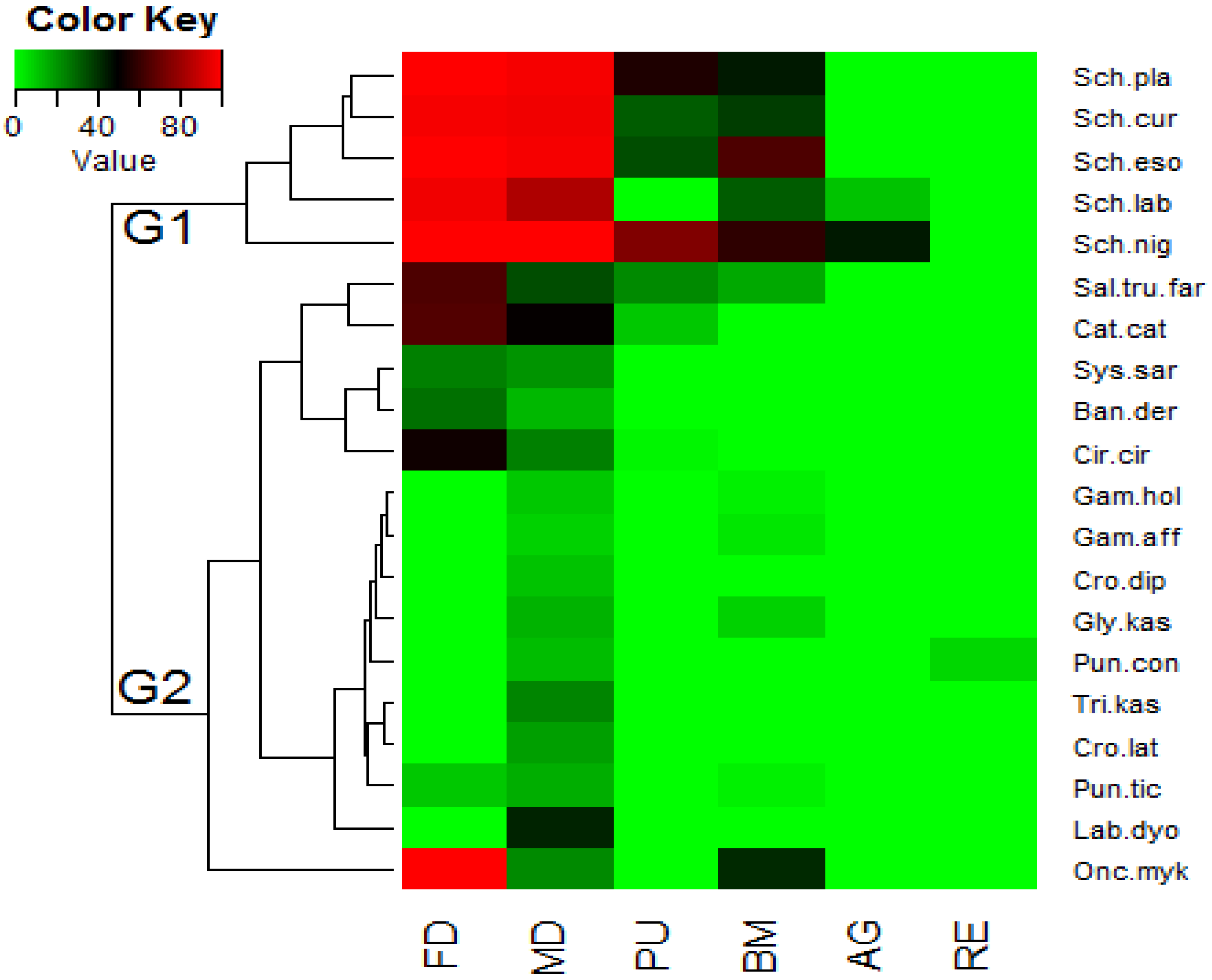
On the basis of the heat map analyses, two main primary clusters of six ethno-zoological categories of use (medicine, food, black magic, poultry, agriculture, and recreational) were recorded (Figure 6). The investigations classified the recognized groups on the basis of Sorensen’s similarity index between services offered and fish species. The first cluster(G1) included popular species (with a maximum frequency of citations) such as Schizopyge niger, Schizothorax curvifrons, Schizothorax esocinus, Schizothorax labiatus, and Schizothorax plagiostomus, which are used for food, medicine, black magic, poultry, and agriculture, whereas the second cluster (G2) contained species with the lowest number of citations that were used for different selected services. Alves et al. [5] reported three main clusters of fish usage in Northeast Brazil. Haq et al. [20] reported four main clusters in India.
Figure 6.
Heat map of cultural usage of documented fishes. Cultural services are categorized into five groups, i.e., food (FD), medicinal (MD), black magic (BM), poultry (PU), agriculture (AG), and recreation (RE). The full names of the species are provided in Table 2.
It was found that only one species (Schizopyge niger) was used for the maximum (N = 5) of recognized services (medicine, food, black magic, poultry, and agriculture), followed by Schizothorax labiatus, which is used for four services (agriculture, black magic, food, and medicine). Two species (Bangana dero and Systomus sarana) were commonly used for medicine and food services. Four species (Triplophysa kashmirensis, Crossocheilus latius, Labeo dyocheilus, and Crossocheilus diplochilus) were used only for medicinal services (Figure 6).
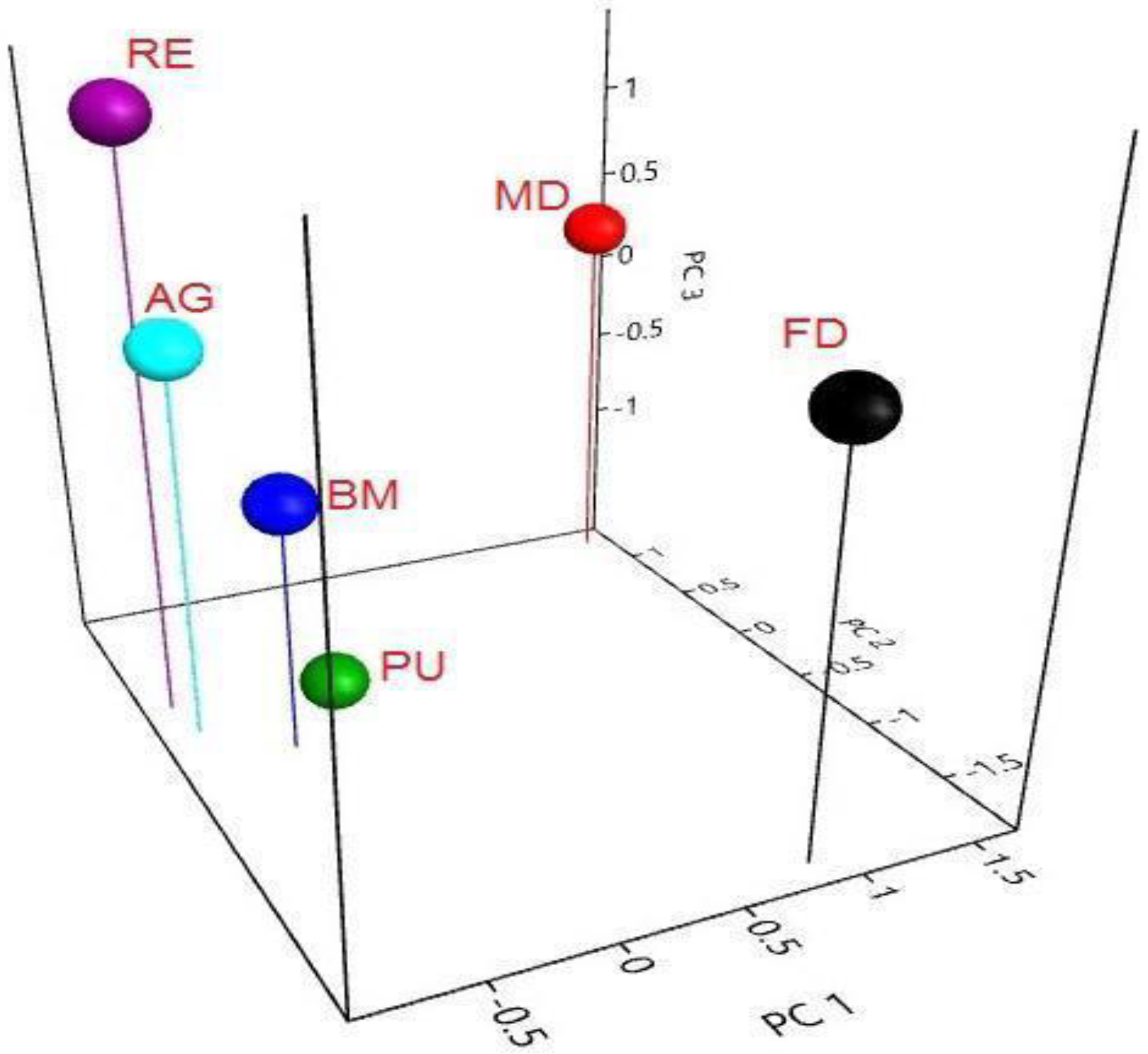
There were significant differences in the use of fish species for cultural purposes, separated along Axis1 (p< 0.05) (Figure 7). The significance of the PCA scores was confirmed by one-way ANOVA, which calculated the analytical differences among cultural and medicinal uses of fish species. PC1 and PC2 elucidated 91.6% of the variance in the PCA conducted for food (FD), medicinal (MD), black magic (BM), poultry (PU), agriculture (AG), and recreation (RE).
Figure 7.
Principal component analysis (PCA), showing the positions of the dots relative to the components and showing how strongly independent variables are correlated with each other. The variables in the PCA were conducted for food (FD; black), medicine (MD; red), black magic (BM; blue), poultry (PU; green), agriculture (AG), and recreation (RE).
3.7. COVID-19 and Fish Consumption in the Anthropocene
The Anthropocene has different traits, among which loss of biodiversity, ecological disturbance, pervasive human activity, and commercialization of traditional wild animal foods have shaped the conditions for the emergence of zoonotic diseases [38]. In this scenario, the whole world has been affected by COVID-19. The COVID-19 pandemic has not only closed the global economy but reshaped food consumption. In the Vale of Kashmir, people are fond of eating non-vegetarian cuisine, e.g., for a multi-course feast called Wazwaan. However, due to COVID-19, people showed a reluctance to consume non-vegetarian foods, which included fish. This decline in consumption was due to the reason that people believed that the transmission of COVID-19 occurs via non-vegetarian foods, whether domestic or wild, despite knowing that fish have traditional medicinal uses. During the field survey, the traditional health practitioners (Hakeems) also advised avoiding non-vegetarian food. Further, it was also recorded that these healers indicated that non-vegetarian food should be cooked very well.
3.8. Commercial Value and Livelihood
In the Vale of Kashmir, most people live in rural areas and are associated with agriculture and the allied sectors [18]. Very few people are associated with the fishing industry. These people are locally called Hanji/Haanz; sometimes, they are also called gaad vale (Figure 3). These people mostly catch the fish from the local water bodies as the source of their livelihood. The most prominent water bodies for fishing include Wular Lake, Dal Lake (Figure 3), Nigeen Lake, Manasbal Lake, Anchar Lake, Jhelum River, and Lidder River. WularLake is one of Asia’s largest lakes, also known as the fishing bowl of Kashmir [45]. It alone contributes 60% of the fish production in Jammu and Kashmir [46].The local people (Hanji/Haanz) sell these fishes in the markets (Figure 3). Even some women, locally known as Haazain, go to far off places to sell their catch. The most praised fishes in the valley include Schizopyge niger, Schizothorax plagiostomus, Schizothorax labiatus, Schizothorax esocinus, and Schizothorax curvifrons. These species are worth more than other quoted species. Moreover, fish have importance in Kashmiri street food, which is the livelihood of a variety of people. People love to eat fish, mostly deep fried after being marinated in powdered pulses or spices. People who sell these fishes are known as Munj vale. Some people sell barbecued fish, which provide a good source of income as well. Although fishery is burgeoning in the Vale of Kashmir, it is considered a low-income profession. Mainly poor people are associated with this mode of livelihood. The most critical factor that is affecting the profession (fishing) is the socioeconomic instability of the fishing (Hanji) community. For the proper development of the fishing industry, socioeconomic upgrades are needed [17].
3.9. Ecological Knowledge on Fished Species
Across the globe, artisanal fishermen have often acquired profound knowledge related to the fish which they utilize for a variety of purposes [47,48,49]. Local skilled Kashmiri people, particularly from the Hanji community, have developed an intricate knowledge of living and non-living elements related to the fishery resources they exploit. This endemic knowledge is vital for fishing. The Hanji people have a wide range of knowledge about the distribution of fishes in the concerned water bodies and their position in the water column, which is important for selecting the proper gear. Further, the Hanji people have information recognizing the diversity of fish habitats such as particular shore areas, vegetation patches, and other spots. Santos et al. [31] reported the ecological knowledge of fish to be an important factor for fishing activity in northeast Brazil.
3.10. Cultural Usage and Taboos
In recent decades, the biological and cultural history linked with medicinal and food animals has been the focus of important investigations around the world [50]. In the Vale of Kashmir, the cultural value of fishes is unique, as even the fish waste is used with water and poured onto bottle gourd and cucumber plants for protection against diseases and proper growth. For this cultural usage, selected fish are used, including Schizothorax labiatus, Schizopyg eniger, and Schizothorax plagiostomus. Similarly, the fish waste of Salmo truttafario, Cirrhinus cirrhosus, Schizopyge niger, Schizothorax plagiostomus, Schizothorax esocinus, Schizothora xcurvifrons,and Catla catla is given to poultry to increase egg production and weight.
During the present study, some cultural taboos were also recorded:
- It is believed that eating fish with milk can cause skin disease.
- Fish meals should be avoided on Friday because they can cause possession by evil spirits.
- Fishes should be avoided during hot summers because consumption can increase body heat.
- Some people do not allow girls or married women to eat the fish head, believing that this will cause the death of her father.
Some traditional narratives were also recorded:
- Some fishes known as jummagaad are only found on Friday in the pond near places of worship.
- Some fishes have a human head and a fish body, called paree.
- Some fishes (jummagaad) can move from one pond to another nearby pond.
- It is believed that cooking fish from certain water bodies changes them into blood.
4. Conclusions
Our results demonstrate that there is a sound relationship between the fish fauna and the local people in the valley of Kashmir. In certain parts of Kashmir, well-preserved traditional fish preservation techniques for food use are still clearly visible. Apart from food value, fish still play a strong role in traditional medicine. However, the new generation is reluctant to learn conventional fish knowledge due to a modern mode of living, leading to an accelerating disappearance of traditional knowledge from the valley. Further documentation is urgently needed to get insight across the different areas and communities, so that the traditional knowledge can be preserved for both the scientific community and stakeholders for further community development strategies. Meanwhile, fish is now also developing roots in modern life, changing old practices and creating new eating patterns such as fish barbeques, with the wealthy people now treating fish as a symbol of class. Fish also make a significant contribution to the economy, as they sustain the livelihoods of many people, although the population associated with fish for an income is mostly poor.
Supplementary Materials
The following are available online at https://www.mdpi.com/article/10.3390/d14060455/s1, Figure S1: The relationship between informant numbers and the percentage of informants who argued a similar use for a particular fish.
Author Contributions
Data collection, methodology and curation, M.H.; data analysis, M.U.; writing—original draft, M.H., M.M., R.A. (Reyaz Ahmad) and S.M.H.; revision and funding acquisition, M.U., S.M.H., M.W., M.S., R.W.B., A.A., A.Z.D., T.K.Z.E.-A., M.A.-Y., H.O.E. and K.Y.; writing—review and editing, project administration, resources, software, validation and visualization, M.U., S.M.H., M.W., M.S., R.W.B., A.A., A.Z.D., T.K.Z.E.-A., M.A.-Y., H.A.S., R.A. (Robina Aziz), H.O.E. and K.Y. All authors have read and agreed to the published version of the manuscript.
Funding
This research was financially supported by the Vice Deanship of Research Chairs at King Saud University.
Institutional Review Board Statement
Not applicable.
Informed Consent Statement
All the participants provided prior informed consent before the interviews. The ISE code of ethics was followed.
Data Availability Statement
All data obtained during the study are included in this article.
Acknowledgments
All the authors extend their appreciation for the financial support by the Vice Deanship of Research Chairs at King Saud University. Thanks are due to the local people of Jammu and Kashmir for sharing their ethno-zoological knowledge and cooperating during the surveys and interviews. The authors are thankful to those who directly or indirectly helped us during the study.
Conflicts of Interest
The authors declare no conflict of interest.
References
- Ramires, M.; Clauzet, M.; Barrella, W.; Rotundo, M.M.; Silvano, R.A.; Begossi, A. Fishers’ knowledge about fish trophic interactions in the southeastern Brazilian coast. J. Ethnobiol. Ethnomed. 2015, 11, 19. [Google Scholar] [CrossRef] [Green Version]
- Da Silva Ladislau, D.; Ribeiro, M.W.; da Silva Castro, P.D.; Pantoja-Lima, J.; Aride, P.H.; de Oliveira, A.T. Ichthyological ethnoknowledge of the “piabeiros” from the Amazon region, Brazil. J. Ethnobiol. Ethnomed. 2021, 17, 42. [Google Scholar] [CrossRef] [PubMed]
- Altaf, M.; Abbasi, A.M.; Umair, M.; Amjad, M.S.; Irshad, K.; Khan, A.M. The use of fish and herptiles in traditional folk therapies in three districts of Chenab riverine area in Punjab, Pakistan. J. Ethnobiol. Ethnomed. 2020, 16, 38. [Google Scholar] [CrossRef] [PubMed]
- Rômulo, R.N.A.; Gentil, A.P.F.; Kleber, S.V.; Wedson, M.S.S.; Lívia, E.T.M.; Paulo, F.G.P.M.; Waltéciod, O.A.; Washington, L.S.V. A zoological catalogue of hunted reptiles in the semiarid region of Brazil. J. Ethnobiol. Ethnomed. 2012, 8, 27. [Google Scholar]
- Alves, R.; Rosa, I.L. Zootherapeutic practices among fishing communities in North and Northeast Brazil: A comparison. J. Ethnopharmacol. 2007, 111, 82–103. [Google Scholar] [CrossRef]
- Ferreira, F.S.; Brito, S.V.; Ribeiro, S.C.; Saraiva, A.A.; Almeida, W.O.; Alves, R.R. Animal-based folk remedies sold in public markets in Crato and Juazeiro do Norte, Ceará, Brazil. BMC Complement. Altern. Med. 2009, 9, 17. [Google Scholar] [CrossRef] [Green Version]
- FAO. The State of World Fisheries and Aquaculture; Food and Agriculture Organization of the United Nations: Rome, Italy, 2010. [Google Scholar]
- Froese, R.; Pauly, D. FishBase. World Wide Web Electronic Publication. Version (02/2011). Available online: www.fishbase.org (accessed on 17 February 2022).
- Altaf, M.; Javid, A.; Umair, M.; Iqbal, K.J.; Rasheed, Z.; Abbasi, A.M. Ethnomedicinal and cultural practices of mammals and birds in the vicinity of river Chenab, Punjab-Pakistan. J. Ethnobiol. Ethnomed. 2017, 13, 41. [Google Scholar] [CrossRef] [Green Version]
- Jugli, S.; Jharna, C.; Victor, B.R. Zootherapeutic uses of animals and their parts: An important element of the traditional knowledge of the Tangsa and Wancho of eastern Arunachal Pradesh, North-East India. Environ. Dev. Sustain. 2020, 22, 4699–4734. [Google Scholar] [CrossRef] [Green Version]
- Ali, A. Survey of marine fishes at KetiBunder, district Thatha, Pakistan. J. Wildl. Ecol. 2017, 1, 36–42. [Google Scholar]
- Haider, R.; Altaf, M.; Rasheed, Z.; Rauf, K.; Mumtaz, B.; Altaf, M.; Shabir, M.; Hakeem, F.; Iftikhar, A. Assessment of behavioral study, human activities impacts and interaction with white cheeked bulbul (Pycnonotusleucotis) in district Bagh, Azad Jammu and Kashmir, Pakistan. J. Wildl. Ecol. 2017, 1, 17–24. [Google Scholar]
- Alves, R.R.N.; Souto, W.M.S. Ethnozoology: A brief introduction. Ethnobiol. Conserv. 2015, 4, 1–13. [Google Scholar] [CrossRef] [Green Version]
- Santos-Fita, D.; Costa-Neto, E.; Cano-Contreras, E.; Costa Neto, E.; Santos Fitas, D.; Vargas, C.M. El quehacer de la etnozoología. Man Etnozool. 2009, 2, 23–44. [Google Scholar]
- Launet, E. Dans les fôrets, à la recherche des médicaments de demain. Sci. Et Vie. 1993, 904, 86–91. [Google Scholar]
- Altaf, M.; Umair, M.; Abbasi, A.R.; Muhammad, N.; Abbasi, A.M. Ethnomedicinal applications of animal species by the local communities of Punjab, Pakistan. J. Ethnobiol. Ethnomed. 2018, 14, 55. [Google Scholar] [CrossRef]
- Qayoom, I.; Akhtar, M.; Dar, S.A.; Khan, S.; Hussain, N.; Bhat, B.A. A study of socio-economic status of fisher communities in district Baramulla of Jammu & Kashmir. J. Pharmacogn. Phytochem. 2019, 8, 583–586. [Google Scholar]
- Hassan, M.; Haq, S.M.; Yakoob, U.; Altaf, M.; Bussmann, R.W. The ethnic diversities in animal-human interactions in former Jammu and Kashmir State-India. Ethnobot. Res. Appl. 2021, 22, 1–18. [Google Scholar] [CrossRef]
- Faruque, M.O.; Uddin, S.B.; Barlow, J.W.; Hu, S.; Dong, S.; Cai, Q.; Li, X.; Hu, X. Quantitative ethnobotany of medicinal plants used by indigenous communities in the Bandarban District of Bangladesh. Front. Pharmacol. 2018, 9, 40. [Google Scholar] [CrossRef] [PubMed] [Green Version]
- Haq, S.M.; Calixto, E.S.; Yaqoob, U.; Ahmed, R.; Mahmoud, A.H.; Bussmann, R.W.; Mohammed, O.B.; Ahmad, K.; Abbasi, A.M. Traditional Usage of Wild Fauna among the Local Inhabitants of Ladakh, Trans-Himalayan Region. Animals 2020, 10, 2317. [Google Scholar] [CrossRef]
- Haq, S.M.; Yaqoob, U.; Calixto, E.S.; Rahman, I.U.; Hashem, A.; Abd_Allah, E.F.; Alakeel, M.A.; Alqarawi, A.A.; Abdalla, M.; Hassan, M.; et al. Plant Resources Utilization among Different Ethnic Groups of Ladakh in Trans-Himalayan Region. Biology 2021, 10, 827. [Google Scholar] [CrossRef] [PubMed]
- Hassan, M.; Yaqoob, U.; Haq, M.; Lone, F.A.; Habib, H.; Hamid, S.; Jan, H.A.; Bussmann, R.W. Food and culture: Cultural patterns related to food by indigenous communities in Kashmir—A Western Himalayan region. Ethnobot. Res. Appl. 2021, 22, 1–20. [Google Scholar] [CrossRef]
- Asif, M.; Haq, S.M.; Yaqoob, U.; Hassan, M.; Jan, H.A. A preliminary study on the ethno-traditional medicinal plant usage in tehsil “Karnah” of District Kupwara (Jammu and Kashmir) India. Ethnobot. Res. Appl. 2021, 3, 1–14. [Google Scholar]
- Mir, A.Y.; Yaqoob, U.; Hassan, M.; Bashir, F.; Zanit, S.B.; Haq, S.M.; Bussmann, R.W. Ethnopharmacology and phenology of high-altitude medicinal plants in Kashmir, Northern Himalaya. Ethnobot. Res. Appl. 2021, 22, 1–5. [Google Scholar] [CrossRef]
- UlShafiq, M.; Ramzan, S.; Ahmed, P.; Mahmood, R.; Dimri, A.P. Assessment of present and future climate change over Kashmir Himalayas, India. Theor. Appl. Climatol. 2019, 137, 3183–3195. [Google Scholar]
- International Society of Ethnobiology Code of Ethics. 2006. Available online: http://ethnobiology.net/code-of-ethics/ (accessed on 17 February 2022).
- Friedman, J.; Yaniv, Z.; Dafni, A.; Palewitch, D. A preliminary classification of the healing potential of medicinal plants, based on a rational analysis of an ethnopharmacological field survey among Bedouins in the Negev Desert, Israel. J. Ethnopharmacol. 1986, 16, 275–287. [Google Scholar] [CrossRef]
- Ali-Shtayeh, M.S.; Yaniv, Z.; Mahajna, J. Ethnobotanical survey in the Palestinian area: A classification of the healing potential of medicinal plants. J. Ethnopharmacol. 2000, 73, 221–232. [Google Scholar] [CrossRef]
- Sorensen, T. A method of establishing groups of equal amplitude in plant sociology based on similarity of species content and its application to analyses of the vegetation on Danish commons. Biol. Skr. 1948, 5, 1–34. [Google Scholar]
- Haq, S.M.; Calixto, E.S.; Rashid, I.; Srivastava, G.; Khuroo, A.A. Tree diversity, distribution and regeneration in major forest types along an extensive elevational gradient in Indian Himalaya: Implications for sustainable forest management. For. Ecol. Manag. 2022, 506, 119968. [Google Scholar] [CrossRef]
- Santos, C.A.; Alves, R.R. Ethnoichthyology of the indigenous Truká people, Northeast Brazil. J. Ethnobiol. Ethnomed. 2016, 12, 1. [Google Scholar] [CrossRef] [Green Version]
- Orilogbon, J.O.; Adewole, A.M. Ethnoichthyological knowledge and perception in traditional medicine in Ondo and Lagos States, southwest Nigeria. Egypt. J. Biol. 2011, 1, 57–64. [Google Scholar] [CrossRef]
- Singh, P.K. Ichthyofauna and Socio-Economic Status of Mallah Community in the Koshi River Basin, Bhardaha VDC, Saptari, Nepal. Ph.D. Thesis, Central Department of Zoology Institute of Science and Technology Tribhuvan University Kirtipur, Kathmandu, Nepal, 2017. [Google Scholar]
- Seixas, C.S.; Begossi, A. Ethnozoology of fishing communities from Ilha Grande (Atlantic forest coast, Brazil). J. Ethnobiol. 2001, 21, 107–135. [Google Scholar]
- Tamang, J.P.; Cotter, P.D.; Endo, A.; Han, N.S.; Kort, R.; Liu, S.Q.; Mayo, B.; Westerik, N.; Hutkins, R. Fermented foods in a global age: East meets West. Compr. Rev. Food Sci. Food Saf. 2020, 19, 184–217. [Google Scholar] [CrossRef] [Green Version]
- Erdman, J.W.; Pneros-Schneier, A.G. Factors Affecting Nutritive Value in Processed Foods. Modern Nutrition in Health and Disease; Lea and Febiger: Philadelphia, PA, USA, 1994; pp. 1569–1578. [Google Scholar]
- Veblen, T. The Theory of the Leisure Class an Economic Study of Institutions; The Macmillan Company: New York, NY, USA, 1899. [Google Scholar]
- Volpato, G.; Fontefrancesco, M.F.; Gruppuso, P.; Zocchi, D.M.; Pieroni, A. Baby pangolins on my plate: Possible lessons to learn from the COVID-19 pandemic. J. Ethnobiol. Ethnomed. 2020, 16, 19. [Google Scholar] [CrossRef] [PubMed] [Green Version]
- Bourdieu, P. Distinction: A Social Critique of the Judgement of Taste; Routledge: London, UK, 1984. [Google Scholar]
- Le Wita, B. French Bourgeois Culture; Cambridge University Press: Cambridge, UK, 1994. [Google Scholar]
- Halkett, E.C. The Sum of Small Things: A Theory of Aspirational Class; Princeton University Press: Princeton, NJ, USA, 2017. [Google Scholar]
- Hassan, M.; Haq, S.M.; Rasool, A.; Fatima, S.; Ashraf, A.; Zulfajri, M.; Hanafiah, M.M. Ethnobotanical properties and traditional uses of medicinal plant Abutilon theophrasti Medik. In Medicinal and Aromatic Plants; Springer: Cham, Switzerland, 2021; pp. 271–285. [Google Scholar]
- Holmstedt, B.; Bruhn, J.G. Ethnopharmacology—A challenge. J. Ethnopharmacol. 1983, 8, 251–256. [Google Scholar] [CrossRef]
- Muhammad, N.; Umair, M.; Khan, A.M.; Abbasi, A.R.; Khan, Q.; Khan, A.; Awan, M.Z. Assessment of the diversity and ethno-medicinal uses of the carps in Punjab, Pakistan. J. Wildl. Ecol. 2017, 1, 52–60. [Google Scholar]
- Shah, R.A.; Achyuthan, H.; Lone, A.M.; Ramanibai, R. Diatoms, spatial distribution and physicochemical characteristics of the Wular lake sediments, Kashmir valley, Jammu and Kashmir. J. Geol. Soc. India 2017, 90, 59–168. [Google Scholar] [CrossRef]
- Rumysa, K.; Sharique, A.A.; Tariq, Z.; Farooq, M.; Bilal, A.; Pinky, K. Physico chemical status of Wular Lake in Kashmir. J. Chem. Biol. Phys. Sci. 2012, 11, 631–636. [Google Scholar]
- Silvano, R.A.M.; MacCord, P.F.L.; Lima, R.V.; Begossi, A. When does this fish spawn? Fishermen’s local knowledge of migration and reproduction of Brazilian coastal fishes. Environ. Biol. Fishes 2006, 76, 371–386. [Google Scholar] [CrossRef]
- Nishida, A.K.; Nordi, N.; Alves, R.R.N. The lunar-tide cycle viewed by crustacean and mollusc gatherers in the State of Paraíba, Northeast Brazil and their influence in collection attitudes. J. Ethnobiol. Ethnomed. 2006, 2, 1. [Google Scholar] [CrossRef] [Green Version]
- Nishida, A.K.; Nordi, N.; Alves, R.R.N. Mollusc Gathering in Northeast Brazil: An Ethnoecological Approach. Hum. Ecol. 2006, 34, 133–145. [Google Scholar] [CrossRef]
- Barthel, S.; Crumley, C.; Svedin, U. Bio-cultural refugia—Safeguarding diversity of practices for food security and biodiversity. Glob. Environ. Chang. 2013, 23, 1142–1152. [Google Scholar] [CrossRef] [Green Version]
Publisher’s Note: MDPI stays neutral with regard to jurisdictional claims in published maps and institutional affiliations. |
© 2022 by the authors. Licensee MDPI, Basel, Switzerland. This article is an open access article distributed under the terms and conditions of the Creative Commons Attribution (CC BY) license (https://creativecommons.org/licenses/by/4.0/).