Immune and Endothelial-Related Extracellular Vesicles Are Associated with Corticosteroid Response and Mortality in Alcohol-Associated Hepatitis

 , , , , , , , , , , , ,
  and add
Show full author list
and add
Show full author list
Abstract
1. Introduction
2. Results
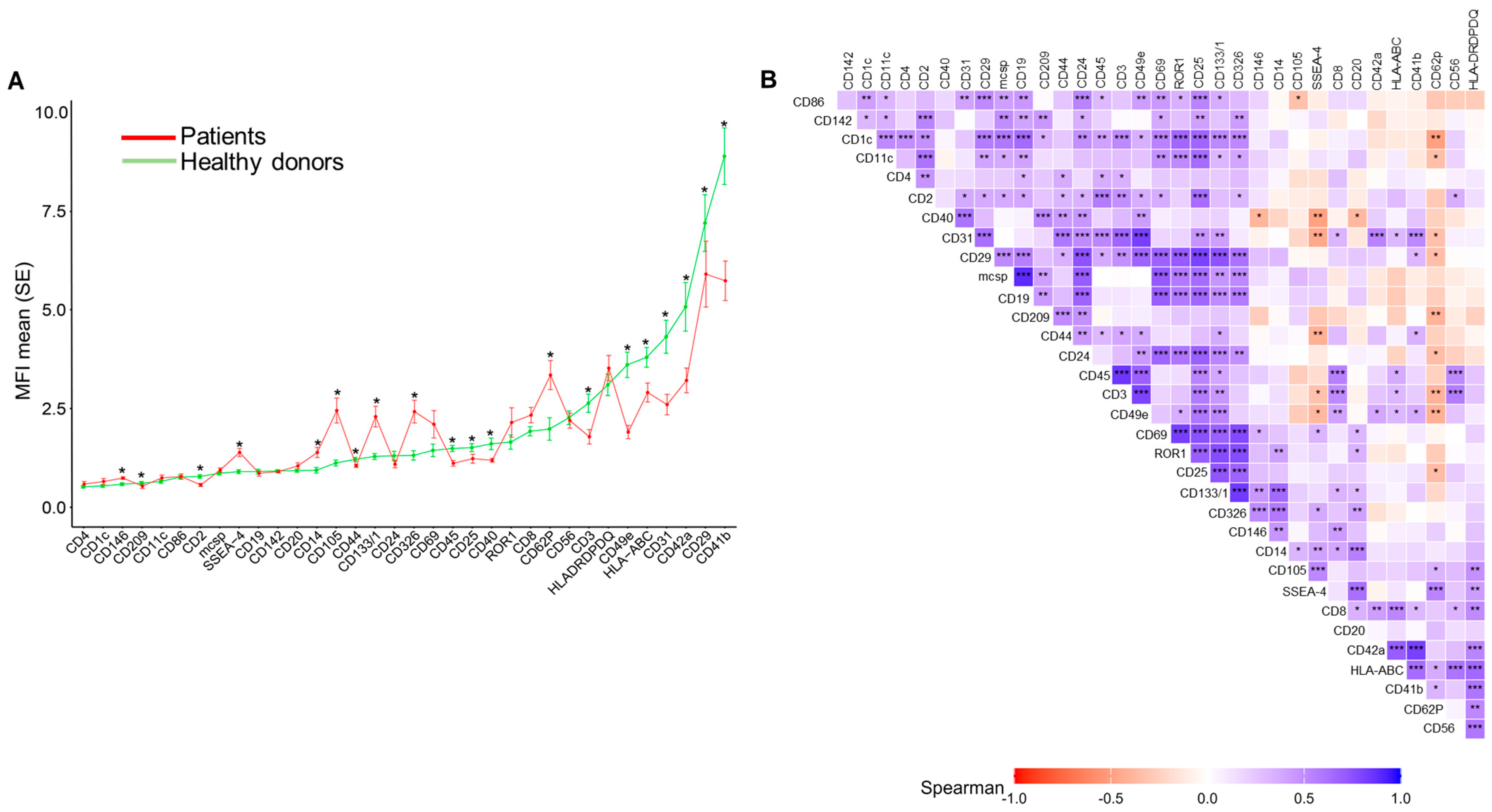
2.1. Patients with AH Had Increased Numbers of Circulating EVs with a Different EV Antigen Profile Compared to Healthy Donors
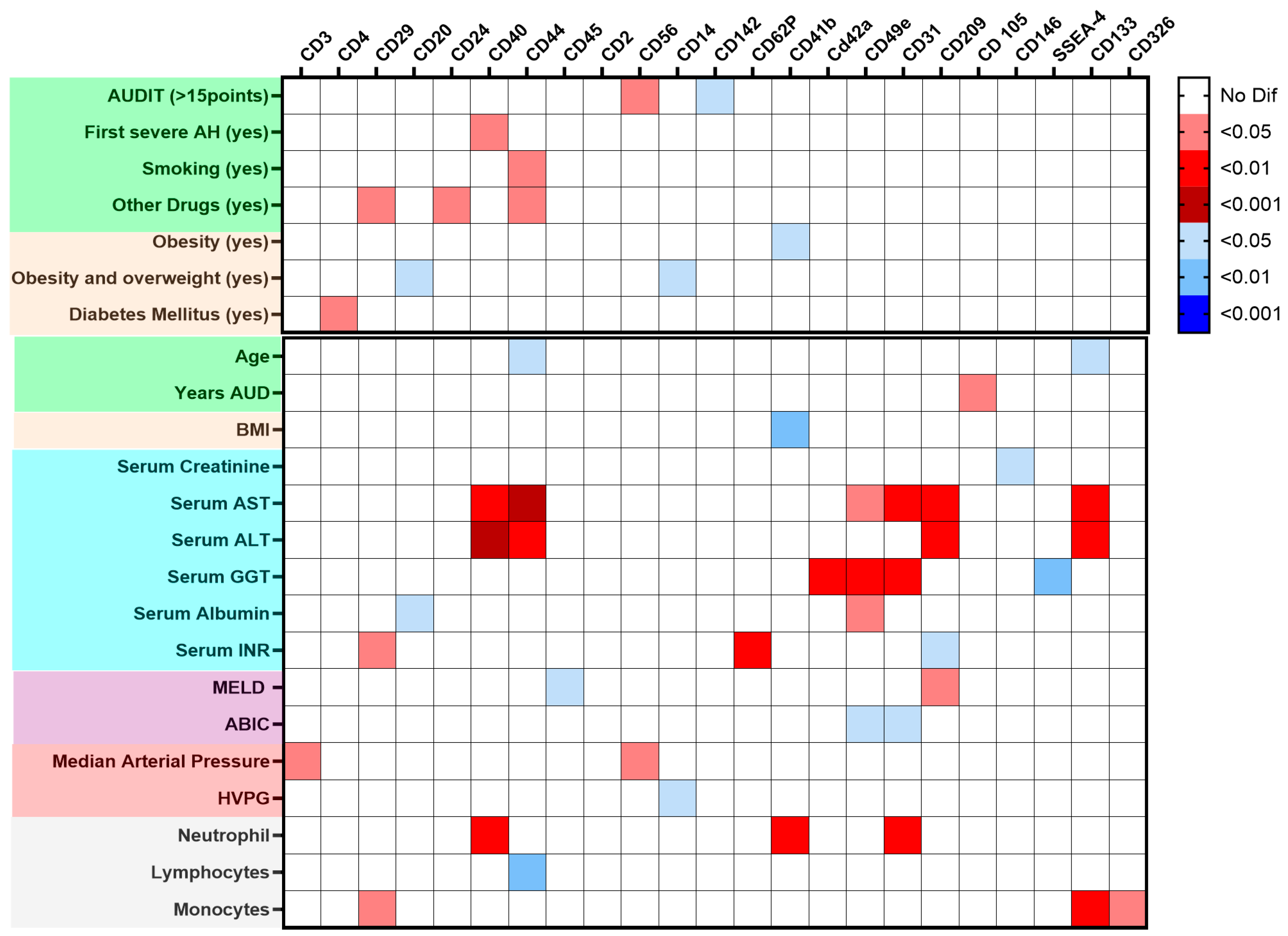
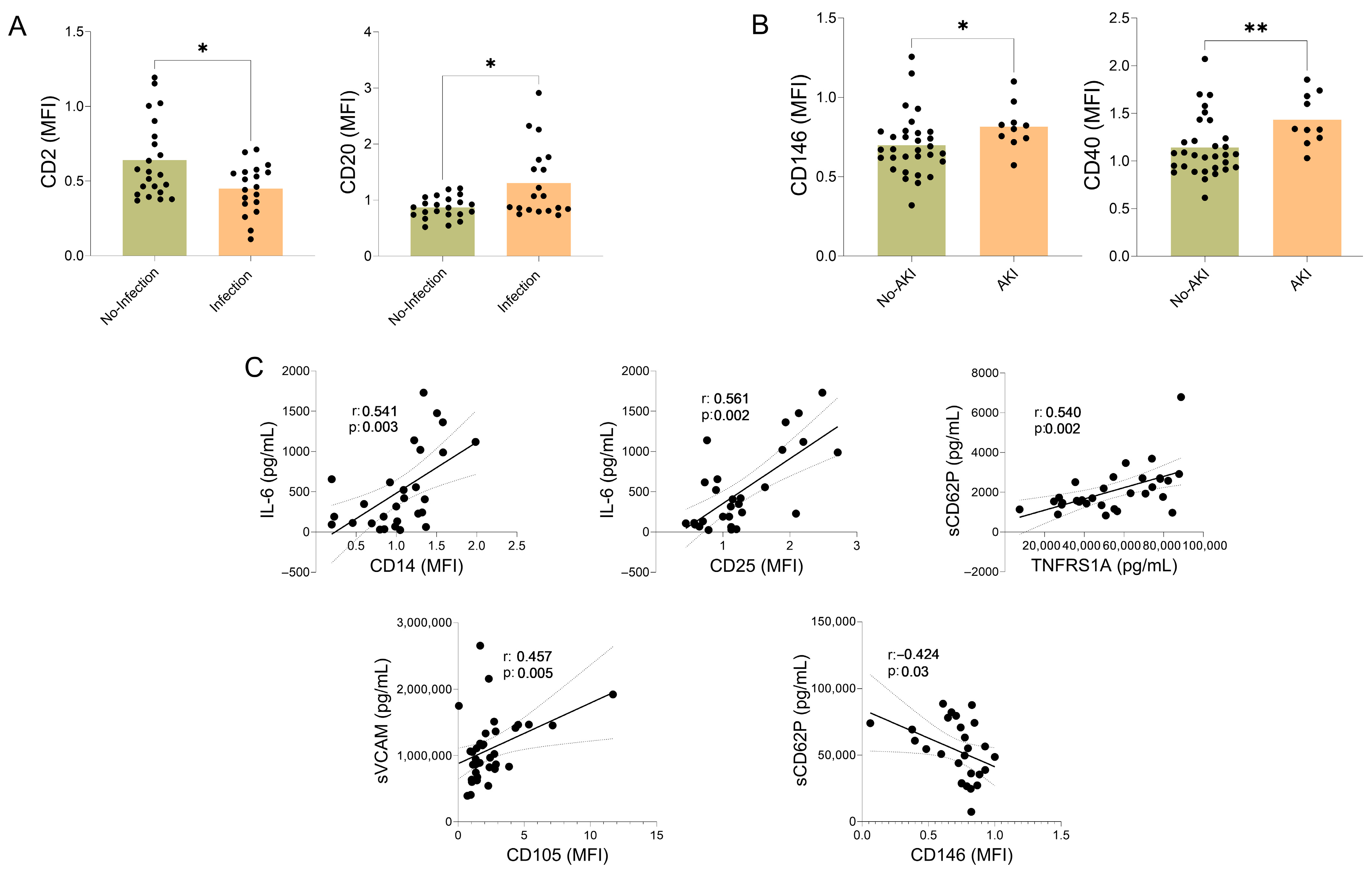
2.2. EVs Surface Antigens Are Associated with the Main Clinical Features in the AH Episode
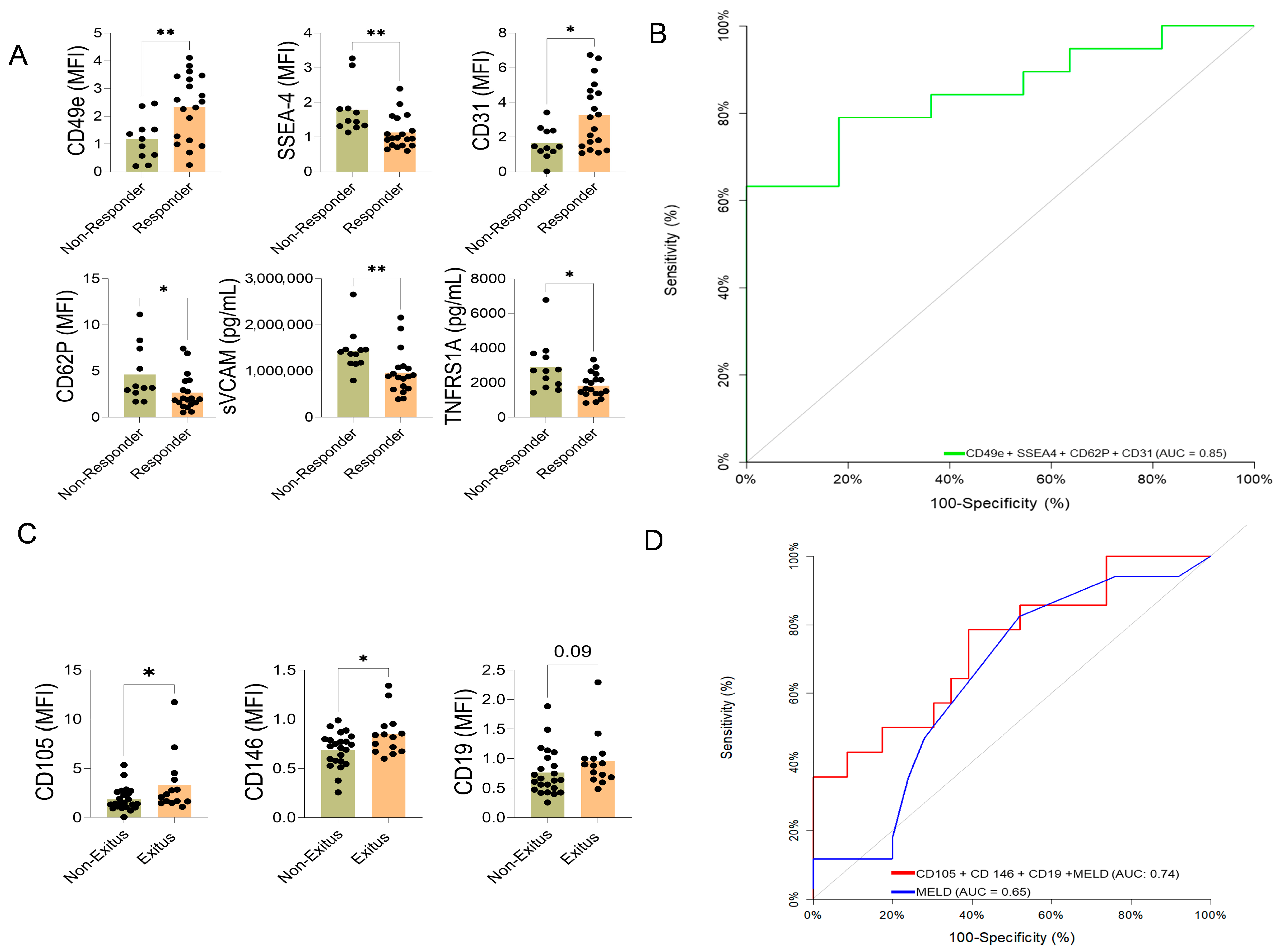
2.3. Diagnostic Performance of the EV Surface Antigen Associated with Corticosteroid Response and Long-Term Mortality
2.4. Impact of Alcohol Consumption During the First 90 Days After AH Epidose on EVs Surface Antigen Expression
3. Discussion
4. Materials and Methods
4.1. Population and Study Design
Blood Collection and Plasma Preparation
4.2. EVs Characterization
4.2.1. Nanoparticle Tracking Analysis (NTA)
4.2.2. Cryo-Electron Microscopy
4.2.3. EVs Surface Antigen Analysis by Multiplex Bead-Based Technique
4.3. Determination of Soluble Pro-Inflammatory Mediators
4.4. Statistical Analysis
Supplementary Materials
Author Contributions
Funding
Institutional Review Board Statement
Informed Consent Statement
Data Availability Statement
Conflicts of Interest
Abbreviations
| ABIC | Age-bilirubin-international normalized ratio-creatinine |
| AH | Alcohol-associated hepatitis |
| AKI | Acute Kidney injury |
| ALD | Alcohol-associated liver disease |
| ASGPR1 | Asialoglycoprotein |
| AST | Aspartate aminotransferase |
| ALT | Alanine aminotransferase |
| AUC | Area under the curve |
| AUD | Alcohol use disorder |
| AUDIT | Alcohol use disorders identification test |
| BMI | Body mass index |
| CD146 | Cluster of differentiation 146 (also known as MCAM) |
| DAMPs | Damage-associated molecular patterns |
| EVs | Extracellular vesicles |
| GGT | Gamma-glutamyl transpeptidase |
| HD | Healthy donors |
| HVPG | Hepatic venous pressure gradient |
| ICAM-1 | Intercellular adhesion molecule 1 |
| IDI | Integrated discrimination improvement |
| IL-6 | Interleukin-6 |
| LT | Liver transplantation |
| MELD | Model for End-Stage Liver Disease |
| MFI | Median fluorescence intensity |
| NRI | Net reclassification improvement |
| NTA | Nanoparticle tracking analysis |
| NT-proBNP | N-terminal pro-B-type natriuretic peptide |
| PEth | Phosphatidylethanol |
| S | soluble |
| SEC | Size-exclusion chromatography |
| SIRS | Systemic inflammatory response syndrome |
| TJLB | Transjugular liver biopsy |
| TNFRS1A | Tumor necrosis factor receptor superfamily member 1A |
| VCAM | Vascular cell adhesion molecule 1 |
| VEGF-A | Vascular endothelial growth factor A |
References
- Stein, E.; Cruz-Lemini, M.; Altamirano, J.; Ndugga, N.; Couper, D.; Abraldes, J.G.; Bataller, R. Heavy Daily Alcohol Intake at the Population Level Predicts the Weight of Alcohol in Cirrhosis Burden Worldwide. J. Hepatol. 2016, 65, 998–1005. [Google Scholar] [CrossRef] [Scilit] [PubMed]
- GBD 2016 Alcohol Collaborators. Alcohol Use and Burden for 195 Countries and Territories, 1990–2016: A Systematic Analysis for the Global Burden of Disease Study 2016. Lancet 2018, 392, 1015–1035, Correction in Lancet 2019, 393, e44. [Google Scholar] [CrossRef] [Scilit]
- Michelena, J.; Altamirano, J.; Abraldes, J.G.; Affò, S.; Morales-Ibanez, O.; Sancho-Bru, P.; Dominguez, M.; García-Pagán, J.C.; Fernández, J.; Arroyo, V. Systemic Inflammatory Response and Serum Lipopolysaccharide Levels Predict Multiple Organ Failure and Death in Alcoholic Hepatitis. Hepatology 2015, 62, 762–772. [Google Scholar] [CrossRef] [Scilit] [PubMed]
- Gripshover, T.C.; Treves, R.S.; Rouchka, E.C.; Chariker, J.H.; Zheng, S.; Hudson, E.; Smith, M.L.; Singal, A.K.; McClain, C.J.; Hardesty, J.E. Visium Spatial Transcriptomics and Proteomics Identifies Novel Hepatic Cell Populations and Transcriptomic Signatures of Alcohol-associated Hepatitis. Alcohol Clin. Exp. Res. 2025, 49, 106–116. [Google Scholar] [CrossRef] [Scilit]
- Zuluaga, P.; Teniente-Serra, A.; Fuster, D.; Quirant-Sánchez, B.; Hernandez-Rubio, A.; Martínez-Cáceres, E.; Muga, R. Increased Natural Killer Cells Are Associated with Alcohol Liver Fibrosis and with T Cell and Cytotoxic Subpopulations Change. J. Clin. Med. 2022, 11, 305. [Google Scholar] [CrossRef] [Scilit]
- Louvet, A.; Wartel, F.; Castel, H.; Dharancy, S.; Hollebecque, A.; Canva–Delcambre, V.; Deltenre, P.; Mathurin, P. Infection in Patients with Severe Alcoholic Hepatitis Treated with Steroids: Early Response to Therapy Is the Key Factor. Gastroenterology 2009, 137, 541–548. [Google Scholar] [CrossRef] [Scilit]
- Ma, A.T.; Allegretti, A.S.; Cullaro, G.; Ouyang, T.; Asrani, S.K.; Chung, R.T.; Przybyszewski, E.M.; Wilechansky, R.M.; Robinson, J.E.; Sharma, P. Outcomes of Patients with Alcohol-associated Hepatitis and Acute Kidney Injury–Results from the HRS Harmony Consortium. Aliment. Pharmacol. Ther. 2024, 60, 778–786. [Google Scholar] [CrossRef] [Scilit] [PubMed]
- Singal, A.K.; Mathurin, P. Diagnosis and Treatment of Alcohol-Associated Liver Disease: A Review. JAMA 2021, 326, 165–176. [Google Scholar] [CrossRef] [Scilit]
- Bataller, R.; Arab, J.P.; Shah, V.H. Alcohol-Associated Hepatitis. N. Engl. J. Med. 2022, 387, 2436–2448. [Google Scholar] [CrossRef] [Scilit]
- Altamirano, J.; López-Pelayo, H.; Michelena, J.; Jones, P.D.; Ortega, L.; Ginès, P.; Caballería, J.; Gual, A.; Bataller, R.; Lligoña, A. Alcohol Abstinence in Patients Surviving an Episode of Alcoholic Hepatitis: Prediction and Impact on Long-Term Survival. Hepatology 2017, 66, 1842–1853. [Google Scholar] [CrossRef] [Scilit]
- Mathurin, P.; O’Grady, J.; Carithers, R.L.; Phillips, M.; Louvet, A.; Mendenhall, C.L.; Ramond, M.-J.; Naveau, S.; Maddrey, W.C.; Morgan, T.R. Corticosteroids Improve Short-Term Survival in Patients with Severe Alcoholic Hepatitis: Meta-Analysis of Individual Patient Data. Gut 2011, 60, 255–260. [Google Scholar] [CrossRef] [Scilit]
- Louvet, A.; Thursz, M.R.; Kim, D.J.; Labreuche, J.; Atkinson, S.R.; Sidhu, S.S.; O’Grady, J.G.; Akriviadis, E.; Sinakos, E.; Carithers, R.L.; et al. Corticosteroids Reduce Risk of Death Within 28 Days for Patients With Severe Alcoholic Hepatitis, Compared With Pentoxifylline or Placebo-a Meta-Analysis of Individual Data From Controlled Trials. Gastroenterology 2018, 155, 458–468.e8. [Google Scholar] [CrossRef] [Scilit]
- Thursz, M.R.; Richardson, P.; Allison, M.; Austin, A.; Bowers, M.; Day, C.P.; Downs, N.; Gleeson, D.; MacGilchrist, A.; Grant, A.; et al. Prednisolone or Pentoxifylline for Alcoholic Hepatitis. N. Engl. J. Med. 2015, 372, 1619–1628. [Google Scholar] [CrossRef] [Scilit]
- Hmoud, B.S.; Patel, K.; Bataller, R.; Singal, A.K. Corticosteroids and Occurrence of and Mortality from Infections in Severe Alcoholic Hepatitis: A Meta-Analysis of Randomized Trials. Liver Int. Off. J. Int. Assoc. Study Liver 2016, 36, 721–728. [Google Scholar] [CrossRef] [Scilit]
- Vergis, N.; Atkinson, S.R.; Knapp, S.; Maurice, J.; Allison, M.; Austin, A.; Forrest, E.H.; Masson, S.; McCune, A.; Patch, D.; et al. In Patients With Severe Alcoholic Hepatitis, Prednisolone Increases Susceptibility to Infection and Infection-Related Mortality, and Is Associated With High Circulating Levels of Bacterial DNA. Gastroenterology 2017, 152, 1068–1077.e4. [Google Scholar] [CrossRef] [Scilit]
- Bissonnette, J.; Altamirano, J.; Devue, C.; Roux, O.; Payancé, A.; Lebrec, D.; Bedossa, P.; Valla, D.; Durand, F.; Ait-Oufella, H.; et al. A Prospective Study of the Utility of Plasma Biomarkers to Diagnose Alcoholic Hepatitis. Hepatology 2017, 66, 555–563. [Google Scholar] [CrossRef] [Scilit]
- Atkinson, S.R.; Grove, J.I.; Liebig, S.; Astbury, S.; Vergis, N.; Goldin, R.; Quaglia, A.; Bantel, H.; Guha, I.N.; Thursz, M.R.; et al. In Severe Alcoholic Hepatitis, Serum Keratin-18 Fragments Are Diagnostic, Prognostic, and Theragnostic Biomarkers. Am. J. Gastroenterol. 2020, 115, 1857–1868. [Google Scholar] [CrossRef] [Scilit]
- Arab, J.P.; Díaz, L.A.; Baeza, N.; Idalsoaga, F.; Fuentes-López, E.; Arnold, J.; Ramírez, C.A.; Morales-Arraez, D.; Ventura-Cots, M.; Alvarado-Tapias, E.; et al. Identification of Optimal Therapeutic Window for Steroid Use in Severe Alcohol-Associated Hepatitis: A Worldwide Study. J. Hepatol. 2021, 75, 1026–1033. [Google Scholar] [CrossRef] [Scilit]
- Alvarado-Tapias, E.; Pose, E.; Gratacós-Ginès, J.; Clemente-Sánchez, A.; López-Pelayo, H.; Bataller, R. Alcohol-Associated Liver Disease: Natural History, Management and Novel Targeted Therapies. Clin. Mol. Hepatol. 2024, 31, S112–S133. [Google Scholar] [CrossRef] [Scilit]
- Wu, T.; Shah, V. Biomarkers of Endothelial Dysfunction in Alcoholic Hepatitis. Hepatol. Int. 2021, 15, 855–857. [Google Scholar] [CrossRef] [Scilit]
- Xia, Y.; Yang, J.; Sanyal, A.J.; Shah, V.H.; Chalasani, N.P.; Yu, Q.; Zheng, X.; Li, W. Persistent Hyperactivation of Endothelial Cells in Patients with Alcoholic Hepatitis. Alcohol. Clin. Exp. Res. 2020, 44, 1075–1087. [Google Scholar] [CrossRef] [Scilit]
- Thietart, S.; Rautou, P.-E. Extracellular Vesicles as Biomarkers in Liver Diseases: A Clinician’s Point of View. J. Hepatol. 2020, 73, 1507–1525. [Google Scholar] [CrossRef] [Scilit]
- Kostallari, E.; Valainathan, S.; Biquard, L.; Shah, V.H.; Rautou, P.-E. Role of Extracellular Vesicles in Liver Diseases and Their Therapeutic Potential. Adv. Drug Deliv. Rev. 2021, 175, 113816. [Google Scholar] [CrossRef] [Scilit]
- Théry, C.; Witwer, K.W.; Aikawa, E.; Alcaraz, M.J.; Anderson, J.D.; Andriantsitohaina, R.; Antoniou, A.; Arab, T.; Archer, F.; Atkin-Smith, G.K.; et al. Minimal Information for Studies of Extracellular Vesicles 2018 (MISEV2018): A Position Statement of the International Society for Extracellular Vesicles and Update of the MISEV2014 Guidelines. J. Extracell. Vesicles 2018, 7, 1535750. [Google Scholar] [CrossRef] [Scilit]
- Welsh, J.A.; Goberdhan, D.C.; O’Driscoll, L.; Buzas, E.I.; Blenkiron, C.; Bussolati, B.; Cai, H.; Di Vizio, D.; Driedonks, T.A.; Erdbrügger, U. Minimal Information for Studies of Extracellular Vesicles (MISEV2023): From Basic to Advanced Approaches. J. Extracell. Vesicles 2024, 13, e12404, Correction in J. Extracell. Vesicles 2024, 13, e12451. [Google Scholar] [CrossRef] [Scilit]
- Hong, C.-S.; Funk, S.; Muller, L.; Boyiadzis, M.; Whiteside, T.L. Isolation of Biologically Active and Morphologically Intact Exosomes from Plasma of Patients with Cancer. J. Extracell. Vesicles 2016, 5, 29289. [Google Scholar] [CrossRef] [Scilit]
- Malhi, H. Emerging Role of Extracellular Vesicles in Liver Diseases. Am. J. Physiol. Gastrointest. Liver Physiol. 2019, 317, G739–G749. [Google Scholar] [CrossRef] [Scilit]
- Sehrawat, T.S.; Arab, J.P.; Liu, M.; Amrollahi, P.; Wan, M.; Fan, J.; Nakao, Y.; Pose, E.; Navarro-Corcuera, A.; Dasgupta, D.; et al. Circulating Extracellular Vesicles Carrying Sphingolipid Cargo for the Diagnosis and Dynamic Risk Profiling of Alcoholic Hepatitis. Hepatology 2021, 73, 571–585. [Google Scholar] [CrossRef] [Scilit]
- Momen-Heravi, F.; Bala, S.; Kodys, K.; Szabo, G. Exosomes Derived from Alcohol-Treated Hepatocytes Horizontally Transfer Liver Specific miRNA-122 and Sensitize Monocytes to LPS. Sci. Rep. 2015, 5, 9991. [Google Scholar] [CrossRef] [Scilit]
- Eguchi, A.; Yan, R.; Pan, S.Q.; Wu, R.; Kim, J.; Chen, Y.; Ansong, C.; Smith, R.D.; Tempaku, M.; Ohno-Machado, L.; et al. Comprehensive Characterization of Hepatocyte-Derived Extracellular Vesicles Identifies Direct miRNA-Based Regulation of Hepatic Stellate Cells and DAMP-Based Hepatic Macrophage IL-1β and IL-17 Upregulation in Alcoholic Hepatitis Mice. J. Mol. Med. Berl. Ger. 2020, 98, 1021–1034. [Google Scholar] [CrossRef] [Scilit]
- Sukriti, S.; Maras, J.S.; Bihari, C.; Das, S.; Vyas, A.K.; Sharma, S.; Hussain, S.; Shasthry, S.; Choudhary, A.; Premkumar, M.; et al. Microvesicles in Hepatic and Peripheral Vein Can Predict Nonresponse to Corticosteroid Therapy in Severe Alcoholic Hepatitis. Aliment. Pharmacol. Ther. 2018, 47, 1151–1161. [Google Scholar] [CrossRef] [Scilit] [PubMed]
- Virovic-Jukic, L.; Ljubas, D.; Stojsavljevic-Shapeski, S.; Ljubičić, N.; Kanizaj, T.F.; Mikolasevic, I.; Grgurevic, I. Liver Regeneration as Treatment Target for Severe Alcoholic Hepatitis. World J. Gastroenterol. 2022, 28, 4557. [Google Scholar] [CrossRef] [Scilit] [PubMed]
- Kim, A.; Wu, X.; Allende, D.S.; Nagy, L.E. Gene Deconvolution Reveals Aberrant Liver Regeneration and Immune Cell Infiltration in Alcohol-associated Hepatitis. Hepatology 2021, 74, 987–1002. [Google Scholar] [CrossRef] [Scilit]
- Rodrigues, M.; Fan, J.; Lyon, C.; Wan, M.; Hu, Y. Role of Extracellular Vesicles in Viral and Bacterial Infections: Pathogenesis, Diagnostics, and Therapeutics. Theranostics 2018, 8, 2709. [Google Scholar] [CrossRef] [Scilit]
- Liao, J.; Fu, Q.; Chen, W.; Li, J.; Zhang, W.; Zhang, H.; Gao, Y.; Yang, S.; Xu, B.; Huang, H. Plasma Soluble CD146 as a Potential Diagnostic Marker of Acute Rejection in Kidney Transplantation. Front. Med. 2020, 7, 531999. [Google Scholar] [CrossRef] [Scilit]
- Nomikou, E.; Alexopoulou, A.; Vasilieva, L.; Agiasotelli, D.; Pavlou, E.; Theodossiades, G.; Dourakis, S.P. Soluble CD146, a Novel Endothelial Marker, Is Related to the Severity of Liver Disease. Scand. J. Gastroenterol. 2015, 50, 577–583. [Google Scholar] [CrossRef] [Scilit]
- Levitsky, J.; Asrani, S.K.; Klintmalm, G.; Schiano, T.; Moss, A.; Chavin, K.; Miller, C.; Guo, K.; Zhao, L.; Jennings, L.W. Discovery and Validation of a Biomarker Model (PRESERVE) Predictive of Renal Outcomes after Liver Transplantation. Hepatology 2020, 71, 1775–1786. [Google Scholar] [CrossRef] [Scilit] [PubMed]
- Hardesty, J.; Hawthorne, M.; Day, L.; Warner, J.; Warner, D.; Gritsenko, M.; Asghar, A.; Stolz, A.; Morgan, T.; McClain, C. Steroid Responsiveness in Alcohol-Associated Hepatitis Is Linked to Glucocorticoid Metabolism, Mitochondrial Repair, and Heat Shock Proteins. Hepatol. Commun. 2024, 8, e0393. [Google Scholar] [CrossRef] [Scilit]
- Zhou, C.; Zhang, N.; He, T.-T.; Wang, Y.; Wang, L.-F.; Sun, Y.-Q.; Jing, J.; Zhang, J.-J.; Fu, S.-N.; Wang, X. High Levels of Serum Interleukin-6 Increase Mortality of Hepatitis B Virus-Associated Acute-on-Chronic Liver Failure. World J. Gastroenterol. 2020, 26, 4479. [Google Scholar] [CrossRef] [Scilit]
- Zhao, Y.; He, W.; Wang, C.; Cui, N.; Yang, C.; You, Z.; Shi, B.; Xia, L.; Chen, X. Characterization of Intrahepatic B Cells in Acute-on-Chronic Liver Failure. Front. Immunol. 2022, 13, 1041176, Corrigendum in Front. Immunol. 2025, 16, 1581969. [Google Scholar] [CrossRef] [Scilit]
- Rossi, E.; Bernabeu, C.; Smadja, D.M. Endoglin as an Adhesion Molecule in Mature and Progenitor Endothelial Cells: A Function beyond TGF-β. Front. Med. 2019, 6, 10. [Google Scholar] [CrossRef] [Scilit]
- Kasprzak, A.; Adamek, A. Role of Endoglin (CD105) in the Progression of Hepatocellular Carcinoma and Anti-Angiogenic Therapy. Int. J. Mol. Sci. 2018, 19, 3887. [Google Scholar] [CrossRef] [Scilit]
- Meurer, S.K.; Alsamman, M.; Scholten, D.; Weiskirchen, R. Endoglin in Liver Fibrogenesis: Bridging Basic Science and Clinical Practice. World J. Biol. Chem. 2014, 5, 180. [Google Scholar] [CrossRef] [Scilit]
- Dominguez, M.; Rincón, D.; Abraldes, J.G.; Miquel, R.; Colmenero, J.; Bellot, P.; García-Pagán, J.-C.; Fernández, R.; Moreno, M.; Bañares, R. A New Scoring System for Prognostic Stratification of Patients with Alcoholic Hepatitis. Off. J. Am. Coll. Gastroenterol. ACG 2008, 103, 2747–2756. [Google Scholar] [CrossRef] [Scilit] [PubMed]
- American Psychiatric Association (Ed.) Diagnostic and Statistical Manual of Mental Disorders: DSM-5, 5th ed.; American Psychiatric Association: Washington, DC, USA, 2013; ISBN 978-0-89042-554-1. [Google Scholar]
- De Franchis, R.; Bosch, J.; Garcia-Tsao, G.; Reiberger, T.; Ripoll, C.; Abraldes, J.G.; Albillos, A.; Baiges, A.; Bajaj, J.; Bañares, R. Baveno VII–Renewing Consensus in Portal Hypertension. J. Hepatol. 2022, 76, 959–974, Erratum in J. Hepatol. 2022, 77, 271. [Google Scholar] [CrossRef] [Scilit] [PubMed]
- Monguió-Tortajada, M.; Gálvez-Montón, C.; Bayes-Genis, A.; Roura, S.; Borràs, F.E. Extracellular Vesicle Isolation Methods: Rising Impact of Size-Exclusion Chromatography. Cell. Mol. Life Sci. 2019, 76, 2369–2382. [Google Scholar] [CrossRef] [Scilit] [PubMed]
- Burrello, J.; Bianco, G.; Burrello, A.; Manno, C.; Maulucci, F.; Pileggi, M.; Nannoni, S.; Michel, P.; Bolis, S.; Melli, G. Extracellular Vesicle Surface Markers as a Diagnostic Tool in Transient Ischemic Attacks. Stroke 2021, 52, 3335–3347. [Google Scholar] [CrossRef] [Scilit]
- Koliha, N.; Wiencek, Y.; Heider, U.; Jüngst, C.; Kladt, N.; Krauthäuser, S.; Johnston, I.C.; Bosio, A.; Schauss, A.; Wild, S. A Novel Multiplex Bead-Based Platform Highlights the Diversity of Extracellular Vesicles. J. Extracell. Vesicles 2016, 5, 29975. [Google Scholar] [CrossRef] [Scilit]
- Pencina, M.J.; D’Agostino, R.B., Sr.; D’Agostino, R.B., Jr.; Vasan, R.S. Evaluating the Added Predictive Ability of a New Marker: From Area under the ROC Curve to Reclassification and Beyond. Stat. Med. 2008, 27, 157–172. [Google Scholar] [CrossRef] [Scilit]



| Characteristics | n | Patients (n = 46) |
|---|---|---|
| Baseline characteristics at admission | ||
| Sex, Male/Female, (%) | 46 | 35 (76%)/11 (24%) |
| Age, (y) | 46 | 52.0 (44.0–58.0) |
| First episode of AH, (%) | 46 | 35 (76%) |
| Alcohol intake, (g/day) | 46 | 100.0 (100.0–150.0) |
| a AUDIT score, (points) | 39 | 22.0 (18.0–24.0) |
| b Tobacco, (%) | 46 | 35 (76%) |
| c Psiquiatric comorbidities, (%) | 46 | 20 (43.5%) |
| Cardiovascular comorbidity | ||
| Diabetes, (%) | 46 | 10 (22%) |
| Arterial hypertension, (%) | 46 | 15 (33%) |
| Metabolic Syndrome, (%) | 46 | 16 (35%) |
| BMI, Kg/m2 | 46 | 26.3 (24.4–31.5) |
| Obesity, (%) | 46 | 14 (30%) |
| d Overweight or Obesity, (%) | 46 | 31 (67%) |
| e Associated liver disease, (%) | 46 | 20 (43%) |
| Stage of liver disease at admission | ||
| Compensated, (%) | 46 | 12 (26%) |
| First decompensation, (%) | 46 | 19 (41%) |
| Recurrent decompensation, (%) | 46 | 15 (33%) |
| Liver decompensation at admission | ||
| Ascites, (%) | 46 | 33 (72%) |
| Encephalopathy, (%) | 46 | 11 (24%) |
| Variceal bleeding, (%) | 46 | 5 (11%) |
| Laboratory data at admission | ||
| Bilirubin, mg/dL | 46 | 10.4 (5.3–14.1) |
| Creatinine, mg/dL | 46 | 0.7 (0.6–0.8) |
| Prothrombin time, INR | 46 | 1.8 (1.7–2.4) |
| AST, U/L | 46 | 136.0 (92.5–172.0) |
| ALT, U/L | 46 | 42.5 (30.0–65.2) |
| GGT, U/L | 46 | 200.0 (128.7–495.5) |
| Albumin, g/L | 46 | 24.3 (21.8–28.2) |
| Platelets, ×109/L | 46 | 86.5 (64.7–130.2) |
| Hemoglobin, g/L | 46 | 106.5 (95.2–120.2) |
| Leukocyte count, ×109/L | 46 | 7.5 (6.0–10.9) |
| Neutrophil count, ×109/L | 46 | 5.3 (3.7–8.5) |
| Monocyte count, ×109/L | 46 | 0.8 (0.6–1.0) |
| Lymphocyte count, ×109/L | 46 | 1.0 (0.6–1.4) |
| Neutrophil-Lymphocyte Ratio | 40 | 6.0 (2.9–9.4) |
| CRP, mg/L | 45 | 29.6 (15.6–46.5) |
| IL-6, pg/mL | 33 | 406.4 (123.0–1129.5) |
| AH severity scores | ||
| MELD score | 46 | 22.0 (20.0–24.0) |
| Maddrey score | 46 | 46.2 (39.1–62.0) |
| ABIC score ABIC class (A/B/C) | 46 | 8.1 (7.0–9.2) 6 (13%)/28 (61%)/12 (26%) |
| Child–Pugh score | 46 | 11.5 (10.0–12.0) |
| Child–Pugh class (A/B/C), (%) | 46 | 0 (0%)/8 (17%)/38 (83%) |
| Hemodynamic parameters at baseline | ||
| f HVPG, mmHg | 40 | 20.0 (17.0–22.0) |
| Cardiac output, L/min/m2 | 36 | 8.7 (7.1–10.4) |
| Pulmonary artery pressure, mmHg | 40 | 18.0 (14.0–21.0) |
| Pulmonary wedge pressure, mmHg | 40 | 11.5 (7.0–15.7) |
| Right atrial pressure, mmHg | 40 | 7.0 (5–9.7) |
| Systemic vascular resistance, mmHg | 36 | 747.7 (606.7–964.9) |
| Mean arterial pressure, mmHg | 46 | 88.8 (78.7–97.5) |
| Heart rate, beats/min | 46 | 93.5 (84.5–104.2) |
| NT-proBNP, ng/L | 22 | 171.0 (61.2–358.2) |
| Aldosterone, pmol/L | 21 | 363.3 (183.9–777.2) |
| Plasma renin activity, µg/L/h | 21 | 1.0 (0.2–3.2) |
| AH Non-Responders (n = 13) | AH Responders (n = 21) | p | |
|---|---|---|---|
| Baseline characteristics at admission | |||
| Sex, Male/Female, (%) | 6 (46%)/7 (54%) | 17 (81%)/4 (19%) | 0.005 |
| Age, (y) | 57.0 (51.5–64.5) | 45.0 (40.0–56.5) | 0.004 |
| First episode of AH, (%) | 10 (77%) | 15 (71%) | 0.740 |
| Alcohol intake, (g/day) | 100.0 (100.0–120.0) | 120.0 (100.0–200.0) | 0.193 |
| a AUDIT score, (points) | 22.0 (18.0–23.0) | 19.0 (15.0–24.5) | 0.906 |
| b Tobacco, (%) | 7 (54%) | 17 (81%) | 0.067 |
| c Psiquiatric comorbidities, (%) | 5 (38.5%) | 12 (57%) | 0.183 |
| Cardiovascular comorbidity | |||
| Diabetes, (%) | 4 (31%) | 4 (19%) | 0.640 |
| Arterial hypertension, (%) | 4 (31%) | 7 (33%) | 0.986 |
| Metabolic Syndrome, (%) | 7 (54%) | 7 (33%) | 0.147 |
| BMI, Kg/m2 | 31.5 (24.1–34.4) | 26.1 (24.2–31.2) | 0.264 |
| Obesity, (%) | 8 (61.5%) | 6 (29%) | 0.004 |
| d Overweight or Obesity, (%) | 10 (77%) | 12 (57%) | 0.395 |
| e Associated liver disease, (%) | 10 (77%) | 9 (43%) | 0.116 |
| Stage of liver disease at admission | |||
| Compensated, (%) | 1 (8%) | 8 (38%) | 0.054 |
| First decompensation, (%) | 5 (38.5%) | 9 (43%) | |
| Recurrent decompensation, (%) | 7 (54%) | 4 (19%) | |
| Liver decompensation at admission | |||
| Ascites, (%) | 11 (85%) | 13 (62%) | 0.345 |
| Encephalopathy, (%) | 4 (31%) | 5 (24%) | 0.711 |
| Variceal bleeding, (%) | 1 (8%) | 2 (9%) | 0.744 |
| Laboratory data at admission | |||
| Bilirubin, mg/dL | 12.0 (8.7–19.1) | 11.7 (8.1–15.2) | 0.958 |
| Creatinine, mg/dL | 0.8 (0.6–1.2) | 0.6 (0.5–0.8) | 0.151 |
| Prothrombin time, INR | 2.1 (1.7–2.9) | 1.8 (1.6–2.2) | 0.115 |
| AST, U/L | 127.0 (85.0–160.0) | 154.0 (111.0–223.0) | 0.119 |
| ALT, U/L | 36.0 (29.5–59.5) | 47.0 (36.5–79.5) | 0.215 |
| GGT, U/L | 137.0 (109.5–219.0) | 349.0 (176.0–911.5) | 0.017 |
| Albumin, g/L | 23.7 (21.9–27.0) | 26.7 (23.1–30.6) | 0.065 |
| Platelets, ×109/L | 78.0 (67.0–89.5) | 97.0 (58.5–158.5) | 0.385 |
| Hemoglobin, g/L | 105.0 (81.0–126.0) | 109.0 (100.5–122.0) | 0.607 |
| Leukocyte count, ×109/L | 6.2 (5.0–10.5) | 7.9 (5.9–12.1) | 0.348 |
| Neutrophil count, ×109/L | 4.1 (3.2–8.1) | 5.7 (3.6–9.6) | 0.405 |
| Monocyte count, ×109/L | 0.7 (0.4–1.0) | 0.9 (0.7–1.1) | 0.111 |
| Lymphocyte count, ×109/L | 1.0 (0.5–1.3) | 1.0 (0.7–1.4) | 0.595 |
| Neutrophil-Lymphocyte Ratio | 6.1 (2.5–9.7) | 4.4 (3.1–9.6) | 0.950 |
| CRP, mg/L | 37.5 (17.6–77.9) | 29.5 (15.7–39.8) | 0.330 |
| IL-6, pg/mL | 521.1 (113.1–1139.7) | 348.0 (132.8–1119.2) | 0.775 |
| AH severity scores | |||
| Lille score day 4thº/day 7th | 0.644 (0.455–0.848)/ 0.600 (0.565–0.870) | 0.174 (0.083–0.372)/ 0.128 (0.051–0.290) | 0.002 <0.001 |
| MELD score | 23.0 (20.5–28.0) | 22.0 (20.0–23.5) | 0.238 |
| Maddrey score | 61.0 (43.5–71.8) | 46.0 (40.6–61.8) | 0.215 |
| ABIC score | 9.2 (8.7–9.6) | 7.6 (6.7–8.9) | 0.002 |
| Child–Pugh score | 12.0 (11.0–13.5) | 11.0 (8.5–12.0) | 0.029 |
| Child–Pugh class (A/B/C), (%) | 0 (0%)/0 (0%)/13 (100%) | 0 (0%)/6 (29%)/15 (71%) | 0.034 |
| Hemodynamic parameters at baseline | |||
| HVPG, mmHg | 19.9 (15.8–21.8) | 20.0 (17.4–22.1) | 0.719 |
| Wedged hepatic venous, mmHg | 37.5 (31–42.3) | 32.3 (30.9–35.1) | 0.122 |
| Free hepatic venous, mmHg | 18.0 (12.5–20) | 13.0 (10.8–15.3) | 0.026 |
| Cardiac output, L/min/m2 | 8.7 (7.9–9.7) | 9.0 (7.3–10.6) | 0.505 |
| Systemic vascular resistance, mmHg | 686.7 (616.4–912.2) | 644.2 (572.7–882.8) | 0.698 |
| Mean arterial pressure, mmHg | 81.0 (72.5–94.0) | 87.0 (76.5–100.0) | 0.228 |
| Heart rate, beats/min | 90.0 (73.5–99.5) | 95.0 (86.5–104.5) | 0.123 |
| NT-proBNP, ng/L | 1237.0 (395.0–1392.0) | 125.5 (68.8–233.3) | 0.005 |
| n | Patients Alive (n = 25) | Patients LT or Dead *** (n = 17) | p | |
|---|---|---|---|---|
| Baseline characteristics at admission | ||||
| Sex, Male/Female, (%) | 25/17 | 19 (76%)/6 (24%) | 12 (71%)/5 (29%) | 0.687 |
| Age, (y) | 25/17 | 52.0 (44.0–58.0) | 55.0 (47.0–59.5) | 0.376 |
| First episode of AH, (%) | 25/17 | 19 (76%) | 13 (76%) | 0.764 |
| Alcohol intake, (g/day) | 25/17 | 100.0 (100.0–130.0) | 120.0 (100.0–175.0) | 0.234 |
| a AUDIT score, (points) | 24/13 | 22.5 (12.8–23.8) | 22.0 (18.5–24.0) | 0.511 |
| b Tobacco, (%) | 25/17 | 19 (76%) | 13 (76%) | 0.764 |
| c Psiquiatric comorbidities, (%) | 25/17 | 9 (36%) | 10 (59%) | 0.190 |
| Cardiovascular comorbidity | ||||
| Diabetes, (%) | 25/17 | 4 (16%) | 5 (29%) | 0.463 |
| Arterial hypertension, (%) | 25/17 | 8 (32%) | 6 (35%) | 0.654 |
| Metabolic Syndrome, (%) | 25/17 | 8 (32%) | 6 (35%) | 0.654 |
| BMI, Kg/m2 | 25/17 | 25.6 (23.7–29.5) | 28.3 (25.8–34.4) | 0.032 |
| Obesity, (%) | 25/17 | 6 (24%) | 7 (41%) | 0.348 |
| d Overweight or Obesity, (%) | 25/17 | 14 (56%) | 14 (82%) | 0.075 |
| e Associated liver disease, (%) | 25/17 | 8 (32%) | 9 (53%) | 0.464 |
| Stage of liver disease at admission | ||||
| Compensated liver disease, (%) | 25/17 | 7 (28%) | 4 (23%) | 0.672 |
| First decompensation, (%) | 25/17 | 11 (44%) | 6 (35%) | |
| Recurrent decompensation, (%) | 25/17 | 7 (28%) | 7 (41%) | |
| Liver decompensation at admission | ||||
| Ascites, (%) | 25/17 | 17 (68%) | 13 (77%) | 0.599 |
| Encephalopathy, (%) | 25/17 | 7 (28%) | 2 (12%) | 0.096 |
| Variceal bleeding, (%) | 25/17 | 4 (16%) | 1 (6%) | 0.516 |
| Laboratory data at admission | ||||
| Bilirubin, mg/dL | 25/17 | 10.2 (4.9–12.9) | 10.8 (6.2–17.3) | 0.481 |
| Creatinine, mg/dL | 25/17 | 0.7 (0.6–0.8) | 0.8 (0.6–1.2) | 0.195 |
| Prothrombin time, INR | 25/17 | 1.8 (1.6–2.5) | 1.9 (1.7–2.5) | 0.626 |
| AST, U/L | 25/17 | 112.0 (84.5–164.0) | 141.0 (112.0–171.0) | 0.219 |
| ALT, U/L | 25/17 | 39.0 (29.5–71.5) | 54.5 (31.7–61.7) | 0.530 |
| GGT, U/L | 25/17 | 234.0 (125.5–521.0) | 178.0 (127.5–292.5) | 0.343 |
| Albumin, g/L | 25/17 | 24.4 (21.9–28.5) | 23.7 (21.0–28.4) | 0.377 |
| Platelets, ×109/L | 25/17 | 87.0 (60.5–130.5) | 86.0 (64.5–98.0) | 0.626 |
| Hemoglobin, g/L | 25/17 | 102.0 (99.5–120.5) | 113.0 (89.5–121.0) | 0.817 |
| Leukocyte count, ×109/L | 25/17 | 7.8 (6.1–11.5) | 6.3 (4.7–9.7) | 0.254 |
| Neutrophil count, ×109/L | 25/17 | 5.4 (3.7–8.9) | 4.1 (3.3–7.8) | 0.299 |
| Monocyte count, ×109/L | 25/17 | 0.8 (0.7–1.1) | 0.7 (0.4–0.9) | 0.069 |
| Lymphocyte count, ×109/L | 25/17 | 1.1 (0.7–1.4) | 0.8 (0.5–1.5) | 0.254 |
| Neutrophil-Lymphocyte Ratio | 23/16 | 5.2 (2.8–8.9) | 6.3 (2.7–10.4) | 0.711 |
| CRP, mg/L | 25/17 | 20.5 (14.5–37.4) | 38.0 (15.8–54.0) | 0.260 |
| AH severity scores | ||||
| MELD score | 25/17 | 21.0 (20.0–23.5) | 22.0 (21.0–24.0) | 0.110 |
| Maddrey score | 25/17 | 42.7 (36.0–64.0) | 48.6 (42.5–61.8) | 0.282 |
| ABIC score | 25/17 | 8.0 (6.8–8.9) | 8.8 (7.4–9.4) | 0.249 |
| Child–Pugh score | 25/17 | 12.0 (10.0–13.0) | 12.0 (10.0–12.0) | 0.990 |
| Child–Pugh class (A/B/C), (%) | 25/17 | 0 (0%)/5 (20%)/20 (80%) | 0 (0%)/2 (12%)/15 (88%) | 0.677 |
| Hemodynamic parameters at baseline | ||||
| HVPG, mmHg | 22/15 | 20.0 (17.6–21.5) | 22.0 (17.0–24.5) | 0.213 |
| HVPG ≥ 20 mmHg | 13 (52%) | 11 (65%) | 0.214 | |
| Wedged hepatic venous, mmHg | 21/15 | 32.5 (30.3–36.3) | 36.0 (31.0–41.0) | 0.109 |
| Free hepatic venous, mmHg | 21/15 | 12.0 (11.0–15.0) | 16.5 (13.0–19.0) | 0.025 |
| Cardiac output, L/min/m2 | 20/13 | 8.7 (6.9–9.9) | 8.9 (7.9–11.5) | 0.224 |
| Cardiac index, L/min/m2 | 20/13 | 4.5 (3.7–5.1) | 4.5 (3.7–5.4) | 0.768 |
| Systemic vascular resistance, mmHg | 20/13 | 693.2 (622.2–1031.6) | 778.1 (561.3–925.6) | 0.524 |
| Mean arterial pressure, mmHg | 25/17 | 89.0 (84.0–99.5) | 79.0 (70.5–96.8) | 0.048 |
| Heart rate, beats/min | 25/17 | 97.0 (79.0–107.0) | 90.0 (84.0–101.0) | 0.672 |
| NT-proBNP, ng/L | 13/8 | 116.0 (60.5–291.0) | 303.0 (75.0–446.0) | 0.385 |
| Corticosteroid response, (%) | 17/13 | 11 (44%) | 6 (35%) | 0.530 |
Disclaimer/Publisher’s Note: The statements, opinions and data contained in all publications are solely those of the individual author(s) and contributor(s) and not of MDPI and/or the editor(s). MDPI and/or the editor(s) disclaim responsibility for any injury to people or property resulting from any ideas, methods, instructions or products referred to in the content. |
© 2026 by the authors. Licensee MDPI, Basel, Switzerland. This article is an open access article distributed under the terms and conditions of the Creative Commons Attribution (CC BY) license.
Share and Cite
Guinart-Cuadra, A.; Brujats, A.; Szafranska, J.; Guerrero, R.; Dinamarca, F.; Cantó, E.; Poca, M.; Román, E.; Sánchez-Ardid, E.; Fajardo, J.; et al. Immune and Endothelial-Related Extracellular Vesicles Are Associated with Corticosteroid Response and Mortality in Alcohol-Associated Hepatitis. Int. J. Mol. Sci. 2026, 27, 1258. https://doi.org/10.3390/ijms27031258
Guinart-Cuadra A, Brujats A, Szafranska J, Guerrero R, Dinamarca F, Cantó E, Poca M, Román E, Sánchez-Ardid E, Fajardo J, et al. Immune and Endothelial-Related Extracellular Vesicles Are Associated with Corticosteroid Response and Mortality in Alcohol-Associated Hepatitis. International Journal of Molecular Sciences. 2026; 27(3):1258. https://doi.org/10.3390/ijms27031258
Chicago/Turabian StyleGuinart-Cuadra, Albert, Anna Brujats, Justyna Szafranska, Rubén Guerrero, Fernándo Dinamarca, Elisabet Cantó, Maria Poca, Eva Román, Elisabet Sánchez-Ardid, Javier Fajardo, and et al. 2026. "Immune and Endothelial-Related Extracellular Vesicles Are Associated with Corticosteroid Response and Mortality in Alcohol-Associated Hepatitis" International Journal of Molecular Sciences 27, no. 3: 1258. https://doi.org/10.3390/ijms27031258
APA StyleGuinart-Cuadra, A., Brujats, A., Szafranska, J., Guerrero, R., Dinamarca, F., Cantó, E., Poca, M., Román, E., Sánchez-Ardid, E., Fajardo, J., Camps, M., Mulet, M., Soriano, G., Escorsell, À., Falcon-Perez, J. M., Gonzalez, E., Ferrero-Gregori, A., Gely, C., Villalba, J., ... Alvarado-Tapias, E. (2026). Immune and Endothelial-Related Extracellular Vesicles Are Associated with Corticosteroid Response and Mortality in Alcohol-Associated Hepatitis. International Journal of Molecular Sciences, 27(3), 1258. https://doi.org/10.3390/ijms27031258