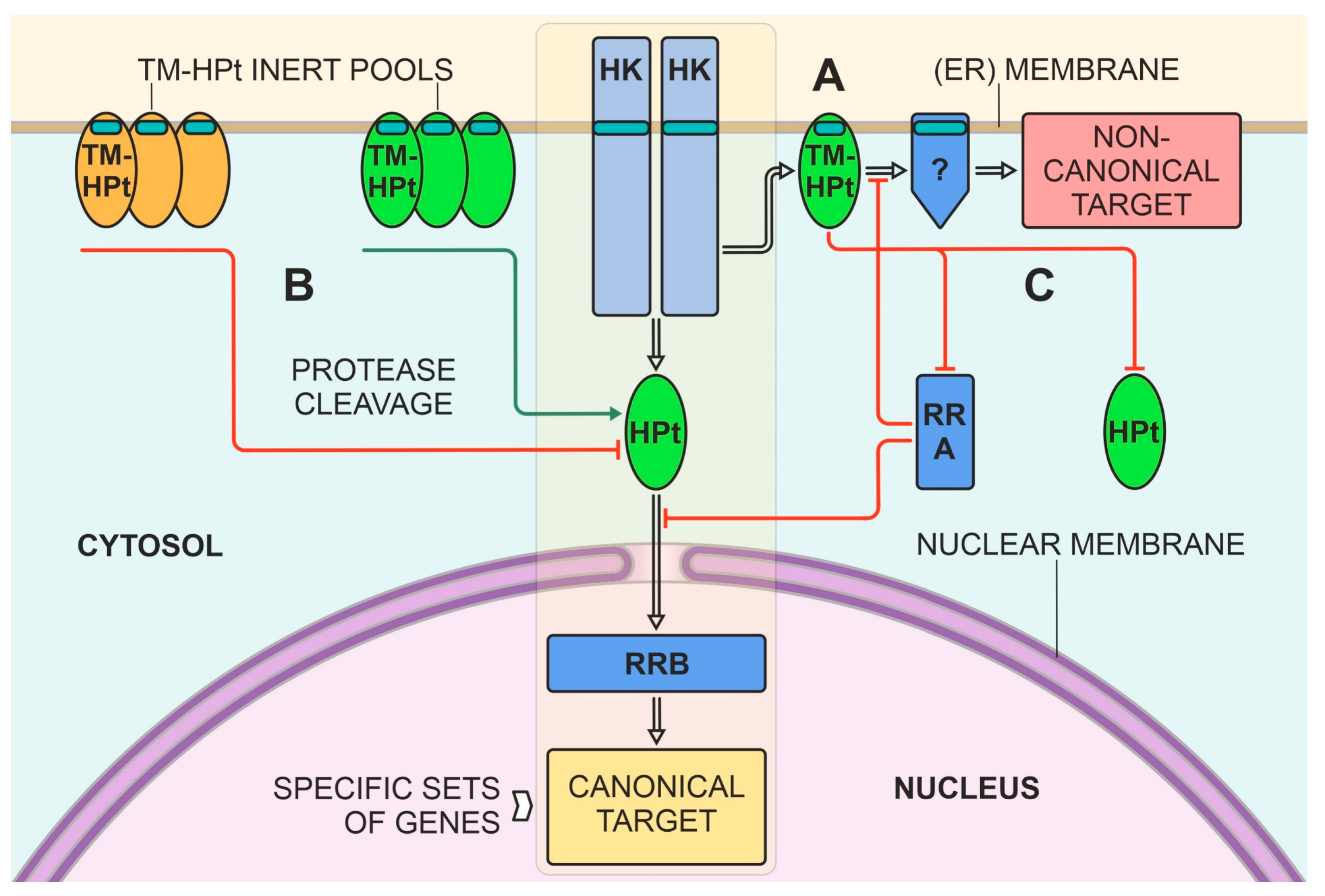
Large-Scale Multigenome-Wide Study Predicts the Existence of Transmembrane Phosphotransfer Proteins in Plant Multistep Phosphorelay Signaling Pathway
 , , , and
Abstract
1. Introduction
2. Results and Discussion
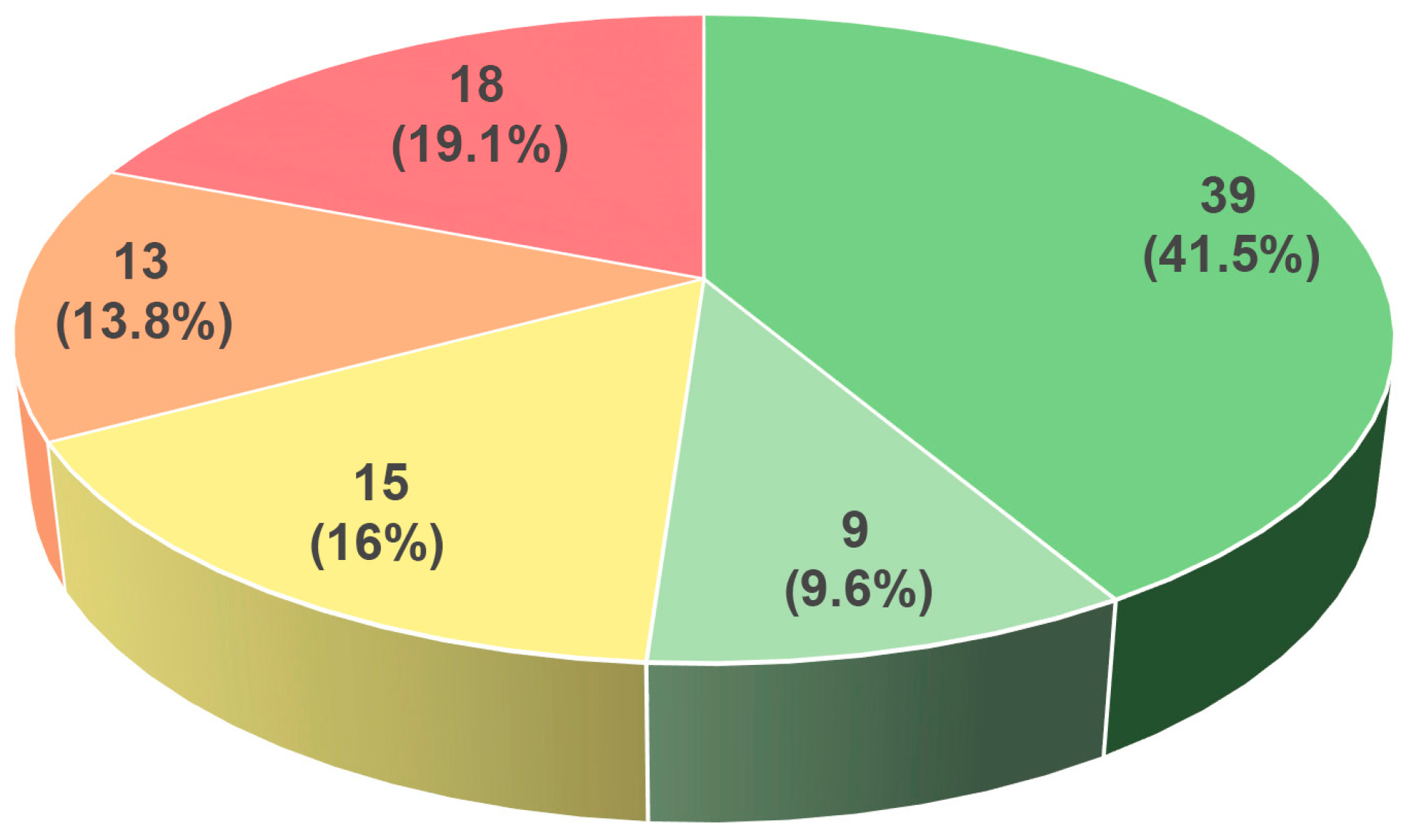
2.1. Search and Identification of Potential TM-Tethered Phosphotransfer Proteins
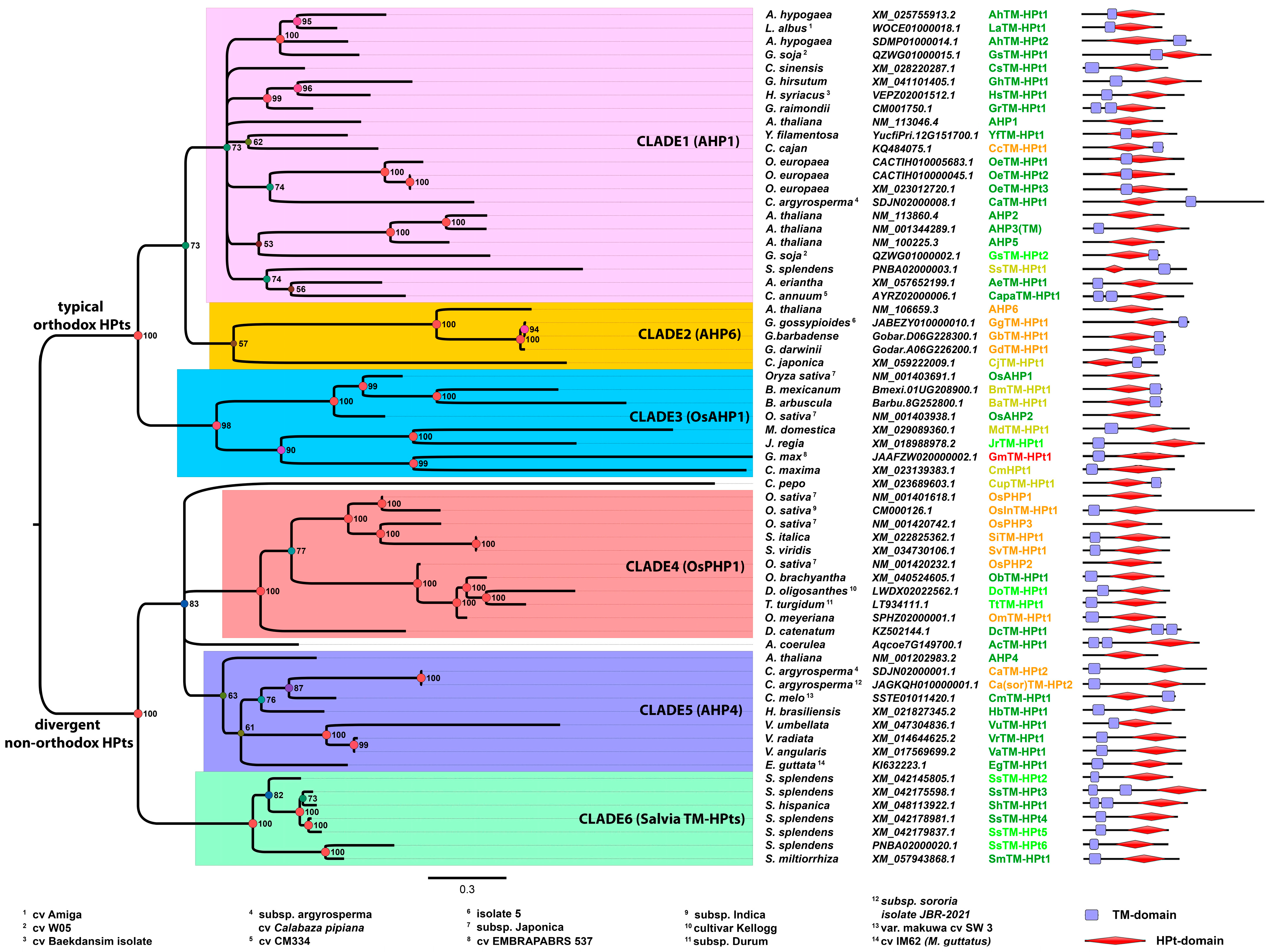
2.2. Phylogenetic Analysis of TM Phosphotransfer Proteins
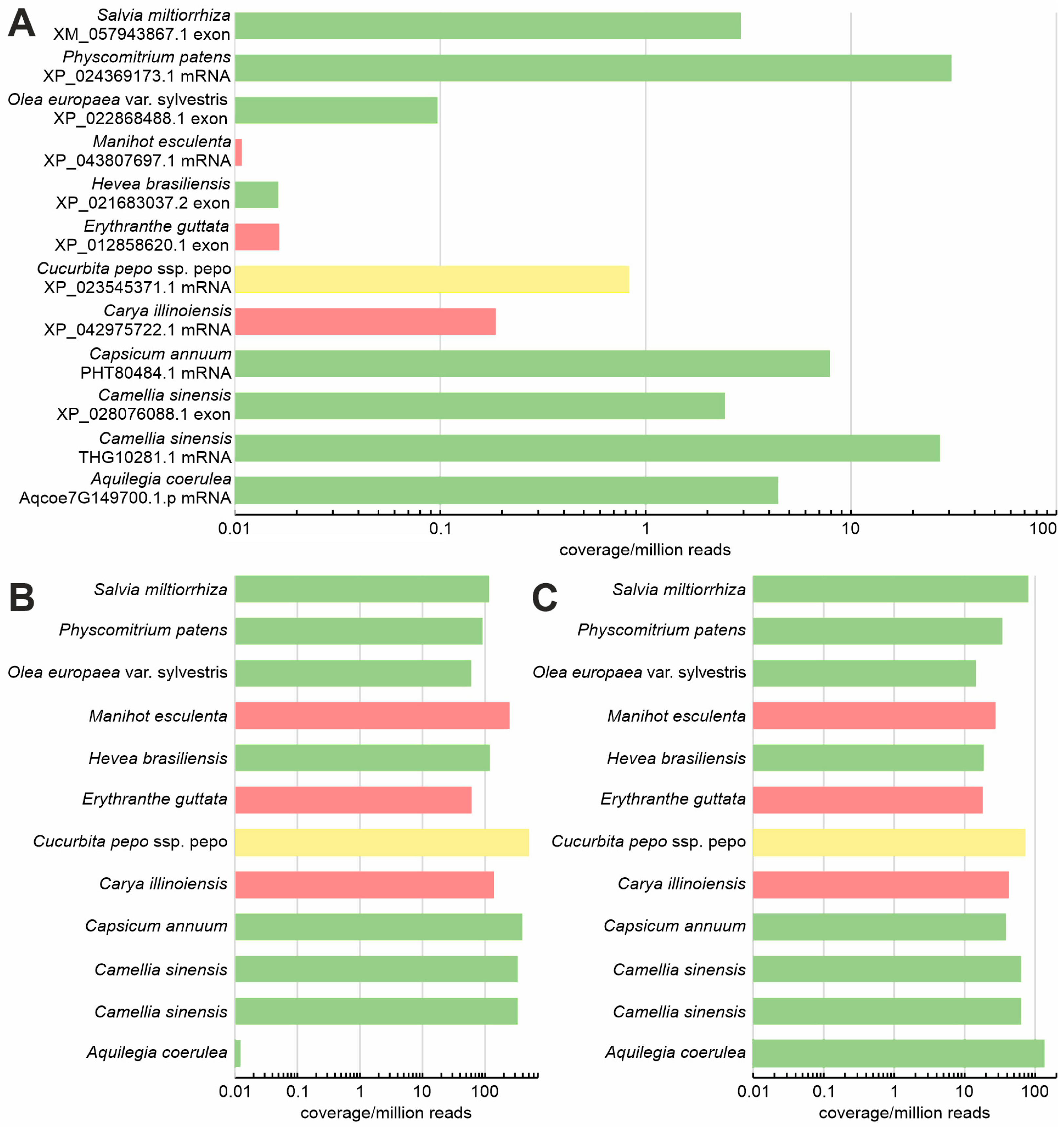
2.3. Transcriptomic Studies of TM-HPt Genes
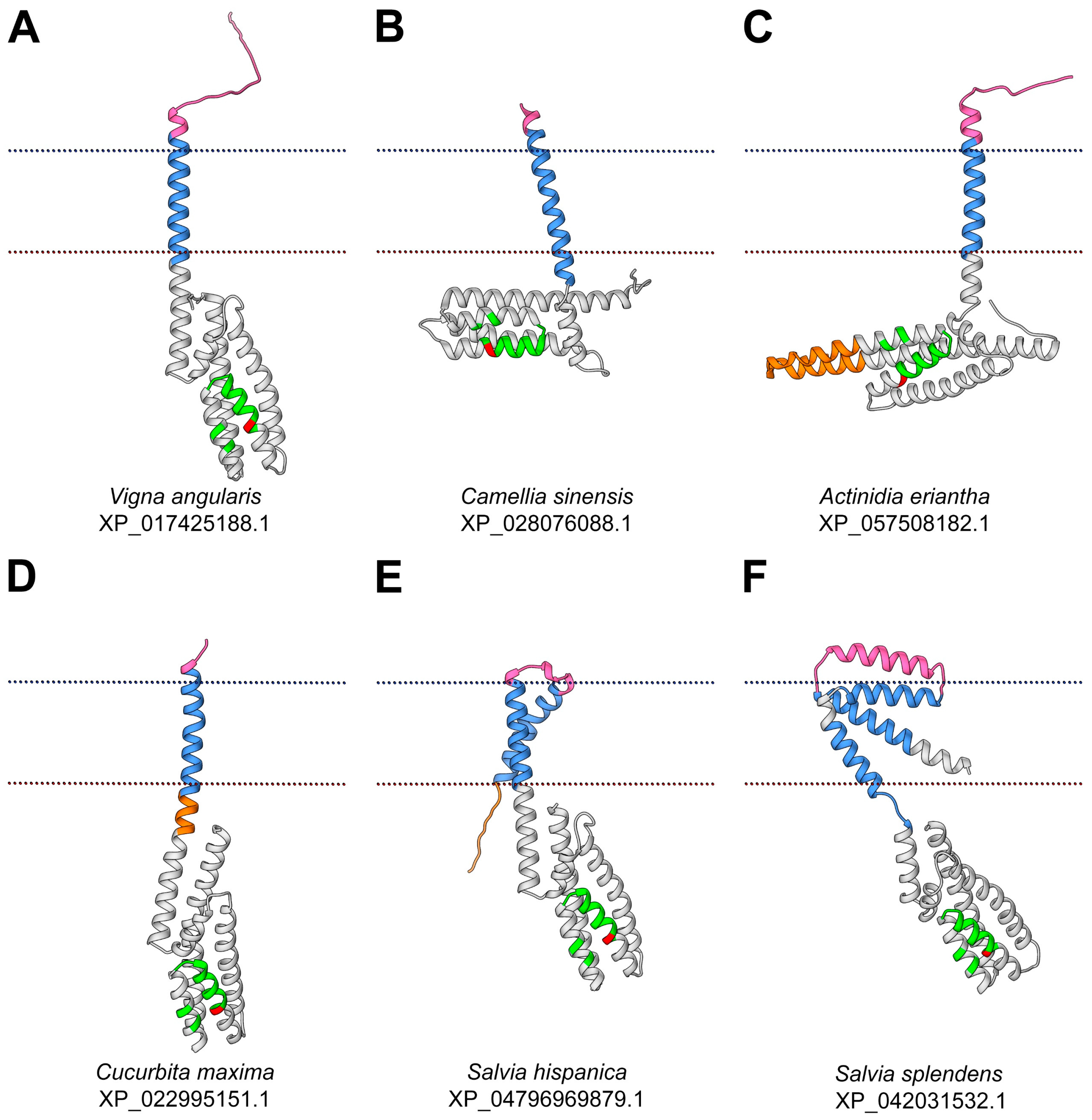
2.4. Molecular Modeling of TM-HPts
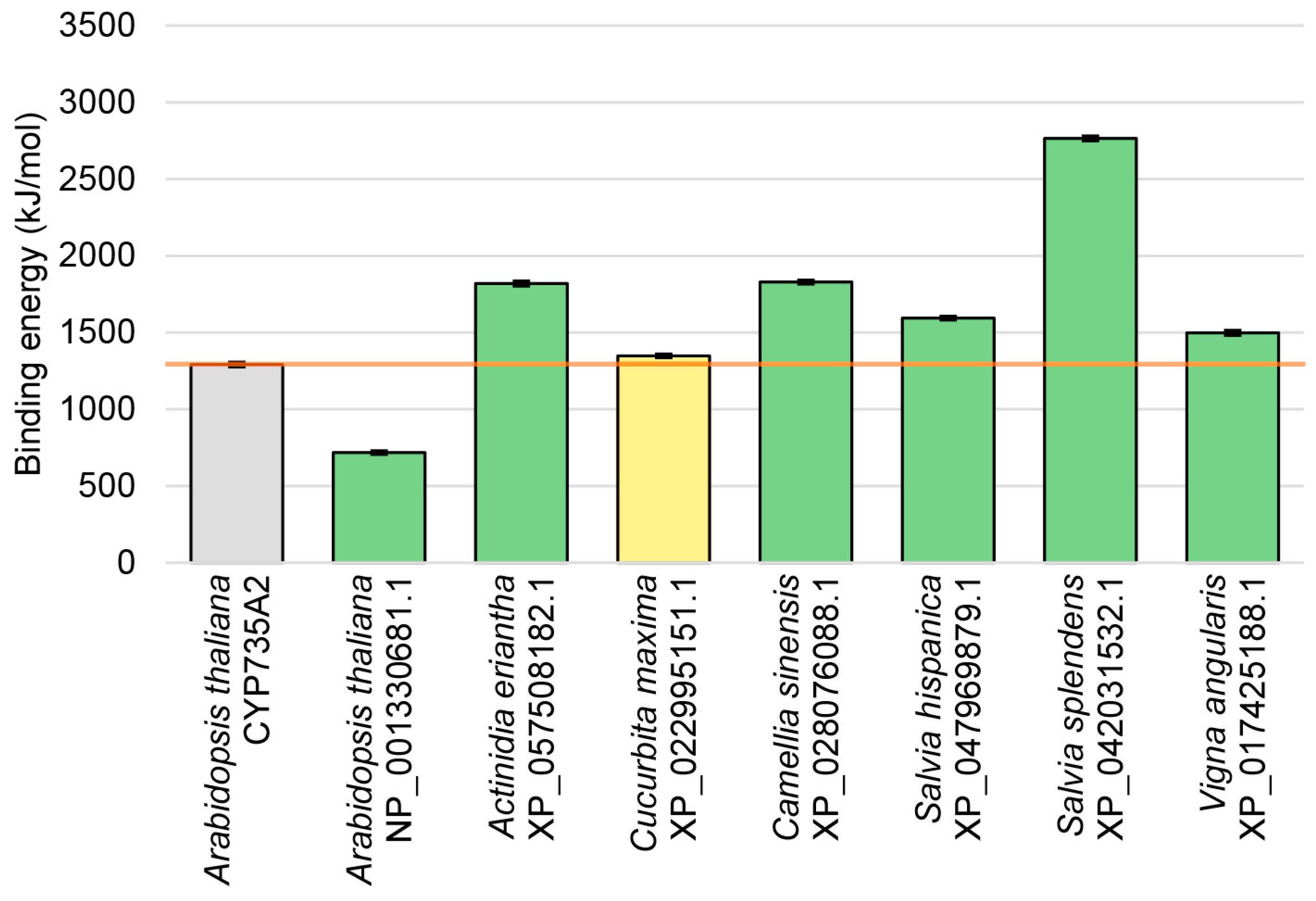
2.5. Molecular Dynamics Simulation of TM-HPts in Artificial Membrane
2.6. Possible Functional Meaning for the Presence of the TM Domain in Plant HPts
3. Methods
3.1. Bioinformatics Search for Phosphotransmitters with TM Domains
3.2. Phylogenetic Analysis
3.3. Determination of the Expression of TM-HPt-Encoding Transcripts
3.4. Molecular Modeling
3.5. Molecular Dynamics Simulation in Artificial Membrane
4. Conclusions
Supplementary Materials
Author Contributions
Funding
Institutional Review Board Statement
Informed Consent Statement
Data Availability Statement
Acknowledgments
Conflicts of Interest
Abbreviations
| aa | Amino acid |
| CK | Cytokinin |
| ER | Endoplasmic reticulum |
| HK | Histidine kinase |
| HPt | Phosphotransmitter |
| MD | Molecular dynamics |
| MSP | Multistep phosphorelay |
| PHP | Pseudo-HPt |
| RD | Receiver domain |
| RR | Response regulator |
| RRB | Type B RR |
| SE | Standard error |
| TM | Transmembrane domain (or protein) |
| TM-HPt | TM-containing phosphotransmitter |
References
- Sakakibara, H. Cytokinins: Activity, biosynthesis, and translocation. Annu. Rev. Plant. Biol. 2006, 57, 431–449. [Google Scholar] [CrossRef] [Scilit] [PubMed]
- Werner, T.; Schmülling, T. Cytokinin action in plant development. Curr. Opin. Plant. Biol. 2009, 12, 527–538. [Google Scholar] [CrossRef] [Scilit] [PubMed]
- Kieber, J.J.; Schaller, G.E. Cytokinins. Arab. Book 2014, 12, e0168. [Google Scholar] [CrossRef] [Scilit]
- Zürcher, E.; Müller, B. Cytokinin Synthesis, Signaling, and Function--Advances and New Insights. Int. Rev. Cell Mol. Biol. 2016, 324, 1–38. [Google Scholar] [CrossRef] [Scilit]
- Kakimoto, T. Perception and signal transduction of cytokinins. Annu. Rev. Plant Biol. 2003, 54, 605–627. [Google Scholar] [CrossRef] [Scilit]
- Lomin, S.N.; Krivosheev, D.M.; Steklov, M.Y.; Osolodkin, D.I.; Romanov, G.A. Receptor properties and features of cytokinin signaling. Acta Naturae 2012, 4, 31–45. [Google Scholar] [CrossRef] [Scilit]
- Kieber, J.J.; Schaller, G.E. Cytokinin signaling in plant development. Development 2018, 145, dev149344. [Google Scholar] [CrossRef] [Scilit] [PubMed]
- Zhao, J.; Wang, J.; Liu, J.; Zhang, P.; Kudoyarova, G.; Liu, C.J.; Zhang, K. Spatially distributed cytokinins: Metabolism, signaling, and transport. Plant Commun. 2024, 5, 100936. [Google Scholar] [CrossRef] [Scilit]
- Hu, Y.; Shani, E. Cytokinin activity—Transport and homeostasis at the whole plant, cell, and subcellular levels. New Phytol. 2023, 239, 1603–1608. [Google Scholar] [CrossRef] [Scilit]
- Mizuno, T. Compilation of all genes encoding two-component phosphotransfer signal transducers in the genome of Escherichia coli. DNA Res. 1997, 4, 161–168. [Google Scholar] [CrossRef] [Scilit]
- Stock, A.M.; Robinson, V.L.; Goudreau, P.N. Two-component signal transduction. Annu. Rev. Biochem. 2000, 69, 183–215. [Google Scholar] [CrossRef] [Scilit] [PubMed]
- Heyl, A.; Schmülling, T. Cytokinin signal perception and transduction. Curr. Opin. Plant. Biol. 2003, 6, 480–488. [Google Scholar] [CrossRef] [Scilit]
- Romanov, G.A. How do cytokinins affect the cell? Russ. J. Plant. Physiol. 2009, 56, 268–290. [Google Scholar] [CrossRef] [Scilit]
- Schaller, G.E.; Shiu, S.H.; Armitage, J.P. Two-component systems and their co-option for eukaryotic signal transduction. Curr. Biol. 2011, 21, R320–R330. [Google Scholar] [CrossRef] [Scilit]
- Arkhipov, D.V.; Lomin, S.N.; Myakushina, Y.A.; Savelieva, E.M.; Osolodkin, D.I.; Romanov, G.A. Modeling of Protein-Protein Interactions in Cytokinin Signal Transduction. Int. J. Mol. Sci. 2019, 20, 2096. [Google Scholar] [CrossRef] [Scilit]
- Hwang, I.; Sheen, J. Two-component circuitry in Arabidopsis cytokinin signal transduction. Nature 2001, 413, 383–389. [Google Scholar] [CrossRef] [Scilit] [PubMed]
- Yamada, H.; Koizumi, N.; Nakamichi, N.; Kiba, T.; Yamashino, T.; Mizuno, T. Rapid response of Arabidopsis T87 cultured cells to cytokinin through His-to-Asp phosphorelay signal transduction. Biosci. Biotechnol. Biochem. 2004, 68, 1966–1976. [Google Scholar] [CrossRef] [Scilit]
- Papon, N.; Vansiri, A.; Gantet, P.; Chénieux, J.C.; Rideau, M.; Crèche, J. Histidine-containing phosphotransfer domain extinction by RNA interference turns off a cytokinin signalling circuitry in Catharanthus roseus suspension cells. FEBS Lett. 2004, 558, 85–88. [Google Scholar] [CrossRef] [Scilit]
- Hutchison, C.E.; Li, J.; Argueso, C.; Gonzalez, M.; Lee, E.; Lewis, M.W.; Maxwell, B.B.; Perdue, T.D.; Schaller, G.E.; Alonso, J.M.; et al. The Arabidopsis histidine phosphotransfer proteins are redundant positive regulators of cytokinin signaling. Plant Cell 2006, 18, 3073–3087. [Google Scholar] [CrossRef] [Scilit]
- Hwang, I.; Chen, H.C.; Sheen, J. Two-component signal transduction pathways in Arabidopsis. Plant Physiol. 2002, 129, 500–515. [Google Scholar] [CrossRef] [Scilit]
- Suzuki, T.; Sakurai, K.; Imamura, A.; Nakamura, A.; Ueguchi, C.; Mizuno, T. Compilation and characterization of histidine-containing phosphotransmitters implicated in His-to-Asp phosphorelay in plants: AHP signal transducers of Arabidopsis thaliana. Biosci. Biotechnol. Biochem. 2000, 64, 2486–2489. [Google Scholar] [CrossRef] [Scilit]
- Suzuki, T.; Ishikawa, K.; Yamashino, T.; Mizuno, T. An Arabidopsis histidine-containing phosphotransfer (HPt) factor implicated in phosphorelay signal transduction: Overexpression of AHP2 in plants results in hypersensitiveness to cytokinin. Plant. Cell. Physiol. 2002, 43, 123–129. [Google Scholar] [CrossRef] [Scilit]
- Tanaka, Y.; Suzuki, T.; Yamashino, T.; Mizuno, T. Comparative studies of the AHP histidine-containing phosphotransmitters implicated in His-to-Asp phosphorelay in Arabidopsis thaliana. Biosci. Biotechnol. Biochem. 2004, 68, 462–465. [Google Scholar] [CrossRef] [Scilit] [PubMed]
- Hutchison, C.E.; Kieber, J.J. Signaling via Histidine-Containing Phosphotransfer Proteins in Arabidopsis. Plant. Signal. Behav. 2007, 2, 287–289. [Google Scholar] [CrossRef] [Scilit] [PubMed]
- Deng, Y.; Dong, H.; Mu, J.; Ren, B.; Zheng, B.; Ji, Z.; Yang, W.C.; Liang, Y.; Zuo, J. Arabidopsis histidine kinase CKI1 acts upstream of histidine phosphotransfer proteins to regulate female gametophyte development and vegetative growth. Plant Cell 2010, 22, 1232–1248. [Google Scholar] [CrossRef] [Scilit]
- Mähönen, A.P.; Bishopp, A.; Higuchi, M.; Nieminen, K.M.; Kinoshita, K.; Törmäkangas, K.; Ikeda, Y.; Oka, A.; Kakimoto, T.; Helariutta, Y. Cytokinin signaling and its inhibitor AHP6 regulate cell fate during vascular development. Science 2006, 311, 94–98. [Google Scholar] [CrossRef] [Scilit]
- Liu, Z.; Yuan, L.; Song, X.; Yu, X.; Sundaresan, V. AHP2, AHP3, and AHP5 act downstream of CKI1 in Arabidopsis female gametophyte development. J. Exp. Bot. 2017, 68, 3365–3373. [Google Scholar] [CrossRef] [Scilit] [PubMed]
- Scharein, B.; Voet-van-Vormizeele, J.; Harter, K.; Groth, G. Ethylene signaling: Identification of a putative ETR1-AHP1 phosphorelay complex by fluorescence spectroscopy. Anal. Biochem. 2008, 377, 72–76. [Google Scholar] [CrossRef] [Scilit]
- Scharein, B.; Groth, G. Phosphorylation alters the interaction of the Arabidopsis phosphotransfer protein AHP1 with its sensor kinase ETR1. PLoS ONE 2011, 6, e24173. [Google Scholar] [CrossRef] [Scilit]
- Singh, D.; Gupta, P.; Singla-Pareek, S.L.; Siddique, K.H.M.; Pareek, A. The Journey from Two-Step to Multi-Step Phosphorelay Signaling Systems. Curr Genom. 2021, 22, 59–74. [Google Scholar] [CrossRef] [Scilit]
- Vaughan-Hirsch, J.; Tallerday, E.J.; Burr, C.A.; Hodgens, C.; Boeshore, S.L.; Beaver, K.; Melling, A.; Sari, K.; Kerr, I.D.; Šimura, J.; et al. Function of the pseudo phosphotransfer proteins has diverged between rice and Arabidopsis. Plant J. 2021, 106, 159–173. [Google Scholar] [CrossRef] [Scilit]
- Punwani, J.A.; Kieber, J.J. Localization of the Arabidopsis histidine phosphotransfer proteins is independent of cytokinin. Plant Signal. Behav. 2010, 5, 896–898. [Google Scholar] [CrossRef] [Scilit]
- Lomin, S.N.; Myakushina, Y.A.; Kolachevskaya, O.O.; Getman, I.A.; Savelieva, E.M.; Arkhipov, D.V.; Deigraf, S.V.; Romanov, G.A. Global View on the Cytokinin Regulatory System in Potato. Front. Plant. Sci. 2020, 11, 613624. [Google Scholar] [CrossRef] [Scilit] [PubMed]
- Lomin, S.N.; Savelieva, E.M.; Elanskaya, A.S.; Arkhipov, D.V.; Romanov, G.A. Evidence for Functionality of Transmembrane Domains of Predicted Non-Canonical Plant Phosphotransmitters. Dokl. Biochem. Biophys. 2025, 522, 309–314. [Google Scholar] [CrossRef] [Scilit]
- Steklov, M.Y.; Lomin, S.N.; Osolodkin, D.I.; Romanov, G.A. Structural basis for cytokinin receptor signaling: An evolutionary approach. Plant. Cell. Rep. 2013, 32, 781–793. [Google Scholar] [CrossRef] [Scilit]
- Guo, X.P.; Sun, Y.C. New Insights into the Non-orthodox Two Component Rcs Phosphorelay System. Front. Microbiol. 2017, 8, 2014. [Google Scholar] [CrossRef] [Scilit]
- Kaltenegger, E.; Leng, S.; Heyl, A. The effects of repeated whole genome duplication events on the evolution of cytokinin signaling pathway. BMC Evol. Bio. 2018, 18, 76. [Google Scholar] [CrossRef] [Scilit] [PubMed]
- Shi, X.; Rashotte, A.M. Advances in upstream players of cytokinin phosphorelay: Receptors and histidine phosphotransfer proteins. Plant. Cell. Rep. 2012, 31, 789–799. [Google Scholar] [CrossRef] [Scilit]
- Bauer, J.; Reiss, K.; Veerabagu, M.; Heunemann, M.; Harter, K.; Stehle, T. Structure-function analysis of Arabidopsis thaliana histidine kinase AHK5 bound to its cognate phosphotransfer protein AHP1. Mol. Plant. 2013, 6, 959–970. [Google Scholar] [CrossRef] [Scilit]
- Punwani, J.A.; Hutchison, C.E.; Schaller, G.E.; Kieber, J.J. The subcellular distribution of the Arabidopsis histidine phosphotransfer proteins is independent of cytokinin signaling. Plant J. 2010, 62, 473–482. [Google Scholar] [CrossRef] [Scilit] [PubMed]
- Lomin, S.N.; Myakushina, Y.A.; Arkhipov, D.V.; Leonova, O.G.; Popenko, V.I.; Schmülling, T.; Romanov, G.A. Studies of cytokinin receptor-phosphotransmitter interaction provide evidences for the initiation of cytokinin signalling in the endoplasmic reticulum. Funct. Plant. Biol. 2018, 45, 192–202. [Google Scholar] [CrossRef] [Scilit]
- Dell, A.; Galadari, A.; Sastre, F.; Hitchen, P. Similarities and differences in the glycosylation mechanisms in prokaryotes and eukaryotes. Int. J. Microbiol. 2010, 2010, 148178. [Google Scholar] [CrossRef] [Scilit]
- Duran-Romaña, R.; Houben, B.; De Vleeschouwer, M.; Louros, N.; Wilson, M.P.; Matthijs, G.; Schymkowitz, J.; Rousseau, F. N-glycosylation as a eukaryotic protective mechanism against protein aggregation. Sci. Adv. 2024, 10, eadk8173. [Google Scholar] [CrossRef] [Scilit]
- Moreau, P.; Bessoule, J.J.; Mongrand, S.; Testet, E.; Vincent, P.; Cassagne, C. Lipid trafficking in plant cells. Prog. Lipid Res. 1998, 37, 371–391. [Google Scholar] [CrossRef] [Scilit]
- Krieger, E.; Vriend, G. YASARA View—Molecular graphics for all devices—From smartphones to workstations. Bioinformatics 2014, 30, 2981–2982. [Google Scholar] [CrossRef] [Scilit]
- Sakakibara, H. Five unaddressed questions about cytokinin biosynthesis. J. Exp. Bot. 2025, 76, 1941–1949. [Google Scholar] [CrossRef] [Scilit] [PubMed]
- Bassard, J.E.; Mutterer, J.; Duval, F.; Werck-Reichhart, D. A novel method for monitoring the localization of cytochromes P450 and other endoplasmic reticulum membrane associated proteins: A tool for investigating the formation of metabolons. FEBS J. 2012, 279, 1576–1583. [Google Scholar] [CrossRef] [Scilit]
- Hansen, C.C.; Nelson, D.R.; Møller, B.L.; Werck-Reichhart, D. Plant cytochrome P450 plasticity and evolution. Mol. Plant 2021, 14, 1244–1265, Erratum in Mol. Plant 2021, 14, 1772. https://doi.org/10.1016/j.molp.2021.09.013. [Google Scholar] [CrossRef] [Scilit] [PubMed]
- Demir, F.; Niedermaier, S.; Villamor, J.G.; Huesgen, P.F. Quantitative proteomics in plant protease substrate identification. New Phytol. 2018, 218, 936–943. [Google Scholar] [CrossRef] [Scilit] [PubMed]
- Ku, Y.S.; Cheng, S.S.; Cheung, M.Y.; Law, C.H.; Lam, H.M. The Re-Localization of Proteins to or Away from Membranes as an Effective Strategy for Regulating Stress Tolerance in Plants. Membranes 2022, 12, 1261. [Google Scholar] [CrossRef] [Scilit]
- Li, K.; Li, H.; Liang, W.L.; Liu, J.J.; Tian, H.Y.; Wang, L.H.; Wei, Y.H. Identification of the AHP family reveals their critical response to cytokinin regulation during adventitious root formation in apple rootstock. Front. Plant. Sci. 2025, 15, 1511713. [Google Scholar] [CrossRef] [Scilit]
- Imamura, A.; Yoshino, Y.; Mizuno, T. Cellular localization of the signaling components of Arabidopsis His-to-Asp phosphorelay. Biosci. Biotechnol. Biochem. 2001, 65, 2113–2117. [Google Scholar] [CrossRef] [Scilit]
- Dortay, H.; Gruhn, N.; Pfeifer, A.; Schwerdtner, M.; Schmülling, T.; Heyl, A. Toward an interaction map of the two-component signaling pathway of Arabidopsis thaliana. J. Proteome Res. 2008, 7, 3649–3660. [Google Scholar] [CrossRef] [Scilit]
- Altschul, S.F.; Gish, W.; Miller, W.; Myers, E.W.; Lipman, D.J. Basic local alignment search tool. J. Mol. Biol. 1990, 215, 403–410. [Google Scholar] [CrossRef] [PubMed]
- Krogh, A.; Larsson, B.; von Heijne, G.; Sonnhammer, E.L. Predicting transmembrane protein topology with a hidden Markov model: Application to complete genomes. J. Mol. Biol. 2001, 305, 567–580. [Google Scholar] [CrossRef] [Scilit] [PubMed]
- Käll, L.; Krogh, A.; Sonnhammer, E.L. Advantages of combined transmembrane topology and signal peptide prediction--the Phobius web server. Nucleic Acids Res. 2007, 35, W429–W432. [Google Scholar] [CrossRef] [Scilit] [PubMed]
- Dobson, L.; Reményi, I.; Tusnády, G.E. CCTOP: A Consensus Constrained TOPology prediction web server. Nucleic Acids Res. 2015, 43, W408–W412. [Google Scholar] [CrossRef] [Scilit]
- Paysan-Lafosse, T.; Blum, M.; Chuguransky, S.; Grego, T.; Pinto, B.L.; Salazar, G.A.; Bileschi, M.L.; Bork, P.; Bridge, A.; Colwell, L.; et al. InterPro in 2022. Nucleic Acids Res. 2023, 51, D418–D427. [Google Scholar] [CrossRef] [Scilit]
- Sayers, E.W.; Beck, J.; Bolton, E.E.; Brister, J.R.; Chan, J.; Comeau, D.C.; Connor, R.; DiCuccio, M.; Farrell, C.M.; Feldgarden, M.; et al. Database resources of the National Center for Biotechnology Information. Nucleic Acids Res. 2024, 52, D33–D43. [Google Scholar] [CrossRef] [Scilit]
- Okonechnikov, K.; Golosova, O.; Fursov, M.; UGENE Team. Unipro UGENE: A unified bioinformatics toolkit. Bioinformatics 2012, 28, 1166–1167. [Google Scholar] [CrossRef] [Scilit]
- Golosova, O.; Henderson, R.; Vaskin, Y.; Gabrielian, A.; Grekhov, G.; Nagarajan, V.; Oler, A.J.; Quiñones, M.; Hurt, D.; Fursov, M.; et al. Unipro UGENE NGS pipelines and components for variant calling, RNA-seq and ChIP-seq data analyses. PeerJ 2014, 2, e644. [Google Scholar] [CrossRef] [Scilit]
- Rose, R.; Golosova, O.; Sukhomlinov, D.; Tiunov, A.; Prosperi, M. Flexible design of multiple metagenomics classification pipelines with UGENE. Bioinformatics 2019, 35, 1963–1965. [Google Scholar] [CrossRef] [Scilit]
- Liao, Y.; Smyth, G.K.; Shi, W. The R package Rsubread is easier, faster, cheaper and better for alignment and quantification of RNA sequencing reads. Nucleic Acids Res. 2019, 47, e47. [Google Scholar] [CrossRef] [Scilit] [PubMed]
- McGuffin, L.J.; Edmunds, N.S.; Genc, A.G.; Alharbi, S.M.A.; Salehe, B.R.; Adiyaman, R. Prediction of protein structures, functions and interactions using the IntFOLD7, MultiFOLD and ModFOLDdock servers. Nucleic Acids Res. 2023, 51, W274–W280. [Google Scholar] [CrossRef] [Scilit] [PubMed]
- Krieger, E.; Darden, T.; Nabuurs, S.B.; Finkelstein, A.; Vriend, G. Making optimal use of empirical energy functions: Force-field parameterization in crystal space. Proteins 2004, 57, 678–683. [Google Scholar] [CrossRef] [Scilit] [PubMed]
- Omasits, U.; Ahrens, C.H.; Müller, S.; Wollscheid, B. Protter: Interactive protein feature visualization and integration with experimental proteomic data. Bioinformatics 2014, 30, 884–886. [Google Scholar] [CrossRef] [Scilit]
- Lomize, A.L.; Todd, S.C.; Pogozheva, I.D. Spatial arrangement of proteins in planar and curved membranes by PPM 3.0. Protein Sci. 2022, 31, 209–220. [Google Scholar] [CrossRef] [Scilit]
- Pettersen, E.F.; Goddard, T.D.; Huang, C.C.; Couch, G.S.; Greenblatt, D.M.; Meng, E.C.; Ferrin, T.E. UCSF Chimera--a visualization system for exploratory research and analysis. J. Comput. Chem. 2004, 25, 1605–1612. [Google Scholar] [CrossRef] [Scilit]
- Krieger, E.; Nielsen, J.E.; Spronk, C.A.; Vriend, G. Fast empirical pKa prediction by Ewald summation. J. Mol. Graph. Model. 2006, 25, 481–486. [Google Scholar] [CrossRef] [Scilit]
- Krieger, E.; Dunbrack, R.L., Jr.; Hooft, R.W.; Krieger, B. Assignment of protonation states in proteins and ligands: Combining pKa prediction with hydrogen bonding network optimization. Methods Mol. Biol. 2012, 819, 405–421. [Google Scholar] [CrossRef] [Scilit]
- Maier, J.A.; Martinez, C.; Kasavajhala, K.; Wickstrom, L.; Hauser, K.E.; Simmerling, C. ff14SB: Improving the Accuracy of Protein Side Chain and Backbone Parameters from ff99SB. J. Chem. Theory Comput. 2015, 11, 3696–3713. [Google Scholar] [CrossRef] [Scilit] [PubMed]





| Position aa Number | Typical aa on this Position | α-Helix | Facing Outside or Inside | |
|---|---|---|---|---|
| H Set to 0 | in AHP2 | |||
| −1 | 81 (V) | V, M | α4 | in |
| 0 | 82 (H) | H * | α4 | out |
| 1 | 83 (Q) | Q | α4 | out |
| 2 | 84 (L) | L, F, Y | α4 | in |
| 3 | 85 (K) | K | α4 | out |
| 4 | 86 (G) | G | α4 | out |
| 5 | 87 (S) | S | α4 | out |
| 6 | 88 (S) | S | α4 | in |
| 7 | 89 (S) | S, A, T | α4 | out |
| 8 | 90 (S) | S | α4 | out |
| 9 | 91 (V) | V, I | α4 | out |
| 10 | 92 (G) | G | α4 | in |
| 11 | 93 (A) | A | α4 | in |
| 19 | 101 (V) | V, I, A, L, T, S, M | α5 | out |
| 22 | 104 (K) | K, R, Q | α5 | out |
| Plant Species | Protein ID | Database | Protein Length (aa) | Predicted TM Position: | Active Site | Binding Motif | |
|---|---|---|---|---|---|---|---|
| CCTOP | Phobius | ||||||
| Actinidia eriantha | XP_057508182.1 | NCBI | 211 | 17–34 | 20–39 | + | + |
| Anthoceros punctatus | Apun_evm.model. utg000023l.837.1 | Hornworts | 241 | 198–215 | 199–219 | + | + |
| Aquilegia coerulea | Aqcoe7G149700.1.p | Phytozome | 224 | 25–52 | 12–32 38–57 | + | + |
| Arachis hypogaea | XP_025611698.1 | NCBI | 159 | 14–33 52–67 | 51–68 | + | + |
| Camellia sinensis | XP_028076088.1 | NCBI | 164 | 7–32 | 6–32 | + | + |
| Glycine soja | RZB63908.1 | NCBI | 206 | 90–109 | 90–112 | + | + |
| Olea europaea subsp. europaea | CAA3000307.1 | NCBI | 177 | 69–96 | 57–76 82–99 | + | + |
| Oryza brachyantha | XP_040380539.1 | NCBI | 156 | 6–24 | 6–28 | + | + |
| Physcomitrium patens | XP_024369173.1 | NCBI | 425 | 77–101 161–176 | 37–55 76–98 159–176 | + | + |
| Salvia splendens | XP_042031532.1 | NCBI | 236 | 12–29 81–98 | 12–30 58–75 82–101 | + | + |
| XP_042031534.1 | NCBI | 219 | 12–29 81–98 | 12–30 58–75 82–101 | + | + | |
| Vigna angularis | XP_017425188.1 | NCBI | 198 | 27–48 | 27–48 | + | + |
| Vigna radiata var. radiata | XP_014500111.1 | NCBI | 198 | 27–48 | 27–48 | + | + |
| Juglans regia | XP_018844524.2 | NCBI | 205 | 20–41 | 28–47 | + | +/− |
| Triticum turgidum subsp. durum | VAH03188.1 | NCBI | 160 | 7–28 | 7–28 | + | +/− |
| Brachypodium arbuscula | Barbu.8G252800.1.p | Phytozome | 153 | 132–150 | 129–150 | + | − |
| Brachypodium mexicanum | Bmexi.01UG208900.1.p | Phytozome | 140 | 108–125 | 108–125 | + | − |
| Cucurbita maxima | XP_022995151.1 | NCBI | 178 | 7–28 | 6–26 | + | − |
| Cucurbita pepo subsp. pepo | XP_023545371.1 | NCBI | 151 | 132–150 | 132–150 | + | − |
| Cryptomeria japonica | XP_059077992.1 | NCBI | 144 | 96–111 | 96–114 | + | − |
| Picea abies | MA_8815334g0010 | PlantGenIE | 230 | 203–225 | 206–225 | + | − |
| Quercus suber | KAK7845242.1 | NCBI | 443 | 121–141 164–184 221–241 | 121–146 166–184 221–240 | + | − |
| Salvia splendens | XP_042031535.1 | NCBI | 212 | 12–29 81–98 | 12–30 58–75 82–101 | + | − |
| Gossypium barbadense | Gobar.D06G228300.1.p | Phytozome | 159 | 137–155 | 137–155 | − | +/− |
| Gossypium darwinii | Godar.A06G226200.1.p | Phytozome | 159 | 138–158 | 137–157 | − | +/− |
| Malus domestica | RXH68939.1 | NCBI | 569 | 122–144 152–172 271–291 | 123–144 150–172 275–295 | − | +/− |
| Oryza sativa Indica Group | EEC71462.1 | NCBI | 328 | 11–29 | 12–33 | − | +/− |
| Carya illinoinensis | XP_042975722.1 | NCBI | 128 | 10–34 | 22–43 | − | − |
| Linum usitatissimum | Lus10029623 | Phytozome | 100 | 11–31 | 12–35 | − | − |
| Manihot esculenta | XP_043807697.1 | NCBI | 162 | 141–161 | 141–161 | − | − |
| Populus trichocarpa | XP_024465836.1 | NCBI | 179 | 26–49 | 27–49 | − | − |
| Triticum aestivum | XP_044417723.1 | NCBI | 204 | 43–64 | 43–67 | − | − |
Disclaimer/Publisher’s Note: The statements, opinions and data contained in all publications are solely those of the individual author(s) and contributor(s) and not of MDPI and/or the editor(s). MDPI and/or the editor(s) disclaim responsibility for any injury to people or property resulting from any ideas, methods, instructions or products referred to in the content. |
© 2025 by the authors. Licensee MDPI, Basel, Switzerland. This article is an open access article distributed under the terms and conditions of the Creative Commons Attribution (CC BY) license.
Share and Cite
Lomin, S.N.; Brenner, W.G.; Savelieva, E.M.; Arkhipov, D.V.; Romanov, G.A. Large-Scale Multigenome-Wide Study Predicts the Existence of Transmembrane Phosphotransfer Proteins in Plant Multistep Phosphorelay Signaling Pathway. Int. J. Mol. Sci. 2026, 27, 240. https://doi.org/10.3390/ijms27010240
Lomin SN, Brenner WG, Savelieva EM, Arkhipov DV, Romanov GA. Large-Scale Multigenome-Wide Study Predicts the Existence of Transmembrane Phosphotransfer Proteins in Plant Multistep Phosphorelay Signaling Pathway. International Journal of Molecular Sciences. 2026; 27(1):240. https://doi.org/10.3390/ijms27010240
Chicago/Turabian StyleLomin, Sergey N., Wolfram G. Brenner, Ekaterina M. Savelieva, Dmitry V. Arkhipov, and Georgy A. Romanov. 2026. "Large-Scale Multigenome-Wide Study Predicts the Existence of Transmembrane Phosphotransfer Proteins in Plant Multistep Phosphorelay Signaling Pathway" International Journal of Molecular Sciences 27, no. 1: 240. https://doi.org/10.3390/ijms27010240
APA StyleLomin, S. N., Brenner, W. G., Savelieva, E. M., Arkhipov, D. V., & Romanov, G. A. (2026). Large-Scale Multigenome-Wide Study Predicts the Existence of Transmembrane Phosphotransfer Proteins in Plant Multistep Phosphorelay Signaling Pathway. International Journal of Molecular Sciences, 27(1), 240. https://doi.org/10.3390/ijms27010240