Understanding Fascial Tissue on the Molecular Level—How Its Unique Properties Enable Adaptation or Dysfunction



Abstract
1. Introduction
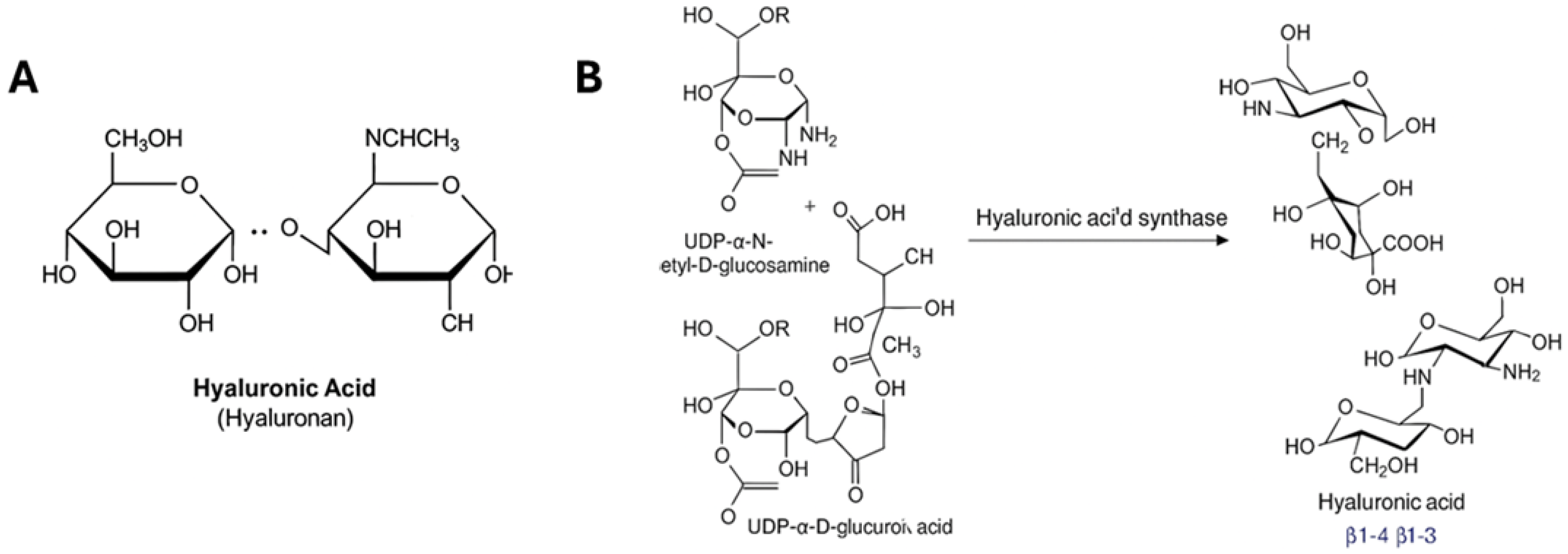
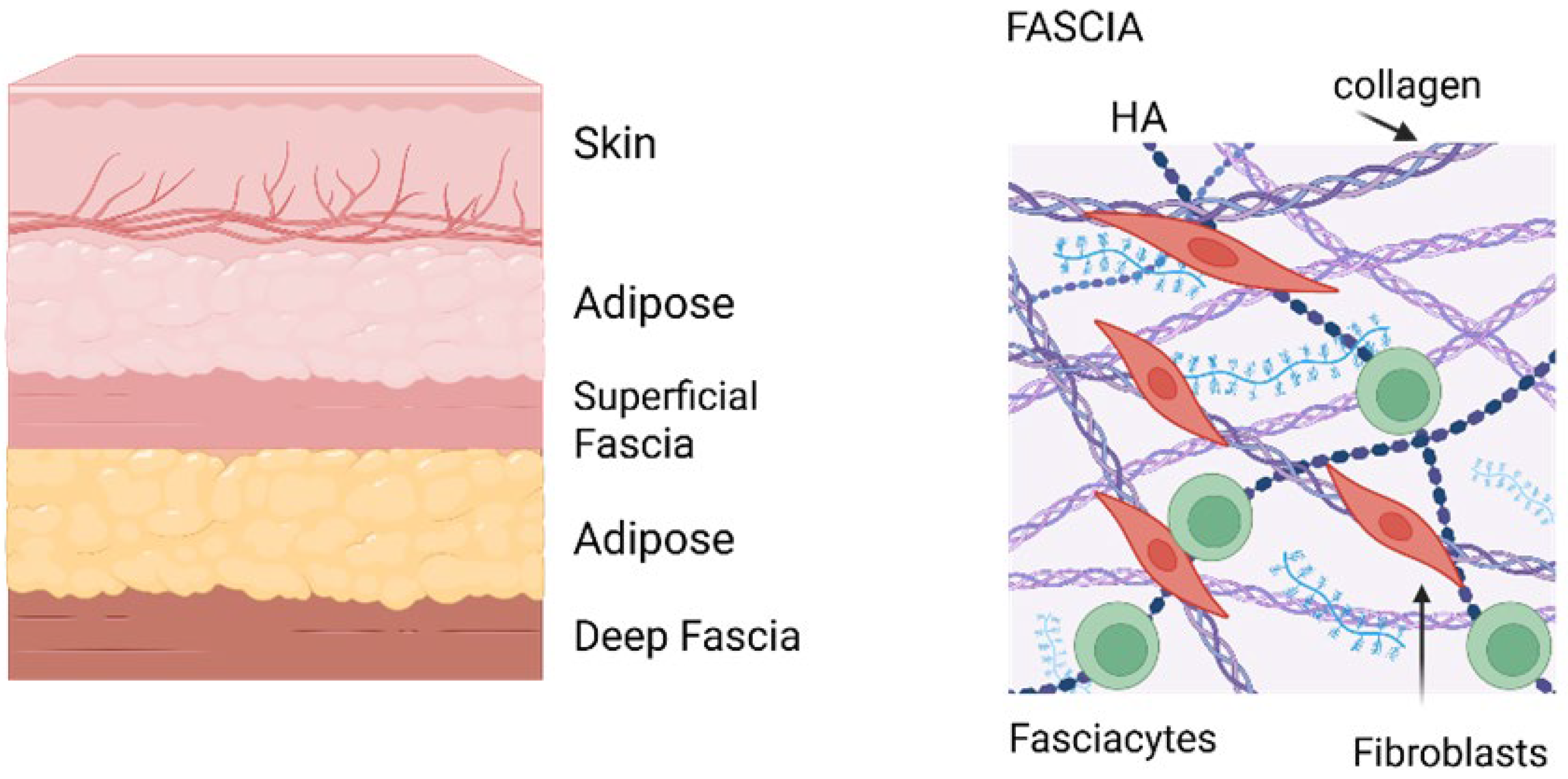
1.1. HA in Fascia: Structure, Function, and Cellular Sources
1.2. HAS2: The Key Contributor of Normal HA in the ECM
1.3. HAS2-Expressing Cells: From Fibroblasts to Fasciacytes
1.4. Fascia Mechanotransduction: Multiple Pathways
1.5. YAP as a Downstream Mechanotransducer
1.6. HA: The Global Mechanotransductive Gel
1.7. Aims and Scope of This Review
2. The Calcium-HA (CHA) Axis: Overview
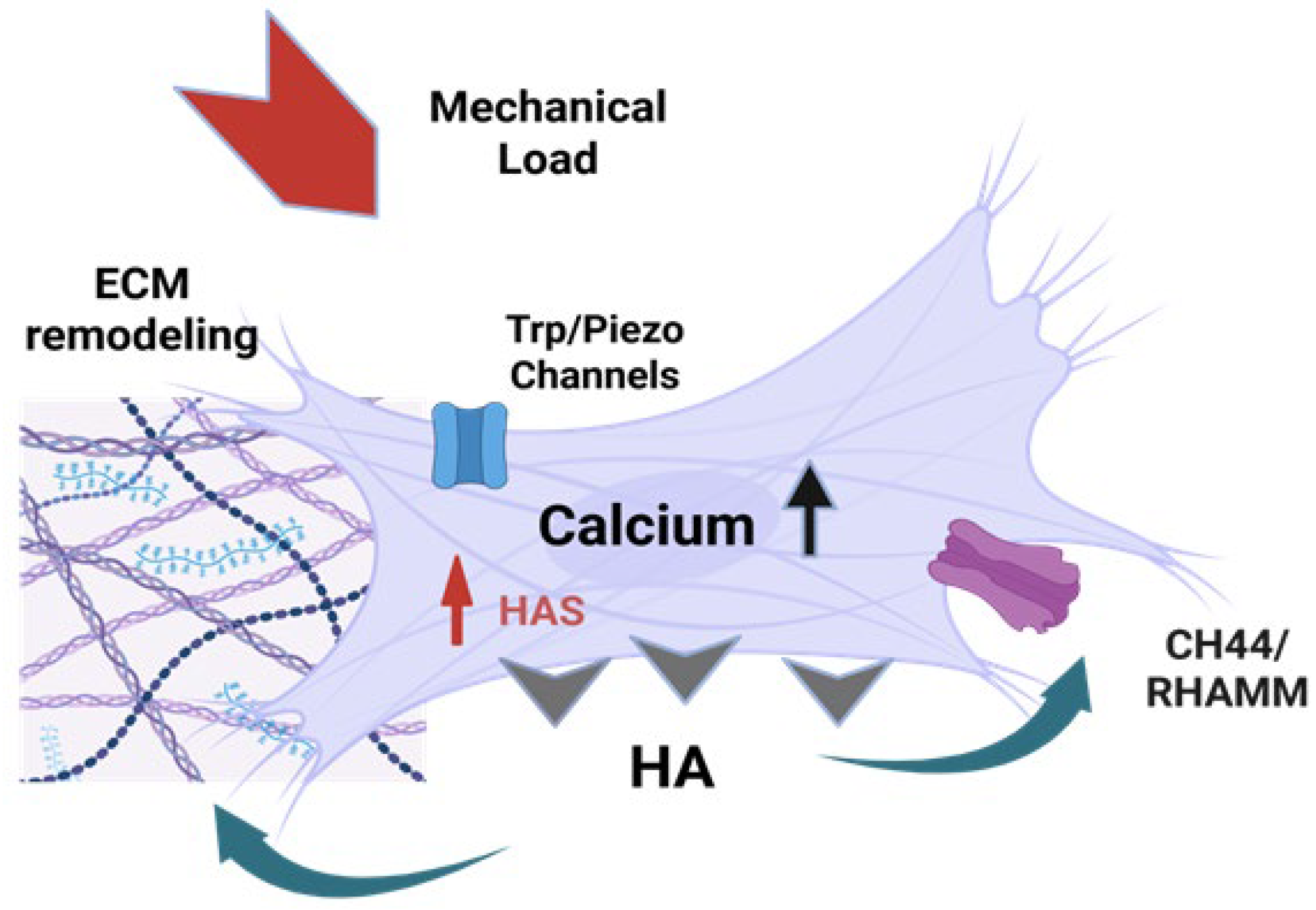
2.1. The CHA Axis: The Mechanotransduction Feedback Loop in Fascia
2.2. The Fundamental Role of Calcium in Cell Signaling
2.3. Calcium-Driven HA Synthesis as Mechanical Adaptation
3. Mechanotransduction and Calcium Signaling
3.1. Mechanical Forces as Primary Fascial Stimuli
3.2. Dose–Response: Intensity and Duration of Mechanical Stress

3.3. Mechanosensitive Channel Diversity
4. The HAS2–Calcium Signaling Cascade: Molecular Mechanisms
4.1. From Mechanical Force to HAS2 Transcription
4.2. The Molecular Relay: CaMKII, PKC, MAPK, and CRE
4.2.1. Signal Amplification: The Molecular Megaphone
4.2.2. The Sequential Relay: CaMKII → PKC → MAPK → CREB
4.2.3. Temporal Dynamics of the Cascade
5. HA Extrusion: Simultaneous Synthesis and Secretion
5.1. HAS2: Both a Synthase and a Translocator
5.2. Negative Feedback and Signal Termination
Mechanisms for Termination
6. HA–Receptor Signaling
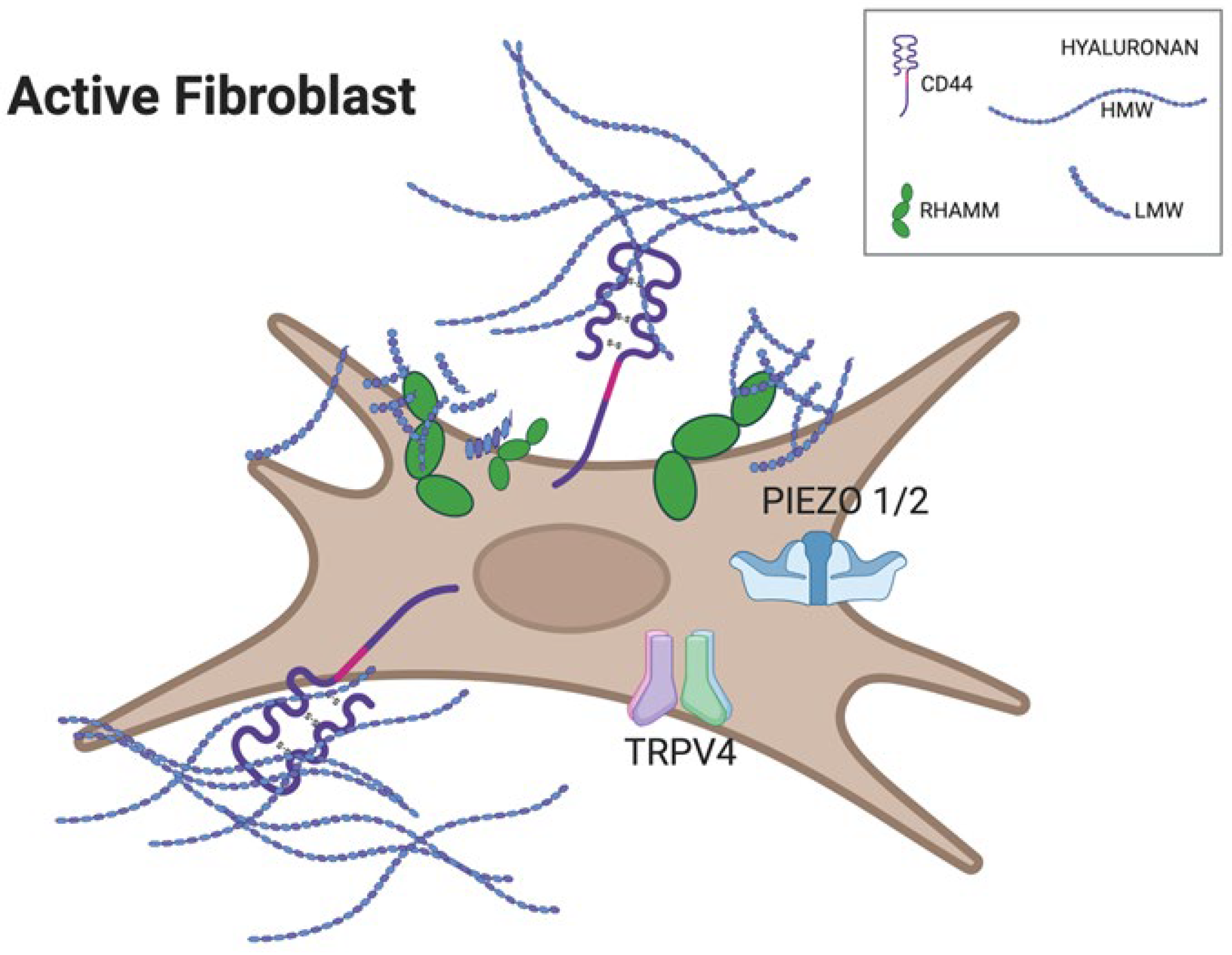
6.1. CD and RHAMM Oscillation Powers the CHA Feedback Loop
6.2. CD44 and RHAMM: Distinct Roles Determined by HA Molecular Weight
6.2.1. HA Chain Length as Signal
6.2.2. Low-MW HA and RHAMM: “Attention: Remodel and Strengthen”
6.2.3. High-MW HA and CD44: “Hydrate. Stabilize. Glide. Restore.”
7. Research Gaps and Experimental Directions for the CHA Axis
7.1. Key Translational Gap: Lack of Quantitative Mechanical Thresholds for HA Fragmentation
7.2. Addressing the Evidence Gap in Fasciacytes
7.3. Promising Experimental Approaches
7.4. Limitations
8. Conclusions
Author Contributions
Funding
Data Availability Statement
Conflicts of Interest
References
- Stecco, C.; Pratt, R.; Nemetz, L.D.; Schleip, R.; Stecco, A.; Theise, N.D. Towards a Comprehensive Definition of the Human Fascial System. J. Anat. 2025, 246, 1084–1098. [Google Scholar] [CrossRef] [PubMed]
- Fede, C.; Clair, C.; Pirri, C.; Petrelli, L.; Zhao, X.; Sun, Y.; Macchi, V.; Stecco, C. The Human Superficial Fascia: A Narrative Review. Int. J. Mol. Sci. 2025, 26, 1289. [Google Scholar] [CrossRef]
- Pirri, C.; Pirri, N.; Petrelli, L.; Fede, C.; De Caro, R.; Stecco, C. An Emerging Perspective on the Role of Fascia in Complex Regional Pain Syndrome: A Narrative Review. Int. J. Mol. Sci. 2025, 26, 2826. [Google Scholar] [CrossRef]
- Tsepilov, R.N.; Beloded, A.V. Hyaluronic Acid—an “Old” Molecule with “New” Functions: Biosynthesis and Depolymerization of Hyaluronic Acid in Bacteria and Vertebrate Tissues Including during Carcinogenesis. Biochemistry 2015, 80, 1093–1108. [Google Scholar] [CrossRef]
- Dicker, K.T.; Gurski, L.A.; Pradhan-Bhatt, S.; Witt, R.L.; Farach-Carson, M.C.; Jia, X. Hyaluronan: A Simple Polysaccharide with Diverse Biological Functions. Acta Biomater. 2014, 10, 1558–1570. [Google Scholar] [CrossRef]
- Cowman, M.K.; Schmidt, T.A.; Raghavan, P.; Stecco, A. Viscoelastic Properties of Hyaluronan in Physiological Conditions. F1000Research 2015, 4, 622. [Google Scholar] [CrossRef]
- Mero, A.; Campisi, M. Hyaluronic Acid Bioconjugates for the Delivery of Bioactive Molecules. Polymers 2014, 6, 346–369. [Google Scholar] [CrossRef]
- Khunmanee, S.; Jeong, Y.; Park, H. Crosslinking Method of Hyaluronic-Based Hydrogel for Biomedical Applications. J. Tissue Eng. 2017, 8, 2041731417726464. [Google Scholar] [CrossRef]
- Fede, C.; Angelini, A.; Stern, R.; Macchi, V.; Porzionato, A.; Ruggieri, P.; De Caro, R.; Stecco, C. Quantification of Hyaluronan in Human Fasciae: Variations with Function and Anatomical Site. J. Anat. 2018, 233, 552–556. [Google Scholar] [CrossRef] [PubMed]
- Pratt, R.L. Hyaluronan and the Fascial Frontier. Int. J. Mol. Sci. 2021, 22, 6845. [Google Scholar] [CrossRef] [PubMed]
- Fede, C.; Pirri, C.; Petrelli, L.; Guidolin, D.; Fan, C.; De Caro, R.; Stecco, C. Sensitivity of the Fasciae to the Endocannabinoid System: Production of Hyaluronan-Rich Vesicles and Potential Peripheral Effects of Cannabinoids in Fascial Tissue. Int. J. Mol. Sci. 2020, 21, 2936. [Google Scholar] [CrossRef] [PubMed]
- Pirri, C.; Fede, C.; Petrelli, L.; De Rose, E.; Biz, C.; Guidolin, D.; De Caro, R.; Stecco, C. Immediate Effects of Extracorporeal Shock Wave Therapy in Fascial Fibroblasts: An In Vitro Study. Biomedicines 2022, 10, 1732. [Google Scholar] [CrossRef] [PubMed]
- Wang, R.; Matsuoka, Y.; Sue, N.; Nakatsuka, K.; Tsuboi, C.; Morimatsu, H. Decreased Expression of Hyaluronan Synthase and Loss of Hyaluronan-Rich Cells in the Anterior Tibial Fascia of the Rat Model of Chemotherapy-Induced Peripheral Neuropathy. PAIN Rep. 2023, 8, e1088. [Google Scholar] [CrossRef]
- Amir, A.; Kim, S.; Stecco, A.; Jankowski, M.P.; Raghavan, P. Citation for: Hyaluronan Homeostasis and Its Role in Pain and Muscle Stiffness. J. Phys. Med. Rehabil. 2022, 12, 1490–1496. [Google Scholar]
- Camenisch, T.D.; Spicer, A.P.; Brehm-Gibson, T.; Biesterfeldt, J.; Augustine, M.L.; Calabro, A.; Kubalak, S.; Klewer, S.E.; McDonald, J.A. Disruption of Hyaluronan Synthase-2 Abrogates Normal Cardiac Morphogenesis and Hyaluronan-Mediated Transformation of Epithelium to Mesenchyme. J. Clin. Investig. 2000, 106, 349–360. [Google Scholar] [CrossRef]
- Yang, Y.M.; Kim, J.; Wang, Z.; Kim, J.; Kim, S.Y.; Cho, G.J.; Lee, J.H.; Kim, S.M.; Tsuchiya, T.; Matsuda, M.; et al. Metastatic Tumor Growth in Steatotic Liver Is Promoted by HAS2-Mediated Fibrotic Tumor Microenvironment. J. Clin. Investig. 2025, 135, e180802. [Google Scholar] [CrossRef]
- Soundararajan, M.; Kannan, S. Fibroblasts and Mesenchymal Stem Cells: Two Sides of the Same Coin? J. Cell. Physiol. 2018, 233, 9099–9109. [Google Scholar] [CrossRef]
- Tai, C.; Xie, Z.; Li, Y.; Feng, Y.; Xie, Y.; Yang, H.; Wang, L.; Wang, B. Human Skin Dermis-Derived Fibroblasts Are a Kind of Functional Mesenchymal Stromal Cells: Judgements from Surface Markers, Biological Characteristics, to Therapeutic Efficacy. Cell Biosci. 2022, 12, 105. [Google Scholar] [CrossRef] [PubMed]
- Budeus, B.; Unger, K.; Hess, J.; Sentek, H.; Klein, D. Comparative Computational Analysis to Distinguish Mesenchymal Stem Cells from Fibroblasts. Front. Immunol. 2023, 14, 1270493. [Google Scholar] [CrossRef]
- Ugurlu, B.; Karaoz, E. Comparison of Similar Cells: Mesenchymal Stromal Cells and Fibroblasts. Acta Histochem. 2020, 122, 151634. [Google Scholar] [CrossRef]
- Denu, R.A.; Nemcek, S.; Bloom, D.D.; Goodrich, A.D.; Kim, J.; Mosher, D.F.; Hematti, P. Fibroblasts and Mesenchymal Stromal/Stem Cells Are Phenotypically Indistinguishable. Acta Haematol. 2016, 136, 85–97. [Google Scholar] [CrossRef]
- Stecco, C.; Fede, C.; Macchi, V.; Porzionato, A.; Petrelli, L.; Biz, C.; Stern, R.; De Caro, R. The Fasciacytes: A New Cell Devoted to Fascial Gliding Regulation. Clin. Anat. 2018, 31, 667–676. [Google Scholar] [CrossRef]
- Li, B.; Tadross, M.R.; Tsien, R.W. Sequential Ionic and Conformational Signaling by Calcium Channels Drives Neuronal Gene Expression. Science 2016, 351, 863–867. [Google Scholar] [CrossRef]
- Little, D.T.; Howard, C.M.; Pendergraft, E.; Brittian, K.R.; Audam, T.N.; Lukudu, E.W.; Smith, J.; Nguyen, D.; Nishida, Y.; Yamaguchi, Y.; et al. Activated Cardiac Fibroblasts Are a Primary Source of High Molecular Weight Hyaluronan Production. Am. J. Physiol. Cell. Physiol. 2025, 328, C939–C953. [Google Scholar] [CrossRef]
- Wang, J.; Wu, Z.; Cao, L.; Long, F. Differential Regulation of Hyaluronan Synthesis by Three Isoforms of Hyaluronan Synthases in Mammalian Cells. Biomolecules 2024, 14, 1567. [Google Scholar] [CrossRef]
- Grinnell, F. Fibroblast Mechanics in Three-Dimensional Collagen Matrices. J. Bodyw. Mov. Ther. 2008, 12, 191–193. [Google Scholar] [CrossRef] [PubMed]
- Jansen, K.A.; Atherton, P.; Ballestrem, C. Mechanotransduction at the Cell-Matrix Interface. Semin. Cell Dev. Biol. 2017, 71, 75–83. [Google Scholar] [CrossRef] [PubMed]
- Goldmann, W.H. Mechanotransduction and Focal Adhesions. Cell Biol. Int. 2012, 36, 649–652. [Google Scholar] [CrossRef] [PubMed]
- Casarella, S.; Ferla, F.; Di Francesco, D.; Canciani, E.; Rizzi, M.; Boccafoschi, F. Focal Adhesion’s Role in Cardiomyocytes Function: From Cardiomyogenesis to Mechanotransduction. Cells 2024, 13, 664. [Google Scholar] [CrossRef]
- Pirri, C.; Caroccia, B.; Angelini, A.; Piazza, M.; Petrelli, L.; Caputo, I.; Montemurro, C.; Ruggieri, P.; De Caro, R.; Stecco, C. A New Player in the Mechanobiology of Deep Fascia: Yes-Associated Protein (YAP). Int. J. Mol. Sci. 2023, 24, 15389. [Google Scholar] [CrossRef]
- Chu, C.-Q.; Quan, T. Fibroblast Yap/Taz Signaling in Extracellular Matrix Homeostasis and Tissue Fibrosis. J. Clin. Med. 2024, 13, 3358. [Google Scholar] [CrossRef] [PubMed]
- Noguchi, S.; Saito, A.; Nagase, T. YAP/TAZ Signaling as a Molecular Link between Fibrosis and Cancer. Int. J. Mol. Sci. 2018, 19, 3674. [Google Scholar] [CrossRef]
- Colonna, S.; Casacci, F. Myofascial System and Physical Exercise: A Narrative Review on Stiffening (Part II). Cureus 2024, 16, e76295. [Google Scholar] [CrossRef]
- Świątek, W.; Kłodziński, O.; Brzęczek, J.; Kosiorowski, I.; Grzybowska, N.; Mozdziak, P.E.; Kranc, W. Components of the Fascia–Cells and Extracellular Matrix. Med. J. Cell Biol. 2023, 11, 13–19. [Google Scholar] [CrossRef]
- Findley, T. Second International Fascia Research Congress. Int. J. Ther. Massage Bodyw. 2009, 2, 1–6. [Google Scholar] [CrossRef]
- La Noce, M.; Stellavato, A.; Vassallo, V.; Cammarota, M.; Laino, L.; Desiderio, V.; Del Vecchio, V.; Nicoletti, G.F.; Tirino, V.; Papaccio, G.; et al. Hyaluronan-Based Gel Promotes Human Dental Pulp Stem Cells Bone Differentiation by Activating YAP/TAZ Pathway. Cells 2021, 10, 2899. [Google Scholar] [CrossRef]
- Rayahin, J.E.; Buhrman, J.S.; Zhang, Y.; Koh, T.J.; Gemeinhart, R.A. High and Low Molecular Weight Hyaluronic Acid Differentially Influence Macrophage Activation. ACS Biomater. Sci. Eng. 2015, 1, 481–493. [Google Scholar] [CrossRef]
- Kawano, Y.; Patrulea, V.; Sublet, E.; Borchard, G.; Iyoda, T.; Kageyama, R.; Morita, A.; Seino, S.; Yoshida, H.; Jordan, O.; et al. Wound Healing Promotion by Hyaluronic Acid: Effect of Molecular Weight on Gene Expression and In Vivo Wound Closure. Pharmaceuticals 2021, 14, 301. [Google Scholar] [CrossRef]
- Stecco, A.; Bonaldi, L.; Fontanella, C.G.; Stecco, C.; Pirri, C. The Effect of Mechanical Stress on Hyaluronan Fragments’ Inflammatory Cascade: Clinical Implications. Life 2023, 13, 2277. [Google Scholar] [CrossRef] [PubMed]
- Xue, J.; Chen, J.; Shen, Q.; Chan, D.; Li, J.; Tanguay, A.P.; Schmidt, T.A.; Niazi, F.; Plaas, A. Addition of High Molecular Weight Hyaluronic Acid to Fibroblast-Like Stromal Cells Modulates Endogenous Hyaluronic Acid Metabolism and Enhances Proteolytic Processing and Secretion of Versican. Cells 2020, 9, 1681. [Google Scholar] [CrossRef]
- Ooki, T.; Hatakeyama, M. Hyaluronan Degradation Promotes Cancer via Hippo-YAP Signaling: An Intervention Point for Cancer Therapy. BioEssays 2020, 42, 2000005. [Google Scholar] [CrossRef]
- Berridge, M.J.; Bootman, M.D.; Roderick, H.L. Calcium Signalling: Dynamics, Homeostasis and Remodelling. Nat. Rev. Mol. Cell Biol. 2003, 4, 517–529. [Google Scholar] [CrossRef] [PubMed]
- Clapham, D.E. Calcium Signaling. Cell 2007, 131, 1047–1058. [Google Scholar] [CrossRef]
- Ma, H.; Macdougall, L.J.; GonzalezRodriguez, A.; Schroeder, M.E.; Batan, D.; Weiss, R.M.; Anseth, K.S. Calcium Signaling Regulates Valvular Interstitial Cell Alignment and Myofibroblast Activation in Fast-Relaxing Boronate Hydrogels. Macromol. Biosci. 2020, 20, 2000268. [Google Scholar] [CrossRef]
- Rauhala, L.; Jokela, T.; Kärnä, R.; Bart, G.; Takabe, P.; Oikari, S.; Tammi, M.I.; Pasonen-Seppänen, S.; Tammi, R.H. Extracellular ATP Activates Hyaluronan Synthase 2 (HAS2) in Epidermal Keratinocytes via P2Y2, Ca2+ Signaling, and MAPK Pathways. Biochem. J. 2018, 475, 1755–1772. [Google Scholar] [CrossRef]
- Jolly, M.K.; Preca, B.-T.; Tripathi, S.C.; Jia, D.; Hanash, S.M.; Brabletz, T.; Stemmler, M.P.; Maurer, J.; Levine, H. Interconnected Feedback Loops among ESRP1, HAS2, and CD44 Regulate Epithelial-Mesenchymal Plasticity in Cancer. APL Bioeng. 2018, 2, 031908. [Google Scholar] [CrossRef]
- Gehlert, S.; Bloch, W.; Suhr, F. Ca2+-Dependent Regulations and Signaling in Skeletal Muscle: From Electro-Mechanical Coupling to Adaptation. Int. J. Mol. Sci. 2015, 16, 1066–1095. [Google Scholar] [CrossRef]
- Gaub, B.M.; Kasuba, K.C.; Mace, E.; Strittmatter, T.; Laskowski, P.R.; Geissler, S.A.; Hierlemann, A.; Fussenegger, M.; Roska, B.; Müller, D.J. Neurons Differentiate Magnitude and Location of Mechanical Stimuli. Proc. Natl. Acad. Sci. USA 2020, 117, 848–856. [Google Scholar] [CrossRef]
- Maneshi, M.M.; Sachs, F.; Hua, S.Z. A Threshold Shear Force for Calcium Influx in an Astrocyte Model of Traumatic Brain Injury. J. Neurotrauma 2015, 32, 1020–1029. [Google Scholar] [CrossRef] [PubMed]
- Ito, S.; Suki, B.; Kume, H.; Numaguchi, Y.; Ishii, M.; Iwaki, M.; Kondo, M.; Naruse, K.; Hasegawa, Y.; Sokabe, M. Actin Cytoskeleton Regulates Stretch-Activated Ca2+ Influx in Human Pulmonary Microvascular Endothelial Cells. Am. J. Respir. Cell Mol. Biol. 2010, 43, 26–34. [Google Scholar] [CrossRef] [PubMed][Green Version]
- Ilkan, Z.; Wright, J.R.; Goodall, A.H.; Gibbins, J.M.; Jones, C.I.; Mahaut-Smith, M.P. Evidence for Shear-Mediated Ca2+ Entry through Mechanosensitive Cation Channels in Human Platelets and a Megakaryocytic Cell Line. J. Biol. Chem. 2017, 292, 9204–9217. [Google Scholar] [CrossRef]
- Baratchi, S.; Tovar-Lopez, F.J.; Khoshmanesh, K.; Grace, M.S.; Darby, W.; Almazi, J.; Mitchell, A.; McIntyre, P. Examination of the Role of Transient Receptor Potential Vanilloid Type 4 in Endothelial Responses to Shear Forces. Biomicrofluidics 2014, 8, 044117. [Google Scholar] [CrossRef]
- Cui, C.; Merritt, R.; Fu, L.; Pan, Z. Targeting Calcium Signaling in Cancer Therapy. Acta Pharm. Sin. B 2017, 7, 3–17. [Google Scholar] [CrossRef] [PubMed]
- Reiprich, S.; Akova, E.; Aszódi, A.; Schönitzer, V. Hyaluronan Synthases’ Expression and Activity Are Induced by Fluid Shear Stress in Bone Marrow-Derived Mesenchymal Stem Cells. Int. J. Mol. Sci. 2021, 22, 3123. [Google Scholar] [CrossRef]
- Gao, W.; Hasan, H.; Anderson, D.E.; Lee, W. The Role of Mechanically-Activated Ion Channels Piezo1, Piezo2, and TRPV4 in Chondrocyte Mechanotransduction and Mechano-Therapeutics for Osteoarthritis. Front. Cell Dev. Biol. 2022, 10, 885224. [Google Scholar] [CrossRef]
- Zhou, T.; Gao, B.; Fan, Y.; Liu, Y.; Feng, S.; Cong, Q.; Zhang, X.; Zhou, Y.; Yadav, P.S.; Lin, J.; et al. Piezo1/2 Mediate Mechanotransduction Essential for Bone Formation through Concerted Activation of NFAT-YAP1-ß-Catenin. eLife 2020, 9, e52779. [Google Scholar] [CrossRef] [PubMed]
- Huang, Z.; Huang, Y.; Ning, X.; Li, H.; Li, Q.; Wu, J. The Functional Effects of Piezo Channels in Mesenchymal Stem Cells. Stem Cell Res. Ther. 2023, 14, 222. [Google Scholar] [CrossRef]
- Steinecker-Frohnwieser, B.; Lohberger, B.; Toegel, S.; Windhager, R.; Glanz, V.; Kratschmann, C.; Leithner, A.; Weigl, L. Activation of the Mechanosensitive Ion Channels Piezo1 and TRPV4 in Primary Human Healthy and Osteoarthritic Chondrocytes Exhibits Ion Channel Crosstalk and Modulates Gene Expression. Int. J. Mol. Sci. 2023, 24, 7868. [Google Scholar] [CrossRef]
- Zhang, Y.; Su, S.; Li, W.; Ma, Y.; Shen, J.; Wang, Y.; Shen, Y.; Chen, J.; Ji, Y.; Xie, Y.; et al. Piezo1-Mediated Mechanotransduction Promotes Cardiac Hypertrophy by Impairing Calcium Homeostasis to Activate Calpain/Calcineurin Signaling. Hypertension 2021, 78, 647–660. [Google Scholar] [CrossRef]
- Kasai, K.; Kuroda, Y.; Takabuchi, Y.; Nitta, A.; Kobayashi, T.; Nozaka, H.; Miura, T.; Nakamura, T. Phosphorylation of Thr328 in Hyaluronan Synthase 2 Is Essential for Hyaluronan Synthesis. Biochem. Biophys. Res. Commun. 2020, 533, 732–738. [Google Scholar] [CrossRef] [PubMed]
- Syeda, R.; Florendo, M.N.; Cox, C.D.; Kefauver, J.M.; Santos, J.S.; Martinac, B.; Patapoutian, A. Piezo1 Channels Are Inherently Mechanosensitive. Cell Rep. 2016, 17, 1739–1746. [Google Scholar] [CrossRef]
- Stewart, L.; Turner, N.A. Channelling the Force to Reprogram the Matrix: Mechanosensitive Ion Channels in Cardiac Fibroblasts. Cells 2021, 10, 990. [Google Scholar] [CrossRef] [PubMed]
- Ellefsen, K.L.; Holt, J.R.; Chang, A.C.; Nourse, J.L.; Arulmoli, J.; Mekhdjian, A.H.; Abuwarda, H.; Tombola, F.; Flanagan, L.A.; Dunn, A.R.; et al. Myosin-II Mediated Traction Forces Evoke Localized Piezo1-Dependent Ca2+ Flickers. Commun. Biol. 2019, 2, 298. [Google Scholar] [CrossRef]
- Hennes, A.; Held, K.; Boretto, M.; De Clercq, K.; Van den Eynde, C.; Vanhie, A.; Van Ranst, N.; Benoit, M.; Luyten, C.; Peeraer, K.; et al. Functional Expression of the Mechanosensitive PIEZO1 Channel in Primary Endometrial Epithelial Cells and Endometrial Organoids. Sci. Rep. 2019, 9, 1779. [Google Scholar] [CrossRef] [PubMed]
- Tu, M.K.; Levin, J.B.; Hamilton, A.M.; Borodinsky, L.N. Calcium Signaling in Skeletal Muscle Development, Maintenance and Regeneration. Cell Calcium 2016, 59, 91–97. [Google Scholar] [CrossRef]
- Ma, H.; Groth, R.D.; Cohen, S.M.; Emery, J.F.; Li, B.; Hoedt, E.; Zhang, G.; Neubert, T.A.; Tsien, R.W. γCaMKII Shuttles Ca2+/CaM to the Nucleus to Trigger CREB Phosphorylation and Gene Expression. Cell 2014, 159, 281–294. [Google Scholar] [CrossRef]
- Yan, X.; Liu, J.; Ye, Z.; Huang, J.; He, F.; Xiao, W.; Hu, X.; Luo, Z. CaMKII-Mediated CREB Phosphorylation Is Involved in Ca2+-Induced BDNF mRNA Transcription and Neurite Outgrowth Promoted by Electrical Stimulation. PLoS ONE 2016, 11, e0162784. [Google Scholar] [CrossRef] [PubMed]
- Liu, J.; Xiao, Q.; Xiao, J.; Niu, C.; Li, Y.; Zhang, X.; Zhou, Z.; Shu, G.; Yin, G. Wnt/β-Catenin Signalling: Function, Biological Mechanisms, and Therapeutic Opportunities. Sig. Transduct. Target. Ther. 2022, 7, 3. [Google Scholar] [CrossRef]
- Song, P.; Gao, Z.; Bao, Y.; Chen, L.; Huang, Y.; Liu, Y.; Dong, Q.; Wei, X. Wnt/β-Catenin Signaling Pathway in Carcinogenesis and Cancer Therapy. J. Hematol. Oncol. 2024, 17, 46. [Google Scholar] [CrossRef]
- Maurice, M.M.; Angers, S. Mechanistic Insights into Wnt–β-Catenin Pathway Activation and Signal Transduction. Nat. Rev. Mol. Cell Biol 2025, 26, 371–388. [Google Scholar] [CrossRef]
- Pepke, S.; Kinzer-Ursem, T.; Mihalas, S.; Kennedy, M.B. A Dynamic Model of Interactions of Ca2+, Calmodulin, and Catalytic Subunits of Ca2+/Calmodulin-Dependent Protein Kinase II. PLoS Comput. Biol. 2010, 6, e1000675. [Google Scholar] [CrossRef]
- Graupner, M.; Brunel, N. STDP in a Bistable Synapse Model Based on CaMKII and Associated Signaling Pathways. PLoS Comput. Biol. 2007, 3, e221. [Google Scholar] [CrossRef] [PubMed]
- COLBRAN, R.J. Targeting of Calcium/Calmodulin-Dependent Protein Kinase II. Biochem. J. 2004, 378, 1–16. [Google Scholar] [CrossRef]
- Perry, S.; Han, Y.; Qiu, C.; Chien, C.; Goel, P.; Nishimura, S.; Sajnani, M.; Schmid, A.; Sigrist, S.J.; Dickman, D. A Glutamate Receptor C-Tail Recruits CaMKII to Suppress Retrograde Homeostatic Signaling. Nat. Commun. 2022, 13, 7656. [Google Scholar] [CrossRef]
- DeAngelis, P.L.; Zimmer, J. Hyaluronan Synthases; Mechanisms, Myths, & Mysteries of Three Types of Unique Bifunctional Glycosyltransferases. Glycobiology 2023, 33, 1117–1127. [Google Scholar] [CrossRef]
- Caon, I.; Bartolini, B.; Moretto, P.; Parnigoni, A.; Caravà, E.; Vitale, D.L.; Alaniz, L.; Viola, M.; Karousou, E.; Luca, G.D.; et al. Sirtuin 1 Reduces Hyaluronan Synthase 2 Expression by Inhibiting Nuclear Translocation of NF-κB and Expression of the Long-Noncoding RNA HAS2–AS1. J. Biol. Chem. 2020, 295, 3485–3496. [Google Scholar] [CrossRef]
- Tseng, V.; Collum, S.D.; Allawzi, A.; Crotty, K.; Yeligar, S.; Trammell, A.; Ryan Smith, M.; Kang, B.-Y.; Sutliff, R.L.; Ingram, J.L.; et al. 3′UTR Shortening of HAS2 Promotes Hyaluronan Hyper-Synthesis and Bioenergetic Dysfunction in Pulmonary Hypertension. Matrix Biol. 2022, 111, 53–75. [Google Scholar] [CrossRef] [PubMed]
- Bao, X.; Ran, J.; Kong, C.; Wan, Z.; Wang, J.; Yu, T.; Ruan, S.; Ding, W.; Xia, L.; Zhang, D. Pan-Cancer Analysis Reveals the Potential of Hyaluronate Synthase as Therapeutic Targets in Human Tumors. Heliyon 2023, 9, e19112. [Google Scholar] [CrossRef]
- Yang, Y.M.; Noureddin, M.; Liu, C.; Ohashi, K.; Kim, S.Y.; Ramnath, D.; Powell, E.E.; Sweet, M.J.; Roh, Y.S.; Hsin, I.-F.; et al. Hyaluronan Synthase 2–Mediated Hyaluronan Production Mediates Notch1 Activation and Liver Fibrosis. Sci. Transl. Med. 2019, 11, eaat9284. [Google Scholar] [CrossRef] [PubMed]
- Parnigoni, A.; Caon, I.; Moretto, P.; Viola, M.; Karousou, E.; Passi, A.; Vigetti, D. The Role of the Multifaceted Long Non-Coding RNAs: A Nuclear-Cytosolic Interplay to Regulate Hyaluronan Metabolism. Matrix Biol. Plus 2021, 11, 100060. [Google Scholar] [CrossRef]
- Vigetti, D.; Clerici, M.; Deleonibus, S.; Karousou, E.; Viola, M.; Moretto, P.; Heldin, P.; Hascall, V.C.; De Luca, G.; Passi, A. Hyaluronan Synthesis Is Inhibited by Adenosine Monophosphate-Activated Protein Kinase through the Regulation of HAS2 Activity in Human Aortic Smooth Muscle Cells. J. Biol. Chem. 2011, 286, 7917–7924. [Google Scholar] [CrossRef]
- Kainulainen, K.; Takabe, P.; Heikkinen, S.; Aaltonen, N.; de la Motte, C.; Rauhala, L.; Durst, F.C.; Oikari, S.; Hukkanen, T.; Rahunen, E.; et al. M1 Macrophages Induce Protumor Inflammation in Melanoma Cells through TNFR–NF-κB Signaling. J. Investig. Dermatol. 2022, 142, 3041–3051.e10. [Google Scholar] [CrossRef]
- Kim, S.M.; Song, G.Y.; Shim, A.; Lee, J.H.; Eom, C.B.; Liu, C.; Yang, Y.M.; Seki, E. Hyaluronan Synthase 2, a Target of miR-200c, Promotes Carbon Tetrachloride-Induced Acute and Chronic Liver Inflammation via Regulation of CCL3 and CCL4. Exp. Mol. Med. 2022, 54, 739–752. [Google Scholar] [CrossRef]
- Michael, D.R.; Phillips, A.O.; Krupa, A.; Martin, J.; Redman, J.E.; Altaher, A.; Neville, R.D.; Webber, J.; Kim, M.; Bowen, T. The Human Hyaluronan Synthase 2 (HAS2) Gene and Its Natural Antisense RNA Exhibit Coordinated Expression in the Renal Proximal Tubular Epithelial Cell. J. Biol. Chem. 2011, 286, 19523–19532. [Google Scholar] [CrossRef]
- Bourguignon, L.Y.W. Hyaluronan-Mediated CD44 Activation of RhoGTPase Signaling and Cytoskeleton Function Promotes Tumor Progression. Semin. Cancer Biol. 2008, 18, 251–259. [Google Scholar] [CrossRef] [PubMed]
- Bourguignon, L.Y.W. Matrix Hyaluronan-Activated CD44 Signaling Promotes Keratinocyte Activities and Improves Abnormal Epidermal Functions. Am. J. Pathol. 2014, 184, 1912–1919. [Google Scholar] [CrossRef] [PubMed]
- Misra, S.; Hascall, V.C.; Markwald, R.R.; Ghatak, S. Interactions between Hyaluronan and Its Receptors (CD44, RHAMM) Regulate the Activities of Inflammation and Cancer. Front. Immunol. 2015, 6, 201. [Google Scholar] [CrossRef] [PubMed]
- Liu, S.; Cheng, C. Akt Signaling Is Sustained by a CD44 Splice Isoform–Mediated Positive Feedback Loop. Cancer Res. 2017, 77, 3791–3801. [Google Scholar] [CrossRef]
- Tavianatou, A.G.; Caon, I.; Franchi, M.; Piperigkou, Z.; Galesso, D.; Karamanos, N.K. Hyaluronan: Molecular Size-Dependent Signaling and Biological Functions in Inflammation and Cancer. FEBS J. 2019, 286, 2883–2908. [Google Scholar] [CrossRef]
- Tolg, C.; Liu, M.; Cousteils, K.; Telmer, P.; Alam, K.; Ma, J.; Mendina, L.; McCarthy, J.B.; Morris, V.L.; Turley, E.A. Cell-Specific Expression of the Transcriptional Regulator RHAMM Provides a Timing Mechanism That Controls Appropriate Wound Re-Epithelialization. J. Biol. Chem. 2020, 295, 5427–5448. [Google Scholar] [CrossRef]
- Carvalho, A.M.; Soares da Costa, D.; Paulo, P.M.R.; Reis, R.L.; Pashkuleva, I. Co-Localization and Crosstalk between CD44 and RHAMM Depend on Hyaluronan Presentation. Acta Biomater. 2021, 119, 114–124. [Google Scholar] [CrossRef]
- Li, S.; Li, C.; Zhang, Y.; He, X.; Chen, X.; Zeng, X.; Liu, F.; Chen, Y.; Chen, J. Targeting Mechanics-Induced Fibroblast Activation through CD44-RhoA-YAP Pathway Ameliorates Crystalline Silica-Induced Silicosis. Theranostics 2019, 9, 4993–5008. [Google Scholar] [CrossRef]
- Leng, Y.; Abdullah, A.; Wendt, M.K.; Calve, S. Hyaluronic Acid, CD44 and RHAMM Regulate Myoblast Behavior during Embryogenesis. Matrix Biol. 2019, 78, 236–254. [Google Scholar] [CrossRef]
- Tolg, C.; McCarthy, J.B.; Yazdani, A.; Turley, E.A. Hyaluronan and RHAMM in Wound Repair and the “Cancerization” of Stromal Tissues. BioMed Res. Int. 2014, 2014, 103923. [Google Scholar] [CrossRef]
- Kouvidi, K.; Berdiaki, A.; Nikitovic, D.; Katonis, P.; Afratis, N.; Hascall, V.C.; Karamanos, N.K.; Tzanakakis, G.N. Role of Receptor for Hyaluronic Acid-Mediated Motility (RHAMM) in Low Molecular Weight Hyaluronan (LMWHA)-Mediated Fibrosarcoma Cell Adhesion. J. Biol. Chem. 2011, 286, 38509–38520. [Google Scholar] [CrossRef] [PubMed]
- Hamilton, S.R.; Fard, S.F.; Paiwand, F.F.; Tolg, C.; Veiseh, M.; Wang, C.; McCarthy, J.B.; Bissell, M.J.; Koropatnick, J.; Turley, E.A. The Hyaluronan Receptors CD44 and Rhamm (CD168) Form Complexes with ERK1,2 That Sustain High Basal Motility in Breast Cancer Cells. J. Biol. Chem. 2007, 282, 16667–16680. [Google Scholar] [CrossRef]
- Carvalho, A.M.; Soares da Costa, D.; Reis, R.L.; Pashkuleva, I. RHAMM Expression Tunes the Response of Breast Cancer Cell Lines to Hyaluronan. Acta Biomater. 2022, 146, 187–196. [Google Scholar] [CrossRef]
- Ruppert, S.M.; Hawn, T.R.; Arrigoni, A.; Wight, T.N.; Bollyky, P.L. Tissue Integrity Signals Communicated by High-Molecular Weight Hyaluronan and the Resolution of Inflammation. Immunol. Res. 2014, 58, 186–192. [Google Scholar] [CrossRef] [PubMed]
- Michalczyk, M.; Humeniuk, E.; Adamczuk, G.; Korga-Plewko, A. Hyaluronic Acid as a Modern Approach in Anticancer Therapy-Review. Int. J. Mol. Sci. 2023, 24, 103. [Google Scholar] [CrossRef] [PubMed]
- Rabelink, T.J.; Wang, G.; van der Vlag, J.; van den Berg, B.M. The Roles of Hyaluronan in Kidney Development, Physiology and Disease. Nat. Rev. Nephrol. 2024, 20, 822–832. [Google Scholar] [CrossRef]
- Wu, P.-T.; Kuo, L.-C.; Su, F.-C.; Chen, S.-Y.; Hsu, T.-I.; Li, C.-Y.; Tsai, K.-J.; Jou, I.-M. High-Molecular-Weight Hyaluronic Acid Attenuated Matrix Metalloproteinase-1 and -3 Expression via CD44 in Tendinopathy. Sci. Rep. 2017, 7, 40840. [Google Scholar] [CrossRef] [PubMed]
- Cowman, M.K.; Turley, E.A. Functional Organization of Extracellular Hyaluronan, CD44, and RHAMM. Proteoglycan Res. 2023, 1, e4. [Google Scholar] [CrossRef]
- Yang, K.; Wu, Y.; Cheng, P.; Zhang, J.; Yang, C.; Pi, B.; Ye, Y.; You, H.; Chen, A.; Xu, T.; et al. YAP and ERK Mediated Mechanical Strain-Induced Cell Cycle Progression through RhoA and Cytoskeletal Dynamics in Rat Growth Plate Chondrocytes. J. Orthop. Res. 2016, 34, 1121–1129. [Google Scholar] [CrossRef]
- Zhang, Y.; Xia, H.; Ge, X.; Chen, Q.; Yuan, D.; Chen, Q.; Leng, W.; Chen, L.; Tang, Q.; Bi, F. CD44 Acts through RhoA to Regulate YAP Signaling. Cell. Signal. 2014, 26, 2504–2513. [Google Scholar] [CrossRef]
- Yu, S.; Cai, X.; Wu, C.; Wu, L.; Wang, Y.; Liu, Y.; Yu, Z.; Qin, S.; Ma, F.; Thiery, J.P.; et al. Adhesion Glycoprotein CD44 Functions as an Upstream Regulator of a Network Connecting ERK, AKT and Hippo-YAP Pathways in Cancer Progression. Oncotarget 2014, 6, 2951–2965. [Google Scholar] [CrossRef]
- Turley, E.A.; Austen, L.; Moore, D.; Hoare, K. Ras-Transformed Cells Express Both CD44 and RHAMM Hyaluronan Receptors: Only RHAMM Is Essential for Hyaluronan-Promoted Locomotion. Exp. Cell Res. 1993, 207, 277–282. [Google Scholar] [CrossRef]
- Menko, A.S.; Romisher, A.; Walker, J.L. The Pro-Fibrotic Response of Mesenchymal Leader Cells to Lens Wounding Involves Hyaluronic Acid, Its Receptor RHAMM, and Vimentin. Front. Cell Dev. Biol. 2022, 10, 862423. [Google Scholar] [CrossRef]
- Wu, P.-K.; Becker, A.; Park, J.-I. Growth Inhibitory Signaling of the Raf/MEK/ERK Pathway. Int. J. Mol. Sci. 2020, 21, 5436. [Google Scholar] [CrossRef]
- Declèves, A.-E.; Caron, N.; Voisin, V.; Legrand, A.; Bouby, N.; Kultti, A.; Tammi, M.I.; Flamion, B. Synthesis and Fragmentation of Hyaluronan in Renal Ischaemia. Nephrol. Dial. Transpl. 2012, 27, 3771–3781. [Google Scholar] [CrossRef]
- Amorim, S.; Reis, C.A.; Reis, R.L.; Pires, R.A. Extracellular Matrix Mimics Using Hyaluronan-Based Biomaterials. Trends Biotechnol. 2021, 39, 90–104. [Google Scholar] [CrossRef] [PubMed]
- Monslow, J.; Govindaraju, P.; Puré, E. Hyaluronan–A Functional and Structural Sweet Spot in the Tissue Microenvironment. Front. Immunol. 2015, 6, 231. [Google Scholar] [CrossRef] [PubMed]
- Berdiaki, A.; Neagu, M.; Spyridaki, I.; Kuskov, A.; Perez, S.; Nikitovic, D. Hyaluronan and Reactive Oxygen Species Signaling—Novel Cues from the Matrix? Antioxidants 2023, 12, 824. [Google Scholar] [CrossRef]
- Eldridge, L.; Moldobaeva, A.; Wagner, E.M. Increased Hyaluronan Fragmentation during Pulmonary Ischemia. Am. J. physiology. Lung Cell. Mol. Physiol. 2011, 301, L782–L788. [Google Scholar] [CrossRef]
- Wang, L.; Jiang, X.; Zhao, F.; Duan, P.; Li, Z.; Luo, Y. A Review of Adipose-Derived Mesenchymal Stem Cells‘ Impacts and Challenges: Metabolic Regulation, Tumor Modulation, Immunomodulation, Regenerative Medicine and Genetic Engineering Therapies. Front. Endocrinol. 2025, 16, 1606847. [Google Scholar] [CrossRef]
- Ma, J.; Fang, X.; Chen, M.; Wang, Y.; Zhang, L. Hyaluronan-CD44 Interaction Regulates Mouse Retinal Progenitor Cells Migration, Proliferation and Neuronal Differentiation. Stem Cell Rev. Rep. 2023, 19, 2929–2942. [Google Scholar] [CrossRef]
- Veiseh, M.; Leith, S.J.; Tolg, C.; Elhayek, S.S.; Bahrami, S.B.; Collis, L.; Hamilton, S.; McCarthy, J.B.; Bissell, M.J.; Turley, E. Uncovering the Dual Role of RHAMM as an HA Receptor and a Regulator of CD44 Expression in RHAMM-Expressing Mesenchymal Progenitor Cells. Front. Cell Dev. Biol. 2015, 3, 63. [Google Scholar] [CrossRef] [PubMed]
- Hatano, H.; Shigeishi, H.; Kudo, Y.; Higashikawa, K.; Tobiume, K.; Takata, T.; Kamata, N. RHAMM/ERK Interaction Induces Proliferative Activities of Cementifying Fibroma Cells through a Mechanism Based on the CD44–EGFR. Lab. Investig. 2011, 91, 379–391. [Google Scholar] [CrossRef] [PubMed]
- Govindaraju, P.; Todd, L.; Shetye, S.; Monslow, J.; Puré, E. CD44-Dependent Inflammation, Fibrogenesis, and Collagenolysis Regulates Extracellular Matrix Remodeling and Tensile Strength during Cutaneous Wound Healing. Matrix Biol. 2019, 75–76, 314–330. [Google Scholar] [CrossRef]
- Guan, A.Y.; Chen, Y.; Tseng, S.C.; Lin, Q. CD44 Signaling in Skin Wound Healing and Regeneration. J. Transl. Med. 2025, 23, 880. [Google Scholar] [CrossRef]
- Sapudom, J.; Ullm, F.; Martin, S.; Kalbitzer, L.; Naab, J.; Möller, S.; Schnabelrauch, M.; Anderegg, U.; Schmidt, S.; Pompe, T. Molecular Weight Specific Impact of Soluble and Immobilized Hyaluronan on CD44 Expressing Melanoma Cells in 3D Collagen Matrices. Acta Biomater. 2017, 50, 259–270. [Google Scholar] [CrossRef]
- DeOre, B.J.; Partyka, P.P.; Fan, F.; Galie, P.A. CD44 Mediates Shear Stress Mechanotransduction in an in Vitro Blood-Brain Barrier Model through Small GTPases RhoA and Rac1. FASEB J. 2022, 36, e22278. [Google Scholar] [CrossRef] [PubMed]
- Matou-Nasri, S.; Gaffney, J.; Kumar, S.; Slevin, M. Oligosaccharides of Hyaluronan Induce Angiogenesis through Distinct CD44 and RHAMM-Mediated Signalling Pathways Involving Cdc2 and γ-Adducin. Int. J. Oncol. 2009, 35, 761–773. [Google Scholar] [CrossRef][Green Version]
- Cheung, B.C.H.; Chen, X.; Davis, H.J.; Nordmann, C.S.; Toth, J.; Hodgson, L.; Segall, J.E.; Shenoy, V.B.; Wu, M. Identification of CD44 as a Key Engager to Hyaluronic Acid-Rich Extracellular Matrices for Cell Traction Force Generation and Tumor Invasion in 3D. Matrix Biol. 2025, 135, 1–11. [Google Scholar] [CrossRef]
- Becchetti, A.; Petroni, G.; Arcangeli, A. Ion Channel Conformations Regulate Integrin-Dependent Signaling. Trends Cell Biol. 2019, 29, 298–307. [Google Scholar] [CrossRef]
- Caon, I.; Parnigoni, A.; Viola, M.; Karousou, E.; Passi, A.; Vigetti, D. Cell Energy Metabolism and Hyaluronan Synthesis. J. Histochem. Cytochem. 2021, 69, 35–47. [Google Scholar] [CrossRef] [PubMed]
- Anderson, K.J.; Cormier, R.T.; Scott, P.M. Role of Ion Channels in Gastrointestinal Cancer. World J. Gastroenterol. 2019, 25, 5732–5772. [Google Scholar] [CrossRef]
- Samanta, K.; Reddy, G.S.V.S.R.; Sharma, N.K.; Kar, P. Deciphering the Role of Functional Ion Channels in Cancer Stem Cells (CSCs) and Their Therapeutic Implications. Int. J. Mol. Sci. 2025, 26, 7595. [Google Scholar] [CrossRef] [PubMed]
- Stecco, C.; Stern, R.; Porzionato, A.; Macchi, V.; Masiero, S.; Stecco, A.; De Caro, R. Hyaluronan within Fascia in the Etiology of Myofascial Pain. Surg. Radiol. Anat. 2011, 33, 891–896. [Google Scholar] [CrossRef]



| Mechanical Stress Parameter | Ca2+ Entry Response | Example Systems | Citations |
|---|---|---|---|
| Low intensity, brief | Minimal or transient Ca2+ influx | Astrocytes, neurons | [48,49,50] |
| High intensity, brief | Large, rapid Ca2+ spike | Platelets, astrocytes | [49,50,51] |
| Sustained/repetitive | Prolonged or cumulative Ca2+ entry | Endothelial, neurons | [48,49,50,52] |
| Channel | Mechanical Stimuli Sensed | Tissue/Cell Specificity | Functional Outcome in Fascia | Citations |
|---|---|---|---|---|
| Piezo1 | Shear, stretch, compression | Widely expressed, force sensors | Initiates Ca2+ influx, primary tuning | [55,61,62,63] |
| TRPV4 | Shear, osmotic, moderate stretch | Fluid-exposed, volume-regulating | Sustains/amplifies Ca2+, fine-tuning | [55,62] |
| TRPC5 | Stretch, pressure | Select cell types | Additional tuning, context-specific | [64] |
| Step | Description/Outcome | Citations |
|---|---|---|
| Ca2+ binds calmodulin | Activates CaMKII | [71,72,73] |
| CaMKII autophosphorylation | Maintains activity after Ca2+ returns to baseline | [71,72,73,74] |
| Downstream phosphorylation | Modifies gene expression, cytoskeleton, tissue behavior | [72,73,74] |
| Structural integration | 12-mer holoenzyme, supports elastic network adaptation | [72,73,74] |
| Pathological State | Mechanism/Consequence | Citations |
|---|---|---|
| Edema (Water Retention) | HA’s strong hydrophilic nature leads to water retention and tissue swelling | [80,81] |
| Impaired Cell Migration | Overly viscous HA-rich matrices hinder cell movement and tissue repair | [77,79,81,82] |
| Progressive Fibrosis | Excess HA promotes activation of fibroblasts/myofibroblasts, ECM deposition, and scarring | [77,79,83,84] |
| Tumor Progression | HA-rich stroma supports cancer cell invasion, immune evasion, and metastasis | [16,78,79,82] |
| HA Form | Main Receptor | Key Signals/Effects |
|---|---|---|
| Low-MW HA | RHAMM | Change, repair, adaptation, remodeling |
| High-MW HA | CD44 | Homeostasis, lubrication, safety, stability |
| Evidence Area | Findings | Citations |
|---|---|---|
| Well documented across renal, lung, joint, and fascial models | [109,110,111,112,113] | |
| Pathological signaling pathways | LMW-HA triggers RHAMM activation, inflammation, fibrosis, and pain sensitization | [87,89,107,108,112] |
| Quantitative mechanical thresholds | Not established in any in vivo or clinical studies | [110,114] |
Disclaimer/Publisher’s Note: The statements, opinions and data contained in all publications are solely those of the individual author(s) and contributor(s) and not of MDPI and/or the editor(s). MDPI and/or the editor(s) disclaim responsibility for any injury to people or property resulting from any ideas, methods, instructions or products referred to in the content. |
© 2025 by the authors. Licensee MDPI, Basel, Switzerland. This article is an open access article distributed under the terms and conditions of the Creative Commons Attribution (CC BY) license.
Share and Cite
Kirkness, K.B.; Scarlata, S. Understanding Fascial Tissue on the Molecular Level—How Its Unique Properties Enable Adaptation or Dysfunction. Int. J. Mol. Sci. 2026, 27, 160. https://doi.org/10.3390/ijms27010160
Kirkness KB, Scarlata S. Understanding Fascial Tissue on the Molecular Level—How Its Unique Properties Enable Adaptation or Dysfunction. International Journal of Molecular Sciences. 2026; 27(1):160. https://doi.org/10.3390/ijms27010160
Chicago/Turabian StyleKirkness, Karen B., and Suzanne Scarlata. 2026. "Understanding Fascial Tissue on the Molecular Level—How Its Unique Properties Enable Adaptation or Dysfunction" International Journal of Molecular Sciences 27, no. 1: 160. https://doi.org/10.3390/ijms27010160
APA StyleKirkness, K. B., & Scarlata, S. (2026). Understanding Fascial Tissue on the Molecular Level—How Its Unique Properties Enable Adaptation or Dysfunction. International Journal of Molecular Sciences, 27(1), 160. https://doi.org/10.3390/ijms27010160