The Influence of Hydrazo and Azo Bonds on the Conformation of New 4-Methyl-3,5-dinitro-2-(2-phenylhydrazinyl)pyridine and Its Azo Derivative—Structural Properties, Vibrational Spectra and Quantum Chemical DFT Calculations

 , , , , ,
  and
and
Abstract
1. Introduction
2. Results and Discussion
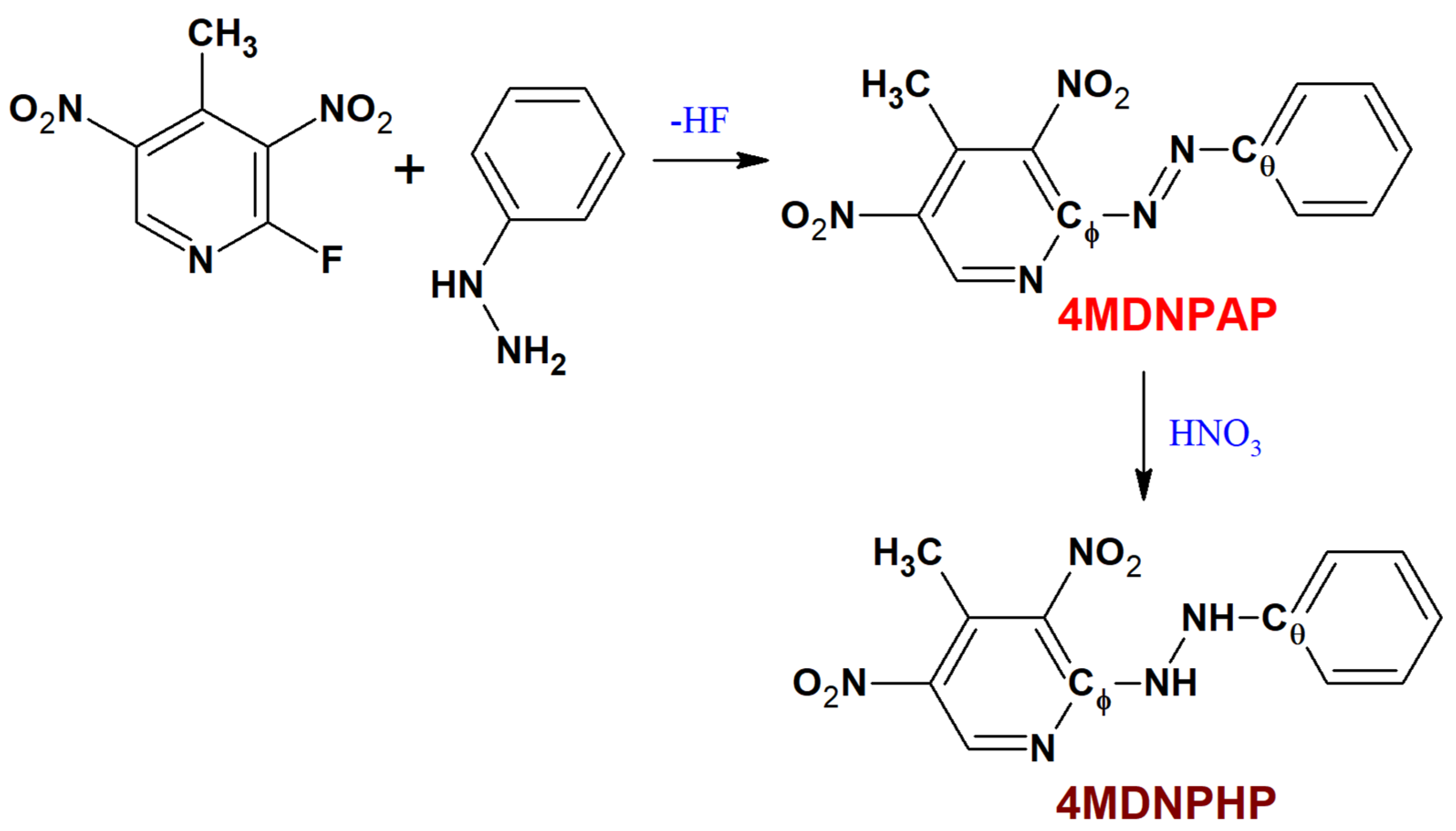
2.1. Synthesis and Crystallization
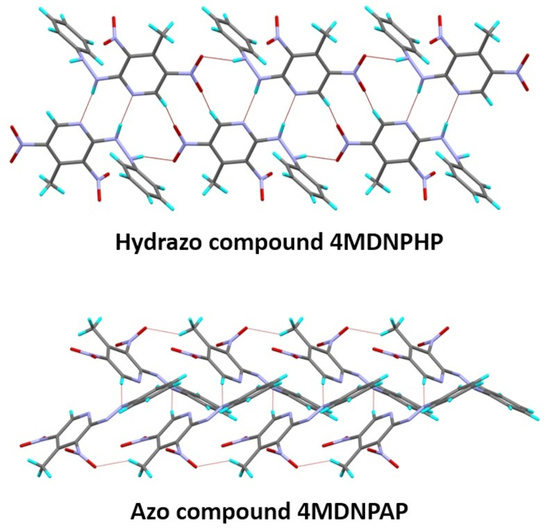
2.2. X-Ray Structural Studies
2.3. Comparison of Selected X-Ray Crystal Structures from DFT Calculations
2.4. Vibrational Spectra
2.5. NMR Studies
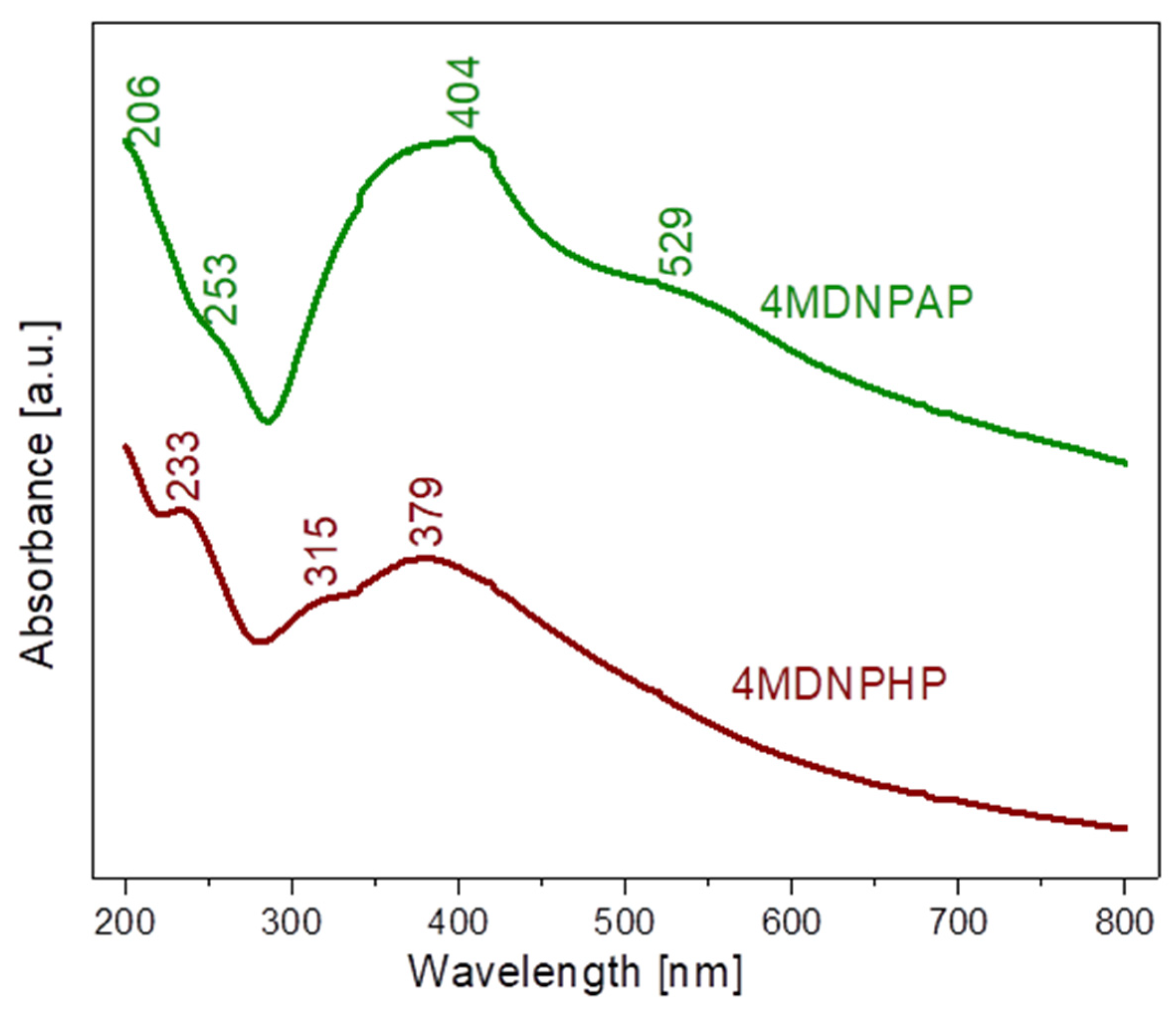
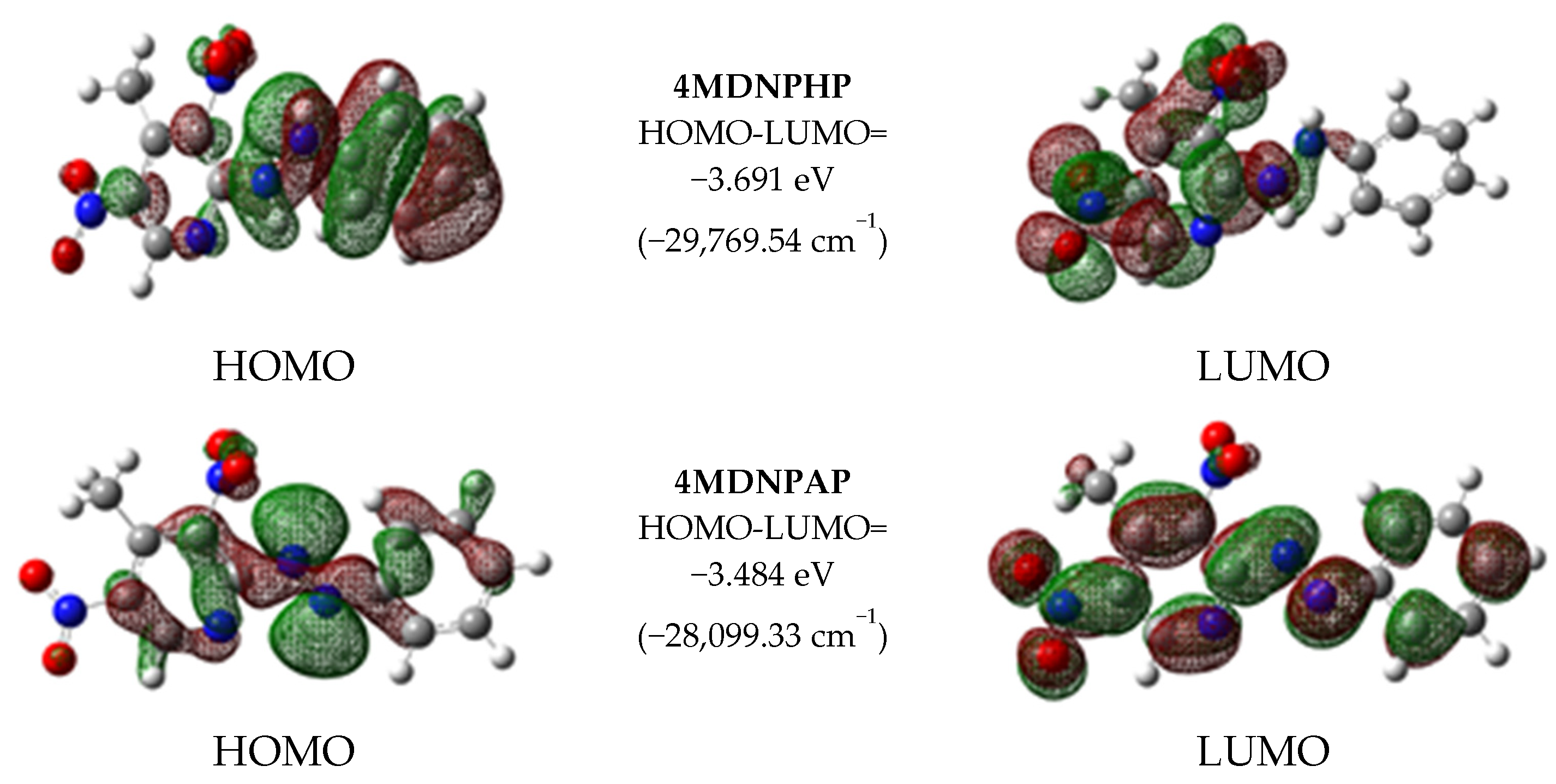
2.6. UV-Vis Studies
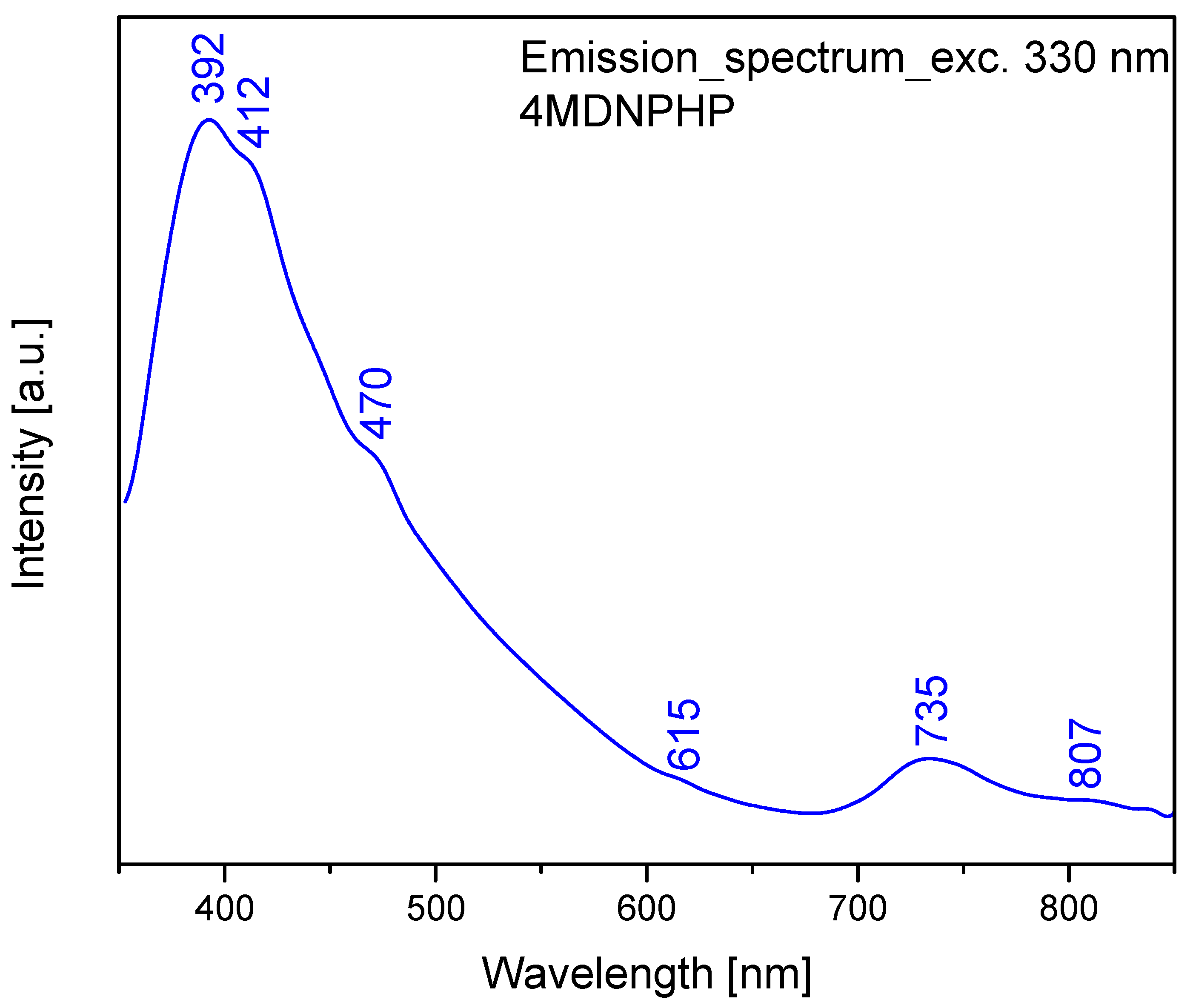
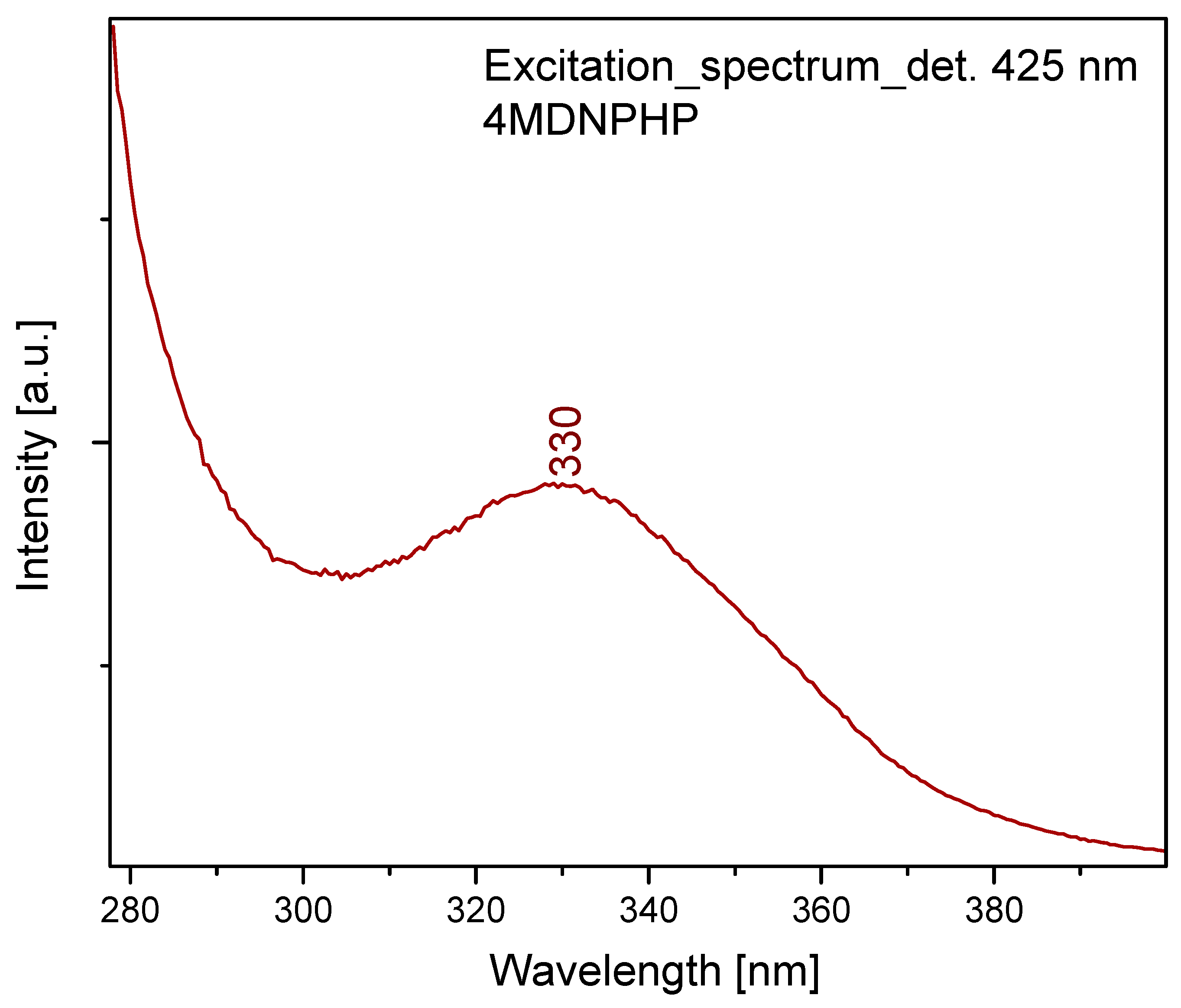
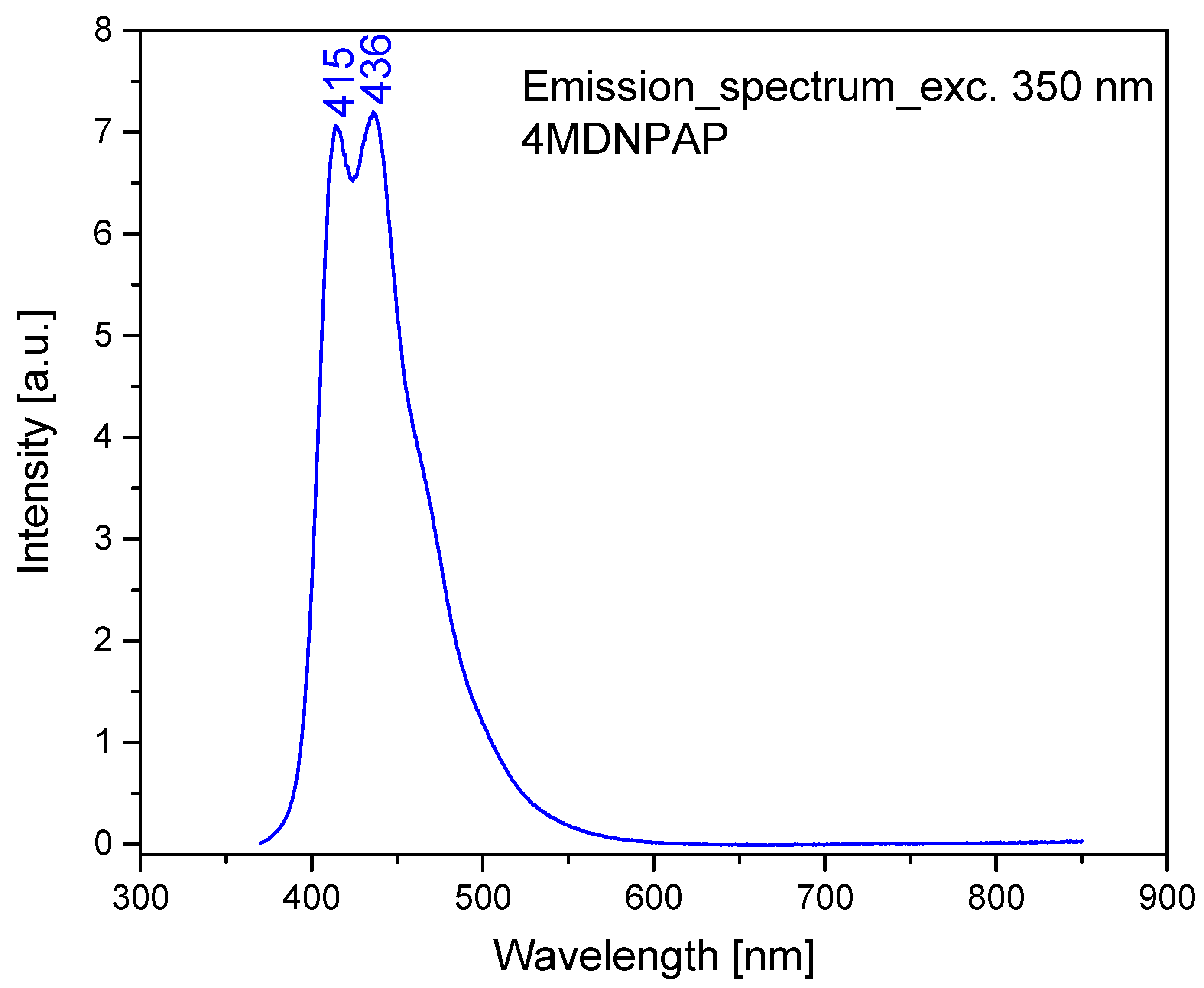
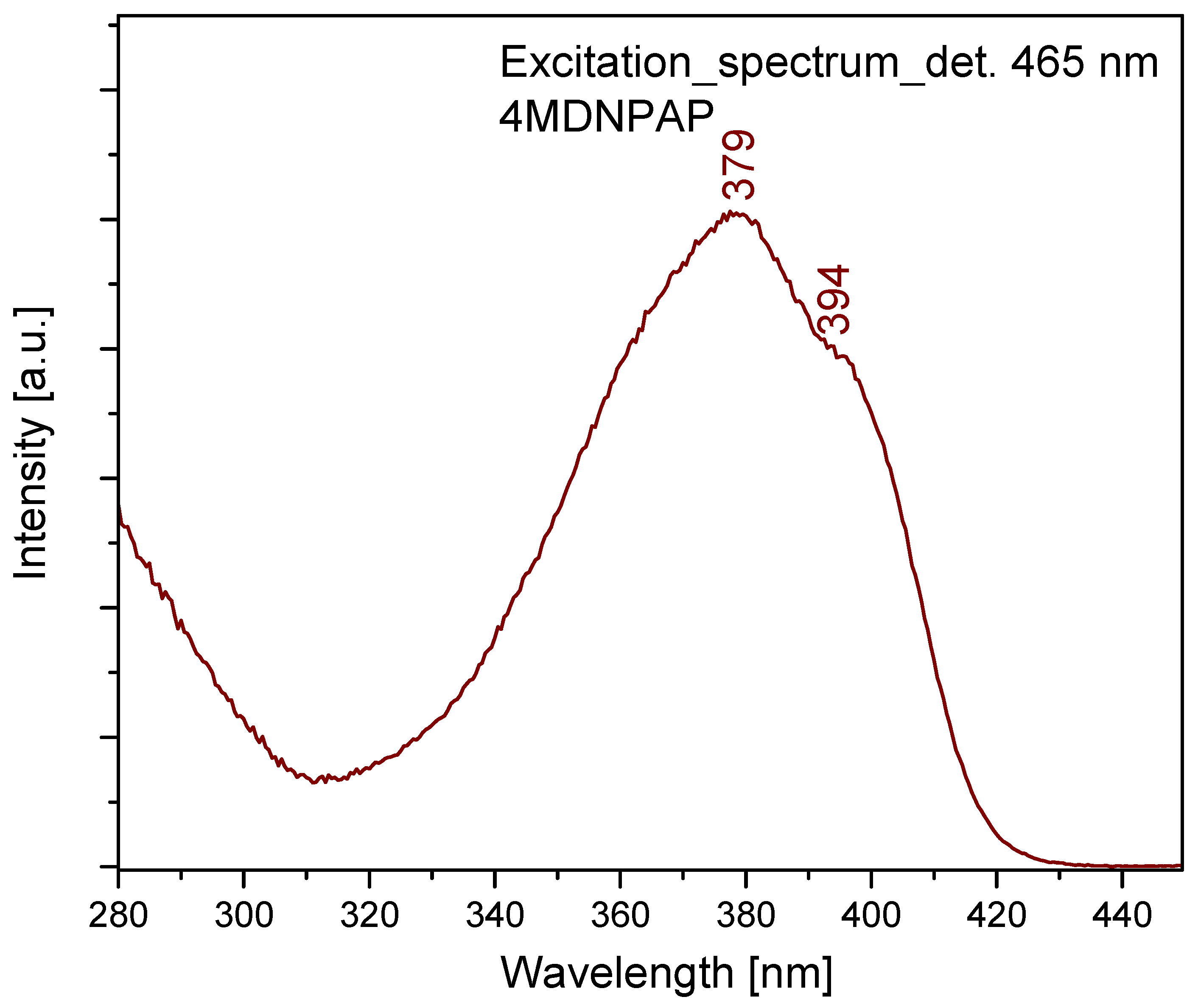
2.7. Emission Studies
3. Materials and Methods
3.1. Materials
3.2. X-Ray Structural Studies
3.3. IR and Raman Spectra
3.4. NMR Spectra
3.5. UV-Vis Spectra
3.6. Emission Spectra
3.7. Theoretical Calculations
4. Conclusions
Supplementary Materials
Author Contributions
Funding
Institutional Review Board Statement
Informed Consent Statement
Data Availability Statement
Conflicts of Interest
References
- Poornesh, P.; Hegde, P.K.; Umesh, G.; Manjunatha, M.G.; Manjunatha, K.B.; Adhikari, A.V. Nonlinear optical and optical power limiting studies on a new thiophene-based conjugated polymer in solution and solid PMMA matrix. Opt. Laser Technol. 2010, 42, 230–236. [Google Scholar] [CrossRef]
- Narendar, P.; Parthiban, J.; Anbalagan, N.; Gunasekaran, V.; Leonard, J.T. Pharmacological evaluation of some new 2-substituted pyridine derivatives. Biol. Pharm. Bull. 2003, 26, 182–187. [Google Scholar] [CrossRef]
- Rollas, S.; Küçükgüzel, Ş.G. Biological activities of hydrazone derivatives. Molecules 2007, 12, 1910–1939. [Google Scholar] [CrossRef]
- McEvoy, J.; McCarthy, C.; Bruno, R.; Brouwers, S.; Canavan, M.; Ceconi, C.; Christodorescu, R.; Ferro, C.; Daskalopoulou, S.; Gerdts, E.; et al. 2024 ESC Guidelines for the management of elevated blood pressure and hypertension. Eur. Heart J. 2024, 45, 3912–4018. [Google Scholar] [CrossRef]
- González-Porras, J.; Godeau, B.; Carpenedo, M. Switching thrombopoietin receptor agonist treatments in patients with primary immune thrombocytopenia. Ther. Adv. Hematol. 2019, 10, 1–9. [Google Scholar] [CrossRef]
- Massoud, M.; Armand, J.-P.; Ribrag, V. Procarbazine in haematology: An old drug with a new life? Eur. J. Cancer 2004, 40, 1924–1927. [Google Scholar] [CrossRef] [PubMed]
- Eilender, D.; LoRusso, P.; Thomas, L.; McCormick, C.; Rodgers, A.H.; Hooper, C.L.; Tornyos, K.; Krementz, E.T.; Parker, S.; Morgan, L. 4,4′-Dihydroxybenzophenone-2,4-dinitrophenylhydrazone (A-007): A topical treatment for cutaneous metastases from malignant cancers. Cancer Chemother. Pharmacol. 2006, 57, 719–726. [Google Scholar] [CrossRef] [PubMed]
- Arora, T.; Devi, J.; Boora, A.; Taxak, B.; Rani, S. Synthesis and characterization of hydrazones and their transition metal complexes: Antimicrobial, antituberculosis and antioxidant activity. Res. Chem. Intermed. 2023, 49, 4819–4843. [Google Scholar] [CrossRef]
- Barciela, P.; Cabaleiro, N.; Herrero, C.; Bermejo-Barrera, P. Azo dyes in the food industry: Features, classification, toxicity, alternatives and regulation. Food Chem. Adv. 2023, 2, 100124. [Google Scholar] [CrossRef]
- Savić, J.; Vasić, V. Complex formation between Pd(II) and immobilized imidazol-azo-chromotropic acid. Acta Chim. Slov. 2006, 53, 36–42. [Google Scholar]
- Dong, Y.; Chen, J.; Li, C.; Zhu, H. Decoloration of three azo dyes in water by photocatalysis of Fe(III)–oxalate complexes/H2O2 in the presence of inorganic salts. Dye. Pigment. 2007, 73, 261–268. [Google Scholar] [CrossRef]
- Pathak, P.; Jolly, V.S.; Sharma, K.P. Synthesis and biological activities of some new substituted arylazo Schiff bases. Orient. J. Chem. 2000, 16, 493–494. [Google Scholar]
- Olcay, B.; Hakan, B. Synthesis of Schiff and Mannich bases of isatin derivatives with 4-amino-4,5-dihydro-1H-1,2,4-triazole-5-ones. Molecules 2008, 13, 2126–2135. [Google Scholar] [CrossRef]
- Sharma, K.P.; Jolly, V.S.; Phatak, P. Schiff base and their derivatives as potential anticancer agents. Ultra Sci. Phys. Sci. 1998, 10, 263–266. [Google Scholar]
- Muzael, M.H.; Al-Zamili, T.F.; Shanan, H.K. Preparation, characterization and biological activity of some new tetra-azo compounds. J. Thi-Qar Sci. 2008, 1, 35–44. [Google Scholar] [CrossRef]
- Hihara, T.; Okada, Y.; Morita, Z. A semiempirical molecular orbital study of the photoreactivity of monoazo reactive dyes derived from γ- and J-acids. Dye. Pigment. 2007, 73, 141–161. [Google Scholar] [CrossRef]
- Skelton, R.; Dubois, F.; Zenobi, R. A MALDI sample preparation method suitable for insoluble polymers. Anal. Chem. 2000, 72, 1707–1710. [Google Scholar] [CrossRef] [PubMed]
- Otutu, J.O.; Okoro, D.; Ossai, E.K. Preparation of dis-azo dyes derived from p-aminophenol and their fastness properties for synthetic polymer-fibres. J. Appl. Sci. 2008, 8, 334–339. [Google Scholar] [CrossRef]
- Jeon, B.J.; Cha, S.W.; Jeong, M.Y.; Lim, T.K.; Jin, J.I. Synthesis and 2nd order nonlinear optical properties of soluble polyimides bearing nitroazobenzene type chromophore pendants attached in side-on mode. J. Mater. Chem. 2002, 12, 546–552. [Google Scholar] [CrossRef]
- Tian, Z.Y.; Huang, W.T.; Xiao, D.B.; Wang, S.Q.; Wu, Y.S.; Gong, Q.H. Enhanced and size-tunable third-order nonlinearity of nanoparticles from an azo metal chelate. Chem. Phys. Lett. 2004, 391, 283–287. [Google Scholar] [CrossRef]
- Ofomaja, A.E.; Ho, Y.S. Equilibrium sorption of anionic dye from aqueous solution by palm kernel fibre as sorbent. Dye. Pigment. 2007, 74, 60–66. [Google Scholar] [CrossRef]
- Peter, A.T.; Freeman, H.S. Colour Chemistry: The Design and Synthesis of Organic Dyes and Pigments; Springer: Dordrecht, The Netherlands, 1991; ISBN 1851665773/9781851665778. [Google Scholar]
- Su, X.; Aprahamian, I. Hydrazone-based switches, metallo-assemblies and sensors. Chem. Soc. Rev. 2014, 43, 1963–1981. [Google Scholar] [CrossRef]
- Asad, M.; Wang, Y.-J.; Wang, S.; Dong, Q.-G.; Li, L.-K.; Majeed, S.; Wang, Q.-Y.; Zang, S.-Q. Hydrazone connected stable luminescent covalent–organic polymer for ultrafast detection of nitro-explosives. RSC Adv. 2021, 11, 39270–39277. [Google Scholar] [CrossRef] [PubMed]
- Michalski, J.; Bryndal, I.; Lorenc, J.; Hermanowicz, K.; Janczak, J.; Hanuza, J. Conformation of the azo bond and its influence on the molecular and crystal structures, IR and Raman spectra, and electron properties of 6-methyl-3,5-dinitro-2-[(E)-phenyldiazenyl]pyridine—Quantum chemical DFT calculations. Spectrochim. Acta A 2018, 191, 521–531. [Google Scholar] [CrossRef] [PubMed]
- Michalski, J.; Stoczewski, Z.; Roszak, S.; Kucharska, E.; Bryndal, I.; Dymińska, L.; Lisiecki, R.; Hanuza, J. Conformation of the hydrazo bond in new 2-methyl-3,5-dinitro-6-(2-phenylhydrazinyl)pyridine and its influence on the structural and optic properties—Quantum chemical DFT calculations. Spectrochim. Acta A 2024, 308, 123760. [Google Scholar] [CrossRef]
- Oniciu, D.C.; Ghivirga, I.; Katritzky, A.R.; Steel, P.J.; Tomasik, P. Tautomerism and rotamerism in 2-(2-phenylhydrazino)pyridine. Chem. Heterocycl. Compd. 2001, 37, 785–789. [Google Scholar] [CrossRef]
- Kucharska, E.; Michalski, J.; Sąsiadek, W.; Talik, Z.; Bryndal, I.; Hanuza, J. Vibrational spectra, crystal structure, DFT quantum chemical calculations and conformation of the hydrazo–bond in 6-methyl-3-nitro-2-(2-phenylhydrazinyl)pyridine. Spectrochim. Acta A 2013, 107, 317–325. [Google Scholar] [CrossRef]
- Kucharska, E.; Bryndal, I.; Lis, T.; Lorenc, J.; Hanuza, J. Influence of methyl and nitro group substitutions on the structure and vibrational characteristics of the hydrazo-bridge in 6,6′-dimethyl-3,3′,5,5′-tetranitro-2,2′-hydrazobipyridine. Vib. Spectrosc. 2016, 83, 70–77. [Google Scholar] [CrossRef]
- Bryndal, I.; Kucharska, E.; Wandas, M.; Lorenc, J.; Hermanowicz, K.; Mączka, M.; Lis, T.; Marchewka, M.; Hanuza, J. Comprehensive physicochemical studies of a new hybrid material: 2-Amino-4-methyl-3-nitropyridinium hydrogen oxalate. Spectrochim. Acta A 2014, 117, 434–441. [Google Scholar] [CrossRef]
- Bryndal, I.; Kucharska, E.; Sąsiadek, W.; Wandas, M.; Lis, T.; Lorenc, J.; Hanuza, J. Molecular and crystal structures, vibrational studies and quantum chemical calculations of 3- and 5-nitroderivatives of 2-amino-4-methylpyridine. Spectrochim. Acta A 2012, 96, 952–962. [Google Scholar] [CrossRef]
- Bernstein, J.; Davis, R.E.; Shimoni, L.; Chang, N.-L. Patterns in hydrogen bonding: Functionality and graph set analysis in crystals. Angew. Chem. Int. Ed. Engl. 1995, 34, 1555–1573. [Google Scholar] [CrossRef]
- Speak, A.L. Single-crystal structure validation with the program PLATON. J. Appl. Cryst. 2003, 36, 7–13. [Google Scholar] [CrossRef]
- Daszkiewicz, M. Importance of O⋯N interaction between nitro groups in crystals. CrystEngComm 2013, 15, 10427–10430. [Google Scholar] [CrossRef]
- Spackman, P.R.; Turner, M.J.; McKinnon, J.J.; Wolff, S.K.; Grimwood, D.J.; Jayatilaka, D.; Spackman, M.A. Crystal Explorer: A program for Hirshfeld surface analysis, visualization and quantitative analysis of molecular crystals. J. Appl. Cryst. 2021, 54, 1006–1011. [Google Scholar] [CrossRef] [PubMed]
- Michalski, J.; Kucharska, E.; Wandas, M.; Hanuza, J.; Waśkowska, A.; Mączka, M.; Talik, Z.; Olejniczak, S.; Potrzebowski, M.J. Crystal structure, vibrational and NMR studies and chemical quantum calculations of 2-phenylazo-5-nitro-6-methyl-pyridine (C12H10N4O2). J. Mol. Struct. 2005, 744–747, 377–392. [Google Scholar] [CrossRef]
- Michalski, J.; Kucharska, E.; Sąsiadek, W.; Lorenc, J.; Hanuza, J. Intra- and intermolecular hydrogen bonds, conformation and vibrational characteristics of the hydrazo group in 5-nitro-2-(2-phenylhydrazinyl)pyridine and its 3-, 4- or 6-methyl isomers. Spectrochim. Acta A 2013, 112, 263–275. [Google Scholar] [CrossRef]
- Socrates, G. Infrared and Raman Characteristic Group Frequencies: Tables and Charts, 3rd ed.; John Wiley & Sons, Ltd.: Chichester, UK, 2004; ISBN 978-0-470-09307-8. [Google Scholar]
- Castillo, M.V.; Rudyk, R.A.; Davies, L.; Brandán, S.A. Analysis of the structure and the FT-IR and Raman spectra of 2-(4-nitrophenyl)-4H-3,1-benzoxazin-4-one. Comparisons with the chlorinated and methylated derivatives. J. Mol. Struct. 2017, 1140, 2–11. [Google Scholar] [CrossRef]
- Rakkasagi, A.M.; Hiremath, S.M.; Khemalapure, S.S.; Basanagouda, M.M.; Kulkarni, S.S.; Koppal, V.V.; Jeyaseelan, S.C. Synthesis, spectroscopic (FT-IR, FT-Raman), solvent effects (absorption, fluorescence), electronic and biological evaluation of 7-methyl-4-(4-methyl-2-nitro-phenoxymethyl)-2H-chromen-2-one. J. Photochem. Photobiol. 2023, 444, 114976. [Google Scholar] [CrossRef]
- Potla, K.M.; Suchetan, P.A.; Poojith, N.; Osório, F.A.P.; Valverde, C.; Mary, Y.S.; Vankayalapati, S. A comparative study of structural and spectroscopic properties of three structurally similar mechanically bending organic single crystals—2-Amino-3-nitro-5-halo (halo = Cl, Br, or I) pyridine. Spectrochim. Acta A 2023, 302, 123093. [Google Scholar] [CrossRef]
- Brito, I.; Mundaca, A.; Cárdenas, A.; López-Rodríguez, M. 3,3′-Dinitro-2,2′-dithiodipyridine. Acta Cryst. C 2008, 64, 117–118. [Google Scholar] [CrossRef]
- Jackman, L.M.; Sternhell, S. Application of NMR Spectroscopy in Organic Chemistry, 2nd ed.; Pergamon Press: Oxford, UK, 1969. [Google Scholar]
- Brügel, W. Die Kernresonanzspektren von Pyridin-Derivaten. Z. Elektrochem. 1962, 66, 159–177. [Google Scholar] [CrossRef]
- Kątcka, M.; Urbański, T. NMR spectra of pyridine, picolines and hydrochlorides and of their hydrochlorides and methiodides. Bull. Acad. Pol. Sci. Sér. Sci. Chim. 1968, 16, 347–350. [Google Scholar]
- Katritzky, A.R. (Ed.) Advances in Heterocyclic Chemistry; Elsevier Academic Press: Amsterdam, The Netherlands, 2006; Volume 91, ISBN 9780080463018. [Google Scholar]
- Sąsiadek, W.; Bryndal, I.; Lis, T.; Wandas, M.; Hanuza, J. Synthesis and physicochemical properties of the methyl-nitro-pyridine-disulfide: X-ray, NMR, electron absorption and emission, IR and Raman studies and quantum chemical calculations. J. Mol. Struct. 2022, 1257, 132535. [Google Scholar] [CrossRef]
- Wandas, M.; Kucharska, E.; Michalski, J.; Talik, Z.; Lorenc, J.; Hanuza, J. Experimental and simulated 1H and 13C NMR spectra (GIAO/DFT approach) and molecular and crystal structures of dimethyl-dinitro-azo- and dimethyl-dinitro-hydrazo-pyridines. J. Mol. Struct. 2011, 1004, 156–162. [Google Scholar] [CrossRef]
- Barakat, A.; Al-Najjart, H.J.; Al-Majid, A.M.; Soliman, S.M.; Mabkhot, Y.N.; Shaik, M.R.; Chabbiur, H.A.; Fun, H.-K. Synthesis, NMR, FT-IR, X-ray structural characterization, DFT analysis and isomerism aspects of 5-(2,6-dichlorobenzylidene)pyrimidine-2,4,6(1H,3H,5H)-trione. Spectrochim. Acta A 2015, 147, 107–116. [Google Scholar] [CrossRef] [PubMed]
- Carthigayan, K.; Xavier, S.; Periandy, S. HOMO–LUMO, UV, NLO, NMR and vibrational analysis of 3-methyl-1-phenylpyrazole using FT-IR, FT-RAMAN, FT-NMR spectra and HF-DFT computational methods. Spectrochim. Acta A 2015, 142, 350–363. [Google Scholar] [CrossRef] [PubMed]
- Puszko, A.; Wasylina, L. The Influence of Steric Effect on 1H NMR, 13C NMR, and IR Spectra of Methylated Derivatives of 4-Nitropyridine N-Oxide. Chem. Pap. 1995, 49, 176–181. [Google Scholar] [CrossRef]
- Raymo, F.M.; Bartberger, M.D.; Houk, K.N.; Stoddart, J.F. The Magnitude of [C−H⋯O] Hydrogen Bonding in Molecular and Supramolecular Assemblies. J. Am. Chem. Soc. 2001, 123, 9264–9267. [Google Scholar] [CrossRef]
- Michalski, J.; Kucharska, E.; Sąsiadek, W.; Lorenc, J.; Hanuza, J. Excited states of selected hydrazo-compounds on the example of 5-nitro-2-(2-phenylhydrazinyl)pyridine and its 3-, 4- or 6-methyl isomers. J. Mol. Struct. 2016, 1123, 80–91. [Google Scholar] [CrossRef]
- Yi, Y.-R.; Lee, I.-J. Photoreactions of spirophenanthrooxazine dispersed in polystyrene film at room temperature. J. Photochem. Photobiol. A Chem. 2002, 151, 89–94. [Google Scholar] [CrossRef]
- Glasbeek, M.; Zhang, H. Femtosecond Studies of Solvation and Intramolecular Configurational Dynamics of Fluorophores in Liquid Solution. Chem. Rev. 2004, 104, 1929–1954. [Google Scholar] [CrossRef] [PubMed]
- Zhao, G.-J.; Yu, F.; Zhang, M.-X.; Northrop, B.H.; Yang, H.; Han, K.-L.; Stang, P.J. Substituent Effects on the Intramolecular Charge Transfer and Fluorescence of Bimetallic Platinum Complexes. J. Phys. Chem. A 2011, 115, 6390–6393. [Google Scholar] [CrossRef]
- Cao, X.; Liu, C.; Liu, Y. Theoretical Studies on the Mechanism of Cyclic Nucleotide Monophosphate Hydrolysis within Phosphodiesterases. Theor. Comput. Chem. 2012, 11, 573–586. [Google Scholar] [CrossRef]
- Zhao, G.-J.; Han, K.-L. Hydrogen Bonding in the Electronic Excited State. Acc. Chem. Res. 2012, 45, 404–413. [Google Scholar] [CrossRef]
- CrysAlis PRO, Version 1.171.37.35; Rigaku Oxford Diffraction: Oxford, UK, 2014.
- Sheldrick, G.M. A short history of SHELX. Acta Crystallogr. A 2008, 64, 112–122. [Google Scholar] [CrossRef]
- Sheldrick, G.M. Crystal structure refinement with SHELXL. Acta Crystallogr. C 2015, 71, 3–8. [Google Scholar] [CrossRef]
- Brandenburg, K. DIAMOND 4.0, Crystal Impact GbR: Bonn, Germany, 2014.
- Macrae, C.F.; Bruno, I.J.; Chisholm, J.A.; Edgington, P.R.; McCabe, P.; Pidcock, E.; Rodriguez-Monge, L.; Taylor, R.; van de Streek, J.; Wood, P.A. Mercury CSD 2.0—new features for the visualization and investigation of crystal structures. J. Appl. Cryst. 2008, 41, 466–470. [Google Scholar] [CrossRef]
- Frisch, M.J.; Trucks, G.W.; Schlegel, H.B.; Scuseria, G.E.; Robb, M.A.; Cheeseman, J.R.; Scalmani, G.; Barone, V.; Petersson, G.A.; Nakatsuji, H.; et al. Gaussian 16, Revision C.01, Gaussian Inc.: Wallingford, CT, USA, 2016.
- Becke, A.D. Density-functional thermochemistry. III. The role of exact exchange. J. Chem. Phys. 1993, 98, 5648–5652. [Google Scholar] [CrossRef]
- Becke, A.D. Density-functional exchange-energy approximation with correct asymptotic behaviour. Phys. Rev. A 1988, 38, 3098–3100. [Google Scholar] [CrossRef] [PubMed]
- Parr, R.G.; Yang, W. Density-Functional Theory of Atoms and Molecules; Oxford University Press: New York, NY, USA; Oxford, UK, 1989. [Google Scholar] [CrossRef]
- Vosko, S.H.; Wilk, L.; Nusair, M. Accurate spin-dependent electron liquid correlation energies for local spin density calculations: A critical analysis. Can. J. Phys. 1980, 58, 1200–1211. [Google Scholar] [CrossRef]
- Lee, C.; Yang, W.; Parr, R.G. Development of the Colle–Salvetti correlation-energy formula into a functional of the electron density. Phys. Rev. B Condens. Matter 1988, 37, 785–789. [Google Scholar] [CrossRef] [PubMed]
- Krishnan, R.; Binkley, J.S.; Seeger, R.; Pople, J.A. Self-consistent molecular orbital methods. XX. A basis set for correlated wave functions. J. Chem. Phys. 1980, 72, 650–654. [Google Scholar] [CrossRef]
- McLean, A.D.; Chandler, G.S. Contracted Gaussian basis sets for molecular calculations. I. Second row atoms, Z = 11–18. J. Chem. Phys. 1980, 72, 5639–5648. [Google Scholar] [CrossRef]
- Palafox, M.A.; Rastogi, V.K. Quantum chemical predictions of the vibrational spectra of polyatomic molecules: The uracil molecule and two derivatives. Spectrochim. Acta A 2002, 58, 411–440. [Google Scholar] [CrossRef]
- Collier, W.B.; Magdo, I.; Klots, T.D. Infrared and Raman spectra of bicyclic molecules using scaled noncorrelated and correlated ab initio force fields. J. Chem. Phys. 1999, 110, 5710–5720. [Google Scholar] [CrossRef]
- Dennington, R.; Keith, T.A.; Millam, J.M. GaussView, Version 6.1.1; Semichem Inc.: Shawnee Mission, KS, USA, 2019.
- Zhurko, G.A.; Zhurko, D.A. ChemCraft—Graphical Program for Visualization of Computed Results. Available online: http://www.chemcraftprog.com (accessed on 15 October 2025).



| 4MDNPHP | 4MDNPAP | |
|---|---|---|
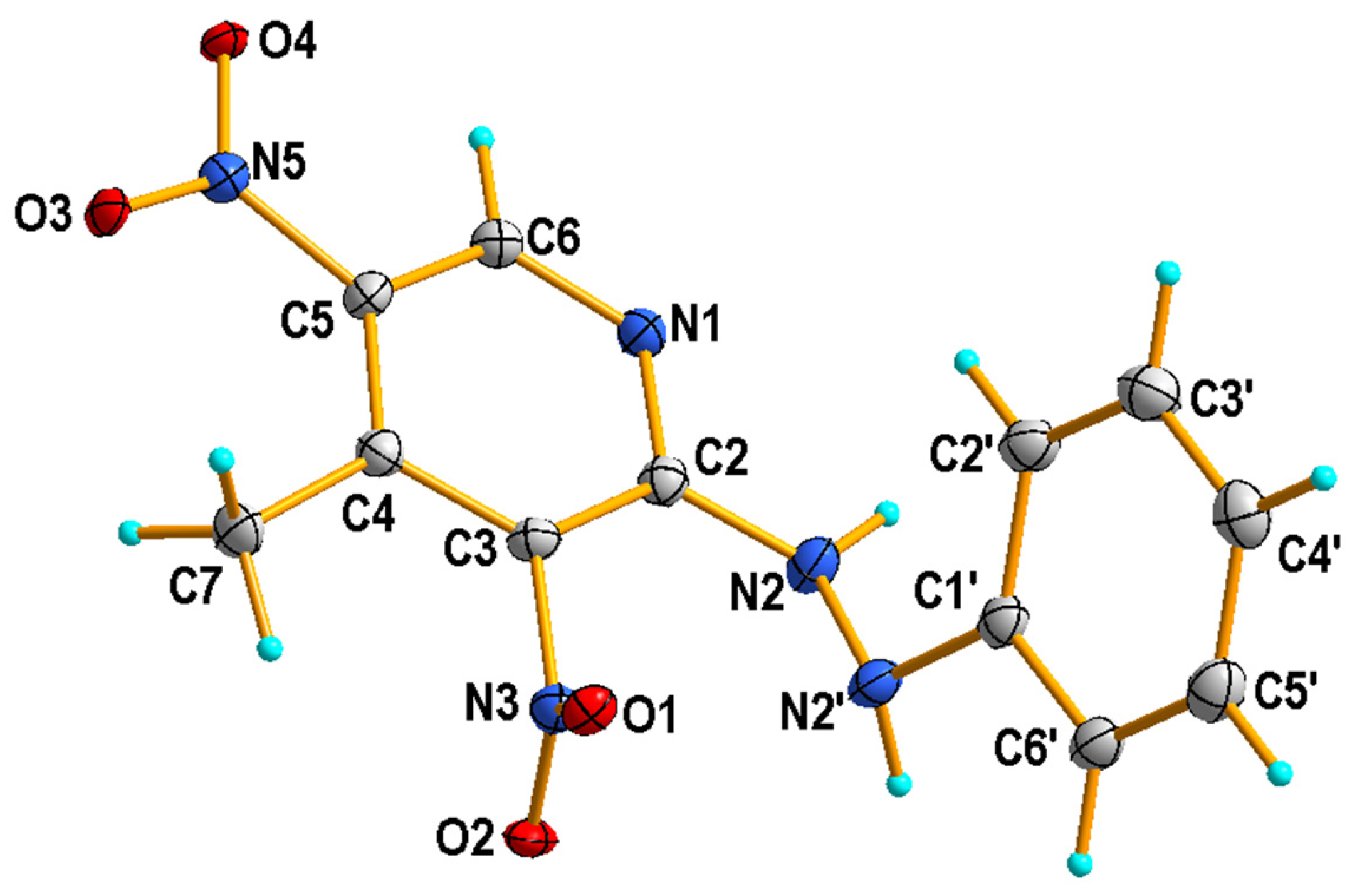
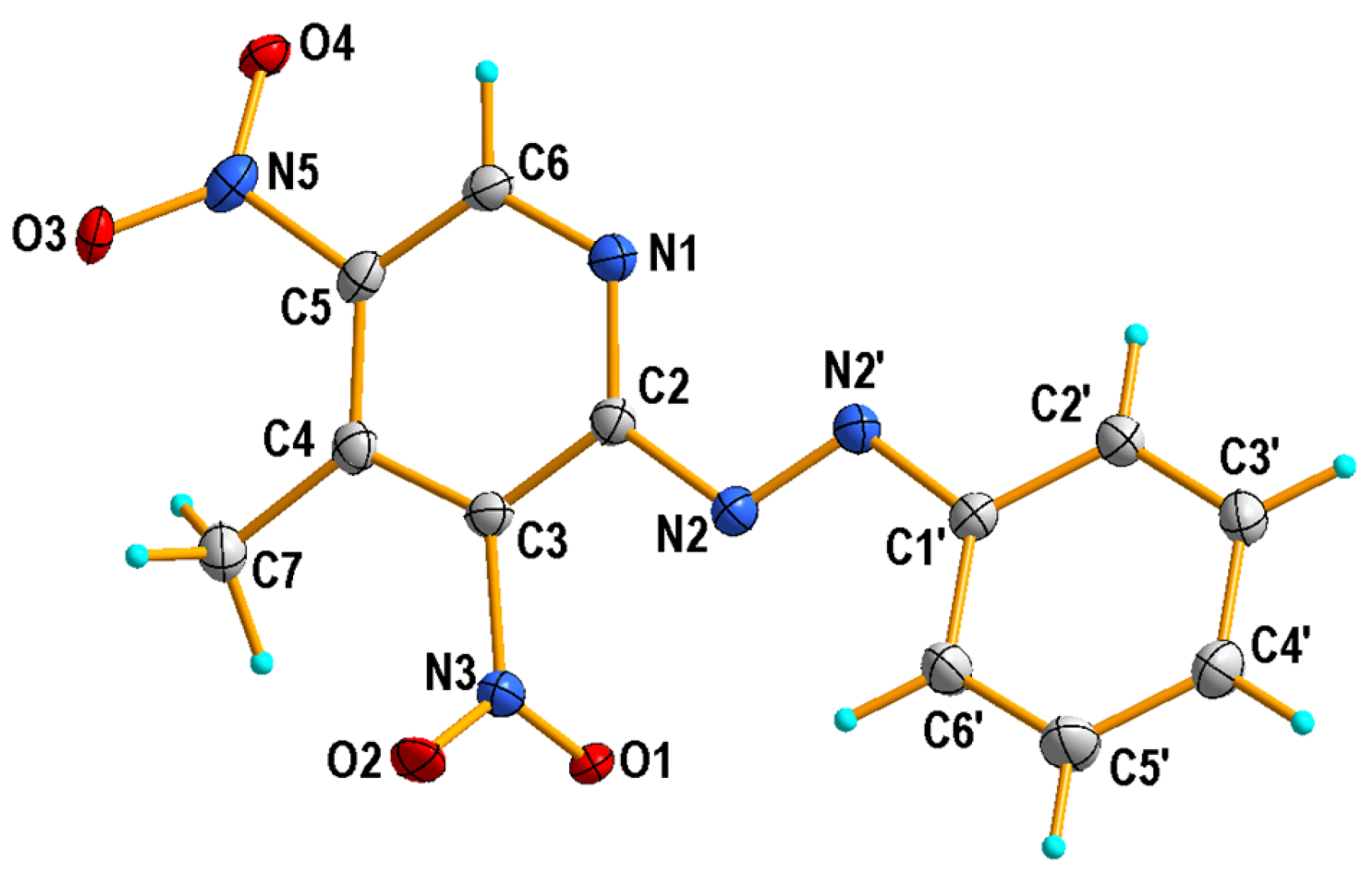
| Chemical formula | C12H11N5O4 | C12H9N5O4 |
| Mr (g/mol) | 289.26 | 287.24 |
| Crystal system, space group | triclinic, P | monoclinic, P21/n |
| Temperature (K) | 100 | 100 |
| a (Å) | 8.006 (2) | 8.085 (3) |
| b (Å) | 8.735 (3) | 6.035 (2) |
| c (Å) | 9.518 (3) | 26.238 (9) |
| α (°) | 104.13 (3) | 90 |
| β (°) | 99.20 (3) | 96.26 (3) |
| γ (°) | 95.11 (3) | 90 |
| V (Å3) | 631.4 (3) | 1272.4 (7) |
| Z | 2 | 4 |
| λ (Å) | 0.71073 | 0.71073 |
| µ (mm−1) | 0.12 | 0.12 |
| Crystal size (mm) | 0.50 × 0.36 × 0.26 | 0.41 × 0.19 × 0.10 |
| No of measured, independent and observed [I > 2σ (I)] reflections | 14,468, 4051, 3714 | 12,114, 4067, 3242 |
| Rint | 0.017 | 0.044 |
| θmax, θmin (°) | 31.8, 2.8 | 32.0, 2.7 |
| R1 [F2 > 2σ (F2)] | 0.034 | 0.055 |
| wR (F2) | 0.099 | 0.135 |
| Goof on F2 | 1.07 | 1.08 |
| Δρmax, Δρmin (e Å−3) | 0.45, −0.28 | 0.51, −0.24 |
| CCDC No | 2427161 | 2427162 |
| D—H⋯A | D—H | H⋯A | D⋯A | D—H⋯A |
|---|---|---|---|---|
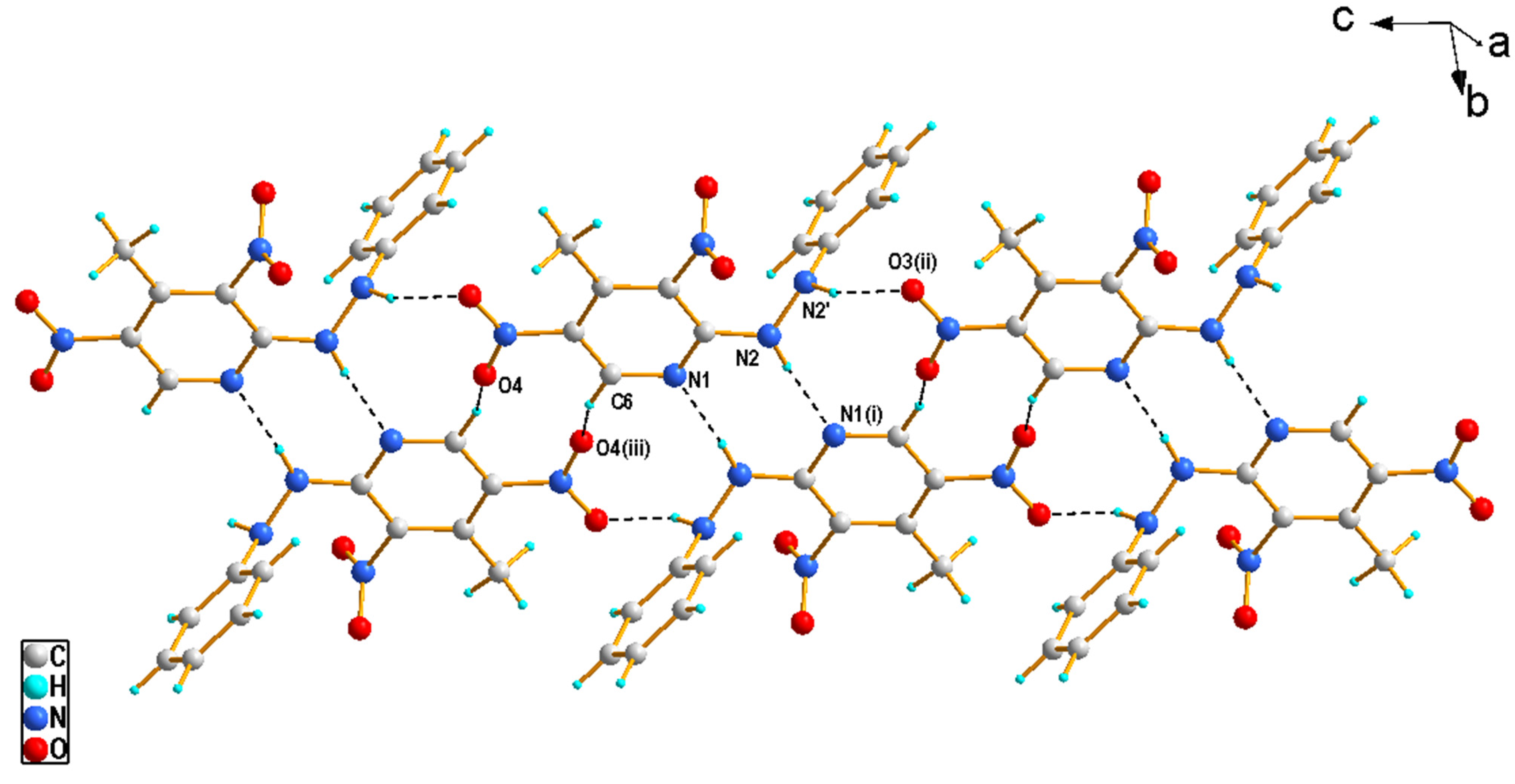
| N2—H2⋯N1 i | 0.885 (14) | 2.121 (14) | 3.0042 (14) | 174.8 (12) |
| N2’—H2’⋯O3 ii | 0.869 (13) | 2.295 (13) | 3.1425 (14) | 164.7 (11) |
| C6—H6⋯O4 iii | 0.95 | 2.45 | 3.2525 (16) | 142 |
| D—H⋯A | D—H | H⋯A | D⋯A | D—H⋯A |
|---|---|---|---|---|
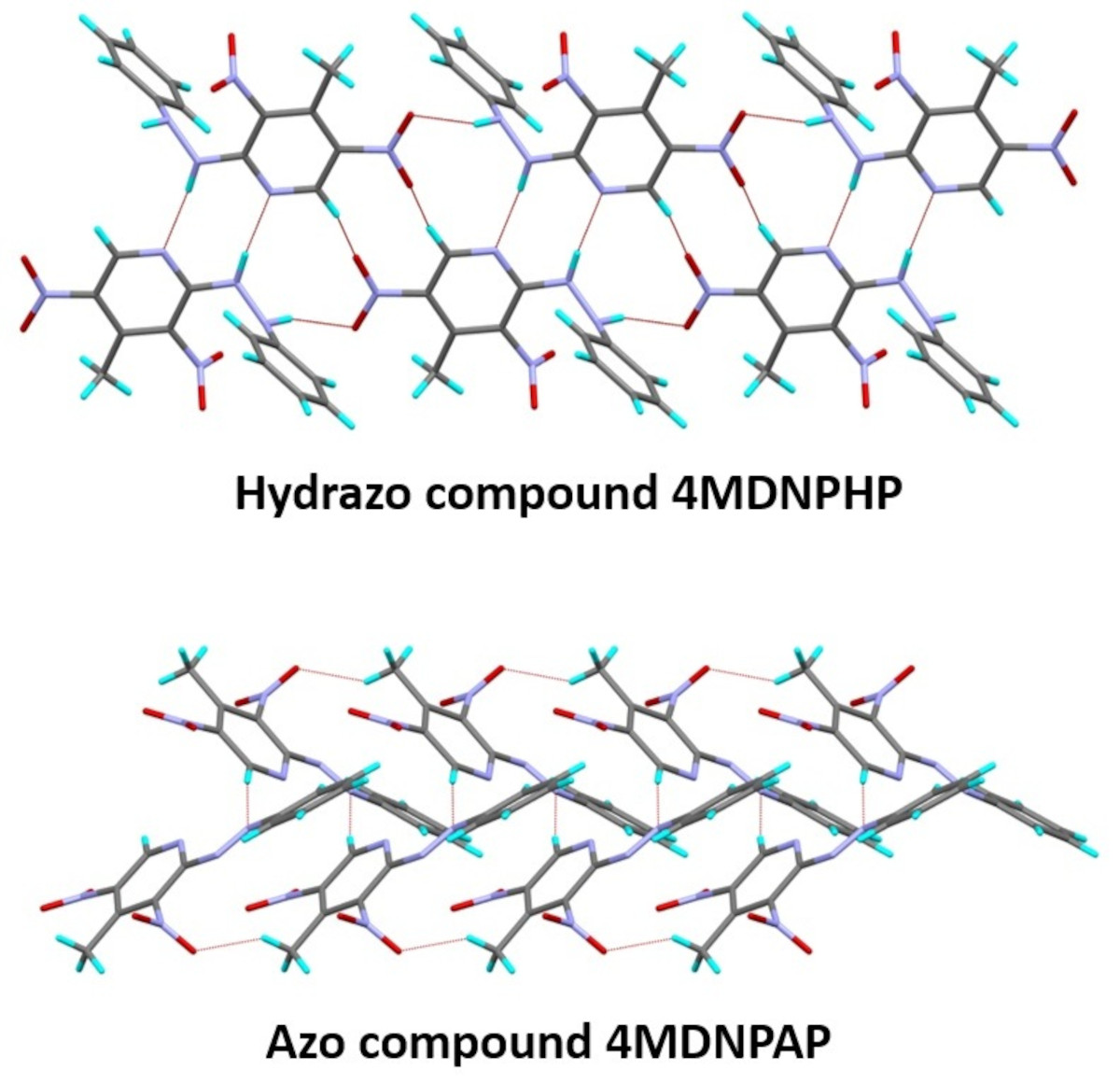
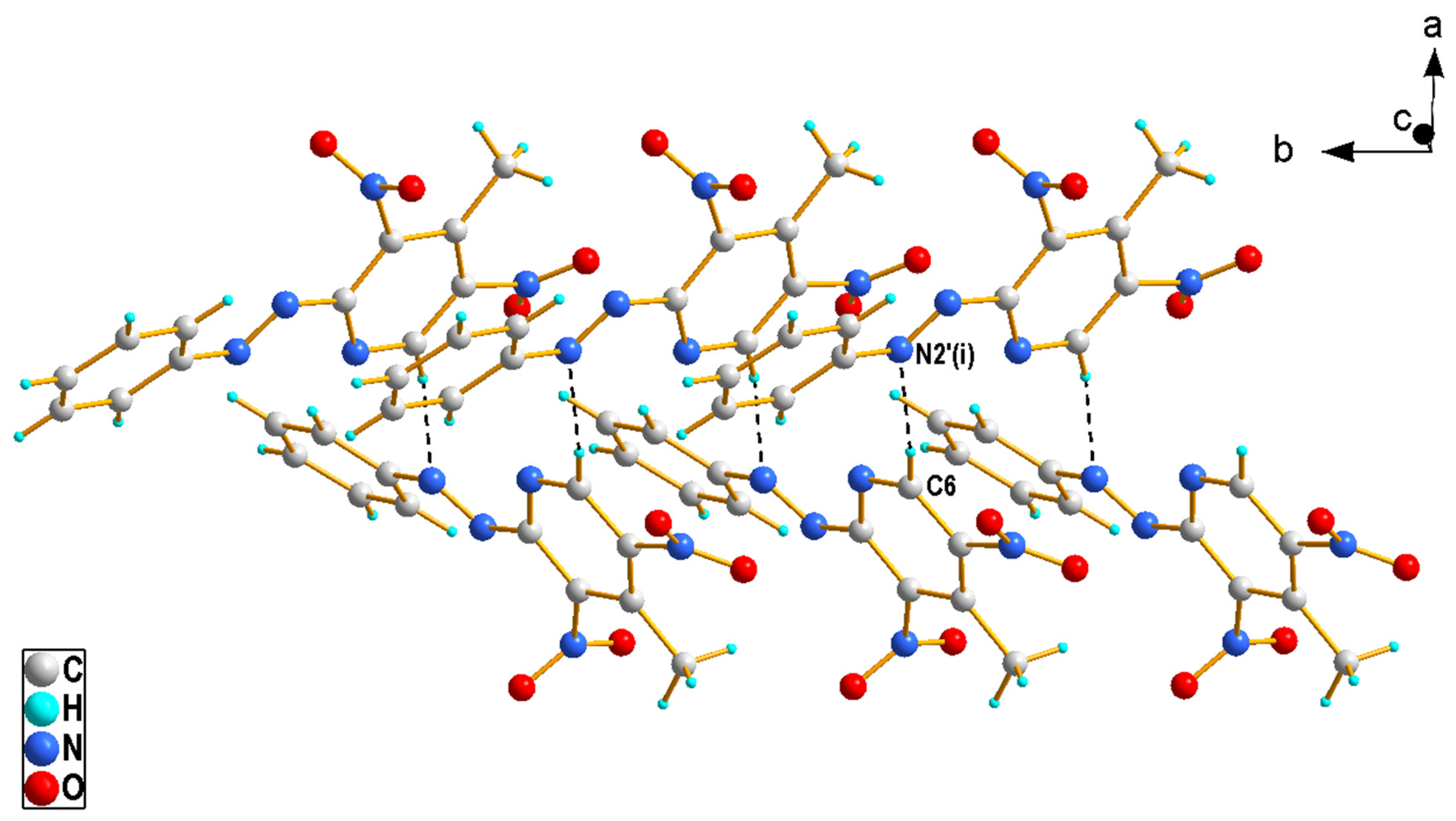
| C6—H6⋯N2’ i | 0.95 | 2.52 | 3.460 (2) | 173 |
| C7—H73⋯O1 ii | 0.98 | 2.53 | 3.398 (2) | 147 |
| No Compound | -N=N-/-HN-NH- Exp/calc [Å, °] | -NO2 (p3) Exp/calc [°] | -NO2 (p5) Exp/calc [°] | |||||
|---|---|---|---|---|---|---|---|---|
| N-N | N-N-CΦ | N-N-CΘ | CΦ-N-N-CΘ | C-N-O | C-C-N-O | C-N-O | C-C-N-O | |
| 1 | 1.2562 1.2524 | 114.29 114.35 | 113.68 115.11 | 176.49 178.44 | 117.36 116.92 | 106.19 97.69 | 118.22 117.94 | 34.07 25.21 |
| 2 | 1.237 1.251 | 113.2 113.2 | 114.5 115.6 | −178.6 −178.6 | 116.9 116.6 | −89.7 −42.2 | 117.2 117.3 | 19.4 13.7 |
| 3 | 1.240 1.279 | 114.5 113.9 | 116.1 115.2 | 4.8 −179.0 | – | – | 118.4 117.4 | – 14.9 |
| 4 | 1.3953 1.3852 | 119.07 122.19 | 116.60 117.94 | −97.41 −112.61 | 118.03 117.86 | −77.90 −63.92 | 119.58 118.29 | 1.79 22.32 |
| 5 | 1.391 1.384 | 121.06 121.59 | 116.01 117.49 | 128.10 150.83 | 118.90 117.99 | 170.90 179.82 | 117.77 117.48 | 22.2 0.70 |
| 6 | 1.407 1.381 | 119.96 121.7 | 115.02 118.5 | 77.3 −127.1 | 119.20 118.70 | 166.8 178.6 | – | – |
| 7 | – 1.398 | – 120.73 | – 116.79 | – 103.16 | – | – | – 117.53 | – −0.10 |
| 8 | – 1.383 | – 120.68 | – 118.38 | – 144.75 | – | – | – 117.29 | – −22.48 |
| 9 | – 1.399 | – 120.43 | – 116.78 | – 104.20 | – | – | – 118.41 | – −1.79 |
| 10 | – 1.397 | – 120.85 | – 116.77 | – 1–2.18 | – | – | – 117.58 | – −0.39 |
| 4MDNPAP | 4MDNPHP | Mode | ||
|---|---|---|---|---|
| IR | Raman | IR | Raman | |
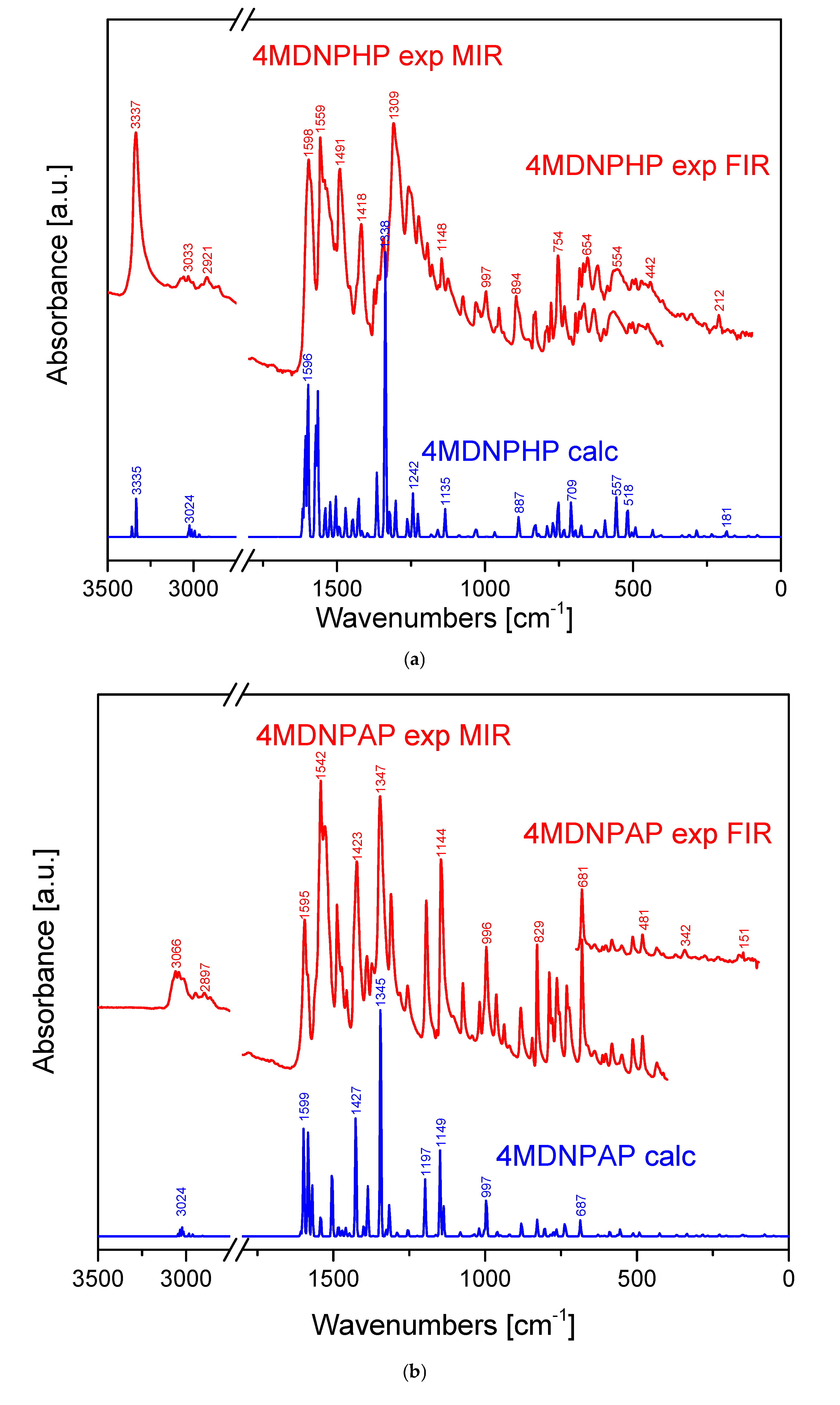
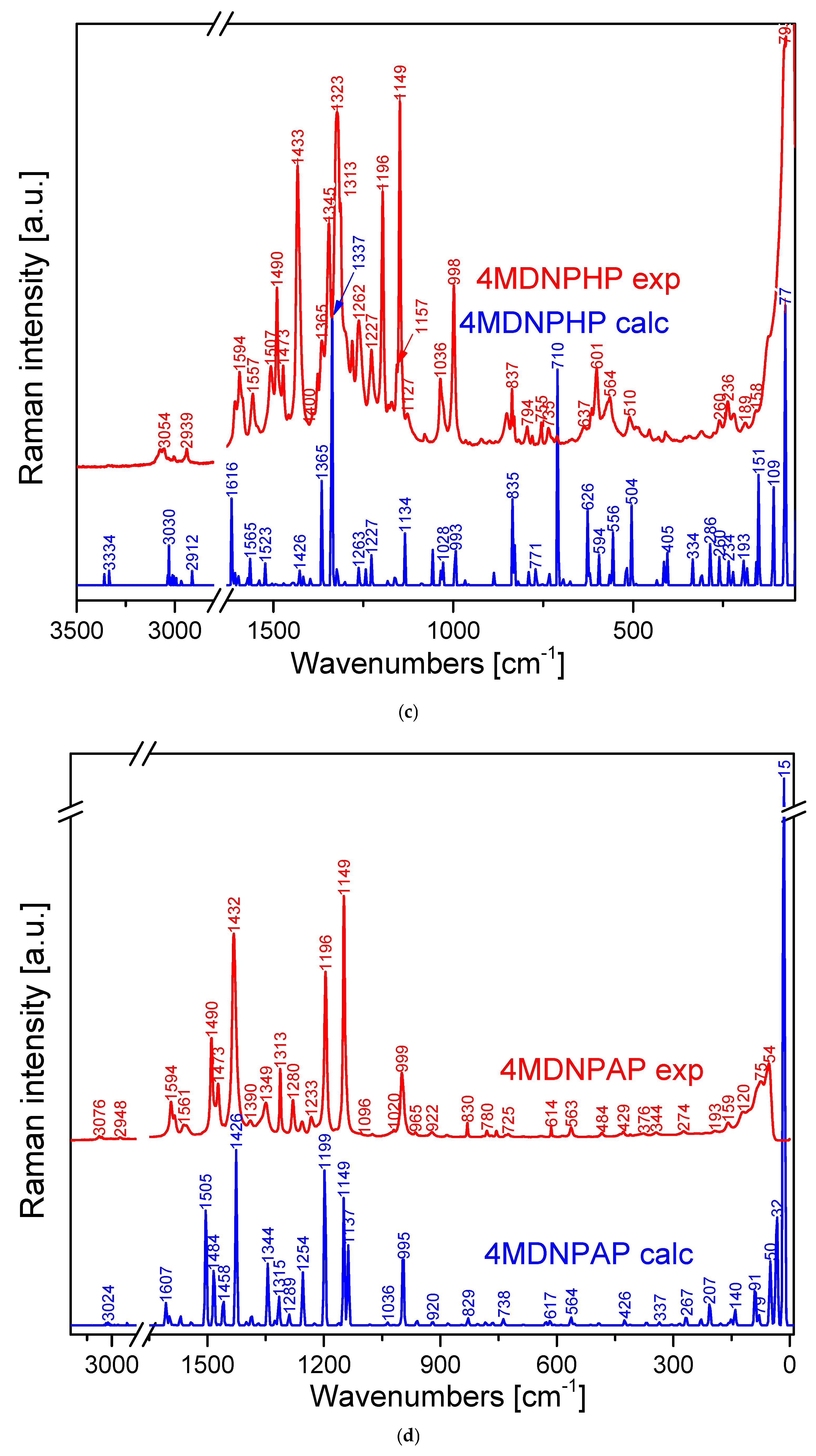
| 1589–1544 | 1585–1542 | 1584–1542 | 1584–1562 | νas(NO2) |
| 1377 | 1377–1323 | 1378–1347 | 1349 | νs(NO2) |
| 884–883 | 882–836 | 829 | 830 | δ(NO2) |
| 777–732 | 781–735 | 754 | 756–726 | ω(NO2) |
| 107 | - | - | - | τ(NO2) |
| 4MDNPHP | 4MDNPAP | ||||
|---|---|---|---|---|---|
| Chemical Shifts | Chemical Shifts | ||||
| No Atom | Exp. | Calc. | No Atom | Exp. | Calc. |
| H6ϕ | 9.395, 9.069 | 9.4247 | H6ϕ | 9.383 | 9.7110 |
| H3’θ | 8.915 | 7.6051 | H2’θ | 8.7666 | |
| H5’θ | 7.993, 7.749 | 7.5889 | H6’θ | 7.980 | 8.1696 |
| H7’θ | 7.689 | 7.2627 | H3’θ | 8.1100 | |
| H6’θ | 7.442, 7.351 | 7.0352 | H5’θ | 7.735 | 7.8670 |
| H2’θ | 7.202 | 6.9245 | H4’θ | 7.667 | 7.8670 |
| HN2 (NH)ϕ | 6.894 | 6.4176 | |||
| HN2’ (NH)θ | 6.847 | 5.1554 | |||
| H7(3) (CH3) | 2.813 | 2.7820 | H7(3) (CH3) | 3.0483 | |
| H7(2) (CH3) | 2.718 | 2.7156 | H7(2) (CH3) | 2.706 | 2.8735 |
| H7(1) (CH3) | 2.510 | 2.1235 | H7(1) (CH3) | 2.3483 | |
| 4MDNPHP | 4MDNPAP | ||||
|---|---|---|---|---|---|
| Chemical Shifts | Chemical Shifts | ||||
| No Atom | Exp. | Calc. | No Atom | Exp. | Calc. |
| C2ϕ | 154.688, 154.442 | 163.240 | C5ϕ | 154.714 | 163.037 |
| C6ϕ | 153.617 | 155.303 | C2ϕ | 160.130 | |
| C1’θ | 149.232, 148.678, 147.737 | 154.319 | C1’θ | 153.636 | 159.406 |
| C4ϕ | 144.241 | 150.910 | C3ϕ | 157.549 | |
| C5ϕ | 139.562, 139.338, 139.236, 138.732 | 146.711 | C6ϕ | 147.751 | 154.258 |
| C3ϕ | 135.485 | 140.587 | C4ϕ | 147.346 | 148.557 |
| C3’θ | 133.761, 133.088 | 135.400 | C2’θ | 145.610 | 145.327 |
| C5’θ | 130.782, 129.826, 129.797, 129.173 | 135.290 | C4’θ | 139.233 | 143.995 |
| C4’θ | 124.887, 123.256 | 125.668 | C3’θ | 135.489 | 135.864 |
| C6’θ | 121.408, 119.525 | 117.989 | C5’θ | 130.796 | 135.071 |
| C2’θ | 114.116, 114.064 | 115.006 | C6’θ | 124.895 | 118.367 |
| C7 (CH3) | 15.964, 15.287, 14.641 | 20.1131 | C7 (CH3) | 14.651 | 19.000 |
Disclaimer/Publisher’s Note: The statements, opinions and data contained in all publications are solely those of the individual author(s) and contributor(s) and not of MDPI and/or the editor(s). MDPI and/or the editor(s) disclaim responsibility for any injury to people or property resulting from any ideas, methods, instructions or products referred to in the content. |
© 2025 by the authors. Licensee MDPI, Basel, Switzerland. This article is an open access article distributed under the terms and conditions of the Creative Commons Attribution (CC BY) license (https://creativecommons.org/licenses/by/4.0/).
Share and Cite
Michalski, J.; Kucharska, E.; Bryndal, I.; Dymińska, L.; Sąsiadek, W.; Pyra, A.; Lisiecki, R.; Ptak, M.; Hanuza, J. The Influence of Hydrazo and Azo Bonds on the Conformation of New 4-Methyl-3,5-dinitro-2-(2-phenylhydrazinyl)pyridine and Its Azo Derivative—Structural Properties, Vibrational Spectra and Quantum Chemical DFT Calculations. Int. J. Mol. Sci. 2025, 26, 12106. https://doi.org/10.3390/ijms262412106
Michalski J, Kucharska E, Bryndal I, Dymińska L, Sąsiadek W, Pyra A, Lisiecki R, Ptak M, Hanuza J. The Influence of Hydrazo and Azo Bonds on the Conformation of New 4-Methyl-3,5-dinitro-2-(2-phenylhydrazinyl)pyridine and Its Azo Derivative—Structural Properties, Vibrational Spectra and Quantum Chemical DFT Calculations. International Journal of Molecular Sciences. 2025; 26(24):12106. https://doi.org/10.3390/ijms262412106
Chicago/Turabian StyleMichalski, Jacek, Edyta Kucharska, Iwona Bryndal, Lucyna Dymińska, Wojciech Sąsiadek, Anna Pyra, Radosław Lisiecki, Maciej Ptak, and Jerzy Hanuza. 2025. "The Influence of Hydrazo and Azo Bonds on the Conformation of New 4-Methyl-3,5-dinitro-2-(2-phenylhydrazinyl)pyridine and Its Azo Derivative—Structural Properties, Vibrational Spectra and Quantum Chemical DFT Calculations" International Journal of Molecular Sciences 26, no. 24: 12106. https://doi.org/10.3390/ijms262412106
APA StyleMichalski, J., Kucharska, E., Bryndal, I., Dymińska, L., Sąsiadek, W., Pyra, A., Lisiecki, R., Ptak, M., & Hanuza, J. (2025). The Influence of Hydrazo and Azo Bonds on the Conformation of New 4-Methyl-3,5-dinitro-2-(2-phenylhydrazinyl)pyridine and Its Azo Derivative—Structural Properties, Vibrational Spectra and Quantum Chemical DFT Calculations. International Journal of Molecular Sciences, 26(24), 12106. https://doi.org/10.3390/ijms262412106