The Role of MicroRNAs in the Pathophysiology and Management of Heart Failure: From Molecular Mechanisms to Clinical Application

 ,
,  , ,
, ,
Abstract
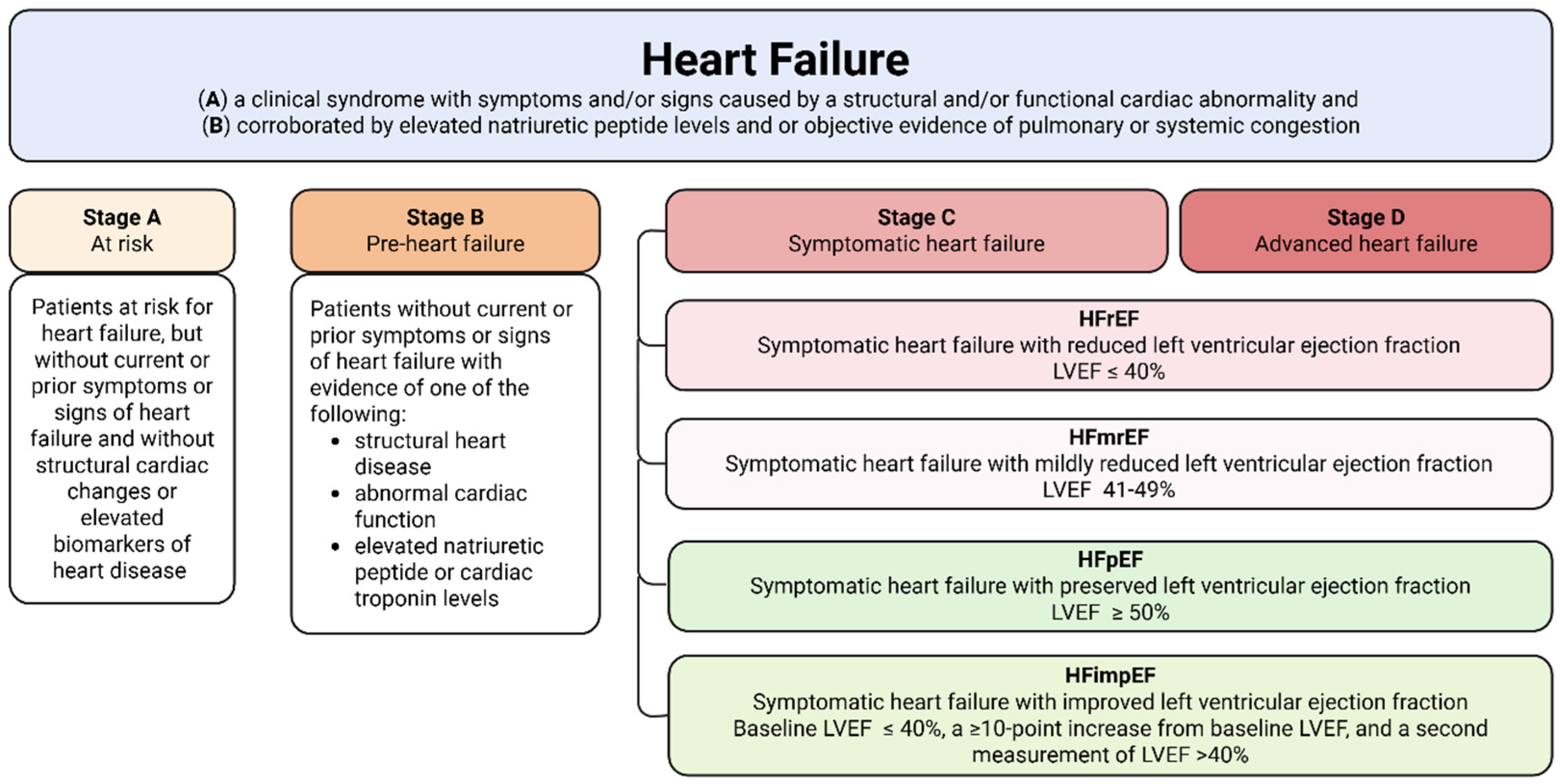
1. Introduction
2. Materials and Methods
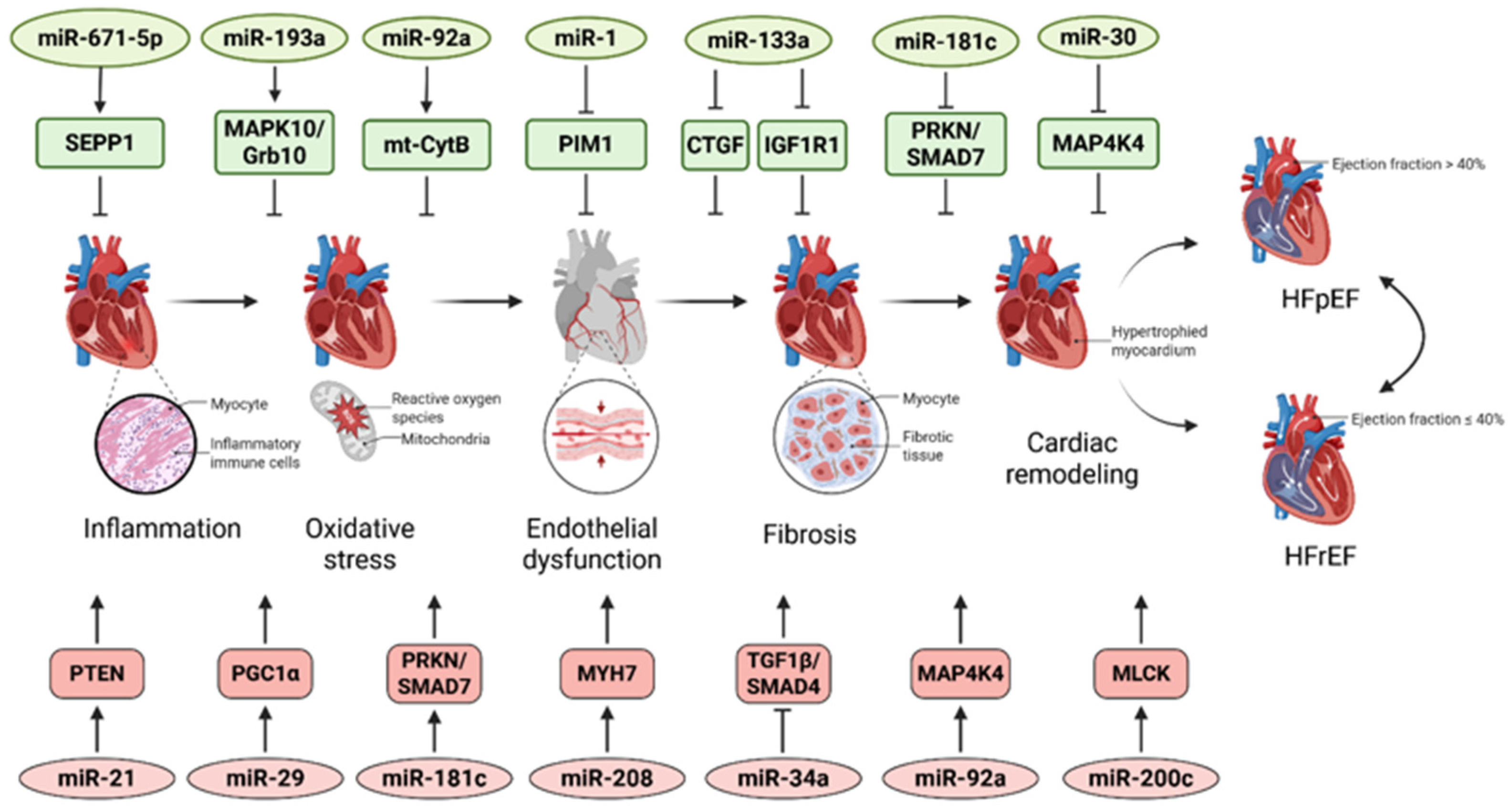
3. Pathophysiology and Molecular Mechanisms of Heart Failure with Preserved Ejection Fraction
4. Diagnostic Applications of microRNAs in Heart Failure
5. Prognostic Applications of microRNAs in Heart Failure
6. Therapeutic Applications of microRNAs in Heart Failure
7. Conclusions
Supplementary Materials
Author Contributions
Funding
Institutional Review Board Statement
Informed Consent Statement
Data Availability Statement
Conflicts of Interest
Abbreviations
| ACS | Acute coronary syndrome |
| AF | Atrial fibrillation |
| AUC | Area under the curve |
| CAD | Coronary artery disease |
| GWAS | Genome-wide association study |
| HF | Heart failure |
| HFimpEF | Heart failure with improved ejection fraction |
| HFmrEF | Heart failure with mildly reduced ejection fraction |
| HFpEF | Heart failure with preserved ejection fraction |
| HFrEF | Heart failure with reduced ejection fraction |
| lncRNA | Long non-coding RNA |
| LVEF | Left ventricular ejection fraction |
| MI | Myocardial infarction |
| miRNA | MicroRNA |
| NT-proBNP | N-terminal pro-B-type natriuretic peptide |
| PRS | Polygenic risk score |
References
- Roh, J.; Hill, J.A.; Singh, A.; Valero-Munoz, M.; Sam, F. Heart Failure With Preserved Ejection Fraction: Heterogeneous Syndrome, Diverse Preclinical Models. Circ. Res. 2022, 130, 1906–1925, Erratum in Circ Res. 2022, 131, e100. https://doi.org/10.1161/RES.0000000000000564. [Google Scholar] [CrossRef]
- Bozkurt, B.; Coats, A.J.S.; Tsutsui, H.; Abdelhamid, C.M.; Adamopoulos, S.; Albert, N.; Anker, S.D.; Atherton, J.; Böhm, M.; Butler, J.; et al. Universal definition and classification of heart failure: A report of the Heart Failure Society of America, Heart Failure Association of the European Society of Cardiology, Japanese Heart Failure Society and Writing Committee of the Universal Definition of Heart Failure: Endorsed by the Canadian Heart Failure Society, Heart Failure Association of India, Cardiac Society of Australia and New Zealand, and Chinese Heart Failure Association. Eur. J. Heart Fail. 2021, 23, 352–380. [Google Scholar] [CrossRef]
- McDonagh, T.A.; Metra, M.; Adamo, M.; Gardner, R.S.; Baumbach, A.; Böhm, M.; Burri, H.; Butler, J.; Čelutkienė, J.; Chioncel, O.; et al. 2021 ESC Guidelines for the diagnosis and treatment of acute and chronic heart failure: Developed by the Task Force for the diagnosis and treatment of acute and chronic heart failure of the European Society of Cardiology (ESC) With the special contribution of the Heart Failure Association (HFA) of the ESC. Rev. Esp. De Cardiol. (Engl. Ed.) 2022, 75, 523. [Google Scholar] [CrossRef]
- Dunlay, S.M.; Roger, V.L.; Weston, S.A.; Jiang, R.; Redfield, M.M. Longitudinal changes in ejection fraction in heart failure patients with preserved and reduced ejection fraction. Circulation. Heart Fail. 2012, 5, 720–726. [Google Scholar] [CrossRef]
- Zhu, K.; Ma, T.; Su, Y.; Pan, X.; Huang, R.; Zhang, F.; Yan, C.; Xu, D. Heart Failure With Mid-range Ejection Fraction: Every Coin Has Two Sides. Front. Cardiovasc. Med. 2021, 8, 683418. [Google Scholar] [CrossRef]
- Pocock, S.J.; Collier, T.J. Critical Appraisal of the 2018 ACC Scientific Sessions Late-Breaking Trials From a Statistician’s Perspective. J. Am. Coll. Cardiol. 2018, 71, 2957–2969. [Google Scholar] [CrossRef]
- Paulus, W.J.; Tschöpe, C. A novel paradigm for heart failure with preserved ejection fraction: Comorbidities drive myocardial dysfunction and remodeling through coronary microvascular. J. Am. Coll. Cardiol. 2013, 371, 993–1004. [Google Scholar] [CrossRef]
- Zile, M.R.; Abraham, W.T.; Weaver, F.A.; Butter, C.; Ducharme, A.; Halbach, M.; Klug, D.; Lovett, E.G.; Müller-Ehmsen, J.; Schafer, J.E.; et al. Baroreflex activation therapy for the treatment of heart failure with a reduced ejection fraction: Safety and efficacy in patients with and without cardiac resynchronization therapy. Eur. J. Heart Fail. 2015, 17, 1066–1074. [Google Scholar] [CrossRef] [PubMed]
- Povysil, G.; Chazara, O.; Carss, K.J.; Deevi, S.V.V.; Wang, Q.; Armisen, J.; Paul, D.S.; Granger, C.B.; Kjekshus, J.; Aggarwal, V.; et al. Assessing the Role of Rare Genetic Variation in Patients With Heart Failure. JAMA Cardiol. 2021, 6, 379–386. [Google Scholar] [CrossRef]
- Chazara, O.; Dubé, M.-P.; Wang, Q.; Middleton, L.; Vitsios, D.; Walentinsson, A.; Wang, Q.-D.; Hansson, K.M.; Granger, C.B.; Kjekshus, J. Assessing the role of rare pathogenic variants in heart failure progression by exome sequencing in 8089 patients. Medrxiv Prepr. Serv. Health Sci. 2023. [Google Scholar] [CrossRef]
- O’Sullivan, J.W.; Raghavan, S.; Marquez-Luna, C.; Luzum, J.A.; Damrauer, S.M.; Ashley, E.A.; O’Donnell, C.J.; Willer, C.J.; Natarajan, P. Polygenic Risk Scores for Cardiovascular Disease: A Scientific Statement From the American Heart Association. Circulation 2022, 146, e93–e118. [Google Scholar] [CrossRef]
- Mars, N.; Koskela, J.T.; Ripatti, P.; Kiiskinen, T.T.J.; Havulinna, A.S.; Lindbohm, J.V.; Ahola-Olli, A.; Kurki, M.; Karjalainen, J.; Palta, P.; et al. Polygenic and clinical risk scores and their impact on age at onset and prediction of cardiometabolic diseases and common cancers. Nat. Med. 2020, 26, 549–557. [Google Scholar] [CrossRef]
- Singh, R.B.; Singh, J.; Bidasee, K.; Isaza, A.; Rupee, S.; Rupee, K.; Hanoman, C.; Adeghate, E.; Smail, M.M. Molecular and cellular biology and genetic factors in chronic heart failure. In Pathophysiology, Risk Factors, and Management of Chronic Heart Failure; Elsevier: Amsterdam, The Netherlands, 2024; pp. 103–113. [Google Scholar]
- Khera, A.; Baum, S.J.; Gluckman, T.J.; Gulati, M.; Martin, S.S.; Michos, E.D.; Navar, A.M.; Taub, P.R.; Toth, P.P.; Virani, S.S.; et al. Continuity of care and outpatient management for patients with and at high risk for cardiovascular disease during the COVID-19 pandemic: A scientific statement from the American Society for Preventive Cardiology. Am. J. Prev. Cardiol. 2020, 1, 100009. [Google Scholar] [CrossRef] [PubMed]
- Lambert, S.A.; Abraham, G.; Inouye, M. Towards clinical utility of polygenic risk scores. Hum. Mol. Genet. 2019, 28, R133–R142. [Google Scholar] [CrossRef] [PubMed]
- Aung, N.; Vargas, J.D.; Yang, C.; Cabrera, C.P.; Warren, H.R.; Fung, K.; Tzanis, E.; Barnes, M.R.; Rotter, J.I.; Taylor, K.D.; et al. Genome-Wide Analysis of Left Ventricular Image-Derived Phenotypes Identifies Fourteen Loci Associated With Cardiac Morphogenesis and Heart Failure Development. Circulation 2019, 140, 1318–1330. [Google Scholar] [CrossRef] [PubMed]
- Hu, M.; Liu, P.; Lu, S.; Wang, Z.; Lyu, Z.; Liu, H.; Sun, Y.; Liu, F.; Tian, J. Myocardial protective effect and transcriptome profiling of Naoxintong on cardiomyopathy in zebrafish. Chin. Med. 2021, 16, 119. [Google Scholar] [CrossRef]
- Huang, H.T.; Huang, J.L.; Lin, P.L.; Lee, Y.H.; Hsu, C.Y.; Chung, F.P.; Liao, C.T.; Chiou, W.R.; Lin, W.Y.; Liang, H.W.; et al. Clinical impacts of sacubitril/valsartan on patients eligible for cardiac resynchronization therapy. ESC Heart Fail. 2022, 9, 3825–3835. [Google Scholar] [CrossRef]
- Phulka, J.S.; Ashraf, M.; Bajwa, B.K.; Pare, G.; Laksman, Z. Current State and Future of Polygenic Risk Scores in Cardiometabolic Disease: A Scoping Review. Circ. Genom. Precis. Med. 2023, 16, 286–313. [Google Scholar] [CrossRef]
- Charidemou, E.; Felekkis, K.; Papaneophytou, C. From Natriuretic Peptides to microRNAs: Multi-Analyte Liquid Biopsy Horizons in Heart Failure. Biomolecules 2025, 15, 1189. [Google Scholar] [CrossRef]
- Çakmak, H.A.; Demir, M. MicroRNA and Cardiovascular Diseases. Balk. Med. J. 2020, 37, 60–71. [Google Scholar] [CrossRef]
- Zhou, S.S.; Jin, J.P.; Wang, J.Q.; Zhang, Z.G.; Freedman, J.H.; Zheng, Y.; Cai, L. miRNAS in cardiovascular diseases: Potential biomarkers, therapeutic targets and challenges. Acta Pharmacol. Sin. 2018, 39, 1073–1084. [Google Scholar] [CrossRef] [PubMed]
- Huang, S.; Zhou, Y.; Zhang, Y.; Liu, N.; Liu, J.; Liu, L. Advances in MicroRNA therapy for heart failure: Clinical trials, preclinical studies, and controversies. Drugs Ther. 2025, 39, 221–232. [Google Scholar] [CrossRef]
- Pang, J.K.S.; Phua, Q.H.; Soh, B.S. Applications of miRNAs in cardiac development, disease progression and regeneration. Stem Cell Res. Ther. 2019, 10, 336. [Google Scholar] [CrossRef]
- O’Brien, J.E., Jr.; Kibiryeva, N.; Zhou, X.G.; Marshall, J.A.; Lofland, G.K.; Artman, M.; Chen, J.; Bittel, D.C. Noncoding RNA expression in myocardium from infants with tetralogy of Fallot. Circ. Cardiovasc. Genet. 2012, 5, 279–286. [Google Scholar] [CrossRef]
- Porrello, E.R.; Johnson, B.A.; Aurora, A.B.; Simpson, E.; Nam, Y.J.; Matkovich, S.J.; Dorn, G.W., 2nd; van Rooij, E.; Olson, E.N. MiR-15 family regulates postnatal mitotic arrest of cardiomyocytes. Circ. Res. 2011, 109, 670–679. [Google Scholar] [CrossRef]
- Huang, W.; Feng, Y.; Liang, J.; Yu, H.; Wang, C.; Wang, B.; Wang, M.; Jiang, L.; Meng, W.; Cai, W.; et al. Loss of microRNA-128 promotes cardiomyocyte proliferation and heart regeneration. Nat. Commun. 2018, 9, 700. [Google Scholar] [CrossRef]
- D’Amato, A.; Prosperi, S.; Severino, P.; Myftari, V.; Correale, M.; Perrone Filardi, P.; Badagliacca, R.; Fedele, F.; Vizza, C.D.; Palazzuoli, A. MicroRNA and Heart Failure: A Novel Promising Diagnostic and Therapeutic Tool. J. Clin. Med. 2024, 13, 7560. [Google Scholar] [CrossRef] [PubMed]
- Kennel, P.J.; Schulze, P.C. A Review on the Evolving Roles of MiRNA-Based Technologies in Diagnosing and Treating Heart Failure. Cells 2021, 10, 3191. [Google Scholar] [CrossRef]
- Gallo, G.; Rubattu, S.; Volpe, M. Mitochondrial Dysfunction in Heart Failure: From Pathophysiological Mechanisms to Therapeutic Opportunities. Int. J. Mol. Sci. 2024, 25, 2667. [Google Scholar] [CrossRef] [PubMed]
- Doenst, T.; Nguyen, T.D.; Abel, E.D. Cardiac metabolism in heart failure: Implications beyond ATP production. Circ. Res. 2013, 113, 709–724. [Google Scholar] [CrossRef]
- Micu, M.A.; Cozac, D.A.; Scridon, A. miRNA-Orchestrated Fibroinflammatory Responses in Heart Failure with Preserved Ejection Fraction: Translational Opportunities for Precision Medicine. Diagnostics 2025, 15, 2286. [Google Scholar] [CrossRef]
- Berezin, A. Epigenetics in heart failure phenotypes. BBA Clin. 2016, 6, 31–37. [Google Scholar] [CrossRef]
- Hage, C.; Michaelsson, E.; Linde, C.; Donal, E.; Daubert, J.C.; Gan, L.M.; Lund, L.H. Inflammatory Biomarkers Predict Heart Failure Severity and Prognosis in Patients With Heart Failure With Preserved Ejection Fraction: A Holistic Proteomic Approach. Circ. Cardiovasc. Genet. 2017, 10, e001633. [Google Scholar] [CrossRef]
- Costantino, S.; Mengozzi, A.; Velagapudi, S.; Mohammed, S.A.; Gorica, E.; Akhmedov, A.; Mongelli, A.; Pugliese, N.R.; Masi, S.; Virdis, A.; et al. Treatment with recombinant Sirt1 rewires the cardiac lipidome and rescues diabetes-related metabolic cardiomyopathy. Cardiovasc. Diabetol. 2023, 22, 312. [Google Scholar] [CrossRef]
- Kabłak-Ziembicka, A.; Badacz, R.; Okarski, M.; Wawak, M.; Przewłocki, T.; Podolec, J. Cardiac microRNAs: Diagnostic and therapeutic potential. Arch. Med. Sci. AMS 2023, 19, 1360–1381. [Google Scholar] [CrossRef]
- Yuan, J.; Chen, H.; Ge, D.; Xu, Y.; Xu, H.; Yang, Y.; Gu, M.; Zhou, Y.; Zhu, J.; Ge, T.; et al. Mir-21 Promotes Cardiac Fibrosis After Myocardial Infarction Via Targeting Smad7. Cell. Physiol. Biochem. Int. J. Exp. Cell. Physiol. Biochem. Pharmacol. 2017, 42, 2207–2219. [Google Scholar] [CrossRef]
- Surina, S.; Fontanella, R.A.; Scisciola, L.; Marfella, R.; Paolisso, G.; Barbieri, M. miR-21 in Human Cardiomyopathies. Front. Cardiovasc. Med. 2021, 8, 767064. [Google Scholar] [CrossRef] [PubMed]
- Cardin, S.; Guasch, E.; Luo, X.; Naud, P.; Le Quang, K.; Shi, Y.; Tardif, J.C.; Comtois, P.; Nattel, S. Role for MicroRNA-21 in atrial profibrillatory fibrotic remodeling associated with experimental postinfarction heart failure. Circulation. Arrhythmia Electrophysiol. 2012, 5, 1027–1035. [Google Scholar] [CrossRef]
- Ben-Nun, D.; Buja, L.M.; Fuentes, F. Prevention of heart failure with preserved ejection fraction (HFpEF): Reexamining microRNA-21 inhibition in the era of oligonucleotide-based therapeutics. Cardiovasc. Pathol. Off. J. Soc. Cardiovasc. Pathol. 2020, 49, 107243. [Google Scholar] [CrossRef]
- Dong, D.-L.; Yang, B.-F. Role of microRNAs in cardiac hypertrophy, myocardial fibrosis and heart failure. Acta Pharm. Sin. B 2011, 1, 1–7. [Google Scholar] [CrossRef]
- Vegter, E.L.; van der Meer, P.; de Windt, L.J. MicroRNAs in heart failure: From biomarker to target for therapy. Eur. J. Hear. Fail. 2016, 18, 457–468. [Google Scholar] [CrossRef]
- Kura, B.; Kalocayova, B.; Devaux, Y.; Bartekova, M. Potential Clinical Implications of miR-1 and miR-21 in Heart Disease and Cardioprotection. Int. J. Mol. Sci. 2020, 21, 700. [Google Scholar] [CrossRef]
- Fabiani, I.; Scatena, C.; Mazzanti, C.M.; Conte, L.; Pugliese, N.R.; Franceschi, S.; Lessi, F.; Menicagli, M.; De Martino, A.; Pratali, S.; et al. Micro-RNA-21 (biomarker) and global longitudinal strain (functional marker) in detection of myocardial fibrotic burden in severe aortic valve stenosis: A pilot study. J. Transl. Med. 2016, 14, 248. [Google Scholar] [CrossRef][Green Version]
- Dalgaard, L.T.; Sørensen, A.E.; Hardikar, A.A.; Joglekar, M.V. The microRNA-29 family: Role in metabolism and metabolic disease. Am. J. physiology. Cell Physiol. 2022, 323, C367–C377. [Google Scholar] [CrossRef]
- Li, C.; Wang, N.; Rao, P.; Wang, L.; Lu, D.; Sun, L. Role of the microRNA-29 family in myocardial fibrosis. J. Physiol. Biochem. 2021, 77, 365–376. [Google Scholar] [CrossRef] [PubMed]
- Huang, X.H.; Li, J.L.; Li, X.Y.; Wang, S.X.; Jiao, Z.H.; Li, S.Q.; Liu, J.; Ding, J. miR-208a in Cardiac Hypertrophy and Remodeling. Front. Cardiovasc. Med. 2021, 8, 773314. [Google Scholar] [CrossRef] [PubMed]
- Dickinson, B.A.; Semus, H.M.; Montgomery, R.L.; Stack, C.; Latimer, P.A.; Lewton, S.M.; Lynch, J.M.; Hullinger, T.G.; Seto, A.G.; van Rooij, E. Plasma microRNAs serve as biomarkers of therapeutic efficacy and disease progression in hypertension-induced heart failure. Eur. J. Heart Fail. 2013, 15, 650–659. [Google Scholar] [CrossRef] [PubMed]
- Zhang, X.-T.; Xu, M.-G. Potential link between microRNA-208 and cardiovascular diseases. J. Xiangya Med. 2021, 6, 12. [Google Scholar] [CrossRef]
- O’Brien, J.; Hayder, H.; Zayed, Y.; Peng, C. Overview of MicroRNA Biogenesis, Mechanisms of Actions, and Circulation. Front. Endocrinol. 2018, 9, 402. [Google Scholar] [CrossRef]
- McDonagh, T.A.; Metra, M.; Adamo, M.; Gardner, R.S.; Baumbach, A.; Böhm, M.; Burri, H.; Butler, J.; Čelutkienė, J.; Chioncel, O.; et al. 2023 Focused Update of the 2021 ESC Guidelines for the diagnosis and treatment of acute and chronic heart failure. Eur. J. Heart Fail. 2024, 26, 5–17. [Google Scholar] [CrossRef]
- Heidenreich, P.A.; Bozkurt, B.; Aguilar, D.; Allen, L.A.; Byun, J.J.; Colvin, M.M.; Deswal, A.; Drazner, M.H.; Dunlay, S.M.; Evers, L.R.; et al. 2022 AHA/ACC/HFSA Guideline for the Management of Heart Failure: A Report of the American College of Cardiology/American Heart Association Joint Committee on Clinical Practice Guidelines. Circulation 2022, 145, e895–e1032, Correction in Circulation 2022, 145, 18. Correction in Circulation 2022, 146, 13. Correction in Circulation 2023, 147, 14. [Google Scholar] [CrossRef] [PubMed]
- Topf, A.; Mirna, M.; Ohnewein, B.; Jirak, P.; Kopp, K.; Fejzic, D.; Haslinger, M.; Motloch, L.J.; Hoppe, U.C.; Berezin, A.; et al. The Diagnostic and Therapeutic Value of Multimarker Analysis in Heart Failure. An Approach to Biomarker-Targeted Therapy. Front. Cardiovasc. Med. 2020, 7, 579567. [Google Scholar] [CrossRef]
- Parvan, R.; Rolim, N.; Gevaert, A.B.; Cataliotti, A.; van Craenenbroeck, E.M.; Adams, V.; Wisløff, U.; Silva, G.J.J.; the OptimEx Study Group. Multi-microRNA diagnostic panel for heart failure with preserved ejection fraction in preclinical and clinical settings. ESC Hear. Fail. 2025, 12, 3028–3041. [Google Scholar] [CrossRef]
- Sanders-van Wijk, S.; Barandiarán Aizpurua, A.; Brunner-La Rocca, H.P.; Henkens, M.; Weerts, J.; Knackstedt, C.; Uszko-Lencer, N.; Heymans, S.; van Empel, V. The HFA-PEFF and H(2) FPEF scores largely disagree in classifying patients with suspected heart failure with preserved ejection fraction. Eur. J. Heart Fail. 2021, 23, 838–840. [Google Scholar] [CrossRef]
- Suthahar, N.; Tschöpe, C.; de Boer, R.A. Being in Two Minds-The Challenge of Heart Failure with Preserved Ejection Fraction Diagnosis with a Single Biomarker. Clin. Chem. 2021, 67, 46–49. [Google Scholar] [CrossRef]
- Shrivastava, A.; Haase, T.; Zeller, T.; Schulte, C. Biomarkers for Heart Failure Prognosis: Proteins, Genetic Scores and Non-coding RNAs. Front. Cardiovasc. Med. 2020, 7, 601364. [Google Scholar] [CrossRef] [PubMed]
- Logeart, D. Heart failure with preserved ejection fraction: New challenges and new hopes. Presse Medicale 2024, 53, 104185. [Google Scholar] [CrossRef]
- Tijsen, A.J.; Creemers, E.E.; Moerland, P.D.; de Windt, L.J.; van der Wal, A.C.; Kok, W.E.; Pinto, Y.M. MiR423-5p as a circulating biomarker for heart failure. Circ. Res. 2010, 106, 1035–1039. [Google Scholar] [CrossRef]
- Fumarulo, I.; De Prisco, A.; Salerno, E.N.M.; Ravenna, S.E.; Vaccarella, M.; Garramone, B.; Burzotta, F.; Aspromonte, N. New Frontiers of microRNA in Heart Failure: From Clinical Risk to Therapeutic Applications. J. Clin. Med. 2025, 14, 6361. [Google Scholar] [CrossRef]
- Ellis, K.L.; Cameron, V.A.; Troughton, R.W. Circulating microRNAs as candidate markers to distinguish heart failure in breathless patients. Eur. J. Hear. Fail. 2013, 15, 1138–1147. [Google Scholar] [CrossRef] [PubMed]
- Seronde, M.F.; Vausort, M.; Gayat, E.; Goretti, E.; Ng, L.L.; Squire, I.B.; Vodovar, N.; Sadoune, M.; Samuel, J.L.; Thum, T.; et al. Circulating microRNAs and Outcome in Patients with Acute Heart Failure. PLoS ONE 2015, 10, e0142237. [Google Scholar] [CrossRef] [PubMed]
- Paim, L.R.; da Silva, L.M.; Antunes-Correa, L.M.; Ribeiro, V.C.; Schreiber, R.; Minin, E.O.Z.; Bueno, L.C.M.; Lopes, E.C.P.; Yamaguti, R.; Coy-Canguçu, A.; et al. Profile of serum microRNAs in heart failure with reduced and preserved ejection fraction: Correlation with myocardial remodeling. Heliyon 2024, 10, e27206. [Google Scholar] [CrossRef] [PubMed]
- Medzikovic, L.; Aryan, L.; Eghbali, M. Connecting sex differences, estrogen signaling, and microRNAs in cardiac fibrosis. J. Mol. Med. 2019, 97, 1385–1398. [Google Scholar] [CrossRef]
- Wang, L.; Guo, A.; Liang, S.; Yu, L.; Shen, B.; Huang, Z. The association of serum hsa-miR-21-5p expression with the severity and prognosis of heart failure with reduced ejection fraction. BMC Cardiovasc. Disord 2025, 25, 114. [Google Scholar] [CrossRef]
- Sayed, D.; Hong, C.; Chen, I.Y.; Lypowy, J.; Abdellatif, M. MicroRNAs play an essential role in the development of cardiac hypertrophy. Circ. Res. 2007, 100, 416–424. [Google Scholar] [CrossRef]
- Bao, M.H.; Feng, X.; Zhang, Y.W.; Lou, X.Y.; Cheng, Y.; Zhou, H.H. Let-7 in cardiovascular diseases, heart development and cardiovascular differentiation from stem cells. Int. J. Mol. Sci. 2013, 14, 23086–23102. [Google Scholar] [CrossRef]
- Zhang, Y.; Cui, H.; Zhao, M.; Yu, H.; Xu, W.; Wand, Z.; Xiao, H. Cardiomyocyte-derived small extracellular vesicle-transported let-7b-5p modulates cardiac remodeling via TLR7 signaling pathway. FASEB J. 2024, 38, e70196. [Google Scholar] [CrossRef]
- Li, H.; Xu, J.D.; Fang, X.H.; Zhu, J.N.; Yang, J.; Pan, R.; Yuan, S.J.; Zeng, N.; Yang, Z.Z.; Yang, H.; et al. Circular RNA circRNA_000203 aggravates cardiac hypertrophy via suppressing miR-26b-5p and miR-140-3p binding to Gata4. Cardiovasc. Res. 2020, 116, 1323–1334. [Google Scholar] [CrossRef]
- Lakkisto, P.; Dalgaard, L.T.; Belmonte, T.; Pinto-Sietsma, S.J.; Devaux, Y.; de Gonzalo-Calvo, D. Development of circulating microRNA-based biomarkers for medical decision-making: A friendly reminder of what should NOT be done. Crit. Rev. Clin. Lab. Sci. 2023, 60, 141–152. [Google Scholar] [CrossRef]
- Abubakar, M.; Saleem, A.; Hajjaj, M.; Faiz, H.; Pragya, A.; Jamil, R.; Salim, S.S.; Lateef, I.K.; Singla, D.; Ramar, R.; et al. Sex-specific differences in risk factors comorbidities, diagnostic challenges, optimal management, and prognostic outcomes of heart failure with preserved ejection fraction: A comprehensive literature review. Hear. Fail. Rev. 2024, 29, 235–256. [Google Scholar] [CrossRef] [PubMed]
- Mamtani, M.R.; Thakre, T.P.; Kalkonde, M.Y.; Amin, M.A.; Kalkonde, Y.V.; Amin, A.P.; Kulkarni, H. A simple method to combine multiple molecular biomarkers for dichotomous diagnostic classification. BMC Bioinform. 2006, 7, 442. [Google Scholar] [CrossRef]
- Martinez-Ríos, E.; Montesinos, L.; Alfaro-Ponce, M.; Pecchia, L. A review of machine learning in hypertension detection and blood pressure estimation based on clinical and physiological data. Biomed. Signal Process. Control. 2021, 68, 102813. [Google Scholar] [CrossRef]
- Parvan, R.; Hosseinpour, M.; Moradi, Y. Diagnostic performance of microRNAs in the detection of heart failure with reduced or preserved ejection fraction: A systematic review and meta-analysis. Eur. J. Hear. Fail. 2022, 10, e37929. [Google Scholar] [CrossRef]
- Kuai, Z.; Ma, Y.; Gao, W.; Zhang, X.; Wang, X.; Ye, Y.; Zhang, X.; Yuan, J. Potential diagnostic value of circulating miRNAs in HFrEF and bioinformatics analysis. Heliyon 2024, 10, e37929. [Google Scholar] [CrossRef]
- Yuan, J.; Liu, H.; Gao, W.; Zhang, L.; Ye, Y.; Yuan, L.; Ding, Z.; Wu, J.; Kang, L.; Zhang, X.; et al. MicroRNA-378 suppresses myocardial fibrosis through a paracrine mechanism at the early stage of cardiac hypertrophy following mechanical stress. Theranostics 2018, 8, 2565–2582. [Google Scholar] [CrossRef]
- Chen, F.; Yang, J.; Li, Y.; Wang, H. Circulating microRNAs as novel biomarkers for heart failure. Hell. J. Cardiol. HJC Hell. Kardiol. Ep. 2018, 59, 209–214. [Google Scholar] [CrossRef]
- Xiao, J.; Gao, R.; Bei, Y.; Zhou, Q.; Zhou, Y.; Zhang, H.; Jin, M.; Wei, S.; Wang, K.; Xu, X.; et al. Circulating miR-30d Predicts Survival in Patients with Acute Heart Failure. Cell. Physiol. Biochem. Int. J. Exp. Cell. Physiol. Biochem. Pharmacol. 2017, 41, 865–874. [Google Scholar] [CrossRef]
- Melman, Y.F.; Shah, R.; Danielson, K.; Xiao, J.; Simonson, B.; Barth, A.; Chakir, K.; Lewis, G.D.; Lavender, Z.; Truong, Q.A.; et al. Circulating MicroRNA-30d Is Associated With Response to Cardiac Resynchronization Therapy in Heart Failure and Regulates Cardiomyocyte Apoptosis: A Translational Pilot Study. Circulation 2015, 131, 2202–2216. [Google Scholar] [CrossRef] [PubMed]
- Masson, S.; Batkai, S.; Beermann, J.; Bär, C.; Pfanne, A.; Thum, S.; Magnoli, M.; Balconi, G.; Nicolosi, G.L.; Tavazzi, L.; et al. Circulating microRNA-132 levels improve risk prediction for heart failure hospitalization in patients with chronic heart failure. Eur. J. Heart Fail. 2018, 20, 78–85. [Google Scholar] [CrossRef] [PubMed]
- Marfella, R.; Di Filippo, C.; Potenza, N.; Sardu, C.; Rizzo, M.R.; Siniscalchi, M.; Musacchio, E.; Barbieri, M.; Mauro, C.; Mosca, N.; et al. Circulating microRNA changes in heart failure patients treated with cardiac resynchronization therapy: Responders vs. non-responders. Eur. J. Heart Fail. 2013, 15, 1277–1288. [Google Scholar] [CrossRef] [PubMed]
- Han, M.; Yang, Z.; Sayed, D.; He, M.; Gao, S.; Lin, L.; Yoon, S.; Abdellatif, M. GATA4 expression is primarily regulated via a miR-26b-dependent post-transcriptional mechanism during cardiac hypertrophy. Cardiovasc. Res. 2012, 93, 645–654. [Google Scholar] [CrossRef]
- Li, R.; Yan, G.; Li, Q.; Sun, H.; Hu, Y.; Sun, J.; Xu, B. MicroRNA-145 protects cardiomyocytes against hydrogen peroxide (H2O2)-induced apoptosis through targeting the mitochondria apoptotic pathway. PLoS ONE 2012, 7, e44907. [Google Scholar] [CrossRef]
- Lakner, A.M.; Steuerwald, N.M.; Walling, T.L.; Ghosh, S.; Li, T.; McKillop, I.H.; Russo, M.W.; Bonkovsky, H.L.; Schrum, L.W. Inhibitory effects of microRNA 19b in hepatic stellate cell-mediated fibrogenesis. Hepatology 2012, 56, 300–310. [Google Scholar] [CrossRef] [PubMed]
- Bagnall, R.D.; Tsoutsman, T.; Shephard, R.E.; Ritchie, W.; Semsarian, C. Global microRNA profiling of the mouse ventricles during development of severe hypertrophic cardiomyopathy and heart failure. PLoS ONE 2012, 7, e44744. [Google Scholar] [CrossRef]
- Duisters, R.F.; Tijsen, A.J.; Schroen, B.; Leenders, J.J.; Lentink, V.; van der Made, I.; Herias, V.; van Leeuwen, R.E.; Schellings, M.W.; Barenbrug, P.; et al. miR-133 and miR-30 regulate connective tissue growth factor: Implications for a role of microRNAs in myocardial matrix remodeling. Circ. Res. 2009, 104, 170–178, 176p following 178. [Google Scholar] [CrossRef] [PubMed]
- Soci, U.P.; Fernandes, T.; Hashimoto, N.Y.; Mota, G.F.; Amadeu, M.A.; Rosa, K.T.; Irigoyen, M.C.; Phillips, M.I.; Oliveira, E.M. MicroRNAs 29 are involved in the improvement of ventricular compliance promoted by aerobic exercise training in rats. Physiol. Genom. 2011, 43, 665–673. [Google Scholar] [CrossRef] [PubMed]
- Wang, B.; Komers, R.; Carew, R.; Winbanks, C.E.; Xu, B.; Herman-Edelstein, M.; Koh, P.; Thomas, M.; Jandeleit-Dahm, K.; Gregorevic, P.; et al. Suppression of microRNA-29 expression by TGF-β1 promotes collagen expression and renal fibrosis. J. Am. Soc. Nephrol. JASN 2012, 23, 252–265. [Google Scholar] [CrossRef]
- Tanase, D.M.; Gosav, E.M.; Ouatu, A.; Badescu, M.C.; Dima, N.; Ganceanu-Rusu, A.R.; Popescu, D.; Floria, M.; Rezus, E.; Rezus, C. Current Knowledge of MicroRNAs (miRNAs) in Acute Coronary Syndrome (ACS): ST-Elevation Myocardial Infarction (STEMI). Life 2021, 11, 1057. [Google Scholar] [CrossRef]
- Couch, L.S.; Fiedler, J.; Chick, G.; Clayton, R.; Dries, E.; Wienecke, L.M.; Fu, L.; Fourre, J.; Pandey, P.; Derda, A.A.; et al. Circulating microRNAs predispose to takotsubo syndrome following high-dose adrenaline exposure. Cardiovasc. Res. 2022, 118, 1758–1770. [Google Scholar] [CrossRef]
- Zannad, F.; Ferreira, J.P.; Pocock, S.J.; Anker, S.D.; Butler, J.; Filippatos, G.; Brueckmann, M.; Ofstad, A.P.; Pfarr, E.; Jamal, W.; et al. SGLT2 inhibitors in patients with heart failure with reduced ejection fraction: A meta-analysis of the EMPEROR-Reduced and DAPA-HF trials. Lancet 2020, 396, 819–829. [Google Scholar] [CrossRef]
- Sutanto, H.; Dobrev, D.; Heijman, J. Angiotensin Receptor-Neprilysin Inhibitor (ARNI) and Cardiac Arrhythmias. Int. J. Mol. Sci. 2021, 22, 8994. [Google Scholar] [CrossRef]
- Mone, P.; Lombardi, A.; Kansakar, U.; Varzideh, F.; Jankauskas, S.S.; Pansini, A.; Marzocco, S.; De Gennaro, S.; Famiglietti, M.; Macina, G.; et al. Empagliflozin Improves the MicroRNA Signature of Endothelial Dysfunction in Patients with Heart Failure with Preserved Ejection Fraction and Diabetes. J. Pharmacol. Exp. Ther. 2023, 384, 116–122. [Google Scholar] [CrossRef]
- Kiyak-Kirmaci, H.; Hazar-Yavuz, A.N.; Polat, E.B.; Alsaadoni, H.; Cilingir-Kaya, O.T.; Aktas, H.S.; Elcioglu, H.K. Effects of empagliflozin and dapagliflozin, SGLT2 inhibitors, on miRNA expressions in diabetes-related cardiovascular damage in rats. J. Diabetes Complicat. 2025, 39, 109063. [Google Scholar] [CrossRef]
- Wong, L.L.; Armugam, A.; Sepramaniam, S. Circulating microRNAs in heart failure with reduced and preserved left ventricular ejection fraction. Eur. J. Hear. Fail. 2015, 17, 393–404. [Google Scholar] [CrossRef]
- Santhanakrishnan, R.; Ng, T.P.; Cameron, V.A.; Gamble, G.D.; Ling, L.H.; Sim, D.; Leong, G.K.; Yeo, P.S.; Ong, H.Y.; Jaufeerally, F.; et al. The Singapore Heart Failure Outcomes and Phenotypes (SHOP) study and Prospective Evaluation of Outcome in Patients with Heart Failure with Preserved Left Ventricular Ejection Fraction (PEOPLE) study: Rationale and design. J. Card. Fail. 2013, 19, 156–162. [Google Scholar] [CrossRef]
- McMurray, J.J.; Adamopoulos, S.; Anker, S.D.; Auricchio, A.; Böhm, M.; Dickstein, K.; Falk, V.; Filippatos, G.; Fonseca, C.; Gomez-Sanchez, M.A.; et al. ESC Guidelines for the diagnosis and treatment of acute and chronic heart failure 2012: The Task Force for the Diagnosis and Treatment of Acute and Chronic Heart Failure 2012 of the European Society of Cardiology. Developed in collaboration with the Heart Failure Association (HFA) of the ESC. Eur. Heart J. 2012, 33, 1787–1847, Erratum in Eur Heart J. 2013, 34, 158. [Google Scholar] [CrossRef]
- Wu, Y.; Pan, N.; An, Y.; Xu, M.; Tan, L.; Zhang, L. Diagnostic and Prognostic Biomarkers for Myocardial Infarction. Front. Cardiovasc. Med. 2020, 7, 617277. [Google Scholar] [CrossRef]
- Adams, V.; Alves, M.; Fischer, T.; Rolim, N. High-intensity interval training attenuates endothelial dysfunction in a Dahl salt-sensitive rat model of heart failure with preserved ejection fraction. J. Appl. Physiol. 2015, 119, 745–752. [Google Scholar] [CrossRef]
- Sucharov, C.C.; Kao, D.P.; Port, J.D.; Karimpour-Fard, A.; Quaife, R.A.; Minobe, W.; Nunley, K.; Lowes, B.D.; Gilbert, E.M.; Bristow, M.R. Myocardial microRNAs associated with reverse remodeling in human heart failure. JCI Insight 2017, 2, e89169. [Google Scholar] [CrossRef]
- Yamada, H.; Suzuki, K.; Fujii, R.; Kawado, M.; Hashimoto, S.; Watanabe, Y.; Iso, H.; Fujino, Y.; Wakai, K.; Tamakoshi, A. Circulating miR-21, miR-29a, and miR-126 are associated with premature death risk due to cancer and cardiovascular disease: The JACC Study. Sci. Rep. 2021, 11, 5298. [Google Scholar] [CrossRef]
- Veitch, S.; Njock, M.S.; Chandy, M.; Siraj, M.A.; Chi, L. MiR-30 promotes fatty acid beta-oxidation and endothelial cell dysfunction and is a circulating biomarker of coronary microvascular dysfunction in pre-clinical models of diabetes. Cardiovasc. Diabetol. 2022, 21, 1–18. [Google Scholar] [CrossRef]
- Kattih, B.; Fischer, A.; Muhly-Reinholz, M.; Tombor, L.; Nicin, L.; Cremer, S.; Zeiher, A.M.; John, D.; Abplanalp, W.T.; Dimmeler, S. Inhibition of miR-92a normalizes vascular gene expression and prevents diastolic dysfunction in heart failure with preserved ejection fraction. J. Mol. Cell. Cardiol. 2025, 198, 89–98. [Google Scholar] [CrossRef]
- Dominic, K.L.; Schmidt, A.V.; Granzier, H.; Campbell, K.S.; Stelzer, J.E. Mechanism-based myofilament manipulation to treat diastolic dysfunction in HFpEF. Front. Physiol. 2024, 15, 1512550. [Google Scholar] [CrossRef]
- Su, T.; Shao, X.; Zhang, X.; Han, Z.; Yang, C.; Li, X. Circulating microRNA-1 in the diagnosis and predicting prognosis of patients with chest pain: A prospective cohort study. BMC Cardiovasc. Disord 2019, 19, 5. [Google Scholar] [CrossRef]
- Guo, M.; Luo, J.; Zhao, J.; Shang, D.; Lv, Q.; Zang, P. Combined Use of Circulating miR-133a and NT-proBNP Improves Heart Failure Diagnostic Accuracy in Elderly Patients. Med. Sci. Monit. Int. Med. J. Exp. Clin. Res. 2018, 24, 8840–8848. [Google Scholar] [CrossRef]
- Wang, J.; Xu, L.; Tian, L.; Sun, Q. Circulating microRNA-208 family as early diagnostic biomarkers for acute myocardial infarction: A meta-analysis. Medicine 2021, 100, e27779. [Google Scholar] [CrossRef]
- Zhang, L.; Chen, X.; Su, T.; Li, H.; Huang, Q.; Wu, D.; Yang, C.; Han, Z. Circulating miR-499 are novel and sensitive biomarker of acute myocardial infarction. J. Thorac. Dis. 2015, 7, 303–308. [Google Scholar] [CrossRef]
- Parvan, R.; Becker, V.; Hosseinpour, M.; Moradi, Y.; Louch, W.E.; Cataliotti, A.; Devaux, Y.; Frisk, M.; Silva, G.J.J. Prognostic and predictive microRNA panels for heart failure patients with reduced or preserved ejection fraction: A meta-analysis of Kaplan-Meier-based individual patient data. BMC Med. 2025, 23, 409. [Google Scholar] [CrossRef] [PubMed]
- Gager, G.M.; Eyileten, C.; Postuła, M.; Nowak, A.; Gąsecka, A.; Jilma, B.; Siller-Matula, J.M. Expression Patterns of MiR-125a and MiR-223 and Their Association with Diabetes Mellitus and Survival in Patients with Non-ST-Segment Elevation Acute Coronary Syndrome. Biomedicines 2023, 11, 1118. [Google Scholar] [CrossRef]
- Han, Q.; Zhang, L.; Liao, R. Diagnostic and prognostic significance of miR-320a-3p in patients with chronic heart failure. BMC Cardiovasc. Disord 2024, 24, 308. [Google Scholar] [CrossRef]
- Wang, Y.; Liang, Y.; Zhao, W.; Fu, G.; Li, Q.; Min, X.; Guo, Y. Circulating miRNA-21 as a diagnostic biomarker in elderly patients with type 2 cardiorenal syndrome. Sci. Rep. 2020, 10, 4894. [Google Scholar] [CrossRef]
- Xue, S.; Liu, D.; Zhu, W.; Su, Z.; Zhang, L.; Zhou, C.; Li, P. Circulating MiR-17-5p, MiR-126-5p and MiR-145-3p Are Novel Biomarkers for Diagnosis of Acute Myocardial Infarction. Front. Physiol. 2019, 10, 123. [Google Scholar] [CrossRef]
- Yang, J.; Yang, X.S.; Fan, S.W.; Zhao, X.Y.; Li, C.; Zhao, Z.Y.; Pei, H.J.; Qiu, L.; Zhuang, X.; Yang, C.H. Prognostic value of microRNAs in heart failure: A meta-analysis. Medicine 2021, 100, e27744. [Google Scholar] [CrossRef] [PubMed]
- Teng, P.; Liu, Y.; Zhang, M.; Ji, W. Diagnostic and Prognostic Significance of serum miR-18a-5p in Patients with Atherosclerosis. Clin. Appl. Thromb./Hemost. Off. J. Int. Acad. Clin. Appl. Thromb./Hemost. 2021, 27, 10760296211050642. [Google Scholar] [CrossRef] [PubMed]
- Zhong, J.; He, Y.; Chen, W.; Shui, X.; Chen, C.; Lei, W. Circulating microRNA-19a as a potential novel biomarker for diagnosis of acute myocardial infarction. Int. J. Mol. Sci. 2014, 15, 20355–20364. [Google Scholar] [CrossRef]
- Zhang, L.; Xu, R.L.; Liu, S.X.; Dong, S.H. Diagnostic value of circulating microRNA-19b in heart failure. Eur. J. Clin. Investig. 2020, 50, e13308. [Google Scholar] [CrossRef]
- Faccini, J.; Ruidavets, J.B.; Cordelier, P.; Martins, F.; Maoret, J.J.; Bongard, V.; Ferrières, J.; Roncalli, J.; Elbaz, M.; Vindis, C. Circulating miR-155, miR-145 and let-7c as diagnostic biomarkers of the coronary artery disease. Sci. Rep. 2017, 7, 42916. [Google Scholar] [CrossRef]
- Zhu, Q.; Li, S.; Ji, K.; Zhou, H.; Luo, C.; Sui, Y. Differentially expressed TUG1 and miR-145-5p indicate different severity of chronic heart failure and predict 2-year survival prognosis. Exp. Ther. Med. 2021, 22, 1362. [Google Scholar] [CrossRef]
- Dimitry, M.O.; Soliman, Y.M.A.; ElKorashy, R.I.; Raslan, H.M.; Kamel, S.A.; Hassan, E.M.; Ahmed, F.E.; Yousef, R.N.; Awadallah, E.A. Role of micro-RNAs 21, 124 and other novel biomarkers in distinguishing between group 1 WHO pulmonary hypertension and group 2, 3 WHO pulmonary hypertension. Egypt. Heart J. (EHJ) Off. Bull. Egypt. Soc. Cardiol. 2023, 75, 76. [Google Scholar] [CrossRef]
- Song, R.; Zhang, L. MicroRNAs and therapeutic potentials in acute and chronic cardiac disease. Drug Discov. Today 2024, 29, 104179. [Google Scholar] [CrossRef]
- Liu, H.; Zhou, J.; Jiang, W.; Wang, F. Analysis of the diagnostic and prognostic value of miR-9-5p in carotid artery stenosis. Bosn. J. Basic Med. Sci. 2021, 21, 724–729. [Google Scholar] [CrossRef]
- Xue, Q.; Yang, L.; Wang, J.; Li, L.; Wang, H.; He, Y. lncRNA ROR and miR-125b Predict the Prognosis in Heart Failure Combined Acute Renal Failure. Dis. Markers 2022, 2022, 6853939. [Google Scholar] [CrossRef] [PubMed]
- Scărlătescu, A.I.; Barbălată, T.; Sima, A.V.; Stancu, C.; Niculescu, L.; Micheu, M.M. miR-146a-5p, miR-223-3p and miR-142-3p as Potential Predictors of Major Adverse Cardiac Events in Young Patients with Acute ST Elevation Myocardial Infarction-Added Value over Left Ventricular Myocardial Work Indices. Diagnostics 2022, 12, 1946. [Google Scholar] [CrossRef]
- Vita, G.L.; Aguennouz, M.; Polito, F.; Oteri, R.; Russo, M.; Gentile, L.; Barbagallo, C.; Ragusa, M.; Rodolico, C.; Di Giorgio, R.M.; et al. Circulating microRNAs Profile in Patients With Transthyretin Variant Amyloidosis. Front. Mol. Neurosci. 2020, 13, 102. [Google Scholar] [CrossRef]
- Li, H.; Chen, M.; Feng, Q.; Zhu, L.; Bai, Z.; Wang, B.; Guo, Z.; Hou, A.; Li, H. MicroRNA-34a in coronary heart disease: Correlation with disease risk, blood lipid, stenosis degree, inflammatory cytokines, and cell adhesion molecules. J. Clin. Lab. Anal. 2022, 36, e24138. [Google Scholar] [CrossRef]
- Ali, W.; Mishra, S.; Rizvi, A.; Pradhan, A.; Perrone, M.A. Circulating microRNA-126 as an Independent Risk Predictor of Coronary Artery Disease: A Case-Control Study. Ejifcc 2021, 32, 347–362. [Google Scholar]
- Huang, D.; Chen, Z.; Wang, J.; Chen, Y.; Liu, D.; Lin, K. MicroRNA-221 is a potential biomarker of myocardial hypertrophy and fibrosis in hypertrophic obstructive cardiomyopathy. Biosci. Rep. 2020, 40, BSR20191234. [Google Scholar] [CrossRef]
- Huang, Y.M.; Li, W.W.; Wu, J.; Han, M.; Li, B.H. The diagnostic value of circulating microRNAs in heart failure. Exp. Ther. Med. 2019, 17, 1985–2003. [Google Scholar] [CrossRef]
- Sun, B.; Meng, M.; Wei, J.; Wang, S. Long noncoding RNA PVT1 contributes to vascular endothelial cell proliferation via inhibition of miR-190a-5p in diagnostic biomarker evaluation of chronic heart failure. Exp. Ther. Med. 2020, 19, 3348–3354. [Google Scholar] [CrossRef]
- Yan, H.; Ma, F.; Zhang, Y.; Wang, C.; Qiu, D.; Zhou, K.; Hua, Y.; Li, Y. miRNAs as biomarkers for diagnosis of heart failure: A systematic review and meta-analysis. Medicine 2017, 96, e6825. [Google Scholar] [CrossRef]
- Guo, X.; Zhou, Y.; Huang, H.; Zong, Z.; Xin, M.; Yang, K. Diagnostic and prognostic value of microRNA423-5p in patients with heart failure. J. Cardiothorac. Surg. 2024, 19, 550. [Google Scholar] [CrossRef] [PubMed]
- Shevchenko, O.; Velikiy, D.; Sharapchenko, S.; Gichkun, O.E.; Marchenko, A.V.; Ulybysheva, A.A.; Pavlov, V.S.; Mozheiko, N.P.; Koloskova, N.N.; Shevchenko, A.O. Diagnostic value of microRNA-27 and -339 in heart transplant recipients with myocardial fibrosis. Russ. J. Transplantology Artif. Organs 2021, 23, 73–81. [Google Scholar] [CrossRef]
- Sadat-Ebrahimi, S.R.; Rezabakhsh, A.; Aslanabadi, N.; Asadi, M.; Zafari, V.; Shanebandi, D.; Zarredar, H.; Enamzadeh, E.; Taghizadeh, H.; Badalzadeh, R. Novel diagnostic potential of miR-1 in patients with acute heart failure. PLoS ONE 2022, 17, e0275019, Erratum in PLoS ONE. 2025, 20, e0320341. [Google Scholar] [CrossRef]



| miRNA/Panel | Primary Role | HF Phenotype | Diagnostic or Prognostic Value | Clinical Implications | References |
|---|---|---|---|---|---|
| miR-423-5p | Diagnostic, prognostic | HFrEF, HFpEF | AUC 0.86–0.91; sensitivity 0.66–0.81; specificity 0.67–0.84; correlates with NT-proBNP and EF | Stable across comorbidities; low levels predict mortality and rehospitalization | [20,59,60,61,62] |
| miR-21-5p | Diagnostic, prognostic, therapeutic response | HFpEF, fibrosis-related HF | AUC 0.94; sensitivity 80; specificity 0.91 | Dynamic over disease course; modulated by SGLT2 inhibitors; predicts hospitalization and mortality | [20,32,54,63,64,65] |
| let-7b-5p/let-7e-5p | Diagnostic | HFpEF (hypertension-associated) | AUC > 0.9, correlates with BP, hypertrophy, remodeling | Sex-related differences reported; component of validated HFpEF panel | [54,66,67,68] |
| miR-140-3p | Diagnostic | HFpEF | Included in 4-miRNA HFpEF panel with AUC > 0.9 | Strong discrimination HFpEF vs. HFrEF and controls | [69] |
| 4-miRNA HFpEF panel: let-7b-5p, let-7e-5p, miR-21-5p, miR-140-3p | Diagnostic | Chronic HFpEF | AUC > 0.9; validated cross-species | Effective for rule-in and rule-out strategies | [54,70,71,72,73] |
| 8-miRNA HFrEF panel: miR-18b-3p, miR-21-5p, miR-22-3p, miR-92b-3p, miR-129-5p, miR-320a-5p, miR-423-5p, miR-675-5p | Diagnostic | Chronic HFrEF | Sensitivity 0.85; specificity 0.88; AUC 0.91 | Meta-analysis confirmed efficacy | [20,74] |
| 7-miRNA HFpEF panel: miR-19b-3p, miR-30c-5p, miR-206, miR-221-3p, miR-328-5p, miR-375-3p, miR-424-5p | Diagnostic | Chronic HFpEF | Sensitivity 0.82, specificity 0.61, AUC 0.79 | Potential for wide diagnostic implementation | [20,74] |
| miR-133a-3p, miR-106b-5p, miR-1-3p, miR-133b, miR-378 (5-miRNA panel) | Diagnostic | High-risk HF/HFrEF | AUC 0.99 | Targets MAPK/ErbB/TGF-β pathways; correlates with LV function | [20,75,76] |
| miR-133a-5p, miR-1-3p, miR-106b-5p, miR-126-5p, miR-195-5p | Diagnostic | Myocardial hypertrophy, remodeling | Correlates with LVEF and structural indices | Indicates structural deterioration | [75] |
| miR-3135b, miR-3908, miR-5571-5p | Diagnostic | HFpEF vs. HFrEF differentiation | miR-3135b AUC 1.00; miR-5571-5p AUC 0.94 | Could complement NT-proBNP | [20,77] |
| miR-30d | Prognostic | HF outcomes prediction | Independent mortality predictor (AUC 0.81) | Indicates reverse remodeling under CRT | [78,79] |
| miR-132 | Prognostic | Rehospitalization risk | HR 0.79; improves risk models (cNRI 0.205) | Robust large-cohort validation | [20,80] |
| CRT-responder panel: miR-26b-5p, miR-145-5p, miR-92a-3p, miR-30e-5p, miR-29a-3p | Prognostic/therapy-response | Response to CRT | Differential expression predicts responders | Anti-fibrotic and anti-hypertrophic effects | [20,81,82,83,84,85,86,87,88] |
| Cardiomyocyte-specific miRNAs: miR-1, miR-133a, miR-208b, miR-499 | Early injury markers | ACS/acute HF | Peak within hours; miR-499 AUC 0.93 for ACS | Enable rapid triage and injury detection | [20,89] |
| miR-30 family, miR-34a-5p, miR-92a-3p, miR-126 | Prognostic | HFpEF, microvascular injury | Linked to NO signaling, oxidative stress | Reflect endothelial dysfunction | [81] |
| miR-16, miR-26a | Prognostic | Takotsubo cardiomyopathy | Stress-responsive co-expression pattern | Connects catecholamine stress to dysfunction | [32,90] |
| miR-21, miR-92a (SGLT2-modulated) | Therapeutic | HFpEF + diabetes | Normalize after empagliflozin | Changes correlate with vascular improvement | [20,91,92,93,94] |
| miR-146a, miR-34a (SGLT2-responsive) | Therapeutic | T2DM-associated HF | Differential modulation by empagliflozin vs. dapagliflozin | Drug-specific signaling signatures | [20,91,92,93,94] |
| miR-29b-3p, miR-221-3p, miR-503-5p (ARNI-responsive) | Therapeutic | HFpEF under sacubitril/valsartan | Downregulated after 6 months therapy | miR-29b-3p reduction improves fibrosis metrics | [20,94] |
| CDR132L (miR-132-3p inhibitor) | Therapeutic agent | Experimental HF therapy | First human trials promising | miRNA-targeted treatment candidate | [32] |
Disclaimer/Publisher’s Note: The statements, opinions and data contained in all publications are solely those of the individual author(s) and contributor(s) and not of MDPI and/or the editor(s). MDPI and/or the editor(s) disclaim responsibility for any injury to people or property resulting from any ideas, methods, instructions or products referred to in the content. |
© 2025 by the authors. Licensee MDPI, Basel, Switzerland. This article is an open access article distributed under the terms and conditions of the Creative Commons Attribution (CC BY) license (https://creativecommons.org/licenses/by/4.0/).
Share and Cite
Gilyazova, I.; Timasheva, Y.; Chumakova, A.; Abdeeva, G.; Plotnikova, M.; Zagidullin, N. The Role of MicroRNAs in the Pathophysiology and Management of Heart Failure: From Molecular Mechanisms to Clinical Application. Int. J. Mol. Sci. 2025, 26, 12085. https://doi.org/10.3390/ijms262412085
Gilyazova I, Timasheva Y, Chumakova A, Abdeeva G, Plotnikova M, Zagidullin N. The Role of MicroRNAs in the Pathophysiology and Management of Heart Failure: From Molecular Mechanisms to Clinical Application. International Journal of Molecular Sciences. 2025; 26(24):12085. https://doi.org/10.3390/ijms262412085
Chicago/Turabian StyleGilyazova, Irina, Yanina Timasheva, Anna Chumakova, Gulshat Abdeeva, Marina Plotnikova, and Naufal Zagidullin. 2025. "The Role of MicroRNAs in the Pathophysiology and Management of Heart Failure: From Molecular Mechanisms to Clinical Application" International Journal of Molecular Sciences 26, no. 24: 12085. https://doi.org/10.3390/ijms262412085
APA StyleGilyazova, I., Timasheva, Y., Chumakova, A., Abdeeva, G., Plotnikova, M., & Zagidullin, N. (2025). The Role of MicroRNAs in the Pathophysiology and Management of Heart Failure: From Molecular Mechanisms to Clinical Application. International Journal of Molecular Sciences, 26(24), 12085. https://doi.org/10.3390/ijms262412085