Exploratory Pilot Study on the Serum Ceramide (16:0) to Sphingosine-1-Phosphate Ratio as a Potential Indicator of Lupus Nephritis and Disease Activity

 ,
,  , , and
Abstract
1. Introduction
2. Results
2.1. Baseline Characteristics and Clinical Manifestations of Patients with SLE and Healthy Controls
2.2. Sphingolipid Profile in Patients with SLE with and Without LN and Healthy Controls
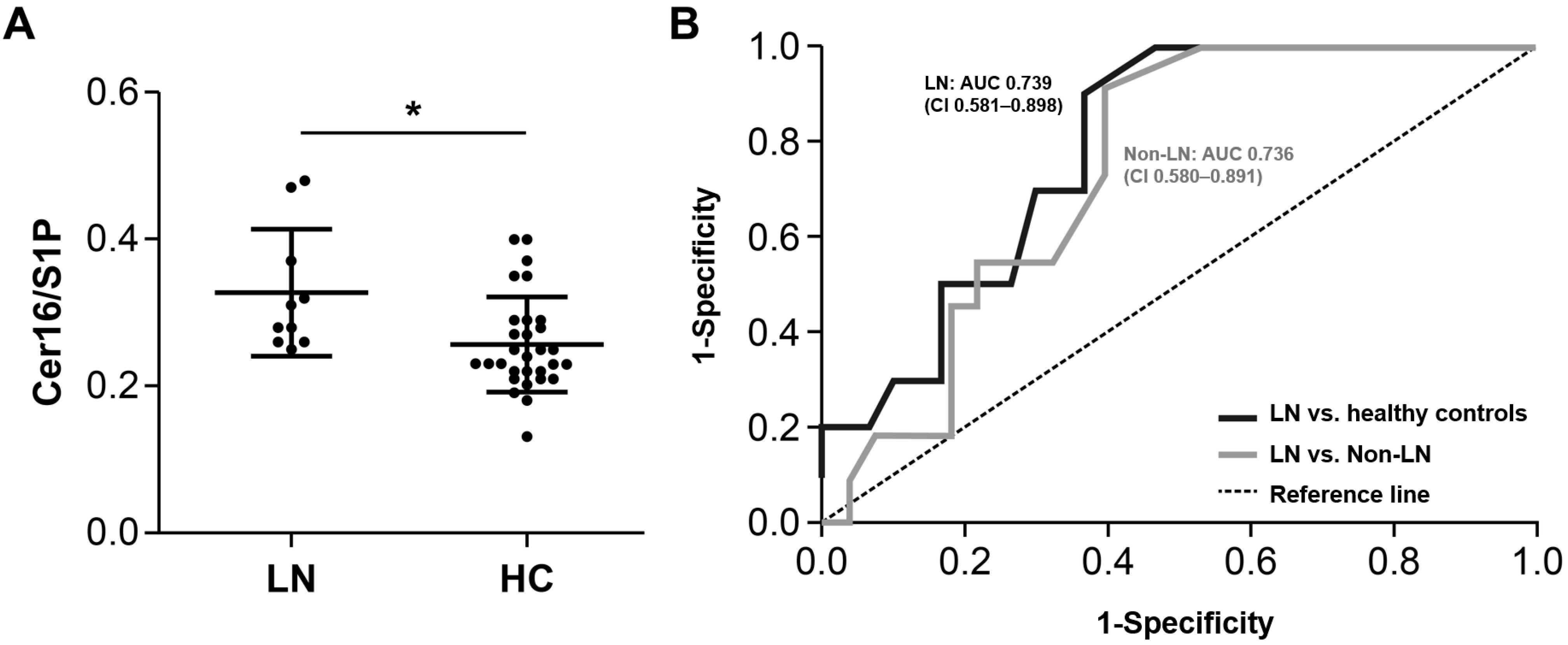
2.3. Diagnostic Value of Cer16/S1P Ratio in Identifying Lupus Nephritis
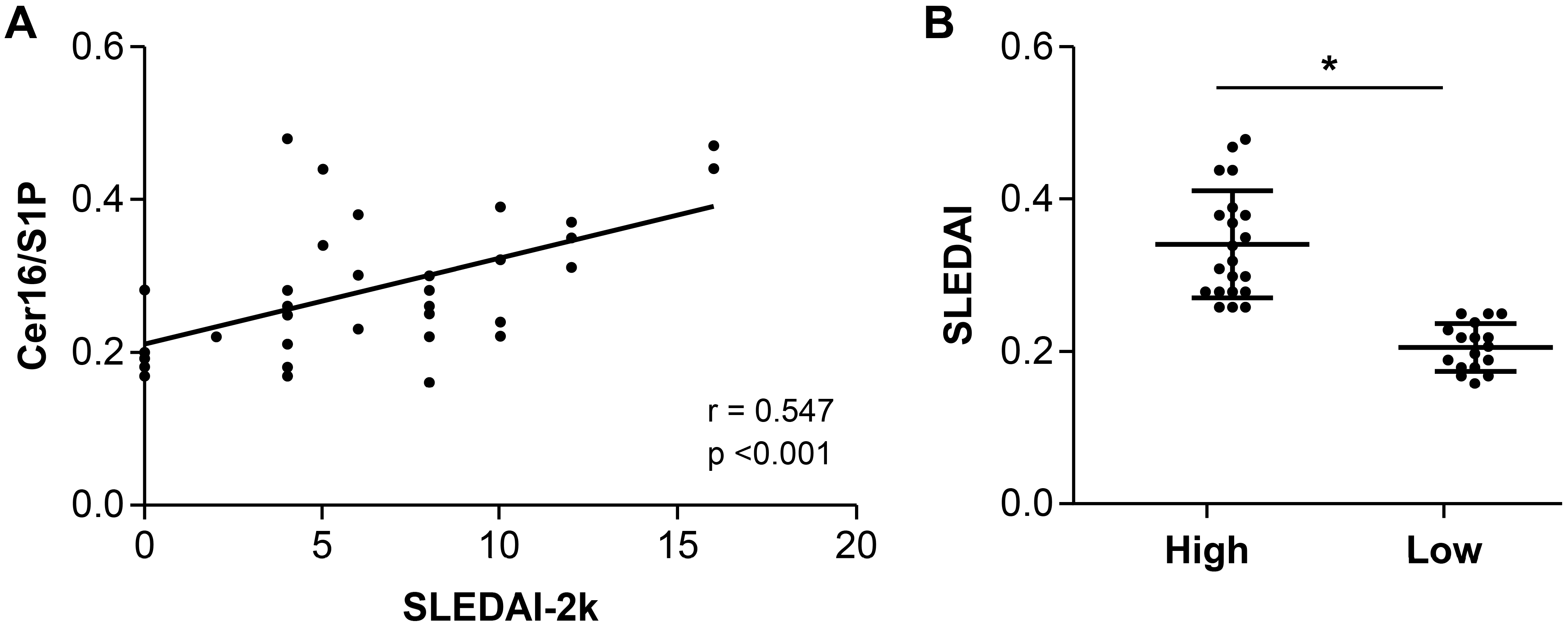
2.4. Correlation Between the Cer16/S1P Ratio and Clinical Features and Disease Activities in SLE
3. Discussion
4. Materials and Methods
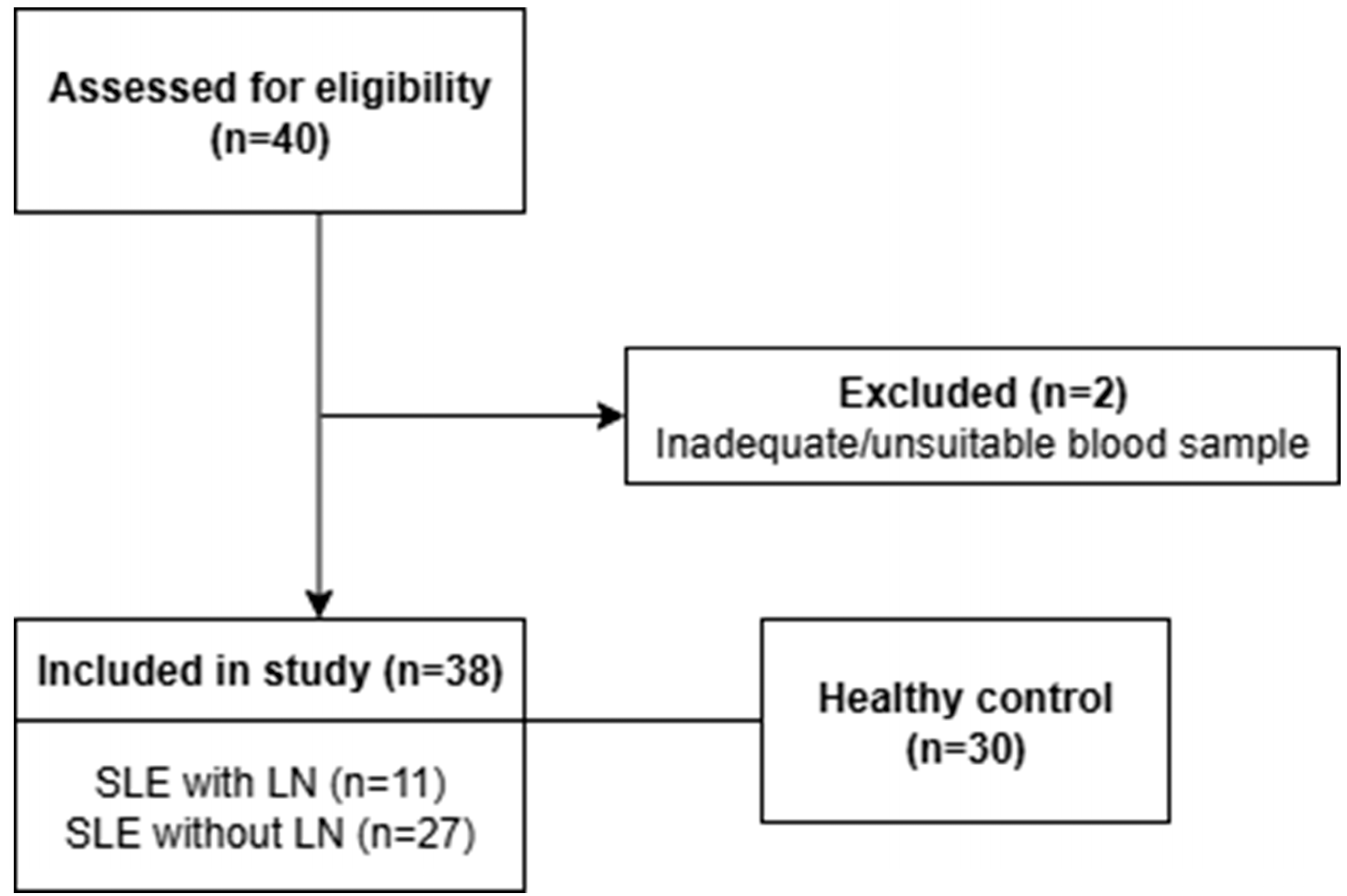
4.1. Participant Details and Clinical Evaluations
4.2. Sample Preparation and Sphingolipid Analysis
4.3. Statistical Analysis
5. Conclusions
Author Contributions
Funding
Institutional Review Board Statement
Informed Consent Statement
Data Availability Statement
Conflicts of Interest
Abbreviations
| SLE | Systemic lupus erythematosus |
| Ceramides | Cer |
| S1P | Sphingosine-1-phosphate |
| LN | Lupus nephritis |
| Anti-dsDNA | Anti-double-stranded DNA |
| SLEDAI-2k | Systemic Lupus Erythematosus Disease Activity Index 2000 |
| SLICC | Systemic Lupus International Collaborating Clinics |
| SDI | SLICC damage index |
| SMs | Sphingomyelins |
| ROC | Receiver operating characteristic |
| AUC | Area under the curve |
| CI | Confidence intervals |
| ESR | Erythrocyte sedimentation rate |
| EULAR/ACR | European League Against Rheumatism/American College of Rheumatology |
| C3 | Complement 3 |
| C4 | Complement 4 |
| ANA | Antinuclear antibody |
References
- Siegel, C.H.; Sammaritano, L.R. Systemic Lupus Erythematosus: A Review. JAMA 2024, 331, 1480–1491. [Google Scholar] [CrossRef]
- Crow, M.K. Pathogenesis of Systemic Lupus Erythematosus: Risks, Mechanisms and Therapeutic Targets. Ann. Rheum. Dis. 2023, 82, 999–1014. [Google Scholar] [CrossRef]
- Maceyka, M.; Spiegel, S. Sphingolipid Metabolites in Inflammatory Disease. Nature 2014, 510, 58–67. [Google Scholar] [CrossRef] [PubMed]
- Green, C.D.; Maceyka, M.; Cowart, L.A.; Spiegel, S. Sphingolipids in Metabolic Disease: The Good, the Bad, and the Unknown. Cell Metab. 2021, 33, 1293–1306. [Google Scholar] [CrossRef]
- Castillo, R.I.; Rojo, L.E.; Henriquez-Henriquez, M.; Silva, H.; Maturana, A.; Villar, M.J.; Fuentes, M.; Gaspar, P.A. From Molecules to the Clinic: Linking Schizophrenia and Metabolic Syndrome through Sphingolipids Metabolism. Front. Neurosci. 2016, 10, 488. [Google Scholar] [CrossRef]
- Lee, M.; Lee, S.Y.; Bae, Y.S. Functional Roles of Sphingolipids in Immunity and Their Implication in Disease. Exp. Mol. Med. 2023, 55, 1110–1130. [Google Scholar] [CrossRef]
- Harden, O.C.; Hammad, S.M. Sphingolipids and Diagnosis, Prognosis, and Organ Damage in Systemic Lupus Erythematosus. Front. Immunol. 2020, 11, 586737. [Google Scholar] [CrossRef]
- Nowling, T.K.; Mather, A.R.; Thiyagarajan, T.; Hernández-Corbacho, M.J.; Powers, T.W.; Jones, E.E.; Snider, A.J.; Oates, J.C.; Drake, R.R.; Siskind, L.J. Renal Glycosphingolipid Metabolism Is Dysfunctional in Lupus Nephritis. J. Am. Soc. Nephrol. 2015, 26, 1402–1413. [Google Scholar] [CrossRef] [PubMed]
- Checa, A.; Idborg, H.; Zandian, A.; Sar, D.G.; Surowiec, I.; Trygg, J.; Svenungsson, E.; Jakobsson, P.-J.; Nilsson, P.; Gunnarsson, I.; et al. Dysregulations in Circulating Sphingolipids Associate with Disease Activity Indices in Female Patients with Systemic Lupus Erythematosus: A Cross-Sectional Study. Lupus 2017, 26, 1023–1033. [Google Scholar] [CrossRef]
- Schmidt, J.A.; Rinaldi, S.; Ferrari, P.; Carayol, M.; Achaintre, D.; Scalbert, A.; Cross, A.J.; Gunter, M.J.; Fensom, G.K.; Appleby, P.N.; et al. Metabolic Profiles of Male Meat Eaters, Fish Eaters, Vegetarians, and Vegans from the EPIC-Oxford Cohort. Am. J. Clin. Nutr. 2015, 102, 1518–1526. [Google Scholar] [CrossRef] [PubMed]
- Hicks, A.A.; Pramstaller, P.P.; Johansson, A.; Vitart, V.; Rudan, I.; Ugocsai, P.; Aulchenko, Y.; Franklin, C.S.; Liebisch, G.; Erdmann, J.; et al. Genetic Determinants of Circulating Sphingolipid Concentrations in European Populations. PLoS Genet. 2009, 5, e1000672. [Google Scholar] [CrossRef]
- Fu, J.; Van Unen, M.; Sarlea, A.; Nguyen, N.; Jaeger, M.; Bataller, J.B.; Koeken, V.A.C.M.; de Bree, L.C.; Mourits, V.P.; Moorlag, S.J.C.F.M.; et al. Deciphering Cross-Cohort Metabolic Signatures of Immune Responses and Their Implications for Disease Pathogenesis. Mol. Syst. Biol. 2025, 21, 1581–1598. [Google Scholar] [CrossRef] [PubMed]
- Li, P.; Sun, Z.; Chen, X.; Shao, Q.; Wu, H. Mapping Current Research Status and Emerging Frontiers of Lipidomics: A Comprehensive Data-Mining-Based Study. Metabolomics 2025, 21, 85. [Google Scholar] [CrossRef]
- Nuttall, S.L.; Heaton, S.; Piper, M.K.; Martin, U.; Gordon, C. Cardiovascular Risk in Systemic Lupus Erythematosus—Evidence of Increased Oxidative Stress and Dyslipidaemia. Rheumatology 2003, 42, 758–762. [Google Scholar] [CrossRef]
- Barbhaiya, M.; Feldman, C.H.; Guan, H.; Gómez-Puerta, J.A.; Fischer, M.A.; Solomon, D.H.; Everett, B.; Costenbader, K.H. Race/Ethnicity and Cardiovascular Events Among Patients with Systemic Lupus Erythematosus. Arthritis Rheumatol. 2017, 69, 1823–1831. [Google Scholar] [CrossRef] [PubMed]
- Alexandropoulou, I.; Grammatikopoulou, M.G.; Gkouskou, K.K.; Pritsa, A.A.; Vassilakou, T.; Rigopoulou, E.; Lindqvist, H.M.; Bogdanos, D.P. Ceramides in Autoimmune Rheumatic Diseases: Existing Evidence and Therapeutic Considerations for Diet as an Anticeramide Treatment. Nutrients 2023, 15, 229. [Google Scholar] [CrossRef] [PubMed]
- Vandanmagsar, B.; Youm, Y.H.; Ravussin, A.; Galgani, J.E.; Stadler, K.; Mynatt, R.L.; Ravussin, E.; Stephens, J.M.; Dixit, V.D. The NLRP3 Inflammasome Instigates Obesity-Induced Inflammation and Insulin Resistance. Nat. Med. 2011, 17, 179–188. [Google Scholar] [CrossRef]
- Andrieu-Abadie, N.; Gouazé, V.; Salvayre, R.; Levade, T. Ceramide in Apoptosis Signaling: Relationship with Oxidative Stress. Free Radic. Biol. Med. 2001, 31, 717–728. [Google Scholar] [CrossRef]
- Mallela, S.K.; Merscher, S.; Fornoni, A. Implications of Sphingolipid Metabolites in Kidney Diseases. Int. J. Mol. Sci. 2022, 23, 4244. [Google Scholar] [CrossRef]
- Patyna, S.; Büttner, S.; Eckes, T.; Obermüller, N.; Bartel, C.; Braner, A.; Trautmann, S.; Thomas, D.; Geiger, H.; Pfeilschifter, J.; et al. Blood Ceramides as Novel Markers for Renal Impairment in Systemic Lupus Erythematosus. Prostaglandins Other Lipid Mediat. 2019, 144, 106348. [Google Scholar] [CrossRef]
- Pilátová, M.B.; Solárová, Z.; Mezencev, R.; Solár, P. Ceramides and Their Roles in Programmed Cell Death. Adv. Med. Sci. 2023, 68, 417–425. [Google Scholar] [CrossRef]
- Lu, L.; Hu, C.; Zhao, Y.; He, L.; Zhou, J.; Li, H.; Du, Y.; Wang, Y.; Wen, C.; Han, X.; et al. Shotgun Lipidomics Revealed Altered Profiles of Serum Lipids in Systemic Lupus Erythematosus Closely Associated with Disease Activity. Biomolecules 2018, 8, 105. [Google Scholar] [CrossRef]
- Li, Y.; Liang, L.; Deng, X.; Zhong, L. Lipidomic and Metabolomic Profiling Reveals Novel Candidate Biomarkers in Active Systemic Lupus Erythematosus. Int. J. Clin. Exp. Pathol. 2019, 12, 857–866. [Google Scholar]
- Hammad, S.M.; Harden, O.C.; Wilson, D.A.; Twal, W.O.; Nietert, P.J.; Oates, J.C. Plasma Sphingolipid Profile Associated with Subclinical Atherosclerosis and Clinical Disease Markers of Systemic Lupus Erythematosus: Potential Predictive Value. Front. Immunol. 2021, 12, 694318. [Google Scholar] [CrossRef]
- Koh, J.H.; Yoon, S.J.; Kim, M.; Cho, S.; Lim, J.; Park, Y.; Kim, H.-S.; Kwon, S.W.; Kim, W.-U. Lipidome Profile Predictive of Disease Evolution and Activity in Rheumatoid Arthritis. Exp. Mol. Med. 2022, 54, 143–155. [Google Scholar] [CrossRef] [PubMed]
- Huang, C.-C.; Tseng, T.-T.; Liu, S.-C.; Lin, Y.-Y.; Law, Y.-Y.; Hy, S.-L.; Wang, S.-W.; Tsai, C.-H.; Tang, C.-H. S1P Increases VEGF Production in Osteoblasts and Facilitates Endothelial Progenitor Cell Angiogenesis by Inhibiting miR-16-5p Expression via the c-Src/FAK Signaling Pathway in Rheumatoid Arthritis. Cells 2021, 10, 2168. [Google Scholar] [CrossRef] [PubMed]
- Fineide, F.; Chen, X.; Bjellaas, T.; Vitelli, V.; Utheim, T.P.; Jense, J.L.; Galtung, H.K. Characterization of Lipids in Saliva, Tears and Minor Salivary Glands of Sjögren’s Syndrome Patients Using an HPLC/MS-Based Approach. Int. J. Mol. Sci. 2021, 22, 8997. [Google Scholar] [CrossRef]
- Geroldinger-Simić, M.; Bögl, T.; Himmelsbach, M.; Sepp, N.; Buchberger, W. Changes in Plasma Phospholipid Metabolism Are Associated with Clinical Manifestations of Systemic Sclerosis. Diagnostics 2021, 11, 2116. [Google Scholar] [CrossRef]
- Hao, J.; Huang, Y.-M.; Zhao, M.-H.; Chen, M. The Interaction between C5a and Sphingosine-1-Phosphate in Neutrophils for Antineutrophil Cytoplasmic Antibody-Mediated Activation. Arthritis Res. Ther. 2014, 16, R142. [Google Scholar] [CrossRef]
- York, A.G.; Skadow, M.H.; Oh, J.; Qu, R.; Zhou, Q.D.; Hsieh, W.Y.; Mowel, W.K.; Brewer, J.R.; Kaffe, E.; Williams, K.J.; et al. IL-10 Constrains Sphingolipid Metabolism to Limit Inflammation. Nature 2024, 627, 628–635. [Google Scholar] [CrossRef] [PubMed]
- Schiffmann, S.; Ferreiros, N.; Birod, K.; Eberle, M.; Schreiber, Y.; Pfeilschifter, W.; Ziemann, U.; Pierre, S.; Scholich, K.; Grösch, S.; et al. Ceramide Synthase 6 Plays a Critical Role in the Development of Experimental Autoimmune Encephalomyelitis. J. Immunol. 2012, 188, 5723–5733. [Google Scholar] [CrossRef] [PubMed]
- Podbielska, M.; Macala, J.; Jakubiak-Augustyn, A.; Szulc, Z.M.; Fortuna, W.; Budrewicz, S.; Jaskiewicz, E.; Bilinska, M.; Hogan, E.L.; Pokryszko-Dragan, A. Ceramide Is Implicated in Humoral Peripheral and Intrathecal Autoimmune Response in MS Patients. Mult. Scler. Relat. Disord. 2023, 71, 104565. [Google Scholar] [CrossRef] [PubMed]
- Javaheri, A.; Allegood, J.C.; Cowart, L.A.; Chirinos, J.A. Circulating Ceramide 16:0 in Heart Failure with Preserved Ejection Fraction. J. Am. Coll. Cardiol. 2020, 75, 2273–2275. [Google Scholar] [CrossRef]
- Kien, C.L.; Bunn, J.Y.; Stevens, R.; Bain, J.; Ikayeva, O.; Crain, K.; Koves, T.R.; Muoio, D.M. Dietary Intake of Palmitate and Oleate Has Broad Impact on Systemic and Tissue Lipid Profiles in Humans. Am. J. Clin. Nutr. 2014, 99, 436–445. [Google Scholar] [CrossRef]
- Zhang, G.; Lee, H.J.; Zhao, Q.; Ragi, N.; Feng, T.; Trevino, E.; Montellano, R.; Zhang, S.; Sharma, K. CerS6 and C16 Ceramide in Early-Stage Diabetic Kidney Disease: Potential Role of Adenine in Podocytopathy: SA-PO0315. J. Am. Soc. Nephrol. 2025, 36, 10-1681. [Google Scholar] [CrossRef]
- Idborg, H.; Checa, A.; Sar, D.; Jakobsson, P.-J.; Wheelock, C.; Gunnarsson, I. Screening of Sphingolipids in SLE—Before and After Treatment. Ann. Rheum. Dis. 2014, 73 (Suppl. S1), A53. [Google Scholar] [CrossRef]
- Nixon, G.F. Sphingolipids in Inflammation: Pathological Implications and Potential Therapeutic Targets. Br. J. Pharmacol. 2009, 158, 982–993. [Google Scholar] [CrossRef]
- Hammad, S.M.; Hardin, J.R.; Wilson, D.A.; Twal, W.O.; Nietert, P.J.; Oates, J.C. Race Disparity in Blood Sphingolipidomics Associated with Lupus Cardiovascular Comorbidity. PLoS ONE 2019, 14, e0224496. [Google Scholar] [CrossRef]
- Espinoza, K.S.; Snider, A.J. Therapeutic Potential for Sphingolipids in Inflammatory Bowel Disease and Colorectal Cancer. Cancers 2024, 16, 789. [Google Scholar] [CrossRef]
- Kuo, A.; Hla, T. Regulation of Cellular and Systemic Sphingolipid Homeostasis. Nat. Rev. Mol. Cell Biol. 2024, 25, 802–821. [Google Scholar] [CrossRef] [PubMed]
- Kim, J.W.; Baek, W.Y.; Jung, J.Y.; Kim, H.A.; Lee, S.W.; Suh, C.H. Longitudinal Assessment of Urinary ALCAM, HPX, and PRDX6 in Korean Patients with Systemic Lupus Erythematosus: Implications for Disease Activity Monitoring and Treatment Response. Front. Immunol. 2024, 15, 1369385. [Google Scholar] [CrossRef]
- Kim, J.W.; Jung, J.Y.; Lee, S.W.; Baek, W.Y.; Kim, H.A.; Suh, C.H. S100A8 in Serum, Urine, and Saliva as a Potential Biomarker for Systemic Lupus Erythematosus. Front. Immunol. 2022, 13, 886209. [Google Scholar] [CrossRef] [PubMed]



| Variable | SLE Without LN (N = 27) | SLE with LN (N = 11) | Healthy Controls (N = 30) | p-Value |
|---|---|---|---|---|
| Age, years | 41 (25–57) | 47 (34–58) | 46 (30–55) | 0.380 |
| Female, no. (%) | 24 (88.9) | 10 (90.9) | 28 (93.3) | 0.305 |
| Disease duration, months | 122 (67–177) | 90 (83–163) | NA | 0.479 |
| Lipid profile | ||||
| Total cholesterol, mg/dL | 171 (149–190) | 164 (154–205) | 180 (164–203) | 0.063 |
| LDL cholesterol, mg/dL | 104 (67–119) | 97 (91–132) | 95 (80–121) | 0.665 |
| HDL cholesterol, mg/dL | 62 (56– 67) | 53 (45–60) | 66 (56–78) | 0.423 |
| Triglyceride, mg/dL | 70 (43–93) | 55 (38–90) | 73 (59–103) | 0.100 |
| Clinical manifestations | ||||
| Mucocutaneous, no. (%) | 20 (74.1) | 9 (81.8) | NA | 0.611 |
| Arthritis, no. (%) | 18 (66.7) | 9 (81.8) | NA | 0.350 |
| Serositis, no. (%) | 2 (7.4) | 1 (9.1) | NA | >0.999 |
| Hematologic, no. (%) | 10 (37.0) | 7 (63.6) | NA | 0.135 |
| Central nervous system, no. (%) | 0 (0) | 1 (9.1) | NA | 0.289 |
| Laboratory finding | ||||
| Leukocyte/μL | 4403 (3378–5060) | 3910 (3550–4950) | NA | 0.116 |
| Lymphocyte/μL | 1478 (1322–1872) | 1517 (1129–1810) | NA | 0.857 |
| Hemoglobin, g/dL | 13.4 (12.9–13.9) | 12.4 (11.1–12.9) | NA | 0.054 |
| Platelets, ×103/μL | 245 (197–263) | 211 (200–236) | NA | 0.319 |
| ESR, mm/h | 8 (2–14) | 16 (8–20) | NA | 0.461 |
| ANA positivity, no. (%) | 24 (88.9) | 10 (90.9) | NA | >0.999 |
| Anti-dsDNA (IU/mL) | 13.1 ± 24.4 | 32.8 ± 32.8 | NA | 0.091 |
| Anti-dsDNA Ab positivity, no. (%) | 8 (29.6) | 7 (63.6) | NA | 0.052 |
| Anti-Sm Ab positivity, no. (%) | 3 (11.1) | 1 (9.1) | NA | >0.999 |
| APL positivity, no. (%) | 5 (18.5) | 3 (27.3) | NA | 0.548 |
| Low complements (C3 < 90 mg/dL or C4 < 10 mg/dL), no. (%) | 10 (37.0) | 7 (63.6) | NA | 0.135 |
| Proteinuria (mg/day) | 0.2 (0.1–0.5) | 0.8 (0.3–1.4) | NA | 0.204 |
| Proteinuria >0.5 g/day, no. (%) | 3 (11.1) | 6 (54.5) | NA | 0.004 |
| SLEDAI-2k | 5 (4–8) | 8 (4–12) | NA | 0.107 |
| SDI | 0 (0–1) | 0 (0–1) | NA | 0.383 |
| Treatment | ||||
| NSAID, no. (%) | 14 (51.9) | 2 (18.2) | NA | 0.057 |
| Glucocorticoids, no. (%) | 19 (70.4) | 9 (81.8) | NA | 0.467 |
| Cumulative GC dose, g, (prednisolone-equivalent) | 2.0 (0–3.0) | 4.0 (1.5–10.5) | NA | 0.168 |
| Hydroxychloroquine, no. (%) | 23 (85.2) | 10 (90.9) | NA | >0.999 |
| Azathioprine, no. (%) | 3 (11.1) | 1 (9.1) | NA | >0.999 |
| Mycophenolate mofetil, no. (%) | 0 (0) | 7 (63.6) | NA | <0.001 |
| Calcineurin inhibitor no. (%) | 3 (11.1) | 3 (27.3) | NA | 0.329 |
| Methotrexate no. (%) | 2 (7.4) | 0 (0) | NA | >0.999 |
| Lipid lowering agents | 4 (14.8) | 2 (18.2) | 2 (6.7) | 0.222 |
| Sphingolipids (ng/mL) | SLE Without LN (N = 27) | SLE with LN (N = 11) | HCs (N = 30) | p-Value 1 | p-Value 2 |
|---|---|---|---|---|---|
| S1P | 702 (650–770) | 645 (590–710) | 705 (660–760) | 0.208 | 0.380 |
| Sphingosine | 3.6 (2.2–5.5) | 2.8 (2.0–3.6) | 3.4 (2.2–4.3) | 0.155 | 0.680 |
| Cer14:0 | 6.8 (5.5–9.0) | 7.7 (6.5–9.2) | 7.0 (5.6–8.2) | 0.512 | 0.671 |
| Cer16:0 | 182 (160–210) | 199 (175–225) | 178 (150–205) | 0.372 | 0.140 |
| Cer18:0 | 98 (73–122) | 104 (91–120) | 93 (69–118) | 0.591 | 0.081 |
| Cer20:0 | 111 (89–138) | 118 (105–146) | 118 (100–138) | 0.754 | 0.319 |
| Cer24:0 | 2056 (1691–2764) | 1999 (1585–2720) | 2191 (1918–3015) | 0.313 | 0.145 |
| Cer24:1 | 694 (599–952) | 803 (618–1010) | 774 (616–999) | 0.406 | 0.387 |
| SM (d18:0/16:0) | 26,208 (19,683–33,211) | 27,281 (19,534–35,017) | 29,922 (19,189–37,893) | 0.474 | 0.583 |
| SM (d18:0/18:0) | 5413 (4687–7063) | 6161 (5659–7514) | 6674 (5589–8058) | 0.231 | 0.140 |
| SM (d18:0/24:0) | 16,719 (11,262–19,284) | 17,110 (9907–19,871) | 19,853 (12,648–20,134) | 0.027 | 0.053 |
| SM (d18:0/24:1) | 35,097 (26,109–41,893) | 34,560 (30,205–37,874) | 34,134 (28,648–38,216) | 0.986 | 0.934 |
| Cer14/S1P | 0.01 (0–0.02) | 0.01 (0–0.02) | 0.01 (0–0.02) | 0.110 | 0.031 |
| Cer16/S1P | 0.27 (0.2–0.34) | 0.33 (0.26–0.38) | 0.25 (0.21–0.3) | 0.027 | 0.019 |
| Cer18/S1P | 0.14 (0.12–0.16) | 0.16 (0.14–0.19) | 0.13 (0.11–0.15) | 0.189 | 0.107 |
| Cer20/S1P | 0.17 (0.15–0.18) | 0.2 (0.17–0.22) | 0.17 (0.16–0.18) | 0.215 | 0.283 |
| Cer24/S1P | 3.08 (2.79–3.34) | 3.11 (2.83–3.4) | 3.27 (2.89–3.72) | 0.691 | 0.198 |
| Cer24:1/S1P | 1.09 (0.99–1.25) | 1.26 (1.01–1.53) | 1.04 (0.8–1.31) | 0.111 | 0.031 |
| Parameter | Cer16/S1P |
|---|---|
| Correlation Coefficient, r (p-Value) | |
| Age | −0.026 (0.836) |
| Disease duration | 0.373 (0.021) |
| Anti-dsDNA Ab | 0.359 (0.027) |
| Complement 3 | −0.121 (0.470) |
| Complement 4 | 0.009 (0.956) |
| Leukocyte | −0.057 (0.736) |
| Lymphocyte | 0.016 (0.923) |
| Hemoglobin | −0.419 (0.009) |
| Platelet | −0.043 (0.796) |
| ESR | 0.519 (0.001) |
| Creatinine | 0.373 (0.021) |
| Cumulative glucocorticoid dose | 0.467 (0.003) |
| SLEDAI-2k | 0.547 (<0.001) |
| SLICC damage index | 0.327 (0.045) |
Disclaimer/Publisher’s Note: The statements, opinions and data contained in all publications are solely those of the individual author(s) and contributor(s) and not of MDPI and/or the editor(s). MDPI and/or the editor(s) disclaim responsibility for any injury to people or property resulting from any ideas, methods, instructions or products referred to in the content. |
© 2025 by the authors. Licensee MDPI, Basel, Switzerland. This article is an open access article distributed under the terms and conditions of the Creative Commons Attribution (CC BY) license (https://creativecommons.org/licenses/by/4.0/).
Share and Cite
Kim, J.-W.; Kim, S.H.; Baek, W.-Y.; Jung, J.-Y.; Kim, H.-A.; Suh, C.-H. Exploratory Pilot Study on the Serum Ceramide (16:0) to Sphingosine-1-Phosphate Ratio as a Potential Indicator of Lupus Nephritis and Disease Activity. Int. J. Mol. Sci. 2025, 26, 11957. https://doi.org/10.3390/ijms262411957
Kim J-W, Kim SH, Baek W-Y, Jung J-Y, Kim H-A, Suh C-H. Exploratory Pilot Study on the Serum Ceramide (16:0) to Sphingosine-1-Phosphate Ratio as a Potential Indicator of Lupus Nephritis and Disease Activity. International Journal of Molecular Sciences. 2025; 26(24):11957. https://doi.org/10.3390/ijms262411957
Chicago/Turabian StyleKim, Ji-Won, Seung Hyun Kim, Wook-Young Baek, Ju-Yang Jung, Hyoun-Ah Kim, and Chang-Hee Suh. 2025. "Exploratory Pilot Study on the Serum Ceramide (16:0) to Sphingosine-1-Phosphate Ratio as a Potential Indicator of Lupus Nephritis and Disease Activity" International Journal of Molecular Sciences 26, no. 24: 11957. https://doi.org/10.3390/ijms262411957
APA StyleKim, J.-W., Kim, S. H., Baek, W.-Y., Jung, J.-Y., Kim, H.-A., & Suh, C.-H. (2025). Exploratory Pilot Study on the Serum Ceramide (16:0) to Sphingosine-1-Phosphate Ratio as a Potential Indicator of Lupus Nephritis and Disease Activity. International Journal of Molecular Sciences, 26(24), 11957. https://doi.org/10.3390/ijms262411957