Abstract
Lung cancer remains one of the leading causes of cancer-related mortality worldwide, with tumor recurrence and metastasis posing significant challenges despite advances in targeted therapies and immunotherapy. Cellular dormancy, a reversible, quiescent state marked by cell cycle arrest, has emerged as a key driver of therapeutic resistance and disease relapse, particularly in small-cell lung cancer (SCLC) and non-small cell lung cancer (NSCLC). Multiple mechanisms, including autophagy, stress-adaptive signaling, microenvironmental cues, and epigenetic dysregulation, have been implicated in the regulation of dormancy and long-term cell survival. Among these, epigenetic modifications such as DNA methylation, histone modifications, and non-coding RNAs (ncRNAs) play pivotal roles in maintaining dormancy by repressing proliferative gene expression programs. Increasing evidence suggests that dormant tumor cells harbor distinct epigenomic signatures, which may serve as predictive biomarkers for minimal residual disease (MRD) and relapse risk. This review summarizes current advances in understanding the epigenetic regulation of cellular dormancy in lung cancer, with a particular emphasis on the interplay between epigenetic modifiers and oncogenic signaling pathways. Furthermore, emerging molecular targets and associated therapeutic agents currently under clinical evaluation are presented, emphasizing how a deeper understanding of the epigenetic landscape governing dormancy may inform the development of novel interventions to improve long-term clinical outcomes in lung cancer patients.
1. Introduction
Cancer dormancy is an essential yet often underestimated phase in tumor progression, characterized by a temporary cessation of proliferation that allows tumor cells to evade therapy and immune-mediated elimination [1]. Dormancy can manifest as tumor mass dormancy, where cell proliferation is balanced by apoptosis, often due to immune pressure or restricted angiogenesis, or as cellular dormancy, wherein individual disseminated tumor cells (DTCs) enter a reversible quiescent state while remaining viable and potentially metastatic [2].
Dormant cancer cells represent a major clinical challenge due to their intrinsic resistance to cytotoxic therapies and their role in late relapse [3]. A growing body of evidence indicates that autophagy is a key survival mechanism during dormancy, enabling cells to recycle intracellular components and adapt to metabolic stress [4,5]. Concurrently, immune escape mechanisms, including reduced antigen presentation and upregulation of immune checkpoint molecules, help dormant cells persist in immunocompetent hosts. Notably, dormancy is regulated by both extrinsic microenvironmental cues and intrinsic molecular programs, including genetic and epigenetic alterations [6].
While somatic mutations can enhance survival under hostile conditions, epigenetic modifications, such as DNA methylation, histone post-translational modifications, and non-coding RNAs (ncRNAs)-mediated regulation, suppress proliferative and apoptotic pathways without compromising cell viability. These reversible epigenetic landscapes enable dormant cells to dynamically transition between quiescence and reactivation in response to environmental stimuli [7]. Although surgical resection and systemic therapies can effectively reduce primary tumor burden, recurrence and metastatic progression remain common, especially in patients harboring minimal residual disease (MRD), [8]. Dormant cells that survive initial treatment regimens are thought to be key drivers of relapse and thus represent a compelling therapeutic target [9]. However, the molecular mechanisms that regulate the initiation, maintenance, and reactivation of lung cancer dormancy remain only partially elucidated [10].
Recent studies have identified additional mechanisms contributing to cellular dormancy in lung cancer, including senescence and diapause. Cellular senescence is a state of irreversible cell cycle arrest that can be induced by various stressors, such as DNA damage, oncogene activation, or telomere shortening [11]. In lung cancer, senescent cells can accumulate in response to therapy and contribute to tumor relapse by secreting pro-inflammatory cytokines and growth factors, collectively known as the senescence-associated secretory phenotype (SASP). These factors can promote tumorigenesis, angiogenesis, and immune evasion, thereby facilitating the reawakening of dormant cancer cells [12]. For instance, studies have shown that SASP can influence the tumor microenvironment, creating a niche that supports the survival and reactivation of dormant cells [13].
Diapause, a reversible state of developmental arrest observed in certain organisms, has also been implicated in cancer dormancy [14]. While less studied in the context of lung cancer, diapause-like mechanisms may involve metabolic reprogramming and epigenetic modifications that enable cancer cells to survive under adverse conditions [15]. Research has suggested that certain signaling pathways, such as the mammalian target of rapamycin (mTOR) pathway, play a role in regulating dormancy and may overlap with mechanisms observed in diapause [16].
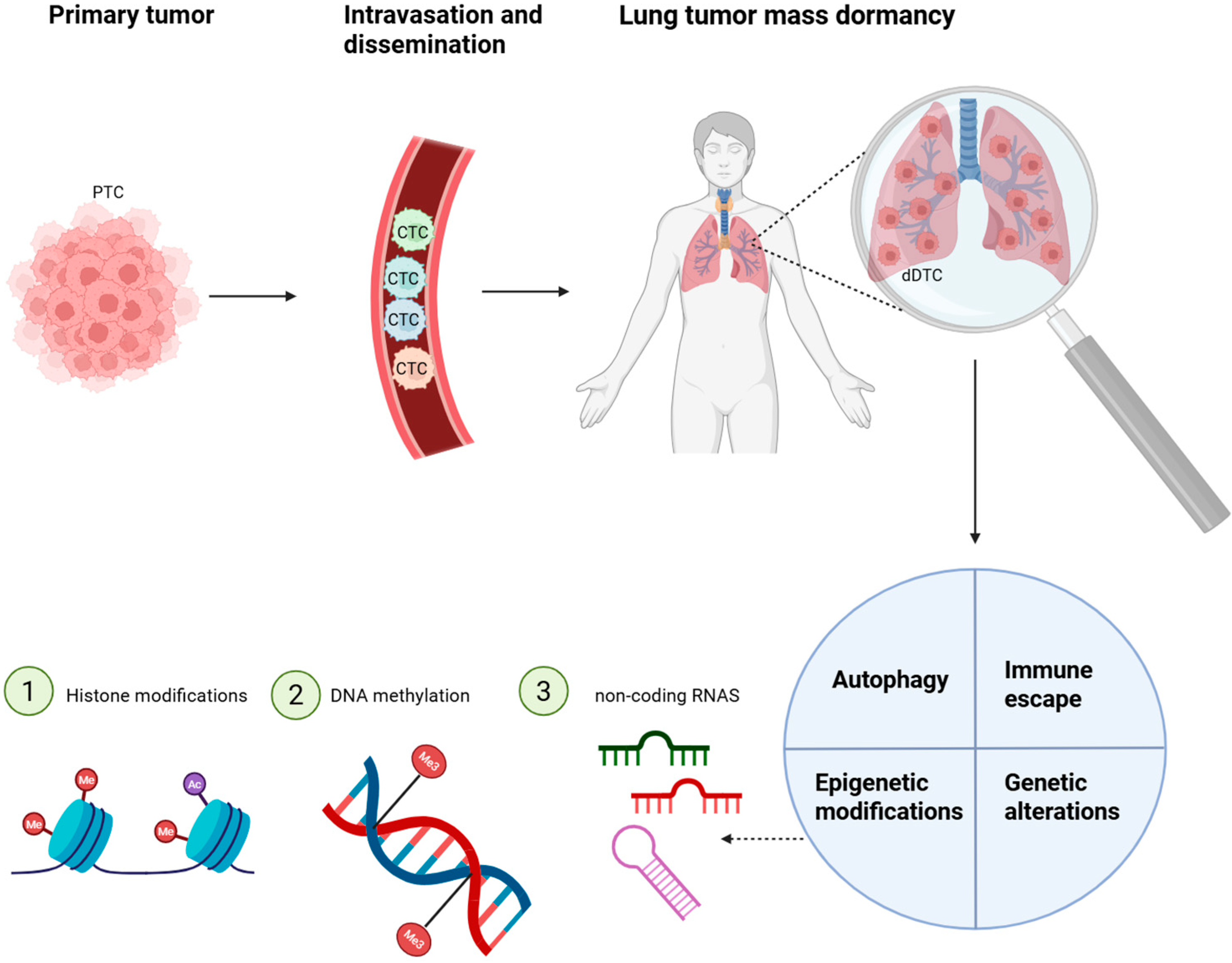
In this review, the aim is to summarize the latest advances in the biological understanding of dormancy, with a particular focus on epigenetic remodeling and emerging strategies for therapeutically targeting dormant lung cancer cells, aiming to prevent recurrence and achieve durable disease control (Figure 1).
Figure 1.
Schematic representation of cancer cell dissemination and lung tumor dormancy regulated by epigenetic and adaptive survival mechanisms. PTCs can intravasate into the bloodstream and circulate as CTCs, eventually disseminating to distant organs such as the lung, where they may enter a dormant state as dDTCs. Within the lung microenvironment, tumor mass dormancy can be maintained by a balance between proliferation and apoptosis. Abbreviations: PTCs, Primary Tumor Cells; CTCs, Circulating Tumor Cells; dDTCs, dormant Disseminated Tumor Cells (Created with BioRender.com, Licensing and Agreement number DP28F9Z1LY, accessed on 23 June 2025).
Dormant cancer cells evade therapy and immune detection through main events as well as autophagy, immune escape, genetic alterations, and epigenetic regulation. Particularly, epigenetic control is mediated by coordinated mechanisms such as histone modifications (e.g., methylation and acetylation), DNA methylation, and non-coding RNAs, which could act in synergy with metabolic adaptation via autophagy, immunomodulatory mechanisms facilitating immune escape, and genetic mutations that enhance stress resistance.
2. Molecular, Metabolic and Cellular Drivers of Lung Cancer Cell Dormancy
Lung cancer cell dormancy represents a reversible and clinically significant cellular state wherein dormant Disseminated Tumor Cells (dDTCs) undergo proliferative arrest while maintaining long-term viability and the capacity to re-enter the cell cycle, ultimately contributing to disease relapse [17]. Dormant cancer cells are defined by distinct hallmarks, including cell cycle arrest in the G0/G1 phase, therapeutic resistance, reliance on the tumor microenvironmental niche, immune evasion, and the capacity to reactivate cell growth [18].
The molecular and cellular mechanisms underlying tumor dormancy are orchestrated by a complex interplay between intrinsic regulatory pathways, particularly epigenetic modifications, and extrinsic signals derived from the lung tumor microenvironment (TME), including stromal cells, immune components, and extracellular matrix-derived factors.
2.1. Molecular Regulation of Dormant Lung Cancer Cells
Tumor dormancy is regulated by a complex interplay of molecular pathways, including autophagy, immune modulation, and angiogenic control. Autophagy, a cellular process responsible for degrading and recycling damaged organelles and proteins, is essential for the survival of dDTCs. By mitigating oxidative stress and maintaining cellular homeostasis, autophagy allows dormant cells to persist under nutrient deprivation and metabolic stress [19]. Key regulators include the Unc-51 Like Autophagy Activating Kinase 1 (ULK1) complex, Activating Molecule in Beclin1-Regulated Autophagy protein 1 (AMBRA1), and Beclin-1, which collectively promote autophagic flux and support cell survival under quiescent conditions [20]. Inhibition of autophagy has been shown to reduce the viability of dormant cells, highlighting its central role in dormancy maintenance [21].
Immune modulation further influences dormancy by balancing tumor elimination and persistence. Cytotoxic T lymphocytes can enforce dormancy through selective elimination of proliferating cells, whereas regulatory T cells (Tregs) and myeloid-derived suppressor cells (MDSCs) create an immunosuppressive environment that allows dormant cells to persist [22]. Dormant cells can evade immune surveillance via mechanisms such as Programmed Death-Ligand 1 (PD-L1) expression, which inhibits T-cell activity, while chronic inflammation or changes in cytokine signaling (e.g., IFN-γ, TNF-α) can trigger reawakening and metastatic outgrowth [23].
Angiogenic regulation is another critical determinant of dormancy. Tumors that fail to induce angiogenesis remain in a dormant state due to limited nutrient and oxygen supply. In lung cancer, the angiogenic switch is governed by the balance between pro-angiogenic factors, such as Vascular Endothelial Growth Factor (VEGF), and anti-angiogenic factors, including thrombospondin-1. Extracellular matrix components further influence endothelial behavior, vessel formation, and the maintenance of dormancy [24]. The integration of these mechanisms highlights the complexity of tumor dormancy and informs therapeutic strategies.
Targeting autophagy may sensitize dormant cells to immune-mediated clearance, while modulation of immune and angiogenic pathways can either maintain dormancy or prevent reawakening [25].
A comprehensive understanding of these interconnected pathways is therefore essential for developing effective epigenetic and combinatorial approaches to prevent metastatic relapse in lung cancer.
2.2. Metabolic Modulation of Dormant Tumor States: A Snapshot
Emerging evidence indicates that metabolic reprogramming plays a pivotal role in regulating the epigenetic landscape that sustains cellular dormancy in cancer. Dormant cells frequently downshift glycolysis and rely on oxidative phosphorylation and fatty acid oxidation to maintain energetic balance and redox homeostasis [26]. These metabolic adaptations profoundly influence the availability of key metabolites, such as acetyl-CoA, NAD+, α-ketoglutarate (α-KG), succinate, and fumarate, that serve as essential substrates or cofactors for chromatin-modifying enzymes [27]. Reduced glycolytic flux limits acetyl-CoA and thereby histone acetylation, promoting a transcriptionally repressive chromatin state, whereas elevated NAD+ levels activate sirtuin deacetylases to reinforce quiescence-associated gene silencing [28]. Similarly, mitochondrial intermediates modulate DNA and histone demethylases of the Ten-eleven translocation (TET) and Jumonji families: high α-KG favors demethylation and potential reactivation of silenced genes, while accumulation of succinate or fumarate stabilizes heterochromatin and sustains dormancy [29].
Lipid metabolism further contributes by generating β-hydroxybutyrate and other short-chain fatty acids that inhibit histone deacetylases, selectively reshaping chromatin accessibility [30].
Together, these metabolic–epigenetic feedback loops allow dormant cancer cells to maintain a low-energy, transcriptionally silent phenotype while retaining the capacity for rapid reactivation upon microenvironmental or therapeutic cues [31].
2.3. Targeting Intrinsic Mechanisms of Dormant Cancer Cells in Lung Cancer: A Focus on Epigenetics
Dormant cancer cells possess the capacity to alternate between quiescence and proliferation through dynamic epigenetic reprogramming mechanisms, encompassing DNA methylation, histone modifications, and the regulatory activity of ncRNAs, particularly microRNAs and long ncRNAs, which collectively modulate gene expression networks critical for maintaining dormancy and enabling reactivation under appropriate stimuli [3].
In both non-small-cell lung cancer (NSCLC) and small-cell lung cancer (SCLC) subtypes, increasing levels of DNA methylation are observed in dDTC, predominantly mediated by DNA methyltransferase 1 (DNMT1), [32]. Through this mechanism, methylation patterns are consistently preserved during DNA replication, and the stable silencing of critical cell cycle regulators, as well as cyclin-dependent kinase inhibitor 1A (CDKN1A) and cyclin-dependent kinase inhibitor 2A (CDKN2A), is maintained, thereby leading to G0/G1 phase blockade and the preservation of a dormant phenotype [33,34].
Concurrently, de novo methyltransferases DNMT3A and DNMT3B show an aberrant hypermethylation of promoter CpG islands at loci involved in cell cycle control, DNA repair, and apoptosis pathways [35]. This includes hypermethylation-mediated silencing of mutL homolog 1 (MLH1), ataxia-telangiectasia mutated (ATM), and O-6-methylguanine-DNA methyltransferase (MGMT), which compromises DNA damage response and contributes to chemo-resistance characteristic of dormant lung cancer cells [36,37,38].
In addition, both DNMT3A and DNMT3B extend the epigenetic remodeling of lung cancer cells beyond the classical hypermethylation of promoter CpG islands. These enzymes establish new methylation marks that stably silence tumor suppressor genes, such as CDK and Retinoblastoma 1 (RB1), thereby influencing cell cycle progression and modulating the balance between dormancy and proliferation [1,39]. This de novo methylation contributes to the maintenance of quiescent states in DTCs and supports their adaptive plasticity under microenvironmental or therapeutic stress [40]. Mechanistic insights into the role of DNMT3A and DNMT3B have been obtained using transgenic mouse models. In KrasG12D-driven lung cancer models, deletion of Dnmt3a accelerates tumor growth, suggesting that DNMT3A can act as a context-dependent brake on proliferation, potentially reinforcing dormancy in early lesions [41]. Conversely, transgenic mice overexpressing ΔDNMT3B4-del specifically in lung epithelial and alveoli cells induces hypermethylation of differentiation-associated loci, enhancing tumorigenic potential and illustrating how aberrant de novo methylation may drive the exit from dormancy and favor tumor progression [42]. These findings highlight that DNMT3A and DNMT3B coordinate broader epigenetic programs in lung cancer cells, controlling cellular plasticity and the potential for reactivation of dormant cells.
Crucially, the DNA methylation pattern in dormant lung cancer cells is dynamic, heterogeneous and context-dependent [43,44]. Focal promoter hypermethylation leads to the silencing of genes involved in proliferative signaling, whereas global hypomethylation of repetitive elements, such as long interspersed nuclear elements-1 (LINE-1) and Alu sequences, induces genomic instability and enhances epigenetic plasticity, allowing dormant cells to adapt to microenvironmental stressors and maintain long-term survival [44,45]. Moreover, nuclear receptor subfamily 2 group F member 1 (NR2F1) expression has been specifically linked to lung cancer dormancy [46,47]. In lung cancer models, Sosa MS and colleagues demonstrated that Nuclear Receptor Subfamily 2 Group F Member 1 (NR2F1) is commonly downregulated via promoter hypermethylation during active tumor proliferation, whereas it is significantly upregulated during cellular dormancy [47]. Furthermore, NR2F1-driven dormancy is supported by downstream effectors, including the SRY-Box Transcription Factor 9 (SOX9), retinoic acid receptor β (RARβ), and cyclin-dependent kinase inhibitors, which synergistically enforce cell cycle arrest and promote the long-term quiescence of dormant lung cancer cells [47].
Experimental evidence for these mechanisms has been established using transgenic and genetically engineered mouse models. Conditional overexpression of transcription factors such as NR2F1 or SOX9 in KrasG12D p53flox/flox NSCLC models promotes long-term quiescence of disseminated tumor cells, demonstrating their roles as dormancy drivers in vivo [47]. Reporter systems monitoring the p38/Extracellular signal-regulated kinases (ERK) signaling ratio have allowed the visualization of dormant cell populations within lung and bone marrow niches, showing that high p38 and low ERK activity corresponds to long-lived quiescent cells [48]. These models collectively provide compelling in vivo proof that specific transcriptional and epigenetic programs drive dormancy and can be manipulated to study relapse mechanisms.
Recent mechanistic insights from our group strongly suggest that epigenetic modulation is found to be a central regulator of dormancy-associated signaling via Nuclear factor erythroid 2-related factor 2 (NRF2) and neurogenic locus notch homolog protein (NOTCH) pathways. This supports a model in which promoter hypermethylation of Kelch-like ECH-associated protein 1 (KEAP1) and consequent NRF2 activation may establish a survival-oriented, quiescent state through epigenetic reprogramming of NOTCH1, thereby facilitating long-term dormancy and resistance to therapy in lung cancer [49,50].
In proliferative states, key dormancy-associated genes are often epigenetically silenced through promoter hypermethylation [51]. However, during dormancy, selective demethylation and chromatin remodeling facilitate the re-expression of these factors, promoting quiescence and long-term survival of dDTCs [52]. Genome-wide methylome analyses further support this model, demonstrating that dormant lung cancer cells exhibit a reversible epigenetic state marked by reversible DNA methylation signatures [53]. Furthermore, dynamic changes in DNA methylation patterns within dormant cells may contribute to phenotypic plasticity, enabling eventual reactivation and metastatic progression [54].
Understanding the interplay between the tumor methylation burden (TMeB) and dormancy-associated epigenetic signatures could provide novel biomarkers for early detection of dormant disease and reveal therapeutic targets to prevent relapse in lung cancer patients [55].
Complementary to DNA methylation, histone modifications modulate chromatin accessibility and gene expression in dormant lung cancer cells [56]. The polycomb repressive complex 2 (PRC2), via its catalytic subunit enhancer of zeste homolog 2 (EZH2), catalyzes the trimethylation of histone H3 on lysine 27 (H3K27me3), leading to transcriptional silencing of differentiation and proliferation-associated genes, thereby reinforcing quiescence and stemness properties essential for dormancy [57,58,59]. In an insightful meta-analysis, Fan K and collaborators demonstrated that elevated EZH2 expression correlates with poor prognosis and supports the survival of dormant cells in both NSCLC and SCLC [60].
Concurrently, histone deacetylases (HDACs) repress transcription by removing acetyl groups, while lysine demethylases such as lysine demethylase 5A (KDM5A) and lysine-specific demethylase 1 (LSD1) dynamically modulate histone methylation marks, including H3K4me3 and H3K9me2/3, that correspond to active and repressive chromatin states, respectively [61,62]. Through these modifications, KDM5A and LSD1 are involved in the regulation of gene expression programs that enable dormant lung cancer cells to withstand metabolic stress, hypoxia, and therapeutic pressures [63].
Adding another layer of complexity, specific histone variants, particularly isoforms of macroH2A such as macroH2A1.1 and macroH2A2, have been implicated in the establishment and maintenance of dormancy. These variants replace canonical histones within the nucleosome and influence chromatin structure and gene expression by modulating nucleosome stability and accessibility [64]. Notably, elevated levels of macroH2A isoforms have been linked to the repression of proliferative pathways and the activation of quiescence-associated genes [65].
Moreover, Sporn JC and colleagues have previously identified macroH2A variants in dormant lung cancer cells as promising prognostic biomarkers for relapse, highlighting their essential role in maintaining prolonged dormancy [66].
ncRNAs, among which microRNAs (miRNAs), represent an additional layer of intrinsic epigenetic regulation, fine-tuning gene networks implicated in dormancy maintenance and reactivation [67]. These small, ~22-nucleotide RNA molecules regulate target mRNA stability and translation, thereby orchestrating complex regulatory circuits that affect key dormancy-associated pathways [68].
In NSCLC, tumor-suppressive miRNAs such as the miR-29 family are frequently silenced via promoter hypermethylation, resulting in disrupted expression of DNMTs and subsequent aberrant DNA methylation landscapes that reinforce dormancy phenotypes, as reported from Fabbri M and collaborators [69]. The loss of miR-29 expression leads to increased DNMT activity, which further silences tumor suppressor genes and genes involved in cell cycle progression, consolidating the quiescent state of dormant disseminated tumor cells. This epigenetic feedback loop illustrates the reciprocal relationship between miRNA regulation and DNA methylation in lung cancer dormancy [70].
Other miRNAs, including miR-199a-5p, modulate metabolic pathways and mitochondrial function, critical for the survival of dormant cells under hypoxic or nutrient-deprived conditions [71]. Furthermore, miRNAs such as miR-200c and miR-205 are pivotal regulators of epithelial-to-mesenchymal transition (EMT), a cellular program linked to enhanced plasticity, invasiveness, and chemoresistance. These miRNAs influence EMT not only through direct targeting of EMT-related transcription factors but also via epigenetic mechanisms involving histone modifications and DNA methylation [72].
By modulating the chromatin state and expression of EMT drivers, these miRNAs contribute to establishing and maintaining a reversible quiescent state that allows cancer cells to evade cytotoxic therapies and immune detection [73]. Furthermore, miRNAs such as miR-708-5p and miR-137 target chromatin remodelers and histone demethylases, maintain G0/G1 cell cycle arrest and suppress proliferative signaling [74,75]. In SCLC, although less extensively characterized, emerging data implicate miRNAs in orchestrating epigenetic reprogramming that supports dormancy and metastatic potential, suggesting conserved mechanisms across lung cancer subtypes [76].
Together, these epigenetic layers, such as DNA methylation, histone modifications, and miRNA-mediated regulation, interact to create a robust but reversible transcriptional landscape that enables lung cancer cells to enter dormancy, evade therapy, and subsequently spread tumor growth [77].
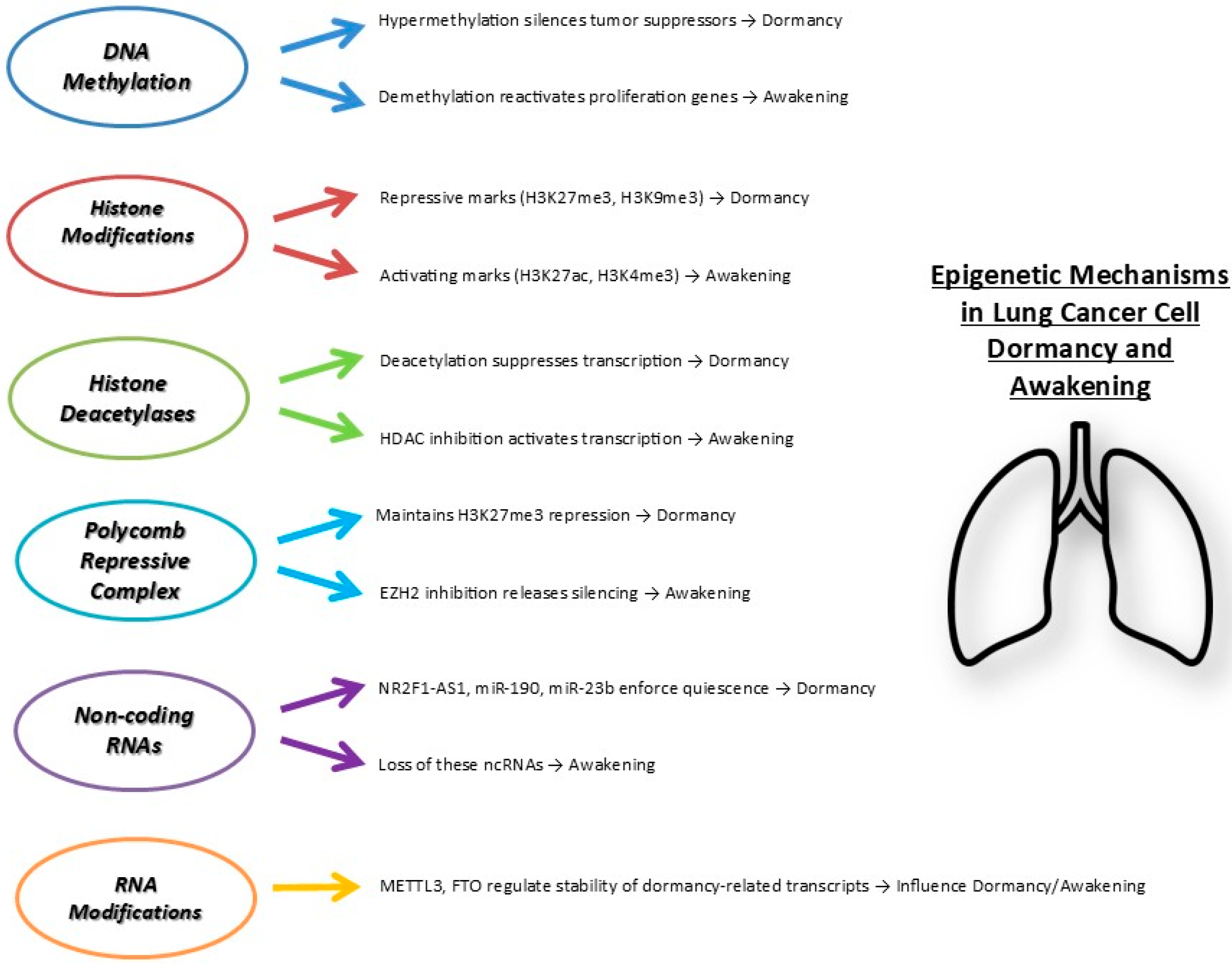
Figure 2 summarizes key epigenetic mechanisms controlling lung cancer dormancy.
Figure 2.
Main epigenetic mechanisms regulating lung cancer cell dormancy and awakening. Multiple layers of epigenetic regulation coordinate the entry into dormancy or reactivation of cancer cells. Repressive marks and factors enforce dormancy, whereas activating marks and loss of inhibitory signals promote cell awakening and proliferation. Abbreviations: H3K27me3, Trimethylation of lysine 27 on histone H3; H3K9me3, Trimethylation of lysine 9 on histone H3; H3K27ac, Acetylation of lysine 27 on histone H3; H3K4me3, Trimethylation of lysine 4 on histone H3. HDACs, Histone Deacetylases; EZH2, Enhancer of Zeste Homolog 2; NR2F1-AS1, Nuclear receptor subfamily 2 group F member 1 antisense RNA 1; miR, microRNA; METTL3, Methyltransferase-like 3; FTO, Fat mass and obesity-associated protein.
2.4. Modulating Microenvironment-Driven Dormancy in Lung Cancer
Among the key regulators of dormancy, interactions with the extracellular matrix (ECM) via integrins such as α5β1 and αvβ3 activate downstream signaling pathways, including Focal Adhesion Kinase (FAK), Proto-Oncogene Tyrosine-Protein Kinase Src (SRC), and Mitogen-Activated Protein Kinase (MAPK), which collectively promote cytoskeletal organization, survival signaling, and cell cycle arrest, thereby contributing to the maintenance of dormancy in dDTCs within lung tissues [78]. Particularly, integrin-mediated mechanotransduction enables lung cancer cells to sense dynamic changes in ECM composition and mechanical stiffness, including elevated fibrillar collagen density and enhanced crosslinking, which modulate additional downstream effectors such as Phosphoinositide 3-Kinase (PI3K)/protein kinase B (PKB or AKT), Wnt/β-catenin, and Yes-Associated Protein (YAP)/Transcriptional Co-Activator with PDZ-Binding Motif (TAZ) pathways [79]. Furthermore, ECM remodeling through fibronectin assembly, collagen fibrillogenesis, and secretion of matrix remodeling enzymes by activated fibroblasts establishes self-reinforcing feedback loops that sustain the biomechanical and biochemical characteristics of dormancy-supportive niches [80]. Cyclical mechanical strain, such as that generated by normal breathing, and tension exerted by contractile myofibroblasts can also trigger the release of matrix-bound factors, including latent TGFβ, which, upon activation, can further reinforce dormancy signaling or, under pathological remodeling, promote proliferative reawakening [81]. Altogether, the integration of ECM-mediated mechanosensing, downstream survival and quiescence pathways, and epigenetic stabilization positions the ECM as a central regulator of lung cancer cell dormancy, maintaining disseminated tumor cells in a protected, non-proliferative state [82].
Moreover, it is fundamental to understand how ECM components and growth factors in the lung tumor microenvironment may cooperate to regulate DTC dormancy through the modulation of epigenetics. In lung cancer models, culture on laminin, or collagen IV-rich matrices, that mimic the basement membrane environment, attenuates ERK and AKT signaling, and consequently represses invasive gene expression as well as urokinase-type plasminogen activator (uPA) and urokinase plasminogen activator receptor (uPAR), [83]. Concurrently, increased fibrillar collagen density and cross-linking shift the integrin–FAK/Src–p38/ERK balance, generating a low-ERK/high-p38 signaling profile that epigenetically reinforces dormancy [84]. TGFβ and BMP signaling, released from the ECM through mechanical tension or proteolytic remodeling, further sustain dormancy via Suppressor of Mothers Against Decapentaplegic (SMAD)-dependent transcriptional repression [85].
Recent evidence indicates that microenvironmental signals act as dynamic modulators of the epigenetic machinery that sustains quiescence and therapeutic resistance in lung cancer [86]. Cytokines secreted by cancer-associated fibroblasts and macrophages, including Interleukin-6 (IL-6) and Transforming Growth Factor Beta (TGF-β), can activate signal transducer and activator of transcription 3 (STAT3) transcriptional programs that recruit histone modifiers such as EZH2 and HDAC1 to dormancy-associated loci, thereby reinforcing chromatin compaction and the suppression of proliferation-related genes [87,88]. Moreover, mechanical and oxidative stresses transmitted via ECM stiffness or reactive oxygen species can induce ncRNA networks, including miR-101 and long non-coding RNA (lncRNA) HOTAIR, that epigenetically repress proliferation pathways while promoting quiescence and immune evasion [89]. Importantly, dormant tumor cells reciprocally modify their own microenvironment through secretion of lysyl oxidase-like protein 2 (LOXL2), Matrix metalloproteinase-9 (MMP9) and CXC Motif Chemokine Ligand 12 (CXCL12) under epigenetic control, enhancing ECM cross-linking and integrin signaling feedback that stabilizes dormancy niches [90]. Together, these findings delineate a bidirectional axis in which TME-derived signals dynamically remodel tumor epigenomes, while dormant cells epigenetically reprogram their surroundings to maintain a self-reinforcing state of quiescence and persistence.
While some studies have suggested that disruption of integrin-mediated adhesions or inhibition of FAK signaling can sensitize dormant cells to cytotoxic agents [91], accumulating evidence indicates that FAK activity is generally required to sustain dormancy rather than to awaken cells. For example, the early study by Julio A. Aguirre-Ghiso [92] demonstrated that suppression of FAK signaling promotes tumor dormancy by limiting ERK activation and favoring p38-mediated growth arrest. More recently, Liu R and colleagues [93] provided further support for this concept, showing that low FAK activity correlates with maintenance of dormancy, whereas high FAK signaling promotes proliferation and escape from dormancy.
Additional recent studies further bolster this model, showing that FAK inhibition or decreased FAK phosphorylation is associated with DTC quiescence or dormancy maintenance, while FAK activation or integrin engagement triggers downstream ERK/MAPK pulses that favor cell-cycle re-entry and metastatic outgrowth [94,95,96,97]. Together, these data suggest a complex dual role of integrin–FAK–MAPK axis in dormancy biology: integrins and FAK provide the adhesive-mechanotransductive signals necessary for dormant cell survival in the foreign microenvironment, but a threshold or shift in FAK/MAPK activity may determine exit from dormancy.
The TME’s role extends to modulating immune surveillance, where dormant lung cancer cells evade immune-mediated clearance by upregulating Immune Checkpoint Inhibitors (ICI) such as PD-L1 and downregulating antigen presentation machinery, creating an immunosuppressive niche [98]. This immune evasion is particularly recurrent in SCLC, where rapid shifts in the immune landscape enable dormant cells to persist under immunotherapeutic pressure [99]. Therapeutic strategies aiming to reverse immune evasion, including checkpoint inhibitors targeting Programmed Cell Death Protein 1 (PD-1)/PD-L1 and Cytotoxic T-Lymphocyte-Associated Protein 4 (CTLA-4) pathways, are currently being investigated to eliminate dormant cell reservoirs and prevent relapse [100,101].
Recently, pan-cancer analyses leveraging The Cancer Genome Atlas (TCGA) revealed that global DNA hypomethylation is associated with immune evasion signatures and can influence the effectiveness of anti-PD-1/PD-L1 immunotherapy in lung cancer, even in tumors with high mutational burden [102,103]. It has been demonstrated that PD-L1 hypermethylation constitutes a key mechanism of resistance to anti–PD-L1 therapy. Specifically, methylation at PD-L1 lysine 162 (K162) acts as a negative predictive biomarker for anti–PD-1 treatment in patients with NSCLC and the PD-L1 K162 methylation: PD-L1 ratio provides an even more accurate predictor of therapeutic response [104]. Functionally, PD-L1 DNA methylation influences its expression; although an inverse correlation between methylation and PD-L1 expression is observed in NSCLC cell lines, this relationship is weaker in primary tumor samples [105]. Mechanistically, TGF-β1 can induce PD-L1 promoter demethylation by reducing DNMT1 levels, leading to increased PD-L1 expression [106]. Regarding HDAC, further investigations confirmed its role in the regulation of PD-L1 transcription in lung cancer. HDAC3 is the principal isoform controlling PD-L1 expression: its inhibition increases IFN-γ production and histone acetylation at the PD-L1 promoter, thereby enhancing PD-L1 transcription in tumor cells and elevating PD-L1 levels in dendritic cells within the tumor microenvironment. Additionally, HDAC3 sustains PD-L1 expression in drug-resistant lung cancer cells by repressing histone H3 acetylation at the PD-L1 promoter [107]. In this context, another HDAC family member, HDAC10, has also been positively associated with PD-L1 expression in lung cancer patients [108].
Hypoxia within the TME is another critical extrinsic factor influencing dormancy in lung cancers. Hypoxia-inducible factors (HIFs) orchestrate metabolic reprogramming and the expression of dormancy-associated genes, promoting survival under nutrient-deprived conditions and reinforcing quiescence [109,110]. Targeting hypoxia signaling pathways, for instance, via HIF-1α inhibitors or disruption of angiogenic factors like VEGF, has shown promise in reactivating dormant cells to enhance the efficacy of chemotherapies [111].
Moreover, soluble cytokines and growth factors such as TGF-β, Bone Morphogenetic Proteins (BMPs), and Wingless/Integration-1 signaling pathway ligands (Wnt) derived from stromal fibroblasts and immune cells modulate dormancy through complex paracrine signaling cascades [112]. TGF-β signaling has a dual role, initially suppressing tumor proliferation and later facilitating escape and metastasis, highlighting the therapeutic potential of context-dependent modulation of this pathway [113]. Similarly, Wnt/β-catenin signaling contributes to dormancy regulation by maintaining stemness and promoting resistance phenotypes in NSCLC models [114].
In addition to this, a recent study by Cuccu A and colleagues analyzed the transcriptional profiles of quiescent cancer cells derived from xenograft models of NSCLC and other solid cancers, revealing a shared core quiescence-associated program. This conserved signature was characterized by the upregulation of genes linked to stemness, metastatic potential, chemoresistance, and EMT-like traits, including key regulators such as Krüppel-like factor 4 (KLF4) and zinc finger E-box binding homeobox 2 (ZEB2), [115]. Therapeutic targeting of these extrinsic mechanisms requires a nuanced approach given their dynamic and context-dependent nature [116].
Although immune effector cells such as CD8+ T lymphocytes can recognize neoantigens expressed by tumor cells and maintain them in a dormant state [117], epigenetic reprogramming in lung cancer cells can profoundly reshape this immune control. CD8+ T cells exert antiproliferative effects not only through cytotoxic activity but also via the secretion of cytokines such as IFN-γ, TNF-α, and lymphotoxin. Among these, IFN-γ acts as a key mediator of dormancy by activating STAT1-dependent transcription of cell cycle inhibitors p21WAF1/CIP1 and p27Kip1 [118] and by indirectly suppressing angiogenesis and enhancing antitumor immunity [119]. Th1 cells contribute similarly by producing cytokines that limit tumor proliferation [120]. Moreover, both CD4+ and CD8+ T cells have been shown to restrain late metastatic outgrowth in murine models of chemical carcinogenesis, indicating that adaptive immune surveillance is crucial in sustaining dormancy [121].
Recent studies highlight that epigenetic modifications, particularly DNA methylation and histone marks, intersect with the TME to regulate dormancy and immune evasion in lung cancer [122]. In NSCLC, Ke X and colleagues demonstrated that tumor cells might induce demethylation of the forkhead box P3 (FOXP3) promoter in CD4+ T cells, leading to an increased number and activity of Treg cells. These Tregs secrete immunosuppressive cytokines, including Interleukin-10 (IL-10) and TGF-β1, which dampen the proliferation and activity of effector T cells. This epigenetically driven immunosuppressive microenvironment reduces immune surveillance, creating conditions that allow dDTCs to survive, evade clearance, and potentially drive late relapse or metastatic progression [123].
In addition, Li and colleagues showed that epigenetic modifications influence angiogenesis and TME regulation, with DNA methylation patterns correlating with differential patient outcomes following chemotherapy combined with bevacizumab [124]. It has recently been reported that, under hypoxic conditions, HIF-1α regulates DNA methylation enzymes—ten-eleven translocase-2 (TET2) and DNMT3a—to control S100 calcium-binding protein A6 (S100A6) transcription in lung cancer cells.
Hypoxia-induced CpG hypomethylation at the S100A6 promoter enhances its expression, promoting proliferation, migration, and metastasis. HIF-1α-dependent activation of S100A6 involves TET2 enrichment and reduced DNMT3a binding, linking epigenetic remodeling to tumor progression. Functionally, this pathway may influence tumor dormancy and TME by creating hypoxia-driven niches that support the survival of DTCs and facilitate immune evasion [125].
In parallel, histone modifications critically influence immune evasion programs. Histone demethylase jumonji domain containing protein 2C (JMJD2C), which interacts with HIF-1α, removes repressive H3K9me3 marks, thereby activating the transcription of target genes, which not only promote metastatic lung cancer but may also facilitate the exit of dormant disseminated tumor cells from quiescence, linking hypoxia-driven epigenetic remodeling to both metastasis and dormancy reactivation [126].
Emerging strategies integrate inhibition of ECM–receptor interactions, ICI blockade, and modulation of hypoxia and paracrine signaling, often in combinatorial regimens, to disrupt the supportive microenvironment and eradicate dormant lung cancer cells [127,128].
Such multi-modal interventions hold promise to prevent tumor relapses and improve long-term outcomes in lung cancer patients.
3. Therapeutic Advances in Overcoming Lung Cancer Cell Dormancy

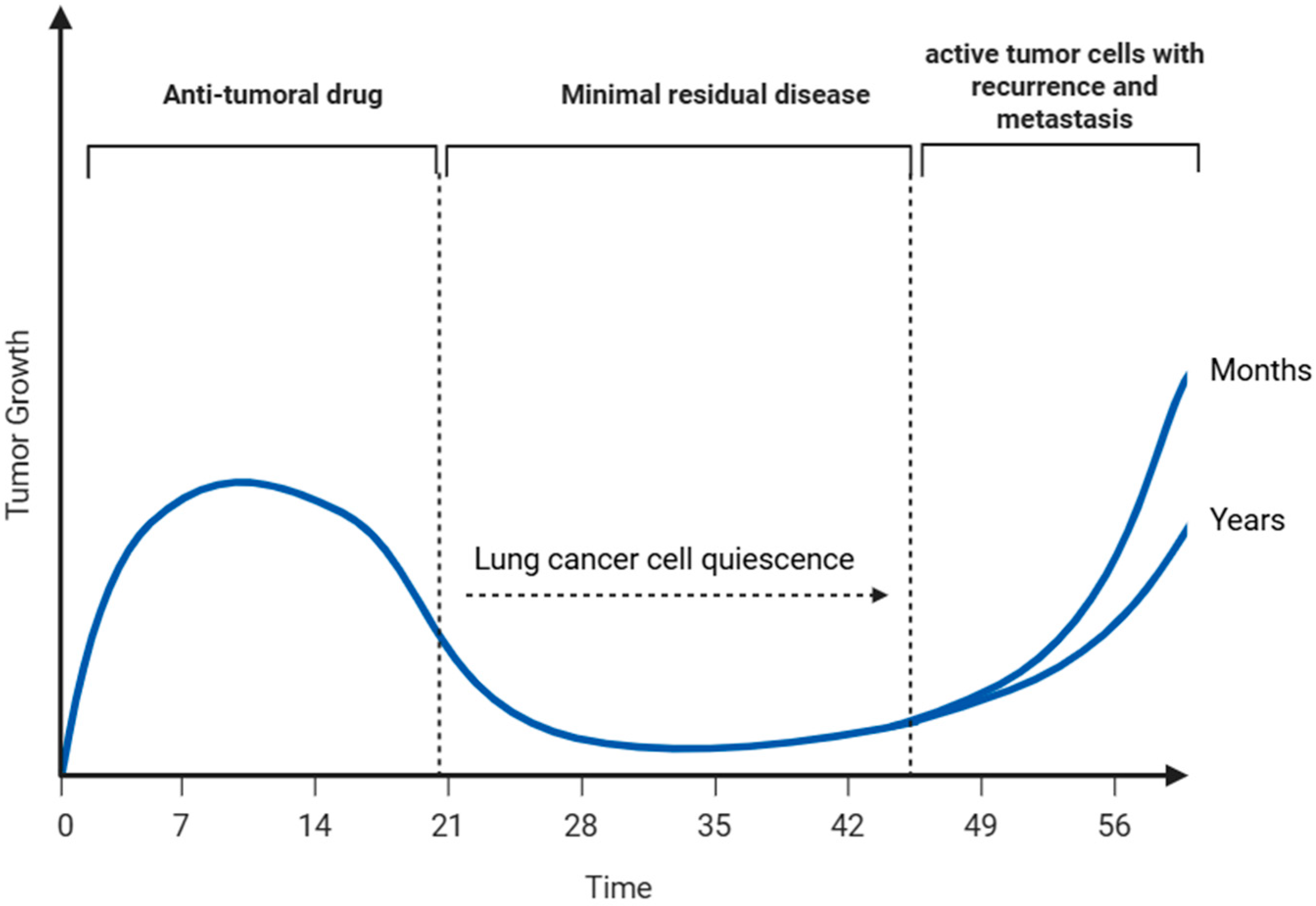
Although lung cancer treatments have advanced considerably, achieving sustained disease control continues to be a challenge for many patients. The failure to eliminate residual dormant tumor cells after treatment remains a key factor underlying recurrence and metastatic spread in lung cancer patients [129,130]. As illustrated in Figure 3, although most proliferative lung cancer cells are effectively eliminated by conventional treatments, a subpopulation of quiescent lung cancer cells (QLCCs) evade eradication by entering a reversible G0 phase, maintaining viability either at the primary tumor site or at distant metastatic niches. This dormant state, regulated by complex microenvironmental and systemic cues, allows these cells to persist undetected for extended periods before re-entering the cell cycle to drive tumor relapse and metastatic outgrowth [131].
Figure 3.
Quiescent lung cancer cells (QLCCs) as a reservoir for tumor recurrence and metastasis. These QLCCs may persist at the primary tumor site or disseminate through the vasculature to distant tissues. Over time, and under specific microenvironmental or systemic cues, QLCCs can re-enter the cell cycle in an active state, driving tumor relapse and metastatic outgrowth after prolonged periods of clinical dormancy lasting months or even years (Created with BioRender.com, Licensing and Agreement number VG28FKCXGG, accessed on 25 June 2025).
Addressing this challenge requires therapeutic strategies that either maintain dormancy (“sleeping strategy”), forcibly reactivate dormant cells (“awakening strategy”), or selectively eliminate them (“killing strategy”), (Table 1). Current therapeutic advances have largely focused on targeting extrinsic signaling pathways that govern tumor dormancy [132,133,134]. For example, inhibition of integrin-mediated adhesion signaling has demonstrated efficacy in reducing dormant cell survival and preventing reactivation, and several of these approaches have advanced into clinical trials in NSCLC patients, often in combination with standard chemotherapy or radio-chemotherapy regimens [135].
Within the “sleeping strategy,” induction of the nuclear receptor NR2F1 through epigenetic modulators such as 5-aza-2′-deoxycytidine (5-Aza-C), alone or in combination with all-trans retinoic acid (ATRA), represents a prototypical example of reinforcing dormancy to prevent metastatic relapse [47]. However, given the dual epigenetic and cytotoxic effects of 5-Aza-C, its classification as purely a “sleeping” agent is sometimes ambiguous. A more selective alternative is the NR2F1 agonist C26, which has been validated in preclinical models as a non-cytotoxic inducer of dormancy. C26 promotes a NR2F1hi/p27hi/Ki-67lo phenotype, enforces growth arrest, and suppresses metastatic outgrowth without inducing apoptosis, providing a clear mechanistic example of a “sleeping strategy” that specifically targets dormancy-associated transcriptional programs [136].
Additional approaches include pharmacologic modulation of the TGF-β pathway, which reinforces quiescence [113], and inhibition of the Wnt/β-catenin pathway, which helps stabilize dormancy states [114]. Beyond NR2F1 induction, a broader range of epigenetic interventions is emerging as highly relevant. Inhibitors of histone methyltransferases and demethylases such as EZH2, KDM5A, and LSD1 have shown the ability to reprogram drug-tolerant states or impair survival of dormant cancer cells, with several agents (e.g., tazemetostat, CPI-455, ORY-1001, GSK2879552) already in preclinical development or early-phase clinical evaluation [137,138,139]. These epigenetic modulators exemplify a mechanistically coherent “sleeping” strategy by reinforcing a transcriptionally repressive state that restricts tumor regrowth, while also providing opportunities for combination therapies.
Conversely, “awakening strategies” seek to sensitize dormant cells to cytotoxic agents by forcing them into active proliferation. For example, Cho and collaborators demonstrated that phosphodiesterase 5 (PDE5) inhibitors, when combined with chemotherapy, can trigger re-entry into the cell cycle and thereby increase susceptibility to conventional treatments [140]. Importantly, epigenetic reprogramming may also serve as an awakening strategy: preclinical evidence indicates that combined inhibition of EZH2 and HDACs can overcome epigenetically mediated drug tolerance, restoring sensitivity to standard therapies [141]. Other awakening strategies include targeting hypoxia pathways with HIF-1α inhibitors to disrupt survival niches [142] and modulating angiogenesis through VEGF inhibition to reactivate quiescent cells [143].
Finally, “killing strategies” aim to directly eradicate dormant cancer cells through the simultaneous inhibition of survival pathways and chemotherapy. Combination regimens involving cytotoxic agents with inhibitors of Src kinase or cyclooxygenase-2 (COX-2) have shown promise in selectively targeting dormant subpopulations [144]. In addition, epigenetic targeting of LSD1 has been reported to impair the persistence of drug-tolerant persister cells, supporting its integration into “killing” approaches [139]. Immunotherapeutic interventions also hold potential: immune checkpoint inhibitors targeting PD-1/PD-L1 or CTLA-4 can promote immune clearance of dormant tumor cells [145], while Chimeric Antigen Receptor (CAR) T cell or Natural Killer (NK)-based therapies directed against dormancy-associated antigens represent emerging strategies for selective eradication [146].
Together, these examples highlight that while modulation of extrinsic pathways remains crucial, incorporating epigenetic modulators into the conceptual framework of “sleeping,” “awakening,” and “killing” strategies provides a more mechanistically consistent and translationally relevant roadmap for therapeutic interventions against lung cancer dormancy.
Table 1.
Therapeutic strategies for dormant cancer cells: from maintaining dormancy (“Sleeping”), to reactivating cells to enhance treatment sensitivity (“Awakening”) and eliminating cells via combined therapies (“Killing”).
Table 1.
Therapeutic strategies for dormant cancer cells: from maintaining dormancy (“Sleeping”), to reactivating cells to enhance treatment sensitivity (“Awakening”) and eliminating cells via combined therapies (“Killing”).
| Approach | Treatment Modality | Refs. |
|---|---|---|
| Sleeping strategy | Inhibition of integrin-mediated signaling pathways (e.g., α5β1, αvβ3 integrins; FAK/SRC inhibitors) | [133,134] |
| Induction of NR2F1 by 5-azacytidine (5-Aza-C) alone or in combination with all-trans-retinoic acid (ATRA) | [47] | |
| Epigenetic modulation: inhibitors targeting histone methyltransferases/demethylases such as EZH2, KDM5A, LSD1 | [137,138,139] | |
| NR2F1 agonist C26, a selective non-cytotoxic dormancy inducer | [136] | |
| TGF-β pathway modulators to reinforce quiescence | [147] | |
| Wnt/β-catenin pathway inhibitors to stabilize dormancy | [148] | |
| Awakening strategy | PDE5 inhibitors in combination with chemotherapy to sensitize dormant cells | [140] |
| Combined EZH2 and HDAC inhibition to epigenetically reprogram dormant cells | [141] | |
| Targeting hypoxia pathways (HIF-1α inhibitors) to disrupt survival niches | [142] | |
| Modulation of angiogenesis (VEGF inhibitors) to reactivate quiescent cells | [143] | |
| Killing strategy | Chemotherapy combined with Src or COX-2 inhibitors to eliminate dormant cells | [144] |
| LSD1 inhibition to eradicate drug-tolerant persister cells | [139] | |
| Immune checkpoint inhibitors (PD-1/PD-L1, CTLA-4) to promote clearance of dormant cells | [145] | |
| CAR-T or NK cell–based therapies targeting dormancy-associated antigens | [146] |
Abbreviations: 5-Aza-C, 5-Azacytidine; ATRA, All-Trans-Retinoic Acid; NR2F1, Nuclear Receptor Subfamily 2, Group F, Member 1; EZH2, Enhancer of Zeste Homolog 2; KDM5A, Lysine Demethylase 5A; LSD1, Lysine-Specific Demethylase 1; FAK, Focal Adhesion Kinase; SRC, Proto-Oncogene Tyrosine-Protein Kinase Src; TGF-β, Transforming Growth Factor Beta; Wnt, Wingless/Integration-1 signaling pathway; PDE5, Phosphodiesterase Type 5; HDAC, Histone Deacetylase; HIF-1α, Hypoxia-Inducible Factor 1 Alpha; VEGF, Vascular Endothelial Growth Factor; PD-1, Programmed Cell Death Protein 1; PD-L1, Programmed Death-Ligand 1; CTLA-4, Cytotoxic T-Lymphocyte-Associated Protein 4; CAR-T, Chimeric Antigen Receptor T-cell; NK, Natural Killer.
Several molecular targets have emerged as critical nodes in dormancy regulation, many of which are under clinical evaluation (Table 2), [149]. Firstly, agents such as volociximab, a monoclonal antibody targeting integrin α5β1, and cilengitide, a cyclic peptide targeting integrin αvβ3, have shown potential in disrupting integrin-mediated signaling pathways that support dormant cancer cell survival [150,151].
Table 2.
Key molecular targets and corresponding therapeutic agents are currently under preclinical and clinical investigations for reactivating dormant lung cancer cells.
Consequently, the use of FAK inhibitors such as GSK2256098 and defactinib (VS-6063) in clinical trials—either as monotherapy or in combination with immunotherapies—likely functions by disrupting tumor–microenvironment interactions that are critical for survival but do not inherently “awaken” dormant cells. Therefore, FAK blockade should be considered in the context of combination strategies where dormant cell sensitization is required, rather than as a direct inducer of cell cycle re-entry. This clarification aligns preclinical and clinical observations and highlights that the effect of FAK inhibition on dormancy is context-dependent, depending on the microenvironmental cues and co-administered therapies [152,153,154].
Similarly, targeting inflammatory and signaling mediators such as Janus kinases (JAK1/2) with ruxolitinib or pacritinib in EGFR-mutant NSCLC [155,156] and STAT3 with OPB-51602, offers promising avenues to overcome therapy resistance associated with dormant cells [157]. Edelman MJ and coworkers reported that COX inhibitors, such as celecoxib, have reached phase III trials [158], aiming to impair inflammatory pathways that support tumor cell survival during dormancy.
Beyond these approaches, epigenetic regulators have also emerged as therapeutic targets in dormancy modulation. Inhibitors of histone-modifying enzymes (EZH2, KDM5A and LSD1), are under evaluation at different stages of development. For example, the EZH2 inhibitor tazemetostat is currently in phase II trials (NCT05023655) as monotherapy or in combination with immune checkpoint blockade in solid cancers, including lung cancer [159]. KDM5A inhibition with CPI-455 has shown preclinical efficacy in reversing epigenetic reprogramming in NSCLC drug-tolerant cells [138]. Similarly, LSD1 inhibitors such as ORY-1001 (preclinical), tested alone or in combination with γ-secretase inhibitors (DBZ and RO4929097) in SCLC patient-derived xenograft models, and GSK2879552 (phase I, NCT02034123) in relapsed/refractory SCLC, highlight the potential of targeting chromatin modifiers to impair dormancy-associated survival programs [160,161]. Moreover, combined blockade of HDAC and EZH2 are being explored to achieve stronger epigenetic reprogramming in NSCLC cells [141], (Table 2).
Collectively, these therapeutic interventions reflect a multipronged approach targeting the unique biology of dormant lung cancer cells. By integrating strategies to maintain, awaken, or eradicate dormant populations, ongoing clinical efforts hold promise for reducing late relapse and improving long-term outcomes in lung cancer patients.
To provide a concise overview of the current therapeutic landscape for targeting tumor dormancy, Table 3 summarizes the main strategies, their underlying mechanisms, and the respective advantages and limitations. These approaches range from epigenetic modulators that reactivate or silence dormancy-related genes to autophagy inhibitors that impair survival pathways, immune checkpoint inhibitors that restore anti-tumor immunity, and anti-angiogenic therapies that maintain vascular dormancy. By outlining both the potential benefits and inherent challenges of each approach, this table provides a framework to guide future research and clinical translation in the management of dormant tumor cells.
Table 3.
Advantages and Limitations of Current Therapeutic Strategies Targeting Tumor Dormancy.
Epigenetic Modifiers as Emerging Tools in the Management of Lung Cancer Cell Dormancy
Pharmacologic epigenetic reprogramming offers two mechanistically distinct approaches to eradicate or control disseminated dormant NSCLC cells: (a) epigenetic priming/wake-and-kill, where low-dose DNMTis and/or HDACis reverse promoter hypermethylation and repressive chromatin to re-express tumor-suppressor, antigen-presentation and interferon-stimulated genes, thereby converting “immune-cold” dormant cells into more immunogenic and chemosensitive targets [168], and (b) epigenetic enforcement of dormancy, where activation of transcriptional repressors such as NR2F1 establishes a durable quiescence program that blocks metastatic outgrowth but may require long-term maintenance [136].
Preclinical and translational studies have shown that sequential low-dose azacitidine or decitabine can induce viral-mimicry via dsRNA/IFN signaling and upregulation of Major Histocompatibility Complex (MHC), thereby reducing immune evasion and sensitizing NSCLC to chemotherapy or immunotherapy [169]. Targeting histone modifiers offers complementary benefits: inhibition of EZH2, the catalytic subunit of PRC2, reverses H3K27me3-mediated repression of differentiation and anti-proliferative programs, reduces metastatic colonization capacity, and can synergize with immune activation by derepressing interferon-responsive loci [170].
HDAC inhibitors such as entinostat and vorinostat reconfigure acetylation landscapes to reactivate cell-cycle and apoptotic networks suppressed in dormant cells, and potentiate DNMTi or cytotoxic effects in NSCLC models as well as in early clinical trials [171]. Nevertheless, their single-agent activity in solid tumors remains limited and requires rational scheduling to avoid paradoxical induction of cellular plasticity. A complementary RNA-centered axis further underscores the dual paradigm of “enforce-dormancy” versus “wake-and-kill”: NR2F1 and its regulatory long non-coding RNA NR2F1-AS1 mediate a broad repressive chromatin program; pharmacologic NR2F1 agonists or lncRNA perturbation can either maintain dormancy (preventing overt metastasis) or generate vulnerabilities when combined with cytotoxic or immune strategies [10,136].
Finally, contemporary translational work supports rational combinations (DNMTi ± HDACi ± EZH2i → immunotherapy or cytotoxin) for minimal-residual NSCLC, but mandates: (a) dormancy-specific biomarkers as well as circulating DTC, (b) patient selection based on tumor epigenomic/immunologic status, and (c) tightly controlled dosing/sequencing to limit off-target gene reactivation (including potential oncogene derepression) and to maximize induction of viral-mimicry/antigenicity rather than adverse plasticity. Early-phase trials and correlative studies cited above provide the mechanistic and clinical rationale, but larger, biomarker-guided studies are required to define safety, optimal sequence and efficacy specifically for targeting dormant NSCLC cells [172].
4. Clinical Recognition of Tumor Dormancy in Lung Cancer
Tumor dormancy in lung cancer is a clinically significant phenomenon characterized by a prolonged period of disease-free survival (DFS) following initial treatment, during which DTCs remain viable but quiescent. These dormant cells can evade detection through conventional imaging and may later reawaken, leading to late recurrence [173].
Understanding the clinical manifestations and challenges associated with tumor dormancy is crucial for improving patient outcomes. Patients with lung cancer may experience extended periods of remission, only to present with recurrent disease years after initial treatment. This late recurrence often occurs in the form of isolated metastases, commonly in the brain, bone, or adrenal glands [174]. The detection of dormant tumor cells poses significant challenges due to their quiescent nature and the limitations of current imaging modalities. Standard imaging techniques, such as computed tomography (CT) and positron emission tomography (PET), may not identify dormant cells, leading to false-negative results [175].
Moreover, the absence of symptoms during the dormant phase further complicates early detection. Advances in liquid biopsy techniques, including the detection of circulating tumor cells (CTCs) and tumor-derived extracellular vesicles (EVs), offer promising avenues for monitoring MRD and identifying dormant cells. These methods have the potential to provide real-time insights into the presence of dormant tumor cells and their reactivation [176,177]. Retrospective studies have documented instances of late recurrence in lung cancer patients, emphasizing the clinical significance of tumor dormancy. For example, a study analyzing recurrence patterns in NSCLC patients found that a subset of patients experienced recurrence more than five years after initial treatment. These findings suggest that dormant tumor cells can persist for extended periods before reactivating and causing relapse [178].
Importantly, certain subsets of drug-tolerant cancer cells, often referred to as persister cells, enter a quiescent state that allows them to evade cytotoxic effects of chemotherapy and act as a reservoir for therapy-resistant clones, particularly under targeted treatments [179]. These cells frequently share characteristics with cancer stem cells, including self-renewal capacity, cellular plasticity, tumor-initiating potential, and prolonged dormancy, highlighting the critical need to understand how chemotherapy influences stemness and dormancy programs [180]. Chemotherapy paradoxically reinforces dormancy by selectively eliminating proliferating cells while sparing quiescent DTCs that retain pre-established epigenetic states. These states include DNA hypermethylation at promoters of proliferation-associated genes and histone deacetylation via HDACs, collectively maintaining G0/G1 arrest [181]. This is in line with recent studies that suggested how epigenetic mechanisms, including aberrant DNA methylation, play a key role in maintaining disseminated tumor cells in a prolonged dormant state while preserving their capacity for future proliferation [182]. Exposure to chemotherapeutic stress, such as DNA damage and oxidative stress, further engages stress–response pathways, as previously reported (i.e., p38, MAPK), which recruit chromatin-modifying enzymes (DNA methyltransferases, histone methyltransferases, HDACs, and demethylases) to dormancy-related loci. This leads to reinforced expression of cell cycle inhibitors such as CDKN1A/p21 and CDKN2A/p16, sustained suppression of proliferation and apoptosis, and stabilization of the dormant phenotype [183,184]. Through these epigenetic mechanisms, chemotherapy unintentionally consolidates quiescence, creating a population of DTCs that is resistant to treatment and primed for eventual metastatic relapse, although the underlying mechanisms remain to be fully elucidated [185].
Under chemotherapeutic stress, Wang L and colleagues demonstrated that cisplatin profoundly alters the splicing landscape of NSCLC cells. Integration of PacBio long-read isoform sequencing with short-read next-generation sequencing enabled the identification of aberrant splicing events and transcriptome-wide isoform shifts. When compared with noncancerous counterparts as well as dormant and reactivated cell states, cisplatin exposure was associated with a marked contraction of isoform diversity, largely attributable to disrupted exon inclusion/exclusion dynamics [186].
Moreover, Carlson P and team provided critical insights into the mechanisms of chemoresistance in DTCs. In fact, the researchers demonstrated that resistance was not attributable to cell cycle arrest but was instead driven by integrin-mediated interactions with the ECM. Dormant DTCs displayed elevated integrin expression, which functionally shielded them from chemotherapy-induced cytotoxicity by enhancing adhesion-dependent survival signaling. Importantly, pharmacologic inhibition of integrins abrogated this protective effect, thereby restoring sensitivity of dormant cells to chemotherapeutic agents [187]. Understanding the patterns of late recurrence, the challenges in detecting dormant cells, and the insights gained from case studies and retrospective analyses can inform strategies for monitoring and treating patients at risk of relapse [188,189].
Incorporating these considerations into clinical practice may enhance the ability to identify and manage dormant tumor cells, ultimately leading to more effective interventions and improved survival rates.
5. Conclusions
Dormancy in lung cancer represents a major clinical challenge, contributing to therapeutic resistance, relapse, and metastatic outgrowth. The reversible quiescent state allows cancer cells to evade immune surveillance and cytotoxic therapies [3].
This review highlights the following key points: (1) dormancy is maintained by a dynamic interplay between intrinsic (e.g., genetic mutations, epigenetic reprogramming) and extrinsic (e.g., microenvironmental stress, immune modulation) factors [52]; (2) epigenetic mechanisms, including DNA methylation, histone modifications, and ncRNAs, play pivotal roles in repressing proliferation and apoptosis pathways, thus preserving viability during dormancy [51,190]; (3) dormant cancer cells exhibit high plasticity, enabling transitions between dormancy and reactivation in response to environmental cues, and contributing to MRD and recurrence [191]; (4) despite growing knowledge, the molecular underpinnings of dormancy induction, maintenance, and reawakening remain incompletely understood, particularly in lung cancer [1]; (5) targeting the epigenetic landscape of dormant cells offers promising therapeutic avenues to eliminate residual disease and prevent relapse, especially when combined with existing or novel agents [192]; (6) comprehensive multi-omics and functional analyses are essential to identify dormancy-specific epigenomic patterns and to establish robust biomarkers for predicting disease progression [193].
Overall, elucidating the epigenetic mechanisms underlying cellular dormancy offers a pivotal foundation for the development of precision therapies designed to eliminate dormant cancer cells, improve durable therapeutic responses, and ultimately transform long-term clinical management and outcomes in lung cancer care.
Funding
This research received no external funding.
Institutional Review Board Statement
Not applicable.
Informed Consent Statement
Not applicable.
Data Availability Statement
No new data were created or analyzed in this study. Data sharing is not applicable to this article.
Acknowledgments
I thank Francesco Pio Guerra for his support in figure editing.
Conflicts of Interest
The author declares no conflicts of interest.
References
- Min, H.Y.; Lee, H.Y. Cellular dormancy in cancer: Mechanisms and potential targeting strategies. Cancer Res. Treat. 2023, 55, 720–736. [Google Scholar] [CrossRef] [PubMed]
- Gomatou, G.; Syrigos, N.; Vathiotis, I.A.; Kotteas, E.A. Tumor dormancy: Implications for invasion and metastasis. Int. J. Mol. Sci. 2021, 22, 4862. [Google Scholar] [CrossRef]
- Francescangeli, F.; De Angelis, M.L.; Rossi, R.; Cuccu, A.; Giuliani, A.; De Maria, R.; Zeuner, A. Dormancy, stemness, and therapy resistance: Interconnected players in cancer evolution. Cancer Metastasis Rev. 2023, 42, 197–215. [Google Scholar] [CrossRef]
- White, E.; Lattime, E.C.; Guo, J.Y. Autophagy regulates stress responses, metabolism, and anticancer immunity. Trends Cancer 2021, 7, 778–789. [Google Scholar] [CrossRef]
- Jalali, P.; Shahmoradi, A.; Samii, A.; Mazloomnejad, R.; Hatamnejad, M.R.; Saeed, A.; Namdar, A.; Salehi, Z. The role of autophagy in cancer: From molecular mechanism to therapeutic window. Front. Immunol. 2025, 16, 1528230. [Google Scholar] [CrossRef] [PubMed]
- Sistigu, A.; Musella, M.; Galassi, C.; Vitale, I.; De Maria, R. Tuning cancer fate: Tumor microenvironment’s role in cancer stem cell quiescence and reawakening. Front. Immunol. 2020, 11, 2166. [Google Scholar] [CrossRef] [PubMed]
- Xu, Y.; He, Z.; Du, J.; Chen, Z.; Creemers, J.W.M.; Wang, B.; Li, F.; Wang, Y. Epigenetic modulations of immune cells: From normal development to tumor progression. Int. J. Biol. Sci. 2023, 19, 5120–5144. [Google Scholar] [CrossRef]
- Santos-de-Frutos, K.; Djouder, N. When dormancy fuels tumour relapse. Commun. Biol. 2021, 4, 747. [Google Scholar] [CrossRef]
- Basu, S.; Dong, Y.; Kumar, R.; Jeter, C.; Tang, D.G. Slow-cycling (dormant) cancer cells in therapy resistance, cancer relapse and metastasis. Semin. Cancer Biol. 2022, 78, 90–103. [Google Scholar] [CrossRef]
- Yang, S.; Seo, J.; Choi, J.; Kim, S.H.; Kuk, Y.; Park, K.C.; Kang, M.; Byun, S.; Joo, J.Y. Towards understanding cancer dormancy over strategic hitching up mechanisms to technologies. Mol. Cancer 2025, 24, 47. [Google Scholar] [CrossRef]
- Liu, B.; Peng, Z.; Zhang, H.; Zhang, N.; Liu, Z.; Xia, Z.; Huang, S.; Luo, P.; Cheng, Q. Regulation of cellular senescence in tumor progression and therapeutic targeting: Mechanisms and pathways. Mol. Cancer 2025, 24, 106. [Google Scholar] [CrossRef]
- Grant, G.; Ferrer, C.M. The role of the immune tumor microenvironment in shaping metastatic dissemination, dormancy, and outgrowth. Trends Cell Biol. 2025. [Google Scholar] [CrossRef] [PubMed]
- Dong, Z.; Luo, Y.; Yuan, Z.; Tian, Y.; Jin, T.; Xu, F. Cellular senescence and SASP in tumor progression and therapeutic opportunities. Mol. Cancer 2024, 23, 181. [Google Scholar] [CrossRef] [PubMed]
- Easwaran, S.; Montell, D.J. The molecular mechanisms of diapause and diapause-like reversible arrest. Biochem. Soc. Trans. 2023, 51, 1847–1856. [Google Scholar] [CrossRef]
- Xu, X.; Peng, Q.; Jiang, X.; Tan, S.; Yang, Y.; Yang, W.; Han, Y.; Chen, Y.; Oyang, L.; Lin, J.; et al. Metabolic reprogramming and epigenetic modifications in cancer: From the impacts and mechanisms to the treatment potential. Exp. Mol. Med. 2023, 55, 1357–1370. [Google Scholar] [CrossRef]
- Aleksandrova, K.V.; Vorobev, M.L.; Suvorova, I.I. mTOR pathway occupies a central role in the emergence of latent cancer cells. Cell Death Dis. 2024, 15, 176. [Google Scholar] [CrossRef] [PubMed]
- Yeh, A.C.; Ramaswamy, S. Mechanisms of cancer cell dormancy—Another hallmark of cancer? Cancer Res. 2015, 75, 5014–5022. [Google Scholar] [CrossRef] [PubMed]
- Weston, W.A.; Barr, A.R. A cell-cycle centric view of tumour dormancy. Br. J. Cancer 2023, 129, 1535–1545. [Google Scholar] [CrossRef]
- Hasan, A.; Rizvi, S.F.; Parveen, S.; Pathak, N.; Nazir, A.; Mir, S.S. Crosstalk between ROS and autophagy in tumorigenesis: Understanding the multifaceted paradox. Front. Oncol. 2022, 12, 852424. [Google Scholar] [CrossRef]
- Akkoc, Y.; Peker, N.; Akcay, A.; Gozuacik, D. Autophagy and cancer dormancy. Front. Oncol. 2021, 11, 627023. [Google Scholar] [CrossRef]
- Vera-Ramirez, L. Cell-intrinsic survival signals: The role of autophagy in metastatic dissemination and tumor cell dormancy. Semin. Cancer Biol. 2020, 60, 28–40. [Google Scholar] [CrossRef]
- Quail, D.F.; Joyce, J.A. Microenvironmental regulation of tumor progression and metastasis. Nat. Med. 2013, 11, 1423–1437. [Google Scholar] [CrossRef]
- Park, S.Y.; Nam, J.S. The force awakens: Metastatic dormant cancer cells. Exp. Mol. Med. 2020, 52, 569–581. [Google Scholar] [CrossRef]
- Liu, R.; Zhao, Y.; Su, S.; Kwabil, A.; Njoku, P.C.; Yu, H.; Li, X. Unveiling cancer dormancy: Intrinsic mechanisms and extrinsic forces. Cancer Lett. 2024, 591, 216899. [Google Scholar] [CrossRef]
- Lim, S.M.; Mohamad Hanif, E.A.; Chin, S.F. Is targeting autophagy mechanism in cancer a good approach? The possible double-edge sword effect. Cell Biosci. 2021, 11, 56. [Google Scholar] [CrossRef]
- Wang, Y.; Liu, L.; Zhang, X.; Liang, T.; Bai, X. Cancer dormancy and metabolism: From molecular insights to translational opportunities. Cancer Lett. 2025, 635, 218097. [Google Scholar] [CrossRef] [PubMed]
- Ge, T.; Gu, X.; Jia, R.; Ge, S.; Chai, P.; Zhuang, A.; Fan, X. Crosstalk between metabolic reprogramming and epigenetics in cancer: Updates on mechanisms and therapeutic opportunities. Cancer Commun. 2022, 42, 1049–1082. [Google Scholar] [CrossRef] [PubMed]
- Sun, L.; Zhang, H.; Gao, P. Metabolic reprogramming and epigenetic modifications on the path to cancer. Protein Cell 2022, 13, 877–919. [Google Scholar] [CrossRef]
- Thakur, C.; Chen, F. Connections between metabolism and epigenetics in cancers. Semin. Cancer Biol. 2019, 57, 52–58. [Google Scholar] [CrossRef] [PubMed]
- Yao, W.; Hu, X.; Wang, X. Crossing epigenetic frontiers: The intersection of novel histone modifications and diseases. Signal Transduct. Target. Ther. 2024, 9, 232. [Google Scholar] [CrossRef]
- Pranzini, E.; Raugei, G.; Taddei, M.L. Metabolic features of tumor dormancy: Possible therapeutic strategies. Cancers 2022, 14, 547. [Google Scholar] [CrossRef]
- Hoang, P.H.; Landi, M.T. DNA Methylation in Lung Cancer: Mechanisms and Associations with Histological Subtypes, Molecular Alterations, and Major Epidemiological Factors. Cancers 2022, 15, 961. [Google Scholar] [CrossRef]
- Sarne, V.; Huter, S.; Braunmueller, S.; Rakob, L.; Jacobi, N.; Kitzwögerer, M.; Wiesner, C.; Obrist, P.; Seeboeck, R. Promoter Methylation of Selected Genes in Non-Small-Cell Lung Cancer Patients and Cell Lines. Int. J. Mol. Sci. 2020, 21, 4595. [Google Scholar] [CrossRef]
- Ramazi, S.; Dadzadi, M.; Sahafnejad, Z.; Allahverdi, A. Epigenetic regulation in lung cancer. MedComm 2023, 4, e401. [Google Scholar] [CrossRef]
- Zhang, J.; Yang, C.; Wu, C.; Cui, W.; Wang, L. DNA Methyltransferases in Cancer: Biology, Paradox, Aberrations, and Targeted Therapy. Cancers 2020, 12, 2123. [Google Scholar] [CrossRef]
- Do, H.; Wong, N.C.; Murone, C.; John, T.; Solomon, B.; Mitchell, P.L.; Dobrovic, A. A critical re-assessment of DNA repair gene promoter methylation in non-small cell lung carcinoma. Sci. Rep. 2014, 4, 4186. [Google Scholar] [CrossRef]
- Xu, Y.; Gao, P.; Lv, X.; Zhang, L.; Zhang, J. The role of the ataxia telangiectasia mutated gene in lung cancer: Recent advances in research. Ther. Adv. Respir. Dis. 2017, 11, 375–380. [Google Scholar] [CrossRef] [PubMed]
- Kontic, M.; Markovic, F. Use of DNA methylation patterns for early detection and management of lung cancer: Are we there yet? Oncol. Res. 2025, 33, 781–793. [Google Scholar] [PubMed]
- Knudsen, E.S.; Pruitt, S.C.; Hershberger, P.A.; Witkiewicz, A.K.; Goodrich, D.W. Cell cycle and beyond: Exploiting new RB1 controlled mechanisms for cancer therapy. Trends Cancer 2019, 5, 308–324. [Google Scholar] [CrossRef] [PubMed]
- Marescal, O.; Cheeseman, I.M. Cellular mechanisms and regulation of quiescence. Dev. Cell 2020, 55, 259–271. [Google Scholar] [CrossRef]
- Gao, Q.; Steine, E.J.; Barrasa, M.I.; Hockemeyer, D.; Pawlak, M.; Fu, D.; Reddy, S.; Bell, G.W.; Jaenisch, R. Deletion of the de novo DNA methyltransferase Dnmt3a promotes lung tumor progression. Proc. Natl. Acad. Sci. USA 2011, 108, 18061–18066. [Google Scholar] [CrossRef]
- Ma, M.Z.; Lin, R.; Carrillo, J.; Bhutani, M.; Pathak, A.; Ren, H.; Li, Y.; Song, J.; Mao, L. ΔDNMT3B4-del contributes to aberrant DNA methylation patterns in lung tumorigenesis. EBioMedicine 2015, 2, 1340–1350. [Google Scholar] [CrossRef]
- Skvortsova, K.; Stirzaker, C.; Taberlay, P. The DNA methylation landscape in cancer. Essays Biochem. 2019, 63, 797–811. [Google Scholar] [CrossRef] [PubMed]
- Ikeda, K.; Shiraishi, K.; Eguchi, A.; Shibata, H.; Yoshimoto, K.; Mori, T.; Baba, Y.; Baba, H.; Suzuki, M. Long interspersed nucleotide element 1 hypomethylation is associated with poor prognosis of lung adenocarcinoma. Ann. Thorac. Surg. 2013, 96, 1790–1794. [Google Scholar] [CrossRef] [PubMed]
- Pappalardo, X.G.; Barra, V. Losing DNA methylation at repetitive elements and breaking bad. Epigenetics Chromatin 2021, 14, 25. [Google Scholar] [CrossRef]
- Yang, J.; Sun, W.; Cui, G. Roles of the NR2F Family in the Development, Disease, and Cancer of the Lung. J. Dev. Biol. 2024, 12, 24. [Google Scholar] [CrossRef]
- Sosa, M.S.; Parikh, F.; Maia, A.G.; Estrada, Y.; Bosch, A.; Bragado, P.; Ekpin, E.; George, A.; Zheng, Y.; Lam, H.M.; et al. NR2F1 controls tumour cell dormancy via SOX9- and RARβ-driven quiescence programmes. Nat. Commun. 2015, 6, 6170. [Google Scholar] [CrossRef]
- Sosa, M.S.; Avivar-Valderas, A.; Bragado, P.; Wen, H.C.; Aguirre-Ghiso, J.A. ERK1/2 and p38α/β signaling in tumor cell quiescence: Opportunities to control dormant residual disease. Clin. Cancer Res. 2011, 17, 5850–5857. [Google Scholar] [CrossRef]
- Sparaneo, A.; Torrisi, F.; D’Angeli, F.; Giurdanella, G.; Bravaccini, S.; Muscarella, L.A.; Fabrizio, F.P. Decoding the NRF2–NOTCH Crosstalk in Lung Cancer—An Update. Antioxidants 2025, 14, 657. [Google Scholar] [CrossRef] [PubMed]
- Fabrizio, F.P.; Sparaneo, A.; Gorgoglione, G.; Battista, P.; Centra, F.; Delli Muti, F.; Trombetta, D.; Centonza, A.; Graziano, P.; Rossi, A.; et al. Effects of KEAP1 Silencing on NRF2 and NOTCH Pathways in SCLC Cell Lines. Cancers 2024, 16, 1885. [Google Scholar] [CrossRef]
- Robinson, N.J.; Parker, K.A.; Schiemann, W.P. Epigenetic plasticity in metastatic dormancy: Mechanisms and therapeutic implications. Ann. Transl. Med. 2020, 8, 903. [Google Scholar] [CrossRef]
- Tufail, M.; Jiang, C.H.; Li, N. Tumor dormancy and relapse: Understanding the molecular mechanisms of cancer recurrence. Mil. Med. Res. 2025, 12, 7. [Google Scholar] [CrossRef]
- Shi, Y.X.; Wang, Y.; Li, X.; Zhang, W.; Zhou, H.H.; Yin, J.Y.; Liu, Z.Q. Genome-wide DNA methylation profiling reveals novel epigenetic signatures in squamous cell lung cancer. BMC Genom. 2017, 18, 901. [Google Scholar] [CrossRef]
- Fares, J.; Fares, M.Y.; Khachfe, H.H.; Salhab, H.A.; Fares, Y. Molecular principles of metastasis: A hallmark of cancer revisited. Signal Transduct. Target. Ther. 2020, 5, 28. [Google Scholar] [CrossRef] [PubMed]
- Fabrizio, F.P.; Muscarella, L.A. Tumor Methylation Burden (TMeB) in Non-Small Cell Lung Cancer: A New Way of Thinking About Epigenetics. Int. J. Mol. Sci. 2024, 25, 12966. [Google Scholar] [CrossRef]
- Bajbouj, K.; Al-Ali, A.; Ramakrishnan, R.K.; Saber-Ayad, M.; Hamid, Q. Histone Modification in NSCLC: Molecular Mechanisms and Therapeutic Targets. Int. J. Mol. Sci. 2021, 22, 11701. [Google Scholar] [CrossRef]
- Janin, M.; Davalos, V.; Esteller, M. Cancer metastasis under the magnifying glass of epigenetics and epitranscriptomics. Cancer Metastasis Rev. 2023, 42, 1071–1112. [Google Scholar] [CrossRef] [PubMed]
- Lachat, C.; Boyer-Guittaut, M.; Peixoto, P.; Hervouet, E. Epigenetic Regulation of EMT and Tumor Aggressiveness: A View on Paradoxical Roles of KDM6B and EZH2. Epigenomes 2018, 3, 1. [Google Scholar] [CrossRef]
- Gan, L.; Yang, Y.; Li, Q.; Feng, Y.; Liu, T.; Guo, W. Epigenetic regulation of cancer progression by EZH2: From biological insights to therapeutic potential. Biomark. Res. 2018, 6, 10. [Google Scholar] [CrossRef]
- Fan, K.; Zhang, C.L.; Qi, Y.F.; Dai, X.; Birling, Y.; Tan, Z.F.; Cao, F. Prognostic Value of EZH2 in Non-Small-Cell Lung Cancers: A Meta-Analysis and Bioinformatics Analysis. Biomed. Res. Int. 2020, 2020, 2380124. [Google Scholar] [CrossRef] [PubMed]
- Hiatt, J.B.; Sandborg, H.; Garrison, S.M.; Arnold, H.U.; Liao, S.Y.; Norton, J.P.; Friesen, T.J.; Wu, F.; Sutherland, K.D.; Rienhoff, H.Y.; et al. Inhibition of LSD1 with Bomedemstat Sensitizes Small Cell Lung Cancer to Immune Checkpoint Blockade and T-Cell Killing. Clin. Cancer Res. 2022, 28, 4551–4564. [Google Scholar] [CrossRef]
- Fu, X.; Yang, C.; Yu, B. Targeting KDM5 Demethylases: Inhibition and Degradation. Curr. Top. Med. Chem. 2020, 20, 261–263. [Google Scholar] [CrossRef] [PubMed]
- Pérez-González, A.; Bévant, K.; Blanpain, C. Cancer cell plasticity during tumor progression, metastasis and response to therapy. Nat. Cancer 2023, 4, 1063–1082. [Google Scholar] [CrossRef]
- Lai, P.M.; Chan, K.M. Roles of Histone H2A Variants in Cancer Development, Prognosis, and Treatment. Int. J. Mol. Sci. 2024, 25, 3144. [Google Scholar] [CrossRef]
- Mohammed Ismail, W.; Mazzone, A.; Ghiraldini, F.G.; Kaur, J.; Bains, M.; Munankarmy, A.; Bagwell, M.S.; Safgren, S.L.; Moore-Weiss, J.; Buciuc, M.; et al. MacroH2A histone variants modulate enhancer activity to repress oncogenic programs and cellular reprogramming. Commun. Biol. 2023, 6, 215. [Google Scholar] [CrossRef]
- Sporn, J.C.; Kustatscher, G.; Hothorn, T.; Collado, M.; Serrano, M.; Muley, T.; Schnabel, P.; Ladurner, A.G. Histone macroH2A isoforms predict the risk of lung cancer recurrence. Oncogene 2009, 28, 3423–3428. [Google Scholar] [CrossRef]
- Yao, Q.; Chen, Y.; Zhou, X. The roles of microRNAs in epigenetic regulation. Curr. Opin. Chem. Biol. 2019, 51, 11–17. [Google Scholar] [CrossRef] [PubMed]
- Xiong, Q.; Zhang, Y. Small RNA modifications: Regulatory molecules and potential applications. J. Hematol. Oncol. 2023, 16, 64. [Google Scholar] [CrossRef] [PubMed]
- Fabbri, M.; Garzon, R.; Cimmino, A.; Liu, Z.; Zanesi, N.; Callegari, E.; Liu, S.; Alder, H.; Costinean, S.; Fernandez-Cymering, C.; et al. MicroRNA-29 family reverts aberrant methylation in lung cancer by targeting DNA methyltransferases 3A and 3B. Proc. Natl. Acad. Sci. USA 2007, 104, 15805–15810. [Google Scholar] [CrossRef]
- Yang, X.; Zheng, Y.; Tan, J.; Tian, R.; Shen, P.; Cai, W.; Liao, H. MiR-199a-5p-HIF-1α-STAT3 Positive Feedback Loop Contributes to the Progression of Non-Small Cell Lung Cancer. Front. Cell Dev. Biol. 2021, 8, 620615. [Google Scholar] [CrossRef]
- Tellez, C.S.; Juri, D.E.; Do, K.; Bernauer, A.M.; Thomas, C.L.; Damiani, L.A.; Tessema, M.; Leng, S.; Belinsky, S.A. EMT and stem cell-like properties associated with miR-205 and miR-200 epigenetic silencing are early manifestations during carcinogen-induced transformation of human lung epithelial cells. Cancer Res. 2011, 71, 3087–3097. [Google Scholar] [CrossRef]
- Bhat, G.R.; Sethi, I.; Sadida, H.Q.; Rah, B.; Mir, R.; Algehainy, N.; Albalawi, I.A.; Masoodi, T.; Subbaraj, G.K.; Jamal, F.; et al. Cancer cell plasticity: From cellular, molecular, and genetic mechanisms to tumor heterogeneity and drug resistance. Cancer Metastasis Rev. 2024, 43, 197–228. [Google Scholar] [CrossRef] [PubMed]
- Wu, X.; Liu, T.; Fang, O.; Dong, W.; Zhang, F.; Leach, L.; Hu, X.; Luo, Z. MicroRNA-708-5p acts as a therapeutic agent against metastatic lung cancer. Oncotarget 2016, 7, 2417–2432. [Google Scholar] [CrossRef] [PubMed]
- Liu, M.; Lang, N.; Qiu, M.; Xu, F.; Li, Q.; Tang, Q.; Chen, J.; Chen, X.; Zhang, S.; Liu, Z.; et al. miR-137 targets Cdc42 expression, induces cell cycle G1 arrest and inhibits invasion in colorectal cancer cells. Int. J. Cancer 2011, 128, 1269–1279. [Google Scholar] [CrossRef]
- Bartoszewska, E.; Misiąg, P.; Czapla, M.; Rakoczy, K.; Tomecka, P.; Filipski, M.; Wawrzyniak-Dzierżek, E.; Choromańska, A. The Role of microRNAs in Lung Cancer: Mechanisms, Diagnostics and Therapeutic Potential. Int. J. Mol. Sci. 2025, 26, 3736. [Google Scholar] [CrossRef]
- Davies, A.; Zoubeidi, A.; Beltran, H.; Selth, L.A. The Transcriptional and Epigenetic Landscape of Cancer Cell Lineage Plasticity. Cancer Discov. 2023, 13, 1771–1788. [Google Scholar] [CrossRef]
- Ghajar, C.M. Metastasis prevention by targeting the dormant niche. Nat. Rev. Cancer 2015, 15, 238–247. [Google Scholar] [CrossRef] [PubMed]
- Zhang, M.; Zhang, B. Extracellular matrix stiffness: Mechanisms in tumor progression and therapeutic potential in cancer. Exp. Hematol. Oncol. 2025, 14, 54. [Google Scholar] [CrossRef]
- Peng, H.; Chao, Z.; Wang, Z.; Hao, X.; Xi, Z.; Ma, S.; Guo, X.; Zhang, J.; Zhou, Q.; Qu, G.; et al. Biomechanics in the tumor microenvironment: From biological functions to potential clinical applications. Exp. Hematol. Oncol. 2025, 14, 4. [Google Scholar] [CrossRef]
- Lee, J.J.; Ng, K.Y.; Bakhtiar, A. Extracellular matrix: Unlocking new avenues in cancer treatment. Biomark. Res. 2025, 13, 78. [Google Scholar] [CrossRef]
- Prunier, C.; Baker, D.; Ten Dijke, P.; Ritsma, L. TGF-β family signaling pathways in cellular dormancy. Trends Cancer 2019, 5, 66–78. [Google Scholar] [CrossRef]
- Cho, J. Understanding tumor dormancy: From experimental models to mechanisms and therapeutic strategies. Biomol. Ther. 2025, 33, 770–784. [Google Scholar] [CrossRef] [PubMed]
- Alfano, D.; Franco, P.; Stoppelli, M.P. Modulation of cellular function by the urokinase receptor signalling: A mechanistic view. Front. Cell Dev. Biol. 2022, 10, 818616. [Google Scholar] [CrossRef]
- Carnazza, M.; Quaranto, D.; DeSouza, N.; Li, X.M.; Tiwari, R.K.; Di Martino, J.S.; Geliebter, J. The duality of collagens in metastases of solid tumors. Int. J. Mol. Sci. 2025, 26, 9745. [Google Scholar] [CrossRef] [PubMed]
- Danielpour, D. Advances and challenges in targeting TGF-β isoforms for therapeutic intervention of cancer: A mechanism-based perspective. Pharmaceuticals 2024, 17, 533. [Google Scholar] [CrossRef]
- Marks, D.L.; Olson, R.L.; Fernandez-Zapico, M.E. Epigenetic control of the tumor microenvironment. Epigenomics 2016, 8, 1671–1687. [Google Scholar] [CrossRef] [PubMed]
- Abulaiti, A.; Shintani, Y.; Funaki, S.; Nakagiri, T.; Inoue, M.; Sawabata, N.; Minami, M.; Okumura, M. Interaction between nson-small-cell lung cancer cells and fibroblasts via enhancement of TGF-β signaling by IL-6. Lung Cancer 2013, 82, 204–213. [Google Scholar] [CrossRef]
- Fan, K.; Zhang, B.H.; Han, D.; Sun, Y.C. EZH2 as a prognostic-related biomarker in lung adenocarcinoma correlating with cell cycle and immune infiltrates. BMC Bioinform. 2023, 24, 149. [Google Scholar] [CrossRef]
- Sun, X.; Huang, X.; Sun, X.; Chen, S.; Zhang, Z.; Yu, Y.; Zhang, P. Oxidative stress-related lncRNAs are potential biomarkers for predicting prognosis and immune responses in patients with LUAD. Front. Genet. 2022, 13, 909797. [Google Scholar] [CrossRef]
- Wu, S.; Zheng, Q.; Xing, X.; Dong, Y.; Wang, Y.; You, Y.; Chen, R.; Hu, C.; Chen, J.; Gao, D.; et al. Matrix stiffness-upregulated LOXL2 promotes fibronectin production, MMP9 and CXCL12 expression and BMDCs recruitment to assist pre-metastatic niche formation. J. Exp. Clin. Cancer Res. 2018, 37, 99. [Google Scholar] [CrossRef]
- Sulzmaier, F.J.; Jean, C.; Schlaepfer, D.D. FAK in cancer: Mechanistic findings and clinical applications. Nat. Rev. Cancer 2014, 14, 598–610. [Google Scholar] [CrossRef]
- Aguirre-Ghiso, J.A. Inhibition of FAK signaling activated by urokinase receptor induces dormancy in human carcinoma cells in vivo. Oncogene 2002, 21, 2513–2524. [Google Scholar] [CrossRef]
- Liu, R.; Su, S.; Xing, J.; Liu, K.; Zhao, Y.; Stangis, M.; Jacho, D.P.; Yildirim-Ayan, E.D.; Gatto-Weis, C.M.; Chen, B.; et al. Tumor removal limits prostate cancer cell dissemination in bone and osteoblasts induce cancer cell dormancy through focal adhesion kinase. J. Exp. Clin. Cancer Res. 2023, 42, 264. [Google Scholar] [CrossRef]
- Geijerman, E.; Terrana, F.; Peters, G.J.; Deng, D.; Diana, P.; Giovannetti, E.; Xu, G. Targeting a key FAK-tor: The therapeutic potential of combining focal adhesion kinase (FAK) inhibitors and chemotherapy for chemoresistant non-small cell lung cancer. Expert. Opin. Investig. Drugs 2024, 33, 1103–1118. [Google Scholar] [CrossRef]
- Riordan, J.D.; Nathanson, T.A.; Varzavand, A.; Hawkins, A.A.; Peplinski, R.M.; Hannan, E.C.; Bibeau, F.A.; Freesmeier, N.J.; Jilek, M.C.; Coma, S.; et al. A critical role of FAK signaling in Rac1-driven melanoma cell resistance to MAPK pathway inhibition. Oncogene, 2025; ahead of print. [Google Scholar]
- Jin, L.; Chen, M.; Lou, J.; Fu, J.; Bai, N.; Liu, X.; Mao, W.; Li, Z.; Shou, Q.; Fu, H. FAK-induced time dependent cell response profiling: Prediction, identification, and analysis of anti-tumor immune natural products. Drug Des. Devel. Ther. 2025, 19, 9079–9097. [Google Scholar] [CrossRef]
- Stanley, K.A.; Holmen, S.L. Targeting FAK to potentiate immune checkpoint therapy in solid tumors. J. Cancer Immunol. 2025, 7, 99–108. [Google Scholar] [CrossRef] [PubMed]
- Dai, Y.; Tian, X.; Ye, X.; Gong, Y.; Xu, L.; Jiao, L. Role of the TME in immune checkpoint blockade resistance of non-small cell lung cancer. Cancer Drug Resist. 2024, 7, 52. [Google Scholar] [CrossRef] [PubMed]
- Nie, Y.; Schalper, K.A.; Chiang, A. Mechanisms of immunotherapy resistance in small cell lung cancer. Cancer Drug Resist. 2024, 7, 55. [Google Scholar] [CrossRef] [PubMed]
- Rizvi, N.A.; Hellmann, M.D.; Snyder, A.; Kvistborg, P.; Makarov, V.; Havel, J.J.; Lee, W.; Yuan, J.; Wong, P.; Ho, T.S.; et al. Mutational landscape determines sensitivity to PD-1 blockade in non-small cell lung cancer. Science 2015, 348, 124–128. [Google Scholar] [CrossRef]
- Su, X.; Li, J.; Xu, X.; Ye, Y.; Wang, C.; Pang, G.; Liu, W.; Liu, A.; Zhao, C.; Hao, X. Strategies to enhance the therapeutic efficacy of anti-PD-1 antibody, anti-PD-L1 antibody and anti-CTLA-4 antibody in cancer therapy. J. Transl. Med. 2024, 22, 751. [Google Scholar] [CrossRef]
- Jung, H.; Kim, H.S.; Kim, J.Y.; Sun, J.M.; Ahn, J.S.; Ahn, M.J.; Park, K.; Esteller, M.; Lee, S.H.; Choi, J.K. DNA methylation loss promotes immune evasion of tumours with high mutation and copy number load. Nat. Commun. 2019, 10, 4278. [Google Scholar] [CrossRef]
- Trombetta, D.; Delcuratolo, M.D.; Fabrizio, F.P.; Delli Muti, F.; Rossi, A.; Centonza, A.; Guerra, F.P.; Sparaneo, A.; Piazzolla, M.; Parente, P.; et al. Methylation analyses in liquid biopsy of lung cancer patients: A novel and intriguing approach against resistance to target therapies and immunotherapies. Cancers 2025, 17, 3021. [Google Scholar] [CrossRef]
- Huang, C.; Ren, S.; Chen, Y.; Liu, A.; Wu, Q.; Jiang, T.; Lv, P.; Song, D.; Hu, F.; Lan, J.; et al. PD-L1 methylation restricts PD-L1/PD-1 interactions to control cancer immune surveillance. Sci. Adv. 2023, 9, eade4186. [Google Scholar] [CrossRef] [PubMed]
- Larsen, T.V.; Dybdal, N.; Daugaard, T.F.; Lade-Keller, J.; Lin, L.; Sørensen, B.S.; Nielsen, A.L. Examination of the functional relationship between PD-L1 DNA methylation and mRNA expression in non-small-cell lung cancer. Cancers 2023, 15, 1909. [Google Scholar] [CrossRef] [PubMed]
- Asgarova, A.; Asgarov, K.; Godet, Y.; Peixoto, P.; Nadaradjane, A.; Boyer-Guittaut, M.; Galaine, J.; Guenat, D.; Mougey, V.; Perrard, J.; et al. PD-L1 expression is regulated by both DNA methylation and NF-κB during EMT signaling in non-small cell lung carcinoma. Oncoimmunology 2018, 7, e1423170. [Google Scholar] [CrossRef]
- Wang, H.; Fu, C.; Du, J.; Wang, H.; He, R.; Yin, X.; Li, H.; Li, X.; Wang, H.; Li, K.; et al. Enhanced histone H3 acetylation of the PD-L1 promoter via the COP1/c-Jun/HDAC3 axis is required for PD-L1 expression in drug-resistant cancer cells. J. Exp. Clin. Cancer Res. 2020, 39, 29. [Google Scholar] [CrossRef]
- Liu, X.; Wang, Y.; Zhang, R.; Jin, T.; Qu, L.; Jin, Q.; Zheng, J.; Sun, J.; Wu, Z.; Wang, L.; et al. HDAC10 is positively associated with PD-L1 expression and poor prognosis in patients with NSCLC. Front. Oncol. 2020, 10, 485. [Google Scholar] [CrossRef]
- Rankin, E.B.; Giaccia, A.J. Hypoxic control of metastasis. Science 2016, 352, 175–180. [Google Scholar] [CrossRef] [PubMed]
- Bae, T.; Hallis, S.P.; Kwak, M.K. Hypoxia, oxidative stress, and the interplay of HIFs and NRF2 signaling in cancer. Exp. Mol. Med. 2024, 56, 501–514. [Google Scholar] [CrossRef]
- Liao, C.; Liu, X.; Zhang, C.; Zhang, Q. Tumor hypoxia: From basic knowledge to therapeutic implications. Semin. Cancer Biol. 2023, 88, 172–186. [Google Scholar] [CrossRef]
- Zhao, Y.; Shen, M.; Wu, L.; Yang, H.; Yao, Y.; Yang, Q.; Du, J.; Liu, L.; Li, Y.; Bai, Y. Stromal cells in the tumor microenvironment: Accomplices of tumor progression? Cell Death Dis. 2023, 14, 587. [Google Scholar] [CrossRef]
- Seoane, J.; Gomis, R.R. TGF-β Family Signaling in Tumor Suppression and Cancer Progression. Cold Spring Harb. Perspect. Biol. 2017, 9, a022277. [Google Scholar] [CrossRef]
- Zhang, Z.; Westover, D.; Tang, Z.; Liu, Y.; Sun, J.; Sun, Y.; Zhang, R.; Wang, X.; Zhou, S.; Hesilaiti, N.; et al. Wnt/β-catenin signaling in the development and therapeutic resistance of non-small cell lung cancer. J. Transl. Med. 2024, 22, 565. [Google Scholar] [CrossRef]
- Cuccu, A.; Francescangeli, F.; De Angelis, M.L.; Bruselles, A.; Giuliani, A.; Zeuner, A. Analysis of Dormancy-Associated Transcriptional Networks Reveals a Shared Quiescence Signature in Lung and Colorectal Cancer. Int. J. Mol. Sci. 2022, 23, 9869. [Google Scholar] [CrossRef]
- Hu, A.; Sun, L.; Lin, H.; Liao, Y.; Yang, H.; Mao, Y. Harnessing innate immune pathways for therapeutic advancement in cancer. Signal Transduct. Target. Ther. 2024, 9, 68. [Google Scholar] [CrossRef]
- Eyles, J.; Puaux, A.L.; Wang, X.; Toh, B.; Prakash, C.; Hong, M.; Tan, T.G.; Zheng, L.; Ong, L.C.; Jin, Y.; et al. Tumor cells disseminate early, but immunosurveillance limits metastatic outgrowth, in a mouse model of melanoma. J. Clin. Investig. 2010, 120, 2030–2039. [Google Scholar] [CrossRef]
- Chin, Y.E.; Kitagawa, M.; Su, W.C.; You, Z.H.; Iwamoto, Y.; Fu, X.Y. Cell growth arrest and induction of cyclin-dependent kinase inhibitor p21^WAF1/CIP1^ mediated by STAT1. Science 1996, 272, 719–722. [Google Scholar] [CrossRef] [PubMed]
- Ikeda, H.; Old, L.J.; Schreiber, R.D. The roles of IFN gamma in protection against tumor development and cancer immunoediting. Cytokine Growth Factor Rev. 2002, 13, 95–109. [Google Scholar] [CrossRef] [PubMed]
- Müller-Hermelink, N.; Braumüller, H.; Pichler, B.; Wieder, T.; Mailhammer, R.; Schaak, K.; Ghoreschi, K.; Yazdi, A.; Haubner, R.; Sander, C.A.; et al. TNFR1 signaling and IFN-γ signaling determine whether T cells induce tumor dormancy or promote multistage carcinogenesis. Cancer Cell 2008, 13, 507–518. [Google Scholar] [CrossRef] [PubMed]
- Koebel, C.M.; Vermi, W.; Swann, J.B.; Zerafa, N.; Rodig, S.J.; Old, L.J.; Smyth, M.J.; Schreiber, R.D. Adaptive immunity maintains occult cancer in an equilibrium state. Nature 2007, 450, 903–907. [Google Scholar] [CrossRef]
- Yang, S.; Huang, Y.; Zhao, Q. Epigenetic alterations and inflammation as emerging use for the advancement of treatment in non-small cell lung cancer. Front. Immunol. 2022, 13, 878740. [Google Scholar] [CrossRef]
- Ke, X.; Zhang, S.; Xu, J.; Liu, G.; Zhang, L.; Xie, E.; Gao, L.; Li, D.; Sun, R.; Wang, F.; et al. Non-small-cell lung cancer-induced immunosuppression by increased human regulatory T cells via Foxp3 promoter demethylation. Cancer Immunol. Immunother. 2016, 65, 587–599. [Google Scholar] [CrossRef] [PubMed]
- Li, B.; Jiang, C.; Xu, Y.; Fan, X.; Yang, L.; Zou, B.; Fan, B.; Wang, L. Genome-wide DNA methylation signature predict clinical benefit of bevacizumab in non-small cell lung cancer. BMC Cancer 2022, 22, 828. [Google Scholar] [CrossRef]
- Wang, T.; Zhu, G.; Wang, B.; Hu, M.; Gong, C.; Tan, K.; Jiang, L.; Zhu, X.; Geng, Y.; Li, L. Activation of hypoxia inducible factor-1 alpha-mediated DNA methylation enzymes (DNMT3a and TET2) under hypoxic conditions regulates S100A6 transcription to promote lung cancer cell growth and metastasis. Antioxid. Redox Signal. 2024, 41, 138–151. [Google Scholar] [CrossRef]
- Luo, W.; Chang, R.; Zhong, J.; Pandey, A.; Semenza, G.L. Histone demethylase JMJD2C is a coactivator for hypoxia-inducible factor 1 that is required for breast cancer progression. Proc. Natl. Acad. Sci. USA 2012, 109, E3367–E3376. [Google Scholar] [CrossRef]
- de Visser, K.E.; Joyce, J.A. The evolving tumor microenvironment: From cancer initiation to metastatic outgrowth. Cancer Cell 2023, 41, 374–403. [Google Scholar] [CrossRef]
- Sosa, M.S.; Bragado, P.; Aguirre-Ghiso, J.A. Mechanisms of disseminated cancer cell dormancy: An awakening field. Nat. Rev. Cancer 2014, 14, 611–622. [Google Scholar] [CrossRef]
- Gao, X.L.; Zhang, M.; Tang, Y.L.; Liang, X.H. Cancer cell dormancy: Mechanisms and implications of cancer recurrence and metastasis. Onco Targets Ther. 2017, 10, 5219–5228. [Google Scholar] [CrossRef] [PubMed]
- Liu, Z.; Chen, J.; Ren, Y.; Liu, S.; Ba, Y.; Zuo, A.; Luo, P.; Cheng, Q.; Xu, H.; Han, X. Multi-stage mechanisms of tumor metastasis and therapeutic strategies. Signal Transduct. Target. Ther. 2024, 9, 270. [Google Scholar] [CrossRef] [PubMed]
- Truskowski, K.; Amend, S.R.; Pienta, K.J. Dormant cancer cells: Programmed quiescence, senescence, or both? Cancer Metastasis Rev. 2023, 42, 37–47. [Google Scholar] [CrossRef]
- Leung, C.W.B.; Wall, J.; Esashi, F. From rest to repair: Safeguarding genomic integrity in quiescent cells. DNA Repair 2024, 142, 103752. [Google Scholar] [CrossRef]
- Aguirre Ghiso, J.A.; Kovalski, K.; Ossowski, L. Tumor dormancy induced by downregulation of urokinase receptor in human carcinoma involves integrin and MAPK signaling. J. Cell Biol. 1999, 147, 89–104. [Google Scholar] [CrossRef]
- Barkan, D.; Kleinman, H.; Simmons, J.L.; Asmussen, H.; Kamaraju, A.K.; Hoenorhoff, M.J.; Liu, Z.Y.; Costes, S.V.; Cho, E.H.; Lockett, S.; et al. Inhibition of metastatic outgrowth from single dormant tumor cells by targeting the cytoskeleton. Cancer Res. 2008, 68, 6241–6250. [Google Scholar] [CrossRef]
- Pang, X.; He, X.; Qiu, Z.; Zhang, H.; Xie, R.; Liu, Z.; Gu, Y.; Zhao, N.; Xiang, Q.; Cui, Y. Targeting integrin pathways: Mechanisms and advances in therapy. Signal Transduct. Target. Ther. 2023, 8, 1. [Google Scholar] [CrossRef]
- Khalil, B.D.; Sanchez, R.; Rahman, T.; Rodriguez-Tirado, C.; Moritsch, S.; Martinez, A.R.; Miles, B.; Farias, E.; Mezei, M.; Nobre, A.R.; et al. An NR2F1-specific agonist suppresses metastasis by inducing cancer cell dormancy. J. Exp. Med. 2022, 219, e20210836. [Google Scholar] [CrossRef]
- Zernickel, E.; Sak, A.; Riaz, A.; Klein, D.; Groneberg, M.; Stuschke, M. Targeting of BRM Sensitizes BRG1-Mutant Lung Cancer Cell Lines to Radiotherapy. Mol. Cancer Ther. 2019, 18, 656–666. [Google Scholar] [CrossRef] [PubMed]
- Vinogradova, M.; Gehling, V.S.; Gustafson, A.; Arora, S.; Tindell, C.A.; Wilson, C.; Williamson, K.E.; Guler, G.D.; Gangurde, P.; Manieri, W.; et al. An inhibitor of KDM5 demethylases reduces survival of drug-tolerant cancer cells. Nat. Chem. Biol. 2016, 12, 531–538. [Google Scholar] [CrossRef]
- Mohammad, H.P.; Kruger, R.G. Antitumor activity of LSD1 inhibitors in lung cancer. Mol. Cell. Oncol. 2016, 3, e1117700. [Google Scholar] [CrossRef] [PubMed]
- Cho, J.; Min, H.Y.; Lee, H.J.; Hyun, S.Y.; Sim, J.Y.; Noh, M.; Hwang, S.J.; Park, S.H.; Boo, H.J.; Lee, H.J.; et al. RGS2-mediated translational control mediates cancer cell dormancy and tumor relapse. J. Clin. Investig. 2021, 131, e136779. [Google Scholar] [CrossRef]
- Takashina, T.; Kinoshita, I.; Kikuchi, J.; Shimizu, Y.; Sakakibara-Konishi, J.; Oizumi, S.; Nishimura, M.; Dosaka-Akita, H. Combined inhibition of EZH2 and histone deacetylases as a potential epigenetic therapy for non-small-cell lung cancer cells. Cancer Sci. 2016, 107, 955–962. [Google Scholar] [CrossRef] [PubMed]
- Luo, F.; Lu, F.T.; Cao, J.X.; Ma, W.J.; Xia, Z.F.; Zhan, J.H.; Zeng, K.M.; Huang, Y.; Zhao, H.Y.; Zhang, L. HIF-1α inhibition promotes the efficacy of immune checkpoint blockade in the treatment of non-small cell lung cancer. Cancer Lett. 2022, 531, 39–56. [Google Scholar] [CrossRef]
- Korpanty, G.; Smyth, E.; Sullivan, L.A.; Brekken, R.A.; Carney, D.N. Antiangiogenic therapy in lung cancer: Focus on vascular endothelial growth factor pathway. Exp. Biol. Med. 2010, 235, 3–9. [Google Scholar] [CrossRef]
- Cho, J.; Lee, H.J.; Hwang, S.J.; Min, H.Y.; Kang, H.N.; Park, A.Y.; Hyun, S.Y.; Sim, J.Y.; Lee, H.J.; Jang, H.J.; et al. The interplay between slow-cycling, chemoresistant cancer cells and fibroblasts creates a proinflammatory niche for tumor progression. Cancer Res. 2020, 80, 2257–2272. [Google Scholar] [CrossRef]
- Liu, W.; Kovacs, A.H.; Hou, J. Cancer cells in sleep mode: Wake them to eliminate or keep them asleep forever? Cells 2024, 13, 2022. [Google Scholar] [CrossRef] [PubMed]
- Wang, H.F.; Wang, S.S.; Huang, M.C.; Liang, X.H.; Tang, Y.J.; Tang, Y.L. Targeting immune-mediated dormancy: A promising treatment of cancer. Front. Oncol. 2019, 9, 498. [Google Scholar] [CrossRef]
- Kurppa, K.J.; Liu, Y.; To, C.; Zhang, T.; Fan, M.; Vajdi, A.; Knelson, E.H.; Xie, Y.; Lim, K.; Cejas, P.; et al. Treatment-induced tumor dormancy through YAP-mediated transcriptional reprogramming of the apoptotic pathway. Cancer Cell 2020, 37, 104–122.e12. [Google Scholar] [CrossRef]
- Stewart, D.J. Wnt signaling pathway in non-small cell lung cancer. J. Natl. Cancer Inst. 2014, 106, djt356. [Google Scholar] [CrossRef] [PubMed]
- Wang, Y.; Wang, L.; Wei, Y.; Wei, C.; Yang, H.; Chen, Q.; Zhang, R.; Shen, H. Advances in the molecular regulation mechanism of tumor dormancy and its therapeutic strategy. Discov. Oncol. 2024, 15, 184. [Google Scholar] [CrossRef] [PubMed]
- Besse, B.; Tsao, L.C.; Chao, D.T.; Fang, Y.; Soria, J.C.; Almokadem, S.; Belani, C.P. Phase Ib safety and pharmacokinetic study of volociximab, an anti-α5β1 integrin antibody, in combination with carboplatin and paclitaxel in advanced non-small-cell lung cancer. Ann. Oncol. 2013, 24, 90–96. [Google Scholar] [CrossRef]
- O’Donnell, P.H.; Undevia, S.D.; Stadler, W.M.; Karrison, T.M.; Nicholas, M.K.; Janisch, L.; Ratain, M.J. A phase I study of continuous infusion cilengitide in patients with solid tumors. Investig. New Drugs. 2012, 30, 604–610. [Google Scholar] [CrossRef]
- Shimizu, T.; Fukuoka, K.; Takeda, M.; Iwasa, T.; Yoshida, T.; Horobin, J.; Keegan, M.; Vaickus, L.; Chavan, A.; Padval, M.; et al. A first-in-Asian phase 1 study to evaluate safety, pharmacokinetics and clinical activity of VS-6063, a focal adhesion kinase (FAK) inhibitor in Japanese patients with advanced solid tumors. Cancer Chemother. Pharmacol. 2016, 77, 997–1003. [Google Scholar] [CrossRef]
- Dawson, J.C.; Serrels, A.; Stupack, D.G.; Schlaepfer, D.D.; Frame, M.C. Targeting FAK in anticancer combination therapies. Nat. Rev. Cancer. 2021, 21, 313–324. [Google Scholar] [CrossRef]
- Fard, D.; Giraudo, E.; Tamagnone, L. Mind the (guidance) signals! Translational relevance of semaphorins, plexins, and neuropilins in pancreatic cancer. Trends Mol. Med. 2023, 29, 817–829. [Google Scholar] [CrossRef] [PubMed]
- Qureshy, Z.; Johnson, D.E.; Grandis, J.R. Targeting the JAK/STAT pathway in solid tumors. J. Cancer Metastasis Treat. 2020, 6, 27. [Google Scholar] [CrossRef]
- Yu, H.A.; Perez, L.; Chang, Q.; Gao, S.P.; Kris, M.G.; Riely, G.J.; Bromberg, J. A Phase 1/2 Trial of Ruxolitinib and Erlotinib in Patients with EGFR-Mutant Lung Adenocarcinomas with Acquired Resistance to Erlotinib. J. Thorac. Oncol. 2017, 12, 102–109. [Google Scholar] [CrossRef]
- Wong, A.L.; Soo, R.A.; Tan, D.S.; Lee, S.C.; Lim, J.S.; Marban, P.C.; Kong, L.R.; Lee, Y.J.; Wang, L.Z.; Thuya, W.L.; et al. Phase I and biomarker study of OPB-51602, a novel signal transducer and activator of transcription (STAT) 3 inhibitor, in patients with refractory solid malignancies. Ann. Oncol. 2015, 26, 998–1005. [Google Scholar] [CrossRef]
- Edelman, M.J.; Wang, X.; Hodgson, L.; Cheney, R.T.; Baggstrom, M.Q.; Thomas, S.P.; Gajra, A.; Bertino, E.; Reckamp, K.L.; Molina, J.; et al. Phase III Randomized, Placebo-Controlled, Double-Blind Trial of Celecoxib in Addition to Standard Chemotherapy for Advanced Non-Small-Cell Lung Cancer With Cyclooxygenase-2 Overexpression: CALGB 30801 (Alliance). J. Clin. Oncol. 2017, 35, 2184–2192. [Google Scholar] [CrossRef]
- Bitler, B.G.; Aird, K.M.; Garipov, A.; Li, H.; Amatangelo, M.; Kossenkov, A.V.; Schultz, D.C.; Liu, Q.; Shih, I.-M.; Conejo-Garcia, J.R.; et al. Synthetic lethality by targeting EZH2 methyltransferase activity in ARID1A-mutated cancers. Nat. Med. 2015, 21, 231–238. [Google Scholar] [CrossRef] [PubMed]
- Augert, A.; Eastwood, E.; Ibrahim, A.H.; Wu, N.; Grunblatt, E.; Basom, R.; Liggitt, D.; Eaton, K.D.; Martins, R.; Poirier, J.T.; et al. Targeting NOTCH activation in small cell lung cancer through LSD1 inhibition. Sci. Signal. 2019, 12, eaau2922. [Google Scholar] [CrossRef] [PubMed]
- Bauer, T.M.; Besse, B.; Martinez-Marti, A.; Trigo, J.M.; Moreno, V.; Garrido, P.; Ferron-Brady, G.; Wu, Y.; Park, J.; Collingwood, T.; et al. Phase I, open-label, dose-escalation study of the safety, pharmacokinetics, pharmacodynamics, and efficacy of GSK2879552 in relapsed/refractory SCLC. J. Thorac. Oncol. 2019, 14, 1828–1838. [Google Scholar] [CrossRef]
- Castro-Muñoz, L.J.; Ulloa, E.V.; Sahlgren, C.; Lizano, M.; De La Cruz-Hernández, E.; Contreras-Paredes, A. Modulating epigenetic modifications for cancer therapy (Review). Oncol. Rep. 2023, 49, 59. [Google Scholar] [CrossRef]
- Yang, Z.J.; Chee, C.E.; Huang, S.; Sinicrope, F. Autophagy modulation for cancer therapy. Cancer Biol. Ther. 2011, 11, 169–176. [Google Scholar] [CrossRef]
- Chernosky, N.M.; Tamagno, I. The role of the innate immune system in cancer dormancy and relapse. Cancers 2021, 13, 5621. [Google Scholar] [CrossRef] [PubMed]
- Ribatti, D.; Annese, T.; Ruggieri, S.; Tamma, R.; Crivellato, E. Limitations of anti-angiogenic treatment of tumors. Transl. Oncol. 2019, 12, 981–986. [Google Scholar] [CrossRef]
- Goel, S.; DeCristo, M.J.; McAllister, S.S.; Zhao, J.J. CDK4/6 inhibition in cancer: Beyond cell cycle arrest. Trends Cell Biol. 2018, 28, 911–925. [Google Scholar] [CrossRef]
- Liu, Z.; Ren, Y.; Weng, S.; Xu, H.; Li, L.; Han, X. A new trend in cancer treatment: The combination of epigenetics and immunotherapy. Front. Immunol. 2022, 13, 809761. [Google Scholar] [CrossRef]
- Guo, L.; Lee, Y.T.; Zhou, Y.; Huang, Y. Targeting epigenetic regulatory machinery to overcome cancer therapy resistance. Semin. Cancer Biol. 2022, 83, 487–502. [Google Scholar] [CrossRef]
- Chiappinelli, K.B.; Strissel, P.L.; Desrichard, A.; Li, H.; Henke, C.; Akman, B.; Hein, A.; Rote, N.S.; Cope, L.M.; Snyder, A.; et al. Inhibiting DNA methylation causes an interferon response in cancer via dsRNA including endogenous retroviruses. Cell 2015, 162, 974–986. [Google Scholar] [CrossRef]
- Xu, B.; Konze, K.D.; Jin, J.; Wang, G.G. Targeting EZH2 and PRC2 dependence as novel anticancer therapy. Exp. Hematol. 2015, 43, 698–712. [Google Scholar] [CrossRef] [PubMed]
- Mamdani, H.; Jalal, S.I. Histone Deacetylase Inhibition in Non-small Cell Lung Cancer: Hype or Hope? Front. Cell Dev. Biol. 2020, 8, 582370. [Google Scholar] [CrossRef] [PubMed]
- Wang, D.R.; Wu, X.L.; Sun, Y.L. Therapeutic targets and biomarkers of tumor immunotherapy: Response versus non-response. Signal Transduct. Target. Ther. 2022, 7, 331. [Google Scholar] [CrossRef] [PubMed]
- Blasco, M.T.; Espuny, I.; Gomis, R.R. Ecology and evolution of dormant metastasis. Trends Cancer 2022, 8, 570–582. [Google Scholar] [CrossRef]
- Kurishima, K.; Homma, S.; Kagohashi, K.; Miyazaki, K.; Kawaguchi, M.; Satoh, H.; Hizawa, N. Brain metastasis as an isolated late recurrence in small-cell lung cancer. Mol. Clin. Oncol. 2014, 2, 305–307. [Google Scholar] [CrossRef]
- Jin, C.; Luo, X.; Li, X.; Zhou, R.; Zhong, Y.; Xu, Z.; Cui, C.; Xing, X.; Zhang, H.; Tian, M. Positron emission tomography molecular imaging-based cancer phenotyping. Cancer 2022, 128, 2704–2716. [Google Scholar] [CrossRef]
- D’Antonio, C.; Liguori, G.L. Dormancy and awakening of cancer cells: The extracellular vesicle-mediated cross-talk between Dr. Jekill and Mr. Hyde. Front. Immunol. 2024, 15, 1441914. [Google Scholar] [CrossRef]
- Heidrich, I.; Deitert, B.; Werner, S.; Pantel, K. Liquid biopsy for monitoring of tumor dormancy and early detection of disease recurrence in solid tumors. Cancer Metastasis Rev. 2023, 42, 161–182. [Google Scholar] [CrossRef]
- Masago, K.; Seto, K.; Fujita, S.; Sasaki, E.; Hosoda, W.; Kuroda, H. Long-Term Recurrence of Completely Resected NSCLC. JTO Clin. Res. Rep. 2020, 1, 100076. [Google Scholar] [CrossRef] [PubMed]
- Recasens, A.; Muñoz, L. Targeting cancer cell dormancy. Trends Pharmacol. Sci. 2019, 40, 128–141. [Google Scholar] [CrossRef] [PubMed]
- De Angelis, M.L.; Francescangeli, F.; La Torre, F.; Zeuner, A. Stem cell plasticity and dormancy in the development of cancer therapy resistance. Front. Oncol. 2019, 9, 626. [Google Scholar] [CrossRef]
- D’Alterio, C.; Scala, S.; Sozzi, G.; Roz, L.; Bertolini, G. Paradoxical effects of chemotherapy on tumor relapse and metastasis promotion. Semin. Cancer Biol. 2020, 60, 351–361. [Google Scholar] [CrossRef]
- Bedi, U.; Mishra, V.K.; Wasilewski, D.; Scheel, C.; Johnsen, S.A. Epigenetic plasticity: A central regulator of epithelial-to-mesenchymal transition in cancer. Oncotarget 2014, 5, 2016–2029. [Google Scholar] [CrossRef] [PubMed]
- Nie, Y.; Song, C.; Huang, H.; Mao, S.; Ding, K.; Tang, H. Chromatin modifiers in human disease: From functional roles to regulatory mechanisms. Mol. Biomed. 2024, 5, 12. [Google Scholar] [CrossRef]
- Li, G.; Tian, Y.; Zhu, W.G. The roles of histone deacetylases and their inhibitors in cancer therapy. Front. Cell Dev. Biol. 2020, 8, 576946. [Google Scholar] [CrossRef]
- Walker, R.R.; Rentia, Z.; Chiappinelli, K.B. Epigenetically programmed resistance to chemo- and immuno-therapies. Adv. Cancer Res. 2023, 158, 41–71. [Google Scholar]
- Wang, L.; Yin, N.; Shi, W.; Xie, Y.; Yi, J.; Tang, Z.; Tang, J.; Xiang, J. Splicing Inhibition Mediated by Reduced Splicing Factors and Helicases Is Associated with the Cellular Response of Lung Cancer Cells to Cisplatin. Comput. Struct. Biotechnol. J. 2023, 23, 648–658. [Google Scholar] [CrossRef]
- Carlson, P.; Dasgupta, A.; Grzelak, C.A.; Kim, J.; Barrett, A.; Coleman, I.M.; Shor, R.E.; Goddard, E.T.; Dai, J.; Schweitzer, E.M.; et al. Targeting the Perivascular Niche Sensitizes Disseminated Tumour Cells to Chemotherapy. Nat. Cell Biol. 2019, 21, 238–250. [Google Scholar] [CrossRef]
- Sauer, S.; Reed, D.R.; Ihnat, M.; Hurst, R.E.; Warshawsky, D.; Barkan, D. Innovative Approaches in the Battle Against Cancer Recurrence: Novel Strategies to Combat Dormant Disseminated Tumor Cells. Front. Oncol. 2021, 11, 659963. [Google Scholar] [CrossRef]
- Boire, A.; Coffelt, S.B.; Quezada, S.A.; Vander Heiden, M.G.; Weeraratna, A.T. Tumour Dormancy and Reawakening: Opportunities and Challenges. Trends Cancer 2019, 5, 762–765. [Google Scholar] [CrossRef]
- Bhol, C.S.; Panigrahi, D.P.; Praharaj, P.P.; Mahapatra, K.K.; Patra, S.; Mishra, S.R.; Behera, B.P.; Bhutia, S.K. Epigenetic modifications of autophagy in cancer and cancer therapeutics. Semin. Cancer Biol. 2020, 66, 22–33. [Google Scholar] [CrossRef] [PubMed]
- Qin, S.; Jiang, J.; Lu, Y.; Nice, E.C.; Huang, C.; Zhang, J.; He, W. Emerging role of tumor cell plasticity in modifying therapeutic response. Signal Transduct. Target. Ther. 2020, 5, 228. [Google Scholar] [CrossRef] [PubMed]
- Song, X.; Lan, Y.; Zheng, X.; Zhu, Q.; Liao, X.; Liu, K.; Zhang, W.; Peng, Q.; Zhu, Y.; Zhao, L.; et al. Targeting drug-tolerant cells: A promising strategy for overcoming acquired drug resistance in cancer cells. MedComm 2023, 4, e342. [Google Scholar] [CrossRef] [PubMed]
- Akhoundova, D.; Rubin, M.A. Clinical application of advanced multi-omics tumor profiling: Shaping precision oncology of the future. Cancer Cell 2022, 40, 920–938. [Google Scholar] [CrossRef] [PubMed]
Disclaimer/Publisher’s Note: The statements, opinions and data contained in all publications are solely those of the individual author(s) and contributor(s) and not of MDPI and/or the editor(s). MDPI and/or the editor(s) disclaim responsibility for any injury to people or property resulting from any ideas, methods, instructions or products referred to in the content. |
© 2025 by the author. Licensee MDPI, Basel, Switzerland. This article is an open access article distributed under the terms and conditions of the Creative Commons Attribution (CC BY) license (https://creativecommons.org/licenses/by/4.0/).