

Paeonol Suppresses Chondrosarcoma Metastasis through Up-Regulation of miR-141 by Modulating PKCδ and c-Src Signaling Pathway


Abstract
:1. Introduction
2. Results
2.1. Paeonol Does not Induce Cell Death in Human Chondrosarcoma
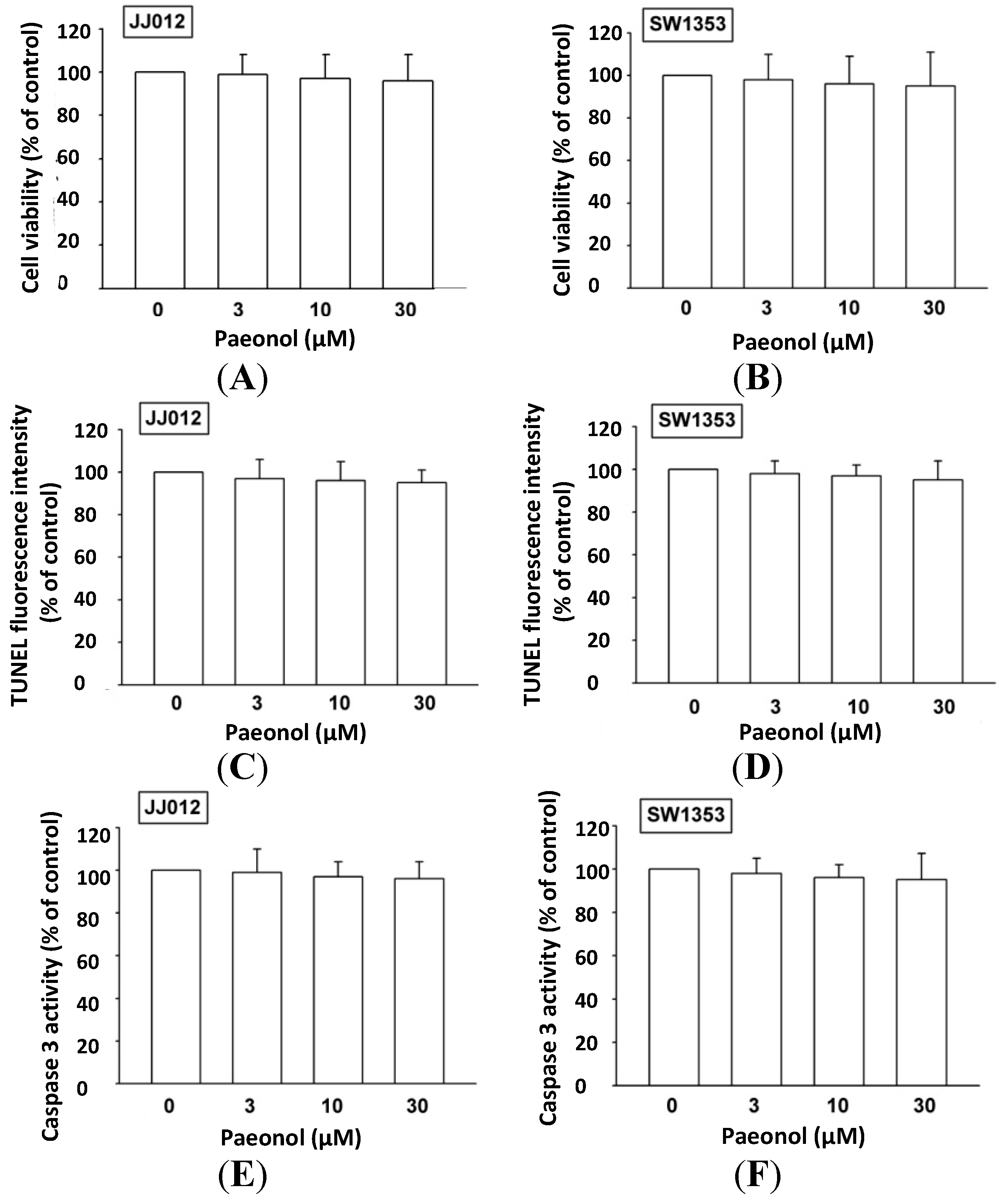
2.2. Paeonol Reduces Cell Migration, Wound-Healing Migration, and Cell Invasion
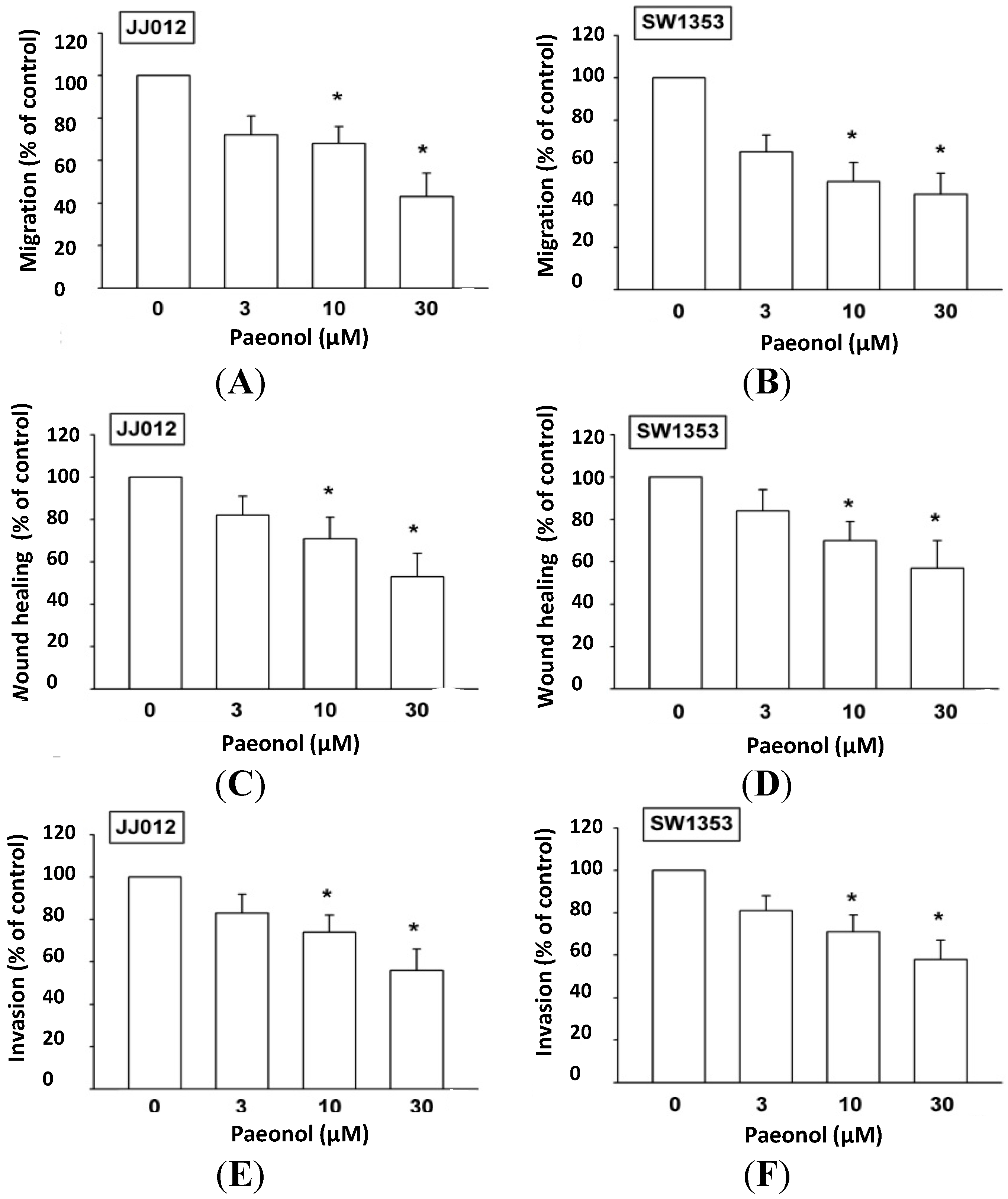
2.3. Paeonol Reduces Motility in Chondrosarcoma Cells by Up-Regulation of miR-141 Expression
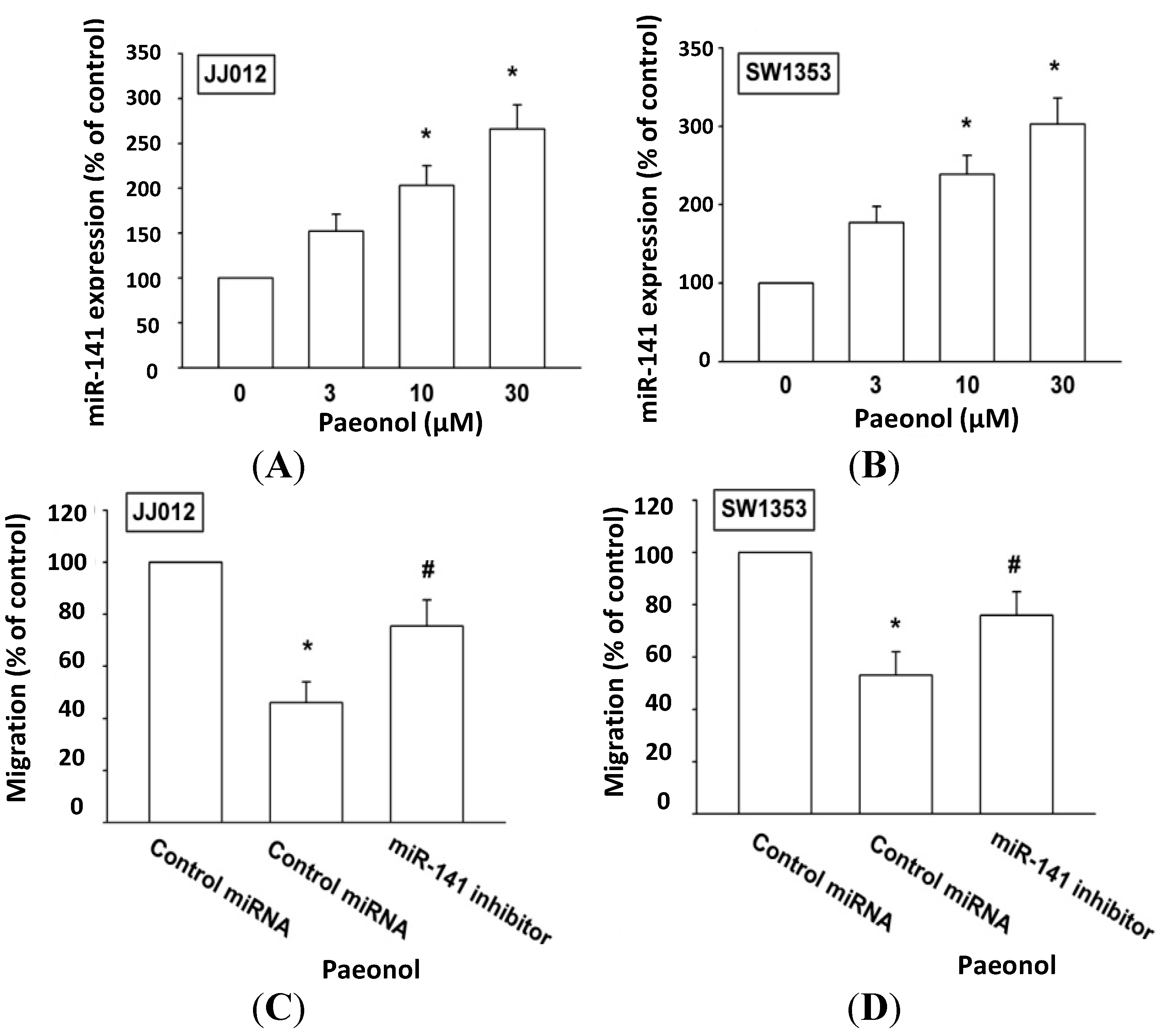
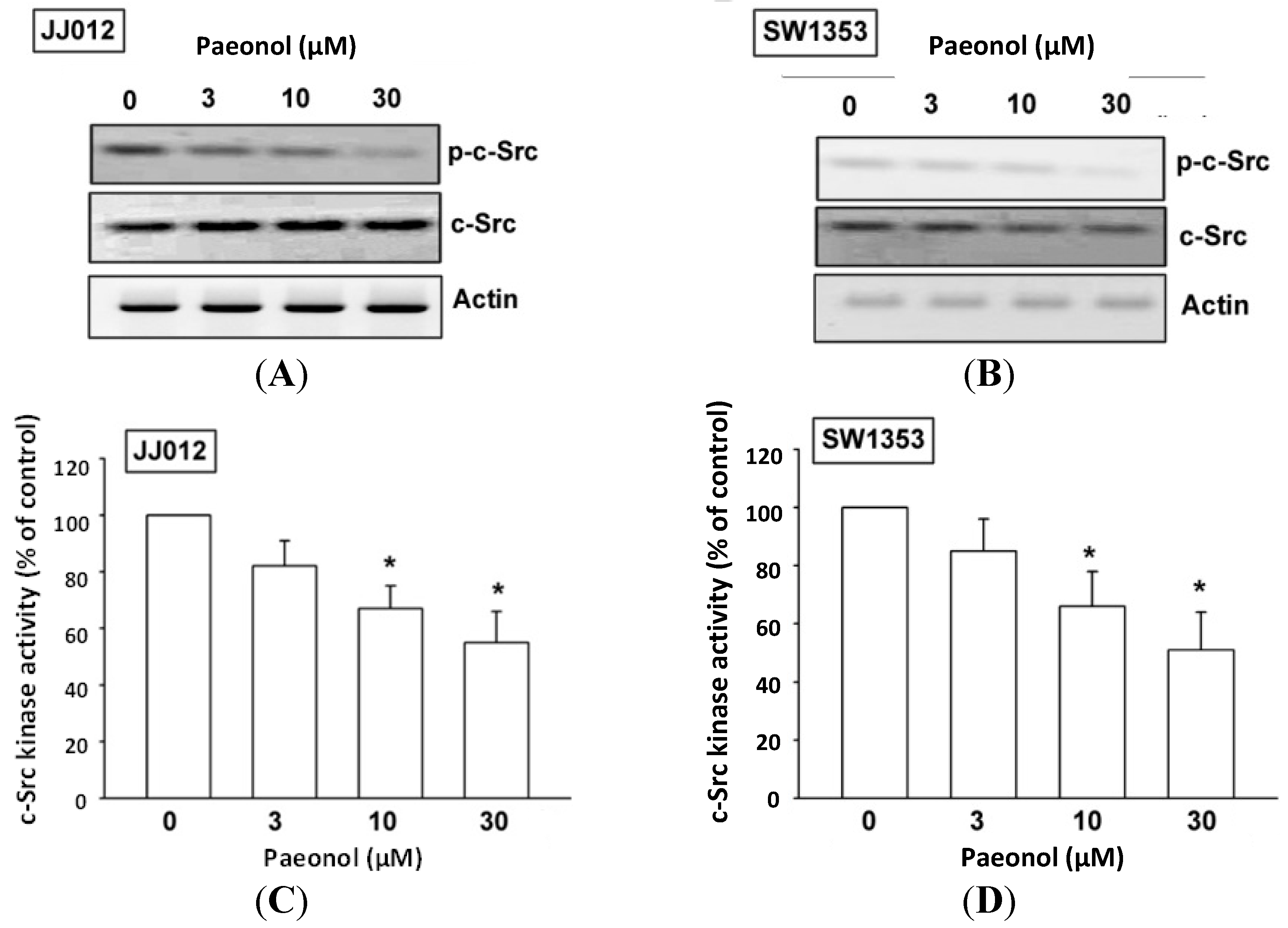
2.4. Paeonol Reduces Activity of Protein Kinase C (PKC)δ and c-Src Signaling Pathways
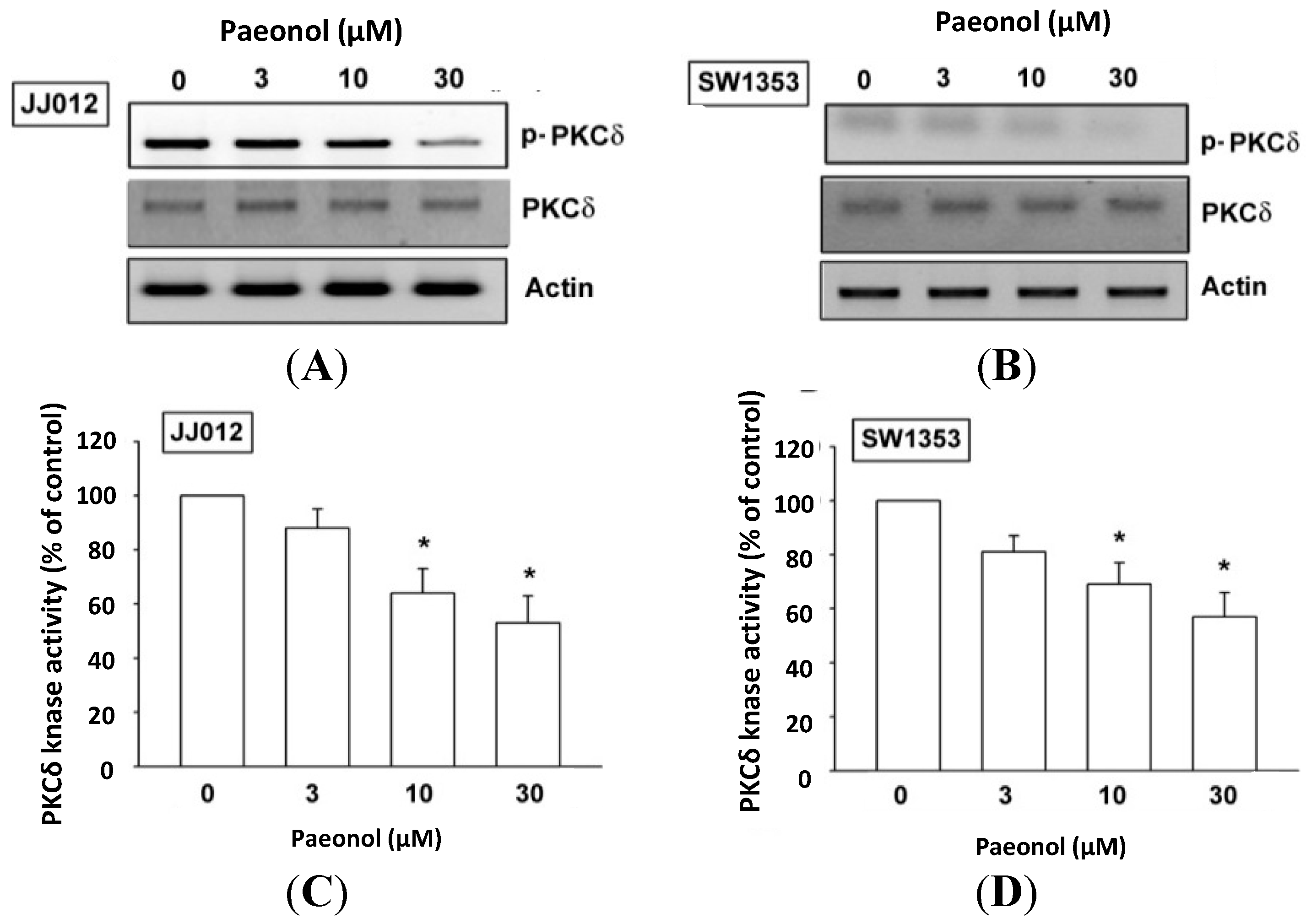
3. Discussion
4. Experimental Section
4.1. Materials
4.2. Cell Culture
4.3. 3-(4,5-Dimethylthiazol-2-yl)-2,5-diphenyltetrazolium Bromide (MTT) Assay
4.4. Triphosphate Nick-End Labeling (TUNEL) Assay
4.5. Caspase 3 Activity Assay
4.6. Migration and Invasion Assay
4.7. Wound-Healing Migration Assay
4.8. Quantitative Real-Time PCR (qRT-PCR) of mRNA and miRNA
4.9. Western Blot Analysis
4.10. Kinase Activity Assay
4.11. Transfection with miRNA Inhibitor
4.12. Statistical Analysis
5. Conclusions
Acknowledgments
Author Contributions
Conflicts of Interest
References
- Barnes, R.; Catto, M. Chondrosarcoma of bone. J. Bone Jt. Surg. Br. Vol. 1966, 48, 729–764. [Google Scholar]
- Tang, C.H. Molecular mechanisms of chondrosarcoma metastasis. Biol. Med. 2012, 2, 92–98. [Google Scholar]
- Yuan, J.; Dutton, C.M.; Scully, S.P. RNAi mediated MMP-1 silencing inhibits human chondrosarcoma invasion. J. Orthop. Res. 2005, 23, 1467–1474. [Google Scholar] [CrossRef]
- Chen, P.C.; Cheng, H.C.; Yang, S.F.; Lin, C.W.; Tang, C.H. The CCN family proteins: Modulators of bone development and novel targets in bone-associated tumors. Biomed. Res. Int. 2014, 2014, 437096. [Google Scholar]
- Chen, J.C.; Fong, Y.C.; Tang, C.H. Novel strategies for the treatment of chondrosarcomas: Targeting integrins. Biomed. Res. Int. 2013, 2013, 396839. [Google Scholar]
- Yin, M.C. Humans and cancer: An ongoing fight. Biol. Med. 2012, 2, 83. [Google Scholar]
- Liu, S.S.; Chen, X.M.; Zheng, H.X.; Shi, S.L.; Li, Y. Knockdown of Rab5a expression decreases cancer cell motility and invasion through integrin-mediated signaling pathway. J. Biomed. Sci. 2011, 18, 58. [Google Scholar]
- Lee, C.Y.; Huang, C.Y.; Chen, M.Y.; Lin, C.Y.; Hsu, H.C.; Tang, C.H. IL-8 increases integrin expression and cell motility in human chondrosarcoma cells. J. Cell. Biochem. 2011, 112, 2549–2557. [Google Scholar]
- Tillhon, M.; Guaman Ortiz, L.M.; Lombardi, P.; Scovassi, A.I. Berberine: New perspectives for old remedies. Biochem. Pharmacol. 2012, 84, 1260–1267. [Google Scholar]
- Diogo, C.V.; Machado, N.G.; Barbosa, I.A.; Serafim, T.L.; Burgeiro, A.; Oliveira, P.J. Berberine as a promising safe anti-cancer agent—Is there a role for mitochondria? Curr. Drug Targets 2011, 12, 850–859. [Google Scholar]
- Tang, W.; Nakamura, Y.; Tsujimoto, M.; Sato, M.; Wang, X.; Kurozumi, K.; Nakahara, M.; Nakao, K.; Nakamura, M.; Mori, I. Heparanase: A key enzyme in invasion and metastasis of gastric carcinoma. Mod. Pathol. 2002, 15, 593–598. [Google Scholar] [CrossRef]
- Lerner, I.; Baraz, L.; Pikarsky, E.; Meirovitz, A.; Edovitsky, E.; Peretz, T.; Vlodavsky, I.; Elkin, M. Function of heparanase in prostate tumorigenesis: Potential for therapy. Clin. Cancer Res. 2008, 14, 668–676. [Google Scholar] [CrossRef]
- Maxhimer, J.B.; Pesce, C.E.; Stewart, R.A.; Gattuso, P.; Prinz, R.A.; Xu, X. Ductal carcinoma in situ of the breast and heparanase-1 expression: A molecular explanation for more aggressive subtypes. J. Am. Coll. Surg. 2005, 200, 328–335. [Google Scholar]
- Block, J.A.; Inerot, S.E.; Gitelis, S.; Kimura, J.H. Synthesis of chondrocytic keratan sulphate-containing proteoglycans by human chondrosarcoma cells in long-term cell culture. J. Bone Jt. Surg. Am. Vol. 1991, 73, 647–658. [Google Scholar]
- Tong, K.M.; Chen, C.P.; Huang, K.C.; Shieh, D.C.; Cheng, H.C.; Tzeng, C.Y.; Chen, K.H.; Chiu, Y.C.; Tang, C.H. Adiponectin increases MMP-3 expression in human chondrocytes through AdipoR1 signaling pathway. J. Cell. Biochem. 2011, 112, 1431–1440. [Google Scholar]
- Tang, C.H.; Hsu, C.J.; Fong, Y.C. The CCL5/CCR5 axis promotes interleukin-6 production in human synovial fibroblasts. Arthritis Rheumatol. 2010, 62, 3615–3624. [Google Scholar]
- Chou, T.C. Anti-inflammatory and analgesic effects of paeonol in carrageenan-evoked thermal hyperalgesia. Br. J. Pharmacol. 2003, 139, 1146–1152. [Google Scholar]
- Nizamutdinova, I.T.; Oh, H.M.; Min, Y.N.; Park, S.H.; Lee, M.J.; Kim, J.S.; Yean, M.H.; Kang, S.S.; Kim, Y.S.; Chang, K.C. Paeonol suppresses intercellular adhesion molecule-1 expression in tumor necrosis factor-α-stimulated human umbilical vein endothelial cells by blocking p38, ERK and nuclear factor-κB signaling pathways. Int. Immunopharmacol. 2007, 7, 343–350. [Google Scholar] [CrossRef]
- Seales, E.C.; Jurado, G.A.; Brunson, B.A.; Wakefield, J.K.; Frost, A.R.; Bellis, S.L. Hypersialylation of β1 integrins, observed in colon adenocarcinoma, may contribute to cancer progression by up-regulating cell motility. Cancer Res. 2005, 65, 4645–4652. [Google Scholar] [CrossRef]
- Xu, S.P.; Sun, G.P.; Shen, Y.X.; Wei, W.; Peng, W.R.; Wang, H. Antiproliferation and apoptosis induction of paeonol in HepG2 cells. World J. Gastroenterol. 2007, 13, 250–256. [Google Scholar]
- Lee, H.J.; Kim, S.A.; Jeong, S.J.; Han, I.; Jung, J.H.; Lee, E.O.; Zhu, S.; Chen, C.Y.; Kim, S.H. Paeonol oxime inhibits bFGF-induced angiogenesis and reduces VEGF levels in fibrosarcoma cells. PLoS One 2010, 5, e12358. [Google Scholar]
- Kim, S.A.; Lee, H.J.; Ahn, K.S.; Lee, E.O.; Choi, S.H.; Jung, S.J.; Kim, J.Y.; Baek, N.; Kim, S.H. Paeonol exerts anti-angiogenic and anti-metastatic activities through downmodulation of Akt activation and inactivation of matrix metalloproteinases. Biol. Pharm. Bull. 2009, 32, 1142–1147. [Google Scholar] [CrossRef]
- Garzon, R.; Marcucci, G.; Croce, C.M. Targeting microRNAs in cancer: Rationale, strategies and challenges. Nat. Rev. Drug Discov. 2010, 9, 775–789. [Google Scholar]
- Liu, Y.; Ding, Y.; Huang, J.; Wang, S.; Ni, W.; Guan, J.; Li, Q.; Zhang, Y.; Chen, B.; Chen, L. miR-141 suppresses the migration and invasion of HCC cells by targeting Tiam1. PLoS One 2014, 9, e88393. [Google Scholar]
- Xu, L.; Li, Q.; Xu, D.; Wang, Q.; An, Y.; Du, Q.; Zhang, J.; Zhu, Y.; Miao, Y. hsa-miR-141 down-regulates TM4SF1 to inhibit pancreatic cancer cell invasion and migration. Int. J. Oncol. 2014, 44, 459–466. [Google Scholar]
- Wu, C.M.; Li, T.M.; Tan, T.W.; Fong, Y.C.; Tang, C.H. Berberine reduces the metastasis of chondrosarcoma by modulating the ανβ3 Integrin and the PKCδ , c-Src, and AP-1 Signaling Pathways. Evid. Based Complement. Altern. Med. 2013, 2013, 423164. [Google Scholar]
- Hsu, C.J.; Wu, M.H.; Chen, C.Y.; Tsai, C.H.; Hsu, H.C.; Tang, C.H. AMP-activated protein kinase activation mediates CCL3-induced cell migration and matrix metalloproteinase-2 expression in human chondrosarcoma. Cell Commun. Signal. 2013, 33, 68. [Google Scholar]
- Wu, M.H.; Huang, C.Y.; Lin, J.A.; Wang, S.W.; Peng, C.Y.; Cheng, H.C.; Tang, C.H. Endothelin-1 promotes vascular endothelial growth factor-dependent angiogenesis in human chondrosarcoma cells. Oncogene 2014, 33, 1725–1735. [Google Scholar]
- Wu, M.H.; Chen, L.M.; Hsu, H.H.; Lin, J.A.; Lin, Y.M.; Tsai, F.J.; Tsai, C.H.; Huang, C.Y.; Tang, C.H. Endothelin-1 enhances cell migration through COX-2 up-regulation in human chondrosarcoma. Biochim. Biophys. Acta 2013, 1830, 3355–3364. [Google Scholar]
- Mi, X.J.; Chen, S.W.; Wang, W.J.; Wang, R.; Zhang, Y.J.; Li, W.J.; Li, Y.L. Anxiolytic-like effect of paeonol in mice. Pharmacol. Biochem. Behav. 2005, 81, 683–687. [Google Scholar] [CrossRef]
- Yu, H.S.; Lin, T.H.; Tang, C.H. Bradykinin enhances cell migration in human prostate cancer cells through B2 receptor/PKCδ/c-Src dependent signaling pathway. Prostate 2013, 73, 89–100. [Google Scholar] [CrossRef]
- Ozanne, B.W.; Spence, H.J.; McGarry, L.C.; Hennigan, R.F. Transcription factors control invasion: AP-1 the first among equals. Oncogene 2007, 26, 1–10. [Google Scholar]
- Chen, B.; Huang, T.; Jiang, J.; Lv, L.; Li, H.; Xia, S. miR-141 suppresses proliferation and motility of gastric cancer cells by targeting HDGF. Mol. Cell. Biochem. 2014, 388, 211–218. [Google Scholar] [CrossRef]
- Lin, T.H.; Liu, H.H.; Tsai, T.H.; Chen, C.C.; Hsieh, T.F.; Lee, S.S.; Lee, Y.J.; Chen, W.C.; Tang, C.H. CCL2 increases ανβ1 integrin expression and subsequently promotes prostate cancer migration. Biochim. Biophys. Acta 2013, 1830, 4917–4927. [Google Scholar] [CrossRef]
- Yang, S.F.; Chen, M.K.; Hsieh, Y.S.; Chung, T.T.; Hsieh, Y.H.; Lin, C.W.; Su, J.L.; Tsai, M.H.; Tang, C.H. Prostaglandin E2/EP1 signaling pathway enhances intercellular adhesion molecule 1 (ICAM-1) expression and cell motility in oral cancer cells. J. Biol. Chem. 2010, 285, 29808–29816. [Google Scholar] [CrossRef]
- Tzeng, H.E.; Tsai, C.H.; Chang, Z.L.; Su, C.M.; Wang, S.W.; Hwang, W.L.; Tang, C.H. Interleukin-6 induces vascular endothelial growth factor expression and promotes angiogenesis through apoptosis signal-regulating kinase 1 in human osteosarcoma. Biochem. Pharmacol. 2013, 85, 531–540. [Google Scholar]
- Liu, J.F.; Fong, Y.C.; Chang, C.S.; Huang, C.Y.; Chen, H.T.; Yang, W.H.; Hsu, C.J.; Jeng, L.B.; Chen, C.Y.; Tang, C.H. Cyclooxygenase-2 enhances α2β1 integrin expression and cell migration via EP1 dependent signaling pathway in human chondrosarcoma cells. Mol. Cancer 2010, 9, 43. [Google Scholar]
- Tsai, H.C.; Huang, C.Y.; Su, H.L.; Tang, C.H. CTGF increases drug resistance to paclitaxel by upregulating survivin expression in human osteosarcoma cells. Biochim. Biophys. Acta 2014, 1843, 846–854. [Google Scholar]
- Tsai, H.C.; Huang, C.Y.; Su, H.L.; Tang, C.H. CCN2 enhances resistance to cisplatin-mediating cell apoptosis in human osteosarcoma. PLoS One 2014, 9, e90159. [Google Scholar]
- Huang, C.Y.; Chen, S.Y.; Tsai, H.C.; Hsu, H.C.; Tang, C.H. Thrombin induces epidermal growth factor receptor transactivation and CCL2 expression in human osteoblasts. Arthritis Rheumatol. 2012, 64, 3344–3354. [Google Scholar]
- Pezzuto, J.M. Plant-derived anticancer agents. Biochem. Pharmacol. 1997, 53, 121–133. [Google Scholar]
- Hsu, S.C.; Chung, J.-G. Anticancer potential of emodin. BioMed 2012, 2, 108–116. [Google Scholar]
© 2014 by the authors; licensee MDPI, Basel, Switzerland. This article is an open access article distributed under the terms and conditions of the Creative Commons Attribution license (http://creativecommons.org/licenses/by/3.0/).
Share and Cite
Horng, C.-T.; Shieh, P.-C.; Tan, T.-W.; Yang, W.-H.; Tang, C.-H. Paeonol Suppresses Chondrosarcoma Metastasis through Up-Regulation of miR-141 by Modulating PKCδ and c-Src Signaling Pathway. Int. J. Mol. Sci. 2014, 15, 11760-11772. https://doi.org/10.3390/ijms150711760
Horng C-T, Shieh P-C, Tan T-W, Yang W-H, Tang C-H. Paeonol Suppresses Chondrosarcoma Metastasis through Up-Regulation of miR-141 by Modulating PKCδ and c-Src Signaling Pathway. International Journal of Molecular Sciences. 2014; 15(7):11760-11772. https://doi.org/10.3390/ijms150711760
Chicago/Turabian StyleHorng, Chi-Ting, Po-Chuen Shieh, Tzu-Wei Tan, Wei-Hung Yang, and Chih-Hsin Tang. 2014. "Paeonol Suppresses Chondrosarcoma Metastasis through Up-Regulation of miR-141 by Modulating PKCδ and c-Src Signaling Pathway" International Journal of Molecular Sciences 15, no. 7: 11760-11772. https://doi.org/10.3390/ijms150711760
APA StyleHorng, C.-T., Shieh, P.-C., Tan, T.-W., Yang, W.-H., & Tang, C.-H. (2014). Paeonol Suppresses Chondrosarcoma Metastasis through Up-Regulation of miR-141 by Modulating PKCδ and c-Src Signaling Pathway. International Journal of Molecular Sciences, 15(7), 11760-11772. https://doi.org/10.3390/ijms150711760

