1. Introduction
Extending the realm of the Boltzmann-Gibbs-von Neumann-Shannon entropic functional, many measures of uncertainty have been proposed to handle complex systems and, ultimately, complexity. All of them are nonadditive, excepting the Renyi functional. Among them, a paradigmatic one is the entropy
defined, with the scope of generalizing Boltzmann-Gibbs (BG) statistical mechanics, as follows [
1]:
with
. The entropy
is the most general one which simultaneously is composable and trace-form [
2], and it has been shown to be connected to the Euler-Riemann function
[
3]. The
q-logarithm function is defined [
4] as follows
its inverse function being
when
; otherwise it vanishes. The definitions of the
q-logarithm and
q-exponential functions allow consistent generalizations of algebras [
5,
6,
7,
8,
9], calculus [
6,
8,
10,
11] (see also [
12]) and generalized numbers [
8,
13].
There are different ways of defining generalized
q-numbers connected with the pair of inverse (
q-logarithm,
q-exponential) functions, namely
Observe that
. These four possibilities are explored in Ref. [
8]. (Equations (
4), (
5), (
6) and (
7) are equivalent to Equations (11a,b) and (10a,b) of Ref. [
8] respectively. The notations introduced in Equations (
4) and (
5) differ from those used in [
8].) Other generalizations exist in the literature, also referred to as
q-numbers [
14,
15]. Generalized arithmetic operations follow from each of the
q-numbers and, consistently, there are various possibilities. The present paper will only explore one possibility for
q-numbers, namely our Equation (
4), equivalent to the iel-number Equation (11a) of [
8]. For this choice, two algebras will be focused on here, namely,
and
the symbol ∘ representing any of the ordinary arithmetic operators
, and
or
representing the corresponding generalized operators; naturally,
. Possibility (
8) preserves prime number factorizability, while possibility (
9) does not. The algebra corresponding to Equation (
8) is developed in
Section 4, and it was not addressed in Ref. [
8]. We use a superscript for its algebraic operators,
, a notation that was not adopted in Ref. [
8]. The other algebra, corresponding to Equation (
9), is presented in
Section 5, and it corresponds to the oel-arithmetics addressed in Section III.D of Ref. [
8], where
is here noted
.
2. Preliminaries
Let us remind the reader, at this point, the so-called Basel problem, which focuses on the value of the series
proposed in 1644 by Pietro Mengoli of Bologna, in contrast to the divergent harmonic series,
This problem was intensively studied by the Bernoulli brothers from Basel almost half a century later, and became known as the Basel Problem. They proved that
is divergent, but
is finite and smaller than 2, but failed to obtain the exact value.
The Basel problem was solved by Euler in 1735. He also exhibited the connection with prime numbers, namely
where
is the
i-th prime numbers
, thus introducing for the first time the so-called Euler’s product.
In 1859, Riemann extended the domain of the exponent
n to complex numbers, introducing the notation
so that
is often called Riemann’s zeta function (or Euler-Riemann zeta function). By the way, Gauss made many important contributions to the field, especially the so-called prime number theorem,
(
), where
is the number of primes up to the integer
N.
For the oncoming discussion, it is useful to remind some properties within integers which are necessary to prove
For this, let us consider a function
, for
, which can be written as
The function
admits such a property. Indeed, the power law satisfies
Now, we know that any integer
n can be decomposed into an unique product of prime numbers,
where
is the multiplicity of the prime
in the product (
) and they are
uniquely determined for a given
That is, the set
is determined for a given value of
n so we can use the notation
Let us focus on an interesting aspect of the primes. Taking logarithm of Equation (
20), for any positive integer
we get
where
. We can therefore consider the set
as a kind of infinite dimensional vector space, whose basis vectors are
However, rigorously, this is not a vector space, since the coefficients of the linear combination, i.e., the set of multiplicities, are only integers, and not the set of real numbers.
Note that to guarantee the uniqueness of the decomposition, the commutativity and the associativity of the product operation are essential.
Now, the sum over all positive integer values of a function
satisfying Equation (
16) can be written, if it converges absolutely, as
This comes from the fact that the direct product of the sets
for all primes is equal to the set of positive natural numbers
,
where ⊗ denotes the direct product. The meaning of Equation (
23) can be seen more intuitively here below as
Note that the multiplicity
of the
i-th prime
takes all integer values if
n runs over all natural numbers. Consistently, for a given
the value of
runs over all nonnegative integers. That is,
and
i can run over all nonnegative integers independently. Therefore, by using
, we can exchange the order of the sum and the product in Equation (
23):
if
satisfies the property indicated in Equation (
16).
Now, let us take the case of the Euler product,
Then the summation in
m of Equation(
26) for
term is
which is a geometric series. By writing
, we obtain
Finally, we have the Euler product form as
This connection is known as Euler’s product form. Riemann extended the domain of
s of this function into the complex plane
z, being since then frequently referred to as the Riemann zeta function
.
4. Algebra Preserving Factorizability of q-Integer Numbers in q-Prime Numbers
In order to introduce the concept of
q-primes, we should keep the factorization concept in
. Thus we must first define the product operation
, and should be kept invariant under the
q-mapping from
. Following Equation (
8), let
be such a product (note that here
is not the direct product of sets, but this specific
q-generalized product of
q-numbers) between any pair of
q-integers
, whose result give the
q-transform of
, i.e., obeys the following factorizability:
We also define the following generalized summation operator
in
as
The above definitions correspond to those introduced in Ref. [
13] (its Equations (5) and (6); the operations defined in [
13] follows the same structure of Equation (
33), or, more generally, Equation (
8), but with a different deformed number, namely the Heine number.).
In order that the above operations are meaningful in , it is necessary that they are closed operations in .
The following definitions satisfy properties (
33) and (
34):
Equation (
35) can be rearranged as
The result of these definitions is a
q-integer by construction.
By construction, it is clear that this definition of the q-product as an operator in , conserves the factorization property under the q-transform In addition, also by construction, the operators, and satisfy the following basic properties of algebras, valid in :
Closedness of the operation:
Distributivity of the product
with regard to the sum
Neutral element of the
q-addition
Neutral element of the
q-product
We show that these properties are essential to keep the nature of prime numbers for
q-transformed integers, corresponding to Equation (
20) in
.
We also define the following operations:
and
Besides, for any
, we can define a
a-power of a
q-number by
from what follows
and
As we see, for fixed
q, this algebra is isomorphic to the standard algebra.
Definition 1. A q-integer (i.e., an element of ) is called “q-prime” and written as if it can not be written as a q-factorized form in terms of two smaller q-integers aswith , except for the trivial factorization case, i.e., either one of or is the unity, . It is evident from the definition of
q-integers that all the set of
q-primes
are
q-partners of the prime numbers in
,
. For any integer
which is not a prime, there exists the non-trivial factors,
such that
. However, from the definition of the
q-product, Equation (
33),
, showing that
has a non-trivial
q-factorization and it is not a
q-prime. As we mentioned, the
q-correspondence between the two sets,
and
is one-to-one,
q-primes in
are
q-transformations of the normal primes in
.
The basic property of primes is that any natural number
can be written uniquely as the products of primes
as
where
is the set of primes and for a given
n,
is the set of multiplicities
of the prime
is uniquely determined for given
n.
Now, for
q-integers,
, the corresponding decomposition property is valid in
in terms
q-integers with
q-products, satisfying the properties of commutativity and distributivity. By construction, we can write for any
the
q-prime decomposition as
for the sake of isomorphism of the product operations in
and
. The symbol
represents the generalized product (
33) of a number of terms,
.
Since we have the isomorphisms of the operations of sum and product in
and in
, we can write down the
q-version of the Euler product:
with the symbol
representing the generalized summation according to Equation (
34).
Now, the multiplicity
of the
i-th prime
should take all integer values if
n runs over all the integers. Inversely, for a given
, the value of
runs over all integers. That is,
and
i can run over all integers independently. This comes from the fact that the direct product of the sets,
, for every prime is equal to the set of natural numbers
(see Equation (
24)). We can therefore see that exchange the order of the sum and the product (due to the distributivity of the ordinary multiplication with regard to the ordinary addition,
) in Equation (
23) as
if
satisfies the property Equation (
16).
The definitions of the
q-algebra introduced here is sufficient to write down the
q-version of the Euler sum and the Euler product in
q-representation formally as
and
(with
). In other words, the Euler product form is preserved for all values of
q.
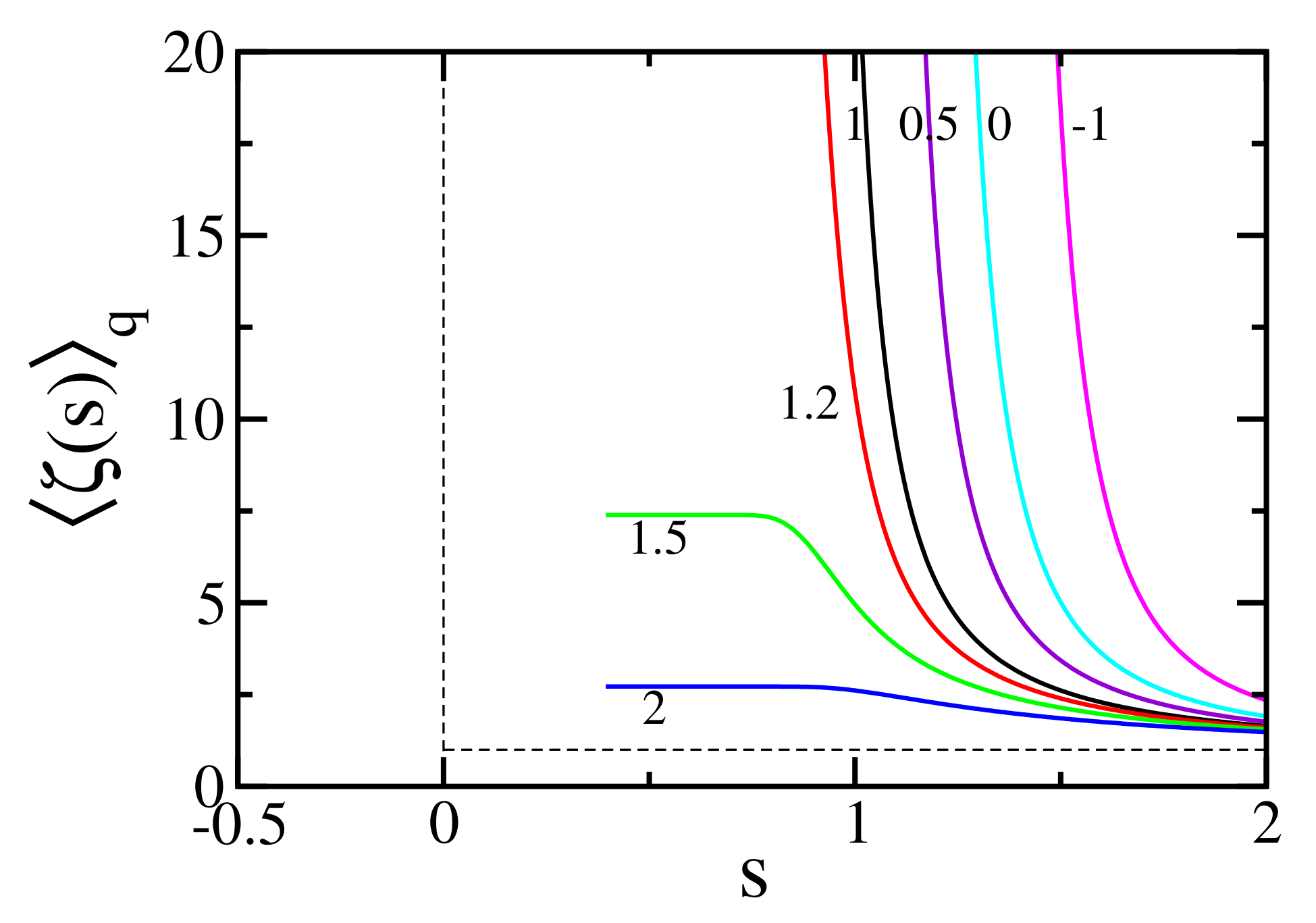
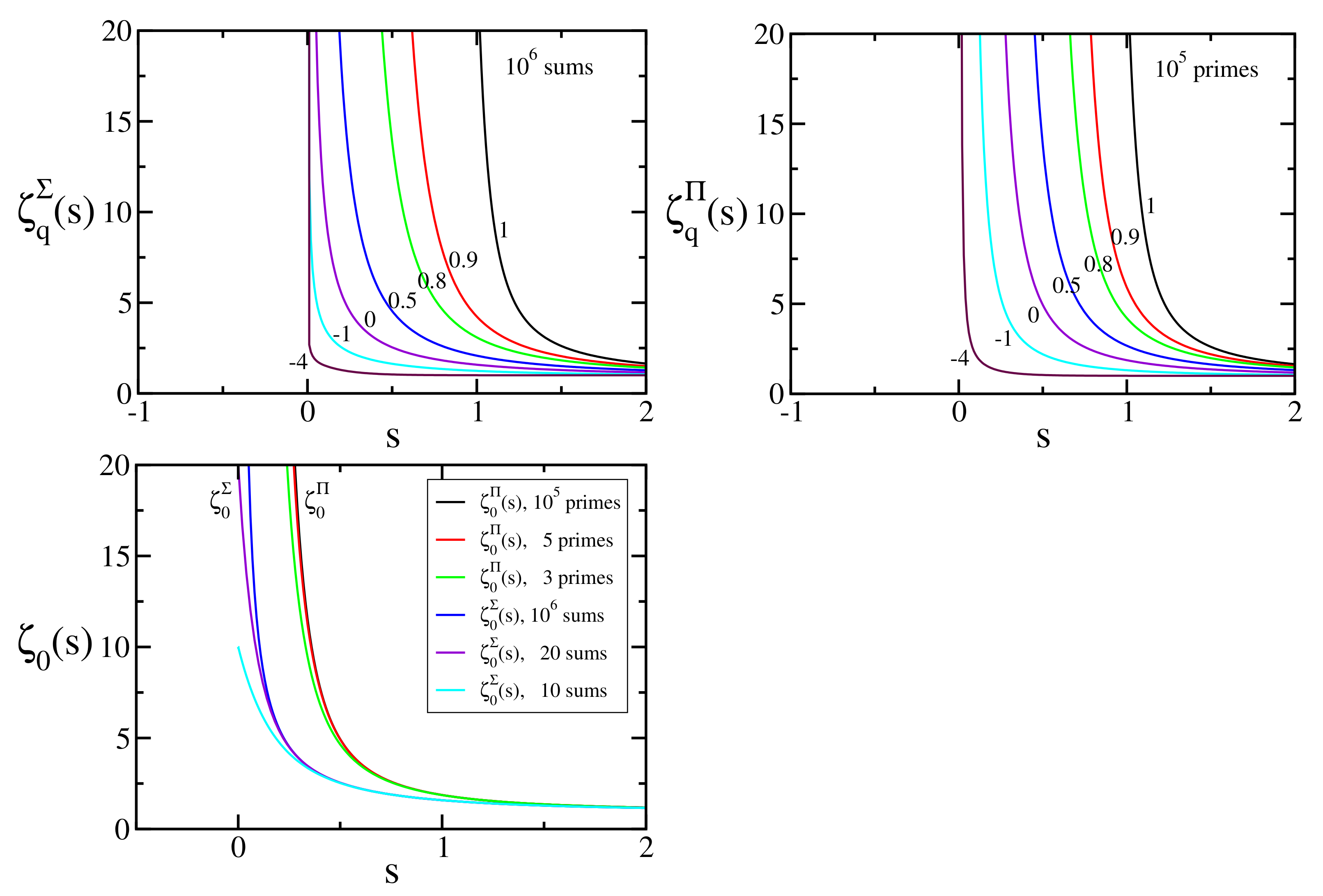
Figure 2 depicts
for different values of
q.
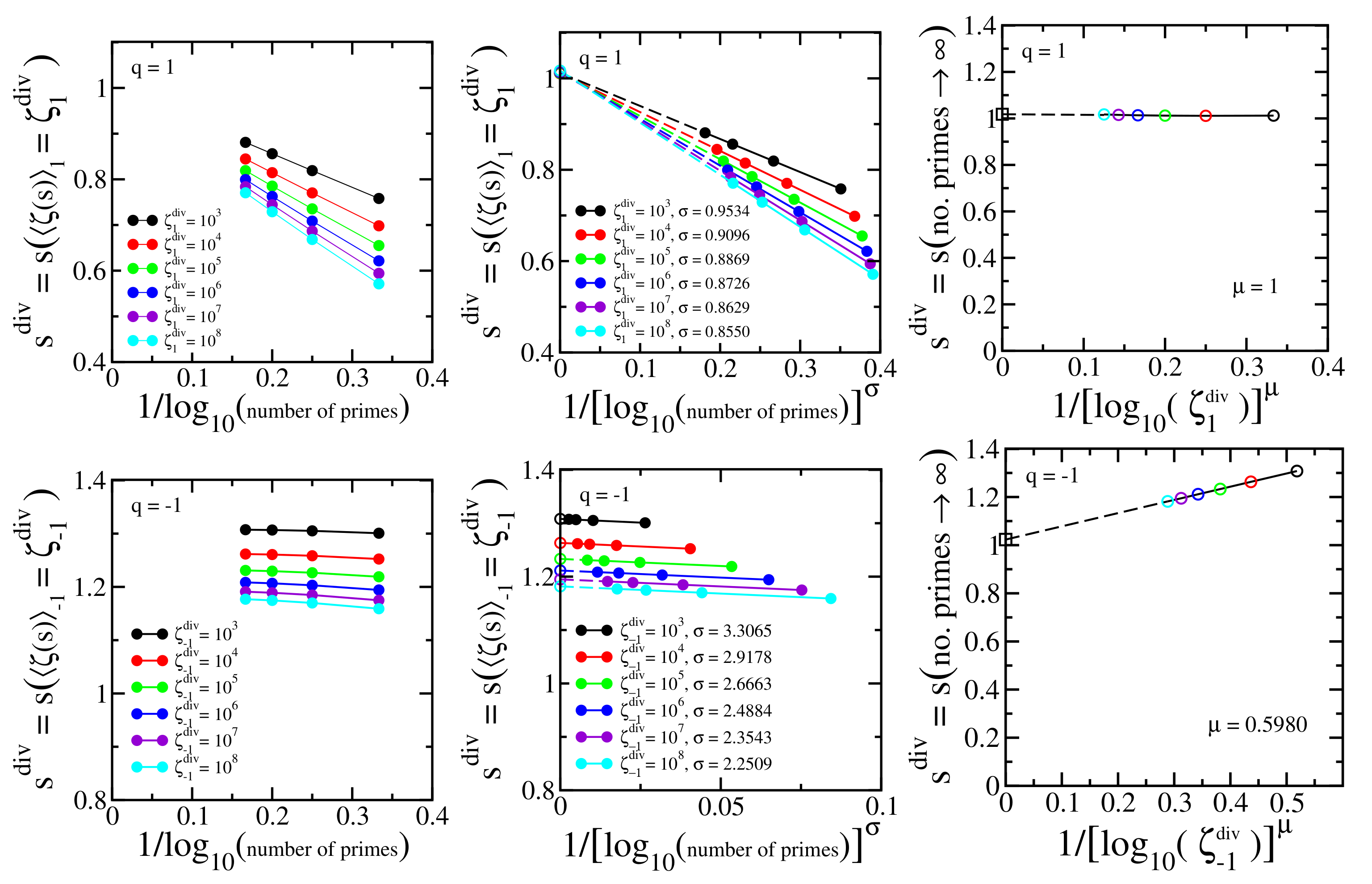
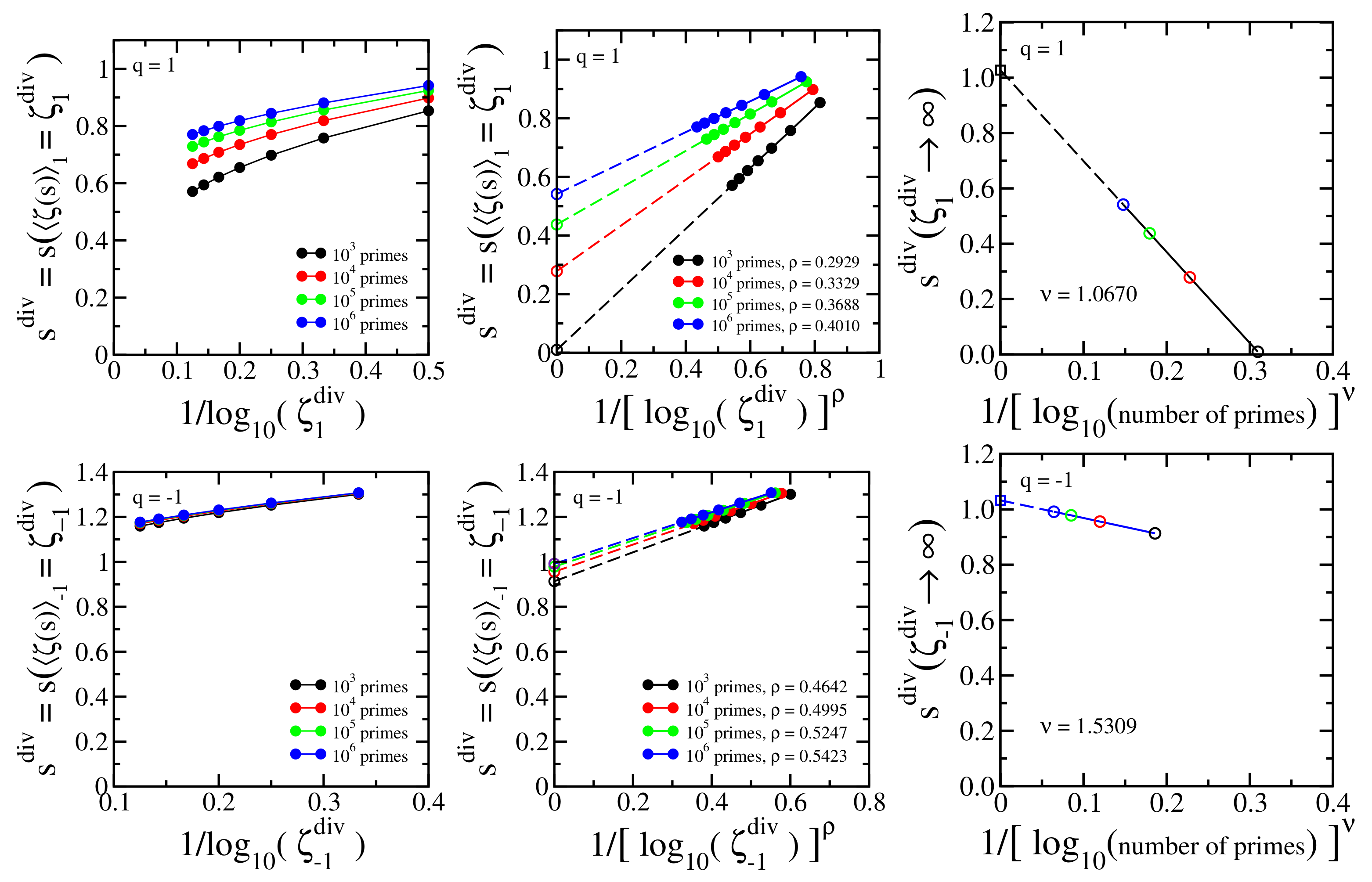
We numerically identify the location of the divergence by fixing an arbitrary value of
noted as
and identify the corresponding the value of
s (noted as
) with increasing number of primes. The procedure is repeated with increasing values of
. The three top panels of
Figure 3 illustrate the procedure for
, and the three bottom panels for
. Each curve in
Figure 3 (top left) displays the value of
for which
with increasing numbers of primes (
primes, shown with solid circles). The representation with
in the abscissa is not a straight line, and we empirically found that introducing a power
(
depends on
) as shown in
Figure 3 (top middle), straight lines emerge, which can be extrapolated (dashed lines) to infinite number of primes — the open circles at the ordinate axis. These extrapolations correspond to infinite number of primes, but, nevertheless, the values of
are still finite. Finally, the limit
is achieved as illustrated in
Figure 3 (top right). The open circles at the ordinate axis of
Figure 3 (top middle) are represented in
Figure 3 (top right) for each value of
, identified with their respective colors, with the change of variables
in the abscissa.
is an empirical power that transforms the curves into straight lines (
depends on
q;
). A final extrapolation is then allowed, identifying the location of the divergence (open square). The difference
characterizes the numerical error. We use the same procedure for
, and the three bottom panels illustrate the case
.
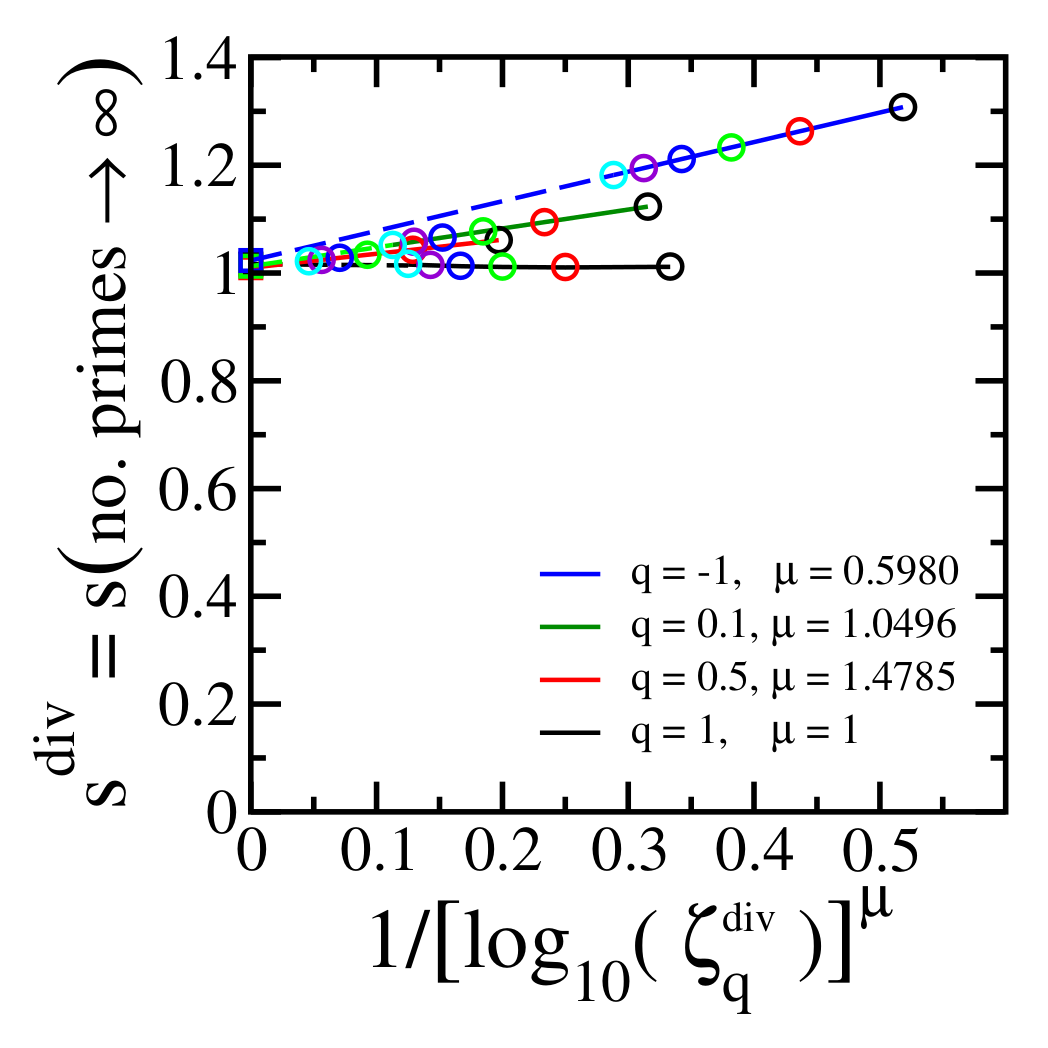
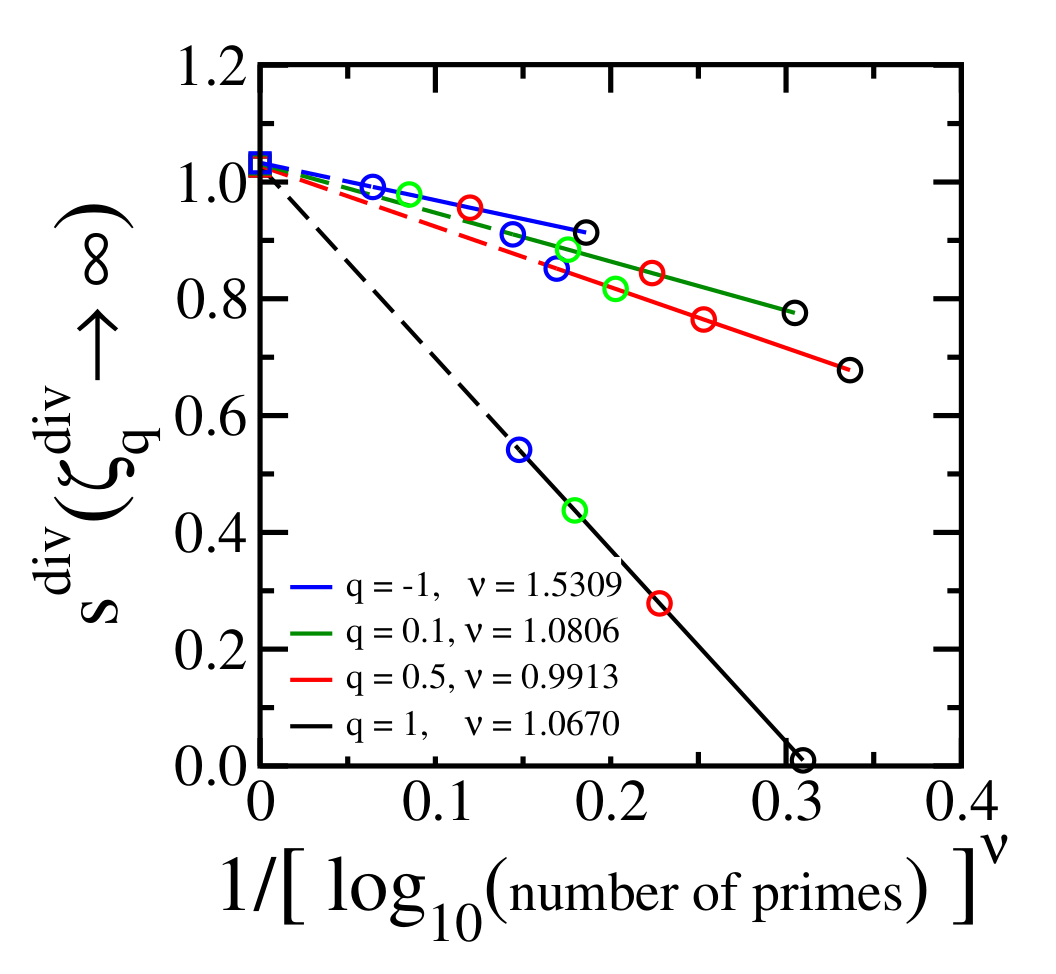
Figure 4 shows the final step of the procedure (see
Figure 3 top right and bottom right panels) for different values of
, and the maximal estimated numerical error is less than 3% for the values of
q that we have checked. This result definitely differs from what a brief glance at
Figure 2 might induce one to think.
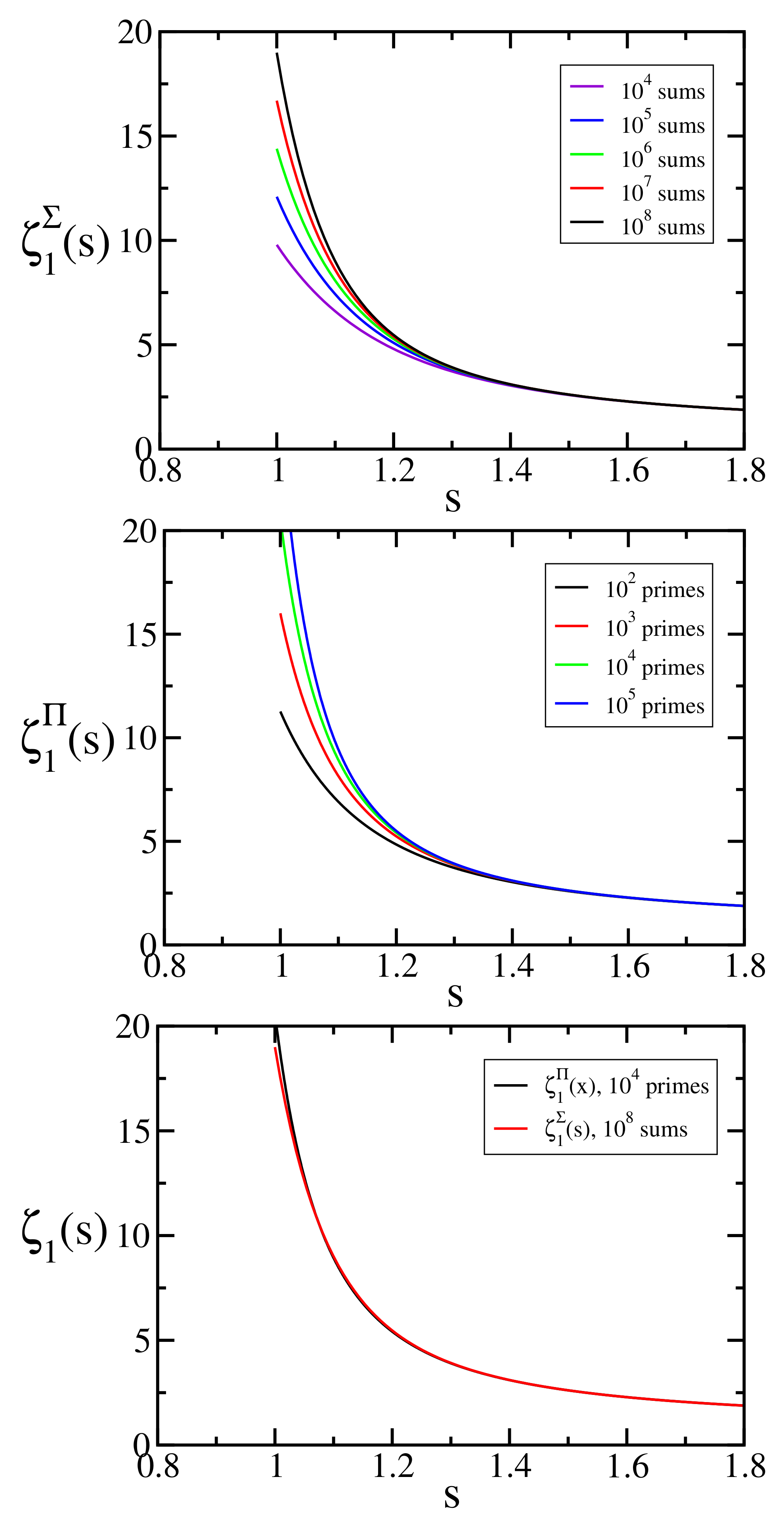
The numerical procedure can be taken in the inverse order, taking
as the first step, and then taking increasing number of primes: see
Figure 5 and
Figure 6. Each curve in
Figure 5 (top left and bottom left) displays the value of
calculated with the same number of primes in Equation (
59) (
primes) as a function of
. Here, similarly to
Figure 3 (top left and bottom left), the curves are not straight lines, so they can hardly be extrapolated. The empirical power-law rescaling shown in
Figure 5 (top middle and bottom middle) indicates that
linearly scales with
(
depends on the number of primes), and the generated straight lines point to the corresponding values of
with infinite number of primes in the
function (open circles of the top middle and bottom middle panels). These extrapolated values are rescaled according to a power-law shown in
Figure 5 (top right and bottom right), with the empirical power
depending on
q.
Figure 6 is equivalent to top right and bottom right panels of
Figure 5 for different values of
. All these cases indicate
within a numerical error less than 4%
The empirical powers (
,
,
,
) have been estimated by fitting a parabola
to the corresponding curve,
x is the variable of the abscissa of the corresponding middle and right panels,
, and the fitting value of the power is that for which
, estimated with four digits for the power parameter. The coefficient
a of the fitting of the parabola is the extrapolated value of the corresponding curve (open circles of the top middle and bottom middle panels of
Figure 3 and
Figure 5, open squares of the top right and bottom right panels of
Figure 3 and
Figure 5 and open squares of
Figure 4 and
Figure 6).
Similar behavior is expected for
evaluated with the version with summations, Equation (
57).
7. Final Remarks
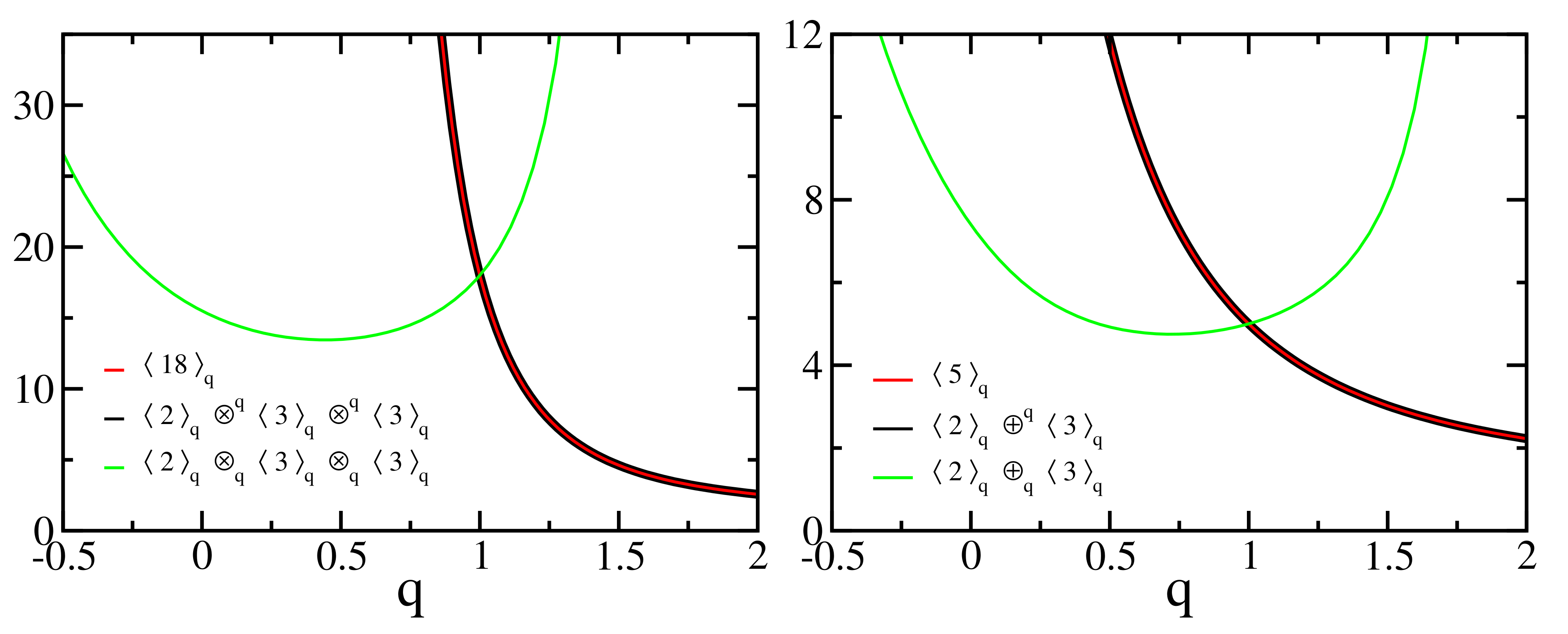
Let us now illustrate the two algebraic approaches focused on in the present paper (see
Figure 9):
whereas
Analogously we have
whereas
The algebra preserving the factorizability of
q-integer numbers into
q-prime numbers (see equality (
70)) achieves this remarkable property essentially because it is isomorphic to the usual prime numbers. On the other hand, precisely because of that, it is unable to properly
q-generalize the concept of a vectorial space in terms of nonlinearity. In contrast, the algebra which violates the factorizability of
q-integer numbers into
q-prime numbers (see inequality (
71)), or some similar algebra, emerges as a possible path for achieving the concept of nonlinear vector spaces, which has the potential of uncountable applications in theoretical chemistry and elsewhere.
Since the inequality relation between q-primes remains the same as that for , it is plausible that the nontrivial zeros in the analytic extension behaves similarly. More precisely, it might well be that, by extending , and to the complex plane z, all nontrivial zeros belong to specific single continuous curves, , thus q-generalizing the Riemann’s 1859 celebrated conjecture .
We have here explored generalizations of the
function based on a specific type of
q-number, Equation (
4), and two associated generalized algebras (
Section 4 and
Section 5). Three additional forms of
q-generalized numbers, Equations (
5), (
6) and (
7), are identified in Ref. [
8]. To each of these
q-numbers, we can associate two consistently generalized algebras, one of them violating the factorizability in prime numbers (see Ref. [
8]), the other one following along the lines of
Section 4. Similarly, various other generalizations of the
function may of course be developed. Naturally, the extension of the present
q-generalized
functions to complex
z surely is interesting, but does not belong to the aim of the present effort. In any case, the intriguing fact that various infinities appear to linearly scale with negative powers of logarithms might indicate some general tendencies.
It is well known that both random matrices and quantum chaos (classically corresponding to strong chaos, i.e.,
positive maximal Lyapunov exponent) [
16,
17,
18,
19,
20] are related to the Riemann
-function and prime numbers. On the other hand, both random matrices and strong chaos have been conveniently
q-generalized, in [
21,
22,
23,
24] respectively. These facts open the door for possible applications of the present
q-generalizations of prime numbers and of the
-function to
q-random matrices and to weak chaos (classically corresponding to
vanishing maximal Lyapunov exponent, which recovers strong chaos in the
limit). Moreover, connections of the present developments within the realm of the theory of numbers, or, more specifically, the theory of prime numbers, remain, at this stage, out of our scope. Further work along these lines would naturally be very welcome.