


Abstract
“Cashback for positive reviews” is a common form of e-commerce manipulation that may undermine consumer trust and distort the market evaluation system. However, there is a lack of systematic research on how it influences consumers’ willingness to provide evaluations through psychological mechanisms. This study, based on the Stimulus–Organism–Response (S-O-R) framework, integrates the theories of psychological contract and cognitive dissonance. An empirical analysis based on 460 valid questionnaire responses was performed using SPSS and AMOS, yielding the following findings. (1) Negative emotions, including disappointment, anger, and regret, significantly triggered psychological contract breach, both transactional and relational. (2) Psychological contract breach reduced consumers’ willingness to provide positive reviews and lowered their store evaluation behavior, fully mediating the relationship between negative emotions and evaluation behavior. (3) Cognitive dissonance partially moderated the pathway from negative emotions through psychological contract breach to review behavior. This study elucidated the influence mechanism of negative emotions in “cashback for positive review” scenarios on consumers’ evaluation behavior, established a “merchant-user” online review relationship model, and provided practical and managerial implications for fostering mutually beneficial outcomes among platforms, merchants, and consumers.
1. Introduction
The expansion of e-commerce has generated unprecedented opportunities for platform economies and their merchants while providing consumers with a broader and more convenient range of online choices. In online transactions, reviews have become a crucial channel for consumers to access product information and assess overall quality [1]. Online reviews play a vital role in alleviating information asymmetry and reducing quality uncertainties. As a result, they have become an indispensable reference for consumers’ online purchasing decisions [2]. Studies have indicated that more than 86% of consumers consult online reviews when shopping online, 80% of purchase decisions are influenced by them [3], and 93% of online shoppers spend over one minute reading reviews before making a decision (Local Consumer Review Survey, 2019). The specific functions of online reviews lie in consumers’ preliminary understanding of products and their initial assessment of merchants and purchased goods. Research has demonstrated that consumers use reviews to acquire additional information, which directly shapes their purchase intentions [4]. Concurrently, positive cues embedded in online reviews can facilitate transactions and promote product sales [5]. Evidence suggests that each one-star increase in average ratings can enhance sellers’ revenues by 5–9% [6], whereas negative reviews damage merchant reputation and suppress sales growth [7]. Therefore, online reviews serve not only as a channel for product information but also as a critical factor when formulating marketing strategies.
Online reviews are regarded as a resource, and platforms or merchants often pursue integrated management of favorable reviews to build their reputation and generate revenue [8]. Consequently, in pursuit of short-term gains, some merchants induce or manipulate consumers into engaging in unfair review practices through material incentives. Typical examples include “gift-for-praise” or “cashback for positive reviews” schemes (Figure 1). In such cases, merchants or platforms enclose cashback cards with purchased products to entice consumers to provide biased reviews. When purchases are driven by a merchant’s high rating or favorable comments, the sudden discovery of a cashback card undermines trust in those reviews. Even consumers not directly influenced by prior ratings often hesitate to post reviews after encountering such tactics, fearing that their comments might mislead potential buyers.
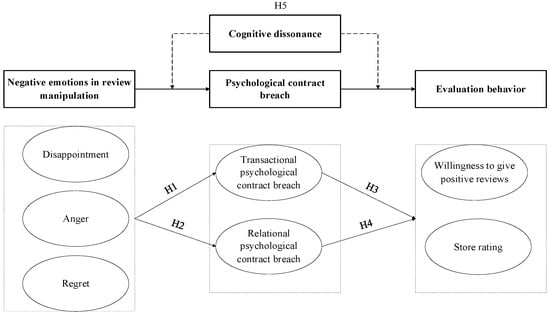
Figure 1.
Research Model.
The manipulation of positive reviews by merchants or platforms has seriously compromised the fairness of the online review ecosystem, contributing to the proliferation of false reviews across all platforms. Existing studies on false reviews have explored issues such as publication causes [9], detection methods [10], and the influence of review content [11]. However, the negative consequences of review manipulation are significant. Practices such as hiring online trolls, fabricating transactions, and inflating credit ratings have distorted fair competition on e-commerce platforms. Moreover, consumers posting misleading or false reviews in exchange for rewards erodes the credibility of online evaluation [12]. When such manipulations are exposed, they elicit strong negative consumer sentiments. Although the existing literature has examined the antecedents, identification, and consequences of fake reviews, research has primarily focused on the effects of informational attributes of fake reviews on consumers. However, a notable gap remains in understanding how specific antecedent stimuli—such as proactive manipulative behaviors by merchants—systematically trigger consumers’ negative emotions and subsequently influence their review willingness and behaviors.
The manipulation of positive reviews refers to the practice whereby merchants offer rebates, gifts, or other inducements in exchange for positive evaluations that are not grounded in genuine consumption experiences, leading to distorted platform reputation signals. Such conduct has been explicitly outlawed by China’s E-commerce Law and the Interim Provisions on Anti-Unfair Competition on the Internet [12]. Although extant research has predominantly examined the antecedents of manipulation and its impact on purchase intentions [13,14], it has largely overlooked the negative affective responses and underlying psychological processes triggered when consumers perceive the manipulation as a breach of social exchange. Consequently, theoretical insights from psychological-contract breach and cognitive-dissonance theory remain under-integrated. Given the prevalence of positive-review manipulation and its corrosive impact on platform credibility, it is imperative to reveal its inhibitory effect on consumers’ subsequent evaluation behaviors and the underlying mechanism. Accordingly, this study aims to address the following research questions: In the context of “cashback for positive reviews” incentives, how do consumers’ negative emotions—via psychological contract breach—undermine their willingness to post positive reviews and to assign high store ratings, and what mediating role does cognitive dissonance play in this process?
Therefore, drawing on the Stimulus–Organism–Response (S-O-R) theory, this study systematically examines how the practice of positive review manipulation violates the implicit psychological contract—based on fair exchange and trust—between consumers and merchants, and how such violation subsequently influences consumers’ review behavior. Following the S-O-R paradigm, this study conceptualizes positive review manipulation serves as a significant external stimulus (S), negative emotions induced by exposure to review manipulation as the organismic state (O), psychological contract breach and consumers’ review behavior as the organismic response (R). In this context, psychological contract breach is defined as an individual’s perception that the other party has failed to honor the reciprocal promises associated with his or her contributions [15]. Based on this reasoning, we propose a path model linking negative emotions triggered by review manipulation to subsequent evaluation behavior. The findings offer important theoretical and practical implications for the sustainable development of e-commerce and the establishment of a trustworthy online review system.
2. Literature Review
2.1. Negative Emotions Elicited by Positive Review Manipulation
Online reviews play a critical role in online shopping platforms, serving as a primary reference for consumers’ decision-making and purchasing behaviors [16]. Consequently, many merchants fabricate fake reviews to increase sales and rankings, thereby misleading consumers [17]. Such practices not only attract attention but also significantly elevate product clicks and purchase conversion rates [18]. Therefore, driven by profit motives, the widespread manipulation of reviews by platforms or merchants to fabricate favorable ratings has become a pervasive phenomenon [19]. Research has shown that false reviews can reduce the credibility of online comments [20], leading consumers to feel deceived and dissatisfied [21]. Because consumers typically rely on reviews to judge product or service quality, manipulated evaluations increase purchasing risks. When merchants conceal negative feedback through positive review manipulation, consumers who perceive exaggerated or inconsistent ratings experience heightened negative emotions [8].
Motivated by commercial gains, online merchants have strong incentives to manipulate positive reviews [13]. Despite existing research on review manipulation, studies focusing specifically on the negative emotions that can be elicited and their subsequent influence on consumer behavior remain limited. This study defines practices such as “cashback for positive reviews”—where merchants intentionally manipulate consumers into posting positive reviews—as positive review manipulation. As a non-transparent commercial practice contrary to fairness principle, positive review manipulation serves as a significant external negative stimulus (S) in consumers’ shopping experience, potentially triggering a series of negative psychological and behavioral responses among consumers. The focus of this study on negative emotions triggered by positive review manipulation is justified by the fact that this practice directly undermines the credibility of online reviews and consumers’ right to truthful information, which also constitutes a pressing practical issue requiring resolution in the current e-commerce sector. Based on this difference, this study regards the negative emotions triggered by manipulative behavior as an organism (O) and divides them into three dimensions: disappointment, anger and remorse. It also examines the different intensities of their impact on consumer responses.
2.2. Psychological Contract Breakdown Caused by Manipulation of Positive Reviews
Consumers often interpret high ratings as a signal that merchants have fulfilled their promises, assuming that the products or services will match their evaluations. This perception prompts the formation of a psychological contract based on a “transactional-relationship”. Thus, online positive reviews play a pivotal role in purchase decisions [22], and products or services with high ratings not only attract greater attention but also significantly increase purchase intentions [23]. However, the emergence of manipulated reviews undermines the trust relationship built upon review valence between consumers and merchants or platforms, leading to the rupture of this psychological contract.
A psychological contract breach is defined as an individual’s perception that the other party has failed to honor the reciprocal promises associated with his or her contributions [15]. More specifically, it refers to consumers’ belief that the seller has reneged on its obligations or duties [24]. In e-commerce settings, high ratings and favorable comments are intrinsically tied to the formation of psychological contracts. Once consumers detect that these evaluations have been artificially engineered, the goodwill or trust established through online reviews collapses, resulting in a psychological contract breach. When consumers encounter situations in which merchants request reviews in exchange for cash back, they tend to question the credibility of the evaluation content, thereby developing dissatisfaction and resistance towards merchants or platforms. Therefore, negative emotions constitute the direct emotional experience preceding psychological contract breach and further motivate consumers’ subsequent behavioral tendencies. Psychological contract breach is integrated into the organismic response (R) process because it is the psychological reaction exhibited by consumers after being incentivized by cashback for positive reviews.
Consumers’ perceptions of manipulative practices, such as “cashback for positive reviews”, vary, and the negative emotions resulting from such practices differ in their impact on psychological contract breakdown. Different forms of breakdown consequently influence consumers’ evaluation behaviors in distinct ways. Accordingly, this study classified the psychological contract breakdown into transactional and relational dimensions and examined their respective effects on consumers’ evaluation behavior, as well as the mediating role of psychological contract breach between negative emotions and evaluation behavior.
2.3. Consumers’ Evaluation Behavior
Online reviews represent consumers’ public evaluations of a product or service’s attributes or quality after purchase [25]. Review-writing behavior can be affected by multiple factors, including cultural differences [26], perceived power and incentives [27], retaliatory motives [28], as well as utilitarian orientations and hedonic attitudes [29]. After extreme shopping experiences, consumers are more inclined to share their experiences online [30]. Consequently, they are more willing to post authentic evaluations in a fair and transparent review environment.
The practice of “cashback for positive reviews” serves as an incentive but simultaneously raises suspicions of coercion, pushing consumers into passive praise. When shoppers encounter such manipulation, they question the authenticity of existing reviews, creating a discrepancy between pre-purchase expectations and actual shopping experiences. Therefore, tactics such as “cashback for positive reviews” often backfire. Even if consumers initially comply, persistent coercion erodes their trust in the overall review system. On this basis, the present study categorized consumers’ evaluation behavior (R) into willingness to provide positive reviews and overall store ratings and empirically tested how coercive “cash-for-praise” schemes could suppress both dimensions, offering managerial insights for merchants and platforms.
2.4. Cognitive Dissonance
Cognitive dissonance refers to a negative psychological state that arises when an individual’s behavior is inconsistent with their internal cognitions or beliefs. It is pervasive in the context of contradictions and conflicts [31]. To mitigate this discomfort, individuals adjust their cognitions by changing, adding, or reducing their beliefs [32]. In the domain of consumer behavior, cognitive dissonance can generate adverse emotional reactions, such as unease, confusion, anxiety, and regret [33], and further induce negative actions, including purchase cancelations or reduced willingness to repurchase [34]. When consumers make purchasing decisions based on online reviews but subsequently encounter manipulative practices such as “rewarding positive reviews”, the psychological contract previously established may be disrupted. This breach further influences the evaluation behavior. In summary, cognitive dissonance may act as a moderating variable that shapes the relationship between consumers’ negative emotions and their evaluation behavior.
2.5. SOR Model
The Stimulus–Organism–Response (SOR) model, introduced by Mehrabian and Russell in 1974, has been extensively utilized in consumer behavior research to analyze and explain the psychological processes underlying decision-making [35]. According to this framework, external stimuli exert a significant influence on an individual’s perceptions, attitudes, intentions, and subsequent behaviors. The model consists of three core elements: Stimulus, referring to the external environmental factors surrounding an individual; Organism, which represents the internal psychological and affective processes that mediate the interpretation of stimuli; and Response, denoting the behavioral outcomes resulting from such internal processing [36].
In the context of positive review manipulation, positive review manipulation serves as a critical external stimulus (S). This stimulus subsequently induces consumers’ negative emotions (O), thereby shaping their subsequent psychological contract and evaluation behaviors (R). Grounded in this theoretical perspective, this study adopts the SOR model to examine the impact and underlying mechanisms through which negative emotions—triggered by the manipulation of positive reviews—affect consumers’ evaluation behaviors.
3. Research Models and Hypotheses
3.1. Research Models
The S-O-R theoretical framework typically emphasizes that external stimuli influence behavior through internal psychological states [37]. In this study, it precisely captures the dynamic process of manipulation behavior through emotions. The digital consumption environment heavily relies on online network reviews, and the S-O-R theoretical framework is conducive to explaining how such environmental stimuli are interpreted by consumers and transformed into behavioral decisions [38]. Moreover, this theoretical framework accommodates multiple levels of mediating and moderating mechanisms, providing a clear and structured path for integrating concepts such as emotions, psychological contracts, and cognitive dissonance. Therefore, the S-O-R theoretical framework has a high degree of compatibility with the study of favorable evaluation manipulation scenarios.
Based on the S-O-R framework, this study implemented a theoretical model in which negative emotions (disappointment, anger, and regret) generated during positive review manipulation served as the independent variable. Psychological contract breach (transactional breach and relational breach) is treated as the mediating variable, while consumers’ evaluation behavior (willingness to provide positive reviews and store evaluation) constitutes the dependent variable. Additionally, consumer cognitive dissonance was incorporated as a moderating variable, and its moderating effect was examined. The research model is illustrated in Figure 1.
3.2. Research Hypotheses
3.2.1. Relationship Between Negative Emotions and Psychological Contract Breach
Social exchange theory suggests that individuals strive to maximize benefits in exchanges, and when the balance between inputs and outcomes is disrupted, a stress response is triggered [39]. A psychological contract breach occurs when individuals perceive the organization to have acted in bad faith, often accompanied by emotions such as betrayal, anger, and disappointment [40]. In online shopping contexts, where consumers cannot directly verify product quality, an implicit contractual relationship with the merchant is often established through online reviews [41]. However, the manipulation of positive reviews undermines the authenticity of these evaluations and prompts negative emotions such as disappointment, anger, and regret, which subsequently causes the breakdown of the psychological contract.
Research has reported that negative emotions, such as disappointment and regret, are closely linked to psychological contract violations [42]. When individuals perceive betrayal, the accumulation of negative emotions precipitates a contract breach [43]. Therefore, in online shopping, consumers’ trust and emotional investment in merchants incline them to believe in the authenticity of reviews. Once manipulation triggers a crisis of trust, negative emotions become the primary driver of psychological contract breaches, thereby shaping consumers’ evaluative attitudes and behaviors towards merchants or brands. Disappointment, anger, and regret, as varying degrees of negative emotions, may exert differential effects on different forms of psychological contract breach. Accordingly, the following hypotheses are proposed.
H1:
Negative emotions (H1a disappointment, H1b anger, and H1c regret) positively influence the transactional psychological contract breach.
H2:
Negative emotions (H2a disappointment, H2b anger, and H2c regret) positively influence the relational psychological contract breach.
3.2.2. Relationship Between Psychological Contract Breach and Evaluation Behavior
Social exchange theory indicates that the greater the mutual obligation between exchange partners, the more stable the relationship. A psychological contract breach represents a typical case of social exchange imbalance [44]. According to the psychological contract violation–behavioral response model, different types of psychological contracts exert distinct influences on individual behavior; once individuals perceive a breach, they are inclined to respond negatively [45]. After a psychological contract is broken, consumers often display adverse coping behaviors such as complaints, silence, or even destructive actions [46]. Research has indicated that psychological contract breaches can diminish consumers’ reuse intentions and recommendation behavior [47]. In particular, transactional psychological contracts based on short-term benefits, when breached, may reduce purchase and recommendation behaviors but exert limited influence on a merchant’s long-term reputation [43]. Once the relational psychological contract is broken, consumers’ trust, commitment, and loyalty to the merchant are adversely affected [48].
In online shopping, evaluation behavior is primarily reflected in consumers’ willingness to provide positive reviews and store ratings. When positive review manipulation occurs, the psychological contract with the merchant and platform is breached, leading to a decline in consumers’ willingness to leave positive reviews and their store evaluation behavior. In other words, the negative emotions triggered by manipulative practices can cause psychological contract breaches, and consumers also fear that their reviews may mislead potential buyers, further reducing their willingness to post. Therefore, the following hypothesis is proposed:
H3:
Transactional psychological contract breach negatively affects evaluation behavior (H3a: willingness to give positive reviews; H3b: store rating).
H4:
Relational psychological contract breach negatively affects evaluation behavior (H4a: willingness to give positive reviews; H4b: store rating).
3.2.3. Regulatory Role of Cognitive Dissonance
Because online purchasing does not provide direct experience of product quality, consumers rely heavily on online reviews when making decisions [22]. However, the manipulation of positive reviews can widen the gap between consumers’ pre-purchase expectations and post-purchase outcomes, thereby triggering stronger negative feelings. Research has indicated that false information can induce cognitive dissonance, prompting impulsive decisions [49], while post-purchase dissonance often results in negative behaviors, such as product returns [50], as highly dissonant consumers attempt to restore their internal balance [51]. In response to inconsistent information, cognitive dissonance heightens consumers’ sensitivity to merchant dishonesty and promotes divergent behavioral reactions. Specifically, the practice of “cashback for positive reviews” introduces heterogeneous information that can generate cognitive dissonance. Consumers may worry that positive review content will mislead future buyers, thereby reducing their own evaluation behavior. Therefore, this study suggests that consumers with higher levels of cognitive dissonance may experience stronger negative emotions, which may intensify their perception of a psychological contract breach and influence subsequent review behavior. Based on this reasoning, the following hypothesis is proposed:
H5:
Cognitive dissonance moderates the sequential path from negative emotions to psychological contract breach and subsequently to consumer review behavior.
4. Research Methodology
4.1. Sample and Data Collection Procedure
This study focused on the shopping scenario of “cashback for positive reviews” in online purchasing, and respondents were limited to consumers who both understood and had personally experienced this practice, thereby enhancing ecological validity [48]. To strengthen the generalizability and applicability of the findings, purposive sampling was adopted. Its primary advantage was the precise alignment between research objectives and participant selection [52], thereby enhancing methodological rigor and improving the credibility of data and results [53]. Because purposive sampling requires a certain level of organization and a clearly defined scope, a pre-test and screening questions were incorporated into the formal survey to ensure accuracy and relevance of participants. Example screening questions included “Have you ever encountered cashback for positive reviews?” “Have you participated in cashback for positive reviews?” “Do you consider cashback for positive reviews reasonable?” After completing the investigation, each participant received a reward of 6 CNY.
A formal survey was conducted from 1 March 2024 to 10 December 2024 using the Chinese professional online survey platform Wenjuanxing (https://www.wjx.cn/). A total of 530 questionnaires were collected. After excluding those who failed the screening criteria, 460 valid responses were retained, resulting in an effective response rate of 86.79%. Methodological guidelines suggest that the minimum ratio of sample size to questionnaire items should be 5:1. In this study, the ratio reached 13.9:1, meeting the requirement [54]. The descriptive statistics of the samples are presented in Table 1.

Table 1.
Descriptive statistics of the samples.
4.2. Measure Operationalization
The questionnaire comprised four core constructs: negative emotions, psychological contract breach, review behavior, and cognitive dissonance. To ensure consistency with the research context, all scales were adapted from relevant studies in the Chinese context and subjected to minor revisions based on the specific research context. Response was measured on a seven-point Likert scale (1 = strongly disagree to 7 = strongly agree). Negative emotions, including disappointment, anger, and regret, were adapted from Guan et al. [8]. Example items included “I am deeply disappointed by the cashback-for-positive-review practice,” “I am angry about the brand’s cashback-for-positive-review behavior,” and “After encountering cashback for positive reviews, I regret choosing this merchant” [8]. Transactional and relational psychological contract breaches were measured using four items adapted from Hou et al. [44]. Example items include “I believe merchants have not dealt with consumers honestly” and “Merchants do not respect and value consumers.” Review behavior includes willingness to provide positive reviews and store evaluation. Willingness to provide positive reviews was measured using two items, such as “Whether one is willing to provide a positive review”, which are adapted from Zeng et al. [1]. Store evaluation was assessed with three items, including “Whether one perceives the store as well managed”, which are adapted from Zeng et al. [1]. Cognitive dissonance was measured with three items, including “I am unsure whether posting positive review information is the right thing to do”, which are adapted from Song and Zhang [55].
5. Empirical Analysis
5.1. Data Reliability and Validity Tests
Validity and reliability were assessed using SPSS 26.0 and AMOS 24.0, based on Cronbach’s alpha coefficient, the combined reliability (CR) value, and the average variance extracted (AVE) [56]. The results indicated that Cronbach’s alpha coefficients exceeded 0.700, the AVE values were higher than 0.500, and the CR values surpassed 0.800, demonstrating the good reliability of the proposed model (Table 2).
Table 2.
Reliability and convergent validity test results.
The convergent validity of the measurement model was examined using confirmatory factor analysis. The fit indices of the measurement model indicated a good model fit, with the results indicating X2/df = 1.561, IFI = 0.990, TLI = 0.988, and CFI = 0.990. The differential validity was confirmed, as the square roots of the AVE values for each construct were higher than the absolute values of the corresponding correlation coefficients, indicating an acceptable level of validity [57]. The detailed results are listed in Table 3.
Table 3.
Validity analysis.
5.2. Hypothesis Tests
Prior to hypothesis testing, a goodness-of-fit test was conducted on the structural equation model. The results showed χ2/df = 2.779, IFI = 0.974, TLI = 0.969, CFI = 0.974, AGFI = 0.868. These indices were close to the thresholds, indicating that the model was appropriate for validating hypothesized relationships [57]. The hypothesized pathways were estimated using standardized coefficients. This study adopts p < 0.05 as the threshold for statistical significance. All path coefficients and hypothesis tests are evaluated against this criterion to ensure transparency and rigor in the interpretation of results. The results are shown in Table 4.
Table 4.
Hypothesis test results.
Empirical analysis demonstrated that consumers’ negative emotions significantly and positively influenced the transactional psychological contract breach, thereby supporting Hypothesis H1. Although transactional psychological contracts could be essentially based on mutually beneficial exchanges or one-time consumption, these relationships relied to some extent on trust in online reviews. When consumers encounter review manipulation by merchants or platforms, the resulting negative emotions intensify the breach of transactional psychological contracts. Thus, cashback for positive reviews could fuel negative emotions and accelerate the transactional-contract breakdown.
In addition, the results indicated that consumers’ negative emotions significantly affected relational psychological contract breaches, supporting Hypothesis H2. These findings confirm that positive review manipulation not only triggers transactional contract breaches but also directly precipitates the rupture of relational contracts. Negative emotions diminish goodwill and loyalty towards merchants, thereby weakening long-term buyer–seller relationships. Since online reviews can act as a critical bridge of communication, their authenticity and reliability may play a crucial role. However, merchants’ manipulation of reviews not only provoked negative consumer emotions but also undermined review credibility. This dual effect illustrates the destructive impact of manipulation on consumers’ psychological contracts and highlights the importance of improved review management by platforms and merchants.
Regarding the relationship between psychological contract breach and consumers’ evaluation behavior, transactional contract breach had a significant negative impact on both willingness to provide positive reviews and store ratings, thereby supporting H3. Relational contract breach exerted even stronger negative effects on willingness to post reviews and store ratings, thus supporting H4. Previous research has shown that different forms of psychological contracts can yield distinct behavioral responses. This study confirmed that in the context of positive review manipulation, breaches of both transactional and relational contracts reduced consumers’ willingness to leave favorable reviews and lowered their evaluation of stores. Moreover, the effect of relational contract breach is more profound than that of transactional breach, indicating that long-term trust and commitment are more deeply damaged by review manipulation.
5.3. Testing the Mediating Effect of Psychological Contract Breach
The mediating effect was examined using a bias-corrected bootstrap procedure (5000 resamples). Significance was determined by whether the 95% confidence interval excluded zero. The full results are reported in Table 5.
Table 5.
Results of the Mediation Test for Psychological Contract Breach.
The 95% bias-corrected and percentile confidence intervals for each indirect path excluded zero, confirming that all mediating effects were statistically significant [58]. The findings demonstrated that both transactional and relational psychological contract breaches fully mediated the impact of positive review manipulation on consumers’ negative emotions and subsequent evaluation behaviors. In other words, when consumers encountered manipulated positive reviews, the resulting negative emotions, including disappointment, anger, and regret, led to breaches of the psychological contract with the merchant or platform, which diminished their willingness to provide positive reviews and engage in evaluation behaviors.
5.4. Testing the Moderating Role of Consumer Cognitive Dissonance
The moderating role of consumer cognitive dissonance in the hypothesized path relationships was also investigated. Using the median score of the cognitive dissonance scale as the cutoff, respondents were divided into low (N = 224) and high dissonance (N = 236) groups. A structural equation model was then applied to compare the two groups [59], with the results reported in Table 6.
Table 6.
Verification of the moderating role of cognitive dissonance.
In the relationship between negative emotions and consumer psychological contract breach, disappointment significantly increased the transactional psychological contract breach, with the effect being stronger among consumers with low cognitive dissonance. However, the effect of disappointment on the relational psychological contract breach did not reach the significance threshold, indicating that the group comparison lacked statistical validity. For anger, the effect on the transactional breach was stronger among high-cognitive-dissonance consumers. In contrast, anger did not significantly affect relational breaches across groups. Furthermore, regret significantly intensified the psychological contract breach, with the effect being stronger among high-cognitive-dissonance consumers for both transactional and relational breaches.
Regarding the relationship between psychological contract breach and consumers’ evaluation behaviors, relational psychological breach exerted a stronger negative effect on store rating and willingness to leave positive reviews among high-cognitive-dissonance consumers. For transactional breach, the critical ratios for both outcomes failed to reach significance, rendering the between-group comparison statistically invalid. Thus, H5 was partially supported.
In summary, for consumers with low cognitive dissonance, disappointment triggered by review manipulation was more likely to cause a transactional psychological contract breach, whereas for those with high cognitive dissonance, anger and regret induced by review manipulation were more likely to lead to a transactional psychological contract breach. Among high-dissonance consumers, regret was also more likely to precipitate a relational breach of the psychological contract. Furthermore, once the relational psychological contract was violated, high-cognitive-dissonance consumers exhibited an even stronger negative impact on both their willingness to provide positive reviews and store evaluations. Therefore, cognitive dissonance emerged as a critical construct in the context of review manipulation, underscoring its significant role in influencing psychological contract breaches and subsequent evaluative behaviors.
5.5. Discussion
This study empirically unpacks how consumers’ negative emotions influence their evaluation behavior in the context of cashback for positive reviews. Firstly, disappointment, anger and regret significantly positively affect transactional and relational psychological contract breaches, and hypotheses H1 and H2 were supported. Yet, the impact of these three emotions on the two types of contracts varies. This finding goes beyond the conclusion that contract breaches are caused by negative emotions, and instead reversely demonstrates the positive impact of negative emotions on the psychological contract breaches, and for the first time distinguishes the sensitivity of different emotions in the dimensions of the contract [42]. This not only confirms that emotions are not merely reactive outcomes but also serve as indicators for identifying the nature of the contract. Moreover, it expands the applicable scope of the psychological contract theory in the context of e-commerce [60].
Secondly, H3 and H4 show that psychological contract breaches significantly inhibit consumers’ evaluation intentions, and relational breaches have a stronger negative impact than transactional breaches. This result deepens the conclusion that contract breaches reduce user participation and further supports the effectiveness of the dual-dimensional structure of psychological contracts in the e-commerce environment [15,47]. Therefore, in the reputation economy, consumers not only focus on the gains and losses of a single transaction, but also interpret high ratings as an implicit guarantee from the merchant for continuous quality commitment. Once this commitment is disproved by the manipulation of positive reviews, the trust collapses more intensely, thereby more strongly inhibiting subsequent evaluation behavior.
Thirdly, this study provides partial but enlightening evidence for the moderating effect of cognitive dissonance (H5). High-dissonance consumers who feel anger or regret have a sharper sense of relational breach, which further significantly reduces evaluation behavior; low-dissonance consumers mainly experience transactional breach when disappointed. Integrating cognitive dissonance theory with the psychological contract framework, we echo the research on the impact of cognitive dissonance on loyalty [31,33]. Additionally, the traditional psychological contract theory originates from organizational behavior and is mainly used to explain the employee-organization relationship [61]. However, this study demonstrates that it still has strong explanatory power in anonymous and fragmented e-commerce transactions. This highlights the implicit existence of relational contracts in the digital reputation mechanism, where there is no formal contract between the platform and consumers, but there is a long-term reciprocal expectation based on the rating signal. Therefore, platform governance should not only view ratings as an information tool, but also consider them as a key carrier for maintaining the social contract in the digital market, and it urgently needs to repair the eroded contractual foundation through algorithm transparency and punishment of manipulation behavior.
6. Conclusions and Management Implications
6.1. Conclusions
Based on the S-O-R theory, this study verified that negative emotions generated by positive review manipulation led to the breakdown of psychological contracts and further reduced consumers’ evaluation behavior. Simultaneously, it confirmed the moderating role of consumer cognitive dissonance and revealed the mechanism underlying the interaction between consumers’ negative emotions and evaluative behaviors. The main conclusions are as follows.
First, the results clarified that negative emotions induced by cashback for positive reviews triggered a breach of consumers’ psychological contracts. This finding deepens our understanding of how review manipulation, as perceived by consumers, can influence purchase decisions [2]. This enriches the literature on the theoretical link between negative emotions and psychological contract breach, providing valuable theoretical insights for platforms and merchants to optimize online review management. Simultaneously, it offers a new perspective for interdisciplinary research integrating consumer behavior and psychological contract theories. The manipulation of positive reviews not only evoked negative emotions among consumers but also undermined the effectiveness of online reviews, eroding their original trust value and becoming a significant factor in review system failure. This finding highlights the dual destructive effect of positive review manipulation on consumers’ psychological contracts.
Second, in the context of cashback for positive reviews, the breakdown of psychological contracts exerted a negative influence on consumers’ evaluative behaviors. Specifically, the detrimental effect of a relational psychological contract breach on consumer review behavior was considerably stronger than that of a transactional psychological contract breach. This suggested that although transactional contract violations could undermine evaluative behavior, the long-term and far-reaching consequences of relational contract breakdown were more pronounced. This finding is consistent with prior evidence showing that cashback for positive reviews” erodes shopping experiences, undermines the perceived authenticity of reviews, and ultimately depresses purchase intention [62].
Finally, cognitive dissonance emerged as a critical factor that triggered psychological contract breaches and diminished consumers’ willingness to review. Although “cash-for-positive-review” schemes fell into a legal gray area and were constrained by regulations and platform rules, competitive pressures could drive certain merchants and platforms to adopt these incentives. While such practices may temporarily stimulate purchasing decisions [11], they can create psychological imbalances for consumers endorsing the product, leading to heightened cognitive dissonance. As cognitive dissonance intensified, psychological contracts were more likely to collapse, and the willingness to provide evaluations declined. This conclusion further verified that cognitive dissonance as a manifestation of psychological imbalance significantly exacerbated the breakdown of psychological contracts and magnified the reduction in evaluative behaviors in the context of “cash-for-positive-review.” Specifically, higher levels of cognitive dissonance were associated with more severe psychological contract breaches, thereby amplifying negative effects on evaluative behaviors.
6.2. Management Insights
This study delineates the pathway through which consumers’ negative emotions can influence psychological contract breach and review behavior in the context of cashback for positive reviews. It extends the theoretical boundary of research on online review valence and offers the following managerial implications for the sustainable development of e-commerce.
Firstly, for e-commerce platforms, governance can mitigate the psychological contract breach caused by merchants’ manipulative behaviors. When consumers detect cashback-for-reviews schemes, they may experience negative emotions and perceive a violation of integrity, which may reduce their willingness to provide genuine feedback—especially among those with high cognitive dissonance. Platforms can thus supplement technical detection with psychological interventions, such as adding neutral prompts before review submission to reduce moral conflict, and improving transparency by labeling incentivized reviews to lower deception and rebuild trust.
Secondly, for merchants, it is critical to recognize that cashback for positive reviews is not a neutral tactic but a form of manipulation that triggers psychological contract breach and negative emotions. This breach strongly suppresses consumers’ inclination to share authentic positive feedback, ultimately damaging long-term reputation. Therefore, merchants can shift from short-term manipulation to genuinely improving product and service quality. Such an approach not only aligns with the inherent logic of platform-based review systems but also avoids the adverse consequences triggered by psychological contract breach, thereby facilitating a sustainable shift from inducing positive reviews to genuinely earning them.
Finally, for regulatory authorities, governing can center on preventing the systematic erosion of the consumer–merchant psychological contract. Given that individuals with high cognitive dissonance feel particularly violated by such schemes, self-regulation is insufficient, market self-regulation is insufficient. Therefore, regulations require platforms to mandate clear disclosure of incentivized reviews, protecting informed consumer choice. Moreover, a governance framework oriented towards safeguarding psychological contracts can be established, embedding expectations of merchant integrity into digital market institutions to promote trust-driven engagement and authentic reviews.
6.3. Limitations
This study verifies the influence path of negative emotions triggered by positive review manipulation on consumers’ willingness to evaluate and expands the theoretical and practical scope of longitudinal research on online reviews. Nevertheless, several limitations remain that require further exploration in future studies. First, the survey respondents were restricted to individuals who had a certain understanding of “cash-for-praise” and had experienced it. However, some consumers may perceive cash-for-praise as “why not,” indicating a potential cognitive bias. Therefore, future studies should account for heterogeneous conclusions arising from consumers’ cognitive differences. Second, positive review manipulation is multifaceted, encompassing platforms or merchants hiring paid posters and engaging in fake-order brushing, as well as consumers issuing misleading or false reviews in exchange for rebates or gifts. This study focuses solely on the “cash-for-praise” scenario, thereby limiting its explanatory scope with respect to the full range of manipulation behaviors. Future research should differentiate between various forms of positive review manipulation to provide a more comprehensive understanding. Finally, because consumers differ in how they perceive “cashback for positive reviews,” this study incorporated cognitive dissonance as a moderator of the hypothesized paths. Although significant moderating effects were observed for some relationships, other control variables and consumer cognitive differences require further investigation.
Author Contributions
Conceptualization, Y.C. and Z.Z.; methodology, Y.C. and Z.Z.; validation, L.Z. and Z.C.; formal analysis, Z.C. and L.Z.; investigation, Y.C. and Z.Z.; data curation: Z.C. and Z.Z.; writing—original draft: Z.Z.; writing—review and editing, L.Z.; supervision: Y.C.; funding acquisition, Y.C. All authors have read and agreed to the published version of the manuscript.
Funding
This research was funded by Guangxi Philosophy and Social Science Planning Research Fund, grant number NO. 22FGL021.
Institutional Review Board Statement
The study did not require ethical approval because it being a questionnaire-based study that did not contain identifiable personal information or case examples. We have anonymized the relevant information.
Informed Consent Statement
Informed consent was obtained from all subjects involved in the study.
Data Availability Statement
The original data presented in the study are openly available in Zenodo at https://doi.org/10.5281/zenodo.17852886, accessed on 8 December 2025.
Acknowledgments
The authors would like to thank all the reviewers who participated in the review.
Conflicts of Interest
The authors declare no conflicts of interest.
References
- Zeng, H.; Hao, L.G.; Yu, Z.P. Can Reward Change Consumers’ Online Reviews?—The Impact of Reward Program on E-word of Mouth. Manag. Rev. 2018, 30, 117–126. [Google Scholar] [CrossRef]
- Zhong, M.J.; Yang, B.; Zhong, K.Y. Research on the Influence of Online Deceptive Reviews on Consumer Purchase Decision. Inf. Stud. Theory Appl. 2022, 45, 138–145+114. [Google Scholar] [CrossRef]
- Wang, Q.; Zhang, W.; Li, J.; Mai, F.; Ma, Z. Effect of online review sentiment on product sales: The moderating role of review credibility perception. Comput. Hum. Behav. 2022, 133, 107272. [Google Scholar] [CrossRef]
- Ruiz-Mafe, C.; Chatzipanagiotou, K.; Curras-Perez, R. The role of emotions and conflicting online reviews on consumers’ purchase intentions. J. Bus. Res. 2018, 89, 336–344. [Google Scholar] [CrossRef]
- Luca, M.; Zervas, G. Fake it till you make it: Reputation, competition, and Yelp review fraud. Manag. Sci. 2016, 62, 3412–3427. [Google Scholar] [CrossRef]
- Li, X.; Wu, C.; Mai, F. The effect of online reviews on product sales: A joint sentiment-topic analysis. Inf. Manag. 2019, 56, 172–184. [Google Scholar] [CrossRef]
- Li, K.; Chen, Y.; Zhang, L. Exploring the influence of online reviews and motivating factors on sales: A meta-analytic study and the moderating role of product category. J. Retail. Consum. Serv. 2020, 55, 102107. [Google Scholar] [CrossRef]
- Guan, X.H.; Nie, Z.X.; Wu, W.J.; Gong, J.H. How do Online Fake Reviews Cause Tourism Value Co-Destruction?—Research Based on the Perspective of Customer. Tour. Sci. 2024, 38, 37–58. [Google Scholar] [CrossRef]
- Anderson, E.T.; Simester, D.I. Reviews without a purchase: Low ratings, loyal customers, and deception. J. Mark. Res. 2014, 51, 249–269. [Google Scholar] [CrossRef]
- Wang, Z.; Gu, S.; Xu, X. GSLDA: LDA-based group spamming detection in product reviews. Appl. Intell. 2018, 48, 3094–3107. [Google Scholar] [CrossRef]
- Xiao, X.; Qiu, L.Y.; Pang, J. A Cross-cultural Study on the Influence of Textual Topics on Review Helpfulness of Cultural Products. Manag. Rev. 2025, 37, 163–174. [Google Scholar] [CrossRef]
- Zou, G. How to Govern the Online Evaluation System? Research on the Cashback Strategy Based on Praise. Collect. Essays Financ. Econ. 2022, 11, 102–113. [Google Scholar] [CrossRef]
- Chen, S.H.; Li, C.H.; Liu, X.W. Will Newly Launched Businesses Manipulate Online Reviews? Evidence from the Home Sharing Industry. Manag. Rev. 2024, 36, 120–128. [Google Scholar] [CrossRef]
- Guo, Q. From a Penny to Self-Disgust: How Cashback Rewards for Favorable Comments and Relationship Norms Affect Consumers’ Post-Purchase Behavioral Intentions. J. Theor. Appl. Electron. Commer. Res. 2024, 19, 1079–1094. [Google Scholar] [CrossRef]
- Robinson, S.L.; Kraatz, M.S.; Rousseau, D.M. Changing obligations and the psychological contract: A longitudinal study. Acad. Manag. J. 1994, 37, 137–152. [Google Scholar] [CrossRef]
- Li, Y.; Lin, S.H.; Mou, B.J. Identification of Advertising and Rebate Fake Positive Reviews: A Model Framework with Both Emotional and Text Features. Nankai Bus. Rev. 2024, 27, 152–164. [Google Scholar]
- Li, L.Y.; Qin, B.; Liu, T. Survey on Fake Review Detection Research. Chin. J. Comput. 2018, 41, 946–968. [Google Scholar] [CrossRef]
- Floyd, K.; Freling, R.; Alhoqail, S.; Cho, H.Y.; Freling, T. How online product reviews affect retail sales: A meta-analysis. J. Retail. 2014, 90, 217–232. [Google Scholar] [CrossRef]
- Hu, N.; Liu, L.; Sambamurthy, V. Fraud detection in online consumer reviews. Decis. Support Syst. 2011, 50, 614–626. [Google Scholar] [CrossRef]
- Ong, T.; Mannino, M.; Gregg, D. Product Reputation Manipulation: The Impact of Shill Reviews on Perceived Quality. In Proceedings of the 19th Americas Conference on Information Systems (AMCIS) 2013, Chicago, IL, USA, 15–17 August 2013. [Google Scholar]
- Akhtar, N.; Ahmad, W.; Siddiqi, U.I.; Akhtar, M.N. Predictors and outcomes of consumer deception in hotel reviews: The roles of reviewer type and attribution of service failure. J. Hosp. Tour. Manag. 2019, 39, 65–75. [Google Scholar] [CrossRef]
- Tata, S.V.; Prashar, S.; Gupta, S. An examination of the role of review valence and review source in varying consumption contexts on purchase decision. J. Retail. Consum. Serv. 2020, 52, 101734. [Google Scholar] [CrossRef]
- Nieto-Garcia, M.; Resce, G.; Ishizaka, A.; Occhiocupo, N.; Viglia, G. The dimensions of hotel customer ratings that boost RevPAR. Int. J. Hosp. Manag. 2019, 77, 583–592. [Google Scholar] [CrossRef]
- Luo, H.C.; Fan, X.C. The Relationship Marketing Mechanism Based on Psy- chological Contract: An Empirical Study from Service Industries. Nankai Bus. Rev. 2005, 6, 48–55. [Google Scholar]
- Sun, J.; Zheng, Y.; Chen, J. The Influence of Credibility of Online Reviews on Consumers’ Trust: The Moderating Role of Uncertainty. Manag. Rev. 2020, 32, 146–159. [Google Scholar] [CrossRef]
- Zaman, M.; Vo-Thanh, T.; Nguyen, C.T.; Hasan, R.; Akter, S.; Mariani, M.; Hikkerova, L. Motives for posting fake reviews: Evidence from a cross-cultural comparison. J. Bus. Res. 2023, 154, 113359. [Google Scholar] [CrossRef]
- Choi, S.; Mattila, A.S.; Van Hoof, H.B.; Quadri-Felitti, D. The role of power and incentives in inducing fake reviews in the tourism industry. J. Travel Res. 2017, 56, 975–987. [Google Scholar] [CrossRef]
- Sigala, M. How “bad” are you? Justification and normalisation of online deviant customer behaviour. In Information and Communication Technologies in Tourism 2017: Proceedings of the International Conference in Rome, Italy, January 24–26, 2017; Springer International Publishing: Cham, Switzerland, 2017; pp. 607–622. [Google Scholar] [CrossRef]
- Chatterjee, S.; Chaudhuri, R.; Kumar, A.; Wang, C.L.; Gupta, S. Impacts of consumer cognitive process to ascertain online fake review: A cognitive dissonance theory approach. J. Bus. Res. 2023, 154, 113370. [Google Scholar] [CrossRef]
- Hu, N.; Pavlou, P.A.; Zhang, J. On Self-Selection Biases in Online Product Reviews. MIS Q. 2017, 41, 449–471. [Google Scholar] [CrossRef]
- Festinger, L.; Carlsmith, J.M. Cognitive consequences of forced compliance. J. Abnorm. Soc. Psychol. 1959, 58, 203. [Google Scholar] [CrossRef]
- Hinojosa, A.S.; Gardner, W.L.; Walker, H.J.; Cogliser, C.; Gullifor, D. A review of cognitive dissonance theory in management research: Opportunities for further development. J. Manag. 2016, 43, 170–199. [Google Scholar] [CrossRef]
- Shahin Sharifi, S.; Rahim Esfidani, M. The impacts of relationship marketing on cognitive dissonance, satisfaction, and loyalty: The mediating role of trust and cognitive dissonance. Int. J. Retail Distrib. Manag. 2014, 42, 553–575. [Google Scholar] [CrossRef]
- Li, B.K.; Yao, R.X.; Nan, Y.F. The Effect of Post-Purchase Cognitive Dissonance on Repurchase Intention: A Moderator Based on Web Celebrity Traits. Econ. Manag. 2022, 36, 43–49. [Google Scholar] [CrossRef]
- Tian, K.; Xuan, W.; Hao, L.; Wei, W.; Li, D.; Zhu, L. Exploring youth consumer behavior in the context of mobile short video advertising using an extended stimulus–organization–response model. Front. Psychol. 2022, 13, 933542. [Google Scholar] [CrossRef] [PubMed]
- Tong, X.; Chen, Y.; Zhou, S.; Yang, S. How back-ground visual complexity influences purchase intention in live streaming: The mediating role of emotion and the moderating role of gender. J. Retail. Consum. Serv. 2022, 67, 103031. [Google Scholar] [CrossRef]
- Perumal, S.; Ali, J.; Shaarih, H. Exploring nexus among sensory marketing and repurchase intention: Application of SOR Model. Manag. Sci. Lett. 2021, 11, 1527–1536. [Google Scholar] [CrossRef]
- Mishra, M.K.; Kesharwani, A.; Gautam, V.; Sinha, P. Stimulus-Organism-Response (SOR) model application in examining the effectiveness of public service advertisements. Int. J. Bus. 2022, 27, 1–17. [Google Scholar]
- Siegrist, J.; Li, J. Associations of extrinsic and intrinsic components of work stress with health: A systematic review of evidence on the effort-reward imbalance model. Int. J. Environ. Res. Public Health 2016, 13, 432. [Google Scholar] [CrossRef]
- Pavlou, P.A.; Gefen, D. Psychological contract violation in online marketplaces: Antecedents, consequences, and moderating role. Inf. Syst. Res. 2005, 16, 372–399. [Google Scholar] [CrossRef]
- Su, L.; Laczniak, R.N.; Walker, D.; Raju, S. Is strong more vulnerable? An empirical investigation of psychological contract formation, violation, and customer reactions. J. Bus. Res. 2023, 168, 114223. [Google Scholar] [CrossRef]
- Cai, W.Z.; Yu, L. Lingering Emotions Trigger Voice: On the New Connotation of Employee Voice and Its Formation Mechanism Based on Self-regulation Theory-From the Perspective of Psychological Contract Breach. Manag. Rev. 2024, 36, 179–192. [Google Scholar] [CrossRef]
- Morrison, E.W.; Robinson, S.L. When employees feel betrayed: A model of how psychological contract violation develops. Acad. Manag. Rev. 1997, 22, 226–256. [Google Scholar] [CrossRef]
- Hou, M.H.; Chen, T.; Qing, P. The Consumer Psychological Contract in Food Safety: Structure, Breach and Its Impact on the Online Negative Word-of-mouth in China. J. Huazhong Agric. Univ. (Soc. Sci. Ed.) 2021, 6, 5–14+186. [Google Scholar] [CrossRef]
- Bari, M.W.; Qurrah-Tul-Ain Abrar, M.; Fanchen, M. Employees’ responses to psychological contract breach: The mediating role of organizational cynicism. Econ. Ind. Democr. 2022, 43, 810–829. [Google Scholar] [CrossRef]
- Yu, K.F. A study of Maintenance of Consumer-brand Relationship:from a Perspective of Psychological Contract. Contemp. Financ. Econ. 2009, 4, 72–76. [Google Scholar]
- Malhotra, N.; Sahadev, S.; Purani, K. Psychological contract violation and customer intention to reuse online retailers: Exploring mediating and moderating mechanisms. J. Bus. Res. 2017, 75, 17–28. [Google Scholar] [CrossRef]
- Cassar, V.; Briner, R.B. The relationship between psychological contract breach and organizational commitment: Exchange imbalance as a moderator of the mediating role of violation. J. Vocat. Behav. 2011, 78, 283–289. [Google Scholar] [CrossRef]
- Lv, J.; Liu, X. The impact of information overload of e-commerce platform on consumer return intention: Considering the moderating role of perceived environmental effectiveness. Int. J. Environ. Res. Public Health 2022, 19, 8060. [Google Scholar] [CrossRef]
- Lee, D.H. An alternative explanation of consumer product returns from the postpurchase dissonance and ecological marketing perspectives. Psychol. Mark. 2015, 32, 49–64. [Google Scholar] [CrossRef]
- Chen, W.K.; Chen, C.W.; Lin, Y.C. Understanding the influence of impulse buying toward consumers’ post-purchase dissonance and return intention: An empirical investigation of apparel websites. J. Ambient Intell. Humaniz. Comput. 2023, 14, 14453–14466. [Google Scholar] [CrossRef]
- Zickar, M.J.; Keith, M.G. Innovations in sampling: Improving the appropriateness and quality of samples in organizational research. Annu. Rev. Organ. Psychol. Organ. Behav. 2023, 10, 315–337. [Google Scholar] [CrossRef]
- Campbell, S.; Greenwood, M.; Prior, S.; Shearer, T.; Walkem, K.; Young, S.; Bywaters, D.; Walker, K. Purposive sampling: Complex or simple? Research case examples. J. Res. Nurs. 2020, 25, 652–661. [Google Scholar] [CrossRef] [PubMed]
- Yitao, C.; Zhixi, Z.; Jie, J.W.; Hongjie, S. What drives the tourist Daka? An empirical study based on the perspective of dual motivation. Asia Pac. J. Tour. Res. 2024, 29, 836–851. [Google Scholar] [CrossRef]
- Song, H.L.; Zhang, B. The Subsequent Negative Behavior and Psychological Path ofConsumers in Favorable Comment Reward Program-A Moderated Mediation Model. China Bus. Mark. 2019, 33, 75–85. [Google Scholar] [CrossRef]
- Bagozzi, R.P.; Yi, Y. Specification, evaluation, and interpretation of structural equation models. J. Acad. Mark. Sci. 2012, 40, 8–34. [Google Scholar] [CrossRef]
- Fornell, C.; Larcker, D.F. Evaluating structural equation models with unobservable variables and measurement error. J. Mark. Res. 1981, 18, 39–50. [Google Scholar] [CrossRef]
- Alfons, A.; Ateş, N.Y.; Groenen, P.J. A robust bootstrap test for mediation analysis. Organ. Res. Methods 2022, 25, 591–617. [Google Scholar] [CrossRef]
- Myers, M.B.; Calantone, R.J.; Page, T.J., Jr.; Taylor, C.R. Academic insights: An application of multiple-group causal models in assessing cross-cultural measurement equivalence. J. Int. Mark. 2000, 8, 108–121. [Google Scholar] [CrossRef]
- Shore, L.M.; Coyle-Shapiro, J.A.M. New developments in the employee–organization relationship. J. Organ. Behav. Int. J. Ind. Occup. Organ. Psychol. Behav. 2003, 24, 443–450. [Google Scholar] [CrossRef]
- Hussain, S.; Li, Y.; Li, W. Influence of Platform Characteristics on Purchase Intention in Social Commerce: Mechanism of Psychological Contracts. J. Theor. Appl. Electron. Commer. Res. 2021, 16, 1–17. [Google Scholar] [CrossRef]
- Li, T.T.; Li, Y.J. How Does the Cashback for Favourable Comment Impact on Consumer Online Review?—The Mediation Effect of Double-entry Mental Accounting. J. Mark. Sci. 2016, 12, 133–152. [Google Scholar]
Disclaimer/Publisher’s Note: The statements, opinions and data contained in all publications are solely those of the individual author(s) and contributor(s) and not of MDPI and/or the editor(s). MDPI and/or the editor(s) disclaim responsibility for any injury to people or property resulting from any ideas, methods, instructions or products referred to in the content. |
© 2026 by the authors. Licensee MDPI, Basel, Switzerland. This article is an open access article distributed under the terms and conditions of the Creative Commons Attribution (CC BY) license.