



Journal Menu
► ▼ Journal Menu-
- Cells Home
- Aims & Scope
- Editorial Board
- Reviewer Board
- Topical Advisory Panel
- Early Career Editorial Board
- Instructions for Authors
- Special Issues
- Topics
- Sections & Collections
- Article Processing Charge
- Indexing & Archiving
- Editor’s Choice Articles
- Most Cited & Viewed
- Journal Statistics
- Journal History
- Journal Awards
- Society Collaborations
- Conferences
- Editorial Office
Journal Browser
► ▼ Journal BrowserNeed Help?
Announcements
29 September 2026
Tu Youyou Award—Final Call for Nominations
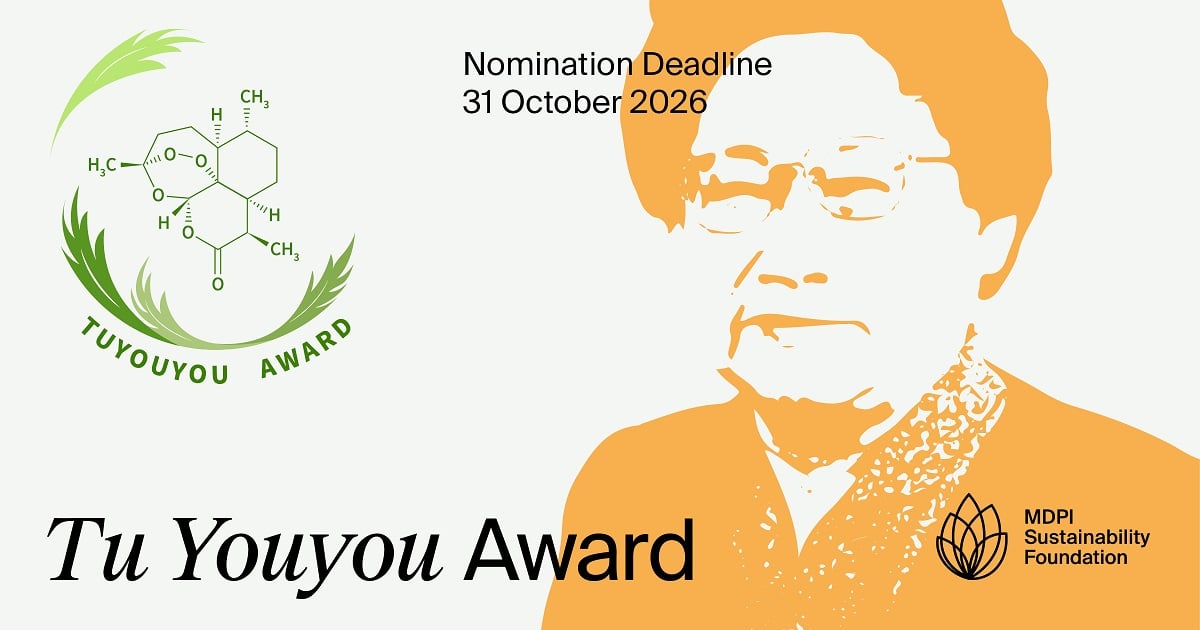
The nomination deadline for the Tu Youyou Award is approaching. Researchers are encouraged to submit nominations by 31 October 2026 (UTC-12).
The Tu Youyou Award recognizes outstanding researchers whose work has made significant contributions to natural products chemistry and medicinal chemistry, advancing scientific innovation and human health. It is named after Nobel laureate Tu Youyou, whose discovery of artemisinin has saved millions of lives.
The current award committee is chaired by Prof. Dr. William Gerwick, a Distinguished Professor at the University of California San Diego, USA, and a renowned expert in marine natural products chemistry and pharmacology. Under his leadership, the committee will evaluate nominations and recognize impactful research achievements in the related fields.
Prize:
- CHF 100,000
- A medal
- A certificate
The monetary prize will be shared equally should there be multiple recipients.
Who may be nominated?
- Scientists with outstanding achievements and contributions in the fields of natural products chemistry and medicinal chemistry.
Nominees must be individuals; team or group nominations are not permitted. Nominations are valid only for the current award cycle.
Who may submit a nomination?
- The director of the nominee’s host research institution or a recognized scientist within the field.
Self-nominations will not be considered.
Nomination materials:
- A biographical sketch
- A detailed description of the nominee’s contributions
- 5–10 representative academic publications
- A list of academic honors, awards, and funded projects
- A nomination letter signed by two nominators
How to submit?
Submit your nomination by 31 October 2026 via: https://tuyouyouprize.org/nomination/form.
For further information, please visit the Tu Youyou Award website. For any inquiries, please contact the Tu Youyou Award Team at tuyouyouaward@mdpi.com.
30 September 2026
2026 Nobel Prize—Where Breakthroughs Meet Open Sciences

Each October, the Nobel Prizes turn the world’s attention toward the discoveries that have redrawn the boundaries of science. They are science’s most prestigious recognition, and increasingly its most interdisciplinary. Recent laureates have been honored for work spanning quantum dots, machine learning, and molecular medicine, fields that rarely stay within a single discipline’s borders for long.
Open access has a growing role in that story. To date, more than 40 Nobel laureates have published their research in MDPI journals—a body of work spanning genetics, physics, chemistry, and medicine. Publishing openly means a laureate’s findings reach not only fellow scientists, but the students, clinicians, policymakers, and curious readers who would otherwise meet that work only secondhand, if at all. Open access doesn’t just carry Nobel-level research, it amplifies the voice behind it, letting the discovery speak directly to everyone it stands to affect.
This is also where MDPI’s breadth becomes an advantage. With over 500 journals covering the full spectrum of scientific inquiry, our platform mirrors the reality of modern discovery—where breakthroughs increasingly emerge at the intersection of fields, not within the walls of one. It’s this structure that lets us support interdisciplinary work from first submission to global publication, connecting researchers across borders and disciplines alike.
As this year’s laureates are announced, we’ll continue spotlighting where Nobel Prize–winning research intersects with the work of our authors, editors, and reviewers—celebrating both the achievements being recognized and the open access model that helps ensure they reach the widest possible audience.
Explore selected works by Nobel laureates within the MDPI portfolio below, and join us in celebrating the global impact of their ideas.

Put your scientific intuition to the test and join MDPI’s 2026 Nobel Prize Prediction Challenge! As we honor three decades of open research, we invite you to cast your votes for the next trailblazing laureates in chemistry, physics, and physiology or medicine. Predict the pioneer minds shaping tomorrow’s scientific legacy for a chance to win 100 CHF voucher of MDPI Video Service.
Deadline: 4 October 2026 | 18:00 CEST
Winner announcement: 16 October 2026


Discover high-impact research driving tomorrow’s breakthroughs. Browse our open access selections in Chemistry & Materials Science, Medicine & Pharmacology, and Physical Sciences, featuring key studies aligned with this year’s top Nobel prize-contending topics.
|
|
|
|


Join our distinguished Editors-in-Chief and Section Editors-in-Chief for an exclusive live discussion on this year’s Nobel Prize announcements. Our expert panel will break down the winning breakthroughs, explore their global impact, and discuss the future trajectories of open science across Chemistry, Physics, and Medicine. Don’t miss this opportunity to engage with leading voices in research.
|
|
2026 Nobel Medicine & Pharmacology Roundtable
|
|
|
2026 Nobel Physics Roundtable
|
|
|
2026 Nobel Chemistry & Materials Roundtable
|
|
|
2026 Nobel Chemistry & Materials Roundtable Session #2
|


MDPI remains committed to ensuring that the breakthroughs of today—and tomorrow—are shared, debated, and built upon by the global research community. Explore science, join the conversation, and be part of the next chapter.
30 September 2026
MDPI INSIGHTS: The CEO’s Letter #39 - Peer Review Week, Chief Publishing Officer, Tu Youyou Award, OASPA & AI

Welcome to the MDPI Insights: The CEO's Letter.
In these monthly letters, I will showcase two key aspects of our work at MDPI: our commitment to empowering researchers and our determination to facilitating open scientific exchange.
Opening Thoughts

Recognizing the People Behind Peer Review
September marked Peer Review Week 2026, this year focused on “Peer Review Capacity: Volume, Speed, and Quality.” The theme reflects a challenge across scholarly publishing: research output and submissions continue to grow, while the time and expertise researchers can dedicate to reviewing are finite.
At MDPI, more than 200,000 reviewers contribute their expertise each year. Their work is fundamental to maintaining the quality and integrity of the research we publish, and Peer Review Week gave us an opportunity not only to thank them, but also to reflect on how we can better support their contribution.

This year, we highlighted three commitments that guide our approach: protecting reviewers’ time and judgment, ensuring high-quality and efficient processes, and recognizing and rewarding reviewers for their contribution. We also shared results from our 2026 Voice of the Community surveys. Among 1,627 reviewer respondents, 86% rated their experience with MDPI as “Good” or “Excellent,” 88% said manuscripts matched their expertise, and 92% found our reviewer instructions clear and helpful. From the author perspective, 95% of 16,795 respondents agreed that reviewers’ comments helped improve their manuscripts.

Recognition is an important part of this relationship too. Through our Top 1000 Reviewers program, 743 scholars accepted awards this year, with a combined CHF 526,500 returned directly to the reviewer community through cash awards and APC vouchers. During Peer Review Week, we also created opportunities for reviewers to share their own experiences through webinars, including The Reviewer’s Perspective: Navigating Volume, Speed, and Quality in Peer Review and our UK Reviewer Club.

Peer review ultimately depends on people choosing to give their time and expertise to the work of other researchers. As publishing continues to evolve, including through new technologies and increasing research volumes, we should not lose sight of that human contribution. Thank you to all the reviewers who work with MDPI, and to our colleagues who support them every day.
Read more about Peer Review Week 2026 here.
Inside MDPI

Welcoming Dr. Constanze Schelhorn as MDPI’s Chief Publishing Officer
This month, we announced the appointment of Dr. Constanze Schelhorn as MDPI’s Chief Publishing Officer (CPO). The appointment marks an important step for MDPI and the latest chapter in a journey within the organization that now spans a decade.

Stefan Tochev (CEO, MDPI) with Constanze at STM, Frankfurt, Germany, October 2025.
Constanze joined MDPI in June 2016 and has taken on several different responsibilities across editorial, indexing, and publishing over the years.
Since 2023, she has held leadership roles as Head of Indexing and later Head of Publishing, before taking on the role of Chief Publishing Officer.
I’ve had the opportunity to work with Constanze over many of those years and to see her take on increasingly important responsibilities.
What I’ve always appreciated is the growth mindset and expertise she brings to her work, together with a commitment to quality.
She understands how MDPI works and how the publishing environment is evolving to meet the expectations of the academic communities we serve.
Looking Ahead
Publishing has changed considerably over the past decade, and that change is only accelerating. Research integrity, artificial intelligence, editorial standards, indexing requirements, new publishing models, and changing expectations from researchers and institutions are just some of the areas we are navigating.

Stefan Tochev (CEO, MDPI) with Constanze and Prof. Dr. Manoj Gupta, Editor-in-Chief of MDPI journal Technologies, in Singapore, January 2025.
MDPI has changed considerably too. As we celebrate our 30th anniversary this year, our journal portfolio now includes more than 540 titles, and the scale of our work brings greater opportunities and responsibilities.
Continuing to develop our publishing practices and ensuring that we respond to changes in academic publishing will remain important priorities for us.
Constanze’s experience across several areas of MDPI puts her in a position to help us do that.
As CPO, she will help provide strategic direction across our publishing functions while working with colleagues throughout the organization. She will also represent MDPI with external stakeholders, including industry organizations and indexing partners, ensuring that we remain engaged in the conversations shaping the future of publishing.
“Please join me in congratulating Constanze on her appointment”
Growing Together
There is another aspect of this appointment that I think is worth recognizing about MDPI. I appreciate seeing people develop alongside the organization. Constanze’s journey from joining MDPI in 2016 to becoming our Chief Publishing Officer ten years later is a good example of what can happen when experience, knowledge, and responsibility build over time.
Our 30th anniversary naturally gives us an opportunity to look back at how far MDPI has come. But it should also make us think about the people who will shape where we go next. I’m pleased that Constanze will be one of those people.
Please join me in congratulating Constanze on her appointment as we look forward to continuing to work with her in this new role and seeing what we can accomplish together.

P.S. A fun fact about Constanze: she loves climbing. So, if she’s visiting your city and you’re wondering how to make her feel at home, point her towards the nearest climbing gym.
Here’s a photo from a climbing session during our visit to the Singapore office in January 2025.
Impactful Research

A Decade of the Tu Youyou Award: Celebrating Scientific Excellence
Few examples demonstrate the potential impact of scientific research as clearly as Professor Tu Youyou's discovery of artemisinin. Her team’s work contributed to the development of artemisinin-based combination therapies for malaria, which the World Health Organization (WHO) recommends as the main treatment for P. falciparum malaria.
Behind that achievement is also a remarkable scientific journey: drawing on knowledge from traditional Chinese medicine, Professor Tu and her team investigated hundreds of extracts before identifying artemisinin and helping transform the treatment of malaria.
This legacy is at the heart of the Tu Youyou Award, established by MDPI in 2016 to recognize outstanding achievements in natural products chemistry and medicinal chemistry.
“Professor Tu Youyou's scientific journey is an extraordinary example”
Ten Years of the Tu Youyou Award
This year marks a decade since the award was established. Over that time, six scholars have been recognized as Tu Youyou laureates for their contributions to research and innovation.
The connection between MDPI and Professor Tu Youyou’s work goes back even further. In 2009, MDPI Founder and President, Dr. Shu-Kun Lin, launched a Special Issue in MDPI journal Molecules commemorating Professor Tu’s 80th birthday, several years before the establishment of the award.
Below is a photo of Professor Tu Youyou with MDPI Founder and President Dr. Shu-Kun Lin during an MDPI visit to congratulate Professor Tu on receiving the 2015 Nobel Prize in Physiology or Medicine.

The 2026 Tu Youyou Award continues this tradition, awarding CHF 100,000, together with a medal and certificate, to recognize the achievements in natural products chemistry and medicinal chemistry.
Scientific Excellence and Impact
Professor Dr. William Gerwick, Chair of the 2026 Tu Youyou Award Committee, recently reflected on what distinguishes the award: “This award is truly special in that it recognizes scientific excellence as well as impact.”
I think this combination is important. Research advances our understanding, but its influence can extend much further: inspiring new discoveries, informing new treatments, addressing societal challenges, and ultimately improving people’s lives.
Professor Tu Youyou's scientific journey is an extraordinary example. Her work combined rigorous scientific investigation with a problem of enormous human importance, ultimately contributing to treatments that have transformed the fight against malaria.
Recognizing researchers who continue this tradition allows us to celebrate both scientific achievement and the broader contribution research can make to society.
Nominations Open Until 31 October
Nominations for the 2026 Tu Youyou Award are now open to scientists with outstanding achievements and contributions in natural products chemistry and medicinal chemistry. Nominations may be submitted by directors of nominees’ host research institutions or scientists within the field. Self-nominations are not accepted.
The nomination deadline is 31 October 2026, with the announcement of the winner planned for March 2027.
Learn More
Coming Together for Science

OASPA 2026: Conversations Shaping the Future of Open Access
From 21–23 September, I attended the 2026 Conference of the Open Access Scholarly Publishing Association (OASPA) in Zagreb, Croatia.
MDPI has been a Platinum Sponsor of the OASPA conference for several years, supporting an event that brings together the open access (OA) community to discuss some of the opportunities and challenges shaping publishing. This year, MDPI also sponsored the conference reception at the City Museum of Zagreb.

The program covered topics from sustainable publishing and research assessment to open infrastructure, new models for OA agreements, and, of course, the growing influence of artificial intelligence (AI). For me, though, the value of conferences like OASPA goes beyond the program. It’s about hearing different perspectives from across publishing, reconnecting with familiar faces, building new relationships, and having conversations that sometimes lead somewhere unexpected.

Stefan Tochev (CEO, MDPI) at the OASPA conference in Zagreb, Croatia.
Open Access in the Age of AI
One discussion I particularly enjoyed was the opening-day panel, “Does open access still matter in a Gen AI world?” As AI continues to become an interface through which people discover and interact with research, making knowledge openly available remains important. But questions around trust, provenance, governance, and responsibility are becoming more difficult to separate from the OA conversation.
Who is responsible for ensuring that AI-generated or AI-mediated information can be trusted? What responsibilities sit with publishers, researchers, institutions, infrastructure providers, and AI companies? And, perhaps most importantly, how do we work together rather than trying to address these challenges in isolation?
There are no simple answers, but hearing these discussions highlighted the fact that many of us across publishing are working with similar questions. Creating spaces where we can explore them together is valuable.
“Who is responsible for ensuring that AI-generated or AI-mediated information can be trusted?”
Conversations That Lead Somewhere
The conference also reminded me of the value of simply meeting people. I had a great conversation with César Pallares from Consortia Colombia about the publishing ecosystem in Colombia and the possibility of exploring a consortium agreement with MDPI in Colombia. César was very open to continuing the conversation, and I’ve already connected this opportunity with colleagues from our Institutional Open Access Program (IOAP) team.
I also caught up with Yvonne Campfens, Executive Director of OA Switchboard, who has recently taken on the role of Director for the Academic Publishing in Europe (APE) conference. We look forward to continuing to support APE as part of MDPI’s broader commitment to academic and publishing-industry events.

And, of course, it was good to connect with familiar faces from previous OASPA conferences and meet new ones. These conversations happen over coffee, between sessions, at receptions, or sometimes while walking through a city. Not every conversation needs to result in a project or partnership. Sometimes the value is simply understanding another perspective, sharing what we’re working on, or beginning a relationship that develops over time.
Thank you to the OASPA team, speakers, moderators, participants, and fellow sponsors for creating that space in Zagreb. I’m pleased that MDPI could once again support the conference and, more importantly, be part of the conversations taking place there. I look forward to seeing where some of them lead.
Closing Thoughts

AI Is Making Science More Accessible. How Do We Keep It Trustworthy?
Artificial Intelligence (AI) is changing how people find, understand, and interact with scientific research.
For decades, one of the biggest barriers to engaging with scientific research was access. Open Access (OA) has helped change that, with around 61% of global journal articles, reviews, and conference papers published in 2025 now openly accessible. AI is now beginning to lower another barrier: understanding. Researchers can quickly navigate large volumes of literature, patients can ask for complex medical research to be explained in plain language, and policymakers can more easily explore findings outside their own areas of expertise.

But easier access and understanding don’t automatically make scientific information easier to trust.
This is the topic explored by our Scientific Communications Lead, Dr. Giulia Stefenelli, in her recent article for Research Information, Scientific literacy must keep pace with artificial intelligence.
A recent study cited in the article found that when GPT-4o was tested without external retrieval and asked to cite recent scientific literature, it fabricated citations in 78–90% of cases. By contrast, OpenScholar, a specialized AI system that retrieves information from millions of OA papers, achieved citation accuracy comparable to human experts.
One line about the gap between AI content generation and verification particularly stood out to me: “Generation is becoming cheap, but verification is not.” While AI can reproduce the appearance of credible scientific information, verifying the underlying data, references, methods, and conclusions still requires time, expertise, and access to the evidence.
“The important question is whether the underlying research can be trusted”
Detection Is Not Verification
Giulia’s distinction between AI detection and research verification is particularly relevant to scholarly publishing. A manuscript can contain AI-assisted language and report sound research. Equally, something written entirely by a person can contain fabricated data, inappropriate methods, or unsupported conclusions. The important question isn’t only “Was AI used?” but whether the underlying research can be trusted.
For publishers, this makes strong editorial processes, expert peer review, research integrity checks, transparency, and human accountability increasingly important.
A Shared Responsibility
Giulia argues that publishers cannot address this challenge alone. Researchers, institutions, publishers, technology providers, and readers all have a role to play in how scientific information is created, evaluated, communicated, and understood.
As AI continues to develop, our understanding of scientific literacy must develop alongside it. Making knowledge accessible and helping people understand it are important. The next question is: how do we make it easier for people to examine where information comes from and decide how much confidence it deserves?
You can read the full article on Research Information. It is a great example of the expertise within MDPI contributing to conversations about the future of scientific publishing and communications. Technology can help us address some of these challenges, but ultimately people must remain accountable for the decisions that shape the scientific record.
Chief Executive Officer
MDPI AG
29 September 2026
Cells | Explore Papers and Special Issues on Epigenetic Regulation

We are delighted to share a collection of papers on epigenetic regulation published from 2024 to 2025 in Cells (ISSN 2073-4409).
In addition, we would like to highlight several Special Issues related to this topic that are currently open for submission.
1. “Nuclear mTOR Signaling Orchestrates Transcriptional Programs Underlying Cellular Growth and Metabolism”
by Tinghan Zhao, Jialin Fan, Ahmed Abu-Zaid, Stephen K. Burley and X.F. Steven Zheng
Cells 2024, 13(9), 781; https://doi.org/10.3390/cells13090781
Available online: https://www.mdpi.com/2073-4409/13/9/781
2. “SASP Modulation for Cellular Rejuvenation and Tissue Homeostasis: Therapeutic Strategies and Molecular Insights”
by Saud Alqahtani, Taha Alqahtani, Krishnaraju Venkatesan, Durgaramani Sivadasan, Rehab Ahmed, Nizar Sirag, Hassabelrasoul Elfadil, Hanem Abdullah Mohamed, Haseena T.A., Rasha Elsayed Ahmed et al.
Cells 2025, 14(8), 608; https://doi.org/10.3390/cells14080608
Available online: https://www.mdpi.com/2073-4409/14/8/608
3. “Mitochondrial Dysfunction: The Silent Catalyst of Kidney Disease Progression”
by Nikola Pavlović, Marinela Križanac, Marko Kumrić, Katarina Vukojević and Joško Božić
Cells 2025, 14(11), 794; https://doi.org/10.3390/cells14110794
Available online: https://www.mdpi.com/2073-4409/14/11/794
4. “Crosstalk Between Oxidative Stress and Epigenetics: Unveiling New Biomarkers in Human Infertility”
by Sulagna Dutta, Pallav Sengupta, Filomena Mottola, Sandipan Das, Arif Hussain, Ahmed Ashour, Lucia Rocco, Kadirvel Govindasamy, Israel Maldonado Rosas and Shubhadeep Roychoudhury
Cells 2024, 13(22), 1846; https://doi.org/10.3390/cells13221846
Available online: https://www.mdpi.com/2073-4409/13/22/1846
5. “Valeric Acid: A Gut-Derived Metabolite as a Potential Epigenetic Modulator of Neuroinflammation in the Gut–Brain Axis”
by Chiara Paciolla, Michele Manganelli, Mariagiovanna Di Chiano, Francesca Montenegro, Anna Gallone, Fabio Sallustio and Gabriella Guida
Cells 2025, 14(22), 1823; https://doi.org/10.3390/cells14221823
Available online: https://www.mdpi.com/2073-4409/14/22/1823
6. “Epigenetic Regulation Through Histone Deacetylation: Implications and Therapeutic Potential in Hepatocellular Carcinoma”
by Khulah Sadia, Annalisa Castagna, Silvia Udali, Francesca Ambrosani, Patrizia Pattini, Ruggero Beri, Giuseppe Argentino, Maria Masutti, Sara Moruzzi and Simonetta Friso
Cells 2025, 14(17), 1337; https://doi.org/10.3390/cells14171337
Available online: https://www.mdpi.com/2073-4409/14/17/1337
7. “Plant-Derived Antioxidants as Modulators of Redox Signaling and Epigenetic Reprogramming in Cancer”
by Thi Thuy Truong, Alka Ashok Singh, Soonhyuk Tak, Sungsoo Na, Jaeyeop Choi, Junghwan Oh and Sudip Mondal
Cells 2025, 14(24), 1948; https://doi.org/10.3390/cells14241948
Available online: https://www.mdpi.com/2073-4409/14/24/1948
8. “Therapeutic Horizons: Gut Microbiome, Neuroinflammation, and Epigenetics in Neuropsychiatric Disorders”
by Shabnam Nohesara, Hamid Mostafavi Abdolmaleky, Ahmad Pirani and Sam Thiagalingam
Cells 2025, 14(13), 1027; https://doi.org/10.3390/cells14131027
Available online: https://www.mdpi.com/2073-4409/14/13/1027
9. “HOTAIR Promotes the Hyperactivation of PI3K/Akt and Wnt/β-Catenin Signaling Pathways via PTEN Hypermethylation in Cervical Cancer”
by Samuel Trujano-Camacho, David Cantú-de León, Eloy Pérez-Yepez, Carlos Contreras-Romero, Jossimar Coronel-Hernandez, Oliver Millan-Catalan, Mauricio Rodríguez-Dorantes, Cesar López-Camarillo, Concepción Gutiérrez-Ruiz, Nadia Jacobo-Herrera et al.
Cells 2024, 13(17), 1484; https://doi.org/10.3390/cells13171484
Available online: https://www.mdpi.com/2073-4409/13/17/1484
10. “Dysfunction of Small-Conductance Ca2+-Activated Potassium (SK) Channels Drives Amygdala Hyperexcitability and Neuropathic Pain Behaviors: Involvement of Epigenetic Mechanisms”
by Vadim Yakhnitsa, Jeremy Thompson, Olga Ponomareva, Guangchen Ji, Takaki Kiritoshi, Lenin Mahimainathan, Deborah Molehin, Kevin Pruitt and Volker Neugebauer
Cells 2024, 13(12), 1055; https://doi.org/10.3390/cells13121055
Available online: https://www.mdpi.com/2073-4409/13/12/1055
11. “Deciphering the Transcriptional Metabolic Profile of Adipose-Derived Stem Cells During Osteogenic Differentiation and Epigenetic Drug Treatment”
by Giulia Gerini, Alice Traversa, Fabrizio Cece, Matteo Cassandri, Paola Pontecorvi, Simona Camero, Giulia Nannini, Enrico Romano, Francesco Marampon, Mary Anna Venneri et al.
Cells 2025, 14(2), 135; https://doi.org/10.3390/cells14020135
Available online: https://www.mdpi.com/2073-4409/14/2/135
12. “Oligodendrocyte-Specific STAT5B Overexpression Ameliorates Myelin Impairment in Experimental Models of Parkinson’s Disease”
by Yibo Li, Zhaowen Su, Jitong Zhai, Qing Liu, Hongfang Wang, Jiaxin Hao, Xiaofeng Tian, Jiamin Gao, Dandan Geng and Lei Wang
Cells 2025, 14(15), 1145; https://doi.org/10.3390/cells14151145
Available online: https://www.mdpi.com/2073-4409/14/15/1145
13. “Epigenetic Changes Regulating Epithelial–Mesenchymal Plasticity in Human Trophoblast Differentiation”
by William E. Ackerman IV, Mauricio M. Rigo, Sonia C. DaSilva-Arnold, Catherine Do, Mariam Tariq, Martha Salas, Angelica Castano, Stacy Zamudio, Benjamin Tycko and Nicholas P. Illsley
Cells 2025, 14(13), 970; https://doi.org/10.3390/cells14130970
Available online: https://www.mdpi.com/2073-4409/14/13/970
14. “Epigenetic Reprogramming of Cell Identity in the Rat Primary Neuron–Glia Cultures Involves Histone Serotonylation”
by Anastasia A. Borodinova, Yulia A. Leontovich, Alexander P. Beletskiy, Alexander V. Revishchin, Galina V. Pavlova and Pavel M. Balaban
Cells 2025, 14(12), 905; https://doi.org/10.3390/cells14120905
Available online: https://www.mdpi.com/2073-4409/14/12/905
15. “Epigenetic Inhibitors Differentially Impact TGF-β1 Signaling Cascades in COPD Airway Smooth Muscle Cells”
by Karosham Diren Reddy, Dikaia Xenaki, Ian M. Adcock, Brian G. G. Oliver and Razia Zakarya
Cells 2025, 14(1), 31. https://doi.org/10.3390/cells14010031
Available online: https://www.mdpi.com/2073-4409/14/1/31
Relevant Special Issues:
“Cellular Reprogramming and Epigenetic Control in Tissue Regeneration“
Guest Editor: Dr. Sanjeeb Kumar Sahu
Deadline for manuscript submissions: 20 January 2027
“Reprogramming Myeloid Cells: From Epigenetic Mechanisms to Therapeutic Applications in Inflammation and Disease“
Guest Editor: Dr. Liwu Li
Deadline for manuscript submissions: 31 March 2027

“Molecular Mechanisms and Epigenetic Regulation of Bone Metastasis“
Guest Editors: Prof. Dr. Khalid Said Mohammad and Dr. Ira-Ida Skvortsova
Deadline for manuscript submissions: 30 April 2027

24 September 2026
Cells | Explore Papers and Special Issues on Pluripotent Stem Cells

We are delighted to share a collection of papers on pluripotent stem cells published from 2024 to 2025 in Cells (ISSN 2073-4409).
In addition, we would like to highlight several Special Issues related to this topic that are currently open for submission.
1. “Brain Organoids and Assembloids—From Disease Modeling to Drug Discovery”
by Aderonke O. Ajongbolo and Sigrid A. Langhans
Cells 2025, 14(11), 842; https://doi.org/10.3390/cells14110842
Available online: https://www.mdpi.com/2073-4409/14/11/842
2. “Induced Pluripotent Stem Cells-Based Regenerative Therapies in Treating Human Aging-Related Functional Decline and Diseases”
by Peijie Yu, Bin Liu, Cheng Dong and Yun Chang
Cells 2025, 14(8), 619; https://doi.org/10.3390/cells14080619
Available online: https://www.mdpi.com/2073-4409/14/8/619
3. “Interconversion of Cancer Cells and Induced Pluripotent Stem Cells”
by Drishty B. Sarker, Yu Xue, Faiza Mahmud, Jonathan A. Jocelyn and Qing-Xiang Amy Sang
Cells 2024, 13(2), 125; https://doi.org/10.3390/cells13020125
Available online: https://www.mdpi.com/2073-4409/13/2/125
4. “Current Advances and Future Directions of Pluripotent Stem Cells-Derived Engineered Heart Tissue for Treatment of Cardiovascular Diseases”
by Xingyu He, Angela Good, Wael Kalou, Waqas Ahmad, Suchandrima Dutta, Sophie Chen, Charles Noah Lin, Karthickeyan Chella Krishnan, Yanbo Fan, Wei Huang et al.
Cells 2024, 13(24), 2098; https://doi.org/10.3390/cells13242098
Available online: https://www.mdpi.com/2073-4409/13/24/2098
5. “Human-Induced Pluripotent Stem Cells (iPSCs) for Disease Modeling and Insulin Target Cell Regeneration in the Treatment of Insulin Resistance: A Review”
by Sama Thiab, Juberiya M. Azeez, Alekya Anala, Moksha Nanda, Somieya Khan, Alexandra E. Butler and Manjula Nandakumar
Cells 2025, 14(15), 1188; https://doi.org/10.3390/cells14151188
Available online: https://www.mdpi.com/2073-4409/14/15/1188
6. “Age-Related Neurodegenerative Diseases: A Stem Cell’s Perspective”
by Belén Calvo, Pierre Schembri-Wismayer and María Beatriz Durán-Alons
Cells 2025, 14(5), 347; https://doi.org/10.3390/cells14050347
Available online: https://www.mdpi.com/2073-4409/14/5/347
7. “Hypoimmunogenic Human iPSCs for Repair and Regeneration in the CNS”
by Haiwei Zhang, Hongxia Zhou, Xugang Xia, Qilin Cao and Ying Liu
Cells 2025, 14(16), 1248; https://doi.org/10.3390/cells14161248
Available online: https://www.mdpi.com/2073-4409/14/16/1248
8. “Updated Applications of Stem Cells in Hypoplastic Left Heart Syndrome”
by Rui Xiao, Haleema Darr, Zarif Khan and Qingzhong Xiao
Cells 2025, 14(17), 1396; https://doi.org/10.3390/cells14171396
Available online: https://www.mdpi.com/2073-4409/14/17/1396
9. “Neonicotinoid Pesticides Affect Developing Neurons in Experimental Mouse Models and in Human Induced Pluripotent Stem Cell (iPSC)-Derived Neural Cultures and Organoids”
by Alessandro Mariani, Davide Comolli, Roberto Fanelli, Gianluigi Forloni and Massimiliano De Paola
Cells 2024, 13(15), 1295; https://doi.org/10.3390/cells13151295
Available online: https://www.mdpi.com/2073-4409/13/15/1295
10. “Induced Pluripotent Stem Cell-Derived Exosomes Promote Peripheral Nerve Regeneration in a Rat Sciatic Nerve Crush Injury Model: A Safety and Efficacy Study”
by Fatima Aldali, Yujie Yang, Chunchu Deng, Xiangling Li, Xiaojian Cao, Jia Xu, Yajie Li, Jianlin Ding and Hong Chen
Cells 2025, 14(7), 529; https://doi.org/10.3390/cells14070529
Available online: https://www.mdpi.com/2073-4409/14/7/529
11. “Human-Induced Pluripotent Stem Cell-Derived Neural Progenitor Cells Showed Neuronal Differentiation, Neurite Extension, and Formation of Synaptic Structures in Rodent Ischemic Stroke Brains”
by Yonehiro Kanemura, Atsuyo Yamamoto, Asako Katsuma, Hayato Fukusumi, Tomoko Shofuda, Daisuke Kanematsu, Yukako Handa, Miho Sumida, Ema Yoshioka, Yutaka Mine et al.
Cells 2024, 13(8), 671; https://doi.org/10.3390/cells13080671
Available online: https://www.mdpi.com/2073-4409/13/8/671
12. “Enhancing Maturation and Translatability of Human Pluripotent Stem Cell-Derived Cardiomyocytes through a Novel Medium Containing Acetyl-CoA Carboxylase 2 Inhibitor”
by Cláudia Correia, Jonas Christoffersson, Sandra Tejedor, Saïd El-Haou, Meztli Matadamas-Guzman, Syam Nair, Pierre Dönnes, Gentian Musa, Mattias Rohman, Monika Sundqvist et al.
Cells 2024, 13(16), 1339; https://doi.org/10.3390/cells13161339
Available online: https://www.mdpi.com/2073-4409/13/16/1339
13. “Generation of Individualized, Standardized, and Electrically Synchronized Human Midbrain Organoids”
by Sanae El Harane, Bahareh Nazari, Nadia El Harane, Manon Locatelli, Bochra Zidi, Stéphane Durual, Abderrahim Karmime, Florence Ravier, Adrien Roux, Luc Stoppini et al.
Cells 2025, 14(15), 1211; https://doi.org/10.3390/cells14151211
Available online: https://www.mdpi.com/2073-4409/14/15/1211
14. “Electrophysiological Phenotyping of hiPSC-Derived Atrial Cardiomyocytes Using Automated Patch-Clamp: A Platform for Studying Atrial Inherited Arrhythmias”
by Verónica Jiménez-Sábado, Hosna Babini, Peter C. Ruben, Eric A. Accili, Thomas W. Claydon, Leif Hove-Madsen and Glen F. Tibbits
Cells 2025, 14(24), 1941; https://doi.org/10.3390/cells14241941
Available online: https://www.mdpi.com/2073-4409/14/24/1941
15. “Transcriptomic Profiling of iPS Cell-Derived Hepatocyte-like Cells Reveals Their Close Similarity to Primary Liver Hepatocytes”
by Saqlain Suleman, Sharmin Alhaque, Andrew Guo, Aaron Zhang, Serena Fawaz, Stefany Perera, Mohammad S. Khalifa, Hassan Rashidi, David C. Hay and Michael Themis
Cells 2025, 14(12), 925; https://doi.org/10.3390/cells14120925
Available online: https://www.mdpi.com/2073-4409/14/12/925
16. “Targeting Diabetic Retinopathy with Human iPSC-Derived Vascular Reparative Cells in a Type 2 Diabetes Model”
by Sergio Li Calzi, Dibyendu Chakraborty, Ping Hu, Ram Prasad, Yvonne Adu-Rutledge, Cristiano Vieira, Fadeela Sheini, Michael E. Boulton, Mervin C. Yoder, Changde Cheng et al.
Cells 2025, 14(17), 1352; https://doi.org/10.3390/cells14171352
Available online: https://www.mdpi.com/2073-4409/14/17/1352
Relevant Special Issues:
“Recent Advances in Novel Cell and Gene Therapies for the Treatment of Immune Diseases”
Guest Editor: Dr. Qingdong Guan
Deadline for manuscript submissions: 15 November 2026

“Advances in Human Pluripotent Stem Cells”
Guest Editors: Dr. Peggy Arthur, Dr. Sangeetha Kandoi, and Dr. Nagavendra Kommineni
Deadline for manuscript submissions: 25 January 2027

23 September 2026
Cells | Highly Cited Review Papers Published in 2026

We are delighted to share a collection of highly cited review papers published in 2026 in the journal Cells (ISSN 2073-4409).
1. “Targeting Glycolytic Metabolism in Cancer Therapy: Current Approaches and Future Perspectives”
Genetic Determinants of Wound Healing: Monogenic Disorders and Polygenic Influence
by Shuang Li, Jie Gong, Baorong Kang, Zelong Wang, Yuxuan Ma, Xinhua Xia and Hong Yan
Cells 2026, 15(4), 362; https://doi.org/10.3390/cells15040362
Available online: https://www.mdpi.com/2073-4409/15/4/362
2. “Artificial Intelligence for Exosomal Biomarker Discovery for Cardiovascular Diseases: Multi-Omics Integration, Reproducibility, and Translational Prospects”
by Rasit Dinc and Nurittin Ardic
Cells 2026, 15(3), 304; https://doi.org/10.3390/cells15030304
Available online: https://www.mdpi.com/2073-4409/15/3/304
3. “Decoding the Endocrine Code of Skeletal Muscle: Myokines, Exerkines, and Inter-Organ Crosstalk in Metabolic Health and Disease”
by Young-Sool Hah, Jeongyun Hwang, Seung-Jun Lee and Seung-Jin Kwag
Cells 2026, 15(4), 318; https://doi.org/10.3390/cells15040318
Available online: https://www.mdpi.com/2073-4409/15/4/318
4. “Genetic Determinants of Wound Healing: Monogenic Disorders and Polygenic Influence”
by Stephanie M. Mueller, Nalani Miller, Jasleen Gill, LaYow C. Yu, Michael Drake Pike and Dennis P. Orgill
Cells 2026, 15(1), 74; https://doi.org/10.3390/cells15010074
Available online: https://www.mdpi.com/2073-4409/15/1/74
5. “Endometriosis and Oocyte Quality: Morphological Alterations, Developmental Competence, and Modifiable Strategies for Reproductive Longevity”
by Martina Contestabile, Ilaria Marzi, Calogero Mangione, Ferdinando Franzoni, Paolo Giovanni Artini and Simona Daniele
Cells 2026, 15(3), 296; https://doi.org/10.3390/cells15030296
Available online: https://www.mdpi.com/2073-4409/15/3/296
6. “Neurogenesis and Neuroinflammation in Dialogue: Mapping Gaps, Modulating Microglia, Rewiring Aging”
by Masaru Tanaka
Cells 2026, 15(1), 78; https://doi.org/10.3390/cells15010078
Available online: https://www.mdpi.com/2073-4409/15/1/78
7. “Dysregulation of Immune Mediators and Synaptic Plasticity in Central Nervous System Disorders”
by Paola Imbriani, Clara D’Ambra, Roberta De Mori, Marta Ionta, Alessandro Renna and Paola Bonsi
Cells 2026, 15(2), 201; https://doi.org/10.3390/cells15020201
Available online: https://www.mdpi.com/2073-4409/15/2/201
8. “Targeting Amyloid Beta Aggregation and Neuroinflammation in Alzheimer's Disease: Advances and Future Directions”
by Ioanna Dagla, Faidon Gkikas, Evagelos Gikas and Anthony Tsarbopoulos
Cells 2026, 15(3), 295; https://doi.org/10.3390/cells15030295
Available online: https://www.mdpi.com/2073-4409/15/3/295
9. “Maternal Overnutrition and Fetal Programming: Long-Term Metabolic, Cognitive, and Epigenetic Consequences”
by Gabriella Schiera, Giulia Macajone, Sara Volpes, Laura Greco, Carlo Maria Di Liegro, Graziella Serio, Fabio Caradonna and Flores Naselli
Cells 2026, 15(4), 366; https://doi.org/10.3390/cells15040366
Available online: https://www.mdpi.com/2073-4409/15/4/366
10. “Gene Editing Therapies Targeting Lipid Metabolism for Cardiovascular Disease: Tools, Delivery Strategies, and Clinical Progress”
by Zhuoying Ren, Jun Zhou, Dongshan Yang, Yanhong Guo, Jifeng Zhang, Jie Xu and Y Eugene Chen
Cells 2026, 15(2), 134; https://doi.org/10.3390/cells15020134
Available online: https://www.mdpi.com/2073-4409/15/2/134
22 September 2026
Cells | Explore Papers and Special Issues on Aging

We are delighted to share a collection of papers on aging published from 2024 to 2025 in Cells (ISSN 2073-4409).
In addition, we would like to highlight several Special Issues related to this topic that are currently open for submission.
1. “Molecular and Cellular Effects of Microplastics and Nanoplastics: Focus on Inflammation and Senescence”
by Faiza Mahmud, Drishty B. Sarker, Jonathan A. Jocelyn and Qing-Xiang Amy Sang
Cells 2024, 13(21), 1788; https://doi.org/10.3390/cells13211788
Available online: https://www.mdpi.com/2073-4409/13/21/1788
2. “Oxidative Stress and Redox Imbalance: Common Mechanisms in Cancer Stem Cells and Neurodegenerative Diseases”
by Nikhil Raj Selvaraj, Durga Nandan, Bipin G. Nair, Vipin A. Nair, Parvathy Venugopal and Rajaguru Aradhya
Cells 2025, 14(7), 511; https://doi.org/10.3390/cells14070511
Available online: https://www.mdpi.com/2073-4409/14/7/511
3. “Cellular Senescence, Mitochondrial Dysfunction, and Their Link to Cardiovascular Disease”
by Maria Camacho-Encina, Laura K. Booth, Rachael E. Redgrave, Omowumi Folaranmi, Ioakim Spyridopoulos and Gavin D. Richardson
Cells 2024, 13(4), 353; https://doi.org/10.3390/cells13040353
Available online: https://www.mdpi.com/2073-4409/13/4/353
4. “SASP Modulation for Cellular Rejuvenation and Tissue Homeostasis: Therapeutic Strategies and Molecular Insights”
by Saud Alqahtani, Taha Alqahtani, Krishnaraju Venkatesan, Durgaramani Sivadasan, Rehab Ahmed, Nizar Sirag, Hassabelrasoul Elfadil, Hanem Abdullah Mohamed, Haseena T.A., Rasha Elsayed Ahmed et al.
Cells 2025, 14(8), 608; https://doi.org/10.3390/cells14080608
Available online: https://www.mdpi.com/2073-4409/14/8/608
5. “Molecular Mechanisms of Autophagy Decline during Aging”
by Shaun H. Y. Lim, Malene Hansen and Caroline Kumsta
Cells 2024, 13(16), 1364; https://doi.org/10.3390/cells13161364
Available online: https://www.mdpi.com/2073-4409/13/16/1364
6. “Recent Advances in Aging and Immunosenescence: Mechanisms and Therapeutic Strategies”
by Shuaiqi Wang, Tong Huo, Mingyang Lu, Yueqi Zhao, Jianmin Zhang, Wei He and Hui Chen
Cells 2025, 14(7), 499; https://doi.org/10.3390/cells14070499
Available online: https://www.mdpi.com/2073-4409/14/7/499
7. “Mitochondrial Alterations, Oxidative Stress, and Therapeutic Implications in Alzheimer’s Disease: A Narrative Review”
by Erica Spina, Riccardo Rocco Ferrari, Elisa Pellegrini, Mauro Colombo, Tino Emanuele Poloni, Antonio Guaita and Annalisa Davin
Cells 2025, 14(3), 229; https://doi.org/10.3390/cells14030229
Available online: https://www.mdpi.com/2073-4409/14/3/229
8. “Senolytics and Senomorphics Targeting p38MAPK/NF-κB Pathway Protect Endothelial Cells from Oxidative Stress-Mediated Premature Senescence”
by Jingyuan Ya and Ulvi Bayraktutan
Cells 2024, 13(15), 1292; https://doi.org/10.3390/cells13151292
Available online: https://www.mdpi.com/2073-4409/13/15/1292
9. “Nobiletin Ameliorates Aging of Chicken Ovarian Prehierarchical Follicles by Suppressing Oxidative Stress and Promoting Autophagy”
by Jingchun Bai, Xinyu Wang, Yiqiu Chen, Qiongyu Yuan, Zhaoyu Yang, Yuling Mi and Caiqiao Zhang
Cells 2024, 13(5), 415; https://doi.org/10.3390/cells13050415
Available online: https://www.mdpi.com/2073-4409/13/5/415
10. “Preventive Effect of Fisetin on Follicular Granulosa Cells Senescence via Attenuating Oxidative Stress and Upregulating the Wnt/β-Catenin Signaling Pathway”
by Juan Dong, Zhaoyu Yang, Qiongyu Yuan, Weidong Zeng, Yuling Mi and Caiqiao Zhang
Cells 2025, 14(21), 1704; https://doi.org/10.3390/cells14211704
Available online: https://www.mdpi.com/2073-4409/14/21/1704
11. “The Role of Senescence in Experimental Periodontitis at the Causal Level: An in Vivo Study”
by Xiaogang Chu, Mahmoud Elashiry, Angelica Carroll, Celine Joyce Cornelius Timothius, Christopher W. Cutler and Ranya Elsayed
Cells 2025, 14(3), 226; https://doi.org/10.3390/cells14030226
Available online: https://www.mdpi.com/2073-4409/14/3/226
12. “Age-Related Mitochondrial Alterations Contribute to Myocardial Responses During Sepsis”
by Jiayue Du, Qing Yu, Olufisayo E. Anjorin and Meijing Wang
Cells 2025, 14(15), 1221; https://doi.org/10.3390/cells14151221
Available online: https://www.mdpi.com/2073-4409/14/15/1221
13. “Porcine Single-Eye Retinal Pigment Epithelium Cell Culture for Barrier and Polarity Studies”
by Philipp Dörschmann, Sina von der Weppen, Emi Koyama, Johann Roider and Alexa Klettner
Cells 2025, 14(13), 1007; https://doi.org/10.3390/cells14131007
Available online: https://www.mdpi.com/2073-4409/14/13/1007
14. “Aging Alters mRNA Processing in the Mouse Ovary”
by Kevin Vo, Grace J. Pei, Ramkumar Thiyagarajan, Patrick E. Fields and M. A. Karim Rumi
Cells 2025, 14(13), 996; https://doi.org/10.3390/cells14130996
Available online: https://www.mdpi.com/2073-4409/14/13/996
15. “A20 and TNIP-3 Reduce NF-κB-Mediated Paracrine Responses to Hypoxia/Hyperglycemia-Induced Endothelial Senescence
by Lara Russo, Serena Babboni, Serena Del Turco and Giuseppina Basta
Cells 2025, 14(23), 1908; https://doi.org/10.3390/cells14231908
Available online: https://www.mdpi.com/2073-4409/14/23/1908
16. “Role of Hemocytes in the Aging of Drosophila Male Germline”
by Virginia Varga, Janka Szinyákovics, Anikó Bebes, Fanni Szikszai and Tibor Kovács
Cells 2025, 14(4), 315; https://doi.org/10.3390/cells14040315
Available online: https://www.mdpi.com/2073-4409/14/4/315
Relevant Special Issues:
“Circadian Rhythms in Action: Cellular and Molecular Mechanisms Revealed by Model Organisms”
Guest Editor: Dr. Girish Chandra Melkani
Deadline for manuscript submissions: 30 November 2026

“From Inflammaging to Dementia: Cellular and Molecular Drivers of Cognitive Decline”
Guest Editors: Prof. Dr. Michael P. McDonald and Dr. Mohammad Moshahid Khan
Deadline for manuscript submissions: 28 January 2027

“Aging and Neurodegeneration: Molecular Insights and Emerging Strategies”
Guest Editor: Dr. Piotr Paweł Chmielewski
Deadline for manuscript submissions: 30 April 2027

7 September 2026
Meet Us at the Wrocław Cytology Days, 22–24 October 2026, Wrocław, Poland

Conference: Wrocław Cytology Days
Date: 22−24 October 2026
Place: Wrocław, Poland
Conference website: https://wroclawskiednicytologiczne.syskonf.pl/
We are pleased to announce that MDPI will be participating as an exhibitor at the Wrocław Cytology Days, which will be held from 22 to 24 October 2026 in Wrocław, Poland.
We invite you to join us at the Hotel Mercure Wrocław Centrum to explore topics in cytology. The Scientific Committee has prepared a balanced and engaging program covering various aspects of the field. The three-day event—which includes one day dedicated exclusively to workshops—will feature lectures and microscopy workshops. The full program is available in the tab above.
As part of our commitment to supporting high-quality research in these fields, MDPI is proud to sponsor the event through the participation of the following journals:
Our editorial team will be available on site and would be delighted to meet with attendees. If you are attending the conference, feel free to stop by our booth to learn more about our open access publishing opportunities, ongoing Special Issues, and how we support researchers in advancing their work.
We look forward to meeting you in Wrocław!
3 September 2026
Prof. Dr. David C. Hay Appointed Section Editor-in-Chief of Section “Cell and Gene Therapy” in Cells

We are honored to welcome Prof. Dr. David C. Hay from the University of Edinburgh as the new Section Editor-in-Chief of the “Cell and Gene Therapy” Section.
On this occasion, we had the pleasure of speaking with Prof. Dr. Hay about his new role, his vision for the Section, and his thoughts on the future of the field. It will be exciting to see the Section continue to grow under his leadership and further strengthen its role as a platform for high-quality, innovative research.
1. Could you briefly introduce yourself and your main research interests?
I studied my undergraduate and postgraduate cell and biochemistry degrees at the University of St Andrews. I then moved to the Roslin Institute, the home of Dolly the sheep, to study human pluripotent stem cell biology. Following this, I moved to the University of Edinburgh to continue this work and develop my independent scientific career. My main research interests lie in liver tissue engineering from pluripotent stem cells, using a range of techniques and technologies that allow us to model complex disease in vitro and modify disease in vivo.
2. You have achieved many significant milestones throughout your career, from being elected a Fellow of the Royal Society of Biology to receiving recognition for innovation, technology transfer, and the development of new medical technologies. Looking ahead, what would you consider the next major milestone in your career?
The next major milestones in my career are to develop state-of-the-art liver tissue engineering processes to build higher-fidelity human liver tissue; use this to model complex human disease and physiology, including sex differences, in the dish; and to develop new therapeutic options for chronic human liver disease.
3. You served as an Editorial Board Member of Cells before stepping into your new role as Section Editor-in-Chief. What motivated you to accept this leadership position, and how will your experience as an Editorial Board Member shape your approach to the role?
The motivating factor is that cell- and gene-based therapies are already transforming human translational medicine. With a number of clinical trials underway. This is very exciting indeed. A few good examples of this are the development of stem-cell-based therapies being developed to treat neurodegeneration and chronic liver disease, and gene therapies for blood disorders and cancers. They have deepened our understanding of fundamental human cell biology and provided game changing interventions for complex and age-related diseases. As these fields mature, I expect greater precision and long-term efficacy, these are key challenges that currently exist. As an Editor, I will look to feature such transformative studies in our section.
4. What is your vision for the Section over the coming years, and which research topics or emerging trends would you particularly like it to promote?
My vision over the coming years is simply to build interdisciplinary capacity in the fields of cell and gene therapies. This must address many of the key challenges that currently limit the delivery of transformative human medicines. This includes the following:
- Building higher-fidelity tissue grafts that display stability and phenocopy the organ of interest.
- Maximizing the specificity of precision genetic engineering technologies to ensure safe performance.
- Resolving the key barriers to cell or gene therapies that involve the immune system, toxicity, safety issues, and durable performance of treatments.
- Developing real time and non-invasive tracking to assess therapeutic responses.
5. In your opinion, what distinguishes an excellent scientific paper from an average one, and what advice would you give to early-career researchers on preparing a high-quality manuscript?
An excellent scientific paper deals with an important subject and/or unmet need. The study displays a clear rationale, is focused in its approach, and also underpinned by good experimental design. This is key to testing the question at hand and delivering multiparameter reporting that provides a better basic understanding and allows for mechanistic modelling and/or therapeutic development.
6. How do you think the peer-review process will evolve in the future?
In the future, I think the post publication scientific review and discussion forums will become more common. Taking this approach will create a ‘real-time’ document that can be used to retest, consolidate and/or develop new hypotheses and interdisciplinary research approaches.
7. Finally, what message would you like to share with the readers and the wider scientific community of Cells?
I look forward to working with authors and the editorial team to deliver an exciting section underpinned by robust basic science. I encourage authors who have used interdisciplinary research approaches to solve complex biological problems to consider submitting their work for publication in our Section.
1 September 2026
Cells | Most Viewed Papers in 2025

To showcase the research that has generated the greatest interest among our readers, Cells (ISSN 2073-4409) presents a selection of its most viewed papers published in 2025. We would like to acknowledge the hardworking individuals and teams whose work inspires fellow researchers and influences the field of cell biology research. Our readers can enjoy free and unlimited access to the full texts of all open access articles published in the journal. We hope that you will find something of interest among these exceptional publications.
1. “Attention-Deficit Hyperactivity Disorder (ADHD): A Comprehensive Overview of the Mechanistic Insights from Human Studies to Animal Models”
by Matthew William Yacoub, Sophia Rose Smith, Badra Abbas, Fahad Iqbal, Cham Maher Othman Jazieh, Nada Saed Homod Al Shaer, Collin Chill-Fone Luk and Naweed Imam Syed
Cells 2025, 14(17), 1367; https://doi.org/10.3390/cells14171367
Available online: https://www.mdpi.com/2073-4409/14/17/1367
2. “The Sebaceous Gland: A Key Player in the Balance Between Homeostasis and Inflammatory Skin Diseases”
by Sarah Mosca, Monica Ottaviani, Stefania Briganti, Anna Di Nardo and Enrica Flori
Cells 2025, 14(10), 747; https://doi.org/10.3390/cells14100747
Available online: https://www.mdpi.com/2073-4409/14/10/747
3. “The Role of Inflammation in Cancer: Mechanisms of Tumor Initiation, Progression, and Metastasis”
by Atsushi Nishida and Akira Andoh
Cells 2025, 14(7), 488; https://doi.org/10.3390/cells14070488
Available online: https://www.mdpi.com/2073-4409/14/7/488
4. “Revolutionary Approaches to Hair Regrowth: Follicle Neogenesis, Wnt/ß-Catenin Signaling, and Emerging Therapies”
by Apoorva Mehta, Mateen Motavaf, Danyal Raza, Alison J. McLure, Kofi D. Osei-Opare, Lindsey A. Bordone and Alejandro A. Gru
Cells 2025, 14(11), 779; https://doi.org/10.3390/cells14110779
Available online: https://www.mdpi.com/2073-4409/14/11/779
5. “Endodontic Regeneration Therapy: Current Strategies and Tissue Engineering Solutions”
by Moe Sandar Kyaw, Yuya Kamano, Yoshio Yahata, Toshinori Tanaka, Nobuya Sato, Fusami Toyama, Tomose Noguchi, Marina Saito, Masato Nakano, Futaba Harada et al.
Cells 2025, 14(6), 422; https://doi.org/10.3390/cells14060422
Available online: https://www.mdpi.com/2073-4409/14/6/422
6. “Exploring Risk and Protective Factors in Parkinson’s Disease”
by Iman Beheshti
Cells 2025, 14(10), 710; https://doi.org/10.3390/cells14100710
Available online: https://www.mdpi.com/2073-4409/14/10/710
7. “Tumor-Associated Macrophages: Polarization, Immunoregulation, and Immunotherapy”
by Abdullah Farhan Saeed
Cells 2025, 14(10), 741; https://doi.org/10.3390/cells14100741
Available online: https://www.mdpi.com/2073-4409/14/10/741
8. “Impact of a High-Fat Diet on the Gut Microbiome: A Comprehensive Study of Microbial and Metabolite Shifts During Obesity”
by Md Abdullah Al Mamun, Ahmed Rakib, Mousumi Mandal and Udai P. Singh
Cells 2025, 14(6), 463; https://doi.org/10.3390/cells14060463
Available online: https://www.mdpi.com/2073-4409/14/6/463
9. “The Combination of Neurotropic Vitamins B1, B6, and B12 Enhances Neural Cell Maturation and Connectivity Superior to Single B Vitamins”
by Oscar Cuyubamba, Camila Pereira Braga, Dionne Swift, John T. Stickney and Christian Viel
Cells 2025, 14(7), 477; https://doi.org/10.3390/cells14070477
Available online: https://www.mdpi.com/2073-4409/14/7/477
10. “Anti-Inflammatory Effects of Cannabigerol In Vitro and In Vivo Are Mediated Through the JAK/STAT/NFκB Signaling Pathway”
by Ga Hee Jeong, Ki Chan Kim and Ji Hyun Lee
Cells 2025, 14(2), 83; https://doi.org/10.3390/cells14020083
Available online: https://www.mdpi.com/2073-4409/14/2/83
11. “Genetic and Molecular Characterization of H9c2 Rat Myoblast Cell Line”
by Thomas Liehr, Stefanie Kankel, Katharina S. Hardt, Eva M. Buhl, Heidi Noels, Diandra T. Keller, Sarah K. Schröder-Lange and Ralf Weiskirchen
Cells 2025, 14(7), 502; https://doi.org/10.3390/cells14070502
Available online: https://www.mdpi.com/2073-4409/14/7/502
12. “Effects of Microplastic Accumulation on Neuronal Death After Global Cerebral Ischemia”
by Dong Yeon Kim, Min Kyu Park, Hyun Wook Yang, Seo Young Woo, Hyun Ho Jung, Dae-Soon Son, Bo Young Choi and Sang Won Suh
Cells 2025, 14(4), 241; https://doi.org/10.3390/cells14040241
Available online: https://www.mdpi.com/2073-4409/14/4/241
13. “810-nm Photobiomodulation Evokes Glutamate Release in Normal and Rotenone-Dysfunctional Cortical Nerve Terminals by Modulating Mitochondrial Energy Metabolism”
by Silvia Ravera, Elisa Farsetti, Guido Maura, Manuela Marcoli, Matteo Bozzo, Chiara Cervetto and Andrea Amaroli
Cells 2025, 14(2), 67; https://doi.org/10.3390/cells14020067
Available online: https://www.mdpi.com/2073-4409/14/2/67
14. “Male-Dominant Spinal Microglia Contribute to Neuropathic Pain by Producing CC-Chemokine Ligand 4 Following Peripheral Nerve Injury”
by Fumihiro Saika, Tetsuya Sato, Takeru Nakabayashi, Yohji Fukazawa, Shinjiro Hino, Kentaro Suzuki and Norikazu Kiguchi
Cells 2025, 14(7), 484; https://doi.org/10.3390/cells14070484
Available online: https://www.mdpi.com/2073-4409/14/7/484
15. “Standardized Workflow and Analytical Validation of Cell-Free DNA Extraction for Liquid Biopsy Using a Magnetic Bead-Based Cartridge System”
by Shivaprasad H. Sathyanarayana, Sarah B. Spracklin, Sophie J. Deharvengt, Donald C. Green, Margery D. Instasi, Torrey L. Gallagher, Parth S. Shah and Gregory J. Tsongalis
Cells 2025, 14(14), 1062; https://doi.org/10.3390/cells14141062
Available online: https://www.mdpi.com/2073-4409/14/14/1062
