1. Introduction
Alzheimer’s disease (AD) is a neurodegenerative disorder representing the most common cause of senile dementia worldwide. AD primarily affects the brain’s structure and function, and it is characterized by a gradual decline in cognitive and non-cognitive function [
1]. According to the Alzheimer’s Association, approximately 6.9 million Americans aged >65 years old are living with AD in 2024. The percentage of people with AD increases with age, and AD is the fourth main cause of death, affecting more than 36 million people worldwide, whereas it is projected to almost quadruple by 2050 [
2]. Nevertheless, it is estimated that about 200,000 Americans aged 30–64 years have younger-onset dementia [
3]. Approximately 35% to 60% of the early-onset AD cases (patients < 65 years old) are attributed to genetic factors, and the rest are classified as sporadic [
4]. The risk of developing neurodegenerative diseases is steadily increasing dramatically due to increased lifespan, resulting in a significant burden for families, health-care systems, and society as a whole.
The precise pathophysiology of AD is not fully elucidated; however, several mechanisms that play a critical role in the disease progression have been proposed, such as protein aggregation, tau hyperphosphorylation, synaptic dysfunction, mitochondrial impairment, oxidative stress, and neuroinflammation [
5]. The pathophysiology hallmarks of AD are deposits of extracellular amyloid beta (Aβ) peptide and accumulated hyperphosphorylated tau protein that form plaques and intraneuronal neurofibrillary tangles (NFTs), respectively [
6]. Growing evidence indicates that the development of AD is not confined only to protein aggregation, but also involves significant interactions with the brain’s immune system [
7]. Among the pathological mechanisms, Aβ aggregation and neuroinflammation stand out as two of the most important and interconnected processes driving disease initiation and progression [
8]. These two mechanisms form a pathological feed-forward loop that exacerbates synaptic loss and neuronal death. Given the complexity of the disease, there is an increasing interest in the therapeutic strategies that simultaneously modulate both abnormal protein aggregation in the brain and neuroinflammation.
In general, AD represents one of the most remarkable scientific challenges for drug discovery, as the search for effective disease-modifying agents has been unsuccessful. In addition, immunotherapy treatment of AD by targeting the Aβ peptide has presented small benefits for people living with early Alzheimer’s, albeit with harmful risks (ARIA). Therefore, a full understanding of AD, including its pathological causes, prevention, management, and potential treatment, is needed. This review focuses exclusively on Aβ aggregation and neuroinflammation and presents an up-to-date overview of the modulators of amyloid beta aggregation and neuroinflammation, highlights the current trends, and discusses the future directions for the prevention and potential treatment of AD.
2. Methodology
Study Design and Search Strategy: This review was performed by a comprehensive literature search using PubMed, Web of Science, and Scopus as electronic databases. The search strategy targeted studies published up to July 2025, with a specific focus on recent advancements in nanomedicine between 2020 and 2025 to ensure the inclusion of the most current therapeutic trends. As search keywords were used combinations of: “Alzheimer’s disease,” “Amyloid beta aggregation,” “Neuroinflammation,” “NLRP3 inflammasome,” “Natural products,” “Curcumin,” “Resveratrol,” “EGCG,” “Saffron,” “Ashwagandha,” “Cannabidiol,” and “Nanomedicine/Nanoparticles”.
Inclusion and Exclusion Criteria: The inclusion criteria were either peer-reviewed original research articles and reviews or studies published in the English language. During the search process, those papers were judged to be most relevant to the focus of this Review. Abstracts, conference proceedings, or editorials without full-text availability were excluded.
Quality Assessment and Data Synthesis: While a formal statistical meta-analysis was not performed, the authors prioritized studies published in high-impact, peer-reviewed journals in order to estimate potential bias and ensure the quality of outcome measures.
Limitations: First, the quality of the reviewed studies is variable. A substantial proportion of the available evidence is derived from in vitro and animal models, which may not fully summarize the complexity of human AD. Most of the efficacy data presented are derived from in vitro assays and preclinical animal models (e.g., APP/PS1 mice). Despite their utility, these models do not fully replicate the complex, multifactorial pathophysiology of human AD. In addition, differences in experimental design, disease models, dosing regimens, and outcome measures limit direct comparison across studies and reduce applicability to clinical settings.
Second, the literature on natural products and nanoparticle-based delivery systems in AD remains heterogeneous and, in many cases, preliminary. On the other hand, as a review, it focuses on selected high-potential bioactive compounds and may be subject to selection bias, not incorporating the entire pharmacopeia of neuroprotective agents. Furthermore, a significant heterogeneity exists across the included studies with regard to the extraction methods, purity, and dosage of the natural products. Finally, while nanotechnology offers a solution to bioavailability issues, data concerning the long-term safety, biodegradability, and potential toxicity of these nanocarriers in the human brain remain insufficient, highlighting a critical gap that requires toxicological evaluation in future research. Consequently, conclusions regarding the potential therapeutic potential should be interpreted with caution.
3. Amyloid Beta Aggregation and Neuroinflammation in AD
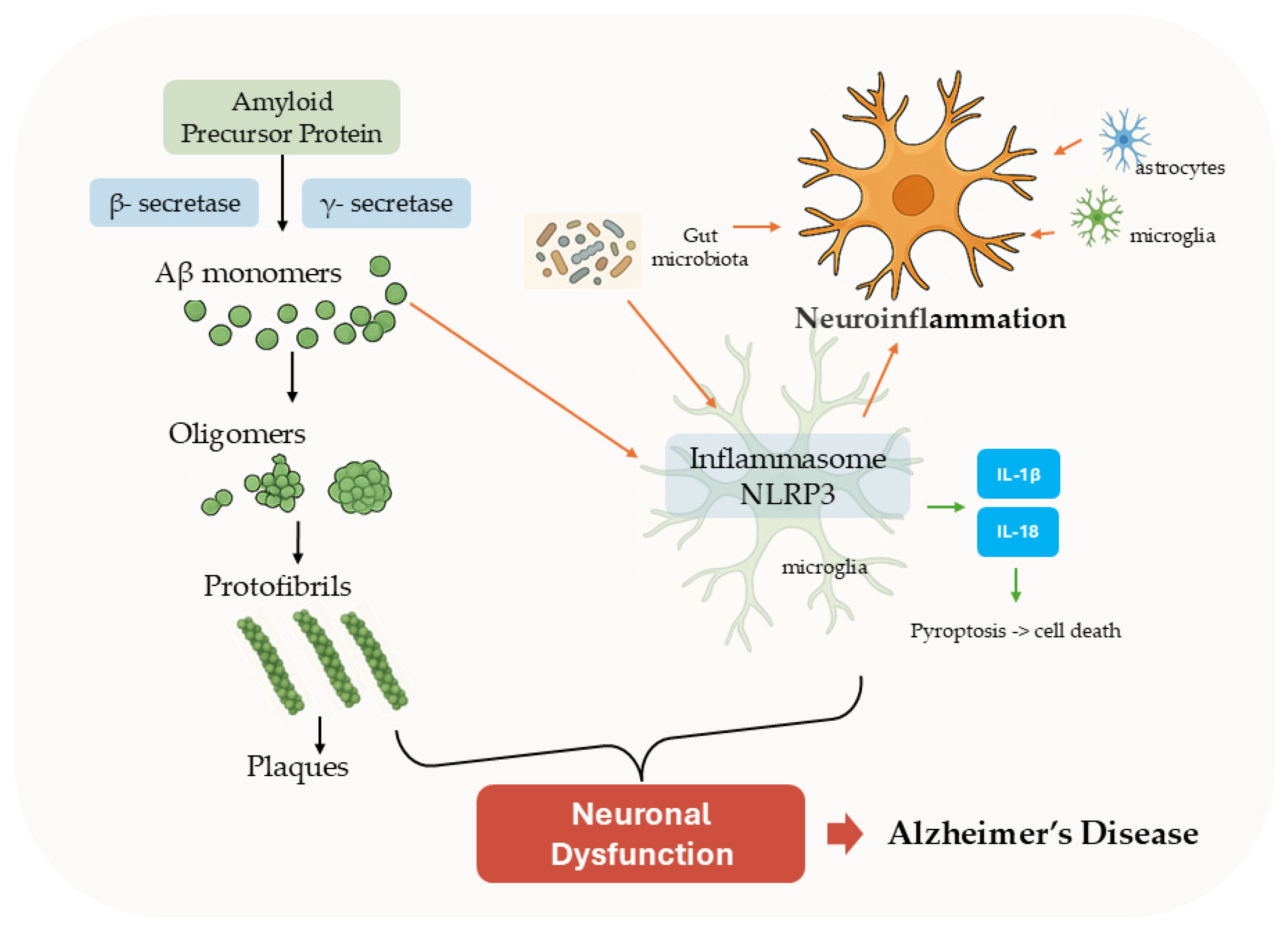
AD develops through two main processes: the abnormal accumulation of misfolded Aβ peptide leading to the formation of senile plaques in the brain and ongoing inflammation of nerve system. Together, they damage neurons and drive the progression of the disease. The mechanisms of AD pathogenesis are presented in
Figure 1.
3.1. Amyloid Beta Aggregation in AD
A hallmark feature in AD pathogenesis is the formation of amyloid plaques in the brain of patients. The amyloid plaques are formed by the abnormal extracellular accumulation of Aβ peptide that is generated from the cleavage of a larger protein, called amyloid precursor protein (APP). In the non-amyloidogenic pathway, APP is cleaved by membrane-bound enzyme α-secretase within its Aβ domain, resulting in the release of extracellular secretion of soluble α-secretase-cleaved sAPPα fragments. In the amyloidogenic pathway, APP is cleaved sequentially by two enzymes, β-secretase (also known as BACE1) and γ-secretase, resulting in the release of the amyloid intracellular domain (AICD) and the extracellular secretion of soluble Aβ. Therefore, any modifiers that can enhance the activity of α-secretase can reduce the production of neurotoxic Aβ and may prove beneficial towards the prevention and/or treatment of AD. The most extensively investigated Aβ forms are the Aβ
1–40 and Aβ
1–42 peptides. The Aβ
1–42 isoform is much more prone to aggregation and more toxic to neurons than the Aβ
1–40 isoform [
9]. In healthy individuals, Aβ peptides are cleared efficiently from the brain, but in AD, the balance between production and clearance is disrupted, resulting in the accumulation of this peptide. The aggregation of Aβ monomers into soluble oligomers, then into protofibrils, and eventually into insoluble fibrils and plaques represents a critical pathogenic event in the amyloid cascade hypothesis of AD [
10].
Soluble Aβ oligomers are considered the most neurotoxic species, as they induce neurotoxicity through several pathogenic mechanisms, including mitochondrial dysfunction, oxidative stress, calcium dysregulation, and disruption of synaptic signaling. These oligomers can also form ion channel pores in neuronal membranes, disrupting the intracellular calcium homeostasis and thus resulting in mitochondrial dysfunction and oxidative stress. Furthermore, Aβ oligomers interfere with hippocampal long-term potentiation and bind to cellular prion protein, leading to the disruption of synapses [
11,
12,
13].
3.2. Neuroinflammation
Inflammation is defined as an innate response of the immune system, providing protection and defense in the body against harmful stimuli [
14]. It results from either an aseptic insult, such as mechanical tissue injury, or a non-aseptic response to an infection of pathological origin. This innate response is described as a multifactorial process, characterized by the coordination and synergy of several cell types. These cells utilize signaling molecules to produce both local and systemic responses [
15].
The protective mechanism resulting from inflammatory responses in brain cells is called neuroinflammation, a process related to the onset of various neurodegenerative diseases [
16]. Neuroinflammation plays a prominent role in both the onset and progression of AD, involving a plethora of factors that contribute to the occurrence of neuronal dysfunction and death in AD, either alone or in combination [
17,
18].
AD is considered the most common neurodegenerative disease provoked by the extracellular deposit of Aβ plaques, intraneuronal NFTs of hyperphosphorylated tau protein, and neuroinflammation [
19,
20]. There is growing evidence that Aβ accumulation stimulates tau phosphorylation and fibrillary tangle formation, leading to the process of neurodegeneration [
21]. Neuroinflammatory processes, primarily driven by immune cells, including glial cells and astrocytes, strongly affect neuronal function and survival [
16]. Astrocytes and microglial cells are the primary cell types involved in the CNS inflammatory response [
22].
It is a complex response involving not only the host’s brain cells and peripheral immune cells, but also molecular changes or induction of some intracellular signaling pathways and release of inflammatory mediators. This inflammatory response disrupts the neuronal microenvironment, leading to neuronal damage. Over time, these processes contribute to oxidative stress and promote cellular apoptosis, ultimately driving the onset of symptoms characteristic of AD [
17,
23].
On the other hand, it has recently been found that gut microbiota also affect the induction of neuroinflammation [
16]. They interfere with metabolic homeostasis by producing and excreting amyloid, lipopolysaccharides, and other toxins which travel through the bloodstream and enter the brain, disrupting the blood–brain barrier, or via various pro-inflammatory mediators. Thus, the activation of microglia enhances the inflammatory response in the CNS [
24]. Furthermore, gut microbiota activate the NLR family pyrin domain-containing 3 (NLRP3) inflammasome, and it induces the production of pro-inflammatory factors, including interleukins, which further increase inflammatory response, leading to AD [
25].
AD is a progressive neurodegenerative disorder defined by characteristic histopathological and widespread structural brain deterioration. The two principal pathological features include: (i) focal extracellular deposits of fibrillar Aβ peptide —commonly referred to as neuritic or senile plaques—accumulating in the brain parenchyma and along cerebral blood vessel walls, and (ii) intraneuronal aggregation of neurofibrillary tangles (NFTs) composed of abnormally hyperphosphorylated tau protein filaments [
26]. These pathological processes of disease initiate in the transentorhinal cortex and progressively extend to the entorhinal cortex and hippocampus, regions essential for memory and learning. As the disease advances, neurodegeneration spreads to other cortical areas, including the temporal, frontal, and parietal lobes, leading to widespread cortical involvement, resulting in extensive neuronal and synaptic loss, accompanied by global atrophy of the brain [
27].
Several studies have shown that β-amyloid deposits present in the brains of AD patients drive the inflammation process due to the reduced concentration of neuroinflammation suppression mediators. β-Amyloid fibrils trigger neuroinflammation by accumulating in the brain and binding to the C1 component of the complement system [
23]. This interaction activates the complement cascade, stimulating resident CNS immune cells (e.g., microglia and astrocytes) to mount an inflammatory response against β-amyloid deposits [
22]. Notably, complement activation requires β-amyloid to be in a fibrillated state, highlighting the role of protein aggregation in driving neuroinflammatory pathways in AD, driving the inflammation process and causing its permanent maintenance [
23].
In the central nervous system (CNS), defense is coordinated by the recruitment of microglia, astrocytes, and macrophages, but also oligodendrocytes, neurons, and endothelial cells participate. The detection of pathogenic agents is mediated by pattern recognition receptors (PRRs) that recognize pathogen-associated molecular patterns (PAMPs) and host- or environment-derived danger-associated molecular patterns (DAMPs) [
7]. PRRs can be either membrane-bound, as with Toll-like receptors (TLRs), which perceive signals in the extracellular environment or endosomes, or intracellular, as with nucleotide-binding domain and leucine-rich repeat-containing receptors (NLRs) [
28].
3.2.1. Microglia
Microglia are mesenchymal, myeloid mononuclear resident phagocytes of CNS, and they are considered to have a principal role in the immune system response. They represent about the 10% of the neural cell population, and they play a crucial role in neurogenesis, neuronal plasticity, regeneration, and immune defense during brain injury [
7,
29,
30]. The presence of extracellular Aβ deposits, NFTs of hyperphosphorylated tau protein (pTau), and inflammation is considered the hallmark of AD [
22]. Aβ deposits and tau proteins are located in different brain regions, resulting in synaptic impairment, mitochondrial damage, activation of microglia, and neuronal death. The inflammatory response in AD is marked by reactive microglia surrounding Aβ plaques, which sustain an inflammatory state by releasing proinflammatory mediators, thereby contributing to neuronal damage [
31].
Microglia have been found closely associated with Aβ plaques in the brains of individuals with Alzheimer’s disease (AD). One of their recognized beneficial roles in AD pathology is their ability to limit plaque formation through the clearance of toxic Aβ aggregates. As part of an early protective response, Aβ triggers chemoattraction, activation, and proliferation of microglia, helping to prevent further accumulation of Aβ [
32]. In AD tau pathology, microglia try to clear toxic tau seeds through phagocytosis. Nevertheless, this phagocytic action is reduced at later stages of AD due to an uncoupling of microglia activation and phagocytosis functions, which can accelerate the spread of tau and the progression of neurodegeneration in AD [
33].
Microglia are involved in homeostasis and host defense mechanisms against pathological infections or CNS disorders. In the context of their macrophagic action, they can phagocytose toxic substances, release cytotoxic factors, and present antigens. At the same time, when there isn’t any risk factor, microglia are dormant; they have a ramified morphology and can surveil their environment without disrupting neuronal activity, monitoring the brain parenchyma regularly [
30,
32]. Upon activation, they undergo morphological changes to an amoeboid, mobile form that can migrate to injury sites. Activated microglia may persist for extended periods, releasing cytokines and neurotoxic agents that contribute to long-term neurodegeneration and can exacerbate CNS damage [
15].
There are three essential functions that microglia participate in. First, they scan their surrounding environment and detect potential changes mediated by sensomes, a group of genes that code for proteins expressed by microglia, allowing them to sense and respond to their environment [
29,
34]. On the second function, microglia migrate to injured sites where they are involved in synaptic remodeling. In the third function, they play a critical role in maintaining myelin homeostasis by recognizing danger-associated molecular patterns (DAMPs) and pathogen-associated molecular patterns (PAMPs), thus preventing CNS injury stimuli. The association of Aβ with the microglial receptors, including TREM2, TLRs, CD36, class A1 scavenger receptors (SR-A1), and receptor for advanced glycation end products (RAGE), activates microglia and mediates Aβ phagocytosis/endocytosis [
35,
36]. Upon activation, microglia produce pro-inflammatory cytokines such as tumor necrosis factor-alpha (TNF-α), interleukin-1β (IL-1β), IL-16, and chemokines, stimulating the recruitment of additional cells to confront pathological agents [
29,
37]. Although neuroinflammation serves as a neuroprotective mechanism, prolonged or chronic neuroinflammation can lead to deterioration of neuronal function, neurotoxicity, and ultimately neuronal death [
37].
3.2.2. Astrocytes
Astrocytes (also known as astroglia) are star-shaped glial cells, part of a class of neural cells (also known as astrocytes) of ectodermal, neuroepithelial origin [
38]. Astrocytes, the most abundant glial cell type in the central nervous system, regulate neurotransmitter and calcium homeostasis, modulate synapse formation, maturation, and elimination, and play a pivotal role in maintaining neuronal function and homeostasis [
39]. Generally regarded as supportive elements, but according to the latest evidence, astrocytes are increasingly recognized as active modulators of neurodegenerative processes, particularly in AD.
Astrocytes represent significant heterogeneity in both form and function, displaying remarkable adaptive synaptic plasticity that is essential for maintaining central nervous system (CNS) homeostasis throughout aging [
38]. They modulate extracellular ion and fluid balance, contribute to the removal of free radicals, and play a critical role in supporting blood–brain barrier integrity and provide nutritional and trophic support to the brain [
40,
41].
Astrocytes have a dynamic and pathology-specific response to AD, known as reactive astrogliosis. This is a multistage process that participates in neuroprotection and tissue repair [
41]. Alongside microglia, reactive astrocytes accumulate around Aβ plaques, form a physical barrier called glial scar, thus reducing collateral damage due to neurotoxicity [
40]. Notably, glial activation may even precede Aβ deposition, suggesting astrocytic involvement in early disease mechanisms. Simultaneously, the accumulated reactive astrocytes have an increased expression of glial fibrillary acidic protein (GFAP) and vimentin, transforming them into hypertrophic cells [
7]. Also, there are indications that reactive astrocytes clear or reduce Aβ deposits by phagocytosis, while astrocytes also participate in neuroinflammatory signaling, releasing cytokines, interleukins, nitric oxide, and other cytotoxic factors in response to Aβ, which amplify local inflammation [
7].
On the other hand, many scientists support that reactive astrocytes are contributing to the presence of neurotoxicity by secreting significant quantities of Aβ and contributing to the overall amyloid burden in the brain [
42]. Astrocytes, like microglia, detect Aβ aggregates using a dependent mechanism on TLR/RAGE, which triggers the expression of downstream target genes and the subsequent release of increased production of neurotoxic factors, leading to increased Aβ load and toxicity [
40]. It should be noted that in preclinical AD, microglia and astrocytes become reactive early, even before symptoms arise, playing crucial roles in the disease’s onset and progression. Microglial and astrocyte biomarkers measured through fluid biomarkers increase early during asymptomatic stages of AD and have a significant influence on key pathogenic events at the preclinical stage. In particular, GFAP influences amyloid accumulation, whereas sTREM2 promotes tau pathology, thus contributing to the progression of neurodegenerative changes in the early stages of AD [
43].
3.2.3. Inflammasome
Inflammasomes constitute a valuable arm of the innate immunity, since they are inducible high molecular weight cytosolic multi-protein complexes that are involved in many inflammatory pathological processes [
44]. These multimeric protein complexes are expressed in microglia, the principal cells in the innate immune system in the central nervous system [
20].
Inflammasomes are separated into canonical and non-canonical inflammasomes. In the canonical category, they can control the activation of the proteolytic enzyme caspase-1. In contrast, non-canonical inflammasomes are characterized by the action of caspase-4 (corresponding to the murine caspase-11) and caspase-5 [
45,
46].
The inflammasome has a crucial role in initiating inflammation. It detects harmful stimuli such as pathogens, cellular stress, or damage signals and is mediated by pattern recognition receptors (PRRs) in microglia [
47]. Pattern Recognition Receptors (PRRs) can be found either on the cell membrane or inside the cell. Membrane-bound PRRs, such as Toll-like receptors (TLRs), detect signals in the extracellular space or within endosomes, while intracellular PRRs, including members of the NLR (nucleotide-binding domain and leucine-rich repeat-containing receptors—LRRs) and ALR (AIM2-like receptors) families, are located within the cytoplasm. A key subgroup of these cytosolic PRRs, which encompasses NLRs (NOD-like receptors), ALRs (AIM2-like receptors), and the pyrin protein from the tripartite motif (TRIM) family [
28,
48].
Aβ protofibrils but also small Aβ oligomers were found to activate the NLRP3 inflammasome in microglial cells through multiple signaling pathways, including NF-κB, thereby defining a novel pathway that could lead to progression of AD [
44]. Upon activation, the inflammasome regulates the proteolytic process, promoting the production and release of pro-inflammatory cytokines like interleukin-1β (IL-1β) and IL-18, and induces pyroptosis, which is a rapid, inflammatory form of lytic programmed cell death [
49]. There are different types of inflammasomes, with the NLRP3 isoform being one of the most studied. The NLRP3 isoform appears to be largely responsible for promoting chronic inflammatory diseases, including atherosclerosis, diabetes, and neurodegenerative diseases such as AD [
47,
49]. NLRP3 inflammasome activation is a key driver in AD pathogenesis, linking Aβ and tau pathology to chronic inflammation by triggering the extracellular release of downstream cytokines, such as IL-1β, IL-10, and IL-18 from microglia and astrocytes. Microglial dysfunction by NLRP3 inflammasome signaling deteriorates the clearance capability of NFTs by microglia, and eventually sets up a proinflammatory cycle, accelerating neuronal cell death [
50].
In AD, the NLRP3 inflammasome is like a control switch, i.e., its activation triggers an inflammatory response that harms neurons. Therefore, there is active research to explore ways to inactivate the NLRP3 inflammasome using drugs and natural products to suppress neuroinflammation and the ensuing responses [
51]; thus, aiding microglia to clear the harmful Aβ deposits (i.e., phagocytosis). For example, the potential of nonsteroidal anti-inflammatory drugs (NSAIDs) in delaying the onset of AD is likely through their modulation of the NLRP3 inflammasome pathway. Similarly, natural products including flavonoids (e.g., quercetin) and polyphenols (curcumin, resveratrol) have demonstrated the ability to inhibit Aβ aggregation as well as the pro-inflammatory NLRP3 inflammasome.
4. FDA—Approved Therapeutics for Alzheimer’s Disease: Current Status and Limitations
According to Alzheimer’s Association (
https://www.alz.org/alzheimers-dementia/treatments, accessed on 14 July 2025), two main classes of drugs for the AD treatment have been approved by FDA: (1) Disease-modifying therapies and (2) symptomatic treatments that are presented in
Table 1. Anti-amyloid monoclonal antibodies, including donanemab (Kisunla™, Eli Lilly, Indianapolis, IN, USA) and lecanemab (Leqembi
®, Eisai Co., Tokyo, Japan), are currently approved for clinical use as disease-modifying treatments for AD. These anti-amyloid monoclonal antibodies are administered intravenously and target the toxic form of Aβ aggregates (e.g., oligomers, protofibrils, fibrils, and plaques). They demonstrate efficacy in early stages of AD, reducing Aβ plaques and mitigating cognitive and functional decline, without stopping or reversing the progression of AD. Nonetheless, they are associated with health risks such as amyloid-related imaging abnormalities (ARIA) that cause headache, dizziness, nausea, confusion, and vision changes requiring patient monitoring. The future direction of next-generation anti-amyloid monoclonal antibodies is to proceed towards structure modifications of antibodies to minimize adverse effects, i.e., risk of ARIA, as well as enhance BBB permeability and therapeutic efficacy for the treatment of AD.
Symptomatic treatments include cholinesterase inhibitors, namely benzgalantamine, donepezil, galantamine, and rivastigmine, and the glutamate regulator memantine, targeting cognitive symptoms like memory and thinking. Combination therapy (donepezil plus memantine) is approved for moderate-to-severe AD. Non-cognitive symptoms, such as insomnia and agitation, are addressed by suvorexant and brexpiprazole, respectively. Moreover, there are therapeutic approaches addressing tau pathology, including anti-phosphorylation strategies and aggregation inhibitors. The former comprises the use of tau kinase inhibitors such as glycogen synthase kinase-3β (GSK-3β), whereas the latter involves the use of derivatives of methylene blue (e.g., Rember™, TauRx Therapeutics Ltd., Singapore). In addition, a second-generation tau aggregation inhibitor called TRx0237 (LMTX™) for the treatment of AD is currently in clinical trials. It is obvious that the existing pharmacological treatments mostly offer modest symptomatic relief or delayed progression, underscoring the need for further development of more effective therapies that target the underlying disease mechanisms and improve the life quality of AD patients.
5. Natural Products as Modulators of Amyloid Beta Aggregation and Neuroinflammation
Although FDA-approved medications for AD are available, these fail to modify the underlying disease processes, such as Aβ aggregation and neuroinflammation, offering only symptomatic relief. This therapeutic limitation has driven increasing interest in natural products, which exert multi-targeted actions and may modulate both pathological hallmarks [
52,
53].
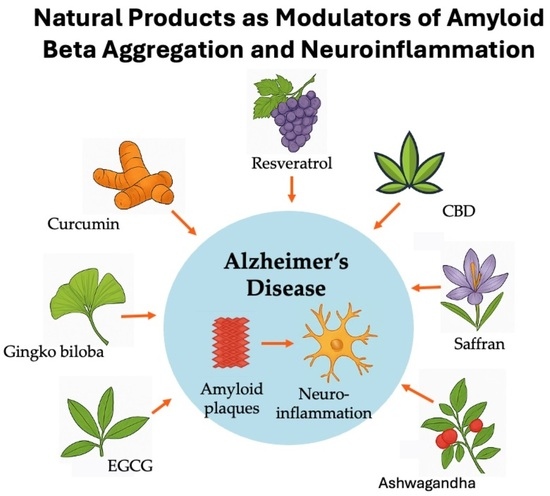
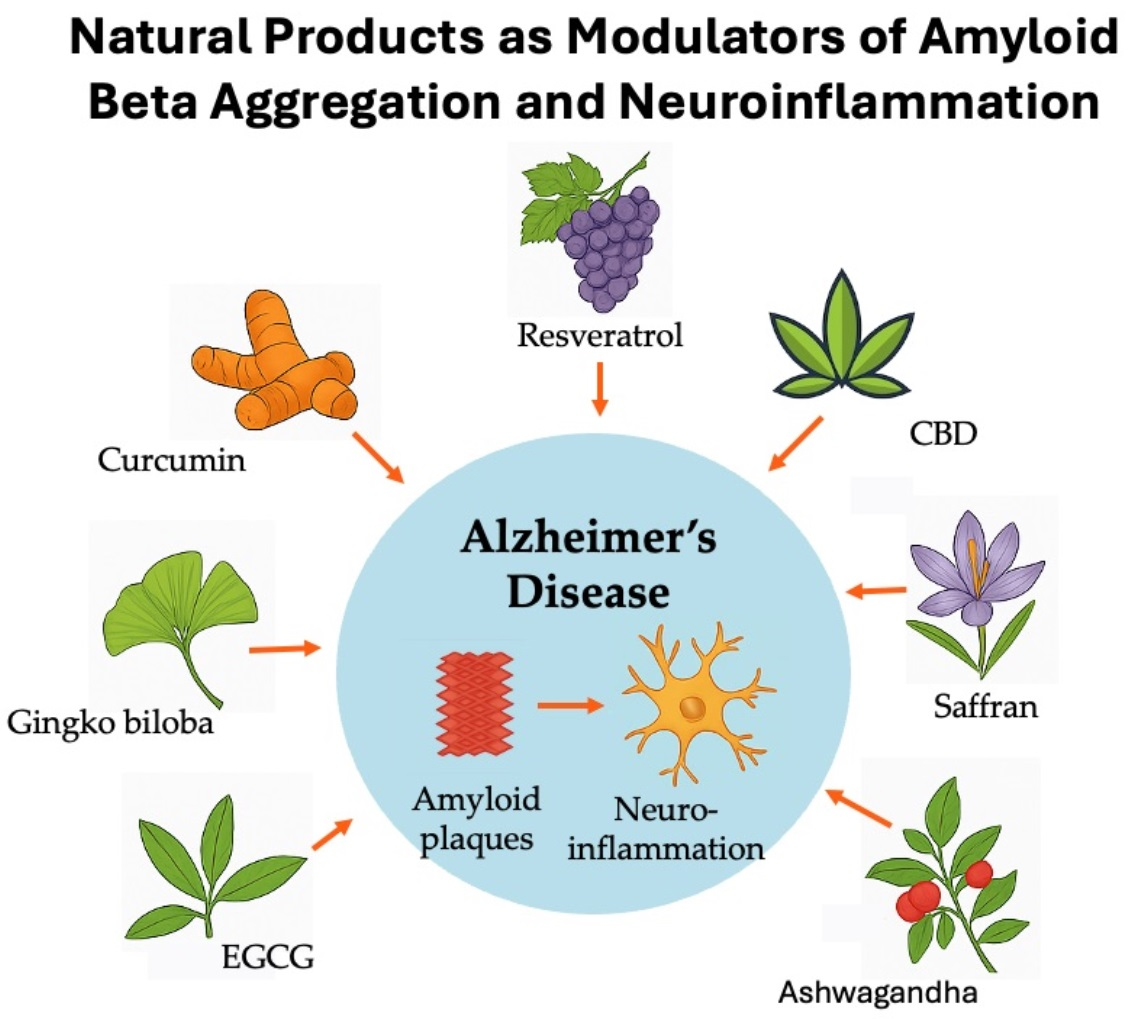
In this review, we have focused on a selected group of natural products that perform dual modulatory effects on Aβ aggregation and neuroinflammatory pathways that are critical to AD pathogenesis. The natural products that are discussed in this review are summarized in
Table 2. First, some natural products, such as Epigallocatechin-3-gallate (EGCG) and the omega-3 fatty acids DHA and EPA, have been reported to enhance the α-secretase non-amyloidogenic pathway, thus reducing the production of neurotoxic Aβ. On the other hand, several other natural products have demonstrated neuroprotection mainly due to their antioxidant and anti-inflammatory properties. These natural substances have been extensively studied in both in vitro and in vivo models for their ability to inhibit Aβ aggregation, disaggregate plaques and fibrils, or reduce oligomer toxicity. Concurrently, they exhibit anti-inflammatory activity through suppression of microglial activation and reduction of pro-inflammatory cytokine release. Obviously, these natural products are also involved in more AD pathogenic pathways, acting pleiotropically. Their natural origin, relative safety, and multi-targeted actions make them compelling candidates for AD disease treatment, especially within the context of Aβ aggregation and neuroinflammation.
5.1. Curcumin
Several experimental studies have demonstrated the neuroprotective effect of curcumin and its novel formulations in AD. Curcumin, the main polyphenol of
Curcuma longa L., prevents or mitigates the neurodegenerative processes through a wide range of beneficial properties such as antioxidant, anti-inflammatory, and neurotrophic activities [
54]. Mechanistically, curcumin inhibits the formation of Aβ protein, promotes the disaggregation of amyloid plaques, decreases the tau hyperphosphorylation, and accelerates the tau clearance [
55,
56]. Furthermore, it modulates microglial activity, inhibits acetylcholinesterase, regulates insulin signaling pathways, and binds metal ions such as copper [
56]. Structural features such as phenyl methoxy groups and flexible moieties have been associated with enhancing curcumin’s efficacy by suppressing Aβ aggregation and APP expression [
57]. Moreover, curcumin has been shown to advance the adult neurogenesis of AD mice by targeting the PI3K/Akt that controls GSK3β/Wnt/β-catenin and CREB/BDNF pathways [
58]. Although these promising findings exist, curcumin’s clinical application is limited by poor bioavailability and suboptimal pharmacokinetics. Still, structural modifications and novel delivery strategies have shown likely to overcome these challenges, suggesting that curcumin-based therapeutics could offer a more effective alternative to current AD treatments, if bioavailability issues are overcome [
56,
59].
5.2. Resveratrol
Many studies have indicated resveratrol, a polyphenol that naturally occurs in red wine and other plants, as a promising neuroprotective product in AD [
60] due to its anti-amyloidogenic, antioxidant, anti-inflammatory, and anti-aging properties [
61]. Resveratrol is involved in Aβ pathogenesis as it inhibits Aβ aggregation, promotes non-amyloidogenic processing of the APP, and enhances Aβ clearance [
61,
62,
63,
64]. Furthermore, it decreases tau hyperphosphorylation and glial activation and promotes hippocampal neurogenesis [
62]. Resveratrol can penetrate the blood–brain barrier, and thus, it enhances endogenous antioxidant enzymes and activates silent information regulator-1 (SIRT1) that plays a crucial role in growth, differentiation, and apoptotic death of neurons by suppressing p53 activity [
61,
62]. Recent meta-analyses have revealed that resveratrol’s neuroprotective properties are associated with the PI3K-Akt signaling pathway [
65]. Still, the therapeutic ability of resveratrol in humans remains limited because of poor bioavailability and rapid metabolism; thus, novel delivery strategies and structural optimization are needed [
64,
66].
5.3. Ginkgo biloba
Ginkgo biloba extract (GBE), and mainly its standardized extract EGb 761, demonstrates promising neuroprotective effects in AD. Clinical studies show that GBE alleviates AD symptoms in early-stage patients after high doses and long-term administration [
67]. GBE enhances memory and cognitive functions by mitigating Aβ-induced neurotoxicity via several ways, including metal dyshomeostasis, redox imbalance, and mitochondrial dysfunction. In addition, EGb 761 enhances cellular resistance to oxidative stress, thereby helping to protect neurons from oxidative damage commonly linked to AD [
68]. Its antioxidant actions are associated with its impact on the cerebral blood flow, the nitric oxide level, the cellular redox stage, and the neurotransmitter system [
69]. Furthermore, EGb 761 supports mitochondrial integrity, reducing apoptosis and promoting hippocampal neurogenesis. GBE also influences microglia phenotypes, as it reduces pro-inflammatory cytokines and upregulates anti-inflammatory markers such as IL-4, IL-13, and TGFβ, thus exerting an anti-inflammatory effect [
69]. Meta-analysis results have shown that
Ginkgo biloba preparations combined with donepezil can improve clinical effectiveness and cognitive performance without a change in adverse reactions [
70]. Due to inconsistent results across several clinical trials, it has been emphasized that there is a need for further research to clarify critical aspects such as the optimal dosing, the delivery methods, the formulation, and potential adverse effects of GBE [
71,
72].
5.4. Epigallocatechin Gallate—EGCG
Epigallocatechin-3-gallate (EGCG), a natural catechin and the main bioactive compound of green tea with potent antioxidant properties, has shown significant therapeutic promise in AD. Several epidemiological studies have indicated the correlation of green tea consumption with reduced AD incidents [
73]. EGCG exerts neuroprotective effects through multiple mechanisms, including the reduction of APP cleavage and the production of Aβ levels, the inhibition of tau phosphorylation, the regulation of secretase activity, and the acetylcholinesterase inhibition [
74,
75]. EGCG reduces the aggregation of Aβ peptide and remodels fibrils to form non-toxic forms that lack propagation and prevent cytotoxicity [
76,
77]. Furthermore, it decreases the oxidative stress by activation of the kelch-like epichlorohydrin-associated proteins (Keap1)/nuclear factor erythroid 2-related factor 2 (Nrf2) signaling pathway [
78], inhibits the inflammation by regulation of cytokines (IL-1β, IL-6, and TNF-α), and reduces the NLRP3 inflammasome in microglial cells [
79]. In addition, it is highlighted that the activation of EGCG to the gut-brain axis, where EGCG (alone or with genistein) may restore gut microbiota balance, and thus, it suppresses neuroinflammation and resumes autophagy in order to mitigate the AD pathogenesis [
80]. A study has shown the EGCG’s ability to restore learning parameters, enhance memory function, increase hippocampal BDNF levels, and minimize hippocampal APP expression in AD models [
81]. EGCG improves behavioral and cognitive deficits in late-onset AD, especially when combined with urolithin A, a mitophagy enhancer [
82].
5.5. Saffron
Saffron (
Crocus sativus L.) and its bioactive constituents, particularly crocins, trans-crocetin, and safranal, have demonstrated significant potential in the treatment and prevention of AD. Preclinical studies show that saffron reduces Aβ and tau protein aggregation, controls glutamate levels, and minimizes oxidative stress [
83], exhibiting multifunctional neuroprotective effects [
84]. Saffron’s components, such as trans-crocin-4 (TC4) and trans-crocetin, have demonstrated that they can suppress Aβ aggregation and fibrillogenesis, modulate β- and γ- secretases activity, reduce tau phosphorylation, and suppress kinase activation [
85,
86]. Added to that, trans-crocetin can also enhance Aβ degradation by increasing the levels of cathepsin B, a lysosomal protease, in AD monocytes [
87]. Moreover, in neurodegenerative disease models, TC4 and trans-crocetin exert anti-inflammatory, antioxidant, and anti-apoptotic effects, improving mitochondrial function and controlling metal ion homeostasis [
88,
89]. In a recent study, isolated components from the stigmas of saffron (
Crocus sativus L.) induced substantial alteration in the monomer/oligomer distribution of Aβ
1–40, along with re-direction of fibril formation [
84]. This is promising towards the development of novel aggregation inhibitors for the prevention or treatment of AD. In addition, saffron may exert benefits on AD via its anti-diabetic properties, as diabetes is a critical risk factor for AD progression [
90]. Furthermore, in vivo studies have demonstrated detection of TC4 in mouse brains for the first time, thus providing preliminary evidence on TC4’s ability to penetrate the BBB, albeit its extremely hydrophilic character [
91]. These results are a good indication that TC4 could serve as an active pharmaceutical ingredient and lead compound for developing novel neuroprotective agents. Saffron’s capacity to improve cognition, enhance learning behavior, and prevent hallmark AD pathology supports its application as a neuroprotective agent in clinical practice for the treatment of AD [
92]. Clinical trials have indicated saffron’s non-inferiority to standard medications such as donepezil and memantine in improving cognitive function, with fewer side effects [
93,
94]. Despite the promising findings, further research is needed to elucidate mechanisms, optimize dosing, and develop effective delivery systems [
89].
5.6. Ashwagandha
Ashwagandha (
Withania somnifera—WS) has emerged as a promising herbal for the prevention and treatment of AD due to its neuroprotective activity [
95]. WS roots are rich in bioactive compounds that exert neuroprotective effects by suppressing Aβ plaque formation and inhibiting tau protein aggregation, reducing oxidative stress, and mitigating inflammation [
96,
97]. Studies have revealed WS extracts to enhance cognition, memory, and learning while reversing neurological changes such as mitochondrial dysfunction and synaptic loss and boosting neural regeneration [
98,
99]. Similar results have been concluded in AD mouse models, where administration of WS aqueous extracts has improved spatial memory, decreased depressive and anxiety-like behaviors, reduced Aβ plaque formation, upregulated antioxidant gene expression, and minimized microglia and astrocyte activity [
100]. It has been shown that WS and especially its active constituents, Withaferin A, Withanolide-D, Withanolide-E, and Withanolide-G, exert antioxidant and anti-inflammatory responses via regulation of NF-κB and Nrf2 pathways, presenting enzyme inhibition scores higher than the traditional medication drugs [
96]. The improved memory and executive function following WS administration have also been confirmed by human studies, indicating its capacity to reveal AD symptoms [
101]. Certainly, larger and well-controlled clinical studies are required to validate the effect of this promising drug candidate [
102], as most results derived from preclinical studies or trials on healthy individuals [
97].
5.7. Cannabidiol
Cannabidiol (CBD), a non-psychoactive compound derived from
Cannabis sativa, has been reported as a promising AD therapeutic with potential through a multifaceted mechanism. Preclinical studies in AD mouse models have shown that CBD and cannabidiol acid suppress pTau and Aβ aggregation, mitigate neuroinflammation and regulate proinflammatory cytokine release, improve synaptic plasticity and reduce ROS formation, while enhancing both short- and long-term spatial memory and cognitive function [
103,
104,
105,
106]. Additionally, CBD increases microglia Aβ phagocytosis and mitigates mitochondrial dysfunction via TRPV2 activation, rendering TRPV2 as a potential therapeutic target in AD [
107]. CBD has been reported to improve the Aβ cognitive deficit by regulating key proteins such as apolipoprotein E, presenilin-1, and glutamate [
108], while it restores the levels of a receptor channel TRPM7 [
109] and mitigates the function of inhibitory extra synaptic glycine receptor in hippocampal dentate gyrus [
65], alleviating AD’s symptoms. Furthermore, the increased acetylcholine production and changes in ILC2s distribution further underscore the CBD’s therapeutic profile [
63]. Combination of CBD with Δ9-tetrahydrocannabinol minimizes cognitive decline in APP/PS1 mice by regulating extracellular glutamate levels and hippocampal hyperexcitability [
110]. Despite encouraging in vitro and in vivo findings [
111,
112,
113], clinical data remain sparse, necessitating well-controlled human trials to evaluate safety, pharmacodynamics, and efficacy [
114,
115]. Overall, CBD represents a compelling avenue for AD therapy, with mounting evidence supporting its role in modulating Aβ and tau pathologies and neurodegenerative mechanisms [
116].
6. Nanomedicine-Based Delivery Systems for Natural Products
Despite the anti-AD properties of numerous natural products, their clinical use has been hampered by pharmacokinetic limitations such as poor bioavailability and limited Blood-Brain Barrier penetration [
117]. In recent years, nanoparticle (NP)-based drug delivery systems have emerged as a promising strategy to address these pharmacological challenges of natural products [
118]. Various NP types have been investigated for AD, including polymeric NPs, liposomes, dendrimers, solid lipid NPs, as well as magnetic and inorganic NPs [
119]. Delivery via polymeric-, lipid-, and protein-based NPs has been reported to overcome key pharmacokinetic limitations of natural compounds such as curcumin and resveratrol, and thus, they effectively inhibit Aβ aggregation, reduce tau phosphorylation, activate neuroprotective signaling pathways, modulate neuroinflammation, and improve cognitive performance [
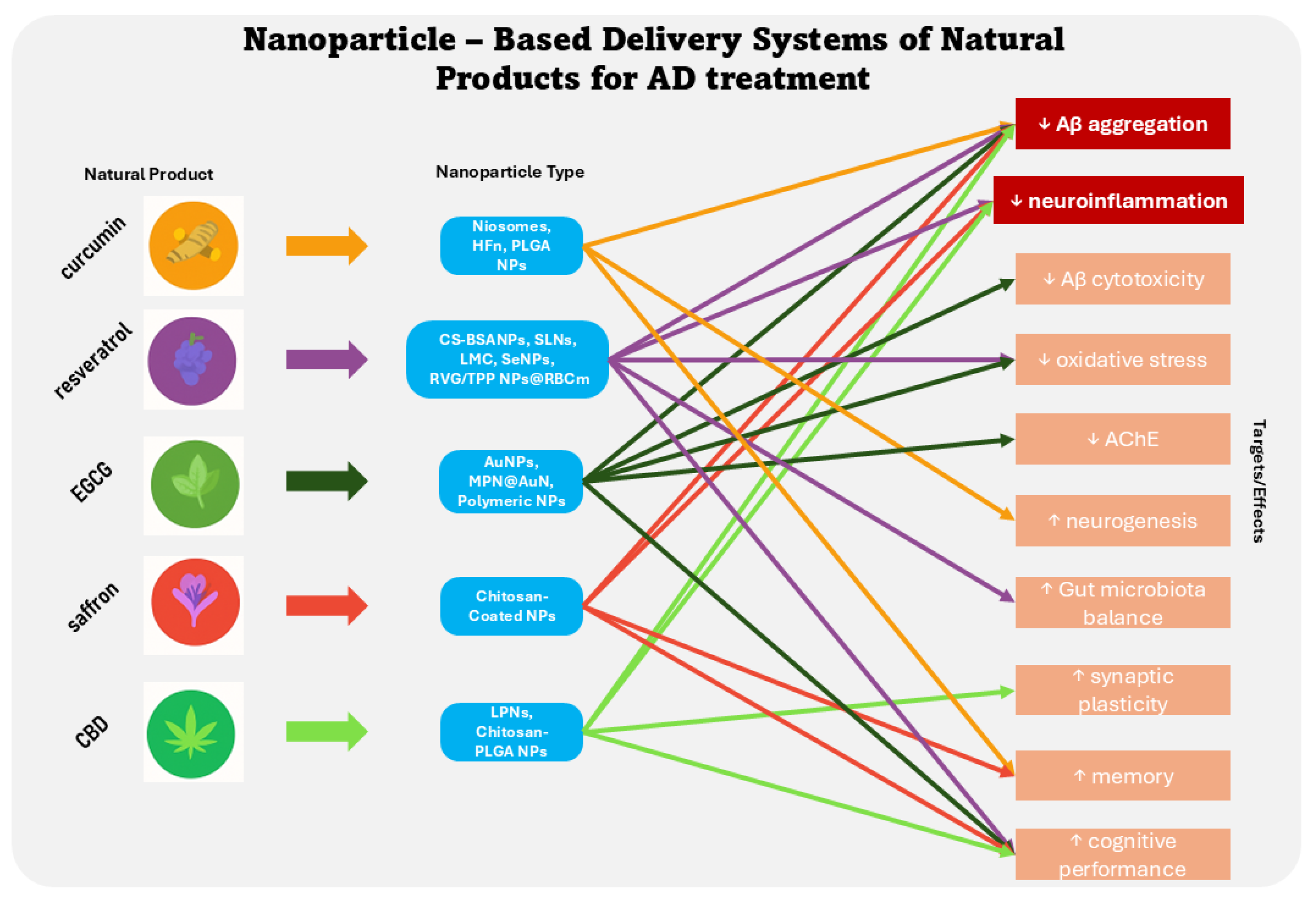
120]. Herein, studies published in 2020–2025 (the research has been performed on the PubMed platform) are presented for curcumin, resveratrol, EGCG, crocin, and CBD (
Figure 2).
6.1. Curcumin Delivery via Nanoparticles for AD
Numerous NP-based approaches have been explored to enhance curcumin’s therapeutic potential in AD. Studies have shown that curcumin delivered via niosomes modulates NF-κB gene expression present at AD, reduces tissue damage, and improves memory, indicating enhanced efficacy in mitigating AD-related pathology [
121]. Niosomes, as efficient nanocarriers, offer advantages in delivering antioxidants more effectively within a shorter therapeutic window. Repeated long-term use of nanomaterials may lead to their accumulation in the body, posing safety concerns, particularly in the brain. Thus, the development of biodegradable, non-toxic NPs capable of crossing the BBB and degrading efficiently is crucial [
122]. H-Ferritin (HFn) nanocages as a nanoformulation vehicle for curcumin have shown promising safety profiles and anti-inflammatory effects in both in vitro and in vivo AD models [
123]. Besides, polymeric NPs such as poly(lactic-co-glycolic acid) (PLGA)—based curcumin NPs have demonstrated efficacy in various preclinical and clinical settings, yet the potential for toxic effects warrants further investigation [
124]. Overall, these findings highlight the promise of nanotechnology in enhancing curcumin delivery for AD, while underscoring the need for careful design to balance efficacy with long-term safety.
6.2. Resveratrol Delivery via Nanoparticles for AD
Various NP delivery systems have been developed to overcome the pharmacokinetic challenges of resveratrol in AD treatment. Chitosan-coated bovine serum albumin NPs (CS-BSANPs) have demonstrated safety and efficacy for intranasal brain delivery, improving treatment outcomes in elderly females with AD [
125]. In addition, resveratrol-loaded solid lipid NPs (SLNs) enhanced cognitive performance, reduced lipid peroxidation, increased glutathione levels, and preserved hippocampal cell morphology in vivo, outperforming free resveratrol [
126]. Other advanced platforms include hollow-structured manganese-doped cerium dioxide NP (LMC), which cross the BBB, reduce oxidative stress, and inhibit Aβ aggregation [
127], and B6 peptide-/resveratrol-/oligomeric proanthocyanidin-/hyaluronic acid-grafted (B6-RES-OPC-HA) NPs, which reduce ROS, inflammation, and memory deficits in AD mice [
128]. Furthermore, it has been reported that resveratrol-loaded selenium NPs/chitosan NPs (Res@SeNPs@Res-CS-NPs) restore gut microbiota balance, reduce neuroinflammation, and regulate key AD signalling pathways [
129]. Similarly, resveratrol-selenium NPs (RSV-SeNPs) and resveratrol-selenium NPs decorated with a Blood-Brain Barrier transport TGN peptide (TGN-Res@SeNPs) exhibit potent antioxidant, anti-inflammatory, and Aβ-inhibitory effects while modulating the gut-brain axis [
130,
131]. A novel biomimetic delivery system of red blood cell membrane-coated nanostructured lipid carriers bearing rabies virus glycoprotein and triphenylphosphine cation molecules attached to the RBC membrane (RVG/TPP NPs@RBCm) targets neuronal mitochondria, alleviating mitochondrial oxidative stress and improving memory in APP/PS1 mice [
132]. Collectively, these nanotechnologies enhance resveratrol delivery, offering multi-targeted approaches to mitigate AD pathology through antioxidant, anti-amyloid, anti-inflammatory, and gut-modulating mechanisms.
6.3. EGCG Delivery via Nanoparticles for AD
Various nano delivery systems have also been developed to address the low bioavailability and poor BBB permeability of EGCG. For example, gold NPs (Au-EGCG) effectively inhibited Aβ aggregation and reduced Aβ-induced cytotoxicity in vitro [
133]. Similarly, green tea gold NPs (GT-Au NPs) demonstrated inhibition of Aβ aggregation and promotion of fibril disaggregation, highlighting their potential in Aβ modulation [
134]. Further advancements include polymeric and glycosylated carbon dot-based EGCG NPs that showed enhanced brain delivery, improved oxidative stress modulation, and reduced acetylcholinesterase activity in the cortex and hippocampus of AD models [
135]. A biocompatible metal-phenolic network (MPN) gold nano delivery system (MPN@AuN) composed of EGCG and Zn(II), displayed superior anti-amyloid activity due to its porosity and demonstrated BBB permeability, offering a broad therapeutic scope beyond protein aggregation inhibition [
136]. Notably, co-delivery of EGCG with a therapeutic gene (shRNA) in a polymeric NP (REGS-PN) significantly enhanced brain targeting, reduced amyloid burden, and improved cognitive performance in APP/PS1 mice compared to EGCG alone [
137]. Together, these studies highlight the therapeutic potential of EGCG nanocarriers in AD by improving delivery efficiency, enhancing bioactivity, and targeting multiple disease pathways. Still, continued research is essential to validate their safety and efficacy in clinical settings.
6.4. Crocin Encapsulation for AD Treatment
Low stability and bioavailability of crocin have been attenuated by its encapsulation in chitosan-coated NPs, resulting in significant improvement in memory-related parameters and superior efficacy in mitigating AD-related impairments compared to the same dose of free crocin [
138].
6.5. CBD Delivery via Nanoparticles for AD
CBD combined with brain-derived neurotrophic factor (BDNF) represents a promising therapeutic strategy for AD, as it mediates both neuroinflammation and neuronal plasticity loss. In another study, has been stated that functionalized lipid NPs (LPNs) co-encapsulating CBD and plasmid BDNF saw high encapsulation efficiency, sustained CBD release, and enhanced cellular uptake across multiple brain cell types, increasing BDNF expression and reducing pro-inflammatory cytokines TNF-α and IL-1β in vitro [
139]. Similarly, mannose-conjugated chitosan-coated PLGA NPs (CHTMAN-PLGA) targeting glucose transporter-1 receptors showed a 4-fold increase in BDNF expression compared to naked pBDNF, while exhibiting favorable cytotoxicity and hemocompatibility profiles [
140]. Additionally, reduced Aβ plaque burden, upregulated cannabinoid receptors CB1 and CB2, and improved cognitive function have been achieved by chitosan-coated CBD NPs in AD rat models [
141]. These findings highlight the potential of brain-targeted nanocarriers co-delivering CBD and BDNF to modulate key AD pathologies and warrant further in vivo validation.
7. Clinical Implications and Future Perspectives
The existing treatment options for AD approved by the FDA remain limited. AD is a complex neurodegenerative disorder, and the development of effective therapeutic strategies is crucial for managing symptoms, slowing disease progression, and improving quality of life in individuals with AD. The available pharmacological treatments for AD currently focus on modest symptomatic relief rather than directly targeting the AD underlying neurochemical mechanisms. The most commonly used therapeutic agents are acetylcholinesterase (AChE) inhibitors, whereas there are promising results from ongoing clinical trials employing anti-amyloid monoclonal antibodies (donanemab, gantenerumab, and lecanemab) primarily in early stages of the disease. Nevertheless, AChE inhibitors can alleviate the cognitive symptoms of AD patients, but there is no alteration or delay in the disease progression. On the other hand, second-generation anti-amyloid monoclonal antibodies demonstrate efficacy in early stages of AD and improve cognitive decline, especially in higher doses. Nevertheless, there is no evidence to stop or reverse the progression of AD. Therefore, a wider range of molecular targets that are associated with the AD pathology should be considered to discover potent and safe anti-AD agents. These targets include production and oligomerization of Aβ and Aβ-induced inflammation, as well as activation of microglial cells and their neuroprotective function.
In recent years, medicinal plants have gained attention for evaluating their potential as therapeutic or disease-preventive agents for AD. It should be emphasized that medicinal plants can provide a valuable source of bioactive natural products that can serve as therapeutic or disease-preventive agents for AD. They can also serve as scaffolds for providing synthetic structural analogues of bioactive natural products with improved properties. These natural products show significant clinical potential for AD treatment by targeting multiple pathological pathways of AD, like oxidative stress, Aβ and tau aggregation, as well as other AD-correlated targets such as neuroinflammation. It should be noted that several of these natural products, such as resveratrol, EGCG,
Ginkgo biloba, saffron, and Traditional Chinese medicine, have demonstrated multi-targeted neuroprotective effects in preclinical studies, targeting important key AD mechanisms like amyloid aggregation and neuroinflammation. In that respect, nutraceutical intervention through specific diets, such as the Mediterranean diet and Asian diet, could be an efficient way to prevent and/or reduce the risk of AD. This has been demonstrated in the HELIAD study, where better cognitive performance and lower dementia rates have been observed for people following the Mediterranean diet [
142].
Nevertheless, the clinical application of nutraceuticals has been constrained by poor bioavailability and inadequate BBB penetration. The challenge of drug delivery across the BBB can be efficiently encountered with nanotechnology-based delivery systems. Nanomaterial delivery strategies have achieved improved brain delivery, enhanced therapeutic efficacy, and modulation of key pathological processes inherent to AD, such as Aβ aggregation/inhibition, neuroinflammation, tau hyperphosphorylation, and oxidative stress. In summary, NP-based delivery systems represent a promising tool to unlock the full therapeutic potential of natural products for the treatment of AD. However, there is a need for well-designed medical protocols for the use of nanoparticles for clinical applications in the treatment of AD. In particular, the future use and application of NP-based AD therapies in clinical practice should include the long-term safety, efficacy, biodegradability, and stability of these delivery systems.
Finally, drug repurposing could be a promising avenue for potential AD treatment. This strategy offers a cost-effective and time-efficient approach to identifying potential therapeutic options. A prime example is GLP-1R (Glucagon-Like Peptide-1 Receptor) agonists. Preclinical studies on GLP-1R agonists in AD models have demonstrated promise in reducing Alzheimer’s risk and slowing cognitive decline by reducing inflammation, clearing amyloid and tau, and improving brain insulin sensitivity [
143]. Ongoing clinical trials are investigating the potential cognitive benefits of GLP-1R agonists in AD patients, evaluating their role as a therapeutic option for AD.
Author Contributions
Writing—original draft preparation, I.D. and F.G.; writing—review and editing, A.T.; visualization, A.T. and E.G.; supervision, A.T. All authors have read and agreed to the published version of the manuscript.
Funding
This research received no external funding.
Data Availability Statement
No new data were created or analyzed in this study.
Acknowledgments
During the preparation of this manuscript, the authors used OpenAI’s ChatGPT (GPT-4o version, June 2024 knowledge cutoff) for the purposes of editing and summarization. The authors have reviewed and edited the output and take full responsibility for the content of this publication.
Conflicts of Interest
The authors declare no conflicts of interest.
Abbreviations
Aβ, beta-amyloid peptide; AD, Alzheimer’s disease; APP, amyloid precursor protein; NFTs, neurofibrillary tangles; EGCG, epi-gallocatechin gallate; CBD, cannabidiol; BBB, Blood–Brain Barrier; CNS, Central Nervous System; NLR, nucleotide-binding domain leucine-rich repeat containing, or NOD like receptors; NLRP3, NLR Family Pyrin Domain Containing 3; TNF-α, tumor necrosis factor-alpha; IL-1β, interleukin-1β; IL-4, interleukin-4; IL-6, interleukin-6; IL-13, interleukin-13; IL-16, interleukin-16; GFAP, glial fibrillary acidic protein; ARIA, Amyloid-related imaging abnormalities; GSK-3β, glycogen synthase kinase-3β; NF-κB, Nuclear Factor kappa-light-chain-enhancer of activated B cells; NPs, nanoparticles; ROS, Reactive Oxygen Species; BDNF, brain-derived neurotrophic factor; AChE, acetylcholinesterase.
References
- Bourdenx, M.; Koulakiotis, N.S.; Sanoudou, D.; Bezard, E.; Dehay, B.; Tsarbopoulos, A. Protein Aggregation and Neurodegeneration in Prototypical Neurodegenerative Diseases: Examples of Amyloidopathies, Tauopathies and Synucleinopathies. Prog. Neurobiol. 2017, 155, 171–193. [Google Scholar] [CrossRef]
- Wimo, A.; Jönsson, L.; Bond, J.; Prince, M.; Winblad, B.; Alzheimer Disease International. The Worldwide Economic Impact of Dementia 2010. Alzheimer’s Dement. 2013, 9, 1–11.e3. [Google Scholar] [CrossRef]
- Alzheimer’s Association Report. 2024 Alzheimer’s Disease Facts and Figures. Alzheimer’s Dement. 2024, 20, 3708–3821. [Google Scholar] [CrossRef]
- Nan, H.; Chu, M.; Jiang, D.; Liang, W.; Li, Y.; Wu, Y.; Wang, Z.; Wu, L. Identification and Characterization of Variants in PSEN1, PSEN2, and APP Genes in Chinese Patients with Early-Onset Alzheimer’s Disease. Alzheimer’s Res. Ther. 2025, 17, 54. [Google Scholar] [CrossRef] [PubMed]
- Yarns, B.C.; Holiday, K.A.; Carlson, D.M.; Cosgrove, C.K.; Melrose, R.J. Pathophysiology of Alzheimer’s Disease. Psychiatr. Clin. N. Am. 2022, 45, 663–676. [Google Scholar] [CrossRef]
- Long, J.M.; Holtzman, D.M. Alzheimer Disease: An Update on Pathobiology and Treatment Strategies. Cell 2019, 179, 312–339. [Google Scholar] [CrossRef]
- Heneka, M.T.; Carson, M.J.; El Khoury, J.; Landreth, G.E.; Brosseron, F.; Feinstein, D.L.; Jacobs, A.H.; Wyss-Coray, T.; Vitorica, J.; Ransohoff, R.M.; et al. Neuroinflammation in Alzheimer’s Disease. Lancet Neurol. 2015, 14, 388–405. [Google Scholar] [CrossRef]
- Forloni, G.; Balducci, C. Alzheimer’s Disease, Oligomers, and Inflammation. J. Alzheimer’s Dis. 2018, 62, 1261–1276. [Google Scholar] [CrossRef]
- Liu, E.; Zhang, Y.; Wang, J.Z. Updates in Alzheimer’s Disease: From Basic Research to Diagnosis and Therapies. Transl. Neurodegener. 2024, 13, 45. [Google Scholar] [CrossRef] [PubMed]
- Ma, C.; Hong, F.; Yang, S. Amyloidosis in Alzheimer’s Disease: Pathogeny, Etiology, and Related Therapeutic Directions. Molecules 2022, 27, 1210. [Google Scholar] [CrossRef]
- Tolar, M.; Hey, J.; Power, A.; Abushakra, S. Neurotoxic Soluble Amyloid Oligomers Drive Alzheimer’s Pathogenesis and Represent a Clinically Validated Target for Slowing Disease Progression. Int. J. Mol. Sci. 2021, 22, 6355. [Google Scholar] [CrossRef]
- Laurén, J.; Gimbel, D.A.; Nygaard, H.B.; Gilbert, J.W.; Strittmatter, S.M. Cellular Prion Protein Mediates Impairment of Synaptic Plasticity by Amyloid-β Oligomers. Nature 2009, 457, 1128–1132. [Google Scholar] [CrossRef] [PubMed]
- Um, J.W.; Nygaard, H.B.; Heiss, J.K.; Kostylev, M.A.; Stagi, M.; Vortmeyer, A.; Wisniewski, T.; Gunther, E.C.; Strittmatter, S.M. Alzheimer Amyloid-β Oligomer Bound to Postsynaptic Prion Protein Activates Fyn to Impair Neurons. Nat. Neurosci. 2012, 15, 1227–1235. [Google Scholar] [CrossRef] [PubMed]
- Guo, H.; Callaway, J.B.; Ting, J.P.Y. Inflammasomes: Mechanism of Action, Role in Disease, and Therapeutics. Nat. Med. 2015, 21, 677–687. [Google Scholar] [CrossRef] [PubMed]
- Lyman, M.; Lloyd, D.G.; Ji, X.; Vizcaychipi, M.P.; Ma, D. Neuroinflammation: The Role and Consequences. Neurosci. Res. 2014, 79, 1–12. [Google Scholar] [CrossRef]
- Thakur, S.; Dhapola, R.; Sarma, P.; Medhi, B.; Reddy, D.H.K. Neuroinflammation in Alzheimer’s Disease: Current Progress in Molecular Signaling and Therapeutics. Inflammation 2023, 46, 1–17. [Google Scholar] [CrossRef]
- Zhang, F.; Jiang, L. Neuroinflammation in Alzheimer’s Disease. Neuropsychiatr. Dis. Treat. 2014, 11, 243–256. [Google Scholar] [CrossRef]
- Zotova, E.; Nicoll, J.A.; Kalaria, R.; Holmes, C.; Boche, D. Inflammation in Alzheimer’s Disease: Relevance to Pathogenesis and Therapy. Alzheimer’s Res. Ther. 2010, 2, 1. [Google Scholar] [CrossRef]
- Chen, Y.; Ye, X.; Escames, G.; Lei, W.; Zhang, X.; Li, M.; Jing, T.; Yao, Y.; Qiu, Z.; Wang, Z.; et al. The NLRP3 Inflammasome: Contributions to Inflammation-Related Diseases. Cell. Mol. Biol. Lett. 2023, 28, 51. [Google Scholar] [CrossRef]
- Yao, J.; Wang, Z.; Song, W.; Zhang, Y. Targeting NLRP3 Inflammasome for Neurodegenerative Disorders. Mol. Psychiatry 2023, 28, 4512–4527. [Google Scholar] [CrossRef]
- He, Z.; Guo, J.L.; McBride, J.D.; Narasimhan, S.; Kim, H.; Changolkar, L.; Zhang, B.; Gathagan, R.J.; Yue, C.; Dengler, C.; et al. Amyloid-β Plaques Enhance Alzheimer’s Brain Tau-Seeded Pathologies by Facilitating Neuritic Plaque Tau Aggregation. Nat. Med. 2018, 24, 29–38. [Google Scholar] [CrossRef] [PubMed]
- Moonen, S.; Koper, M.J.; Van Schoor, E.; Schaeverbeke, J.M.; Vandenberghe, R.; von Arnim, C.A.F.; Tousseyn, T.; De Strooper, B.; Thal, D.R. Pyroptosis in Alzheimer’s Disease: Cell Type-Specific Activation in Microglia, Astrocytes and Neurons. Acta Neuropathol. 2023, 145, 175–195. [Google Scholar] [CrossRef] [PubMed]
- Twarowski, B.; Herbet, M. Inflammatory Processes in Alzheimer’s Disease—Pathomechanism, Diagnosis and Treatment: A Review. Int. J. Mol. Sci. 2023, 24, 6518. [Google Scholar] [CrossRef] [PubMed]
- Megur, A.; Baltriukienė, D.; Bukelskienė, V.; Burokas, A. The Microbiota–Gut–Brain Axis and Alzheimer’s Disease: Neuroinflammation Is to Blame? Nutrients 2020, 13, 37. [Google Scholar] [CrossRef]
- Shen, H.; Guan, Q.; Zhang, X.; Yuan, C.; Tan, Z.; Zhai, L.; Hao, Y.; Gu, Y.; Han, C. New Mechanism of Neuroinflammation in Alzheimer’s Disease: The Activation of NLRP3 Inflammasome Mediated by Gut Microbiota. Prog. Neuro-Psychopharmacol. Biol. Psychiatry 2020, 100, 109884. [Google Scholar] [CrossRef]
- Verkhratsky, A.; Parpura, V.; Rodriguez-Arellano, J.J.; Zorec, R. Astroglia in Alzheimer’s Disease. In Neuroglia in Neurodegenerative Diseases; Advances in Experimental Medicine and Biology; Springer: Singapore, 2019; Volume 1175, pp. 273–324. [Google Scholar] [CrossRef]
- Thompson, P.M.; Hayashi, K.M.; Dutton, R.A.; Chiang, M.C.; Leow, A.D.; Sowell, E.R.; De Zubicaray, G.; Becker, J.T.; Lopez, O.L.; Aizenstein, H.J.; et al. Tracking Alzheimer’s Disease. Ann. N. Y. Acad. Sci. 2007, 1097, 183–214. [Google Scholar] [CrossRef]
- Voet, S.; Srinivasan, S.; Lamkanfi, M.; van Loo, G. Inflammasomes in Neuroinflammatory and Neurodegenerative Diseases. EMBO Mol. Med. 2019, 11, e10248. [Google Scholar] [CrossRef]
- Hickman, S.; Izzy, S.; Sen, P.; Morsett, L.; El Khoury, J. Microglia in Neurodegeneration. Nat. Neurosci. 2018, 21, 1359–1369. [Google Scholar] [CrossRef]
- Calsolaro, V.; Edison, P. Neuroinflammation in Alzheimer’s Disease: Current Evidence and Future Directions. Alzheimer’s Dement. 2016, 12, 719–732. [Google Scholar] [CrossRef]
- Doens, D.; Fernández, P.L. Microglia Receptors and Their Implications in the Response to Amyloid β for Alzheimer’s Disease Pathogenesis. J. Neuroinflamm. 2014, 11, 48. [Google Scholar] [CrossRef]
- Merighi, S.; Nigro, M.; Travagli, A.; Gessi, S. Microglia and Alzheimer’s Disease. Int. J. Mol. Sci. 2022, 23, 12990. [Google Scholar] [CrossRef] [PubMed]
- Hopp, S.C.; Lin, Y.; Oakley, D.; Roe, A.D.; DeVos, S.L.; Hanlon, D.; Hyman, B.T. The Role of Microglia in Processing and Spreading of Bioactive Tau Seeds in Alzheimer’s Disease. J. Neuroinflamm. 2018, 15, 269. [Google Scholar] [CrossRef] [PubMed]
- Hickman, S.E.; El Khoury, J. Analysis of the Microglial Sensome. In Microglia; Methods in Molecular Biology; Humana: New York, NY, USA, 2019; Volume 2034, pp. 305–323. [Google Scholar] [CrossRef]
- Sarlus, H.; Heneka, M.T. Microglia in Alzheimer’s Disease. J. Clin. Investig. 2017, 127, 3240–3249. [Google Scholar] [CrossRef] [PubMed]
- Wendimu, M.Y.; Hooks, S.B. Microglia Phenotypes in Aging and Neurodegenerative Diseases. Cells 2022, 11, 2091. [Google Scholar] [CrossRef]
- Kwon, H.S.; Koh, S.H. Neuroinflammation in Neurodegenerative Disorders: The Roles of Microglia and Astrocytes. Transl. Neurodegener. 2020, 9, 42. [Google Scholar] [CrossRef]
- Verkhratsky, A.; Nedergaard, M. Physiology of Astroglia. Physiol. Rev. 2018, 98, 239–389. [Google Scholar] [CrossRef]
- Arranz, A.M.; De Strooper, B. The Role of Astroglia in Alzheimer’s Disease: Pathophysiology and Clinical Implications. Lancet Neurol. 2019, 18, 406–414. [Google Scholar] [CrossRef]
- Singh, D. Astrocytic and Microglial Cells as the Modulators of Neuroinflammation in Alzheimer’s Disease. J. Neuroinflamm. 2022, 19, 206. [Google Scholar] [CrossRef]
- Sofroniew, M.V. Molecular Dissection of Reactive Astrogliosis and Glial Scar Formation. Trends Neurosci. 2009, 32, 638–647. [Google Scholar] [CrossRef]
- Frost, G.R.; Li, Y.-M. The Role of Astrocytes in Amyloid Production and Alzheimer’s Disease. Open Biol. 2017, 7, 170228. [Google Scholar] [CrossRef]
- Fernández-Matarrubia, M.; Valera-Barrero, A.; Renuncio-García, M.; Aguilella, M.; Lage, C.; López-García, S.; Ocejo-Vinyals, J.G.; Martínez-Dubarbie, F.; Di Molfetta, G.; Pozueta-Cantudo, A.; et al. Early Microglial and Astrocyte Reactivity in Preclinical Alzheimer’s Disease. Alzheimer’s Dement. 2025, 21, e70502. [Google Scholar] [CrossRef] [PubMed]
- Gold, M.; El Khoury, J. β-Amyloid, Microglia and the Inflammasome in Alzheimer’s Disease. Semin. Immunopathol. 2015, 37, 607–611. [Google Scholar] [CrossRef] [PubMed]
- Martinon, F.; Burns, K.; Tschopp, J. The Inflammasome: A Molecular Platform Triggering Activation of Inflammatory Caspases and Processing of ProIL-β. Mol. Cell 2002, 10, 417–426. [Google Scholar] [CrossRef] [PubMed]
- Vallese, A.; Cordone, V.; Pecorelli, A.; Valacchi, G. Ox-Inflammasome Involvement Inneuroinflammation. Free Radic. Biol. Med. 2023, 207, 161–177. [Google Scholar] [CrossRef]
- McManus, R.M.; Latz, E. NLRP3 Inflammasome Signalling in Alzheimer’s Disease. Neuropharmacology 2024, 252, 109941. [Google Scholar] [CrossRef]
- Lang, Y.; Chu, F.; Shen, D.; Zhang, W.; Zheng, C.; Zhu, J.; Cui, L. Role of Inflammasomes in Neuroimmune and Neurodegenerative Diseases: A Systematic Review. Mediat. Inflamm. 2018, 2018, 1549549. [Google Scholar] [CrossRef]
- Rathinam, V.A.K.; Fitzgerald, K.A. Inflammasome Complexes: Emerging Mechanisms and Effector Functions. Cell 2016, 165, 792–800. [Google Scholar] [CrossRef]
- Ising, C.; Venegas, C.; Zhang, S.; Scheiblich, H.; Schmidt, S.V.; Vieira-Saecker, A.; Schwartz, S.; Albasset, S.; McManus, R.M.; Tejera, D.; et al. NLRP3 Inflammasome Activation Drives Tau Pathology. Nature 2019, 575, 669–673. [Google Scholar] [CrossRef]
- Zhang, Y.; Dong, Z.; Song, W. NLRP3 Inflammasome as a Novel Therapeutic Target for Alzheimer’s Disease. Signal Transduct. Target. Ther. 2020, 5, 37. [Google Scholar] [CrossRef]
- Park, S.-Y. Potential Therapeutic Agents against Alzheimer’s Disease from Natural Sources. Arch. Pharmacal Res. 2010, 33, 1589–1609. [Google Scholar] [CrossRef]
- Tsarbopoulos, A. Alzheimer’s Disease: Exploring Nature’s “medicinal Chest” for New Therapeutic Agents. Biomol. Concepts 2020, 11, 201–208. [Google Scholar] [CrossRef] [PubMed]
- Farkhondeh, T.; Samarghandian, S.; Pourbagher-Shahri, A.M.; Sedaghat, M. The Impact of Curcumin and Its Modified Formulations on Alzheimer’s Disease. J. Cell. Physiol. 2019, 234, 16953–16965. [Google Scholar] [CrossRef] [PubMed]
- Yang, F.; Lim, G.P.; Begum, A.N.; Ubeda, O.J.; Simmons, M.R.; Ambegaokar, S.S.; Chen, P.; Kayed, R.; Glabe, C.G.; Frautschy, S.A.; et al. Curcumin Inhibits Formation of Amyloid β Oligomers and Fibrils, Binds Plaques, and Reduces Amyloid in Vivo. J. Biol. Chem. 2005, 280, 5892–5901. [Google Scholar] [CrossRef] [PubMed]
- Tang, M.; Taghibiglou, C. The Mechanisms of Action of Curcumin in Alzheimer’s Disease. J. Alzheimer’s Dis. 2017, 58, 1003–1016. [Google Scholar] [CrossRef]
- Chainoglou, E.; Hadjipavlou-Litina, D. Curcumin in Health and Diseases: Alzheimer’s Disease and Curcumin Analogues, Derivatives, and Hybrids. Int. J. Mol. Sci. 2020, 21, 1975. [Google Scholar] [CrossRef]
- Lou, S.; Gong, D.; Yang, M.; Qiu, Q.; Luo, J.; Chen, T. Curcumin Improves Neurogenesis in Alzheimer’s Disease Mice via the Upregulation of Wnt/β-Catenin and BDNF. Int. J. Mol. Sci. 2024, 25, 5123. [Google Scholar] [CrossRef]
- Yang, H.; Zeng, F.; Luo, Y.; Zheng, C.; Ran, C.; Yang, J. Curcumin Scaffold as a Multifunctional Tool for Alzheimer’s Disease Research. Molecules 2022, 27, 3879. [Google Scholar] [CrossRef]
- Canto e Sousa, J.; Santana, A.C.F.; Magalhães, G.J.P. Resveratrol in Alzheimer’s Disease: A Review of Pathophysiology and Therapeutic Potential. Arq. Neuropsiquiatr. 2020, 78, 501–511. [Google Scholar] [CrossRef]
- Quadros Gomes, B.A.; Bastos Silva, J.P.; Rodrigues Romeiro, C.F.; dos Santos, S.M.; Rodrigues, C.A.; Gonçalves, P.R.; Sakai, J.T.; Santos Mendes, P.F.; Pompeu Varela, E.L.; Monteiro, M.C. Neuroprotective Mechanisms of Resveratrol in Alzheimer’s Disease: Role of SIRT1. Oxidative Med. Cell. Longev. 2018, 2018, 8152373. [Google Scholar] [CrossRef]
- Rao, Y.L.; Ganaraja, B.; Joy, T.; Pai, M.M.; Ullal, S.D.; Murlimanju, B.V. Neuroprotective Effects of Resveratrol in Alzheimer’s Disease. Front. Biosci. Elite 2020, 12, 139–149. [Google Scholar] [CrossRef]
- Subhan, I.; Siddique, Y.H. Resveratrol: Protective Agent Against Alzheimer’s Disease. Cent. Nerv. Syst. Agents Med. Chem. 2024, 24, 249–263. [Google Scholar] [CrossRef] [PubMed]
- Rahman, M.H.; Akter, R.; Bhattacharya, T.; Abdel-Daim, M.M.; Alkahtani, S.; Arafah, M.W.; Al-Johani, N.S.; Alhoshani, N.M.; Alkeraishan, N.; Alhenaky, A.; et al. Resveratrol and Neuroprotection: Impact and Its Therapeutic Potential in Alzheimer’s Disease. Front. Pharmacol. 2020, 11, 619024. [Google Scholar] [CrossRef] [PubMed]
- Jin, S.; Guan, X.; Min, D. Evidence of Clinical Efficacy and Pharmacological Mechanisms of Resveratrol in the Treatment of Alzheimer’s Disease. Curr. Alzheimer Res. 2023, 20, 588–602. [Google Scholar] [CrossRef] [PubMed]
- Yan, Y.; Yang, H.; Xie, Y.; Ding, Y.; Kong, D.; Yu, H. Research Progress on Alzheimer’s Disease and Resveratrol. Neurochem. Res. 2020, 45, 989–1006. [Google Scholar] [CrossRef]
- Xie, L.; Zhu, Q.; Lu, J. Can We Use Ginkgo biloba Extract to Treat Alzheimer’s Disease? Lessons from Preclinical and Clinical Studies. Cells 2022, 11, 479. [Google Scholar] [CrossRef]
- Singh, S.K.; Srivastav, S.; Castellani, R.J.; Plascencia-Villa, G.; Perry, G. Neuroprotective and Antioxidant Effect of Ginkgo biloba Extract Against AD and Other Neurological Disorders. Neurotherapeutics 2019, 16, 666–674. [Google Scholar] [CrossRef]
- Nowak, A.; Kojder, K.; Zielonka-Brzezicka, J.; Wróbel, J.; Bosiacki, M.; Fabiańska, M.; Wróbel, M.; Sołek-Pastuszka, J.; Klimowicz, A. The Use of Ginkgo biloba L. as a Neuroprotective Agent in the Alzheimer’s Disease. Front. Pharmacol. 2021, 12, 775034. [Google Scholar] [CrossRef]
- Li, D.; Ma, J.; Wei, B.; Gao, S.; Lang, Y.; Wan, X. Effectiveness and Safety of Ginkgo biloba Preparations in the Treatment of Alzheimer’s Disease: A Systematic Review and Meta-Analysis. Front. Aging Neurosci. 2023, 15, 1124710. [Google Scholar] [CrossRef]
- De Oliveira Pagotto, G.L.; Dos Santos, L.M.O.; Osman, N.; Lamas, C.B.; Laurindo, L.F.; Pomini, K.T.; Guissoni, L.M.; de Lima, E.P.; de Alvares Goulart, R.; Catharin, V.M.C.S.; et al. Ginkgo biloba: A Leaf of Hope in the Fight against Alzheimer’s Dementia: Clinical Trial Systematic Review. Antioxidants 2024, 13, 651. [Google Scholar] [CrossRef]
- Morató, X.; Tartari, J.P.; Pytel, V.; Boada, M. Pharmacodynamic and Clinical Effects of Ginkgo biloba Extract EGb 761 and Its Phytochemical Components in Alzheimer’s Disease. J. Alzheimer’s Dis. 2024, 101, S285–S298. [Google Scholar] [CrossRef]
- Polito, C.A.; Cai, Z.Y.; Shi, Y.L.; Li, X.M.; Yang, R.; Shi, M.; Li, Q.S.; Ma, S.C.; Xiang, L.P.; Wang, K.R.; et al. Association of Tea Consumption with Risk of Alzheimer’s Disease and Anti-Beta-Amyloid Effects of Tea. Nutrients 2018, 10, 655. [Google Scholar] [CrossRef]
- Zhang, S.; Zhu, Q.; Chen, J.Y.; OuYang, D.; Lu, J.H. The Pharmacological Activity of Epigallocatechin-3-Gallate (EGCG) on Alzheimer’s Disease Animal Model: A Systematic Review. Phytomedicine 2020, 79, 153316. [Google Scholar] [CrossRef]
- Valverde-Salazar, V.; Ruiz-Gabarre, D.; García-Escudero, V. Alzheimer’s Disease and Green Tea: Epigallocatechin-3-Gallate as a Modulator of Inflammation and Oxidative Stress. Antioxidants 2023, 12, 1460. [Google Scholar] [CrossRef] [PubMed]
- Rani, A.; Saini, V.; Patra, P.; Prashar, T.; Pandey, R.K.; Mishra, A.; Jha, H.C. Epigallocatechin Gallate: A Multifaceted Molecule for Neurological Disorders and Neurotropic Viral Infections. ACS Chem. Neurosci. 2023, 14, 2968–2980. [Google Scholar] [CrossRef] [PubMed]
- Fernandes, L.; Cardim-Pires, T.R.; Foguel, D.; Palhano, F.L. Green Tea Polyphenol Epigallocatechin-Gallate in Amyloid Aggregation and Neurodegenerative Diseases. Front. Neurosci. 2021, 15, 718188. [Google Scholar] [CrossRef] [PubMed]
- Tang, S.; Zhang, Y.; Botchway, B.O.A.; Wang, X.; Huang, M.; Liu, X. Epigallocatechin-3-Gallate Inhibits Oxidative Stress Through the Keap1/Nrf2 Signaling Pathway to Improve Alzheimer Disease. Mol. Neurobiol. 2024, 62, 3493–3507. [Google Scholar] [CrossRef]
- Xiao, Y.; Yang, C.; Si, N.; Chu, T.; Yu, J.; Yuan, X.; Chen, X.T. Epigallocatechin-3-Gallate Inhibits LPS/AβO-Induced Neuroinflammation in BV2 Cells through Regulating the ROS/TXNIP/NLRP3 Pathway. J. Neuroimmune Pharmacol. 2024, 19, 31. [Google Scholar] [CrossRef]
- Muraleedharan, A.; Ray, S.K. Epigallocatechin-3-Gallate and Genistein for Decreasing Gut Dysbiosis, Inhibiting Inflammasomes, and Aiding Autophagy in Alzheimer’s Disease. Brain Sci. 2024, 14, 96. [Google Scholar] [CrossRef]
- Babaei, F.G.; Saburi, E.; Forouzanfar, F.; Asgari, M.; Keshavarzi, Z.; Hajali, V. Effect of Epigallocatechin-3-Gallate (EGCG) on Cognitive Functioning and the Expression of APP and BDNF in the Hippocampus of Rats with Streptozotocin -Induced Alzheimer-like Disease. Biochem. Biophys. Rep. 2025, 41, 101930. [Google Scholar] [CrossRef]
- Kshirsagar, S.; Alvir, R.V.; Pradeepkiran, J.A.; Hindle, A.; Vijayan, M.; Ramasubramaniam, B.; Kumar, S.; Reddy, A.P.; Reddy, P.H. A Combination Therapy of Urolithin A+EGCG Has Stronger Protective Effects than Single Drug Urolithin A in a Humanized Amyloid Beta Knockin Mice for Late-Onset Alzheimer’s Disease. Cells 2022, 11, 2660. [Google Scholar] [CrossRef]
- D’Onofrio, G.; Nabavi, S.M.; Sancarlo, D.; Greco, A.; Pieretti, S. Crocus sativus L. (Saffron) in Alzheimer’s Disease Treatment: Bioactive Effects on Cognitive Impairment. Curr. Neuropharmacol. 2021, 19, 1606–1616. [Google Scholar] [CrossRef] [PubMed]
- Finley, J.W.; Gao, S. A Perspective on Crocus sativus L. (Saffron) Constituent Crocin: A Potent Water-Soluble Antioxidant and Potential Therapy for Alzheimer’s Disease. J. Agric. Food Chem. 2017, 65, 1005–1020. [Google Scholar] [CrossRef] [PubMed]
- Chalatsa, I.; Arvanitis, D.A.; Koulakiotis, N.S.; Giagini, A.; Skaltsounis, A.L.; Papadopoulou-Daifoti, Z.; Tsarbopoulos, A.; Sanoudou, D. The Crocus sativus Compounds Trans-Crocin 4 and Trans-Crocetin Modulate the Amyloidogenic Pathway and Tau Misprocessing in Alzheimer Disease Neuronal Cell Culture Models. Front. Neurosci. 2019, 13, 249. [Google Scholar] [CrossRef] [PubMed]
- Koulakiotis, N.S.; Purhonen, P.; Gikas, E.; Hebert, H.; Tsarbopoulos, A. Crocus-Derived Compounds Alter the Aggregation Pathway of Alzheimer’s Disease-Associated Beta Amyloid Protein. Sci. Rep. 2020, 10, 18150. [Google Scholar] [CrossRef]
- Tiribuzi, R.; Crispoltoni, L.; Chiurchiù, V.; Casella, A.; Montecchiani, C.; Del Pino, A.M.; Maccarrone, M.; Palmerini, C.A.; Caltagirone, C.; Kawarai, T.; et al. Trans-Crocetin Improves Amyloid-β Degradation in Monocytes from Alzheimer’s Disease Patients. J. Neurol. Sci. 2017, 372, 408–412. [Google Scholar] [CrossRef]
- Yang, W.; Qiu, X.; Wu, Q.; Chang, F.; Zhou, T.; Zhou, M.; Pei, J. Active Constituents of Saffron (Crocus sativus L.) and Their Prospects in Treating Neurodegenerative Diseases (Review). Exp. Ther. Med. 2023, 25, 235. [Google Scholar] [CrossRef]
- Abdian, S.; Fakhri, S.; Moradi, S.Z.; Khirehgesh, M.R.; Echeverría, J. Saffron and Its Major Constituents against Neurodegenerative Diseases: A Mechanistic Review. Phytomedicine 2024, 135, 156097. [Google Scholar] [CrossRef]
- Sanaie, S.; Nikanfar, S.; Kalekhane, Z.Y.; Azizi-Zeinalhajlou, A.; Sadigh-Eteghad, S.; Araj-Khodaei, M.; Ayati, M.H.; Andalib, S. Saffron as a Promising Therapy for Diabetes and Alzheimer’s Disease: Mechanistic Insights. Metab. Brain Dis. 2023, 38, 137–162. [Google Scholar] [CrossRef]
- Karkoula, E.; Lemonakis, N.; Kokras, N.; Dalla, C.; Gikas, E.; Skaltsounis, A.L.; Tsarbopoulos, A. Trans-Crocin 4 Is Not Hydrolyzed to Crocetin Following i.p. Administration in Mice, While It Shows Penetration through the Blood Brain Barrier. Fitoterapia 2018, 129, 62–72. [Google Scholar] [CrossRef]
- Zandi, N.; Pazoki, B.; Roudsari, N.M.; Lashgari, N.A.; Jamshidi, V.; Momtaz, S.; Abdolghaffari, A.H.; Akhondzadeh, S. Prospects of Saffron and Its Derivatives in Alzheimer’s Disease. Arch. Iran. Med. 2021, 24, 233–252. [Google Scholar] [CrossRef]
- Kehtari, T.; Tovar, D.C.; Epstein, D.; Junquera, P. From Mood to Memory: Unlocking Saffron’s Potential in Brain Health. Cureus 2025, 17, e82924. [Google Scholar] [CrossRef]
- Avgerinos, K.I.; Vrysis, C.; Chaitidis, N.; Kolotsiou, K.; Myserlis, P.G.; Kapogiannis, D. Effects of Saffron (Crocus sativus L.) on Cognitive Function. A Systematic Review of RCTs. Neurol. Sci. 2020, 41, 2747–2754. [Google Scholar] [CrossRef] [PubMed]
- Khalid, M.U.; Sultan, M.T.; Baig, I.; Abbas, A.; Noman, A.M.; Zinedine, A.; Bartkiene, E.; Rocha, J.M. A Comprehensive Review on the Bioactivity and Pharmacological Attributes of Withania somnifera. Nat. Prod. Res. 2025, 1–15. [Google Scholar] [CrossRef] [PubMed]
- Bosco, R.B.D.; Christyraj, J.R.S.S.; Yesudhason, B.V. Synergistic Activity of Nootropic Herbs as Potent Therapeutics for Alzheimer’s Disease: A Cheminformatics, Pharmacokinetics, and System Pharmacology Approach. J. Alzheimer’s Dis. Rep. 2024, 8, 1745–1762. [Google Scholar] [CrossRef]
- Lerose, V.; Ponticelli, M.; Benedetto, N.; Carlucci, V.; Lela, L.; Tzvetkov, N.T.; Milella, L. Withania Somnifera (L.) Dunal, a Potential Source of Phytochemicals for Treating Neurodegenerative Diseases: A Systematic Review. Plants 2024, 13, 771. [Google Scholar] [CrossRef] [PubMed]
- Khandia, R.; Viswanathan, N.; Singhal, S.; Alqahtani, T.; Almikhlafi, M.A.; Simonov, A.N.; Ashraf, G.M. Ameliorative Effects of Phytomedicines on Alzheimer’s Patients. Curr. Alzheimer Res. 2022, 19, 420–439. [Google Scholar] [CrossRef]
- Gregory, J.; Vengalasetti, Y.V.; Bredesen, D.E.; Rao, R.V. Neuroprotective Herbs for the Management of Alzheimer’s Disease. Biomolecules 2021, 11, 543. [Google Scholar] [CrossRef]
- Gladen-Kolarsky, N.; Monestime, O.; Bollen, M.; Choi, J.; Yang, L.; Magaña, A.A.; Maier, C.S.; Soumyanath, A.; Gray, N.E. Withania somnifera (Ashwagandha) Improves Spatial Memory, Anxiety and Depressive-like Behavior in the 5xFAD Mouse Model of Alzheimer’s Disease. Antioxidants 2024, 13, 1164. [Google Scholar] [CrossRef]
- Varinthra, P.; Suresh, P.; Chokkalingam, P.; Ibiayo, A.G.; Liu, I.Y. Anti-Inflammatory and Memory-Enhancing Properties of Chinese Herbal Extracts: The Possible Application in Alzheimer’s Disease. Tzu-Chi Med. J. 2022, 35, 103–110. [Google Scholar] [CrossRef]
- Bhat, J.A.; Akther, T.; Najar, R.A.; Rasool, F.; Hamid, A. Withania somnifera (L.) Dunal (Ashwagandha); Current Understanding and Future Prospect as a Potential Drug Candidate. Front. Pharmacol. 2022, 13, 1029123. [Google Scholar] [CrossRef]
- Gil, B.; Sullivan, M.; Scaife, C.; Glennon, J.C.; Herron, C. Cannabidiolic Acid Rescues Deficits in Hippocampal Long-Term Potentiation in Models of Alzheimer’s Disease: An Electrophysiological and Proteomic Analysis. Int. J. Mol. Sci. 2025, 26, 4944. [Google Scholar] [CrossRef]
- Raïch, I.; Lillo, J.; Rebassa, J.B.; Griñán-Ferré, C.; Bellver-Sanchis, A.; Reyes-Resina, I.; Franco, R.; Pallàs, M.; Navarro, G. Cannabidiol as a Multifaceted Therapeutic Agent: Mitigating Alzheimer’s Disease Pathology and Enhancing Cognitive Function. Alzheimer’s Res. Ther. 2025, 17, 109. [Google Scholar] [CrossRef] [PubMed]
- Chen, L.; Sun, Y.; Li, J.; Liu, S.; Ding, H.; Wang, G.; Li, X. Assessing Cannabidiol as a Therapeutic Agent for Preventing and Alleviating Alzheimer’s Disease Neurodegeneration. Cells 2023, 12, 2672. [Google Scholar] [CrossRef] [PubMed]
- Alali, S.; Riazi, G.; Ashrafi-Kooshk, M.R.; Meknatkhah, S.; Ahmadian, S.; Ardakani, M.H.; Hosseinkhani, B. Cannabidiol Inhibits Tau Aggregation in Vitro. Cells 2021, 10, 3521. [Google Scholar] [CrossRef] [PubMed]
- Yang, S.; Du, Y.; Zhao, X.; Tang, Q.; Su, W.; Hu, Y.; Yu, P. Cannabidiol Enhances Microglial Beta-Amyloid Peptide Phagocytosis and Clearance via Vanilloid Family Type 2 Channel Activation. Int. J. Mol. Sci. 2022, 23, 5367. [Google Scholar] [CrossRef]
- Kordi, M.R.; Khademi, N.; Zobeydi, A.M.; Torabi, S.; Mahmoodifar, E.; Gaeini, A.A.; Choobineh, S.; Pournemati, P. High-Intensity Interval Training Combined with Cannabidiol Supplementation Improves Cognitive Impairment by Regulating the Expression of Apolipoprotein E, Presenilin-1, and Glutamate Proteins in a Rat Model of Amyloid β-Induced Alzheimer’s Disease. Iran. J. Basic Med. Sci. 2024, 27, 1583–1591. [Google Scholar] [CrossRef]
- Vitale, R.M.; Morace, A.M.; D’Errico, A.; Ricciardi, F.; Fusco, A.; Boccella, S.; Guida, F.; Nasso, R.; Rading, S.; Karsak, M.; et al. Identification of Cannabidiolic and Cannabigerolic Acids as MTDL AChE, BuChE, and BACE-1 Inhibitors Against Alzheimer’s Disease by In Silico, In Vitro, and In Vivo Studies. Phytother. Res. 2024, 39, 233–245. [Google Scholar] [CrossRef]
- Jin, J.; Fu, C.; Xia, J.; Luo, H.; Wang, X.; Chen, S.; Mao, H.; Yuan, K.; Lu, L.; Xiong, W.; et al. Cannabidiol Ameliorates Cognitive Decline in 5×FAD Mouse Model of Alzheimer’s Disease through Potentiating the Function of Extrasynaptic Glycine Receptors. Mol. Psychiatry 2024, 30, 1817–1827. [Google Scholar] [CrossRef]
- Patil, N.; Patil, K.; Jain, M.; Mohammed, A.; Yadav, A.; Dhanda, P.S.; Kole, C.; Dave, K.; Kaushik, P.; Azhar Abdul Razab, M.K.; et al. A Systematic Study of Molecular Targets of Cannabidiol in Alzheimer’s Disease. J. Alzheimer’s Dis. Rep. 2024, 8, 1339–1360. [Google Scholar] [CrossRef]
- Marques, B.L.; Campos, A.C. Cannabidiol and Alzheimer’s Disease. Int. Rev. Neurobiol. 2024, 177, 121–134. [Google Scholar] [CrossRef]
- Hickey, J.P.; Collins, A.E.; Nelson, M.L.; Chen, H.; Kalisch, B.E. Modulation of Oxidative Stress and Neuroinflammation by Cannabidiol (CBD): Promising Targets for the Treatment of Alzheimer’s Disease. Curr. Issues Mol. Biol. 2024, 46, 4379–4402. [Google Scholar] [CrossRef] [PubMed]
- Trojan, V.; Landa, L.; Šulcová, A.; Slíva, J.; Hřib, R. The Main Therapeutic Applications of Cannabidiol (CBD) and Its Potential Effects on Aging with Respect to Alzheimer’s Disease. Biomolecules 2023, 13, 1446. [Google Scholar] [CrossRef] [PubMed]
- Abate, G.; Uberti, D.; Tambaro, S. Potential and Limits of Cannabinoids in Alzheimer’s Disease Therapy. Biology 2021, 10, 542. [Google Scholar] [CrossRef] [PubMed]
- Farkhondeh, T.; Khan, H.; Aschner, M.; Samini, F.; Pourbagher-Shahri, A.M.; Aramjoo, H.; Roshanravan, B.; Hoyte, C.; Mehrpour, O.; Samarghandian, S. Impact of Cannabis-Based Medicine on Alzheimer’s Disease by Focusing on the Amyloid β-Modifications: A Systematic Study. CNS Neurol. Disord. Drug Targets 2020, 19, 334–343. [Google Scholar] [CrossRef]
- Sharifi-Rad, M.; Lankatillake, C.; Dias, D.A.; Docea, A.O.; Mahomoodally, M.F.; Lobine, D.; Chazot, P.L.; Kurt, B.; Tumer, T.B.; Moreira, A.C.; et al. Impact of Natural Compounds on Neurodegenerative Disorders: From Preclinical to Pharmacotherapeutics. J. Clin. Med. 2020, 9, 1061. [Google Scholar] [CrossRef]
- Jia, J.; Zhao, S.; Zhao, J.; Gao, Y. Engineered Nanoparticles for the Treatment of Alzheimer’s Disease. Front. Pharmacol. 2025, 16, 1510798. [Google Scholar] [CrossRef]
- de la Torre, C.; Ceña, V. The Delivery Challenge in Neurodegenerative Disorders: The Nanoparticles Role in Alzheimer’s Disease Therapeutics and Diagnostics. Pharmaceutics 2018, 10, 190. [Google Scholar] [CrossRef]
- Lai, G.; Wu, H.; Yang, K.; Hu, K.; Zhao, W.; Chen, X.; Li, J.; Wang, H.; Lv, Z.; Xie, G.; et al. Potential Applications of Natural Components of Traditional Chinese Medicine Delivery via Nanoparticle Drug Delivery Systems in the Treatment of Alzheimer’s Disease. Int. J. Nanomed. 2025, 20, 7781–7810. [Google Scholar] [CrossRef]
- Asani, E.; Hatami, H.; Hamidian, G.; Hatami, S. Investigating the Effects of Niosome Curcumin on the Alteration of NF-ΚB Gene Expression and Memory and Learning in the Prefrontal Cortex of Alzheimer’s Rats. Mol. Neurobiol. 2025, 62, 13707–13721. [Google Scholar] [CrossRef]
- Ansari, S.A.; Alshanberi, A.M.; Satar, R.; Abujamai, J.; Ashraf, G.M. Current Updates on Nanotechnology-Based Drug Delivery Platforms for Treating Alzheimer’s with Herbal Drugs. Pharm. Nanotechnol. 2024; Epub ahead of print. [Google Scholar] [CrossRef] [PubMed]
- Morasso, C.; Truffi, M.; Tinelli, V.; Stivaktakis, P.; Di Gerlando, R.; Francesca, D.; Perini, G.; Faisal, M.; Aid, J.; Noridov, B.; et al. Exploring the Anti-Inflammatory Effects of Curcumin Encapsulated within Ferritin Nanocages: A Comprehensive in Vivo and in Vitro Study in Alzheimer’s Disease. J. Nanobiotechnol. 2024, 22, 718. [Google Scholar] [CrossRef] [PubMed]
- Shahbaz, S.K.; Koushki, K.; Sathyapalan, T.; Majeed, M.; Sahebkar, A. PLGA-Based Curcumin Delivery System: An Interesting Therapeutic Approach in the Treatment of Alzheimer’s Disease. Curr. Neuropharmacol. 2022, 20, 309–323. [Google Scholar] [CrossRef] [PubMed]
- Malaiya, A.; Kenwat, R.; Mamgain, A.; Nayak, P.; Parker, A.; Paliwal, S.R.; Paliwal, R. Intranasal Resveratrol Delivery to the Brain with Chitosan-Decorated Bovine Serum Albumin Nanoparticles: Advancing Alzheimer’s Management in Old Female Rats through QbD-Based Optimization, in Vitro Evaluation, and in Vivo Exploration. Int. J. Biol. Macromol. 2025, 311, 143300. [Google Scholar] [CrossRef] [PubMed]
- Khishvand, M.A.; Yeganeh, E.M.; Zarei, M.; Soleimani, M.; Mohammadi, M.; Mahjub, R. Development, Statistical Optimization, and Characterization of Resveratrol-Containing Solid Lipid Nanoparticles (SLNs) and Determination of the Efficacy in Reducing Neurodegenerative Symptoms Related to Alzheimer’s Disease: In Vitro and In Vivo Study. Biomed Res. Int. 2024, 2024, 7877265. [Google Scholar] [CrossRef]
- Hu, Y.; Guo, H.; Cheng, S.; Sun, J.; Du, J.; Liu, X.; Xiong, Y.; Chen, L.; Liu, C.; Wu, C.; et al. Functionalized Cerium Dioxide Nanoparticles with Antioxidative Neuroprotection for Alzheimer’s Disease. Int. J. Nanomed. 2023, 18, 6797–6812. [Google Scholar] [CrossRef]
- Zhang, B.; Zhao, Y.; Guo, K.; Tian, H.; Wang, C.; Wang, R.; Chen, Y.; Chen, X.; Zheng, H.; Gao, B.; et al. Macromolecular Nanoparticles to Attenuate Both Reactive Oxygen Species and Inflammatory Damage for Treating Alzheimer’s Disease. Bioeng. Transl. Med. 2023, 8, e10459. [Google Scholar] [CrossRef]
- Yang, L.; Wang, Y.; Zheng, G.; Li, Z.; Mei, J. Resveratrol-Loaded Selenium/Chitosan Nano-Flowers Alleviate Glucolipid Metabolism Disorder-Associated Cognitive Impairment in Alzheimer’s Disease. Int. J. Biol. Macromol. 2023, 239, 124316. [Google Scholar] [CrossRef]
- Abozaid, O.A.R.; Sallam, M.W.; El-Sonbaty, S.; Aziza, S.; Emad, B.; Ahmed, E.S.A. Resveratrol-Selenium Nanoparticles Alleviate Neuroinflammation and Neurotoxicity in a Rat Model of Alzheimer’s Disease by Regulating Sirt1/MiRNA-134/GSK3β Expression. Biol. Trace Elem. Res. 2022, 200, 5104–5114. [Google Scholar] [CrossRef]
- Li, C.; Wang, N.; Zheng, G.; Yang, L. Oral Administration of Resveratrol-Selenium-Peptide Nanocomposites Alleviates Alzheimer’s Disease-like Pathogenesis by Inhibiting Aβ Aggregation and Regulating Gut Microbiota. ACS Appl. Mater. Interfaces 2021, 13, 46406–46420. [Google Scholar] [CrossRef]
- Han, Y.; Chu, X.; Cui, L.; Fu, S.; Gao, C.; Li, Y.; Sun, B. Neuronal Mitochondria-Targeted Therapy for Alzheimer’s Disease by Systemic Delivery of Resveratrol Using Dual-Modified Novel Biomimetic Nanosystems. Drug Deliv. 2020, 27, 502–518. [Google Scholar] [CrossRef]
- Wu, T.; Zhang, Y.; Li, H.; Pan, Z.; Ding, J.; Zhang, W.; Cai, S.; Yang, R. Facile Synthesis of EGCG Modified Au Nanoparticles and Their Inhibitory Effects on Amyloid Protein Aggregation. Int. J. Biol. Macromol. 2024, 281, 136501. [Google Scholar] [CrossRef]
- Zhang, M.; Li, Y.; Han, C.; Chu, S.; Yu, P.; Cheng, W. Biosynthesis of Nanoparticles with Green Tea for Inhibition of β-Amyloid Fibrillation Coupled with Ligands Analysis. Int. J. Nanomed. 2024, 19, 4299–4317. [Google Scholar] [CrossRef] [PubMed]
- Khalifa, M.K.A.; Abdel-Sattar, S.A.; Amin, O.M.; Kohaf, N.A.; Zaky, H.S.; Abd El-Fattah, M.A.; Mohammed, K.H.A.; Badawi, N.M.; Mansoor, I.; Eassa, H.A. Effectiveness of Epigallocatechin Gallate Nanoparticles on the In-Vivo Treatment of Alzheimer’s Disease in a Rat/Mouse Model: A Systematic Review. DARU J. Pharm. Sci. 2024, 32, 319–337. [Google Scholar] [CrossRef] [PubMed]
- Andrikopoulos, N.; Li, Y.; Nandakumar, A.; Quinn, J.F.; Davis, T.P.; Ding, F.; Saikia, N.; Ke, P.C. Zinc-Epigallocatechin-3-Gallate Network-Coated Nanocomposites against the Pathogenesis of Amyloid-Beta. ACS Appl. Mater. Interfaces 2023, 15, 7777–7792. [Google Scholar] [CrossRef] [PubMed]
- Lv, L.; Yang, F.; Li, H.; Yuan, J. Brain-Targeted Co-Delivery of β-Amyloid Converting Enzyme 1 ShRNA and Epigallocatechin-3-Gallate by Multifunctional Nanocarriers for Alzheimer’s Disease Treatment. IUBMB Life 2020, 72, 1819–1829. [Google Scholar] [CrossRef]
- Meftahi, G.H.; Khodadadi, M.; Jahromi, G.P.; Razliqi, M.E.; Valipour, H. Crocin Nano-Chitosan-Coated Compound Improves Anxiety Disorders, Learning, and Spatial Memory in Alzheimer’s Model Induced by Beta-Amyloid in Rats. Iran. J. Basic Med. Sci. 2024, 27, 879–887. [Google Scholar] [CrossRef]
- Chaulagain, B.; Singh, J. Penetratin and Mannose-Functionalized Cannabidiol Lipid Nanoparticles Encapsulating the BDNF Gene Reduce Amyloid-Induced Inflammation. Mol. Pharm. 2024, 22, 154–167. [Google Scholar] [CrossRef]
- Mahanta, A.K.; Chaulagain, B.; Trivedi, R.; Singh, J. Mannose-Functionalized Chitosan-Coated PLGA Nanoparticles for Brain-Targeted Codelivery of CBD and BDNF for the Treatment of Alzheimer’s Disease. ACS Chem. Neurosci. 2024, 15, 4021–4032. [Google Scholar] [CrossRef]
- Amini, M.; Abdolmaleki, Z. The Effect of Cannabidiol Coated by Nano-Chitosan on Learning and Memory, Hippocampal CB1 and CB2 Levels, and Amyloid Plaques in an Alzheimer’s Disease Rat Model. Neuropsychobiology 2022, 81, 171–183. [Google Scholar] [CrossRef]
- Anastasiou, C.A.; Yannakoulia, M.; Kosmidis, M.H.; Dardiotis, E.; Hadjigeorgiou, G.M.; Sakka, P.; Arampatzi, X.; Bougea, A.; Labropoulos, I.; Scarmeas, N. Mediterranean Diet and Cognitive Health: Initial Results from the Hellenic Longitudinal Investigation of Ageing and Diet. PLoS ONE 2017, 12, e0182048. [Google Scholar] [CrossRef]
- Teixeira, L.C.R.; Luizon, M.R.; Gomes, K.B. Exploring the Role of GLP-1 Receptor Agonists in Alzheimer ’s Disease: A Review of Preclinical and Clinical Evidence. Receptors 2025, 4, 2. [Google Scholar] [CrossRef]
| Disclaimer/Publisher’s Note: The statements, opinions and data contained in all publications are solely those of the individual author(s) and contributor(s) and not of MDPI and/or the editor(s). MDPI and/or the editor(s) disclaim responsibility for any injury to people or property resulting from any ideas, methods, instructions or products referred to in the content. |