
Topic Menu
► Topic MenuTopic Editors



Land Use Change, Carbon, and Markets
Topic Information
Dear Colleagues,
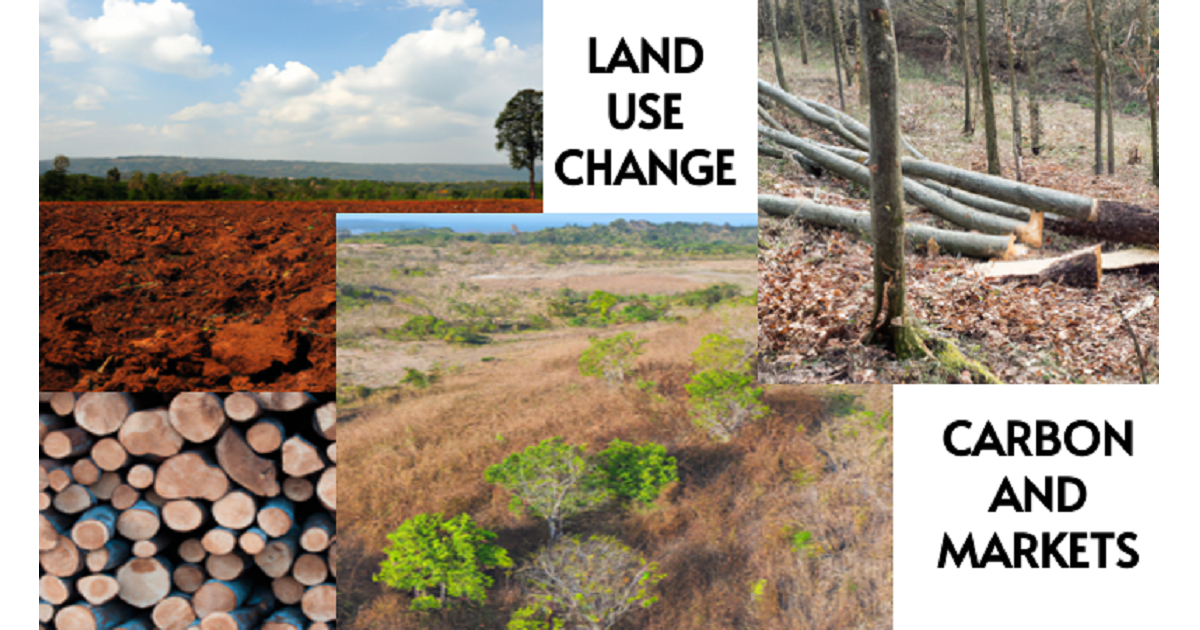
Since the birth of the Kyoto Protocol, various forms of incentives and mechanisms have been proposed that promote a greater capture of atmospheric carbon by forest systems through changes in land use, avoiding deforestation, or modifications in their current management (e.g., improved forest management). The idea that man can modify land use, or the management carried out in forest areas, to favour a net carbon capture is energetically topical, based on the objectives regarding emission reductions that countries must be met in the coming years. For this reason, the central theme of this Topic is to compile papers that focus on land use change processes and their management, which lead to an increase in carbon sequestration and whose consequences can be integrated into established markets (carbon markets voluntary or regulated), or in other systems such as money transfers from one country to another (e.g., REDD+ programs). It is intended to address this challenge through a transversal and multidisciplinary perspective and to collect case studies from different areas of the world. This perspective aims to stimulate the reception of manuscripts that do not focus only on aspects of carbon measurement but on the consequences derived from these policies in different prisms: the effect on other ecosystem services, changes in the behaviour of the owners of these lands, macroeconomic implications, etc.
Prof. Dr. Luis Diaz-Balteiro
Dr. César Pérez-Cruzado
Prof. Dr. Manuel Marey-Pérez
Topic Editors
Keywords
- land use and land use change
- carbon farming
- afforestation/reforestation
- improved forest management
- carbon markets
- REDD+
- ecosystem services and sustainability
- climate change mitigation
- territorial spatial planning
- sustainable land use and planning
- economic incentives
- forest carbon stocks
- land carbon projects
- carbon storage in wood products
- certification of carbon removals
Participating Journals
| Journal Name | Impact Factor | CiteScore | Launched Year | First Decision (median) | APC |
|---|---|---|---|---|---|

Economies
|
2.1 | 4.7 | 2013 | 23.1 Days | CHF 1800 |

Environments
|
3.7 | 5.7 | 2014 | 19.2 Days | CHF 1800 |

Forests
|
2.5 | 4.6 | 2010 | 16.8 Days | CHF 2600 |

Land
|
3.2 | 5.9 | 2012 | 17.5 Days | CHF 2600 |

Remote Sensing
|
4.1 | 8.6 | 2009 | 24.3 Days | CHF 2700 |

Sustainability
|
3.3 | 7.7 | 2009 | 17.9 Days | CHF 2400 |

Preprints.org is a multidisciplinary platform offering a preprint service designed to facilitate the early sharing of your research. It supports and empowers your research journey from the very beginning.
MDPI Topics is collaborating with Preprints.org and has established a direct connection between MDPI journals and the platform. Authors are encouraged to take advantage of this opportunity by posting their preprints at Preprints.org prior to publication:
- Share your research immediately: disseminate your ideas prior to publication and establish priority for your work.
- Safeguard your intellectual contribution: Protect your ideas with a time-stamped preprint that serves as proof of your research timeline.
- Boost visibility and impact: Increase the reach and influence of your research by making it accessible to a global audience.
- Gain early feedback: Receive valuable input and insights from peers before submitting to a journal.
- Ensure broad indexing: Web of Science (Preprint Citation Index), Google Scholar, Crossref, SHARE, PrePubMed, Scilit and Europe PMC.
