Article

Impact of Land Use Change on Carbon Storage Based on FLUS-InVEST Model: A Case Study of Chengdu–Chongqing Urban Agglomeration, China


1
Institute of Agricultural Information and Rural Economy, Sichuan Academy of Agricultural Science, Chengdu 610066, China
2
College of Resources and Environment, Chengdu University of Information Technology, Chengdu 610225, China
*
Author to whom correspondence should be addressed.
Land 2023, 12(8), 1531; https://doi.org/10.3390/land12081531
Submission received: 14 June 2023 / Revised: 23 July 2023 / Accepted: 23 July 2023 / Published: 2 August 2023
(This article belongs to the Topic Land Use Change, Carbon, and Markets)

Abstract

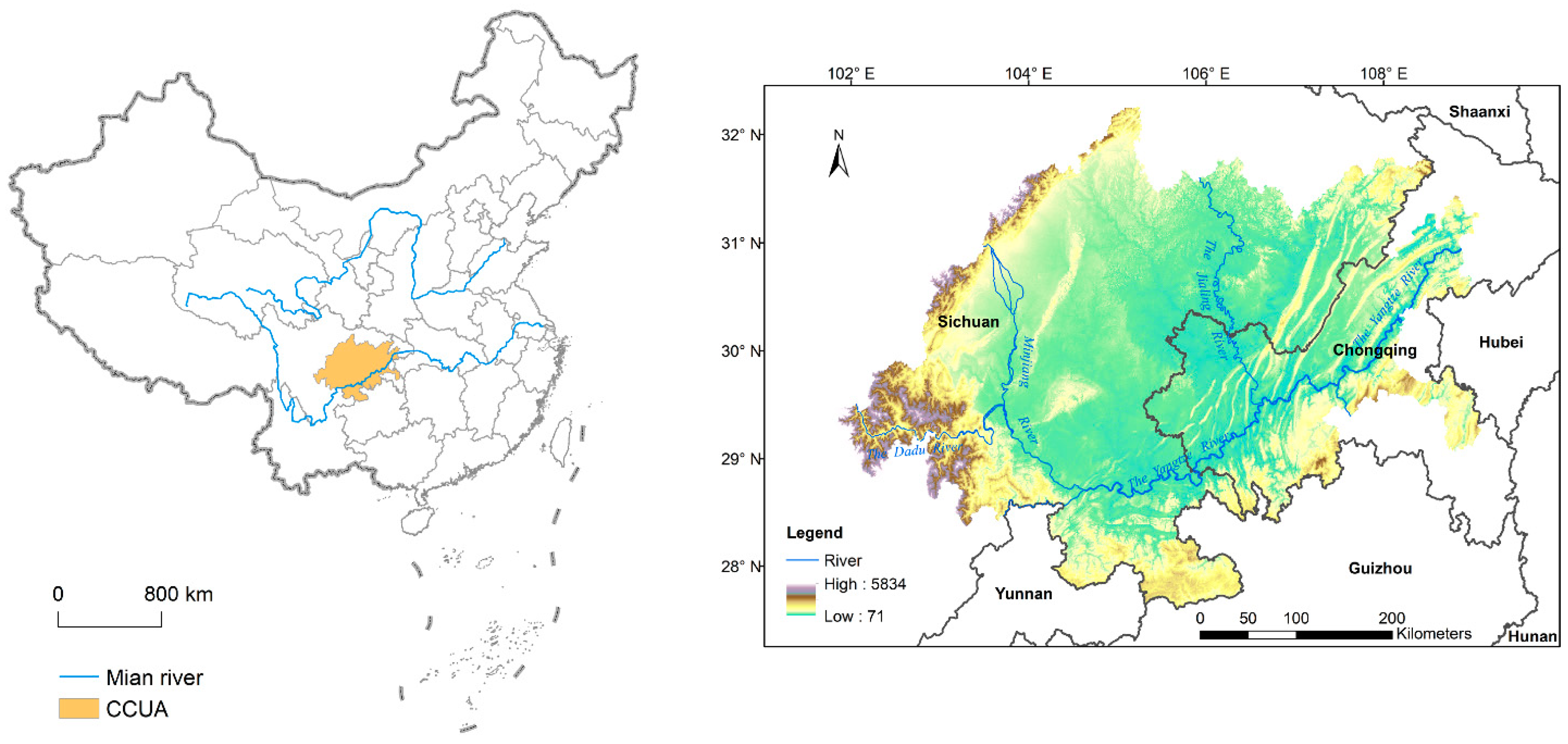
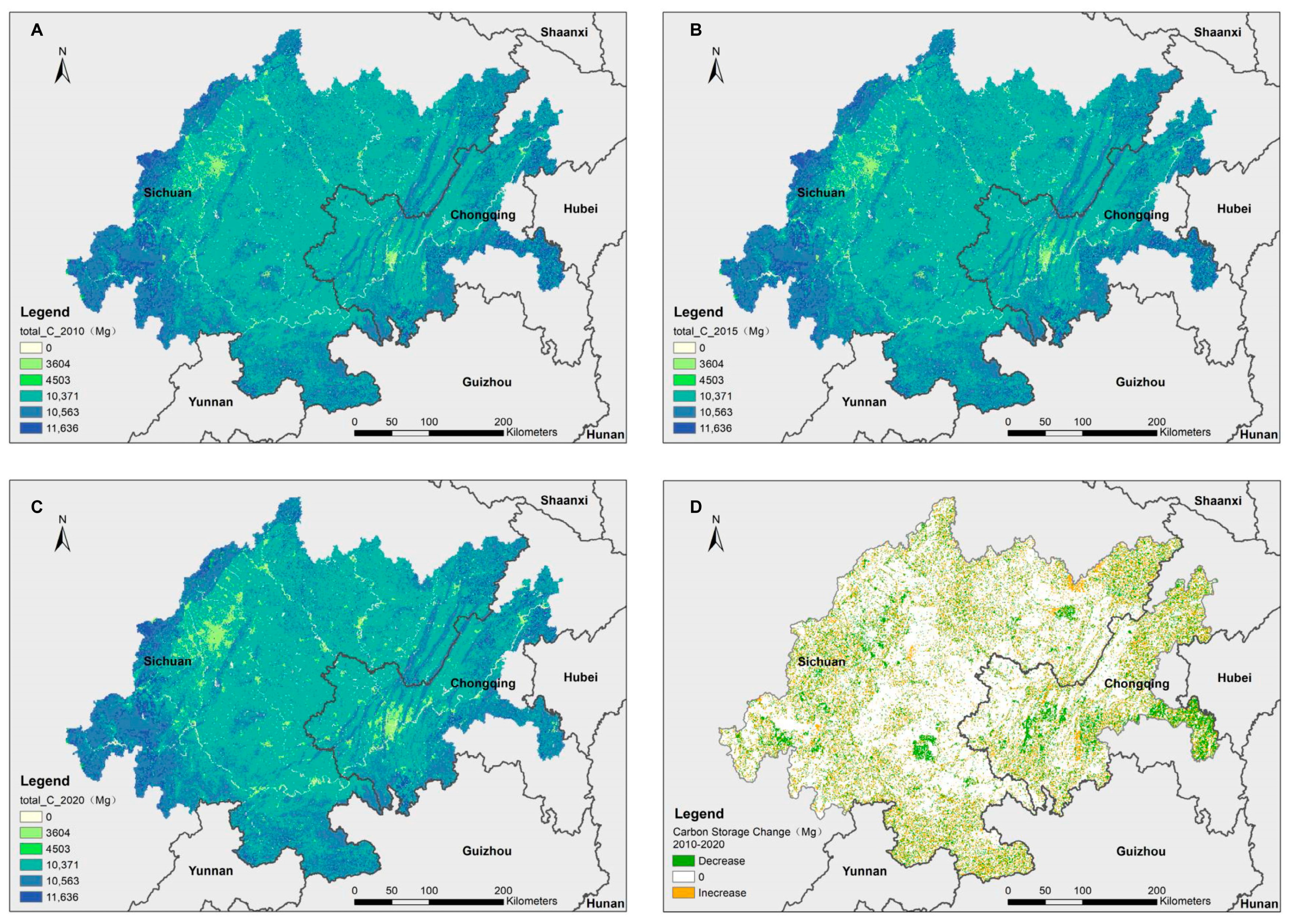
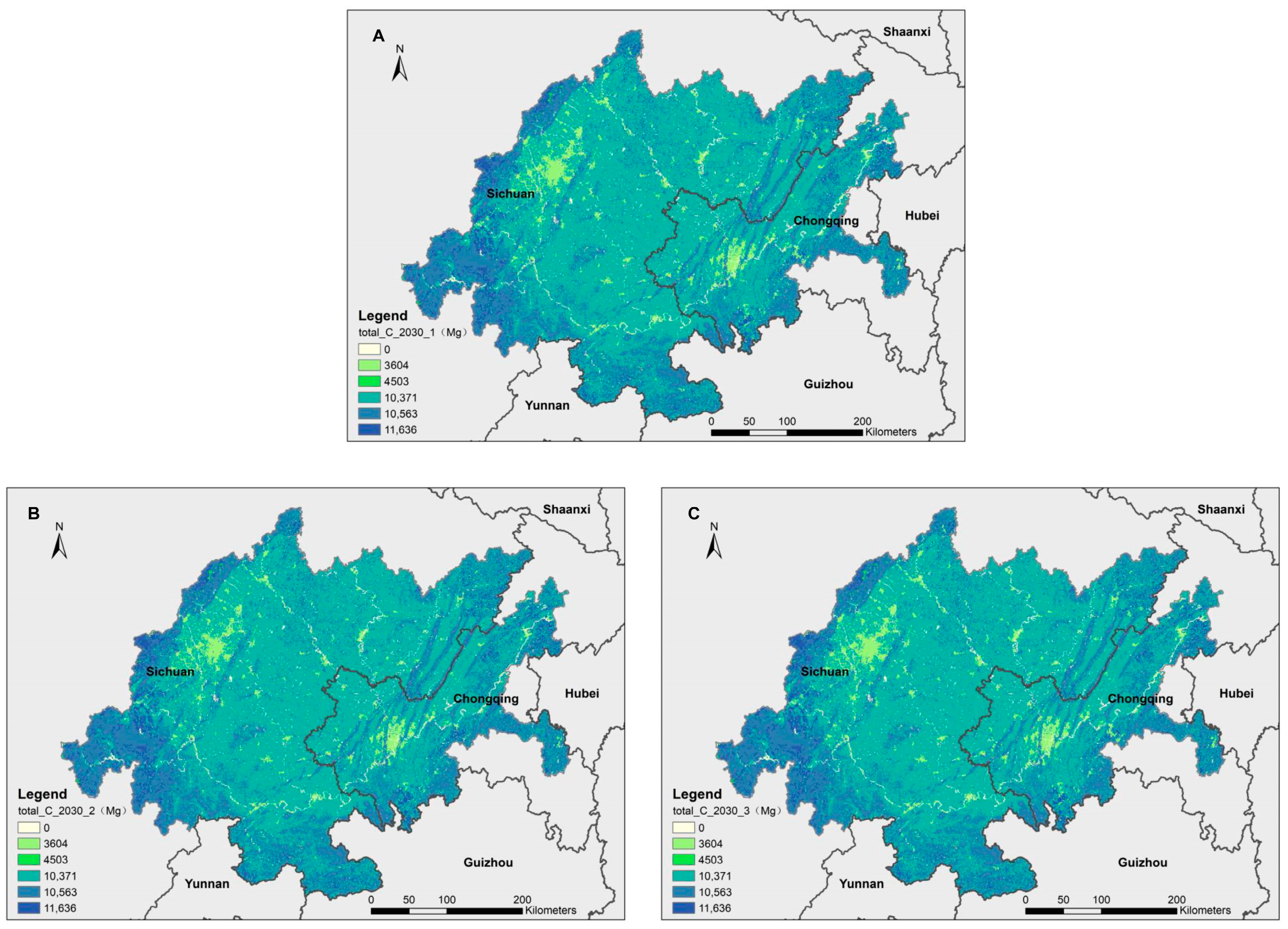
Land use change is one of the main factors driving changes in terrestrial carbon storage, which comprises the storage of vegetation carbon and soil carbon. Selecting the Chengdu–Chongqing urban agglomeration (CCUA) as the study area, land use and carbon storage from 2010 to 2030 were analyzed by combining the Future Land Use Simulation (FLUS) model and the Integrated Valuation of Ecosystem Services and Tradeoffs (InVEST) model. The main types of land use in CCUA are farmland and forest. The conversion of farmland to built-up land was the most important form of land use transfer between 2010 and 2020. Each type of land use shows the smallest change under the ecological protection scenario, and the degree of the comprehensive land use dynamic is only 0.19%. Under the natural development scenario, the areas of built-up land, wetland, and forest land will increase in 2030. Under the urban development scenario, the built-up land area will increase by 751.24 km2, an increase in more than 10.08%, but farmland, forest, and grassland will decrease. The spatial pattern of carbon storage is “high in the east and west, low in the middle”; farmland accounts for the largest proportion of carbon storage at over 60% of the total. Carbon storage decreased by 29.45 × 10⁶ Mg from 2010 to 2020. Grassland showed the most significant decrease in carbon storage, with the proportion decreasing from 7.49% in 2010 to 6.09% in 2020. In 2030, the total carbon storage will reach 1844.68 × 106 Mg under the ecological protection scenario, slightly higher than that in 2020, while it will show a downward trend under the natural development and urban development scenarios.
Keywords: land use; carbon storage; spatio-temporal change; FLUS model; InVEST model; scenario; Chengdu–Chongqing urban agglomeration (CCUA) land use; carbon storage; spatio-temporal change; FLUS model; InVEST model; scenario; Chengdu–Chongqing urban agglomeration (CCUA)