
Topic Editors



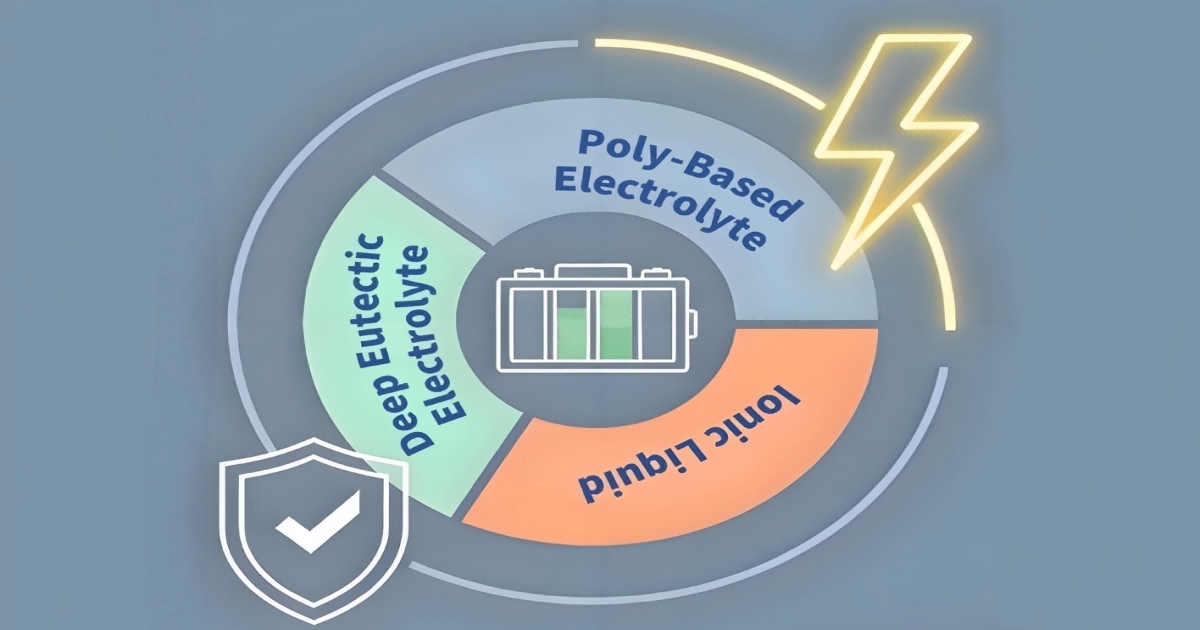
Ionic Liquid/Deep Eutectic Electrolytes/Poly-Based Electrolytes for Batteries
Topic Information
Dear Colleagues,
Research on ionic liquids, deep eutectic solvents, and polymer-based electrolytes offers a promising strategy to overcome the intrinsic limitations of conventional liquid electrolytes—particularly their flammability, narrow electrochemical stability window, and poor compatibility with reactive electrodes. These advanced electrolyte systems synergistically integrate the non-flammability and thermal stability of ionic compounds with the mechanical robustness and solution-processability of polymeric matrices, thereby enhancing both safety and electrochemical performance. As a result, they hold significant promise for next-generation batteries, including lithium-metal, sodium-ion, and multivalent systems.
This Topic aims to showcase cutting-edge research advances in ionic liquid/deep eutectic electrolyte/polymer-based systems for batteries, covering fundamental studies, material innovations, and practical applications through original research articles and comprehensive reviews.
Topics of interest include, but are not limited to, the following:
- Novel ionic liquid and deep eutectic solvent formulations
- Novel polymer electrolyte system for batteries
- Ion transport mechanisms and conductivity enhancement strategies
- Interfacial engineering and stability with various electrodes
- Thermal properties and safety characteristics
- Advanced characterization and computational modeling
- Applications in lithium-metal, sodium-ion, and multivalent battery systems
- Performance degradation analysis and failure mechanisms.
Studies on high-voltage cathode battery systems with enhanced safety characteristics are strongly encouraged.
Dr. Dengfeng Yu
Dr. Bo Jiang
Dr. Gongyuan Zhao
Topic Editors
Keywords
- ionic liquid
- deep eutectic electrolyte
- poly-based electrolytes
- ion battery
- solid electrolyte interphase
- high energy density
- electrochemical performance
- high ionic conductivity
Participating Journals
| Journal Name | Impact Factor | CiteScore | Launched Year | First Decision (median) | APC | |
|---|---|---|---|---|---|---|

AppliedChem
|
- | 2.9 | 2021 | 20.9 Days | CHF 1200 | Submit |

Batteries
|
4.8 | 6.6 | 2015 | 19.2 Days | CHF 2700 | Submit |

Chemistry
|
2.4 | 3.9 | 2019 | 15 Days | CHF 1800 | Submit |

Electrochem
|
- | 7.4 | 2020 | 20.7 Days | CHF 1200 | Submit |

Liquids
|
- | 2.9 | 2021 | 35.3 Days | CHF 1200 | Submit |

Molecules
|
4.6 | 8.6 | 1996 | 15.1 Days | CHF 2700 | Submit |

Sustainable Chemistry
|
4.2 | 10.7 | 2020 | 21.6 Days | CHF 1200 | Submit |

Preprints.org is a multidisciplinary platform offering a preprint service designed to facilitate the early sharing of your research. It supports and empowers your research journey from the very beginning.
MDPI Topics is collaborating with Preprints.org and has established a direct connection between MDPI journals and the platform. Authors are encouraged to take advantage of this opportunity by posting their preprints at Preprints.org prior to publication:
- Share your research immediately: disseminate your ideas prior to publication and establish priority for your work.
- Safeguard your intellectual contribution: Protect your ideas with a time-stamped preprint that serves as proof of your research timeline.
- Boost visibility and impact: Increase the reach and influence of your research by making it accessible to a global audience.
- Gain early feedback: Receive valuable input and insights from peers before submitting to a journal.
- Ensure broad indexing: Web of Science (Preprint Citation Index), Google Scholar, Crossref, SHARE, PrePubMed, Scilit and Europe PMC.
