Laser Treatment Monitoring with Reflectance Confocal Microscopy


 , ,
, , 


Abstract
1. Introduction
2. Materials and Methods
- language other than English
- in vitro or animal studies
- not involving laser treatments
- concerning tumors and not used to understand underlying mechanisms of laser therapies
- studies without specific RCM features described before and after treatment
- studies involving less than 8 patients
3. Results
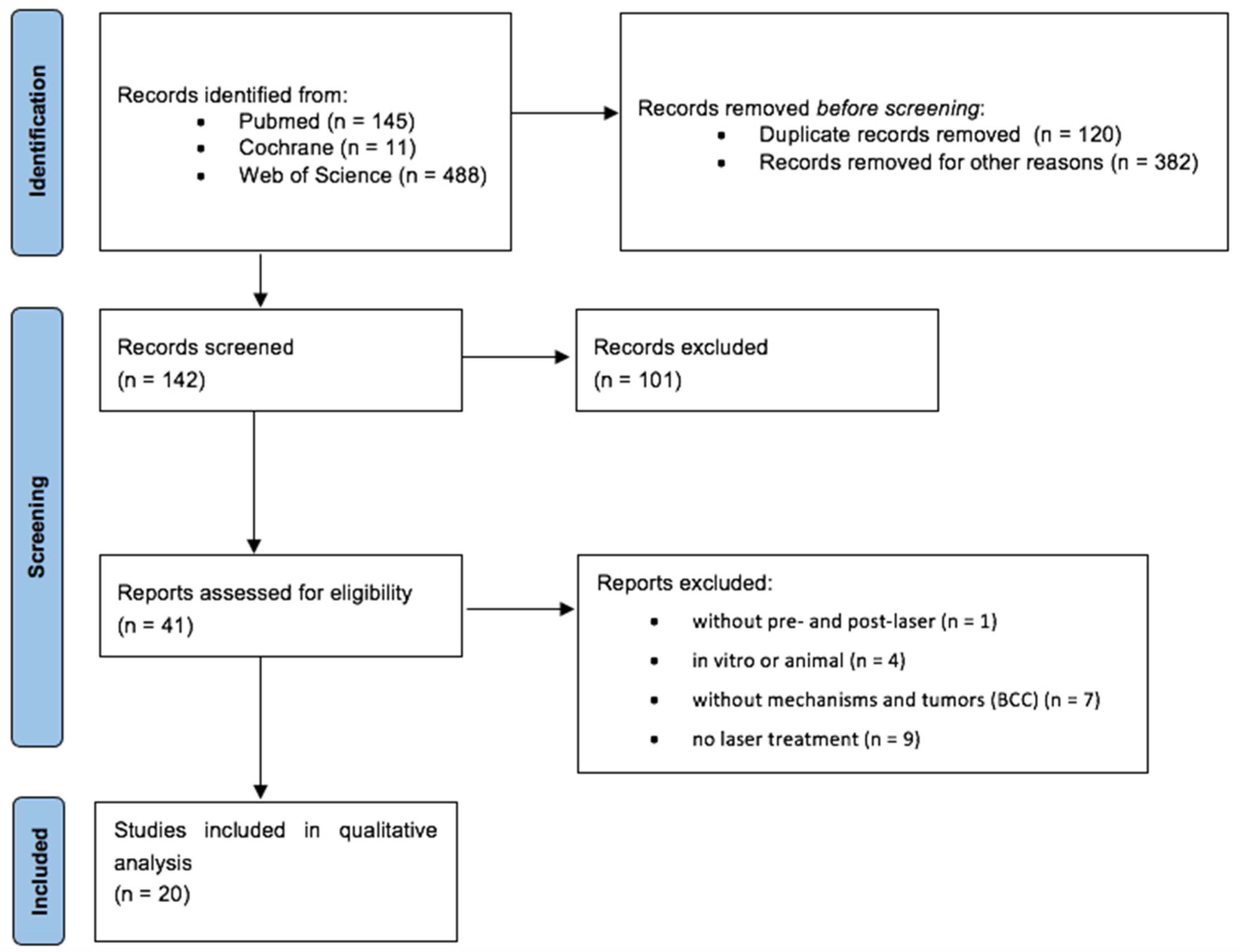
3.1. Study Selection
3.2. Skin Rejuvenation
3.3. Scar Tissue
3.4. Pigmentary Disorders
3.5. Vascular Disorders
3.6. Other Applications
4. Discussion
Author Contributions
Funding
Institutional Review Board Statement
Informed Consent Statement
Data Availability Statement
Conflicts of Interest
References
- Rovatti, P.P.; Pellacani, G.; Guida, S. Hyperdiluted Calcium Hydroxylapatite 1: 2 for Mid and Lower Facial Skin Rejuvenation: Efficacy and Safety. Dermatol. Surg. 2020, 46, e112–e117. [Google Scholar] [CrossRef] [PubMed]
- De Melo, F.; Carrijo, A.; Hong, K.; Trumbic, B.; Vercesi, F.; Waldorf, H.A.; Zenker, S. Minimally Invasive Aesthetic Treatment of the Face and Neck Using Combinations of a PCL-Based Collagen Stimulator, PLLA/PLGA Suspension Sutures, and Cross-Linked Hyaluronic Acid. Clin. Cosmet. Investig. Dermatol. 2020, 13, 333–344. [Google Scholar] [CrossRef] [PubMed]
- Guida, S.; Nisticò, S.P.; Farnetani, F.; Del Duca, E.; De Carvalho, N.; Persechino, F.; Verdina, T.; Giannetti, L.; D’Alessandro, M.; Urtis, G.G.; et al. Resurfacing with Ablation of Periorbital Skin Technique: Indications, Efficacy, Safety, and 3D Assessment from a Pilot Study. Photomed. Laser Surg. 2018, 36, 541–547. [Google Scholar] [CrossRef] [PubMed]
- Archer, K.A.; Carniol, P. Diode Laser and Fractional Laser Innovations. Facial Plast. Surg. 2019, 35, 248–255. [Google Scholar] [CrossRef]
- Wu, D.C.; Goldman, M.P.; Wat, H.; Chan, H.H.L. A Systematic Review of Picosecond Laser in Dermatology: Evidence and Recommendations. Lasers Surg. Med. 2021, 53, 9–49. [Google Scholar] [CrossRef]
- Verner, I.; Prag Naveh, H.; Bertossi, D. Treatment of injection-induced ecchymoses with light/laser-assisted technology. Dermatol. Ther. 2019, 32, e12861. [Google Scholar] [CrossRef]
- Guida, S.; Arginelli, F.; Farnetani, F.; Ciardo, S.; Bertoni, L.; Manfredini, M.; Zerbinati, N.; Longo, C.; Pellacani, G. Clinical Applications of In Vivo and Ex Vivo Confocal Microscopy. Appl. Sci. 2021, 11, 1979. [Google Scholar] [CrossRef]
- Guida, S.; Ciardo, S.; De Pace, B.; De Carvalho, N.; Peccerillo, F.; Manfredini, M.; Farnetani, F.; Chester, J.; Kaleci, S.; Manganelli, M.; et al. The influence of MC1R on dermal morphological features of photo-exposed skin in women revealed by reflectance confocal microscopy and optical coherence tomography. Exp. Dermatol. 2019, 28, 1321–1327. [Google Scholar] [CrossRef]
- Guida, S.; Longhitano, S.; Ardigò, M.; Pampena, R.; Ciardo, S.; Bigi, L.; Mandel, V.D.; Vaschieri, C.; Manfredini, M.; Pezzini, C.; et al. Dermoscopy, confocal microscopy and optical coherence tomography features of main inflammatory and autoimmune skin diseases: A systematic review. Australas. J. Dermatol. 2022, 63, 15–26. [Google Scholar] [CrossRef]
- Ciardo, S.; Pezzini, C.; Guida, S.; Del Duca, E.; Ungar, J.; Guttman-Yassky, E.; Manfredini, M.; Farnetani, F.; Longo, C.; Pellacani, G. A plea for standardization of confocal microscopy and optical coherence tomography parameters to evaluate physiological and para-physiological skin conditions in cosmetic science. Exp. Dermatol. 2021, 30, 911–922. [Google Scholar] [CrossRef]
- Guida, S.; Pellacani, G.; Ciardo, S.; Longo, C. Reflectance Confocal Microscopy of Aging Skin and Skin Cancer. Dermatol. Pract. Concept. 2021, 11, e2021068. [Google Scholar] [CrossRef] [PubMed]
- Pellacani, G.; Longo, C. Reflectance confocal microscopy: A crucial role for actinic keratosis treatment monitoring. J. Eur. Acad. Dermatol. Venereol. 2018, 32, 1055. [Google Scholar] [CrossRef] [PubMed]
- Shin, M.K.; Kim, M.J.; Baek, J.H.; Yoo, M.A.; Koh, J.S.; Lee, S.J.; Lee, M.H. Analysis of the temporal change in biophysical parameters after fractional laser treatments using reflectance confocal microscopy. Skin Res. Technol. 2013, 19, e515–e520. [Google Scholar] [CrossRef] [PubMed]
- Longo, C.; Galimberti, M.; De Pace, B.; Pellacani, G.; Bencini, P.L. Laser skin rejuvenation: Epidermal changes and collagen remodeling evaluated by in vivo confocal microscopy. Lasers Med. Sci. 2013, 28, 769–776. [Google Scholar] [CrossRef]
- Cameli, N.; Mariano, M.; Serio, M.; Ardigò, M. Preliminary comparison of fractional laser with fractional laser plus radiofrequency for the treatment of acne scars and photoaging. Dermatol. Surg. 2014, 40, 553–561. [Google Scholar] [CrossRef]
- Bencini, P.L.; Tourlaki, A.; Galimberti, M.; Pellacani, G. Non-ablative fractionated laser skin resurfacing for the treatment of aged neck skin. J. Dermatolog. Treat. 2015, 26, 252–256. [Google Scholar] [CrossRef]
- Guida, S.; Fusano, M.; Pellacani, G.; Bencini, P.L. Fractional 1064 nm picosecond laser and skin photoaging: In vivo evaluation of treatment effects with reflectance confocal microscopy. J. Eur. Acad. Dermatol. Venereol. 2021, 23, 92–96. [Google Scholar] [CrossRef]
- Bencini, P.L.; Tourlaki, A.; Galimberti, M.; Longo, C.; Pellacani, G.; De Giorgi, V.; Guerriero, G. Nonablative fractional photothermolysis for acne scars: Clinical and in vivo microscopic documentation of treatment efficacy. Dermatol. Ther. 2012, 25, 463–467. [Google Scholar] [CrossRef]
- Guida, S.; Bencini, P.L.; Pellacani, G. Picosecond laser for atrophic surgical scars treatment: In Vivo monitoring of results by means of reflectance confocal microscopy. J. Eur. Acad. Dermatol. Venereol. 2019, 33, e114–e116. [Google Scholar] [CrossRef]
- Guida, S.; Pellacani, G.; Bencini, P.L. Picosecond laser treatment of atrophic and hypertrophic surgical scars: In Vivo monitoring of results by means of 3D imaging and reflectance confocal microscopy. Skin Res. Technol. 2019, 25, 896–902. [Google Scholar] [CrossRef]
- Guida, S.; Losi, A.; Greco, M.; Ciardo, S.; Pellacani, G.; Longo, C. Reflectance confocal microscopy for striae distansae treatment monitoring after CO2 fractional laser. Dermatol. Ther. 2020, 33, e14318. [Google Scholar] [CrossRef] [PubMed]
- Fusano, M.; Galimberti, M.G.; Bencini, M.; Guida, S.; Bencini, P.L. Picosecond Laser treatment of Striae Distensae: In vivo Evaluation of Results by 3D Analysis, Reflectance Confocal Microscopy, and Patient’s Satisfaction. Lasers Surg. Med. 2021, 53, 1180–1185. [Google Scholar] [CrossRef] [PubMed]
- Richtig, E.; Hofmann-Wellenhof, R.; Kopera, D.; El-Shabrawi-Caelen, L.; Ahlgrimm-Siess, V. In vivo analysis of solar lentigines by reflectance confocal microscopy before and after Q-switched ruby laser treatment. Acta Derm. Venereol. 2011, 91, 164–168. [Google Scholar] [CrossRef] [PubMed]
- Peng, H.; Shen, L.; Yu, W.; Lin, X.; Sun, K.; Zhou, G. Use of Reflectance Confocal Microscopy to Predict Treatment Efficacy in Café Au Lait Macules. Dermatol. Surg. 2021, 47, e71–e74. [Google Scholar] [CrossRef]
- Xu, T.H.; Yang, Z.H.; Li, Y.H.; Chen, J.Z.; Guo, S.; Wu, Y.; Liu, W.; Gao, X.H.; He, C.D.; Geng, L.; et al. Treatment of infraorbital dark circles using a low-fluence Q-switched 1,064-nm laser. Dermatol. Surg. 2011, 37, 797–803. [Google Scholar] [CrossRef]
- Xu, T.H.; Li, Y.H.; Chen, J.Z.; Gao, X.H.; Chen, H.D. Treatment of infraorbital dark circles using 694-nm fractional Q-switched ruby laser. Lasers Med. Sci. 2016, 31, 1783–1787. [Google Scholar] [CrossRef]
- Jo, D.J.; Kang, I.H.; Baek, J.H.; Gwak, M.J.; Lee, S.J.; Shin, M.K. Using reflectance confocal microscopy to observe in vivo melanolysis after treatment with the picosecond alexandrite laser and Q-switched Nd:YAG laser in melasma. Lasers Surg. Med. 2018, 51, 423–429. [Google Scholar] [CrossRef]
- Longo, C.; Pellacani, G.; Tourlaki, A.; Galimberti, M.; Bencini, P.L. Melasma and low-energy Q-switched laser: Treatment assessment by means of in vivo confocal microscopy. Lasers Med. Sci. 2014, 29, 1159–1163. [Google Scholar] [CrossRef]
- Ren, J.; Qian, H.; Xiang, L.; Pan, Z.; Zhong, L.; Yan, S.; Gold, M.H. The assessment of pulsed dye laser treatment of port-wine stains with reflectance confocal microscopy. J. Cosmet. Laser Ther. 2014, 16, 21–25. [Google Scholar] [CrossRef]
- Fu, Z.; Huang, J.; Xiang, Y.; Huang, J.; Tang, Z.; Chen, J.; Nelson, J.S.; Tan, W.; Lu, J. Characterization of Laser-Resistant Port Wine Stain Blood Vessels Using In Vivo Reflectance Confocal Microscopy. Lasers Surg. Med. 2019, 51, 841–849. [Google Scholar] [CrossRef]
- Kim, H.J.; Lee, Y.J.; Ahn, H.J.; Baek, J.H.; Shin, M.K.; Koh, J.S. Dynamic Evaluation of Microwound Healing Induced by a Fractional CO2 Laser Using Reflectance Confocal Microscopy. J. Clin. Aesthet. Dermatol. 2022, 15, 25–29. [Google Scholar] [PubMed]
- Aghassi, D.; González, E.; Anderson, R.R.; Rajadhyaksha, M.; González, S. Elucidating the pulsed-dye laser treatment of sebaceous hyperplasia in vivo with real-time confocal scanning laser microscopy. J. Am. Acad. Dermatol. 2000, 43, 49–53. [Google Scholar] [CrossRef]
- Pellacani, G.; Farnetani, F.; Ciardo, S.; Chester, J.; Kaleci, S.; Mazzoni, L.; Bassoli, S.; Casari, A.; Pampena, R.; Mirra, M.; et al. Effect of Reflectance Confocal Microscopy for Suspect Lesions on Diagnostic Accuracy in Melanoma: A Randomized Clinical Trial. JAMA Dermatol. 2022, 158, 754–761. [Google Scholar] [CrossRef]
- Farnetani, F.; Scope, A.; Coco, V.; Guida, S.; Cesinaro, A.M.; Piana, S.; Peris, K.; Pellacani, G.; Longo, C. Paradigmatic cases of pigmented lesions: How to not miss melanoma. J. Dermatol. 2016, 43, 1433–1437. [Google Scholar] [CrossRef]
- Longo, C.; Casari, A.; De Pace, B.; Simonazzi, S.; Mazzaglia, G.; Pellacani, G. Proposal for an in vivo histopathologic scoring system for skin aging by means of confocal microscopy. Skin Res. Technol. 2013, 19, e167–e173. [Google Scholar] [CrossRef]
- Pezzini, C.; Ciardo, S.; Guida, S.; Kaleci, S.; Chester, J.; Casari, A.; Manfredini, M.; Longo, C.; Farnetani, F.; Brugués, A.O.; et al. Skin ageing: Clinical aspects and in vivo microscopic patterns observed with reflectance confocal microscopy and optical coherence tomography. Exp. Dermatol. 2023, 32, 348–358. [Google Scholar] [CrossRef]
- Guida, S.; Farnetani, F.; De Pace, B.; Kaleci, S.; Chester, J.; Stanganelli, I.; Ciardo, S.; De Carvalho, N.; Longo, C.; Pellacani, G. Flat-pigmented facial lesions without highly specific melanocytic dermoscopy features: The role of dermoscopic globules and dots in differential diagnosis with corresponding reflectance confocal microscopy substrates. J. Eur. Acad. Dermatol. Venereol. 2020, 34, e153–e156. [Google Scholar] [CrossRef] [PubMed]
- Rajadhyaksha, M.; Grossman, M.; Esterowitz, D.; Webb, R.H.; Anderson, R.R. In vivo confocal scanning laser microscopy of human skin: Melanin provides strong contrast. J. Investig. Dermatol. 1995, 104, 946–952. [Google Scholar] [CrossRef] [PubMed]
- Bostan, E.; Cakir, A. The dermoscopic characteristics of melasma in relation to different skin phototypes, distribution patterns and wood lamp findings: A cross-sectional study of 236 melasma lesions. Arch. Dermatol. Res. 2023; epub ahead of print. [Google Scholar] [CrossRef]
- Tanghetti, E.; Jennings, J. A comparative study with a 755 nm picosecond Alexandrite laser with a diffractive lens array and a 532 nm/1064 nm Nd:YAG with a holographic optic. Lasers Surg. Med. 2018, 50, 37–44. [Google Scholar] [CrossRef]
- Chang, Y.S.; Yang, T.H.; Li, C.N. Histology changes of in vivo human skin after treatment with fractional 1064 nm Nd:YAG picosecond laser in different energy settings. Lasers Med. Sci. 2022, 37, 2087–2092. [Google Scholar] [CrossRef]
- Habbema, L.; Verhagen, R.; Van Hal, R.; Liu, Y.; Varghese, B. Minimally invasive non-thermal laser technology using laser-induced optical breakdown for skin rejuvenation. J. Biophotonics. 2012, 5, 194–199. [Google Scholar] [CrossRef] [PubMed]
- Tawfic, S.O.; Abdel Hay, R.M.; Abouelazm, D.I.; Said, E.R. Tranexamic Acid Microinjection Alone Versus Its Combination With Fractional Carbon Dioxide Laser in Melasma Treatment: A Dermoscopic Evaluation. Dermatol. Surg. 2022, 48, 556–561. [Google Scholar] [CrossRef] [PubMed]
- Chen, Y.T.; Lin, E.T.; Chang, C.C.; Lin, B.S.; Chiang, H.M.; Huang, Y.H.; Lin, H.Y.; Wang, K.Y.; Chang, T.M. Efficacy and Safety Evaluation of Picosecond Alexandrite Laser with a Diffractive Lens Array for Treatment of Melasma in Asian Patients by VISIA Imaging System. Photobiomodul. Photomed. Laser Surg. 2019, 37, 559–566. [Google Scholar] [CrossRef] [PubMed]
- Galimberti, M.G.; Guida, S.; Pellacani, G.; Bencini, P.L. Hyaluronic acid filler for skin rejuvenation: The role of diet on outcomes. A pilot study. Dermatol. Ther. 2018, 31, e12646. [Google Scholar] [CrossRef]
- Zawodny, P.; Stój, E.; Kulig, P.; Skonieczna-Żydecka, K.; Sieńko, J. VISIA Skin Analysis System as a Tool to Evaluate the Reduction of Pigmented Skin and Vascular Lesions Using the 532 Nm Laser. Clin. Cosmet. Investig. Dermatol. 2022, 15, 2187–2195. [Google Scholar] [CrossRef]
- Conforti, C.; Guida, S.; Dianzani, C.; Turco, P.; Cazzato, V.; Zalaudek, I.; Piccolo, D. Carbon Peeling Laser Treatment to Improve Skin Texture, Pores and Acne Lesions: A Retrospective Study. Medicina 2022, 58, 1668. [Google Scholar] [CrossRef]


| RCM Findings | |
|---|---|
| Epidermal layer | |
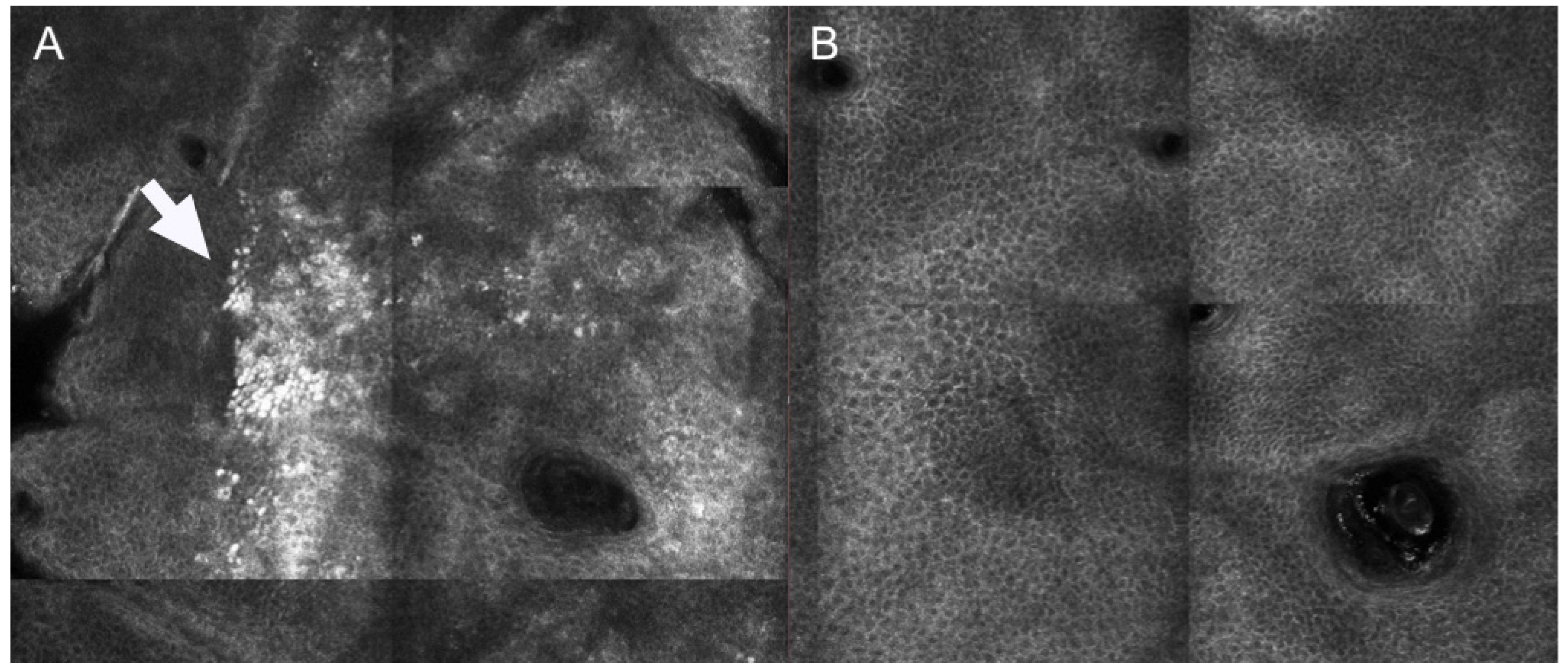
| Regular honeycombed [14,18,19,23] | Polygonal keratinocytes with homogeneous size and shape; cell border is well outlined and preserved |
| Mottled pigmentation [14,16,17] | Clustered bright keratinocytes in context of honeycombed pattern |
| Spongiosis [18] | Honeycombed pattern where the outline of the epidermal cells and the intercellular junctions appeared brighter and larger compared with normal skin |
| Exocytosis [18] | Bright particles corresponding to lymphocytes |
| Fine scales [23] | Highly reflective round-to-polygonal areas |
| Micro-thermal zone or micro-injuries-ablative zone [14,18,19,31] | empty spaces or black micro-holes |
| Micro-thermal zone -thermal modified zone [31] | areas with a whitish ring exhibiting high reflectance |
| Extracellular deposits of melanin [23] | bright round-to-polygonal areas and aggregated granules were observed throughout the epidermis |
| Dermo-epidermal junction | |
| Polycyclic papillary contours [14,17] | Bulbous projections and cords, with variably convoluted arrangement |
| Edged dermal papillae [23] | Dark round-to-oval structures surrounded by a rim of bright monomorphic cells |
| Sebaceous glands [31] | Roundish to oval-shaped annular structures, corresponding to glandular parenchyma and centered by hair follicles |
| Dermis | |
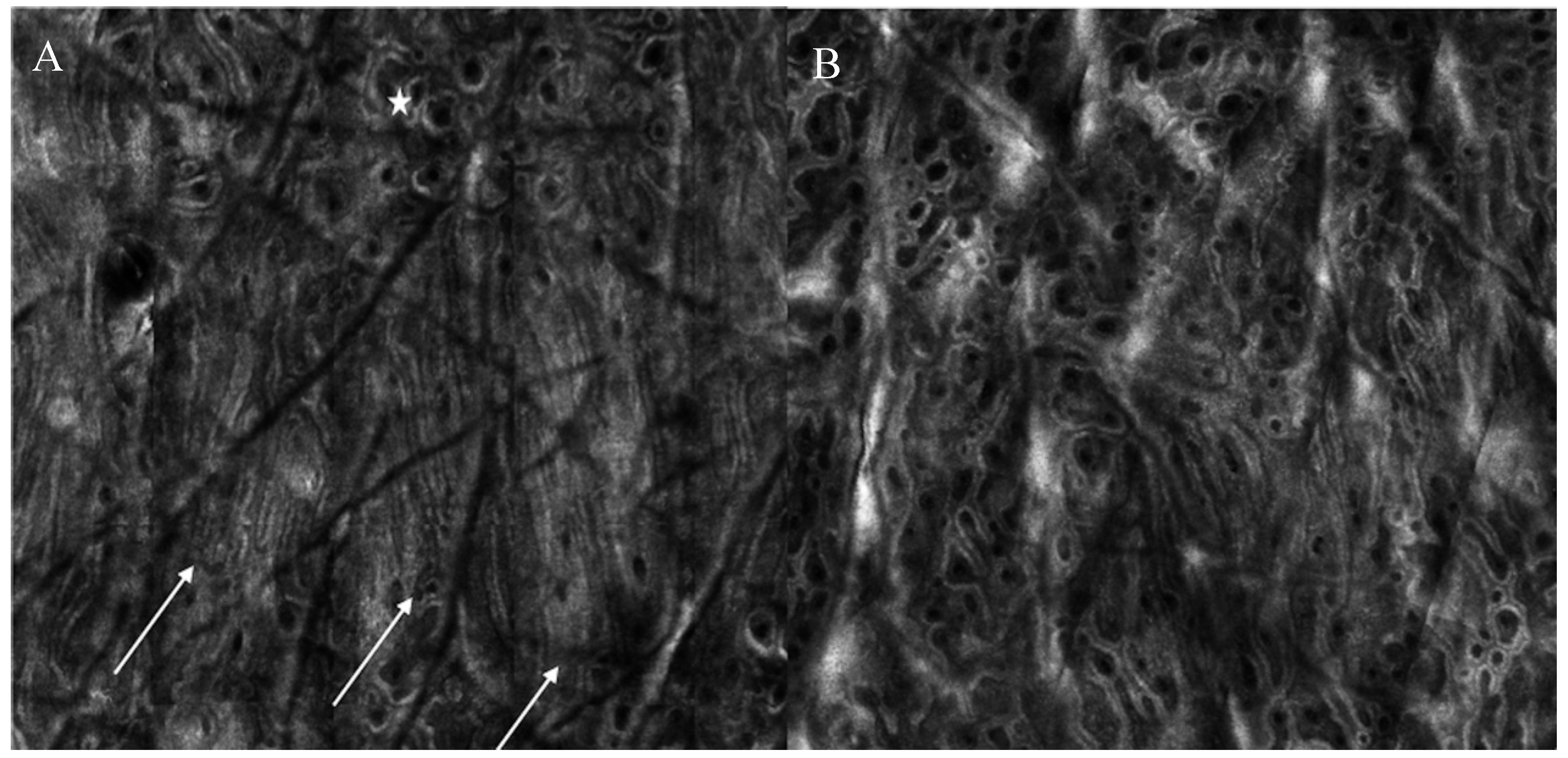
| Thin reticular collagen [16,21] | Bright thin fibrillar structures forming delicate weblike pattern; this structure can be detected around follicular openings |
| Coarse collagen [14,16,18,20] | Coarse filamentous thick structures with tendency to be packed; weblike pattern is still observable but with larger and irregularly spaced meshes |
| Huddle collagen [14] | Large hyporefractive blotches of amorphous and hyporeflective material; individual collagen fibers are no longer visible |
| Curled bright fibers [14] | Highly refractive thick and short undulated fibers, sometimes forming compact masses when severe solar elastosis is present |
| “Neat-wall” [21] | distortion of the normal DEJ, visible only in mosaic images, similar to a well- demarcated wall separating regular areas of junction, which are formed by round papillae and fibrillar or reticular collagen |
| Author, Date | Indication | N | Females, n (%) | Age, Mean ± SD (Range) | Skin Type/ Ethnicity | Study Type | Laser Type | RCM Criteria at Baseline | RCM Variations Post-Treatment | Follow Up Timing | Efficacy | Safety | Notes |
|---|---|---|---|---|---|---|---|---|---|---|---|---|---|
| Skin rejuvenation | |||||||||||||
| Shin, 2013 [13] | Rejuvenation | 11 | 100% | 26.8 ± 2.8 years (range from 24 to 30) | skin type III–IV | Retro | 1550 nm erbium glass fractional laser | Normal dermal papillae, active dermal papillae, and melanized dermal papillae | At 4 weeks after treatment, the total number of dermal papillae showed a significant increase, compared with pretreatment (p = 0.01), while no difference was found for “active” and “melanized” papillae | up to 4 weeks | at 4 weeks, skin roughness was decreased, and net elasticity (R5) increased; however, these findings did not reach significance. | No serious adverse events | Melanized dermal papillae’ was defined as more than 50% of the bright shining circles of dermal papillae ‘Active dermal papillae’ when dermal papillae had red blood cells (RBC) in the capillary loop. |
| Longo, 2013 [14] | skin rejuvenation | 11 (1 excluded) | - | aged 52–69 | - | Retro | ablative fractional CO2 laser+ radiofrequency | Irregular Honeycombed pattern n = 10 (100%) mottled pigmentation n = 5 (50%) Dendritic-shaped cells Polyciclic Papillary contours n = 4 (40%) coarse collagen n = 10 (100%) coarse + huddle n = 2 (20%) prevalent huddle n = 5 (50%) curled bright fibers + huddle collagen n = 2 (20%) | At 3-week, micro-holes within the honeycombed pattern, dendritic cells at epidermis clearance of mottled pigmentation and polycyclic papillary contours, substitution of huddle collagen with coarse collagen and appearance of long straight fibers presenting a parallel alignment At 6 and 12 weeks, disappearance of dendritic cells at epidermis and persistence of other features observed at 3-week. | Up to 3 months | complete disappearance of the mottled pigmentation. Improvement the skin color. visible re-epithelization of micro-holes. collagen remodeling: long straight fibers with parallel arrangement | No relevant side effects were recorded at any time. | |
| Cameli, 2014 [15] | Rejuvenation and atrophic acne scars | 10 (4 photoaging) | 70% | 28 to 55 (mean age 39.2) | Fitzpatrick II and III | Retro | Fractional Laser with Fractional Laser Plus Radiofrequency | No inflammation Evaluation of dermal fibers. | With regard to the inflammatory effect of laser treatment, infiltrated and dilated vessels in the upper dermis and microscopic signs of inflammation were assessed using RCM monitoring of the presence of inflammatory cells. After 1 week, in the site of laser plus radiofrequency treatment, microcolumns had completely disappeared, as had any features of inflammation or vasodilatation around the spot. Improvement of dermal fibers was also evident with RCM | Up to 3 months | In terms of skin aging, the results evaluated by the physician were better on the side of the skin treated using fractional laser + radiofrequency (excellent 75%, good 25%, sufficient 0%) and followed by more rapid healing than the skin treated with fractional laser only (excellent 25%, good 75%, sufficient 0%). Patient evaluation showed the same trend | Prolonged burning sensation above all on the laser + radiofrequency side, erythema and edema more on the laser side | |
| Bencini, 2015 [16] | Neck rejuvenation | 18 | 100% | 50.1 + 4.6 (range 44–59) | - | Retro | non-ablative fractional 1540 erbium glass laser | parallel microwrinkles mottled pigmentation, different collagen types | reduction of number of parallel micro-wrinkles, reduction of mottled pigmentation, increase of reticular collagen and reduction of coarse collagen | 1 month 3 months | Significan improvement of dyschromia and superficial wrinkles, only slight improvement in deeper horizontal folds; no change in skin laxity Based on the 6-point grading scale, respectively. | Edema and erythema rapidly disappeared | |
| Guida, 2021 [17] | Photoaging | 10 | 70% | >45 years 58.2 ± 5.9 | - | Retro | 1064 nm Nd:YAG PSL | Mottled pigmentation n = 10 (100%), Polyciclic papillary contours n = 7 (70%) Long bright collagen fibers n = 0 | Significant reduction of mottled pigmentation n = 2 (20%), p = 0.001, reduction of polyciclic papillary contours n = 3 (30%), and increase in long bright collagen fibers n = 4 (40%) | 4 months | A significant reduction of clinical parameter of dyscromia and wrinkles and rhytids parameters has been observed on the decolletage and face. | local and self-limiting adverse events | |
| Scar tissue | |||||||||||||
| Bencini, 2012 [18] | Acne scars | 87 | 58% | 29 years (range: 20–45) | - | Retro | 1540 nm Erbium laser | Baseline: bright and grossly arranged coarse collagen regular honeycombed pattern. | 30 mis after laser session: Spongiosis, exocytosis, well-defined large deposits of homogeneously reflective material were observed at dermal level (corresponding to micro-thermal zones) At 3-month, complete recovery of the honeycombed pattern, thin reticulated collagen fibers arranged to form a net, variable brightness of the collagen fibers distributed within a lesion that has been related to the increased collagen remodeling by fibroblasts. | 3 weeks 6 months | Improvement was assessed according to a clinical scale. At 1-month 89% of patients had marked improvement. At 3-month, a total of 45% patients referred an improvement >50%, 39% an improvement of 21–50%, and 16% an improvement <20%. | In all patients, post-laser erythema and edema persisting for 1–4 days occurred. In 4/87 (5%) patients, a mild acneiform eruption appeared 2–3 days after one or more laser sessions and it was well controlled by topical clindamycin. In 1/87 patient (Fitzpatrick skin type V), a slight hyperpigmentation developed and faded within 1 month. | replacement of coarse collagen with a new one, similar to the collagen seen in healthy skin |
| Cameli 2014 [15] | Rejuvenation and atrophic acne scars | 10 (6 acne scars) | 70% | 28 to 55 (mean age 39.2) | Fitzpatrick II and III | Retro | CO2 Fractional Laser with Fractional Laser Plus Radiofrequency–single session | No inflammation Evaluation of dermal fibers. | With regard to the inflammatory effect of laser treatment, infiltrated and dilated vessels in the upper dermis and microscopic signs of inflammation were assessed using RCM monitoring of the presence of inflammatory cells. One week after treatment, complete physiologic healing of the tissues was clinically and confocally evident. After 1 week, in the site of laser plus radiofrequency treatment, microcolumns had completely disappeared, as had any features of inflammation or vasodilatation around the spot. Improvement of dermal fibers was also evident with RCM. | Up to 3 months | clinical improvement of the boxcar and rolling scars in terms of depth and tissue remodelling that was more evident on the side of the face treated using fractional laser plus radiofrequency (excellent 50%, good 50%, sufficient 0%) than on the side treated with laser alone (30% excellent, 40% good, 30% sufficient) Healing was faster on the side treated using fractional laser plus radiofrequency (30% excellent, 40% good, 22% sufficient, 8% insufficient) | Prolonged burning sensation above all on the laser + radiofrequency side, erythema and edema more on the laser side | |
| Guida, 2019 [19] | Atrophic surgical scars | 9 | 33% | 42.7 ±14.3 years (range between 35 and 65) | - | Retro | fractional picosecond-domain laser (PSL) | honeycombed pattern dermal papillae coarse collagen with collagen fibres showing a perpendicular orientation as compared to the major axis of the scar | After treatment micro-injuries, corresponding to black micro-holes surrounded by fringed borders within the surrounding tissue At 6-month, reticulated collagen fibers were observed to form a net. The increased brightness of the collagen fibres | 6 months | Improvements in 66% of patients aesthetic satisfaction: very satisfied in 50% of cases, 40% satisfied and 10% not satisfied. | Mean pain score was 3.2 ± 1.5. Erythema, petechiae, crusts lasting 7–10 days while no hypo/hyperpigmentation was reported | Standardized photography can impair the evaluation of subtle changes in depth of treated scars, as previously reported for striae distensae. Therefore, aesthetic improvement can be too subtle to be captured in twodimensional digital images. |
| Guida, 2019 [20] | atrophic and hypertrophic surgical scars | 16 | 50% | 43.5 ± 13.5 years (range between 25 and 65) | - | Retro | fractionated 1064 nm wavelength, Nd:YAG PSL | At T0, epidermal features included the honeycombed pattern (80% of scars) while 20% of scars (all atrophic) showed cobblestone pattern Epidermal thickness was found to be related to the type of scar, with atrophic scars showing a mean thickness of 43 ± 10.3 μm and hypertrophic 58.5 ± 5.3 μm, p = 0.0005. In addition, at DEJ level, the majority of scars showed inconclusive features while 20% of scars (corresponding to the scars showing mottled pigmentation at epidermal level) had rare oval-shaped dermal papillae that can be observed in the context of lesional skin. Furthermore, coarse collagen or thick parallel collagen bundles, with a prevalent perpendicular orientation as compared to major axis of surgical scars, were observed at upper dermis | Overall, 100% of scar show honeycombed pattern. Significant reduction of epidermal thickness was observed for hypertrophic scars. A total of 75% of scars showed visible dermal papillae while at dermal level bright and thin reticulated collagen fibers were arranged to form a net in 95% of cases. | 1 month | An overall improvement in 95% of patients. All four parameters of the VSS (pigmentation, vascularity, pli- ability, and height) were assessed, with a mean of 5.5 ± 1.4 at T0 and 3.1 ± 1 at T1, and a mean improvement of 2.4 ± 0.7, p = 0.000. | Three post-procedure events were reported: erythema, pete- chiae, and crusts. | |
| Guida, 2020 [21] | striae distensae | 18 | 88% | 31.6 ± 10.5 (range 18–54). | - | Retro | CO2 fractional | parallel collagen fibers were observed in 100% of cases and elongated parallel papillae in 94.1% of cases, while the neatwall was detected in 76.5% of the population. | Elongated parallel papillae, parallel collagen fibers, the neatwall significantly decreased after treatment. Interestingly, statistically significant reduction of parallel collagen fibers and neat-wall was observed in the group receiving >4 sessions of treatment, as compared to the group receiving ≤4 sessions. | 4 weeks | overall improvement in 100% of cases, with 64.7% of patients very much improved assessed by SGAIS | local and self-limiting adverse events | a new confocal feature, called “neat-wall” was identified. “Neat-wall” corresponds to a distortion of the normal DEJ, visible only in mosaic images, similar to a well-demarcated wall separating regular areas of junction, which are formed by round papillae and fibrillar or reticular collagen |
| Fusano, 2021 [22] | striae distensae | 27 | 100% | 39.45 years (range: 25–55 years) | - | Retro | Picosecond laser | epidermal features of SD were represented by prevalent honeycomb or cobblestone pattern, focally less visible for the presence of atrophic and thin skin. At the dermal level, SD showed parallel reinforced collagen arranged in bundles, stretching and obliterating the dermal papillae, which appeared rare and oval-shaped in the context of lesional skin; hair follicles were not visible among the SD. | After 6 months from the last laser session (T1), the epidermis was entirely represented by a honeycomb or cobblestone pattern. At the dermal level, the hyperreflective reinforce of parallel collagen was no longer appreciable, and larger and more represented oval papillae appearence | 6 months | An overall improvement in 81.4% of treated SD was revealed from PGAIS 6 months after the last laser session, while in 66.6% according to SGAIS (Table 1), with a significative difference between the investigators’ and subjects’ score (p = 0.04). | Two cases of purpura and micro-bleeding | |
| Pigmentary disorders | |||||||||||||
| Richtig, 2011 [23] | Solar Lentigines | 12 | 100% | 59.3 years, (range 49–69 years) | caucasian | Retro | Q-switched ruby | epidermal honeycomb pattern. At the DEJ, edged dermal papillae and policyclic papillary contours | After treatment disruption of the stratum corneum was confirmed by the presence of fine scales. The honeycomb pattern showed blurred epidermal intercellular connections, while dark structureless areas of different sizes and shapes were observed throughout the epidermis. Dermal papillae were markedly hyporeflective Ten days after treatment, stratum corneum was found still to be disrupted. Further extracellular deposits of melanin were observed. At the DEJ, non-edged dermal papillae were observed, in 9 cases containing a few melanophages. Bright reflective rims surrounding the dermal papillae were no longer observed at the DEJ. | 30 min 10 days | - | - | Histological analysis of the biopsy tissue obtained from two patients revealed epidermal and dermal oedema, presenting as multiple cell debris-filled vacuoles of various sizes, some of them filled with cell debris, at the bases and tips of the rete ridge |
| Peng, 2021 [24] | Cafe’ Au Lait Macules (CALMs) | 43 | - | 9.10 years. | Fitzpatrick skin Type III to IV | Retro | Q-switched alexandrite laser (QSAL) | length and density of papillae | CALMs with irregular border had significantly shorter rete pegs and less papillae on RCM compared with smooth border CAMLs and responded better to QSAL treatment (2.32 vs. 1.10) | 3 months | We reported that CALMs with irregular borders respond better to QSAL treatment compared to those with smooth borders | Not found | Male patients have shown to achieve better clinical responses than females. The underlying mechanism might be related to different hormonal background |
| Xu, 2016 [26] | Infraorbital Dark Circles Color dark brown | 30 | 100% | 30.8 years (20–45 years) | Fitzpatrick III/IV | Open label study | fractional Q-switched ruby laser | greater melanin deposition in the upper dermis of the dark circles area than in cheekbone skin, although there was no significant difference in epidermal melanin density in the dark circles than in the cheekbone area | After eight treatment sessions, 6 of the 30 subjects (20%) obtained more than 75% clearance of the melanin deposition in the upper dermis (melanophages, personal comment), 15 (50%) obtained 50–74% clearance, 7 (23.33%) obtained 25–49% clearance, and only 2 obtained less than 25% clearance. Meanwhile, the melanin granules at the control site (the highest point of the cheekbone) remained at a low level during and after each treatment. | 7 days 3 months 6 months | The melanin index indicated a sub-stantial decrease from 240.44 (baseline) to 194.56 (p < 0.05). | Transient erythema and slight edema were observed and usually resolved within 0.5 to 1 h after the procedure. No scarring, hyperpigmentation, hypopigmentation | |
| Xu, 2011 [25] | Infraorbital Dark Circles Color dark brown | 30 | 100% | 35.5 (range 20–42) | Fitzpatrick III/IV | Open label study | 1064-nm Q-switched neodymiumdoped yttrium aluminium garnet (Nd:YAG) | greater melanin deposition in the upper dermis of the dark circles area than in cheekbone skin, although there was no significant difference in epidermal melanin density in the dark circles than in the cheekbone area | After eight treatment sessions, four of 30 subjects (13.3%) obtained more than 75% clearance of melanin deposition in the upper dermis (melanophages, personal comment), 16 (53.3%) obtained 50% to 74% clearance, eight (26.7%) obtained 25% to 49% clearance, and two obtained less than 25% clearance. The melanin granules in the control site (the highest point of the cheekbone) remained at a low level during and after each treatment. | 6 months | The melanin index indicated a substantial decrease, from 225.84 at baseline to 182.65 (p = 0.05) | Transient erythema and slight edema were observed and usually resolved within 0.5 to 1 h after the procedure. No scarring, hyperpigmentation, hypopigmentation | |
| Jo, 2018 [27] | melasma | 8 | 100% | 49.00 ± 4.07 range 42–56 years | Fitzpatrick skin type III | Pro split face | Picosecond Alexandrite Laser (PAL) and Q-Switched (QS) Nd:YAG Laser 1064 nm | In the epidermis, evaluation of densely aggregated melanosomes in the keratinocytes of the spinous layer. Prominent dendritic melanocytes were present in the basal layer of the epidermis in three (37.5%) of eight subjects. At the DEJ level, papillary rings around the derma papillae composed of sequences of brighter structures and dendritic melanocytes. There were also melanophages in the papillary dermis. In surrounding normal skin, there was less melanin in the epidermis and DEJ than there was in the melasma lesions. The pigment intensity of each skin layer (spinous layer, basal layer, and papillary dermis) was investigated 1 and 24 h after treatment. | After PAL treatment, there was a decrease in melanin-induced reflectance in the spinous layer and basal layer. In contrast, treatment with QS Nd:YAG led to slight or non-significant improvement in the spinous layer and aggravated findings in the basal layer. After the treatments, a decrease of melanin-induced reflectance was shown in melasma lesion and surrounding normal skin. However, there was more improvement in the surrounding normal skin than in the melasma lesions. After 1 h of PAL or QS Nd:YAG treatment, 37.5% of subjects in both groups demonstrated melanocyte activation in the basal layer. One and two subjects showed melanocyte activation (dendritic) 24 h after PAL and QS Nd:YAG treatment, respectively. In addition, 37.5% of subjects showed perifollicular reflectance accentuation in the basal layer and upper dermis after treatment with QS Nd:YAG and PAL lasers, respectively | 24 h | After a single treatment with either the picosecond alexandrite laser or the Q-switched Nd:YAG laser, both melanin-induced melanin index decreased, at 1 (19%) and 24 h (8%) for PAL and 1 (14%) and 24 h (6%) for QS. The melanin index decreased at 1 h after both treatments in surrounding normal skin. | N/A apart from aggravated findings in the basal layer after QS. However, short term evaluation (personal comment) | On the 30-fold magnified dermoscopic images with Vivacam, follicular plugs and hyperpigmented rings were observed in 6 (75%) and 4 (50%) of the melasma lesions from eight subjects, respectively (Figure 1). These hyperpigmented rings on dermoscopy were observed as hyper-reflectant rings on RCM in 4 (50%) of the melasma lesions |
| Longo, 2014 [28] | melasma | 8 | 100% | mean age 36.7 (31–41) | Fitzpatrick skin type III | Retro | Q-Switched (QS) Nd:YAG Laser 1064 nm | The epidermis showed a honeycombed pattern, and in three cases (37.5%). In one case, bright dendritic cells located around hair follicles were visualized. At DEJ, all cases showed bright polycyclic contours and bright hair follicles/rings at DEJ level. In the upper dermis, no bright cells referable to melanophages or other structures (inflammatory cells, melanin particles) were observed. | After nine laser sessions, no mottled pigmentation or polycyclic papillary contours were observed. The presence of dendritic-shaped cells was noted in three cases at epidermal and DEJ levels. However, after a follow-up of 3 months following the ninth laser session, the cases presenting dendritic cells had an early relapse of melasma. | unclear | Clinically, all patients improved showing a statistically significant decrease of the MASI score (p < 0.001). | Erythema, edema, and scaling were reported but their severity was mild and well tolerated. In particular, erythema and edema disappeared in a few hours, while fine scaling lasted from 2 to 3 days and was minimized by common hydrating creams. | |
| Vascular disorders | |||||||||||||
| Fu, 2019 [30] | Port wine stain | 42 | 59% | from 1 to 48 years average age of 14.3 years. | - | Pro | 585/1064 nm laser treatment | blood vessels in the papillary dermis. average blood vessel depth, density, flow | PWS blood vessel flow, diameter, and depth, but not density, are the key factors contributing to the laser-resistance. In our study, we showed that the average diameter of laser-responsive facial PWS blood vessels decreased from 84.36 to 49.04 μm after laser treatment, suggesting that the remaining PWS blood vessels (diameters < 49.04 μm) were more resistant to laser treatment. Results have shown that laser-resistant facial PWS blood vessels had significantly higher blood flow, larger diameters, and were located deeper in the skin when compared with responsive PWS on the face | 4 weeks | Three out of 33 subjects with facial PWS showed a complete response, 12 showed manifested responses, 13 showed improvements, and 5 showed an ineffective response, as estimated from pictures. Overall response: 84.85% | 44.4% PWS on the extremities (four out of nine subjects) were laser-resistant, which was significantly higher (p < 0.001) when compared with those PWS on the face (15.2%, 5 out of 33 subjects). Laser-resistant PWS blood vessels had significantly higher blood flow, larger diameters, and were located deeper in the skin. RCM can be a valuable tool for a prognostic evaluation on laser-resistant lesions before treatment, thereby providing guidance for tailored laser treatment protocols | |
| Ren, 2014 [29] | Port-wine stains | 11 | 45% | 24.82 ± 9.82 years | - | Pro | 595 nm Pulsed Dye Laser | Blood vessels diameter and blood vessels density RCM imaging at the depth of 100 and 150 μm showed greater vessel diameter before treatment and the vessels tended to increase in caliber with increasing depth, | After treatment, both diameter and density of blood vessel decreased significantly as compared with those before treatment in the same pulse-duration groups (p < 0.05). There was significant difference between 1.5 ms pulse-duration group and other pulse duration groups in reducing blood vessel diameter at the depth of 150 μm (p < 0.05), while no signifi cant difference among each pulse-duration groups at the depth of 100 μm (p > 0.05). | 2 months | Overall, clearance was excellent in 27.28% of patients, good in 20.45%, fair in 36.36%, and poor in 15.91%. The PDL treatment exhibited increasing clearance with reducing pulse duration. | ||
| Other applications | |||||||||||||
| Kim, 2022 [31] | Wound healing after laser treatment f healthy skin inner arms | 8 | 87.5% | 24 and 48 years (median 39.62) | Fitzpatrick Skin Types II to IV | Pro | fractional CO2 laser | The decrements of the ablative zone were evaluated at the level of the stratum spinosum and stratum basale. The ablative zone was evaluated using a six point scale based on the percentage change in area in proportion to the baseline (D3) (i.e., 125%, slightly worse [slightly expanded]; 100%, no change; 75%, slightly improved [slightly decreased]; 50%, moderately improved [moderately decreased]; 25%, significantly improved [significantly decreased]; and 0%, completely improved [completely decreased]). areas with a whitish ring exhibiting high reflectance in stratum spinosus, basale and papillary dermis. | The ablative zone of the stratum spinosum showed a progressive reduction at 14-day after treatment and complete resolution at day-28. The ablative zone was smaller at the basal layer as compared to thte stratum spinosum. Thermally modified zones, surrounding the ablative zones, were observed at different time periods. From day3 to day14, the thermally modified zone was visualized as a highly refractile ring. At day28, even after epidermal regeneration was completed, a thermally modified zone was observable in some subjects. Bright and fine fibers corresponding to newly formed collagen throughout the papillary dermis were also visible. Two months after laser application, a fine and bright collagen network was consistently observed. | Up to 2 months | - | All subjects exhibited mild erythema and edema on the surface of the test skin directly after fractional CO2 laser application. By day-14, all the crusts had fallen and the skin surface was completely healed on macroscopic examination. | The MTZ comprised an ablative microchannel and a surrounding thermally modified zone, which included the coagulated and thermally denatured zones around the ablative zone. |
| Aghassi 2000 [32] | sebaceous hyperplasia | 10 (29 lesions) | 66% | 30 to 57 years | Fitzpatrick skin type I–III. | Retro | 585 nm pulsed-dye laser | Dilated sebaceous duct opening directly to the epidermal surface and containing a plug of keratin and sebum. At the papillary dermis, a “crown” of blood vessels surrounds the sebaceous duct. Deeper in the dermis, dilated blood vessels could be found in the vicinity of the duct. The enlarged sebaceous lobules were too deep to be visualized by RCM. | Several minutes after pulsed-dye laser treatment, the vessels surrounding the sebaceous duct were replaced by amorphous, refractile cords of coagulated material. Follow-up images obtained at 2 weeks, 4 weeks, and 8 weeks after treatment were not reproducibly or significantly different from pretreatment images, with the exception of 3 patients who demonstrated a temporary absence of keratinocytes overlying the treated lesion at the 2-week follow-up. | Up to 8 weeks | complete disappearance of 28% of lesions. decrease in diameter in 66%, and flattening in 93% | Only one cutaneous depression remained at the 8- week follow-up. Eight lesions (28%) recrudesced after initial involution, and 2 of these (7%) regained their original sizes. No frank scarring or pigmentary side effects were seen. | |
Disclaimer/Publisher’s Note: The statements, opinions and data contained in all publications are solely those of the individual author(s) and contributor(s) and not of MDPI and/or the editor(s). MDPI and/or the editor(s) disclaim responsibility for any injury to people or property resulting from any ideas, methods, instructions or products referred to in the content. |
© 2023 by the authors. Licensee MDPI, Basel, Switzerland. This article is an open access article distributed under the terms and conditions of the Creative Commons Attribution (CC BY) license (https://creativecommons.org/licenses/by/4.0/).
Share and Cite
Guida, S.; Longo, C.; Amato, S.; Rossi, A.M.; Manfredini, M.; Ciardo, S.; Spadafora, M.; Nisticò, S.P.; Mercuri, S.R.; Rongioletti, F.; et al. Laser Treatment Monitoring with Reflectance Confocal Microscopy. Medicina 2023, 59, 1039. https://doi.org/10.3390/medicina59061039
Guida S, Longo C, Amato S, Rossi AM, Manfredini M, Ciardo S, Spadafora M, Nisticò SP, Mercuri SR, Rongioletti F, et al. Laser Treatment Monitoring with Reflectance Confocal Microscopy. Medicina. 2023; 59(6):1039. https://doi.org/10.3390/medicina59061039
Chicago/Turabian StyleGuida, Stefania, Caterina Longo, Simone Amato, Anthony M. Rossi, Marco Manfredini, Silvana Ciardo, Marco Spadafora, Steven P. Nisticò, Santo R. Mercuri, Franco Rongioletti, and et al. 2023. "Laser Treatment Monitoring with Reflectance Confocal Microscopy" Medicina 59, no. 6: 1039. https://doi.org/10.3390/medicina59061039
APA StyleGuida, S., Longo, C., Amato, S., Rossi, A. M., Manfredini, M., Ciardo, S., Spadafora, M., Nisticò, S. P., Mercuri, S. R., Rongioletti, F., Zerbinati, N., & Pellacani, G. (2023). Laser Treatment Monitoring with Reflectance Confocal Microscopy. Medicina, 59(6), 1039. https://doi.org/10.3390/medicina59061039