


Patient-Centered Care for Patients with Depression or Anxiety Disorder: An Integrative Review
 , ,
, ,  ,
,  , ,
, ,
Abstract
1. Introduction
1.1. Objective
1.2. Review Questions
2. Materials and Methods
2.1. Protocol and Registration
2.2. Study Design
2.3. Eligibility Criteria
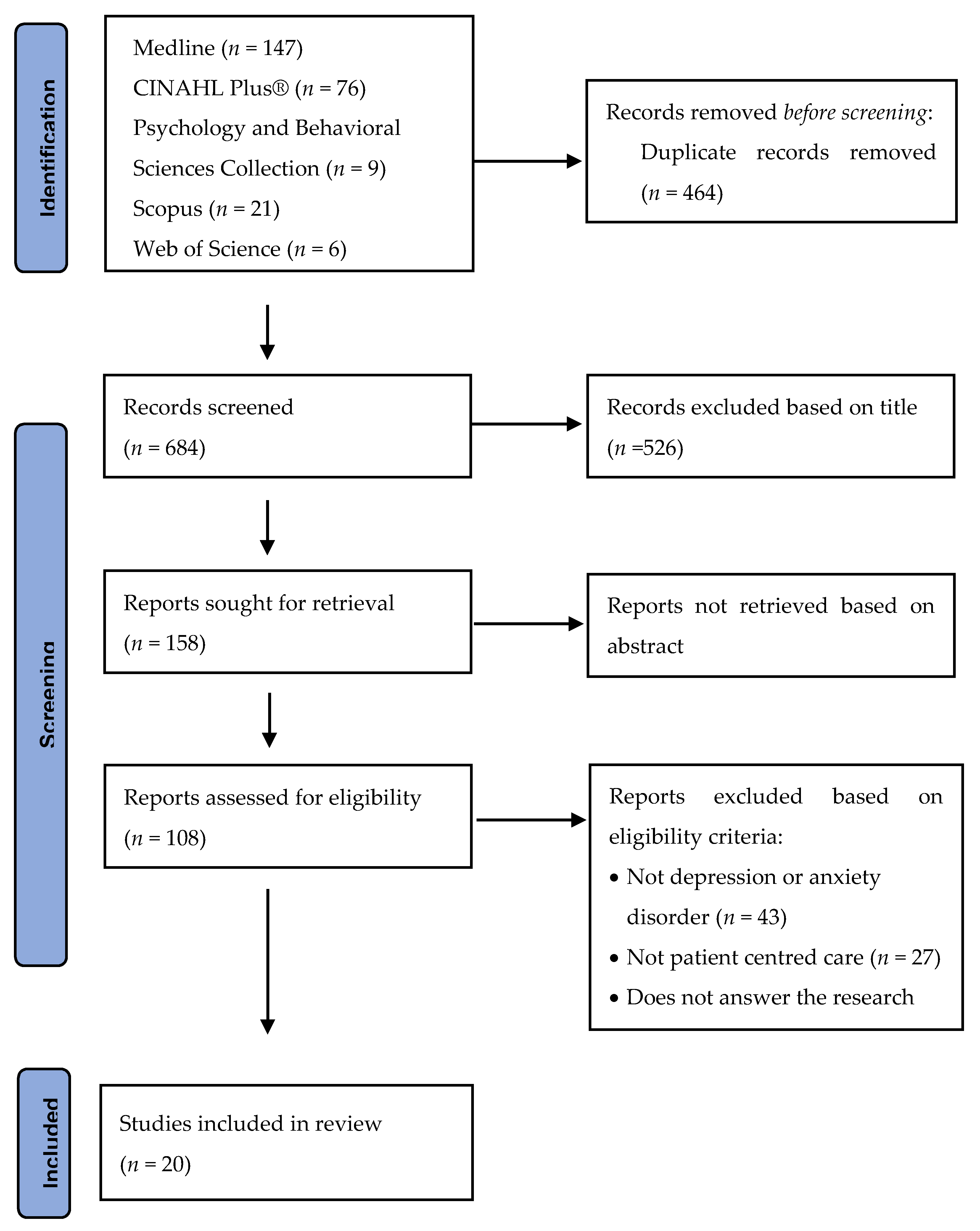
2.4. Search Strategy
2.5. Search Terms and Boolean Operators
2.6. Data Collection and Analysis
2.6.1. Selection of studies
2.6.2. Data Extraction
2.6.3. Quality Appraisal
2.6.4. Strategy for Data Synthesis
3. Results
4. Discussion
4.1. Diagnostic Assessment
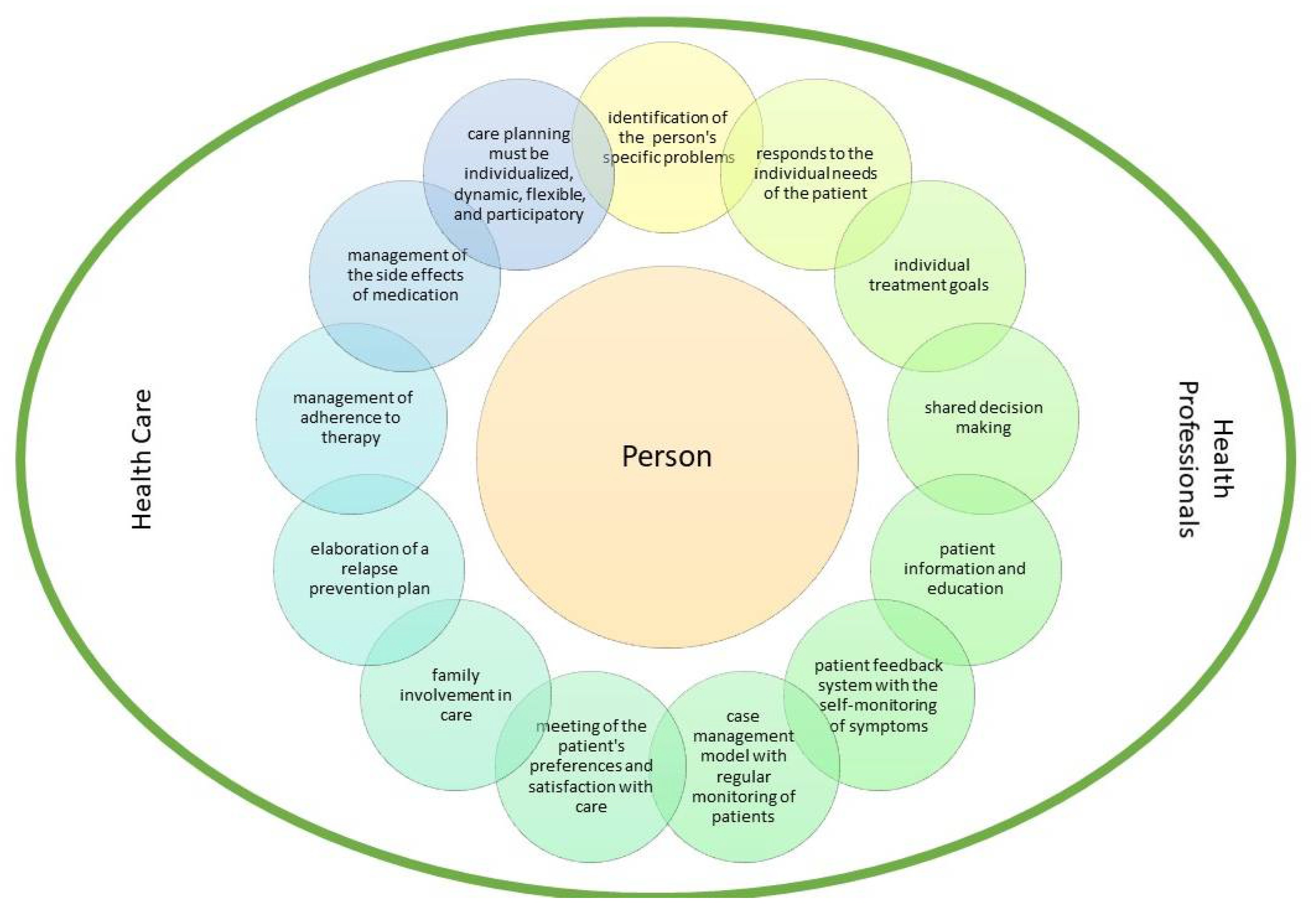
4.2. Care and Intervention Planning
5. Conclusions
Author Contributions
Funding
Institutional Review Board Statement
Informed Consent Statement
Data Availability Statement
Conflicts of Interest
References
- Baker, A. Crossing the Quality Chasm: A New Health System for the 21st Century. BMJ 2001, 323, 1192. [Google Scholar] [CrossRef]
- Kupfer, J.M.; Bond, E.U. Patient Satisfaction and Patient-Centered Care: Necessary but Not Equal. JAMA 2012, 308, 139–140. [Google Scholar] [CrossRef] [PubMed]
- Charles, C.; Gafni, A.; Whelan, T. Shared decision-making in the medical encounter: What does it mean? (or it takes at least two to tango). Soc. Sci. Med. 1997, 44, 681–692. [Google Scholar] [CrossRef]
- Barry, M.J.; Edgman-Levitan, S. Shared Decision Making—The Pinnacle of Patient-Centered Care. N. Engl. J. Med. 2012, 366, 780–781. [Google Scholar] [CrossRef]
- Ferenchick, E.K.; Ramanuj, P.; Pincus, H.A. Depression in primary care: Part 1—Screening and diagnosis. BMJ 2019, 365, l794. [Google Scholar] [CrossRef] [PubMed]
- Cao, W.; Fang, Z.; Hou, G.; Han, M.; Xu, X.; Dong, J.; Zheng, J. The psychological impact of the COVID-19 epidemic on college students in China. Psychiatry Res. 2020, 287, 112934. [Google Scholar] [CrossRef]
- Gao, J.; Zheng, P.; Jia, Y.; Chen, H.; Mao, Y.; Chen, S.; Wang, Y.; Fu, H.; Dai, J. Mental health problems and social media exposure during COVID-19 outbreak. PLoS ONE 2020, 15, e0231924. [Google Scholar] [CrossRef]
- Mazza, C.; Ricci, E.; Biondi, S.; Colasanti, M.; Ferracuti, S.; Napoli, C.; Roma, P. A Nationwide Survey of Psychological Distress among Italian People during the COVID-19 Pandemic: Immediate Psychological Responses and Associated Factors. Int. J. Environ. Res. Public Health 2020, 17, 3165. [Google Scholar] [CrossRef]
- Moghanibashi-Mansourieh, A. Assessing the anxiety level of Iranian general population during COVID-19 outbreak. Asian J. Psychiatry 2020, 51, 102076. [Google Scholar] [CrossRef] [PubMed]
- Nguyen, H.C.; Nguyen, M.H.; Do, B.N.; Tran, C.Q.; Nguyen, T.T.P.; Pham, K.M.; Pham, L.V.; Tran, K.V.; Duong, T.T.; Tran, T.V.; et al. People with Suspected COVID-19 Symptoms Were More Likely Depressed and Had Lower Health-Related Quality of Life: The Potential Benefit of Health Literacy. J. Clin. Med. 2020, 9, 965. [Google Scholar] [CrossRef]
- Pinho, L.; Correia, T.; Sampaio, F.; Sequeira, C.; Teixeira, L.; Lopes, M.; Fonseca, C. The use of mental health promotion strategies by nurses to reduce anxiety, stress, and depression during the COVID-19 outbreak: A prospective cohort study. Environ. Res. 2021, 195, 110828. [Google Scholar] [CrossRef] [PubMed]
- de Pinho, L.; Sampaio, F.; Sequeira, C.; Teixeira, L.; Fonseca, C.; Lopes, M. Portuguese Nurses’ Stress, Anxiety, and Depression Reduction Strategies during the COVID-19 Outbreak. Int. J. Environ. Res. Public Health 2021, 18, 3490. [Google Scholar] [CrossRef]
- Sampaio, F.; Sequeira, C.; Teixeira, L. Impact of COVID-19 outbreak on nurses’ mental health: A prospective cohort study. Environ. Res. 2021, 194, 110620. [Google Scholar] [CrossRef]
- Cénat, J.M.; Blais-Rochette, C.; Kokou-Kpolou, C.K.; Noorishad, P.-G.; Mukunzi, J.N.; McIntee, S.-E.; Dalexis, R.D.; Goulet, M.-A.; Labelle, P.R. Prevalence of symptoms of depression, anxiety, insomnia, posttraumatic stress disorder, and psychological distress among populations affected by the COVID-19 pandemic: A systematic review and meta-analysis. Psychiatry Res. 2021, 295, 113599. [Google Scholar] [CrossRef] [PubMed]
- John, J.R.; Jani, H.; Peters, K.; Agho, K.; Tannous, W.K. The Effectiveness of Patient-Centred Medical Home-Based Models of Care versus Standard Primary Care in Chronic Disease Management: A Systematic Review and Meta-Analysis of Randomised and Non-Randomised Controlled Trials. Int. J. Environ. Res. Public Health 2020, 17, 6886. [Google Scholar] [CrossRef]
- Hoeft, T.J.; Hinton, L.; Liu, J.; Unützer, J. Directions for Effectiveness Research to Improve Health Services for Late-Life Depression in the United States. Am. J. Geriatr. Psychiatry 2016, 24, 18–30. [Google Scholar] [CrossRef]
- LeBlanc, A.; Herrin, J.; Williams, M.D.; Inselman, J.W.; Branda, M.E.; Shah, N.D.; Heim, E.M.; Dick, S.R.; Linzer, M.; Boehm, D.H.; et al. Shared Decision Making for Antidepressants in Primary Care: A Cluster Randomized Trial. JAMA Intern. Med. 2015, 175, 1761–1770. [Google Scholar] [CrossRef]
- Simmons, M.B.; Elmes, A.; McKenzie, J.E.; Trevena, L.; Hetrick, S.E. Right choice, right time: Evaluation of an online decision aid for youth depression. Health Expect. 2017, 20, 714–723. [Google Scholar] [CrossRef]
- Elwy, A.R.; Taylor, S.L.; Zhao, S.; McGowan, M.; Plumb, D.N.; Westleigh, W.; Gaj, L.; Yan, G.W.; Bokhour, B.G. Participating in Complementary and Integrative Health Approaches Is Associated with Veterans’ Patient-reported Outcomes over Time. Med. Care 2020, 58, S125–S132. [Google Scholar] [CrossRef]
- Antai-Otong, D. Caring for the Patient with an Anxiety Disorder. Nurs. Clin. N. Am. 2016, 51, 173–183. [Google Scholar] [CrossRef]
- Lopes, M.; Fonseca, C.; Barbosa, P. The Individual Care Plan as Electronic Health Record. In Exploring the Role of ICTs in Healthy Aging; IGI Global: Hershey, PA, USA, 2020; pp. 1–12. [Google Scholar] [CrossRef]
- Pinho, L.G.D.; Correia, T.; Lopes, M.J.; Fonseca, C.; Marques, M.D.C.; Sampaio, F.; do Arco, H.R. Patient-Centered Care for People with Depression and Anxiety: An Integrative Review Protocol. J. Pers. Med. 2021, 11, 411. [Google Scholar] [CrossRef]
- Moher, D.; Shamseer, L.; Clarke, M.; Ghersi, D.; Liberati, A.; Petticrew, M.; Shekelle, P.; Stewart, L.A.; PRISMA-P Group. Preferred reporting items for systematic review and meta-analysis protocols (PRISMA-P) 2015 statement. Syst. Rev. 2015, 4, 1. [Google Scholar] [CrossRef] [PubMed]
- Page, M.J.; McKenzie, J.E.; Bossuyt, P.M.; Boutron, I.; Hoffmann, T.C.; Mulrow, C.D.; Shamseer, L.; Tetzlaff, J.M.; Akl, E.A.; Brennan, S.E.; et al. The PRISMA 2020 statement: An updated guideline for reporting systematic reviews. BMJ 2021, 372, n71. [Google Scholar] [CrossRef] [PubMed]
- Whittemore, R.; Knafl, K. The integrative review: Updated methodology. J. Adv. Nurs. 2005, 52, 546–553. [Google Scholar] [CrossRef] [PubMed]
- Hong, Q.N.; Fàbregues, S.; Bartlett, G.; Boardman, F.; Cargo, M.; Dagenais, P.; Gagnon, M.-P.; Griffiths, F.; Nicolau, B.; O’Cathain, A.; et al. The Mixed Methods Appraisal Tool (MMAT) version 2018 for information professionals and researchers. Educ. Inf. 2018, 34, 285–291. [Google Scholar] [CrossRef]
- Rossom, R.C.; Solberg, L.; Vazquez-Benitez, G.; Crain, A.L.; Beck, A.; Whitebird, R.; Glasgow, R.E. The effects of patient-centered depression care on patient satisfaction and depression remission. Fam. Pract. 2016, 33, 649–655. [Google Scholar] [CrossRef]
- Coulombe, S.; Radziszewski, S.; Meunier, S.; Provencher, H.; Hudon, C.; Roberge, P.; Provencher, M.D.; Houle, J. Profiles of Recovery from Mood and Anxiety Disorders: A Person-Centered Exploration of People’s Engagement in Self-Management. Front. Psychol. 2016, 7, 584. [Google Scholar] [CrossRef] [PubMed]
- Austrom, M.G.; Carvell, C.A.; Alder, C.A.; Gao, S.; Boustani, M.; LaMantia, M. Workforce development to provide person-centered care. Aging Ment. Health 2015, 20, 781–792. [Google Scholar] [CrossRef]
- Wu, S.; Vidyanti, I.; Liu, P.; Hawkins, C.; Ramirez, M.; Guterman, J.; Gross-Schulman, S.; Sklaroff, L.M.; Ell, K. Patient-Centered Technological Assessment and Monitoring of Depression for Low-Income Patients. J. Ambul. Care Manag. 2014, 37, 138–147. [Google Scholar] [CrossRef]
- Gunzler, D.D.; Perzynski, A.; Morris, N.; Bermel, R.; Lewis, S.; Miller, D. Disentangling Multiple Sclerosis and depression: An adjusted depression screening score for patient-centered care. J. Behav. Med. 2015, 38, 237–250. [Google Scholar] [CrossRef]
- Deen, T.L.; Fortney, J.C.; Pyne, J.M. Relationship between Satisfaction, Patient-Centered Care, Adherence and Outcomes among Patients in A Collaborative Care Trial for Depression. Adm. Policy Ment. Health Ment. Health Serv. Res. 2010, 38, 345–355. [Google Scholar] [CrossRef]
- Kivelitz, L.; Kriston, L.; Christalle, E.; Schulz, H.; Watzke, B.; Härter, M.; Götzmann, L.; Bailer, H.; Zahn, S.; Melchior, H. Effectiveness of telephone-based aftercare case management for adult patients with unipolar depression compared to usual care: A randomized controlled trial. PLoS ONE 2017, 12, e0186967. [Google Scholar] [CrossRef]
- Battle, C.L.; Salisbury, A.L.; Schofield, C.A.; Ortiz-Hernandez, S. Perinatal antidepressant use: Understanding women’s preferences and concerns. J. Psychiatr. Pract. 2013, 19, 443–453. [Google Scholar] [CrossRef] [PubMed]
- Cooper, L.A.; Dinoso, B.K.G.; Ford, D.E.; Roter, D.L.; Primm, A.B.; Larson, S.M.; Gill, J.M.; Noronha, G.J.; Shaya, E.K.; Wang, N.-Y. Comparative Effectiveness of Standard versus Patient-Centered Collaborative Care Interventions for Depression among African Americans in Primary Care Settings: The BRIDGE Study. Health Serv. Res. 2012, 48, 150–174. [Google Scholar] [CrossRef]
- Rosen, C.; Adler, E.; Tiet, Q. Presenting Concerns of Veterans Entering Treatment for Posttraumatic Stress Disorder. J. Trauma. Stress 2013, 26, 640–643. [Google Scholar] [CrossRef] [PubMed]
- Langer, D.A.; Kritikos, T.K.; Asarnow, J.R.; Tompson, M.C. Parent and Youth Preferences in the Treatment of Youth Depression. Child Psychiatry Hum. Dev. 2021, 52, 236–247. [Google Scholar] [CrossRef] [PubMed]
- Reese, R.J.; Duncan, B.L.; Kodet, J.; Brown, H.M.; Meiller, C.; Farook, M.W.; Lengerich, A.J.; Vasilj, I.; Hong, S.-H.; Bohanske, R.T. Patient feedback as a quality improvement strategy in an acute care, inpatient unit: An investigation of outcome and readmission rates. Psychol. Serv. 2018, 15, 470–476. [Google Scholar] [CrossRef]
- Keller, S.; Dy, S.; Wilson, R.; Dukhanin, V.; Snyder, C.; Wu, A. Selecting Patient-Reported Outcome Measures to Contribute to Primary Care Performance Measurement: A Mixed Methods Approach. J. Gen. Intern. Med. 2020, 35, 1–11. [Google Scholar] [CrossRef]
- Baandrup, L.; Rasmussen, J.Ø.; Mainz, J.; Videbech, P.; Kristensen, S. Patient-Reported Outcome Measures in Mental Health Clinical Research: A Descriptive Review in Comparison with Clinician-Rated Outcome Measures. Int. J. Qual. Health Care 2021, mzab001. [Google Scholar] [CrossRef]
- Sun, Y.; Fu, Z.; Bo, Q.; Mao, Z.; Ma, X.; Wang, C. The reliability and validity of PHQ-9 in patients with major depressive disorder in psychiatric hospital. BMC Psychiatry 2020, 20, 1–7. [Google Scholar] [CrossRef]
- Barley, E.A.; Haddad, M.; Simmonds, R.; Fortune, Z.; Walters, P.; Murray, J.; Rose, D.; Tylee, A. The UPBEAT depression and coronary heart disease programme: Using the UK medical research council framework to design a nurse-led complex intervention for use in primary care. BMC Fam. Pract. 2012, 13, 119. [Google Scholar] [CrossRef]
- Wittink, M.N.; Morales, K.H.; Cary, M.; Gallo, J.J.; Bartels, S.J. Towards personalizing treatment for depression: Developing treatment values markers. Patient 2013, 6, 35–43. [Google Scholar] [CrossRef][Green Version]
- Adams, E.G. Treatment of Depression in Integrated Care: Implementation of the Nurse Care Manager. SAGE Open Nurs. 2019, 5, 1–9. [Google Scholar] [CrossRef]
- Zaini, S.; Bharathy, H.A.M.; Sulaiman, A.H.; Gill, J.S.; Hui, K.O.; Huri, H.Z.; Shamsudin, S.H.; Guan, N.C. Development of a Strategic Tool for Shared Decision-Making in the Use of Antidepressants among Patients with Major Depressive Disorder: A Focus Group Study. Int. J. Environ. Res. Public Health 2018, 15, 1402. [Google Scholar] [CrossRef]
- Gensichen, J.; Guethlin, C.; Sarmand, N.; Sivakumaran, D.; Jäger, C.; Mergenthal, K.; Gerlach, F.M.; Petersen, J.J. Patients’ perspectives on depression case management in general practice—A qualitative study. Patient Educ. Couns. 2012, 86, 114–119. [Google Scholar] [CrossRef]
- Doyle, C.; Lennox, L.; Bell, D. A systematic review of evidence on the links between patient experience and clinical safety and effectiveness. BMJ Open 2013, 3, e001570. [Google Scholar] [CrossRef]
- Zolnierek, K.B.H.; Dimatteo, M.R. Physician communication and patient adherence to treatment: A meta-analysis. Med. Care 2009, 47, 826–834. [Google Scholar] [CrossRef] [PubMed]
- Libby, D.; Reddy, F.; Pilver, C.; Desai, R. The Use of Yoga in Specialized VA PTSD Treatment Programs. Int. J. Yoga Ther. 2012, 22, 79–88. [Google Scholar] [CrossRef]
- Lin, S.Y.; Stevens, M.B. The Symptom Cluster-Based Approach to Individualize Patient-Centered Treatment for Major Depression. J. Am. Board Fam. Med. 2014, 27, 151–159. [Google Scholar] [CrossRef] [PubMed]
- Sternke, E.A.; Abrahamson, K.; Bair, M.J. Comorbid Chronic Pain and Depression: Patient Perspectives on Empathy. Pain Manag. Nurs. 2016, 17, 363–371. [Google Scholar] [CrossRef] [PubMed]
- Hindmarch, T.; Hotopf, M.; Owen, G.S. Depression and decision-making capacity for treatment or research: A systematic review. BMC Med. Ethic 2013, 14, 54. [Google Scholar] [CrossRef] [PubMed]

| Indicator | Tools of Assessment | Studies |
|---|---|---|
| Depressive symptomology | Severity of depressive symptoms: Patient Health Questionnaire 9 (PHQ-9) | [27,28,29,30,31,32] |
| Beck’s Depression Inventory (BDI-II) | [33,34] | |
| Center for Epidemiological Studies Depression Scale (CES-D) | [35,36] | |
| Hamilton Rating Scale for Depression (HAM-D) | [34] | |
| Composite International Diagnostic Interview (CIDI) | [35] | |
| Hopkins Symptom Checklist (SCL-20) | [32] | |
| Child Depression Rating Scale—Revised (CDRS-R) | [37] | |
| Children’s Depression Inventory—Youth and Parent Versions (CDI) | [37] | |
| Psychiatric functioning and distress | Outcome Rating Scale (ORS) | [38] |
| Mental health functional status improvement | Medical Outcomes Study (MOS-SF12) | [35] |
| Anxiety/stress symptomology | Generalized Anxiety Disorder 7 (GAD-7) | [28] |
| Hamilton Rating Scale for Anxiety (HAM-A) and State–Trait Anxiety | [34] | |
| Inventory (STAI) | [34] | |
| Perceived Stress Scale-4 (PSS-4) | [19] | |
| Symptoms of post-traumatic stress disorder | PTSD Checklist (PCL) | [36] |
| Self-management | Mental Health Self-Management Questionnaire (MHSQ) | [28] |
| Degree of participants’ positive mental health | Mental Health Continuum—Short Form (MHC-SF) | [28] |
| Perception of self-care abilities | Therapeutic Self-Care Scale PAM-13 | [28] |
| Health-related quality of life: | Short-Form 8 Health Survey (SF-8) and EuroQol-5D | [33] |
| Patient-Reported Outcomes Measurement Information System (PROMIS) 28 | [19] | |
| Self-efficiency | General Self-Efficacy Scale (SWE) | [33] |
| Social participation | Social Participation Scale | [28] |
| Coping strategies | Brief COPE | [28] |
| Family assessment | Family Assessment Device (FAD) Conflict Behavior Questionnaire (CBQ) Children’s Expectations of Social Behavior Questionnaire (CESBQ) | [34] |
| Parent psychiatric symptomatology | Behavior Symptom Inventory (BSI) | [37] |
| Youth problem behaviors | Child Behavior Checklist (CBCL) | [37] |
| Social support | Duke Social Support and Stress Scale | [32] |
| Process of care and the characteristics of patients with major depressive disorder | Depression Outcomes Module | [32] |
| Patient-centered care process | Patient Assessment of Chronic Illness Care (PACIC), specific to depression care | [27] |
| Health status | Short Form (SF12V) | [32] |
| Perceptions about depression treatment | Depression Health Beliefs Inventory | [32] |
| Acceptability of antidepressant treatment | Quality Improvement for Depression | [32] |
| Psychiatric comorbidity | Mini International Neuro-psychiatric Interview | [32] |
| Title/Author(s)/Year | Type of Study/Sample | Objective | Diagnostic Assessment: Indicators and Tools | Care Planning/Intervention |
|---|---|---|---|---|
| Patient Feedback as a Quality Improvement Strategy In An Acute Care, Inpatient Unit: An Investigation of Outcome and Readmission Rates Reese et al., 2018 | Benchmarking methodology with a naturalistic data set: RCT + literature revision and comparison Sample: 2247 patients in a psychiatric care unit in the community: 51.5% mood disorders; 39.8% schizophrenia and other PP; 4.9% substance abuse disorder; 2.4% anxiety disorders; 1.3% others | To assess the effectiveness and readmission rates of services provided to racially and ethnically diverse patients, at or below the federal poverty line, in a 32-bed psychiatric center that implemented the Partners for Change Outcome Management System (PCOMS) as a strategy for quality improvement. | Psychiatric functioning and distress: Outcome Rating Scale (ORS) | Shared decision making Information and education Personalized care planning Systematic patient feedback system: Partners for Change Outcome Management System (PCOMS) A quality improvement strategy, based on patient-centered care, that uses a systematic patient feedback system. It promotes the focus being centered on involvement, benefit, and shared decision making through systematic feedback during hospital treatment. The dimensions of patient-centered care include improving health literacy through information and education, coordination and integration of care, physical comfort, emotional support, and personalized care, which encompasses the concept of shared decision making. |
| Effectiveness of Telephone-Based Aftercare Case Management for Adult Patients with Unipolar Depression Compared to Usual Care: A Randomized Controlled Trial Kivelitz et al., 2017 | RCT Sample: 199 people with major depression or dysthymia | To assess the long-term effectiveness of post-hospital telephone follow-up, based on case management for patients with depression. | Severity of depressive symptoms: Beck’s Depression Inventory (BDI-II) Health-related quality of life: Short-Form 8 Health Survey (SF-8) and EuroQol-5D Self-efficiency: General Self-Efficacy Scale (SWE) | Case manager Establishment of the individual objectives of treatment Regular monitoring of patients |
| The Effects of Patient-Centered Depression Care on Patient Satisfaction and Depression Remission Rossom et al., 2016 | Longitudinal, observational study Sample: 792 people diagnosed with depression from 83 primary care clinics | To explore the specific aspects of patient-centered care that are best associated with improving depression and satisfaction with care. | Severity of depressive symptoms: Patient Health Questionnaire 9 (PHQ-9) Evaluation of the patient-centered care process: Patient Assessment of Chronic Illness Care (PACIC), specific to depression care | Personalized care planning for everyday life Patient preferences Establishment of the individual objectives of treatment Shared decision making Patient satisfaction |
| Profiles of Recovery from Mood and Anxiety Disorders: A Person-Centered Exploration of People’s Engagement in Self-Management Coulombe et al., 2016 | Quantitative transversal study Sample: 149 people with anxiety (36.9%), depressive disorders (55.7%), or bipolar (36.2%) | To identify the profiles underlying mental health recovery, describe the characteristics of the participants corresponding to each profile, and examine the associations of the profiles with criteria variables. | Severity of depressive symptoms: Patient Health Questionnaire 9 (PHQ-9) Severity of anxiety symptoms: Generalized Anxiety Disorder 7 (GAD-7) Degree of participants’ positive mental health: Mental Health Continuum–Short Form (MHC-SF) and Self-management Mental Health Self-Management Questionnaire (MHSQ) Perception of self-care abilities: Therapeutic Self-Care Scale Social participation: Social Participation Scale Coping strategies: Brief COPE | Establishment of the individual objectives of treatment: Personal Project System Rating Scale (PSRS) Shared decision making |
| Workforce Development to Provide Person-Centered Care Austrom et al., 2016 | Quality Study 16 (ACC) Sample: 16 care coordination assistants (CCA) and 73 users aged 65 and over with at least one code of diagnosis for dementia and/or depression | To describe the development of a competent workforce committed to providing patient-centered care to people with dementia and/or depression and their caregivers; report qualitative analysis of the workforce’s case reports about their experiences; present the lessons learned on the development and implementation of a community-based care collaboration model, using a new workforce referred to as CCA. | Severity of depressive symptoms: Patient Health Questionnaire 9 (PHQ-9) | Patient preferences Family/caregiver involvement Information and education Relapse prevention plan IMPACT model (Unützer et al., 2002; http://impact-uw.org, accessed on 1 April 2021) of depression at the end of life. The team worked with the patient’s primary care physician to develop and implement a care plan for depression. If patients do not improve, they can be referred to psychiatry. The care plan includes: - Providing education on depression to the patient and caregiver; - Training the patient and the caregiver in behavioral activation and scheduling pleasant events; - Problem-solving therapy (taught by trained and licensed staff, a registered nurse (RN), or a Master of Social Work (MSW)); - Monitoring the symptoms of depression using the PHQ-9 to respond to treatment; - Completing a relapse prevention plan with each patient who has improved; - Antidepressant therapy, prescribed by the patient’s family doctor, if appropriate and necessary. |
| Perinatal Antidepressant Use: Understanding Women’s Preferences and Concerns Battle et al., 2013 | Prospective study Sample: 61 pregnant women with (n = 31) and without (n = 30) depression in the second trimester, between 19 and 39 years of age | (1) To characterize the experiences and difficulties of women in decision making regarding treatment for depression, including attitudes related to the prenatal use of antidepressant drugs among participants who have experienced prenatal depression. (2) To evaluate hypothetical references for the treatment of postpartum depression among all participants (regardless of the state of depression). | Depressive symptoms: Hamilton Rating Scale for Depression (HAM-D) and Beck Depression Inventory (BDI) Anxiety symptoms: Hamilton Rating Scale for Anxiety (HAM-A), State–Trait Anxiety Inventory (STAI), and Family Assessment Family Assessment Device (FAD) | Shared decision making Patient preferences 71% of depressed women received pharmacological or non-pharmacological treatment during pregnancy (five psychotherapy, six selective serotonin reuptake inhibitor (SSRI), and 11 combined treatment (psychotherapy plus SSRI)). |
| Patient-Centered Technological Assessment and Monitoring of Depression for Low-Income Patients Wu et al., 2014 | RCT Sample: 444 patients with diabetes and depression | To assess and monitor the depressive symptoms of diabetic patients in primary healthcare. | Severity of depressive symptoms: Patient Health Questionnaire 9 (PHQ-9) | Self-monitoring of symptoms Management of adherence to therapy |
| The Symptom Cluster-Based Approach to Individualize Patient-Centered Treatment for Major Depression Lin and Stevens, 2014 | Theorical work | To present a theory and evidence for an individualized patient-centered treatment model for severe depression, designed around a cluster-based approach for the selection of antidepressants. | Antidepressant treatment strategy, structured to provide the best patient-centered care in the management of depressive disorder The choice of antidepressants should be guided by the presence of one to four groups of common symptoms: Anxiety, fatigue, insomnia, and pain—each of which can be treated effectively by an appropriate class or classes of antidepressants. | |
| Towards Personalizing Treatment for Depression: Developing Treatment Values Markers Wittink et al., 2013 | Observational quantitative study Sample: 86 people with depression | To describe and demonstrate a method for developing “value markers” or profiles, based on the relative importance of depression treatment attributes. | Patient preferences Management of the side effects of medication Shared decision making | |
| Patients’ Perspectives on Depression Case Management in General Practice—A Qualitative Study Gensichen et al., 2012 | Quality study, cluster-randomized controlled trial Sample: 41 people with depression (aged 18–80 years) that attended primary care | To explore patients’ perceptions about the practice-based case management of depression, their satisfaction with it, and the way in which living with depression contextualizes case management. | Patient satisfaction Case manager Regular monitoring of patients Effectiveness of case management for patients living with major depression Case management was provided for 12 months by health professionals, who monitored symptoms and adherence to medication through regular telephone contacts. A semi-structured interview was conducted. | |
| The UPBEAT Depression and Coronary Heart Disease Program: Using the UK Medical Research Council Framework to Design a Nurse-Led Complex Intervention for Use in Primary Care Barley et al., 2012 | Systematic review and quality study, using the guidelines of the Medical Research Council (MRC), to develop and evaluate complex interventions; iterative evidence review; focus group study (quality) to shape the intervention | To develop a nursing intervention, based on primary care, to improve mood and cardiac outcomes in patients with coronary heart disease and depression. | Flexibility and personalization of the care plan Answer the individual needs of the patient Identification of the problems (patient and health professional) Shared decision making Case manager Patient preferences Development of a complex intervention, performed by nurses in primary healthcare, based on the case manager | |
| Relationship between Satisfaction, Patient-Centered Care, Adherence and Outcomes Among Patients in a Collaborative Care Trial for Depression Deen et al., 2011 | Randomized controlled trial Sample: 360 people diagnosed with depression in primary care | To explore the relationship between satisfaction, patient-centered care, adherence to antidepressants, and clinical outcomes in a collaborative care model for depression. | Process of care and the characteristics of patients with major depressive disorder: Depression Outcomes Module Psychiatric comorbidity: Mini International Neuro-psychiatric Interview Social support: Duke Social Support and Stress Scale Acceptability of antidepressant treatment: Quality Improvement for Depression Perceptions about depression treatment: Depression Health Beliefs Inventory Health status: Short Form (SF12V) Depression severity: Hopkins Symptom Checklist (SCL-20) e Severity of depressive symptoms: Patient Health Questionnaire 9 (PHQ-9) | Family/caregiver involvement Patient satisfaction Information and education Management of adherence to therapy Management of medication side effects Regular monitoring of patients Evaluation of patient-centeredness of care using the Experience of Care and Health Outcomes Survey (ECHO) Model of staggered treatment of depression for a period up to 12 months Treatment intensity was increased for patients who did not respond to lower levels of care, involving a greater number of staff with increasing knowledge of mental health. The team included primary care providers and external units, such as nurses specializing in depression, pharmacists, and tele-psychiatrists. The specialist nurses, in caring for persons with depression, made phone calls to them to provide the following interventions: Education, assessment of barriers, monitoring of symptoms, adherence to medications, and medication side effects. They followed guidelines for addressing specific treatment barriers, reasons for non-adherence (e.g., concerns about addiction), and specific side effects. Telephone meetings between pharmacists and patients who did not respond to treatment included a history of medication and ongoing side effect management. Psychiatrists supervised the team off-site and provided consultations via interactive video. |
| Disentangling Multiple Sclerosis & Depression: An Adjusted Depression Screening Score for Patient-Centered Care Gunzler et al., 2015 | Retrospective cohort study Sample: 3507 people diagnosed with multiple sclerosis and depression | To develop a depression assessment tool to better evaluate the depressive symptoms in people with multiple sclerosis. | Severity of depressive symptoms: Patient Health Questionnaire 9 (PHQ-9) | |
| Comorbid Chronic Pain and Depression: Patient Perspectives on Empathy Sternke et al., 2016 | Quality study Sample: 18 patients with chronic pain and comorbid depression | To analyze patients’ perspectives of the emerging theme of empathy and to describe how patients build their experiences and expectations around empathic interactions. | Empathic interaction | |
| Comparative Effectiveness of Standard versus Patient-Centered Collaborative Care Interventions for Depression among African Americans in Primary Care Settings: The BRIDGE Study Cooper et al., 2013 | Cluster randomized trial Sample: 132 African-American patients with major depressive disorder | To compare the effectiveness of standard collaborative care interventions with patient-centered collaborative care, culturally adapted for African-American patients with major depressive disorder over 12 months of follow-up. | Depressive symptoms: Center for Epidemiological Studies Depression Scale (CES-D) and the Composite International Diagnostic Interview (CIDI) Mental health functional status improvement: Medical Outcomes Study (MOS-SF12) | Patient preferences Establishment of the individual objectives of treatment Shared decision making Family/caregiver involvement Patient satisfaction Information and education Case manager Collaborative patient-centered care: The ability of healthcare providers to look at patients as unique people, build an effective relationship, use the biopsychosocial model to explore the beliefs, to understand the values and meaning of the disease for the person, and to find a common basis with regard to care plans. Likewise, both patient centrality and cultural competence emphasize the health system’s ability to align services to meet patients’ needs and preferences. Standard collaborative care: For example, structured approaches to care based on the principles of chronic disease management and using depression care managers to work together with primary care professionals and a mental health specialist to monitor mental health and medicines, coordinate care, and facilitate patient involvement. |
| Development of a Strategic Tool for Shared Decision-Making in the Use of antidepressants among Patients with Major Depressive Disorder: A Focus Group Study Zaini et al., 2018 | Focus group Sample: 19 doctors and 11 patients with major depression | To develop a strategic tool for the promotion and implementation of shared decisions on the use of antidepressives amongst patients with major depression. | Shared decision making Management of adherence to therapy Management of medication side effects | |
| Parent and Youth Preferences in the Treatment of Youth Depression Langer et al., 2021 | Exploratory study Sample: 64 young people and 63 parents with depression | (1) To identify variations in the preferences of parents and young people for the treatment of depression. (2) To explore the relationships between parental and youths demographics and psychosocial functioning, and the preferences that parents and youths recommend | Depressive symptoms: Child Depression Rating Scale-Revised (CDRS-R) and Children’s Depression Inventory—Youth and Parent Versions (CDI) Youth problem behaviors: Child Behavior Checklist (CBCL) Parent psychiatric symptomatology: Behavior Symptom Inventory (BSI) Family functioning: Conflict Behavior Questionnaire (CBQ) and Children’s Expectations of Social Behavior Questionnaire (CESBQ) | Patient preferences (using the Initial Treatment Preferences Questionnaire) |
| The Use of Yoga in Specialized VA PTSD Treatment Programs Libby et al., 2012 | Exploratory study, mixed, transversal Sample: 125 coordinators of treatment programs for people with PTSD | To investigate the prevalence of the use of 32 types of complementary and alternative medicines in specialized treatment programs for PTSD. | Use of yoga, mindfulness, and meditation as therapeutic resources | |
| Presenting Concerns of Veterans Entering Treatment for Posttraumatic Stress Disorder Rosen et al., 2013 | Randomized controlled study Sample: 216 veterans with post-traumatic stress Disorder (PTSD) in outpatient treatment and 812 in residential treatment; other than PTSD, 45.8% were depressed and 19.4% suffered from anxiety disorders | To identify which problems veterans expect to improve with treatment; to analyze if there are differences between the problems presented by veterans in outpatient treatment and veterans in residential treatment, as well as between genders and how much time they served; to assess if veterans expect PTSD treatment to be more effective in solving some problems more than others. | Symptoms of Post-Traumatic Stress Disorder (PTSD) Checklist (PCL) Depressive symptoms: Center for Epidemiological Studies Depression Scale (CES-D) | Involving the patient in identifying the problem Establishment of the individual objectives of treatment Shared decision making Treatment of PTSD, moving from psychoeducation to active psychotherapy, and moving from psychotherapy centered on the present to psychotherapy centered on trauma. The results confirm the importance of educating patients about how effective treatments available can relate to personal goals. Clinicians should be prepared to offer interventions or provide referrals for common problems such as anger, nightmares, sleep, depression, or relationship difficulties, if these problems are not resolved with trauma-centered psychotherapy or if patients are unwilling to undergo this type of treatment. |
| Participating in Complementary and Integrative Health Approaches Is Associated with Veterans’ Patient-reported Outcomes Over Time Elwy et al., 2020 | Longitudinal cohort survey Sample: 119 veterans with PTSD | To examine the results reported by veteran patients over the time they have integrated CIH (complementary and integrative health). | Quality of life/functionality: Patient-Reported Outcomes Measurement Information System (PROMIS) 28 Stress assessment: Perceived Stress Scale-4 (PSS-4) and PAM-13 (assesses the person’s knowledge and their aptitudes and trust regarding health self-management and self-care) | The intervention consisted of the involvement of veteran patients in their own self-care through non-pharmacological treatment, through body–mind practices (tai chi, meditation, and yoga), which were coordinated with traditional medicine. |
Publisher’s Note: MDPI stays neutral with regard to jurisdictional claims in published maps and institutional affiliations. |
© 2021 by the authors. Licensee MDPI, Basel, Switzerland. This article is an open access article distributed under the terms and conditions of the Creative Commons Attribution (CC BY) license (https://creativecommons.org/licenses/by/4.0/).
Share and Cite
Pinho, L.G.d.; Lopes, M.J.; Correia, T.; Sampaio, F.; Arco, H.R.d.; Mendes, A.; Marques, M.d.C.; Fonseca, C. Patient-Centered Care for Patients with Depression or Anxiety Disorder: An Integrative Review. J. Pers. Med. 2021, 11, 776. https://doi.org/10.3390/jpm11080776
Pinho LGd, Lopes MJ, Correia T, Sampaio F, Arco HRd, Mendes A, Marques MdC, Fonseca C. Patient-Centered Care for Patients with Depression or Anxiety Disorder: An Integrative Review. Journal of Personalized Medicine. 2021; 11(8):776. https://doi.org/10.3390/jpm11080776
Chicago/Turabian StylePinho, Lara Guedes de, Manuel José Lopes, Tânia Correia, Francisco Sampaio, Helena Reis do Arco, Artur Mendes, Maria do Céu Marques, and César Fonseca. 2021. "Patient-Centered Care for Patients with Depression or Anxiety Disorder: An Integrative Review" Journal of Personalized Medicine 11, no. 8: 776. https://doi.org/10.3390/jpm11080776
APA StylePinho, L. G. d., Lopes, M. J., Correia, T., Sampaio, F., Arco, H. R. d., Mendes, A., Marques, M. d. C., & Fonseca, C. (2021). Patient-Centered Care for Patients with Depression or Anxiety Disorder: An Integrative Review. Journal of Personalized Medicine, 11(8), 776. https://doi.org/10.3390/jpm11080776

