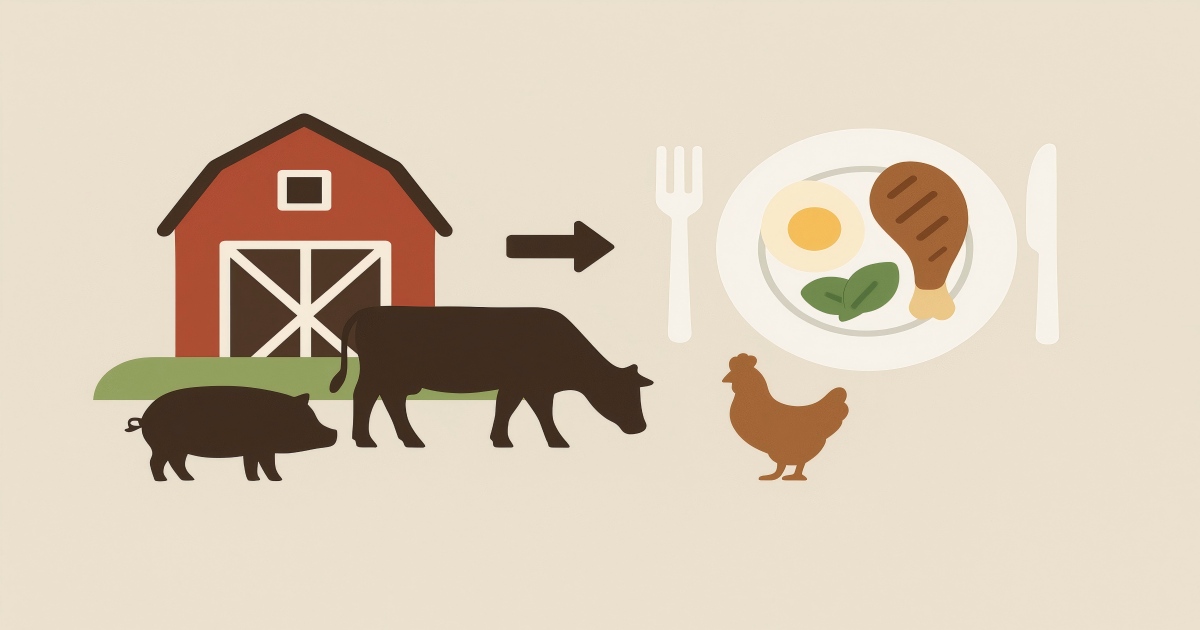


From Barn to Table: Animal Health, Welfare, and Food Safety

A special issue of Veterinary Sciences (ISSN 2306-7381). This special issue belongs to the section "Veterinary Food Safety and Zoonosis".

Deadline for manuscript submissions: 30 April 2026 | Viewed by 824

Special Issue Editors


E-Mail Website
Guest Editor
Laboratory of Anatomy and Physiology of Farm Animals, Department of Animal Science, Agricultural University of Athens (AUA), 75 Iera Odos, 11855 Athens, Greece
Interests: animal health and welfare; herd health management; veterinary epidemiology; one health
Special Issues, Collections and Topics in MDPI journals

Special Issue Information

Dear Colleagues,

The health and welfare of farm animals are central to ethical and sustainable production, ensuring the safety and quality of animal-derived foods. Good welfare and health management can enhance productivity, reduce disease incidence, and limit antimicrobial use, aligning with global efforts to combat antimicrobial resistance (AMR) and promote public health. In contrast, poor welfare conditions can increase stress, immune suppression, and disease susceptibility, ultimately compromising the quality of meat, milk, and eggs.

This Special Issue, “From Barn to Table: Animal Health, Welfare, and Food Safety”, seeks to advance interdisciplinary research linking animal welfare, veterinary medicine, food safety, and public health under a One Health framework. We welcome the submission of original research articles and reviews addressing welfare assessment, health management strategies, housing and feeding systems, the role of veterinarians in welfare assurance, and impacts on product quality and safety. Studies on precision livestock farming technologies, climate change challenges, policy frameworks, and consumer perspectives are also encouraged.

Dr. Panagiotis Simitzis
Dr. Athanasios I. Gelasakis
Guest Editors

Manuscript Submission Information

Manuscripts should be submitted online at www.mdpi.com by registering and logging in to this website. Once you are registered, click here to go to the submission form. Manuscripts can be submitted until the deadline. All submissions that pass pre-check are peer-reviewed. Accepted papers will be published continuously in the journal (as soon as accepted) and will be listed together on the special issue website. Research articles, review articles as well as short communications are invited. For planned papers, a title and short abstract (about 250 words) can be sent to the Editorial Office for assessment.

Submitted manuscripts should not have been published previously, nor be under consideration for publication elsewhere (except conference proceedings papers). All manuscripts are thoroughly refereed through a single-blind peer-review process. A guide for authors and other relevant information for submission of manuscripts is available on the Instructions for Authors page. Veterinary Sciences is an international peer-reviewed open access monthly journal published by MDPI.

Please visit the Instructions for Authors page before submitting a manuscript. The Article Processing Charge (APC) for publication in this open access journal is 2100 CHF (Swiss Francs). Submitted papers should be well formatted and use good English. Authors may use MDPI's English editing service prior to publication or during author revisions.

Keywords

  • farm animal welfare
  • animal health
  • food safety
  • product quality
  • antimicrobial resistance
  • precision livestock farming
  • sustainable production
  • housing and feeding systems
  • one health
  • consumer perception

Benefits of Publishing in a Special Issue

  • Ease of navigation: Grouping papers by topic helps scholars navigate broad scope journals more efficiently.
  • Greater discoverability: Special Issues support the reach and impact of scientific research. Articles in Special Issues are more discoverable and cited more frequently.
  • Expansion of research network: Special Issues facilitate connections among authors, fostering scientific collaborations.
  • External promotion: Articles in Special Issues are often promoted through the journal's social media, increasing their visibility.
  • Reprint: MDPI Books provides the opportunity to republish successful Special Issues in book format, both online and in print.

Further information on MDPI's Special Issue policies can be found here.

Published Papers (3 papers)

Order results
Result details
Select all
Export citation of selected articles as:

Research

Jump to: Other

13 pages, 769 KB  
Article
Milk Biomarkers and Herd Welfare Status in Dairy Cattle: A Machine Learning Approach
by Daniela Elena Babiciu, Anamaria Blaga Petrean, Sorana Daina, Daniela Mihaela Neagu, Eva Andrea Lazar and Silvana Popescu
Vet. Sci. 2026, 13(1), 22; https://doi.org/10.3390/vetsci13010022 (registering DOI) - 25 Dec 2025
Abstract
Routine milk-recording data may provide valuable insights into dairy cow welfare, although their ability to accurately reflect herd-level welfare outcomes remains unclear. This study explored the associations between routinely collected milk biomarkers and farm-level welfare status using a comparative machine learning approach. Using [...] Read more.
Routine milk-recording data may provide valuable insights into dairy cow welfare, although their ability to accurately reflect herd-level welfare outcomes remains unclear. This study explored the associations between routinely collected milk biomarkers and farm-level welfare status using a comparative machine learning approach. Using the Welfare Quality® (WQ®) protocol, 43 commercial dairy farms were classified as Enhanced, Acceptable, or Not Classified. Farm-level milk variables included somatic cell count (SCC), differential somatic cell count (DSCC), fat-to-protein ratio (FPR), fat, protein, casein, lactose, urea, β-hydroxybutyrate (BHB), acetone, total plate count (TPC), and morning milk yield. Kruskal–Wallis tests revealed significant differences among welfare classes for DSCC, SCC, lactose, and milk yield (False Discovery Rate-adjusted p < 0.05). Six machine learning algorithms were trained using 10-fold stratified cross-validation. The Elastic-Net (ENET) model showed the highest mean performance (Accuracy = 0.72 ± 0.19; Kappa = 0.56 ± 0.31), followed by Random Forest and Multilayer Perceptron (Accuracy = 0.70). Model accuracy exhibited substantial variability across cross-validation folds, reflecting the limited sample size and class imbalance. Across models, the most influential variables were SCC, DSCC, lactose, milk yield, FPR, fat, and urea. Overall, the findings provide preliminary and exploratory evidence that routine milk biomarkers capture welfare-relevant patterns at the herd level, supporting their potential role as complementary indicators within data-driven welfare assessment frameworks. Full article
(This article belongs to the Special Issue From Barn to Table: Animal Health, Welfare, and Food Safety)
Show Figures

Figure 1

15 pages, 292 KB  
Article
Impact of Dietary Shrimp Waste on Physical Properties, Chemical Composition, Amino Acid Profile, and Antioxidant Levels of Breast Meat
by Esin Ebru Onbaşılar, Umut Can Gündoğar, Hilal Çapar Akyüz, Yeliz Kaya Kartal, Sakine Yalçın, Emirhan Nemutlu, Tuba Reçber, Mustafa Feyzullah Akyüz, Duru Onbaşılar, Banu Yüceer Özkul, Necmettin Ünal and Ceyhan Özbeyaz
Vet. Sci. 2025, 12(12), 1130; https://doi.org/10.3390/vetsci12121130 - 27 Nov 2025
Viewed by 408
Abstract
Utilizing waste materials in broiler diets supports the principles of the circular economy and promotes environmental sustainability. However, it is essential to ensure that such practices do not compromise meat quality or composition. This experiment evaluated how incorporating shrimp processing waste into broiler [...] Read more.
Utilizing waste materials in broiler diets supports the principles of the circular economy and promotes environmental sustainability. However, it is essential to ensure that such practices do not compromise meat quality or composition. This experiment evaluated how incorporating shrimp processing waste into broiler diets influences breast meat physicochemical properties, nutrient composition, amino acid profiles, and antioxidant properties. A total of 315 Ross 308 male broiler chicks were allocated to diets containing varying inclusion levels of shrimp waste and reared for 42 days. At the end of the feeding period, seven birds from each treatment group were selected for slaughter, and a total of 35 breast muscle samples were collected for laboratory analyses. Parameters including pH, color, water-holding capacity, cooking loss, nutrient content, amino acid composition, and antioxidant indices were determined. Dietary shrimp waste did not influence pH15 but increased pH24 values. Lightness and redness remained unaffected, whereas yellowness increased. Cooking loss, water-holding capacity, and nutrient composition were not significantly altered. Alanine and aspartic acid levels decreased in groups supplemented with shrimp waste, whereas glycine content increased in the group receiving 1% shrimp waste during the first 10 days. Antioxidant parameters and the oxidative stress index were also unchanged. These findings indicate that incorporating shrimp waste into broiler diets can enhance feed sustainability without compromising meat quality. Full article
(This article belongs to the Special Issue From Barn to Table: Animal Health, Welfare, and Food Safety)

Other

Jump to: Research

16 pages, 470 KB  
Systematic Review
Good Veterinary Practices for Managing the Colostral Period in Dairy Calves to Improve Their Immune Competence—A Systematic Review
by Elena Stancheva and Toncho Penev
Vet. Sci. 2025, 12(12), 1205; https://doi.org/10.3390/vetsci12121205 - 16 Dec 2025
Viewed by 243
Abstract
Passive transfer of immunoglobulin G (IgG) through colostrum is essential for early immune protection in dairy calves. This systematic review synthesizes the most relevant evidence on colostrum quality, feeding practices, storage methods, and post-feeding assessment. High-quality colostrum (≥50 g/L IgG and low bacterial [...] Read more.
Passive transfer of immunoglobulin G (IgG) through colostrum is essential for early immune protection in dairy calves. This systematic review synthesizes the most relevant evidence on colostrum quality, feeding practices, storage methods, and post-feeding assessment. High-quality colostrum (≥50 g/L IgG and low bacterial contamination) can be reliably assessed using Brix refractometry (≥22%) or radial immunodiffusion. Early administration is critical: feeding within 1–2 h after birth maximizes IgG absorption. Providing 8.5–10% of body weight (≈3–4 L) at first feeding, followed by a second feeding within 8–12 h, significantly reduces failure of passive transfer. Pasteurization at 60 °C for 60 min and controlled freezing maintain immunological integrity while reducing microbial load. Monitoring passive immunity using serum total protein (5.0–5.5 g/dL) or serum Brix (8.1–8.5%) offers practical field diagnostics aligned with the IgG ≥ 10 g/L threshold. Integrated colostrum management protocols—combining quality evaluation, timely feeding, hygienic handling, and trained personnel—are essential to improve passive immunity, health, and overall performance of dairy calves. Full article
(This article belongs to the Special Issue From Barn to Table: Animal Health, Welfare, and Food Safety)
Show Figures

Figure 1

Back to TopTop