

sustainability-logo

Journal Browser

Journal Browser

System Design and Operation in Sustainable Transport Networks

A special issue of Sustainability (ISSN 2071-1050). This special issue belongs to the section "Sustainable Transportation".

Deadline for manuscript submissions: 31 May 2026 | Viewed by 7494

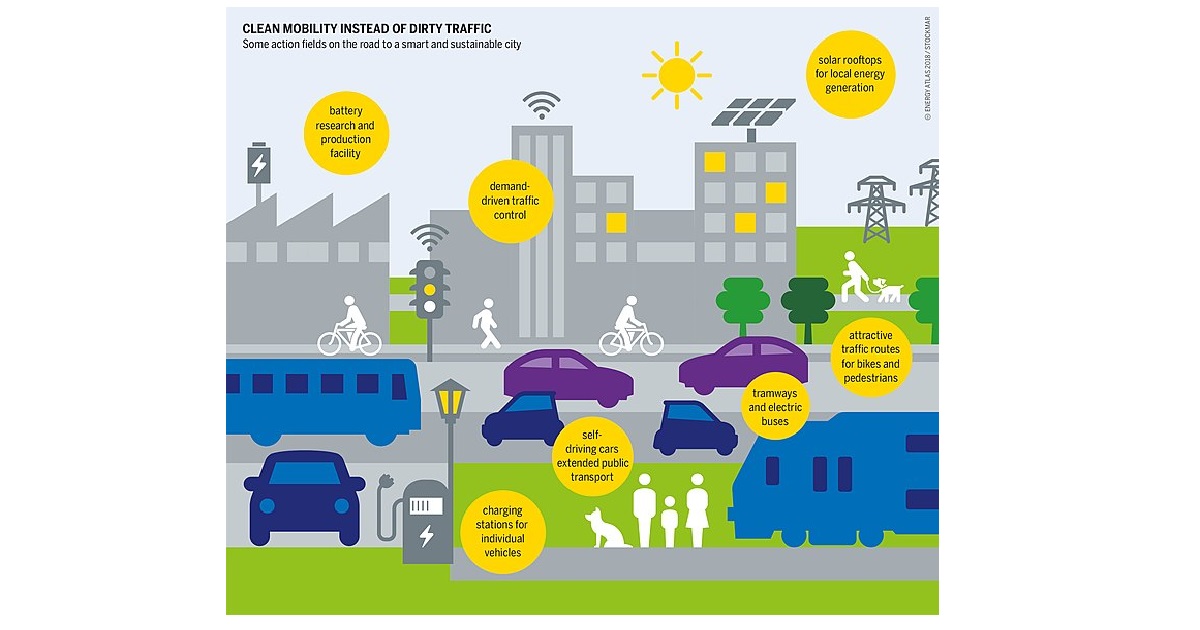
Image courtesy of Bartz/Stockmar (M), CC BY 4.0

Special Issue Editor


E-Mail Website
Guest Editor
Institute for Data Analysis and Process Design, Zurich University of Applied Sciences (ZHAW), Winterthur, Switzerland
Interests: public transport design and operation; rail traffic management; train operation optimization; energy efficiency and public transport systems
Special Issues, Collections and Topics in MDPI journals

Special Issue Information

Dear Colleagues,

In the last few years, transport systems have been developed to fulfill new emerging needs, becoming increasingly specified for new markets and mobility solutions. Car sharing, autonomous-driving taxi and demand-responsive transit are some of the hot topics in the current literature. In this view, transport networks have assumed a primary role in the development of new transport solutions by ensuring interoperability among different transport systems. The aim of this Special Issue is to publish relevant articles in the field of sustainable transport networks, specifically focusing on the design and operation of transport systems, and their interaction, with the goal to reach sustainability objectives (i.e., social, economic environmental). The scopes are as follows: (1) to focus more on how a transport system is designed and used for achieving sustainable target; and (2) to consider the transport systems within transport networks, i.e., where different transport systems can exist and, under given rules, coexist.

In this Special Issue, original research articles and reviews are welcome. Research areas may include (but are not limited to) the following:

  • Public transport design
  • Freight transport
  • Traffic management
  • Energy-efficient operation
  • Demand-responsive transport systems
  • Traffic control
  • Autonomous driving
  • Human-powered mobility (bike-pedestrian)
  • Demand modeling and fare system 

I look forward to receiving your contributions.

Dr. Valerio De Martinis
Guest Editor

Manuscript Submission Information

Manuscripts should be submitted online at www.mdpi.com by registering and logging in to this website. Once you are registered, click here to go to the submission form. Manuscripts can be submitted until the deadline. All submissions that pass pre-check are peer-reviewed. Accepted papers will be published continuously in the journal (as soon as accepted) and will be listed together on the special issue website. Research articles, review articles as well as short communications are invited. For planned papers, a title and short abstract (about 250 words) can be sent to the Editorial Office for assessment.

Submitted manuscripts should not have been published previously, nor be under consideration for publication elsewhere (except conference proceedings papers). All manuscripts are thoroughly refereed through a single-blind peer-review process. A guide for authors and other relevant information for submission of manuscripts is available on the Instructions for Authors page. Sustainability is an international peer-reviewed open access semimonthly journal published by MDPI.

Please visit the Instructions for Authors page before submitting a manuscript. The Article Processing Charge (APC) for publication in this open access journal is 2400 CHF (Swiss Francs). Submitted papers should be well formatted and use good English. Authors may use MDPI's English editing service prior to publication or during author revisions.

Keywords

  • public transport
  • autonomous driving
  • traffic control

Benefits of Publishing in a Special Issue

  • Ease of navigation: Grouping papers by topic helps scholars navigate broad scope journals more efficiently.
  • Greater discoverability: Special Issues support the reach and impact of scientific research. Articles in Special Issues are more discoverable and cited more frequently.
  • Expansion of research network: Special Issues facilitate connections among authors, fostering scientific collaborations.
  • External promotion: Articles in Special Issues are often promoted through the journal's social media, increasing their visibility.
  • Reprint: MDPI Books provides the opportunity to republish successful Special Issues in book format, both online and in print.

Further information on MDPI's Special Issue policies can be found here.

Published Papers (2 papers)

Order results
Result details
Select all
Export citation of selected articles as:

Research

Jump to: Review

35 pages, 4648 KB  
Article
Evaluating Statistical Models of Railway Dwell Time: Video-Based Evidence from Regional Railways in Victoria, Australia
by Kenneth Ng, Nirajan Shiwakoti and Peter Stasinopoulos
Sustainability 2025, 17(24), 10968; https://doi.org/10.3390/su172410968 - 8 Dec 2025
Cited by 1 | Viewed by 688
Abstract
Accurate prediction and management of train dwell times are essential for achieving efficient and sustainable public transport operations. This study evaluates established statistical dwell-time models within the context of Victoria’s regional railway network, contrasting their predictions with empirical data from video-based observations. Historically, [...] Read more.
Accurate prediction and management of train dwell times are essential for achieving efficient and sustainable public transport operations. This study evaluates established statistical dwell-time models within the context of Victoria’s regional railway network, contrasting their predictions with empirical data from video-based observations. Historically, these models—rooted in linear and non-linear regression analyses—have been designed for urban settings in peak periods. However, their applicability to regional railways, characterised by lower service frequencies with unique infrastructure and operational constraints, has been underexplored. The models were assessed for their ability to predict both passenger flow time and total dwell time under regional operating conditions. Results show that while passenger flow time can be predicted with moderate accuracy (best model R2 ≈ 0.65), total dwell time models perform considerably worse (best model R2 ≈ 0.25), largely due to unmodelled operational delays. The analysis identifies door operation cycles and conductor procedures as the primary operational variables influencing variability in total dwell time. Additionally, variations in passenger behaviour between peak and off-peak periods affect model performance. The findings underscore the need to incorporate local operational and behavioural factors into dwell-time models to enhance their predictive reliability for regional rail contexts. This study provides an empirical foundation for refining dwell time modelling approaches, supporting policymakers and operators in improving scheduling efficiency and overall service sustainability in regional rail networks. Full article
(This article belongs to the Special Issue System Design and Operation in Sustainable Transport Networks)
Show Figures

Figure 1

Review

Jump to: Research

23 pages, 3708 KB  
Review
Carsharing Worldwide: Case Studies on Carsharing Development in China, Europe, Japan, and the United States
by Yue Wang, Yuanfang Zhu, Chunyi Wei, Meilan Jiang and Toshiyuki Yamamoto
Sustainability 2024, 16(10), 3994; https://doi.org/10.3390/su16103994 - 10 May 2024
Cited by 5 | Viewed by 5900
Abstract
Carsharing has received considerable attention as a sustainable mobility paradigm. Various service designs and dynamic business environments have increased the decision complexity for the carsharing business. Therefore, carsharing operators require a tool for assessing business development from holistic perspectives. This research provides a [...] Read more.
Carsharing has received considerable attention as a sustainable mobility paradigm. Various service designs and dynamic business environments have increased the decision complexity for the carsharing business. Therefore, carsharing operators require a tool for assessing business development from holistic perspectives. This research provides a framework for outlining the requirements of the carsharing system with holistic perspectives of stakeholders being considered, as well as to derive assessment metrics for examining carsharing development. To create the framework, the system modeling tool, context diagram, was adopted to map out the interactions of externalities with the system and the requirements of the system. Eight assessment metrics: the market condition, business advantage, parking condition, electric vehicle deployment, self-serving configuration, vehicle reservation, vehicle maintenance, and pricing scheme, were eventually identified from the system modeling. From these dimensions, we review 24 carsharing cases from China, Europe, Japan, and the United States, and we summarize discrepancies among different marketplaces and some managerial insights on carsharing development, such as carsharing motivators and inhibitors, innovations in respect of different business backgrounds, approaches of increasing parking privileges, approaches of increasing electrifications, essential digital features, reservation regimes, methods of vehicle maintenances, and service pricing regimes. Full article
(This article belongs to the Special Issue System Design and Operation in Sustainable Transport Networks)
Show Figures

Figure 1

Back to TopTop