




Journal Menu
► ▼ Journal Menu-
- Nanomaterials Home
- Aims & Scope
- Editorial Board
- Reviewer Board
- Topical Advisory Panel
- Early Career Editorial Board
- Instructions for Authors
- Special Issues
- Topics
- Sections & Collections
- Article Processing Charge
- Indexing & Archiving
- Editor’s Choice Articles
- Most Cited & Viewed
- Journal Statistics
- Journal History
- Journal Awards
- Society Collaborations
- Conferences
- Editorial Office
Journal Browser
► ▼ Journal BrowserNeed Help?
Announcements
28 July 2026
Nanomaterials | Behind the Paper: LysoPS Nanoparticles and Intestinal Immune Tolerance
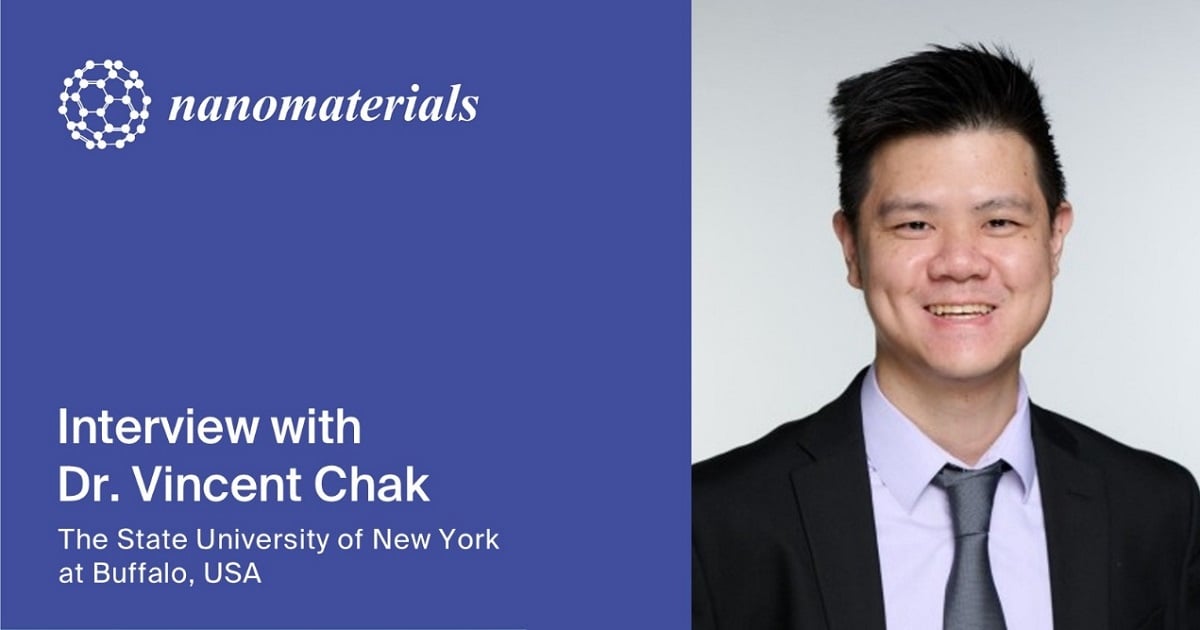
In this Behind the Paper interview, we speak with Dr. Vincent Chak, first author of a recent article published in Nanomaterials (ISSN 2079-4991). Dr. Chak shares his perspective on the motivation behind the study, the design of LysoPS-containing nanoparticles, the role of intestinal M-cells in nanoparticle uptake, and the immune mechanisms associated with LysoPS-mediated oral tolerance.
“Intestinal Microfold Cells Play a Critical Role in the Uptake and Oral Tolerance Mediated by Lysophosphatidylserine-Containing Lipidic Nanoparticles”
by Vincent Chak, Sujay Harne, Jason G. Kay, Elizabeth Wohlfert and Sathy V. Balu-Iyer
Nanomaterials 2026, 16(7), 412; https://doi.org/10.3390/nano16070412
Dr. Vincent Chak is a pharmaceutical scientist specializing in immunology, immunogenicity, and translational drug development. He earned his PhD in Pharmaceutical Sciences from the University at Buffalo, where his research focused on developing tolerogenic lipid nanoparticle platforms to induce antigen-specific immune tolerance and reduce unwanted immune responses to biologic therapies. He is currently a postdoctoral fellow investigating immunogenicity effects on drug exposure. His expertise lies in nanoparticle formulation, immunology, immunotherapy, and pharmacokinetics/pharmacodynamics (PK/PD). He is passionate about connecting mechanistic immunology with translational pharmacology to advance safer and more effective biologic medicines.
The following is an interview with Dr. Chak:
- What motivated you to investigate the role of intestinal M-cells in LysoPS-mediated oral tolerance?
We were interested in understanding the role of intestinal M-cells in LysoPS-mediated oral tolerance because intestinal M-cells are specialized epithelial cells that can transport antigens and particles from the intestinal lumen into Peyer’s patches for immune surveillance. We thought these properties may play an important role in nanoparticle transport and may have the potential for the oral delivery of protein therapeutics. Therefore, investigating M-cells allowed us to better understand the uptake and immune mechanisms that contribute to the downstream tolerogenic immune response.
- Why did you compare LysoPS-containing nanoparticles with double-chain PS nanoparticles in this study?
We compared LysoPS nanoparticles with double-chain PS nanoparticles because both contain phosphatidylserine but differ in structure. LysoPS has a single acyl chain, while double-chain PS has two acyl chains. Our previous work suggested that the lipid structure strongly affects nanoparticle properties and tolerogenic potential. We found that both could reduce immune responses when given intravenously or subcutaneously, but only LysoPS worked well by the oral route, while double-chain PS did not. Therefore, we hypothesized that the structure of PS plays an important role in oral tolerance.
- What makes LysoPS nanoparticles different from double-chain PS nanoparticles in their interaction with intestinal M-cells?
This is a great question, and the exact mechanism is still unclear. Structurally, LysoPS contains a single acyl chain, which alters lipid packing and membrane curvature, which then alter phosphatidylserine surface exposure compared with double-chain PS nanoparticles. This higher PS exposure may contribute to the higher uptake of LysoPS nanoparticles by intestinal M-cells. Current understanding suggests that intestinal M-cells may express or interact with molecules such as SR-B1, clusterin, and annexin V, which have been associated with phosphatidylserine binding or lipid interactions. However, there is no well-established phosphatidylserine-specific receptor known to be expressed on the M-cell surface. Therefore, further studies are needed to fully understand the mechanism underlying the enhanced M-cell uptake of LysoPS nanoparticles.
- Why was OVA selected as the model antigen for this study?
OVA was selected because it is a well-established model antigen in immunology and oral tolerance studies. It allows us to evaluate antigen-specific immune responses using reliable and standardized readouts, such as OVA-specific antibody titers, OVA-specific ELISA assays, and changes in regulatory immune cell populations. Using OVA also allowed us to focus on the mechanism of LysoPS nanoparticle uptake and tolerance induction without the added complexity of a therapeutic protein disease model.
- Which experimental finding do you consider most important in this work, and why?
The most important finding was that LysoPS-mediated oral tolerance was reduced in the intestinal M-cell knockout mouse model. This indicates that intestinal M-cells are not only involved in nanoparticle uptake but are also important for the downstream immune tolerance response. The loss of intestinal M-cells appeared to reduce LysoPS-mediated oral tolerance in this model.
- What was the main technical challenge in studying M-cell-mediated nanoparticle uptake?
The main technical challenge was performing nanoparticle uptake studies using intestinal gut-loop assays. Traditionally, nanoparticle transport is often evaluated using in vitro assays, such as TEER measurements, but these models do not fully replicate the physiological environment of live animals. Therefore, in this study, we used both in vitro and ex vivo approaches to evaluate nanoparticle uptake by intestinal M-cells. However, conducting ex vivo intestinal gut-loop assays is technically challenging because it requires precise surgical technique, careful handling of intestinal tissue, and timely effects to maintain reproducibility and generate the data.
- How do the TGF-β and regulatory T-cell findings help explain the observed immune tolerance response?
TGF-β and regulatory T cells help explain the immunological mechanism downstream of nanoparticle uptake. After LysoPS nanoparticles are transported into gut-associated lymphoid tissue, antigen-presenting cells may promote a tolerogenic environment. One of the tolerance signals is the TGF-β. TGF-β is an immunosuppressive cytokine which promotes the differentiation of regulatory T cells and other tolerance-associated pathways. These regulatory responses can suppress antigen-specific antibody production and effector immune activation, which explains the reduced immune response observed after oral LysoPS treatment.
- Why did you choose Nanomaterials for this work, and how was your experience with the submission and review process?
We chose Nanomaterials because our study fits well with the journal’s focus on nanoparticle formulation, characterization, biological interactions, and biomedical applications. Since our work combines lipid nanoparticle design with intestinal uptake and immune tolerance mechanisms, it was a good platform for both the nanomedicine and immunology aspects of the study. Overall, the submission and review process was positive and relatively fast. The reviewers provided constructive comments that helped us clarify the mechanism, improve the data presentation, and strengthen the discussion of how LysoPS nanoparticle structure contributes to oral tolerance.
