



Carbonate-Hosted Ore Systems: Critical Minerals and Base Metal Deposits
A special issue of Minerals (ISSN 2075-163X). This special issue belongs to the section "Mineral Exploration Methods and Applications".
Deadline for manuscript submissions: 31 July 2026 | Viewed by 431
Special Issue Editors

Interests: economic geology-ore deposits; critical minerals; structural geology and tectonics; igneous and metamorphic petrology; GIS–remote sensing and modeling; machine learning

Interests: earth sciences; igneous and metamorphic petrology; structural geology; economic geology
Special Issues, Collections and Topics in MDPI journals
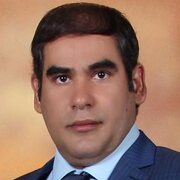
Interests: remote sensing; environment; satellite image processing; geological mapping; minerals; exploration geology; mining; exploration geophysics
Special Issues, Collections and Topics in MDPI journals
Special Issue Information
Dear Colleagues,
Carbonate-hosted ore systems are emerging as a key frontier in mineral exploration, not only for traditional base metals such as lead, zinc, and copper but also for critical minerals essential to the global energy transition, including rare earth elements (REEs) and other strategic commodities. Despite their economic significance, many fundamental questions remain unresolved:
- What are the dominant fluid sources and pathways that control metal transport and deposition in carbonate environments?
- How do structural frameworks and carbonate lithologies influence ore localization and mineral assemblages?
- What geochemical and isotopic signatures can serve as reliable indicators for critical mineral enrichment within these systems?
This Special Issue seeks contributions that advance our understanding of the genesis, mineralogical characteristics, and geochemical evolution of carbonate-hosted deposits. We particularly welcome studies that
- Apply innovative analytical techniques to unravel fluid–rock interaction processes.
- Explore predictive models and exploration strategies for identifying critical mineral potential in carbonate terrains.
- Integrate field observations with experimental or computational approaches to refine genetic models.
By bringing together research from economic geology, geochemistry, structural geology, and mineral exploration, this issue aims to showcase cutting-edge perspectives that will inform sustainable resource development and guide future exploration efforts for both base metals and critical minerals.
Dr. Jonas Didero Takodjou Wambo
Dr. Sylvestre Ganno
Dr. Amin Beiranvand Pour
Guest Editors
Manuscript Submission Information
Manuscripts should be submitted online at www.mdpi.com by registering and logging in to this website. Once you are registered, click here to go to the submission form. Manuscripts can be submitted until the deadline. All submissions that pass pre-check are peer-reviewed. Accepted papers will be published continuously in the journal (as soon as accepted) and will be listed together on the special issue website. Research articles, review articles as well as short communications are invited. For planned papers, a title and short abstract (about 250 words) can be sent to the Editorial Office for assessment.
Submitted manuscripts should not have been published previously, nor be under consideration for publication elsewhere (except conference proceedings papers). All manuscripts are thoroughly refereed through a single-blind peer-review process. A guide for authors and other relevant information for submission of manuscripts is available on the Instructions for Authors page. Minerals is an international peer-reviewed open access monthly journal published by MDPI.
Please visit the Instructions for Authors page before submitting a manuscript. The Article Processing Charge (APC) for publication in this open access journal is 2400 CHF (Swiss Francs). Submitted papers should be well formatted and use good English. Authors may use MDPI's English editing service prior to publication or during author revisions.
Keywords
- carbonate-hosted deposits
- base metals
- rare earth elements (REEs)
- critical minerals
- hydrothermal processes
- geochemical exploration
- mineralization models
- sustainable resource development
Benefits of Publishing in a Special Issue
- Ease of navigation: Grouping papers by topic helps scholars navigate broad scope journals more efficiently.
- Greater discoverability: Special Issues support the reach and impact of scientific research. Articles in Special Issues are more discoverable and cited more frequently.
- Expansion of research network: Special Issues facilitate connections among authors, fostering scientific collaborations.
- External promotion: Articles in Special Issues are often promoted through the journal's social media, increasing their visibility.
- Reprint: MDPI Books provides the opportunity to republish successful Special Issues in book format, both online and in print.
Further information on MDPI's Special Issue policies can be found here.
