

Advances in SARS-CoV-2 Infection

A topical collection in Microorganisms (ISSN 2076-2607). This collection belongs to the section "Virology".

Viewed by 4148

Editor


E-Mail Website1 Website2
Guest Editor
Department of Medical Sciences, Infectious Diseases Unit, University of Ferrara, 44121 Ferrara, Italy
Interests: Chlamydia and Mycoplasma human infections; toxoplasmosis; opportunistic infections; sexually transmitted infections; historical medicine; migrant infections; HIV/AIDS
Special Issues, Collections and Topics in MDPI journals

Topical Collection Information

Dear Colleagues,

More than a year has passed since the new coronavirus SARS-CoV-2 entered our lives, causing worldwide grief and economic devastation in the form of COVID-19. The virus made a species jump (spillover) from an animal (bat) to man, and, in a short time through sequential waves, has caused an uncontrolled epidemic that has resulted in 295 million cases worldwide and almost 6 million deaths to date—an apocalyptic scenario caused by a highly contagious disease, which sees governments and experts of all medical disciplines committed to facing a common enemy that continues to claim thousands of victims around the world.

COVID-19 is multifaceted, with a variety of clinical expressions from mild or moderate symptoms that generally heal without the need for any treatment to more severe and devastating effects, especially in unvaccinated patients over 60 or those who are frail or have other coexisting diseases. It can also seriously affect children, in whom the virus can cause a deadly disease, in the form of multisystem inflammatory syndrome (MIS-C), which is particularly perilous to the pediatric age group. Moreover, long COVID syndrome is becoming increasingly recognized as a new clinical entity in the context of SARS-CoV-2 infection.

In the therapeutic field, there is still no definitive curative drug; however, monoclonal antibodies are available and new antivirals will soon be commercialized. Several currently available vaccines were manufactured in just 18 months, a unique event in the history of highly prevalent infectious diseases that have plagued humanity. The positive effects of the vaccination campaign are being seen in many parts of the world, with a reduction in admissions to intensive care units and overall mortality. However, the disappearance of this new infection is still far from being a reality, as it is also threatened by the presence of numerous viral variants that could compromise the efficacy of the vaccine, especially when there are segments of the population not yet immunized.

The purpose of this Special Issue is to focus on the main biological, epidemiological, and clinical aspects of the virus, but, above all, on therapeutic and preventive aspects in light of newly acquired knowledge.

Prof. Dr. Carlo Contini
Guest Editor

Manuscript Submission Information

Manuscripts should be submitted online at www.mdpi.com by registering and logging in to this website. Once you are registered, click here to go to the submission form. Manuscripts can be submitted until the deadline. All submissions that pass pre-check are peer-reviewed. Accepted papers will be published continuously in the journal (as soon as accepted) and will be listed together on the collection website. Research articles, review articles as well as short communications are invited. For planned papers, a title and short abstract (about 250 words) can be sent to the Editorial Office for assessment.

Submitted manuscripts should not have been published previously, nor be under consideration for publication elsewhere (except conference proceedings papers). All manuscripts are thoroughly refereed through a single-blind peer-review process. A guide for authors and other relevant information for submission of manuscripts is available on the Instructions for Authors page. Microorganisms is an international peer-reviewed open access monthly journal published by MDPI.

Please visit the Instructions for Authors page before submitting a manuscript. The Article Processing Charge (APC) for publication in this open access journal is 2700 CHF (Swiss Francs). Submitted papers should be well formatted and use good English. Authors may use MDPI's English editing service prior to publication or during author revisions.

Keywords

  • SARS-CoV-2 and COVID-19
  • epidemiology and pathogenesis
  • virus variants
  • clinical aspects and advanced diagnosis
  • new therapeutic strategies
  • vaccines
  • long-term COVID-19 pandemic
  • multisystem inflammatory syndrome (MIS-C)
  • COVID-related opportunistic infections

Published Papers (3 papers)

2025

12 pages, 2711 KB  
Article
Immune Suppression, Preexisting Immunity, and Mutation Tendency Shaped SARS-CoV-2 Evolution in Persistent Infection
by Minghui An, Xiaolong Dong, Yang Gao, Jinming Ouyang, Haibo Ding, Zheming Zhu, Linan Bao, Yonghui Feng, Wen Tian, Pan Wang, Xiaoxu Han and Hong Shang
Microorganisms 2025, 13(11), 2613; https://doi.org/10.3390/microorganisms13112613 - 17 Nov 2025
Viewed by 493
Abstract
SARS-CoV-2 evolution in persistent infection, which may induce long COVID-19, is predominantly manifested in immunocompromised hosts, who act as the viral reservoirs for future outbreaks. Therefore, understanding the evolutionary mechanisms of novel variants that can evade preexisting immune responses is critical to guide [...] Read more.
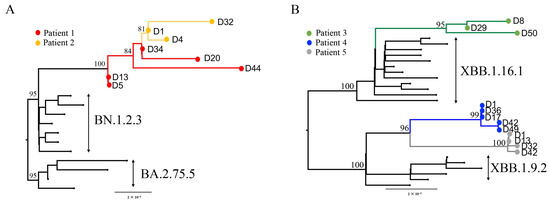
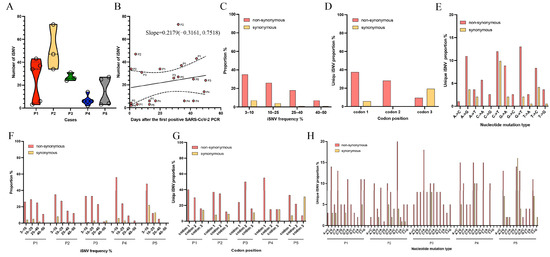
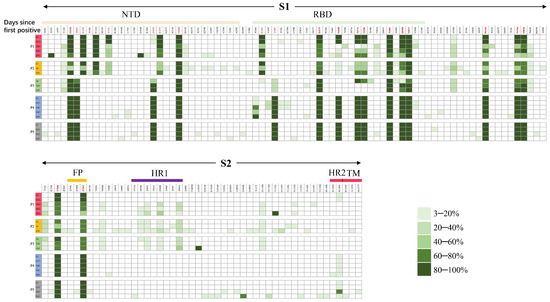
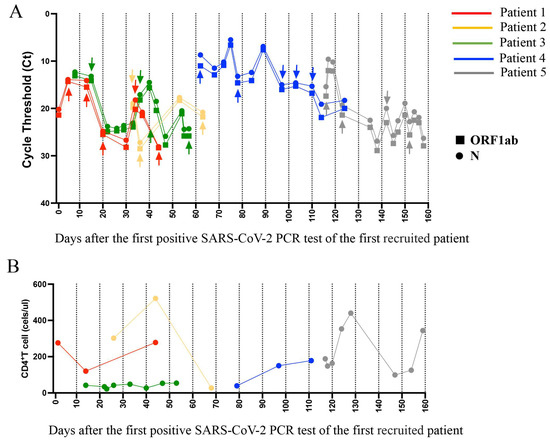
SARS-CoV-2 evolution in persistent infection, which may induce long COVID-19, is predominantly manifested in immunocompromised hosts, who act as the viral reservoirs for future outbreaks. Therefore, understanding the evolutionary mechanisms of novel variants that can evade preexisting immune responses is critical to guide public health measures and develop vaccines tailored for vulnerable populations. We used next-generation sequencing and phylogenetic methods to delineate the evolutionary and mutational profiles of SARS-CoV-2 variants using serial oropharyngeal swab samples from 5 individuals with persistent infections. Our results revealed that the intra-host evolutionary patterns of different variants varied significantly, and the evolutionary rate in 3 immunocompromised hosts was 20 times higher than in 2 other patients. These variations likely stem from differences in immune suppression status, the strength of preexisting immune responses, and the extent of error-generating mutations. There were 15 intra-host single-nucleotide variants (iSNVs) in the spike gene among at least two variants, suggesting convergent evolution. Although most new iSNVs do not reach fixation, some of them belong to lineage-defined mutations in variants of concern (VOCs) and recent variants of interest (VOIs). The observations indicate that persistent infections serve as sources for novel, potentially harmful variants, whereas the viral evolutionary dynamics are impacted by virological, immunological, and genetic factors. Thus, there is an urgent need for individualized monitoring and management of immunocompromised hosts to prevent outbreaks caused by the viral seeds generated from them and to study viral factors associated with post-acute COVID-19 sequelae. Full article
Show Figures

Figure 1

22 pages, 350 KB  
Review
Current Advances and Applications of Animal Models in SARS-CoV-2 Pathogenesis and Vaccine Development
by Li Wu, Yingying Tao, Xing Wu, Shaozhen Li, Rui Yang, Chengying Li, Yao Yao, Shijia Xu, Jianhong Shu, Yulong He and Huapeng Feng
Microorganisms 2025, 13(9), 2009; https://doi.org/10.3390/microorganisms13092009 - 28 Aug 2025
Viewed by 2195
Abstract
COVID-19 is the most widespread emerging infectious disease in humans, recently caused by the SARS-CoV-2 virus. Understanding the pathogenesis and development of efficient vaccines is crucial for the prevention and control of this emerging disease. SARS-CoV-2 viruses have widespread hosts, including humans, domesticated/companion [...] Read more.
COVID-19 is the most widespread emerging infectious disease in humans, recently caused by the SARS-CoV-2 virus. Understanding the pathogenesis and development of efficient vaccines is crucial for the prevention and control of this emerging disease. SARS-CoV-2 viruses have widespread hosts, including humans, domesticated/companion animals (cats, dogs), specific farmed animals (minks), specific wildlife (white-tailed deer), and laboratory animal models. Bats are considered the original reservoir, and pangolins may be important intermediate hosts. Suitable animal models play an important role in studying the pathogenicity and evaluation of vaccines and antiviral drugs during the preclinical stage. In this review, we summarized the animal models and potential animal models for the research of SARS-CoV-2 pathogenesis, vaccine and antiviral drugs development, including transgenic mice, cats, hamsters, nonhuman primates, ferrets, and so on. Our summary provides the important information to select the animals used for a specific purpose and facilitates the development of novel vaccines and antivirals to prevent and control COVID-19. Full article
19 pages, 313 KB  
Article
Clinical Features and Outcomes of Patients with Full Spectrum of COVID-19 Severity and Concomitant Herpesvirus Reactivation
by Paolo Ravanini, Maria Grazia Crobu, Claudia Martello, Giulia Faolotto, Luigi Mario Castello, Antonia Palumbo, Luigi Maria Fenoglio, Clotilde Impaloni, Melissa Briasco, Christian Di Domenico, Paola Macaluso, Alessio Mercandino, Miriam Riggi, Mario Pirisi, Stefano Andreoni and Carlo Smirne
Microorganisms 2025, 13(6), 1221; https://doi.org/10.3390/microorganisms13061221 - 27 May 2025
Viewed by 1085
Abstract
Some studies suggested a high incidence of human herpesvirus (HHV) reactivation in severe acute respiratory syndrome coronavirus 2 (SARS-CoV-2) infection. To evaluate the prevalence of HHV reactivations in a population with various severity degrees of coronavirus disease 2019 (COVID-19), we analyzed 102 individuals [...] Read more.
Some studies suggested a high incidence of human herpesvirus (HHV) reactivation in severe acute respiratory syndrome coronavirus 2 (SARS-CoV-2) infection. To evaluate the prevalence of HHV reactivations in a population with various severity degrees of coronavirus disease 2019 (COVID-19), we analyzed 102 individuals and compared them with 51 SARS-CoV-2-negative subjects admitted in the same period (January–July 2022) for acute respiratory failure. Positivity was found in 76% of subjects for at least one HHV, and in 46% for ≥2 HHV. These proportions were more prevalent in SARS-CoV-2-positive than in negative patients (83% vs. 61%; 56% vs. 27%, respectively). The most common HHV was HHV-7 both in the whole population (51%) and in SARS-CoV-2-positive and -negative subjects (57% and 39%, respectively); human cytomegalovirus, herpes simplex virus-1, Epstein–Barr virus, and HHV-6 were more represented in SARS-CoV-2-positive individuals. No single or combined HHV reactivation was associated with the 60-day mortality rate. However, cytomegalovirus reactivation was an independent predictor of COVID-19 severity and longer hospitalizations, while the occurrence of ≥3 any HHV reactivations was independently associated with the aforementioned outcomes and ventilatory support need. Taken together, our data suggest that in patients with moderate-to-severe COVID-19, the diagnosis of HHV coinfections can add useful prognostic information. Full article
Back to TopTop