Research on Hearing and Balance Healthcare

A special issue of Healthcare (ISSN 2227-9032). This special issue belongs to the section "Clinical Care".

Deadline for manuscript submissions: 10 October 2026 | Viewed by 809

Special Issue Editor


E-Mail Website
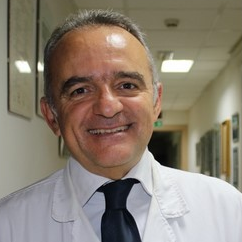
Guest Editor
MSA ENT Academy Center, 03043 Cassino, Italy
Interests: otoneurology; vestibular system; ocular VEMPs; cervical VEMPs; vestibulo-ocular reflex (VOR); video-HIT; otolith system; eye movements (ocular torsion)
Special Issues, Collections and Topics in MDPI journals

Special Issue Information

Dear colleagues,

Hearing and balance are fundamental sensory functions that allow humans to perceive, communicate, and maintain orientation in a dynamic environment. Although traditionally explored as separate systems, growing evidence highlights their close anatomical and functional integration. Advances in neuroscience, otology, audiology, and rehabilitation have opened new perspectives for understanding how auditory and vestibular pathways interact and how their dysfunctions affect daily life and health outcomes.

This Special Issue, entitled "Research on Hearing and Balance Healthcare", aims to present recent advancements in auditory and vestibular science from clinical viewpoints. The issue seeks to encourage interdisciplinary research and promote innovative diagnostic and rehabilitative strategies that align with the journal’s scope of improving health and healthcare delivery through scientific evidence and translational approaches. I’m pleased to invite you to contribute to this issue.

In this Special Issue, original research articles and reviews are welcome. Potential topics include:

  • Diagnostic and assessment tools;
  • Auditory and vestibular rehabilitation;
  • Aging and sensory decline;
  • Cognitive and perceptual integration;
  • Translational and clinical research.

I look forward to receiving your contributions.

Prof. Dr. Leonardo Manzari
Guest Editor

Manuscript Submission Information

Manuscripts should be submitted online at www.mdpi.com by registering and logging in to this website. Once you are registered, click here to go to the submission form. Manuscripts can be submitted until the deadline. All submissions that pass pre-check are peer-reviewed. Accepted papers will be published continuously in the journal (as soon as accepted) and will be listed together on the special issue website. Research articles, review articles as well as short communications are invited. For planned papers, a title and short abstract (about 250 words) can be sent to the Editorial Office for assessment.

Submitted manuscripts should not have been published previously, nor be under consideration for publication elsewhere (except conference proceedings papers). All manuscripts are thoroughly refereed through a single-blind peer-review process. A guide for authors and other relevant information for submission of manuscripts is available on the Instructions for Authors page. Healthcare is an international peer-reviewed open access semimonthly journal published by MDPI.

Please visit the Instructions for Authors page before submitting a manuscript. The Article Processing Charge (APC) for publication in this open access journal is 2700 CHF (Swiss Francs). Submitted papers should be well formatted and use good English. Authors may use MDPI's English editing service prior to publication or during author revisions.

Keywords

  • hearing
  • balance
  • vestibular system
  • auditory system
  • vestibular rehabilitation
  • sensorimotor integration
  • dizziness
  • aging
  • neuroplasticity
  • translational research

Benefits of Publishing in a Special Issue

  • Ease of navigation: Grouping papers by topic helps scholars navigate broad scope journals more efficiently.
  • Greater discoverability: Special Issues support the reach and impact of scientific research. Articles in Special Issues are more discoverable and cited more frequently.
  • Expansion of research network: Special Issues facilitate connections among authors, fostering scientific collaborations.
  • External promotion: Articles in Special Issues are often promoted through the journal's social media, increasing their visibility.
  • Reprint: MDPI Books provides the opportunity to republish successful Special Issues in book format, both online and in print.

Further information on MDPI's Special Issue policies can be found here.

Published Papers (2 papers)

Order results
Result details
Select all
Export citation of selected articles as:

Research

16 pages, 6536 KB  
Article
Persistent Dizziness and Time-Domain Dissociation in Vestibular Function: A Hypothesis-Generating Case Series and Spatiotemporal Framework for Targeted Vestibular Rehabilitation
by Leonardo Manzari and Maria Sofia Manzari
Healthcare 2026, 14(11), 1560; https://doi.org/10.3390/healthcare14111560 - 3 Jun 2026
Abstract
Background/Objectives: Persistent dizziness after the apparent resolution of an acute or episodic vestibular disorder remains a frequent and clinically challenging condition. In many patients, symptoms persist despite negative positional testing, absence of spontaneous nystagmus, and preserved high-frequency vestibular responses on video head [...] Read more.
Background/Objectives: Persistent dizziness after the apparent resolution of an acute or episodic vestibular disorder remains a frequent and clinically challenging condition. In many patients, symptoms persist despite negative positional testing, absence of spontaneous nystagmus, and preserved high-frequency vestibular responses on video head impulse testing. This discrepancy suggests that persistent dizziness may not always be explained by incomplete recovery of a single peripheral vestibular lesion but may reflect a dissociation between transient/high-frequency vestibular responses and sustained/low-frequency or integrative vestibular processing. The aim of this study was to propose a hypothesis-generating, case-based clinical framework for interpreting this dissociation and its implications for targeted vestibular rehabilitation. Methods: This was a retrospective, hypothesis-generating, case-based clinical study derived from routine specialist neuro-otological practice. Four illustrative cases were selected because they represented distinct patterns of persistent dizziness in which preserved or near-preserved transient vestibular responses coexisted with abnormalities in sustained, otolithic, visual–vestibular, or velocity-storage-dependent processing. All patients underwent detailed clinical history assessment, bedside neuro-otological examination, and multidomain vestibular assessment according to clinical indication. The purpose of the study was not to estimate prevalence, validate diagnostic accuracy, or demonstrate treatment efficacy but to illustrate a physiology-based interpretive framework. Results: The four cases showed different patterns of time-domain dissociation. These included low-frequency integrative dysfunction without clear peripheral lateralization, incompletely compensated unilateral vestibular asymmetry, selective unilateral otolithic loss despite preserved semicircular canal high-frequency responses, and bilateral sustained vestibular hypofunction unmasked by an apparently resolved BPPV-like event. Across cases, persistent symptoms were better explained by the relationship between transient and sustained vestibular domains than by any single test result considered in isolation. Conclusions: Persistent dizziness may arise from different combinations of preserved transient vestibular responses and impaired sustained or integrative vestibular processing. The proposed framework does not introduce new vestibular tests and does not claim to validate a new diagnostic entity. Rather, it organizes established vestibular investigations within a time-domain model that may help identify clinically meaningful dissociations and guide individualized, domain-specific vestibular rehabilitation. Prospective studies with larger samples and external validation are required to determine the diagnostic and therapeutic value of this approach. Full article
(This article belongs to the Special Issue Research on Hearing and Balance Healthcare)
Show Figures

Figure 1

13 pages, 1860 KB  
Article
Occupational Dental Noise and Early Cochlear Changes: Evidence from Distortion Product Oto-Acoustic Emissions in Young Dentists
by Vijaya Kumar Narne, Ahmed A. Al-Bariqi, Ali Fahad Al-Qahtani, Krishna Yerraguntla, Praveen Prakash, Sreeraj Konadath, Reesha Oovattil Hussain, Shreyas Tikare, Mshari Nasser Alzidane and Budur Khalid Alsaanah
Healthcare 2026, 14(7), 886; https://doi.org/10.3390/healthcare14070886 - 30 Mar 2026
Viewed by 422
Abstract
Background: Dental professionals are routinely exposed to occupational noise from high-speed handpieces and ultrasonic scalers, with levels that can reach up to 90 dB(A). While such exposure is suspected to affect cochlear function, objective assessments in this population remain limited. This study investigated [...] Read more.
Background: Dental professionals are routinely exposed to occupational noise from high-speed handpieces and ultrasonic scalers, with levels that can reach up to 90 dB(A). While such exposure is suspected to affect cochlear function, objective assessments in this population remain limited. This study investigated short-term changes in distortion product otoacoustic emissions (DPOAEs) as a biomarker of outer hair cell (OHC) function following routine clinical dental procedures. Methods: DPOAEs were recorded at frequencies from 1000 to 6000 Hz in young dental professionals with clinically normal hearing. Measurements were obtained at three time points: prior to dental procedures (baseline), immediately after exposure (3–5 min post-procedure), and at a 48-h (follow-up). Participants were stratified into two groups based on exposure profile: those exposed to occupational dental noise alone (Group 1) and those with concurrent use of personal listening devices (PLDs) in addition to occupational exposure (Group 2). Results: A significant reduction in DPOAE amplitudes was observed immediately following dental procedures in both groups, indicating an acute effect on OHC function. This reduction was more pronounced in Group 1 (PLD users) compared to Group 2 (occupational noise only). Amplitudes returned to baseline levels at the 48-h follow-up in both groups, confirming the transient nature of the effect. The absence of significant Frequency × Time interactions indicates that the observed amplitude reductions were broadly distributed across the tested frequency range rather than confined to a specific spectral region. Conclusions: Routine clinical dental procedures can induce transient, measurable changes in cochlear outer hair cell function, detectable by DPOAEs in young professionals with normal audiometric thresholds. Although these changes appear reversible within 48 h, the greater acute response observed in individuals with concurrent personal listening device use suggests that cumulative acoustic exposure may increase cochlear susceptibility. These findings support the integration of objective cochlear monitoring into occupational health surveillance for dental personnel. Full article
(This article belongs to the Special Issue Research on Hearing and Balance Healthcare)
Show Figures

Figure 1

Back to TopTop