


cimb-logo

Journal Browser

Journal Browser

Advancements in Molecular Biology and Pharmaceutical Science

Editor


E-Mail Website
Collection Editor
Department of Pharmaceutics and Drug Delivery, School of Pharmacy, The University of Mississippi, Oxford, MS 38677, USA
Interests: gene therapy; monoclonal antibodies; lipid nanoparticles; lyophilization
Special Issues, Collections and Topics in MDPI journals

Topical Collection Information

Dear Colleagues,

Molecular biology and pharmaceutical sciences play a key role in drug product development, starting from discovery and development to commercialization. Furthermore, molecular and cellular biology research has been rapidly expanding, generating new pharmaceutical and medicinal products that will have a significant impact on the diagnosis and treatment of various diseases. Here, innovations in molecular biology and pharmaceutical fields are essential to the development of life-saving medications and improving overall patient health and safety.

Research in molecular biology primarily focuses on gene expression and protein synthesis. In addition, molecular interactions between DNA, RNA, and proteins within cells are vital for producing biopharmaceuticals such as monoclonal antibodies, vaccines, and gene therapies. The ability to manipulate molecular pathways enables the design of target-specific biotherapeutics, which is crucial to improving therapeutic outcomes with fewer side effects. The combination of molecular biology and pharmaceutical science with artificial intelligence (AI) is promising in accelerate research, as with, for instance, candidate screening and testing in the early stages of research.

This Topical Collection, “Advancements in Molecular Biology and Pharmaceutical Science”, will focus on monoclonal antibodies, vaccines, gene therapy, mRNA therapeutics, cell therapy, and other molecular and pharmaceutical therapeutics.

Suitable topics include, but are not limited to, the following:

  • Molecular biology in medicine biotechnology;
  • Advances in molecular biotherapeutics—monoclonal antibodies, vaccines, gene therapy, cell therapy, mRNA technology;
  • Gene editing technologies, RNA-based therapies, and personalized medicine approaches;
  • Generative molecular biology—computational biology and artificial intelligence (AI) methods.

Dr. Arun Butreddy
Collection Editor

Manuscript Submission Information

Manuscripts should be submitted online at www.mdpi.com by registering and logging in to this website. Once you are registered, click here to go to the submission form. Manuscripts can be submitted until the deadline. All submissions that pass pre-check are peer-reviewed. Accepted papers will be published continuously in the journal (as soon as accepted) and will be listed together on the collection website. Research articles, review articles as well as short communications are invited. For planned papers, a title and short abstract (about 250 words) can be sent to the Editorial Office for assessment.

Submitted manuscripts should not have been published previously, nor be under consideration for publication elsewhere (except conference proceedings papers). All manuscripts are thoroughly refereed through a single-blind peer-review process. A guide for authors and other relevant information for submission of manuscripts is available on the Instructions for Authors page. Current Issues in Molecular Biology is an international peer-reviewed open access monthly journal published by MDPI.

Please visit the Instructions for Authors page before submitting a manuscript. The Article Processing Charge (APC) for publication in this open access journal is 2200 CHF (Swiss Francs). Submitted papers should be well formatted and use good English. Authors may use MDPI's English editing service prior to publication or during author revisions.

Keywords

  • pharmaceutical sciences
  • biotherapeutics
  • monoclonal antibodies
  • gene therapy
  • vaccines
  • artificial intelligence (AI)
  • personalized medicine

Published Papers (1 paper)

2025

22 pages, 1830 KB  
Article
β-Arrestin 1 Differentially Modulates cAMP and ERK Pathways Downstream of the FSH Receptor
by Sei Hyun Park, Munkhzaya Byambaragchaa, Ye Rin Yu, Jae Won Lee, Min-Jeong Kwak, Seung-Bin Yoon, Ji-Su Kim, Myung-Hwa Kang and Kwan-Sik Min
Curr. Issues Mol. Biol. 2025, 47(12), 1051; https://doi.org/10.3390/cimb47121051 - 16 Dec 2025
Abstract
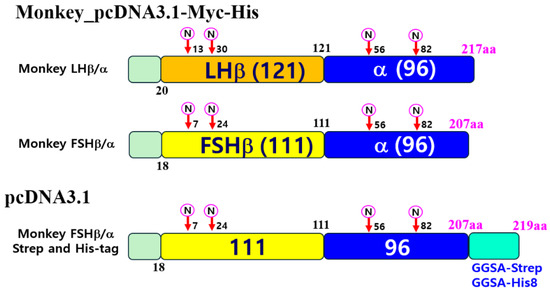
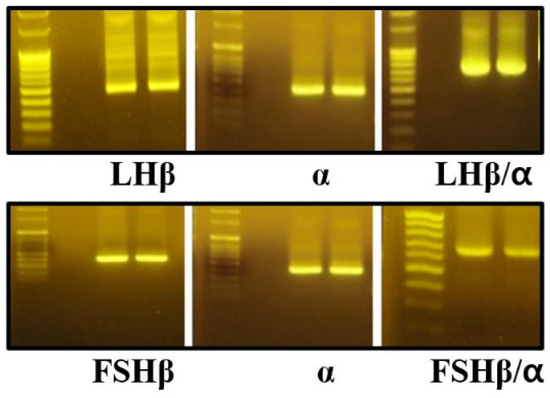
This study compared the gonadotropin gene sequences (LH and FSH subunits) of Cynomolgus and Rhesus monkeys and produced recombinant single-chain LHβ/α and FSHβ/α proteins. The α- and FSHβ-subunit sequences were identical between species, while LHβ showed only minor synonymous differences. The recombinant hormones [...] Read more.
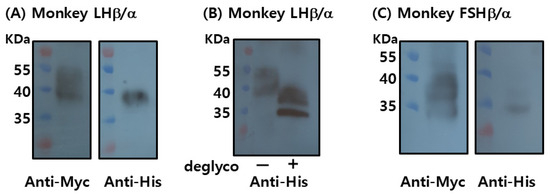
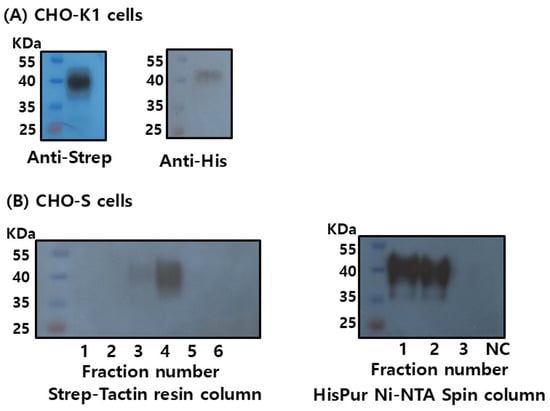
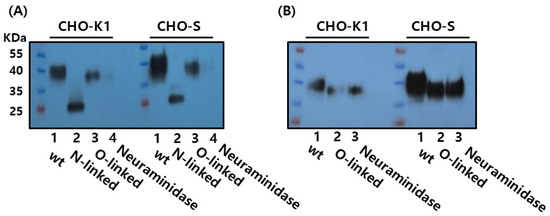
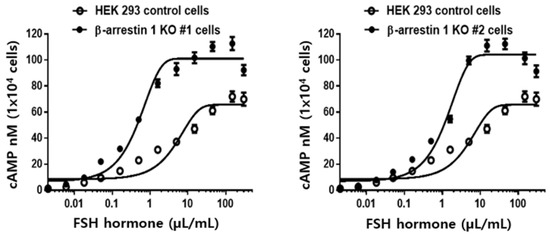
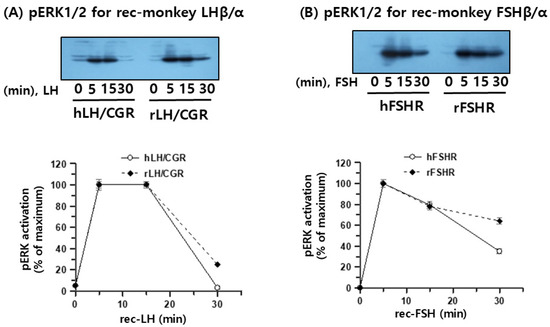
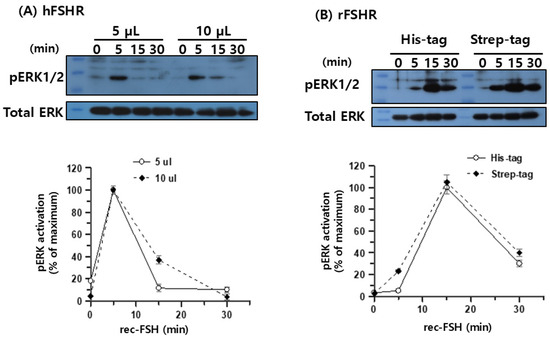
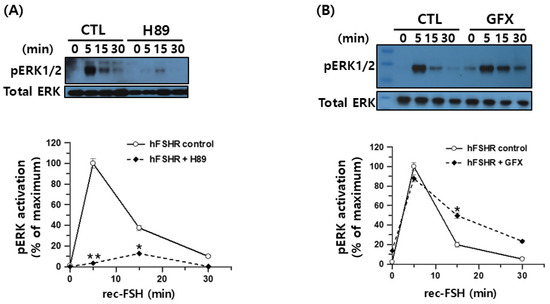
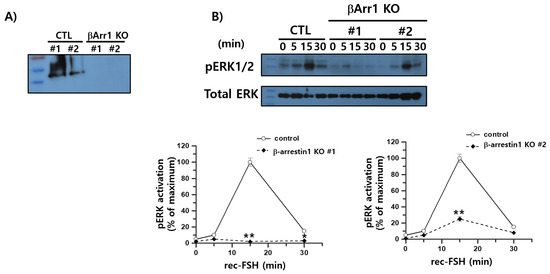
This study compared the gonadotropin gene sequences (LH and FSH subunits) of Cynomolgus and Rhesus monkeys and produced recombinant single-chain LHβ/α and FSHβ/α proteins. The α- and FSHβ-subunit sequences were identical between species, while LHβ showed only minor synonymous differences. The recombinant hormones were successfully expressed and shown to be mainly N-glycosylated. Recombinant monkey FSHβ/α activated cAMP signaling in human FSH receptor-expressing cells, confirming its biological activity. β-arrestin 1 was found to have dual roles: its absence increased cAMP signaling (negative regulation), but it was required for ERK1/2 activation. ERK activation depended mainly on the cAMP/PKA pathway. Human and rat FSH receptors displayed different ERK activation timing, indicating species-specific signaling behavior. Overall, the study establishes a reliable system for producing functional recombinant monkey gonadotropins and clarifies how β-arrestin 1 differentially regulates FSH receptor signaling. Full article
Show Figures

Figure 1

Back to TopTop