Wound Healing: From Mechanisms to Therapeutic Approaches (2nd Edition)

A special issue of Biomedicines (ISSN 2227-9059). This special issue belongs to the section "Molecular and Translational Medicine".

Deadline for manuscript submissions: closed (31 May 2026) | Viewed by 1793

Special Issue Editor

Special Issue Information

Dear Colleagues,

A wound determines a cascade of chemical and morphological events aimed at hemostasis, prevention or arrest of infection, removal of damaged tissue, and finally tissue repair. The disturbance or an alteration of these events creates the conditions for the formation of a chronic wound or of keloids or hypertrophic scars that are not easily resolved by therapy. Obviously, a thorough knowledge of the cells and molecules involved in the tissue response to trauma is important to actively control the response to surgical operations and therapies used that are currently assuming ever greater importance in the control of wounds. Therefore, the aim of this Special Issue is to stimulate research and clinical interest in this exciting field and to serve as a point of reference for those involved in addressing the problems posed by wounds and their healing.

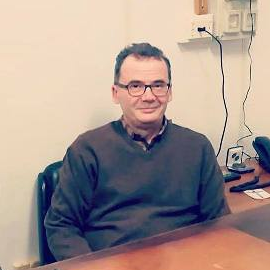
Dr. Stefano Bacci
Guest Editor

Manuscript Submission Information

Manuscripts should be submitted online at www.mdpi.com by registering and logging in to this website. Once you are registered, click here to go to the submission form. Manuscripts can be submitted until the deadline. All submissions that pass pre-check are peer-reviewed. Accepted papers will be published continuously in the journal (as soon as accepted) and will be listed together on the special issue website. Research articles, review articles as well as short communications are invited. For planned papers, a title and short abstract (about 250 words) can be sent to the Editorial Office for assessment.

Submitted manuscripts should not have been published previously, nor be under consideration for publication elsewhere (except conference proceedings papers). All manuscripts are thoroughly refereed through a single-blind peer-review process. A guide for authors and other relevant information for submission of manuscripts is available on the Instructions for Authors page. Biomedicines is an international peer-reviewed open access monthly journal published by MDPI.

Please visit the Instructions for Authors page before submitting a manuscript. The Article Processing Charge (APC) for publication in this open access journal is 2600 CHF (Swiss Francs). Submitted papers should be well formatted and use good English. Authors may use MDPI's English editing service prior to publication or during author revisions.

Keywords

  • wound healing
  • acute wounds
  • chronic wounds
  • keloids
  • hypertrophic scar
  • therapies
  • photobiomodulation
  • neuroimmunomodulation

Benefits of Publishing in a Special Issue

  • Ease of navigation: Grouping papers by topic helps scholars navigate broad scope journals more efficiently.
  • Greater discoverability: Special Issues support the reach and impact of scientific research. Articles in Special Issues are more discoverable and cited more frequently.
  • Expansion of research network: Special Issues facilitate connections among authors, fostering scientific collaborations.
  • External promotion: Articles in Special Issues are often promoted through the journal's social media, increasing their visibility.
  • Reprint: MDPI Books provides the opportunity to republish successful Special Issues in book format, both online and in print.

Further information on MDPI's Special Issue policies can be found here.

Related Special Issue

Published Papers (3 papers)

Order results
Result details
Select all
Export citation of selected articles as:

Research

Jump to: Other

24 pages, 13773 KB  
Article
Adipose Stem Cell-Derived Apoptotic Vesicles Attenuate Hypertrophic Scarring by Targeting the CDC20/WNT Signaling Pathway
by Mengyuan Jiang, Liying Cheng, Xiyuan Mao and Lu Zhang
Biomedicines 2026, 14(5), 1083; https://doi.org/10.3390/biomedicines14051083 - 11 May 2026
Viewed by 563
Abstract
Background: Apoptotic vesicles (ApoVs) derived from adipose stem cells (ASCs) have recently emerged as important mediators of tissue repair and are implicated in pathways relevant to hypertrophic scar (HS). Although ASCs exhibit potential in scar modulation, the therapeutic value of their apoptotic [...] Read more.
Background: Apoptotic vesicles (ApoVs) derived from adipose stem cells (ASCs) have recently emerged as important mediators of tissue repair and are implicated in pathways relevant to hypertrophic scar (HS). Although ASCs exhibit potential in scar modulation, the therapeutic value of their apoptotic clearance products remains largely unexplored. Methods: In this study, we investigated the efficacy and mechanism of staurosporine (STS)-induced adipose stem cell derived apoptotic vesicles (ASCs-ApoVs) in mitigating HS. Western blot, RT-qPCR, and immunofluorescence were used to assess fibrotic markers including α-SMA, COL1A1, and COL3A1 and so on in hypertrophic scar derived fibroblasts (HS-fibroblasts). Results: ASCs-ApoVs significantly reduced profibrotic marker expression in HS-fibroblasts without short-term cytotoxicity. CDC20 down-regulation was identified as a critical target, through which ASCs-ApoVs suppressed Wnt/β-catenin signaling, as evidenced by the downregulation of β-catenin, c-MYC, Cyclin D1, and AXIN2. The efficacy of ASCs-ApoVs in hypertrophic scar regulation was also confirmed by the rabbit ear scar model. Furthermore, ASCs-ApoVs demonstrated notable structural and functional stability. Conclusions: In summary, our results established STS-induced ASCs-ApoVs as a potent multi-target strategy for hypertrophic scar regulation. Besides, the scalable production, functional stability, and favorable safety profile of ASCs-ApoVs underscore a strong promise for clinical translation. Full article
Show Figures

Figure 1

Other

Jump to: Research

22 pages, 668 KB  
Systematic Review
Autologous Nanofat Indications in Wound Healing: A Systematic Review
by Stefanie Bonini, Patricia Fuentes and Richard Brannon Claytor
Biomedicines 2026, 14(6), 1215; https://doi.org/10.3390/biomedicines14061215 - 28 May 2026
Viewed by 149
Abstract
Introduction: Chronic wounds and pathologic scars remain a persistent challenge in plastic surgery. Conventional treatments can be costly and inconsistent, prompting interest in regenerative approaches that utilize autologous tissue. Emulsified fat produces nanofat through mechanical processing and contains adipose-derived stem cells, stromal [...] Read more.
Introduction: Chronic wounds and pathologic scars remain a persistent challenge in plastic surgery. Conventional treatments can be costly and inconsistent, prompting interest in regenerative approaches that utilize autologous tissue. Emulsified fat produces nanofat through mechanical processing and contains adipose-derived stem cells, stromal vascular fractions, extracellular matrix proteins, cytokines and growth factors. The purpose of this systematic review is to evaluate the use of autologous nanofat for wound healing and scar management, with emphasis on preparation techniques, treatment indications, and outcomes. Methods: A comprehensive PubMed search with no date restrictions was conducted in January 2026 using MeSH terms and keywords related to nanofat and wound-healing applications. Studies were screened independently by two reviewers using the Rayyan platform. Eligible studies evaluated nanofat for wound healing in human or animal subjects; non-English articles, studies not involving nanofat, editorials, and conference abstracts were excluded. The extracted data included study characteristics, participant numbers, treatment details, indications, adjunct therapies, follow-up duration, outcomes, and complications. Studies were grouped by clinical application, with individual reports included in multiple categories when relevant. Results: The search identified 53 records, of which 22 studies met the inclusion criteria after screening. These included 20 human and two animal studies spanning randomized controlled trials (n = 3), prospective trials (n = 6), retrospective analyses (n = 6), case series (n = 4), and case reports (n = 3). Mechanical emulsification was the predominant autologous nanofat preparation method (91%), often combined with filtration or centrifugation. Clinical indications in human studies were diverse, most commonly including scar treatment (n = 14) (acne, burns, depressed, and post-surgical), followed by chronic wounds (n = 3) and reconstructive applications (n = 3). Nanofat was administered via injection in 86% of studies (n = 19), typically using fine-gauge needles or microcannulas with intradermal or subdermal placement, while three studies used non-injection approaches such as topical, membrane, or dressing-based delivery. Scar or aesthetic parameters, measured using VSS, POSAS, physician grading, photography, pigmentation analysis, or clinical appearance, were evaluated in 73% of studies (n = 16), and all reported improvement in variables such as pigmentation, pliability, thickness, texture, or overall appearance. Wound-healing endpoints were assessed in 36% (n = 8), with 100% (n = 8) demonstrating accelerated healing, improved epithelialization, or defect closure. Patient-reported outcomes, including satisfaction or quality of life, were measured in 32% (n = 7), and all showed improvement. Objective imaging modalities (e.g., 3D imaging, ultrasound, angiography, digital analysis) were used in 23% (n = 5), each confirming structural or physiologic improvement. Histologic or biomolecular analyses were performed in 27% (n = 6) and uniformly demonstrated regenerative changes, such as increased angiogenesis, collagen remodeling, or growth factor expression. Treatment was well tolerated, with 77% of studies (n = 17) reporting minimal or no complications and only transient mild adverse effects, including mild pain, bruising, erythema, and edema. Conclusions: Current evidence suggests that autologous nanofat is a promising regenerative therapy for wound healing and scar modulation. Across diverse clinical applications, nanofat has been associated with improved tissue quality, enhanced healing, and favorable patient-reported outcomes, with minimal complications. The mechanical processing of autologous tissue may also involve fewer regulatory concerns compared with more extensively manipulated cellular products. Full article
Show Figures

Figure 1

24 pages, 21494 KB  
Perspective
The Wound Healing: A Mystery Still to Be Solved—What Is the Future?
by Montserrat Fernández-Guarino, María Luisa Hernández Bule and Stefano Bacci
Biomedicines 2026, 14(4), 926; https://doi.org/10.3390/biomedicines14040926 - 18 Apr 2026
Viewed by 515
Abstract
This perspective contains the current understanding of the cellular and molecular mechanisms involved in wound healing (the articles taken into consideration relate to the three-year period 2023–2025). Nevertheless, these biological pathways remain inadequately characterized; this is seen by the modifications leading to pathological [...] Read more.
This perspective contains the current understanding of the cellular and molecular mechanisms involved in wound healing (the articles taken into consideration relate to the three-year period 2023–2025). Nevertheless, these biological pathways remain inadequately characterized; this is seen by the modifications leading to pathological conditions, such as keloids, chronic wounds, or hypertrophic scars and diabetic wounds. Focus is also directed to novel therapy suggested for these types of conditions. Understanding these scientific issues is crucial for professionals across many fields who see such presentations often. Full article
Show Figures

Figure 1

Back to TopTop