



Energy Flexible Buildings with Energy Conversion and Management Technologies
A Special Issue of Applied Sciences (ISSN 2076-3417) belonging to the section "Energy Science and Technology".
Deadline for manuscript submissions: closed (20 January 2022) | Viewed by 1345
Editors

Interests: renewable energy; thermal, electrical and hydrogen storage; zero-energy districts; machine learning
Special Issues, Collections and Topics in MDPI journals

Interests: zero energy/carbon buildings; building; environment; district energy; energy modeling
Special Issues, Collections and Topics in MDPI journals

2. National Center for International Research Collaboration in Building Safety and Environment, Hunan University, Changsha 410082, China
Interests: low-energy and zero-carbon buildings; sustainable energy, and energy storage; low-carbon energy transitions; energy renovation of existing buildings; techno-economic assessment; high-quality green construction innovation management
Special Issues, Collections and Topics in MDPI journals

Interests: net-zero energy buildings; renewable energy flexibility; energy storage; smart grid management and optimization
Special Issues, Collections and Topics in MDPI journals
Special Issue Information
Dear Colleagues,
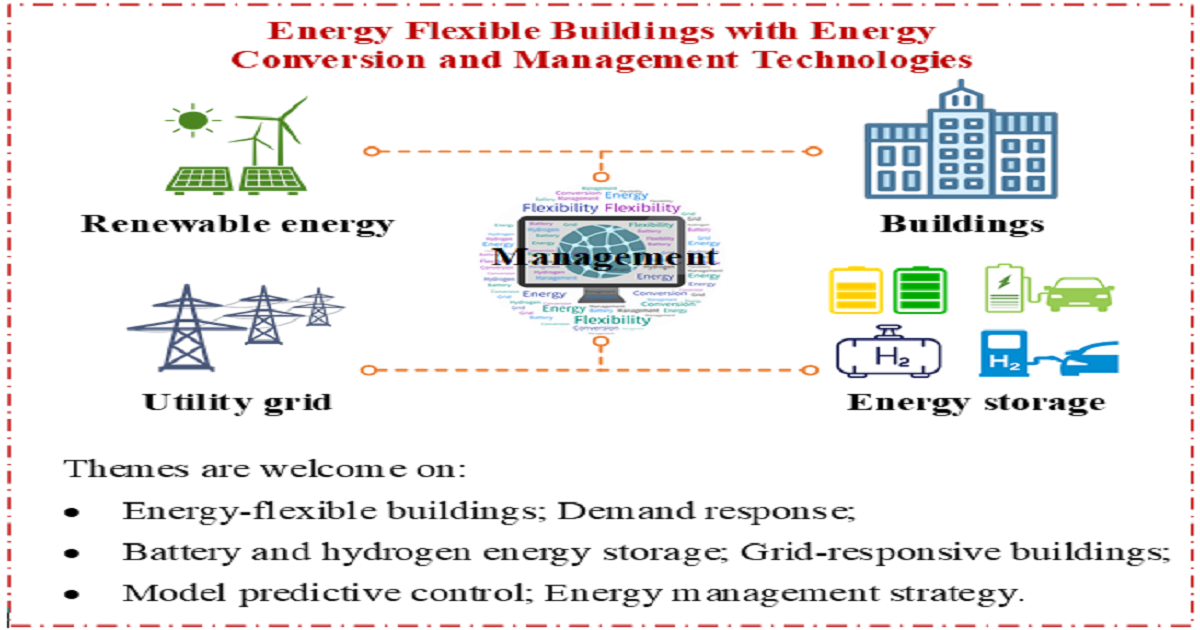
Energy flexible buildings are important for achieving carbon neutrality of the building sector as the largest contributor of global final energy use and global carbon emissions. The energy flexibility of a building is the ability to manage its energy demand and energy supply according to local climate conditions, user needs, and grid requirements. The energy flexibility of buildings will thus allow for demand-side management and load control, and thereby demand response based on the requirements of the energy grids. Robust energy planning, advanced energy conversion and management strategies are essential for energy-flexible buildings with eco-economics feasibility. In response to the increasing deployment of renewable energy systems, technical challenges are proposed, including a resilient and smart building system design, performance degradation of energy storages, energy congestion between renewable energy and utility grids, flexible microgrids to energy supply fluctuations in multienergy systems, and so on.
Novel energy management strategies advance the traditional power flow strategy in terms of off-peak grid electricity shifting, the enhancement of renewable energy penetration, and the performance degradation on energy storages. Furthermore, the energy paradigm transition from negative to positive energy systems can provide multidimensional effective approaches in energy planning, management, and interactive energy sharing for a transformation toward a carbon-neural district energy community.
Considering the interest in this topic, we are organizing a Special Issue entitled “Energy Flexible Buildings with Energy Conversion and Management Technologies”, aimed at reporting the most recent new findings by researchers and sector professionals, in the scope of the following themes.
Original manuscripts covering the following broad themes are invited from researchers and agencies, namely:
- Model predictive control;
- Energy-flexible buildings;
- Demand response;
- Battery and hydrogen energy storage;
- Energy management strategy;
- Grid-responsive buildings.
Dr. Yuekuan Zhou
Prof. Dr. Guoqiang Zhang
Dr. Zhengxuan Liu
Dr. Jia Liu
Guest Editors
Manuscript Submission Information
Manuscripts should be submitted online at www.mdpi.com by registering and logging in to this website. Once you are registered, click here to go to the submission form. Manuscripts can be submitted until the deadline. All submissions that pass pre-check are peer-reviewed. Accepted papers will be published continuously in the journal (as soon as accepted) and will be listed together on the special issue website. Research articles, review articles as well as short communications are invited. For planned papers, a title and short abstract (about 250 words) can be sent to the Editorial Office for assessment.
Submitted manuscripts should not have been published previously, nor be under consideration for publication elsewhere (except conference proceedings papers). All manuscripts are thoroughly refereed through a single-anonymized peer-review process. A guide for authors and other relevant information for submission of manuscripts is available on the Instructions for Authors page. Applied Sciences is an international peer-reviewed open access semimonthly journal published by MDPI.
Please visit the Instructions for Authors page before submitting a manuscript. The Article Processing Charge (APC) for publication in this open access journal is 2400 CHF (Swiss Francs). Submitted papers should be well formatted and use good English. Authors may use MDPI's English editing service prior to publication or during author revisions.
Keywords
- energy-flexible buildings
- renewable energy
- demand response
- battery and hydrogen energy storage
- energy management strategy
Benefits of Publishing in a Special Issue
- Ease of navigation: Grouping papers by topic helps scholars navigate broad scope journals more efficiently.
- Greater discoverability: Special Issues support the reach and impact of scientific research. Articles in Special Issues are more discoverable and cited more frequently.
- Expansion of research network: Special Issues facilitate connections among authors, fostering scientific collaborations.
- External promotion: Articles in Special Issues are often promoted through the journal's social media, increasing their visibility.
- Reprint: MDPI Books provides the opportunity to republish successful Special Issues in book format, both online and in print.
Further information on MDPI's Special Issue policies can be found here.
