applsci-logo

Journal Browser

Journal Browser

Advances in Structural Health Monitoring in Civil Engineering

A special issue of Applied Sciences (ISSN 2076-3417). This special issue belongs to the section "Civil Engineering".

Deadline for manuscript submissions: closed (20 November 2025) | Viewed by 5464

Special Issue Editor


E-Mail Website
Guest Editor
Department of Civil Engineering, College of Science and Technology, Nihon University, Tokyo 101-8308, Japan
Interests: non-destructive techniques; tomography; system identification

Special Issue Information

Dear Colleagues,

The degradation of infrastructure is one of the most severe problems in the field of civil engineering. Structural health monitoring plays an important role in maintaining the safety and serviceability of degrading infrastructures. Techniques related to structural health monitoring have been actively studied in recent years. Although many methods have been proposed for structural health monitoring in these studies, there remains a wide range of possibilities.

This Special Issue aims to collect papers related to advanced studies in the field of structural health monitoring. The methodology is not limited only to the techniques that are extended from conventional ones. Papers proposing new and original ideas are very welcome.

Prof. Dr. Yoshikazu Kobayashi
Guest Editor

Manuscript Submission Information

Manuscripts should be submitted online at www.mdpi.com by registering and logging in to this website. Once you are registered, click here to go to the submission form. Manuscripts can be submitted until the deadline. All submissions that pass pre-check are peer-reviewed. Accepted papers will be published continuously in the journal (as soon as accepted) and will be listed together on the special issue website. Research articles, review articles as well as short communications are invited. For planned papers, a title and short abstract (about 250 words) can be sent to the Editorial Office for assessment.

Submitted manuscripts should not have been published previously, nor be under consideration for publication elsewhere (except conference proceedings papers). All manuscripts are thoroughly refereed through a single-blind peer-review process. A guide for authors and other relevant information for submission of manuscripts is available on the Instructions for Authors page. Applied Sciences is an international peer-reviewed open access semimonthly journal published by MDPI.

Please visit the Instructions for Authors page before submitting a manuscript. The Article Processing Charge (APC) for publication in this open access journal is 2400 CHF (Swiss Francs). Submitted papers should be well formatted and use good English. Authors may use MDPI's English editing service prior to publication or during author revisions.

Keywords

  • non-destructive testing
  • structural health monitoring
  • system identification
  • tomography
  • elastic wave
  • X-ray
  • unmanned system
  • artificial intelligence

Benefits of Publishing in a Special Issue

  • Ease of navigation: Grouping papers by topic helps scholars navigate broad scope journals more efficiently.
  • Greater discoverability: Special Issues support the reach and impact of scientific research. Articles in Special Issues are more discoverable and cited more frequently.
  • Expansion of research network: Special Issues facilitate connections among authors, fostering scientific collaborations.
  • External promotion: Articles in Special Issues are often promoted through the journal's social media, increasing their visibility.
  • Reprint: MDPI Books provides the opportunity to republish successful Special Issues in book format, both online and in print.

Further information on MDPI's Special Issue policies can be found here.

Published Papers (6 papers)

Order results
Result details
Select all
Export citation of selected articles as:

Research

30 pages, 7355 KB  
Article
Estimation of the XGBoost Regression Model Used in the Prediction of Pavement’s Mechanical and Geometrical Parameters Based on Static Interpretation of the FWD Test
by Marcin Daniel Gajewski, Pengyuan Xia, Beata Gajewska, Jorge Pais and Mikołaj Miecznikowski
Appl. Sci. 2025, 15(24), 12943; https://doi.org/10.3390/app152412943 - 8 Dec 2025
Viewed by 140
Abstract
The FWD is commonly used to conduct a non-destructive evaluation of the capacity of the pavement. The layered pavement is loaded locally by falling weight, and deflection is recorded at many points. Based on these results, if the pavement geometry is known, the [...] Read more.
The FWD is commonly used to conduct a non-destructive evaluation of the capacity of the pavement. The layered pavement is loaded locally by falling weight, and deflection is recorded at many points. Based on these results, if the pavement geometry is known, the mechanical properties of the pavement may be determined using the back-calculation approach. Analytical, numerical, or ML methods can be used for back-calculation. An analytical solution for a multi-layered structure leads to non-linear relationships for the thickness or stiffness of each layer, but provides an accurate solution. The other methods, like numerical or ML methods, are just approximation methods with different levels of accuracy. In this paper, the accuracy of the XGBoost ML regression model in predicting mechanical and geometrical pavement parameters was estimated. The database was generated from a static analytical solution of an axially symmetrical problem implemented in the form of JPav software and then explored by training regression models to predict the moduli and thickness of pavement layers. Two other databases were created using PCA (Principal Component Analysis) and FDM-like (Feature Difference Method) to compare models trained with the complete deflection database. The results showed that models trained with the complete deflection database had the best average prediction performance compared to the other two. In contrast, models trained with the database pre-processed by PCA showed a similar predicting performance to that of the previous models, but with a slight loss in precision. Models trained with the database pre-processed by the FDM-like approach exhibited excellent prediction on some features but performed worse on the rest. The primary objective of this work is to develop a model that enables the determination of pavement layer thickness and moduli from the deflections obtained in FWD tests. The analysis carried out allowed us to conclude that it is possible to obtain some pavement variables from the deflections, while others require a more sophisticated approach. Full article
(This article belongs to the Special Issue Advances in Structural Health Monitoring in Civil Engineering)
Show Figures

Figure 1

14 pages, 1784 KB  
Article
The Moisture Effect on Ultrasonic, Rebound Hardness and Drilling Resistance Data in Non-Destructive Testing of Concrete
by Uldis Lencis, Rauls Klaucans, Aigars Udris, Aleksandrs Korjakins, Xiangming Zhou and Girts Bumanis
Appl. Sci. 2025, 15(22), 11973; https://doi.org/10.3390/app152211973 - 11 Nov 2025
Viewed by 336
Abstract
As the volume of reinforced concrete structures continues to grow, it is important to determine the quality of concrete in the shortest time possible. Therefore, the development and validation of methods for non-destructive testing (NDT) of concrete structures are becoming increasingly important. However, [...] Read more.
As the volume of reinforced concrete structures continues to grow, it is important to determine the quality of concrete in the shortest time possible. Therefore, the development and validation of methods for non-destructive testing (NDT) of concrete structures are becoming increasingly important. However, some factors may affect the accuracy of the measurement results obtained as concrete is often exposed to a moist environment, e.g., in marine structures. Ignoring these factors may lead to an inaccurate interpretation of measurements. Therefore, in this research, the water saturation factor of concrete was investigated in response to various NDT methods. C25/30 and C40/50 MPa concrete were evaluated using ultrasonic pulse velocity and rebound hardness devices, and for the first time, a drilling resistance (DR) method was systematically adapted and validated for moisture-affected concrete testing. Unlike conventional approaches that only consider surface effects, the DR method introduced here provides in-depth profiling of concrete, revealing variations in resistance with depth and identifying zones influenced by internal moisture distribution. This study demonstrates that the DR method can complement traditional NDT techniques, providing a more reliable evaluation of moisture-induced variations in concrete properties. Moreover, with the novel DR method, changes in the mechanical response with depth have been quantified, offering new insight into internal moisture effects that are not accessible by conventional NDT methods. Full article
(This article belongs to the Special Issue Advances in Structural Health Monitoring in Civil Engineering)
Show Figures

Figure 1

17 pages, 6374 KB  
Article
A Study on the Monitoring and Response Mechanism of Highway Subgrade Structures Based on Ultra-Weak FBG Sensing Array
by Qiuming Nan, Suhao Yin, Yinglong Kang, Juncheng Zeng, Sheng Li, Lina Yue and Yan Yang
Appl. Sci. 2025, 15(18), 9930; https://doi.org/10.3390/app15189930 - 10 Sep 2025
Viewed by 629
Abstract
Conducting structural monitoring of highway subgrades is crucial for investigating damage evolution mechanisms under dynamic load-temperature coupling effects. However, existing sensing technologies struggle to achieve distributed, long-term, and high-precision measurements of subgrade structures. Therefore, this study employs next-generation fiber-optic array sensing technology to [...] Read more.
Conducting structural monitoring of highway subgrades is crucial for investigating damage evolution mechanisms under dynamic load-temperature coupling effects. However, existing sensing technologies struggle to achieve distributed, long-term, and high-precision measurements of subgrade structures. Therefore, this study employs next-generation fiber-optic array sensing technology to construct a distributed monitoring system based on weak reflection grating arrays. A dual-parameter sensing network for strain and temperature was designed and installed during the expansion and renovation of a highway in Fujian Province, enabling high-precision monitoring of the entire continuous strain field and temperature field of the subgrade structure. Through a comprehensive analysis of dynamic loading test data and long-term monitoring records, the system revealed the dynamic response patterns of subgrade structures under the interaction of modulus differences, burial depth effects, temperature gradients, and load parameters. It elucidated the mechanical sensitivity of flexible base layers and the interlayer stress redistribution mechanism. The study validated that grating array sensors not only offer advantages such as easy installation, a high survival rate, and excellent durability but also enable high-capacity, long-distance, and high-precision measurements of subgrade structures. This provides a new technical approach for full lifecycle monitoring of expressways. Full article
(This article belongs to the Special Issue Advances in Structural Health Monitoring in Civil Engineering)
Show Figures

Figure 1

18 pages, 3894 KB  
Article
Validation of Acoustic Emission Tomography Using Lagrange Interpolation in a Defective Concrete Specimen
by Katsuya Nakamura, Mikika Furukawa, Kenichi Oda, Satoshi Shigemura and Yoshikazu Kobayashi
Appl. Sci. 2025, 15(16), 8965; https://doi.org/10.3390/app15168965 - 14 Aug 2025
Viewed by 502
Abstract
Acoustic Emission tomography (AET) has the potential to visualize damage in existing structures, contributing to structural health monitoring. Further, AET requires only the arrival times of elastic waves at sensors to identify velocity distributions, as source localization based on ray-tracing is integrated into [...] Read more.
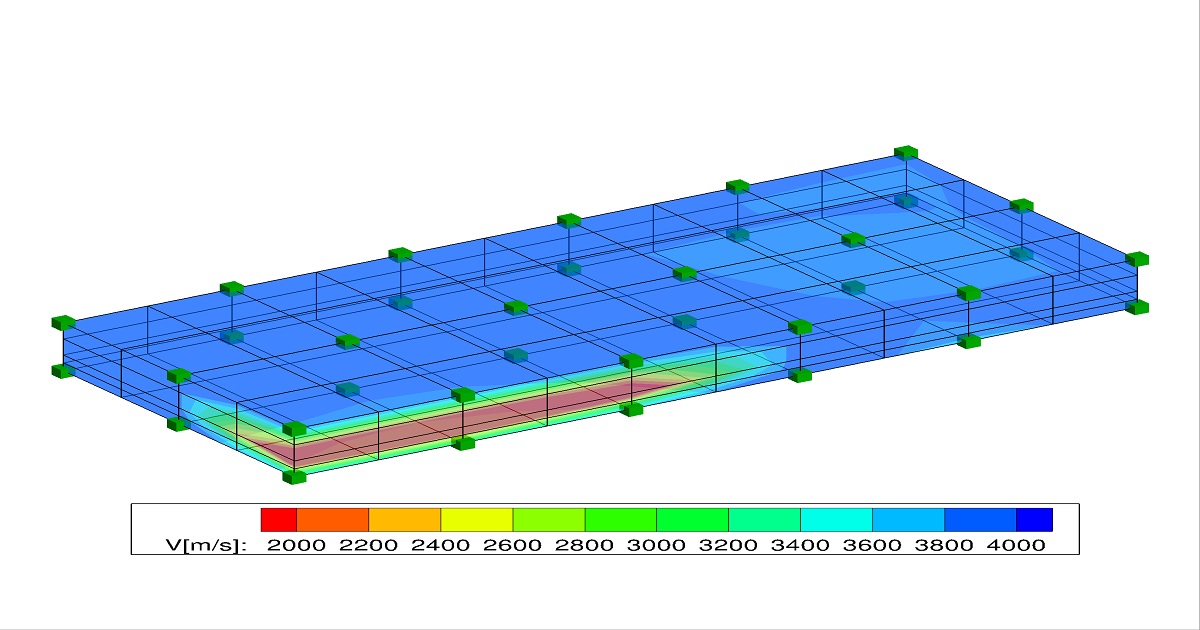
Acoustic Emission tomography (AET) has the potential to visualize damage in existing structures, contributing to structural health monitoring. Further, AET requires only the arrival times of elastic waves at sensors to identify velocity distributions, as source localization based on ray-tracing is integrated into its algorithm. Thus, AET offers the advantage of easy acquisition of measurement data. However, accurate source localization requires a large number of elastic wave source candidate points, and increasing these candidates significantly raises the computational resource demand. Lagrange Interpolation has the potential to reduce the number of candidate points, optimizing computational resources, and this potential has been validated numerically. In this study, AET incorporating Lagrange Interpolation is applied to identify the velocity distribution in a defective concrete plate, validating its effectiveness using measured wave data. The validation results show that the defect location in the concrete plate is successfully identified using only 36 source candidates, compared to the 121 candidates required in conventional AET. Furthermore, when using 36 source candidates, the percentage error in applying Lagrange Interpolation is 8.4%, which is significantly more accurate than the 25% error observed in conventional AET. Therefore, it is confirmed that AET with Lagrange Interpolation has the potential to identify velocity distributions in existing structures using optimized resources, thereby contributing to the structural health monitoring of concrete infrastructure. Full article
(This article belongs to the Special Issue Advances in Structural Health Monitoring in Civil Engineering)
Show Figures

Figure 1

17 pages, 6965 KB  
Article
Assessing Voided Reinforced Concrete by Numerical Modelling of Impact-Generated Rayleigh Waves
by Ying Ye, Hwa Kian Chai and Foo Wei Lee
Appl. Sci. 2025, 15(7), 3635; https://doi.org/10.3390/app15073635 - 26 Mar 2025
Cited by 1 | Viewed by 701
Abstract
Concrete structures require routine inspections. Within elastic wave-based non-destructive testing methods, the Rayleigh wave (R-wave)-based method shows great potential in defect characterisation with only one-side access required. This paper aims to investigate the effect of different locations and densities of voids on R-waves [...] Read more.
Concrete structures require routine inspections. Within elastic wave-based non-destructive testing methods, the Rayleigh wave (R-wave)-based method shows great potential in defect characterisation with only one-side access required. This paper aims to investigate the effect of different locations and densities of voids on R-waves using a 2D finite element model. The numerical model was validated and calibrated with experimental results to increase the reliability and representativeness of the model developed. The difference between the R-wave velocity obtained from the numerical model and theory was within 5%, while the correlation between the R-wave waveform collected from the numerical and experimental data was 0.975. The developed numerical model was used to carry out a series of parametric studies investigating the relationship between different R-wave properties and void characteristics. The results revealed that the 5 kHz velocity index was the most sensitive for distributed void identification, with solid correlations up to 0.9879 reported. The correlations obtained from the data analysis suggest good feasibility of the demonstrated computational approach in evaluating the effect of defects in concrete on R-wave behaviour. This approach also offers useful insights into developing an alternative assessment methodology for internal damage localisation and characterisation utilising elastic wave measurements. Full article
(This article belongs to the Special Issue Advances in Structural Health Monitoring in Civil Engineering)
Show Figures

Figure 1

27 pages, 5284 KB  
Article
A Study on the Feasibility of Natural Frequency-Based Crack Detection
by Xutao Sun, Sinniah Ilanko, Yusuke Mochida and Rachael C. Tighe
Appl. Sci. 2024, 14(24), 11712; https://doi.org/10.3390/app142411712 - 16 Dec 2024
Cited by 1 | Viewed by 2123
Abstract
Owing to the long-standing statement that natural frequency-based crack detection is not sensitive enough to localised damage to identify small cracks, many natural frequency-based crack detection methods are validated by detecting cracks of moderate size. However, a direct comparison between the crack severity [...] Read more.
Owing to the long-standing statement that natural frequency-based crack detection is not sensitive enough to localised damage to identify small cracks, many natural frequency-based crack detection methods are validated by detecting cracks of moderate size. However, a direct comparison between the crack severity causing a measurable natural frequency change and the crack severity reaching the initiation of crack propagation or leading to brittle fracture is constantly ignored. Without this understanding, it is debatable whether the presented crack detection methods are feasible in practical situations. Through natural frequency calculation and linear elastic fracture mechanics, this study is dedicated to filling the above gap in knowledge. To directly utilize the solution of stress intensity factor, common fracture toughness test specimens featuring a single-edge crack are used. These specimens are essentially cracked rectangular plates under uniform uniaxial tension. Considering the stress resultants obtained via the extended finite element method, the natural frequency of the loaded cracked plates is calculated using the Rayleigh–Ritz method incorporating corner functions. In addition, assuming the specimens as structural components under remote uniform tension, the development of critical load versus crack length is derived based on the solution of the stress intensity factor. Thus, critical crack lengths corresponding to a series of safety factors are obtained by equating service load with critical load. After obtaining natural frequencies of the cracked plates with critical crack lengths, the natural frequency drop caused by a critical crack can be computed. Hence, the critical crack length can be compared with the crack length when the frequency drop is measurable. It is found that the brittleness of the employed metals plays a vital role in the feasibility of natural frequency-based crack detection. Full article
(This article belongs to the Special Issue Advances in Structural Health Monitoring in Civil Engineering)
Show Figures

Figure 1

Back to TopTop