



Advancing Pediatric Healthcare Quality and Patient Safety Through Digital Technologies and Data-Driven Innovations
A special issue of Applied Sciences (ISSN 2076-3417). This special issue belongs to the section "Biomedical Engineering".
Deadline for manuscript submissions: 30 December 2026 | Viewed by 844
Editors

Interests: pediatrics; clinical decision making

Special Issue Information
Dear Colleagues,
Ensuring high-quality and safe healthcare for pediatric populations is a fundamental priority for modern healthcare systems worldwide. Children represent a particularly vulnerable group due to their unique physiological characteristics, developmental variability, and reliance on caregivers and healthcare professionals for clinical decision-making. These factors increase the complexity of care delivery and highlight the need for robust patient safety frameworks and continuous quality improvement strategies.
In recent years, there has been growing recognition of the importance of patient safety, risk management, and quality improvement in pediatric healthcare. Challenges such as medication errors, diagnostic delays, healthcare-associated infections, and variability in clinical practices continue to impact pediatric patient outcomes. At the same time, rapid advances in digital health technologies—including artificial intelligence, telemedicine, clinical decision support systems, and health data analytics—are creating new opportunities to enhance healthcare delivery, improve clinical decision-making, and reduce preventable adverse events.
We are pleased to invite researchers, clinicians, and healthcare professionals to contribute to this Special Issue, which aims to address current challenges and promote innovative approaches in pediatric healthcare quality and patient safety.
Aim of the Special Issue and Relevance to the Journal’s Scope
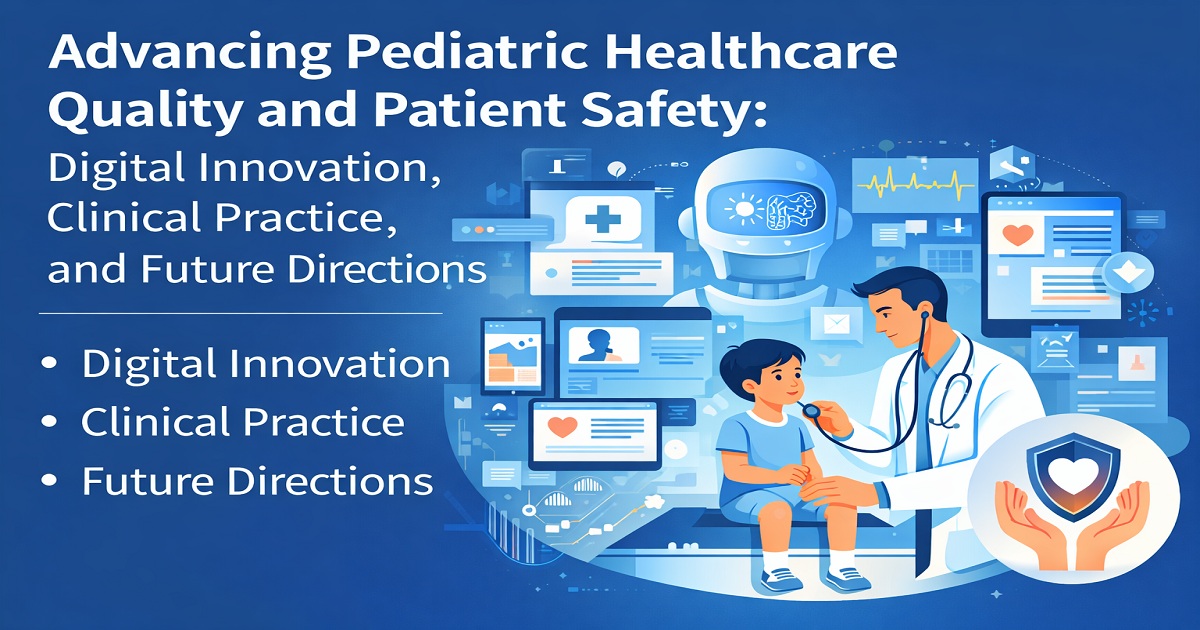
This Special Issue aims to explore the intersection of digital innovation, clinical practice, and healthcare systems in advancing pediatric healthcare quality and patient safety. It seeks to provide a comprehensive overview of current research, emerging trends, and evidence-based strategies that contribute to improving healthcare outcomes for pediatric populations.
The scope of this Special Issue aligns closely with the journal’s focus on healthcare systems, clinical practice, and translational research. It emphasizes multidisciplinary approaches that integrate technological innovation, clinical expertise, and organizational strategies to enhance patient safety and healthcare quality.
By maintaining a focused yet comprehensive scope, this Special Issue aims to attract high-quality contributions from diverse disciplines, including clinical medicine, healthcare management, biomedical research, and digital health. The objective is to assemble a collection of impactful articles that provide meaningful insights into pediatric healthcare quality and safety, with the potential for publication as a dedicated volume.
Suggested Themes and Article Types
In this Special Issue, original research articles, review articles, and clinical studies are welcome.
Research areas may include (but are not limited to) the following:
- Pediatric patient safety;
- Medication safety in children;
- Healthcare-associated infections in pediatric settings;
- Quality improvement initiatives in pediatric healthcare;
- Pediatric intensive care and neonatal safety;
- Clinical risk management in pediatric populations;
- Digital health, artificial intelligence, and telemedicine in pediatric care;
- Healthcare systems and pediatric service delivery;
- Safety culture in pediatric healthcare environments;
- Family centered care and patient outcomes.
We look forward to receiving your contributions
Prof. Dr. Christopher P. Landrigan
Prof. Dr. Stavros P. Derdas
Guest Editors
Manuscript Submission Information
Manuscripts should be submitted online at www.mdpi.com by registering and logging in to this website. Once you are registered, click here to go to the submission form. Manuscripts can be submitted until the deadline. All submissions that pass pre-check are peer-reviewed. Accepted papers will be published continuously in the journal (as soon as accepted) and will be listed together on the special issue website. Research articles, review articles as well as short communications are invited. For planned papers, a title and short abstract (about 250 words) can be sent to the Editorial Office for assessment.
Submitted manuscripts should not have been published previously, nor be under consideration for publication elsewhere (except conference proceedings papers). All manuscripts are thoroughly refereed through a single-anonymized peer-review process. A guide for authors and other relevant information for submission of manuscripts is available on the Instructions for Authors page. Applied Sciences is an international peer-reviewed open access semimonthly journal published by MDPI.
Please visit the Instructions for Authors page before submitting a manuscript. The Article Processing Charge (APC) for publication in this open access journal is 2400 CHF (Swiss Francs). Submitted papers should be well formatted and use good English. Authors may use MDPI's English editing service prior to publication or during author revisions.
Keywords
- pediatric healthcare
- patient safety
- healthcare quality improvement
- digital health
- artificial intelligence
- medication safety
- clinical risk management
- family-centered care
- telemedicine
- pediatric intensive care
Benefits of Publishing in a Special Issue
- Ease of navigation: Grouping papers by topic helps scholars navigate broad scope journals more efficiently.
- Greater discoverability: Special Issues support the reach and impact of scientific research. Articles in Special Issues are more discoverable and cited more frequently.
- Expansion of research network: Special Issues facilitate connections among authors, fostering scientific collaborations.
- External promotion: Articles in Special Issues are often promoted through the journal's social media, increasing their visibility.
- Reprint: MDPI Books provides the opportunity to republish successful Special Issues in book format, both online and in print.
Further information on MDPI's Special Issue policies can be found here.
