You are currently viewing a new version of our website. To view the old version click .

Journal of Open Innovation: Technology, Market, and Complexity

Journal of Open Innovation: Technology, Market, and Complexity is an international, scientific, peer-reviewed and open access journal on the open innovation, open business model, entrepreneurship, complexity, and evolutionary change in the economy published quarterly online by MDPI since May 2018 to December 2022.

All Articles (900)

This research aims to achieve early standardization for battery swapping in line with domestic capabilities and global standards, and to protect Indonesian battery swap stakeholders. By distributing questionnaires to 190 respondents, the Framework for Analysis, Comparison, and Testing of Standards (FACTS) approach was used to analyze stakeholder needs, compare global standards regarding battery swaps, and validate the Indonesian National Standard (SNI) framework. An open innovation approach was considered to integrate a FACTS approach with open participation, mutual understanding, and consensus to generate parameters. Therefore, characteristics of open participation, mutual understanding, and consensus were identified using FACTS to catalyze market needs as well as stakeholder needs. The relationship between SNI implementation variables, national uniqueness, and stakeholder needs was predicted using structural equation modeling (SEM). We found that the proposed constructs—i.e., electromagnetic compatibility, equipment construction requirements, marking and instruction, and protection against electric shock—positively affect SNI implementation. Meanwhile, the SNI implementation, national uniqueness, and stakeholder protection positively affect SNI acceptance. Therefore, SNI acceptance can be obtained by considering SNI implementation, national uniqueness, and stakeholder protection. The findings of this study can be used to develop an SNI battery swap test that is globally competitive, has national characteristics, and considers domestic capabilities when developing the SNI documentation.

15 December 2022
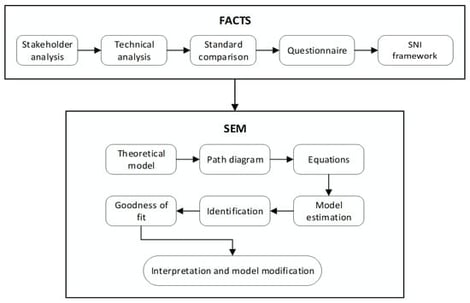
Sequential mixed methodology of the study.

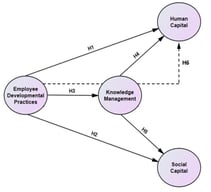
There is a shortage of research investigating the link between employee development practices and intellectual capital as mediated by knowledge management. The aim of the current research was to consider the influence of employee development practices on intellectual capital through knowledge management. Data were collected through an instrument distributed to a sample of 464 employees working at information and communications technology companies. The results indicate that employee development practices had significant effects on human capital, knowledge management, and social capital. The results reveal that knowledge management had a significant effect on human capital but not on social capital. Finally, the results show that knowledge management significantly mediated the impact of employee development practices on human capital. Additionally, implications for intellectual capital development, organizational strategy, and academic research are discussed.

15 December 2022

Proposed research model.

Cultural inclusion generates a positive impact by socially increasing pride for individuals or economically increasing a country’s global capital. Currently, in New Zealand (NZ), not many strategies exist that ensure inclusion of culture in new products introduced locally and globally. Further, cultural inclusion in products appears highly represented in the tourist markets, but not so much in the domestic markets. This paper examines the current NZ strategies for cultural inclusion in product development of different sized companies that supply locally and globally through three case studies and compares the findings with theoretical models used in other regions. Findings elaborate that NZ lacks in documented standardized strategies when it comes to cultural inclusion. A positive impact of having such a strategy is perceived by participating companies with a culture for open innovation to ensure they are following a process approach that can help include cultural aspects appropriately. Creating a unique position for the brand globally, increasing global capital and deeper connectivity, and increasing the understanding of culture were some key benefits identified. However, a few steps in the new product development process were found largely lacking in NZ firms, such as communication with cultural representatives and leaders. A cultural inclusion model is developed based on the study findings to include an open innovation culture that can help NZ companies be more inclusive in their design and establish a unique NZ market for generating positive impacts.

15 December 2022

A model for cultural inclusion in product design. Source: Lin [13] and Hsu [14].

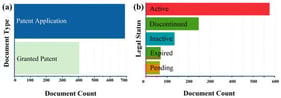
Silicon Fen (SF) is a cluster of high-tech firms located around the University of Cambridge (UoC) in the UK. This article, for the first time, investigates the technological bonds between SF firms and UoC based on patent analysis covering the period of 1999–2021. We provide a short history of SF, highlighting its early formation and growth, and the role of spin-off firms on its evolution. We employ joint patents generated by UoC and various business sectors of SF to calculate the values of technological collaboration strength (TCS). It is found that the majority of joint patents (61%) are generated by the Pharma/Biotech sector of SF with the highest value of TCS (16.45 × 10⁻³). Moreover, the patent’s economic values across various business disciplines in SF are calculated based on the total counts of citations. Our observations suggest that senior university academics making spin-off firms in a business cluster around their university can effectively facilitate university–firm technological collaboration. Furthermore, the relatively strong technological bond between UoC and the Pharma/Biotech sector of SF is confirmed to be influenced by the collaboration of the university with its own spin-off firms rather than large independent firms in SF. The outcomes of this research contribute to the knowledge of the collaboration between a main research university and a cluster of firms located in its geographical proximity.

11 December 2022

(a) Number of patents owned by UoC in the period 1999–2021. (b) Break down of the documents in terms of status.

News & Conferences

Issues

Open for Submission

Editor's Choice

Reprints of Collections

Open Innovation in Micro, Small and Medium-Sized Enterprises
Reprint

Open Innovation in Micro, Small and Medium-Sized Enterprises

Editors: João Leitão, Léo-Paul Dana
Business, Open Innovation and Art
Reprint

Business, Open Innovation and Art

Editors: Beibei Song, Piero Formica, Claus Springborg

Get Alerted

Add your email address to receive forthcoming issues of this journal.

XFacebookLinkedIn
J. Open Innov. Technol. Mark. Complex. - ISSN 2199-8531