

Adverse Effects and Safety of Antidepressants and Psychedelics for Depression in Cancer: A Systematic Review of Randomized Controlled Trials



Abstract
1. Introduction
2. Materials and Methods
2.1. Search Strategy
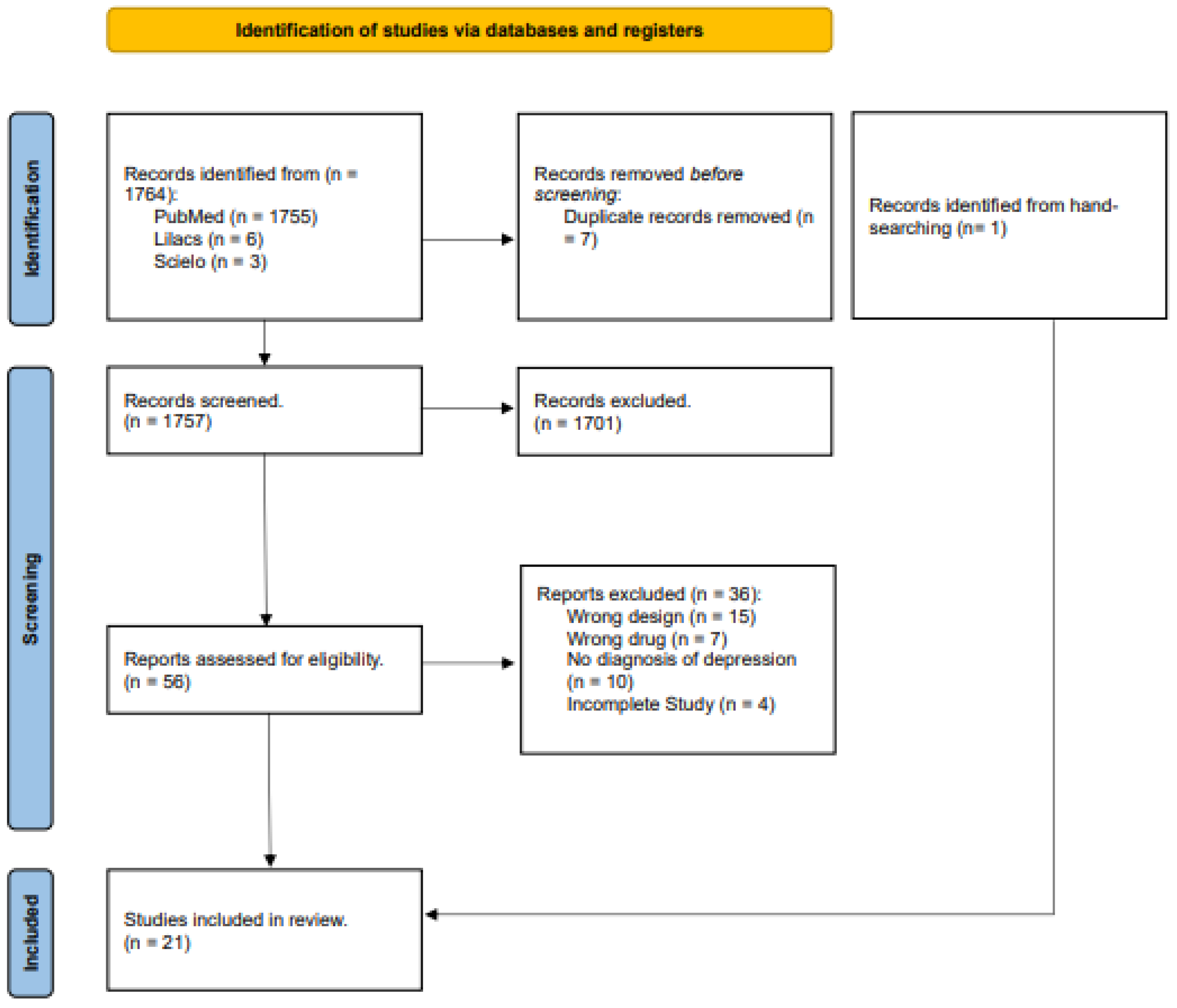
2.2. Selection Criteria and Studies Selection
2.3. Data Extraction
2.4. Quality Assessment
3. Results
3.1. Adverse Effects
3.1.1. Classical Antidepressants
3.1.2. New Treatments
3.2. Serious Adverse Effects
3.3. Efficacy
3.4. Quality Assessment
4. Discussion
5. Conclusions
Supplementary Materials
Author Contributions
Funding
Institutional Review Board Statement
Informed Consent Statement
Data Availability Statement
Conflicts of Interest
References
- Mitchell, A.J.; Chan, M.; Bhatti, H.; Halton, M.; Grassi, L.; Johansen, C.; Meader, N. Prevalence of Depression, Anxiety, and Adjustment Disorder in Oncological, Haematological, and Palliative-Care Settings: A Meta-Analysis of 94 Interview-Based Studies. Lancet Oncol. 2011, 12, 160–174. [Google Scholar] [CrossRef] [PubMed]
- Riedl, D.; Schüßler, G. Factors Associated with and Risk Factors for Depression in Cancer Patients—A Systematic Literature Review. Transl. Oncol. 2022, 16, 101328. [Google Scholar] [CrossRef] [PubMed]
- Caruso, R.; Nanni, M.G.; Riba, M.B.; Sabato, S.; Grassi, L. The Burden of Psychosocial Morbidity Related to Cancer: Patient and Family Issues. Int. Rev. Psychiatry 2017, 29, 389–402. [Google Scholar] [CrossRef] [PubMed]
- Thompson, L.M.A.; Bobonis Babilonia, M. Distinguishing Depressive Symptoms From Similar Cancer-Related Somatic Symptoms: Implications for Assessment and Management of Major Depression after Breast Cancer. S. Med. J. 2017, 110, 667–672. [Google Scholar] [CrossRef]
- Panjwani, A.A.; Li, M. Recent Trends in the Management of Depression in Persons with Cancer. Curr. Opin. Psychiatry 2021, 34, 448–459. [Google Scholar] [CrossRef]
- Breitbart, W. Depression, Hopelessness, and Desire for Hastened Death in Terminally Ill Patients With Cancer. JAMA 2000, 284, 2907. [Google Scholar] [CrossRef]
- Vehling, S.; Kissane, D.W.; Lo, C.; Glaesmer, H.; Hartung, T.J.; Rodin, G.; Mehnert, A. The Association of Demoralization with Mental Disorders and Suicidal Ideation in Patients with Cancer. Cancer 2017, 123, 3394–3401. [Google Scholar] [CrossRef]
- Brenne, E.; Loge, J.H.; Kaasa, S.; Heitzer, E.; Knudsen, A.K.; Wasteson, E. Depressed Patients with Incurable Cancer: Which Depressive Symptoms Do They Experience? Palliat. Support. Care 2013, 11, 491–501. [Google Scholar] [CrossRef]
- Diaz-Frutos, D.; Baca-Garcia, E.; García-Foncillas, J.; López-Castroman, J. Predictors of Psychological Distress in Advanced Cancer Patients under Palliative Treatments. Eur. J. Cancer Care 2016, 25, 608–615. [Google Scholar] [CrossRef]
- Yi, J.C.; Syrjala, K.L. Anxiety and Depression in Cancer Survivors. Med. Clin. N. Am. 2017, 101, 1099–1113. [Google Scholar] [CrossRef]
- Ebede, C.C.; Jang, Y.; Escalante, C.P. Cancer-Related Fatigue in Cancer Survivorship. Med. Clin. N. Am. 2017, 101, 1085–1097. [Google Scholar] [CrossRef] [PubMed]
- Vita, G.; Compri, B.; Matcham, F.; Barbui, C.; Ostuzzi, G. Antidepressants for the Treatment of Depression in People with Cancer. Cochrane Database Syst. Rev. 2023, 2023, CD011006. [Google Scholar]
- Rayner, L.; Price, A.; Evans, A.; Valsraj, K.; Higginson, I.J.; Hotopf, M. Antidepressants for Depression in Physically Ill People. Cochrane Database Syst. Rev. 2010, 2010, CD007503. [Google Scholar] [CrossRef] [PubMed]
- Petranker, R.; Anderson, T.; Farb, N. Psychedelic Research and the Need for Transparency: Polishing Alice’s Looking Glass. Front. Psychol. 2020, 11, 1681. [Google Scholar] [CrossRef]
- Griffiths, R.R.; Johnson, M.W.; Carducci, M.A.; Umbricht, A.; Richards, W.A.; Richards, B.D.; Cosimano, M.P.; Klinedinst, M.A. Psilocybin Produces Substantial and Sustained Decreases in Depression and Anxiety in Patients with Life-Threatening Cancer: A Randomized Double-Blind Trial. J. Psychopharmacol. 2016, 30, 1181–1197. [Google Scholar] [CrossRef]
- Ross, S.; Bossis, A.; Guss, J.; Agin-Liebes, G.; Malone, T.; Cohen, B.; Mennenga, S.E.; Belser, A.; Kalliontzi, K.; Babb, J.; et al. Rapid and Sustained Symptom Reduction Following Psilocybin Treatment for Anxiety and Depression in Patients with Life-Threatening Cancer: A Randomized Controlled Trial. J. Psychopharmacol. 2016, 30, 1165–1180. [Google Scholar] [CrossRef]
- Nichols, D.E. Psychedelics. Pharmacol. Rev. 2016, 68, 264–355. [Google Scholar] [CrossRef]
- Garcia-Romeu, A.; Kersgaard, B.; Addy, P.H. Clinical Applications of Hallucinogens: A Review. Exp. Clin. Psychopharmacol. 2016, 24, 229–268. [Google Scholar] [CrossRef]
- Carlini, E.A.; Maia, L.O. Plant and Fungal Hallucinogens as Toxic and Therapeutic Agents. In Plant Toxins; Gopalakrishnakone, P., Carlini, C.R., Ligabue-Braun, R., Eds.; Springer: Dordrecht, The Netherlands, 2015; pp. 1–44. [Google Scholar]
- Norwegian Institute of Public Health WHO Collaborating Centre for Drug Statistics Methodoly. Available online: https://www.whocc.no/atc_ddd_index/ (accessed on 14 July 2024).
- Grob, C.S.; Danforth, A.L.; Chopra, G.S.; Hagerty, M.; McKay, C.R.; Halberstadt, A.L.; Greer, G.R. Pilot Study of Psilocybin Treatment for Anxiety in Patients With Advanced-Stage Cancer. Arch. Gen. Psychiatry 2011, 68, 71. [Google Scholar] [CrossRef]
- Gasser, P.; Holstein, D.; Michel, Y.; Doblin, R.; Yazar-Klosinski, B.; Passie, T.; Brenneisen, R. Safety and Efficacy of Lysergic Acid Diethylamide-Assisted Psychotherapy for Anxiety Associated With Life-Threatening Diseases. J. Nerv. Ment. Dis. 2014, 202, 513–520. [Google Scholar] [CrossRef]
- Gasser, P.; Kirchner, K.; Passie, T. LSD-Assisted Psychotherapy for Anxiety Associated with a Life-Threatening Disease: A Qualitative Study of Acute and Sustained Subjective Effects. J. Psychopharmacol. 2015, 29, 57–68. [Google Scholar] [CrossRef] [PubMed]
- Holze, F.; Gasser, P.; Müller, F.; Dolder, P.C.; Liechti, M.E. Lysergic Acid Diethylamide–Assisted Therapy in Patients With Anxiety With and Without a Life-Threatening Illness: A Randomized, Double-Blind, Placebo-Controlled Phase II Study. Biol. Psychiatry 2023, 93, 215–223. [Google Scholar] [CrossRef] [PubMed]
- Rossi, G.N.; Hallak, J.E.C.; Bouso Saiz, J.C.; Dos Santos, R.G. Safety Issues of Psilocybin and LSD as Potential Rapid Acting Antidepressants and Potential Challenges. Expert Opin. Drug Saf. 2022, 21, 761–776. [Google Scholar] [CrossRef] [PubMed]
- Sterne, J.A.C.; Savović, J.; Page, M.J.; Elbers, R.G.; Blencowe, N.S.; Boutron, I.; Cates, C.J.; Cheng, H.-Y.; Corbett, M.S.; Eldridge, S.M.; et al. RoB 2: A Revised Tool for Assessing Risk of Bias in Randomised Trials. BMJ 2019, 366, l4898. [Google Scholar] [CrossRef]
- Razavi, D.; Allilaire, J.-F.; Smith, M.; Salimpour, A.; Verra, M.; Desclaux, B.; Saltel, P.; Piollet, I.; Gauvain-Piquard, A.; Trichard, C.; et al. The Effect of Fluoxetine on Anxiety and Depression Symptoms in Cancer Patients. Acta Psychiatr. Scand. 1996, 94, 205–210. [Google Scholar] [CrossRef]
- Pezzella, G.; Moslinger-Gehmayr, R.; Contu, A. Treatment of Depression in Patients with Breast Cancer: A Comparison between Paroxetine and Amitriptyline. Breast Cancer Res. Treat. 2001, 70, 1–10. [Google Scholar] [CrossRef]
- Musselman, D.L.; Somerset, W.I.; Guo, Y.; Manatunga, A.K.; Porter, M.; Penna, S.; Lewison, B.; Goodkin, R.; Lawson, K.; Lawson, D.; et al. A Double-Blind, Multicenter, Parallel-Group Study of Paroxetine, Desipramine, or Placebo in Breast Cancer Patients (Stages I, II, III, and IV) With Major Depression. J. Clin. Psychiatry 2006, 67, 288–296. [Google Scholar] [CrossRef]
- Agin-Liebes, G.I.; Malone, T.; Yalch, M.M.; Mennenga, S.E.; Ponté, K.L.; Guss, J.; Bossis, A.P.; Grigsby, J.; Fischer, S.; Ross, S. Long-Term Follow-up of Psilocybin-Assisted Psychotherapy for Psychiatric and Existential Distress in Patients with Life-Threatening Cancer. J. Psychopharmacol. 2020, 34, 155–166. [Google Scholar] [CrossRef]
- Fan, W.; Yang, H.; Sun, Y.; Zhang, J.; Li, G.; Zheng, Y.; Liu, Y. Ketamine Rapidly Relieves Acute Suicidal Ideation in Cancer Patients: A Randomized Controlled Clinical Trial. Oncotarget 2017, 8, 2356–2360. [Google Scholar] [CrossRef]
- Wang, J.; Wang, Y.; Xu, X.; Peng, S.; Xu, F.; Liu, P. Use of Various Doses of S-Ketamine in Treatment of Depression and Pain in Cervical Carcinoma Patients with Mild/Moderate Depression After Laparoscopic Total Hysterectomy. Med. Sci. Monit. 2020, 26, e922028. [Google Scholar] [CrossRef]
- Zhou, Y.; Sun, W.; Zhang, G.; Wang, A.; Lin, S.; Chan, M.T.V.; Peng, Y.; Wang, G.; Han, R. Ketamine Alleviates Depressive Symptoms in Patients Undergoing Intracranial Tumor Resection: A Randomized Controlled Trial. Anesth. Analg. 2021, 133, 1588–1597. [Google Scholar] [CrossRef] [PubMed]
- Liu, P.; Li, P.; Li, Q.; Yan, H.; Shi, X.; Liu, C.; Zhang, Y.; Peng, S. Effect of Pretreatment of S-Ketamine On Postoperative Depression for Breast Cancer Patients. J. Investig. Surg. 2021, 34, 883–888. [Google Scholar] [CrossRef] [PubMed]
- Holland, J.C.; Romano, S.J.; Heiligenstein, J.H.; Tepner, R.G.; Wilson, M.G. A Controlled Trial of Fluoxetine and Desipramine in Depressed Women with Advanced Cancer. Psycho-Oncology 1998, 7, 291–300. [Google Scholar] [CrossRef]
- Fisch, M.J.; Loehrer, P.J.; Kristeller, J.; Passik, S.; Jung, S.-H.; Shen, J.; Arquette, M.A.; Brames, M.J.; Einhorn, L.H. Fluoxetine Versus Placebo in Advanced Cancer Outpatients: A Double-Blinded Trial of the Hoosier Oncology Group. JCO 2003, 21, 1937–1943. [Google Scholar] [CrossRef]
- Navari, R.M.; Brenner, M.C.; Wilson, M.N. Treatment of Depressive Symptoms in Patients with Early Stage Breast Cancer Undergoing Adjuvant Therapy. Breast Cancer Res. Treat. 2008, 112, 197–201. [Google Scholar] [CrossRef]
- Holze, F.; Vizeli, P.; Ley, L.; Müller, F.; Dolder, P.; Stocker, M.; Duthaler, U.; Varghese, N.; Eckert, A.; Borgwardt, S.; et al. Acute Dose-Dependent Effects of Lysergic Acid Diethylamide in a Double-Blind Placebo-Controlled Study in Healthy Subjects. Neuropsychopharmacology 2021, 46, 537–544. [Google Scholar] [CrossRef]
- Costa, D.; Mogos, I.; Toma, T. Efficacy and Safety of Mianserin in the Treatment of Depression of Women with Cancer. Acta Psychiatr. Scand. 1985, 72, 85–92. [Google Scholar] [CrossRef]
- Van Heeringen, K.; Zivkov, M. Pharmacological Treatment of Depression in Cancer Patients: A Placebo-Controlled Study of Mianserin. Br. J. Psychiatry 1996, 169, 440–443. [Google Scholar] [CrossRef]
- Razavi, D.; Kormoss, N.; Collard, A.; Farvacques, C.; Delvaux, N. Comparative Study of the Efficacy and Safety of Trazodone versus Clorazepate in the Treatment of Adjustment Disorders in Cancer Patients: A Pilot Study. J. Int. Med. Res. 1999, 27, 264–272. [Google Scholar] [CrossRef]
- Cankurtaran, E.S.; Ozalp, E.; Soygur, H.; Akbiyik, D.I.; Turhan, L.; Alkis, N. Mirtazapine Improves Sleep and Lowers Anxiety and Depression in Cancer Patients: Superiority over Imipramine. Support. Care Cancer 2008, 16, 1291–1298. [Google Scholar] [CrossRef]
- Vollenweider, F.X.; Vollenweider-Scherpenhuyzen, M.F.I.; Bäbler, A.; Vogel, H.; Hell, D. Psilocybin Induces Schizophrenia-like Psychosis in Humans via a Serotonin-2 Agonist Action. NeuroReport 1998, 9, 3897–3902. [Google Scholar] [CrossRef] [PubMed]
- Preller, K.H.; Herdener, M.; Pokorny, T.; Planzer, A.; Kraehenmann, R.; Stämpfli, P.; Liechti, M.E.; Seifritz, E.; Vollenweider, F.X. The Fabric of Meaning and Subjective Effects in LSD-Induced States Depend on Serotonin 2A Receptor Activation. Curr. Biol. 2017, 27, 451–457. [Google Scholar] [CrossRef] [PubMed]
- Halberstadt, A.L. Recent Advances in the Neuropsychopharmacology of Serotonergic Hallucinogens. Behav. Brain Res. 2015, 277, 99–120. [Google Scholar] [CrossRef] [PubMed]
- Alexander, A. Headache May Be Caused by Activation of 5-HT2A Receptors in Serotonin Toxicity. BMJ 2014, 348, g2159. [Google Scholar] [CrossRef]
- Minami, M.; Endo, T.; Hirafuji, M. Role of serotonin in emesis. Folia Pharmacol. Jpn. 1996, 108, 233–242. [Google Scholar] [CrossRef]
- Basak, S.; Kumar, A.; Ramsey, S.; Gibbs, E.; Kapoor, A.; Filizola, M.; Chakrapani, S. High-Resolution Structures of Multiple 5-HT3AR-Setron Complexes Reveal a Novel Mechanism of Competitive Inhibition. eLife 2020, 9, e57870. [Google Scholar] [CrossRef]
- Young, A.H. Ketamine: A New Chapter for Clinical Psychopharmacology? J. Psychopharmacol. 2023, 37, 755–756. [Google Scholar] [CrossRef]
- Scott, F.; Hampsey, E.; Gnanapragasam, S.; Carter, B.; Marwood, L.; Taylor, R.W.; Emre, C.; Korotkova, L.; Martín-Dombrowski, J.; Cleare, A.J.; et al. Systematic Review and Meta-Analysis of Augmentation and Combination Treatments for Early-Stage Treatment-Resistant Depression. J. Psychopharmacol. 2023, 37, 268–278. [Google Scholar] [CrossRef]
- Strawbridge, R.; Hodsoll, J.; Powell, T.R.; Hotopf, M.; Hatch, S.L.; Breen, G.; Cleare, A.J. Inflammatory Profiles of Severe Treatment-Resistant Depression. J. Affect. Disord. 2019, 246, 42–51. [Google Scholar] [CrossRef]
- Di Vincenzo, M.; Martiadis, V.; Della Rocca, B.; Arsenio, E.; D’Arpa, A.; Volpicelli, A.; Luciano, M.; Sampogna, G.; Fiorillo, A. Facts and myths about use of esketamine for treatment-resistant depression: A narrative clinical review. Front. Psychiatry 2024, 15, 1394787. [Google Scholar] [CrossRef]
- Maina, G.; Adami, M.; Ascione, G.; Bondi, E.; De Berardis, D.; Delmonte, D.; Maffezzoli, S.; Martinotti, G.; Nivoli, A.; Ottavianelli, E.; et al. Nationwide consensus on the clinical management of treatment-resistant depression in Italy: A Delphi panel. Ann. Gen. Psychiatry 2023, 22, 48. [Google Scholar] [CrossRef] [PubMed]
- Goldstein, B.J.; Goodnick, P.J. Selective Serotonin Reuptake Inhibitors in the Treatment of Affective Disorders—III. Tolerability, Safety and Pharmacoeconomics. J. Psychopharmacol. 1998, 12 (Suppl. S4), S55–S87. [Google Scholar] [CrossRef] [PubMed]
- Anderson, I.M. Meta-Analytical Studies on New Antidepressants. Br. Med. Bull. 2001, 57, 161–178. [Google Scholar] [CrossRef] [PubMed]
- Kaplan, H.I.; Sadock, B.J. Comprehensive Textbook of Psychiatry, 6th ed.; Williams and Wilkins: Baltimore, MD, USA, 1995. [Google Scholar]
- Cipriani, A.; Furukawa, T.A.; Salanti, G.; Chaimani, A.; Atkinson, L.Z.; Ogawa, Y.; Leucht, S.; Ruhe, H.G.; Turner, E.H.; Higgins, J.P.T.; et al. Comparative Efficacy and Acceptability of 21 Antidepressant Drugs for the Acute Treatment of Adults with Major Depressive Disorder: A Systematic Review and Network Meta-Analysis. Lancet 2018, 391, 1357–1366. [Google Scholar] [CrossRef]
- Gorman, J.M. Mirtazapine: Clinical Overview. J. Clin. Psychiatry 1999, 60 (Suppl. S17), 9–13; discussion 46–48. [Google Scholar]
- Kast, R. Mirtazapine May Be Useful in Treating Nausea and Insomnia of Cancer Chemotherapy. Support. Care Cancer 2001, 9, 469–470. [Google Scholar] [CrossRef]
- Walker, J.; Holm Hansen, C.; Martin, P.; Sawhney, A.; Thekkumpurath, P.; Beale, C.; Symeonides, S.; Wall, L.; Murray, G.; Sharpe, M. Prevalence of Depression in Adults with Cancer: A Systematic Review. Ann. Oncol. 2013, 24, 895–900. [Google Scholar] [CrossRef]


| Study | Follow-Up |
|---|---|
| Griffiths et al., 2016 [15] | 4.5 years |
| Ross et al., 2016 [16] | 9 months |
| Grob et al., 2011 [21] | 6 months |
| Gasser et al., 2014 [22] | 12 months |
| Holze et al., 2023 [24] | 3 months |
| Razavi et al., 1996 [27] | 5 weeks |
| Pezella et al., 2001 [28] | 8 weeks |
| Musselman et al., 2006 [29] | 6 weeks |
| Fan et al., 2017 [31] | 6 months |
| Wang et al., 2020 [32] | 1 week |
| Zhou et al., 2021 [33] | 1 week |
| Liu et al., 2021 [34] | 3 days |
| Holland et al., 1998 [35] | 6 weeks |
| Fisch et al., 2003 [36] | 12 weeks |
| Navari et al., 2008 [37] | 6 months |
| Costa et al., 1985 [39] | 28 days (4 weeks) |
| Van Heering et al., 1996 [40] | 42 days (6 weeks) |
| Razavi et al., 1999 [41] | 28 days (4 weeks) |
| Cankurtaran et al., 2008 [42] | 6 weeks |
| Study | Cancer Type |
|---|---|
| Griffiths et al. (2016) [15] | Breast (n = 13); upper aerodigestive (n = 7); gastrointestinal (n = 4); genitourinary (n = 18); hematologic malignancies (n = 8); Other (n = 1) |
| Ross et al. (2016) [16] | Breast (n = 9); reproductive (n = 8); digestive (n = 5); lymphoma/leukemia (n = 4); other (n = 3) |
| Grob et al. (2011) [21] | Breast (n = 4); colon (n = 3); ovarian (n = 2); peritoneal (n = 1); salivary gland (n = 1); multiple myeloma (n = 1) |
| Gasser et al. (2014) [22] | Breast (n = 4); gastric (n = 2); plasmacytoma (n = 1); non-Hodgkin’s lymphoma (n = 1); other life-threatening illness (n = 3) |
| Holze et al. (2023) [24] | Colon (n = 3); testicular (n = 1); leukemia (n = 2); bladder (n = 1); breast (n = 3); multiple myeloma (n = 1); cervical (n = 1) |
| Razavi et al. (1996) [27] | The cancer disease was mainly of a gynecological nature or breast cancer (59% in the PA group and 63% in the FA group), or hematologically located (15% in the PA group and 17% in the FA group) 1 |
| Pezzella et al. (2001) [28] | Breast (n = 194) |
| Musselman et al. (2006) [29] | Breast (n = 35) |
| Fan et al. (2017) [31] | Lung (n = 7); gastric (n = 12); bone (n = 7); Pancreas (n = 11) |
| Wang et al. (2020) [32] | Cervical (n = 417) |
| Zhou et al. (2021) [33] | Supratentorial brain tumor (n = 84) |
| Liu et al. (2021) [34] | Breast (n = 303) |
| Holland et al. (1998) [35] | Breast (n = 38) |
| Fisch et al. (2003) [36] | Breast (n = 27); thoracic (n = 47); gastrointestinal (n = 34); genitourinary (n = 39); other (n = 39) |
| Navari et al. (2008) [37] | Breast (n = 193) |
| Costa et al. (1985) [39] | Breast (n = 47); ovary (n = 4); uterine cervix (n = 7); other (n = 15) |
| Van Heering et al. (1996) [40] | Breast (n = 55) |
| Razavi et al. (1999) [41] | Breast (n = 27) |
| Cankurtaran et al. (2008) [42] | Mixed cancer |
| Adverse Effects | |||||
|---|---|---|---|---|---|
| Authors | Psychological | Neurological | Cardiovascular | Gastrointestinal | General/SAE |
| Griffiths et al., 2016 [15] | Significant differences between experimental and comparator groups were observed for the following: increased dread of ego dissolution and auditory alterations, tearing/crying, unresponsiveness to questions, anxiety or fearfulness, distancing from ordinary reality, ideas of reference/paranoid thinking, and psychological discomfort. | Significant differences were observed between experimental and comparator groups for the following: yawning, spontaneous motor activity, restlessness/fidgetiness, and headache. | Significant differences were observed between experimental and comparator groups for cardiovascular parameters during peak effects: HR, SBP, and DBP. | Significant differences were observed between experimental and comparator groups for nausea/vomiting. | Significant differences were observed between experimental and comparator groups for physical discomfort. There were no SAE. |
| Ross et al., 2016 [16] | Increased prevalence of transient psychotic-like symptoms (paranoid ideation and thought disorder) during the experimental treatment session compared to the comparator session. | Increased prevalence of headaches/migraines during the experimental treatment session compared to the comparator session. | Significant differences between experimental and comparator groups were observed for HR and BP. Prevalence of augmented HR and BP. | Increased prevalence of nausea during the experimental treatment session compared to the comparator session. | There were no SAE. |
| Grob et al., 2011 [21] | Significant differences between experimental and comparator groups were observed for dread of ego dissolution, auditory alterations, positive derealization, positive depersonalization, altered sense of time, and mania-like experiences. | Not reported. | Significant increase in HR and SBP in the experimental group compared to the comparator group. No significant difference in DBP. | Not reported. | There were no SAE. |
| Gasser et al., 2014 [22] | Increased prevalence at the day of the experimental treatment sessions versus at the day of the comparator sessions: affects lability, anger, anxiety, bradyphrenia, depersonalization, emotional distress, feeling abnormal, euphoric mood, feeling of relaxation, illusion, thinking abnormal, tachyphrenia, and blurred vision. Increased prevalence at the day after the experimental treatment session versus at the day after comparator session: emotional distress, feeling abnormal, feeling cold, and illusion. | Increased prevalence at the day of the experimental treatment sessions versus at the day of the comparator sessions: gait disturbance, hyperhidrosis, mydriasis, and perseveration. No events reported on the day after the experimental treatment session compared to the comparator session. | Increased prevalence of secondary hypertension on the day of the experimental sessions versus at the day of the comparator sessions. No events reported on the day after the experimental treatment session compared to the comparator session. | Not reported. | There were no SAE. |
| Holze et al., 2023 [24] | Reported adverse events in LSD group: insomnia, depression, anxiety attack, compulsive thoughts, restlessness, psychosomatic complaints, depression with suicidal thoughts, and nightmares. | Reported adverse events in LSD group: headache, difficulty concentrating, and dizziness. | Proportions of systolic blood pressure > 140 mmHg were significantly higher in LSD sessions compared with placebo. Significant increase HR in LSD group. | Reported adverse events in LSD group: nausea, diarrhea, abdominal cramps, abdominal pain, and sigmoiditis. | A serious adverse event reported: acute transient anxiety and delusions in period 1 (LSD) during the session. |
| Razavi et al., 1996 [27] | Neuropsychiatric types of adverse events were more frequent in the fluoxetine group than in the placebo. | Not reported. | Mean heart rate, systolic pressure, and diastolic pressure were comparable in the two groups of the patients who completed the study. | Digestive types of adverse events were more frequent in the fluoxetine group than in the placebo. | The mean AMDP5 scores were comparable in the two groups for patients who completed the study, although a greater (but not statistically significant) mean score decrease was observed in the placebo group. The frequencies of adverse events and measurement of side-effects by AMDP5 for patients who completed the study did not differ in the two groups. There were no SAE. |
| Pezzella et al., 2001 [28] | Adverse effects (≥5%): Paroxetine: insomnia and somnolence. Related by the paroxetine group were withdrawn agitation, confusion, and abnormal thinking. Related by the amitriptyline group were withdrawn anxiety, depersonalization and nervousness. | Paroxetine group withdrawn due to tremor, dizziness, and headache. Amitriptyline group withdrawn due to tremor and vertigo. | Not reported | Adverse effects (≥5%): Paroxetine: nausea, abdominal pain, constipation, vomiting, and dry mouth. Amitriptyline: nausea, abdominal pain, constipation, vomiting, and dry mouth. | Adverse effects (≥5%): Paroxetine: leukopenia, fatigue, and increased sweating. Amitriptyline: leukopenia, fatigue, and increased sweating. Related by amitriptyline group was withdrawn asthenia. There were no SAE related to study medication. |
| Musselman et al., 2006 [29] | Adverse events precipitated study discontinuation in two of the study participants: one of the paroxetine patients; one of the desipramine patients, who required hospitalization for treatment of her worsening depressive symptoms. | Desipramine group: headache. | Not reported. | Paroxetine group: dry-mouth and nausea. Desipramine group: dry-mouth and constipation. Patients treated with desipramine experienced a higher incidence of dry mouth in comparison to the placebo group. | Paroxetine and desipramine groups: pain. There were no SAE. |
| Fan et al., 2017 [31] | Not reported. | Not reported. | Not reported. | Not reported. | There were no SAE. |
| Wang et al., 2020 [32] | Control, R-ketamine, low S-ketamine, and high S-ketamine: dizzy. | Not reported. | Control, R-ketamine, low S-ketamine, and high S-ketamine: nausea and vomit. | Not reported. | There were no SAE. |
| Zhou et al., 2021 [33] | Ketamine compared to placebo: the proportion of patients complicated with anxiety and delirium did not show clinically relevant differences between groups. Three days after surgery, the number of patients who experienced manic symptoms, psychotic symptoms, or dissociative symptoms did not show significant differences between the groups. | Ketamine compared to placebo: the proportion of patients complicated with severe pain within the first 3 postoperative days. | Not reported. | Not reported. | Postoperative complications (aphasia, epilepsy, hemorrhage) did not differ between the groups. There were no SAE. |
| Liu et al., 2021 [34] | Not reported. | Control, R-ketamine, and S-ketamine groups: dizzy. | Not reported | Control, R-ketamine and S-ketamine groups: nausea and vomit. | Compared with racemic ketamine, S-ketamine has been considered to have less complications and better tolerance. There were no SAE. |
| Holland et al., 1998 [35] | Anxiety is slightly more common with desipramine than with fluoxetine. Both medications have a similar incidence of insomnia as a side effect. Desipramine is significantly more likely to cause somnolence compared to fluoxetine. | Amblyopia is more common with desipramine than fluoxetine. Both medications have similar rates of dizziness, with a slight increase seen in fluoxetine. Headaches are more frequently reported with desipramine compared to fluoxetine. Tremors are more common with fluoxetine compared to desipramine. | Chest pain is reported more often with desipramine, while it is absent with fluoxetine. Vasodilation is more common with fluoxetine than desipramine. Fluoxetine-treated patients showed greater changes in mean HR, both standing and supine than desipramine-treated. | Anorexia is slightly more common than desipramine. Constipation is more common with fluoxetine. Diarrhea is more frequent with desipramine. Dry mouth is significantly more common with fluoxetine. Dyspepsia is more frequent with fluoxetine. Nausea is more common than desipramine. Tooth disorders are reported only with desipramine. Vomiting is more frequent with fluoxetine. | Pain is more commonly reported with desipramine. Rhinitis is more frequently reported with fluoxetine. Fluoxetine-treated patients showed statistically significant decreases in leukocytes and increases in alkaline phosphatase. Desipramine-treated patients showed statistically significant decreases in ALT/SGPT and calcium. There were no SAE. |
| Fisch et al., 2003 [36] | Not reported. | Two patients dropped out of the fluoxetine arm because headaches. | Not reported. | Two patients dropped out of the fluoxetine arm because of nausea or vomiting. Vomiting was more common in the fluoxetine group compared to placebo. | Fifteen patients had unexpected hospitalizations during the study: nine in the fluoxetine arm and six in the placebo arm. There were no SAE. |
| Navari et al., 2008 [37] | Not reported. | Not reported. | Two had elevated liver function tests. | Not reported. | There were no SAE. |
| Costa et al., 1985 [39] | On day 28, a mianserin patient showed moderate manic-like excitement. | Tremor, a mianserin patient on day 7. Headache, two mianserin patients on day 7, a patient on day 14 and a patient on day 28. On day 28, a mianserin patient showed excitement. | Hypotension, a mianserin patient on day 7. Tachycardia, a miaserin patient on day 7 and two on day 14. | Miaserin compared to placebo: most frequent AE was drowsiness in the first week. Dry mouth, two miaserin patients on day 7 and two patients on day 14. Nausea/vomiting and constipation were not reported mianserin patients. | On day 14, a mianserin patient refused treatment because of “colored nightmares”. On day 21, a mianserin patient showed slight weight gain (2 kg). Dizziness/faintness/weakness, two mianserin patients on day 7, a patient on day 14, and a patient on day 28. Dermatitis and weight loss were not reported in mianserin patients. Significant decrease in alkaline phosphatase and chloride. There were no SAE. |
| Van Heering et al., 1996 [40] | Not reported | Sedation-related symptoms, such as sedation, tiredness, sleepiness/drowsiness, slow thinking, and dullness, were reported by five mianserin and two placebo-treated patients, but disappeared over the course of the study. | Postural symptoms, such as vertigo/dizziness and faintness on rising, were registered only in the mianserin group. | Initial gastrointestinal symptoms, such as decreased appetite, dry mouth, nausea, and vomiting, were reported by six mianserin and four placebo-treated patients. | No clinically relevant changes were seen in vital signs. Laboratory indices, and white blood cell count in particular, remained unchanged during the study. There were no SAE. |
| Razavi et al., 1999 [41] | Trazodone group: sleepiness and sleep disturbances. Clorazepate group: sleepiness, aggressiveness, and disinhibition. | Trazodone group: vertigo, pulsation in the head, and ears buzzing. Clorazepate group: cognitive disturbances. | There were no clinically relevant differences in blood pressure and pulse rate between either group. | Trazodone group: dry mouth and constipation. Clorazepate group: Bulimia. | Trazodone group: skin eruption, conjunctivitis, ears buzzing, and muscular weakness (legs). Clorazepate: skin eruption. One patient who received trazodone withdrew from the study after 5 days due to adverse events (severe vertigo and pulsation in the head) that were probably related to the study medication. |
| Cankurtaran et al., 2008 [42] | Not reported. | Not reported. | Not reported. | Not reported. | Mirtazapine had a greater body weight increase compared to placebo, whereas compared to imipramine, there was an increase but it was not significant. There were no SAE. |
| Substances | Efficacy | Safety |
|---|---|---|
| Psychedelics | ||
| Psilocybin [15,16,21,30] | An analogous pattern of results was shown for symptom remission in a normal range (i.e., ≥50% decrease relative to baseline and a score of ≤7 on GRID-HAMD-17 or HAM-A), with rates of symptom remission of 60% and 52% for depression and anxiety, respectively, 5 weeks after the high psilocybin dose in Session 1, and with rates of 71% and 63%, respectively, sustained at 6 months [15]. Psilocybin produced immediate and enduring anxiolytic and anti-depressant response rates, as well as significant anti-depressant remission rates (measured by the HADS D and BDI) [16]. BDI scores dropped by almost 30% from the first session to 1 month after the second treatment session (t11 = −2.17, p = 0.05), a difference that was sustained and became significant at the 6-month follow-up point (t7 = 2.71, p = 0.03) [21]. | Yes. No serious adverse effects associated with the intervention. |
| LSD [22,23,24] | The HADS results were also generally supportive of overall improvements in this subject sample [22]. LSD produced strong reductions in anxiety, depression, and general psychiatric symptomatology compared with the placebo in the first treatment period [24]. | Yes. A serious adverse effect associated with the intervention. |
| Ketamine [31,32,33,34] | A significant antidepressant effect of ketamine on the MADRS score emerged 1 day following administration (24.46 ± 8.04 vs. 31.89 ± 7.39, p = 0.0339), and a promising, continued antidepressant effect was observed on day 3 (25.09 ± 7.07 vs. 32.03 ± 7.21, p = 0.0546) following treatment. This effect was no longer significant at 7 days following treatment [31]. In all treatment groups, HAMD-17 scores were markedly lower at 1, 2, and 3 days than in the control group [32]. | Yes. No serious adverse effects associated with the intervention. |
| Antidepressants | ||
| Fluoxetine [27,35,36,37] | For patients who completed the study, a significant improvement on all assessment scales (HADS and MADRS) was observed in both treatment groups [27]. Improvement in symptoms of depressive disorders was statistically significant (p < 0.001), as evidenced by baseline-to-endpoint changes in HAM-D17 total scores [35]. There were no significant differences in the best-change scores for the FACT-G or BZSDS between the groups (fluoxetine vs. placebo) [36]. Patients receiving fluoxetine had a significant improvement in depressive symptoms compared to those receiving the placebo for each of the adjuvant treatment groups (p ≤ 0.0005) [37]. | Yes. No serious adverse effects associated with the intervention. |
| Mianserin [39,40] | For the HDRS and CGI-S scales, both treatment groups were improved at day 7, but when compared with the placebo group, the improvement produced by mianserin was significantly greater on day 7, as well as on days 14, 21, and 28 (except HDRS on day 14) [39]. The number of responders to treatment (patients @ with 50% decrease in baseline HRSD score) was significantly higher with mianserin than with placebo at days 28 (17 vs8; p = 0.041, Fisher’s exact test) and 42 (19 v. 10; p = 0.044, Fisher’s exact test) [40]. | Yes. No serious adverse effects associated with the intervention. |
| Desipramine [29,35] | Mean changes in the total HAM-D score and CGI-S score from baseline to endpoint for the desipramine group were not significantly different than those of the placebo-treated group [29]. Improvement in symptoms of depressive disorders was statistically significant (p < 0.001), as evidenced by baseline-to-endpoint changes in HAM-D17 total scores [35]. | Yes. No serious adverse effects associated with the intervention. |
| Trazodone [41] | During the first 2 weeks, the decrease in total HADS scores was lower with trazodone compared with clorazepate (p < 0.001, MANOVA), but after this time-point, the total score remained stable in the trazodone group and moderately increased with clorazepate treatment. | Yes. A serious adverse effect associated with the intervention. |
| Paroxetine [28,29] | Amitriptyline treatments improved depressive symptomatology, as shown by the reductions from baseline in MADRS score at study endpoint [28]. Mean changes in the total HAM-D score and CGI-S score from baseline to endpoint for the paroxetine group were not significantly different than those of the placebo-treated group [29]. | Yes. No serious adverse effects associated with the intervention. |
| Amitriptyline [28] | Amitriptyline treatments improved depressive symptoms, as shown by reductions from baseline in MADRS score at the study’s endpoint. | Yes. No serious adverse effects associated with the intervention. |
| Mirtazapine [42] | There were statistically significant differences in the mean total (p = 0.03), anxiety (p = 0.003), and depression (p = 0.025) scores of HADS among the three visits for patients taking mirtazapine | Yes. No serious adverse effects associated with the intervention. |
Disclaimer/Publisher’s Note: The statements, opinions and data contained in all publications are solely those of the individual author(s) and contributor(s) and not of MDPI and/or the editor(s). MDPI and/or the editor(s) disclaim responsibility for any injury to people or property resulting from any ideas, methods, instructions or products referred to in the content. |
© 2025 by the authors. Licensee MDPI, Basel, Switzerland. This article is an open access article distributed under the terms and conditions of the Creative Commons Attribution (CC BY) license (https://creativecommons.org/licenses/by/4.0/).
Share and Cite
Maekawa, R.M.; Guerra, L.T.L.; Bouso, J.C.; Hallak, J.E.C.; dos Santos, R.G. Adverse Effects and Safety of Antidepressants and Psychedelics for Depression in Cancer: A Systematic Review of Randomized Controlled Trials. Psychoactives 2025, 4, 6. https://doi.org/10.3390/psychoactives4010006
Maekawa RM, Guerra LTL, Bouso JC, Hallak JEC, dos Santos RG. Adverse Effects and Safety of Antidepressants and Psychedelics for Depression in Cancer: A Systematic Review of Randomized Controlled Trials. Psychoactives. 2025; 4(1):6. https://doi.org/10.3390/psychoactives4010006
Chicago/Turabian StyleMaekawa, Renan Massanobu, Lorena Terene Lopes Guerra, José Carlos Bouso, Jaime Eduardo Cecilio Hallak, and Rafael Guimarães dos Santos. 2025. "Adverse Effects and Safety of Antidepressants and Psychedelics for Depression in Cancer: A Systematic Review of Randomized Controlled Trials" Psychoactives 4, no. 1: 6. https://doi.org/10.3390/psychoactives4010006
APA StyleMaekawa, R. M., Guerra, L. T. L., Bouso, J. C., Hallak, J. E. C., & dos Santos, R. G. (2025). Adverse Effects and Safety of Antidepressants and Psychedelics for Depression in Cancer: A Systematic Review of Randomized Controlled Trials. Psychoactives, 4(1), 6. https://doi.org/10.3390/psychoactives4010006