
You are currently viewing a new version of our website. To view the old version click .
Biology and Life Sciences Forum
  • Proceeding Paper
  • Open Access

22 December 2025

Gürağaç Village, Giresun (Türkiye) Determination of Phenotypic Diversity in Wild Pear Genotypes by Pomological and Biochemical Analyses †
and
1
Ministry of Agriculture and Forestry, Çivril District Directorate of Agriculture and Forestry, Denizli 20600, Türkiye
2
Department of Horticulture, Agriculture Faculty, Pamukkale University, Denizli 20600, Türkiye
*
Author to whom correspondence should be addressed.
Presented at the 9th International Conference on Horticulture & Expo 2025, Rawalpindi, Pakistan, 15–16 April 2025.

Abstract

Pear (Pyrus spp.) is a globally significant fruit crop with high economic and nutritional value. This study was conducted in 2024 to determine the pomological and chemical characteristics of 16 wild pear genotypes growing in Gürağaç village, located in the Güce district of Giresun province. The fruit weight of the investigated genotypes ranged from 60.30 to 98.50 g, fruit diameter from 40.92 to 59.14 mm, and fruit length from 58.32 to 97.42 mm. Fruit flesh firmness was found to be between 4.39 and 7.79 kg/cm2, soluble solids content between 8.95 and 13.05%, pH value between 3.69 and 4.90, and titratable acidity between 0.74 and 1.85%. Correlation analyses revealed strong positive relationships between fruit weight, diameter, length, soluble solids content, and color parameters. Hierarchical cluster analysis divided the genotypes into two main clusters based on their phenotypic traits, with some genotypes standing out in terms of fruit quality and size. Principal component analysis (PCA) showed that a large portion of the phenotypic diversity among the genotypes could be explained by two components. The findings provide important information for the evaluation of wild pear genotypes in the region as genetic resources. Specifically, genotypes G-10 through G-16 were identified as superior candidates for future breeding programs aimed at improving fruit quality and size.

1. Introduction

Pears (Pyrus spp.) are a significant fruit species within the Pomoideae subfamily of the Rosaceae family, consumed globally both fresh and in processed products like preserves, juices, and dried fruits [1]. Pears are also valuable in traditional medicine and the food industry due to their functional components, serving as an important source of fiber, vitamins, and antioxidants in a healthy diet [2].
The Pyrus genus is classified into eastern and western pears based on their geographic origins, a distinction that offers important insights into the genetic diversity and adaptive capabilities of these species [3]. Türkiye, especially the Anatolian region, is rich in genetic resources, serving as a homeland for many local pear species and genotypes, particularly Pyrus communis L. [4,5]. However, this genetic diversity is currently not adequately utilized or conserved [6]. Genetic diversity is the foundation of crop improvement, providing the raw material for breeding programs to develop new cultivars with desirable traits such as disease resistance, climate resilience, and enhanced fruit quality. Preserving this diversity is crucial for maintaining the long-term sustainability of agricultural systems [7].
The Güce district of Giresun is notable for its wild pear genotypes, which have evolved under the unique ecological conditions of the Black Sea Region. These genotypes hold significant potential in terms of their pomological and chemical properties, making them valuable for sustainable horticulture and food security. The investigation of local and wild genotypes’ adaptive capabilities is becoming increasingly necessary due to changing climate conditions and rising environmental stress factors [8,9].
This study aims to provide a scientific contribution to the conservation and evaluation of local genetic resources by comprehensively examining the pomological and chemical characteristics of wild pear genotypes in the Güce district. The findings are expected to form a crucial foundation for increasing regional fruit diversity and for using these genotypes in future breeding programs.

2. Materials and Methods

2.1. Plant Material

This study used wild pear (Pyrus spp.) genotypes from Gürağaç village in the Güce district of Giresun province. The trees were grown from seeds and were between 40 and 70 years old. The research was conducted in 2024.

2.2. Pomological and Chemical Properties

For each genotype, 20 fruits were randomly harvested from different parts of the canopy at the harvest stage to ensure representative sampling. At harvest maturity, the following parameters were determined for the fruits: average fruit weight (g), average fruit length (mm), average fruit diameter (mm), fruit shape index, fruit flesh firmness (kg/cm2), pedicel length (mm), pedicel thickness (mm), number of seeds, seed weight (g), seed length (mm), seed width (mm), seed thickness (mm), carpel length (mm), and carpel width (mm). Average fruit weight was determined using a precision balance (XB 220A, Precisa, Dietikon, Switzerland), and fruit dimensions were measured with a digital caliper (5110-150, Layka, İstanbul, Türkiye). Fruit flesh firmness was measured using a fruit penetrometer (LT GY-1, TOKY, Hongkong, China).
For biochemical analyses, fruit juice was extracted from the samples. Soluble solids content (SSC) was measured using a digital refractometer (MA871, Milwaukee, Hong Kong, China) and expressed as a percentage (%). The pH value was measured using a digital pH meter (MW150, Milwaukee, Hong Kong). Titratable acidity (TA) was determined by titrating the fruit juice with 0.1 N NaOH (Sigma-Aldrich, Hamburg, Germany) to a pH of 8.1 and expressed as malic acid equivalent (%) [9]. Fruit peel and flesh color values (L*, a*, b*) were determined using a portable colorimeter (NR110, 3nh Focus on Color, Shenzhen, China) [2].

2.3. Statistical Analysis

Statistical analyses were performed using JMP Pro 17.0.0 software (SAS Institute Inc., Cary, NC, USA). Pearson correlation analysis was applied to determine the relationships between the pomological and chemical properties studied. Hierarchical Cluster Analysis and a Heatmap were used to visualize the similarities and groupings of the genotypes. Principal Component Analysis (PCA) was conducted to identify the main sources of variation in the dataset, and the eigenvalues, which indicate the proportion of total variation explained by the principal components, were examined. All analyses were evaluated at a significance level of p < 0.05.

3. Results and Discussion

3.1. Pomological and Morphological Characteristics

Descriptive statistics (minimum, maximum, average, and standard deviation) for the pomological and chemical characteristics of the investigated pear genotypes are presented in Table 1. Fruit weight varied from 60.30 to 98.50 g, with an average of 80.72 g. The average fruit diameter was 50.27 mm, and the average fruit length was 81.47 mm. Fruit flesh firmness averaged 6.27 kg/cm2, showing variation between 4.39 and 7.79 kg/cm2 across the genotypes.
Table 1. Descriptive statistics of pomological and chemical characteristics of pear genotypes.
In terms of chemical properties, soluble solids content (SSC) was determined to be 11.06% on average, with values ranging from 8.95 to 13.05%. The average pH value was 4.24, while the average titratable acidity (TA) was recorded at 1.29%. Fruit peel and flesh color values (L*, a*, b*) showed a wide distribution, indicating high color diversity among the genotypes. For example, the average L* value for the fruit peel was 57.14, while the average L* value for the fruit flesh was 52.27.
Significant variations were also observed in seed and carpel characteristics. The average number of seeds was 9.96, and the average seed weight was 0.28 g. These descriptive statistics demonstrate that the wild pear genotypes in Giresun possess significant phenotypic diversity, which offers valuable potential for future breeding programs (Table 1).
The pomological and chemical diversity observed in our study is consistent with the results reported in similar pear genotype studies conducted in Turkey and worldwide. A wide variation in characteristics such as fruit weight, diameter, and firmness has also been reported in local pear genotypes from the Giresun, Trabzon, Rize, Isparta, Malatya, and İskilip regions [10,11,12,13,14,15,16,17,18]. This indicates that pear genotypes have high genetic diversity and adaptability. The average fruit weight of 80.72 g and average fruit diameter of 50.27 mm found in this study are parallel to the phenotypic ranges reported for local pear cultivars by Polat and Bağbozan [19] and Bayazit et al. [20]. The average fruit flesh firmness was 6.27 kg/cm2, with a range of 4.39 to 7.79 kg/cm2 among the genotypes. Fruit flesh firmness is a critical parameter for fruit durability and shelf life, and this variation should be considered as a quality criterion in breeding programs [21]. Regarding chemical properties, the average SSC was 11.06%, the average pH was 4.24, and the average TA was 1.29%. A study by Özgün and Evrenosoğlu [22] reported that astringent genotypes had significantly higher SSC, TA, and vitamin C content than non-astringent ones, while non-astringent genotypes had higher pH values. These results support the idea that the fruit flavor profile varies by genotype and that these parameters are important quality indicators in breeding programs. High SSC and TA values reveal that the metabolism of carbohydrates and organic acids during fruit ripening differs among genotypes [23]. The wide variation in fruit peel and flesh color values (L*, a*, b*) suggests differences in phenolic compounds and pigments among the genotypes. A study by Brahem et al. [24] noted that phenolic compounds in pear peels are 4–6 times more abundant than in the flesh, and these compounds play a crucial role in the plant’s stress tolerance. These color differences can be a determining factor in consumer preferences and marketability. Variations in seed number and weight are consistent with similar differences reported in local pear cultivars by Karadeniz and Uzunismail [11] and Gerçekcioğlu and Adıbelli [25]. These morphological traits are important criteria that should be considered in the evaluation of genetic resources and in breeding programs. From a plant physiology perspective, it is known that stress conditions like drought and high temperatures have significant effects on pear metabolism. Studies by Yang et al. [26] and Javadi et al. [27] have shown that under stress conditions, malate dehydrogenase activity increases, and photosynthetic pigment synthesis decreases. These physiological changes directly impact fruit development and quality by affecting carbohydrate metabolism and energy production. Liu et al. [28] reported that under high temperatures, the accumulation of sorbitol and sucrose in fruit tissue increases. These metabolic adaptations enhance the genotypes’ resistance to stress conditions. The diversity in the pomological and chemical properties of the genotypes in our study reflects their potential for adaptation to stress conditions. In this context, selecting genotypes with high SSC, TA, and vitamin C content in breeding programs will both improve fruit quality and support stress tolerance. Furthermore, the conservation of phenotypic diversity is critically important for the sustainable use of genetic resources [29,30].

3.2. Correlation Analysis

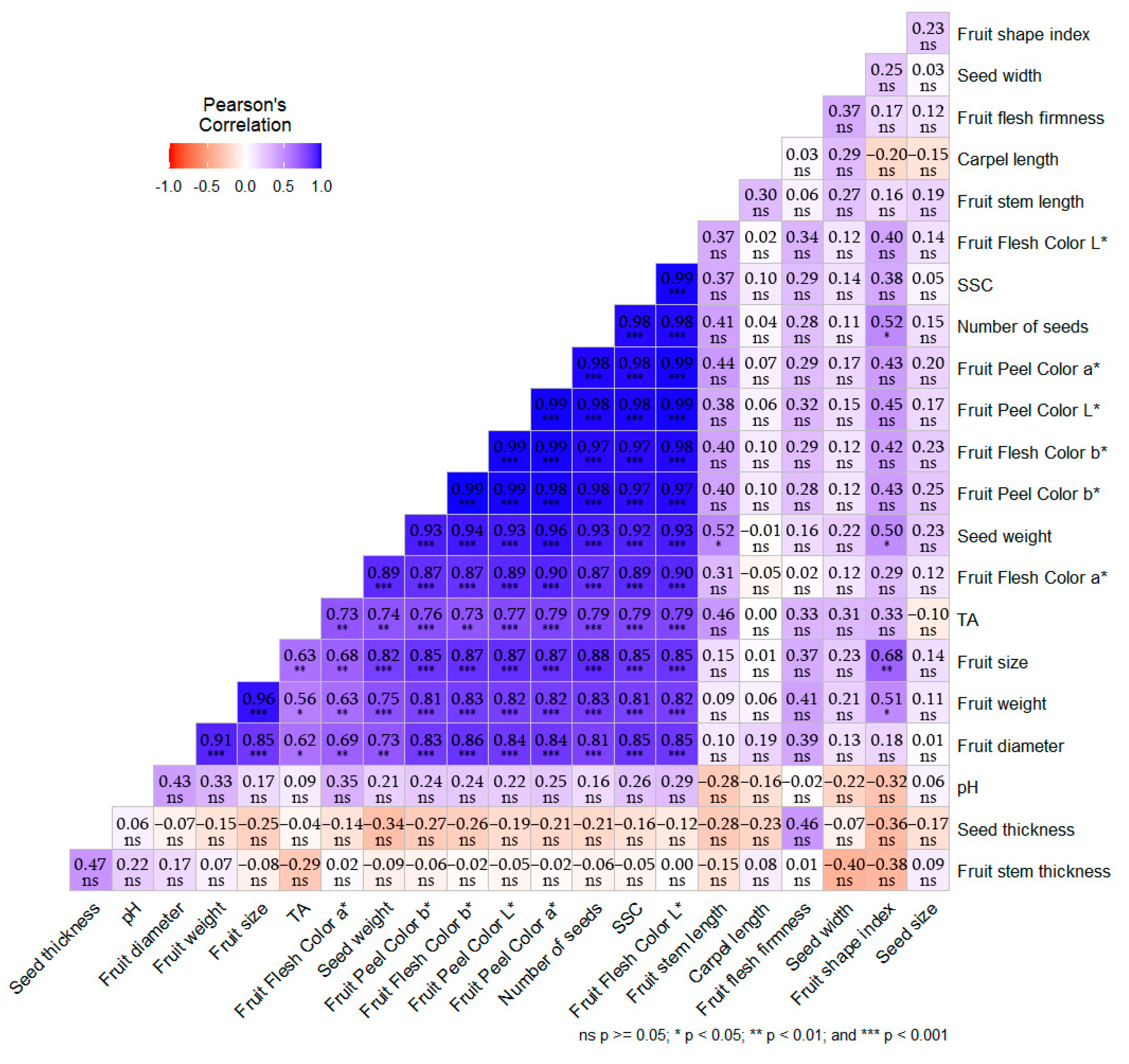
Pearson correlation coefficients were determined for the 23 phenotypic traits of the 16 wild pear genotypes (Figure 1). The correlation matrix uses color intensity to represent the direction and strength of the linear relationships between the traits; blue tones indicate positive correlations, while red tones represent negative correlations.
Figure 1. Pearson Correlation Matrix of 23 Phenotypic Traits of 16 Wild Pear Genotypes.
The analysis revealed high and significant positive correlations among several traits, including fruit weight, fruit diameter, fruit length, SSC, fruit peel and flesh color parameters (L*, a*, b*), seed number, and seed weight (p < 0.001). For instance, the correlation coefficients between fruit weight and fruit diameter and fruit length were 0.85 and above. Similarly, strong positive relationships were found between the fruit peel color a* and b* values and the fruit flesh color a* and b* values.
Conversely, weak or non-significant correlations were found between fruit size and chemical properties and some structural features such as pH, seed thickness, and pedicel thickness. Furthermore, traits like pedicel thickness and seed thickness showed negative or low correlations with fruit firmness and other chemical parameters.
In our study, the Pearson correlation coefficients among the 23 phenotypic traits of 16 wild pear genotypes revealed the structure of inter-character relationships. High and significant positive correlations (r ≥ 0.85) between fundamental pomological traits like fruit weight, diameter, and length suggest that these traits are genetically linked and are suitable targets for simultaneous selection. These results align with the phenotypic relationships reported in local pear cultivars by Polat and Bağbozan [19] and Bayazit et al. [20]. The strong positive correlations among fruit peel and flesh color parameters (L*, a*, b*) indicate a coordinated metabolism of pigment accumulation and phenolic compounds across genotypes. A similar study by Brahem et al. [24] also noted that phenolic compounds in pear peels are much higher than in the flesh, and these compounds play a vital role in the plant’s stress tolerance. The high correlation of these color parameters suggests they can serve as important determinants of fruit quality and consumer preference. Weak or insignificant correlations between chemical properties and fruit size suggest that these traits are governed by different genetic and environmental control mechanisms. For instance, the low correlation of structural features like pH, seed thickness, and pedicel thickness with fruit size and chemical parameters implies that these characters could be independent selection targets. Additionally, the negative or low correlation of traits like pedicel thickness and seed thickness with fruit firmness and chemical parameters reveals a complex relationship between these structural features and the fruit’s mechanical properties and chemical composition.
These findings demonstrate that the phenotypic diversity of pear genotypes is not limited to visible traits like size and color but also includes structural and chemical properties that are partially independent. This highlights the need to evaluate multifaceted characters individually in breeding programs [21,29].
From a plant physiology standpoint, the weak correlation between fruit size and chemical content suggests that carbohydrate metabolism and organic acid accumulation might be regulated independently of fruit development. A study by Özgün and Evrenosoğlu [22] similarly observed differences in chemical properties between astringent and non-astringent genotypes but found no significant differences in fruit size. This indicates that genetic and environmental factors have varying effects on different phenotypic traits.

3.3. Hierarchical Clustering and Heatmap Analysis

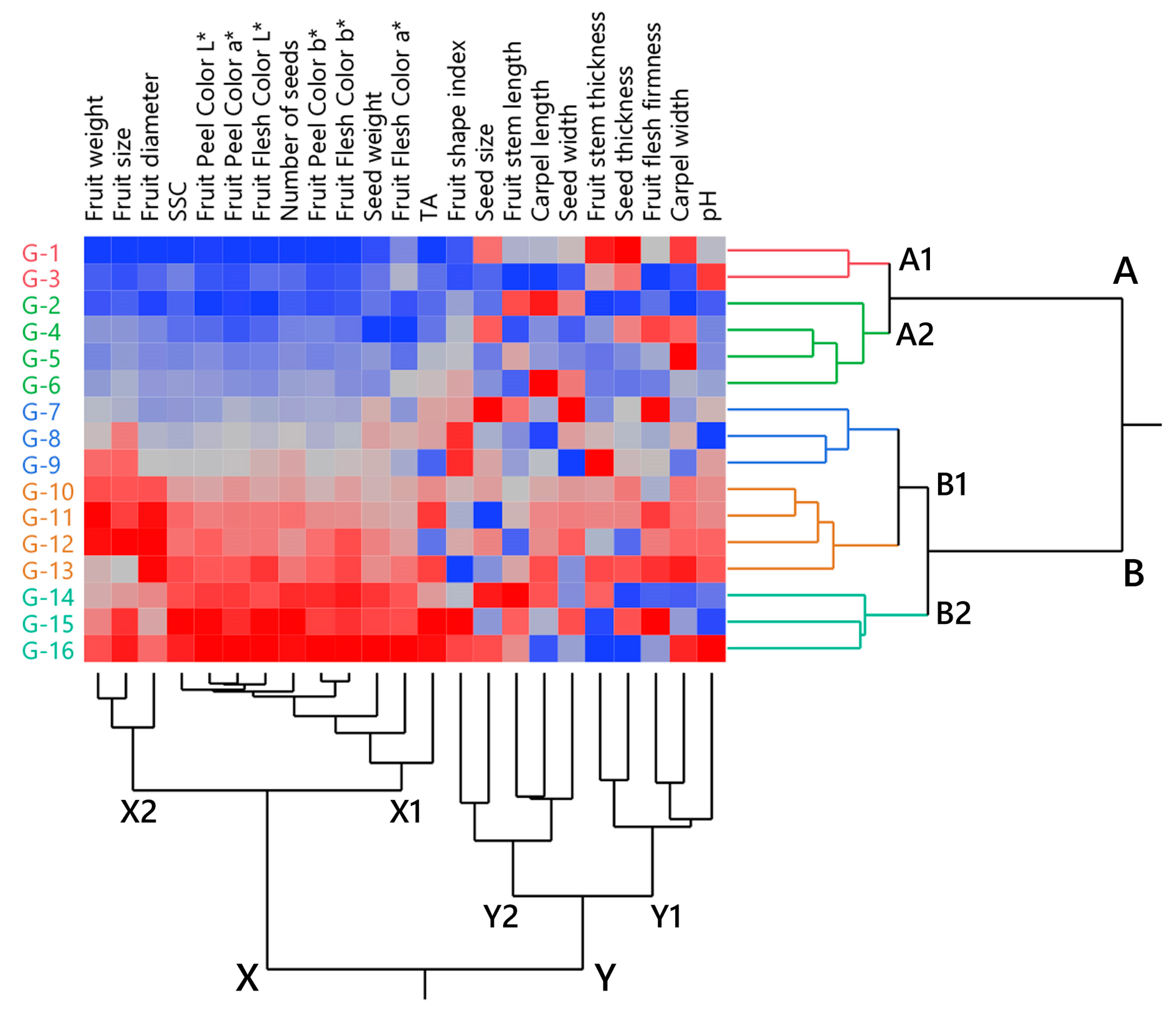
A hierarchical clustering analysis (HCA) was performed on the 23 traits of the 16 wild pear genotypes (Figure 2). The heatmap visually represents the similarities and differences between genotypes and traits using color intensity, where red indicates high values and blue indicates low values.
Figure 2. Dendrogram and heatmap of hierarchical cluster analysis (HCA) of wild pear genotypes based on morphological and chemical traits (Red indicates high values, highlighting superior traits).
The dendrograms show that the genotypes and traits are grouped, with genotypes having similar phenotypic profiles clustering into two main groups, A and B. Main cluster A is divided into sub-clusters A1 and A2, while main cluster B is split into sub-clusters B1 and B2. The traits are also separated into two main clusters, X and Y, which are further divided into sub-clusters X1, X2 and Y1, Y2, respectively.
Among the genotypes, G-1 and G-3 are in sub-cluster A1, while G-2, G-4, G-5, and G-6 form sub-cluster A2. In cluster B, G-7, G-8, G-9, G-10, G-11, G-12, and G-13 are in sub-cluster B1, and G-14, G-15, and G-16 are grouped in sub-cluster B2. Important traits like fruit weight, fruit length, fruit diameter, SSC, pH, TA, and color parameters are concentrated in cluster X, representing the primary fruit quality and biochemical attributes. Meanwhile, seed and carpel traits are grouped in cluster Y, reflecting the morphological characteristics related to the reproductive organs.
Genotypes G-10, G-11, G-12, G-13, G-14, G-15, and G-16 stand out with high values for key fruit-related traits such as fruit weight, fruit length, fruit diameter, SSC, pH, and TA. These genotypes are prominent in terms of fruit quality and size. The same genotypes also generally have high values for fruit peel and flesh color parameters (Fruit Peel Color L*, a*, b* and Fruit Flesh Color L*, a*, b*), indicating distinct color characteristics.
In terms of seed and carpel traits, some genotypes (e.g., G-1, G-3) show red areas on the heatmap, highlighting their prominence in these features. This structure allows for a detailed understanding of the phenotypic diversity and relationships between genotypes and traits.

3.4. PCA

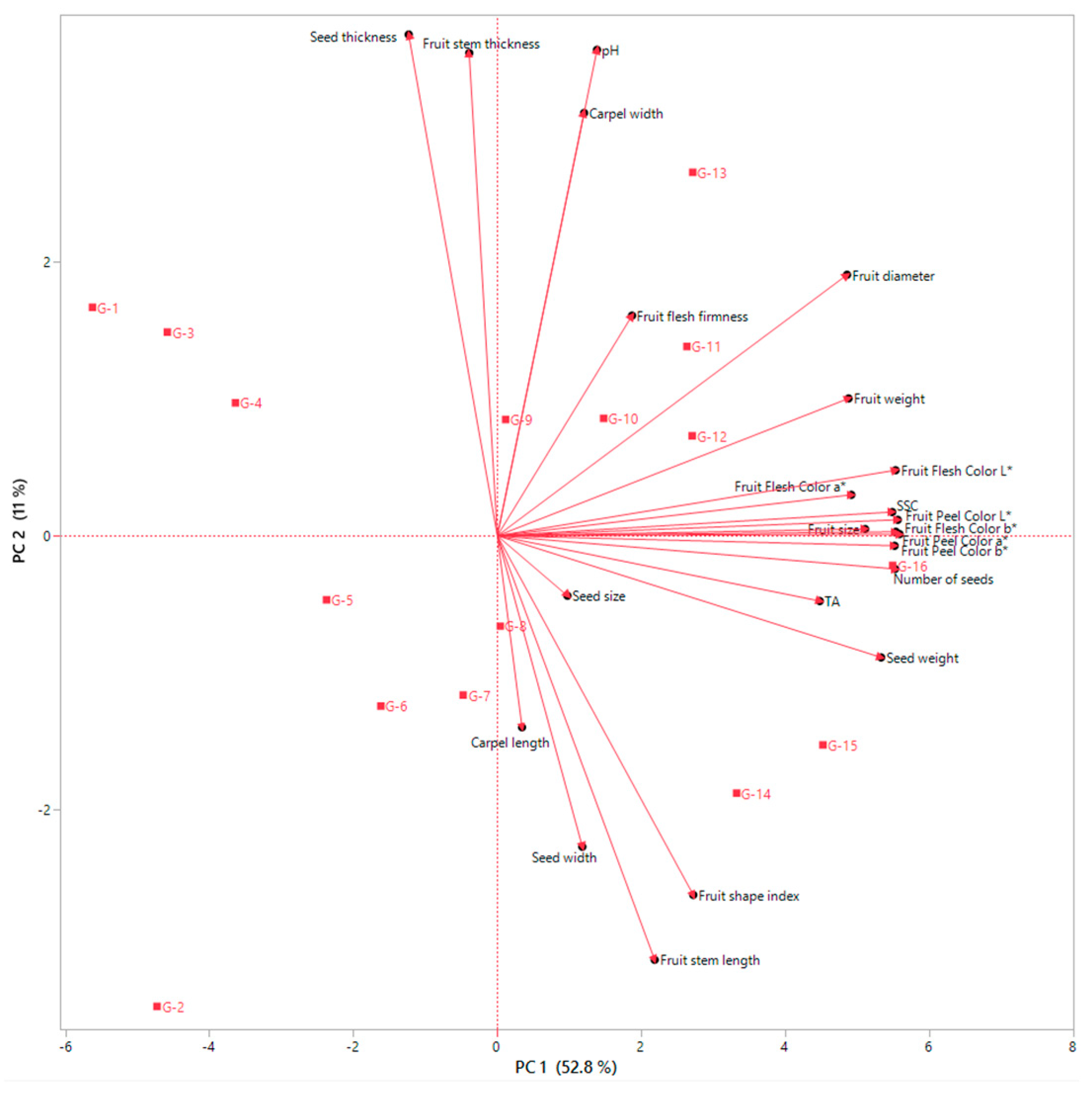
The variance explanations for the principal component analysis (PCA) of the 16 wild pear genotypes are provided in Table 2. The first principal component (PC1) accounts for 52.8% of the total variance, while the second principal component (PC2) explains 11%. Together, these two components represent approximately 64% of the total variance, indicating that a significant portion of the phenotypic diversity among the genotypes can be summarized by these two components. This percentage is similar to the 57.34% variance explanation reported by Verma et al. [31] for Kashmiri Nakh pear genotypes (PC1: 33.58%, PC2: 23.76%), which supports the idea that a large part of the phenotypic differences among genotypes can be summarized by a few principal components. This demonstrates that PCA is an effective method for understanding the multidimensional nature of phenotypic diversity in pear genotypes.
Table 2. Eigenvalues corresponding to the principal component axes derived from the PCA of traits in the analyzed pear genotypes.
In Figure 3, a biplot graph shows the distribution of genotypes and phenotypic traits along the PC1 and PC2 axes. The positive direction of PC1 is dominated by traits related to fruit quality and size, such as fruit weight, fruit diameter, fruit flesh firmness, SSC, and color parameters. This is consistent with the study by Verma et al. [31], where quality parameters like fruit weight, diameter, and acidity had high loadings on the first principal component. This highlights that fruit quality and size are primary targets in pear breeding programs.
Figure 3. Principal Component Analysis (PCA) Biplot Graph of 16 Wild Pear Genotypes: Distribution of Genotypes and Phenotypic Traits on the PC1 and PC2 Axes (Traits related to fruit quality are positively associated with PC1). The red dots represent the 16 pear genotypes studied.
On the positive axis of PC2, structural traits like pH, pedicel thickness, seed thickness, and carpel width are prominent. This is similar to the PCA analyses of pear juices and peach purées by Delpino-Rius et al. [32], where phenolic and structural metabolites were separated into different components. The positions of the genotypes visually reveal the relationships between phenotypic traits and the differences between genotypes. For instance, genotypes G-1, G-3, and G-4 are located in the positive region of PC1 and PC2, while genotypes like G-14 and G-15 are positioned on the negative axis of PC1. Such visual separations facilitate genotype selection in breeding programs and contribute to the effective use of genetic resources [31,32].
A study by Wu et al. [33], which analyzed the epicuticular wax components of 35 pear cultivars using PCA, showed that different chemical compounds constituted most of the variance and that the cultivars were grouped based on these compounds. This supports the idea that our phenotypic traits can be separated multidimensionally by their chemical and morphological components.

4. Conclusions

This study provides a comprehensive examination of the pomological and chemical characteristics of 16 wild pear genotypes from Gürağaç village in Giresun province. Significant differences were observed among the genotypes in important traits such as fruit weight, fruit diameter, fruit length, soluble solids content (SSC), pH, titratable acidity (TA), and color parameters. The results are consistent with similar studies in the literature, suggesting that the differences among these genotypes stem from both genetic and ecological factors. Correlation and cluster analyses highlighted that certain genotypes stand out in terms of fruit quality and size. Specifically, genotypes from G-10 to G-16 show high potential for fruit characteristics. The phenotypic diversity observed in this study may not fully reflect the true potential of these genotypes, as they grow naturally in hazelnut orchards with little to no maintenance. Future research should focus on the propagation of these promising genotypes and their evaluation under controlled orchard conditions to better understand their stability and performance. Additionally, molecular characterization studies are recommended to complement these morphological findings and to develop specific breeding strategies for high-quality pear production. This research establishes an important foundation for the characterization of wild pear genotypes in the Güce district and supports efforts for their conservation and sustainable use.

Author Contributions

Conceptualization, S.K. and L.K.; methodology, S.K.; software, S.K.; validation, S.K. and L.K.; formal analysis, S.K.; investigation, S.K.; resources, S.K.; data curation, S.K.; writing—original draft preparation, S.K.; writing—review and editing, S.K.; visualization, S.K.; supervision, L.K.; project administration, L.K.; funding acquisition, S.K.; manuscript design, L.K.; statistical analysis, L.K. All authors have read and agreed to the published version of the manuscript.

Funding

This research received no external funding.

Institutional Review Board Statement

Not applicable.

Data Availability Statement

The raw data supporting the conclusions of this article will be made available by the authors on request.

Acknowledgments

We would like to thank the residents of Gürağaç Village for their interest and support. The entire content of the study has been reviewed by the authors, and the responsibility lies entirely with them. We also extend our gratitude to everyone who provided technical and administrative support.

Conflicts of Interest

The authors declare no conflicts of interest.

References

  1. Özbek, S. Özel Meyvecilik; Çukurova Üniversitesi Ziraat Fakültesi Yayınları: Adana, Türkiye, 1978; p. 485 S. [Google Scholar]
  2. Kırca, L.; Kırca, S.; Aygün, A. Organic acid, phenolic compound and antioxidant contents of fresh and dried fruits of pear (Pyrus communis L.) cultivars. Erwerbs-Obstbau 2023, 65, 677–691. [Google Scholar] [CrossRef]
  3. Layne, R.E.C.; Quamme, H.A. Pears. In Advences in Fruit Breeding; Janick, J., Moore, J.N., Eds.; Purdue Univ. Press: West Lafayette, IN, USA, 1975; pp. 38–70. [Google Scholar]
  4. Bell, R.L.; Quamme, H.A.; Layne, R.E.C.; Skirvin, R.M. Pears. In Fruit Breeding, Volume I: Tree and Tropical Fruits; Janick, J., Moore, J.N., Eds.; John Wiley and Sons Inc.: New York, NY, USA, 1996; pp. 441–514. [Google Scholar]
  5. Hancock, J.F.; Lobos, G.A. Pears. In Temperate Fruit Crop Breeding: Germplasm to Genomics; Hancock, J.F., Ed.; East Lansing, MI, USA, 2008; pp. 299–336. [Google Scholar]
  6. Ünal, A.; Saygılı, H.; Hepaksoy, S.; Can, H.Z.; Türküsay, H. Ege Bölgesinde Armut Yetiştiriciliği ve Seçilen Bazı Armut Çeşitlerinin Pomolojik Özellikleri; Yumuşak Çekirdekli Meyveler Sempozyumu: Yalova, Türkiye, 1997; pp. 29–35. [Google Scholar]
  7. Deligiannidou, E.; Boutsika, A.; Plesias, I.; Xanthopoulou, A.; Moysiadis, T.; Mellidou, Ι.; Manthos, I.; Sotiropoulos, T.; Ganopoulos, I. Microsatellite genotyping and genetic diversity of a Greek pear (Pyrus communis L.) germplasm collection. Plants 2025, 14, 1816. [Google Scholar] [CrossRef] [PubMed]
  8. Özçağıran, R.; Ünal, A.; Özeker, E.; İsfendiyaroğlu, M. Armut. In Ilıman İklim Meyve Türleri, Yumuşak Çekirdekli Meyveler (Cilt-II); Ege Üniversitesi Ziraat Fakültesi: İzmir, Türkiye, 2004. [Google Scholar]
  9. Kırca, L.; Aygün, A. Phenotypic Diversity and Biochemical Properties of Pyrus elaeagnifolia Pall. Genotypes: A Comprehensive Study from Western Türkiye. Horticulturae 2025, 11, 934. [Google Scholar] [CrossRef]
  10. Karadeniz, T.; Çorumlu, M.S. İskilip Pears. Akademik Ziraat Dergisi 2012, 1, 61–66. [Google Scholar]
  11. Karadeniz, T.; Uzunismail, T. In Towns and Ozdil Akoluk (Trabzon) Is Growing Local Pear Cultivars and Types Pomologgical, Phenological and Morphological Characteristics. Master’s Thesis, Ordu Üniversitesi Fen Bilimleri Enstitüsü, Ordu, Türkiye, 2010. [Google Scholar]
  12. Gülbahar, C.; Bostan, S.Z. Local Pears of “Of” District (Trabzon Province of Turkey): Early and Middle Season Varieties. Meyve Bilimi 2017, 4, 19–25. [Google Scholar]
  13. Polat, M.; Az, Ö. Determination of Fruit Characteristics of Some Late-Season Local Pear (Pyrus communis L.) Genotypes Grown in Eğirdir (Isparta) Ecological Conditions. Süleyman Demirel Üniversitesi Fen Bilimleri Enstitüsü Dergisi 2017, 21, 20–23. [Google Scholar] [CrossRef]
  14. Sağır, N.; Aygün, A. The Determination of Fruit Characteristics Local Summer Pear Varieties Grown in Province of Trabzon. Bahçe (Spec. Issue) 2018, 47, 26–34. [Google Scholar]
  15. Balta, M.F.; Üç, L.; Karakaya, O. Some Fruit Characteristics of Alişar Pear Clones Selected in Şebinkarahisar (Giresun) District. Uluslararası Tarım ve Yaban Hayatı Bilimleri Dergisi 2019, 5, 31–37. [Google Scholar] [CrossRef]
  16. Bayındır, Y.; Çöçen, E.; Macit, T.; Gültekin, N.; Toprak Özcan, E.; Aslan, A.; Aslantaş, R. Selection of Local Winter Pear Genotypes Grown in Malatya. Akademik Ziraat Dergisi 2018, 7, 9–16. [Google Scholar] [CrossRef]
  17. Kalkışım, Ö.; Aydın, M.Z.; Kurt, H. Determination of some pomological and morphological characteristics of local pear varieties grown Ardeşen district of Rize province (Turkey). Akademik Ziraat Dergisi 2021, 10, 275–284. [Google Scholar] [CrossRef]
  18. Haberal, E.; Kalkışım, Ö.; Aydın, M.Z. Determining the Pomological and Morphological Characteristics of Local Pear Cultivars Grown in The Fındıklı District of Rize. Akademik Ziraat Dergisi 2024, 13, 65–76. [Google Scholar] [CrossRef]
  19. Polat, M.; Bağbozan, R. Determination of Some Fruit Characteristics of Some Early-Season Domestic Pear (Pyrus communis L.) Genotypes Grown Eğirdir (Isparta) Ecological Conditions. Süleyman Demirel Üniver-sitesi Fen Bilimleri Enstitüsü Dergisi 2017, 21, 9–12. [Google Scholar] [CrossRef]
  20. Bayazit, S.; Caliskan, O.; Sümbül, A. Morpho-pomological diversity of Turkish pear (Pyrus communis L.) accessions in eastern mediterranean region of Turkey. Acta Sci. Pol. Hortorum Cultus 2016, 15, 157–171. [Google Scholar]
  21. Aydınlı, M.; Yıldırım, F. Recent Developments in Pear Breeding. Anadolu Ege Tarımsal Araştırma Enstitüsü Dergisi 2023, 33, 296–309. [Google Scholar] [CrossRef]
  22. Özgün, N.; Evrenosoğlu, Y. Alterations in Selected Pomological and Biochemical Characteristics of Fruits from Certain Pear Genotypes Under Changing Climatic Conditions. Bahçe 2025, 54, 53–60. [Google Scholar] [CrossRef]
  23. Lopez, G.; Larrigaudière, C.; Girona, J.; Behboudian, M.H.; Marsal, J. Fruit thinning in ‘Conference’ pear grown under deficit irrigation: Implications for fruit quality at harvest and after cold storage. Sci. Hortic. 2011, 129, 64–70. [Google Scholar] [CrossRef]
  24. Brahem, M.; Renard, C.M.; Eder, S.; Loonis, M.; Ouni, R.; Mars, M.; Le Bourvellec, C. Characterization and quantification of fruit phenolic compounds of European and Tunisian pear cultivars. Food Res. Int. 2017, 95, 125–133. [Google Scholar] [CrossRef] [PubMed]
  25. Gerçekcioğlu, R.; Adıbelli, A. Determination of Phenological and Pomological Characteristics of Some Local Pear (Pyrus communis L.) Cultivars Grown in The Perşembe (Ordu) District. Gaziosmanpaşa Bilimsel Araştırma Dergisi 2023, 12, 67–75. [Google Scholar]
  26. Yang, S.; Bai, M.; Hao, G.; Zhang, X.; Guo, H.; Fu, B. Transcriptome survey and expression analysis reveals the adaptive mechanism of ’Yulu Xiang’ Pear in response to long-term drought stress. PLoS ONE 2021, 16, e0246070. [Google Scholar] [CrossRef]
  27. Javadi, T.; Arzani, K.; Ebrahimzadeh, H. Study of proline, soluble sugar, and chlorophyll a and b changes in nine Asian and one European pear cultivar under drought stress. In Proceedings of the XXVII International Horticultural Congress-IHC2006: International Symposium on Asian Plants with Unique Horticultural 769, Seoul, Republic of Korea, 13–19 August 2006; pp. 241–246. [Google Scholar] [CrossRef]
  28. Liu, D.; Ni, J.; Wu, R.; Teng, Y. High temperature alters sorbitol metabolism in Pyrus pyrifolia leaves and fruit flesh during late stages of fruit enlargement. J. Am. Soc. Hortic. Sci. 2013, 138, 443–451. [Google Scholar] [CrossRef]
  29. Orman, E.; Yarılgaç, T. Pear Growing in Bahcesaray Region and Pomological Morphological Investigation of Some Selected Pear Varieties. Bahçe 2016, 45, 1–10. [Google Scholar]
  30. Bostan, S.Z.; Top, G. A Century-Old Pear Gene Source in Gölköy (Ordu, Turkey). Ordu Univ. J. Sci. Technol. 2021, 11, 25–35. [Google Scholar]
  31. Verma, M.K.; Lal, S.K.; Mir, J.I.; Bhat, H.; Sheikh, M.Q. Genetic variability among Kashmiri Nakh pear (Pyrus pyrifolia): A local variety grown in North- Western Himalayan region of India. Afr. J. Bio-Technol. 2014, 13, 3352–3359. [Google Scholar] [CrossRef]
  32. Delpino-Rius, A.; Eras, J.; Gatius, F.; Balcells, M.; Canela-Garayoa, R. Combined analysis of primary metab-olites and phenolic compounds to authenticate commercial monovarietal peach purees and pear juices. Molecules 2019, 24, 3289. [Google Scholar] [CrossRef] [PubMed]
  33. Wu, X.; Yin, H.; Shi, Z.; Chen, Y.; Qi, K.; Qiao, X.; Han, M.; Zhang, S. Chemical composition and crystal morphology of epicuticular wax in mature fruits of 35 pear (Pyrus spp.) cultivars. Front. Plant Sci. 2018, 9, 679. [Google Scholar] [CrossRef] [PubMed]
Disclaimer/Publisher’s Note: The statements, opinions and data contained in all publications are solely those of the individual author(s) and contributor(s) and not of MDPI and/or the editor(s). MDPI and/or the editor(s) disclaim responsibility for any injury to people or property resulting from any ideas, methods, instructions or products referred to in the content.

Article Metrics

Citations

Article Access Statistics

Multiple requests from the same IP address are counted as one view.