4.1. General Considerations on the Persistent Endocrine Implications of SARS-CoV-2 Infection
The present study provides a detailed assessment of endocrine status in previously hospitalized COVID-19 patients, evaluated four years after SARS-CoV-2 infection. To our knowledge, this represents one of the longest observational assessments addressing post-COVID endocrine health, extending beyond the 6–24-month timeframe explored in most existing studies and enabling the identification of late-emerging metabolic and autoimmune disturbances [
5,
6].
At the time of reassessment, 27% of patients exhibited long-term glycemic abnormalities, despite having no known history of diabetes at baseline. In the absence of baseline HbA1c or pre-infection glycemic parameters, the designation of “new-onset diabetes” could not be applied. Even so, the prevalence of glycemic impairment four years after infection mirrors the elevated risk of post-COVID dysglycemia documented in several large epidemiological studies [
13].
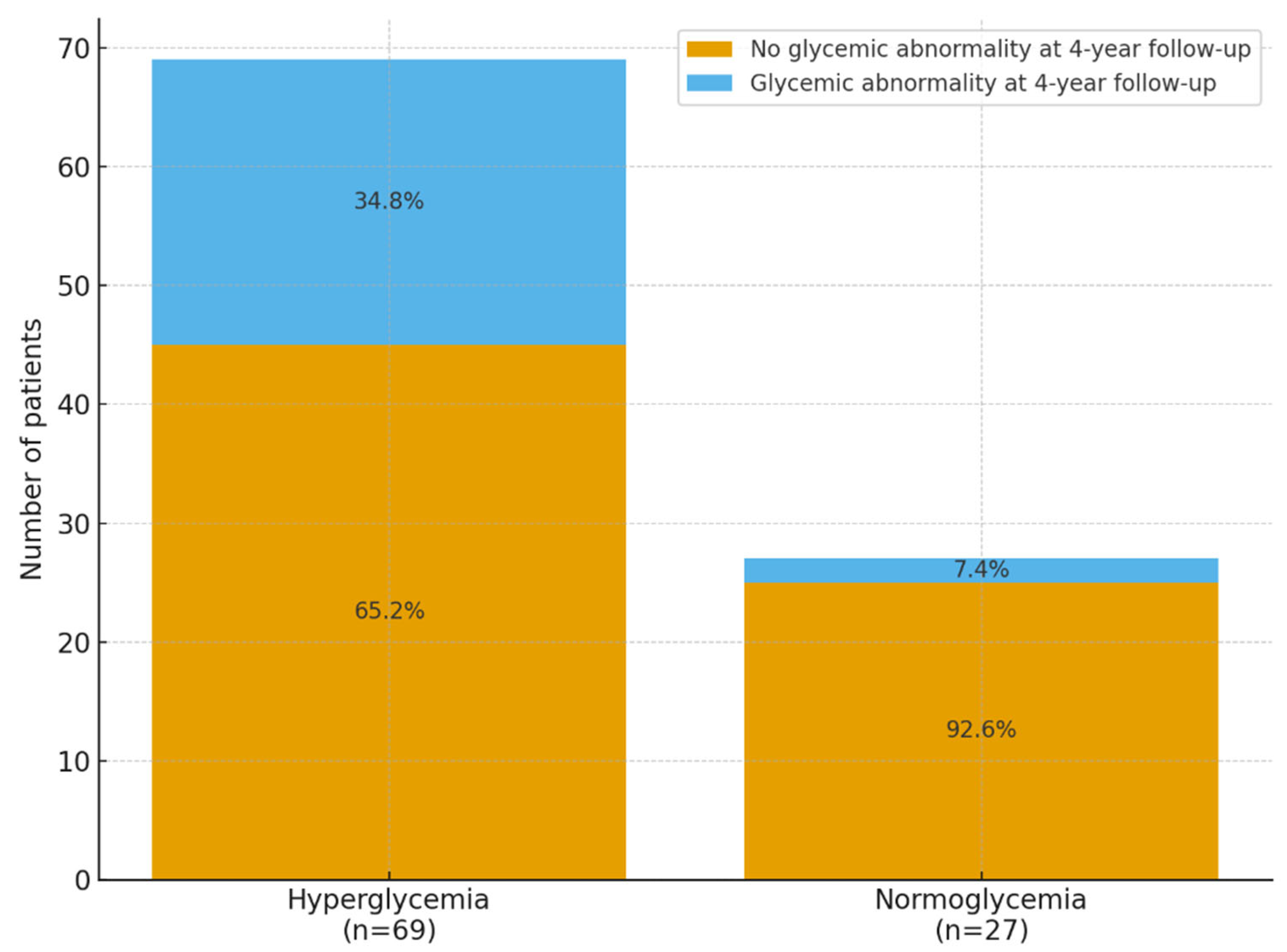
A particularly relevant finding is the association between acute-phase hyperglycemia and long-term glycemic abnormalities. Among patients who presented with hyperglycemia at admission (71.9%), 34.8% met glycemic criteria compatible with long-term dysglycemia, compared with only 7.4% of initially normoglycemic patients. These results support the hypothesis that COVID-19-related stress hyperglycemia reflects underlying metabolic vulnerability, amplified by systemic inflammation, corticosteroid exposure, and the host immune response [
12,
28].
Regarding thyroid involvement, thyroid autoimmunity was identified in 41.6% of patients at the four-year assessment, and structural abnormalities, including nodules, cysts, or ultrasound patterns consistent with autoimmune thyroiditis, were likewise common. Anti-thyroid antibody positivity was frequent, with 38.5% of patients exhibiting elevated anti-TPO antibodies and 46.2% showing anti-thyroglobulin positivity, while 13.5% demonstrated ultrasound-confirmed features of autoimmune thyroiditis. These prevalence rates substantially exceed those expected in the general adult population (≈10–15%), as reported in large community-based epidemiological studies such as the Whickham surveys and the NHANES III study [
29,
30,
31], and are consistent with findings from Asian and European cohorts assessed 6–12 months post-COVID [
18,
21,
32]. The persistence of these abnormalities several years after infection suggests that thyroid autoimmunity may represent a delayed or chronic process, possibly driven by prolonged immune activation, molecular mimicry, or post-viral dysregulation [
19,
20].
Although moderate, severe, and critical COVID-19 were associated with numerically higher autoimmune markers, we did not identify a statistically significant relationship between acute severity and thyroid autoimmunity, echoing previous reports that thyroid autoimmunity may arise even after mild infection [
22,
23]. Overall, the findings indicate that a substantial proportion of previously hospitalized COVID-19 patients exhibit persistent endocrine alterations—metabolic disturbances, thyroid autoimmunity, and occasionally structural thyroid changes—four years after infection [
22,
23,
33].
Several limitations must be acknowledged. The small final sample size, resulting from substantial attrition of the initially eligible cohort, raises concerns regarding selection and survivorship bias and limits the generalizability of the findings. In addition, the limited number of outcome events precluded adjusted multivariable analyses, and residual confounding cannot be excluded, particularly for glycemic outcomes influenced by age and cardiometabolic risk.
Another important limitation is the lack of systematic baseline endocrine characterization. Although patients with known diabetes or thyroid disease were excluded, no baseline HbA1c, thyroid autoantibodies, or thyroid imaging were available at hospital admission. Consequently, it cannot be definitively established whether the endocrine abnormalities observed represent incident post-COVID conditions or the progression of previously unrecognized subclinical disease.
Information on SARS-CoV-2 reinfections and viral variants during the four-year interval was not available, and data on family history of diabetes, thyroid disease, or autoimmune disorders were lacking. Furthermore, baseline biochemical markers beyond routine parameters were not explored. In this context, factors such as vitamin D deficiency—highly prevalent in both acute and long COVID and increasingly recognized as a modulator of immune and metabolic function—or serum calcium, proposed as a surrogate marker of disease severity and systemic inflammatory stress, may represent relevant variables for future studies [
9].
Finally, the single-center design and the exclusive inclusion of hospitalized patients—many with moderate to severe disease—limit extrapolation of the results to non-hospitalized individuals or broader populations with different demographic and clinical characteristics.
Despite these limitations, the present study offers valuable insight into the long-term endocrine footprint of SARS-CoV-2 infection. The persistence of metabolic disturbances and thyroid autoimmunity several years after acute illness supports the concept that SARS-CoV-2 may act as a trigger for long-lasting endocrine dysregulation, potentially mediated by systemic inflammation, oxidative stress, immune dysregulation, and possibly direct or indirect viral effects on endocrine tissues [
8,
9,
19].
A major strength of the present study lies in the exceptionally long interval between acute infection and endocrine reassessment, providing a unique perspective on very long-term endocrine consequences of COVID-19. By jointly assessing thyroid parameters and glucose metabolism, the study demonstrates that detectable endocrine alterations may persist years after the acute episode.
These findings support the need for periodic endocrine evaluation in COVID-19 survivors, particularly among individuals who experienced severe disease or stress hyperglycemia during hospitalization [
6,
31]. Targeted late post-infection screening—including thyroid autoantibodies, thyroid ultrasound when clinically indicated, and fasting glucose or HbA1c—may facilitate earlier identification and management of persistent post-COVID endocrine alterations.
4.3. COVID-19 and Long-Term Thyroid Dysfunction
Thyroid dysfunction represents one of the most frequently reported endocrine manifestations of COVID-19, driven by direct viral injury, cytokine-mediated inflammation, and immune dysregulation [
43]. The present study demonstrates a remarkably high prevalence of thyroid structural and autoimmune abnormalities persisting four years after documented SARS-CoV-2 infection. Thyroid alterations were observed across all categories of acute disease severity, including patients who had experienced clinically mild COVID-19, indicating that long-term thyroid involvement is not confined to severe or critical forms of the disease. Although moderate, severe, and critical COVID-19 were associated with numerically increased rates of cystic changes and thyroid autoantibody positivity—most notably anti-TPO antibodies in the critical subgroup—these differences should be interpreted cautiously considering the relatively small subgroup sample sizes.
At the four-year reassessment, thyroid autoimmunity emerged as one of the most prevalent long-term endocrine sequelae of SARS-CoV-2 infection. Overall, 41.6% of individuals who were euthyroid prior to infection demonstrated evidence of thyroid autoimmunity, including anti-TPO positivity in 38.5%, anti-Tg positivity in 46.2%, and ultrasonographic features consistent with autoimmune thyroiditis in 13.5%. These values markedly exceed the background prevalence expected in European adult populations—typically 10–15% for anti-TPO antibodies, 8–12% for anti-Tg antibodies, and approximately 5–10% for ultrasound findings suggestive of chronic autoimmune thyroiditis [
29,
30,
31]. The magnitude of this excess supports the hypothesis of increased susceptibility to autoimmune thyroid involvement following COVID-19.
These observations are directionally consistent with findings from international post-COVID cohorts, although most previous studies have evaluated patients only within the first 6–12 months after acute infection. Campi et al. reported anti-TPO positivity in 15.7% of patients at three months, representing a two-fold increase compared with pre-pandemic controls (7.7%) [
32]. Additional studies from China and Italy have reported increases in thyroid autoantibody prevalence in 12–25% of patients during 6–12 months of follow-up [
32,
44].
The substantially higher prevalence identified in our four-year cohort suggests the presence of either persistent subclinical immune dysregulation or a delayed autoimmune phenotype, which may become clinically or biochemically apparent only after a prolonged latency period. To contextualize these findings within current pathogenic frameworks,
Table 8 provides an overview of the principal biological mechanisms proposed to link SARS-CoV-2 infection with the subsequent development of autoimmune thyroiditis.
Beyond these mechanistic pathways, emerging clinical data also suggest that thyroid injury during acute COVID-19 may not always resolve completely. While most longitudinal studies indicate normalization of thyroid function within months, for example, Lui et al. reported recovery in 82.4% of patients by 3–6 months [
53], a distinct subgroup exhibits persistent or newly emerging autoimmunity after recovery. Our four-year data provide important evidence for this long-term trajectory, with nearly one-third of individuals showing serological or ultrasonographic abnormalities compatible with autoimmune thyroiditis well beyond the expected recovery period.
Importantly, the persistence of thyroid autoantibodies, even in euthyroid individuals, carries meaningful clinical implications. Anti-TPO-positive patients have a significantly increased lifetime risk of developing hypothyroidism, chronic fatigue, and subtle metabolic dysregulation [
25,
29]. Therefore, current expert reviews, including recent analyses published in Frontiers in Endocrinology, recommend long-term thyroid monitoring in patients with a history of COVID-19, especially those who experienced moderate or severe acute illness or exhibited elevated inflammatory markers [
19,
44].
Recommended follow-up evaluations include measurement of TSH, FT4, FT3, anti-TPO, and anti-Tg, along with periodic thyroid ultrasonography at 12–24 months and at extended intervals in high-risk individuals. These strategies aim to detect evolving thyroid dysfunction early and reflect the growing recognition that SARS-CoV-2 may induce persistent immune–endocrine dysregulation with clinically significant long-term consequences.
4.4. Endocrine Autoimmunity as a Potential Mechanism in Post-COVID Syndrome (PASC)
Our study provides indirect support for the hypothesis that endocrine autoimmunity may represent a contributing factor to the heterogeneous clinical manifestations observed in post-acute sequelae of COVID-19 (PASC). This syndrome is defined by the persistence or emergence of symptoms beyond 12 weeks after acute infection, in the absence of alternative explanations, and includes a wide spectrum of systemic manifestations such as chronic fatigue, cognitive impairment, respiratory dysfunction, cardiovascular abnormalities, and metabolic disturbances [
4,
54].
In this context, the thyroid and metabolic alterations identified four years after SARS-CoV-2 infection may represent endocrine components of long COVID rather than isolated post-infectious abnormalities, potentially mediated through persistent immune dysregulation. Dysregulation of the hypothalamic–pituitary–peripheral axes, residual low-grade inflammation, and sustained autoimmunity may contribute to nonspecific symptoms frequently reported in PASC, such as fatigue, reduced physical performance, and mild cognitive disturbances [
24,
55]. However, clinical PASC manifestations were not systematically assessed in the present study.
Thyroid autoimmunity, present in 41.6% of reassessed patients, may play a role in PASC-related symptomatology. SARS-CoV-2 has been implicated in the development of endocrine autoimmunity, particularly autoimmune thyroid disease, through mechanisms involving immune dysregulation and molecular mimicry [
56,
57,
58]. Even in euthyroid individuals, anti-TPO and anti-Tg positivity can reflect early or subclinical autoimmune thyroid dysfunction, which may affect energy metabolism, neuromuscular function, and thermoregulation. Previous studies have shown that early-stage autoimmune thyroiditis may be associated with fatigue and impaired concentration, symptoms that partially overlap with those described in PASC [
25,
29].
Post-COVID metabolic disturbances, including newly diagnosed diabetes mellitus and persistent insulin resistance, may further reinforce systemic inflammation [
12,
59]. Chronic hyperglycemia and insulin resistance activate pro-inflammatory and oxidative stress pathways, contributing to sustained low-grade inflammation [
9,
10,
40]. These mechanisms may partially overlap with pathophysiological pathways proposed in PASC. Nevertheless, a causal relationship cannot be inferred from the present data.
Overall, while our data document a high prevalence of endocrine abnormalities four years after COVID-19, the relationship between these findings and specific PASC manifestations remains hypothetical, underscoring the need for longitudinal studies integrating both biochemical and symptom-based assessments [
59,
60].
From a clinical perspective, patients presenting with persistent fatigue, exertional intolerance, or cognitive symptoms may benefit from evaluation for subclinical hypothyroidism and thyroid autoimmunity, whereas post-infectious glycemic monitoring remains essential to detect delayed-onset diabetes mellitus. Implementing multidisciplinary follow-up protocols, including infectious disease specialists, endocrinologists, and rehabilitation experts, may improve long-term outcomes and quality of life [
6,
60].
These findings emphasize the importance of considering endocrine autoimmunity and metabolic dysfunction as potential contributors to long-term systemic symptoms in PASC and highlight the need for integrated clinical management strategies.
4.5. Interaction Between Metabolic and Thyroid Axes and Risk Factors for Post-COVID Endocrine Sequelae
There is a well-recognized bidirectional relationship between thyroid function and glucose metabolism, with each system modulating the other through tightly integrated hormonal pathways. Thyroid hormones regulate hepatic glucose production, insulin sensitivity, and basal metabolic rate, whereas insulin and overall metabolic status influence the peripheral conversion of thyroxine (T4) to triiodothyronine (T3) [
61,
62]. Subclinical hypothyroidism reduces insulin clearance, decreases GLUT-4 expression, and increases insulin resistance at both hepatic and muscular levels [
63]. Conversely, hyperthyroidism enhances hepatic gluconeogenesis and protein catabolism, promoting hyperglycemia [
63].
In the post-COVID context—characterized by persistent inflammation, oxidative stress, and immune dysregulation—autoimmune thyroid involvement and impaired insulin sensitivity may coexist, creating a self-reinforcing metabolic–endocrine loop. Chronic inflammation can trigger both thyroid autoimmunity and insulin resistance, while hyperglycemia perpetuates systemic inflammation and oxidative stress, further contributing to thyroid injury [
9,
58].
In our cohort, a partial overlap between autoimmune thyroiditis and post-COVID diabetes was observed, suggesting shared pathogenic mechanisms. This is consistent with previous studies demonstrating that persistent low-grade inflammation—one of the hallmarks of post-acute COVID-19 syndrome—can sustain both metabolic deterioration and autoimmune reactivity through overlapping immune–endocrine pathways [
55,
58]. Recent reviews further indicate that COVID-19-related thyroid dysfunction frequently coexists with insulin resistance, reinforcing the notion of a bidirectional immunometabolic phenotype [
58].
Risk factor analysis showed that the development of endocrine sequelae after COVID-19 reflects a combination of intrinsic predisposition and the inflammatory burden of the acute infection. Although female sex is a well-established risk factor for autoimmune thyroid disease in the general population, no statistically significant association was observed in our cohort, likely due to sample size limitations and the exploratory nature of the analysis [
19]. Older age (≥60 years) was associated with a greater frequency of both diabetes and thyroid dysfunction, likely reflecting immunosenescence, reduced β-cell reserve, and accumulated metabolic comorbidities [
6].
The severity of the acute infection emerged as one of the strongest predictors of long-term endocrine disturbances, in agreement with large cohort studies reporting a severity-dependent gradient of post-COVID diabetes risk [
13]. Regarding thyroid involvement, earlier studies by Campi et al. and Lui et al. similarly demonstrated an association between heightened inflammatory responses and persistent anti-TPO elevation at 6–12 months [
32,
53]. Obesity and dyslipidemia were also associated with increased risk of post-COVID diabetes, acting as baseline metabolic vulnerabilities that amplify inflammation and insulin resistance [
10,
59].
While multivariable analyses could not be performed due to sample size constraints, the univariate associations identified here support the hypothesis that severe acute disease, systemic inflammation, and adverse metabolic profiles synergistically shape long-term endocrine risk after SARS-CoV-2 infection. Defining these profiles may help tailor targeted endocrine screening and longitudinal follow-up in high-risk individuals [
64].
4.6. The Significance of the Cumulative Endocrine Burden After COVID-19
The high prevalence of endocrine abnormalities identified four years after SARS-CoV-2 infection highlights the systemic and long-term impact of COVID-19 on immune and metabolic homeostasis. Nearly half of the cohort (47.9%) exhibited at least one endocrine dysfunction, either new-onset type 2 diabetes mellitus or autoimmune thyroiditis, underscoring the multisystemic nature of post-COVID sequelae and the substantial endocrine component of this burden. These findings align with international reports describing increased risks of incident diabetes and thyroid autoimmunity following SARS-CoV-2 infection [
13,
33,
53]. Compared with non-COVID background rates, the cumulative endocrine burden observed in this cohort appears considerably elevated. In the general population, the 3–5-year incidence of type 2 diabetes is approximately 4–7% [
34,
35], whereas 27.1% of our patient’s developed diabetes at the four-year mark. Similarly, population-based studies (Whickham Survey, NHANES III) report anti-TPO positivity in 10–15% of women and 4–7% of men, with 5–10% prevalence of ultrasound patterns suggestive of autoimmune thyroiditis in euthyroid adults [
29,
30,
31]. In contrast, 41.6% of our cohort showed serological and/or structural markers of thyroid autoimmunity.
The coexistence of autoimmune thyroiditis and type 2 diabetes in 15.6% of patients suggests the emergence of a post-COVID immunometabolic phenotype driven by chronic inflammation, oxidative stress, and immune dysregulation [
14,
57]. This clustering resembles post-viral polyautoimmune states described after Epstein–Barr virus or cytomegalovirus infections, although it appears more pronounced in the context of SARS-CoV-2 due to its multisystemic tropism [
48,
52].
Clinically, these data emphasize the importance of incorporating systematic endocrine screening into long-term follow-up for COVID-19 survivors. An integrated surveillance strategy, including fasting glucose, HbA1c, TSH, FT4, and anti-TPO/anti-Tg antibody testing, may enable early detection of evolving abnormalities and allow for timely interventions to mitigate the long-term metabolic and functional consequences of COVID-19 [
6,
33].
4.7. Study Limitations
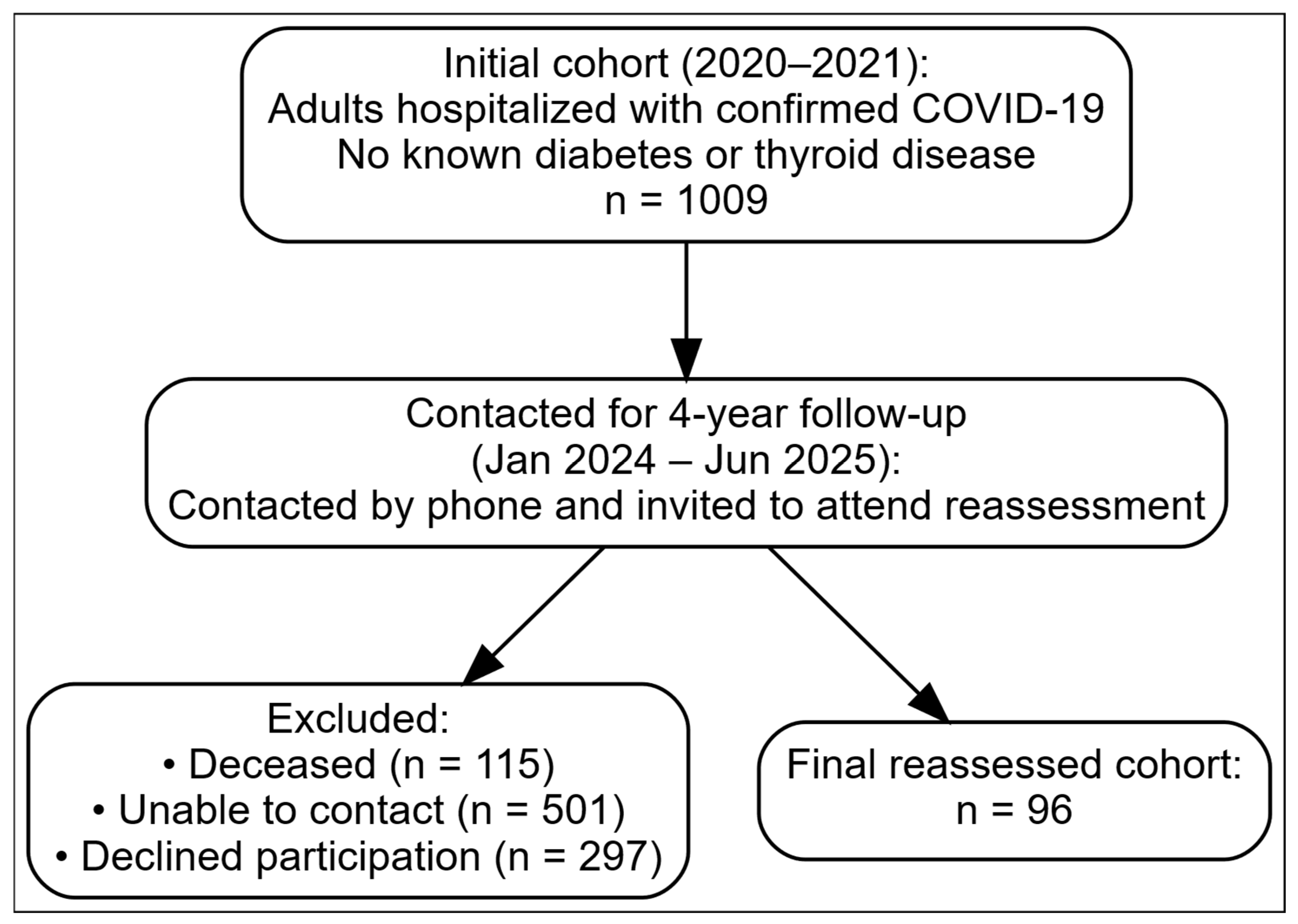
This study has several important limitations that should be considered when interpreting the findings. First, only 96 of the 1009 initially eligible patients completed the four-year reassessment. This substantial and non-random attrition, resulting from mortality, inability to contact participants, or refusal to return for follow-up, raises concerns regarding selection and survivorship bias and limits the generalizability of the results. Patients who survived and agreed to long-term reassessment may differ systematically from those lost to follow-up, potentially leading to an overestimation of the true prevalence of long-term endocrine alterations.
Second, systematic baseline endocrine characterization was not available at the time of hospital admission. Although patients with known diabetes mellitus or thyroid disease were excluded, baseline HbA1c levels, thyroid autoantibodies, and thyroid ultrasonography were not routinely assessed during the acute phase of infection. Consequently, it cannot be definitively determined whether the endocrine abnormalities identified at the four-year follow-up represent incident post-COVID conditions or the progression or detection of previously unrecognized subclinical disease.
Moreover, serial endocrine evaluations at earlier time points (2 and 3 years) were not feasible due to logistical constraints, delayed ethical approval for long-term follow-up, and limited patient availability. Consequently, the present study captures endocrine alterations at a single extended time point rather than their temporal evolution.
In addition, information on family history of diabetes, thyroid disease, or other autoimmune disorders was not available. Given the well-established role of genetic and familial susceptibility in autoimmune thyroid disease, the absence of such data may partly explain why no baseline clinical or biochemical predictors of thyroid autoimmunity were identified in this cohort, despite the high prevalence of thyroid autoimmunity observed at long-term follow-up.
The lack of data on SARS-CoV-2 reinfections and circulating viral variants during the four-year interval further limits the ability to attribute the observed long-term endocrine outcomes to a single SARS-CoV-2 exposure. Recurrent infections or variant-specific effects may have contributed to cumulative immune and metabolic stress, which could not be accounted for in the present analysis.
Additional limitations include the absence of detailed information on lifestyle changes and metabolic trajectories during the follow-up period. Pandemic-related factors such as reduced physical activity, weight gain, dietary changes, and psychological stress may have independently influenced long-term glycemic control and immune function, irrespective of direct viral effects [
64].
In addition, unrecognized thyroid dysfunction may have contributed to long-term metabolic alterations, as impaired insulin action in adipose tissue and skeletal muscle has been demonstrated in hypothyroid states [
65].
Finally, multivariable regression analysis was not feasible due to the limited number of outcome events and incomplete baseline information, particularly regarding pre-infection metabolic status and cumulative corticosteroid exposure. Under these constraints, adjusted models would have been statistically unstable; therefore, all associations reported should be interpreted as exploratory and hypothesis-generating.
Despite these limitations, this study provides one of the longest and most comprehensive endocrine follow-up evaluations conducted to date, integrating biochemical, immunological, and ultrasonographic assessments. The findings offer valuable insights into the potential long-term metabolic and autoimmune consequences of SARS-CoV-2 infection and emphasize the need for structured, multidisciplinary follow-up in COVID-19 survivors.
4.8. Future Directions
The findings of this study highlight several key priorities for future research on the long-term endocrine consequences of SARS-CoV-2 infection. First, to accurately define the temporal trajectory and causality of post-COVID endocrine dysfunctions, prospective longitudinal studies with predefined baseline metabolic and thyroid assessments (including fasting glucose, HbA1c, TSH, FT4, anti-TPO, and anti-Tg) are urgently needed. The absence of such baseline data during the pandemic was a major limitation in determining whether detected abnormalities were new or pre-existing. Standardizing these measurements in future clinical care pathways for hospitalized COVID-19 patients may substantially improve risk stratification and the interpretation of long-term outcomes.
Second, multicenter and population-based cohorts with larger sample sizes are warranted to validate the associations observed here and to examine potential modifiers such as age, sex, comorbidities, viral variants, and treatments received during the acute phase. International collaboration and the establishment of dedicated post-COVID endocrine registries would facilitate harmonized data collection and enable comparative analyses across diverse populations and healthcare settings.
Third, mechanistic studies exploring immune–endocrine interactions are needed to clarify the biological links between SARS-CoV-2 infection, persistent autoimmunity, and long-term dysglycemia. Investigations into molecular mimicry, chronic low-grade inflammation, β-cell vulnerability, and thyroid immune activation may help identify biomarkers predictive of long-term endocrine sequelae.
Finally, clinical research should evaluate the effectiveness of structured endocrine follow-up programs for patients recovering from moderate or severe COVID-19, particularly those with hyperglycemia at admission or elevated inflammatory markers. Such programs could guide timely lifestyle interventions or pharmacologic management, thereby reducing the long-term health burden associated with post-COVID endocrine dysfunction.



 ,
,